Land-use planning stumbles into a pitfall

Less than one month after the Montezuma County commissioners approved a controversial gravel pit near Mancos, the Colorado Court of Appeals ruled 3-0 that a previous board had erred in giving the nod to a gravel operation in the Lewis area.

The court’s May 29 decision in the case of McAfee vs. Montezuma County and Stone Crushing now raises questions about whether the commissioners’ OK for mining by McStone Aggregates near Mancos would stand up to legal scrutiny if challenged.

The McAfee verdict was the second major legal blow the county has sustained recently in regards to its landuse policies. Last November, a Court of Appeals panel voted 3-0 in favor of plaintiffs who challenged the county’s approval of an expansion for a commercial warehouse south of Mancos called the Stringer warehouse.
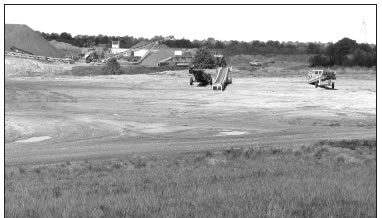
SANDSTONE GRAVEL MINE FROM CASEY MCCLELLAN

Photo courtesy of Casey McClellan.

The appeals-court verdicts overturned previous rulings by District Judge Sharon Hansen, who had found in favor of the county in both cases.

Chuck McAfee, plaintiff in the challenge of a sandstone-gravel mine on property adjoining his, said the decision ratifies his belief that there should be better land-use planning in the county.

“People who want to make some choices about where they can live and what they want to do want some predictability,” he said.
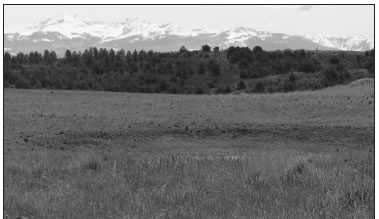
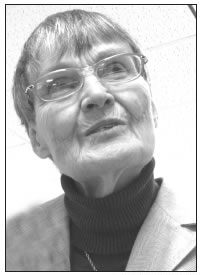
CASEY MCLELLAN

Photo courtesy of Casey McClellan.

McAfee said he had concerns about having a gravel pit nearby because of noise and dust. “There would be dynamite,” he said. “Also, I have a well and wells out here are pretty darn precious, so I wouldn’t want anything to affect that.”

However, he said his main concern was simply that he did not believe the pit should be allowable under the land-use code.

“My biggest concerns had to do with misinterpretation and misapplication of the code and the process,” he said. “That was a bigger concern to me than the gravel pit.

“Part of that is because agriculture is supposed to be preserved. It was strongly worded throughout the landuse code that a primary goal was to preserve and protect agriculture. Of course, nobody’s farming that patch of rocks [the Stone property], but it’s right in the middle of farmland.

“If that pit could have gone through, then anything anywhere could have gone. You would have a total inability to predict what things may and may not happen. You could not look at a zoning map and tell what might happen, and I think that’s ludicrous.”

Defining agribusiness

McAfee’s 157-acre tract lies east of a 232-acre parcel owned by Daren and Kathy Stone, who are also partners in the McStone Aggregates pit recently approved near Mancos. McAfee’s tract is zoned A-80 (large-scale agricultural) and the Stones’ is zoned A/R 35+ (large-scale agricultural-residential). The surrounding area consists mostly of large farms and ranches.

In 2005, the Stones applied for and received a high-impact permit to mine and crush gravel at their Lewis site, despite neighbors’ objections. The commissioners at the time were Larrie Rule and Gerald Koppenhafer, who are still on the board, and Dewayne Findley, who is not. McAfee challenged the approval, and the district court found that the permit application had been incomplete and the process had to be done over.

The Stones reapplied and got another permit, and McAfee again challenged the county’s approval. When Hansen found in favor of the county, McAfee appealed, arguing that the land-use code does not allow for gravel pits on land zoned agricultural.

The appellate court agreed.

In its ruling, the court noted that the county land-use code says “conditional uses” in the A/R 35 zone are defined as uses with a valid high-impact permit “in accordance with Chapter 2.”

“. . . Allowing indiscriminate commercial and industrial uses on properties zoned A/R 35 by way of the high impact permitting process. . . would render superfluous the definitions of commercial and industrial agribusiness in section 3106.1 of the Land Use code,” the court wrote.

Those definitions include a variety of agribusiness uses, but do not include gravel pits. However, the section also states that those definitions aren’t all inclusive.

Whether to appeal

Rule told the Free Press he does not think the county will appeal the ruling to the Colorado Supreme Court.

But Casey McClellan, the Stones’ partner, said they would appeal. “Personally, I don’t see anything wrong with the land-use code and I think the appellate court made the wrong decision,” he said. “I feel very strongly about that. We will definitely appeal this, there’s no two ways about it, and I am 100 percent sure that this will be overturned.”

McClellan said he believes the implications of the McAfee decision could be far-reaching. “The repercussions could be very widespread,” he said.

Rule agreed, saying that if the landuse code isn’t cleaned up so such questions are resolved, “It will totally make Montezuma County’s economic development stale.”

“We’ll just be in court from now on,” Rule said.

The issue central to both cases is whether a gravel pit requires commercial/ industrial zoning for the land in question.

McClellan said the appellate court did not look at Section 2101.4 of the code, which discusses high-impact development, and lists types of projects that may need a high-impact permit. Among those are “major pipelines and power lines, gravel and mining operations, oil and gas drilling, pumping disposal, gathering and transmission facilities. . .” and more. McClellan contends that implies such uses don’t need a zoning change.

At a crowded public hearing May 5, the county commissioners gave approval to the pit proposed by the Stones and Casey and Yvonne McClellan on 154 acres at 38751 Highway 160, on the north side of the highway, west of Road 39. McStone Aggregates had also proposed an asphalt plant and concrete batch plant at the same location, but those proposals were rejected by the board.

McClellan, a member of the county planning commission (he recused himself when that body voted to send the pit proposal on to the commissioners), said McStone Aggregates bought the property about a year ago with the intent of mining gravel. The gravel is from the Mud Creek drainage, he said, and the area has been mined for approximately 70 years, out of a halfdozen different pits.

The Noland gravel pit at 38253 Highway 160 also lies on the north side of the highway, west of the Hogan store and the proposed Mud Creek gravel pit.

McClellan said he had tried to address neighbors’ concerns and to establish a clean-operating busines. The gravel-crusher is to be located below grade on the pit floor to reduce noise and there will be a berm on the south side of the mining area. Hours of operation will be 7 a.m. to 5 p.m., he said.

The access and hauling roads will be graveled to reduce dust, and water trucks will be kept on site. McStone Aggregates will mine just 10 acres at a time, and will reclaim 5 acres at a time behind its operations, seeding it with rangeland grasses.

The only hazardous air pollutants would be produced by the asphalt plant, McClellan said, and it would have a bag house to trap emissions. He said an additive could be used to reduce the smell.

The Colorado Department of Transportation has granted approval for access off Highway 160, and the agency said no acceleration/deceleration lanes would be required.

McClellan said a zoning change should not be required for the land, which is now classified as unzoned but is used for agricultural purposes. (Under the county’s zoning system, called Landowner-Initiated Zoning, landowners are supposed to voluntarily zone their property. On unzoned tracts, owners must seek permission for a change in land use.)

“We feel that the high-impact-permit process is the appropriate way to go because we consider this a temporary use,” McClellan said. The operation is projected to last 20 years.

What’s temporary?

But Jesse Bopp, an attorney representing neighbor Catherine Neva, told the board that something lasting 20 years should not be classified as temporary. “To my client, 20 years doesn’t seem to be temporary when you’re living on a piece of property 365 days a year,” he said.

Neva and her daughter, Debra Cross, will be 87 and 67, respectively, before the pit shuts down, he said. “Their objective [in buying the land] was to have a peaceful retirement property,” he said. “They’ll get their peace back when they hit 87 and 67.”

Commissioner Steve Chappell expressed some sympathy for that argument. “What’s temporary?” he asked. “I just had a thought: We’re all temporary.”

County Planning Director Susan Carver said the land-use code does not say.

Roger Woody of Road 41.2 said the commissioners were using the permitting process to get around rezoning the land. “I just believe that to ignore the land-use code and to use the highimpact- permit process in lieu of the zoning process is not a healthy way to make decisions regarding land use,” Woody said.

“Land use must be predictable for good business operation and it must be done using zoning codes. There are zoning codes in existence, but from the information I’ve gotten, they have been ignored.”

Felicity Broennan, another neighbor, read a letter from attorney Jeffery Robbins of Goldman, Robbins and Nicholson, a Durango firm that is representing her and several other neighbors, stating that because the property is agricultural, high-impact permits are only to be allowed for “agribusiness activities” under the land-use code.

This was the same argument the same firm used successfully in the McAfee case, but that case had not been decided at the time of the May 5 hearing.

However, McClellan stated that the high-impact permit is an appropriate way to allow temporary uses. “If you were to rezone this property, it could be a zoning disaster for this county,” he said. “If you had to rezone this, you would have to do it for oil wells, gas wells, CO2 wells — and when [the use] was up, you would have industrial zoning [still in place].

“It would be nice if we could keep this all open so everybody could enjoy the view, but we’re here to own a business. Everybody doesn’t have to make our property-tax payment.”

The need for gravel

At the hearing, two people commented on the need for high-quality gravel for roads and landscaping.

“Gravel resources are pretty scarce in this county,” said Peter Kearl of Four Corners Materials, based in Bayfield, Colo. He said river gravel is mainly confined to the Dolores River, the Ute Mountain area and a strip near Mancos, including Mud Creek.

“We have to have a reasonably close aggregate source to remain viable and competitive,” Kearl said.

Former County Administrator Tom Weaver agreed. “Gravel’s where you find it,” he said. “Gravel was specifically left out of the land-use code, and the reason was because you never know where you’re going to find gravel.”

In materials provided to the commissioners, the applicants wrote, “As a Montezuma County resident are you in favor of continuing to gravel County roads? Should the County continue to maintain those County roads? Should chip sealing roads be continued? Have you ever purchased gravel for a private driveway or concrete for a foundation? . . . Every individual in all counties, in all states, uses aggregate material on a daily basis.”

McClellan told the commissioners that, because there are no gravel pits near Telluride, people there pay more than twice as much for aggregate material as in Montezuma County.

But McAfee told the Free Press that the county needs an overall plan guiding where industrial operations will be. “There needs to be some planning and some thought about where we ought to harvest [gravel],” McAfee said.

“The stuff that’s out here is sandstone, and there’s sandstone all over.”

But Rule, who used to be in the concrete business, told the Free Press that sandstone gravel isn’t much good except for road sub-base. “The trouble is, we’re running out of quality gravel,” he said. Even the sand and gravel near Mancos aren’t the best, he said, but they’re better than sandstone.

Rule said, when he was still making concrete, he hauled material from pits near Farmington, N.M., and Bluff, Utah. “It would kill you trying to haul that today,” he said.

McClellan agreed, saying that high fuel prices make it prohibitive to haul aggregate material very far. “A typical truck and pup, or a belly dump, that would hold 25 tons of gravel was $85 an hour last year, and now it’s over $100,” he said. “At some point the cost of transportation is more than the cost of the gravel.”

Rule said the county’s philosophy has always been to try to have gravel pits in strategic locations around the area. “We had a sandstone pit near Hovenweep and nobody said anything about it,” he said. “This other one [near McAfee] is three-quarters of a mile from his house. We thought, ‘It’s not going to hurt anybody out there.’ We OKed it because there’s not much gravel out in that area, and the county needs gravel.”

‘Cloud of death’

Rule and McClellan agreed that some of the opposition to the Mud Creek pit might have been related to problems with the Noland pit — specifically, an asphalt plant at the Noland pit.

Last summer, Mancos-area residents were incensed by smells from the Noland asphalt plant. The commissioners eventually told the Noland operators that they needed a high-impact permit to produce asphalt, a decision the Noland owners are currently challenging in court.

Neighbors reiterated their concerns at the May 5 hearing because McStone Aggregates was also seeking to make asphalt at its site.

Dean Wolcott, who owns land immediately north of the McStone tract, said he grazes cattle there every summer and, “If this [asphalt] plant smells the way the plant smelled last summer, I don’t want my cattle breathing that.” He did not object to the gravel pit.

Jimbo Buickerood said the fumes would likely contain carcinogens including benzene. “Just because it’s not seen, it doesn’t mean that you want to breathe it,” he said. Last summer, he said, his 6-year-old son would go outside, smell the Noland pit, “say ‘yuck!’ and go back in,” Buickerood commented.

Dick Perry of Road 39 said the air quality was so bad on three separate occasions last summer that his eyes watered and he started sneezing when he went outside. “It was what I called the black cloud of death,” he said. “We can’t afford to have this dirty air in our valley.”

Neighbors also raised concerns about traffic, water availability, and impacts to views and property values.

Commission attorney Bob Slough reminded the board that the McAfee case was then pending before the Court of Appeals and that if the board made a decision that day regarding the McStone pit, “you won’t know what the court says in McAfee.”

Rule echoed that, saying, “If we had a decision on [McAfee], it might give us better ground to make a more sound decision.”

However, Koppenhafer, the commission chair, drew a distinction between the gravel operation and the asphalt and concrete plants.

“Gravel’s where the gravel is,” he said. “That’s the only place you can put the gravel pit. But in my mind the asphalt plant and the concrete plant are a different operation because you can put them someplace else, on a commercial property.” He said a decision to approve those plants without commercial/industrial zoning would almost certainly be overthrown in court.

After a brief break, the board then voted 3-0 to approve the permit for the gravel pit, with mitigating measures as McClellan had specified, but to deny the asphalt and concrete plants, which would have to be considered under separate applications. McClellan told the Free Press those projects are currently on hold.

‘It hurts’

Cross, whose mother owns property adjacent to the Mud Springs gravel pit, said she had mixed feelings about the McAfee ruling.

“In a way I’m joyous,” she said, “but we’re just small-town people here and I’m not sure we could afford [to take their case to court].”

McAfee agreed. “It’s my conjecture there would be a lot more lawsuits if people could afford to do it, but it’s a very spendy process.”

Cross said she and her mother are the people most affected by the Mud Springs pit. While she understands the need for gravel, she said, “it’s a different case when you’re directly affected.”

There are three ponds on her mother’s property that are frequented by wildlife, Cross said, but McStone Aggregates wants to put a road right by the ponds.

“It hurts,” she said. “We are very much outdoor-type people and we love the wildlife, and it’s going to affect us tremendously.”

But McClellan insisted there will be very little impact from his gravel pit, with the crusher located 15 to 20 feet below natural grade and a berm providing a noise barrier. And he said Cross and Neva had been told by their broker, before they bought, that there were gravel resources nearby.

Tweak or scrap?

These and other land-use controversies may play a part in the races for two commission seats this summer and fall. Koppenhafer and Rule, who are seeking second terms, both face challengers.

Rule will have an opponent in the Republican primary — Danny Wilkin, a developer who was fined in 2006 for violating county setback rules by build ing a home 50 feet too close to the Dolores River. The Democratic challenger in that race, Fred Blackburn, has called for a mandatory residential building code and more vision in landuse planning.

McClellan himself had considered running against Koppenhafer in the Republican primary, but decided not to, saying he may move out of the Mancos district. Koppenhafer now faces opposition from two independent candidates: Paul Young, a real-estate agent, and Alfred Hughes, who was a plaintiff in the successful lawsuit against the Stringer warehouse expansion.

However, candidates who called for stricter land-use regulation have not fared well in recent elections. Koppenhafer, Rule and Chappell, all advocates for private property rights, were elected handily.

McAfee, who ran for the commission himself in 2002 but lost, said the landuse plan as written has major problems. “Intelligent, thoughtful, fairminded, really supportive people would have a lot of difficulty with it because the thing is not as clean as it should be,” he said. “They make some attempts to clean it up, but they don’t address the big things.”

He said he doesn’t believe in scrapping the plan, however. “Tweaking is too light a word and scrapping is probably too strong,” he said. ‘I think there need to be major revisions.”

More clarity would help rather than hurt business owners, McAfee said.

“I think it’s unfortunate that people like the Stones, I’m sure in good faith, bought property thinking they could do whatever they wanted with it and they can’t, according to the court.”

Rule said the commissioners had a lengthy talk at their June 2 meeting about what to do regarding the landuse code. “We’re going to sit down and look at it and see how we can modify it,” he said. “It’s a work in progress.”

He said he understood why the commissioners in the 1990s, when writing the plan, chose not to implement traditional zoning, because it was highly unpopular. “But it seems like that might have been what should have been done.”

He said it’s unlikely the entire landuse plan would be thrown out, but the board might have a night-time public meeting to take citizen input on what needs to be done. “Put it out there to the people,” he said.

The plan may need to be revised so it states clearly what types of events or operations don’t require a high-impact permit. For instance, several-day events such as motorcycle rallies might be exempted from the process.

And the question of whether gravel pits, pipelines, oil and gas wells, and other similar projects require a change in zoning should also be clarified.

Rule said the McAfee gravel pit probably wouldn’t have been overturned if the county had chosen to zone that property industrial in the first place. “Then we’d have had a leg to stand on.”

Another option, he said, would be to have no zoning, as is the case in neighboring La Plata County.

But, he added, in the end, “You’re just not going to make everybody happy.”

Published in June 2008

Condor studies show lead bullets pose threat to humans


Related story

Still flying high: Grand Canyon tourists are thrilling to the sight of the rare California condor

Consuming wild game shot with conventional bullets poses a larger risk for lead poisoning in humans than previously thought, according to a study released by the nonprofit Peregrine Fund and Washington State University last month.

Radiological tests of animals shot with lead bullets showed lead fragments dispersed significantly within the meat, and at surprisingly high concentrations.

“This is one more piece of evidence that points to lead bullets as a source of contamination in our environment,” said Rick Watson, vice president of the Peregrine Fund.

“We have known for years that lead residues from bullets poison birds and other scavengers. Now it appears that this dangerous contaminant exists in food that people eat as well.”

CONDOR AT VERMILLION CLIFFS

A condor alights on Navajo Bridge at the Vermillion Cliffs near Lee’s Ferry on the Colorado River. Photo by Wendy Mimiaga.

The study, called “Ingestion of Spent Lead Ammunition: Implications for Wildlife and Humans,” was originally conducted to determine lead-poisoning levels for the California condor, an endangered species that regularly eats carcasses left over from hunting season.

Researchers found the condors were dying from exposure to lead fragments in rifle-shot deer on Arizona’s Kaibab Plateau.

In 2007 nearly 3,000 hunters on the Kaibab Plateau successfully reversed the condor death trend by switching to non-lead copper bullets, under a voluntary program conducted by the Peregrine Fund and the Arizona Department of Game and Fish.

But X-rays of game shot with lead bullets so alarmed researchers, they took the study a step further.

“We followed a thread of evidence to the point we found lead-infected game is also a risk to human consumption and that is when people really pay attention,” said Chris Parish, a biologist with the Peregrine Fund who participated in the study.

“What it suggests is that we’ve been unknowingly eating small amounts of lead as well, and for me as a family person who prides myself on the wild game I bring home, this information is very valuable. The easy solution is these new non-lead bullets.”

The study analyzed 30 whitetail deer killed under normal hunting conditions in Wyoming with standard lead-core ammunition. X-rays showed widespread dispersal of lead fragments in the carcasses. Fragments ranged in size from smaller than a grain of table salt to as large as a sesame seed.

A good shot will pass through the animal, while the shock wave causes the fatal injuries. “But even animals that had a clean-pass through had scary amounts of lead fragments,” Parish said. “This is going to floor the hunters.”

Up to 700 particles of lead mushroomed into the animal from one bullet, according to the study. And toxic levels of lead are returned to the hunter in packaged meat.

Each of the 30 carcasses in the study was taken to a different commercial meat-processor for standard preparation of ground meat and boneless steaks. Processors removed the meat around the wound and along the bullet’s path, but lead fragments still ended up in packaged meat, both ground and in steaks.

The new study shows that eating game killed with lead bullets is a public health issue. But more work is needed, said Kathy Sullivan, a public-lands manager with the Arizona Department of Game and Fish.

“This information is just coming out and it is raising some eyebrows, so we need more research about how much lead hunters are consuming,” Sullivan said. “Studies are needed that test lead blood levels in hunters.”

In humans even small amounts of lead ingested or inhaled are toxic, especially for children, and can impair cognitive ability. Lead poisoning damages neural activity, kidney structure and bone and inhibits blood formation.

Several investigations of subsistencehunter families have shown elevated levels of lead.

Non-lead bullets are gaining acceptance. A Peregrine Fund questionnaire showed 93 percent of hunters who participated in a copper-bullet program found those comparable or superior to lead-based bullets. Researchers hope current hunters and future generations will choose non-lead ammo.

“The solution is simple,” Sullivan said. “Why would you feed [lead-shot venison] to your kids if you had a choice not to?”

The issue demonstrates how humans and the natural world are interconnected, Parish said.

“This is a fine example of what you learn from your environment when you study a single species,” Parish said. “The condor has taught us that we have overlooked this threat of lead poisoning all these years. I think this insight, and the implications for hunters and their families, is the greatest thing about the program.”

Published in June 2008

Bluff’s choice of sewage system proves controversial

“This is bulls–t!” declared one disgruntled Bluff homeowner at a public hearing in May. But, in actuality, it was the ultimate disposition of human waste that was under discussion during the lively meeting of the Bluff Area Service Board.

BLUFF, UTAH SEWER

The small town of Bluff, Utah, has struggled for years to decide whether it needs a centralized sewer system, and if so, what type. Recently the Bluff Service Area Board selected a small-pipe system, but their decision is not embraced by everyone. Photo by Wendy Mimiaga.

“We don’t have to put in a $2 million [sewage] system because we got some wells that people aren’t even using for drinking water anyway,” she said. She and several others who attended the May 14 meeting were strenuously objecting to a plan for a new public sewage system under consideration by the board.

The critics questioned the cost as well as the necessity and reliability of the proposal — a hybrid arrangement that would require new septic tanks at most homes and businesses as well as a “small-pipe” network that would gather the digested effluent, further process it through a series of filtering tanks and then pump it up to the highest spot in town. From there it would be used to supply a drip irrigation system to water trees and park lands as it makes its way back down the slopes of the tiny village through the soil.

Actually, the cost of the system has been estimated at nearly $5 million, including the drip irrigation system and the annual operating and maintenance expenses. The funding would come mostly from grants, but would also require a loan of around $1 million, or about 20 percent of the total. Residents would be assessed a monthly fee, currently estimated at $26 per ERU (equivalency residential unit, or 4,000 gallons per month) for the service, regardless of their actual usage or the size of their houses.

Still, a few business owners at the meeting maintained their fees would be so much higher the additional cost could bankrupt them, because their potable water consumption would be metered and they would be charged on that basis — $26 for each 4,000 gallons used, which could get fairly pricey for restaurants, motels and especially RV parks, where guests often fill the water tanks of their motorized behemoths, which can hold several hundred gallons.

The controversy over what to do about Bluff’s sewage has dragged on for several years. Residents now rely on individual septic tanks with leach fields, but health officials have found a higher-than-normal rate of failure among those systems, and have expressed concern that the runoff may be polluting the aquifer that supplies potable water to the town through numerous wells.

“The wells must be protected,” declared service-area board member Skip Meier, explaining that state and federal law require that leach fields be a certain distance from wells and this often isn’t the case in Bluff, especially in some areas of town with small lots. “Eliminating these leach fields is the main goal, the main requirement and purpose of having a public wastewater system.”

But some critics have argued that the proposed system is relatively new and untried, and it would be far more reliable to simply install a traditional, centralized system — something vehemently opposed by many others in Bluff.

Meier said the advantages of the proposed sewage system over a more traditional “large-pipe” centralized sewage plant include having fewer moving parts — only 10 or so small pumps to get the liquid effluent over any uphill portions of the system to the filtering tanks, and a pump to get the treated water to the higher points of the drip irrigation system.

But mostly it would rely on gravity, he explained, and the pipes that collect the liquid runoff from the septic tanks would be much easier and cheaper to install than the sewer mains a centralized system would require to handle solid waste.

“There’s very little maintenance of this system whatsoever except looking at it and, if a pump goes bad, replacing it,” he said, with the pumps having a life expectancy of seven to 10 years and costing about $600 each. “We’ve found a lot of other places in the United States and other parts of the world where this type of system has been in use for many years and has worked — it is not something that is unknown and untried,” he said. “It has been working elsewhere and working quite well.”

‘Exorbitant and unrealistic’

One of the proposal’s harshest critics is San Juan County Commissioner Lynn Stevens, who accused the Bluff Service Area Board of painting a far-too-rosy scenario of its efficacy, penalizing business owners, and ignoring the benefits of a centralized sewer plant/lagoon system, including an offer by local rancher Park Guymon to provide free land for that alternative.

“I think they’ve got the billing process backwards and picked the wrong solution,” Stevens said during a phone interview with the Free Press. Under the proposed user-fee structure, businesses would pay about two-thirds of the cost for operating and maintaining the system, while residential fees would be fixed at $26 a month regardless of how much effluent they added to the load.

A centralized sewage-treatment plant “offers a lot less lifetime maintenance,” Stevens said, “and it’s certainly far more adaptable for expansion and growth, even though I realize the governing voices of the Bluff Service Area are not in any way interested in growth. Now that they’re [living] there, they basically don’t want to see anyone else come [to Bluff].” Stevens did not attend the May 14 public meeting, but some business owners also expressed concern that if the number of residential users declines, the cost for commercial users will increase.

“I think they’ve got it backwards,” Stevens said of the fee structure. “In most areas, large businesses are given rate breaks, but it’s my understanding that Bluff Service Area intends to give the rate breaks to the households and charge the businesses more.”

Stevens said in addition to donating the land for the plant and wastewater lagoon, Guymon had even offered to dig the trench to install the system.

“[The BSA board] just shut him down — didn’t even want to hear him speak at all in that meeting,” Stevens said. “In my opinion, they’ve given exorbitant and unrealistic [cost estimates] associated with the lagoon to make it look bad and they’ve grossly understated the real cost that’s going to happen with this small-pipe drip-permeation system — the life-cycle costs and continuous maintenance.

“I’m not sure that they have the facts to really make that decision.”

The county commission has no authority to overrule any actions of the service-area board, which is an independent entity created to provide services to the Bluff area, which is unincorporated, Stevens explained.

“However, they will need support documentation from the county commission if they’re going to get funding from the state Community Impact Board,” he explained. “They can pick any kind of system they think is best for them, but I both personally and officially think it’s the wrong answer.”

Stevens said he questioned whether the board would be successful in obtaining funds. “I am very skeptical that they will. I think the [funding agencies] are not going to believe their figures and their story.

“[The board members] have gone out of their way repeatedly to make it clear how the county commission has nothing to do with what they say, but then when it comes to a requirement for support from the commission for backing funding, they want to be friendly.”

He said he is also concerned about potential liability if the county endorses the system and Bluff proves unable to repay the loans.

‘Most intelligent’

At the meeting, Bluff resident Jim Hardin, head of operations for the town water system, challenged state engineer Doug Mize’s generous estimate of the proposed system’s durability, including the life expectancy of the filters and the drip dispersal system, saying, “That’s not what the University of Utah says.”

Mize said he and other state officials had spent “countless hours” deliberating on what system would work best for Bluff regardless of what others’ views might be.

“Truly, some of the most intelligent people I know I have the pleasure to work with,” Mize said. “If we’re going to invest $4 million in Bluff, Utah, we want to make absolutely sure it works.” He said answers to questions such as how long particular filter media would last depended on the actual system chosen in the design phase of the process.

“So I appreciate Jim’s comment,” Mize said, “but we haven’t even selected the type of treatment yet,” with options including fabric filters that need replacing fairly often, or a gravel medium, which has a life expectancy of at least 20 years.

“That’s what we’re proposing for Bluff,” he said. “That’s what the engineer recommended and that’s what the state concurs with.”

One woman asked about the possible effect of various chemicals that function as endocrine disruptors, altering human and animal reproductive systems. Such substances, which among other things can come from hormones excreted by women taking the Pill, are present in treated sewage effluent.

David Ariotti, district engineer with the Utah Department of Environmental Quality, said the EPA currently has no standard for endrocrine disruptors, but that most are broken down when the effluent is dispersed in the soil, although some are more persistent.

“I don’t want to add any fuel to any fire, but the higher the retention time, the better the endocrine disruptors are broken down,” Ariotti said. “But for a community the size of Bluff, even discharging directly into the San Juan River, is there a pollution effect? No.”

Also, he said, the harmful effects of endocrine disruptors are mostly based on studies on aquatic species, which is why it’s difficult for the EPA to come up with guidelines.

“They’re working on it, but we have no direction, so we’re just going to have to go in-house with what we feel is best, but we do feel the selected alternative does address that issue.”

Affordability

Service-area board member Dudley Beck said one of the board’s big concerns about any system that didn’t return water back to the town was the effect that eliminating leach fields and containing the effluent would have on the multitude of trees gracing the town. He noted that old pictures of Bluff show a noticeable absence of such greenery.

“If you go back to pictures of Bluff around 1910, there were no trees,” he said, explaining that water from leach fields created since that time, about 15 million gallons a year, had allowed them to thrive.

“This system will allow that water to continue to sustain those trees,” he said, explaining that the dispersal system would require about 10 acres of land at various locations around town to introduce the treated water back into the ground, with some of it in the higher elevations in the northeast portion.

But not everyone embraced the idea of the new system.

Galen Headley, owner of the Coral Sands RV park, said his accountant informed him that his cost would be nearly $1,300 a month and this, along with other overhead, would bankrupt him in short order. (That would amount to water usage of about 200,000 gallons monthly, based on the ERU formula.)

“There’s no way Coral Sands is going to generate that,” Headley said. “There’s just too much overhead on top of that.”

Beck said the board was concerned about Headley’s situation in particular, and suggested they may be able to cut a deal and purchase some of his land as one site for the dispersal system.

Beck said he was “glad [the issue of affordability] is on the table and we need to keep having dialogue about it.

“It is obviously true that if our commercial businesses can’t survive we can’t do this project, so it’s in all of our interest to help in whatever way we can.””

Beck also pointed out that a new sewage system would also help protect the San Juan River, which is very popular for boating and rafting, and is a big part of the local economy.

In a phone interview, Meier told the Free Press that the service-area board had voted in favor of the decentralized system at its May 21 meeting and has applied for grant money to complete the design phase, which will develop a detailed plan, or possibly fund both the design and construction of the system.

He said the goal was to fund 80 percent of the total cost through grants from government entities and obtain a loan for the remaining 20 percent. He said the estimated revenue from the ERU fees would be about $90,000 annually, which would be used for operation and maintenance, loan repayment and establishing a reserve fund for unexpected expenses. About a third of that would be generated from residential fees and two-thirds from businesses, based on estimates of their current usage, he said.

Published in June 2008

Country dogs

When John Denver wrote his song “Country Roads,” no doubt he had a rural vision, one where serpentine back roads wandered past farmhouses and barns, where a few cows and horses dappled a landscape of rolling hills and green meadows. Clearly, John Denver imagined these scenes from a hotel suite or perhaps with a bird’s eye view from his ultra-lite glider, for had he been walking along any country road in my neighborhood he’d have been preoccupied with shaking a snarling dog loose for at least a quarter-mile.

I don’t know how people handle their dogs in West Virginia, but I can assure you in Montezuma County people generally don’t – handle them, that is. Instead, they set them free on “the estate” to harass motor vehicles, bicycles, and pedestrians that travel past property lines along any public-access road. Maybe they believe their dogs function as security guards or low-tech surveillance devices. I’m not sure, but a dog on my tail means at least two crouched in a bush. Bad dog, the neighbors will say, but secretly they must be pleased to have put the fear of dog into someone.

There’s an idiosyncrasy when it comes to raising and keeping dogs, because the attitude that lets dogs roam in the country is not such a wideopen problem when it comes to town living. An unrestrained dog on the street is a sight completely free of animal bigotry. In town are the supposedly enforceable leash laws, ordinances, animal-control officers. The dog loose on the avenue is often lost, abandoned, or truly a bad dog that has broken its leash. The dogs I’m complaining about are the pastoral pooches, cultivated canine terror machines, lunging and barking at any animated figure making its way down the road. These dogs are cared for by the careless.

The dog, of course, isn’t to blame. When I hike I’ll inevitably consider which route is less plagued by unleashed or unkenneled animals. If I’m riding my bike I’ll psych myself up to race like Lance Armstrong past any farmhouse where I know – by experience – that a dog or two will come charging. In my car, of course, I’ll do the opposite – slow down – just in case one of the dogs gets caught under a tire.

A friend of mine owns an electronic device which emits a high-pitched sound dogs can’t tolerate. When she goes out for a walk in her neighborhood, she carries it with her like a sidearm. I don’t blame her. I wish I owned one myself, but I’d be tempted to re-route its power and turn it on the dog owners – straight through their satellite television hookups – like a Taser. Get your dog out of the road, I’d say, because being chased isn’t making my day.

Actually, I don’t want to glorify that Dirty Harry mentality. When I close my eyes I imagine riding along on my bicycle with all my neighbors’ dogs quietly sitting and staying at the edge of their driveways, one paw raised, offering an interspecies greeting. In their backyards their owners are chained, the keys to their SUVs dangling from their collars.

I know, the idea is a bit Orwellian, but surely when it comes to animals on the farm – dogs in particular – Napoleon the pig was right: Four legs good, two legs bad.

David Feela writes from rural Montezuma County.

Published in David Feela

Just horsing around

I am now the proud owner of three quarterhorses. It is a dream come true. I am one of those gals who never grew out of my pre-teen (read: pre-sex) obsession with those four-legged beasts. So, when we had the opportunity to finally have our own, I jumped at the chance.

However, owning a steed of one’s own and going somewhere else to ride someone else’s, I am finding quickly, are horses of completely different colors.

For starters, my friend Flicka expects me to get up in the morning and actually take care of her. Can you stand it? She and her pasture-mates want the ice broken out of their water trough, which is actually an avocado-green bathtub salvaged from a trailer that we tore down. Then, they want me to give them treats and scratch their necks: All before my second cup of coffee!

But, I love them, so I will sacrifice. I get up, shuffle out in my PJs and running shoes to give them all that they demand, returning to the house covered in slobber and snot. I know that later in the day, they will, sacrifice for me, so it’s a fair trade.

I grew up riding horses. I was thrown off my first time at the tender age of 5. Then again at 6, 7, 8, 9 etc. I have broken arms, toes and my nose. I am not afraid, am not a wimp when it comes to the equine world.

But a few things are different, which is making me appear a bit spastic and unsure around Ruby, Breeze and Jane.

My husband calls them Purina, Super Glue and Jello, but that is another story altogether.

As a kid, I lived in “horse country” in New Jersey. Many folks do not realize that there is a horse country in New Jersey, but there is. It is green and lush and wooded – the perfect place to foxhunt. I wore jodhpurs and tall black leather boots, a navy blazer, black velvet hardhat and even a gold throat pin at the collar of my high-necked blouse. I sat primly on my prim horse. I rode in perfect circles and figure eights and jumped over artificial ponds and hedges. I won blue ribbons, which my horses proudly wore in the stable.

We cantered; galloping was for the uncultured.

So, to start, I decided to go for a trial ride on Ruby, the “easiest” of the three.

I first discovered that it a whole lot easier to catch a horse when she is in an 8 x 10 stall instead of running loose in a pasture. After I bribed the three of them with grain and apples, I finally got a lead rope on Ruby and started the saddle procedure.

Did you know that Western saddles have a lot more straps and buckles than English ones? I floundered around, trying every possible combination of strap, buckle and buckle hole until finally Ruby turned around and said, “For god’s sake lady, the left one goes through that one over there!”

I did remember to tighten everything up before getting on.

Once I was astride my pretty pony, I led her out of our pasture and down the lane. The girls left behind began a loud chorus of whinnies and snickers. Ruby just shook her head and sneezed 15 times.

Trying to be the cool cowgirl, I put the reins in my left hand and let Ruby lead the way. . .

Straight back to the pasture gate.

Oh, I am going to have to take control here.

So, under duress, she moved away into the neighbor’s pasture where we circled around and then I led her out onto the road. We were going to cross and then head out into the hills.

Well, actually, that was my plan, but Ruby’s was entirely different. She strode purposefully down to our pasture fence and stood there. I tried to turn her away and she started throwing her head around like a crazy woman.

I calmed down and backed off a little bit. I said in my firmest voice, “Miss, I am the boss here and you will do what I tell you.”

Oh, OK. Right.

I tried again and this time she backed up on her rear legs.

No helmet and no leg strength made me think twice about pushing the issue at the moment, so we headed out along the fence line. A bit later, I tried to move her past that fence line and the power struggle began in earnest. She immediately began rearing up. So, after fighting in circles for another 15 minutes, I caved.

Ruby – 1, Suzanne – 0.

All this time, there was a voice in the back of my head saying, “Once lost, authority is lost forever.”

So back into the neighbor’s pasture we went; I was determined to make her do something that I wanted. I was also afraid that she wouldn’t like me if I tried too hard. And I really really want her to be my friend.

I managed to get her to trot up and down the field a few times, but then came the other major problem. . .

What is up with the jiggling in the saddle? Does anyone actually find that to be comfortable or fun?

Ashamed as I am to say, I posted (that would be the up-and-down motion that they do in England, not Colorado). I couldn’t help myself. My legs were rubbing the saddle, my back hurt, my boobs were jostled and my jaw was rattling. Plus, I was about to fall off. It was post or jump ship.

We did OK though. I made it back into the pasture, my only injury incurred on the gate. There is now finger- blood all over the gate, the saddle, Ruby’s back and across the field back to the house.

So here I am, wondering if I should wear my jeans tucked into my boots or should they be worn out? I have traded my blazer for a cotton hoodie, although it still sports a logo from my East Coast prep school – a dead giveaway that I am an outsider. I want to hitch my stirrups up under my knees but they don’t go that high and I don’t know how to hold the reins in one hand.

My friends all say, “Wow, you’ve taken on a project” Some even laugh, knowing how much work I’ve gotten myself into. Never mind the fact that our house is for sale and we have no idea where we will be going next.

Wherever it is, I’ll ride there.

P.S.: If you see me limping about town, suffice it to say that Jane was a bit more hard-headed than Ruby.

Horses – 2; Suzanne – 0

Suzanne Strazza writes from Mancos, Colo.

Published in Suzanne Strazza

The FCC and our culture of fear

In reference to David Grant Long’s article, “Oh, Canada!” in the April 2008 Free Press:

The Taliban are coming, the Taliban are coming! Women, get out the bhurkas or, hell, just throw a towel over your head. Hang up your slacks and pedal-pushers; get out the long dresses. No more perfume, pointed nails, or heaven forbid, lipstick.

If you think this is funny, keep on laughing. The righteous already changed the devil’;s highway from 666 to 491. (I don’t see where it curtailed any accidents, though.) The nut-cake attorney general, Ashcroft, covered the Statue of Justice because of one bare breast while he covered up all of justice itself. We didn’t complain when he did that.

The born-again Christian president wiretapped our phones; we laid down for that. The war he lied about has taken a tremendous toll on our young; we didn’t stand up against that. He gave his Arab buddies $100-a-barrel oil; we were surprised at that.

Now we have censorship.

The duly elected board that regulates our tax-supported TV signals decided to censor its viewers by taking Canadian Broadcasting Corporation programs off the air — in fear of being fined by the Federal Communications Commission. We can sacrifice 4,000 dead and 25,000 wounded to free another nation, but we live in fear in our own. I was under the (it seems mistaken) idea that we are a Free Nation. Proud to be an American. Fight for our rights and the rights of others.

I am a product of the Greatest Generation and I firmly believe in standing up for the freedoms our veterans fought for. Don’t tell me our veterans braved the cold in Europe, the death march in Bataan, the mud and snow in Korea, the jungles of Vietnam and now the deserts of Afghanistan and Iraq so we could just roll over. As the great statesman Patrick Henry once said, “Give me liberty or give me death.” No matter what one calls it — Taliban, Communism, or censorship — it doesn’t belong in America, my home, sweet home.

Dammit, I want Channel 30 back on the air. For those that care not to watch it, check your remote — there are buttons on there to change channels! There are a lot of sitcoms, crime shows and reality programs that I personally think should be off the air, but I won’t deny anyone else’s right to view that trash, so I have (with great difficulty) mastered the use of my remote. If I can do it, others should be able to, since they are so smart about knowing what I ought to watch.

I’ve had it up to my rear (see, you thought I might say “ass”) with pious groups who propose to tell me where my tastes and interests should lie. It started with the outrage over a half-second glimpse of a pop star’s breast during the Super Bowl halftime show in 2004. In order to save our eyeballs from being seared by such sights ever again, the FCC fined CBS half a million dollars.

Now, some local viewers are supposedly shocked by some of the content on CBC. They would really be shocked if they were aware of what goes on in this “moral” culture of ours. One in five children goes to bed hungry. The use of meth is increasing in every layer of our no-class society. Spousal and child abuse goes on day and night. People are getting kicked out of their homes, losing their pensions and being forced to choose between food or medicine. The healthcare system is squeezing the last dollar out of the aged and ailing.

All of this is obscene to me, yet the Information Gestapo (the FCC) is concerned about us seeing a breast, or hearing four-letter words you hear in every high school and middle school. I don’t think those kids picked those words up by staying up late to watch Canadian Broadcasting — more like ABC, CBS and NBC from 6 a.m. to 10 p.m. every day in the USA.

I am quite broad-minded, but I can stand only so much of Paris Hilton, Britney Spears, Chris Rock, Pamela Anderson and Victoria’s Secret — all readily available on channels broadcast by the TV district.

“Paradise Hotel” and “The Bachelor” on the major networks are shocking enough, but what really shocks me are these smooth-talking charlatans that call themselves evangelists bilking elderly people out of their nest eggs and Social Security checks, all the while maintaining outrageous lifestyles themselves. But I won’t ask anyone to censor them; some people love to be fools. That comes under the heading of “freedom” and I will gladly fight to preserve it for you. Why can’t you do the same for me?

As soon as we accept censorship through fines and fear, we set education and history back. What may be repugnant to some is art to others. No one person, group or government should be permitted to dictate our tastes to us, whether in books, art, movies, religion or television.

Who is to blame here? Is it the elected board members of our TV district who want to bring us enlightenment and entertainment but have to worry about potential fines? No, it is us. We allow the FCC to terrify us into taking intelligent, adult programs off the air — the first step in total suppression in the Home of the Brave and the Land of the Free.

Galen Larson writes from rural Montezuma County.

Published in Galen Larson

Public lands expect more energy production


Related stories

Dirty business: A Colorado scientist says chemicals used in natural-gas production can be harmful

Underground treasure: As energy companies probe for oil and gas, the public watches with some concern

As energy development increases on private lands, interest is growing on public lands as well – though not at the pace seen in areas such as Rifle, Colo., according to Matt Janowiak, assistant manager for physical resources for San Juan Public Lands.

“We’re seeing infill drilling on the Fruitland formation on the San Juan Basin,” he said. “We’re seeing steady drilling over in the McElmo Dome for CO2, probably four to eight wells a year.”

There is increasing interest in natural gas, though some is purely speculative. “People think there’s more gas on the Paradox Basin, but they’re not submitting applications to drill more wells, just talking,” he said.

The public is paying more attention to energy issues on public lands. There was an outcry of opposition to drilling in the HD Mountains west of Durango, but much of the area was already leased, and drilling will go forward, with mitigation measures to protect the land.

“The HDs hit a real sore point because of the roadless area that was part of the project proposal,” Janowiak said.

But with more people engaging in recreation on public lands everywhere, energy development inevitably becomes more controversial.

“When you go to the Glade [north of Dolores] or another place like that, you’re talking about people’s playground,” Janowiak said. “In Dry Creek Basin now there is a hut-to-hut biketrail route. That didn’t happen before. As recreation expands into these other areas, there are going to be some more conflicts.”

But oil and gas extraction provides ample revenues.

BLM mineral royalties/revenues for Fiscal Year 2007 amounted to $3.01 million in Dolores County, $8.17 million in La Plata County, and $22.28 million in Montezuma County, according to the San Juan Public Lands Center.

Half of the royalties paid to the federal government for mineral production are returned to the state of Colorado and distributed to local areas through energy-impact grants, Janowiak said.

Jamie Sellar-Baker, assistant Dolores District ranger, agreed that oil and gas development can be beneficial.

“We would hope to see some level of development to help support the economy of the region, but not to where we have irreversible damage occurring,” she said.

“Oil and gas are part of that multipleuse environment and the public needs to know that.”

All San Juan Public Lands are available for leasing, except for a few special pieces such as wilderness areas, wilderness study areas, and – at least under the preferred alternative for the new management plan – in habitat for the rare Gunnison sage grouse.

Most of the land managed by the BLM is already leased, according to Janowiak, but no new leases are being issued for San Juan National Forest lands until the new management plan is approved.

The public has many concerns about drilling on public lands, but there are numerous measures that can be taken to minimize impacts, Sellar-Baker said.

“I’ve worked with oil and gas over 20 years,” she said. “There’s some wonderful mitigation out there to handle impacts such as visual, noise, revegetation.”

Stipulations can be placed on the companies mandating no surface occupancy, controlled surface use, and time of use for particular leases. When the Forest Service or BLM receives an application to drill, it prepares an environmental assessment or environmental impact statement and takes public comment. During that process, additional protections called conditions of approval are developed.

Sellar-Baker spoke to the Montezuma County commissioners recently to give them a “heads-up” that public interest in energy activities on public lands is increasing.

“It might be good to have some outreach this summer,” she said. “People will want to know what’s going on.”

Published in May 2008

Underground treasure: As energy companies probe for oil and gas, the public watches with some concern


Related stories

Dirty business: A Colorado scientist says chemicals used in natural-gas production can be harmful

Public lands expect more energy production

Two public meetings related to oil and gas development took place in Dove Creek one week in April.

On April 14, representatives of the San Juan Citizens Alliance, a local environmental nonprofit, had an informational meeting to advise area residents how they might be affected by energy production near their homes and land.

The audience of approximately 30 was largely skeptical of energy companies, shouting out questions about what regulations they would have to follow and whether they would be made to improve county roads.

Two evenings later, the Dolores County Planning Commission held a special hearing on several development proposals, including one to reopen an old natural-gas well and several for drilling new wells.

The crowd of two dozen was overwhelmingly sympathetic to energy development, bursting into applause any time anyone said something positive about it. When Leslie Taylor, a local resident, tried to ask whether a representative of the Bill Barrett Corporation would put in writing his promises about taking care of county roads, the crowd seemed to cringe – as if to ask for anything in writing might cause the company to balk.

(However, the company representative said he foresaw no problem with having a road agreement in writing.)

The mood at that hearing was summed up by local resident Dwayne Garchar. “We live up by the Kinder- Morgan [carbon-dioxide] plant,” he said, and paused. “We hear it.

“But I’m sick and tired of being the second-poorest county in the state of Colorado.”

The crowd applauded.

So it is with energy development. Many locals welcome the money it brings, but others deplore the torn-up roads and worry about effects on health, [See accompanying story, page 5] the environment, and quality of life.

For decades, Montezuma and Dolores counties have coexisted fairly comfortably with Kinder-Morgan (formerly Shell Western E&P), which sucks carbon-dioxide out of the McElmo Dome, the largest CO2 deposit in the United States, and pipes it to Texas to squeeze more oil out of drying-up fields.

And derricks along the Utah- Colorado and Utah-Arizona borders have long been drawing oil out of the Aneth oilfields.

But now, with petroleum prices skyrocketing, the hunt for underground treasure is heating up. Energy companies are eagerly exploring for new caches of fossil fuels, and development is booming across the West. And that is causing some concern in the Four Corners.

Having questions

In Colorado, about 22,000 new oil and gas wells will likely be drilled in the next two decades, according to a report by the Wilderness Society.

And in northern New Mexico, another 10,000 wells are expected in the next two decades in the San Juan Basin, which already has approximately 18,000 wells, mostly for natural gas. According to the industry, U.S. Geological Survey projections for the San Juan Basin are that it contains more than 50 trillion cubic feet of unconventional natural-gas reserves (often coalbed methane), 148 million barrels of natural-gas liquids, and 19 million barrels of oil.

In Montezuma and Dolores counties, interest in oil and gas exploration is likewise increasing. The Bill Barrett Corp., based in Denver, has been busily conducting seismic testing in both counties and applying for permits to drill for natural gas.

“It’s happening so fast, gentlemen, that I don’t even know the name of that well,” Miles Coroy of the Bill Barrett Corp. told the Montezuma County commissioners April 21, during a discussion of seismic testing in that county. The testing, which isn’t expected to exceed the county’s “threshold standards,” was approved.

Energy development has become a bone of contention at recent meetings in Dolores County, sparking debates between residents who want it and those who say, at the least, it ought to be better-regulated.

“Where you are now with development is perhaps where we were 20 years ago in La Plata County,” Josh Joswick of the San Juan Citizens Alliance told the group at the April 14 meeting in Dove Creek. Joswick is a former La Plata County commissioner and former mayor of Bayfield, Colo.

La Plata County sits atop one of the biggest coalbed-methane fields in the United States, with probably 40 years left in the field, he said. Dolores County doesn’t have coalbed methane, but has deposits of oil and liquid natural gas.

Joswick said he was living in Bayfield in the mid-1980s when oil and gas development came in a rush. “People were pretty receptive, but some had questions,” he said.

3,000 reviewed, one denied

In 1991, La Plata County became the first county in Colorado to adopt its own regulations for the oil and gas industry. The county had to go to the state supreme court to establish its right to do so, but was successful.

“Industry kicked and screamed about the regulations, but they have proceeded apace — they have done well,” Joswick said. “A little under 3,000 wells have been drilled in La Plata County. One has been denied. But approximately 3,000 have been reviewed by the county.

“Regulations did not drive the industry out, but they sure pointed it in the direction where operators behaved pretty well.”

Joswick said it’s beneficial for counties to plan ahead and develop their own rules for the industry, because there will be impacts — on roads, law enforcement and other areas.

In La Plata County, roads were especially affected. “Most were gravel,” Joswick said. “They were built for light use, not hauling drill rigs or gravel truck or water trucks at the rate they were going.”

Archuleta County, Durango and Bayfield already have regulations designed to deal with the industry or are in the process of adopting them. Montezuma County amended its landuse code last year to allow it to collect road impact fees for such activity. “You need public discourse on things like roads, how far operations have to be from residences, and so on,” Joswick said.

There has already been considerable public discourse on energy in Dolores County, where meetings have sometimes been heated. Even at the hearing April 16, where the audience was largely supportive of oil and gas, there were questions about notification of neighbors and impacts to roads.

Planning Commission Chairman Vernon Lerette himself noted that the county’s roads were not all adequate for heavy truck traffic. He said after a compression plant was put in on the north end of Road 15, the road was regraveled, but the graveling brought the slope up and narrowed the road to the point where it’s barely wide enough to handle regular traffic.

“The [county] commissioners have been looking into some uniform regulations for the drilling operations,” Lerette said. “They realize suddenly we are faced with a whole new situation here and they are considering some requirements for traffic routing, traffic control, dust control, and etc.”

In addition to counties, the state also regulates the industry for factors such as noxious weeds, noise, and reclamation of land when drilling is finished.

Colorado’s legislature last year passed two bills revamping the Colorado Oil and Gas Conservation Commission, the agency responsible for overseeing oil and gas development on private lands, as well as a bill strengthening the rights of surface owners. The commission is rewriting its rules and will be taking public input on the draft rules, which can be viewed at http://oil-gas.state.co.us.

Welcome revenues

Dolores County isn’t actually the second-poorest county in the state, at least not according to Census Bureau data. Colorado’s poorest counties are mostly in the south and eastern parts of the state and include former Dust Bowl areas, with the poorest being Costilla (per-capita income $10,748, median household income, $19,531).

But Dolores and Montezuma counties are far from wealthy, ranking 43rd and 44th, respectively, among the state’s 63 counties in terms of per-capita and median household income ($17,106 and $32,196 for Dolores, $17,003 and $32,083 for Montezuma).

Clearly, the money from oil and gas is welcome here.

In 2007, oil and gas provided 41 percent of the total property-tax revenues in Montezuma County, according to County Assessor Mark Vanderpool. That was up from 39 percent in 2006.

The lion’s share of that came from carbon dioxide. “Kinder-Morgan is the big boy in the mix,” Vanderpool said.

In Dolores County in 2007, oil and gas provided 28 percent of the property- tax revenues, according to Assessor Berna Ernst. There, although CO2 is also important, petroleum products are also significant.

“It’s a mixture,” Ernst said. “We have five oil companies in the county.”

Montezuma County has been aggressive in trying to make sure the industry pays everything it owes. In 2006, Vanderpool asked the county commissioners for permission to contract with an Oklahoma firm to help the assessor’s office do a valuation of personal property owned by Kinder-Morgan and other natural-resource-extraction companies. In Colorado, companies are taxed not only on the income they make, but on the personal property they own.

“None of my people have the expertise,” Vanderpool explained. “Those companies have dehydrators, compressors, pumps — and they all look the same to me.”

The county commissioners approved Vanderpool’s request, “and in Year One, the increased tax revenue more than paid for the cost of the company,” Vanderpool said. Kinder-Morgan appealed the 300 percent increase in valuation and figures were adjusted slightly, “but they dealt with it in an honest and honorable way,” Vanderpool said.

What’s a split estate?

Frequently, mineral development involves a “split estate” — where the person who owns the land, the surface owner, doesn’t own the minerals beneath it. It can come as an unwelcome surprise to a new landowner when an energy company comes to the door demanding access to underground minerals.

Many split estates arose during the Depression, when desperate farmers sold off their mineral rights to oil and gas companies, according to Gwen Lachelt, director of the Oil and Gas Accountability Project in Durango.

But often it’s the federal government that owns the sub-surface rights. “In the homesteading areas in the West and Midwest, the federal government [specifically the BLM] retained those mineral rights,” Lachelt said.

And in 2008, he said, “again to the commissioners’ credit, they have approved an annual maintenance contract with the company for a fraction of the original amount” to continue auditing oil and gas personal property.

His office has also contracted with an expert to review and audit oil and gas companies’ reports of production, Vanderpool said.

“In my mind, there will be some peace of mind in knowing these companies are reporting fairly and honestly,” he said. “I feel strongly that if Ma and Pa Homeowner or Ma and Pa Storeowner have to be valued by the assessor and these values are audited by the state, then, by gosh, oil and gas ought to be treated the same way. There is no effective state audit on oil and gas assessment. It’s a self-reported system. And these companies and their tax agents know that most assessors’ offices lack the resources to check it adequately.”

But in Dolores County, the sentiment is somewhat different. In recent years, when the commissioners considered auditing oil and gas companies’ production figures, citizens urged them to halt, saying they were worried the companies would back off on their donations to local charities or even pull out altogether.

‘For it 100 percent’

In addition to providing tax revenues and donations to good causes, oil and gas companies boost the local economy by providing jobs, usually wellpaying, and buying local goods ranging from food to gasoline to housing.

“Gas exploration and development is the best that has happened to Dolores County. I am for this one hundred percent,” read a handwritten letter from local resident Alberta Neely to the Dolores County Planning Commission in favor of Bill Barrett’s drilling.

It’s a common sentiment.

If an economy comes to depend too heavily on energy, however, there can be drawbacks. In addition to the potential for crashes, energy can so skew the economy that it becomes unbalanced.

In Wyoming, the retail and tourist sectors are suffering because stores can’t find workers – they all flock to the better- paying energy jobs.

The ongoing struggle for control of vocational-technical education in Montezuma County is probably partially attributable to the importance of the energy industry, which has a constant need for welders, pipeline workers, engineers, and others.

Having energy development on private property can cause its value to decrease, according to Joswick. He said La Plata County commissioned a study on land values and found they went down with the presence of oil and gas.

A big complaint about having oil or gas operations nearby is noise, according to Gwen Lachelt, director of the Oil and Gas Accountability Project in Durango.

“It’s the No. 1 complaint we get,” she said. “It’s not just the compressor, but it’s a motor that goes 24 hours a day for 30 or 40 or 50 years. I know several people who have ended up just abandoning their homes because they become hard to sell.”

However, she said she believes oil and gas companies are behaving in a more environmentally responsible manner today than in the past. “There is such an increase in activity in urban areas and people’s back yards, regulators are getting pressure to rein them in,” she said.

Joswick said it’s impossible for surface owners to keep the owners of mineral rights off their property, but surface owners have a great deal of say over “how they’re going to go about what they’re going to do.” Agreements can be negotiated; landowners can meet with company representatives and talk about whether trees have to be removed around drill sites, what fencing is required, what reclamation will be done, and othe rissues.

“A land man will come and say, ‘Here’s the surface-use agreement we want you to sign,’ but you have a say as to what’s in that document,” he said.

Tips for surface owners are available from the San Juan Citizens Alliance, with offices in Durango, Cortez, and Aztec, N.M., and the Oil and Gas Accountability Project in Durango.

‘A good relationship’

Many local officials and residents are cautiously optimistic about the coming energy boom, if it really is coming.

Montezuma County Administrator Ashton Harrison noted at a recent meeting that Kinder-Morgan has a good track record in the county. “Kinder-Morgan has always been a good corporate neighbor, but you never know when another company might operate in a different manner,” he said. “We’ve been very fortunate in Montezuma County so far.”

“I know there has been a lot of grumbling about the [oil and gas] activity, but speaking from some one who has had previous experience with pipe line and exploration people, I think they are doing a great job,” Carole Sue Trudeau of Dove Creek wrote the Dolores County Planning Commission.

Renay and Juanita Neely of Cahone expressed similar sentiments in their letter, saying they are landowners and hold mineral rights in the area. “We have some acreage in Yellow Jacket McElmo Dome and when it was developed it does not disturb anything and the wild life are as numerous as ever,” they wrote.

“We’re happy to be here and hopefully we can make it a good relationship going forward,” said Dominic Spencer of the Bill Barrett Corp. at the April 16 hearing in Dove Creek. There was applause.

Published in May 2008

Who yields to whom? Recreation overload creates trail conflicts in the Hermosa Creek area

Is it wilderness, a National Conservation Area or a Wild and Scenic River?

All of these preservation categories are proposed for the Hermosa Creek watershed, a swath of remote subalpine forest, and a recreation hot spot, located 10 miles north of Durango.

Mountain-biking, hiking, horseback riding, hunting, fishing, kayaking, camping and motorcycle-riding are all regular uses throughout the Hermosa Creek region.

In fact, it has become so popular with nearly every conceivable mode of recreation that unofficial observers predict the “perfect storm” of trail conflict: A pile-up of epic proportions, on a blind corner, involving a horseman, two hikers with four dogs, three mountain- bikers, two motorcyclists, some crazy guy dragging a kayak on wheels and a mother bear with cubs.

Who yields to whom? And is this sensational crash scenario even realistic? Probably not, but it highlights how this unique backcountry area is being loved to death. Land managers face the ageold paradox of how to protect the land and wildlife while providing for a surge in outdoor recreation.

“Hermosa Creek is the ultimate share-the- trail area,” says Richard Speegle, recreation specialist for the Columbine Ranger District. “In the last ten to 15 years it has become very popular, especially for motorcycles and mountain-biking.”

The deep, forested basin lies hidden between Highway 550 on the east and the Colorado Trail on the west. Its headwaters begin at Purgatory Ski Area on the East Fork, and after picking up dozens of side drainages, it eventually flows into the Animas River at the town of Hermosa. In between the mountain-stream cascades for 23 miles over countless waterfalls and log jams, providing along the way ideal pools for fish habitat and the drops and chutes coveted by extreme “creek boaters.”

NATIVE CUTTHROAT IN HERMOSA CREEK

The rare Colorado River native cutthroat trout has been doing well in isolated stretches of Hermosa Creek near Durango. Protecting the fishery is one of the goals of public-lands managers, who are struggling to manage the many different recreational uses in the Hermosa Creek area. Photo courtesy of the U.S. Forest Service.

A rugged, single-track trail parallels the creek, sometimes traversing precipitous and narrow ledges with no room for error, lest one be thrown into the drink far below.

The Hermosa Creek Basin is considered the largest roadless area in Colorado. Due to its pristine, undeveloped condition, a wilderness designation for the western portion of the valley has recently been recommended for consideration by the San Juan National Forest.

“Looking at the entire Hermosa drainage, some of it does have roads so that’s not suitable for wilderness,” said Thurman Wilson, assistant manager for the San Juan Public Lands Center in Durango. “But the western or more core undeveloped area would qualify and so that is a potential.”

Wilderness designations are stringent land-management policies that protect public land in perpetuity from mining, logging, development, road-building, pollution, motorized vehicles, mechanized equipment and dams. They must be first recommended by federal land agencies like the Forest Service to the U.S. Congress, which then grants or denies approval.

Wild and Scenic River status is a different preservation tool recognizing rivers that should be left free-flowing and not be dammed. They require a established minimum water flow that is enough to protect the river and its habitat.

“Normally, it is the river and an area of one-quarter-mile corridor on each side, so it’s more of a narrow linear feature compared to wilderness, which could be a much larger area,” Wilson said.

Alternative designations such as a National Conservation Area could also be considered to protect the values of Hermosa Creek, Wilson said.

NCAs are less restrictive than Wild and Scenic or wilderness designation, but also provide for some protection.

Which protection measure, if any, will be actively pursued for the Hermosa Basin has not been determined, but the issue is being debated among land managers, environmentalists, the recreation community and historic and future water users.

“There is tension between people who support a Wild and Scenic designation to protect values that are at stake there, vs. concerns about how that might affect the availability of water for other uses,” Wilson said.

“That is the reason a lot of people are interested in exploring some other ways for caring for the river that maybe don’t have as much of an implication on other water uses.”

A river-protection work group has been formed to collaborate with various interests groups about the best way to protect Hermosa Creek while also providing for historic use. The meetings are open to the public and are conducted in a roundtable format.

Proponents of more protective measures say they are needed to perma nently set aside and preserve areas of wildland still untrammeled by man. But others worry that increased regulation will exclude some recreation users from accessing their own backyard.

The heavily used Hermosa Trail is not considered for closure under the Forest Service’s proposed wilderness recommendation. However, Trails 2000, a bicycle advocacy group, is concerned that a wilderness designation on the west side of Hermosa Basin would close a 45-mile portion of the Colorado Trail to mountain-bike use.

“We would like to see continued historic use of mountain-bike access on the Colorado Trail,” said Mary Monroe, executive director of Trails 2000. “But we also believe in land protection. Mountain-bikers are also conservationists.”

A wilderness proposal on the west side of Hermosa Basin would also close other mountain-bike trails, including Corral Draw, Salt Creek and Big Bend Creek, she said.

Monroe says a more creative approach to preservation should be sought, for example, establishing National Conservation Area status where popular biking trails are and wilderness where there is less trail use. NCAs allow for mountain-biking.

She said Trails 2000 is willing to consider giving up biking terrain, such as Big Bend Creek and Salt Creek, to wilderness in exchange for keeping other areas open.

However, Trails 2000 is not willing to compromise on the Colorado Trail, Monroe said, because of its popularity, excellent riding, and its contiguous length from Durango to Denver.

“The closure (under wilderness) has nothing to do with mountain-bike impact. It is not an anti-mountain-bike proposal, it is just that the laws of the Wilderness Act of 1964 were interpreted to disallow mountain bikes,” Monroe said.

Mountain-bike enthusiasts criticize the Wilderness Act of 1964 for being outdated, in particular the language that bans “mechanized use,” which includes mountain bikes.

“Back then, mountain-biking basically did not exist,” says Scott Pendleton, owner of Sol Cycles in Dolores. “And today we are using the same antiquated guidelines, but they do not take mountain-biking into consideration as a legitimate user group. We’re always lumped in with mechanized use, which includes motorbiking, and that doesn’t make sense.”

Excluding mountain-biking from the Colorado Trail is a bad idea, Pendleton said, because the trail is an ideal intermediate ride that is popular and has convenient access for local riders as well as for tourists.

The Colorado Trail is a key component of loop trails for Dolores Valley riders. Also it is a popular loop from Junction Creek in Durango to Dry Creek. And it is a classic ride from Molas Pass to Cascade Creek, among others.

“It is because of these types of trails that I moved here and opened up my shop,” Pendleton said. “I worry what these types of closures would do to my business.”

A unique fishery also exists in the Hermosa drainage. The rare Colorado River cutthroat trout has been doing well in the creek because of ideal habitat and a series of waterfalls that create isolated pools, said Dave Gerhardt, a fish biologist with the San Juan National Forest.

“That’s important because it allows us to isolate populations, and it precludes upstream movement of nonnative fish species that compete with the cutthroat,” he said.

The native fish is considered a species of special concern with the Division of Wildlife and therefore has extra management emphasis because it is relatively rare.

“The Hermosa Basin is a good opportunity to establish a meta-population of Colorado River cutthroat,” Gerhardt said. “We’re working to expand their historic natural range there and increase the diversity of the gene pool.”

Meta-population is a biology term describing several subpopulations of a species where genetic material is periodically exchanged. This genetic diversity helps to secure a healthy future for the Colorado River cutthroat, and allows the species to survive as a whole better if part of the habitat is damaged, such as with wildfire.

Biologists have been removing exotic fish from the stream and replacing them with the native cutthroat to establish self-sustaining populations. Because of Hermosa Creek’s ideal conditions, recovery of the fish is happening on a larger scale there than anywhere else in the state.

One concern regarding the Colorado River cutthroat is a proposed new trail development at Purgatory Resort, Gerhardt said. New runs planned for the backside near Lift 8 and an expanded snowmaking program could impact nearby East Fork, a headwater tributary of Hermosa Creek.

Water yields increase into the creek because of the ski runs already there, Gerhardt said, so new ones could add to the problem and put the native fish population at risk.

“We’re working with the ski area to mitigate effects there,” Gerhardt said, noting that it is important to understand that there are trade-offs with new development and the surrounding natural environment.

“Cleared areas for ski trails create greater snow accumulation and that in turn increases spring runnoff. For a small stream like Hermosa, increased flows cause widening, and changes the channel, and that can be a problem for fish.”

He explained more snowmaking also can alter normal seasonal flows for fish habitat “because water for snowmaking is new water that does not originate in the basin.”

Increased sediment as a result of clearing timber for new trails can also be an issue for fisheries. And wells drawn on for snowmaking and other uses could deplete groundwater that Hermosa Creek and its fish depend on during drier months. Whether the rate of use exceeds the recharge rate is being studied by public-lands hydrologists.

Purgatory, also called Durango Mountain Resort, is in the process of updating its 40-year special-use permit with the Forest Service.

Improved lifts, a new lodge, more snowmaking, increased parking and additional ski runs on the “back side” are being proposed within the current permit boundaries. Negotiations between the Forest Service and DMR are ongoing, said Loryn Kasten, a spokeswoman for DMR.

“Everything we do, we work handin- hand with the U.S. Forest Service and they want to help us run our business smoothly while also protecting the forest land we utilize,” she said. “The project was looked at very closely so it can be done in the way that helps us both.”

The new trails and lifts are part of Purgatory’s new master development plan, which prompted a new permit process and an environmental impact statement, said Richard Speegle, a recreation planner for the San Juan National Forest. A draft has been completed and was sent out for public comment.

Speegle said there was an exhaustive analysis on the Hermosa watershed in order to understand how the new ski-area development could affect sensitive fish species there.

“We had to do quite a bit of moving some trails out of stream courses and eliminating some trails to try and minimize that impact,” he said. “Also, Durango Mountain Resort, as part of an EIS mitigating measure, is going to construct new fences to keep cattle out of the Hermosa Creek drainage.”

More snowmaking is also in the works for Purgatory. But due to increased runoff into Hermosa Creek from snowmaking, Speegle said the new permit cuts the amount of snow that can be made in areas affecting the creek from 18 inches a year to 12.

Whatever happens in Hermosa Creek, community leaders are pushing for a collaborative decision-making process involving all interested groups.

“We need to get there together, whether it be congressional action or a joint-recommendation on land-use issues,” said Jeff Widen of the Colorado Environmental Coalition.

Hermosa Creek is like entering a primeval wilderness, home to wild animals, not humans. Visitors get the distinct feeling something is watching (tracking?) you just beyond the thick timber. Pedal on!

And by the way, regarding who yields to whom, Speegle explained that everyone yields to horses, motorbikes yield to bicycles and hikers, bicycles yield to hikers and of course everyone yields to a mother bear and her cubs.

Published in May 2008

Dirty business: A Colorado scientist says chemicals used in natural-gas production can be harmful


Related stories

Underground treasure: As energy companies probe for oil and gas, the public watches with some concern

Public lands expect more energy production

Natural gas is the cleanest fossil fuel, at least in terms of the emissions given off when it’s burned.

But getting it out of the ground is a dirty business, a scientist warned a crowd of about 30 on April 24 in Cortez.

Chemicals used in natural-gas production can cause adverse health effects ranging from respiratory problems to skin and eye irritation to developmental defects in unborn children, said Theo Colborn, a former advisor to the Environmental Protection Agency and winner of the Lifetime Achievement Award from the National Council for Science and the Environment.

“These chemicals are not nice,” she said.

Colborn is president of TEDX, the Endocrine Disruption Exchange, a Paonia, Colo.-based nonprofit that focuses primarily on health and environmental problems caused by lowdose exposure to chemicals that interfere with development and function, called endocrine disruptors. Her presentation was sponsored by the Southwest Colorado Greens.

TOXIC HYDROGEN SULFIDE

Toxic hydrogen sulfide is sometimes associated with natural gas and can be released during “flaring,” when excess gas is burned off because it is not economically feasible to collect it. Photo by Wendy Mimiaga.

Pollution is produced and toxic chemicals are involved in every phase of natural-gas production, she said.

When wells are drilled, the waste sludge containing underground muds, bit cuttings, hydrocarbons and fluids from the drilling is put in pits on the surface. The pits have been known to kill birds and other wildlife that venture into them. The pits are supposed to be shut down 30 days after drilling ceases, Colborn says, but even when the material is bulldozed over, it can migrate.

After a well is drilled, fracturing (also called “fracking” or “stimulation”) is commonly done. In that process, fluid under high pressure is injected underground, fracturing the rock layers and facilitating the release of the natural gas or oil.

“It takes 1 million gallons of fluid per frac,” Colborn said. Not all the fluid used in fracking is recovered, and it contains toxic chemicals including diesel that can migrate, potentially contaminating drinking water.

Drilling and then running an oil or gas well takes plenty of energy itself. Trucks, rigs and pumps burn diesel, producing considerable nitrogen oxides and volatile organic compounds, which in the present of sunlight combine to make ozone.

When ozone is inhaled deep into the lungs, it burns the tissue, causing permanent damage, Colborn said.

“You cannot repair it,” she said. “Eventually, exposure to ozone leads to asthma and chronic pulmonary disease and cardiac problems.”

Ozone concentrations are rising on Colorado’s Western Slope, she said, even as urban, Front Range areas work to bring their traffic-produced ozone levels down.

“In the East they call it ozone; in the West we call it haze,” she said.

What is ‘gas’?

Natural gas, which is colorless and odorless when pure, is very clean-burning compared to other fossil fuels. Natural gas has nothing to do with the “gas” (gasoline) used by cars. In its purest form, natural gas is almost pure methane. Found in reservoirs beneath the earth’s surface, it is usually associated with oil deposits.

Underground coal seams often contain natural gas, which in that situation is called coalbed methane. Once considered a danger and a nuisance by the coal-mining industry, coalbed methane is now quite lucrative. It can be extracted from coal deposits and sent into natural-gas pipelines. Unlike much conventional natural gas, coalbed methane contains very few heavier hydrocarbons such as propane or butane, and no hydrogen sulfide.

Carbon dioxide (CO2) is a gas, but has no relation to petroleum products other than the fact that it is used to help derive more oil from oil wells.

Information from naturalgas.org and Wikipedia.

Ozone is a problem even in winter, when the extreme light reflected off snow enhances ozone production. Sunlight Ski Area near Aspen exceeded federal ozone safety levels three times last year, she said.

Ozone also invades the needles of conifers and is “death on aspen,” she said.

Compressors produce nitrogen oxides. According to the San Juan Citizens Alliance, an estimated 73,565 tons per year of nitrogen oxides are expected to be in the air by the year 2023 from natural-gas production (over 12,000 wellhead compressors) on public lands in northern New Mexico’s San Juan Basin. This represents more pollution than that emitted by the PNM San Juan Generating Station and APS Four Corners coalfired power plants, combined.

“What are we doing to our precious environment in the West, that’s already pretty harsh?” Colborn asked.

There are more problems involved with natural-gas production, she said. The gas must go through a dehydrator. Compressors are used to pressurize it and get it into the pipelines. “Every one of these things – the pipelines, compressors and so on — is leaking gases constantly,” Colborn said.

Methanol must be used to keep pipelines from freezing. In addition, workers use surfactants, lubricants, foamers, plastics, barium-laden material, and biocides to kill bacteria which could damage the pipelines. The biocides are quite toxic — “you don’t want them on your front yard or on your skin,” she said.

Ninety-three percent of the 215 products (which contain at least 278 different chemicals) used in Colorado for natural-gas production have adverse health effects, Colborn said. And of those that do, 81 percent have four to 14 different effects apiece.

Some 70 percent of the chemicals can adversely affect skin, eyes and sensory organs, she said. Next most likely to be affected are the respiratory system, gastrointestinal organs and liver, and the brain and nervous system.

But manufacturers’ Material Safety Data Sheets, which give information about product composition, sometimes just say the ingredients are “proprietary” or give vague descriptions such as “polymer,” Colborn said. Also, the sheets are mainly designed to delineate dangers involved in spills or similar accidental exposure rather than effects of long-term exposure.

Then there’s the problem of waste.

DR. THEO COLBORN OF THE ENDOCRINE DISRUPTION EXCHANGE

Dr. Theo Colborn, president of the Endocrine Disruption Exchange, gave a talk April 24 in Cortez warning of potential health hazards associated with natural-gas development. Photo by Graham Johnson.

Much of the fluid used in fracking is recovered. The recovered fluid may be reinjected on-site. Sometimes it is put into surface pits and allowed to evaporate, meaning that some toxic, volatile chemicals are released into the air. The residue left in the pits is taken away and either reinjected into the ground elsewhere, or “land-farmed,” mixed into soil so the chemicals can break down naturally.

The problem with the latter, Colborn said, is that the waste contains biocides that kill soil bacteria and plants. In addition, it may contain microfine particles of silica, which when inhaled is more dangerous than asbestos.

Water removed from the natural gas before it is transported is either reinjected on-site, reinjected elsewhere, or taken to open evaporation pits, which again can release volatile, toxic chemicals.

In New Mexico, 51 chemicals known to be present in such pits have adverse health effects. Some 90 percent of the chemicals in those pits are on the EPA’s Superfund list, she said.

Following Colborn’s presentation, a man who identified himself as a supervisor with D.J. Simmons, an independent oil and gas company headquartered in Farmington, N.M., questioned her statements.

“If all this is true,” he asked, “why aren’t people in Farmington dropping dead?”

A physician in the audience responded that Farmington does have elevated rates of cancer, respiratory problems and other diseases. Colborn added that many of the chemicals she discussed were not in use by the industry 10 years ago and their adverse health effects may not occur immediately.

“What are we supposed to do, go back to burning wood?” the man asked.

Mary Bachran, senior research associate with TEDX, responded, “Do it better. There are lots of things the gas industry can do to make it safer. Yes, if we stopped all this tomorrow, the economy would crash and we’d be in a world of hurt.”

Colborn added that wells are being drilled closer to each other than in the past. “We’re doing too much in too little space,” she said. “The environment can’t assimilate all this stuff.”

Colborn called for full disclosure from the oil and gas industry of all products it uses in exploration, drilling and production.

She said Colorado’s citizens must demand that new oil and gas regulations being written now [see http://oilgas.state.co.us] require full disclosure of chemicals used by the industry. Questions that need to be answered include every chemical used in drilling and production, the quantity and concentrations of those chemicals, how much fluid is recovered from operations, what is in the pits, and the amount and source of water used in oil and gas wells.

“Companies need clean water for drilling,” she said. “Where is the water coming from? A lot is taken from tributaries of the Colorado River. What does that do to the Colorado River Compact?”

Colborn recommended baseline monitoring of water quality and ozone levels before drilling begins, as well as monitoring during operations. She also recommended examining the issues of long-term depletion of drinking-water and agricultural-water supplies.

For more information, go to www.endocrinedisruption.com, and look under “Chemicals and Natural Gas.”

Published in May 2008

‘Drug czarina’ advocates random testing of students


Related story

Critics question testing’s effectiveness, appropriateness

Even while drug use declines significantly among public-school students and a recent Washington State Supreme Court decision casts doubt on the legality of random drug testing, President George Bush’s administration continues to campaign for more “suspicionless” student testing.

As part of that effort, Bertha Madras, deputy director for demand reduction in the White House Office of National Drug Control Policy, and several assistants came to Pagosa Springs, Colo., on April 24 to address a forum hosted by the Promoting Prevention Coalition, a local group dedicated to reducing student drug use.

“In our society, we have 2.5 million people who used drugs — young people between ages 12 to 17 — in the past 30 years,” said Madras, dubbed the “drug czarina” by ONDCP. “No. 1 is marijuana and racing very quickly up after it is prescription drugs,” mainly opiate-based painkillers.

BERTHA MADRAS

Bertha Madras of the White House Office of National Drug Control Policy argues for random student drug testing in Pagosa Springs, Colo., recently. Photo by David Grant Long.

“But we do have good news,” she added, “Overall drug use has dropped 24 percent, with marijuana about the same [and] steriod use is down, ecstasy is down, meth is down, cigarettes is down — we have seen a very dramatic decline in the past five years, but it’s still not enough.”

Drug use affects people from before birth to old age, Madras said, in ways ranging from premature births to developmental problems to parental neglect and abuse, which she said studies had found was tied to “alcohol and illicit drugs” in 70 percent of cases. (Although Madras made no distinction, alcohol is by far the most common drug of abuse among teenagers and adults alike, according to ONDCP studies as well as many others.)

Madras stressed, however, her emphasis was primarily on the welfare of middle- and high-school students.

And in Colorado, she said, two studies with “conflicting information . . . are still good enough for us to feel concerned that 25 percent of 12thgraders have used illicit drugs in the past 30 days, and the CDC [Centers for Disease Control] has an even higher number. So they’re all going down, but we’re not doing enough.” (Curiously, the CDC also noted that during the recent period of drug-use decline “the percentage of schools that had or participated in a community-based illegal drug-use prevention program decreased from 60 percent in 2000 to 48.6 in 2006.”)

Madras urged local groups concerned about drug use and interested in starting drug-testing programs to get involved, solicit community and police support and explore ways the program could be funded through organizations such as the Elks, Rotary and Kiwanis clubs.

“When a child uses drugs, it affects their schooling very profoundly. Young people who use drugs have much lower grades than those who do not,” she said.

“Prevention works if parents are involved and young people get publichealth messages about it,” she said. “If parents say they disagree with using marijuana, children are five times less likely to use it.”

The highest rate of drug use is among young adults between 18 and 26, she said, and the next-highest age groups fall on either side of that — 25 to 30 and under 18. She said kids who start using drugs at 14 are six times more likely to become addicted to a substance than those who start at 18. And for the past three years the number of people who started abusing prescription drugs has been higher than those starting to smoke pot, she said.

“Prevention certainly works if parents are involved and if young people get public-health messages about it,” she said, adding that children with parents who express disapproval of potsmoking are five times less likely to use it. “Parents have an enormous role to play.”

And, according to Madras and her boss, Drug Czar John Walters, so do random, involuntary student drug-testing programs, which are currently limited to students who want to participate in extracurricular activities such as athletics, band and chess club — any activities not required to earn a diploma.

In a message distributed at the forum, Walters called such testing “a powerful prevention and intervention tool,” not meant to punish users.

“We hope that what you learn here today will provide you with information to begin a conversation in your community about random student drug testing as a means of achieving a healthier and more productive school environment,” Walters wrote.

But ONDCP lawyer Ed Jurith cautioned those interested in starting programs to make sure they would be permissible under Colorado law.

In March, the Washington State Supreme Court ruled that the Wahkiakum School District’s drug-testing policy targeting student athletes was unconstitutional under state law because it violated students’ rights. Additionally, one justice wrote that “drug testing may actually be counterproductive, as participation in athletic activities is itself an important factor in discouraging drug use, and the drugtesting program may actually discourage such participation, isolating students from healthy activities.”

Published in May 2008

Critics question testing’s effectiveness, appropriateness


Related story

‘Drug czarina’ advocates random testing of students

During an interview with the Free Press, Bertha Madras of the White House Office of National Drug Control Policy defended the concept of “suspicionless” random drug-testing of public- school students, and maintained that students themselves have no problem with being tested. She said many welcome the scrutiny as a way of resisting peer pressure to use drugs.

However, Jennifer Kern, youth policy manager for the Drug Policy Alliance, which opposes such testing and promotes drug-law reform, cited a recent study that appears to indicate the opposite — that random testing may actually be “counterproductive.”

Released by the Oregon Health and Science University in November, that research showed negative attitudinal changes among students subjected to testing “that actually indicates new risk factors for substance abuse,” Kern said in a phone interview.

“Student athletes in schools with drug testing reported less positive attitudes toward school, less faith in the benefits of drug testing, more views of normative use of drugs [finding it more acceptable] and they also reported higher risk-taking behavior,” Kern said. “So all the research backs up concerns that drug testing can erode relationships of trust at school [and] found that testing was not effective in reducing. . . drug use among students.”

Another concern about drug-testing is whether it focuses on the right substances.

Madras identified marijuana as the most serious substance-abuse problem among teens “in terms of numbers,” but added, “obviously alcohol and cigarettes as well.”

“Our authorization for the Office [of National Drug Control Policy] was for illicit drugs, and alcohol was not part of the authorization,” she said, explaining why alcohol is not stressed as the most commonly abused drug among teens. She conceded alcohol is an “illicit” substance that is illegal for teenagers to use. Even according to ONDCP statistics, alcohol outranks marijuana, with about twice as many teen users.

“We don’t say we’re only interested in people who are addicted to marijuana and cocaine — but our media campaign is focused on illicit drugs because that’s the way our office was authorized,” she said.

ONDCP grants do contain a component that addresses underage drinking, she added.

“We’re just embarking in a few weeks on radio tours and media events for this,” she said. “We certainly don’t marginalize the impact of alcohol — it is in our treatment programs and our prevention and intervention.

“If you look at medical consequences, if you look at death rates and all that, what you find is that alcohol plus drugs, or drugs alone, are approximately — in terms of addiction numbers — about half of alcohol alone, so the rate’s about 2 to 1 in terms of addiction and consequences.

“Our office has clearly not targeted programs to illicit drugs only,” she said, explaining that those decisions are made by the schools. “The schools can choose to screen for whatever they want.”

Even though drug use among students has dropped significantly, Madra said, more needs to be done.

“In the late ’80s, early ’90s we had very low drug-use rates in our country, and then they soared.” Around 1996 they began to drop again, and in the past six years there’s been a significant decline, she said.

“But when 26 percent of high school seniors have used marijuana in the past month, that’s high — that’s not trivial.”

And Madras believes more student testing would help, although critics of random drug-testing remain skeptical.

For instance, the American Academy of Pediatrics, which includes 60,000 physician members, vigorously opposes random student-testing programs.

In a policy statement issued last year, the AAP reaffirmed a statement it released after a 1995 U.S. Supreme Court decision that held random testing of student athletes is constitutional.

“Currently, there is little evidence of the effectiveness of school-based drug testing in scientific literature,” it states. “Few physicans support school-based testing of adolescents for drugs. A national survey of physicians (pediatrics, family medicine and adolescent medicine) found that 83 percent disagreed with drug testing in public schools.”

The AAP said drug testing may actually lead to more student drinking.

“Widespread implementation of drug testing may . . . inadvertently encourage more students to abuse alcohol, which is associated with more adolescent deaths than any illicit drug but is not included in many standard testing panels,” the policy states. “Mandatory drug testing may also motivate some drug-involved adolescents to change from using drugs with relatively less associated morbidity and mortality, such as marijuana, to those that pose a greater danger (e.g. inhalants) but are not detected by screening tests.”

Madras said the AAP was simply making a “political statement” and had no factual basis for its position.

She also dismissed a widely cited study by the University of Michigan that showed no significant difference in the incidence of drug use between public schools that do random drug testing and those that do not.

“Essentially, that study was what we would deem inconclusive,” she said. Besides, she said, the study relied on “self-reports” — students giving information about their own drug use and administrators responding to surveys.

She said only “suspicionless” randomized student testing is statistically valid, and that a previous MU study had relied on contacting school principals and asking them about “for-cause” testing in which students obviously intoxicated were given U/As.

“[For-cause testing] is not a real deterrent — it may deter some students in terms of being intoxicated, but it does not deter general use.

“A randomized drug-testing programs means that everyone is in the pool [and] could be tested at any time,” she explained.

But the Drug Policy Alliance’s Kern called the MU study “good research,” pointing out that it was conducted by Lloyd Johnston, who also conducts an annual study for the ONDCP office called “Monitoring the Future.”.

“It’s a peer-reviewed study published in a scientific journal,” she said. “It doesn’t give you the end-all, be-all answer to the question of whether drug-testing works because it’s survey research, not a randomized experimental trial, but the author fully discloses the limitations of the study.”

Madras conceded that at this time there are no conclusive studies that would indicate whether random student testing is effective, although she said the U.S. Department of Education is currently conducting one that uses both self-reporting and urine-test results to examine the issue.

Madras discounted concerns that students might resent the invasion of their privacy and feel humiliated by being made to urinate under scrutiny.

“What’s more important — the health of a child or an invasion of privacy?” she said. “The kids themselves don’t think this is an invasion-of-privacy issue.”

Kern disagreed, citing “mountains of anecdotal evidence” of students who object to testing programs.

“I’m sure there are also students who don’t find it offensive,” she said, “but to claim none find it offensive is a little ridiculous.”

Montezuma-Cortez High School and the Cortez Middle School currently have no random drug-testing programs, according to Jackie Fisher, chair of the Re-1 School District Board of Directors, but does test “for cause,” or when students are obviously intoxicated. Fisher stressed she was expressing her views only as an individual, not as a spokesperson for the board.

“[Under] our current policy, if there’s any indication there’s a drug problem then we can request drug testing, but there has to be clear and concise evidence,” she said, and a student’s parents would be notified before any test was conducted and their consent would be sought.

“Then, depending on the results, if there’s a positive, there’s no punitive nature to that and we’re obligated to get them into some type of drug rehabilitation, or offer that.

“I think before we ever considered random drug testing there would have to be community involvement because being a locally controlled board of education, all of our policies and practices are reflected by community values.

“I don’t believe I would be in favor of mandating [random drug testing],” Fisher said, “only because I feel like we regulate a lot — it comes down to whose responsibility are these students.

“If the school’s responsible for everything, then, yes, maybe we have to, but I believe families have responsibilities to their children and as schools I believe we educate the kids.

“It’s a tough call, but I don’t think randomly looking for culprits is the answer,” she said.

Published in May 2008

Blending past and present: A new exhibit spotlights the lush art of the Utes

What do you see as you barrel down Highway 191 between Moab and Monument Valley in southern Utah? Red rocks, turquoise skies, glittering sand, and RVs?

Ah! The town of White Mesa, where you stop for a snack or gas. Who lives here, you might wonder as you look around. If you don’t know, you’re like a lot of people who journey along Utah 191.

The White Mesa Ute Mountain Ute people live here. They’re one of many Ute groups, and they share language, stories, ceremonial cycles, and traditional observances with the Ute Mountain Utes of Towaoc, Colo.

UTE COURTING FLUTESThrough July 31, a good place to learn about both groups of Ute Mountain Utes (the Weeminuche) is Edge of the Cedars Museum State Park in Blanding, about 10 miles north of White Mesa on Highway 191.

Edge of the Cedars Museum curator of education Rebecca Stoneman has organized an exhibit of Towaoc and White Mesa Ute Mountain Ute art called, “Nucheuneken: the Ute People’s Creations,” to show off their rich, dynamic culture.

The roughly 200 items in the show illustrate how crafts pass from generation to generation, which traditional arts still flourish, and how people use contemporary and ancient media to express cultural and personal values.

“The main thought here is, how does art bridge the generations?” asks Stoneman. “How does it bridge traditions and express itself in contemporary ways?”

Often, the Ute Mountain Ute family passes down artistic knowledge. White Mesa flute-maker Billy Mike taught his grandson, Aldean Ketchum, the art of carving instruments. Today, Ketchum performs on his flutes with symphonies and opera companies around the world. In 2002, he appeared in the Olympic opening ceremony in Salt Lake City.

“Nucheuneken: the Ute People’s Creations” features a collection of his and his grandfather’s instruments. Ketchum recorded some of his songs on his red cedar flute and an eagle-bone whistle. The CD plays in the gallery housing the Nucheuneken exhibit.

Ketchum’s wife, Wanda, passes White Mesa Ute traditions on by weaving and sewing intricate beaded designs onto her children’s pow-wow regalia for the Bear and Sun dances.

For pow-wows, each family, and sometimes each dancer, has his or her own colors and motifs. “A person is often identified by looking at the regalia,” explains Stoneman.

The Towaoc Utes learned beading in the mid-1800s from plains tribes, who acquired the craft from traders. Multicolored and in many sizes, beads were adapted to traditional Ute Mountain Ute decorating techniques. People could get beads more easily than porcupine quills, shells and stones, which adorned clothing in earlier times.

So, tiny glass beads, pony beads, and crow beads caught on. The Towaoc Utes introduced them to White Mesa.

“We have an amazing assortment of beadwork,” says Stoneman of “Nucheuneken.” “Some of it’s a hundred years old. Some is contemporary.”

Like beading, basketry is both a contemporary and ancient art among White Mesa Utes.

MEDICINE BASKETS AND A BEADED POUCHOriginally nomadic, they needed light, strong containers to carry food and belongings from camp to camp. Heavy pottery would have broken, so the women wove small, plain baskets to carry water and berries; big burden baskets with head straps for large objects, and platter baskets shaped like plates for general purposes.

In the mid-1800s, they began making ceremonial or wedding baskets for Navajo medicine men, who used them in healing rituals.

Today, a few elderly ladies living at White Mesa weave ceremonial baskets for the Navajos, and some of the women at Towaoc create platter baskets for traders, tourists and the local casino. Burden, berry, and water baskets have vanished, because they don’t sell.

“Basket-weaving is hard,” comments Stoneman. “Your arms get tired. Your hands have to be strong.”

“Nucheuneken” features ceremonial and platter baskets by weavers such as Bonnie Lehi and her daughter, Bonita, Lola Mike, and Amanda May. May creates miniature baskets along with fullsize ceremonial pieces.

In addition, the show offers contemporary arts, such as painting, photography, and ceramics. The Ute Mountain Ute pottery factory in Towaoc employs a dozen people creating what Stoneman describes as “beautiful, functional, collector’s pieces.”

The Towaoc potters also create functional items such as plates and mugs, trimming them with ancestral designs.

“With the new media, you’re putting traditional design, story, and image together to represent who you are in a new way,” says Stoneman. “Both the White Mesa Ute Mountain Utes and the Towaoc Ute people are continuing a way of expressing themselves in the 21st century. Art is making a transition.”

The evolution will continue as long as new materials emerge, and people continue traditional celebrations, social gatherings, and religious ceremonies.

“The objects [in the show] are individual expressions that are pulled from cultural tradition,” she continues. “They’re an extension of each artist. This is what people are doing right now.” She pauses for emphasis. “You can’t see this anywhere else.”

Stoneman hopes “Nucheuneken: the Ute People’s Creations” will give visitors a chance to realize that the Ute Mountain Utes are doing what many people do: balancing families, careers, and traditions into an authentic life.

“I wanted to use the exhibit to let the people of White Mesa and Towaoc tell their story,” she says. “It’s important to know what others are doing. I think that we’d probably have fewer disagreements and a better understanding of who each of us is as human beings, if we took the time to learn a little bit more about one another.”

Published in Arts & Entertainment, May 2008

Used karma

Most people who believe in karma know that, like starlight, it often takes most of a lifetime to reach the individual who deserves it. Karma, for those of you who skipped the ’60s, is that quirky mystical approach to justice that occurs without the intervention of the police department or a lengthy court proceeding. Karma could save taxpayers money if the cosmos served up humanity’s just desserts a little more like fast food.

Pam and I witnessed a perfect example of karma as we drove back to Cortez along a recreational stretch of highway between Cañon City and Salida, but we may have inadvertently upset some kind of natural balance that is necessary for karmic harmony.

We finished our visit to Denver tangled in traffic, filling our idle time with jokes about good karma and my old VW Karman Ghia. Eventually, we escaped the city and as I negotiated the more picturesque Arkansas River curves, a pickup truck suddenly pulled out in front of us.

I remember pumping the brakes hard, controlling my temper, and managing to say something neutral like, “Well, well, at least we’re moving slowly enough to enjoy the scenery.”

“But look,” Pam said, pointing toward a shiny object as it slipped off the back of the accelerating pickup. “That must be the fastest karma I’ve ever seen.”

I pulled to the shoulder, then backed up to the spot where the object came to rest. I opened my door and picked it up: just a wristwatch, and a cheap one at that.

Now let me get this part straight, because I don’t want to get sued: The real Nick Nolte may know nothing about what happened next.

We saw the same truck parked on the shoulder not more than a mile up river. A man hobbling across the gravel, as if the earth was a bed of hot coals. He must have been searching for a better fishing hole and this new spot meant another chance for him — a place to redeem himself in the river of time, to improve his judgment, to cast for better things. (Remember: I’m just speculating here.)

I pulled over once more and Pam rolled the window down. “Excuse me,” she called. The man limped closer to our car. “This wristwatch fell off your truck back there when you pulled out.”

The man gave us a huge Hollywood grin, teeth shining like the lights of a boulevard marquee. I swear, he looked just like Nick Nolte, but I didn’t say anything, sympathetic to the possibility that some people are obliged to spend their lives looking like somebody else.

“Well, I’ll be,” he replied. “I keep losing these watches. That’s about the 15th one I’ve bought.” We both giggled appreciatively, sensing this was a moment.

We stared at him; he stared at his watch. Then he leaned closer to the open window and looked into the car. “I’ll remember you two,” he crooned, as if delivering an Academy Award performance.

He was good. And we believed him in that flicker of sunlight beside a backdrop of the Arkansas River, because everything about this encounter was unreal. Movie stars are encouraged to tell lies without ever being held accountable.

Don’t get me wrong: we didn’t mind being lied to by Nick Nolte; in fact, we laughed about it all the way home.

When we stopped for gas and told an attendant about the incident, he informed us that Nolte, in fact, did own a ranch somewhere in the vicinity.

I still don’t know if we actually returned Nick Nolte’s wristwatch, but it doesn’t matter. I just hope whoever he didn’t get the idea that driving recklessly as he did will always be rewarded.

David Feela is a teacher at Montezuma-Cortez High School.

Published in David Feela

The monster of corporate capitalism

In Jackson, Mo., Wal-Mart is suing a brain-damaged woman and her family for the money it has paid for her medical expenses.

Debbie Shank, 52, sustained severe brain damage in a traffic accident eight years ago that left her in a nursing home. At the time, she was working for Wal-Mart and signed up with the company’s health and benefits plan. Wal-Mart paid about $470,000 for her medical expenses.

But two years after the accident, Shank and her husband were awarded about $1 million from a lawsuit against the trucking company involved in the accident. They wound up with about $417,000 after legal fees.

Now, Wal-Mart wants its money back, and the courts have ruled it has the right to that money, under a clause in its benefits contract.

Shank’s husband is fighting prostate cancer and supporting two children. Another son was killed in Iraq. Wal- Mart is the largest corporation in the world. But never mind. It wants every penny it can get.

I can’t think of another example that so perfectly shows what is wrong with capitalism today. I’m not talking about individual capitalism, but about bloated corporate capitalism.

Pyramid schemes and Ponzi schemes are illegal enterprises. If you or I engaged in one we would soon find ourselves incarcerated, as we should be. A crook is a crook, except when you are a large capitalist corporation. This Ponzi scheme works on the continued exploitation of the planet’s raw materials and the greed of its inhabitants. Like a gerbil running on its wheel, when the consumer stops demanding, the cage becomes quiet.

Capitalism is not a new concept. It has been with us since the demise of the barter system. It works well when everyone abides by the rules and when businesses don’t get too huge. Big is not always better, no matter what the women say. Mega-corporations answer to no one. They are ruled by the bottom line and a faceless conglomerate of investors, with a few owning not a majority but just enough to be in control yet remain inconspicuous. An interesting concept: The board of directors hires the CEO who then appoints the board. Corporate conglomerates control governments, commodities, prices and anything they deem of monetary value. They make the laws yet work outside the law. Every so often a CEO gets caught with his hands in the cookie jar and gets banished from the club and if he does time, after being defended by the corporate lawyers, he gets sent to a country- club prison. Yet the corporation goes on: Enron, Qwest.

Capitalism today has nothing to do with free market values. It has to do with control and profit. What is wrong with profit? Not a thing, as long as it is derived from a product that lives up to its advertised standards. But that doesn’t happen when there is no competition. When profit is the only goal, merchandise and consumers suffer. Where to put the blame— the greedy consumer or the investor? Each wants the most for the money, thereby creating a conundrum, or is it condom? Someone has to get screwed and more often than not it’s labor, consumers and small investors.

The largest corporations drive the smaller into the ground, becoming a controlling factor in our lives. They make laws to protect themselves, controlling our buying habits, interfering with health care and the food supply for our children and elderly. Yet it’s done so smoothly and secretively the majority doesn’t realize it’s happening.

Those that support unbridled capitalism oppose larger government and more regulations but never address the growing problem of the unrestrained power of capitalism. Mega-corporations have become a vehicle of power over people and nations, influencing elections, starting wars, getting people to accept domination. They control where we live, how we live, what we eat and what we are allowed to plant in our own gardens. What medicines we take, how much medical care we are entitled to, how to educate our children, the cars we drive and the speed allowed.

Individual entrepreneurs built this great country, not corporations. I’ll get some argument there but upon investigation one finds that corporations did not do it with their monies, but with government subsidies or corporate welfare, from railroads to communication.

In the past, the Sherman Antitrust Act used to control some of the shenanigans. Now the corporations go around it like a pilot going around a pylon at an air show. Sometimes they get their wings clipped, but the pilot like a CEO bails out with a golden parachute as the investor’s plane goes down in flames.

Capitalism is based on planned obsolescence and waste. No progress is made until capitalism finds a way to make a profit from it. Capitalism needs deregulation, privatization and cuts in social services to survive. Like a horrific monster, corporate capitalism must continue to consume or it dies. Worst of all, as the Wal-Mart case shows, it has no heart.

There is so much that can be written about the evils of corporate capitalism it can’t be addressed in one short article, so let me refer you to a couple of books, “Sustainable Capitalism” by John Iherd, and “The Shock Doctrine” by Naomi Klein. Only when we understand this behemoth can we hope to fight it.

Galen Larson writes from Montezuma County, Colo.

Published in Galen Larson

Wright’s rants raise troubling questions

News flash!

Illinois Sen. Barak Obama, until lately the clear front-runner for the Democratic presidential nomination, isn’t all black.

He’s only half black, the other half being as white as Hillary Clinton’s naked butt. (The simile is pure conjecture, of course.)

At any rate, this genetic fact was pretty much downplayed by Obama as well as the media — “He’s running a campaign that transcends race,” pundits would say — until a recent speech in which he made a rather lame attempt to defend his membership in a Chicago church whose mostly darkskinned congregation regularly cheered racist rants denigrating palefaces and other inane diatribes against the evil federal government by their pastor, Jeremiah Wright, who just retired after serving his followers such bilious stews for 30 years.

Attempting to draw a parallel between the pastor and his pastyskinned forebearers, Obama pointed out his white grandmother, who along with his white mother raised him after they were abandoned by his Kenyan father, had also expressed some stereotypical racist views, such as fearing for her safety when she passed a black man on the street. But that didn’t make her a bad person, he assured us. (He later called her fear reaction “typical” of white people, although how he determined this is a mystery.)

Wright, a seething cauldron of indignation, reaped well more than his 15 minutes of fame when video clips of his raging vitriol were widely circulated on TV and the Internet last month. He has accused the government of inventing the HIV virus to wipe out this country’s black population and has pronounced the destruction of the World Trade Center a justifiable attack on rich white people — calling it, as Malcolm X did of President John Kennedy’s assassination — “chickens coming home to roost.”

Although he claims to be a Christian, Wright ignores Jesus’s core teachings, such as loving your enemies, turning the other cheek and treating others as you wish to be treated — just as many of the right-wing fundamentalist preachers on the opposite end of the political spectrum also ignore them. Still, his fiery oratory has proven quite popular with his flock, which over the 20 years the Obama family attended had grown from a few hundred to several thousand members. (“Goddamn America! Goddamn America!” drew enthusiastic right-ons from the crowded pews when he screamed that markedly unChristian sentiment from his bully pulpit.)

In an attempt at damage control once Wright’s ravings became broadly disseminated, Obama delivered a serious, lengthy analysis of this country’s race relations that made numerous good points, but failed to answer a crucial point.

Even though he heartily denounced Wright’s poisonous rhetoric, Obama failed to explain why he found the pastor so attractive he would have him conduct his marriage, baptize his kids and draw him regularly to Sunday services where, he reluctantly admitted, he heard but did not agree with all the content of such “sermons.” In fact, he has named Wright as the inspiration for his best-selling book, “The Audacity of Hope,” the title of which was taken from one of Wright’s screeds.

Wright’s attributes, or lack of them, are hardly the point, though. He is only one of many alleged ministers of the gospel who have used resentment and prejudice to make a good living by telling like-minded people what they wanted to hear — that other groups of people are evil-doers and largely to blame for everything wrong in the world.

The larger question is why Obama chose to remain a member of a church where not only the pastor, but more importantly the congregation, displayed such hostility to the majority of this country’s citizens (Wright included Italians and Jews among his specific ethnic villians), and to expose his children to such venomous pap.

One theory is that Obama wanted to establish his bona fides with the larger African-American community, to put to rest suspicions that a man who was reared in Kansas and attended Harvard law school (edited the school’s legal journal, in fact) wasn’t quite “black” enough to appeal to the “typical” darkskinned voter who hadn’t gone to the best schools and had nearly endless opportunities.

Perhaps so. I certainly do not believe Obama subscribes to his soul brother’s wacky views of the world (although many of them contain kernels of truth, as do most conspiracy theories that have broad appeal to whatever groups feel their lives and freedoms are being threatened by some secret agenda of the government. The black helicopters are coming! The U.N. is preparing deterrment camps!)

But Obama can’t, if he still plans to win not just the nomination but the presidency, let this matter drop and hope it will go away, because it won’t. The right-wing allegedly Christian groups and the neo-Swift Boaters will see to that, should he prevail in Denver this summer. And you can bet the farm Wright’s video bites would be part of some 527 group’s commercials during the general-election campaign.

I truly admire Obama for attempting to run a campaign that focused on issues more than skin tone, but things have gotten way past that now, and a lot of white voters are wanting a fuller explanation. And equating an old woman who feared for her safety to a hate-spewing preacher whom he chose to be his personal spiritual guide just won’t get the job done.

I had eagerly anticipated voting for Obama (even if he is only half black) and having him as president. Although he is not as liberal in his views as I, his heart is in the right place and he is very smart and persuasive.

Beyond that, electing our first black president would affirm my belief that America has come a long way since the days of my youth, when blacks were still lynched and civil-rights workers killed in the segregated South, when blacks weren’t allowed to use the same public bathrooms and water fountains or eat at the same lunch counters as their white former masters, when blacks were relegated to second-class neighborhoods and denied equal opportunities in many ways all over the country. (Not to say that some of this still doesn’t go on, of course.)

But preaching widespread hatred of any people doesn’t further the cause of peace and harmony in this world.

At any rate, unless Obama more adequately answers voters’ growing doubts about his unwavering loyalty to an avowed black separatist and the church he led, both of us may still be waiting for that welcome sign of change come November.

David Grant Long writes from Cortez, Colo.

Published in April 2008, David Long

Monument Valley: A legendary landscape in need of protection

Located on the Arizona-Utah border on Highway 163 in the northern part of the Navajo Nation, Monument Valley hosts over 200,000 visitors a year, who come to savor its red mesas and sandy deserts.

But to appreciate the majestic rocks, buttes, and remnants of sandstone layers that once covered the area, tourists must leave the road and drive or hike dirt tracks in the Monument Valley Navajo Tribal Park.

Doing that can be exciting and rewarding. It can also be dangerous — to visitors, plants, animals, and valley residents, according to Harold Simpson, chairperson of the Monument Valley Tour Operators Association.

Rough roads pose a risk for visitors who don’t own four-wheel-drive vehicles. A lack of official trails makes getting lost or hurt in rugged terrain a concern. Gasoline fumes and dust sicken residents and livestock.

“Our land is being impacted,” Simpson explains in a phone conversation from his office in Goulding, Ariz., headquarters for the Monument Valley Navajo Tribal Park.

“When you drive in a hundred yards or so (off-road), you can actually see a lot of dust and muds covering the vegetation. Half of it is alive and half of it isn’t.”

THE DELICATE LANDSCAPE OF MONUMENT VALLEY, ARIZ., IS THREATENED BY VISITORS WHO DON'T FOLLOW THE RULES

Generally, valley residents welcome visitors who come through on their way to or from Las Vegas, Salt Lake City, Page, Ariz., Bryce Canyon, or Arches and Zion national parks, Simpson says.

At the same time, locals realize they must protect their land, which actually isn’t a valley but a broad, flat desert. “Once you destroy it, it’s hard to regain that again,” he says.

The Monument Valley Tribal Park opened in 1958. For decades, visitors have made their own roads driving off the highway, or carved their names into rocks.

“I’m a native to Monument Valley.” Simpson’s voice rises with frustration. “When you see the desecration of your own land, and you know when you wake up all you see is this wind and trash everywhere, you try to help and pick up the trash. But more tourists coming in, it becomes tiresome.”

The Monument Valley Tour Operators Association incorporated three years ago to address the problem with the Navajo Nation. Now MVTOA has formed The Friends of Monument Valley to help restore the land and improve the lives of the 14 families who have grazing rights and homes in the area.

“Monument Valley is. . . promoted and marketed well into the tourism world. How can we merge tourism and culture to accommodate the people who live there?” Simpson asks, adding that Monument Valley’s residents live without infrastructure, running water, or indoor plumbing.

As The Friends of Monument Valley’s acting president, he hopes to draw a variety of people and expertise into the organization to assess and define the valley’s needs.

Anyone is welcome to join, from botanists and biologists to lawyers, media professionals, and lovers of the outdoors.

The Friends will work with the Navajo Nation and federal, state, and local governmental agencies. “We’re at the very start of this thing.”

Simpson also hopes the Friends will find a way to limit tourist access to areas off U.S. 163, because visitors curious about Native American ways often wander onto private property, inadvertently disturbing people, startling animals, and damaging vegetation.

Some visitors believe their Tribal Park entrance fee of $5 allows them access to homes and farmsteads. “We need to understand [that] there are limitations to what they’re supposed to be doing.”

Aided by the Friends of Monument Valley, the tour operators propose training and certifying guides and artisans to escort people off the roads, show visitors how to be mindful of the environment, and explain petroglyphs, pictographs, formations, arts and crafts, and activities encountered during a tour.

“They’ll benefit from interpretation,” says Simpson. “Right now there’s a brochure of the park. That’s all.”

Monument Valley residents will also benefit, by receiving a portion of the revenue generated by tours to improve their property and homes, and from reduced automobile dust and fumes. “Fewer vehicles will be going through there, with the help of the tour-company touring people.”

The Monument Valley Tour Operators Association and the Friends of Monument Valley also want to educate visitors on how to approach Native Americans, and Native Americans on how to approach visitors.

Tour operators learn etiquette at professional seminars and conferences. “We need to set up training programs. . . a plan to take to business owners, vendors and general residents,” Simpson says. “We need to explain ourselves, not the Hollywood version of Native Americans. ”

Visitors need to receive instruction on the correct way to interact with Monument Valley residents, some of whom speak little or no English. Those who do prefer not to explain the private aspects of Navajo culture, but if asked in a nice way, will summarize general aspects.

“[People are] shy. Don’t follow them [with a camera]. Politely ask to take a picture, and it’ll be either yes or no,” says Simpson. “We’re human, and visitors are human too. Customer service is very important on both sides.”

The Friends of Monument Valley have received positive feedback from the public and tour operators in other parts of the country, who are emphasizing environment-friendly travel.

Simpson hopes to launch a Friends of Monument Valley web site by the end of April.

“Our passion is to set some ground rules for the area, and policy development. It’s a beautiful place and we need to preserve it down the line for many years to come, he said.

“If they can do it at Bryce Canyon and Zion, why not Monument Valley?”

Published in April 2008

Let the good times flow: Big water on the Dolores


SNAGGLETOOTH, A RAPID ON THE DOLORES RIVER, CAN SNARE THE UNWARY RAFTER.The record snowfall this winter is melting away into an extended boating season on the Lower Dolores River that is rarely seen.

Typically a trickle following average to below-average snowpack, the Dolores River below McPhee Dam falls victim to irrigation demand for alfalfa crops.

But thanks to a banner winter year that dropped snow at a rate 50 percent above normal, boaters are expected to enjoy 75 days of whitewater this spring and summer, reports the Bureau of Reclamation.

“Our first priority is to fill the reservoir, the second is to provide a downstream release for boaters,” said Vern Harrell, bureau administrator for McPhee.

And this year both will easily be obtained, he said.

Beginning April 1, the bureau will ramp up releases feeding a labyrinth of red-rock river canyons stretching 185 miles to the Colorado River. Officials estimate the run will last until late June.

“Do you have a specific time of day for the release?” asked boater Sam Carter at a recent spill meeting, reflecting the locals’ eagerness to float the stretch.

At the Bradfield Bridge put-in, rafts, kayaks and canoes line the shore, their captains waiting for the coveted release to reach them from the dam 12 miles upstream.

When it does, life returns to normal for river connoisseurs from down the street or across the country.

“We’ve been bombarded with calls and questions from people all over,” said Toni Kelly, information specialist with the Dolores Public Lands Office.

A Lower Dolores run has become increasingly rare, especially during drought years seen in the recent past. Before rafting seasons in 2005 and 2007, the Lower Dolores was shut for four years.

The spill also means a more normal hydrograph for the Dolores River itself. The dam release mimics a natural spring runoff that benefits fish and riparian habitat downstream. It scours beaches, disperses cottonwood seeds and provides the biological trigger for spawning of endangered warm-water fish in the lower stretches.

“Even more important than floating on the river is that for these days, the river re-establishes its natural channel and becomes a viable river again,” said Glen Dunmire, a local naturalist and boater.

Below is the 2008 forecasted spill for the Dolores River below McPhee Reservoir. (Information is provided by the Dolores Water Conservancy District, available at doloreswater.com.)

April 1-30: Rafting flows of 800 cfs to 1,500 cfs are anticipated for the month of April. However, April 14-17 flows will be reduced to 500 cfs to allow for fish surveys.

May 1-31: It is anticipated the flows will be ramped up to 1,500 cfs in the first half of May and increased to a peak of 3,000 cfs in the third week. By the last week in May, flows are expected to drop to 2,000 cfs. These peak flows could come earlier and be larger depending on weather. Spill levels could also fluctuate to avoid over-filling the reservoir.

June 1-30: Expected to be 800 to 1,500 cfs. As the time approaches when irrigation and municipal demand are equal to or exceed inflow to the reservoir, the spill will be brought to a close. The goal is to ramp down flows at an average rate of 100 cfs per day, but the tail end of the spill is difficult to manage and may require more abrupt drop in flows, so please plan accordingly. The spill is expected to be shut on June 30.

However, this data is provisional and subject to change due to Dolores River inflow, future precipitation, weather patterns, fill and spill criteria, and user demand.

The upper Dolores River is also expected to run high this year, but officials do not expect heavy flooding in the town of Dolores.

The bureau is forecasting a 5,000- 6,000 cfs peak flow through town somewhere around May 19. For the river to jump its banks in town, the flows would need to be 7,000 cfs or above.

But low-lying areas upriver from the town, such as the Twin Spruce subdivision, will likely see some flooding, officials said, as will newer homes that have been built too close to the river.

“From the West Fork down to the Stapleton Bridge could be rough,” said Montezuma County Sheriff Gerald Wallace. “We will be checking the river closely for tell-tell signs of flooding.”

CANOEISTS MANEUVER ALONG THE LOWER DOLORES RIVERWhile major flooding is not a concern now, heavy spring rains could change the forecast quickly. In 2007, for example, there was no scheduled release until heavy rains in April forced a spill.

Boaters flocked to put-ins, and quickly discovered they were under surveillance by federal rangers who wrote up several tickets for marijuana possession. (Free Press, June 2007)

Last year’s sudden release schedule was difficult to manage on such short notice. A sudden call on a large amount of water by irrigators also contributed to the confusion, as the spill forecast had to be promptly reduced.

Boaters complained of a lack of communication from water officials, and reported that as a result some rafters were stranded at low water mid-trip.

To remedy the situation, information has been better streamlined on the doloreswater.com web site and will be regularly updated, said Mike Preston, general manager for the Dolores Water Conservancy District.

Also new this year, questions about rafting on the Dolores River will be directed to the San Juan Public Lands Center at 882-7296 or 882-7297.

For private boaters, the Dolores River does not require a permit; just arrive and launch. Camping sites are numerous and dispersed. Smaller groups should leave larger sites for larger parties.

Practice a spirit of cooperation, be prepared for rescue (either yourself or others), and scout for rapids and other hazards accordingly. A wet-suit on the upper sections is recommended because the water is frigid. Be prepared for any kind of weather.

Published in April 2008

A Dolores-based program seeks to aid U.S. women’s cycling

After negotiating the ruts and puddles of the spring melt in the muddy streets of Dolores, you are prepared for the maze of a garage that is the current home of the U.S. Women’s Cycling Development Program.

You duck below the black-and-white, carbon Giant road-bike frames hanging from the rafters, and try to avoid backing into the stack of wheels leaning in a corner. Your options for sitting are the black leather seats of a sleek-looking motorcycle or a Genuine Scooter Company motor scooter.

Michael Engleman, director of the USWCDP, dashes upstairs to his loft-style apartment, brings down a chair and returns to fabricating a part for the motorcycle.

“That one is for pleasure,” Engleman says, pointing to the motorcycle. “The other one is for work.”

After a career in cycling — two years on the U.S. National Team and 12 years of professional road cycling — Engleman’s work has shifted to supporting the development of professional female cyclists.

“I saw a need to help really talented athletes who are also really good people,” Engleman said in succinct explanation of why he founded the program.

With networking being a major focus of the USWCDP, the sand and gravel balance beams that serve as shoulders for the roads around Dolores may seem like a surprising place to base it. But Engleman is pleased with the location.

“I like small towns,” said Engleman, “and the area has a good cycling infrastructure.”

Placed between the major cycling ports of Durango, Colo., and Moab, Utah, the quiet of the river town is ideal for training, Engleman says. He hopes the program will add to the “good feel” of the town.

USWCDP rider Rebecca Much plans to spend part of her spring in Dolores training to race for Webcor Builders Women’s Professional Cycling Team.

Much, the 2004 Junior World Championships silver-medalist, described Dolores in a USWCDP journal published on www.cyclingnews.com this way: “Dolores is pretty rad… By the time I left I felt like Dolores was home with the hospitality that everyone showed me.”

Engleman hopes that the USWCDP can eventually establish a facility in Dolores where riders can come to train or seek other services — perhaps even partnering with area businesses to offer part-time jobs to young cyclists.

The need for the program is partially driven by a lack of developmental opportunities for female cyclists. USA Cycling, an arm of the U.S. Olympic Committee that oversees national cycling teams, has received considerable criticism for its minor commitment to women’s cycling.

In March, Katheryn Curi-Mattis, Webcor rider, told VeloNews’ Fred Dreier, “I know we will never have parity with the pro men, but it seems like women are an afterthought with USA Cycling at times.”

The USAC runs the men’s USA Cycling National Development Team for U-23 riders with the goal of getting one a year signed with ProTour teams. The team lists 32 riders on its web site. There is not a U-23 development program for women.

Ben Sharp, junior programs manager for USAC, said the development opportunities for women are not as extensive. “It’s a much smaller sport (women’s cycling), with fewer next steps, so it becomes a chicken-or-theegg kind of thing.”

But Engleman disagrees. “The reality is that the U.S. women stand out in the world just as much as or more than the men and the USAC, for one, should be so proud of them that they find the money for them,” said Engleman.

Whether they are the chicken or the egg is open for debate, but the program tries to fill some of this development void for women cyclists. It offers support for elite female athletes and the teams they ride for. The program does not serve as a team itself, but rather as a neutral network dedicated to supporting women’s cycling in many facets.

The USWCDP’s services are extensive. The program coaches some athletes, including 2007 U.S. Road National Champion Mara Abbott, who signed with Team High Road and will race internationally in the 2008 season. The program found medical care when U.S. Olympian Kori Seehafer of the European Menikini-Selle Italia team broke a collarbone. USWCDP even stepped in to help finance Amy Dombroski’s trip to Treviso, Italy, to represent the U.S. National Team at the 2008 UCI World Cyclo-cross Championships this past January.

Although not an issue for the top cyclists of the men’s ranks, money is a major obstacle for both the women pursuing the sport and the USWCDP.

Engleman describes cycling as two different worlds for men and women.

Professional male cyclists who compete in major races like the Tour de France need agents to help them negotiate large contracts and obtain lucrative sponsorships because of the marketing value of their name.

Meanwhile, Andrea Dvorak, a USWCDP rider who is competing for the Colavita/Sutter Home presented by Cooking Light cycling team, postponed a career with a law firm and accepted a meager $6,000 contract to race her bike.

The reality of women’s professional cycling is that money is scarce and many of the riders are preparing for, or already pursuing, a second career. Eight of the top 10 cyclists working with the USWCDP have college degrees, while on the men’s side of professional cycling, a college degree is not as common.

After a year and a half of competitive cycling, the USWCDP helped Durango rider Kristin McGrath connect with cycling-team directors and land a spot riding for the Colavita cycling team. But in order to pursue a professional cycling career, McGrath chose to put acceptance into medical school on the back burner.

“Each of these endeavors requires 100 percent dedication, but obviously I don’t have 200 percent to give,” says McGrath. Figuring medical school will always be there, she wants to ride while her body is up to the physical demands of the sport.

Compared to many men’s cyclists, McGrath is giving more than 100 percent to be in the sport. The pay for women’s cyclists, and even the prize money, lags far behind what the men receive. Like many other developing riders, McGrath has to juggle the time required to work a job outside of cycling, train full-time and travel for races.

Engleman is impressed with how many of the professional women can make a commitment to an extremely demanding sport while keeping depth in their lives and personalities that goes beyond cycling.

Amber Rais, a mentor for the USWCDP who races for Team Tibco and is a U.S. National Team member, has established Elemental Action, an environmental consulting and marketing service geared toward helping athletic teams and individual athletes establish practices that are environmentally sustainable.

“Do they do that because that is how they are or because their options are limited?” Engleman asked.

As with most elements of women’s cycling, finding sponsorship is a challenge.

The USWCDP is registered and functions as a non-profit. With a $175,000 projected operating budget, it continues to look for a major sponsor to help cover the costs. It has yet to secure enough sponsorship to meet the budget.

Much of the USWCDP’s operating income has come from modest sponsor contributions. For instance, Giant Bicycles donates several bikes. The bikes are used for race support, some are given as cycling scholarships for young riders, and others will be sold at the end of the season to fund operations for the next season.

When Engleman talks about the tactics of racing, or the potential of the cyclists he works with, he lights up, but when the business side comes into the conversation his hands fidget with the buttons on the sleeves of his flannel shirt. It is like he is looking for the handlebars he spent so many years holding on to.

“I’m good at seeing and working with talent,” said Engleman, “but not so good at finding the money.”

He believes if sponsors can hear the stories behind the women’s cyclists, they will buy into supporting the sport, and he is confident that the right person will eventually hear the story.

Much of a professional athlete’s career hinges on luck. A lot of luck rests behind being discovered, developed, and even sponsored. Engleman walked into a bike shop when he was 27 and could no longer run competitively; he ended up with a career in cycling that saw him race for Coors and the U.S. Postal Team. But this is the exception, and for women it is even harder to make such stories come true.

That is why Engleman has tried to bridge the gap for women’s cyclists with the USWCDP. “It takes a little too much luck to get noticed.”

Now some of the elite athletes he works with are getting their turn at the top of the sport. The seven women who will be representing the U.S. Cycling Long Team at the Beijing Olympics are associated with the USWCDP as cyclists, mentors, or advisers.

Author C.S. Lewis could have been describing the Dolores-based program when he said, “We are like eggs at present. And you cannot go on indefinitely being just an ordinary, decent egg. We must be hatched or go bad.”

Published in April 2008

A controversial decision on land use in Montezuma County

It seemed like déjà vu all over again — again.

A roomful of people had turned out to oppose a major-impact subdivision proposed for the top of Granath Mesa, north of Dolores, Colo. One by one, opponents stepped to the microphone in the commission meeting room upstairs in the Montezuma County courthouse to recite a litany of concerns: lack of water, traffic on the steep hill leading up the mesa, wildfire danger, incompatibility with surrounding land tracts.

Tim and Peter Singleton, real-estate agents representing Summerhaven Subdivision (the property is owned by their family), had been turned down twice previously by the county planning commission and once by the county commissioners on their request for small-lot zoning on their 160-acre tract.

But on March 10, something different happened. The commissioners voted 2-0 (Steve Chappell was absent) to grant approval for the Singletons’ request for AR (Agricultural- Residential) 3-9-acre zoning — thus giving the first green light to high-density subdivisions on Granath Mesa and, as one wag in the audience remarked, “ensuring work for lawyers for years to come.”

Commissioners Gerald Koppenhafer and Larrie Rule, who clearly struggled with the decision, gave no explanation for their change of heart.

But some elements of the Singletons’ planned development had changed from their first proposal, which was for 44 lots on the 160-acre parcel located at roads 31 and W about 2 miles from Dolores.

That plan included a provision allowing for a guest house on every tract. Domestic water would have been supplied only by cisterns and a well or two.

The Montezuma County Planning Commission recommended rejection of that proposal back in February 2007 on a 5-1 vote. When the Singletons appealed to the county commissioners in June 2007, they likewise said no, 3- 0, citing concerns about fighting wildfires without much of a water supply.

The Singletons revamped their plan, scaling it down to 36 lots, eliminating the guest houses, and obtaining permission from the Colorado Division of Water Resources to allow each homeowner to drill a well.

But the planning commission said no to the new proposal with a 7-0 vote in December 2007, saying the development would generate “significant adverse impacts” to adjoining landowners and noting that public utilities were not available.

‘Second rodeo’

The county commissioners, however, ignored the planning commission’s recommendation this time around. The entire debate offered contradictions and raised questions that have broad implications for land-use planning in Montezuma County.

Attorney Kelly McCabe, representing the Singletons, repeatedly argued that the only question before the planning commission and the county commissioners at this stage of the proposal was whether to allow the AR 3-9 zoning. He said specific details of the planned development would be worked out at a later stage, and that it was inappropriate for opponents to be bringing up concerns such as how so many wells on the mesa might draw down the aquifer they were using.

Under the sometimes confusing provisions of the Montezuma County Land Use Code, a proposed major-impact subdivision first gets a public hearing before the planning commission regarding the developers’ requested zoning classification and “presketch plan,” a proposal for how the development will be laid out.

If the zoning and presketch plan are approved, the developers come back for another public hearing on the final plan.

McCabe argued that questions about water were “an issue for later,” and that approval of AR 3-9 zoning did not necessarily mean there would be 36 lots as proposed, but that the lots could be as big as 9 acres.

“You’re confusing an application for rezoning with an application for a subdivision,” McCabe said. “This is not even the appropriate time to consider those issues [such as water].”

However, if the only issue before the board was the requested AR 3-9 zoning for Summerhaven, the board had already rejected that identical zoning in June 2007, noted Jon Kelly, an attorney representing three Granath Mesa landowners.

“This is our second rodeo on precisely the same application, zoning AR 3 to 9,” Kelly said. “We’re here again for zoning AR 3 to 9. That there have been eight lots removed, to us, is not taking away from the fact this is still 3 to 9 zoning.”

Discouraging data-

Further confusing the issue, the county commissioners voted to grant the zoning request but rejected the Summerhaven presketch plan, a move whose meaning was unclear. Normally the zoning and presketch plan for proposed subdivisions are approved or rejected together, not separately.

The commissioners, in rejecting the plan, seemed to be indicating they did not think the water supply had been adequately addressed. However, rejection of the plan means the developers could theoretically come back with something completely different, even the original 44-lot proposal.

Koppenhafer clearly did not buy McCabe’s argument that water concerns shouldn’t be brought up at this stage and weren’t really the county’s province anyway.

“Kelly, I disagree with you 100 percent,” Koppenhafer told McCabe when McCabe repeated his assertion. “I think we have to look at that.”

McCabe argued that the land-use code allows for subdivisions based on cisterns when no other domestic-water supply is available, and that a permit for wells from the state engineer ought to be sufficient for the county.

“As far as I’m concerned, there needs to be an adequate water supply,” Koppenhafer insisted.

Peter Singleton said Montezuma Water Company officials had told him it isn’t economically viable to pipe water up the mesa to the residents.

And Ronda Lancaster, Dolores town clerk, said there is adequate water available at the Dolores water dock to fill cisterns, although the dock has been plagued by vandalism of late. “We are using about one-third of our water supply,” she said.

Although previous public hearings on Summerhaven had brought out a number of concerns regarding whether the subdivision fit the character of the Granath Mesa neighborhood, opponents speaking on March 10 focused more on water concerns.

Sixteen people, including Kelly, an environmental and civil engineer, and the head of a Durango water-consulting firm, spoke in opposition to Summerhaven or to express serious concerns about it.

One woman read a letter of support for the development from an absentee landowner on Granath Mesa who said he wanted to see personal property rights preserved.

Eric Bikis of Bikis Water Consultants in Durango said he had been asked to evaluate the mesa’s water supply, had reviewed well permits in the area and examined aerial photos.

He said not much information is available about the water supply, “and some of the information available is actually quite discouraging.”

Bikis said existing wells on the mesa are predominantly at 150 to 350 feet deep, and there is no recharge to those wells from the Dolores River. All the recharge of the aquifer comes from the north and east, through precipitation, he said.

He said the testing done on one well drilled by the Singletons was not adequate to provide enough data to show whether there is an adequate long-term water supply for so many landowners.

“There’s only so much water to go around [on the mesa],” Bikis said. “There could be a significant impact [on the neighbors]. . . Water-supply adequacy has not been shown, in my opinion.”

Civil and environmental engineer Nathan Barton of Cortez echoed Bikis’ concerns. Although an augmentation plan for the water has been arranged with the Dolores Water Conservancy District, Barton noted, “There is a difference between a physical supply of water and an augmentation plan.” Barton said the numerous wells will have “significant adverse impacts on other folks on the mesa who have wells.”

Other concerns brought up about the proposal included emergency access in winter, when the only road to the subdivision, County Road 31, which is steep, narrow and winding as it climbs Dunlap Hill, is covered with snow or ice; and fire-fighting concerns in the dry area. The Singletons have said there will be at least one 10,000- gallon tank of water in the subdivision that could be used for any fire in the vicinity, but some opponents said that would be inadequate in the case of a large conflagration, and it would be difficult to get people to safety using Road 31.

“If you’re trying to take a lot of people off that hill in a big hurry, you’ve got a big problem,” said Dennis Miller of Mancos, who owns property on the mesa.

Granath Mesa homeowner David Doran said, in addition to those concerns, he felt the subdivision was not compatible with surrounding uses.

“We’re not against people on the mesa, it’s the density of the subdivision,” he said.

Doran later said more than 4,000 acres of the mesa is in tracts of 35 acres or above, while only about 380 acres are in parcels smaller than 35 acres.

Koppenhafer said the water issue will need to be thoroughly addressed in the Singletons’ final plan.

“If it wasn’t for this water issue, I personally have no problem with your lot size,” Koppenhafer said. “This water thing bothers me. I’ll tell you that right up front. I think you’ve got to find some solution to this water thing.

“I have no problem giving you this zoning but I tell you. . . I have a terrible hard time with this and I don’t want to restrict your property rights.”

Koppenhafer also said he was troubled by the implications for taxpayers in general.

“Ten years down the road, those people [moving into the subdivision] are going to be back in here wanting grants to get a water system to supply their water, and I don’t think the other people in this county should be providing that,” he said.

Different commissions in the past have turned down some developments they believed were not compatible with the neighborhood — a high-density subdivision proposed in the Pleasant View area, for instance, and a previous request for AR 3-9 zoning on Granath Mesa in 2001.

Property rights vs. zoning

But the question of whether Summerhaven fit the surrounding neighborhood did not appear to trouble the commissioners, all of whom are strong advocates of private property rights and have consistently voted in line with their beliefs.

In July 2006, the commissioners gave approval to Lebanon Estates, a controversial 19-lot subdivision on 65 acres, although neighbors argued vociferously that it was out of character with the neighborhood, a mix of ag and residential uses on tracts mostly 10 acres or larger.

Following the public comments March 10, it was commission attorney Bob Slough who raised the question of what other zoning was in place on Granath Mesa.

Planning Director Susan Carver said there are a lot of existing subdivisions that pre-date adoption of the land-use code, plus considerable AR-35-plus (large tracts). Some residents have expressed a preference for AR 3-9 zoning, but none had been granted yet by the county, she said.

“You have the authority under the land-use code to establish what you think the zoning should be,” Slough told the commissioners. “I think the water is certainly an issue in the sense of how much development can the water support.”

McCabe argued that the land-use code only calls for subdivisions to be compatible with surrounding uses, and that the uses on the mesa top are largely residential. Size of the tract is irrelevant, he said.

But Slough disagreed. “I think the size of the tract is also part of the usage, so you have to consider the big picture, so to speak, rather than just considering whether there’s a residence on the property.”

Carver added, “I don’t believe there’s a tract of land on the mesa that’s zoned AR 3-9.”

But Koppenhafer and Rule said their main concerns about the development were water supply and fire safety, not compatibility, raising the question of whether Montezuma County’s system of Landowner-Initiated Zoning provides any actual zoning at all — and of whether the majority of county residents even want zoning.

Published in April 2008

Mine’s longer than yours

This year, Montezuma County could become the site for our next Winter Olympics; that is, if the world sporting community considers adding a new event called “Getting out of the driveway.”

I have always admired a house set back a great distance from the road, but I’m not so sure anymore. I’ve had to chuckle this winter while my neighbors furiously clear paths to the county road, slipping and sliding behind their rusty SMDs (known privately as Snow-Moving Devices). Then I mop my brow and heave another shovelful over my aching shoulder.

I haven’t owned or operated a snow shovel since I moved here from Minnesota 26 years ago. I also don’t own a tractor, a plow, a snow-blower, a 4- wheel-drive vehicle, snowmobile, or a wheelbarrow. Believe me, I was certain when I made the move from the north country of my birth that I’d experienced all a winter could throw at a fellow. I thought I’d left behind me the frozen tundra and the mathematics of wind-chill factors. I found a house south of Cortez, in the tropical landfill belt, and I was oblivious to the power a serious snowfall can pack. For 26 years the only whiteout I’ve dealt with is in a bottle.

But wouldn’t you know it, right before the weather turned cold, Pam and I moved to a house in Arriola, 8 miles north of Cortez. You’d think I’d relocated to the North Pole. Or maybe, based on the statistical accumulations from previous winters over the last two decades, the North Pole has moved to Cortez. What I’m trying to say is that the choice was clear: Either buy a snow shovel or a dogsled.

Our new driveway requires a bit more gasoline to maneuver back and forth to the barn, because this year there’s so little traction. I’m beginning to remember the years I spent in Minnesota more vividly, realizing, of course, that handling a snow shovel at this time in my life might require a drug like Viagra. Before I go out I tell Pam that if I’m not back to the house in 4 hours, call a doctor. She’ll probably find me frozen stiff under a mound of snow, the county plow lights twinkling like stars in the distance.

After all these years of drought and dehydration, you’d think people who dared to utter the words, “I’m so sick of the snow” would be banned from Montezuma County. Exiled. Sent to live out their lives at the top of a sand dune. And if I were to venture a guess at what kind of people would curse the Southwest with such invectives, I’d say their driveway must be inversely proportional to their foresight.

So, for those poor souls who have lost focus on the snow pack and the big picture, I would like to leave them with this meditation to be uttered like a chant very rapidly each time they flush the toilet.

Whether the weather be fine
or whether the weather be not,
whether the weather be cold 
or whether the weather be hot,
 
we’ll whether the weather
 
whatever the weather

whether we like it or not.

May all our days be calm, quiet, and soft as a fresh-fallen foot of snow.

David Feela is a teacher at Montezuma-Cortez High School.

Published in David Feela

High fashion on the ski trail

Dear Suzy-Q,

I am new to cross-country skiing and desperately want to fit in. As the county’s number-one fashionista, what is your opinion on proper attire for crosscountry skiing?

Since I can’t ski, I need to at least look good.

Signed, The Snow Bunny

Oh, woe is the person who flounders in both the snow and the closet.

You came to the right person, because, as you rightly implied, I do always set the gold standard for looking good and never making a fashion faux pas.

Recently, I have noticed that skiers at Chicken Creek run the gamut for ski wear. For those of you unfamiliar with Chicken Creek, it is the Parisian catwalk of the cross-country world. From recent observations, I will attempt to point you in the right direction.

Obviously, there are two sets of skiers out there, Diagonal and Skate, and I will address each separately.

Diagonal, or classic

The moniker, “Classic,” says it all. Think Navy Blue Blazers, Khakis, Hunter Green, the Little Black Dress. Slightly boring and certainly not flashy (or tacky, as my mother always said). Never trendy and most importantly, never revealing.

You see the same choices on diagonal skiers. Even gear companies set the tone by designing boots and skis in colors like. . . gray. But, when I see a blue blazer and pleated khakis on a handsome man, or even worse, a woman, my first thought is, “Good god, you look like my grandmother – live a little!” Same thought passes through my brain while on the ski trails. Tan corduroy blazers belong in a thrift store, as do tan corduroy knickers.

We know that, generally, diagonal skiers are not thrill-seekers; rather, they are plodders. Out to enjoy the scenery with a friend and a dog, they are no speed demons. This approach to skiing is blatantly apparent in the oversized, patched, threadbare forestgreen anorak, gators and pink acrylic scarf that your grandmother knit when you were in sixth grade. While wearing pink should be acknowledged as a positive step towards livening things up, Barbie pink, especially on a man, is a misguided attempt.

If, like many classic skiers, you are afraid to stand out, start small with color; perhaps a key chain or your tshirt which lies beneath 15 other layers even when it’s 55 degrees outside. You could incorporate color with practicality and use a purple sharpie when writing “left” and “right” on your skis. And your boots.

To sum it up for classic skiers, here are a few pointers:

• It’s okay for your mittens to match.

• Synthetic fibers do have a place on the trails; swap out the denim and fuzzy alpaca for some poly-pro or fleece.

• Bula headbands make great hamster bedding.

• Long underwear is not an outer layer.

• Gators do not improve your skiing (particularly on groomed trails).

Now, for the inner skater in you. . .

I have a friend who recently brought skating attire to my attention. He, single- handedly, is attempting to revolutionize skate-skiing fashion (or at least bring it into the 21st Century). But, we must question, is mustard brown the direction that we want to take this in? Although you’ve got to give the guy credit for getting out of lime-green Lycra. Climbers figured out that at all times, tight, bright Lycra is a bad look, so why haven’t the skaters gotten it?

One day, while cruising Chicken Creek, my 10-year-old asked, “Mom, why is that guy wearing a luge-suit?”

Good question.

Of course, it does say something about a skater’s approach to the sport. Speed and grace are essential. Working up a sweat is higher on the agenda than taking in the scenery. Chatting with friends is next to impossible when you are gasping for air. And I do understand that gators and jeans might not be as aerodynamic, but isn’t there a middle ground?

As an aside, perhaps if I could put two strides together on skate skis without landing on my face, I too would like drawing attention to myself.

Here are my pointers for those of you who glide so well:

• Head-to-toe matching, under any circumstances, is a very bad idea.

• Neon went out with Duran Duran.

• Tassels are for cats, not for hats.

• Do not fear natural fibers or the color black.

• Tight tights might make you jump higher and go faster, but does that really matter at Chicken Creek? This is not the Olympics.

• Unsightly panty lines are just that – unsightly.

I will say, though, that if you are a man with an especially fine derriere, you may ignore the tight tights rule.

Now, Hunny Bunny, perhaps I have put the fear of God into you and you worry that you will never live up to the high standard that I have put before you. Do not hide under your bed. Do not dive headfirst into a snow bank in shame when we see each other on the trails. For I will tell you a secret.

My nickname at home is “Grinch – ass,” due to the sags and bags on my backside from multi-layered poly-pro. But I figure what I can’t see doesn’t concern me. I wear a green angora mitten along with a red fleece glove that clash brilliantly with my pink jacket. To boot, I ski with two poles, but only one basket.

Most importantly, I scrape my clothes from the floor where I left them in a sweaty wet pile the night before and put them back on my body day in and day out. Why wash what is going to get dirty again, right?

So whether you skate ski or diagonal ski, looking good will be a perpetual challenge. Keeping up with the trends is very important if you want to be taken seriously. From year to year, as fashions change, you can always check back in with me for an update. And most importantly:

Do as I say, not as I do.

Love, Suzy-Q

E-mail me with your burning questions at suzanne.strazza@gmail.com.

The fashionable Suzanne Strazza writes from Mancos, Colo.

Published in Suzanne Strazza

Impending water crisis should worry all

Water, water all around with not a drop to drink.

Soon enough, this grim prophecy may be coming true or, if uncontrolled growth is allowed to continue in the arid Southwest, we may end up scooping water out of our toilets, stock ponds and swimming pools to quench our thirst.

In case it hasn’t sunk in yet, a simple statement says it all: Without water there is no life. (Check out Mars.)

Why is our water supply becoming a problem?

Because water providers don’t actually provide water — that’s Mother Nature’s job — they simply regulate it.

We laugh at Native Americans when they perform a dance to ask the Great Spirit for water, even though it sometimes seems to work, although many times not. But we don’t even blink when control of our water supply is given over to a few who then dictate the amounts of the precious fluid that are distributed to the masses — not on the equation of who needs it, but who provides the most cash flow or profit.

So we get regulated by a new golden rule: He who has the most gold gets to rule.

Experiencing rampant residential and commercial development, Colorado’s Front Range is coming after Western Slope water with a vengeance. No matter how many pacts are written by clever lawyers, other even-more-clever lawyers will rend them assunder.

A short scenario: 20 million Front Range residents vote for more of our water against 2 million voters on the Western Slope who want to keep it here. It doesn’t take a rocket scientist (or even a water manager) to know who the politicians will side with. I keep going back to the passages in the Good Book that identify us as sheep. That insight erases the last vestiges of doubt.

Experts say we can take agricultural water, but won’t that affect our food supply? Or are we going to clone this basic necessity? (Don’t tell the sheep, though — it might stir their commonsense gene.)

Agriculture takes good soil, clean water — and I emphasize clean — but so-called experts say that in this instance agricultural uses are a waste of good water that could be better used to enhance growth in the metropolitan areas and their outlying bedroom communities.

This thinking has already led to e. coli outbreaks stemming from sewage water bring used — maybe inadvertently, maybe not — for crop irrigation in California. (Talk about organic!)

But then the question of where these new residents do get their food arises — water, no food

You’ll notice most of the “experts” have full bellies, a narrow focus and the ability to get the answers they seek by bending statistics. (As Mark Twain observed, there are “lies, damned lies and statistics,” assigning number- crunching top billing in distorting the truth.)

Still, no matter how conservative we become with our water and other natural resources, nothing will be finally solved until we address the earth’s most threatening issue: overpopulation. Human numbers have already topped 6 billion and continue to grow with geometric expansion.

There is only so much livable room on this small planet once you subtract the the areas covered by water, the uninhabitable desert, mountain and polar regions, and the forests and jungles needed to produce the oxygen we breathe.

Not much is left for us naked apes to divvy up and produce the necessities of life, but we continue to multiply like a virulent virus that will soon kill its host — all for the burgeoning profits of the few.

And when the capitalistic system gets as involved in making such life-anddeath decisions as who gets drinking water, it sends a shudder down my back. Such control is the basis for the largest pyramid scheme ever devised, since it’s based on the need for increased consumer demand and a dwindling supply of the resources and energy to meet them.

The corporate message is plain: We’ll gladly pay $6 for a gallon of filtered potable water while complaining about the price of fuel for our gas-guzzling vehicles. Again, common sense should tell us that fuel prices are based on supply and demand, and just who controls the supply?

Apply the same economics to the impending water crisis and all but the most brain-dead should start to worry, because fuel is, in the end, a luxury, while water is a much more immediate necessity.

In the meantime, about a third of our population believes in global warming, another third is not sure what’s happening and others sit around debating whether the world is flat and waiting for the Rapture to put an end to such worldly concerns as their basic needs. (They better be careful — it may be a hell of a lot drier where they end up!)

At the same time, corporations continue to buy up water rights all over the world. One water broker in Albuquerque, N.M., is seeking the rights to the melting polar glaciers.

T. Boone Pickens, who made several fortunes in the oil business, is also greedily snapping up water rights. These guys are not stupid — they know where the future power lies, and more and more it rests with the gold-plated hand that controls our water taps.

And I, for one, don’t want to drink water that was recently seen swirling away as it left my toilet.

Galen Larson lives in rural Montezuma County, Colo.

Published in Galen Larson

On-line rumors are more than bad ‘Netiquette’

Relentless advertising, absurd “analysis,” and an exceptionally loud noise machine — yup, it’s election season. We can expect one thing: it will get worse before it gets better.

This is what happens when there is a 24/7 news cycle. Since there’s a shortage of real news, the media fill time with such irrelevancies as Hillary Clinton’s warmand- fuzzy quotient, interspersed with clips of Britney Spears being hauled to the hospital.

But the biggest threat to sanity this election season is not the TV, which must at least take a wild stab at accuracy. No, the biggest threat is the Internet, or more specifically, the willful misuse of it.

In “The Assault on Reason,” Al Gore called the Internet “a formidable new medium of communication and a source of great hope for the future vitality of democracy.” This is true, but only if the people using the Internet employ common sense and skepticism when evaluating claims. (Like Gore’s supposed claim that he “invented the Internet,” when that’s not what he said. See snopes.com/quotes/internet. asp)

Though I agree the Internet is revolutionary and capable of breaking the media stranglehold on information (for good or ill), and is democratizing in that it allows two-way participation, I don’t believe for one second that most people are exploiting it to the advantage of democracy.

Rather, my inbox demonstrates the worst of human nature — our tendency to believe damn near anything, no matter how ludicrous and no matter how often its falseness is pointed out. It also proves few people bother to evaluate a given claim in the first place — despite having the information superhighway at their fingertips.

Example One:

The e-mail “Who is Barack Obama? (no joke),” which among other absurdities posits he was trained to be a radical Muslim, then actually invites you to “check it out on snopes.com for yourself.” Well, I did, and guess what? That’s right — it’s a lie.

Or, as the good folks at snopes put it: “One version in circulation claims, ‘We were told this was checked out on snopes.com. It is factual. Check for yourself’ and includes a link to this website. It’s our guess that whoever included that bit was counting on folks NOT to check, as our article says the opposite: that the polemic is not factual, but rather is false.” I have received this email twice from the same person.

The fact that I can delete it does not address the issue, which is that this sort of stuff (1) exists and (2) is spread by actual human beings.

Largely false is Example Two: An email claiming Barack’s Trinity Church of Christ has a “non-negotiable commitment to Africa,” and which additionally claims Obama harbors a secret desire to “rule” America. Also, he is really a covert Muslim.

Then there’s Example Three, an email claiming that because Obama didn’t put his hand over his heart during a rendition of the national anthem, he is not a “real American.” It’s true Obama didn’t have his hand over his heart at the time. It’s also true there’s no law that can compel anyone to do so, and that unless it’s the finger or a thumbs-up, a single gesture proves very little about actual sentiment. If this is the best his detractors can do, he should be OK.

Obama does not thrill me, and I distrust his glibness. But that’s beside the point. Why do people seem so fixated on — and hysterical about — Obama? Is it just the political season?

I did some checking of my own. I tried to see (using only snopes, so there are limits) how many urban legends are circulating about other presidential candidates.

Mike Huckabee racked up two references. One listing is about his son’s (not his) animal cruelty and the other, about a civics lesson a teacher in his state gave her students. Both stories are true, snopes says.

Rudy Giuliani: One reference, concerning how Time magazine named him Person of the Year in 2005.

Romney: One reference. Someone inserted him and his wife into a popular myth about a bride telling off her groom mid-ceremony for sleeping with her maid of honor.

John McCain: Seven listings. One is positive or neutral; five simply mention or quote him and the other, partly true, mentions him concerning a vote on amnesty for illegals.

Fred Thompson is referred to in a listing about the Dixie Chicks, while Ron Paul is quoted in another listing concerning a bill (allegedly) dealing with illegals and Social Security benefits.

Obama gets nine listings, all of which contain information that is negative, and most of which are c o m p l e t e l y untrue. Hillary Clinton leads the pack with 38 references, though not all of them are specifically about her. Some are neutral. Most are negative. John Edwards has seven; most are related to John Kerry. Dennis Kucinich gets one — and it’s not about UFOs.

On snopes there are more urban legends circulating about Democrats than Republicans. The bulk of those are untrue and markedly vicious. Yet they continue to be circulated. Meanwhile, those Republicans who actually are controversial — like 9/11 grandstander extraordinaire Giuliani — have barely anything. It’s not due to lack of material. It’s not because snopes is biased. It’s not because Democrats are above this kind of silliness — a Clinton volunteer admitted to forwarding one of the Obama e-mails. (She quit, but apparently claims she just wanted to alert others to the e-mail’s existence).

It’s because it’s easier than thinking, because it’s come to this: We’re so lazy that we can’t even bother to google a claim (or even “check it out on snopes” when explicitly invited to do so), but instead press the “forward” button without blinking. God help us.

In addition to its advantages, the Internet has made the rumor mill hightech. I’m not in favor of policing content, but it’s obvious this kind of irresponsibility corrodes rather than serves democracy. And people will still believe what they want.

Katharhynn Heidelberg is a journalist in Montrose, Colo.

Published in Katharhynn Heidelberg

Canadian broadcasting proves too racy for local viewers

Blame it on CBS, Janet Jackson and the Federal Communications Commission. Or spicy “adult” shows on ABC and Fox.

But the end result is the same:

Local viewers who depend on the Southwest Colorado Television Translator Association for their TV fare no longer have access to the Canadian Broadcasting Corporation’s programming. The SWCTTA board of directors decided last month to drop the CBC signal from its line-up. Because of recent actions by the FCC, the board became increasingly concerned about possible legal sanctions over a small amount of the CBC content that contained nudity and offensive language, explained SWCTTA manager Wayne Johnson.

But that also means a lot less hockey for local sports fans, and no more “Coronation Street,” in-depth documentaries or news giving a different perspective on world events for other regular viewers.

“I really miss CBC,” said Wendy Davis of Mancos (who contributes columns to the Free Press), a regular viewer. “It was sort of the Canadian PBS, almost no advertisements and great programming, except during hockey season — unless you’re a hockey fan!

“It carried lots of comedy programming, even whole comedy festivals from all over Canada. And British PBS mysteries and drama; it was a pleasant refuge from American network programs filled with gratuitous sex and violence.

“I hear there have been a couple complaints, and the TV district is worried about getting sued. Well, phooey, I’m offended by network programming, but I don’t threaten to sue NBC or Fox; I turn the channel, or watch a tape.”

Johnson agreed that much of the CBC programming was excellent.

“Let’s face it — 95 percent of the station is great — they have some great sitcoms and documentaries,” he told the Free Press. “We knew there would be some unhappy people and I’m sorry.” The CBC programming had been carried by SWCTTA for about 15 years.

But, he explained, Canada has different broadcasting standards than the U.S., and there had been some “inquiries” from the public about the foul language in certain shows, such as late-night comedy-club broadcasts and movies with no dialogue bleeped out, and nudity in other programming.

“It wasn’t a specific complaint, but over the last several months we have had people asking about it — ‘How can you carry this programming?’ — so in response to the inquiries, the board had to take action,” Johnson said. Some viewers are definitely unhappy about the change, he said.

“One guy [who objected to dropping the signal] said, ‘Oh, those Biblethumpers,’ but it has nothing to do with Bible-thumpers — it’s just what happened.”

Since Jackson’s notorious “wardrobe malfunction” during her performance in the 2004 Super Bowl half-time show, in which one of her breasts was briefly exposed, the FCC has been on the warpath, fighting nudity and offensive language on the public airwaves with a zealotry not seen since the puritanical Hayes Commission’s battle with movie-makers in the 1930s.

The SWCTA board’s concern was not a matter of censorship, explained Johnson, but the possibility of being fined by the FCC, just as CBS was for the Jackson incident, ABC was recently for an 2003 episode of “NYPD Blue” in which a woman’s bare derriere was shown, and Fox was penalized for some content of its short-lived raunchy reality show, “Married by America.” The networks, which have financial resources far beyond SWCTA’s $300,000 annual budget, are currently fighting those penalties in the U.S. Supreme Court, maintaining the incidents are rare and a matter of free expression at any rate, but the TV district could not afford a potential fine or a legal battle should it come to that.

(The FCC recently decided in the Fox case to levy fines only against affiliates that had actually received complaints from viewers.)

Johnson said he occasionally checks the channels late at night to make sure the system is running smoothly and has been startled by some of the CBC content himself.

“I’ve been surprised at what I’ve seen during the night on that channel, and you say, ‘Why don’t you block it out at night?’ but are we getting into censorship? And what if something [like that] comes on at 8 p.m.?

“We’re not involved in programming — we’re involved in re-transmitting and we can’t sit there and police one show and let [other] shows go through and have people asking, ‘What did they say in that show that was so bad?’ That’s not our job.”

Still, dropping the channel has caused quite a stir among its regular viewers, he said.

“We’ve got some people who are upset — one woman is missing her ‘Coronation Street’ and another person is missing his hockey and I’m sure we’re going to hear from people who like the Canadian Football League and curling.

“I feel bad for them, I really do, but we have a responsibility to [protect] our license,” he said. “I think the board was very prudent in what they did.

“It’s not fun to ever make a decision like that, but in the best interest of the TV district the board made that decision.”

Art Thomas, a member of the translator association’s board, said CBC’s programming content had come under board scrutiny before, but the particular show with objectionable content had ultimately been cancelled, and no action was taken.

“The subject came up several years ago because of their programming — we tried to blank out the dirty words and that kind of stuff and it didn’t work,” Thomas said.

The show that caused concern was a rebroadcast of “The Sopranos,” an HBO cable offering in this country that therefore isn’t regulated by the FCC, he explained, but is subject to its regulation when sent over the public airways in the U.S. “But then they [CBC] dropped that program and we let it go and kept it on.

“I know on national television networks here there’s some stuff that’s just as bad, and they broadcast them right in prime time, but we don’t have the liability, that’s the thing.”

The network source of a broadcast is held liable by the FCC for content in programming that originates in the U.S., but obviously the agency can’t control content coming from other countries.

“In this case, we are the broadcasters, and if there is ever a question of [CBC’s] programming, then it falls on us,” Thomas said, “and a $1 million fine would wipe us out.”

So even though it may be erring on the side of caution, the board decided at its March meeting to end the retransmission of CBC.

Thomas agreed that the board’s decision to drop CBC was prompted by the sanctions imposed by the FCC on the networks, not because of any specific complaints from local viewers.

“That came as a direct result of this fine levied against CBS and there was more than one channel that got nailed,” he said. “We discussed it and felt if [the FCC] came to us and said, ‘You’re fined $2 million,’ we haven’t got enough money to fight it.

“We just can’t take that chance — we knew that there would be a reaction the day we turned Channel 30 off, but we just felt like we could not gamble with it any more, even though the liability thing . . . was very remote.”

Johnson pointed out that people have the option of subscribing to satellite TV, where just about any sort of programming is available.

Published in April 2008

Sorting through public comments on the Canyons of the Ancients plan

The Montezuma County commissioners have numerous concerns about the draft resource management plan proposed for Canyons of the Ancients National Monument, from worries that the monument will become “more like Mesa Verde” to objections to policies on oil and gas extraction.

“It is our view that Management direction for the Monument should be guided by The Federal Lands Management Policy Act (FLPMA),” the commissioners stated in a five-page letter of comments dated Jan. 29. FLPMA offers guidance for how public lands should be managed by the BLM, which is the agency overseeing the monument.

“ ‘The BLM manages public lands on the basis of multiple use and sustained yield’,” the commissioners wrote, quoting from FLPMA, but they said the draft plan veers away from the multiple-use goal. In particular they voiced concern about proposed reductions in cattlegrazing on the monument and limitations to oil- and gas-drilling.

THE CANNONBALL MESA RUINS ARE AMONG THE NUMEROUS ANCESTRAL PUBLOAN STRUCTURES ON CANYON OF THE ANCIENTS NATIONAL MONUMENT.

“The BLM has repeatedly assured us that the Monument is a multiple use Monument where oil & gas, grazing, recreation, wildlife and archeological resources would be managed in the same manner as on other BLM lands,” they wrote. “The … Commissioners further maintain that a sustained yield means maintaining existing levels of use. While voluntary reductions are the right of every stakeholder, the [board] does not condone any reductions resulting from misapplication of management policies, or administrative decisions that reduce the levels of existing use.

“Will the . . . Monument truly be managed as a multiple-use National Monument where emphasis will be placed on managing grazing, oil, gas and CO2 production in a manner that preserves their viability for the long term . . . ? Or will the Monument be managed with the intention of eventually phasing out grazing, oil, gas and CO2 production and making the Monument become more like Mesa Verde where management protection of cultural resources become more like a ‘National Park’? . . .”

‘Good stewardship’

The public-comment period on the draft plan and accompanying environmental impact statement ended Jan. 30. Comments have flooded in, according to monument Manager LouAnn Jacobson, but most came from one source.

“We received 14,210 form letters from the Wilderness Society,” she said.

In addition, there were 145 comments submitted through the monument’s web site and 73 letters received in the mail.

All must be sorted and categorized, she said, before the agency prepares its response.

The plan offers five alternatives for management: Alternative I is no action, meaning to leave things as they are. Alternative II is the most protective of cultural and other resources; Alternatives III and IV are friendliest to resource use and development; and Alternative V, the BLM’s preferred alternative, seeks a compromise between extremes.

The county commissioners did not state that they wanted a different alternative chosen, but they did strongly object to parts of the draft plan.

One of their biggest concerns was extraction of fluid minerals. The preferred alternative would allow new oil and gas leases only for the purpose of protection against drainage (when a well is draining a fluid resource from beneath lands that aren’t leased). That would result in an estimated 880 acres of new fluid-mineral leasing over the next 20 years, according to the plan.

In contrast, under Alternative III, new fluid-mineral leases would be issued for all federally owned minerals within the McElmo Dome, and under Alternative IV, new leases would be issued for all federally owned minerals on the monument. This would result in 3,021 acres of available leases and 24,462 acres under alternatives III and IV, respectively.

The commissioners emphasized the economic importance of oil and gas extraction to the county — especially carbon-dioxide production, which pays about 40 percent of Montezuma County’s property taxes.

“The [board] acknowledges the importance of mitigating significant impacts on other resources,” the commissioners wrote, “however, we maintain that the right to access fluid minerals through drilling and related mitigation measures be established and implemented in an orderly and timely manner so as to avoid unnecessary delays in the exercise of these rights. It appears that the rules established by the BLM for mineral extraction on the Monument lands have become increasingly difficult in an apparent effort to pressure energy development off of the Monument.”

Energy companies that hold leases on federal minerals in the area “have a proven track record for following good stewardship practices,” the commissioners wrote.

“With regard to the energy industry, the . . . Commissioners feel that the DRMP as written does not adequately analyze nor recognize the importance of oil, gas and CO2 production to our County. We believe that the conclusion the DRMP/DEIS came to on the impacts of fluid mineral management is incorrect and greatly underestimates not only the current importance” but also the future importance of such resources, they wrote.

“While the DRMP/DEIS seems to overall down play the important fluid minerals on the Monument by painting a bleak and negative picture of a played out oil and gas field, it extols the virtues of tourism in the most positive manner,” the commissioners said. “However the contribution to our local economy and property tax base by the energy industries is critical and cannot be replaced by tourism.”

Grazing changes

The Rangeland Stewardship Committee, a group of seven ranchers appointed by the commissioners, also weighed in on the issue of grazing. In comments to the BLM, which were endorsed by the commissioners, the committee said it preferred Alternative V, but wanted some changes to support grazing on the monument.

As is, Alternative V would cut the number of AUMs (animal units per month) permitted on the monument from 8,492 to 6,437.

“Livestock production has always been, and continues to be to this day, a significant economic element of the local community and to the nation at large,” the committee wrote.

The ranchers said that a rangeland health assessment conducted in 2001 does not fairly represent true conditions on the monument because it was done during a severe drought. “We the Committee feel that using this purposely select and narrow data set paints a bleak and negative picture of the livestock industry. . .,” they wrote.

They asked that language be added to the plan’s goals under “Rangeland Resources” that would say, “Recognize and manage livestock production as a viable and permanent economic resource and an integral and valuable component of the Monument’s cultural and historic values.”

Jacobson said she could not comment much about changes that might be made to the plan, but she quoted from a letter written by then-Interior Secretary Bruce Babbitt during discussions over creation of the monument.

Babbitt wrote, “The term multiple use means different things to different people. . . . I’ve said repeatedly that I think oil and gas development and livestock-grazing have proven to be compatible with protecting the area’s resources. That does not mean there will never be any changes to use authorizations or the way certain uses are managed, but those changes occur regardless of any new form of management of the area.”

Jacobson said, “My comment would be that we are still using that as one of the overarching philosophies for our planning effort.”

Topics covered in the public comments were very wide-ranging, Jacobson said

One of the most commented-on was the plan’s definition of a road as “an open way for the passage of vehicles, persons or animals on land, regardless of the type of travel.”

The language was designed to allow continued mountain-biking in Sand Canyon. The monument’s proclamation specifically states that “all motorized and mechanize vehicle use” is prohibited off-road, which would seem to preclude fat-tire aficionados from using the popular Sand Canyon trails.

Jacobson did say that she expects the road definition to change in the final version.

Roads, communities and streams

The commissioners’ other concerns about the plan included:

• Road access by private landowners who have inholdings on the monument. Some historic access roads were omitted from BLM maps, the board said. The commissioners also asked whether access rights would transfer to new owners if land were sold, and complained that the draft plan allows for road maintenance but not for road improvements. “Denying the right to improve roads onto private lands negatively impacts their value and appears to be an attempt to pressure private ownership off of the Monument and setting up the acquisition of private inholdings by the Monument, and at a lower market value,” the board wrote.

•The concept of “cultural communities” expressed throughout the document. The proclamation creating the monument in 2000 does not make reference to “cultural communities,” the board noted, and “is rooted in the 1906 Antiquities Act which specifically mentions landmarks, structures and objects.” The board said the term “seems to lack a succinct definition.”

“Are the ‘cultural communities’ larger than cultural sites?” the board asked. “If so, how large are they? . . . If one site is connected to the next, then the next is connected as well, and so on. At some point the ‘interconnectedness’ becomes an overwhelming focus and could be used as a way to stymie the Monument’s mandate of multiple use.”

• The proposal to list Cross Canyon, Hovenweep Tributary, Sandstone Canyon and Bowdish Canyon streams as “eligible” for Wild and Scenic River designation. Eligibility, under federal law, means only that a stream meets the most basic criteria for WSR designation: having one or more “outstandingly remarkable” values, and being a free-flowing stream. Many more steps would have to be taken before a stream or river could actually gain national designation as a WSR.

However, the commissioners said the stream segments did not even meet the basic eligibility criteria.

Their concern was echoed by the Dolores Water Conservancy District. In a letter dated Jan. 29, DWCD President Joe Mahaffey wrote that proposing the four stream segments as “eligible” for WSR designation “reflects a misapplication of BLM policy coupled with a misunderstanding of the source of a significant portion of the water in these canyons.”

Mahaffey quoted from a BLM manual that states that eligible streams should derive their flow from “naturally occurring circumstances” such as snowmelt and precipitation. He noted that a portion of the water in the four canyons is imported via the trans-basin diversion of water from the Dolores River Basin for irrigation.

Jacobson said BLM officials will be busy for some time handling all the comments. She said none are given more weight than any others because of their authorship. “It doesn’t matter how many comments we get on a specific topic or who submitted it,” she said.

A final version of the management plan should be published in late summer or early fall, she said.

Published in March 2008

A dispute over videotaping in Dolores County

One of the most contentious issues in Dolores County — seismic testing for oil and gas exploration near Cahone — spawned a new controversy Jan. 30, when the chairman of the county planning commission refused to allow a citizen to videotape the board’s meeting.

The Dove Creek Press reported that a near-capacity crowd attended the meeting, which included a scheduled discussion of concerns about the seismic testing by the Bill Barrett Corporation. Leslie Taylor, who is wheelchair-bound, and her friend Jan Erickson were among the audience. Erickson set up a video camera, but Chairman Vernon Lerette told the pair to turn it off and threatened to call the sheriff if they did not.

Lerette said the members of the planning commission are volunteers and did not need to be exposed to the scrutiny of a videotape, according to the Dove Creek Press. Eventually Erickson did turn off the camera.

“I was in my wheelchair up front with Jan,” Taylor told the Free Press. “It was her video camera, but they decided it was mine.”

Taylor, who has multiple sclerosis and a spinal-cord injury from an automobile accident, said she wanted to make the tape for a neighbor undergoing chemo and an elderly friend, neither of whom were able to attend.

She said Lerette didn’t ask anything about the reason for the taping, “he just looked at the camera and ordered it out and said, ‘We can’t be having cameras without our attorneys.’ He said, ‘We’re all volunteers and we just can’t be subject to videotape.’

“I said the public, including the disabled public, have a right to participate in the meeting. I said, ‘Do you understand that under the ADA [Americans with Disabilities Act] you can make a reasonable accommodation for disabled individuals by allowing the videotaping to take place?’

“He said, ‘I don’t care. Robert [Crain, a planner], go get the sheriff’.”

After Crain left, Lerette — who is the disability-rights advocate for the Southwest Region of the Colorado Cross- Disability Coalition — said she tried to explain that the minutes of the meeting did not provide enough detail and she wanted the recordings for her disabled friends, but to no avail.

She said eventually Crain came back without the sheriff and Erickson decided to turn off the recorder anyway.

“So I didn’t get arrested and we didn’t get a video of the meeting for a couple of disabled people who couldn’t be there,” she said.

Taylor has written the planning commission suggesting that they do their own taping of meetings to allow “the disadvantaged and vulnerable to participate,” but had not heard back at press time.

“I can understand your apprehensions about taping or otherwise recording your meetings,” she wrote the board. “There was never any intention to do harm or intimidate the Commission.”

The issue of recording meetings and/or hearings before county planning commissions or county commissions is starting to become more problematic in the Four Corners.

Although many municipalities such as Cortez and Durango offer live TV broadcasts and video recordings of their city-council meetings, county meetings tend to be less formal and lengthier, making recordings more difficult.

In Montezuma County, generally only formal public hearings are taped, and then only by audiotape. Although no one in recent memory has asked to videotape a meeting, a citizen was allowed to make his own audiotape of a portion of a meeting in February.

“We’ll let people tape them, because it’s public anyway,” said Montezuma County Commissioner Larrie Rule. “They can’t put the recorder on our table, but they can put it off to the side.”

He said there have been discussions about recording entire meetings for broadcast, but the expense involved has been a stumbling block.

Lerette told the Free Press that the Dolores County Planning Commission has not yet adopted a policy regarding taping of meetings by outside parties, but that the board probably will start taping its meetings itself because of the increasing interest in land-use questions in the county.

“We probably are going to go to a tape-recording of our meetings,” he said.

“We have been experiencing a huge increase in activities. Some people are looking at subdivisions; we’ve got oil and gas people coming in and some other things happening.”

He emphasized that the five-member board is composed of citizen volunteers. “It’s getting to the point where we’re beginning to wonder if we can volunteer this much time.”

Until recently, Lerette said, “We’ve been a very small county with not much going on.”

At the Jan. 30 meeting, Lerette said, “We ran into a situation where we had some people that were very aggressively opposed to gas and oil. It was my decision that videotaping just would not be a good idea.”

He said his main concern was that the videotape could be edited in ways that would skew how people were presented.

“You know that you can clip news and make things appear very, very different,” he said. “I have been exposed to cases of this where I have chaired in other places, where people can take something like this and turn it into something they want it to appear. I didn’t want that to happen. I don’t want to expose our members to that.”

For that reason, he said, he favors having the planning-commission meetings tape-recorded by the board, “so it’s in the hands of county government and cannot be edited.”

He said nothing in Colorado’s sunshine laws that he could find requires that local governmental bodies allow videotaping by private parties.

“It’s an open meeting, and people are perfectly welcome to come,” he said. “I have never asked anybody not to voice their opinions. We’ll continue to do that. But I don’t think we want to get involved with personal tape recorders and video cameras.”

Lerette said he perhaps could see allowing other people to make audiotapes of meetings if the county was making its own tape at the same time.

However, he said, although it was his decision not to allow the videotaping at the Jan. 30 meeting, it will not be up to him to decide the ultimate policy on the matter.

If someone approaches the Dolores County commissioners and asks to be allowed to videorecord meetings in order to show the tapes to people unable to attend, that decision would be up to the county commissioners, he said.

“If a person wants to go to the county commissioners and this person’s reason was that there were other people who were handicapped who would like to see what went on, and the county commissioners said it was acceptable, it would be acceptable to me, but there would have to be signed letters from those people who were handicapped.”

If a meeting were to be videotaped, anyone who spoke would have to come to the front of the room, Lerette said, and that would slow the alreadylengthy meetings down considerably.

The complexity of planning issues and the increasing growth in Dolores County are such that Lerette wants to have a serious talk with the county commissioners anyway, he said.

“They’re not quite aware that we’re in a real growth pattern,” he said. “We in the southwest corner of Colorado have the last undiscovered, inexpensive land in the Southwest that I know of, and as the Baby Boomers retire, they’re looking for what we have.”

Published in March 2008

The complexities of land use in Montezuma County

Land use continues to be a thorny problem in Montezuma County.

Recent meetings of the county commission have included a business owner scolding the county for what he perceived as its flawed zoning scheme and a three-lot, minor subdivision being protested on the basis of inadequate water.

On Feb. 11, the commissioners got an earful from Jay Stringer, owner of a warehouse and Internet business on County Road G southwest of Mancos. In November 2007 the Colorado Court of Appeals, reversing a lower-court decision, found that the county commissioners had erred in granting Stringer a high-impact permit to build a 30,000-square-foot expansion onto his warehouse.

Stringer, who started out in 1992 with a machine shop in the same location, said he had come to the county planning department after the land-use code was adopted in 1998 and asked for his 52-acre tract to be zoned commercial. Instead, he said, he was advised to select AR 35-plus zoning under the county’s system, known as Landowner-Initiated Zoning (LIZ).

AR 35-plus is for agricultural-residential lots of 35 acres or larger. Under that zoning, a wide variety of uses are permitted, including some commercial uses, but a high-impact permit has to be obtained for operations that exceed certain standards for traffic, noise or other factors.

Although Stringer got the permit from the county, neighbors filed suit challenging the decision, saying the warehouse expansion was a non-conforming usse in the quiet, rural neighborhood.

The Colorado Court of Appeals eventually found that, although Stringer had had a commercial business on the property before the landuse code was adopted, “the right to continue the use does not include the right to enlarge the use.”

On Feb. 11, Stringer came before the commissioners to lambast the county for advising him not to seek commercial zoning.

“I did AR 35- plus and everything the board of county commissioners told me to do,” he said. “I did it to the letter and in good faith. I built two buildings totaling $2 million.”

His operation was commercial from the beginning, he said, and it was a mistake for the county to let him have AR 35-plus zoning. He believed, based on what the planning department had told him, that he could grow his business under that zoning, but “my opponents understood it better than I did,” he said.

“My question is, what protection do I have?” Stringer asked. “What protection does any business have on a zoning that came in and the commissioners or the attorneys did not know what that meant? To me, if you’re going to do zoning, understand it. . . If I’m commercial, then I need to be zoned commercial.”

He asked whether, if he sold his property, the new owners could continue to operate a business in his warehouse.

Commission attorney Bob Slough said he could not give Stringer a “blank check,” but that it was only the proposed expansion of his operation that had been ruled in violation of the land-use code. The entire commercial operation was not an issue in the court case, Slough noted.

“You can keep doing what you’re doing,” said Commission Chair Gerald Koppenhafer. “You can sell it and they can do the same, but not expand. That is my interpretation.”

But Stringer complained that the entire LIZ system was “faulty” and built on “false premises.”

“Nobody understood it,” he said, to applause from the audience of 15 or so.

“I’m not disagreeing with you, Jay,” Koppenhafer said.

Stringer said the county needs to begin again with a new zoning system. “We need to back out and build a solid foundation from the beginning,” Stringer said. “I’m not the only guy that’s going to be in here. . . .

“I don’t want to be non-conforming. I want to be somewhere where I can conform. At the same time, the neighbors want some protection.. . . I think you guys should really, really look at restructuring this zoning.”

“I think we will, Jay,” Koppenhafer said. “We know we’ve got some serious problems but we’ve got to try to get it right.”

County Administrator Ashton Harrison pointed out that the land-use code is frequently being amended, with more proposed amendments in the works.

From the audience, M.B. McAfee of Lewis said she didn’t think the code could be fixed with mere amendments. “That’s Band-Aid after Band-Aid,” she said.

But Harrison said it would violate the rights of people who have already been zoned under the current system to throw everything out and start over. “The amendments are not trivial,” he said.

Commissioner Steve Chappell commented that more regulations mean a decrease in freedom. “Every time we enact any of these things, we’re giving up freedoms,” he said. “I think freedom is important and so is liberty. The more laws and the more amendments we throw in, the less freedom and liberty we have.”

Harrison added that no land-use code is perfect. “To think you’re going to have a land-use code where you’re not going to get sued as a county is a mistake,” he said. “We see it with three-acre subdivisions. If you deny one, the applicants say they’re going to sue. If you approve it, the opponents say they’re going to sue.”

Fluctuating pressure

In another example of the increasing complexity of land-use questions in Montezuma County, the commissioners at their meeting Feb. 19 became embroiled in a lengthy discussion of the preliminary plat for a three-lot subdivision that, in the past, would have received approval with few questions asked.

The board did eventually approve the plat for the development, called Heritage Hill, on a 3-0 vote, but not before a long argument involving how far the county should go in ensuring water supplies for new and existing subdivisions.

The discussion even featured dueling attorneys, with Jon Kelly representing the applicant, Bengston Family Trust, and Mike Green representing an opponent, Dave Waters.

Waters said he lives near the proposed subdivision, which is at 21035 Road S, and that he is served by a water line that is shut off past his subdivision. He said the pressure at his house fluctuates dramatically. He and Green argued that the new development would bring the pressure down even further.

However, Scott Wallace, agent for the Bengston Family Trust, and Kelly said Montezuma Water Company had produced a letter stating that the water supply for Heritage Hill was adequate.

“These folks [the opponents] have got a legitimate issue with Montezuma Water,” Kelly said, “but I don’t know how that applies to the issue today, which is if there is water for this subdivision.”

The county land-use code doesn’t address water pressure, but talks about gallons per day, Harrison said.

Part of the problem is that the water line needs to be upgraded, everyone agreed. Green suggested that it might be appropriate for the Bengtsons to improve the line. “When do we say, ‘We’ve got to stop and upgrade the infrastructure to meet the needs of new people and existing people’?” Green asked.

But Koppenhafer said the county can’t guarantee there will be water for homes at all times, just as it can’t guarantee that the electricity won’t go out.

Waters argued that a new subdivision should not negatively impact him.

“Every subdivision in this county affects everybody in this county,” Koppenhafer said. “But it’s not a significant impact.”

‘A work in progress’

Concerns about water adequacy for subdivisions had come before the board the week previous, on Feb. 11, when Casey McClellan, a developer and member of the planning commission, said he thought water companies should be required to provide more details about the amount of water they have to supply proposed subdivisions – instead of just giving the county a general letter that says water supply is adequate.

McClellan asked whether, if the commissioners approved a subdivision based on such a letter, and water proved not to be available, the board might be legally liable.

“It’s always good to have as much proof as possible,” Slough said.

But Harrison said if the water companies hadn’t been doing a good job so far, the county wouldn’t be seeing the boom it is experiencing. “They’re not just up and creating these letters in a vacuum,” Harrison said.

He said a bill before the state legislature would require more proof of water adequacy, but McClellan said the bill only addresses developments of 50 lots or more.

The commissioners said water companies are close-mouthed about the specifics of their water supplies and that not all disputes or problems can be solved by the county.

“I think land use will always be a work in progress,” Chappell said.

Published in March 2008

The aspen decline: Will views like this vanish?

Colorful Colorado — named for golden-orange aspen panoramas capable of stopping RVs mid-highway to spill tourists gawking in amazement — is suddenly at risk of fading away.

STANDS OF ASPEN, COLORADO'S SIGNATURE TREE, ARE DYING OFF AT AN ALARMING RATE, AND RESEARCHERS AREN'T ENTIRELY SURE WHY.

Aspen are dying at an alarming rate across the Intermountain West, threatening biodiversity, tourism and timberbased economies in the region. But what exactly is causing Sudden Aspen Decline (SAD), as it is now glumly called, is still a mystery that has scientists and ecologists scrambling for answers.

“This is unprecedented and it is difficult to predict what will happen,” said Jim Worrall, a state forester. “Large areas continue to die off and it is rapidly increasing landscape-wide.”

In the southwest corner of the state, the San Juan Mountains have been hit particularly hard. Just within the last few years aerial surveys revealed a giant swath of dead aspen forests extending northwest from Durango, through the La Plata range, across Haycamp Mesa and continuing up the Dolores River Valley towards Stoner.

In four years an estimated 359,000 acres of aspen trees have perished statewide, representing 13 percent of the total aspen acreage, according to recent aerial surveys. When SAD was first documented by in 2004 by Phil Kemp, a forester with the Dolores Ranger District of the San Juan National Forest, an estimated 100,000 acres of the trees had died statewide. And there is nothing to suggest the dramatic decline will stop soon.

The demise of aspen, the most common tree in North America, is more noticeable here because there are more of them, but it is the far-reaching and synchronized mortality that has experts worried.

The statistics are troubling. Locally, for instance, in 2002- 03, aspens stands in four units north of Mancos called Turkey Knolls had 8 to 9 percent mortality, considered normal. In 2006, the same stands suffered between 30 and 60 percent mortality.

“The Mancos- Dolores district is considered ground zero because it was first detected here,” explained Worrall. “We’re seeing mortality die-back more than usual since 2004 and it has increased every year.”

The Grand Mesa, Uncompahgre and Gunnison national forests also are seeing a steep decline in aspen stands, as are the northern mountains near Craig.

At a seminar at Fort Lewis College in Durango recently, a panel of foresters, scientists, environmentalists and business owners gathered to tackle the problem and share ideas for a solution.

Explanations for the die-off range from climate change and wildfire management to tree disease, insects, browsing habits of elk and cattle and even the lack of wolves in the region.

Experts believe that large areas of aspen stands will continue to die in the near future. What triggered their demise is unclear, but managers are hopeful that adjusting forest and range management to promote ideal regrowth conditions may help save the state’s signature tree.

Aspen autopsy

To probe the causes, foresters first analyze the ecology of the aspen lifecycle over time, a science known as silviculture.

Test plots established since 2004 revealed the basic cause of Sudden Aspen Decline: dying root systems. For aspen this is especially detrimental because thousands of trees can be connected to the same roots, putting them all at risk.

Aspens use vegetative regeneration to reproduce clones, called suckers, that emerge from the collective root system of a grove. But once the root dies, reproduction is not likely.

Normally when an aspen dies or is cut down it releases growth hormones called cytokinins that trigger new sprouts. Why the roots are dying is the mystery confounding scientists.

“We’re conducting harvests and then observe how roots regenerate to answer the question,” Worrall said.

A key suspect is the drought earlier in the decade, which may have stressed the trees to the point where regeneration was permanently halted.

“Drought plays a large role in the decline and what we see is that when that [the drought] is relieved as it has been, the trees are still dying, so the stressed conditions are not quickly reversed,” Worrall explained.

One clue to a delayed drought-related death is that SAD is more severe on lower and middle slopes, where moisture levels in a drought are severely low. Meanwhile, higher-elevation stands have been spared somewhat because they receive relatively more moisture during drought.

The shallow root systems of aspen don’t fare well during dry years, especially on flatter terrain where roots don’t tend to go as deep compared to aspen groves on steeper terrain.

The die-off is more prevalent on south and southwestern aspects (which are also hit harder during drought) and occurs more often with older trees than younger ones, according to research.

Older trees have a higher demand for water and are therefore more stressed during hot, dry conditions.

Aspen are more susceptible to bark beetles and fungi called cankers because their bark is living tissue, compared to evergreens that have a thick protective bark of dead material.

“But the most striking observation was we did not see much of these cankers that we would typically see in aspen mortality,” Worrall said. “What we find instead are more insects related to stress conditions from drought.”

Bark beetles are “a major player” in the decline, he said, and have been heavily attacking trees that have very healthy crowns.

Wolves: A missing piece

Researchers say recovery of the dead or dying aspen groves does not look likely. Poor root conditions translate to slower and weaker sucker growth. And new sprouts must be abundant and vigorous to combat browsing by elk, deer and cattle.

Which animal is most responsible for munching aspen suckers has never been studied, but some kind of regulation, such as fencing, more livestockallotment rotation and increased elk tags during hunting season may be a solution.

“Over-browsing is critical where regeneration is not abundant; that is a key management issue,” said Wayne Shepperd, a veteran aspen ecologist, formerly of the Rocky Mountain Research Center in Fort Collins.

He cited an experimental test plot in Arizona, which is also experiencing the SAD syndrome. There, the only two aspen trees in a seven-mile radius were fenced off to prevent sucker grazing by cattle and elk. Within a few years, those aspen had flourished into a healthy grove.

Aspen ecologists have shown that cutting or burning healthy, mature aspen trees leads to vigorous suckering that can endure browsing by cattle and wildlife. But it is not known if cutting and burning weak and dying trees would have the same positive outcome.

Wildlife biologists also point out that the lack of wolves in Colorado creates an imbalance that has an effect on natural vegetation, including aspen. Currently, elk, deer and moose can graze their fill on aspen sprouts without fear in open meadows, which they wisely avoid when wolves are in the area, according to studies in Yellowstone National Park where wolves roam and natural vegetation has rebounded.

“Predators like wolves have a profound effect on browsing habits of elk,” said Ryan Bidwell of Colorado Wild, an environmental nonprofit.

But if aspen are affected by wildlife, their decline in turn has impacts on wildlife habitat.

Considered a keystone species, the sun-loving tree offers homes for small mammals and birds. Its understory provides shade and refuge, and the leaves it drops produce rich soil for grasses and plants depended on by bears and grouse. Elk, moose and deer depend on the tree for food as do beavers and porcupines.

Aspen ablaze

“Aspen are like Baby Boomers — we’re all old but won’t admit it,” Shepperd quipped. “The average age of stands is 120 years and that is because control of wildfires over the past 150 years has interrupted the natural processes in aspen ecosystems.”

Aspen are known as a disturbance-dependent species. Wildfire triggers reproduction of suckers, effectively regenerating older stands. The area of Missionary Ridge fire near Durango in 2002, for example, is showing vigorous regrowth of aspen stands.

“Aspen have adapted to fire in regeneration. The disturbance is rejuvenating,” Shepperd said.

Aspen are also beneficial as a barrier to wildfires, because they do not burn very well. When fires hit aspen groves they generally either go around them or drop to the ground, where they can be better controlled.

Prescribed burns within aspen groves are another tool that land managers use to stimulate growth of younger trees.

Logging as well creates good conditions for suckering to occur. But in both situations, subsequent monitoring for over-browsing is critical to allow new groves to get started, Shepperd emphasized.Logging vs. fire

Environmental groups, such as Colorado Wild, are concerned that SAD will prompt the Forest Service to increase aspen timber sales, a solution they oppose.

“Fire, insects and disease are all fundamental for diverse habitats,” said Ryan Bidwell, the group’s executive director. “Restoring fire is the highest priority, and logging should not be seen as a substitute for fire.”

But David Dallison, a San Juan Forest timber official, said it’s too early to say if timber sales will increase because of the dying aspen trees.

“The manufacturing market here is only so large, so they can only use so much,” he said. “We focus the program where it will do the most good.”

But business owners who depend on aspen for their products worry that letting dead aspen groves rot is a waste of a good resource.

“I can use dead aspen but there is only a two-year window to harvest it,” said Dewayne Findley of Aspen Wall Wood near Dolores. “After that it starts to crack and I can’t use it.”

The new, draft San Juan forest plan earmarks 53,000 acres for aspen harvest, which equals 6 million boardfeet. Regenerating the fast-growing aspen is critical for logging and has worked well in the past, Dallison said.

But without monitoring of overgrazing, regeneration fails, causing considerable damage, said Phil Miller of the Sheep Mountain Alliance, an environmental group based in Telluride.

“I’ve seen 2,000 acres of clearcut aspen with no regeneration due to cattle- overgrazing,” he said, “so we need range-management change to relieve browsing on aspen stands.”

Normally annual growth for aspen is 150 percent, so there is more growing than is being harvested for timber, Dallison said, “but in the future that remains to be seen,” he said. “That’s the $64,000 question: When is mortality too far advanced to harvest?”

One problem is that, currently, 68 percent of the aspen in the San Juan National Forest are in the mature stage, which is not ideal, Dallison said. (More than 95 percent of Colorado aspen forests are older than 80 years.) The draft revised forest plan, now under public review, calls for harvesting 8,000 to 10,000 acres of older trees in the San Juans to create younger age classes in the next 20 years.

For Findley, harvesting enough to produce his popular line of tongue-ingroove paneling can be a challenge.

“Each year we need to harvest two to three truckloads per acre (over 250 acres) but some years it is a struggle to get that much,” he said. “In the near future, Sudden Aspen Decline may give me more work, but if it does not arrest itself soon, long-term it is a catastrophic event.”

Another successful use of aspen is for erosion-control mats, created by Norm Birtcher of Western Excelsior in Mancos.

Because the aspen trees are shredded, they don’t have to be in as good condition as they do for wood paneling.

“We can use lower-quality logs,” Birtcher said. “But we can’t tolerate a lot of rot.”

The timber-products industry has a good foothold in the local economy. Aspen Wall Wood employs 20 people and brings in nearly $2 million in annual sales. Western Excelsior, which recently expanded its product line, employs 170 people and brings in $25 million in annual sales.

But while the timber industry has a role in forest management, there is debate about whether trees dying from natural causes should spur more logging sales.

“Logging causes erosion and removes nutrients that fire naturally recycles back into the soil,” Bidwell said. “Dead and dying trees are used for wildlife habitat. Disease and insects are agents that help sustain ecological diversity.”

Colorado Wild advocates keeping the timber industry small-scale so that it is sustainable over the long run rather than reverting back to the boom-andbust patterns of logging past.

“We’re concerned that increased harvests will inadvertently spur new industry we cannot support over time,” he said.

The prognosis is not good for the vast, shimmering aspen forests we are used to, but the recent loss does not mean Colorado’s emblematic tree will disappear.

Over time the population will adjust to a level nature allows for, observers say. Higher-elevation stands are hanging on well, perhaps an indication that as the climate re-adjusts to historically drier levels, the lower-elevation groves die back and retreat upward.

“We cannot predict how long SAD will continue,” states a January 2008 Forest Service memo. “A series of stresses often results in a downward spiral of tree health that may be irreversible and takes years to reach mortality.”

Published in March 2008

The art of compromise: Local author says ‘us vs. them’ mentality won’t save the environment

Environmentalist and author Amy Irvine wanted “to turn tail and bolt” when her father committed suicide on New Year’s Eve, 1999.

TREPASS: LIVING AT THE EDGE OF THE PROMISED LAND

She left the Salt Lake City area, where she grew up, for tiny Monticello in southeastern Utah to work for the Southern Utah Wilderness Alliance.

Southeastern Utah is “arguably the most anti-wilderness [spot] in the nation,” she says on the phone from her current home in Southwest Colorado.

She does not want to tell where she lives, because some people do not like the views she expresses in her memoir of her nine years in Monticello, “Trespass: Living at the Edge of the Promised Land,” just published by North Point Press.

The time resulted in a marriage that she and her husband struggled to learn to make work, a child, a change in attitude about protecting the environment, exploration of her Mormon and her non-Mormon ancestry, and a hard look at global resource issues.

In her book, Irvine explains that she grew up in a multicultural family. Her great-great-great-grandfather on her dad’s side crossed the continent with Brigham Young and practiced polygamy. Her mother descended from generations of devout Mormon ranchers.

Her family eventually included Gentiles such as her father’s mother, an artist who came to Utah to paint the desert, and town folk who owned a logging and lumber business.

Irvine loved all of then, rebelled from from aspects of each, and finally began “straddling an unusual fence.” She thought the lessons she’d learned from the experience had prepared her for life in Monticello.

But her background, the community’s size, and especially her work for SUWA made acceptance there impossible, she says, until she realized taking a strong pro-environmentalist position was a mistake, and she began to search for middle ground on wilderness issues.

Ranchers and environmentalists needed to work together. With peo- ple migrating into the West, water and land issues would only become more pressing.

“Most important is how are we going to deal with the influx of people,” she says.

“We’re seeing off-road vehicles going wherever they want. On private lands fences have been cut, cows let loose, and springs destroyed. There have been physical altercations.”

But factors other than humans are changing the West. Irvine predicts that drought will permanently alter the landscape. Bark beetles have already infested trees weakened by lack of moisture.

“I think we’re going to be dealing with a whole hornet’s nest of problems, and I don’t think we can afford to have an ‘us versus them’ mentality,” she said. “This is a landscape that belongs to a lot of different people’s hearts in a lot of different ways. We just unify.”

“Trespass: Living at the Edge of the Promised Land” documents the process of how Irvine moved from staunch wilderness advocate and non-Mormon in some respects, to an understanding of rural people trying to make a living off the land, and of Mormons, whom she described as “near and dear” to her heart.

The book also explains the meaning of the post 9-11 era and the intensifying of oil and gas extraction on public lands.

“On a global scale we’re seeing some extremely opposing views on how resources are being handled and exchanged, and who has the sovereignty and who has a say [over them].”

Irvine doesn’t believe reconciliation of these views will come easily. “What I was trying to get at in the book is, how do you stop assigning blame and feeling so righteous about your position and actually find some kind of common ground?”

She believes one approach might be to study how hunter-gatherers survived. On the Colorado Plateau, they lived for 10,000 years with a minimum of martial weapons, and a rich spiritual life.

“Our technological life is a blip in time,” Irvine laughs.

She believes that living off the land wired the human brain to have psychological and physical requirements which modern society doesn’t meet, and that fundamentalist ideas in religion and politics have resulted because people aren’t getting what they need.

If society could find a way to correct those deficiencies, cultures and nations might be less at odds, Irvine thinks, pointing out that hunter-gathers lived in relative peace.

‘Trespass” explores several possibilities for giving people what they must have, beginning with finding ways to work together to preserve some wild space.

Encouraging creative expression would also fulfill basic human needs. The rock art in the American West and European cave paintings share common symbols because certain themes and images move everyone.

Getting out of cars and away from computers to walk, lift and carry would also help, Irvine believes. So would knowing how food gets to the table.

“I greatly appreciate the local ranchers, and a diet with meat in it, and a lifestyle that requires that we work for our food on the land that surrounds us,” Irvine says. “It’s part of who we are.”

To combat fundamentalist thinking, Irvine advocates seeking the gray areas and thinking about what is happening before saying it’s wrong or right.

“Rural folks shouldn’t be dismissed as ruining the land or being the problem,” she says. “We’re all part of the problem.”

Finally, people must let mystery back into their lives. Hunter-gatherers understood mystery better than people do today. Modern religion provides comforting answers but leads to dogmatic thinking.

“We don’t know what’s going to happen here,” Irvine says. “I think things are changing rapidly now, and it’ll be interesting to see what we’re forced into.”

Published in Arts & Entertainment, March 2008

Talking trash

Some people complain when others talk trash. I hope I don’t offend any of them, because what I have to say is trash and more than likely unethical, immoral, and almost certainly illegal since it involves crossing state lines.

We were heading to Arizona for Thanksgiving break and our kitchen garbage can, though not full, contained certain odorous discarded catfood cans as well as a clutch of bones from an early feast honoring the first proposed symbol of America’s freedom, the turkey. I wouldn’t be surprised if someone from Arizona launches a campaign to impeach the American eagle since our current involvement in the world more resembles the behavior of turkeys, but I digress.

This particular road trip would last about 5 hours, a holiday getaway along with millions of other travelers. We’d planned to be gone for three days and I knew I didn’t want to leave the garbage inside the house, so I bagged it up and put it in the car trunk, intending to drop the bag into a dumpster on the way out of town.

I know I can’t plead ignorance, that dumpsters are posted with signs that read “No illegal dumping,” as if putting trash in its proper place were a crime. I know it’s a law, and laws are designed to protect us, right? If we eliminate the illegality associated with the proper disposal of trash, people might not hesitate to collectively put their trash in appropriate receptacles like dumpsters, and we wouldn’t have tons of trash along our highways and public lands, would we?

Then, if our roadsides were pristine, how would county prisoners occupy their public-service time? Who would adopt a road for the sake of just parking beside it to admire the view? What would the highway department do with all the extra money it saved from not having to pick up road trash? It’s a complicated business, this garbage thing.

Anyway, the story I was trying to tell involved a 13-gallon plastic garbage sack with a yellow cinch draw string. It was all trussed up, a bit like a turkey really, ready to be furtively tossed into a dumpster on my way, except I got so excited about leaving I forgot I’d placed my trash in the trunk. I passed beyond the city limits without thinking about my little sack of garbage. And then I passed beyond the Colorado state border before I remembered that I forgot. I was faced with a legal dilemma: Either return to Colorado to dump my trash, settling for the lesser crime of acting like one of the locals, or look for a dumpster in Arizona and escalate my misdemeanor into the more serious crime of transporting illegal substances across state lines.

Surely dumpster regulations exist in Arizona. I rationalized that maybe, just maybe, it wouldn’t be illegal to dump my trash in one of its trash containers. Maybe Arizona has an out-of-state guest clause, an immigrant amnesty provision, or a trash cop that turns away when an out-of-state license plate pulls up beside a dumpster. Tourist dollars are, after all, essential revenue these days. I also suspected that people just don’t care about trash. I’ve seen bags of diapers beside highways, fast-food wrappers tossed out the windows of moving vehicles or simply dropped on the pavement as a door closes and the vehicle pulls away. I guess trash doesn’t inspire much integrity.

In Kayenta I pulled over for gas and remembered my trash. I glanced around the parking lot and skulked toward the rear of the building where two immense industrial-sized dumpsters welcomed me with open lids. Both were surrounded by chain-link fence and a padlocked gate, as if someone might be sneaking in after the sunset to steal garbage, but I’d practiced enough hook shots on the basketball court to know I could sink this one. I glanced toward the store as the bag arched through the air. A man with two dogs stood watching me. He just shook his head.

Like Arlo Guthrie, writer and singer of the famous Alice’s Restaurant Massacre, I know garbage can get you in trouble. But the older I get, the more it sounds like a philosophical question: If a pound of litter falls in the forest where no one sees it tossed, does it make any difference? I’m predisposed to say yes, it makes a habitable world of difference.

David Feela teaches at Montezuma- Cortez High School in Cortez, Colo.

Published in David Feela

Master of our domain

Dear Suzy-Q,

My husband claims to be “Lord and Master” of our domain, and therefore is not required to adhere to the social norms of said domain. Is he right?

Signed, Lady Misery

Dear Lady M.,

Have you not realized that there are two sets of rules in every home; those for you and the wee ones and those for the man of the house?

The social norms may vary from home to home, but the basic premise of “Man hath no limitations” is a constant.

For example, when you enter our home, shoes come off, in order to reduce the amount of mud that oozes all over the house. Presumably, my lord and master’s shoes do not track mud as he often demonstrates by showing me the soles of his hikers after the mud has been deposited on the living-room rug. “See? Clean as a whistle.” Seems that only the children’s shoes and mine, of course, have the propensity to retain dirt.

Then, when the shoes do actually come off, his have a strong aversion to mingling with those of the other members of the family. Although there is a place in the laundry room for muddy footwear, it is beneath my lord to put his there. His (size 12) shoes prefer to be lined up under the coffee table in the living room or right in front of the washing machine so that I have to straddle them to wash his underwear.

But what is a bit of inconvenience when I am serving my beloved?

Another rule that does not apply to the men of the house is the “no snacking before dinner” rule. We strictly do not graze as I am spooning out the evening’s slop because it might ruin appetites. As the boys wheedle and whine for something to fill their empty tummies, their mother barking at them that they know the rules, Tom faithfully backs me up while casually shoveling chips and salsa into his maw.

And speaking of mealtime… As I try to teach my children that, yes, there are starving children in Africa who would kill for the food that’s in front of them so that they will eat what is served and not complain, Tom will decide that rather than subject himself to zucchini and cooked carrots, he will rummage through the refrigerator to find just the right item to tempt his taste buds. Often, it is something like ice cream, which comes close to inciting riots amongst the young.

But, honey, what about eating what’s served?

They’re the children, I am an adult – it’s different.

Oh.

And about that ice cream, or Oreos; how many (if any) do the children and I receive after dinner (a mere pittance) while he indulges in half the container? But, he works hard and therefore deserves the extra.

Then, oh Lady Misery, I hope that you are not trying to get your man to put down the toilet seat? Of course he doesn’t have to do that! (Although my boys receive a stern condemnation about respecting their mamma if they happen to forget.) Please know that it is your good fortune and pleasure to be able to lay your hands on that seat after he has peed.

Speaking of bathrooms, since I am the lady of a house filled with boys, there is a constant fight (on my part) to minimize the amount of “bathroom” talk, noises and jokes. Again, my husband is incredibly supportive when it comes to teaching the boys it is not appropriate to sing “Beans, beans the magical fruit…” at the dinner table (which happened just last night). Yet, we wonder, where did the boys learn the song in the first place?

No one finds it the least bit appealing when one of the boys passes gas in the living room, and the “excuse me” rule is strictly enforced, yet when my loving master does, he blesses me with the “Aren’t I cute” smirk. And, as is my duty and yours, Lady M, I smile lovingly in return.

Clearly, we are much too ladylike to even consider the gas-passing action.

Traveling for us is always a good reminder of where we all stand. I pack for three, while he packs for himself. When we are limited on space, I share my duffle, dry box or ammo can with two small, dirty boys while Tom’s valise is for his belongings alone. Often, I am questioned as to why my duffle is so much larger than his. I curtsy and promise to do better the next time!

I am sure that in your home, with the social norms you have created, your expectations of your husband are unrealistic and unfair. Did you consult with him before you decided it was unacceptable to drink straight out of the milk carton? Did you consider his feelings when you laid down the law about not watching TV during dinner? Really, my dear, you are probably the one at fault here for not realizing that he is the lord and you are merely the scullery maid.

I hope this helps.

Sincerely, Suzy-Q

Dear reader, please send me your thoughts. Each month, I will respond to one with my worldly advice. Do not ask me to address science, history, math or politics as I am ignorant in all of these. Send me your burning questions and I will gladly answer. I can be reached at suzanne.strazza@gmail.com. Please put “Suzy-Q”, which stands for Suzyquestion, in the subject line.

Suzanne Strazza writes from Mancos, Colo.

Published in Suzanne Strazza

Edwards understood the real threat

2008 is upon us, and the big thing this year is the election.

The last two elections were supposedly decided on moral issues. How moral is it to lie and start a pre-emptive war against a people who had nothing to do with 9-11? We have sacrificed not only 4,000 of our brave young men and women but also brought home 20,000 maimed to be given substandard care due to this administration’s neglect. Not to mention the 30,000- plus Iraqis dead, to say nothing of the homeless and displaced.

Try as I might, I can see no moral justice in that. But that is history. We must now focus our attention on a number of issues to bring this nation back to its former greatness.

Being a Roosevelt Democrat, I was leaning toward John Edwards until he dropped out. Why? One reason among many was his answer to a question asked of all candidates: What country are you most concerned about in the future? To a person, except for Edwards, Republicans and Democrats alike stated the obvious: Iraq, Iran or Pakistan.

Only Edwards said China — demonstrating his shrewdness and wisdom.

We owe that nation a trillion dollars. China has just been outed for sending us bad dog food, seafood raised in cesspools, and lead-tainted toys for our children. They have a slave work force, a million-man army, nuclear weapons and, thanks to this administration, the technology to dispense them — and they hate our guts.

The only two wars we lost were ones when we were fighting against China: Korea and Vietnam. How our corporations could do business with China after the sacrifices our young made in those two wars is beyond me. (Sorry, one war, one police action, but one is just as dead in a “police action” as in the other.)

Of course, I can’t place all the blame on corporations, as they have no allegiance to country or people, only reverence for profit. We the people must take a goodly portion of blame for China’s rise in the world marketplace. We stumbled over one another to get cheap merchandise sold to us by the world’s richest corporation, Wal-Mart, which got its start with the slogan “buy America” and then left us by the side of the road like roadkill in the pursuit of profits.

Would I like to see a woman or a black as president? You bet. But this is not the time. The two running in this election have taken their eye off the ball, whereas Edwards has the most important game ball in sight.

We, whether Republicans, Democrats or independents, need to really look beyond the sound bite and the 100-percentwrong pundits and pollmakers. I said “makers” for the simple reason these egotistical Rupert Murdoch employees think we are stupid.

Well, we were stupid once when we fell for the Moral Majority’s propaganda. We have to have some pointed questions for people seeking employment from us. We must put things in perspective. Politicians are not knights and kings; they are our employees and as such should be held accountable. Yet it appears we spend more time questioning people we employ to mow our lawns and clean our homes than we do those we hire to manage our country.

The people we put in place now are going to affect the lives of our children and possibly grandchildren. Let’s vote with our heads instead of our hearts. Become involved. This is your country, not theirs. Find out who your precinct people are in your district. Show up at the caucuses Feb. 5 and voice your opinion.

Remember, there is no such thing a a stupid question, only dumb answers. Politics is like a septic system: If you don’t care about it you are soon up to your neck in something that smells bad.

If you don’t care, you won’t get the government you want; you get what you deserve.

Galen Larson lives in rural Montezuma County.

Published in Galen Larson

Holding my nose for Hillary?

I’m just not sure I’ll be able to do it.

Vote for Hillary, that is, rather than facing the reality of shape-shifting Mitt Romney or blood-and-guts John McCain.

It’s certainly not because she’s a woman, nor is it about what she wants to do if elected.

Or even her screech-owl voice.

No, my aversion developed quite recently and has to do with a brief correspondence we had.

My missive concerned one of her very rich (and equally loathsome) endorsers — Robert Johnson, billionaire owner of Black Entertainment Television. At a rally last month in Columbia, S.C., Johnson compared her to Barack Obama in regard to their good works as young sprouts.

She labored mightily for civil rights, he maintained, while the shiftless Obama hung out in the ’hood doing drugs.

Of course, he didn’t have the balls to come right out with that, so he said, “I won’t say what he was doing, but he said it in his book.”

Barack has written about using pot and cocaine as a teenager, and this was the third time one of Hillary’s supporters had publically referred to it, the others being Mark Penn, her campaign pollster, and former Vermont Gov. Jean Shaheen’s husband Billy, who resigned as co-chair of her campaign after his mudslinging was widely criticized.

In an effort to quell the furor over his slimy remark, Johnson then released a statement that was a total lie, claiming he was merely referring to Obama’s “community organizing,” not drug use, and Hillary maintained that he should be taken at his word.

But no one bought that hogwash, and it prompted me to log on to Hillary’s website and send her an email saying Johnson’s obvious falsehood was as offensive as his original sleazy remark. I added that she and Johnson must think people are really stupid, and that if I ended up voting for her, I would be swallowing hard and holding my nose.

Apparently many folks had a similar reaction, because Johnson soon issued another statement addressing Obama directly:

“I am writing to apologize to you and your family personally for the uncalled-for comments I made at a recent Clinton event,” he blathered. “In my zeal to support Senator Clinton I made some very inappropriate remarks for which I am truly sorry.”

Is that vague enough for you? Does it make you wonder why he couldn’t just come out with it and say, “I’m sorry I implied you are a dope fiend”?

At any rate, this feeble peace offering was supposed to be the end of it, but I still hadn’t heard back from Hillary.

A few days later I did, however, and it was with eager anticipation that I clicked on her e-mail, hoping she, too, would condemn the affront of an overzealous supporter, even if couched in similarly guarded words.

But she ignored my harangue completely, instead inviting me to enter a contest by sending her money. The winner would be flown to her Jan. 31 debate in Los Angeles.

“You’ve probably seen the debates on TV, but I can tell you it’s nothing like being there in person,” she wrote. “Not only would it be fun for you, but having you there as my guest would mean so much to me.

(I was beginning to think she hadn’t even read my note!)

“After the debate, you and I can talk about the campaign and about what we’re doing together to change our country.”

In fact, I can think of little that either of us has done to effect significant change.

Take health care, for instance. Early in Bill’s first term, she headed a group of the usual suspects that was supposed to develop a plan to provide medical care for all our citizens, but what they came up with was a monster that included the major for-profit insurers so they could continue to make buckets of money off the sick.

You know, the same companies that cherry-pick the healthy and routinely deny legitimate claims or cancel policies outright when those threaten their huge profits. (She still favors this approach.)

Her convoluted plan was dismissed out of hand by Congress and nothing much has been done since, resulting in nearly 50 million people whose only health care is obtained from emergency rooms when they become gravely ill.

I, on the other hand, have long advocated a single-payer system similar to those in just about all other firstworld democracies, one that would take the greedy insurers out of the loop and regulate prices of medical care that keep climbing sharply as our population ages.

Of course, now that Rep. Dennis Kucinich has dropped out of the presidential sweepstakes, no candidate favors such a “radical” approach.

Still, if I can take Hillary at her word, she wanted me to come to L.A. and experience a candidate debate firsthand.

“One of my favorite moments in any debate . . . is when I look out into the audience and make eye contact with someone I know. Often it is someone I just met who shared their story with me.

“Next Thursday, I want you to be that person.”

Then came the touch on my anemic wallet.

“Click here to contribute,” she twice begged in boldface.

Sure, Hill, I have nothing better to do with my time and money. Maybe we could also talk about public financing of presidential contests so the candidates would be chosen based on their ideas rather than their ability to pay for slick, misleading ads that cost millions yet add little to our knowledge of their positions.

And maybe you could consider this column my “contribution.” Click here, Hillary.

David Grant Long writes from Cortez, Colo. He has the distinction of having received a write-in vote for president (not his own, he says!) in the 1996 election.

Published in David Long, February 2008

Giving voice to the Apaches

‘Stories’ gains acceptance by Mescaleros

Albuquerque journalist and nonfiction writer Sherry Robinson describes her book, “Apache Voices: Their Stories of Survival as Told to Eve Ball,” as not a narrative but a collection of stories.

Robinson found these stories amid the letters and papers of Eve Ball, a Midwestern-born Texas school teacher, who upon retirement in the 1940s, built a home between Ruidoso, N.M., and the Mescalero Apache reservation.

Apaches walking into Ruidoso would send children to her door for water. She brought out full pitchers and ice. “It began to dawn on her that she had history right in front of her on her own lawn,” says Robinson.

Ball set a table and engaged travelers in conversation. “Eve’s relationship with the Mescalero was quite different than the usual relationship between Indian people and white people, because there’s usually an anthropologist or historian among them, who maintains some kind of objective distance.”

Ball didn’t even pretend to do that. She befriended people.

Many of her friends were elderly, and she realized that when they died, both historical information and a unique historical point of view would perish. White soldiers with hopes for promotion and reputations to protect had written most Apache history. The people themselves had never told their stories.

Worse, they were not passing them to their children, who attended modern schools in the 1940s and 1950s, and were losing their language and culture.

Ball became passionate about seeing that Apache young people and their children had a chance to learn their history. Over several decades, she interviewed 57 Mescalero elders, including a nephew of Geronimo, writing down what they told her word for word in Gregg shorthand.

No publisher would touch the two books she produced. Finally, oral history came into vogue in the late 1970s, and her “In the Days of Victorio: Recollections of a Warm Springs Apache” and “Indeh: An Odyssey of the Apaches” went into print. They’re still available through the Internet.

Robinson learned of Ball while on an archaeological trip to southeastern New Mexico. She intended to write about Chief Victorio’s sister, the warrior and medicine woman Lozen.

The tour’s leader suggested she read Ball’s books and visit Brigham Young University, where Ball had sent her papers before her death in 1984.

Investigating the archives, Robinson discovered many unpublished oral histories among Ball’s files. These included the story of one of Geronimo’s wives, Francesca.

Captured in a Mexican raid, she and three other women planned an escape to Apache strongholds. On the way, a jaguar attacked Francesca, dragging her several hundred yards. She beat it off with her knife and shouted for her companions.

“What’s amazing to me is that this woman could keep her presence of mind enough to even think what to do,” says Robinson.

She began combing Ball’s letters, spurred by a lifelong love of Native American culture and history.

“Having access to the letters was incredibly valuable. You get what she was trying to accomplish with her work.”

Realizing the importance of the unpublished material, Robinson changed the focus of her topic form Lozen to Apache oral history. She spent a week studying 17 boxes of Ball archives, which no one had organized, and Xeroxing anything with any mention of Apaches.

By the end of the week, she wasn’t sure exactly what she’d collected. “I didn’t know whether I would come up with something that would make an interesting magazine article or if there was a book in here.”

Either way, she was hooked on her subject. She came home and started keyboarding, entering masses of information into computer files. “But none of it seemed particularly tied together.”

Determined to finish the project whatever it became, she kept typing. “I’m pretty tenacious when I start something. I guess that’s a quality I share with Eve Ball herself.“

A year later, she finally realized she had a book. Then she had to verify the information in it, reconciling conflicting oral versions of events, and finding dates that had slipped the minds of elderly people.

She also had to contend with Ball’s handwriting. As the author grew older, her sight failed, and she wrote in large letters with felt-tip pens. “It was hard trying to figure out what the stuff was.”

Finally with loops and curves deciphered, and historical time lines and contexts in hand, Robinson began to write.

“I wrote, and I wrote, and I wrote,” she laughs, describing the struggle to edit and piece together Ball’s words from 60-year-old notes.

In addition, Robinson had to consider Ball’s attitudes and biases. “Eve was actually pretty objective, I think, despite her many friendships with Apache people, but there were times when she wasn’t.”

In those cases, Robinson had to analyze the material, override Ball’s judgment, and hope she was doing the right thing.

“I was trying to be as faithful as I could. Eve was trying to be as faithful as she could to the people who had spoken to her. I think between the two of us, we managed to do all of those things.”

Five years after she began examining Ball’s papers, Robinson had “Apache Voices: Their Stories of Survival as Told to Eve Ball” in hand, published by the University of New Mexico Press.

The book evidently pleases the Mescalero Apache people. They have it in their library and schools.

Published in Arts & Entertainment, February 2008

Will Rico have a molybdenum mine?

The sleepy mountain town of Rico, Colo. could revert to its bustling mining past pending a deal being negotiated between a local land developer and a Canadian mine company.

Bolero Resources Inc. of Vancouver, British Columbia, has entered into contracts to purchase 1,800 acres just northeast of Rico for a large molybdenum mine.

Despite a missed purchase deadline, company officials are hopeful the deal will go ahead. But questions over ownership of some sections involved in the deal, along with financial, social and environmental concerns, could derail the project.

“We are extremely excited about the potential of this project,” said Bolero’s President and CEO R. Bruce Duncan on the company web site, unitedbolero. com.

“We believe that it may represent a significant molybdenum project in Colorado, and while it is early days for Bolero, we have been able to recover much of the historic exploration data which confirms the exploration model used by Anaconda, consequently, we have been actively staking the region.”

The news of the proposed mine came as a shock to local residents because the seller, local land developer Rico Renaissance LLC, had been partnering with the town for nearly a decade to create new subdivisions and much-needed infrastructure using the land.

The sudden switch from a planned housing development that preserved mountain views to a large mine in the watershed of Rico’s municipal water source “was really disappointing to the town,” said town planner Jen Stark.

“Residents only found out after a story about the purchase contract ran on the front page of the Telluride Daily Planet.”

Stan Foster, a key investor with Rico Renaissance, could not be reached for comment for this story.

Rico Renaissance, along with a local consortium of investment partners, hopes to sell the land and mining claims to Bolero Resources for $10 million once clear title has been verified. The Anaconda Company, which operated mines in the area in the early 1980s, estimated from test holes that there is a total of 198 million tons of molybdenum ore at the site. That could produce an estimated 273 million pounds of molybdenum.

Molybdenum is an element used to strengthen steel and other metals. Its price recently jumped from $5 per pound to $40 per pound, which would equal almost $11 billion worth at the Rico site.

The deal appears to be hitting some snags, but is not dead, company officials said.

Bolero put down a non-refundable deposit of $100,000 with a closing date set for Nov. 16, which they missed. Another $500,000 is due once free and clear title can be assured.

“They have been very busy with this. The deal has been pending beyond the closing date of Nov. 16,” said Bolero media spokesman Adam Ross.

“Nothing has changed, (but) it’s not something that is a one-document signing and everything is done, so there are a couple more pieces to the puzzle.”

What those pieces are he wouldn’t say, but once they are resolved, then the public will be informed, Ross said.

Phone calls made to Bolero CEO Duncan were not returned for this report.

Land-title issues have been problematic for the region. In 2001, the Environmental Protection Agency was forced to take action and repair a series of 11 tailing ponds there because of a dispute over ownership and liability.

The area proposed to be mined is located in rugged mountain terrain along the Silver Creek drainage, the source of drinking water for Rico, a community of 160 year-round residents.

Duncan has touted the fact that the deal, if successful, would bring new jobs to the area. That would significantly boost the Rico economy, which now relies on seasonal tourism and is a bedroom community for the nearby Telluride resort.

However, the boom-and-bust history of mining in the area and the oftennegligent clean-up afterwards are fueling opposition.

Telluride Mayor Stuart Fraser took issue when Duncan told a reporter at the Telluride Daily Planet that the town would grow “in excess of 1,000 people, very quickly.”

In a Jan. 2 letter to Bolero headquarters, Fraser lamented the downside of mining-related jobs.

“While this may be viewed as economic development in your world, the housing, transportation, environmental and public infrastructure impacts associated with 1,000 new residents do not paint such a rosy picture in our world,” he wrote.

“We have neither the capability nor the desire to host 1,000 new residents, particularly in the boom-and-bust cycles associated with the mining industry.

“While both Rico and Telluride have a proud history in the mining industry, those days are long past. Our economy is now based in tourism and outdoor recreation, activities often in direct conflict with mining on the scale proposed by your corporation.”

Rico could use an economic boost beyond tourism, officials there say. But lack of infrastructure, such as a central sewer system, have stalled economic growth.

Housing development for second homes and Telluride workers seemed like a good fit and would have helped to finance a sewer system and spark business growth.

Stark, the Rico planner and member for the North San Juan Advisory Committee, explained how, in part, the mining legacy itself caused the housing project to fall through.

Rico’s Regional Master Plan calls for the protection of viewsheds along the steep slopes surrounding the town. Rico Renaissance owns much of the land in the surrounding foothills so the idea was to conduct land swaps with the Forest Service for land more suitable for development lower in the valley.

The result would have been a buffer of Forest Service land surrounding Rico. However, Stark said that in order for the exchange to take place, the Forest Service requires that the 24 parcels they obtain under the deal are free of mine contaminants from past operations.

“It would have been a tremendous amount of expense for the developers to do the environmental clean-up required for the exchange,” she said.

Lack of water, poor downtown viability, and endangered-species habitat (in particular, the Canada lynx) in some development locations also were substantial hurdles.

What type of development will “save” Rico is not clear. A large mine is disruptive, but second homes marring the views in every direction may not be the answer locals want, either.

“This is a very difficult place for development, which may be Rico’s saving grace,” Stark said.

“The question becomes, is it worth it? The molybdenum is a mile down — what is going to fill the hole?

“Strip-top mining could also be utilized to reach the material, so what is that going to look like and how will it impact people who live just over a mile away?”

Published in February 2008

A tragic Utah bus crash spotlights the gaps in cellular coverage

Often it takes a tragedy to bring about needed change.

For San Juan County, Utah, that tragedy occurred Jan. 6, when a busload of skiers returning to the Phoenix, Ariz., area from Telluride, Colo., veered off a narrow, curving road northeast of Mexican Hat well after dark and plummeted 40 feet down an embankment.

THE HORRIFIC CRASH OF A TOUR BUS ON JAN. 6 IN A REMOTE PORTION OF SOUTHERN SAN JUAN COUNTY, UTAH, HAS LED TO A RENEWED EFFORT FOR BETTER CELLULAR SERVICE IN THAT REGIONThe bus’s top was torn off as it rolled, and the passengers were ejected in all directions.

Some were killed instantly as the bus crushed them, and others ultimately died of their injuries, with 10 fatalities among the 52 people on board. Injuries to those who survived ranged from critical to broken bones to cuts and contusions, with no one left unscathed.

The scene resembled the aftermath of a terrorist attack, cries of pain mingling with calls for help.

No service

Those travelers still conscious soon realized what a terrible fix they were in. Their cell phones wouldn’t work because they were out of service range, and traffic on the lonely road was sparse. Many of the passengers had shed their ski clothing, including their shoes, and had scant protection from the mud and rain, which would later turn to snow.

While they waited for a vehicle to pass by, the passengers who remained somewhat able-bodied helped those more seriously hurt, using their cell phones for light and covering them with clothes from their scattered luggage to ward off shock in the growing cold.

After what may have been the better part of an hour – the exact time remains unclear – they were able to flag down a passing truck, and the driver still had to travel another 10 miles before he could pick up a signal on his cell phone and alert authorities to the horrific crash. A little later another busful of skiers who were also on the excursion arrived and did what they could to help the injured.

Just how long it took to alert authorities and summon help is difficult to pin down, said San Juan County Sheriff Mike Lacy.

“We’ve heard that it was 15 minutes before someone came by and as much as 45 minutes, so I don’t know that they knew (exactly) what time the accident happened, to tell you the honest truth — it’s just kind of hard to say that.”

Once contacted, the emergency responders still had to assemble and travel to the site from Blanding, Monticello and other towns in the region, all many miles from the crash. Even county vans normally used to transport senior citizens had their seats removed and were employed to carry the injured to one of several locations where medical care was provided.

“Radio communication (among the responders) wasn’t all that bad, but there was no cell-phone communication at that particular spot,” Lacy said.

The sheriff, who along with five of his deputies was among the responders, declined to speculate on whether the delay in initiating rescue efforts might have cost lives.

“It’s hard to say in something like that (because) a lot of the people who died were pretty banged up,” he said.

But Charlie DeLorme, director of San Juan County Economic Development and a staunch proponent of improving cell-phone communication in the county, said he believes it’s possible quicker notification of the accident could have prevented some loss of life.

“Here was an instance where I just felt like – hearing from some of my friends (who were among the rescuers) – that maybe if there had been immediate contact, a couple folks might have been saved.”

Three of the victims probably died instantly, he said, four died during transport, and another three have since died of their injuries. “You just wonder if there was some better communication if we could have saved one of them.”

Lighting up the accident scene, which stretched over a broad area, was initially accomplished by a passing motorist, Lacy said.

“There was a Navajo fellow from Monument Valley who works in Parachute, Colo., that had a great big generator in the back of his pickup, and as soon as he got there — he came upon it some time afterwards — he had lights there and his generator going and had things lit up pretty good.

“And then when the rescue units got there they had their lights hooked up, too, off a generator.”

San Juan County Commissioner Lynn Stevens, who has been travelling weekly to Salt Lake City while the state legislature is in session, is lobbying for the state’s help in providing cell-phone service to the Utah portion of the sprawling Navajo Nation, and is hoping for some state funding toward that end.

“It’s probably a little too strong to say there’s a committment, but there’s a recognition in the governor’s office as well as the public-safety commissioner and (some) members of the legislature of the great need for improved communications on the reservation in the southeastern part of Utah,” Stevens said, “and initiatives are being drafted to figure out the right funding approach to achieve that.

“I don’t know all the technical answers, but it would take more microwave towers positioned in the right places,” he said, because at present, “virtually the whole reservation is blank.

“We’re going to attempt to get coverage of the reservation — the Utah portion — more or less the entire reservation as it relates to where people live. I don’t have an estimate of the number of towers – it would probably take four or five because of the topography, but that’s just a wild guess. Part of the problem is line-of-sight, he explained.

“We’ve got these huge cliffs and buttes and things scattered all through the expanse of the reservation, so the towers would have to be placed where they would be effective down in the road areas and in areas where people live – you couldn’t build a tower high enough in Mexican Hat to cover the area south of it.

“We have a communication tower on a water tower in Mexican Hat, but Mexican Hat is down between the rocks just like Bluff is, so the coverage of that particular tower doesn’t go anywhere except in the immediate local area.”

There is also a small tower in Monument Valley erected for the Red Bull air races that was left in place after that event, he said, but it provides very limited service only in the immediate area.

“There’s very little coverage anywhere south of the San Juan River (the northern border of the Navajo lands) in any direction from Bluff.”

Bluff is located just north of the river and surrounded by tall sandstone formations and mesas as well.

“So (the reservation) would require almost total coverage because it’s virtually all uncovered now.”

Overloaded

Stevens said he’d driven along that same stretch of road about an hour before the accident. “The main problem obviously was the enormous number of injured persons,” he said. “Just about every person needed some kind of attention – at least enough to determine whether they needed more.”

Beyond that, it was very dark, and “the responders didn’t have any information about how many people were actually on the bus, so there was a difficulty in them knowing whether they’d finished their job or not.

“It totally saturated — overloaded — all the ambulance capabilities, all the receiving capacities of the clinics and hospitals in the general area,” he said. For instance, San Juan Hospital in Monticello, 80 miles away, received 24 of the victims, and the more seriously injured of those were sent on to larger hospitals in Salt Lake City, Moab, Grand Junction, Colo., and Farmington, N.M. some located hundreds of miles away. Other medical facilities, including Southwest Memorial Hospital in Cortez, sent doctors, EMTs and ambulances to assist in the rescue effort.

Partnering together

DeLorme said the bus tragedy had given him additional impetus toward improving cell-phone coverage in the county, and that he is working with the Navajo Tribal Utility Authority to get an antenna installed on a huge Western Area Power Administration tower high above Mexican Hat on Raplee Ridge.

When he approached the NTUA about the project a year ago, DeLorme said, “they were just not interested at all in even discussing with me or WAPA the possibility of co-location of cellular infrastructure there.

“However, this accident has basically given us the leverage and created an awareness of the paucity of service in this area,” he said, “and so we’re actually moving forward again, using Commnet Cellular, and it looks very positive for getting a co-location on that massive tower up there that will fill in a lot of blind spots.”

He said the small volume of phone traffic expected to be generated at that location normally wouldn’t warrant Commnet’s interest, but the company was willing to move ahead on it if WAPA will cut a little off the rent and SJED would share some of the infrastructure costs.

“If we all partner together, we can make it happen,” he said.

Still, DeLorme stressed, the vast, sculptured sandstone reaches that make the county so attractive to residents and tourists alike preclude the possibility of seamless communication in every nook and cranny.

“Having been out in the field a lot now with some of the construction engineers, I know that due to the exquisite nature of our topography, we’re never going to have blanketed coverage and there are always going to be gaps, which is one of the joys and beauties of canyon country.”

Published in February 2008

The pet-overpopulation problem: Who’s helping

The small tuxedo cat was dying by inches – literally.

DAVID STOLZ OF CORTEZ SHOWS OFF KOKO, A STRAY CAT HE RESCUEDAt first the fur was missing from about three inches of his tail, torn off by some traumatic injury. The bare skin bled in patches. Then, as the days passed, the tip of his tail fell off and the stump bled.

Every day he darted among the cars in the Ute Mountain Casino parking lot, begging for scraps from passers-by. Several people tried to help him, but he was too wary to be caught.

If a benefactor brought him food he would gobble it, wash his face and roll playfully on his back in a sunny patch of pavement among the ice. Then he would slink away to whatever hole he had found where he could avoid the roaming dogs, the moving cars and the bitter cold.

But with a bare and rotting tail, he could not keep warm. Finally, during a stormy spell in late January, he stopped showing up for the daily feedings.

A short life

The lives of stray and feral animals are nasty, brutish and short. Yet dogs, cats and other pets are turned loose by the thousands throughout the Four Corners –by people who are moving, whose new paramours don’t like pets, who inherit an animal from a deceased relative. They may believe they’re giving the creature a chance. But actually they are condemning it to a painful death.

A STRAY DOG SEEKS SCRAPS IN A MONTEZUMA COUNTY PARKING LOT“The animals that aren’t contained have the shortest life expectancy,” said Bill Williams, a board member of For Pets’ Sake, a Montezuma County nonprofit. “They’re more likely to get hit by cars, injured, attacked by other animals — and they’re more prone to disease and infection, especially if they’re not neutered.

“An unneutered male cat’s life expectancy is about a year.”

Although pet animals are descended from wild ones, they are generations removed from the wild, and most lack the instincts, skills and physical traits they need to survive. A brown-andwhite domestic rabbit or a jet-black cat will stand out from its surroundings, easy prey for hawks. A cocker spaniel has little hope of hunting game as its wolf relatives do.

Of course, some people find it difficult to care about the welfare of stray pets in a world of wars, famine and environmental catastrophes.

But there are reasons other than simple compassion to worry about roaming cats and dogs. They can wreak a terrible toll on wildlife – cats decimate songbirds; dogs harass deer. Packs of feral and stray dogs also kill livestock and even threaten human safety; Montezuma County has one of the highest rates of reported dog bites in the state.

Yet Montezuma County has not a single animal-control officer, leading to some heart-rending and potentially dangerous situations.

For instance, on the afternoon of Jan. 29, a collarless hound running across Highway 491 south of Cortez was struck in the hindquarters by a southbound pickup. Yelping, the dog dragged itself to a nearby ditch.

A bystander tried to call for help. Law-enforcement dispatchers said the dog was outside city limits and advised calling the Cortez Animal Shelter. A woman there advised calling dispatch – again because the dog was outside the city.

Local Humane Society volunteers — lacking dog-control implements such as a noose on a pole — tried to ease the wounded animal onto a litter, but it snarled and lunged, then staggered off into the county — perhaps to make its way home, perhaps to die, perhaps to bite some unwary person.

Reservation dogs

Pet overpopulation is a nationwide problem. There are an estimated 35 to 40 million feral and stray cats in the U.S. According to the Humane Society of the United States, some 6 million to 8 million dogs and cats are taken to shelters every year, and about half of those are euthanized.

But in the Four Corners, the problem is particularly acute.

“I think we have a bigger problem here than elsewhere,” said Earl Scott, president of the board of For Pets’ Sake Humane Society. He said there are two reasons.

One is an attitude among the farming and ranching community – “to some extent,” he said, “certainly not always” – that animals are disposable property, a commodity.

“If they don’t perform, they get shot,” he said. “If a dog wanders onto their place, it gets shot.”

For example, he said, a rancher recently brought a border collie to a local vet to be euthanized for a cracked pelvis it had sustained while learning to herd cattle. (An animallover offered to take it in and help it heal instead.)

Rural residents tend to think pets should roam free like Old Yeller.

“Typically a person living in the country will not have a fenced yard, and those animals will wander,” Scott said.

A STRAY CAT IN THE UTE MOUNTAIN CASINO PARKING LOT PARTAKES OF A BENEFACTOR'S HANDOUTThe other reason for the Four Corners’ stray-pet situation, Scott said, is the Ute Mountain Ute reservation, where animal control is minimal and in the past has consisted largely of shooting problem dogs.

The Ute reservation is not unique. Hungry, half-wild cats and dogs roam Indian reservations throughout the West – there’s a reason the term “reservation dogs” was coined. Stop along the road through Monument Valley on the Navajo reservation and you’ll likely be beset by starving mutts. Where poverty is rampant and unemployment over 50 percent, animal welfare is not a high priority. And on the sprawling Navajo Nation, it can be many miles to veterinary clinics in Shiprock, N.M., or Window Rock, Tuba City, and Chinle, Ariz.

However, things are changing. For instance, the Navajo town of Kayenta, Ariz., is building a 1,500-square-foot animal-control building.

And, through the efforts of For Pets’ Sake, Ute Mountain residents are getting their pets spayed and neutered for free. Dr. Sue Grabbe and two volunteers travel to Towaoc every other Thursday, except in the summer, to provide the services in her mobile veterinary clinic.

Grants for neutering

Everyone agrees that spaying and neutering is critical to solving the pet overpopulation problem, and it’s the main thrust of For Pets’ Sake.

The Pet Overpopulation Fund gave For Pets’ Sake $40,000 in grants last year for spaying and neutering, $10,000 of that earmarked for Towaoc, according to Williams. Donations and other grants provided more funds, allowing for a total of 754 procedures.

Williams said part of the local problem stems from the high cost of veterinary care in the Four Corners.

Williams, who writes grants for the group, said he submitted an application to PetSmart recently, and they told him, “Your estimated cost of procedures is extremely high compared to other areas.”

“I said, ‘If you live in a metro area there’s a lot more competition and prices tend to be lower.’ “Our vets here have been nice to work with and have done some discounting for us, but care tends to be really high. This puts some families in the situation of, do we put gas in the car or do we get the dog spayed?”

However, low-income families in Montezuma and Dolores counties can get help with spay-neuter costs, even off the reservation. They can fill out a “SNAP” application form (Spay-Neuter Assistance Program) at any local veterinary clinic and be qualified on the spot. No proof of income is required, and there is no limit on the number of pets per family that can receive assistance.

For Pets’ Sake pays half the cost of the spaying or neutering, up to $50; if the procedure costs more than $100, the group pays the rest.

The nonprofit works with all area vets, but particularly with Dr. Don Schwartz of Mancos Valley Hospital and Dr. Angela Porter of Vibrant Pet in Cortez.

For Pets’ Sake also provides financial help, when it can, for other veterinary care in extreme cases, Scott said. “To the limits of our resources, we help animals with indigent owners, like the old lady whose Pekinese’s eye popped out. We try to help those animals that would otherwise go without proper care.”

The group’s third focus is foster care for homeless animals, but it is hamstrung by the lack of a facility. “We don’t do that as well as we wish we could,” Scott said. “If we had $300,000 to build a nice shelter, we could do a bang-up job. Most animal-lovers’ homes are already full of dogs and cats. Our great need is for foster parents.”

‘Feral’ cats?

That’s the other side of the stray-pet problem: what to do with the animals that are already here. Many people, faced with an unwanted litter of kittens or a stray dog, balk at taking them to the shelter, knowing the odds are they won’t get adopted. Still, their death at the shelter will at least be humane — and there is always a slim chance of adoption.

“Why turn them loose when we’re here?” asked Mary Carter, manager of the Cortez Animal Shelter. “That’s what the shelter is for. If you have an animal you want to surrender, give me the reason why. We have a list, and we’ll call when we have room.”

In 2007, the Cortez Animal Shelter took in some 760 to 780 dogs, according to Carter. Of those, TAFFY AWAITS ADOPTION AT THE CORTEZ ANIMAL SHELTER308 were euthanized. The remainder were claimed by their owners (253), were adopted (199), died naturally or were transferred to other shelters.



But while fewer than half of the dogs at the shelter were euthanized, the picture is quite different for cats. Of about 967 who came through the shelter, three-quarters (721) were put to death. Just 18 were reclaimed by their owners.

Carter said the easiest animals to adopt out are probably small dogs, while the most difficult are black puppies and black cats. She said the vast majority of the euthanized cats were feral.

“People come in and say, ‘Somebody dumped this cat last year and now she has five kittens,’ or, ‘We moved to a new house and the barn is loaded with cats.’ A cat can have up to 30 kittens a year. So we get the unpleasant task of euthanizing them humanely.”

But according to Barbara Williamson, media-relations specialist with the Best Friends Animal Sanctuary, many cats judged feral are not. “They may not have been born and raised in the wild,” she said by phone from the sanctuary in Kanab, Utah. “A lot of the ones you see living out there are the cat that got dumped on the street or the tom who went looking for love and couldn’t find his way home. They’re scared and wary.”

She said the sanctuary just finished its largest cat rescue ever, of more than 800 felines, and “our guys have been turning on its head the whole idea of feral cats. They have developed a way of working with these cats and they’re now in homes.”

As a little girl in Albany, N.Y., Louise Long used to walk home from school via a shortcut through the city dump. There, she often picked up strays.

“They would follow me home,” she said. “I’d find some mangy cat or stray dog, and my parents would come home and it would be eating tuna fish off my mother’s china, and she would have a fit.”

She’d go to school and the animal would be gone when she returned. “It must have gone home,” her mother would say. Long was in college before she learned her mother had actually been calling the pound to pick up the creatures.

She’s made up for the loss of those pets since then. Long worked as a dietitian for 20 years, but animals were always her first love. So, 25 years ago, she helped found For Pets’ Sake in Montezuma County.

“I thought the area needed a Humane Society and it seemed like the time was right,” she said.

Five years after that, she built a pet boarding kennel on the 9-acre parcel she and her husband owned in McElmo Canyon, and also began running a no-kill shelter for homeless pets.

Jack died in 1996 and Long’s operation split off from For Pets’ Sake 10 years ago, but Long is still a tireless advocate for animals. Her nonprofit Noah’s Ark shelter currently houses 55 dogs, 22 cats, one pot-bellied pig and one bunny, as well as a few geese and chickens that were either 4-H projects or were brought to her by Cortez residents who couldn’t keep them in the city. Her animals are available for adoption, but few find new homes.

“Usually we end up with ones that are too old or too shy to go out of here,” she said, “and since we’re non-kill, they stay forever.

“If they’re 5 years or older you cannot get them adopted. People just will not risk it. They say, ‘We’ll get attached and it will die.’ But they’re missing out on a lot of quality time with these animals.”

A 125-pound dog was brought to her at the age of 6, she said, and lived to be 20. A “wonderful” Doberman that came there at the age of 7 lived 10 more years. A cat stayed with her 20 years and died at 25.

“I’m a sucker for the old-timers,” Long said. “I take them in because nobody wants them. If they go to the pound they’ll be put to sleep.”

Long said the only animals that are easy to adopt out are “little lap dogs.” “Probably 99 percent of my calls are for a Shitzu or a Pomeranian or a dachsund. They’re gone instantly.

“But we’ve got a whole county full of medium-sized mixed-breed reservation dogs, and nobody wants them.”

Long continues to run her boarding kennel, St. Francis, the oldest kennel in the area, as well as a crematorium, St. Elmo’s Fire, and a cemetery for small pets. Funds from those businesses help support her and Noah’s Ark. She scrapes by with the help of occasional donations.

“We don’t seem to qualify for grants because we’re always in the red,” she said, laughing. “If you have any checks returned for insufficient funds, and we always do, they disqualify you. If you really need the grant money, you can’t get it!”

Long and two other persons comprise the Noah’s Ark board of directors. One of them, Bud Crawn, helps her by doing needed repairs and making weekly visits to area vets to pick up deceased pets to be cremated. “He’s a godsend,” she said. A friend grooms the Noah’s Ark “orphans,” and another handles Long’s computer work and washes bowls.

Otherwise, she’s on her own, a petite woman doing the grueling work required to care for nearly 80 animals.

“I was tromping through a blizzard the other week to get funeral services done [she gives all the cremated animals a service], and I thought, ‘Am I crazy or what?’ I’m getting too old to do this.”

She has decided to reduce the number of her animals, through natural attrition. She is not taking any new strays. But her orphans need her, so Long keeps going.

Last year, she suffered burns on her chest and hands in a propane explosion when she didn’t have a valve turned off entirely. “All the doctors and nurses said I should have been killed in such an explosion, but it wasn’t my time,” she said. “Who’s going to take care of all these animals?”

Cats, with their non-groveling, independent nature, are less likely than dogs to let humans approach them and are often judged wild when, with patience, they could be gentled. “We know in our heart that they could be adopted,” Williamson said, “but the shelters are on the front lines” and don’t have time to train pets.

“Society has turned its back on these cats,” she said.

But a new trend for stray cats is “trap, neuter, return, maintain.”

“A lot of people support that,” Williamson said. Having cats in barns and business or industrial areas keeps rodent populations down, and if the cats don’t multiply, they cause few problems.

“Barn cats, cats on golf courses, are a wonderful thing,” she said. “We had a situation where a house was torn down in a town in Utah and it was full of feral cats.

“We put out a PSA for people who wanted outdoor cats and we got them (after spaying and neutering) placed in garden nurseries, lumberyards and with a theater company.” Care for life

Best Friends is the largest no-kill animal shelter in the country, according to spokesman John Polis. It houses around 2,000 animals: 500 dogs, 450 cats, plus parrots, bunnies, pot-bellied pigs, horses, and a few burros and goats. The shelter, which has been in existence 25 years, sits on 3,700 acres surrounded by 30,000 acres it leases from the BLM as a buffer.

With 400 employees, it is the largest employer in Kanab. “We’re kind of a shot in the arm to the local economy,” Polis said.

Yet, big as it is, Best Friends can’t care for all the strays out there. Most of its animals come from shelters in other areas. “It’s not like we’re open for business and people can just bring animals here,” Polis said. “We have to turn down animals every day.”

But each beast that’s taken in is regarded as ultimately adoptable. Polis said a bulldog with neurological problems that “walked like a drunken sailor” and couldn’t control its bowels very well even found a home.

And those animals that don’t get adopted from Best Friends are cared for for life.

Animals from all over

The no-kill philosophy is popular, but not yet practical at the Cortez Animal Shelter, which serves both Montezuma and Dolores counties. The city of Cortez shoulders the bulk of the shelter’s $221,700 annual budget, which doesn’t include such items as workman’s compensation, retirement and unemployment insurance, according to City Manager Jay Harrington.

Montezuma County contributes $55,000 annually. The Ute tribe and other municipalities contribute nothing. However, quite a few of the animals come from outside Cortez. According to Carter, in 2007, 326 of the shelter’s stray dogs were picked up within the city, while 183 were county strays, and 38 were from Mancos, Dolores, Dove Creek, or out of state. (The remaining dogs were surrendered by their owners.) Of the stray cats, 336 came from within Cortez, 233 from the county, and 38 from the three towns or out of state.

“Animals from Shiprock, Bluff, Blanding – I don’t refuse them,” Carter said. “It’s easier to put them to sleep than to let them starve.”

Animals are kept at least five working days to see if an owner will claim them before they are put up for adoption, she said. Then the amount of time it will be kept varies.

“I put them down when the animal decides it’s time, when they go kennel crazy and can’t live here any more,” she said. “One dog might last three months back there and be happy, while another might not. I give it as long as the animal’s happy and we have room.”

Space usually isn’t a problem, she said. In the summers she sometimes gets full of puppies, but she tries to send those to other shelters. Kittens are another story, though, and are often put to sleep.

Cortez is one of the few municipalities in the region that operates an animal shelter, according to Harrington. In La Plata and Archuleta counties, the local Humane Society chapter runs the shelters, he said.

In Telluride, where he worked before coming to Cortez, there is just a small kennel for dogs found running at large. They are either released to their owners or sent to other shelters.

“Our (Cortez) facility, for this region, is really nice and I think the city got a really good value on its construction,” Harrington said. “It’s clean and wellrun and the animals are well cared for.”

He said animal advocates would like to see it open for longer hours and offer more volunteer opportunities, but that’s difficult when it’s run by a government entity on a government budget.

Taking responsibility

Ultimately, of course, there will be no solution to the pet-overpopulation problem until people take responsibility for their animals.

“If people would just spay and neuter, at some point we could stop having all these abandoned animals,” Carter said.

“My feeling is if you’re going to take on the ownership of a pet you need to be responsible for it,” said For Pets’ Sake’s Williams.

“It needs to be spayed and neutered and vaccinated and have appropriate medical care and shelter, warmth, food and water.”

And, as pet owners already know, a well-loved pet offers much in return: a warm lump at the foot of the bed during lonely nights, an amusing playmate romping through the house to make you laugh, and a companion to offer quiet comfort during your darkest hours.

“One can measure the greatness of a nation and its moral progress by the way it treats itsanimals.” — Mahatma Gandhi


Published in February 2008

Toys ‘R’ Toys

For Christmas, I got a Hooey Stick, a folk toy dating back to a time before the advent of electricity. The instructions required that I rub the notches on the first stick with the un-notched second stick and a propeller mounted to the end of the first stick would spin. The toy was guaranteed to amaze my family and friends. And for a little more excitement, once it got spinning, I could holler the magic word “Hooey” and the propeller, supposedly, would reverse direction.

I tried to inspire delight in the audience that watched me fumble with the toy, but the propeller refused to spin. I rubbed more furiously, thinking earnestness was required. Still nothing. Then a 7-year-old child offered some advice: He suggested that I change the batteries. Everyone in the room burst into laughter, and the pressure to perform was lifted from my shoulders.

More than a few parents in the days, weeks, and months following the holidays will be replacing batteries at the bottom, back, or side of at least a million toys delivered on Christmas Eve. Good luck to them, I say, in keeping the magic alive. An entire industry is depending on our dutiful submission to the manufacturer’s credo: Don’t Forget the Batteries.

If the demand for fresh batteries stopped at just toys, I could be a playful man. Unfortunately, my life has turned into an assault of batteries. My watch, clock, and computer only work when I feed them volts. The smoke detector beeps when it runs out of juice, wakes me, and fabricates an emergency. Even my toothbrush, just to brush my teeth, requires another tube of electricity. Though I long for the days of simplicity when things got wound up instead of me, I know I’m to blame for being hooked on batteries.

As a society I think we’ve also got a serious alkaline addiction. I’ll admit it — I feel stimulated by the buzz, beep, flash, and click of modern techtronics. In fact, with the new digital organizer/calculator/memomaker/ calendar/ AM-FM radio/ portable weather station I got for Christmas, I’ll become dependent on lithium—you know, those thin chrome wafers that take up hardly any room in your pocket. I’d wear a patch if some corporation developed one, but I seriously doubt the CEOs at Eveready or Duracell want me empowered to remain powerless.

Or, I guess what it comes down to is the vague notion that somehow we are predisposed to embrace the disposable, that as a culture, we cultivate what’s quick and easy for the simple reason that deep in our genes is the certain knowledge that our own cells — be they double A or triple A — are irretrievably running down. There’s a kind of perverse justice in resigning the fate of the entire planet to our own personal fate, a kind of insidious revenge against the cosmos for not allowing us — as human beings — to be born rechargeable.

To encourage my good health, my wife threatens that if I die before she does, she’ll have my corpse stuffed, then install a tiny memory chip somewhere in my backside. When our friends come over to visit, she’ll tug on a hidden string and my recorded voice will begin to recite the litany of poems I have written.

What my wife doesn’t realize is that it’s not a fear of reciting my poems for eternity that scares me into taking better care of myself. No, it’s the worry that somewhere in the middle of an important image or phrase, the batteries will quit and I’ll be left standing with my mouth hanging open, our friends chuckling at my inability to say what I mean.

David Feela is a teacher at Montezuma-Cortez High School.

Published in David Feela

Unintended effects of the digital-TV switchover

Out with the old, in with the new.

That adage will have special meaning to TV viewers early next year.

Many older sets will literally be thrown out in advance of new federal regulations that will end the broadcasting of analogue signals, the only kind those sets can receive without adding a conversion box, and be replaced with sets capable of receiving digital signals.

The Federal Communications Commission has set Feb. 17, 2009, as the cut-off date for full-strength broadcasters to end their transmission of analogue signals.

And this expected mass upgrade of TVs will only exacerbate what is already a growing problem for landfills across the country, where much of such electronic waste ends up once its useful life is over.

Montezuma County Landfill Director Deb Barton told the county commissioners at their meeting Dec. 10 that 1 of every 4 American households is expected to dispose of a television set as a result of the switch to digital, over a period of about six months.

“Older TVs cannot receive the digital signal without a box,” Barton said, “so many people will just throw them away.”

With TVs weighing about 70 pounds each, this would result in 240 tons of television sets in six months at the county landfill.

Older TVs contain lead, cadmium, arsenic and other toxic elements, Barton said. “With electronic waste you are looking at potential toxins and acids that will leach into groundwater,” she said.

Barton told the Free Press the estimate, which she developed using numbers provided to her at a waste management conference, included TVs for a population of 27,678, which includes Montezuma and Dolores counties and the surrounding areas that use the local landfill.

Barton said the cost to local residents for disposing of those TVs, at 25 cents per pound, would amount to about $121,000. Television sets and computer monitors used in homes do not have to be recycled or disposed of separately as hazardous waste, although since 2002 those same TVs and monitors, if utilized by businesses or institutions, are considered hazardous waste.

“There is no law that says you can’t throw it away if you’re residential,” she said, “but if you want to keep it out of the landfill, there are some costs involved.”

In the Durango disposal area, which includes La Plata, Archuleta and San Juan counties, “they’re looking at 535 tons of TVs,” in the six-month period after the law takes effect, Barton said. The total cost to residents would be $266,437.

A better form of broadcasting

Already, just about all TVs sold are digital receivers, which have several advantages over analogue sets, explained Wayne Johnson, manager of the Southwest Colorado Television Translator Association, which provides free overthe air signals of more than 20 channels to about 3,000 households in Montezuma County. The district is supported by a modest property-tax mill levy that is used to maintain and upgrade the equipment.

“I think [the transition] is going to be pretty confusing for a while,” Johnson said.

“We will convert to digital,” he said, “but it’s going to be a slower conversion for translators [because] they are not going to be mandated by that Feb. 17, 2009, date — but that will eventually change because the FCC does want translators to switch.

“One of the reasons the FCC is doing this is [digital] is a much better form of broadcasting — the picture is very, very good and you can get extra services with it,” he said.

For example, the PBS station out of Utah has three different feeds where the single feed was before, he said, “so they’re able to do multicasting — one PBS feed could have a cooking show, another an outdoor show and the third a Spanish show, so you can get more services in there and the quality is a lot better.

The conversion also frees up some portions of the bandwidth for other purposes, such as better public-safety communications and even direct satellite Internet service, he explained.

He said Fone Net, a local Internet provider based in Dove Creek, purchased two such portions of the bandwidth at a government auction several years ago and are now providing high-speed Internet through them.

“And they’re doing a very good job at it,” he said.

“I think people are becoming more aware of [the impending change],” Johnson said. “There’s going to be a strong push nationwide in 2008 to make people aware that full-power broadcasters are going to be going digital and that they have to turn off their analogue Feb. 17, 2009.

“But we’re prepared to go into the digital — in fact we are encoding some of our signals digitally right now and putting them out so those people who have a digital TV can go ahead and start watching it — so we’re going to be doing both for a while.”

Three or four of the 20-some SCTTA signals should be converted to digital by next summer, and the translator district has been saving money to make the switches for the past decade, he said.

The district will be switching to standard- definition digital signals when it encodes, rather than the more costly high-definition signal, because the signal the translator receives from satellite will still be standard-definition or analogue, which can’t be converted to high-definition at any rate.

Still, the conversion will cost roughly $50,000 per channel, Johnson said.

Won’t fade away

Digital TVs are actually a “marriage” of a TV and a computer, he explained, much like cell phones, whose signals were once analogue, but are now all digital, and “that conversion went really, really well.”

Digital TV signals do not fade, or become weaker over distance, so the reception is of high quality anywhere within the broadcast range. (Or, of course, you get no signal at all once outside the range — no snowy ghostlike images with static-laced sound, just dead air.)

The end of analogue broadcasts will not affect viewers who get their programming through cable or satellite signals, so these viewers will notice no impact at all, according to Johnson.

“So it’s pretty much just over-the-air transmissions,” he said, and those viewers will still have a choice of hooking up a converter box to their analogue sets rather than buying new sets.

People who invested in large-screen analogue TVs in the past few years may well choose to just get a box, since the picture will be of the same high quality.

A government-sponsored web site — www.dtv.gov/consumercorner — backs this up, stating that “Cable and satellite TV subcribers with analog TVs hooked up to their cable or satellite service should not be affected by the Feb. 17, 2009, cut-off date for fullpower analog broadcasting.”

However, the picture quality of an analogue set receiving digital signals will not be as sharp as sets with builtin digital receivers, according to the web site: “If you have an analog television set, then you are probably not getting digital, even though the reception may be somewhat improved,” it says, suggesting you contact the subscription service to see what devices you would need for improved programming.

And there’s a real possibility cable channels may soon elect to end their analogue broadcasting packages entirely, or offer more expensive analogue programming to encourage viewers to subscribe to a “basic” digital package.

Cheaper to toss out

Television is such a pervasive part of our culture that the government is concerned that people might be forced to do without it if they can’t afford to convert to digital.

Thus, the federal government has created a program under which households can receive up to two $40 coupons toward the purchase of the converter boxes, which are expected to cost around $65.

“I’m impressed the government is doing this,” Johnson said. “They’re bending over backwards to help people.” But Johnson agreed that the digital conversion will add to the glut of outmoded electronics sent to landfills.

“Everybody I’ve talked to who has gotten a digital TV, they really like it,” Johnson said. “They’re pleased with the picture, and electronics — let’s face it — aren’t made like they used to be,” with TVs, VCRs and DVD players being made so cheaply it often makes more sense to discard them and buy a new one rather than getting them fixed.

“A VCR — if it breaks — how can you afford to spend three hours and pay somebody to fix it?” he said. “It’s cheaper just to buy another one for $60.

“With the government-mandated program, I think the landfills are going to feel the brunt of it and there needs to be more programs out there to help recycle the components of those things.”

Toxic elements

Color TVs contain significant amounts of lead and other hazardous materials. “All those TVs [expected to be thrown away at the local landfill as a result of the digital switchover] would have 15 tons of lead,” Barton told the Free Press.

“Basically, 71 tons of the 242 tons are things that are probably not the best in the world,” she said.

According to the Canadian Broadcasting Company’s In Depth Science website, both TVs and cathode-ray computer monitors contain about a kilogram (more than two pounds) of toxic waste, such as hexavalent chromium, which causes neurological disorders, as well as toxic phosphor and barium.

More modern liquid-crystal displays contain phosphor and mercury, and keyboards contain toxic flame-retardants and antimony, another poisonous heavy metal. And all of this stuff is encased in plastics that produce more deadly waste when burned.

The Montezuma County landfill has special recycling days in April and November when residents, if they choose, can recycle electronic waste. The cost for disposing of a computer monitor or a television up to 27 inches in size is $15; bigger sets cost $25.

Otherwise, at the Montezuma County landfill, TVs and other e-waste are charged for just like all other trash hauled there by individuals, by weight, then baled and placed in cells along with other types of trash. An employee of the city of Cortez’s trash-collection operation said they will collect TVs along with the other garbage, but usually nothing over 19-inch sets.

Durango’s Bondad landfill is privately owned, but the city of Durango and La Plata County cooperate on recycling electronic waste, kicking in $100,000 apiece each year to have a household hazardous-waste disposal day.

“We don’t have the tax base to do that,” Barton said. “We do little things to help people.”

Durango also has its own recycling program, and contracts with an Oklahoma company to haul off and salvage old electronics that are collected on the twice-yearly clean-up days, according to Jill Quam of the Public Works Department.

Residents are otherwise discouraged from discarding old TVs and other socalled “e-waste” along with their regular trash.

A spokewoman for La Plata County’s private trash-collection service, Transit Waste, said there is a $65 fee for picking up old TVs, computers and other electronics left out with the regular trash. She wasn’t sure where such waste goes after it is picked up. An employee of the privately owned Bondad landfill said they simply do not accept such waste.

The Waste Management transfer station near Durango levies an appliancedisposal charge of $8.40 a cubic yard, an employee said, regardless of what the appliance is, and doesn’t recycle old electronics.

‘Horrific conditions’

But even if e-waste is recycled, there is doubt in some quarters that it is actually disposed of in safe ways.

The Computer Take Back Campaign, which works for more responsible recycling, says about 400 million units of TVs. computers and other e-waste items are scrapped each year, and that they are the fastest-growing portion of the waste stream, growing by 8 percent from 2004 to 2005, even while the amount of the overall municipal waste stream was declining. And it also points to the increase that will be sparked by the digital mandate.

According to this organization, the EPA estimates 2.6 million tons of ewaste was generated in 2005, of which 87.5 percent ended up in landfills and 12.5 percent was supposedly recycled. But recycling can mean a lot of different things.

“Some discarded equipment is handled by firms that operate under strict environmental controls and high worker safety protections,” states the Computer Take Back Campaign on its web site, “but many other firms do not operate under strict controls or act responsibly,” simply removing the valuable metals and sending the rest to landfills or incinerators, where workers can be exposed to many toxic chemical compounds.

Also, much e-waste is exported to countries such as China and Mexico, where they are dismantled under “horrific conditions” that poison the people, land and air, the web site says.

“Local governments, private agencies and individual consumers have been handed the most responsibility for responding to the e-waste crisis, but have the least power to compel manufacturers to do anything about it,” the campaign points out. “Brand owners and manufacturers in the U.S. have dodged their responsibility for management of products at the end of their useful life, and public policy has failed to promote producer take-back, clean design and clean production.

“Taxpayers are paying dearly for the consequences of manufacturing choices they did not make and over which they have little control.”

So the unintended consequences of American consumers getting better TV signals may be more garbage in landfills, as well as more woes for Third World workers.


Published in January 2008