Non-profits, governments struggle to find board members

She looked at her watch impatiently.How long had they been there? It seemed like days. The agenda had looked reasonably short, but after nearly two hours they were only on the second item.

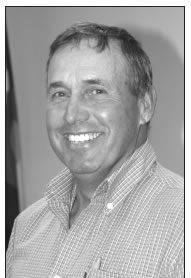
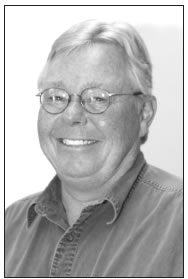
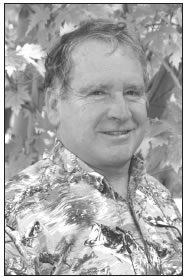
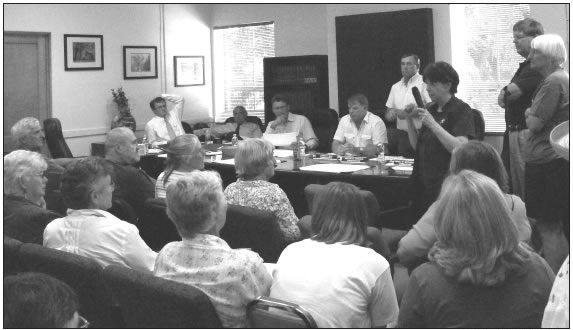
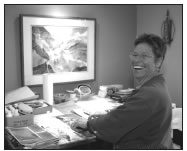
MEMBERS OF THE HOSPICE OF MONTEZUMA BOARD

Members of the Hospice of Montezuma board gather for their monthly meeting at the Cortez library. Finding enough dedicated volunteers to serve on non-profit, special district and governmental boards can be a challenge in rural areas. Photo by Wendy Mimiaga.

She had joined the non-profit’s boardbecause she believed in the cause, butshe had nothing to contribute to thisendless droning about financial reports and staffing problems. She felt like a warm body that helped provide aquorum, nothing more. Now she waswondering what excuse she could use to resign.

The executive director collapsed in tears after the meeting. It was the same story over and over. The board members had good intentions but the meetings rarely accomplished anything and, as usual, she was left with more tasks and less guidance. Most people thought being on the board was a status symbol, something to pad their résumés, that wouldn’t require a commitment beyond the two-hour monthly meeting. She wondered where she would go if she got up the nerve to quit.

Do not try to identify these people. They are composites from any number of organizations in our community.

Communities are run by a plethora of boards and councils. The most obvious are within county and municipal government: county commissions, town councils, planning and zoning commissions. Another visible type of board operates public schools.

But there are also special districts, which oversee such operations as utilities, water, cemeteries, hospitals, firefighting, television and radio, soil conservation, sewer services, and mosquito control. In Montezuma County there are 24 such special districts; in Dolores County there are nine, all needing to be managed by some sort of board.

And then there are hundreds of nonprofit groups and foundations that work for charitable, cultural, agricultural, educational, medical, veterans’ and other causes.

There are 211 tax-exempt/non-profit organizations in Montezuma County, 19 in Dolores County, 454 in La Plata County, 44 in Utah’s San Juan County, and a staggering 454 in New Mexico’s San Juan County, according to TaxExemptWorld.com. These, too, are governed by boards.

All these entities need motivated, responsible, intelligent people to guide them. But finding such folks and keeping them can be very difficult.

What motivates someone to sit on a board? Is it a sense of masochism (or, in some cases sadism) as some former board members might report?

Pat Smith, a national author in board management, has found that people join boards for three reasons: passion for the mission, a desire to give back to the community, or because a friend asked.

All these reasons serve to get people on boards, but they can have drawbacks.

Having passion for something is not synonymous with being equipped to lead it. And joining a board because a friend asked may lead to resentment if the primary reason for joining is guilt or peer pressure. Also, having friends recruit board members tends to result in very homogeneous groups without the diversity that is representative of the community or organization.

Unfortunately, not enough effort is expended by nominating committees to analyze potential board members, not only trying to match the person to the cause, but also deciding whether or not he or she posseses the basic interest or ability to serve effectively.

The STP concept

Throughout Montezuma County and other small communities, there is a chronic shortage of people willing and qualified to serve on boards.

The result is known as the concept of STP (the “same ten people”) who provide the majority of leadership. According to Boardsource (www.boardsource.org), in any community it’s about 5 percent of the people who serve on all the non-profit boards and make decisions impacting the other 95 percent.

“It’s unfortunate, but the STP rule is alive and well in our community,” said Kathy Rousset, executive director of Hospice of Montezuma, a non-profit that provides hospice services in the area. Rousset said her organization runs into the same problem of board recruitment and retention. People come and go but she generally counts on the STP to help her accomplish a multitude of tasks.

Deb Avery, executive director of the Cortez Cultural Center, expressed the same sentiment. “I wish more people would step up to the plate,” she said. “There are just not enough people willing to serve on local boards.”

Both women voiced appreciation for their current boards but understand the difficulty of recruiting and keeping effective leaders.

Former Montezuma County Commissioner Kelly Wilson, who has served on a plethora of boards and is currently chair of the Ag Expo board and vice president of the Montezuma County Historical Society board, said it’s a challenge to find qualified individuals willing to serve.

“People work and have kids and different activities,” Wilson said. “It’s a challenge to find the people that fit the slots you’re looking for and, secondly, to get them talked into it. I fully respect people who back off.”

But the result, he said, is that “the same people seem to be doing all the things. As a result, and I don’t mean to be critical, that’s the way the community goes. You get a dozen people that go from board to board to board, and their thinking doesn’t change.”

Most boards tend to be made up of middle-aged to older folks, he said. “Young people with little kids — it’s hard for them to volunteer unless it’s for something like the school board.” Another problem, he said, is that sometimes individuals get onto a board, particularly a special-district or governmental one, because they have an “ax to grind” or a single issue that interests them. When they find out that bringing about change is a slow process, they give up and quit.

And meetings can be dauntingly dull unless they’re well-run. “People with the leadership capabilities can make it interesting and get the meeting over with and get the job done,” Wilson said. The Ag Expo meetings start at 7 and end promptly at 9, he said. “Two hours is about all your butt can take, anyway.”

Wilson recently left the Southwest Regional Advisory Council, a citizens’ group that works with the BLM, because he wanted more free time. But he still finds himself in demand. “After awhile, you start thinking, isn’t there anybody else that can do this? But people say, ‘Kelly, we asked somebody, but they don’t show up.’

“All these groups are looking for volunteers and they’re all looking for money.”

Still, he has found the work rewarding. “Overall it’s been quite a ride and I enjoyed it, mostly.”

Giving back

Pat Kantor of Dolores, a member of the Dolores Public Library board and a founding member of CFAR (Citizens for Accountability and Responsibility), said good boards have “a dedication to what the group is doing and a realization that you can make a difference.”

Kantor, who was a member of several other groups while in Sedona, Ariz., sees board service as a duty and a way to influence the future.

“Certain people feel a responsibility to give back to the community and I think that’s important,” she said. “I wish everybody did. We all live in and enjoy a community. To sit passively and watch the community happen means that it really can happen in ways that you don’t want.”

She believes more people would serve if they understood what different organizations do and what a critical role they fill. “The community depends on these people,” she said. “The people on the board shape the policies of that organization.”

Ginger Freeman of Cortez is atypical in that she is a young mother with two children who still has found time to be a Partners mentor and serve on the board of Hospice of Montezuma as well as a school parent-teacher organization.

She joined the hospice board in 2004 after being rejected by another local non-profit — that group, she said, told her mother they would not want Freeman because they wanted only business owners on their board.

“It really hurt my feelings,” Freeman said. “It seemed funny because they’re always looking for people. I was telling someone about it and he said, ‘I’m on the hospice board and they are actively recruiting,’ so I wound up there.”

Freeman is now looking to rotate off that group, of which she is vice president. “It’s hard,” she said, “because I want to make sure there is someone to take my place.”

Buying in

Montezuma County has a plethora of “amenity migrants” – retired professionals who come to the area for its beauty and bring with them a wealth of experience and knowledge. Many locals believe there is a rich pool of leaders just waiting for the right opportunity to appear.

One question is whether there is adequate representation of different cultures in the governing organizations of Montezuma County. This is a critical question boards need to ask themselves when recruiting new members.

There are many reasons people choose not to serve on boards. People may feel ill-equipped and/or incompetent to serve. If they have different ideas than the other members, they may feel out of place.

Economic factors can also be a deterrent. Serving on councils, commissions or boards rarely provides much compensation. The Cortez City Council pays its members $400 a month, but even then it has difficulty getting people to run for office. Mancos trustees receive $150 a month; Dolores Town Board members get $25 per meeting.

And it’s rare for non-profits or special districts to give anything to their boards beyond remuneration for time and travel — if that. Not only does board service not pay, it may actually cost money.

Freeman said she was surprised by the hospice board’s requirement — a common practice among non-profit boards — that members make a financial contribution to the organization as a way to “buy in” and show their support.

When deciding grants and funding, foundations may require or look for financial contribution from board members, according to many people who have served on boards.

“I didn’t like that,” Freeman said. “I felt like I’m already giving my time and my energy and my skills.” She works on fundraising for hospice and provides their web-site services for free.

Eventually she wrote a check for $1, which the other board members said was fine, because she couldn’t afford to give more.

Still, she said her service has been very rewarding. “I think hospice is a great group and a great cause.”

Bridging the gap

Board members drop out for a number of reasons; one of the most common is that they did not understand what was required of them in the first place. Both Avery and Rousset agreed that board packets and a good introduction to the roles and responsibilities of members are critical.

Another key requirement is that group members feel they’re contributing and accomplishing something – not just attending meetings.

Lisa Liljedahl, a longtime board member with many organizations, said boards needed to understand their role and not try to micro-manage an organization. She said she had seen a lot of problems with board members who went beyond their roles into active and/or intrusive management, either due to inexperience or lack of understanding.

Organizations such as the Southwest Community Leadership Collaborative and private leadership consultants are working to find and equip leaders in this area. The SCLC provides opportunities for people to learn more about the community through Leadership Montezuma; educates leaders on the roles and responsibilities of being on a board or council through the Summit Leadership Series; provides highschool students with community information and leadership skills through the High School Leadership Program; and provides information on the various water issues in this area through Water 101 (which will be conducting another workshop in October).

Efforts such as these seek to eliminate the STP concept.

Rebecca Larson, a consultant, said the idea of the Summit Leadership series came out of work groups during a Community Summit meeting five years ago. These groups identified a lack of people willing to step into leadership roles in Montezuma County. They theorized that perhaps people needed more skills to feel competent. With that in mind they and others created the Summit Leadership Series – a seven-month “board school” that teaches many aspects of serving on boards.

Kantor said both Leadership Montezuma and the Summit Leadership Series can be invaluable in helping citizens learn what different groups are out there and what they do. “I was blown away five years ago when I did Montezuma Leadership and found out about all these different organizations,” she said. “Then the Summit Leadership program really goes into the intricacies of what boards are supposed to do. That helped me a lot.”

There may not be a simple answer to the long-standing dilemma. However, a healthy community is dependent on the effectiveness of its leaders. It is up to the people who benefit from the many organizations in the area, as well as the organizations themselves, to decide how to encourage councils and boards to continue spending the time, money and energy to make decisions that affect us all.

For information on the Southwest Community Leadership Collaborative contact Susan Hakanson, P.O. Box 609, Cortez, info@swcommunityleadership. org, 970-379-3303.
Published in October 2008

Strands of history: An exhibition celebrates Ute basket-weaving

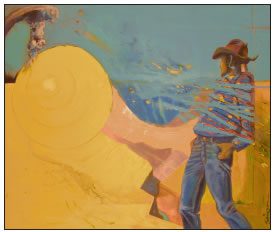
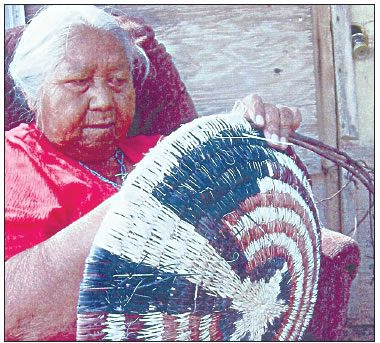
UTE WHITE MESA BASKET-WEAVER ADOLINE EYETOO

White Mesa basket-weaver Adoline Eyetoo works on her flag basket, “Song of the Basket,” an exhibition of the Ute basket-making skills, is on display at the Southern Ute Cultural Center and Museum in Ignacio, Colo. Photo courtesy of Southern Ute Cultural Center and Museum

Lynn Brittner speaks softly into the phone from her office at the Southern Ute Cultural Center and Museum (SUCCM) in Ignacio. Under her guidance as executive director, SUCCM preserves what is left of Ute culture, revives pieces of the culture that have been lost, and tries to teach visitors about the Utes.

“People usually go to Mesa Verde or the Navajo Nation. No one knows who the Utes are.” asserts Brittner. “That’s ironic. They’re the oldest living continuous occupants of Colorado.”

Their Uto-Aztecan language is spoken from Mexico to Canada. They once controlled the trade routes known as the Spanish Trail, running from the Santa Fe area to Colorado, Utah, Arizona, and California.

Brittner hopes two things will soon draw more attention to the Utes: the expansion of SUCCM into a new complex over the next 18 months, and an exhibition called “Song of the Basket,” up since last August in SUCCM’s present facility.

“Song of the Basket” evolved when 10 elder Ute basket-makers from White Mesa, Utah, approached Brittner and pointed out that once they passed away, no one would be making baskets.

“This new generation is just not interested [in leaning how],” says Brittner. “They’re getting educated, they’re getting good jobs, they’re moving to cities.”

Responding to the elders’ concerns, she began making trips to their homes to document basket-making methods. She promised to buy contemporary pieces they produced.

The White Mesa basket-makers also came to Ignacio in a bus from their local senior center to visit SUCCM and the Ute Mountain Casino. Brittner breaks into a delighted laugh. “They’re charming, wonderful, vivacious women,” she chuckles. “They really enjoy traveling, these ladies.”

But when they’re not roaming the countryside, the elder White Mesa basket- makers work at a demanding craft. They pick red willow or sumac branches, split them, and form coils. The task can leave their hands cut and chapped.

Then they develop a concept for each basket and start to weave, sometimes creating simple geometric shapes, sometimes pictographs, butterflies, stars, willow flowers, or pictorial designs. Some of the women shape their creations into jars and seal them with pitch to carry water, or make medicine baskets depicting stages of a person’s life.

Designs come from aunts, older cousins, and old-time traders. The Twin Rocks Trading Post in Bluff, Utah, has a small historic basket collection from which the artists gather ideas.

Each has her favorite motifs. Alice Lehi loves horse and bumblebee designs. Adoline Eyetoo works with American flags.

“They weave baskets from their hearts,” explains Brittner, adding that the women often sing traditional songs while they work, and employ the traditional form of three to five willow rods per basket coil.

Visitors can see all these pieces in “Song of the Basket.” The name derives from a poem by a Ute elder who was inspired by the weavers’ work.

Containing about 80 pieces, the show will be on display until 2010. After that, SUCCM will move to quarters northeast of the intersection of Highway 172 and C.R. 517, just south of the new Sky Ute Casino.

Brittner hopes at that time to expand “Song of the Basket” to include historic as well as contemporary pieces, and to explain the influence of Ute basket-making on other Southwestern Native American groups.

According to the White Mesa basket-makers, the Utes taught the Navajos basketry in exchange for peace after a long period of war. Brittner laughs quietly. The Navajos agree that they fought with the Utes, but don’t agree on who created peace. “Who had baskets first is the big question here.”

No matter who did, the Navajos began to prize Ute baskets. Tribal taboos forbade Navajo medicine men to make their own ceremonial baskets and pictorial designs for their rituals. Ute artists stepped in to help.

The Utes’ cousins, the Paiutes, also made baskets, but their approach to the craft hasn’t yet been fully researched. Brittner hopes to change that.

“We’ve interviewed old-time traders in their 70s and 80s, interviewed basket- weavers in their homes, and where they were born and raised in teepees in Allen Canyon, [Utah], trying to get the whole picture,” she says.

For her, “Song of the Basket” in its current form is just a preview of what is to come in the new Southern Ute Cultural Center and Museum, which she predicts will “be a wonderful space” with 8,000 square feet of permanent exhibit and temporary galleries.

The facility will have a library, an elder story-telling room, two classrooms, a multipurpose space, a grand hall, and an outdoor cooking area. State-of-the-art storage will protect collections with humidity and temperature control. The building will feature a green roof, recycled furniture, and carpets made of old tires.

Besides “Song of the Basket,” oral histories with elders, veterans and other community leaders; rotating exhibits, clothing borrowed from the Smithsonian; and myths, legends, and contemporary tales will tell the story of Utes as warriors, hunters, traders, and artists.

Cookbooks will explain how to prepare groundhogs, hummingbirds, and pemmican, a mixture of chokecherries, dried elk or venison, and lard. Fashion shows, and a haunted house at Halloween will offer a chance for delightful social interactions.

“We’re hoping to create bridges to people in Durango who wouldn’t normally come to the reservation,” says Brittner. “We’re hoping to bring in people to learn more about the Ute culture from all over.”

Published in October 2008

From fuel to food: As markets change, Dove Creek’s biodiesel plant shifts direction


SUNFLOWERS STAND READY FOR HARVEST NEAR DOVE CREEK, COLORADOIn late summer, fields of golden sunflowers, heavy heads drooping, line the border of U.S. Highway 491 in Southwest Colorado, near the town of Dove Creek. Farmers in this part of Colorado grow the sunflowers for their oily seeds, which they sell to San Juan Bioenergy, LLC.
The bioenergy company originally formed about four years ago, with a goal of producing biodiesel fuel for the region. About one year ago, though, market fluctuations forced a change in that mission, and the company, formerly known as San Juan Biodiesel, has changed both its name and its primary purpose, switching from fuel to food production.

“We’ll be using sunflower and safflower oil to sell solely as a food product,” said Jeff Berman, chief executive officer at the company, in a recent interview.

Over the last year, said Berman, the price of sunflower seeds, and, correspondingly, sunflower oil, used for cooking, has gone up dramatically. The plant can now get between $7 and $8 per gallon for selling food-quality oil from the seeds of sunflowers and safflowers. In contrast, diesel fuel prices have hovered in the $3- to $4- per-gallon realm over the past year.

“Sunflower oil has risen to the point where it is one of the highest food grade oils on the market,” Berman said during a recent tour of oil-seed crops held at the Colorado State University Extension research station in Yellow Jacket, Colo.

Greg Vlaming, director of grower services for San Juan Bioenergy, confirmed that food-grade sunflower-oil prices have risen significantly in the past year, partly because large companies have switched to using sunflower oil, which has no trans-fats, to fry packaged foods like potato chips. “The major food companies in this country realized that they couldn’t keep feeding people fatty oil in their foods,” said Vlaming.

The bioenergy company plans to sell its food oil to markets across the country, said Berman, another change from the original goal of the plant, which was to sell fuel to a primarily local market. The plant still aims to use as much renewable energy as possible, and will use a process called gasification to turn sunflower-seed hulls and other plant remnants into a gas that provides part of the electricity to run the plant.

Both Berman and Vlaming said the plant was still pursuing biodiesel as a goal, but on a smaller, pilot-project level. The plant will not use sunflower or safflower seeds to product biodiesel, but has sought canola seeds and used fryer oil, which they would purchase from locations across the Western Slope, as feedstocks for making biodiesel fuel.

As prices for traditional biodiesel feedstocks such as soybean oil rise, biodiesel facilities across the country are turning to alternate sources to produce the raw material for making biodiesel, according to industry reports.

Amber Thurlo Pearson, a communications specialist at the National Biodiesel Board, the primary biodiesel trade organization in the United States, said that other biodiesel manufacturing facilities are also looking to alternate feedstocks as food-oil prices rise.

“Now certain plant oils are uneconomical to make biodiesel with, currently, so you’ll see more diversification of feed stocks,” Thurlo Pearson said.

Alternate sources of biodiesel feed stock include used fryer oil, also known as yellow grease, and leftover animal fats from processing, as well as oil-seed crops such as canola or camelina, a member of the mustard family, that are not fetching such high market prices as food oils. Blue Sun Biodiesel, a company based in Golden, Colo., just received a $41,059 grant from the state of Colorado to commercialize camelina as a biodiesel feedstock.

Across the United States, the industry is also looking into using algae to make biodiesel, although that technology is not yet available at a commercial scale.

San Juan Bioenergy plans to have its grand opening some time in November, said Berman. The plant’s been contracting with growers in the Dove Creek area for four years now, so it has plenty of feedstock for making sunflower and safflower oil.

“We expect to process, before the 2009 harvest, about 20 million pounds of sunflower, safflower, and canola,” Berman said.

This year, the region planted about 15,000 acres of crops specifically for the plant, most of them sunflowers. The Colorado State University Extension research station in Yellow Jacket has worked to support growers by conducting trials of sunflowers, safflowers, canola and camelina in various rotations and irrigation regimes.

For more information, see www.sanjuanbioenergy.com.

Published in October 2009

Young calls for planning, vision in county

Related stories

Hughes concerned about land-use regulations

Koppenhafer advocates fair code enforcement


Planning – whether it be for land use, oil and gas development, economic development or roads – is the key to a bright future for Montezuma County, according to Paul Young.

The independent commission candidate, who is competing against incumbent Gerald Koppenhafer as well as independent Alfred Hughes, is calling for planning in all sorts of areas.

If elected, Young hopes to encourage planning in regard to energy development in the county, in particular for when carbon-dioxide and natural- gas revenues dry up.

“I have no idea where it would go to, but I think we need to sit down and say, ‘Hey, how many years will this energy last? How many years do we have as far as the tax revenues?’

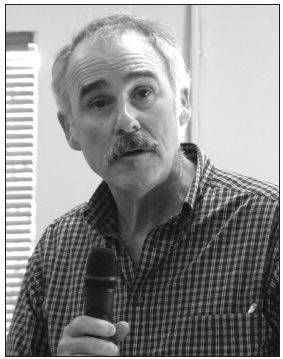
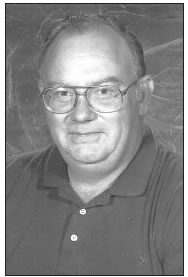
INDEPENDENT COMMISSION CANDIDATE PAUL YOUNG

Paul Young

“We know energy at the present level is here for 20 more years. We think it’s going to escalate maybe in the next year but after that, will it hold steady?”

Young would also like to see residential- growth projections and a look at the big picture.

“What are the projections for the demographic makeup of this county in five, 10, 25, 30 years? We need some experts in to help us project that. That’s the type of thing that has to be done.”

“We need to project the future and plan for what’s projected,” he said. “That takes a lot of masterminding.

“I would like to see the commissioners get everybody that works for the county together and take about two days and identify where they’re at and where they’re going and get the input from those people.”

Public input would be important too, he added.

He envisions a two-day strategic planning session where new ideas would be welcomed. “You can put the most brilliant, most educated people in the world together and someone else can come along with a great suggestion,” he said.

Young said economic development is probably the second-biggest issue facing the county in the near future. “Planning and zoning is the No. 1 issue in my opinion,” he said. “That’s the issue the county’s been sued over. We need to address that and see where are we going to go.”

He said the county needs to listen more to its planning commission. “I know members of that board and there’s some good minds on it,” he said.

Young doesn’t think the county land-use code needs to be thrown out in favor of a completely new plan, as some have said, but he believes it needs revision. “It certainly needs to be worked with constantly,” said Young. “Every document you have needs to be evaluated on a regular basis.”

Although he believes in planning, he isn’t certain about the wisdom of creating a land-use plan for the Mancos Valley as was done for the Dolores River Valley. Some people have called for having a half-dozen or so special land-use plans for specific parts of the county; those special sections would then be incorporated into the county’s overall code.

Young believes the Dolores River Valley planning effort “didn’t involve everybody” and “there’s been some real issues over that.”

“If there’s a Mancos Valley plan, the people need to be well-represented,” he said. “And it needs to be part of the county plan. If this is like seceding, I don’t think that’s right.”

Young, who once worked as the building inspector for the town of Mancos, does not believe in adopting a mandatory residential building code throughout the county. “The voters have spoken on that [in a previous election] and I support the voters,” he said. “If I’m commissioner I will support the voters.

“I understand the UBC and IBC and plumbing regulations, and those are very good.” But current mandated inspections, such as the state-required plumbing and electrical inspections and the countywide building code for commercial/industrial buildings, are adequate, he said.

Young said another important issue for him is working to improve relations between the county and the local municipalities. “Sometimes the county and the towns didn’t get along so well. I’d really like to see that corrected. I’m kind of a peacemaker guy.”

Young, who will turn 58 on Oct. 13, is married with three children and three stepchildren. Born and raised in the Denver area, he grew up in a family with a musical flair. “My grandmother’s porch was just like you used to see on ‘Hee-Haw’,” he said. “I still have my granddad’s fiddle. I play guitar, and my mother plays piano by ear.”

He came to Montezuma County in 1997 to be executive director of the nonprofit San Juan Bible Camp north of Mancos. That gave him experience in leadership as well as in dealing with a plethora of government regulations regarding child care and other topics, he said.

Young has had a varied career, including teaching auto mechanics at the Community College of Denver and coaching track and field for the past three seasons with Dolores High School.

Most of his life, however, he has been self-employed, he said. “I’m self-employed now as a Realtor. I’ve owned an auto parts store, owned a service garage. I’ve had success in several business.

“I’ve never run for political office before, but I’ve studied the office and I know I could manage it.”

Unlike Hughes, Young does not have strong criticisms of the current commissioners in general or Koppenhafer in particular. “I commend them for balancing the budget. They lost a couple lawsuits but I don’t know that it’s any fault of their own. Almost every county across the state has been sued by citizens, and the citizens won.”

The county has been heavily criticized for the way the commission meetings are conducted. The commission room is too small to handle the large crowds that turn out for some public hearings, and it’s difficult to hear the commissioners. Young said the facility is indeed inadequate at times, but the commissioners are addressing that.

“Some people would like it to happen yesterday, but I think the commissioners are going to make the wisest decision they can regarding a sound system. Having grown up in a musical family, I could probably help them with that – I know about sound systems.”

He likewise was dubious about calls for the county to have public hearings at the annex building instead of in the courthouse.

“Unless you have a portable system and portable files and documents, logically it’s tough to move to the annex building. You have to have access to legal records and things like that..”

Young said he did not decide to run for commissioner out of any “personal vendetta,” but because the idea had been “testing my mind” for about four years. “I just think I’m a good manager and wanted to try for the job.”

Young said he does not believe Koppenhafer has done a bad job as commissioner.

“I just think Dr. Koppenhafer needs to be a veterinarian and I need to be a commissioner.”

Published in Election, October 2008

Wilson proud of his record as DA


Related story

Myers calls for fewer felony plea bargains

When Jim Wilson, incumbent candidate for district attorney, talks about crime, his enthusiasm for public service and dedication to enforcing the law are undeniable.After a four-year term as DA, Wilson is hoping to continue his role as the top prosecutor for Montezuma and Dolores counties, which make up the 22nd Judicial District. Wilson, a Republican, faces a challenge from Democrat Mac Myers.

DISTRICT ATTORNEY JIM WILSON

Jim Wilson

“My day-to-day operations in this community and my understanding of the commissioners, budget limitations and the people of both counties make me more qualified for the job,” Wilson said during a phone interview.During his term Wilson and his staff were called to deliver justice when a influx of heinous crimes occurred, including several murders, a patricide and a drunk-driver crash that resulted in the death of 16-year old Amanda Degagne“We’re a very small office but we get hit with very big problems,” he said.In the Degagne death, Wilson emphasized “that I am directly responsible for the person who killed her still being in jail.” He said her case led to tougher sentencing procedures in the state regarding crimes with aggravating circumstances.Originally the case against defendant Travis Lopez was overturned because under a plea bargain he was sentenced within the more severe aggravated-circumstance penalty range without the benefit of a trial.But a successful appeal by Wilson led the Colorado Supreme Court to rule that convicted criminals such as Lopez and Terry Barton (who started the Hayman Fire) could be sentenced in the aggravated range, if certain criteria are met, without a jury trial.Lopez is serving a 20-year prison sentence. Without the aggravated circumstance component, Lopez could have only received probation because it was his first felony.“In terms of lawyering, getting that ruling was a highlight for myself and my staff,” he said. “We established the procedure that a judge could find aggravated circumstances without going to a jury trial.”Another successful prosecution under Wilson’s term was the Aric Miera trial. Angered over a divorce case, Miera shot and killed attorney Richard Luhman while he was working in his Market Street law office. Due to a breach of behavior during jury deliberations, the case had to be re-tried, but the verdict eventually landed Miera with a life sentence without parole.Wilson faces challenger Myers, a two-term elected DA from the 9th Judicial District headquartered in Glenwood Springs. Myers, now a Mancos resident, has criticized Wilson for not taking more cases to trial.For example, Myers believes that confessed murderer Shawn Walker, 34, should have gone to trial for firstdegree murder, but received a pleabargain for second-degree murder for the shooting death of Alfonso Raul Sena. Walker was sentenced to 28 years in prison; a first-degree conviction would warrant 48 years to life in prison or the death penalty.“With all due respect to Mac, he didn’t look at the evidence and he didn’t handle the case,” responded Wilson. “I feel like we did justice on that case, taking into account the severe limitations we were having.”Wilson said the plea bargain was necessary because of evidence and witness-credibility problems, intoxication levels and Walker’s reported intention of retracting his confession. Chief Deputy Attorney Keith Mandelski told the Cortez Journal that “first-degree murder would have been hard to prove because of the high level of intoxication at the time of the offense.”Allegations that the district attorney’s staff is inexperienced also drew a response from Wilson. He said his two felony attorneys are younger but are learning “by leaps and bounds, so over the last four years I’ve maintained good quality prosecutors in the courtroom.” Experience is relative, Wilson continued, noting that one of his lawyers has 16 years of tort-law experience, “so now for the first time I have the civil experience that I can draw upon.”Regarding the perception that he does not take cases to trial frequently enough, Wilson said those decisions are made carefully.“I’m not about carving notches in my gun. I think it is a misuse of the system if what you’re doing is going to trial simply to go to trial because you stereotype a person perhaps unnecessarily, and that stereotype stays with the person no matter what happens with the jury trial,” he said. “[The DA’s office] can hurt people so we have an obligation to make sure that if we go to trial it is the right reason and the right case.”Like Myers, Wilson also had his ups and downs while serving as DA. During his term:• He has struggled with high turnover in his office. Wilson explained that heavy work load and the grim nature of dealing with violent crimes takes a toll on people emotionally, often causing them to leave. Also, budget constraints and the limited labor pool in rural areas make it difficult to find highly experienced workers. “I tell my new deputies that I cannot pay you what you could make somewhere else, but I can give you the experience and the training,” Wilson said.• Wilson reports a strong prosecution record for cases of sexual assault on children. As a St Louis police officer, Wilson said he investigated 200 such cases per year.• Wilson reports that in the last two years his office has averaged a 94 percent conviction rate for DUI cases. Also, domestic-violence cases are running at 43 percent conviction rate, which is higher than the national average.Wilson closed by saying he has a good working relationship with local law enforcement. “We don’t always agree, such as when a search warrant is appropriate; however, they have to understand that as gatekeeper I am firm in prosecuting crimes but must also zealously enforce the constitution.”


Published in Election, October 2008

Myers calls for fewer felony plea bargains

Related stories

Wilson proud of his record as DA


District attorney candidate Mac Myers has a professional, self-assured manner, a trait earned through years of experience in the courtroom and an obvious love of the law.

Between 1996 and 2004 he was elected for two terms as DA for the 9th Judicial District, which includes Garfield, Pitkin and Rio Blanco counties. As chief prosecutor during that time, Myers and his staff successfully handled difficult criminal cases, managed controversy, and implemented innovative programs to aid domestic-violence victims.

DISTRICT ATTORNEY CANDIDATE MAC MYERS

Mac Myers

Since then he worked briefly in the Cortez-based 22nd Judicial District for his opponent, incumbent Jim Wilson, who worked for Myers in the DA’s office in Glenwood Springs as well. Myers resides in Mancos.

Myers credits his courtroom skills and a well-trained staff for a track record of convictions in his career. Lawyers with more expertise are needed here, he says, to improve trial performance and the conviction rate.

“I was largely drafted into this because of my concerns about how the (DA’s) office was going,” Myers said by phone. “The problem has been poor results due to what I perceive to be poor management and high turnover.”

He points to the relatively slight experience of the three deputy district attorneys. “It went from approximately 40 years of criminal law experience in 2005, when I joined the staff, down to around five years of prosecution experience now.”

He said adding to the problem is the fact that the office has suffered a 200 percent turnover rate. And, according to a public-record request by Myers, the conviction rate for Wilson’s office is 24 percent for felonies resolved in 2007 and in 2008 to date.

“One-third were plea-bargained down to misdemeanor and traffic, and a quarter of them were dismissed outright,” Myers said. “I do not believe for a minute that only 24 percent of the people charged with felonies in our jurisdiction merit anything less than a felony conviction.”

He advocates more trials as a way to maximize sentences for the worst offenders. Plea-bargaining is a necessary part of the system, he explained, but should not replace a trial when a felony case warrants it. “Violent and repeat offenders, drug dealers and drunk drivers — the ones that do the most damage to the community — are not being very well prosecuted.”

He cites his success prosecuting the Aric Miera murder trial while working for Wilson. Enraged over a divorce case, Miera killed Richard Luhman, a Cortez attorney, in his office on Market Street in 2005. Miera received a life sentence on a conviction of firstdegree murder following a second trial (the first ended in a mistrial) that Myers, the assistant DA, prosecuted.

The Shawn Walker murder case is one that Myers criticized. Walker shot Alfonso Raul Sena six times in the back in August 2007 and dumped the body near Jackson Reservoir. Walker was originally charged with first-degree murder, but under a plea bargain by Wilson, he was charged with second-degree and received a 28-year sentence.

“For the deterrent effect, the DA needs to take a firmer approach,” Myers said. “Attorneys with more experience can analyze cases like the Walker case and know that they warrant more prosecution. I know that I could identify more cases that need to go to trial, but do so in a way that does not clog the courts or affect speedy-trial laws.”

In Glenwood Springs, Myers had success as the DA but also endured some challenges and controversy.

• Myers secured three first-degree murder convictions while DA in the 9th District, all for domestic violence.

• His office handled a shooting-spree case in which Steven Michael Stagner killed four Mexican nationals at a grocery-store parking lot in Rifle. A judge ruled Stagner not guilty by reason of insanity and sentenced him to a mental hospital from one day to life. Three psychological profiles confirmed he was mentally insane. Myers said the evidence against Stagner ensures he will not be released.

• Myers withdrew the DA’s office from an undercover drug-enforcement program, citing mismanagement and improper arrests. “Since 2003, the task force had become the sloppiest, most poorly managed law-enforcement agency I have seen . . .”, he told the Glenwood Springs Post Independent.

• He implemented a domestic-violence counseling program instead of a state-mandated one; his plan reduced recidivism rates significantly.

• In 2003, Myers landed in hot water when it was revealed his DA’s office had failed to inform defense attorneys of a policeman’s criminal history involving official misconduct. According to the Post Independent, Frisco police officer Michael Williams was arrested for allegedly throwing out an original Breathalyzer test during a DUI arrest in favor of a second test with a higher reading. He was forced to resign, and in 1999 was hired as a Silt policeman in Myers’ district.

Williams’ record of criminal misconduct was passed on to defense attorneys by Myers’ staff as part of office policy but not consistently, prompting an investigation.

Cases where the defense was not informed of the violation, and which hinged on Williams’ testimony, had to be re-done or thrown out. Myers apologized for the error, and maintained it was not intentional, explaining there was a communication mishap between him and an employee. The Attorney Regulation Counsel cleared him of any ethics violations, after an investigation.

“To make sure that doesn’t happen again, we need to make sure [law enforcement] does not have any prior [convictions]. I do think that our sheriffs and chiefs should make us aware if we have problems there,” Myers said.

In the 22nd district, which includes Montezuma and Dolores counties, he says methamphetamine abuse, and crimes associated with it, are a priority. Focusing more on “dealers who are the ones pumping drugs into the system” rather than on users is a part of his strategy, Myers said.

More effort is also needed in prosecuting crimes against children, he said, adding that too many cases are not charged or are dropped. Conviction on such crimes is tough and now more so because of a U.S. Supreme Court ruling that requires victims to take the stand and testify in open court.

“The Child Advocacy Center is a huge resource to help families and children psychologically prepared to testify and I think we can do that in more of these cases.”

Overall Myers said his plans for improving the office include reducing crime recidivism, recruiting at least one attorney with significant trial experience to anchor the district court, stabilizing the staff and boosting prosecution numbers.

“My perception is that there has not been really good prosecution here for a while,” he said. “What I really want to accomplish here is to set that in place to improve conviction rates and then pass that system on to future DAs.”

Published in Election, October 2008

Koppenhafer advocates fair code enforcement

Related stories

Hughes concerned about land-use regulations

Young calls for planning, vision in county


Gerald Koppenhafer knows there are flaws in Montezuma County’s landuse code. But he doesn’t believe they are fatal ones.

“As far as the land-use code, I don’t think there’s a major problem,” Koppenhafer, the current chair of the county commission, told the Free Press.

“When you go to these CCI [Colorado Counties, Inc.] meetings and talk to other county commissioners, I can tell you, we have a lot less of a problem than many of them do.

“I don’t think there’s that much wrong with our system right now.”

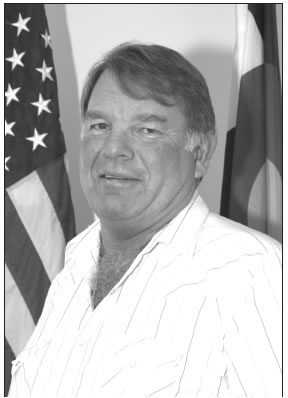
CHAIR OF COUNTY COMMISSION GERALD KOPPENHAFER

Gerald Koppenhafer

Koppenhafer, a Republican from Mancos, is running for re-election. He faces challenges from two independents: Alfred Hughes and Paul Young.

Koppenhafer is also a large-animal veterinarian who gives most of his interviews by cell phone while traveling around the county. Plain-spoken and direct, he is a staunch conservative who advocates for private-property rights but has also worked to accommodate the concerns of a very vocal contingent concerned about land use.

In the 1990s, Koppenhafer served on the citizens’ working group that helped create the county’s zoning system, known as LIZ, for Landowner-Initiated Zoning. LIZ allowed landowners to zone themselves into large-lot agricultural zones, or to express a preference for smaller lots, within a certain time period, which ended in 2000.

LIZ has proven to be controversial, and many county residents have said the county needs stricter zoning and stronger land-use regulations. Koppenhafer disagrees.

“You’re never going to stop development. There are a lot of people in this county who want to stop development totally.

“Back when we started doing a comprehensive land-use plan, there was this big talk that we were going to have 35,000 people here by 2000. We didn’t even get close. [The county’s population is about 26,000.] Personally, I’m not sure it’s ever going to happen. Our growth has been at a pretty steady rate.

“I just don’t think it’s that bad of a system. The worst problem I think that’s happened is it’s never been actually enforced. A lot of things have happened that should have been zoned and weren’t.”

Koppenhafer has been a vocal advocate of consistency in enforcement of existing regulations. In recent months the commissioners have ordered a landowner not to hook up a 30,000- gallon propane tank without getting permission from the county and told another landowner to cease and desist from building commercial storage units until he got approval.

The commissioners in 2006 went to court and obtained a preliminary injunction to shut down a motorcycle rally because the organizers were operating without a high-impact permit.

“If you’re going to have the thing [a code], you’re going to have to have it for everybody and everybody’s got to follow it, and if not, you’re going to have to throw it out,” Koppenhafer said.

“We’re trying to actually follow every step in that land-use code and do everything that it says. We’re trying to make every part of it be in effect, and that hasn’t been done in the past.”

Indeed, some of the problems the commissioners have been dealing with were inherited from previous boards.

For instance, the county is being forced to buy land that was leased by the county in the distant past and used as a landfill, now abandoned. “Why they would put a landfill under leased ground — to me that’s crazy,” Koppenhafer said. But, because of liability issues, the county now has to acquire the land rather than let another private owner have it, with its potentially toxic residue.

And a major appellate-court decision that went against the county in November 2007 involved a permit for expanding a commercial warehouse on agricultural land that had been granted in June 2004 by three different commissioners. One of Koppenhafer’s currrent opponents, Hughes, was a plaintiff in that case.

“I wouldn’t argue with those people [the plaintiffs],” Koppenhafer said. “In actuality, the commissioners should not have let [the warehouse owner] expand there to begin with. The court was right, as far as I’m concerned.”

However, he disagrees with a more recent decision by the Colorado Court of Appeals, which again ruled against the county in a case involving a gravel pit that had been approved on ag land in the Lewis area. A neighbor, Chuck McAfee, appealed the approval, saying the county was not following its own land-use code and was using the highimpact- permit process to allow all sorts of uses on ag land. The court agreed, but Koppenhafer said the decision rested on a technicality involving the fact that the conditional uses allowed on ag land were listed in a separate chapter of the code from the zoning section.

The county is currently being sued for a decision made on March 10 of this year, when the board voted 2-0 (Koppenhafer was one of those votes) to approve high-density zoning for a future subdivision on Granath Mesa, north of Dolores. The subdivision would not have a domestic water supply beyond wells and cisterns, and neighbors had argued it was inconsistent with the large-lot character of the neighborhood.

Critics have charged that all the litigation is a sign that the land-use code is seriously flawed, but Koppenhafer said that’s not so.

“You can have any one of those codes and you can still end up in court,” he said. “As far as the number of lawsuits, we’re not even close to most counties. I can guarantee you that’s true. We’re not even close to La Plata County. Every county you talk to –they’re all in the same situation.”

He does admit there is widespread confusion about LIZ, with many county residents believing that because they chose to stay “unzoned” during the allotted sign-up period, they now can do whatever they want with their land. In fact, once the time limit expired, the unzoned properties were essentially zoned into their current use, and owners must get approval to change that use.

“Most people don’t understand that,” Koppenhafer said. “ ‘Unzoned’ is a classification, and if you try to change anything you’re doing, you’re going to have to get permission.”

Beyond land use, Koppenhafer said the county faces a number of other challenges. The biggest may be booming natural-gas development, he said.

“It could be a huge impact to this county,” he said. “Roads — you can make the companies do some improvements going to the well, but when you start having that many big trucks all over the county, and the number of opeople moving in to work on those wells, it will affect everybody in the county.

“You have to provide more emergency services, law enforcement — it’s a huge impact.”

Another potential problem is the restructuring of the way state Department of Local Affairs monies, particularly energy-impact grants, are allocated. In the past, rural counties and municipalities with a lot of energy development could obtain funds for a variety of uses, including things as disparate as new sewer lines and welcome centers. Now, the state is changing the way the money is doled out, and Koppenhafer worries it could mean Montezuma County doesn’t see as much grant money as it needs. The county has no sales tax except for a half-cent that goes entirely to the jail, so it is dependent on property taxes and grants for its revenues.

An ongoing challenge is finding ways to squeeze a growing county government and court system into aging and too-small structures such as the courthouse. The county is having an energy audit done to find ways to cut costs in the historic building. “We have to do something with the old windows,” Koppenhafer said. “In the winter it’s like the wind is blowing through one side [of the commission meeting room] and out the other.”

The meeting room has become something of a bone of contention as well. Public hearings can draw close to 100 people, too many for the room to accommodate comfortably. And the main table is set so some officials and visitors have their backs to the audience.

Critics have called for night meetings in a venue such as the county annex.

“We’ve talked about that, but the sound system over there is terrible,” Koppenhafer said. “And if you get into us having meetings of an evening, we have to have the staff there to go get this or that, and you’re not going to have the ability to do that.”

The commissioners did try holding a meeting from 7 to 9 one night a couple years ago, he said, “and by 8, everybody got up and left.”

Also, the regular meetings often last from 9 to 5. “I don’t know what time we’d get done at night,” he said.

Koppenhafer said many people’s impressions of county government are based mainly on the contentious public hearings over land-use issues, which may give some skewed impressions.

“There’s a lot more to running the county than those public hearings, I can tell you that,” he said.

Published in Election, October 2008

Hughes concerned about land-use regulations

Related stories

Koppenhafer advocates fair code enforcement

Young calls for planning, vision in county


A few years ago, Alfred Hughes would not have imagined he would be running to be a Montezuma County commissioner.

But that was before a neighbor proposed expanding a commercial warehouse in the quiet rural area south of Mancos.

When the county commissioners approved the expansion, Hughes and his wife, Debra, along with several others, brought suit against the county and the warehouse owners.

Eventually they won a decision from the Colorado Court of Appeals stating that the warehouse expansion was contrary to the Montezuma County land-use code.

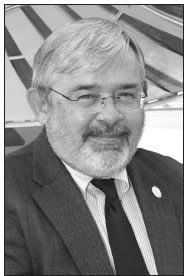
COUNTY COMMISSION CANDIDATE ALFRED HUGHES

Alfred Hughes

That propelled Hughes, 55, into the public eye and eventually into the race for commissioner. He is running as an independent, seeking to unseat Republican Gerald Koppenhafer.

“I’m not doing this because I’m political,” Hughes said. “I was never politically active before, except for writing letters. But people approached me and said, ‘We want you to run. Things can’t continue the way they’re going’ It became a responsibility.”

He isn’t running because he needs the work. “I have a job I love,” said Hughes, who is with Xcel Energy. If elected, he plans to keep that job. He says it won’t be a conflict because Xcel encourages employees to become politically involved, he has earned a great deal of time off, he has a reliable crew, and his position doesn’t require him to be in an office during any particular hours.

Hughes says his qualifications include years of experience managing personnel, budgets and regulatory issues for Xcel, as well as experience facilitating and leading meetings.

Since his experience with the warehouse controversy, Hughes has become passionate about flaws he sees in the county’s land-use policies. He believes the land-use code is not clearly written and fails to provide needed protection for landowners, which has resulted in a flurry of recent controversies over development proposals and spawned lengthy, heated public hearings.

“I think if you have clarity in your land-use regulations, the process would be streamlined,” he said.

Hughes believes that lack of clarity has resulted in a hodgepodge of uses out in the county and widespread confusion about what is actually allowed under the code. Montezuma County has a unique zoning system called LIZ, for landowner-initiated zoning. When the code was adopted in 1998, landowners were asked to state their own zoning preferences within a certain window of time, but many did not.

“Fifty-six percent of this county remains unzoned,” Hughes said. “Less than 1 percent is zoned commercial and less than 1 percent is industrial. Just driving around, you can see that’s not correct. Well, the 56 percent is.”

Hughes believes the “unzoned” designation should be done away with. “LIZ ended in 2000. If you didn’t zone yourself during that window, you’re supposed to be zoned into your current use. Calling things ‘unzoned’ seems like an attempt to continue LIZ for how many centuries, I don’t know.”

Hughes says that doesn’t mean he doesn’t understand private property rights. “I don’t think what I’m saying will compromise private property rights,” he said.

“I don’t want somebody staring over my shoulder and telling me how to build a chicken coop, but private property rights come with private property responsibilities, and it goes beyond the fence line,” he said. “That’s where government and people come in to create reasonable, not overly restrictive regulations to allow for best uses that don’t compromise the quality of life for your neighbor and the community.”

Hughes, who attends most public hearings involving land-use controversies, was particularly critical of the current commissioners for voting to allow small-lot (3-9 acres) zoning on 160 acres on Granath Mesa north of Dolores. The development proposed there, known as Summerhaven, would rely on wells and cisterns for its residential water.

“I don’t think water is being considered the way it needs to be, when it comes to residential development,” Hughes said. “We live in a desert. Allowing development without a physical water supply doesn’t make sense. If everybody’s living off a cistern, who has priority at the water dock — the retiree in his second home, or the original use, which was to water stock?”

Summerhaven is in limbo at the moment because a lawsuit has been filed against the developers and the county. “We’re back in litigation,” Hughes said. “We’re spending a lot of time in the courts when we could be working to build a community.”

Hughes, born and raised in Denver, said he decided when he was 8 and first visited Mesa Verde that he wanted to live in the area. He has lived in Montezuma County for 16 years, after residing in various other places around Colorado. He said he would love to see economic development bring prosperity to the region, but believes the land-use code is hampering growth.

“The lack of clarity and the lack of predictability have discouraged people from investing in this county,” he said. Potential owners of commercial and light industrial operations don’t know where they can build without ending up in the courts.

However, Hughes said he isn’t advocating big growth. “I don’t think that’s what I’m about at all,” he said. “It’s intelligent growth. I strongly believe you can plan for the future, so that’s one of the issues that separates me from the incumbents.”

Hughes doesn’t find himself in agreement with the current board very often, but he said he agreed with the decision to seek an injunction to halt the failed Rally in the Rockies motorcycle rally in 2006. More recently, he supported the board’s decision last month to make the owners of a lot in a residential subdivision seek a zoning change in order to site a propane-storage tank there.

In both cases, however, the decisions took too long, Hughes said. “It seemed like a struggle to decide something that’s fairly clear,” he said.

Hughes echoes other critics’ calls for revamping the commission meetings. Topics “of high public interest” should be discussed at night, he said, and in a bigger venue.

“Having these discussions in a cramped room that’s not large enough to accommodate them is not good business. I have to believe it’s intentional. There’s no good reason they couldn’t be held at the county annex with an audio system.”

Hughes also is highly critical of the way the commissioners, staff and guests sit around a table rather than along one side.

“We’re [the audience] talking to the back of people’s heads,” he said. “You can’t get good minutes or good audio recordings of the hearings. [Commissioner] Steve Chappell doesn’t speak loud enough to be heard.”

He also believes the commission is borderline rude during public hearings. “I can’t think of one occasion where they’ve thanked somebody for their input,” he said. “I never felt like my input was welcomed.”

Hughes also criticized the commissioners for not appearing at more public functions. “Why aren’t you meeting with the community if you are claiming to represent them? Why aren’t you at the Memory Walk?”

He reiterated that he will have time to carry out a commissioner’s responsibilities while also doing work for Xcel. “I’ll do whatever it takes. I don’t see any conflicts. If I’m elected I promise to have a space some place and hours when people can come express their concerns. Or I’m in the phone book. Pick up the phone and call me.”

Published in Election, October 2008

Better communication is theme for Blackburn


Related story  

Rule is proud of board service, hiring choice


When Fred Blackburn decided to run for county commissioner, he thought land-use planning would be his main issue. But he changed his mind.

“Before you plan, you have to have people talking to each other, and it’s not even close now. Communication is the biggest issue, in my mind.”

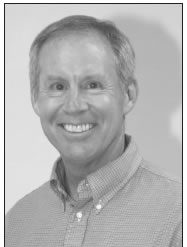
COUNTY COMMISSION CANDIDATE FRED BLACKBURN

Fred Blackburn

Blackburn, a Democrat, is challenging incumbent Larrie Rule, a Republican. Rule was profiled in the Free Press in July; that interview is available online.

Blackburn said he would like to see better relations among county government, municipalities, the Ute Mountain Utes, and unincorporated segments of the county. He also wants better communication with the public at large.

“I’ll open an office on Main Street. I can rent an office for part of my salary and be there part-time. The other commissioners could use it, too,” he promised.

To facilitate communication, Blackburn is among those calling for a revamp of the way the county conducts its weekly meetings, now on Mondays in the courthouse. He said he is not in favor of full meetings at night because the commissioners need access to records and staff for their regular business, “but when you know you’re going to have a heavily contested discussion you need to accommodate it.”

He believes public hearings and other controversial discussions should be held in the county annex, using an electronic sound system. “I don’t think it would take me a day to research a good sound system that would have things for people who are deaf to hook in their ears.”

Blackburn said the current arrangement in the meeting room, where commissioners and staff sit around a table, makes the audience feel shut out because some staff members have their backs to them. “Face people. It makes people feel like they’re being listened to and it’s polite.”

He also criticized the commissioners for “sitting around whispering to each other during meetings” and said the minutes are too sketchy, a frequent complaint among critics. The commissioners and their attorney maintain they are satisfactory.

Blackburn believes the entire commission meetings should be digitally taped and available on CD.

He also believes the commissioners should start having executive sessions, something they and previous commissions have been loath to do.

“If they’re discussing anything to do with the legal implications of something, you need to have an executive session. Sometimes you need to argue out some important issues and don’t want to do it in front of a reporter. You need that discussion time and it needs to be private because that’s when the most heated arguments occur.” Having served on the board of the Cortez Sanitation District, Blackburn said he is familiar with state law regarding when executive sessions can be held.

Blackburn has not been regularly attending commission meetings but said he doesn’t feel the need to.

“People ask me, have you attended all the commissioner meetings? I’ve got better things to do with my time. I can read the meeting notes. Eighty percent of what happens is no-brainer issues.”

But while communication is Blackburn’s top issue, land-use regulation remains high among his priorities. He would like to see more plans such as the Dolores River Valley plan, to guide growth in a half-dozen areas such as McElmo Canyon, Lewis- Arriola/Pleasant View, and so on. “People could say what they want to see happen in their geographic areas, and it would be integrated into the master plan.”

He doesn’t believe the entire landuse code needs to be rewritten, but it needs to be clarified and revised. He said the now-controversial Landowner-Initiated Zoning system was “the only thing that could have been passed here at that time” and people should not condemn it. “But how are you going to update it now? We need detailed planning.” He favors hiring a planner part-time, “not to dictate what we want, but to give options on what we can do.”

Stronger enforcement of existing regulations is also critical, he said. “The planning department is overwhelmed. They don’t have time to do enforcement. So can you dovetail with the city and pay for a part-time inspector/enforcer?”

He said he doesn’t want to see the county spend money it doesn’t have. “I won’t have an unbalanced budget. I just won’t go there. But we’ve got to be creative.

“Lack of planning and enforcement is costing us money in property devaluation, legal battles and businesses that don’t want to locate here because there’s no predictability.”

Blackburn would like to see a master plan adopted by Jan. 1, 2010, the establishment of defined industrial areas in the county such as along the 160/491 corridor, and a countywide residential building code.

“I think we have to have it,” he said, adding that he has a bag of defective wiring in his car that people have given him. “It’s from two or three houses where people have said, ‘Here is why we need a building code!’”

As it is, there are several inspections and permits required to build a house, so having one consolidated inspection wouldn’t necessarily be more costly to the homebuilder, he said.

“We are a buyer-beware county,” Blackburn said. “Some new homes are short-cutted. This would protect buyers.” Finding space to accommodate county offices and the growing needs of the courts is another huge issue, Blackburn said.

“A district judge could order the commissioners to build a courthouse to hold court in. We’ll have to move some of the county offices out of the courthouse or do a remodel and I don’t know how you could finance it.”

Yet another issue is roads. With voters having refused to pass a county sales tax other than a half-cent for the jail, some roads are suffering. Blackburn said a sales tax could not pass in the current economic climate and that he wants to see a master road plan and a “triage” system to decide which roads have priority for maintenance. “If you’re six miles off the grid on a one-lane road, you’re not going to be a priority.”

He said the current commissioners have done a good job managing the budget so far, but “it’s scary. I think that issue is right in our face.”

Blackburn began thinking about running for office four years ago, when Rule was first elected, he said. He brings a variety of experience to plate, inicluding service on numerous boards. He has been president of the Canyonlands Natural History Association board, vice chair of the Children’s Kiva board, and secretary for the sanitation-district board.

“I have done a lot of organizational work, primarily in the non-profit area,” he said, adding that he has worked with teams of diverse individuals “ I understand how to work with people.” Among his background, he worked to get the Kiva preschool built, worked with the Canyonlands Natural History Association, developed the Wetherill Grand Gulch Project and served on the Cortez Sanitation District board.

“I have run large projects. Budgets and issues like that are not foreign to me.”

He did not run for office until he was off all his boards.

Blackburn said being on the sanitation- district board was in some ways the best preparation possible for serving on the county commission because it involved “lawsuits, executive sessions, and being put in an ethical dilemma.”

Blackburn resigned from the board in 2007 after the district became embroiled in a lawsuit with its general contractor over building a new sewage-treatment plant, a lawsuit that was eventually settled.

“I couldn’t in good conscience stay. It was very much being in the midst of a good-old-boys network.”

And that is the sort of network Blackburn wants to avoid through open communication. He is proud of the fact that he has his own web site, www.fredblackburn.com, and plans to continue it if elected.

Published in Election, October 2008

Non-profits, governments struggle to find board members

She looked at her watch impatiently.How long had they been there? It seemed like days. The agenda had looked reasonably short, but after nearly two hours they were only on the second item.

MEMBERS OF THE HOSPICE OF MONTEZUMA BOARD

Members of the Hospice of Montezuma board gather for their monthly meeting at the Cortez library. Finding enough dedicated volunteers to serve on non-profit, special district and governmental boards can be a challenge in rural areas. Photo by Wendy Mimiaga.

She had joined the non-profit’s boardbecause she believed in the cause, butshe had nothing to contribute to thisendless droning about financial reports and staffing problems. She felt like a warm body that helped provide aquorum, nothing more. Now she waswondering what excuse she could use to resign.

The executive director collapsed in tears after the meeting. It was the same story over and over. The board members had good intentions but the meetings rarely accomplished anything and, as usual, she was left with more tasks and less guidance. Most people thought being on the board was a status symbol, something to pad their résumés, that wouldn’t require a commitment beyond the two-hour monthly meeting. She wondered where she would go if she got up the nerve to quit.

Do not try to identify these people. They are composites from any number of organizations in our community.

Communities are run by a plethora of boards and councils. The most obvious are within county and municipal government: county commissions, town councils, planning and zoning commissions. Another visible type of board operates public schools.

But there are also special districts, which oversee such operations as utilities, water, cemeteries, hospitals, firefighting, television and radio, soil conservation, sewer services, and mosquito control. In Montezuma County there are 24 such special districts; in Dolores County there are nine, all needing to be managed by some sort of board.

And then there are hundreds of nonprofit groups and foundations that work for charitable, cultural, agricultural, educational, medical, veterans’ and other causes.

There are 211 tax-exempt/non-profit organizations in Montezuma County, 19 in Dolores County, 454 in La Plata County, 44 in Utah’s San Juan County, and a staggering 454 in New Mexico’s San Juan County, according to TaxExemptWorld.com. These, too, are governed by boards.

All these entities need motivated, responsible, intelligent people to guide them. But finding such folks and keeping them can be very difficult.

What motivates someone to sit on a board? Is it a sense of masochism (or, in some cases sadism) as some former board members might report?

Pat Smith, a national author in board management, has found that people join boards for three reasons: passion for the mission, a desire to give back to the community, or because a friend asked.

All these reasons serve to get people on boards, but they can have drawbacks.

Having passion for something is not synonymous with being equipped to lead it. And joining a board because a friend asked may lead to resentment if the primary reason for joining is guilt or peer pressure. Also, having friends recruit board members tends to result in very homogeneous groups without the diversity that is representative of the community or organization.

Unfortunately, not enough effort is expended by nominating committees to analyze potential board members, not only trying to match the person to the cause, but also deciding whether or not he or she posseses the basic interest or ability to serve effectively.

The STP concept

Throughout Montezuma County and other small communities, there is a chronic shortage of people willing and qualified to serve on boards.

The result is known as the concept of STP (the “same ten people”) who provide the majority of leadership. According to Boardsource (www.boardsource.org), in any community it’s about 5 percent of the people who serve on all the non-profit boards and make decisions impacting the other 95 percent.

“It’s unfortunate, but the STP rule is alive and well in our community,” said Kathy Rousset, executive director of Hospice of Montezuma, a non-profit that provides hospice services in the area. Rousset said her organization runs into the same problem of board recruitment and retention. People come and go but she generally counts on the STP to help her accomplish a multitude of tasks.

Deb Avery, executive director of the Cortez Cultural Center, expressed the same sentiment. “I wish more people would step up to the plate,” she said. “There are just not enough people willing to serve on local boards.”

Both women voiced appreciation for their current boards but understand the difficulty of recruiting and keeping effective leaders.

Former Montezuma County Commissioner Kelly Wilson, who has served on a plethora of boards and is currently chair of the Ag Expo board and vice president of the Montezuma County Historical Society board, said it’s a challenge to find qualified individuals willing to serve.

“People work and have kids and different activities,” Wilson said. “It’s a challenge to find the people that fit the slots you’re looking for and, secondly, to get them talked into it. I fully respect people who back off.”

But the result, he said, is that “the same people seem to be doing all the things. As a result, and I don’t mean to be critical, that’s the way the community goes. You get a dozen people that go from board to board to board, and their thinking doesn’t change.”

Most boards tend to be made up of middle-aged to older folks, he said. “Young people with little kids — it’s hard for them to volunteer unless it’s for something like the school board.” Another problem, he said, is that sometimes individuals get onto a board, particularly a special-district or governmental one, because they have an “ax to grind” or a single issue that interests them. When they find out that bringing about change is a slow process, they give up and quit.

And meetings can be dauntingly dull unless they’re well-run. “People with the leadership capabilities can make it interesting and get the meeting over with and get the job done,” Wilson said. The Ag Expo meetings start at 7 and end promptly at 9, he said. “Two hours is about all your butt can take, anyway.”

Wilson recently left the Southwest Regional Advisory Council, a citizens’ group that works with the BLM, because he wanted more free time. But he still finds himself in demand. “After awhile, you start thinking, isn’t there anybody else that can do this? But people say, ‘Kelly, we asked somebody, but they don’t show up.’

“All these groups are looking for volunteers and they’re all looking for money.”

Still, he has found the work rewarding. “Overall it’s been quite a ride and I enjoyed it, mostly.”

Giving back

Pat Kantor of Dolores, a member of the Dolores Public Library board and a founding member of CFAR (Citizens for Accountability and Responsibility), said good boards have “a dedication to what the group is doing and a realization that you can make a difference.”

Kantor, who was a member of several other groups while in Sedona, Ariz., sees board service as a duty and a way to influence the future.

“Certain people feel a responsibility to give back to the community and I think that’s important,” she said. “I wish everybody did. We all live in and enjoy a community. To sit passively and watch the community happen means that it really can happen in ways that you don’t want.”

She believes more people would serve if they understood what different organizations do and what a critical role they fill. “The community depends on these people,” she said. “The people on the board shape the policies of that organization.”

Ginger Freeman of Cortez is atypical in that she is a young mother with two children who still has found time to be a Partners mentor and serve on the board of Hospice of Montezuma as well as a school parent-teacher organization.

She joined the hospice board in 2004 after being rejected by another local non-profit — that group, she said, told her mother they would not want Freeman because they wanted only business owners on their board.

“It really hurt my feelings,” Freeman said. “It seemed funny because they’re always looking for people. I was telling someone about it and he said, ‘I’m on the hospice board and they are actively recruiting,’ so I wound up there.”

Freeman is now looking to rotate off that group, of which she is vice president. “It’s hard,” she said, “because I want to make sure there is someone to take my place.”

Buying in

Montezuma County has a plethora of “amenity migrants” – retired professionals who come to the area for its beauty and bring with them a wealth of experience and knowledge. Many locals believe there is a rich pool of leaders just waiting for the right opportunity to appear.

One question is whether there is adequate representation of different cultures in the governing organizations of Montezuma County. This is a critical question boards need to ask themselves when recruiting new members.

There are many reasons people choose not to serve on boards. People may feel ill-equipped and/or incompetent to serve. If they have different ideas than the other members, they may feel out of place.

Economic factors can also be a deterrent. Serving on councils, commissions or boards rarely provides much compensation. The Cortez City Council pays its members $400 a month, but even then it has difficulty getting people to run for office. Mancos trustees receive $150 a month; Dolores Town Board members get $25 per meeting.

And it’s rare for non-profits or special districts to give anything to their boards beyond remuneration for time and travel — if that. Not only does board service not pay, it may actually cost money.

Freeman said she was surprised by the hospice board’s requirement — a common practice among non-profit boards — that members make a financial contribution to the organization as a way to “buy in” and show their support.

When deciding grants and funding, foundations may require or look for financial contribution from board members, according to many people who have served on boards.

“I didn’t like that,” Freeman said. “I felt like I’m already giving my time and my energy and my skills.” She works on fundraising for hospice and provides their web-site services for free.

Eventually she wrote a check for $1, which the other board members said was fine, because she couldn’t afford to give more.

Still, she said her service has been very rewarding. “I think hospice is a great group and a great cause.”

Bridging the gap

Board members drop out for a number of reasons; one of the most common is that they did not understand what was required of them in the first place. Both Avery and Rousset agreed that board packets and a good introduction to the roles and responsibilities of members are critical.

Another key requirement is that group members feel they’re contributing and accomplishing something – not just attending meetings.

Lisa Liljedahl, a longtime board member with many organizations, said boards needed to understand their role and not try to micro-manage an organization. She said she had seen a lot of problems with board members who went beyond their roles into active and/or intrusive management, either due to inexperience or lack of understanding.

Organizations such as the Southwest Community Leadership Collaborative and private leadership consultants are working to find and equip leaders in this area. The SCLC provides opportunities for people to learn more about the community through Leadership Montezuma; educates leaders on the roles and responsibilities of being on a board or council through the Summit Leadership Series; provides highschool students with community information and leadership skills through the High School Leadership Program; and provides information on the various water issues in this area through Water 101 (which will be conducting another workshop in October).

Efforts such as these seek to eliminate the STP concept.

Rebecca Larson, a consultant, said the idea of the Summit Leadership series came out of work groups during a Community Summit meeting five years ago. These groups identified a lack of people willing to step into leadership roles in Montezuma County. They theorized that perhaps people needed more skills to feel competent. With that in mind they and others created the Summit Leadership Series – a seven-month “board school” that teaches many aspects of serving on boards.

Kantor said both Leadership Montezuma and the Summit Leadership Series can be invaluable in helping citizens learn what different groups are out there and what they do. “I was blown away five years ago when I did Montezuma Leadership and found out about all these different organizations,” she said. “Then the Summit Leadership program really goes into the intricacies of what boards are supposed to do. That helped me a lot.”

There may not be a simple answer to the long-standing dilemma. However, a healthy community is dependent on the effectiveness of its leaders. It is up to the people who benefit from the many organizations in the area, as well as the organizations themselves, to decide how to encourage councils and boards to continue spending the time, money and energy to make decisions that affect us all.

For information on the Southwest Community Leadership Collaborative contact Susan Hakanson, P.O. Box 609, Cortez, info@swcommunityleadership. org, 970-379-3303.

Published in October 2008

700-lot subdivision may be sprouting in Totten Lake area

A subdivision that would dwarf any other built so far in Montezuma County is being planned for a 460-acre parcel east of Cortez near Totten Reservoir.

Although the developers have yet to submit a formal application for zoning to the county, they have given preliminary documents to the planning office. A representative also spoke to the Cortez Sanitation District board about the project at its Sept. 8 meeting.

Called the Totten Reservoir Sustainable Community or the Tottenville Project in preliminary proposals, the development would be “a mixed-use subdivision of nearly 800 homes and commercial uses,” the documents say. It is described as having 700 living units, ranging from studio apartments of 600 square feet to fourbedroom homes of 2,000 feet or more.

Lot sizes would range from onequarter acre to one acre.

The biggest subdivision in Montezuma County at present is Cedar Mesa, north of Highway 160 near the Mesa Verde exit, which has 148 lots, many of them still empty.

The Tottenville development is envisioned as “a fully environmentally sustainable community” that would incorporate solar heating, solar power production, ground-source heat-pump supplemental energy, green building practices, recycling, conservation, and low-impact infrastructure development “whenever possible,” the proposal says.

TOTTEN RESERVOIR SUBDIVISION PLANS

An L-shaped tract near Totten Reservoir is the site of a 700-lot subdivision that is in the works in Montezuma County. Developers are planning for it to be environmentally friendly and oriented toward pedestrians and cyclists.

The subdivision would in effect become another municipality in the county.

In addition to the 700 living units, it would contain some 600 garages/carports and 73,000 square feet of business and civic centers, documents say. It would have a post office, convenience stores, coffee shops and restaurants, schools, a community/recreation center, a town meeting hall, medical/ dental offices and an 8,000- square-foot grocery store.

Eight percent of the total acreage would be dedicated to “building footprints,” according to the planning documents.

The subdivision’s mission, documents state, is to be “Colorado’s first environmentally and economically sustainable village.”

Tottenville is envisioned as pedestrian- and bike-friendly, with all residences located within a five- or 10- minute walk of a commercial area. Houses would face central pedestrian and bike avenues, providing a safe zone for children and pedestrians as well as a “kinder, gentler” neighborhood, while streets for vehicle traffic would lie at the backs of the houses.

Dean Matthews, a director with the Four Corners Builders Association and a partner in AMC Developing, which is developing Fairway View Estates east of Cortez, is one of the developers for the project. The property is currently owned by Scott and Joe D. Tipton, according to public records.

The tract is an L-shaped piece whose western border adjoins Fairway View Estates. Totten Reservoir juts northward into the southeastern portion of the property, and a private wildlife refuge lies along the northeastern boundary.

Montezuma County has a minimum lot size of three acres; however, that requirement can be waived for developments that are granted “Urban Services” zoning as defined under the land-use code. The Urban Services Zone is designed to encourage higherdensity developments near municipalities, where urban services such as sewer and water are available.

However, Tottenville as planned would not actually receive municipal services.

Instead, water would be supplied by Montezuma Water Company, and the development would have its own sewage-treatment system, with an aerated lagoon facility followed by constructed wetlands, according to the proposal. The effluent from the wetlands would be pumped to be further reclaimed and reprocessed in features such as ponds, irrigation and other uses, the proposal states.

The Montezuma County Land Use Code states, in section 3310.1, “The Urban Services Zone allows for higher intensity development where urban services appropriate to the intended use are available. An Urban Service Zone designation cannot be established without clear evidence that services are, or can be made available, to the site within a reasonable time without undue public costs.”

Whether this means that a development would actually have to obtain urban services in order to be eligible for the zoning is unclear.

Matthews came before the Cortez Sanitation District board Sept. 8 to advise the members about the development even though the promoters are not seeking for it to be taken into the sanitation district.

Jay Conner, manager of the sanitation district, told the Free Press the board had questions about the proposal when it was brought before them, but made no decision on whether to support the idea of the development having its own sewage-treatment facility. The sanitation district has no authority over the proposal other than making a recommendation to the state, he said.

“The state will probably ask us our opinion since we’re the major utility provider in the area,” Conner said.

He said the board members “didn’t give a full opinion on whether they felt [the sewage-treatment proposal] was adequate or not. Their position was to wait and see what the state thought.

“The board will have to really discuss this before we make a full recommendation,” Conner added. “It did appear the board was kind of split. Some thought it was a good idea; some thought they really need to come into the sanitation district.

“One of the things we definitely want to avoid is another Lakeside [a trailer park near Totten Reservoir with chronic septic problems],” Conner said. “By no means am I indicating this would be like that, but we want to make sure.”

Sewer taps from the Cortez Sanitation District cost $4,500 per residence, but the money can be paid over time as the subdivision is built, Conner said.

He said, in order to handle such a huge subdivision, the sanitation district would need to make some improvements to its sewage infrastructure. “The treatment facility itself would handle it, but we would probably have to do some upgrades to the collector system and we would be looking to the developer to assist us in that.”

Urban Services Zoning is fairly uncommon in Montezuma County. According to the planning department, there are currently just 13 parcels totaling 384.6 acres that carry the zoning or have it as a zoning “preference” not yet validated by the county. Two parcels are near the town of Mancos and the other 11 are just outside of Cortez.

Developers reportedly have had one meeting with some neighbors and are planning another for neighbors and interested citizens. That one is scheduled for Wednesday, Oct. 15, at 6 p.m., at the Calvin Denton Room at Empire Electric, 801 N. Broadway.

Published in October 2008

The last summer vacation

I know how tragic it sounds, the last of anything. But this ending for me has a beginning, one that needs some explaining. It’s actually an end wrapped in a beginning, like a Mobius strip, a loop that drives you crazy searching for the point where it all starts.

Over two decades of work as an English teacher at Montezuma-Cortez High School and a major financial investment in the Public Employee Retirement Association (PERA) has led me to believe I have something to live for – namely, a return on my investment!

Last June I attended my first PERA meeting, a forum offered by the organization to clarify benefits and time lines for teachers contemplating retirement. Three other people attended. I was the oldest person in the room. The presenter, a 30-year-old woman, was articulate and attractive. She knew enough about retirement strategies and benefits to be mistaken for a 60-year-old if I simply closed my eyes, but I barely blinked. I thought, How difficult to be so young and know so much about being old.

When I first started teaching, I was 28. I swore I’d never stay in a job I hated just to cash in on the retirement package. Luckily, a career in teaching has never been lucrative in stock portfolios. I stayed in teaching because I thrived on the interaction with young people, and I loved language so much I wanted to convince a few of them that words are what we are made of, as a society, as a species. Language is blood, which is not a metaphor. We actually wake up wagging our tongues.

The organizers of the retirement info meeting served cookies and lemonade, as if a few treats would distract us from remembering we were spending a few hours of our summer cramming at retirement school. I felt sorry for the woman who prepared a PowerPoint presentation but couldn’t get the projector to function. If she ever wanted a change of careers, from presenter to classroom teacher, she had all the inexperience it took. So the five of us had to huddle around the laptop computer screen like we were at a campfire, and she told us the story of retirement.

I’ve nurtured another passion, this one for over 30 years: Learning how to write. And yes, I’m still learning. I’m not sure how to explain it to others, but after 30 years I’m certain this career called writing has me by the throat. My investment in it, however, had better be calculated in hours, not dollars. If I worked out my total time spent and weighed it against the money I’ve earned as a writer, would anyone take me seriously? Still, it’s not like I could stop myself from writing, and it’s impossible for anyone like me to ever retire from such a career.

Teachers are an envied bunch when it comes to their summer vacations. Over the past 27 years I’ve spent a good part of my “time off” studying – taking classes, paying tuition, earning teacher license re-certification credits, and an advanced degree. Still, I’ve enjoyed the summers. And now that it’s summer again, or technically, the last summer, I want to take a deep breath and remember, in words, what I can’t quite say when people ask: What are you going to do now that you’ve retired?

I’m going to wake up to the sound of the sun rising, not the sound of bells and school buses.

I’m going to hum in the bathroom while sitting on the toilet.

I’m going to stack paragraphs like the people in Iowa stacked sandbags before the flood.

I’m going to see the dentist without applying for sick leave.

I’m going to read a book and not consider how I would teach it.

I’m going to cut the grass in the middle of the week.

I’m going to eat when I’m hungry.

I’m going to play cribbage with my friends, a penny a point.

I’m going to contradict myself, because I contain multitudes.

I’m going to be a farmer and grow old.

I’m going to open the mail when it arrives.

I’m going to mentor my insecurities.

Yes, it’s summer vacation, not really the last one, but the one that lasts.

David Feela writes from rural Montezuma County, Colo.

Published in David Feela

A report from the land of the rich and famous

Greetings from the land of the rich and famous. I am here, clearly outside of Montezuma County, CO, visiting my parents (who are neither rich nor famous).

Yes, this is a place where you can spot a celebrity on every corner. In the past I have encountered Clint Eastwood, Demi and Bruce (pre- Ashton), and the illustrious Gov’ner of California. This trip has been sighting free unless you count Theresa Heinz- Kerry sans her bad-haired husband, whom I ran into at church.

And what was Suzanne doing at church? you ask — and a Catholic one at that!

Well, there are all of these incredibly beautiful Ugandan orphans who are on tour as a singing choir here in the U.S. and all of the incredibly rich do-gooders in town are hosting them while they perform several times to raise awareness for the plight of the Ugandan people. The “concerts” were listed in the paper and the one tonight was at the brand spanking new American version of the Chartres Cathedral. So we thought it would be really cool for the kids to go, etc. But, lo and behold, once we were in there, seated (read: trapped), we discovered that we were at Saturday night Mass complete with Latin and incense and blessed-be-toyou’s. The orphans were amazing, but my guys hang with the whole church thing so when everyone got up to do something, we snuck out and went out to dinner.

But we did spot Theresa on our way out the door.

The reality is, though, that everyone here looks like they’re from Hollywood. We went to the coffee shop this morning (and mind you, there is only “the” coffee shop. No one who’s anyone would be seen drinking at Starbucks). And the standard uniform for women was velour sweatpants (tight over very taut asses), highheeled, bejeweled flip-flops, cashmere sweatshirts with cute stripes which allow small glimpses of tanned midsections, with those cloth baseball-ish hats with cool peace signs on them, huge earrings and lots of diamonds.

And I looked like the total frump ass. As my good friend pointed out, “When we say we’re in our sweats to go get a cup of coffee, it means don’t stand too close or you’ll catch my morning breath!”

It’s a wonder that I don’t kill myself after a few days up here. I went out this morning in what I thought was a fairly hip and sassy outfit, only to be totally humbled before I even got my latte. It is rough going here for the socially insecure individual. Even my kids say that everyone looks different.

And they look like something that crawled out of a gutter compared to the kids here. So, back to that celeb thing. One of my mom’s friends, we’ll call her Jane, was driving down the road the other day and the Schwarzenegger- Shriver clan was riding their bikes down the road (kids, bodyguard and all) without helmets. Jane actually pulled them over to admonish the movie-star governor and his Kennedy-clan wife for allowing their children on bikes without helmets. I think the word “irresponsible” was used in the discussion.

God bless Jane.

On with our tour.

The boys and I went to the country club yesterday and people were refreshingly chubby. Not nearly as tight as they were last year when my sisterin- law and I hung out picking out nose, boob and ass jobs.

But there is still a difference. Mind you, I said to Toto, “We’re not in Cortez any more.”

First off, there is yet another uniform to figure out. This one includes a white, sheer cover-up to wear from the locker room to poolside (approximately 10 yards). It is then taken off to reveal bikinis with lots of accessories (read: more diamonds and high-heeled flip-flops). The cover-up goes back on if you move from your lounge chair to one of the shaded tables where your freshly grilled lunch is delivered to you by gals whose work shoes (more heels) cost more than all of my shoes put together. If you choose not to wear your sheer white cover-up to the table as this may feel a bit overdressed, you can casually tie on a very short (but still demure) sarong.

These are not the same as the hippie ones that men like Ethan sport while skateboarding

There is also the visor thing going on here. Everyone has really cute ponytails that don’t spaz off at the ends like mine does. The noticeable thing about the ponytails is that they are blond. And they seem to come by it naturally.

Folks then put on their cute white visors, sunglasses and 15-carat diamond earrings. For the more adventuresome, there are the sparkly danglers that clearly came from Van Cleef, not Target.

Speaking of visors, we stopped at Cabella’s on the way here and I tried to buy one with their logo emblazoned across the front. No luck. I guess people who shop at Cabella’s are not the visor-wearing type.

The men are really the sun-worshippers here. They grease up their balding heads and lounge poolside, rolling over every 15 minutes for the perfect tan. They also wear designer shades (like my favorite Realtor) for real. In eavesdropping I overheard at least seven different conversations that included the words “mountain bike,” “rad,” “totally” and “gnarly.”

This, from men over 50.

The other thing about this place is the number of collars on shirts. Everybody wears them. The men do not wear T-shirts, they wear collared shirts. The women wear them too. Jackets with big standing-up ones (often accompanied by a sweater casually tied around the shoulders over the jacket but below the collar). Long-sleeve polo shirts, sequined polo shirts, button-downs with cute floral prints or preppy stripes — ALL WITH COLLARS THAT HAVE LIVES OF THEIR OWN.

I am shamefully realizing just how many of my shirts are topless. Whenever I am here, I feel like I am living out that nightmare of being naked in public. Now my clothes feel that way too.

Thank God I will soon be returning to Mancos, where I feel dressed up if I have no stains on the front of my shirt and all of the buttons on my jeans are intact. I can go back to conversations about irrigation ditches, potholes and the bag sale at the Good Samaritan Center.

P.S. I did find out that many of the “softer” people that I have seen here are either tourists or the hired help (i.e., nannies at the pool). So the real people of the town are still living up to the extreme level of enhanced perfection for which they have become famous.

Suzanne Strazza writes from Mancos, Colo.

Published in Suzanne Strazza

Are we a great nation, or what?

Are we a great nation, or what?

In the present circumstances, I would answer, “Or what.”

It’s hard to believe that a single administration could bring this great country to its knees in eight short years. We elected a group who in their haste to show their ignorance of the Middle East attacked the wrong country. Here now after we have seen 4,000-plus soldiers killed and 20,000-plus wounded mentally and physically we have finally found Afghanistan.

Meanwhile, we the people have turned a Communist country into a superpower. Thank you, Sam Walton, China should erect a statue of you in Tiananmen Square. But of course you couldn’t do it alone, you needed the greedy, self-serving American consumer. We want it cheap and we want it now.

But we are about to pay the piper. We are still mired in a war perpetrated on people we don’t know anything about, except that we fear them because of their religious zealotry. As if we were the only righteous ones, forgetting our demonic history on our path to everlasting life. The yoke is on us — not the joke, but the yoke, as most religions are based on fear and suppression and a good dose of hate.

Selfish, greedy, self-centered, intolerant, proud of our ignorance of other people, maintaining our lifestyle by subjugating the economies of other nations — that’s us.

The truth hurts. Being a Democrat, I find it hard to give Republicans any credit, but sometimes they accidentally speak the truth. One of McCain’s former campaign managers, Phil Gramm, said we have become a nation of whiners. And he was right.

Now that the economic cinch is tightening we have forgotten our young in Iraq and think only about the cost of our food and gas. My goodness, I can’t afford to drive my Hummer, pay my credit-card debit, keep my 5,000-square-foot-home, and take my vacation to Aruba! But what do we need energy for? With our heads so full of air, we ought to be able to just jump in the air and float to wherever we want.

Everything is all about me. Only seven kids know the meaning of the Fourth of July. How could they, when it’s all about mattress sales and furniture sales, barbecues and fireworks made for us in Communist China? God bless America. Three out of 10 of our young are not fit for military service due to criminal records, lack of education or being out of shape. after going to schools where the hall and cafeterias are stocked with fast food and soft drinks. Are we a great nation or what?

We pay rapt attention when our news media revel in the sexual escapades of celebrities or elected officials, but we ignore information that might truly affect our lives, like the rape of the planet by corporate conglomerates.

Newspapers are dying but TV and the Internet are flourishing. The main use of the Internet is still for porn. TV is no better. The FCC is supposed to keep the “trash” off the air by not letting us see any women’s breasts. Instead we are inundated with nonsensical programs that are an insult to the mind of a 2-year-old. And violence — oh, boy, we can’t get enough of that. Grim, gruesome crime shows with ever-more-hideous murders to jar our jaded senses. All this helps keep the gun issue alive, by convincing us that murderers are around every corner and only bigger and better guns can save us.

And these TV shows must make the car manufacturers happy, with all those car crashes! Not to mention the ads showing people speeding around hairpin turns, splashing through muddy mountain roads in four-wheelers and blasting over pristine hillsides in pickups. Zero to 60 in four seconds flat, the new Caddy ad proclaims! Wonder why so many of our young get killed in stupid accidents.

Yet we still cling to the idea that we are the world’s leaders, a nation of push-your-chest-out, pull-yourself-upby- the-bootstraps independent thinkers. Truth is, we can no longer push our chests out because our bellies get in the way. And we can’t pull up our bootstraps — everyone is wearing Nikes made by slave labor in foreign countries. Need a laugh? The news recently showed a group of union members marching to protest losing their jobs to overseas workers. The leader of the group was wearing a Nike ballcap. Don’t laugh too hard — our American Legion is selling a nice ballcap with the American eagle emblem, made in Sri Lanka.

Should we care? You bet. Or our great country that we are all so proud of could at breakneck speed become a Third World country, while China takes over as world leader without firing a shot.

Galen Larson writes from rural Montezuma County, Colo.

Published in Galen Larson

The Wright Stuff

Durango author advises, ‘Want less, do more’

Some people howl that we must give up our modern comforts to save the earth.

Durango freelance journalist and Fort Lewis College instructor Ken Wright believes the rescue starts with another idea: Lead less-complicated lives by choosing what is important, working for that, and letting the rest go.

He says that if he could make a bumper sticker — which he just might one day — it would read, “Want Less and Do More.” To him that means spending fewer hours working, buying fewer material things, and spending more time with family, neighbors and friends.

“Go out and do things in town, in your community, and on the land,” says the wiry, soft-spoken Wright. “That doesn’t mean traveling to the nearest beautiful national park. What’s down the street and over the hill by the house?”

Wright practices this philosophy, and over the years has put the experience into articles for magazines such as Inside Outside, and Paddler. He has written for the environmental page for the Farmington Daily Times.

Recently, he reshaped 42 of the pieces he’s written into short, snappy creative non-fiction essays and put them into a book called “The Monkey Wrench Dad,” published by Raven’s Eye Press in Durango.

While he claims that mid-life — ”what else? — motivated the project, a deeper reason also gave rise to the collection.

As a journalist, he found himself fielding a tough question from readers: How could he claim to have strong environmental ideals, and still live what he described as “that lovely West Slope lifestyle” in Durango? How could he desire changes in mass culture and still be a father, own a house, and have a job in Modern America?

“I wanted to look at the idea that you don’t have to pack up your kids and move to the outback of Alaska to be living true to some really valuable and important and valid ideals,” he says.

These ideals began developing in Wright’s mind during the 1980s. Brought up outside Boston, he attended college, became a technical writer, and took a job in the city. It didn’t make him happy. A friend invited him to come to Colorado and ski.

He did, and also became a river guide, traveled, lived in tents during the warm months, and eventually discovered the writings of novelist and environmentalist Edward Abbey.

Abbey’s life philosophy resonated with Wright and eventually became the jumping-off point for ‘The Monkey Wrench Dad,” a title which plays on Abbey’s “The Monkey Wrench Gang,” a satirical tale of four environmentalists trying to blow up Glen Canyon Dam.

“Monkey-wrenching is taking back the parts of your life you can, and making them yours.” Wright’s soft voice rises in excitement. “Taking your life back from the culture that is surrounding us.”

Abbey defined heroes as people who worked, raised decent children, and built a community with a minimum of material goods. The defense of and survival of the earth depended on the integrity of how people lived.

Wright thinks balance is the key to finding this integrity. He does not believe in giving up electricity or air- conditioning to do it.

“We can build a culture based on using technology well rather than having it enslave us. That’s the point of ‘The Monkey Wrench Dad.’ Everybody’s got the plan for the big things, but what are the little things we can do?”

He has spent his life trying to answer that question. When he married, he bought a van and took his family exploring along Forest Service roads and “in nooks and crannies 20 minutes from home.” Soon they spent one night a week sleeping and eating outdoors, and most importantly talking to each other. His wife shopped locally.

Now teenagers, his kids use computers and watch TV, but also go out, dig deep into their surroundings and discover the small things that familiarity might make them miss if they didn’t look hard for them.

Wright believes his son and daughter like the life he’s offered them. “We camped out last night. What 13- and 15-year-old [usually] wants to hang out in the backyard with Dad?”

From his experience living in cities, Wright believes that both rural and city dwellers can apply “Monkey Wrench Dad” ideas to their situations. Urban areas offer much within walking distance or by public transportation, provided people get out, discover their neighborhoods, become a part of them, and above all, improve them.

Wright learned a lot about himself putting together his book. “I think I was really troubled by my lack of ability to nail down a career or a single job. I’ve been a failure at trying to hold a 9-to-5 for any great length of time,“ he says, though he does enjoy part-time employment and its flexible hours. “The thing that came out of writing this book is: That’s me. It’s not a mistake.”

He doesn’t expect to change the world or his children with “The Monkey Wrench Dad.” Rather, he wants to point out the modifications he’s made to his lifestyle,and what he got out of making them. He also hopes that others will find ways to make adaptations which are right for them, and that he has given his children something to think about as they reach adulthood.

If people think hard about how they live, and make careful choices, the big environmental changes will follow.

Published in Arts & Entertainment, September 2008

It was politics as usual, except for Obama

” . . . if we set our compass true, we will reach our destination – not merely victory for our party, but renewal for our nation.”

Sen. Edward Kennedy

For reasons probably better left unexplored, I have been a political junkie for, well, decades. My personal political views are probably a little to the left of Kark Marx, but I usually vote the Democratic ticket, which is a tad to the left of center, rather than for GOP candidates, who are usually within hugging distance just to the right of center.

And though I’ve covered a lot of races for local, state and federal offices as an “objective” reporter, I’d never been to a national political convention until last month, when the core of the Free Pressstaff descended on Denver to watch, as they say, history being made.

The charismatic Barack Obama was about to be nominated as the Democratic candidate for president of the United States, welcome proof that racial barriers to high office in this country have been, if not demolished, lowered considerably. It promised to be one of those events about which you later would want to say, “I was there.”

COLORADO DELEGATES AT THE DEMOCRATIC NATIONAL CONVENTION

Colorado delegates on the floor of Denver’s Pepsi Center at the Democratic National Convention. Photo courtesy of Wendy Mimiaga.

And, thanks to automobile, electrically powered light rail, natural-gas powered shuttles, muscle-powered feet and, ultimately, wife-powered wheelchair, I was there, rubbing elbows with the rich and famous along with a whole bunch of very ordinary people who make our representative government work as well as it does, which isn’t very, but gets us by. (Democracy is the worst form of government except for all the rest…)

My redoubtable spouse Gail and I touched down on the 16th Street mall the day before the convention to pick up our credentials and immediately encountered a glut of people — delegates, demonstrators, vendors, musicians, police — lots of cops, on foot, bicycle, horse, motorcycle and SUV, a few carrying automatic rifles loaded with what I hoped were rubber bullets. Gail likened it to the planet Gideon, a place in the original Star Trek series so crowded that no one could sit down.

It was all pretty exciting to a country rube like me who defines a crowd as more than a dozen, and hadn’t been in Denver much since before there was a mall and a Pepsi Center, where the convention was held, or an Invesco Field, where Obama would deliver his acceptance speech before 80,000.

So we struggled through the mass of flesh, me with the aid of a cane that took some weight off my aching back, and picked up our press passes at a hotel that I knew as the Hilton, now a Sheraton. We were even presented with a black canvas tote bag loaded with mostly useless goodies, although it did contain a bottle of water called “Joint Juice,” which hinted it would be a balm to my throbbing spine and leg. Can’t hurt, I thought as I chugged it down.

Mission accomplished, as they say, we headed back to the light-rail stop, spotting our first celebrity along the way. There was former Tennesee Congressman Harold Ford, who lost a close Senate race two years ago and is now a political commentator on MSNBC. He was shaking hands and posing for pictures on the mall, no doubt plotting his next bid for public office. I briefly considered greeting him, but I really had nothing to say. (Except maybe, moderation in all things, Harold, including moderation.) We headed back to Colorado Springs, where we were staying with Gail’s sister, Rhonda.

Monday, Day One:

On the train back up to Denver, I talked with a delegate, a Hillary supporter from Arkansas. She wanted a roll-call vote, she said, but would support the party ticket, even though she was deeply disappointed Clinton hadn’t been chosen as Barack’s running mate.

I would meet a few others with similar feelings during the week, and I tend to agree that Hillary might have been a stronger choice. (But then you have the Bill problem—- just what do you do with a vice-presidential spouse who is bouncing off the walls at Blair House? Quick, Mr. Former President, more trouble in Bosnia!)

We departed the mall shuttle at Union Station. We were, we believed, within a few blocks of our goal.

One puzzling thing was that there were no signs saying, “Pepsi Center this way,” or “DNC over here,” so we had to rely on the kindness of strangers, who had a range of opinions on how best to get there. By the time we espied the sole unmarked entrance to the magic kingdom, my leg was about to give out, so I slumped onto a bench while Gail went in search of alternate transportation.

After about an hour, she returned with a wheelchair and pushed me the final mile or so to the perimeter security gate, where we were whisked through because of my disability, which was real enough but made me feel like a fraud. I kept wanting to say, “I really can walk — just not at the moment!”

Folks at the Pepsi Center were very accommodating, escorting us to a section on an upper level where I was parked at a railing with a commanding view of the stage and floor. This evening in prime time the headliner was would-be First Lady Michelle Obama, but first came a string of less prominent speakers, addressing an audience that wasn’t listening while creating video clips to be used in campaign ads.

Finally came Sen. Ted Kennedy, preceded by a Ken Burns mini-documentary tribute to the ultimate Irish redneck, the unchallenged king of liberal lions in the U.S. Senate. Fighting brain cancer and suffering from kidney stones, Kennedy still managed to deliver his remarks in his trademark indignant bellow as he called for universal heath care, which he has championed for several decades.

“ . . . this is the cause of my life,” he thundered. “New hope that we will break the old gridlock and guarantee that every American — north, east, south, west, young, old — will have decent-quality health care as a fundamental right, not a privilege.” His speech must have touched the hearts of all but the crustiest conservatives.

Michelle Obama’s primary mission was to let people see that she and Barack were just folks, raised in middle- class families with the same common concerns and values as us average Joes and Jills, and she got the job done. But perhaps their younger daughter Sasha made the point most succinctly when, at the end of Michelle’s speech, Barack appeared via video from Kansas City, Mo., where he was watching the convention with (tada!) an average family. “Hi, daddy,” she said, waving at the screen. Another heart-melting moment.

On the elevator down to the lobby, a man who looked like E. J. Dionne, a Washington Post columnist, hopped on just before the doors closed. “Hi — E. J. Dionne,” he said, shaking hands with me. I told him I enjoyed his writing, again getting the foolish urge to explain I wasn’t really handicapped. He was shorter than I had thought.

Tuesday, Day Two

The logistics of getting into the Pepsi Center did not change, although some seemingly whimsical strands of crime scene tape and a “Detour” sign sealed off one block along our route and added to the length of the hike. Again I made it as far as a bench across the bridge from the perimeter, after stopping off at the two-story alternative media tent outside to catch the remarks of Arianna Huffington, whose accent was so thick she could have used a translator. After her talk, a man approached us as we waited for the room to empty, stuck out his hand and enthusiastically introduced himself to me, saying, “Congressman!”

I introduced myself, which seemed to cause the guy some consternation.

“I thought you were Jim . . . the congressman from Washington state,” he explained, obviously embarrassed.

“McDermott?” I asked, to which he nodded vigorously.

“My friends said you were him.”

“No,” I joked, “but he is a good-looking guy.” (In fact, McDermott has very white hair and is not what I would call a babe magnet.)

Anyway, I plopped onto my bench — I was beginning to develop proprietary feelings toward it — and Gail was able to acquire a wheelchair, so off we went, this time opting to sit in the press gallery behind the podium and facing the packed house.

This was was Hillary’s night to shine, and she did not disappoint, delivering a great speech that moved some of her devoted delegates to tears.

In the most unqualified terms, she called Obama “my candidate” and told her supporters that if they believed in the issues she’d campaigned on, they wouldn’t dream of voting for Sen. John McCain over Obama, whose positions pretty much mirror her own.

Wednesday, Day Three

Passions on the mall were running high. As we rode the shuttle down to Union Station, a man asked an obviously Hispanic woman what the Spanish words on her T-shirt meant. “Bush is an ass—-,” she said, which prompted him to turn away and mutter something about illegal immigrants.

This led to a spirited exchange that drew in some other riders. There were remarks of, “I’m here legally!” and, “Did you come over on the Mayflower?” It ended up with someone threatening to kick someone off the bus.

Perhaps the tortured walks were doing me good (or maybe it was the Joint Juice!), because this time I made closer it to the Pepsi Center with only the aid of my cane (which I fondly refer to as my McCane) until, once we were inside the security perimeter, we snagged a golf cart that dropped us off near the doors. Inside, I was wheeled to the press section, but wasn’t allowed to keep the chair.

After some more warm-up speeches came the irrepressible Bill Clinton, a true party hero and the only Democrat to serve two terms since FDR (who was elected FOUR times!).

And Bill delivered just like Hillary, giving a full-throated endorsement to the man who defeated his wife, unlike his tepid support in previous comments. (In one interview when asked if Obama were qualified to be president, Clinton snapped that the Constitution sets the qualifications — born in the USA and at least 35 years old.)

But this time he left no doubt.

“Everything I learned in my eight years as president — and in the work I’ve done since, in America and across the globe — has convinced me that Barack Obama is the man for this job,” he said.

Biden then delivered a half-hour speech that excoriated Republican leadership while linking McCain to President Bush, particularly on foreign affairs.

“As we gather here tonight, our country is less secure and more isolated than at any time in recent history,” Biden said. “The Bush-McCain foreign policy has dug us into a very deep hole with very few friends to help dig us out.”

Thursday, Day Four

This was dedicated to the roll-out of Obama himself, with the party moving to Invesco Field so more people could participate. Apparently some members of the “Christian” right had been praying for rain, but the weather stayed clear. Perhaps God had better things to do.

I decided to stay in the Springs and watch it on TV. The aching back just wouldn’t work for the grand finale. Still, along with about 40 million viewers, I had a ringside seat to another one of Obama’s bellringers, a clarion call for change that was, in fact, far more inspirational than anything ever uttered by the current president.

“America, we cannot turn back — not with so much work to be done,” he said. “”Not with so many children to educate and so many veterans to care for. Not with an economy to fix and cities to rebuild and farms to save. Not with so many families to protect and so many lives to mend.

“We cannot walk alone. At this moment, in this election, we must pledge to march into the future.”

Sounded good to me, but was somebody praying for a hurricane?

Published in Election, September 2008

Action outside the convention proves lively

“What a field day for the heat, a thousand people in the street. Singing songs and carrying signs, mostly say hooray for our side.”

– Buffalo Springfield 

“For What It’s Worth,” the classic ’60s protest song, came to mind during a recent four-day hippie fest in Denver, otherwise known as the Democratic National Convention. A thousand people in the street would be putting it mildly, however.

Think the Boulder Mall Crawl during Halloween in the 1980s, or Mardi Gras in New Orleans. Likewise in Denver last week, liberals and progressives gathered by the tens of thousands along the trendy 16th Street Mall to put their best Birkenstocks forward and celebrate Barack Obama’s historic run for U.S. President.

A political orgy of protests, sit-ins, sing-alongs, shouting matches, curbside pontificating and occasional skirmishes with the police was the scene along this 15-block section of downtown Denver. People clogged the streets, stopping traffic, buses and light-rail trains. Restaurants and bars were packed to capacity, brass bands played in the plazas and the free shuttle was at a standstill most of the convention due to the overwhelming crowds.

DENVER MARIJUANA PROTEST

Protesters march along Denver’s streets to advocate for looser marijuana laws. Photo by Wendy Mimiaga.

Grabbing your wife’s hand and wading into this sea of partying humanity was all one could do. All the while bellowing buffoons attempted to force passers-by into joining their particular cause including, but not limited to: free weed for the masses, no more war, no more capitalism, just say no to imperialism, God is great, Hillary for president, no more sex, Bush is the anti- Christ, save Iran, save Darfur and of course, Save the Whales!

Then there were the cops, as the tune continues: “Step out of line, and the man come to take you away.”

And that he did, as one ABC reporter learned after he refused to stay out of the street as ordered by police. “Someone pushed me,” he wailed while being hauled off by the man.

It was reported that a whopping $50 million was spend on security for the event, and it showed.

DENVER POLICE PREPARE FOR DNC PROTESTS

Police prepare for trouble in Denver during the convention. However, protests were largely peaceful and few problems were reported. Photo by Wendy Mimiaga.

Police were in full riot gear and gathered at nearly every corner, staring coldly at anyone daring to meet their gaze. Some had automatic weapons with orange tape on the muzzles — rubber bullets? There were cops on bicycles, in cars, on Harleys, driving around slowly in paddy wagons. Even the horses they rode had little riot-gear masks on!

But there was not much trouble — how could there be? Honestly, the cops looked bored, a little embarrassed perhaps. It was more of a babysitting job for the police, but some did live up to their thuggish image by blasting pepper spray from what looked like a fire extinguisher into a crowd for being too disruptive.

“Don’t consent to a search,” a crowd of lively youth chanted at one of the few permitted protest marches, in this case against criminal marijuana laws, on Aug. 28. There were free burritos, really bad rock music, “protest” dogs and that signature blue haze floating above the crowd as the march began in a quaint Denver neighborhood.

“Free the weed, brother!” one guy jokingly yelled at a cop, offering his outstretched hand for a slap. He coldly refused, but the tattooed officer next to him obliged, shrugging at his cohort “Ya gotta do it!”

Police filmed the march, but a group called Cop Watch filmed them as well. “We do it to document any police brutality, to protect your civil liberties in court,” one of them explained to me.

Overall, everyone had a good time. A woman gave me a flag that read, “Down with the Bush Regime,” so basically, any issue would do, a mishmash of liberal causes all blended together to the point it was hard to make sense of it all.

The march continued over some overpasses, all closed to traffic, and on to Mile High Stadium, where searing heat melted the enthusiasm of the marchers into a desperate search for shade and water.

In a few hours the Democratic celebs would speak to thunderous cheers at the stadium. But spectators had to wait in a two-mile-long line for three hours for the honor!

‘Sick and decaying’

“Battle lines being drawn, nobody’s right if everybody’s wrong. Young people speaking their minds, getting so much resistance from behind.”

That was the tone at a Denver University auditorium the day before, where Ralph Nader, Jello Biafra, Cindy Sheehan and Sean Penn spoke to a crowd of 4,500 enthusiastic college students.

Sheehan, whose war protest in front of George Bush’s Texas ranch drew national attention, began the predictable tirade. “My son was stolen from me,” she said. “He was murdered by Bush, the boil on the ass of democracy!”

Actor and activist Sean Penn stepped to the podium, wearing those little reading glasses on the end of his nose to look more intellectual. He called Obama “the status quo” and quipped that “hope never rises from staunch pragmatism.”

Jello Biafra, rabble-rouser, poet and Dead Kennedy band member, chimed in about the $50 million spent to prevent protesters from having a say. “What are they afraid of? Someone throwing a pie at Nancy Pelosi? Who pocketed the $49 million left over?”

Biafra went on to accuse Colorado lawmakers of supporting torture of war prisoners, condoning spying on Americans and ignoring the international community’s offer to end the U.S. involvement in Iraq.

“Pakistan, Yemen and Bangladesh offered 150,000 troops under United Nations control to replace ours, but Colin Powell slammed the door,” he said. “That idea is worth visiting.”

America can be cured, Biafra continued, by implementing a living wage, rent control and free health care, but action is required by regular people. He cited the housing foreclosure crisis in Boston, where “rolling brigades of citizens” successfully prevented banks from seizing homes.

For Nader’s introduction, guitarist Tom Morello whipped the crowd into a sing-along with Woody Guthrie’s “This Land is Your Land.”

Nader, who is running for president and is on the ballot in 45 states, immediately leaned in against the Democrats for selling out to corporate interests.

“At Invesco Field, they are selling sky boxes for the speech, $1 million for Coors, Qwest paid $6 million. These should be hospitality suites for farmers, nurses, students and teachers,” Nader stated.

“The party is sick and decaying, it has lost its soul. They never talk about the poor, they talk about the middle class, which they helped shrink with NAFTA and trade laws,” he continued.

Nader blames the two-party state for the downfall of democracy. He said the Democrats and Republicans are alike “in the velocity that their knees hit the floor when corporations pound at their door.”

He said third parties promote a more accountable democracy, not the one today where “poor whites, African Americans and Latinos do the thankless work, are underpaid and are excluded and disrespected except when we want them to fight our criminal wars.”

Reform is necessary on many fronts, Nader said.

On health care, “where we are the richest nation but 18,000 die per year because of lack of care.” On corporate crime that is never prosecuted, “even though we see it in the paper all the time.” On the failed war on drugs, “where we send drug addicts to jail, when they should get medical care for their health problem.”

On incarceration of non-violent criminals and drug offenders “who should receive amnesty, and the empty cells filled with convicted corporate criminals.” On money spent on foreign wars and “fascist governments instead of on public works that create jobs and infrastructure here.”

He called for 18- to 24-year-olds to improve their poor voting record Participating by not participating is a copout, Nader advised, “a type of sophisticated cynicism that is ineffective.”

A free press

Meanwhile, over at the Progressive Tent, a two-story affair packed with meeting rooms and more speechifying, former CBS anchor Dan Rather held forth about the spineless corporate media he was once a part of.

CBS ANCHOR DAN RATHER

Former CBS anchor Dan Rather criticized the corporate media during the convention.

The mainstream media miss the real stories, Rather told a scattering of reporters, and it is up to the independent press to get the job done.

“Follow up on the money that goes into the political system. That is a big story rarely told, who gives the money and what do they expect to get.”

A free and independent press is crucial for an informed public, Rather said, but “t starts with an owner who has the guts to let reporters ask the tough questions.”

Giant mergers now “water down the news,” he said, “because large corporations have nothing to do with the news, they are concerned with profits for their shareholders.” The result is that TV news has deteriorated into instudio shouting matches, celebrity fluff and dramatic court cases.

“Good reporting requires resources and talent, but that incentive is not there with corporations,” he said.

“American media has a spine affliction,” he said. “We are entitled to news that is diverse and for the people.”

Rather described the mainstream media as more of an “echo chamber for government policy” than a watchdog.

The old saying, “Afflict the comfortable, comfort the afflicted” should be the goal of journalism, he said.

“A good investigative story is an irritant that turns into a pearl of public trust. Nowadays that irritant is too often just spat out.”

Published in Election, September 2008

Being there: There’s nothing quite like a national political convention

Do political conventions have any real reason to exist?

Probably not, as was demonstrated by the Republicans this month, when they scaled back their convention because Hurricane Gustav was hitting the Gulf Coast.

The parties’ candidates are chosen during primaries and caucuses, so the huge gatherings are an anachronism.

PROTESTERS IN DENVER, MARIJUANA & IRAQ

Protesters seized the occasion of the convention to demonstrate against everything from criminal marijuana laws to the Iraq War. Photo by Wendy Mimiaga.

But they’re likely to continue for some time because, well, they’re fun.

Four of us from the Free Press decided to head to Denver for the Democratic National Convention Aug. 25-28. Here are some random observations, not in any way objective, about the big event.

Getting there

A huge part of the adventure, for me, turned out to be the challenge of getting a semi-disabled husband to and from the Pepsi Center, where the convention was held. David, whose spine is basically collapsing, can walk with a cane, but isn’t up to long hikes.

The convention was touted as the most accessible ever. Well, maybe.

On Sunday, the day before the convention, we scoped out the situation. We drove from Colorado Springs, where we were staying, to the southernmost stop on the RTD light rail, then rode that into downtown Denver. We got off at the 16th Street Mall, where a free shuttle will carry you up and down 16th.

Except that when we plopped down in the shuttle, nothing happened. After 10 minutes, a woman stuck her head in and proclaimed, “They aren’t running the shuttle today, so you better all get off!”

It was six or eight blocks to the Sheraton, where we were to pick up our credentials. By the time David had wobbled into the Sheraton, weaving between pedestrians, cyclists, protesters, street vendors, and police, he was sweating so hard that a bellboy rushed to get him a glass of water lest he collapse on the spot.

After securing the precious credentials, I asked various convention volunteers the best way for us to get to the Pepsi Center on Monday. No one knew. There were rumors of free shuttle buses from the major hotels, but no one was certain.

One woman handed me a downtown map. “Get off at the Union Station stop and walk to the center,” she advised, drawing a straight line across what appeared to be a few blocks. Ha, ha!

Seeking Shangri-La

On Monday we left the light rail at Union Station and met up with our colleagues, Jim and Wendy, who were staying in Fort Collins. We started walking toward the Pepsi Center. And walking. And walking. Because of security measures, many streets around the center were closed to vehicle traffic. Everyone had to enter by a single entrance, and it was on the opposite side from our position.

After 45 minutes, we were still nowhere near the entrance, and David was in such pain that we left him on a bench while we sought another way to get him to the center, which was beginning to seem as elusive as Shangri-La.

It took more hard hiking before we could stand in line to be searched and X-rayed. Then there was another good walk before we were actually inside the center amid the melee.

I asked half a dozen people for help transporting my husband. No one had any real suggestions. I was sent to a parking lot a half-mile away in quest of a shuttle; no one there knew anything about it. Finally, back in the center, I elbowed my way to the “accessibility” desk and talked to a harried woman

“Look,” I said, “my husband has been sitting on a bench in the middle of nowhere for an hour!”

“Oh!” she cried, suddenly stricken. “Just take a wheelchair.”

So Jim and I trundled the wheelchair a mile along city streets to David sitting patiently on his bench, then pushed him all the way back.

The next day I flagged down a woman pedaling a “pedi-cart,” a sort of bicycle rickshaw, but she said she couldn’t transport us to the center.

“I have to wait for Darryl Hannah,” she said.

Can’t Darryl Hannah walk? I wanted to snap. But I left David on the bench again (he got a nice photo of Darryl, too!) while I again went for a wheelchair. This time the ADA folks were cagier. They didn’t want me to take the chair outside the center. “We had 10 of them disappear last night,” they said.

But I was insistent, so I managed to secure a chair that day.

On Wednesday it was apparent no wheelchairs were leaving the Pepsi Center. Miraculously a volunteer driving a golf cart gave us a lift over the final stretch.

Blind leading the blind

The nadir of our transportation adventure came Monday evening. After the night’s speeches, we stood in the handicapped line to board a shuttle bus taking people to hotels and lightrail stops downtown.

Great — except the driver barely knew how to drive a bus, and he was being guided by an out-of-town police officer poring over a map and saying, “Turn right at the next corner, I think.”

Slowly, slowly the shuttle steered along. After half an hour of driving, we had completed a giant circuit of the Pepsi Center. The bus was packed with happy delegates, so busy talking they hadn’t noticed we had gone nowhere in all that time.

However, they began to catch on to the fact that something was amiss when the driver came to the first stop and the officer asked him, “Do you know how to open the doors?”

Luckily, he did.

“Where are we?” someone asked. “I don’t know,” the officer said.

“Does anyone recognize this stop?”

And so it went. The driver stopped at nearly every corner and people tried to figure out if they were near their hotel. Most were from out of town and didn’t know, but many exited anyway on the theory that they were better off casting about on foot than being stuck on the cursed vessel.

David once lived in Denver, so he was able to divine that we were approaching the convention center and a light-rail stop. By then he and I and another man were the only ones left on the shuttle. We’d been traveling for an hour and a half. It was midnight. My eyes were dry and exhausted, so I put on my dark sunglasses to block the cold air blasting from the bus’s vents. Beside me sat David holding his cane.

The bus pulled up at the city convention center and the police officer asked the third passenger, “Will you help these folks find the light-rail stop, since they’re visually impaired?”

After we got off, the man apologetically said he was Monroe Anderson, a political commentator for Ebony magazine and other outlets, and didn’t know Denver. “That’s all right,” I said, laughing, “we aren’t blind!”

No one listening

Despite the logistical difficulties of getting to the Pepsi Center, we enjoyed the convention.

One of the peculiarities that struck me was that almost no one listens to the speeches, except the major ones. People mill about and babble while politicians and dignitaries drone over the hubbub.

Many of the speeches were unremarkable, but there were some excellent ones that got little attention.

Unless you’re an avid TV viewer, you probably didn’t see Ohio’s Rep. Dennis Kucinich shouting, “Up with health care for all. Up with education for all,” and exhorting, “Wake up, America!”

Nor did you catch Montana Gov. Brian Schweitzer giving a fiery speech about energy policy.

He ridiculed John McCain’s plan to boost domestic oil-drilling, saying, “You can’t drill your way to energy independence, not even if you drilled in all of John McCain’s backyards — even the ones he doesn’t know he has,” a line that drew a huge roar.

And John Kerry, the failed Democratic presidential candidate from 2004, gave a kick-ass speech lambasting everything from the Bush administration’s use of torture to Karl Rove’s cutthroat campaign tactics. He drew a sharp contrast between “Senator McCain” and the new “candidate McCain,” who supports many of the things he criticized as a senator.

But the days when citizens would listen to Abraham Lincoln and Stephen Douglas debate for hours are long gone. Not even the press heeded what was being said unless it was by one of the Obamas or Clintons. Laptops sat in rows on press tables, many unattended, others being used to surf the Net.

But during the “big” speeches everyone would crowd into seats, and afterwards, the celebrity journalists on CNN, MSNBC and Fox would pore over each line spoken by Hill or Bill as eagerly as 1960s potheads used to examine Beatles songs for hidden meanings.

Something new

If self-importance could be measured, the weight of it contained in the Pepsi Center that week probably exceeded the mass of the planet Jupiter. People fought to get on elevators first, dodged through crowds as if the fate of the world depended on their actions, and shamelessly namedropped: “I will have to ask Hillary about that and get back to you. . .”

Reporters roved the corridors of the Pepsi Center, desperately searching for something new, something different, something unscripted to offer their jaded readers or viewers.

“I like to write long,” a journalist told me, “but you have to adapt. I just put a few paragraphs on my blog, then a link to something, maybe a photo.”

New technology was plenty in evidence at the convention. Reporters shouted into cell phones, sent texts with one hand while typing on a laptop with the other, watched live telecasts of the convention on their computers even as the real thing was happening before their eyes.

REDNECKS FOR OBAMA

Barack Obama drew a variety of supporters to the 16th Street Mall in Denver. Photo by Wendy Mimiaga.

Yet, for all the gizmos, I wondered whether anything would be written that would match Hunter Thompson’s masterful coverage of the 1972 McGovern campaign — pecked out on a clunky typewriter.

Traditional journalists wavered between the goal of objectivity and the need to voice their feelings. One man from Iowa City who waited beside us to get on a shuttle told me, “I try to maintain neutrality, but I have to say, I think Cindy McCain is a freak.”

It was mostly the bloggers and alternative- newspaper writers who got out to report on the events outside the Pepsi Center. One young Austin, Texas, journalist who marched with us alongside a protest Thursday said, “The mainstream press are all sitting in the f—ing sports bars getting plowed and watching Olbermann [on MSNBC].”

Musical selections

Certainly there were two conventions: one in the Pepsi Center, one outside. The latter was unorganized and chaotic, but lively. Protesters marched along 16th Street, disrupting the shuttle and carrying signs of every sort. Many supported Obama, but some opposed him. “Phew! Who wants B.O. in the White House?” read one. A big yellow “Jesus Saves” sign was carried up and down the street day after day by various plucky people.

Musicians on the mall included groups with some talent, and random solo artists such as one guitarist singing apparently impromptu lyrics: “When the president talks to God/they drink their beer and they go play golf.”

The choice of songs inside the Pepsi Center interested me. For Michelle Obama, the band played Stevie Wonder’s “Isn’t She Lovely?”, which I thought rather sexist.

Naturally, most tunes were upbeat. Tuesday night included a pumped-up version of “I’m So Excited.” A man in the Colorado delegation wearing a big white cowboy hat and looking an awful lot like Sen. Ken Salazar was dancing along enthusiastically.

Bill Clinton, of course, got “Don’t Stop Thinking About Tomorrow.” The applause throughout Hillary’s speech was so loud and sustained, I couldn’t tell what the band was playing. I had to watch her speech later on TV to understand everything she had said.

During one interlude Wednesday, Melissa Etheridge played a medley that included Bruce Springsteen’s “Born in the USA.” Over and over she played the phrase. “What about the people who weren’t?” David asked me.

Evidently there were rumors that Springsteen and Jon Bon Jovi might appear, because at one point a pair of foreign journalists set a camera beside us and rehearsed a piece in which those two musicians’ names were repeated. The journalists spoke in a Slavic language. The on-camera guy could not get his tongue around Bon Jovi’s name. Every time he came to that part in his piece, he would stumble, and the cameraman would repeat, “Jon Bon Jovi! Bon! Bone! Bon appetit!”

Finally the reporter was able to get through his statement, concluding with, “from Denver, Colorado!”

Green team

The Democratic National Convention was touted as the greenest ever, and it may have been. In the Pepsi Center, when you went to throw away the bottle from your $4 soda, you couldn’t find a wastebasket. Instead, there were bins labeled Landfill, Recycle, and Compost, and an assistant told you which to use.

NEW MEXICO GOVERNOR BILL RICHARDSON

New Mexico Gov. Bill Richardson addresses reporters in the crowded hall at the Pepsi Center. Photo by Wendy Mimiaga.

A woman we met on the light rail was with the “green convention” effort. “On the first day, we had 25,000 people her,” she told us proudly, “and only 300 pounds of trash went to the landfill. That’s fantastic.”

Weed, not war

On Thursday, the day of Obama’s big speech at Invesco. David stayed home, so I walked with Jim and Wendy to view a permitted protest that began in Lincoln Park. It was ostensibly against marijuana laws.

After the police announced, “We are here to assist you in asserting your First Amendment rights” the marchers took off in the direction of Invesco Field, a couple of miles away

The protesters carried signs such as “Free the weed” and “Judge me on my performance, not my pee — drug testing is legalized discrimination.”

Along the way they picked up more protesters and hangers-on, and the march became multi-purpose. There were signs supporting illegal immigrants, and a sizable contingent that was anti-war. Meanwhile, delegates were walking alongside en route to Invesco Field for Obama’s speech. They seemed puzzled by the protest.

“Why are they doing this?” one asked. “I could see having an anti-war protest at the RNC, but what does Obama want to do? End the war!”

The anti-war folks disagreed. They chanted, “President Barack/will still bomb Iraq,” Then, “It’s not just Bush, it’s the ruling class/The Democrats can kiss my ass!” Another chant: “Obama may be black/But his heart is white as crack.”

The delegates and Obama supporters, many of whom were black (24 percent of the delegates were African- American, the highest percentage in history) seemed hurt. “I don’t see why they’re mad at us,” one man grumbled.

“How many of you vote?” a delegate shouted to the protesters.

“If voting changed anything, they’d make it illegal,” a protester replied.

The pro-marijuana contingent halted on a bridge, the anti-war group caught up, and they seemed to merge, chanting, “Weed, not war! Weed, not war!”

Finally the group dispersed while the stream of happy Obama supporters poured toward Mile High.

The biggest protest occurred Wednesday, when an anti-war group of several thousand, including Iraqi War veterans and Ron Kovic (“Born on the Fourth of July”), marched on the Pepsi Center. An aide of Obama’s promised to address their concerns, and the crowd was appeased.

Black man running

Being cynical about politics is easy, but there was truly a sense of excitement at the DNC that seemed fresh and invigorating.

As I rode the light rail toward home Thursday, two women sat across from me, covered in pro-Obama buttons. I asked if they’d been to the convention.

“Sort of,” one said with a laugh.

“We didn’t have passes, but we walked up and down the streets,” the other said.

“It was a once-in-a-lifetime opportunity,” added her friend. “We just wanted to be part of history.”

And what was this history they wanted to be part of? It may have been summed up best by the ironic message on a T-shirt I spied on the mall.

It read: “Black man running — and it isn’t from the police.”

Published in Election, September 2008

Yow! Invading wasps carry a painful punch

I was busily weeding in my back yard one August day when I sat on a lawn chair for a short break. A sharp pain in my arm made me wonder if I’d cut myself.

Then I realized that, no, I’d been stung, apparently by a wasp. Though I hadn’t noticed them till now, there were plenty of them buzzing around, easily identifiable by their pinched-in “wasp” waists and their long back legs dangling.

EUROPEAN PAPER WASP

The European paper wasp has invaded the United States. Its habit of building many nests all over a back yard mean it can cause problems for homeowners. Photo by Whitney Cranshaw/CSU/Bugwood.org

My tender forearm swelled to about the size of a Nerf football. For a week, the skin around the sting was as sore as if it had been burned. Then followed another week of fierce itching.

I was innocently taking out the trash soon after when yow! again with the gom jabbar, the poison dart. I’d been stung once more, an inch from the original site. Again I had to endure the swelling, the burning, the horrible itch.

After 16 years of co-existing peacefully with my backyard bees and yellow jackets, never once being jabbed with their hostile needles, I’d been stung twice in one month. I was afraid to do yard chores without donning a long-sleeved coat, hood, and gloves. What was going on?

I picked up an information sheet at the Colorado State University Cooperative Extension Office in the county courthouse and learned that a new species, a foreign invader called the European paper wasp (P. dominula), has moved into Colorado. Its habit of building nests in many different locations around a yard “has greatly increased the incidence of stings,” the fact sheet said.

Spreading rapidly

According to the web site www.livingwithbugs. com, European paper wasps arrived in North America some time prior to 1981 and have spread rapidly in recent years, lacking their natural parasites and predators. In addition, according to Penn State’s entomological web site, www.ento.psu.edu/extension, they establish colonies earlier than native wasps and are outcompeting them.

The replacement of native paper wasps by European ones would not matter much to the ordinary person except for one thing: Whereas native paper wasps tend to make nests in high, inaccessible places such as under roof eaves, the European wasps build in all sorts of places where people might encounter them.

“They like enclosed little cavities like the end of a small pipe, maybe the T pipes for clothes lines,” said Tom Hooten, CSU Extension agent for Montezuma County. “They don’t build their nests in the open like most paper wasps.”

In addition, they are “very attentive to potential threats to their nests,” according to the Penn State web site, meaning they are likely to sting unsuspecting folks.

Some experts believe the European invaders are rather bad-tempered. “The European. . . attacks people with much less provocation than the native paperwasp,” says another web site, http://bluebird.htmlplanet.com, which calls the species a major threat to cavity- nesting birds because of its proclivity to build nests in bird boxes.

However, entomologist Whitney Cranshaw, a professor at CSU in Fort Collins, Colo., doesn’t believe the insects are all that bad.

“I don’t think they’re that aggressive,” he said by phone. “I have yet to be stung by one, and I get right in their face when I take pictures of their nests.”

It’s difficult to tell the invaders from the native wasps, he said, as both have yellow and black stripes. However, the Europeans are present in Colorado, including the Four Corners area.

“You’ve probably had them at least a decade,” Cranshaw said.

Cranky SOBs

In addition to wasps, stinging insects in the area include yellow jackets, which are a bright yellow and black (brighter than honeybees) and lack the pinched wasp waist; hornets (stout-bodied and darkish), honeybees, and bumblebees (native bees, with a red stripe in addition to the yellow and black). All live in colonies and build nests.

The western yellow jacket is a real nuisance, according to Cranshaw, and is believed to cause at least 90 percent of the painful “bee stings” in Colorado.

“I don’t get near their nests,” he said. “They’re really cranky SOBs and inclined to sting.”

Because they will scavenge garbage, food and dead insects, they hover around picnic areas, trash cans and even the grills of cars. “They will come and sit on your plate,” Cranshaw said.

Stings are merely painful to most people, but about 1 percent of the population is allergic to stings by bees, wasps, hornets, or yellow jackets. Anyone who is stung multiple times at once, who is stung in the eye, or who experiences difficulty breathing, dizziness, nausea, or hives following a sting, should seek medical treatment. It is possible to become allergic even if you’ve been stung before.

Yellow jackets nest underground or in dark, enclosed areas of buildings. Hornets build big, football-sized, gray nests that are covered on the outside.

Wasps, in contrast, make fist-sized, papery nests with open cells.

Yellow jackets can be killed by commercially sold “traps” that contain a poisoned bait. Unfortunately, they don’t work on paper wasps.

“At least in eastern Colorado, people have been seeing more [wasp] nests in recent years and buying more traps but they don’t catch the European paper wasps,” Cranshaw said. “I tested them all last year and only yellow jackets go in those traps.”

Hungry predators

Paper wasps, unlike bees, don’t pollinate fruit or flowers. They eat live insects, mainly caterpillars, which means they can be very useful at controlling garden pests.

On the other hand, they can decimate butterfly populations as well.

“They have had a tremendous effect on backyard insect life,” Cranshaw said. “I totally changed my garden talks for the Master Gardener series because some of the things I used to talk about, like hornworms and cabbage worms — they’re gone in most backyards. The wasps are eating them.

“I don’t talk about butterfly gardens any more, at least in eastern Colorado, because they involve planting plants that caterpillars would develop on, and again, the paper wasps are eating them.”

The wasps pose another problem. Although their larvae subsist on live insects, they apparently have developed a taste for ripe fruit. “They can do a lot of damage to grapes,” Hooten said.

In the Tri River area of Colorado, (Delta, Mesa, Montrose, and Ouray counties), paper wasps have damaged sweet cherries and peaches, according to Cranshaw. “That’s not supposed to happen.”

If you like the idea of a natural predator controlling the larvae that eat your broccoli or tomatoes, you may want to leave the paper wasps alone. Just remember that their nests might be anywhere — use caution if you approach any cavity in a pole, tree, or roof eave. I eventually found a wasp nest on my back fence, near the garbage can.

But if you want butterflies or are fearful of being stung, you may want to keep the wasps down. The best way, according to the experts, is to spray the nests with a commercial wasp/hornet pesticide, the type that sprays at least 20 feet. Do it in the early morning or evening, when the insects are most likely to be at home.

Most of the stinging pests will disappear with cold weather; only fertilized queens survive the winter. The best time to get a jump on them is in early spring, when the wasps are just starting to build new nests.

Published in September 2008

Energy logjam?

The Montezuma County commissioners lambaste the BLM for drilling delays

Public-lands agencies are impeding the effort to suck oil, natural gas, and carbon dioxide out of the ground, hampering local economic development and America’s quest for energy independence.

That was the message presented to Andrew Merritt, the state director for Sen. Wayne Allard’s office, by two Montezuma County commissioners and sseveral representatives of the energy industry on Aug. 15.

COUNTY COMMISSIONER STEVE CHAPPELL AND COMMISSION CHAIR GERALD KOPPENHAFER

Montezuma County Commissioner Steve Chappel (left) and Commission Chair Gerald Koppenhafer voiced concerns about delays in energy development during a meeting Aug. 15. Photo from File photos/Tom Vaughan/FeVa Fotos

The special meeting, which included public-lands officials, offered a sometimes- heated discussion about balancing energy development against protection of cultural resources and the rights of private landowners against the government.

Commissioners Gerald Koppenhafer and Steve Chappell were particularly critical of management of Canyons of the Ancients National Monument, the sprawling 164,000-acre monument west of Cortez that was designated in 2000 by President Clinton. They said bureaucratic delays by the monument’s managing agency, the BLM, are creating obstacles to drilling and development, both within the monument and on nearby private land.

Since its designation, the monument has been operated without a resourcemanagement plan. The final environmental impact statement for the longawaited plan is due out in October.

“We’ve had this damn monument since 2001 or whenever, and we still don’t have a plan,” said Koppenhafer, the commission chair. “How the hell are you going to plan for a bunch of wells out there if you can’t get a plan?

“Everything everybody was worried about when they created this monument is coming true — locking gates to people’s private property, holding up drilling.”

The commissioners were also critical of the San Juan Public Lands Center, which manages local Forest Service lands and BLM lands not in the monument. The center is developing a new management plan for San Juan Public Lands after taking public input for about two years and writing for more than another year.

“This process of public meetings and public input is a farce,” Chappell said. “Everything people come and talk about is a farce. The agency’s going to go the way it wants to go and everything that’s said doesn’t mean a damn thing.

“Can we put it any plainer?” he asked Merritt.

Commissioner Larrie Rule was out of town for the special meeting.

Chappell and Koppenhafer charged that monument officials are restricting traditional uses in favor of protecting Ancestral Puebloan ruins.

“The monument’s proclamation was very clear that it was to be multipleuse, but we see new language added [to the plan] as far as protecting a ‘community’,” Chappell said. “We’re not clear what a community is.”

The term, contained in the monument’s draft management plan, referred to protecting archaeological sites.

Monument Manager LouAnn Jacobson said the term had indeed raised concern. “There was disgreement within the archaeological community as to how to define that,” she said. “We have made some revisions and clarifications to the final EIS.”

However, the document had not been reviewed by the agency’s solicitor’s office, so she could not reveal how the “community” concept had been clarified.

She said the final EIS is set to go to the printer on Oct. 6.

“The county did submit comments [to the draft plan] and we responded, and that will be part of the document we produce,” Jacobson said.

The commissioners and energy-company executives voiced frustration about the length of time it takes it get approval for energy exploration or production on public lands, as well as to complete new agency resourcemanagement plans.

“I see agencies that can drill a well in 30 days, and I see a regulatory process that takes over three years and we don’t have a well site,” Chappell said. “I think it’s a shame when our government agencies are no more responsible to our elected officials than that.”

He noted that about 40 percent of Montezuma County’s property taxes come from oil and gas, mainly Kinder Morgan’s carbon-dioxide operations.

Merritt agreed that the process is too long. “Senator Allard has always been frustrated with the length of time and the resources the agencies have to put into these [management] plans.”

But Paul Matheny, vice president for Questar Energy’s Rockies region, said the BLM is not necessarily to blame.

Supplement to analyze impacts of natural-gas development on public lands

The San Juan Public Lands Center will analyze recently updated development projections for oil and gas leasing and include a more rigorous air-quality modeling study in a supplement to the draft Environmental Impact Statement (EIS) for the San Juan National Forest/BLM Land Management Plan, as requested by the Environmental Protection Agency.

Energy companies have identified areas on San Juan Public Lands within the Paradox Basin as viable and economical for extraction of natural gas from shale geologic formations. The Reasonable Foreseeable Development Scenario for Fluid Minerals, a supporting document to the plan and EIS, is being revised to include new projected development scenarios for shale gas targets by industry and will be available for review this fall. The supplement will also analyze the consequences of the newly projected development scenarios for shale-gas.

The new area targeted for development of shale gas consists of approximately 647,000 acres in Montezuma, Dolores and San Miguel counties. More than half of the area lies within federal surface ownership. According to industry estimates, approximately 1,700 wells could potentially be developed within the area to extract the shale gas.

The supplement, which will be made available for public review and comment in the spring of 2009, will not address other issues or analysis. Public comments received last spring on the draft plan on other issues are still applicable and will be incorporated into the final plan. The additional study necessary to complete the supplement is expected to delay completion of the final plan and EIS until the spring of 2010.

For more information, contact Matt Janowiak, 970-385-1378.

“There’s a reason the process is so long,” Matheny said. “There’s all kinds of frivolous opposition that really puts the BLM in a terrible pickle.” He said conservation groups and individuals employ delaying tactics, and the agency has little recourse.

“The BLM is doing what they’ve got to do to keep from getting sued and having their documents overturned or invalidated,” Matheny said.

Jacobson said the BLM is not trying to stop energy development. “We did a fairly extensive socio-economic analysis as part of the EIS process, and we recognize the importance of oil and gas,” she said. “Our intent is not to stop oil and gas production in the monument.”

Kinder Morgan has 40 or 50 producing locations, she said, and new wells for Kinder Morgan and other companies have been approved within the monument since it was established.

Jacobson said monument officials do have concerns about a current proposal by Kinder Morgan to drill seven wells on Burro Point because of their proximity to 38 archaeological sites that are eligible for the National Register. “We have to figure out how to honor their existing rights and meet our responsibilities [to protect cultural sites] and balance tribal concerns, and each one of those is frankly in direct conflict with the others,” she said.

She said monument officials have been meeting with Kinder Morgan and with Questar to figure out the best locations for wells.

Ken Havens, director of source and transportation for Kinder Morgan in Houston, said company officials are frustrated by “the lack of a defined process” for obtaining approval to drill. Over the years, more and more information is being requested from the companies prior to drilling, he said, and more extensive cultural inventories are required.

“In the area west of the Dolores River, the restrictions on oil and gas are actually stricter than in the east where it’s Forest Service land,” Havens said.

He said another problem is that in the case of a split estate where a private individual owns the surface while the BLM owns the mineral rights, extensive environmental and archaeological surveys may be required and some landowners are resistant to having those done.

“They’re afraid of federal incursion into their land rights,” Havens said.

Chappell agreed. “They do not like the archaeologists coming on their private land. They may find one shard and the whole pipeline may have to detour 300 yards around [the site] and it destroys their crops and takes a chunk out of their field.”

Jamie Sellar-Baker, associate manager for the Dolores Public Lands Office, said the agencies recognize landowners’ rights. Landowners who don’t want surveys done simply have to state in writing that access is denied, she said.

“We would encourage them to get that inventory because it provides us a big picture of cultural resources in the area, but if the landowner is adamant, they can provide us documentation,” she said.

“This comes as news to about every operator in this room,” said Bob Clayton, Kinder Morgan production supervisor. “We were never informed that the landowner could deny that.”

Matt Janowiak, associate manager for physical resources with the San Juan Public Lands Center, said the agencies do want as much information as possible so they can follow requirements under federal laws that say cultural resources must be protected.

“The law requires that we do not approve undue degradation of any cultural resources,” Janowiak said. “We need information to make a decision. If the surface owner doesn’t want us to gather this information, it puts the brakes on the process. How can we sign a permit saying it could destroy cultural sites?”

Merritt became indignant. “If you then have a policy of ‘we won’t approve permits in this situation,’ then that’s a federal taking,” he said. “If you make a policy of denying permits based on the fact that a homeowner has asserted their rights, my boss is going to have a huge heart attack, because that’s a federal taking.

“Never should you destroy a cultural site, but the law doesn’t say, because you don’t know [if resources are present], you will deny permits.”

Agency officials said the permits were more likely to be delayed than denied.

Jacobson said cultural resources belong to the surface owner and if an energy company ends up drilling in a cultural site on private land, it doesn’t have to do mitigation of the site.

“But they can’t destroy it,” Merritt said.

“Yes, they can,” Jacobson replied.

However, if human remains are found, the situation becomes more complicated and other laws are involved.

Duane Zavadil, vice president for government and regulatory affairs for Bill Barrett Corp., said in many cases, his company advises the landowner it’s better not to have a survey done.

He said 10 different BLM offices have 10 different ways of managing drilling. “If you don’t get some of this fixed you’re not going to get production from the federal lands like you should,” Zavadil said.

The public-lands officials said part of the problem is that management plans are written using the best available forecast for energy development at that time. “It’s really difficult to deal with the changing economies of oil and gas,” Janowiak said. “The trick is having a plan written with enough flexibility” so additional drilling can be allowed if petroleum prices jump.

Jacobson said she hopes the companies use directional drilling whenever possible, so “hopefully the 1600 new wells you’re talking about doesn’t mean 1600 new areas of disturbance.”

Published in September 2008

Hybrid, Byebrid

I took a quick glance to the left, then to the right as I pulled into the parking lot, looking for a convenient spot. Heat rippled off the tar on this hot summer afternoon, the air heavy with the sweat of pavement. I wanted more relief than a lamp post’s shade, and then I saw it – the perfect parking place. I released the clutch and skimmed my greenish two-seater hybrid toward it.

What luck! What are the chances, I thought, that somebody in America – much less in Durango – is still driving a full-sized Hummer and that the sun had positioned itself so the space beside it offered me ample shade. I parked, got out with my digital camera and stepped back – way back – just to get these two opposites into focus. A millisecond after I took the shot the driver stepped into my viewfinder and climbed into his Hummer. He gave me a dirty look before driving off, punctuated by a dark puff of his exhaust.

It all happened so quickly. I stood there in the parking lot, the hot sun turning my bare head red, but not with anger. What I felt was plain old embarrassment. You see, when I bought my hybrid I believed I was investing in a better future, that I was joining the rest of America to reduce our gasoline indulgence. What I realized in the time it took the Hummer to back out of its parking spot is this: The earth doesn’t come equipped with reverse.

The pixels caught inside my camera still take me back to that moment nearly two years ago. I can rationalize the past, that Mr. Hummer didn’t know any better at the time, that simply being able to afford the gas it takes to fill up the tank amounts to the only justification we need for what we drive.

I’m sure the Hummer still has humongous fans, but a few people also come over to ask me about the car I drive. It’s the color that attracts them – a bright green (“citrus yellow,” the manufacturer calls it). I wondered when I bought it if it would drive like a lemon, but after two years and about 50,000 miles I can say it’s the best car I’ve owned. It runs on three cylinders, averages 55 miles per gallon, puts out ultra-low emissions, stops idling the engine at every stoplight, and it moves quietly as a moth. Granted, it still uses gasoline, but we’re supposedly, as a nation, working on that. Right?

I could go on about its features, but who cares? Inevitably, the first question anyone asks me is, “How fast does that thing go?” I should answer that it cruises at 200 mph, zero to 60 in seven seconds, then point to the deck where the batteries are stored and conspiratorially whisper, Illegal rocket pack.

Next, they’ll say something about car wrecks and how they worry about me, as if to say intelligent driving is parallel to playing football. I should ask, Wanna go for a ride? We can always test my air bags.

Speed and size, America’s two obsessions. I see them repeated each time I start my engine. Sadly, my car – the first hybrid available to consumers in the year 2000 – got dropped from production over a year ago for more roomy alternatives, with worse gas mileage. And what’s the best strategy auto manufacturers have come up with since I took my picture? Free gas with the purchase of a new vehicle.

Actually, I’m hoping gas prices continue to rise, even skyrocket, like on the Fourth of July, a chorus of Oooohs and aaaahs as each increment hits a new height. We can wave our little flags and shout, Hoorah for America. It may take $20 a gallon before we have the guts to start another revolution, a retooled Boston Tea Party where we toss our Hummers into the harbor, once we figure out, of course, how to do this without polluting the harbor.

David Feela is still lost in rural Montezuma County, Colo.

Published in David Feela

Women’s work: After a career in corrections, Durango’s Tekla Miller tries her hand at writing

Though Durango author Tekla Dennison Miller has written three fulllength books (“A Bowl of Cherries,” “The Warden Wore Pink,” and ‘Life Sentences”) and her next, “Inevitable Sentences,” comes out in January, she never planned to be a writer.

She thought she’d have a corporate career, after graduating from college in the ’60s, moving to Michigan with her husband, and taking a position that put her “on the fast track to management” with the telephone company.

Six months later, she hated the job, and her performance showed it. Michigan Bell let her go. On a whim, she applied for what she thought was a juvenile probation officer’s spot with the Department of Corrections.

Not quite. The probation officer would work with men. Moreover, she was the first woman anyone had considered for the position, and EEO was demanding that a woman be hired.

The petite Dennison-Miller lets out a hearty laugh. “They asked me some very unusual questions that would definitely not pass muster today,” she says in a deep voice that exudes confidence. ”I was very mouthy. I went home to my husband and said, ‘There’s no way they’re going to hire me.’”

She got the job that night, and worked for the Michigan Department of Corrections for 20 years, the last six as the first female warden in the system, with responsibility for two prisons, one a maximum-security facility outside Detroit.

The recollection makes her roar with laughter. “The best thing that ever happened to me was getting fired from that (phone company) job.”

Then a young female prison officer was raped. Dennison-Miller’s bosses responded to the incident as “some kind of feminine issue, and not as an issue of security.” Furious, she left corrections to speak out for women working in prisons, and for prison reform.

Moving to Durango with her husband, she began traveling the country lecturing. Her agenda still did not include writing, but people who heard her speak begged her to create books on her experiences.

“I hadn’t written much more than my monthly reports, and my budget.” She lets out another big laugh.

Yet, the idea appealed. A friend suggested she take creative-writing classes. She also learned to type because she had been “one of these ’60s feminists” who refused to touch a typewriter. She tackled word-processing.

That done, she sat down and wrote her first book, ‘The Warden Wore Pink,” a memoir that began with the rape, and then chronicled Dennison- Miller’s career, including humorous and bittersweet moments, such as the shock of a young reporter from the Detroit Free Press coming to interview the warden. Expecting a man, he asked when the warden would arrive.

“I think she’s already here,” Dennison-Miller replied, introducing herself. Glancing at her clothes and noting their color, she added, “Real wardens do wear pink.” The incident spawned the name of the book.

When she finished the first draft, she sent it to her brother to read, making edits based on his suggestions. In 1996, Biddle Publishing Company bought the manuscript. Editor Julie Zimmerman added more ideas for shaping the story.

“I was lucky with the first one, because I knew nothing.”

In 2002, she wrote her second memoir, “A Bowl of Cherries,” about her childhood in East Syracuse, N.Y. Growing up poor taught her to respect herself, work hard, and fight for what she wanted.

Her mother never went beyond eighth grade, but valued schooling, telling Dennison-Miller and her sister and brother to strive for college and be what they wanted to be. “She dosed it out with our oatmeal,” Dennison-Miller laughs.

Trouble hit when she turned 9. Her father died of injuries sustained while working for the railroad. Her mother struggled to keep the family going, fought depression, and committed suicide when Dennison-Miller was 13. Her sister guided her through her teens.

Dennison-Miller survived because she always felt loved and always felt she had a safe place to go. Her sense of humor also saved her.

After bringing out “Bowl of Cherries” with Publish America, Dennison-Miller came to believe that Print-on-Demand books will be the future of publishing for economic reasons.

She continued to write. “Life Sentences” appeared in 2005 from Medallion Press, the company which will debut ‘Inevitable Sentences.’

In addition to fiction, Dennison- Miller has published nonfiction articles in numerous publication, including Corrections Today magazine, the Durango Herald, and the Detroit Free Press Sunday Magazine.

She offers writing and motivational workshops; and speaks on issues ranging from women prisoners and their children, to prison programs that work. She has presented talks to groups around the nation.

Dennison-Miller “used to get up at crack of dawn (every day) and write.” She still writes almost every day, but squeezes it in between other activities.

“I write whatever I want to that day, and then the next day I read what I wrote.” She believes that approach sharpens her perspective on her words. “Hopefully you’ll find all the funny stuff that shouldn’t be there, and the good stuff that should be.”

Her site is www.teklamiller.com.

Published in Arts & Entertainment, August 2008

Sign, sign, everywhere a sign: Cardboard clutter they may be, but signs are effective – and protected

Voting takes place in secret, but campaigning is done as publicly as possible.

COUNTY COMMISSION YARD SIGNS

Yard signs such as these are sprouting before the Aug. 12 primary, which features a race for the Montezuma County commission in District 2. Some municipalities try to limit how long such signs can stay up, but such laws have been struck down in other places as unconstitutional. Photo by Wendy Mimiaga.

In the past month, political signs have been sprouting throughout the area. And as the signs pop up, so do rumors of vandalism and theft, charges of signs being put on property without permiission, and complaints about clutter and unsightliness.

So far this year, there have been no complaints to the Montezuma County Sheriff’s Office about signs being stolen or vandalized, according to Underheriff Dave Hart, but the problem regularly occurs.

“It’s not uncommon and we’ve had it in past years, but I don’t think we’ve gotten any reports this year,” Hart said.

ELECT DANNY WILKIN SIGN

In addition to yard signs, some candidates utilize larger placards such as this 4-by-8-foot one. Photo by Wendy Mimiaga.

However, much of it probably goes unreported, he said, unless there seems to be a regular pattern of one candidate’s signs disappearing or being destroyed.

Hart, who came to the area from Missouri, said similar incidents happen there, too. He said it seems more common for signs involving local candidates to be stolen rather than those for national politicians.

If someone is caught defacing or stealing a sign, he or she can be charged with criminal mischief. What seems like a trivial offense can be a real problem if it happens too often, Hart said.

“It can be a big problem for candidates, because, one, they want those signs up there, and two, it’s costing them money to replace them.”

Most of the signs now showing in Montezuma County seem to be for the county-commission race in the Cortezarea district, probably because that’s the only race on the Aug. 12 primary. Republicans Larrie Rule, the incumbent, and Danny Wilkin are vying for a chance to face Democratic challenger Fred Blackburn in November.

All three men said they never place signs anywhere without obtaining the landowner’s permission.

The majority of signs on display are yard signs, two-sided cardboard rectangles that fit over a square wire frame that holds them up.

Rule told the Free Press he has had problems with his yard signs mysteriously disappearing from various places. Some he believes were certainly stolen because the signs were later found with the wire removed.

“I think the wind got the others,” he said.

He hasn’t reported the apparent vandalism, he said, because it hasn’t been a big problem so far and “I know the sheriff’s department has plenty to do.”

“But it does aggravate me when they’re gone, I’m telling you,” he said.

The small signs cost about $6 apiece, he said. “So far nobody has messed with the big ones.”

Wilkin said he likewise has not had any of his larger signs go missing, but at least two dozen of his yard signs have been taken down. Probably six have disappeared from the corner of Empire Street and Highway 491 alone.

“When they take the metal frame out, it’s vandalism,” he said, adding that he knows the wind gets some other signs.

Like Rule, he hasn’t reported the problem.

“I think you just have to expect it and realize it’s going to happen,” Wilkin said.

Blowing away like balloons

Blackburn, who does not yet have as many signs out as his opponents because he isn’t running in the primary, said he may have had a few signs taken, but most disappearances can probably be blamed on the wind.


“I learned that if the signs aren’t stapled at the base, they blow away like balloons,” he said. “So people think their signs are being stolen. I thought that myself till I figured out it was the wind.”

He said he’s heard that in the presidential race, signs for Democratic hopeful Barack Obama have been disappearing all over, taken as collectors’ items because Obama is the first black to be a real contender.

In his own case, Blackburn said he’s had four instances that he was sure involved vandalism. “When three or four wires are being unwrapped to get a sign off a fence, it’s deliberate,” he said.

Who’s doing the vandalizing? All three men said kids might do some of it, while in other cases, ardent supporters of one person or the other might pull down signs, unbeknownst to the candidate himself.

But if that’s the case, Wilkin said, he wishes they would try an honest approach instead.

“I would rather see people who were going to take political signs put their energy into something positive, by going out and working for the candidate rather than using all negative energy and stealing the signs,” he said. “Get out and support your candidate.”

All three candidates said they do believe signs are important. All have ordered 500 of the yard signs so far. Wilkin and Rule both have larger placards, too, either 3 by 6 feet or 4 by 8 feet. Blackburn has none of the bigger ones and isn’t sure he will get any.

“It’s almost like we’re getting into penis envy with the size of the signs out there,” Blackburn said. “I’m not aware of any studies showing bigger signs are effective.”

However, all three men agree that signs are a critical component of a political campaign.

“How else do you get to 26,000 people?” Rule asked. “If you put your signs out there and they leave them alone, I think it’s very helpful.”

“It’s name recognition,” Blackburn said. “The bottom line is name visibility. Two-thirds of our budget will be in signs.”

People don’t read

Blackburn said he doesn’t believe advertising in newspapers or on the radio is as effective. “We have a whole group of people here who read no papers at all,” he said. “There are people who don’t even know I’m in a commission race. Signs get your name out. It’s more a psychological battle than anything else.”

But just having a lot of signs up is not the only consideration, Blackburn said. “Location is important. So is the design of the sign.” Most — but not Blackburn’s — are red, white and blue. He said those colors are overused. “All the signs are starting to look alike.”

Democrat Galen Larson, who ran for county commission in 2004 but lost to Steve Chappell, said he believes yard signs are a necessary evil, but they can’t take the place of pressing the flesh.

“They’re effective, but I don’t think they have the impact that knocking on doors and shaking hands does,” Larson said. “And they clutter up the neighborhood. People should pick them up after it’s over.”

Blackburn hates thinking about all the clean-up that will be involved after the election. “Those signs need to be removed when it’s over. They’re an eyesore. If there was a better way, I would have never bought signs.”

Any placards for Democratic candidates can be returned to Democratic headquarters in downtown Cortez after the election, he said.

Unpopular opinions

Getting signs up is great for candidates, but showing your colors politically may not always be a good thing for home and business owners, especially for those expressing minority viewpoints.

One Montezuma County resident, who asked not to be named, said she had displayed yard signs for three past Democratic county-commission contenders and all had been removed. She believes it was deliberate because other signs she had up were left alone.

During one presidential election year she also had a swastika put on her window with soap after she showed her support for the Democrats, she said.

Business owners, too, can be leery of showing obvious support for one candidate over another, and some have reported losing business because of their views.

“I will not ask any business to put my sign up because there’s been some heavy (financial) damage done to businesses for Democratic signs in the past,” Blackburn said.

“There are people if you ask them who will put up everybody’s signs because they don’t want to support any single one.”

Constitutional questions

Signs can be controversial in another way: They are often regarded as unsightly.

As a result, some municipalities have regulations restricting the number of political signs in any one place, how long they can be left up, and other factors.

However, some such restrictions skate on the edge of violating First Amendment freedoms and in places have been struck down.

In Cortez, any signs under 3 square feet in area (most yard signs) aren’t regulated. To put up a bigger sign, the candidate must get a temporary permit, which is good for six months, according to Kirsten Sackett of the city planning department.

“We want to make sure they meet setback requirements and don’t obstruct a view on a corner, things like that,” Sackett said.

The permit can be renewed four times and costs $27.50 for signs totaling up to $500 in value.

Dolores has no regulations regarding campaign signs, according to Town Clerk Ronda Lancaster.

In Mancos, no one could be reached who could explain the sign regulations, but Commissioner Rule told the Free Press he had asked to put up some large signs on private property in the town and had been told he could not.

In Durango, regulations require, among other things, that political signs:

• Pertain to a specific election and can be displayed no earlier than 30 days before the election;

• Do not exceed 12 square feet in area and do not exceed more than one sign per parcel for each candidate or issue;

• Must be removed within three days after the election.

Striking down time limits

But restricting how long political signs can be up may be a violation of free-speech protections.

In 2007, a U.S. District Judge struck down regulations in Baltimore County, Md., that restricted how long election signs could be left up in yards. The American Civil Liberties Union had sued, saying the law violated the First Amendment.

After the court decision, the ACLU wrote to other counties in the state advising them that time limits on campaign signs were not legal.

In 2000, the Ohio Supreme Court ruled that a law in the city of Painesville that required taking signs down within 48 hours after an election was unconstitutional, according to information from the web site firstamendmentcenter. org.

In 1999, a federal district court in Maryland struck down a sign ordinance in Prince George’s County that set time limits on election signs in private yards.

And in 1994, the U.S. Supreme Court overturned a Ladue, Mo., city law that prohibited signs at private residences. A homeowner had challenged the law after she was cited for putting a 2-by- 3-foot sign in her yard opposing the Persian Gulf war.

Regulations on size, shape and placement of election signs have generally been allowed. And homeowners’ and condominium associations are able to enforce stringent rules about signs in their developments because they are private parties that are not considered “state actors,” as are cities and counties.

Cheap, effective and protected

So, in this age of global telecommunications, Internet, television and text messaging, the venerable cardboard sign remains one of the most effective campaign tools — and it is protected by the Constitution.

“Residential signs are an unusually cheap and convenient form of communication,” the Supreme Court wrote in its 1994 Ladue ruling.

“Especially for persons of modest means or limited mobility, a yard or window sign may have no practical substitute.”

Published in August 2008, Election

The next controversy? Plans to site a propane-supply depot in a subdivision concern some neighbors

Another land-use controversy may be in the making in Montezuma County, this time involving a proposal to site a 20,000- to 30,000-gallon Amerigas propane-storage tank on a subdivision lot near the intersection of highways 184 and 145.

PROPANE-STORAGE TANK SPARKS NEIGHBORHOOD UNHAPPINESS

A propane-storage tank owned by Amerigas sits in a subdivision near County Road T.5 and highways 184 and 145 near Dolores. Some neighbors are unhappy about plans to operate a depot there. Photo by Wendy Mimiaga.

When a public hearing to discuss issues involving the tract in question came before the county planning commission on July 24, the meeting room was packed.

The hearing, which had been continued from the previous month at the request of the applicants, was ostensibly to review and determine zoning and/or use on an existing 19-acre lot in the Swanner subdivision, consider a presketch plan that would have split that lot into two lots, then hear a request for commercial zoning on the newly created lot — which would be the site for the tank.

However, the hearing ended rather abruptly, without any public comment being taken and with the future of the proposal undecided.

Planning-commission Chairman Bob Riggert opened the hearing by reviewing the basic facts, then stating that he was ruling that the tract in question, Lot 4 of the four-lot Swanner subdivision, is currently zoned ARES (Agricultural-Residential Existing Subdivision). Any subdivisions in existence before the county land-use code was adopted in 1998 are considered ARES; the Swanner subdivision was created in 1995.

Mike Green, attorney for applicants Richard and Marie Swanner, said they were withdrawing their application to divide the tract, and contended that meant there was no need to rezone it as commercial.

CHAIR OF MONTEZUMA COUNTY PLANNING COMMISSION BOB RIGGERT

Bob Riggert is chair of the Montezuma County Planning Commission. The group has been wrestling with many controversial land-use proposals and developments in recent months. Meetings of the Dolores County Planning Commission have likewise become contentious in the past year as oil and gas development parks concerns. Photo by Tom Vaughan/FeVa Fotos.

He said the subdivision’s covenants from 1995 show that the use of the lots was to be commercial and residential, not agricultural and residential, and that “the county has generally gone along with existing subdivisions that were in place before the land-use code was adopted.”

Green seemed to be seeking a decision from the planning commission on historic use on the tract that might mean industrial/commercial operations there would be considered what is known in the vernacular as “grandfathered.” He said uses in the subdivision have been mixed for decades.

At a county-commission meeting on May 27, Green stated that construction equipment and construction-yard waste has been stored on Lot 4, and that it had even been a helicopter landing field in the past.

Green told the planning commission he understood that the applicants would still need to seek a high-impact permit to house the propane depot.

However, Riggert said he had made his ruling that the lot was zoned ARES, and that deciding historic use was beyond the role of the planning group. Unless other members of the board wanted to appeal his decision, he said, there was nothing more to discuss, and the applicants would have to go to the county commissioners.

When Green tried to disagree, Riggert cut him off, saying he was out of order. Planning-commission member Casey McClellan asked whether the group could discuss the issues and perhaps offer the applicants some guidance, but Riggert said, “No,” at which point the applicants left, along with nearly everyone in the audience.

The touchiness of the subject and its potential to spawn a lawsuit were perhaps reflected in the fact that neither Riggert nor Green would comment to the Free Press about the case, not even to verify the basic facts involved.

At their meeting May 27, the county commissioners had likewise cut off discussion about the propane tank when a group of angry neighbors showed up to speak.

Planning Director Susan Carver told the board she had received complaints about the Amerigas tank, which has already been brought to the site, though it is not hooked up and operating.

Green explained the plan, saying the Swanners had used the lot for storage previously and this “would be a storage facility for Amerigas to come get gas out of.”

Several audience members wanted a chance to give their opinion on the proposal. One woman brought photos and thrust them before the commissioners, saying, “This is the view out my window now!”

But Commission Chairman Gerald Koppenhafer cut off discussion, reminding the group that this was not a public hearing and that the proposal would have to go through the regular process, first coming before the planning commission.

He also advised Green to tell the applicants that the tank could not be hooked up and there could be no more construction on the site until the proposal is approved.

Discussion on the historic-use question had not been scheduled before the county commissioners at press time.

Carver told the Free Press there was no high-impact-permit application on file as of July 25 from Amerigas.

The county land-use code states that, for subdivisions zoned A/R ES, “the use standards will conform. . . with those standards established when the final plat was approved along with the covenants of record.”

“What’s not understood is the use standards for Lot 4,” Carver said. “Do they have the right to use it for commercial, or not?”

She said she was not certain whether there would be a formal public hearing before the county commissioners on the historic-use question, or just a review.

“It’s a unique situation and I would need to get board direction,” Carver said.

Either way, the high-impact permit would require public hearings before both the planning commission and county commissioners.

Published in August 2008

‘Bling-bling’ reality and the Diné

In 1912, Russian painter Vasily Kandinsky published his classic statement, “Concerning the Spiritual in Art.” He spoke about the content and process simultaneously, saying, “the harmony of color and form must be based solely upon the principle of proper contact with the human soul.”

CANVAS BY VENAYA YAZZLE 'YEEGO' SODIZIN (PRAY HARD)

The acrylic on canvas by Venaya Yazzle, ‘Yeego’ Sodizin (Pray Hard), depicts a traditional woman in a pollution-fouled landscape. Yazzle believes Native American artists help bridge the gap between past and modern culture on Indian reservations.

Ninety-six years after his aesthetic declaration launched the abstract movements in contemporary Western art, Venaya Yazzie (Diné/Hopi), a painter, writer and political activist living in Farmington, N.M., states that Kandinsky is the most influential artist in her aesthetic development — a Eurocentric point of reference.

“Even before I read and learned about him, I experienced many epiphanies while looking at his work,” Yazzie said. “When I first saw his paintings I felt a real connection with him. I felt the content of the spiritual.”

Yazzie believes that Native American artists are spiritual intercessors positioned between what happened in the past and the reality of what is happening to Native American culture today. “We bridge the gap,” she says.

“When I close my eyes I see my job as an artist positioned in the middle of the schism, born with a talent and understanding that can help my grandparents, my mom, dad and relatives heal from what happened to them as children by painting what I see today.”

Her subject matter is firmly grounded in present acculturation issues affecting the well-being of her Navajo people. She is not ambiguous about the status and condition of contemporary Diné culture and responds by painting the images that reveal the chaos.

“If I can do one thing that I believe will benefit my people, it is using my art and writing to feed them the reality of the addictions plaguing our culture today.”

Her current visual art focuses attention on environmental issues and potential cultural genocide. She shows the viewer the constant bombardment of “bling-bling” economics, pop-culture addictions and how they erode the spiritual nature of traditional Navajo good ways of living.

“I do not depict hogans or the pan- Indian stereotypical tipi or bow-andarrow icons,” Yazzie said. “Instead, I paint the concrete life I live — the trash and dry cottonwood leaves and plastic Wal-Mart bags littering the streets of a border town in the northern New Mexico territory.”

The Navajo timeline for contact with whites lags behind the East Coast tribes who have had more than a hundred years to work through the issues. According to Yazzie’s great-grandmother, the Diné culture remained intact until they met the first white people.

The pressures from contact are still fresh, unfamiliar and seductive. “Even today we do not know what to do with the impact and remain very vulnerable to acculturation because of the newness,” Yazzie said.

In her painting, “Yeego’ Sodizin (Pray Hard),” a traditional Navajo woman stands in the foreground of a landscape fouled with pollution spewing from a coal-fired power plant. The composition requires that we turn our point of view by forcing us to look at cumulus rain clouds painted upside down, disconnected from the Shiprock reversed on the horizon.

“The clouds represent the male counterpart to the spiritual relationship between Mother Earth and Father Sky. You can see that they are no longer in contact. They do not have a marriage and are out of balance with each other.”

The content is disturbing, yet the woman is serene. “I think the only real sovereign thing we Navajo people have is our prayer,” Yazzie said. “It is the center of life. No one can take our prayers away from us.

“Our spirituality is present in her closed eyes and peaceful expression. Her prayers ask for good things, good decisions for our people and our land. She is part of our spiritual dialogue. This is the reality and the balance I want to convey in my paintings.”

Her poetry corresponds to the socialpolitical positions in her paintings. In “Benedicto for the Elders at Dooda’ Desert Rock,” she writes, “She walks in pollution / Mercury breath trails her CO2 aura / Our lady shrouded in green / ochre nitrogen oxide / sits—her desert senses swirl / and he, Sky Father watches / She sits on crackled earth / and scrapes white-dry, packed / dirt into her red mouth.”

She recently designed and curated the exhibit, “Connections: Earth+Artist = A Tribute to Resistance at Desert Rock,” on display currently at the Center for Southwest Studies at Ft. Lewis College, Durango.

“When I met Desert Rock opposition activist Elouise Brown at the 1,500- megawatt power plant site proposed by Sithe Global Power near Burnham, N.M, I remembered Kandinsky writing that art is spiritual in what is does for the artist, a way of healing the inner self.

“To be an artist you are always thinking about yourself first. Once your images help yourself then they begin to go out and help others.”

Native artists are working through their own healing and self-identity issues around Nativeness, she says. “Whether it is on a visceral or spiritual plane we eventually become the conduit for addressing the cultural terror associated with the direct atrocities visited upon our families in the past as well as those we see acculturating through the rose-colored glasses we are choosing to wear — the narrative I work with today.”

Many elders do not have a voice because their education has been limited. “No one will listen to them,” she says, “because they do not know how to represent themselves in Eurocentric language.”

In the early 1990s Yazzie attended the Institute of American Indian Arts in Santa Fe, N.M., where she began painting images about self-identity. “I had to go through the process myself to understand who I am as a human being. It was an empowering stage because I learned that I could grow into a voice for others by using knowledge incorporated from an academic base and combining it with my inherited tribal wisdom.”

Venaya is completing her master’s degree in education at the University of New Mexico. She has participated in 36 exhibits since 1996. She is a prolific professional artist and graceful in her conduct as speaker and advocate.

“People ask me why I am not a weird, far-out, pop-culture artist making big bucks in the art markets. . . but, I choose to express political content because my great-grandmother received her U.S. citizenship in 1924 when she was 17. My lesson from her is that since then I can be free about my voice. Unlike her, I was born into citizenship. I am not an alien.”

Today Yazzie chooses to paint and write about social ills such as racism in the border towns around the reservations, while also informing her own people about the addictions eroding the Navajo culture today:

“Grey smoke stack streams and / twilight change her moods / under her eyes prayer words / float and swirl all around her / Her 21st century circular rituals / surge in the palm of her hands / like star explosion / she carries earth mountain sacraments / in her shiny silver belt.”

Yazzie is born to the Manyhogans clan, born to the Bitterwater clan, the Waters Flow Together clan and the Hopi Nation. As a child she grew up seasonally on and off the eastern Navajo reservation at Huerfano, N.M., in the shadow of Dzi_ná’oodi_ii. (Huerfano Peak).

Published in Arts & Entertainment, August 2008

Granath Mesa development proposal sparks lawsuit

The Summerhaven subdivision on Granath Mesa near Dolores has not yet received final approval from the county, but already it has spawned a lawsuit and counterclaims.

In April, plaintiffs David Doran, John Hernandez and Don Raney, all landowners on the mesa, and their attorney, Jon Kelly, filed suit in district court against the Montezuma County commissioners and the subdivision’s developers, Sin Vacas Properties, LLC.
The complaint alleges that the subdivision is inconsistent with the county land-use code and asks the court to overturn the commissioners’ approval in March of the developers’ zoning request.

“Approval of the proposed zoning would be contrary to every previous denial by the Board of the same zoning designation proposed for the Property and other properties on Granath Mesa,” the complaint states.

In approving the zoning, the commission “abused its discretion, exceeded its authority and jurisdiction, and acted in an arbitrary and capricious manner,” the complaint alleges, arguing that the zoning approval does not comply with Colorado law or the county’s land-use code.

A long history

The Summerhaven proposal has a long history of controversy. In February 2007, brothers Tim and Peter Singleton appeared before the county planning commission seeking approval of 3-9-acre zoning and a presketch plan for a 44-lot subdivision on 160 acres owned by the Singletons’ family at roads W and 31 about 2 miles north of Dolores.

After a public hearing at which numerous neighbors opposed the subdivision, the planning commission recommended denial of the request on a 5-1 vote.

The Singletons appealed to the county commissioners, who rejected the proposal 3-0 in June 2007, citing concerns about fire safety and water supply. No rural water company pipes water to Granath Mesa; residential water for the subdivision would be provided by cisterns and wells.

The developers modified their plan, cutting the number of lots to 36, eliminating a provision that would have allowed guest houses, and obtaining permission from the state for each landowner to drill a well rather than just having one or two wells serve the subdivision.

Still, in December 2007, the planning commission recommended rejecting the new proposal, this time on a 7-0 vote. The board said the subdivision would generate “significant adverse impacts” to surrounding landowners. Most of the acreage on the 7,000-footelevation mesa consists of parcels of 35 acres or more, and no other request for A/R (Ag-Residential) 3-9-acre zoning there has received final approval.

But on March 10, 2008, the county commissioners voted 2-0, with Steve Chappell absent, to approve Sin Vacas’ request for A/R 3-9 zoning on the 160- acre tract.

At the same time, however, the remaining members — Gerald Koppenhafer and Larrie Rule, who made the motion — rejected the actual presketch plan, indicating that they still had serious concerns about the water situation and fire safety, and saying that the Singletons needed to come back with a plan that would satisfy those concerns.

“If it wasn’t for this water issue, I personally have no problem with your lot size,” Koppenhafer said at the time. “This water thing bothers me. I’ll tell you that right up front.”

A flurry of activity

The final plan has not yet come before the county. However, there has been a flurry of legal filings and motions concerning the subdivision.

In a June 13 answer to the complaint, Sin Vacas and its attorney, Kelly McCabe of Cortez, denied the allegations that the zoning had been improperly approved.

The developers also filed counterclaims charging that the plaintiffs “intentionally filed the Complaint herein solely to delay and preclude the Sin Vacas’ rightful use of its property without just cause” and stating that the plaintiffs’ actions have caused damages of approximately “$2,000.000.000” including lost profits, lost sales opportunities, interest, falling market value on the property, and attorney’s fees.

Sin Vacas also charged that the plaintiffs’ complaint “is substantially frivolous, groundless, and vexatious” and that the company should therefore be entitled to an award of attorney’s fees and costs under Colorado law.

In a separate answer to the plaintiffs’ complaint, the commission and its attorney, Bob Slough, denied that the board had acted arbitrarily or capriciously in approving the zoning and stated, “There is competent evidence in the record to support Defendant Board’s decision.”

Then, in a July 11 motion and brief seeking to have the defendant’s counterclaims dismissed, the plaintiffs responded that their original complaint was not frivolous, but a legitimate request for a review of the county’s zoning decision.

An abuse-of-process claim, they stated, requires that the plaintiffs be attempting to accomplish an “ulterior purpose,” one that “the proceeding is not designed to achieve.” Seeking to have a zoning decision overturned and the development halted does not amount to an improper use of the legal process or an “ulterior purpose,” they argue.

The case had not yet been set for any hearing in district court at press time, nor had a date been set for the final plan to come before the commission again, because of the ongoing litigation.

Published in August 2008

The laws of the land: Vocal citizens debate a code amendment defining uses on agricultural parcels

Charges and countercharges flew through the air in the packed Montezuma County Commission meeting room the afternoon of July 14.

The county commissioners were accused of being power-hungry, of flouting state zoning regulations, and of hampering local economic development.

COUNTY CLERK CAROL TULLIS AT TOWN HEARING

County Clerk Carol Tullis adjusts a microphone during a public hearing July 14 on proposed amendments to the Montezuma County Land-Use Code. About 90 citizens, some of whom were packed into the hall, came to the hearing. The amendments were adopted, with some modifications. Photo by Tom Vaughan/FeVa Fotos

On the other hand, those people criticizing the commissioners were labeled “socialists” and “gated community” elitists seeking to completely make over Montezuma County. They were likewise charged with hampering local economic development.

County-commissioner candidates, business owners, movers and shakers, an engineer or two, and ordinary citizens — around 90 people in all — were crammed into the stuffy room, overflowing into the hall and perching on the heater against one wall. Cell phones rang, people fidgeted and sweated, and speakers were shouted at to talk up.

Yes, it was another meeting on land use — a type of event that has become high theater in Montezuma County, stirring up more excitement than the opening of the latest “Batman” movie.

KEVIN COOK CRITICIZES LAND-USE CODE

Kevin Cook of Dolores offers criticism of proposed amendments to the Montezuma County Land-Use Code at a public hearing July 14. Photo by Tom Vaughan/FeVa Fotos.

Some 30 citizens flocked to an evening meeting of the county planning commission on July 24 for a potentially explosive public hearing centering on an existing subdivision where the landowner wants to situate a 30,000-gallon propane tank.

When that hearing ended abruptly because of a ruling from the planningcommission chairman, however, the room rapidly emptied — though one man stayed long enough to ask the chair to explain what had just transpired, since he had been sitting next to the room’s noisy swamp cooler and could not hear a thing.

A dissenting voice

The July 14 hearing, however, which involved proposed amendments to the county land-use code, took the prize for drama as well as sheer length, lasting nearly seven hours.

When Roger Woody of Mancos, a critic of the proposed amendments, commented that he wished he were an attorney because “you wouldn’t get out of court for years,” Commissioner Steve Chappell sighed, “We won’t get out of this meeting for years.”

Six separate amendments had been proposed, most of which were not particularly controversial, and in the end, all were approved, with some modifications.

A decade ago, when the code was initially adopted, crowds that showed up for meetings on land use were largely opposed to zoning and regulations. Today, the audiences are usually in favor of more stringent planning rules.

When public comment began on the first proposed amendment on July 14, the prevailing mood among the crowd seemed to be suspicion and skepticism. Thus, when the county’s planning director, Susan Carver, said a letter had been received commenting on the proposed amendments and it would be put into the record, there were shouted demands to know what was in it.

Carver said she had three copies and offered to pass them among the crowd, but people, seeming to suspect a cover-up, began calling for the letter to be read aloud.

Chairman Gerald Koppenhafer warned that the letter was lengthy, but the audience was insistent, so he began reading the missive, which was from Miscelle Allison of Yellow Jacket, an advocate of private-property rights who represents a sizable contingent in the county.

“I reject this constant changing of the Montezuma County Land Use Code to accommodate a few that will not be pleased with the changes no matter how drastic and controlling the changes become,” Koppenhafer read from her letter.

“I have been told that our community is changing. Is this change occurring to adapt to the ‘new’ staunch socialists and self-proclaimed progressives moving into the area? . . . Now what I am to understand is government is attempting to replace freedom and chastise all citizens in the name of ‘sustainable development’ . . . [which] is geared around the active implementation of Agenda 21 as launched in Rio de Janeiro Brazil in 1992. . .”

At that point, someone shouted, “Never mind! We don’t need to hear the rest!”

Koppenhafer, however, did finish the letter, which ended with a call to “respect private property, no forced mandatory codes and continue to keep it a voluntary system.”

Illegal?

Allison’s sentiments were clearly in the minority at the hearing. The bulk of the speakers wanted more land-use planning and more control over uses on neighboring properties.

The most comments concerned the sixth and most controversial proposed change to the land-use code, the addition of a section on “Conditional Uses — Special Use Permit” that spelled out possible special uses that could be allowed in certain zones.

Sixteen special uses were listed, including commercial or industrial agribusiness, water or sewage systems, oil and gas drilling and production wells, pipelines and power lines, gravel mines, mobile asphalt plants, concrete batch plants, public or private lanfills, and waste-disposal sites. Special events such as concerts and motorcycle rallies were also listed, as well as retreats/guest ranches/conference centers.

The uses were broadly defined as including any or all of the following characteristics: “temporary or interim in use, created by nature, permitted by law or regulation, have a potentially greater impact than Uses by Right or are of unusual circumstance. . .”

The zones on which the special uses could take place were agricultural, ag business, or ag/residential, ranging in size from A/R 10-34 (acres) to A-80. Land classified as unzoned was also included.

The idea behind the amendment, county officials said, was to allow certain temporary activities to occur through the obtaining of a permit, without making the landowner rezone his land commercial or industrial.

However, critics saw the proposal as a way to put more power into the hands of the county commissioners, enabling them to allow all sorts of possibly undesirable uses on ag land.

Chuck McAfee of Lewis, who successfully pursued a lawsuit against the county over a proposed gravel pit near his property, presented a letter from his attorney, Jeffery Robbins of Durango, that called the proposed amendments “contrary to good planning, contrary to recent appellate cases and illegal on their face.”

The letter stated, “The proposed changes would allow for any and all land uses, be they commercial, industrial, gravel mining, asphalt plants, etc., in any and all zones within the County irrespective of the underlying zoning protections. . .”

It said the amendments would constitute “spot zoning,” which is illegal under state law.

“I really feel that if you adopt this, you have taken predictability and thrown it completely out the window,” McAfee told the board.

But Bob Riggert, chairman of the planning commission, which helped develop the amendments along with the planning department, defended the proposal. He said the planning board had examined regulations in 13 other counties in Colorado and found that all allow for some conditional or special uses on agricultural land.

Among those counties is Archuleta, which allows oil and gas operations, resource extraction, power lines, sewage and water systems and sanitary landfills on ag land through conditional- use permits; and San Miguel, which allows oil and gas operations, mineral exploration, utility lines, solid-waste disposal and communication facilities through administrative review or special- use permits.

“It is commonplace that there are interim alternate uses that are available,” Riggert said. “Is it in the best interest of the county to zone property commercial for interim or temporary uses? Once the zoning is in place it is difficult to return the property to agriculture.”

McAfee countered that such statements showed that the underlying assumption was that the special uses would be allowed, one way or another.

“The comments. . . indicate that the use will be okayed, either by highimpact permit or zoning,” McAfee said. “Never is there an underlying thought that maybe it just isn’t going to be there.”

Pros and cons

A concern about lack of control over neighboring uses was prevalent among the speakers, many of whom said the amendment would put too much power into the hands of the commissioners.

“We need predictability,” said Mary O’Brien of Mancos, adding that someone buying into an agricultural area wants to know it will remain agricultural.

Rich Lee, who lives near Dolores off Highway 491, said he had “buyer’s remorse” after buying his tract in a subdivision and finding out that a propane-gas depot had been proposed in the same subdivision (the proposal that was to have been discussed at the July 24 planning-commission meeting).

“I know you have trouble trying to balance the good-old-boy days of the ’50s with us socialist Nazis coming in,” he told the commissioners.

Some charged that a lack of planning and strict zoning is hampering economic development.

“I think one of the reasons we have problems in this area attracting . . . investment is because we don’t have that sense of certainty,” said Bill Teetzel of CR 34.5. “We need to be able to plan ahead and not just live in a state of anarchy.”

Mike Matheson of Sky Ute Land and Gravel said he had proposals he wouldn’t bring to the table now because “the process is balled up.”

“I agree there needs to be good definitions and a good understanding of what the process is,” he said.

Others criticized specific language in the amendment, saying that a “temporary” use needed to be defined.

“The sun that shines in the sky is temporary,” Woody said. “It’s going to wink out of existence some day.”

“Rather than offer more flexibility in the code, I think we need to be more definitive,” said Jerry Giacomo of Dolores.

But Koppenhafer argued that a gravel pit is temporary, compared to residential development.

“My personal opinion is I’d rather see that gravel pit there than a whole bunch of houses, because that gravel pit will go away,” he said. “They’ll reclaim that and it will go away.”

A few of the public comments were in favor of the amendment as proposed.

“Montezuma County is not a gated retirement community,” said Dexter Gill of Lewis. “It is a place where people still need to work to make a living. . . We must be able to take advantage of every business opportunity we have.” He said the county receives far more property-tax revenues from natural- resource extraction than from residential properties.

Joyce Humiston of Mancos also favored the amendment, saying people who don’t want landfills should “quit making trash” and that people who oppose gravel pits drive on roads made with gravel.

“I know you don’t want it in your backyard, but it’s going to go in someone’s backyard,” Humiston said.

Some deletions

The inclusion of “public or private landfills” on the list of special uses worried several of those who spoke. McAfee questioned how they could be considered temporary. “If you decide to quit using a landfill and to move it somewhere else, what are you going to do? Dig it all up?” he asked.

“There is nothing interim about a landfill,” agreed Dian Law of Mancos. “We are going to be long gone — I mean as a species — before those landfills are done.”

People were also concerned about “waste disposal sites” as a special use.

Civil and environmental engineer Nathan Barton of Cortez, who supported the amendment, explained that landfills could be small ones for burying construction-demolition debris or old road base and culverts left after road improvements. Waste-disposal sites, he said, could be for disposing of agricultural waste residue or sewage sludge.

However, when the commissioners eventually adopted the amendment, they removed landfills and waste-disposal sites from the list, sending those issues back to the planning commission for clarification.

They also deleted conference centers from the list, saying those were too large to be considered a special use. And they added the phrase “to date certain” to mobile asphalt plants and concrete batch plants, meaning that those uses would have an end date.

Correcting the code

Despite the opposition, the commissioners did adopt all the proposed

amendments as modified, voting 3-0. Before the vote, Chappell asked the planning commission’s Riggert whether he believed the land-use code should be scrapped entirely, or merely amended.

Riggert said, although the code has “some immediate weaknesses,” the planning commission had discussed the amendments at length and felt good about them. “I don’t feel it would be spot zoning,” he added.

Commissioner Larrie Rule, who is up for re-election this year and faces a primary opponent in fellow Republican Danny Wilkin, said he has to consider the views of the whole county. “There’s a lot of people who are not here today, and we have to listen to those people too,” he said.

He added that he found it ironic that the commissioners have been criticized for not always following the recommendations of the planning commission, but that now they were being criticized for wanting to follow the planning board’s suggestions.

Rule also said he strongly disagreed with accusations that the commissioners constitute a “good old boy” board. He pointed out that they had hired a new sheriff and new county administrator from outside the county, and that their new road supervisor has worked many other places as well.

“To me these are not good-old-boy decisions,” he said.

Koppenhafer said there had been a lot of misunderstanding over the commissioners’ intent in considering the amendments.

“I don’t think any one of us wants to do anything to hurt this county,” he said. “But I also think we need the ability to do some things to help this county.”

He said he had a real problem with people who try to limit growth and say, “I don’t want anything next to me.”

“If we’d had the same attitude a lot of you sitting here have, we would have kept you out,” he told the crowd.

Koppenhafer said the amendment on conditional uses and special-use permits was necessary because of two rulings by the Colorado Court of Appeals, one involving the gravel pit near McAfee and the other concerring a warehouse expansion near Mancos.

In both cases, the court ruled against the county, criticizing the commissioners for granting highimpact permits to those uses and saying their actions violated the land-use code as written.

Koppenhafer said the new language was needed so activities such as gravelmining, oil- and gas-drilling and pipeline construction could occur legally on agricultural land without the whole parcel having to be rezoned as commercial or agricultural. It does not grant the commissioners broad powers, it specifies and narrows the scope of high-impact permits, he said.

Commission attorney Bob Slough agreed. Under the old language, the high-impact permit process was “wide open,” he said, with conditional uses being defined as anything with a valid high-impact permit.

“The board is not ever going to have the discretion it has exercised for the past 10 years,” Slough said.

The appeals-court ruled that, under the code as it was then, only agriculture and agribusiness could be allowed on ag lands.

“In the current situation, you can’t get a gravel pit next to you, but you can sure get a slaughterhouse next to you,” Slough said. (A slaughterhouse is considered an “agribusiness.”) “Does that make any sense?”

The amendment was a good-faith effort intended to “correct the code so it complies with the appellate-court ruling,” Slough said.

“I’ve said it over and over and over, if you’re going to have zoning, zoning is supposed to mean something,” he added.

The commissioners formally adopted the modified land-use amendments on July 21 — 10 years and one day after the original county land-use code was approved.

Published in August 2008 Tagged

The wizard of trash

Proof that the camping spot had been used by others was clear, with a crumbled fire ring of charred stones as evidence of the location’s endurance and a collection of antique trash testifying to its relative isolation. I walked the perimeter of the spot where I planned to stay, turning debris over with the toe of my boot, most of it rusted to a sunset hue.

The place hadn’t seen much traffic, probably not for decades – the style of trash and its state of deterioration was clear enough for me. There were beer cans everywhere, each with the classic double diamond cut punched through the lid; one for sipping, the other for venting. There must have been a great deal of venting.

Despite the trash, I felt comfortable at this location, visiting a ghost camp on national forest land, a long way off the pavement. A modern sign on the highway made it clear I had to limit my stay to 14 days, but whoever dumped this load might have stayed 14 years. Now, like a prospector, I had a temporary claim, a spot I had stumbled upon during my wandering, imagining it might yield something valuable.

After I set up camp, I spent the hours before sunset not hiking the canyon but inspecting the trash. I methodically dug through it like an archaeologist. To my right I tossed the beverage containers, to my left the food staples, and to my curiosity I consigned everything else. Though most of the cans sported bullet holes, their patina told me they’d been packed into this site during a different generation. Anything glass had been reduced to sparkles, and a rusted church key half buried in the dirt had hosted its last spiritual revival countless Sundays ago.

And then I saw it – the anachronism of the site – a sherd of aluminum from the post-alloy age: A muddy pop-top tab, aluminum ring attached. Someone else from my generation had stood at this spot and, naturally, dropped his trash. As Arlo Guthrie once explained, it was easier than picking the rest of the trash up.

Discontinued almost three decades ago, these ring-tab beverage openers were eventually replaced by the engineered lever of aluminum that now stays fixed to the can’s lid, a simple but remarkably innovative design to reduce litter. I slipped it over my finger like a wedding band. Maybe our next innovation will be to fasten the container to the users’ fingers, so both our off-road and roadside worlds will not be cluttered with aluminum and plastic bottles, this ever burgeoning flotilla of flotsam.

Last week a big pickup turning off Highway 145 onto a county road opened its driver’s door while the truck was still moving. I couldn’t believe it, and I worried that something had gone wrong. Then a woman’s hand released a huge bag of Happy Meal litter, soda containers and all, on to the road’s surface. She just let it drop, as if the earth were her trash receptacle. The door slammed, she stepped on the gas and sped away. I yelled, shook my fist, tried to memorize her license plate, anything, but she vanished up the road. She might as well have been on her broomstick. In my mind she qualified as the wicked witch of the West, but if I could have taken her broom I’d still be stuck with cleaning up after her.

As for my camping-trip trash, I left it exactly where I found it. It would have taken a wizard to make it disappear. And besides, the place probably deserves to be registered as a historic dump site, a monument to our stupidity. But if I ever find another heap of cans, maybe, just maybe, I’ll click my heels together and assemble a recycled tin man, one unencumbered by the urge to be partly human.

David Feela writes from rural Montezuma County, Colo.

Published in David Feela

How best to preserve our paradise?

A day in paradise, my wife used to say when she gazed from her garden upon the snow-covered San Juans, turning south to the majestic Sleeping Ute Mountain and then to the Blues — just a short hop away, or so it seemed on a clear day.

To the north were the alfalfa fields and grazing cattle. An afternoon’s drive would take us to the cool Glade area or over to the canyon lands. Several good fishing lakes and streams close by.

This is the way it was 30 years ago when we chose to settle here. I am sure it was even better when the first settlers arrived, even with the hardscrabble living the area provided. The pioneers had vision, irrigated orchards, planted gardens and trees and flowers around their homes.

Then what happened? From poor management and greed we are about to destroy this small piece of paradise. No, I’m not one of those newcomers who intend to tell others how to live. But when one sees someone about to fall off a cliff, it is the right thing to try to prevent catastrophe.

Yes, people, we live in a paradise. We have moderate weather, no floods, earthquakes, or tornadoes. We have sunshine and natural beauty. Yet we fail miserably in the pursuit of our riches. Many of the people who profess to want “economic stimulus” keep looking to the horizon for the answer, not realizing it is right under their feet.

Going back a few years, the leaders at that time were trying to have a minimum- security prison built here to stimulate the economy. I’ve visited a few prison towns; never did I see a prisoner shopping. Most of the economic stimulus came from outside — the guards, prisoners’ families, and so on.

Fortunately, that idea fell by the wayside, but there are still people who want us to pursue some big outside industry or development that would be equally harmful. Think outside the box, they lament, all the while we have a box full of possibilities that no one seems to have the initiative to implement.

I’ve always wondered what would be wrong with a small, four-year college campus. Why has Cortez never vigorously pursued this option? Students spend money and a lot of it. Oh, better heads say we don’t have enough student population, but other small towns attract students from many other states. Wouldn’t that be a better economic stimulus than a prison?

And why doesn’t the city give tax breaks to small businesses instead of just to mega-corporations who squash those small local businesses?

Right now we depend on the CO2 and petroleum industries, construction and tourism to pull our chestnuts out of the fire. Yes, we could cover this paradise with monster second homes, but not being a termite, I would prefer agriculture and education, staples one can count on. One always has to eat and one should strive to get an education.

I would much prefer eating locally grown food since the FDA has no way of ensuring the safety of corporategrown food. So why don’t our community leaders help growers get grants to build large greenhouses? If one can raise orchids in Maine the year around, there is no reason enterprising entrepreneurs couldn’t grow vegetables year-round here. Anyone who has been listening to the news of late should be getting the message that food is the No. 1 concern of the world. We could be exporting it on a large scale if we worked at it.

To continue to depend on feast-orfamine industries shows a total lack of ingenuity or vision. Instead of looking to the horizon for the cavalry we had best organize our own troops and solve our own problems. We do live in paradise, so let’s take advantage of it and help preserve it before it becomes Paradise Lost. I get a little put out when I hear the statements so commonly quoted here: “It can’t be done” and “It won’t work.” With a credo like that, it sure won’t.

Galen Larson writes from rural Montezuma County, Colo.

Published in Galen Larson

A burger by any other name …

Turn on the TV today and you’ll notice a lot of marketers are devoting their 30-second slots to telling you what their products are not, rather than why you should buy them.

Yes, it seems that a type of “rebranding” before only noticeable in politics (as in, “My opponent is a puppy-killing, fire-breathing monster; never mind about me!”) is infecting the whole of Consumerdom.

The ridiculous nature of the claims doesn’t seem to be stopping anyone, either. So far, Weight Watchers and Wendy’s are running neck-and-neck for the victory wreath in the Absurdity Derby.

By now, my views on diets, diet drugs, the type of dangerous mutilation known as “weight-loss surgery,” media frenzy about fat, bigotry masquerading as health concerns, and governmental/employer interference when it comes to your weight are fairly well-known to Free Press readers. I’ll try not to bore you, but I can’t promise not to spout off a few choice words about how evil it is to promote self-hatred for profit.

But I have to say this. Weight Watchers’ latest marketing push takes the fat-free, low-calorie, sugarless cardboard cake. I know you’ve heard its latest slogan: “Diets don’t work. Weight Watchers does!”

The first time I heard this on WW’s newest crop of ads, I kept waiting for the punchline, for Seth Meyers and Amy Poehler of Saturday Night Live fame to leap out and announce it was part of their comedy skit, “Really?!?”

Weight Watchers had after all provided them with a perfect script:

AMY: “Diet giant Weight Watchers’ new commercial claims Weight Watchers is not a diet. And it’s still calling itself ‘Weight Watchers.’ Not a diet? Really?”

SETH: “It’s selling weight-loss programs. You pay them money. They show you how to lose weight. But it’s not a diet. Really?”

Yes, Weight Watchers is really claiming this. It seems more and more people are waking up to the fact that if diets worked, no one would be fat. It seems they’re starting to realize that…gasp!…Weight Watchers is far more interested in swelling its coffers than in reducing the size of our thighs.

Could the mighty WW be feeling a little desperate? As was rightly pointed out by others on the blogosphere, WW is co-opting the language of fat-rights activists who have been saying for years that diets don’t work. The difference between WW and these folks is, of course, that one wants to make money off of you (by convincing the public it needs the “permission” of a “flexible” plan to enjoy food) and the others want merely to live in peace from judgment and persecution.

Weight Watchers, on the other hand, seems to be having a spot of trouble with a little something I like to call THE TRUTH. Which is: Weight Watchers is a diet. And for an estimated 98 percent of folks, diets don’t work.

But even Weight Watchers’ ludicrous claims pale in comparison to those being advanced in Wendy’s latest round of commercials. After listening to 20 seconds of actors extolling the wonders of double bacon cheeseburgers, delivered with fries and a drink in, presumably, mere minutes, a perky voiceover proclaims: “It’s way better than fast food! It’s Wendy’s!”

Again, I waited in vain for the punchline. Then I channeled Seth and Amy myself.

SETH: “Wendy’s is now telling customers it’s not fast food. It still hands you a quick-cooked burger in a paper bag, with itty-bitty ketchup packets, but it’s not fast food? Really?”

AMY: “Seth. Seth. They’re way better than fast food!”

SETH: “So, they took away the drive through?”

AMY: “No, Seth.”

SETH: “Do they have waiters who go to your table to take your order?”

AMY: “Nope. You still have to go to the counter.”

SETH: “Well, does it take them longer to fill the order?”

AMY: “My sources say no.”

SETH: “But they’re better than fast food? Really?”

AMY: “Really.”

I have nothing against Wendy’s, the food served at Wendy’s and certainly not the people who work at Wendy’s, but the company should cancel the contract of whatever idiot in the advertising department came up with this, er, whopper.

I understand America’s latest health craze (also known as the 11th commandment: Thou shalt be slim) has all but declared fast food to be of the devil. I understand why Wendy’s wants to distance itself from the unhealthy image being foisted on it by a culture that remains distressingly puritanical. But if what Wendy’s means is their type of fast food is better than that other fast-food restaurants offer, maybe they should just say so.

People eat at Wendy’s precisely because they are in a hurry, on a budget and like the damn French fries. It’s not rocket science, and we’re not (yet) to the point of equating fast food with crack or child pornography. We’re also not quite to the point of being stupid enough to believe a fast-food restaurant is somehow not a fast-food restaurant.

I only occasionally eat fast food, but next time I have a hankering for it, I’ll go to a chain that makes no bones about what it is. Carl’s Jr., anyone? I hear their bacon burger is only, like, 4,000 points on Weight Watchers’ non-diet!

Katharhynn Heidelberg is a journalist in Montrose, Colo.

Published in Katharhynn Heidelberg

Tribute to resistance: An exhibition showcases Desert Rock opposition

Thirty-six artists moved out of their personal comfort zone to place work in the current art exhibition, “Connections: Earth + Artist = A Tribute Art Show to Resistance to Desert Rock,” on display at the Center for Southwest Studies at Fort Lewis College, Durango.

BLEEDING SKY BY JAMES JOE

This painting, “Bleeding Sky” by James Joe, was chosen Best of Show at a new art exhibition called “Connections,” which showcases resistance to the proposed Desert Rock power plant in northern New Mexico. The exhibition is on display at the Center for Southwest Studies at Fort Lewis College in Durango, Colo. Courtesy photo.

Desert Rock, a proposed 1,500- megawatt power plant that would be built in northwest New Mexico, has been touted as an economic boon to the Navajo Nation, but others worry about its effects on regional air quality and health.

The topic polarizes people around environmental issues, jobs, spirituality, traditionalism and big business.

The Diné are split on the Desert Rock debate as well. Some jobs will be “made available to a few but we will all be subjugated to the aftermath,” says Shiprock artist James Joe (Diné). “Dirty air knows no boundaries and we Navajos have to recognize ourselves as Mr. Greed and Mrs. Apathy, too.”

According to exhibition curator Venaya Yazzie (Diné/Hopi), “A lot of Navajos have lost the idea of living a good life, what it is like to be a Navajo, living, walking in a good way. They don’t really know where to plant themselves.”

DEAR DOWNWINDER BY ED SINGER

The painting “Dear Downwinder” by Ed Singer depicts a Navajo cowboy blown over by yello wind. It was inspired by an official government memo sent to residents downwind of nuclear test sites years ago.

Elouise Brown (Diné) is president of the Dooda’ (Absolutely No) Desert Rock opposition camp at Burnham, N.M., where Sithe Global Power is proposing to build the third coal-fired power plant within a 20-mile radius. Yazzie met with Brown for a day and came away with a commitment to support Dooda’ Desert Rock.

She enlisted the proposal help of poet, educator and artist Esther Belin (Diné) who agrees that a visual art and poetry exhibition reaches a broader audience. “This exhibition opportunity takes the polemics out of it, giving back the experience, the ownership to the viewer,” Belin adds.

Submissions were open to all artists, all ages. But Yazzie is glad her own generation, especially, is participating because they “are living for their own comfort; the coal plant, air quality, new uranium explorations near Grants [N.M.] are too much of a problem to think about — out of sight, out of mind. The material world and self matter more now than what my grandparents believe.”

In the best-of-show painting, “Bleeding Sky,” artist James Joe paints a traditional Navajo family in a future landscape depleted of beauty and life. They hear no evil, speak no evil, see no evil, taste no evil. Consequently, they are suffering, changed.

“The big power structures behind them are seductive juggernauts walking toward us today,” Joe says. “We must recognize that we have lost our way on the Turquoise Road, our common sense. It’s like peeing in your pants. It will keep you warm for only so long, but the end results are devastating.”

Unpopular social causes are familiar to artist and poet Gloria Emerson (Diné), from Shiprock, N.M. “My family has been social-political activists for generations. Dooda’ Desert Rock is an honorable and difficult, complex protest for Elouise Brown and those speaking out at Burnham. The exhibit is a way for me to support their work and help get the issue into the general American public.”

Her painting, “Desert Rock,” serves as a reminder “to pay attention to those forces which intend ill fortune, counteract them with positive action.”

“Connections…” is purposeful and narrative. The language in the exhibition title is specific, “…Tribute…to the resistance at Desert Rock.” It is not a protest show. It is a tribute to resistance — the fundamental responsibility to get informed, speak out, and care about the future consequences of our choices.

According to Durango artist Ricardo Moreno inclusivity is part of the Desert Rock solution. “Many individuals may believe that their point of view is the most important. However, that does not deal with or resolve the other conflicting points of view.”

His computer-generated drawing, “Transcend Dualism,” is a map of the Four Corners superimposed over a Yin-Yang symbol. Five sets of dualities are placed around the circumference of the symbol as if they are outside the debate, waiting for an opening: affluence- poverty, society-environment, them-us, mountaindesert, here-there.

“When all perspectives are not addressed, the ignored issue will appear again, more than likely manifest itself to a stronger degree,” Moreno said. “Open, honest dialogue may help raise awareness, bring more clarity, perhaps, even a more creative resolution to the issue.”

Poet Tina Deschenie (Diné/Hopi), editor of the Tribal College Journal based in Mancos, Colo., agrees that the exhibit helps bring awareness.

“Whenever any structure is being planned, a visual drawing [blueprint] of it is made and put out in the public for review. It is the same with this exhibit. It takes the discourse from the place location at Desert Rock and renders it into the open for the public to view and consider.”

The day the paintings were due at the center, internationally recognized artist Ed Singer (Diné) telephoned Yazzie to let her know he had left Gray Mountain, Ariz., for Durango — a fivehour drive. Yazzie says, “His modesty is typical of the artists in “Connections…”. He didn’t complain about the difficult drive to get to Durango, cost of gas or the fact that he was working all day on the first Navajo Nation wind farm at Gray Mountain. He didn’t even mention that.”

All exhibitions are professionally important to Singer, but “Connections…” parallels the wind farm as a positive social, political, economic and environmental project.

“I am proud to be included because the exhibit shows purpose beyond decoration and entertainment. It is our chance to tell a story and learn. I hope that my work makes the audience rethink their ideas about colonizer-colonized, oppressor-victim, documentarian- object, museum-artifact, as well as artist-model.”

The title for his painting of a Navajo cowboy knocked over by a ball of yellow wind was taken from an official government memo sent to residents near Gray Mountain:

“Dear Downwinder, Some of you have been inconvenienced by our tests… you have accepted without fuss, without alarm and without panic…we are grateful for your continued cooperation… Feb 1955.”

The exhibit will remain open to the public through Sept. 28. For more information contact the Center for Southwest Studies, 970-247-7456, http://swcenter.fortlewis.edu, 1000 Rim Drive, Durango, CO 81301.

Published in Arts & Entertainment, July 2008

Rule is proud of board service, hiring choices


Related story

Wilkin wants more planning, land-use guidelines

If you think Montezuma County needs radical changes, don’t look to Larrie Rule to bring them about. While the incumbent commissioner believes the county has its fair share of problems and concerns, he doesn’t think it needs a major overhaul.

“I’m not one who wants to change the county,” Rule told the Free Press. “I love this place.

COUNTY COMMISSIONER LARRIE RULE

Incumbent County Commissioner Larrie Rule faces a primary challenge from Danny Wilkin. Photo by Wendy Mimiaga.

“I’ve worked in a lot of different spots over the years but I’ve always lived here, and there’s no better place to live in than Montezuma County.”

Rule, 60, is seeking a second term on the commission. He faces a challenge in the Republican primary in August from Danny Wilkin, a developer and homebuilder. The winner will run against Democrat Fred Blackburn in November.

Rule lives with his wife, Pat, on County Road L in a house his father built in 1956 in Dolores. Rule represents District 2 of the three commission districts, the Cortez area.

He’s proud of Montezuma County and believes its charms far outweigh its drawbacks. “We don’t have all the facilities like Farmington and Montrose, but that will all come in time,” he said. “To say, ‘I want to change the whole character of Montezuma County’ is not what people want. That’s why people move here, because they like it.

“But there are some who want to change it to what it was like where they came from.”

During Rule’s years in office, there have indeed been calls for change, particularly involving the county’s land-use policies. Rule and his fellow commissioners have taken flak for approving some controversial developments, including the 36-lot Summerhaven subdivision on Granath Mesa north of Dolores this year, a gravel pit on agricultural land near Lewis and a warehouse expansion near Mancos. The latter two permits were both later overturned by the Colorado Court of Appeals.

Rule was not on the board when the warehouse expansion was approved, but he believes the county was justified in approving the gravel pit. “Gravel’s where you find it,” he said. “You can’t just put a gravel pit wherever you want to.”

Concerning Granath Mesa, Rule said he couldn’t see that it was worse to approve a subdivision containing three-acre lots than one with 10- acre lots. And leaving the area full of large tracts is no guarantee it will be pristine, he said.

“At least with a subdivision, you have roads and covenants,” he said. “Those people with 35-acre tracts, they split off 10 acres at a time, and you don’t get better roads, and there’s no covenants saying people have to clean things up.”

Rule acknowledges that there are problems with the land-use code and the county’s Landowner-Initiated Zoning system. He has called for a town meeting at which citizens would give suggestions regarding how to handle zoning.

“The land-use code needs to be revisited all the time,” Rule said. “There are issues that need fixing to make the process better for everybody. There will always be some changes.” Still, he thinks the code is basically sound.

In line with that, the commissioners have taken a tough stance against people who violate the code. In 2006, they fined Wilkin — Rule’s current opponent — $7,500 for building a house too close to the Dolores River in violation of county regulations. Recently they also ordered a man to stop construction on a commercial storage facility until he had obtained a high-impact permit.

People accuse the commissioners of not enforcing the code fairly, Rule said, “but we do. You just have to get caught. We can’t know everything that’s going on in the county without a full-fledged building department.”

In 2006, the board also put a halt to the Rally in the Rockies, a motorcycle rally slated over Labor Day weekend at Echo Basin Ranch near Mancos. Because the rally was scheduled at the last minute, the commissioners refused to give it a high-impact permit after hearing concerns from a slew of citizens and law-enforcement officials.

When the organizers said they were going ahead with the rally anyway, the commissioners took them to court and obtained a preliminary injunction that put a halt to the activities.

“I always said I’d never vote against a motorcycle rally, because of the economic development,” Rule said. “But at the end, we did the right thing. They come in and slapped us in the face and told us they were going to do it any way. And when you got 80 people that’s fighting it, you can’t do that.

“I hated it, though, because I rode a bike about all my life.”

Rule said the situation worked out for the best, with a locally organized rally, Sugar Pine, now taking place at another site every year. “They’ve done everything we asked and it worked out real good,” he said.

Land use takes about half the commissioners’ time, Rule said, but there are plenty of other issues they deal with, something people don’t always realize. One of the first decisions the board had to make, in March 2005, was appointing a sheriff to replace Joey Chavez, who had resigned. The board caused some controversy by hiring Gerald Wallace from outside the sheriff’s department, but Rule believes it was a smart move.

“We felt like [the department] needed an upgrade, and that’s why we appointed a new sheriff,” he said. “I think people have really been tickled with that. I think we done the right move there.” Wallace has proven enormously popular, winning election in 2006 with 81 percent of the vote.

Among the board’s other accomplishments during his term, Rule said, are:

• Arranging for 44 miles of gravel roads to be chip-sealed, using grant monies.

• Choosing Ashton Harrison as county administrator after Tom Weaver resigned. “I think we made the right choice there, too,” Rule said.

• Working to improve the fairgrounds, including getting the race track back in commission this year and getting bleachers built with grant money. Rule is the commissioner most responsible for fairgrounds issues. Instead of a single fairgrounds manager, there are now three people sharing tasks, “so there’s somebody there all the time during the day,” he said.

Among Rule’s personal accomplishments, he said, is serving on nine boards besides the commission: The San Juan Basin Area Agency on Aging, Housing Solutions of the Southwest, Montezuma County Housing Authority, TRP Transportation, Club 20, Senior Services and Senior Advisory boards. Rule is the county liaison to the Cortez Chamber of Commerce and Mesa Verde Country as well.

He says he never misses a meeting unless he’s sick or there is a conflict with another meeting. “I feel like I have to go to them all.”

If re-elected, Rule has several priorities he would like to work on:

• Continuing to improve the fairgrounds and making it self-sustaining. “We use most of our discretionary money to run the fairgrounds,” Rule said. Much of that is lottery funds, but it also includes some general revenues. “To me you shouldn’t be putting all that money in there, but that’s what they’ve been doing for a number of years. That’s why I’m working to get different things at the fairgrounds, so it can start to pay for itself and then you can help other groups.”

• Improving the sometimes-strained relations between the county and the municipalities. Rule believes he has already made steps in that regard. “I have a good relationship with Jay Harrington [Cortez’s new city manager], and I get along with most of the people on the city council. Orly [Lucero, the mayor} and I talk often.

“My big thing is trying to work with everybody.”

Rule said he and Administrator Harrison went to a “meet and greet” for the finalists for city manager. “We walked in there and everybody looked at us,” he recalled. “But Jay thought it was good that we were there.”

• Supporting traditional uses in Canyons of the Ancients National Monument. Rule, along with his fellow commissioners, believes the monument’s new management plan is too tough on grazing and oil- and gasdrilling. “We believe the land should be preserved, but the issue we’re having is the [monument] proclamation said whatever’s happening can continue. That includes grazing and drilling. As far as I’m concerned, grazing is the best thing for the monument because it keeps the weeds down and that helps reduce wildfires.

“And drilling — 41 percent of our [property-tax] money comes from drilling. What happens if Kinder Morgan’s not here?”

• Finding a solution for the increasing space needs of law enforcement, the courts, and the jail.

One thing Rule doesn’t expect to see in the future is county-commission meetings occurring in the evening, as some citizens would like. He said having too many people in the audience prevents much from getting done.

“We go there as commissioners to conduct business. How do you have 50 people in the audience and have a meeting?”

He said there could be a daytime Monday meeting and another at night, but the clerk would have to be at both to take minutes, and the commissioners would need access to staff for files and information. Otherwise, decisions would just have to be postponed.

Rule said people would eventually lose interest in coming to the lengthy meetings anyway. “Six months later, there wouldn’t be anybody there,” he said.

“I think if you’re totally concerned about something, you’re going to be there [in the daytime].”

Rule knows some of the board’s decisions have angered citizens. People on Granath Mesa are upset over the approval of Summerhaven, others are peeved at the recent approval of a gravel operation near Mancos, and — in the opposite regard — owners and operators of the Noland gravel pit near Mancos are angry because the board is insisting Noland Inc. seek a high-impact permit for its asphalt plant after neighbors complained about the smell last summer.

“I’ve been friendly with Rick Noland [the pit owner] for years, but I think what he did was wrong,” Rule said. “I tried to tell Rick, ‘You clean it up — you can’t do what you’re doing every day to those people’.”

He said he comes to meetings with an open mind. “You can’t have an agenda when you go into this job, and I don’t. You have to take the issues as they come.

“I can’t make everybody happy, but my phone is open to everybody, and I try to listen, even if people don’t always like what I have to say.

Published in Election, July 2008

A change for the worse? Critics say an EPA proposal could increase air pollution in parks and pristine areas

New rules proposed by the Bush administration would change how air quality is assessed in the nation’s most pristine areas, making it easier to build power plants near sites such as Mesa Verde National Park.

WETHERILL RUIN AT MESA VERDE NATIONAL PARK

Cultural resources such as the Wetherill Ruin at Mesa Verde National can be damaged by some forms of air pollution. Proposed rule changes at the Environmental Protection Agency could worsen pollution in national parks, critics say. Photo by Wendy Mimiaga.

Although the new Environmental Protection Agency regulations have been widely criticized, they are likely to be implemented this summer. They could have the effect of allowing more pollution in national parks and wilderness areas at a time when concerns about air quality in some such areas is already growing.

“What we’re concerned about is that the changes would enable areas directly around national parks to be considered more favorably for coal-fired power plants,” said Mike Eisenfeld, a New Mexico-based organizer for the nonprofit San Juan Citizens Alliance.

“With our [air-quality] situation being pretty precarious, the last thing we need is to be adding additional plants.”

The new regulations would change the way pollution is measured at areas designated as “Class 1” under the Clean Air Act. Class 1 areas include primarily national parks and monuments and wilderness areas.

There are 156 Class 1 areas across the United States, including many but not all national parks. In the Four Corners region, Class 1 areas include Mesa Verde, Canyonlands, the Weminuche Wilderness Area, and the Grand Canyon. Chaco Culture National Historical Park, on the other hand, is considered Class 2.

Class 1 airsheds are given the highest protection, explained Karen Hevel- Mingo, senior program coordinator for the Southwest Regional Office of the nonprofit National Parks Conservation Association.

“It [the designation] doesn’t preclude building a power plant nearby,” she said, “but they have to be much more diligent in making sure they have the best available technology and they are controlling emissions as much as possible.

“This will have the effect of making it much easier to site coal-fired power plants near national parks.”

In a letter to EPA Administrator Stephen Johnson dated June 23, eight senators including Colorado’s Ken Salazar expressed opposition to the proposed rule changes.

Taking an average

The rule changes would alter the way the impact of a new, nearby pollution source on a Class 1 area is assessed.

For decades, pollution levels near Class 1 areas have been measured over short times, such as three-hour and 24- hour periods, depending on the pollutants, to capture peaks in emissions. Under the new rules, those peaks would not be used to assess pollution. Instead, an annual average would be substituted — making it more likely that new power plants such as the proposed 1,500-megawatt Desert Rock in northern New Mexico could be constructed without having to implement strict air-quality mitigation measures.

Eisenfeld said that would be a mistake, given local concerns about air quality.

The Four Corners Power Plant near Fruitland, N.M., is the No. 1 emitter of nitrogen oxides in the nation, he noted. The San Juan Generating Station just a few miles away was 21st among all the nation’s power plants in its emission of nitrogen oxides in 2004.

Ozone levels in San Juan County, N.M., probably will exceed federal safety standards this summer, “and no one’s thinking about the economic implications.”

“One of the most fascinating things we have in the Four Corners is our natural areas,” he said. “But when people come to Farmington or Cortez or Durango they’re going, ‘Hey, what’s with the air quality?’ It’s not a pretty thing.

“My opinion is we should be doing everything we can to protect our national parks and wilderness areas, which clearly rely on their air quality as part of their appeal,” Eisenfeld said.

Power plants are a huge contributor to regional pollution, he said. “We just don’t have that many vehicles. All indications are that it’s the power plants.

“The power plants are saying, ‘It’s coming from Asia.’ I get tired of them saying they’re not contributing to much of anything. My sense is they’re a pretty significant source of pollution.

“It’s absurd we would even be considering another power plant here.”

Eisenfeld said the rules change could have a long-term impact even if the Desert Rock plant is not built.

“Even if Desert Rock meets an untimely death, there might be other projects,” he said. “The Ute Mountain Utes may want to build a power plant with water from A-LP [the Animas-La Plata water project]. We keep hearing that.”

Hazy vistas

Air pollution in national parks is of concern for two main reasons. It can damage health, and it impairs visibility.

Haze is something that visitors notice immediately. The main cause is fine particulates, though nitrogen-oxide compounds and nitrate particles contribute to the problem.

At Mesa Verde, visibility on the worst days is declining significantly, according to a recently issued report by the NPCA called “Dark Horizons” that labeled Mesa Verde one of the nation’s 10 national parks most threatened by new power plants. Capitol Reef and Zion in Utah were also on the list.

George San Miguel, natural-resource manager at Mesa Verde, agreed that visibility is worsening in the park.

“We’re seeing more dirty days. Overall the trend is downward,” he said. “And views are one of the factors that make Mesa Verde a special place. The ability to see what the ancient Native Americans saw — the mountains in the distance, the night skies, the forest in front of them — all these things are important so visitors can immerse themselves in the past.

“When there’s air pollution, it reduces the visitors’ ability to immerse themselves, because the industrial world is following them into the park.”

Particulates also have adverse health effects.

Another major concern is ozone.

Formed when nitrogen oxides and volatile organic compounds interact in the presence of sunlight, ozone can damage lung tissue and is a particular concern for people with diseases such as asthma.

Ozone has no effect on visibility, but it poses a special problem for parks and wilderness areas because it harms animals and plants as well as people.

“It is a highly reactive molecule that when inhaled by a plant leaf or a lung is very damaging to the tissue,” said San Miguel.

Ozone reduces crop yields and slows the growth of trees, he said. Aspen and yellow pine species such as ponderosa are especially sensitive to ozone. It can also harm wildlife.

Mesa Verde’s ozone levels have been slowly approaching the federal safety limit. Peak levels have been rising over the years, San Miguel said, and the overall amount of ozone is also going up at the park, “which means even the better days are getting worse.”

According to a National Park Service report, ozone is a growing concern across the West. Although ozone levels are holding stable or declining in the East, probably because of improved pollution controls, nine national parks in the West showed worsening levels, including Mesa Verde, Canyonlands, Death Valley, Glacier, Petroglyph and Rocky Mountain.

Plethora of pollutants

At the Grand Canyon, particulates and ozone are special concerns.

“”Particulates are an issue chronically because of the visibility problems they cause, especially in summer, when we’re downwind of the big sources to the south and west of us [Phoenix, Los Angeles and Las Vegas],” said Carl Bowman, air-quality specialist for the national park.

“We pretty much all the time have some regional haze, and sometimes it gets kind of thick.”

However, the park has only exceeded the EPA’s particulate standard on a couple of instances.

In the winter, air flows more from the northwest, through central Nevada, bringing less pollution, he said.

And precipitation tends to wash pollution out, so in the winter, after a big storm, “we have brief periods where the air is as clean as it can be.”

Discerning long-term trends can be difficult, he noted. “Unfortunately, I haven’t been here long enough and neither have the instruments, to predate the power plants and other major developments, so we don’t have any of that nice pristine baseline to judge by,” he said, adding with a laugh, “It’s a shame the Anasazi didn’t have particulate monitors.”

However, it does appear that at the Grand Canyon, the cleanest days are getting cleaner, while the dirty days are not. “For a while they were getting cleaner, but in the last few years that has leveled off,” he said.

As at Mesa Verde, ozone levels have been creeping upward at the Grand Canyon, Bowman said, “ever since we started monitoring for it back in 1989.”

The levels have not yet violated the EPA’s new, tougher ozone standard, adopted in March, but they’re getting very close.

Bowman thinks ozone will continue to be a major concern at the Grand Canyon. “With the ongoing drought there’s more sunlight to make that conversion [to ozone], and depending what happens with climate change, the higher temperatures and reduced cloud cover might serve to increase that reaction rate.

“It’s kind of a troubling prospect that ozone might continue rising despite our efforts to reduce it.”

Other pollutants are of concern as well. Sulfur dioxides and nitrogen oxides both can cause acid rain or snow, or acidic particles. Both Mesa Verde and Grand Canyon monitor for acid deposition, both wet and dry. However, acidity tends not to be a problem in either place because the soils and rocks contain much sedimentary and carbonate material, which neutralizes the acid.

Nitrogen deposition is still a problem, however, because it acts as a fertilizer, encouraging the growth of exotic species but not helping native desert plants, Bowman said.

And Hevel-Mingo said sulfur dioxide is a concern in another way.

“There’s data coming in from different studies that show it can have an impact on cultural resources,” she said. “It can weaken the layer that bonds the stones in archaeological sites.”

Seeking offsets

Bowman said the proposed rules change would not alter monitoring at the Grand Canyon, but rather the way the data is used.

“Any time you look at an average, you’re looking at a tradeoff,” he said, noting that people’s visual experiences do not occur in “averages.”

“If someone walks up to the edge of the Grand Canyon, their eyes register the view in a tenth of a second. It’s an instantaneous experience, not an average.

“If there is just one yearly average things are a lot easier, but what are we losing in terms of refinement?” Individual parks don’t make statements for or against proposals such as the rules change, San Miguel noted, nor do they come out with positions on projects such as Desert Rock.

“When there’s a proposal such as Desert Rock, or adding thousands of gas wells outside Farmington or east of Durango, we let them know we’re not happy with the air getting dirtier. We don’t point our finger at one industry or state or tribe. We just say the air quality is deteriorating and the mission of the park is at stake.”

Monitoring data is used in computer models that predict what the impact of something such as Desert Rock will be. “Our models have indicated there would be a negative impact from adding another regional sources,” San Miguel said, “so the National Park Service as an agency told the EPA that in order for Mesa Verde’s air quality to not be impaired, these kinds of offsets would be necessary.”

Changing the way air quality is measured would mean those offsets would probably be less significant, according to the NPCA’s Hevel-Mingo.

“You may have days where the pollution is God-awful in the parks, but if they’re not taking that into account, if they’re just producing an average, it’s going to make a big difference.”

Looking for solutions

NPCA’s “Dark Horizons” report recommends keeping the current clean-air laws for Class 1 areas rather than weakening them; forcing older coalfired power plants to reduce emissions; passing federal legislation to cut emissions of greenhouse gases; and looking to alternative energy rather than coalbased power.

Hevel-Mingo added that more monitors would be helpful. “There’s an ozone monitor in Zion and some in the Arches/Canyonlands area, but there’s a lot of territory between those monitors,” she said.

Eisenfeld supports those recommendations and wants to push for renewable energy. Opponents of Desert Rock are looking into the feasibility of building a concentrated-solar-power facility on 11 square miles on the Navajo Nation.

“We’re getting past the days of cheap energy,” Eisenfeld said. “Coal-fired power plants are a fairly expensive way to produce energy. Until we get a grip on this and figure out ways to subsidize the right things, we’re going to be in some significant quagmires.”

San Miguel noted that many sources contribute to pollution. Volatile organic compounds, those contributors to ozone, are produced by everything from vegetation to oil fields.

“Volatile organic compounds are both natural and artificial,” San Miguel said. “Native vegetation produces a lot. So do all these gas fields and oil fields. When you pump gas into your car and see those vapors, that’s VOCs.”

Wildfires, fossil-fuel combustion, even the burning of trash all give off nitrogen oxides that “contribute to the ozone production factory,” he said.

“We’re all part of the problem,” San Miguel said. “I drive to work. We’re all contributing.”

Grand Canyon makes extensive use of natural-gas-powered shuttle buses that carry visitors from site to site. Although they were adopted primarily to reduce traffic, they have undoubtedly helped cut pollution, Bowman said — not only tailpipe emissions, but dust raised by tires.

But to put it in proportion, a study estimated that the total vehicle miles traveled in the park by visitors, concessionaries, and staff was 44 million per year. In Maricopa County, Ariz., about that many vehicles miles are driven every day — before lunchtime.

On the bright side, Bowman said, considering how fast the Southwest is growing, “the fact that ozone isn’t rising any faster is cause for hope.”

Still, air pollution is an issue that “we just have to keep working on.”

“People sometimes think, ‘We’ve done this, we’ve solved it. We’ve gone to low-sulfur diesel, or catalytic converters, so the problem is fixed.’ But the number of sources keeps going up, so we have to keep looking for ways to improve.”

Published in July 2008

Tight squeeze: Montezuma County’s justice system, government are running out of room

Montezuma County is growing — and along with the new homes, added revenues and new roads comes a host of new problems. One of the most pressing is a need for more space for county government and the judicial system, as existing facilities have already reached their limits.

HEARING ROOM IN THE COUNTY COURTHOUSE

A small hearing room in the county courthouse means conflicting parties sometimes sit in close proximity. Photo by Wendy Mimiaga.

Just for the court system alone, a recent “needs assessment” conducted by the state estimated that a 40,000- square-foot combined courts building with courtrooms, judges’ chambers, court clerks’ offices, probation offices and public defenders’ offices is needed to accommodate the growing load of the local justice system. (A second judge for the 22nd Judicial District was approved by the state legislature earlier this year and this has added to the space demands.)

Montezuma County Administrator Ashton Harrison stressed that the needs assessment was for the court system only, and that a separate assessment is planned for other county offices, such as the county clerk, treasurer, assessor, social services, planning and the county extension, which are now crammed into the courthouse. The building contains about 36,000 square feet, but that includes the district courtroom, court clerks’ office and the court administrator’s office. The courthouse is also where the county commission holds its weekly meetings, but the commissioners themselves have no offices to call their own.

“The state legislature has mandated the county provide the courts with adequate space, and the courts have done their own needs assessment for court facilities and probation,” Harrison explained, “and we’re looking at doing a needs, or space, assessment for all the county functions.”

But that is going to take some time and money, he added and in the meantime the county is conducting an audit to determine how energy-efficient the present facilities are and how savings might be realized.

He said the county’s needs assessment will also be costly and he is looking for grant money to help with that expense.

The state assessment did not include the district attorney’s offices, which also are cramped as the county’s population and its attendant demands grow. That assessment was not sparked by the addition of a new district judge, Harrison explained, but was based on a 20-year projection of what case loads will be.

The space crunch is not merely inconvenient for staff; it poses security and safety problems as well.

Some rooms in the courthouse where hearings are held — sometimes regarding adult criminals, juvenile offenders and civil matters such as disputed divorces — are so small the defendants and victims, or the disputing parties and their families, are seated in very close proximity on a single row of chairs. In one room, the witness stand is almost within arm’s reach of the judge’s bench.

COURT CLERK'S OFFICE

The court clerk’s office is so tiny that people wanting to look at files must stand at a table and people entering are advised to “open the door slowly” so they don’t hit anyone. Photo by Wendy Mimiaga.

And during breaks, the observers coming to such hearings must wait out in the halls. These sometimes-arguing parties stand where county clerk staff and others have to walk through them to get into their offices.

The aging and labyrinthine courthouse, which was built in 1937 and added onto in 1960, is not readily handicapped-accessible, either. The stairway lift at the front entrance has been out of commission for some time. Disabled persons wanting to get into the main district courtroom where jury trials are held have to be brought up via an elevator that leads to the back of the courtroom, then brought around to enter via the front entrance with its metal detector and security guard.

Disabled persons wanting to go to offices such as the clerk’s are advised by a sign to go to the Adult and Aging Office at 35 S. Chestnut, just behind the courthouse, for assistance.

Seeking funding

But while the need for more space is clear, the solution is not, particularly when it comes to funding.

Harrison said, as far as funding for the expansion of the courts with their additional space, an Energy Impact grant of up to $1 million would be possible, but funding a whole new combined court facility that could cost $10 million wouldn’t be possible with the county’s current revenue.

“Realistically, the only way to get a facility like that would be to pass a bond — just ask the voters,” he said.

“But we’re a ways away from that, and to my knowledge no one’s been pushing the county to do this tomorrow – it’s in the very initial stages.”

Ideally, he said, a new combined courthouse complex containing both the district and county courts and their clerk’s offices as well as probation, the district attorney and public defenders’ offices would be built on county land near the new jail, reducing transport needs for prisoners. (County court is now located in the aging and poorly ventilated Justice Building near Centennial Park, while district court is downtown, thus complicating transport and security issues.)

“Without the needs assessment, my gut tells me that if that were to happen, the county offices, as far as space needs, would be taken care of for a while,” he added, with some remodeling required to expand them, especially their evergrowing records-storage needs.

Harrison said the county’s needs assessment should be completed next year, and then the principal players — the commissioners, courts, sheriff’s office, department heads and interested citizens — would have to meet and decide the best course of action.

Even though the court’s needs assessment and the county’s are separate issues, a “two-pronged approach” will be necessary, he said, since the county’s space needs may largely be alleviated if new facilities are provided for the combined courts offices.

He said the courts are not responsible for making the county fund the project.

“The courts are not the ones who write the laws,” he said, explaining that the state legislature requires counties to provide adequate facilities for state courts.

A crowded jail

Another aspect of the impact of growth on county services is the need for expanding the county detention center, which was built in 2001 after voters pass a .45-percent sales tax to replace the jam-packed and poorly designed jail in the Justice Building.

Originally, the new jail was planned for a capacity of 190 inmates, Sheriff Gerald Wallace explained, but subsequently one wing, or pod, of cells was eliminated from the final design, so not a lot of actual space was gained, although the facility itself was a great improvement.

“The original jail that was proposed in 1999 was designed to hold approximately 190 people (about twice the capacity of the old jail),” Wallace said, but one pod of cells that would have housed about 80 inmates was removed from the plan to trim about $1 million from the construction costs. However, that meant that there was only a marginal increase in inmate capacity.

“So basically when they built the new jail, they really didn’t get much more capacity — if you do the math it’s about 18 percent,” Wallace said, and even though the design allowed for expansion, adding the same pod now would cost approximately $3.5 million based on last year’s figures.

“You gained a better facility, a more secure facility and a very nice sheriff’s office, but you didn’t really gain a lot as far as capacity for inmates.”

Inmate numbers have at times far exceeded the 110 for which the jail was designed.

“We’re at about 100 percent capacity right now,” he said. “Last year we saw a decline in the number of inmates through the summer, but the year before we saw a high of 143 inmates.

“Once the facility sees an occupancy rate constantly above 150 percent of capacity, then it’s time to look at what to do as far as building more space.”

Options for financing an addition to the jail could include asking voters to remove the sunset provision from the current sales tax, but because of the souring economy, now would not be the time to ask voters to extend the sales tax, he said.

“The county has some other dollars and I know they’re looking at some of the oil and gas revenues, and that may be an option, too,” Wallace said. “Hopefully, we wouldn’t have to go back to the voters to say, ‘This is what we need,’ but if we did the voters have mandated, and rightly so, that if they know where every dollar brought in is going to be spent, then they’re much more receptive to looking at that.”

A group consisting of a county commissioner, the sheriff and some key officers as well as a banker and the county administrator are meeting to determine how to more efficiently run the jail, Wallace said. That includes a staff analysis based on the number of requirements, both statutory and nonstatutory, that are done in the jail, such as court security, transportation, holding of inmates, medical runs, juvenile transports, and mental-health holds.

Another financial worry is that the sales-tax bond will be paid off in the next couple years and that will leave a large hole in the jail’s operating budget.

“The good news is when (the sales tax) sunsets, that means the jail facility is paid off,” Wallace said. “The negative part of that is that attributed to that .45 percent is about $330,000 in annual operating costs which will go away (and) that represents about 25 percent of the operating budget for the jail.”

Still, Wallace said, “Every problem provides opportunities, so we’re seeing what opportunities are out there.

“Some of the possibilities include letting the sales tax expire altogether and having the county try to find the additional funding, because to be honest, you’re only able to eliminate your nonfixed costs, and your only non-fixed costs are your salary items.”

As far as payroll, the number of detention center staff is already limited, Wallace said, “and that is part of the staffing analysis — to see how many FTE (full-time employees) one needs to operate the best facility.”

Currently, the sheriff’s office is understaffed at any rate and is unable to provide all the security the courts have requested, Wallace said.

“Ideally the court needs five full-time security people, and right now I’ve told the court we just cannot provide the amount of security they need because we don’t have the staff,” he said. “Right now we’re down about a total of 11 people in the agency — about four or five in the patrol division and seven in the jail.”

But he said the Law Enforcement Tax passed by voters in the last election to raise deputies’ salaries has helped the retention rate dramatically, especially compared to some other agencies in the area.

“So we’re working on some different options (concerning the need for more jail space) and I must say the commissioners have had their ears very much open and they certainly want to be a part of the solution and part of the evolution of trying to come up with good criteria.”

Published in July 2008

Summer reading

We were shopping at a rather upscale thrift store on the way to Glenwood Springs. Our usual strategy to uncover the best thrift-store bargains is for Pam to scout out the housewares, appliances, knick-knacks, the clothing racks (both women’s and men’s), furniture, tools, crafts, electrical devices, music and videos, textiles and linens, seasonal bargain racks, and of course, the glass cases where you have to ask to touch any particular item.

For my part I go straight to the book section. In about a half-hour we meet (usually in the book section) to confer about what we found that deserves a second look.

“They have a ceramic humidifier for the top of our stove, but they want $30.” A heavy sigh follows the quoting of price.

“Oh, go ahead and buy it,” I reply. “I found a book of love poems that I’m taking home.”

Then I hold the book out for her to see, open to the page where I discovered a $50 bill masquerading as a bookmark. A smile spreads across her face. Once again, we found a good deal, a book for a buck with 49 additional reasons to love poetry. Pam’s expression is priceless.

A person who reads can probably explain how ideas get into books, but I doubt anyone knows how the other stuff gets in there. Mostly it’s forgotten memorabilia – pressed blossoms and four-leaf clovers, stubs from concerts and airline tickets. All of it tells a story the author never intended, one we may never fully understand. Still, it’s great fun speculating.

Once at a Durango thrift shop I had picked up a copy of Yoshikazu Shirakawa’s “Himalayas,” one of those big coffee-table books, lush with full page color photos of nothing other than the Himalayas. The price was $3, but since the book wasn’t a first edition, I doubted I could trade it off to a book dealer for much more than my cost. I decided to let it go, so I set the book back on the floor and leaned it against a bookcase, which is when I noticed the sign hanging from a shelf: All books half-price.

I snatched the book back up. In the short minute it remained unclaimed, two shoppers had already made their way across the room to hover near me, no doubt coveting my mountains.

At home that evening I flipped through the book, admiring many aerial shots of the world’s highest peaks. To my surprise, some of the color plates unfolded to create double-page panoramas. The effect was extraordinary, and I’d have easily paid the full $3 for the experience, but what I found next more than doubled the effect. Hidden among the six panoramic pages was a cache of $2 bills, 13 of them, all in mint condition. Someone must have thought of the book as a hidden safe. No complicated combination to memorize, but you do have to remember which book you are using as the safe.

I’ve uncovered many author’s signatures on title pages, including Richard Nixon’s, and I have an envelope with a matching sheet of stationary from a luxury hotel. The Potter, formerly of Santa Barbara, California, opened in 1903. As a major American beach resort, the hotel could house up to 1,000 guests, some of them wealthy enough to arrive in their private railroad cars. My stationary has a preprinted date line that reads “190__.” Folded inside it, flat as the paper itself, is a 100-year-old pressed flower. The hotel burned down in 1923; my flower may be all that’s left.

Of everything I’ve found, though – and I’ve cracked more than a few spines in my time – one discovery stands paramount to all the others. It was a story, simply the best I’ve ever read. I could tell you where I found it, but it’s more interesting when you do the hunting yourself.

David Feela writes from Lewis, Colo.

Published in David Feela

School’s out … forever

I just skipped my 25th high-school reunion.

I know you are saying to yourself, “Gosh, Suzanne, you can’t possibly be that old!” But, yes, I am.

I have to admit, it has taken me a while to digest this fact. When I was still in high school, only ancient people had reunions in the double digits. So facing the fact that I am now, officially, ancient is brutal.

But that’s beside the point. The point is, I didn’t go.

I went to an all-girls prep school (Kent Place School) in New Jersey and hightailed it out of there as soon as I had my diploma in hand. My experience at KPS, as it was affectionately known, provided some good times, yet there is many a thing I would like to forget too: my obsession with Mick Jagger, pastel, alligator-sporting, widewale wardrobe, and the over-the-top boy obsession that comes with a complete lack of contact with the opposite sex. I also actually liked Lynyrd Skynyrd.

When I entered my freshman year, I did so filled with hopes and naiveté. I wore a white bow in my ponytail and penny loafers; a mistake that haunted me not only throughout high school, but thanks to one classmate attending the same college as I, it trailed me through my years of higher education. I was slammed down pretty quickly. No longer was I the smartest or the prettiest and I certainly was not the most athletic. This was an environment where lacrosse-prowess ranked higher than great boobs. Given my complete lack of eye-hand coordination, I slid down the totem pole faster than I could button up my field-hockey kilt.

So, you can imagine my mixed feelings about this reunion. Besides the pain of having to admit that I am old enough to be having a 25th, I always thought that folks that went to their HS reunions hadn’t moved on – were still listening to Lynyrd Skynyrd. But, consider it I did. Briefly.

I realized that there were only two valid reasons for my traveling all the way back to NJ for a weekend of “Oh my God’s”: to see an old flame (but since I went to an all-girls school, that wasn’t happening) or to gloat. I am only saying here what the rest of you are thinking. The reality is, no one goes all the way across the country to see people after 25 years of not keeping in touch if they think that everyone there is going to say, “Wow, she looks like shit.”

So, believing myself to be above that, I didn’t go.

The reunion was last week and painfully, I am finding that I am very far from being above all of that petty cattiness.

The pictures of the reunion have now entered my home via the World Wide Web. There were only 45 of us that graduated together and only about two-thirds showed up for the blessed event, which actually makes for a manageable amount of photos to pore over hour after hour.

First of all, each and every set of pics is accompanied by, “Everyone looks just the same!!”

That’s a crock. There are folks that I can’t even identify and in a class that small, it’s not like there were folks I didn’t know.

Some of my old classmates, admittedly, look fantastic. Some look better than they did 25 years ago and some, well…

You may think that I am mean, nasty even, but tell me that you wouldn’t be thinking the same thing in my shoes.

I pore over the photos, feeling immensely superior, telling myself that my fantastic, active, Western lifestyle has slowed down my aging process compared to “their” corporate lives, and that if I had gone, they would all have been insanely jealous of what a great existence I lead.

Never mind the fact that one of them runs the nation’s largest publishing house and another is the world’s premier manatee specialist. They would all have been in awe about my garageexistence, my complete lack of substantial income and the fact that my children haven’t bathed in two weeks and given a lacrosse stick, would use it as a sword to stab each other.

As I look at the photos, I try to locate every gray hair, every wrinkle and every extra pound. I check hands to see if they are married and study foreheads searching for signs of a relationship with botox . Deeming myself better than all (except for one, although she does wear too much makeup for my liking), I call my husband in to look at the photos and concur with me.

“She’s really cute. She reminds me of you.”

My response…

“She’s wearing bad shoes.”

How’s that for self-confident?

Bottom line, I have not matured even one tiny bit since I was 14. I am still the same girl who picked apart the popular girls behind their backs, yet hoped that the phone would ring with a cool-girl party invitation. Still the insecure dork that, in the privacy of my own home, pretends to be the pretty, athletic and smart one that everyone wants to be around.

And, once again, I missed a really good party.

Suzanne Strazza writes from Mancos, Colo.

Published in Suzanne Strazza

The fault, dear Brutus, lies in ourselves

It’s election time. Three hundred million people in this country, and the best we can do for presidential possibilities is these three candidates: A woman that couldn’t control or satisfy her husband, a guy who hasn’t removed the training wheels from his political bicycle, and a dried-up has-been.

Obama is supposed to be the New Hope. His supporters rave about his charisma, but not much else. Oh, right, he didn’t vote for the war, but if elected he will inherit it. Does he think we are so naive we believe his statements that he will get us out in a year? Buy that, and I have some waterfront property for sale in the Gobi Desert.

If we are decent human beings we owe the Iraqi middle class a large debt and that isn’t going to be paid off in a year.

The Republicans are now backpedaling and atoning for the lies they told against John McCain, the so-called war hero, when they spread tales about his supposed affair that resulted in a black child. Now they say it was a child adopted from India. McCain was the devil himself when he was running against Bush in the primaries. Now he can do no wrong.

But I can’t fault McCain for his statement that we will be in Iraq for the next 100 years. Hell, we have been in the Middle East from the first — boy, was that successful. But in politics you shouldn’t tell the truth, only what the people want to hear.

Five hundred million spent by the two Democratic candidates, and who profited? The giant corporate news media that maniipulated us into accepting these losers while they laughed all the way to the bank. All of a sudden these media have awakened us to the reality that we have an economic crisis. Wonder of wonders, what did we think would happen after spending our surplus and going $9 trillion into debt? Oh, well, as Cheney said about our casualties — it’s only collateral damage.

Our economy is built on speculation, or in layman’s terms, gambling. Not the casinos, the stock market, which like a poker game contributes nothing of substance. Everyone complains about $4- (soon to be $5-) a-gallon gas. They don’t realize some of the blame lies not with the petroleum companies but with broker and investor speculation. We the people have the power to set the course —just quit buying for a week. Stay home, don’t go to work, and certainly don’t take frivolous trips. Or walk! — there’s an idea.

If we don’t get control of the economy, we’ll face a situation similar to that in the 1920s and ’30s. I believe it was called the Great Depression. That wasn’t the fault of the working people, it was because of the greed of corporations and banks. Much like what is happening now.

We overcame that when the government stepped in and put people back to work. I hear no such proposals from our candidates. All three voted for the stimulus package. Stimulus — “something that arouses or incites to activity.” Don’t they use a stimulus to incite cattle to breed? This seems to put me in the same position as the cow. I’m getting screwed whether I want to or not.

The government should have borrowed enough from China to put our people back to work fixing our infrastructure. Now if the rollover Democratic Congress would show some guts and fund only the troops and cut off Halliburton, Blackwater, Kellogg Brown and Root and the like and let the Iraqis pay them. Use the savings to hire contractors that didn’t get the nobid contracts and to pay Devin Back wages to fix our infrastructure and damage from Katrina. Then we might be on the way to economic recovery.

But I hear nothing like that from the Democratic candidates or Congress. McCain, on the other hand, wants to cut out all earmarks. The question is, does he favor privatizing any or everything that benefits the constituents? We know for a fact that private industry no longer delivers a sound product for the money. There was a time in this nation when it did, but with the demise of fair competition and decent wages, our suppliers have deteriorated to producing substandard products, whether medicine or machinery, war materials or clothing.

Whose fault is this? Ours. We were so engrossed with me that they now control us. How subservient we have become — the embodiment of the three monkeys, only now it is: Know nothing, read nothing, care about nothing except me.

We need to become involved and informed. Speak up to our elected employees. Ask more whys. It really upsets me when people throw around the idea of “big government” as a scare tactic. We are the government. It is the people we elect that scare me.

What kind of a nation are we that we cannot care for our young, elderly, and sick? How can one believe in Christ and not try to help his fellow humans in need? If money and power are to be our gods, we have reverted to the golden idol.

Am I happy with our present national candidates? Hello, no. The only way to rebuild this nation is to start at the bottom, and we will soon be there with the candidates we have. I’ve been voting for 59 years and haven’t missed a vote, not even when I was in Korea. I’m going to vote this time too — but for “none of the above.”

Galen Larson writes from rural Montezuma County, Colo.

Published in Galen Larson

Then and now: A photo exhibit celebrates the forces of change and stasis among the Diné of Montezuma Creek

In 1978, 24-year-old Bruce Hucko was doing his best to find work outside Salt Lake City, where he taught photography to school kids. He’d fallen in love with the outdoors, so he applied for a job as a National Park Service photographer. No luck.

BRUCE HUCKO EXHIBIT WITH TOPAHA FAMILY

An exhibit by Bruce Hucko on display at the Anasazi Heritage Center depicts residents at Montezuma Creek, Utah, as children years ago and as adults today. Here, Roberta Topaha is shown with her family. On Page 20 is her photo as a young girl. Photo by Bruce Hucko.

He was considering traveling to New Jersey to work for an uncle, when the Utah Arts Council invited him to conduct a two-week workshop at Montezuma Creek Elementary School on the Utah strip of the Navajo Nation. He accepted, and at the end of the class, the principal offered him a job as an assistant to the kindergarten teacher.

Hucko grabbed the opportunity. “For the first time in my life I listened to that little voice of serendipity.” His laugh booms over the phone from his studio in Moab, Utah.

Thirty years later, the choice has led to “A Gesture of Kinship,” a traveling show sponsored by the Utah Museum of Natural History, for which he has shot many photos. Presenting 20 students as Hucko first met them, and as they are now, “Gesture of Kinship” currently hangs at the Anasazi Heritage Center near Dolores, Colo.

Hucko began work on “A Gesture of Kinship” his first morning in Montezuma Creek. Besides helping the kindergartners, he covered American Indian Day activities for the local paper. Many of his students had never seen a camera. Curious, they tried to pull Hucko’s off his neck.

“I decided, ‘This is going to hurt’ after a while,” he recalls with amusement. “I’d better get some cameras to put into their hands.”

ROBERTA TOPAHA

Roberta Topaha of Montezuma Creek, Utah, as a young girl. Her photo as an adult is on Page 18. Both photos are part of an exhibit currently on display at the Anasazi Heritage Center. Photo by Bruce Hucko.

With donated and secondhand equipment, and the little darkroom in his 10-by-15-foot trailer, he began teaching photography. As he took his Navajo, or Diné, students on field trips, their families got to know him. He found himself herding sheep and participating in birthday celebrations and traditional ceremonies.

He gained enough trust to start photographing the people. “I came for two weeks and stayed 10 years.”

When he finally left, he maintained the friendships he’d made. Then about five years ago, he and University of Utah anthropology professor Donna Deyhle received a grant from the university to revisit Montezuma Creek.

Hucko photographed his former students as adults and asked about changes in their culture, community, and themselves. Deyhle placed their responses into the larger context of Native American history.

As he asked questions, Hucko found that buildings, roads, and landscapes had changed little since he’d left. Something else had changed tremendously. The media had arrived.

“Everyone [was] plugged into some thing,” he observes, recalling how few people outside of town had electricity, let alone TV, when he lived there. “Now, take half the boys at White Horse High School and drop them into East L.A., and you couldn’t tell them from anyone else. There are a lot of questions about cultural identity now.”

Yet many of his former students said they felt close to the land, when he spoke to them. Young adult boom-box listeners learned Navajo and traditional teachings from their fathers and grandfathers.

“Change is what Navajos have always done. That’s a tradition in and of itself,” Hucko says.

His students’ love of their surroundings made him decide how to present “Gesture of Kinship.” Using a digital camera, he made color snapshots of their homes, and superimposed the new and old photos on the landscapes.

The show consists of 20 32-by-40- inch panels of merged text and image. “Just the same way the kids view their position on the land. It tied together very nicely.”

The title “A Gesture of Kinship” comes from the importance of kin to the Navajos. People introduce themselves first by clan and then by name, to indicate how they might be related.

Though he uses digital cameras, he loves working with the chemical photo process. “Nothing is quite as exciting as being in a darkroom where you don’t have a clock.”

The color of the safe lights transports him to a timeless and unique environment, especially with music playing. “You do the work. If something doesn’t get done right, you look in the mirror and say, ‘I messed up.’”

Living in Montezuma Creek gave Hucko a different perspective on photography. Before arriving, he wanted to shoot the wilderness, not people. The Diné changed that attitude.

“It was burned into me that trees and rocks are living organisms. You can ask them to smile for the camera just as you can ask your niece and nephew to smile when you want to photograph them.”

The people in “Gesture of Kinship” enjoyed doing the project. All have copies of their exhibit panels. Many who did not participate want to tell their stories for another show.

“I think I have some more work to do,” Hucko says with gladness. “There are lots of ‘then and now’ projects. But how many people get to. . . carry on a long a relationship, or have tools [to] bring that long relationship to some form of completion, and share that with. . . the world?”

“Gesture of Kinship” will hang at the Heritage Center through Oct. 31. The center is also showing a small collection of prints Hucko’s students made so many years ago in his darkroom.

Published in Arts & Entertainment, June 2008

Siefer hopes landscapes resonate with beholders

Painter Becky Siefer wants viewers to interact with her mixed-media images. The Mancos-Dolores-area artist sees any picture she creates as half an equation. A beholder’s response makes up the other half.

HAYDUKE NARROW by BECKY SIEFER

“Hayduke Narrow,” a mixed-media art work by Montezuma County’s Becky Seifer, will be on display beginning June 14 at the Framed Image Gallery in Moab, Utah.

So, her excitement whoops down the phone line as she anticipates the opening of her next show at The Framed Image Gallery in Moab, Utah, on June 14. During a gallery walk that evening, she plans to learn what sort of feelings her abstract-impressionist landscapes evoke in people who stroll into the shop.

“I’ve created a body of work just for the show, and it’s very Moabish,” she bubbles.

“Moabish” means large canvases that depict her thoughts about canyon walls, light spilling through apertures between boulders, rocks tumbling together, and the textures of the cliff sides she encounters when hiking just outside of town.

“When I’m walking, I’m always sort of painting pictures in my head. When I get back to the studio, I just paint from that experience.”

She begins a work with features of a landscape, then sometimes juxtaposes them in an atypical way. Heavy rocks appear at the top of an image. Sky lands at the bottom. Or is it sky? Maybe it’s water.

She doesn’t care. “I like some discord that makes you sort of look around the painting and resolve it.” The resolution does not have to come as landscape, but always arrives in design and balance.

She plays little tricks with color. Each piece for the show at The Framed Image Gallery contains a touch of pink pastel.

“It’s probably the only group of work that I’ll do with a little pink crayon line running through them,” she giggles.

Siefer has painted all her life, though she has taken few art classes, and makes her living as an occupational therapy consultant for the Dolores and Mancos public schools.

Her talent came from her maternal grandmother, Lillian, who never had time to pursue an art career herself, but always supported Becky in her desire to draw.

“She was the greatest,” reflects Siefer, whose middle name is Lillian, and who honors her grandmother in her web address www.rlillianstudio.com.

BECKY SIEFER

Becky Siefer at work in her studio near Dolores. Photo by Wendy Mimiaga.

Beginning her art career as a realistic painter and a stickler for detail, Siefer eventually worked into her present style. “So much in life is so regimented and structured and over-scheduled,” she explains. “The idea of sitting down and taking hours and hours to do a realistic representation of something just didn’t float my boat any more.”

To make herself loosen up, she began experimenting with watercolor and ink, as well as paper that didn’t soak up either medium well. Now as she works in her straw-bale studio next to her straw-bale house between Mancos and Dolores, ink and paint puddle on polymer film and tiger rag, which she describes as similar to the material Federal Express uses for mailers.

Incense or candles burn. Classical and world music play while she drops objects found on hikes into the streams: cardboard, feathers, wax paper. Big brushes extend her arm as she swirls color. She plunges fingers, palms, nails, and the heels of her hands into ink to get textures.

The ink feels like silky water but, “It’s embarrassing to go to work on Monday morning because my nails are such a mess.” The sentence ends in a laugh.

When a piece she’s been working on dries, Siefer pulls off the found objects and turns the image around and around to see what she might add next. “It’s kind of like unwrapping a package. I can paint for hours. I forget to eat.”

Only at the last stages of a work does she meticulously control her brush strokes. She has no official moment when she considers a piece finished. She just stops when she senses anything else would upset the design that she has developed.

Some images turn out beautifully. “And then I have a lot of that never see the light of day,” she chuckles. “[But] I learn something from every one.”

She doesn’t title her paintings. “I don’t want to imply to the viewer that they’re supposed to see a specific thing.”

If galleries want titles, she invites friends over for dinner and wine. They go into her studio and suggest names. There’s one rule: Titles can’t contain the words “rock,” “water,” or “canyon.”

During the naming of images for the show at The Framed Image Gallery, one woman looked at a canyon with a storm blowing in and suggested calling it “Roar.”

Immediately intrigued, Siefer asked where the title came from. Her friend described being in the Goosenecks on a rafting trip when a storm thundered through.

Siefer grows excited. “The fun is to know that [a painting] has a meaningfulness that was intended, but not fully directed by me.”

Her exhibit in Moab will hang through the middle of July. Besides showing there, she has hung work at the Durango Art Center, and in the Piñon Arts and Humanities Juried Fine Art Show in Cortez.

Would she like to quit being an occupational therapist and pursue art full time? The question brings a final guffaw. “I’m a long way from being a professional artist. I love what I do. Perfection would be a marriage of the two.”

Published in Arts & Entertainment, June 2008

Still flying high: Grand Canyon tourists are thrilling to the sight of the rare California condor


Related story

Condor studies show lead bullets pose threat to humans

Grand Canyon National Park, Ariz. — The California condor, a giant vulture once on the brink of extinction, can be seen enjoying a measured comeback here, soaring above the deep canyons and nesting in caves along towering cliff faces.

But recently, lead poisoning from hunting has threatened the condor’s survival, prompting a successful alliance between wildlife conservationists, hunters and ranchers to solve the problem and help save the endangered bird.

Sixty-two condors are now flying over Vermilion Cliffs National Monument in Arizona, the Kaibab Plateau and the deep gorges of Grand Canyon National Park. The boisterous birds, a prehistoric species dating back to the Pleistocene Era, have successfully reproduced on their own under a breeding and reintroduction program run by the Peregrine Fund.

VERMILLION CLIFFS SIGN

A sign at the Vermillion Cliffs in Arizon shows the comparative sizes of ravens, golden eagles, and California condors. Photo by Wendy Mimiaga.

“They are doing very well. We have four active nests right now and we had two young produced last year, so that brings us to a total of seven born in the wild,” said Chris Parish, the Peregrine Fund’s director for the condor reintroduction program.

“We’ve answered the questions about whether they can rebound on their own. Now we are getting down to the nitty-gritty and addressing their leading cause of death and that is lead poisoning.”

Carrion buffet

It turns out that the California condor, North America’s largest flying land bird, is at severe risk of lead poisoning from ingesting carrion left from seasonal hunting on the vast Kaibab Plateau.

There is a unique relationship between big-game hunters and the scavenging condor that has simultaneously helped to save the bird while also poisoning it.

“Hunting season is a wonderful opportunity because it provides a great food source – gut piles and carcasses — for the condor during wintertime,” Parish explained.

“Breeding season begins in December, which is odd because it is one of the toughest times of year for them to find food, so the relationship with the hunter could not be better for the condor because they are well-fed during that important time.”

But since 1996, when condors were first released from the Vermilion Cliffs, a team of biologists closely monitoring the growing flock learned that this symbiotic partnership has led to deaths as well. Left unchecked, they realized it could wipe out the species completely in the Southwest within a few years.

Between 500 and 700 deer are killed annually on the Kaibab, according to the Arizona Department of Game and Fish, most during a one-month period during the height of the hunting season. Fragments of lead bullets left behind in gut piles and deer carcasses, the condor’s favorite local food, killed seven birds in recent years, threatening to reverse the success of the reintroduction program.

“One carcass can poison up to 15 birds because they are so social when they are doing their job of cleaning up,” explained Marti Jenkins, a field biologist with the Peregrine Fund, during a recent tour.

Hundreds of lead fragments remain in carcasses and gut piles even when the bullet goes through, she said.

Facing the needle

The birds require intense management to avoid a severe die-off, Jenkins said. And that involves luring birds to the release site atop the Vermilion Cliffs using donated cow carcasses and capturing them to test for lead poisoning. If needed, and it frequently is, a treatment process called chelating is administered where calcium is injected into the bird to replace the lead building up in its bones.

“It’s a painful and traumatizing process for them because the calcium is injected subcutaneously into the leg,” Jenkins said. “Some of them seem to mope around once they realize it is their turn. Others fight hard when we hold them down. I’ve got the scars to prove it!”

The treatment is given twice a day for five days; then the patient is cut loose again. At times, there are 18 birds in a specially designed barn receiving chelation, she said. Without it the condors would not survive.

“If we stopped this intense management we would lose an enormous population within one year.”

The birds, which can weigh up to 30 pounds, are not necessarily more susceptible to lead poisoning than other birds, Parish said. Rather, they are surviving on carcasses contaminated with lead ammo.

CONDOR ABOVE THE GRAND CANYON

A condor flies in the Grand Canyon in Arizona, where the giant birds can commonly be seen. Photo by Wendy Mimiaga.

Preventing the lead from entering their system is the key to a more sustainable population, plus it keeps the dreaded needles away.

“They are very good at surviving and reproducing on their own without intervention, so without the lead in the environment we could go home,” Jenkins said.

Getting the lead out

As conservationists, hunters play a pivotal role in the reintroduction and their response to helping the condor has been positive.

In a pilot program considered the first in the country, hunters on the Kaibab Plateau have been voluntarily using non-lead ammunition. As an incentive, each hunter who pulls a tag for this area receives two free boxes of copper bullets and is educated on the problems facing the condors.

The creative solution between area land managers, the Peregrine Fund and the hunting community began three years ago and is gaining acceptance, officials report, thereby reducing condor deaths from lead poisoning.

“In 2007 we had 83 percent voluntary compliance and no condor deaths from lead poisoning, so we are very proud of the hunting community — they have been very supportive,” reported Kathy Sullivan, condor-program director for the Arizona Department of Game and Fish.

In 2006, there was 60 percent compliance and four condor deaths from lead poisoning, Sullivan said.

In addition, hunters are advised that if they choose not to use non-lead ammunition, to bury the gut pile and unused carcass or bag it and bring it to a designated drop-off station at the Jacob Lake check station.

Those who do use the copper bullets provided, or some other non-lead bullets such as brass, should leave the gut pile and waste sections for the condors, Sullivan said. Copper and brass are not considered threats to the birds’ health.

Education and outreach is the key to raise awareness of lead’s impact on the condor, rather than a ban, Sullivan said. In addition to the free-ammo program, letters and fliers are sent to 300 regional hunter-licensing outlets each year explaining the issue. Fliers are posted as well to alert sportsmen engaging in year-round hunting activity, such as for varmints. Another hurdle is that non-lead bullets are not well known or readily available, although that is beginning to change.

“The biggest problem is availability of non-lead ammunition,” Sullivan said. “Hunters tell us they are as effective as lead-based bullets, plus they do not fragment as much in the shot animal.”

The bullet program costs $100,000 per year, she said, and funding comes from Arizona lottery revenues, the Wildlife Conservation Fund and Indian gaming, among other sources.

Similar programs are being considered in Utah and Wyoming, to which the birds occasionally fly, Sullivan said. She added that a lack of funding prevents the program from extending into the Grand Canyon.

“With the help of hunters this is definitely a manageable problem.”

A ban not considered

Officials opposed an outright ban on either lead bullets or hunting on the Kaibab. Another regulation does not sit well with the hunting community. Plus, the volunteer program has been reducing deaths, and condors rely on the carcasses hunting provides.

“In California, they banned leadbased bullets and hunters there now will never listen to why lead-based ammo affects the condor, so we cannot alienate the hunting community,” Parish said.

Some media reports and hunter organizations have questioned this attitude, but their fears are unfounded, he said. The research has not been antihunting, but a process that focused on lead poisoning in condors and then followed the thread of evidence. Lead bullets came up the culprit.

“In our studies, we shot deer and then X-rayed them whole, and even animals with a clear pass-through still contained scary amounts of lead fragments,” Parish said.

The amount of lead so alarmed scientists that more studies were done as a public health concern.

“So it seems pretty straightforward, as we get a better handle reducing the amount of lead being used in the deer hunt, we see improvement with the condor,” Parish continued. “We want to spread that knowledge to the hunting community where people realize that it is a simple scientific solution.”

He pointed out that treatment for lead poisoning dropped from 70 percent of the condor population in 2006 to 50 percent last year.

Sullivan agreed that a hunting ban is not necessary. “It would be extremely hard to enforce, and hunters would not support it. Education will solve the problem, not putting another law on the books.”

Ag assists as well

Ranching also plays a role in bringing back the California condor, biologists explained. Dairy farmers in Phoenix freeze dead cows and then ship them to the condor facility. The “bait” allows researchers to capture the birds for check-ups and treatment, and for attaching transmitters and, on some, Global Positioning Units.

Ranchers in southern Utah are regularly seeing the condor as they explore their boundaries in this relatively new territory. The introduction was a mixed bag at first.

“They were wondering who the heck we were, wandering around with our [radio telemetry] antennas but now they greet us and help us locate them,” Jenkins said.

Condors apparently have a taste for lamb, but only post mortem. Ranchers follow them to keep track of dead livestock, plus they get a free clean-up.

Ranchers surrounding the condor habitat have voluntarily been using non-lead bullets, Jenkins said.

Wild return

MARTI JENKINS, PEREGRINE FUND

Marti Jenkins, a biologist with the Peregrine Fund, tracks a radio-collared condor with a radio-receiver antenna at Navajo Bridge. Photo by Wendy Mimiaga.

Despite their success at the Vermilion Cliffs and Grand Canyon, California condors are still an endangered species. There are only 315 California condors today. Of those, 151 are living in the wild — 87 in southern California and Baja, and 64 in Arizona, according to the Peregrine Fund. The rest are in captivity, with 26 birds on schedule for a first-time release.

By 1987 only nine birds existed in the wild. In a desperate attempt to save the species, biologists captured them and successfully bred them in zoos.

When it was time to release them back into the wild in 1996, researchers realized that the birds hatched in captivity would not necessarily have the skills to survive on their own. The solution was to bring their biological cousins, the larger Andean condors, to act as mentors.

On May 10, during a keynote speech in Cortez for the Ute Mountain-Mesa Verde Birding Festival, Donald Bruning, a leading researcher and author on the condor, discussed the first release.

“When the California condors were released at Vermilion Cliffs, two Andean condors went with them so they would know what to do, where to find food, nesting sites and habitat,” Brunning said. “Then the Andean pair was captured and returned to South America.”

The birds have a slow reproductive rate, but finally in 2003 the much-celebrated first chick successfully hatched in the wild in the Grand Canyon. In the last five years, seven have been successfully born wild in Arizona. Human intervention and cooperation were key.

“Without captive breeding, we would not have California condors today,” said Bruning, who founded the California Condor Project.

“Success has been remarkable if not for the lead problem. So it is important to move towards bullets other than lead, because if it is a problem here then where else is lead poisoning a problem?”

Celebrity birds

Condors are the star of the show at the South Rim of the Grand Canyon. Maneuvering gracefully on updrafts created by the heating of the desert, the popular birds casually soar among sheer cliffs and spires, usually in groups.

As they hover over the circus of the South Rim, hundreds of tourists crane their necks in unison, cameras whirring away.

Ranger talks are given daily at an observatory. As if on cue, an adult condor approaches close, rising from below the cliff edge, casting a shadow. The excitement of kids and adults staring skyward says it all.

“My theory is that they are attracted to crowds, just like in the wild when they look for food,” the ranger says.

Despite their love of rotting meat, condors do not have a good sense of smell to find it, she says. Instead they use excellent eyesight to detect a gathering of other scavengers at a food source.

Condors follow turkey vultures, ravens, eagles and coyotes to carrion. Upon arrival, their enormous size and propensity to dine in large groups means they are first in line for the best parts.

Using a 9-year-old girl as a prop, the ranger illustrates how, at over 4 feet tall, an adult condor is an impressive species. Wingspan tops out at 9 1/2 feet, and adults can weigh between 25 and 30 pounds. By comparison, a bald eagle weighs up to 13 pounds and tops out at a 7 1/2-foot wingspan.

“I’ve seen a condor jump on an eagle’s back at a feeding site,” Jenkins recalled. “The eagle was flat on the ground screeching.”

While not seen definitively in the last 100 years in Arizona, fossil evidence shows the condor did fly here 1,000 years ago. They thrived during the Middle Pleistocene Age 100,000 years ago dining on mammoths, mastodons and saber-tooth tigers.

Their normal range is 50 to 70 miles from the Vermilion Cliffs release site. But younger birds will explore further, as if becoming reacquainted with a pre-historic range.

Twice in recent years the birds were tracked to Mesa Verde National Park, biologists report. Also they have visited Zion National Park and Escalante National Monument in southern Utah and around Sedona, Ariz.

The furthest voyage so far was Flaming Gorge reservoir, over 300 miles away in Wyoming. On these jaunts, the birds can soar at a dizzying height of 15,000 feet.

“Individual birds every once in a while take these oddball trips into new areas,” Parish said. “It is a mechanism of dispersal where these young, subadult birds are trying to get the lay of the land. After the journey, they usually return directly to their home range.”

If can they avoid death by lead or electrocution on power lines, the California condor has an impressive lifespan of 50 to 60 years. Breeding continues up to 40 years of age.

The condor is as comfortable on land as it is in the air. Huge feet offer stability on carrion, and allow the bird to walk around exploring, sometimes running at full speed away from researchers.

“They’re really fast; I’ve run flat out for a quarter-mile trying to capture one,” Jenkins said, adding that the birds are curious creatures with a knack for destruction.

Campers need to be especially aware of the condor presence because “they will rip a camp to shreds looking for food,” she said. “Keep food tightly stored, the same behavior you would use in bear country.” If you’re fortunate enough to see a condor on land, stop and enjoy the wildlife encounter, but if they approach a campsite or person, condors should be chased off, she said. “We don’t want them to associate food with people so they stay wild.”

Other antics witnessed by biologists include condors playing with sticks, sneaking up on ravens to scare them and quarrelling with golden eagles.

Other than the South Rim and Vermilion Cliffs, additional places to spot condors are at Navajo Bridge and Marble Canyon. For a good laugh, use binoculars to view the birds taking turns “showering” at a permanent leak on the Springs pipeline visible from the South Rim.

Ideally researchers hope to establish three flocks of condors at 150 birds per flock. With continued funding and intense management, along with 100 percent compliance under the nonlead program, the condor should survive, managers predict.

“In 20 years we went from nine condors to more than 300,” Bruning said. “I would love to see condors nesting at Mesa Verde and other places.”

Published in June 2008