Getting plastic out of the Grand Canyon

Try to buy a single-use plastic water bottle in Grand Canyon National Park this spring, and you might end up high and dry. The park has a plan in the works to ban the sale of disposable plastic water bottles, to curb litter and reduce an enormous amount of plastic leaving the park to go to the landfill.

GRAND CANYON WATER BOTTLE FILLING STATION

Designated water-bottle-filling stations such as this one have been installed in high-traffic areas on both rimsof Grand Canyon National Park to provide free water. The station shown in this photo is along the Canyon RimTrail, next to Verkamp’s Visitor Center, on the south rim of the park.

Park spokeswoman Shannan Marcak said staff members hope to detail the proposal in a letter to the regional director any day now, “with the goal of eliminating the sale of water packaged in disposable plastic bottles.”

Instead, the park’s bookstores and concessionaires will offer reusable, souvenir bottles for purchase – and visitors will be encouraged to tote in their own reusable bottles. The policy could be in place by this summer.

Messy business

Marcak said 30 percent of the park’s waste stream comprises disposable plastic water bottles. Despite an ambitious recycling program, visitors don’t always comply; plenty of bottles end up at the dump. And then there are the ones that don’t even make it to the trash. Besides littering the rim trails where you might expect them, cast-off disposable water bottles — along with rings, caps and labels — have been blowing into the inner canyon as well.

“That’s where people have to put on ropes and use technical skills to get them,” Marcak said. “Recycling wasn’t taking care of our litter problem.”

Even if recycling was the solution, it carries environmental costs of its own, she said: “There are lots of shipping costs in all parts of the process with plastic bottles.”

Discussions about avoiding the whole plastic mess took a serious cast within the past year, Marcak said. Initially, park staff were proposing to eliminate the sale of all plastic water bottles of less than one gallon. They were fast-tracking the new rule for release around the first of this year, until a directive from Washington, in December, temporarily put the brakes on.

National drama

When the National Park Service ordered Grand Canyon Superintendent Steve Martin to back off his ban, a political uproar ensued. The New York Times ran a story in November alleging that pressure from Coca- Cola, a significant sponsor of parks, had pressured NPS higher-ups to block the ban at Grand Canyon.

Stiv Wilson, a journalist-turned-pollutionactivist, in turn created a petition at change. org, which had collected 100,000 signatures by the year’s end. The goal: Get the Grand Canyon plastic-water-bottle ban back on track.

Wilson promoted the idea that the Park Service “nixed its long-planned ban on plastic water bottles in the Grand Canyon due to a last-minute lobbying effort by Coca-Cola, a major national park donor actively opposed to bottled water bans.”

And weeks later, when the Park Service issued a national policy on plastic water bottles that provided a pathway for the Grand Canyon’s plan, change.org activists touted it as a win.

“Mobilizing 100,000 people to take action is no small feat,” wrote Corinne Ball, organizing director, in a press release. “Stiv has demonstrated, through using Change.org’s unique platform, that anyone, anywhere can act on issues that are important to them and create meaningful change.”

But for David Barna, chief spokesman for the National Park Service, that story line is a bit of an eye-roller. He said the Park Service had been working for nine months on a Green Parks Plan, including far-reaching initiatives in recycling, rainwater-recapturing, energy-efficient lighting and – yes – new limits on disposable plastic water bottles.

Coca-Cola did tip NPS off to the Grand Canyon’s emerging ban, he said. But Washington officials delayed it to maintain a cohesive national effort – not to cave to corporate pressure.

Instead of an outright ban, the Park Service has now announced a “disposable plastic water bottle recycling and reduction policy, with an option to eliminate sales on a park-by-park basis following an extensive review and with prior approval of the regional director.” So Grand Canyon resumed its planning, and is conducting its review now.

The petition-peddling Wilson complains that the new NPS policy leaves the door open for continued plastic pollution: “If the barriers to implementation of bottle bans are too cost-prohibitive or onerous for the superintendents to act, then we’ve only witnessed a bait and switch,” he wrote, adding that “the public expects the NPS to go the whole way and save our national parks from plastic pollution.”

Ready to roll

The Grand Canyon isn’t starting from scratch on its water-bottle policy. The park had 10 water-bottle filling stations up and running by last July, at a cost of about $290,000.

“Like the existing water fountains and sinks in buildings and facilities throughout the park,” touts the park’s web site, “the new filling stations provide free, Grand Canyon spring water from the park’s approved water supply, located at Roaring Springs.”

Some of the park concessionaires have put in additional stations on their own, and some of the hotels have been adapting their water fountains with spigots to accommodate reusable bottles.

They’re catching on — one of Xanterra’s filling stations, at Maswick Lodge, is equipped with a counter. Last time Marcak checked, 17,000 people had used it.

The Grand Canyon’s web page points out that limiting plastic water bottles is part of its overall designation as a Climate Friendly Park, whereby it’s made a commitment to decrease its greenhouse-gas emissions 30 percent by the year 2020.

“When you refill a reusable water bottle, you decrease the greenhouse gas emissions associated with the production, filling, packaging and transport of disposable water bottles,” goes a public education message on the park website.

Via many of its outreach channels, the park has been getting the word out about its intention to restrict plastic-water-bottle sales within the park.

“We’ve been trying to get the word out that people can bring their own bottles,” Marcak said. “In many ways, for the last year we’ve been implementing a voluntary program.”

In fact, all of the bookstores have already stopped selling bottled water, with no ill effects.

“This has the capacity to work very well,” she said.

Success at Zion

While Grand Canyon is at the forefront of trying to curb water-bottle waste, it’s not alone. Zion National Park got its own ban in ahead of the national policy, helped by the fact that its contract with concessionaire Xanterra was up for renewal. Xanterra was willing to write a new concession bid including starting the sale of reusable, souvenir bottles to tourists – and ending the sale of single-use ones.

Park Superintendent Jock Whitworth said he got the idea a few years ago to talk to concessionaires and the Zion Natural History Association, which runs a lot of the park’s bookstores, about phasing out the sale of disposable water bottles.

They readily agreed, and program has been a huge success, he said: “Within a short period of time, they were making more money selling water bottles than they were selling bottled water.”

He says one remaining challenge is that some of the park’s 2.7 million visitors are stocking up on cases of water before entering the park, so those bottles are still entering the waste stream. Still, “the waste stream has gone down,” he said. “In the first year it didn’t appear to have gone down, but we have seen a steady decrease in plastic bottles.”

No plans at Mesa Verde

Closer to home at Mesa Verde National Park, spokesperson Betty Lieurance said park staff have thought of enacting a plastic- water-bottle ban, but no plans are in the works yet.

“We are in the process of converting our water fountains into water-fill stations, but we do not have a plan in place for the removal of plastic water bottles entirely,” she said.

Lieurance added that plastic waste doesn’t seem to be a pressing issue at Mesa Verde, and staff members are hesitant to rush toward banning plastic bottles when heat and dehydration pose risks for summer visitors.

“It’s a safety issue too,” she said.

Published in February 2012

An exhibit on the mysteries of the Hohokam

HOHOKAM EXHIBIT

This illustration depicts what a Hohokam village might have looked like in its heyday.

A special exhibit at the Anasazi Heritage Center called “Pieces of the Puzzle: New Perspectives on the Hohokam” allows visitors to travel back in time to an ancient culture that flourished between 450 A.D. and 1450 A.D.

The Hohokam occupied what is now central and southern Arizona, and are known for their impressive irrigation works, mysterious ball courts and unique pottery and jewelry skills.

Little was known about this ancient Southwest culture, as much of it was buried beneath the pavement and urbanization of the Phoenix Basin, the population center of the Hohokam. But since more intense study began in the 1980s, a fascinating story has emerged, including a link to the Anasazi (now known as the Ancestral Puebloans) of the Four Corners.

“We thought we would offer something new and different for visitors in this ex- hibit,” explained museum specialist Dave Kill. “The Hohokam are different from the Ancestral Puebloans in that they have a Mesoamerican influence from Mexico. Now more recent studies show a tie to the pre-historic tribes of the Four Corners.”

The Hohokam thrived agriculturally, taking advantage of a year-round growing season, in contrast to the Ancestral Puebloans of Mesa Verde, who battled frost and winter conditions for part of the year, and relied more on hunting and gathering.

Before modern dams, the Hohokam were master irrigators and expert canalbuilders, watering 25,000 acres of farmland in the Salt and Gila River valleys.

“There were 1,000 miles of prehistoric irrigation canals used to water crops, and it was a real regular supply so they could farm year round,” Kill said. “Their irrigation system was the most complex in North America until the 1800s.”

Some stretches of the original canals are still used today within the Gila River Indian Community, south of Phoenix.

Hohokam culture differed in many ways from the northern Ancestral Puebloans, in particular with pottery manufacturing. Hohokam pottery is formed by the anvil and paddle method. A stone is held inside a piece of clay and a wooden paddle is used on the outside to beat and press the clay into the rounded shape of a bowl or vessel.

Ancestral Puebloans used the coil and pinch method in which coils of clay are stacked in a circle, then pinched together.

It is this difference in pottery that recently allowed archaeologists to solve a mystery that links the Four Corners cultures with the Hohokam. Why was coiled, Kayentastyle pottery showing up at Hohokam sites near Phoenix area? Was it being traded, or copied?

To solve the puzzle, archaeologists used the science of petrography to identify minerals in the pottery, and were able to prove the pots were not traded from the north, but made with the clays of the Phoenix Basin.

Since research shows pottery-makers stick with methods learned at an early age, the archaeologists theorize the native peoples of the Four Corners emigrated south to the Hohokam territory and brought their pottery technique with them.

HOHOKAM MAP

This map depicts the areas that were inhabited by different ancestral peoples centuries ago. The Hohokam occupied what is now southern and central Arizona and were contemporaries of the Puebloan and Fremont cultures.

“So it shows that the northern Ancestral Puebloan and Fremont cultures were contemporaries of the Hohokam,” Kill said. “They were flourishing simultaneously for a few hundred years and assimilating into each others cultures.”

Another distinctive Hohokam cultural trait is the prevalence of ball courts, a Mesoamerican influence not associated with the Ancestral Puebloans. Some 200 ball courts have been documented within the Hohokam territory in Arizona, dating between 700 A.D. and 900 A.D. The courts were sunken with plastered flat floors and had raised berms that could hold up to 700 spectators. How the game was played is not known, but archaeologists say there was heavy competition between villages and much gambling and feasting before events.

The small balls were made with plant material and are very rare; just three have been found in North America. Ancient Mexico tribes had similar ball courts, a tradition dating to 1200 B.C., but they added elevated “goals” carved from stone.

During their zenith, the Hohokam culture numbered around 40,000, but why they disappeared by the 1400s when they had lived in the region so successfully for centuries is still a mystery.

Flooding, environmental degradation, calcification of canals and fields, and population dispersal are all thought to play a role, Kill said. Stress from drought also was a likely problem. Tree-ring data shows that after 1100 the area suffered from less rainfall and became much drier.

It is thought that the Tohono O’odham and Pima tribes in southern Arizona are the closest descendants of the Hohokam. Their translation of the word is “all used up” or “something that is all gone.”

Their artifacts and stories live on in this special exhibit. On display are beautiful examples of red-on-buff pottery with signature red wavy lines, bird motifs and embedded sparkling mica. Vibrant murals bring to life the massive, communal-style adobe architecture and highlight the daily farming life of this innovative culture. The Hohokam carved shells, traded from Pacific Coast tribes, into intricate bracelets and pendants, and they seem to have a special affinity for frogs.

“We’re still here and we are still the same,” says Luci Tapahonso, a Hohokam descendant. “These are our memories and stories, too powerful for things as new as cement and asphalt to destroy.”

The special exhibit will be on display until Oct. 31. It is on loan from the Center for Desert Archaeology, with artifacts from the Pueblo Grande Museum in Phoenix and the Arizona State Museum in Tucson. Admission at the Anasazi Heritage Center, located three miles west of Dolores on Highway 184, is free until March 1.

Published in February 2012

Boaters mull a plan to aid native fish on the Dolores

ROUNDTAIL CHUB

The roundtail chub, one of three native fish species living in the Lower Dolores River, has been found to be “warranted but precluded” for listing as an endangered species. That means its status merits a listing, but the agency doesn’t have the resources to manage it at this time.

Boaters on the Dolores River below McPhee Dam are being asked to concede some of their whitewater flows towards improving habitat for a declining native-fish population.

And they seem to be in a sharing mood. Since the Dolores River was dammed in the 1980s, user groups and environmentalists have struggled, sometimes bitterly, over fair allocation of water for agriculture, whitewater boating, and native and sport fisheries downstream.

But it is the powerful U.S. Fish and Wildlife Service and its hallmark enforcement tool, the Endangered Species Act, that could tip the scales in favor of native fish.

When native species are threatened with extinction, the Fish and Wildlife Service can step in and mandate conditions needed for improvement. So far the service has not listed the roundtail chub, flannelmouth sucker or bluehead sucker – three native species found on the Dolores River – as threatened or endangered, although the roundtail chub was found to be “warranted but precluded,” meaning it merits listing but the agency doesn’t have money to manage it.

However, their sharp decline could some day prompt a listing and bring in federal regulators, a threat that is driving local users to come up with a solution.

A proposal to augment the low flows suffered by native fish with water managed for whitewater boating was discussed at an informational meeting held by the Lower Dolores Boating Advocates Jan. 31 at the Dolores Community Center.

“If we lose the native fish, there is a chance we lose local control of the river, and that has economic and cultural ramifications,” warned Peter Mueller of the Nature Conservancy. “The big picture is that native fish have taken a huge hit in the last 25 years since McPhee Dam closed.”

A dose of cold water

Here is the problem, according to fish biologists: Native fish are genetically cued to spawn in warm-water temperatures that coincide with summer conditions following frigid spring snowmelt. But low flows below McPhee Dam cause the Lower Dolores River to heat up in April and early May, prompting the fish to spawn prematurely.

Then, in years where there is surplus water, managers release flows for whitewater boating to overlap with Memorial Day weekend. The chilling flush, while good for boating, wipes out vulnerable young fry of the native fish, contributing to the persistent population decline.

Keeping the water cold in spring is essential for delaying the native-fish spawn until after the boating season. This should help native fish rebound, according to biologists, because it mimics a natural hydrograph.

“So we are trying to switch the time-frame of the boating release by starting the rampup earlier so cold water is delivered to the native-fish environment,” said Nathan Fey of American Whitewater. “In dry years when there is a limited spill, we would be conceding about one boating day, equal to about 2,000 acre-feet.

“We need to know if the boating community supports this proposal.”

In exchange, American Whitewater is negotiating with McPhee reservoir managers to try to give boaters more advance notice of a whitewater season, and to manage the release so there are more days at peak flows.

Boaters at the meeting seemed largely amenable to giving up a little water to help the fish.

“I’m in favor of sacrificing some boating water, because it keeps us in the game and we don’t lose control of our local river,” said boater Tim Hunter of Mancos.

Canoeist Kevin Cook also seemed agreeable: “Boating is just one aspect of who I am. I also want to see wise management of the natural environment.”

The recreationists also discussed some of their concerns about the way rafting is currently managed on the river.

Typically there is a two- or three-week boating season timed to coincide with Memorial Day weekend, but hot weather and heavy irrigation demand can shut down the release suddenly. The Lower Dolores offers single-day and multi-day trips.

“One problem boaters face is being stranded on the river when the spill is unexpectedly cut off,” said rafter Shanti Savage. “There needs to be more predictability so we don’t have to get off the river and call in to make sure we can make it down the rest of the way.”

Fey said the proposed hydrographs for the spill offer plateaus at 500 acre-feet on the receding end of the spill that would allow boaters to get to their take-out in case the season is suddenly shortened.

McPhee operates on a “fill and spill” strategy, generally meaning the reservoir is filled first, then excess flows are released for boating.

Snowpack levels, rate of snowmelt, wind, warm temperatures and irrigation demand make it difficult to accurately predict if the reservoir will fill most years.

In wetter years surpluses can be more easily anticipated, and boaters know weeks in advance of an upcoming whitewater season. But in drier years McPhee managers are more cautious, and wait longer for assurances that the reservoir will fill before announcing boating releases, sometimes with just days notice.

The permit problem

During marginal-snowpack years, those announcements can be on-again, off-again affairs, considering all the variables. This is frustrating for commercial boaters trying to book trips, but the lack of predictability works out well for locals who typically drop everything and rush to the put-in when a release is announced.

“Right now it is unpredictable and that keeps people away,” said boater Josh Munson. “If you make it more predictable, more people will come. I am not against that, but we need to have good management of the human factor so it is fair and reasonable.”

Boating the Dolores River does not require a permit, and campsites are not reserved. Overcrowding and competition for prime campsites, especially at Coyote Wash, has led to arguing and even fistfights, observers reported. But more boater regulations, such as a lottery-style permit system, are a sensitive topic.

“The permit issue is the elephant in the room,” Fey said. “For it to become permitted is a huge process, and it is not in the BLM’s 20-year management plan, so permitting is not going to happen any time soon.” “No one wants a permit system, but with more predictability I see a lot more use,” said Tom Klema of Peregrine River Tours. “I’d rather get a permit and know I have a campsite waiting for me and not a confrontation.”

Despite the increasing popularity of the Dolores River, the BLM opted not to replace river ranger Rick Ryan after his retirement two years ago. So for now, it is up to the boating community to protect the health of their river playground.

“We are on our own, and we do not have Colorado water law on our side, so our power is the boating community,” said Jay Loschert of American Whitewater. “We need to educate ourselves and use the resource responsibly.”

Published in February 2012 Tagged

Instruments of pride: The MCHS band

MCHS MARCHING BAND

The Montezuma-Cortez High School marching band in full regalia.

Keep one thing in mind if you go to a Montezuma-Cortez High School football game:

Don’t go to the bathroom during halftime. If you do, you might miss the marching band, and they are not something to be missed.

Last fall, during a forum for candidates for the school district’s board, the hopefuls were asked, “What does District Re-1 do well?” The first answer for most of them was, “The band.”

Over the years, the marching band has turned into one of the most visible and consistent shining achievements of the school.

It has been a finalist in the state competition 30 years of the past 31, according to band director Rodney Ritthaler. Last year MCHS placed second in the state.

In addition to the marching band, MCHS has a strong symphonic and jazz band. Both consistently receive superior ratings at festivals.

In addition to sporting events, the marching band can be seen in parades such as the Christmas Parade of Lights in downtown Cortez.

October, when the state competition occurs, is known as “Marching Month.” When the band returns from state, they host a Community Concert, where they strut their stuff minus a football game. Afterwards a chili dinner is served. This is a great opportunity for the public to come enjoy a topnotch performance.

Ritthaler says in regards to the success of the band program at MCHS, “We have total support from the board and the administration. They really value the band as an important part of education.”

He’s been head director for 13 years and was the assistant director under Gary Hall for 10 years prior to that. Both attended MCHS as youngsters and were enthusiastic band members.

Hall directed the band from 1979 to 1989 and Ralph Vavak had the reins for 23 years prior to that.

Vavak, who still resides in Montezuma County, said, “Going back as far as 1950 the community has strongly supported the band. They have especially enjoyed the marching band.”

And the band has benefited the students who take part in it, broadening their outlook and life experiences.

“The major trips the band has made really enrich the kids and the program as the whole,” Vavak said. “They have had the opportunity to see other parts of the country.”

The band has journeyed to such places as Washington, D.C., Boston, Rhode Island, and Portland.

“The band is a strong program and that strength has endured through the years,” Vavak said.

Tess Montaño, who was a band member (flute and percussion) during the transition between Hall and Ritthaler, said both directors were outstanding, each in his own way. “Hall was all about the mechanics of a performance and focused on excellence from students as individuals. Ritthaler encouraged students to excel within the band as a whole.”

Montaño said the band fills a niche for students that nothing else can duplicate. “Band is such an oasis in high school. It’s so egalitarian. To do sports you have to be athletic; to be an intellectual, you have to be smart. It doesn’t matter what you are in the band – you simply have to like music.

“Band really suspends kids from the stress of fitting in. The only purpose is making music.

“The band room itself is amazing. Walking in there, you see the banners, the instruments and the trophies – it emanates an atmosphere of success. It really invites you to step up your game.”

Montaño said the director’s enthusiasm transfers itself to the students. “He just really loves music.”

Jacque Cook, a parent, added, “Ritthaler has an amazing talent for making the marching band sound like an orchestra on the field.”

Cook’s son Hayden, a drum major in the current marching band, said, “It’s awesome how much fun we have performing. It takes a lot of work, and seems a little chaotic in the beginning, but Ritthaler has a way of pulling it all together.”

Kyle Baacke, another current band member, said, “Ritthaler has a great deal of respect for his students and that respect is returned.”

But Baacke noted that the kids themselves also deserve credit for the band’s success. “We’re not there doing it for a good grade, we’re doing it for one another,” he said.

In addition to the performers and director, there is another group making sure the program is a success: the Band Boosters. They work tirelessly to raise money to keep the program strong, bridging the gap between the amount the band needs to be successful and the amount it receives from the school district.

“Since we live in a far corner of the state, we have farther to go for the games and competitions, which costs more,” said Jacque Cook, president of the Band Boosters.

“The fact that such a small community supports the band in such a big way is really impressive and shows how much they value it.”

For the past 10 years, band parents Dave and Pamela Sitton have been organizing meals for road trips. They buy all the groceries, organize the menus, and haul a trailer with the food and equipment for all the band road trips.

“They do such a great job feeding us, and it saves us so much money. They are real pros,” Cook said.

Twice a year the boosters hold a raffle. Last spring the prize was a mountain bike, and this winter it’s an iPad 2. The tickets quickly sell out. And once a month you can find the band hosting a bake sale at City Market.

Raising money in conjunction with the winter concert involves a silent auction for gift baskets made by the band members’ families, while the silent auction at the spring concert is for donations by local businesses. “Almost every business in Cortez donates something for this auction,” Cook said.

“One way we are able to save money is by taking care of our uniforms and equipment,” explained Cook. “Because we do so well, each student has to pay only $800 a year.”

A new component in funding is the Legacy Fund. “This began last year and the seniors are really excited about it,” Cook said.

The idea is that each senior will earn $100 and present it to the director at the senior concert in May. Last year they kept it a secret and were able to raise $800.

The departing members think of this as “paying it forward.” As they graduate they are providing support for the coming year and the new students who will become members of the band.

“It’s great because Rodney can use this money for whatever he needs since it’s not coming from the district,” said Cook.

The seniors this year are excited to be launching a new part of the legacy fund. They are searching out band alumni and asking them if they can donate to the fund.

The Legacy Fund is open to donations from anyone, and all donations are tax-deductible. To donate, mail a check to MCHS Band Boosters, Att: Legacy Fund, P.O. Box 492, Cortez, CO 81321.

Funding for the band remains a sore spot with many supporters, who say it is underfunded in comparison to other extracurricular activities such as sports. Kay Phelps said she worked hard to get grants and donations during her tenure as a band parent, “knowing the band was underfunded.”

David Schaak, another band parent, said the band isn’t adequately funded in comparison to the sports teams. He said band players in the past sometimes had to sleep on the floor while on road trips, something that was never required of the football team.

Pete Montaño, Tess’s father and a new member of the Re-1 school board, said he isn’t sure yet about the funding but said the board will be looking at that in the next few months.

Published in February 2012

Send in the clouds

Yesterday while I was walking past our local funeral home, a young man — presumably an employee — tottered along the curb with one of those portable blower devices, raising a cloud of dust, sweeping down the street in a southernly direction. Unfortunately, the wind was also coming from the south, so he reminded me of that character from the Peanuts comic strip named Pig-Pen.

I shouldn’t have laughed. It would have been kinder to catch up with him and, if possible, point him toward a different career.

You see, I can appreciate a windy day, especially in the late fall, when the brown leaves on the ground rattle and scrape against each other. There’s always the faint possibility they’ll get picked up by a dust devil, mulched, and redeposited on my garden where the soil always needs an amendment. What really rattles my teeth is not a cold wind from the north, but that entirely artificial wind and whine of a handheld leaf-blower.

Remember those fall days of yore when raking the yard depleted only a few sweat glands and raised a couple blisters on your hands? If I’m too nostalgic I’m sorry, but wasn’t it all worth it, walking down the sidewalk kicking dry leaves like stacks of potato chips, or tossing an armful into the air and pretending it’s confetti?

It’s possible rakes and brooms will become antiques, replaced by “blowers that are among the most powerful in the industry, designed to save you time and energy.”

A generation or two from now, children will see the traditional rake and broom leaning against a museum wall and ask, What are those for? And they’ll play with them as if they were toys, riding them like stick ponies, not understanding the years of wholesome chores such basic tools represented to their grandparents.

But I’m not inflexible. I’d join the blower revolution if it sucked. I mean, where do the blower people think the debris they set into motion gets deposited? It doesn’t just disappear into the atmosphere like steam rising from a coffee cup. Shopkeepers and neighbors who use these appliances to tidy up the property ought to lean a bit further into the future. Everything four feet in front of them looks so clean when they’re finished, but the world beyond their field of vision is appreciably dirtier.

I know, the blower is only the tip of the dustbin, because our particulates fill the atmosphere wherever we settle down. A haze of woodsmoke hovers over our winter towns. We start our engines to defrost our windshields and idly speculate about the rumor of global warming, as if it were a media war being waged by a foreign power.

Carl Sandburg’s poem might be amended for the desert Southwest to read, The yellow fog that comes from the power plant on little cat feet, sits looking over the Four Corners on silent haunchesand then moves on. But you’d learn to hate this kind of poetry if you live downwind.

He also wrote, “When a nation goes down or a society perishes, one condition may always be found — they forgot where they came from.”

Perhaps we did come from dust, but with 7 billion of us on the planet, a person has to wonder if, as a species, we are blowing it.

It’s no surprise that the owner’s manual for every blower recommends wearing a face mask and protection against hearing loss. These instructions ought to be mandated for the rest of us who don’t own one, because blowers present real-life irritations and hazards for all of us. It’s just too easy to ignore those unfortunates who end up covering their ears and faces, suddenly scattering like leaves.

I don’t know who patented the portable blower, but it reminds me of one of those splendidly useless kitchen gadgets that makes too much noise, takes up an inordinate amount of space, and glorifies a pedestrian task. I realize a leaf-blower does not mean the end of the world, but it does tend to raise the issue about “the dust unto which we shall return” a bit prematurely.

David Feela writes from Montezuma County, Colo.

Published in David Feela

Highlights of my past two years

As I lie here in my bed in my parents’ house in ID, hacking up a lung because I always get sick when I show up at my mommy’s house, I have had a lot of time to think over the past two years and how far I have and have not come.

I’ve revisited the list I made two years ago about what I had done since the split and reflected on what has and what hasn’t changed. Here is what I have come up with:

Still have the new brown couch and red table – couch is covered in cat hair and the table is on its last legs (so to speak) but I will never part with either since they are the only pieces of furniture in my possession that weren’t “ours.”

Got laid.

Had a pen explode all over the new sheets that I had bought so that I wasn’t sleeping on bad memories. Now they are blue with black streaks all over them. But they are still organic and soft.

Had someone ask why all my sheets have stains.

Duh, I live, eat and write in my bed.

Did contact one of those old boyfriends – one of the ones that was ex-for-a-reason.

Should have left him as an ex.

Had a nervous breakdown after the ex became ex-ex.

Still watching a lot of bad TV – although I’ve narrowed it down to House and Bones – decided to stick with the ones with men about whom I can fantasize.

Finalized my divorce. Several times over.

May end up doing it again.

Foreclosed on a house. The dream house, actually. The one that had us living in tents and the garage for a year while we built it. The one that contained my heart and soul. The one that completed the demise of a marriage.

Walked away without even a glance over my shoulder.

Moved into town.

Had a “man cave” for the boys and their friends. Got rid of the man cave due to drinking and late-night girl visits.

Had to move again to do that.

Got a house with a fireman’s pole.

No, not a stripper pole. Please, there are children in the house.

Stopped taking Xanax. Although some days I really miss the clouded bliss.

Upped the walking to running.

Developed two bad knees, one bad shoulder and a wretched Achilles’ tendon.

Still running.

Ran on a treadmill while watching “Keeping up with the Kardashians.”

That could be addicting.

Still reading Pema Chodron.

Have narrowed the books on divorce down to “Divorcing a Narcissist.”

Still royally screwing up my children.

Stopped dyeing my hair – takes way too much energy.

I’ve gone gray.

Bought a bra that makes me look like I had a boob job.

Until I take it off.

Bought another vibrator – one is never enough.

Lost a lot of weight.

Gained a lot of weight.

Lost some of it again.

Quit smoking for the 900th time.

Learned how to text, Facebook and blog.

Gave up cooking anything but hot dogs, mac and cheese and a few Mexican dishes that can be created by opening a can or two.

Have embraced rituals such Huevos Wednesdays and Pizza Fridays.

Have vowed to never, ever, ever marry again.

He did. The thought gives me hives. Got the boat.

Haven’t been on the river in forever.

Bought a truck.

Butchered a sheep.

Started climbing again, although that seems to be bringing some unforeseen challenges. Like major blows to my already fragile ego.

Still calling my mom – almost every day – but crying a lot less when I do.

Explored new ideas such as celibacy and friend-sex.

Figured out which one I like better.

Paid off some debt, racked up some more, re-contemplated filing for bankruptcy. It’s still not out of the realm of possibility. Realized that I can and prefer to do this on my own.

I have become a whole lot closer to my boys since there’s not a third one getting in the way.

Learned to be thankful every single day for what is in my life and what isn’t. Weeded out the good friends from the not-so-good ones.

Grew up. A lot.

Acted like a big fat baby. A lot.

Not such a bad list, right? A considerable amount of forward momentum and I’m only still stuck in a few places.

I may still be broke, a disastrous mother with wiry gray hair and saggy boobs, but at least I haven’t run over any dogs lately, haven’t worn my pj’s to work in well over a year, and haven’t had another nervous breakdown.

I’d say it’s progress.

Suzanne Strazza writes from Mancos, Colo.

Published in Suzanne Strazza

Our watery planet is getting drier


The last installment of a series of Denver Post articles about water and water rights should send cold chills down the spine of everyone on the Western Slope who has water rights – pioneers and newcomers, city-dwellers and agricultural irrigators alike.

While we argue and debate and wring our hands over the price of fuel, we remain blithely deaf to the largest and most serious threat to our way of life – the rapidly approaching monster of drought. This potential looms both because of climate change and the unrelenting need for more water because of expanding population.

A shortage of fossil fuels and petroleum products may be the best thing that happens to us. We may have to get off our asses and work, which could alleviate a lot of costly health problems.

But without water one cannot walk very far, nor raise the necessary foodstuffs to nourish our bodies.

Money is a big factor in this water rights battle, and money will control the amount supplied and to whom. Senior water rights are going to be worth a fortune and there are already water-brokers out there willing to pay big money to purchase those water rights. They know that whoever controls the water, controls the future and fortunes of any given area.

We laugh and compare the price of fossil fuels to what we are now paying for bottled water, but at present we are paying that price not because we have to but for the status it seems to invoke. It may even be an experiment by those in power to see just how foolish and gullible we are and to train us to accept the even-more exorbitant prices they will charge for this life necessity in coming years.

Many people have pointed out that there is a fixed amount of water on this earth and it will remain constant — no more, no less – and that is true, of course (although it must be remembered that much of that water is in the salty oceans).

The equation changes drastically, however, when one factors in the population explosion.

In October the world population surpassed 7 billion; in the United States we are climbing over 320 million.

I have been told that Colorado’s population is expected to grow by 20 million in just a few decades, and all of those folks will want clean, potable water and fresh produce from our farms – not to mention water for lawns, washing clothes, fighting fires and more.

Can we have all that? It will be a difficult balancing act, but one that should be addressed sooner rather than later. There is no guarantee that the water rights will always remain in good hands as the producers of our food get older and large corporations force or buy them out, along with their water rights.

Take the Montezuma Water Company, of which I am a member. Their sole business is the selling of water, not the producing of any other tangible commodity. At the moment we have a board and manager from our local citizenry and they seem to do a good job of managing the company. But who knows down the road if it could be gobbled up by an outside interest?

We peons always say, “It can’t happen here,” but “can’t” is not a word used in the corporate world. Corporations can, do and will take over everything that can control the masses, from fuel and water to health care and property.

All one has to do is look and see that food and water, the components of life, are already contaminated and in short supply. “Go forth and multiply” – well, we do that expeditiously, not seeming to realize we are creating shortages of our natural resources.

He left us with the urge to propagate but not the wisdom to save his Garden of Eden. As with a runaway truck, the longer the hill, the faster it goes. When it hits bottom there will be one hell of a wreck.

Oh, well, we assume we won’t be here. Fair enough, but is this what we want to leave our great-great-grandchildren?

The corporations, bless their kind souls, divert our attention by exclaiming, “Save money for our heirs!” but never say, “Save the environment.” Isn’t that a little odd?

We can sustain ourselves through the environment but gold makes for mighty poor soup and is only worth what the corporate masters deem it worth.

I have some friends that livd overseas, have great jobs and are paid a substantial amount for living expenses. But in some countries where they have lived, money is of no use as the food and water is either contaminated or non-existent.

When they leave the land of plenty for their sojourns, they stock their suitcases and boxes with the essentials and then many times travel to other European countries to replenish them. No matter how much money they have, they cannot purchase water and foodstuffs in many areas, and it keeps getting worse.

How many here are willing to trade their fresh vegetables and federally inspected products for a bowl of gruel?

With that I’ll leave one and all with a difficult task: Think, think, think.

At this moment there is a person with the appropriate name of Million — no kidding! — who is forming a corporation to siphon water from Flaming Gorge Reservoir and pipe it to Denver.

Do you think he is going to give it to Denver residents? He and his corporation will have control.

Think about that.

Galen Larson writes from Montezuma County, Colo.


Published in Galen Larson

To zone or not to zone: That is the question

The Montezuma County commissioners on Dec. 19 balked at approving amendments to the county land-use code that would have given them the authority to zone un-zoned parcels and to designate areas where commercial and industrial activity would be encouraged.

The proposed amendments were the result of three years of work by the county planning commission and planning staff. They were designed to deal with concerns expressed by citizens at public meetings around the county, as well as at some contentious public hearings over proposed commercial and industrial projects.

But after lengthy discussion, the commissioners – who had another public hearing on the agenda – voted 3-0 to continue the public hearing on the amendments to an unspecified date, and to refer the amendments back to the planning commission for further work.

The move left some in the audience of about 20 puzzled as to how the planning commission could resolve the commissioners’ concerns.

“It’s very disturbing, after all the work that the planning department and the planning commission – at the direction of the commissioners – put into this entire program, to have it be disputed at the last minute,” said Greg Kemp, a Mancos-area resident and longtime advocate of land-use planning.

“I’m just mystified as to what they’re supposed to do.”

Jon Callender, a six-year member of the planning commission who helped present the proposed amendments at the meeting, said he was likewise puzzled.

“I have no idea what is really on the agenda,” Callender said. “All the meeting did was to delay action on any changes to the landuse code. How that will evolve I think will require some additional direction from the board as well as Ashton [Harrison, county administrator] and Susan [Carver, planning director].”

He said the proposed amendments were supported unanimously by the planning commission.

“A number of members of the planning commission were at the meeting and I think they were as confused about the situation as the rest of us,” he said. “That will be a topic at the [planning commission’s] January meeting.”

Callender predicted no action would be taken on the amendments in the near future.

“I’m definitely not able to say that the county commissioners are prepared to make these decisions at this point.”

GERALD KOPPENHAFFER

'I don’t have any problem putting ‘agriculture’ on that un-zoned land because it’s already basically zoned, but people that have historic businesses need protection.' — Commissioner Gerald Koppenhafer

However, Commissioner Gerald Koppenhafer told the Free Press that his concerns were fairly specific and he expects the planning commission to come back with a new proposal by next month.

“I think it will probably happen by the end of February,” Koppenhafer said.

Staying un-zoned

When the land-use code was adopted in 1998, it represented an attempt by that commission to respond to citizens who wanted more order in land-use planning, while respecting the views of many locals who feared an infringement on their private property rights.

A citizens’ working group came up with the idea of “landowner-initiated zoning” (LIZ), a system that allowed landowners to choose their own zoning. However, people who chose zoning that might be controversial – such as small-lot subdivisions or industrial uses – would have to go through a public hearing to gain final approval.

Those mass public hearings were never held, leaving many landowners believing they had zoning designations that they actually didn’t.

In addition, other landowners simply chose not to name a zone.

The result has been that, more than a decade after the land-use plan was adopted, well over 60 percent of the county remains un-zoned.

Wanting predictability

The move toward the proposed changes started with a series of public meetings in 2009 regarding the county’s broad comprehensive plan. The general feedback from those meetings was that the comp plan did not need revision, but that there was a need to eliminate un-zoned parcels to provide more predictability about future land uses so that residential landowners wouldn’t have gravel pits, gas-storage units or giant subdivisions popping up next to them unexpectedly.

In 2010, Carver and Callender came before the county commissioners several times seeking guidance and were encouraged to work toward finalizing the LIZ process by getting the entire county zoned. On June 14, 2010, the commissioners gave Carver the go-ahead to work on two options, both of which involved zoning un-zoned residential and agricultural properties according to their existing use and size.

The planning staff and planning commission then held eight public workshops around the county to inform citizens about the proposed zoning changes as well as the proposal to create commercial/industrial preference areas (which did not spark much comment on Dec. 19).

Feedback from those meetings and an online survey was heavily in support of zoning, with 80 percent of respondents saying that eliminating un-zoned parcels was a good idea.

‘Not the 1800s’

The amendments brought before the commissioners on Dec. 19 included provisions to zone un-zoned tracts according to their existing use and parcel size. Landowners would have been sent notices about the change and would have the opportunity to appeal to the county commissioners.

Rural landowners with a historic commercial or industrial use dating back to 1998, before the land-use code was implemented, would be able to continue that historic use so long as it didn’t expand beyond threshold standards. If their property were rezoned as agricultural, for instance, they would be able to continue operating an existing small business on the tract.

Their property would not automatically be rezoned as commercial or industrial because that would amount to spot zoning, which is illegal.

“We believe that the community has been involved in this process,” said Callender at the public hearing. “We tried hard to make that happen. We hope there is nothing in here that will be a big surprise to anyone.”

Tim Hunter, a longtime planning-commission member who resigned recently to run for county commissioner in 2012, said the amendments represented “long hours of research, input and debate” and that they protect “both agriculture and the rural character of the county.”

“Enactment of these land-use code changes will finally finalize LIZ and give landowners more predictability,” Hunter said.

Kemp, who attended six of the eight public meetings on the zoning changes, told the board the amendments reflected majority input from those meetings as well as what previous commissioners had in mind.

“Previous commissioners put up big signs on the highways saying, ‘Montezuma County is zoned’,” he noted. “That showed their intent.”

Pat Kantor of Dolores praised the commissioners for the proposed amendments.

“This is long past due,” she said. “We’re not back in the 1800s. If we want this place grow, people will have to be assured of where they put their investment and what will be around them. . . I congratulate you for moving ahead on this essential issue.”

‘Can of worms’

But Dave Sipe of Mancos pointed out that county voters had rejected the idea of a residential building code in 2006 (by a 57-43 percent margin) and said many were averse to zoning as well. He said the amendments would “affect a lot of people in a negative way” and would be “a big can of worms.”

“I don’t think it’s the time and place in this economy to be doing that sort of thing,” Sipe said.

And Bud Garner, a 2012 candidate for county commissioner in the Cortez district, said the original zoning scheme had been “enacted illegally” and that he did not want to see it become more restrictive.

“I would remind the public and this commission that LIZ was sold as a voluntary zoning system,” Garner said. “If this proposed change is adopted, LIZ will have, in 13 short years and three sitting boards of commissioners, moved from voluntary to mandatory.

“So 60 percent of the county is un-zoned – maybe they didn’t participate because they didn’t want to. That was their inalienable right as landowners.

“The only predictability I see in this is that it must become mandatory in order for predictability to apply.”

The most restrictive

STEVE CHAPPELL

'I’m not going to bully the county residents into a zone. Where’s the personal liberty in that? . . . If that’s their choice (to be un-zoned), it’s their choice.' Commissioner Steve Chappell

Commissioner Chappell agreed. “People who live in rural areas resist predictability,” he said after the public comments. “You have this population that wants to mandate what our zoning is going to be. I have to agree with some that say predictability is just taking away rights of people.”

Callender and Carver pointed out that being “un-zoned” does not carry as much freedom as one might think.

Under the current land-use code, landowners who are un-zoned cannot change what they are doing on their property without coming to the county for permission. If someone on an un-zoned parcel is farming, for instance, he cannot start a new industrial use or subdivide his land without county approval.

“The comment has been made many times by the planning department that unzoned property is the most restrictive classification because the only thing that’s allowed on that property is what’s been going on,” Kemp told the Free Press. “They have no other uses by right.”

Kemp said he believes that zoning protects property owners more than it restricts them.

“People need to recognize that zoning has been in existence since about the 1920s,” Kemp said. “It has been consistently upheld by the court as a protection for landowners.”

Callender agreed that zoning can give protection.

“All we would like to do is have people understand that being un-zoned is not allowing them to take actions they would not be able to do if they were zoned. This [zoning] is giving them known quantities of protection for their property.”

At the Dec. 19 meeting, Callender made a similar argument to the board.

“We have a lot of restrictions already in place,” Callender told the board. “Even in the circumstances where you don’t zone yourself, the same process [for changing land uses] is going to occur.”

He said zoning gives landowners more clarity about what they can do, because each zoning designation has a list of uses by right.

Carver also pointed out that landowners always have the right to ask for zoning changes.

But Chappell said it “goes against my grain” to zone every parcel.

“Under LIZ, was not the decision to zone a choice?” he asked. “So why are we eliminating that choice now?”

And Koppenhafer said he was concerned about parcels that might be zoned agricultural but whose owners are doing something else as well, such as running a welding shop.

Callender told the Free Press he had thought such cases could be handled individually without abandoning the land-usecode revisions.

“The questions related to Steve and Gerald’s concerns – it’s not clear to me how we will proceed because we tried to deal with those in the original document,” Callender said.

During the meeting, Administrator Harrison suggested a remedy for such situations could be adding a zone for “mixed uses.”

In an interview Dec. 29, Koppenhafer told the Free Press that that was precisely what he had been looking for in the land-use-code amendments.

“What I expect them [the planning commission] to do is come up with a mixed-use zone that you could have around your house or shop, for whatever business you’ve been doing in that locale,” he said.

Koppenhafer said many rural landowners have tracts that would logically be zoned agricultural during the new process, because agriculture would be the primary use on most of the property. However, many of those landowners are also operating small businesses such as towing businesses or repair shops on a couple acres of their land, and if their property is zoned for agriculture, they would only be able to continue that business as it is. They would not be able to expand it, and if they sold their property, the new owner would no longer be “grandfathered” for that non-conforming use.

“My problem with the whole thing is, how do you zone something like that ‘agriculture’?” Koppenhafer asked. “That’s not what that two or three acres is being used for. The rest of it probably is, but how do you put ‘agriculture’ on that part?”

He said he wanted to ensure that such owners would be able to obtain some sort of mixed-use zoning that would allow them to get a high-impact permit for their business and expand it in the future if they desired.

“We need to have some other land-use classification,” Koppenhafer said.

“We need to take care of the people that have been out there doing business all this time.”

He agreed that the idea that “un-zoned” land has more freedom is an illusion because “people that don’t zone their land and it’s un-zoned – they can never change the use of it” without seeking approval from the county.

“I told [the planning commission] I didn’t have any problem putting ‘agriculture’ on that un-zoned land because it’s already basically zoned, but these people that have historic businesses need some protection.”

Koppenhafer, a member of the working group that originally created landowner-initiated zoning, said many mistakes had been made in implementing LIZ and he wanted to make sure the zoning process went smoothly this time.

“If we’re going to do this, I don’t want to do it wrong again.”

‘Personal liberty’

In an interview Dec. 30, Chappell said he agreed with Koppenhafer’s concern about the need for a mixed-use zone, but said he has serious doubts about the whole idea of eliminating the un-zoned designation.

“I don’t really want to be the commissioner that forces zoning on the county,” Chappell said, adding that he would like to see a new voluntary zoning sign-up period opened instead. “For me to come in and say, ‘You’re this or you’re that’ and fight for that in a public hearing, I’m against that. I’m not going to bully the county residents into a zone. Where’s the personal liberty in that?”

He said he is not concerned about the majority of the county being un-zoned. “If that’s their choice, it’s their choice. It’s kind of like a choice to vote or not to vote.”

He said it was unfair to decide the zoning for the people who wound up being unzoned because of a lack of follow-through by the planning office during the original LIZ process.

“Everyone’s saying, ‘Well, LIZ didn’t work.’ If it was flawed, it was flawed in the planning office.

“So are we going to say, ‘Let’s do it ourselves because that system didn’t work’?”

Chappell said he is not opposed to some land-use planning, such as the permitting process for high-impact commercial and industrial activites.

“When it comes to that type of thing where it could impact your community and population areas, it should be considered before the commission and logical decisions should be made.”

Chappell said that, like Koppenhafer, he expects the planning commission to come back with some revised amendments in the near future.

He said he had no problem with the idea of a commercial-industrial “preference area” where such activities would be encouraged through voluntary incentives such as an expedited approval process for new businesses.

However, when it comes to zoning the entire county, Chappell said he doesn’t see the need.

“Forced zoning on the whole county — I’m not going to be the one to decide that.”

Published in January 2012

Durango author finds ‘Pure Gold’ in retrievers

Pure Gold: Adventures with Six Rescued Golden Retrievers
ISBN-10: 0983645108

ISBN-13: 978-0983645108
List Price $45.95
Available at:
– Amazon and Maria’s Book Shop, 960 Main Ave., Durango, Colo.
– Glad Dog Press LCC 10 Town Plaza PMB 171 Durango 83101 – puregoldbook.com

One morning Durango dog lover Holli Pfau started to let her golden retrievers, Daisy and Chatter out the front door, but after spotting wild turkeys in the yard, diverted the dogs to the kitchen for breakfast.

PURE GOLD BY HOLLI PFAU

When they finished eating, she opened the door — only to discover the birds had congregated in back of the house.

Pfau could only stand and roar with laughter as the chase began. “It was a rodeo,” she says.

One by one, the birds lumbered over her fence or scrambled into trees. Daisy cornered the last of them. The turkey took off “like a giant 747.” Leaping “four or five feet into the air,” Daisy missed catching it by inches.

Pfau describes that incident in her book “Pure Gold Adventures with Six Rescued Golden Retrievers,” a memoir published by Glad Dog Press.

She wrote it for two reasons. First, she took a course in creative nonfiction at Fort Lewis College, and needing a piece with energy, described Daisy, one of her dogs. The class liked it. Pfau thought she might develop a book out of the essay.

Then she attended the Golden Retriever National Specialty Show, where she joined a parade of rescue dogs and realized that without rescue, many of the beautiful animals would be dead. She decided to write “Pure Gold” and donate the proceeds to animal shelters and humane societies around the country.

Her experience with golden retrievers began with Nickie, rescued from a California shelter at three months. One by one, other goldens entered her life. “Each led me on an adventure that I never would have found without them.”

Pfau watched Nickie charge into the world with confidence. Everyone she met, young and old, wanted to pet her. Nickie adjusted to her admirers with grace.

Pfau trained her to be a therapy dog, and though she held a degree in English, returned to college to study animal-assisted therapy.

In “Pure Gold,” Pfau calls the experience of working with Nickie “joyful.” With unerring instinct, the dog showed her how to tune in to the needs of individual patients. Some wanted social interaction; some told stories about their pets. Others expressed their deepest hopes and fears to Nickie.

“The dogs are safe,” says Pfau. “And then they make anyone connected with them safe. It was always quite a gift to be in that space where a patient would be sharing something like that thanks to Nickie’s presence.”

Pfau believes dogs tune in to emotions. They have instincts that people never developed, or have lost. From them, Pfau has learned to live in the moment. She also believes that if given a chance, dogs pick their people, not the other way around. She loves working with rescue golden retrievers, finding them both a joy and a challenge. People give up goldens because they don’t realize the big dogs require lots of love, a job, and room to roam. Given the right owner, they bring gratitude for the gift of life. Once they realize they have come to a safe place, they become wonderful animals.

But they can arrive with problems. One of Pfau’s dogs, Tucker, needed both hips replaced. Bodie came with a congenital eye condition. His first owner rejected him, saying, “He’s not perfect. We don’t want him.”

Pfau and her husband paid for eye surgery for Bodie. “From that time on he was perfect,” she says.

Bodie loved to hike and swim, and drew Pfau into the wilderness as he raced down the trail. Like Nickie, he became a therapy dog.

“Because of his hail-fellow-well-met attitude and his huge flag of a tail, he was a real hit in pediatrics.”

Daisy exploded into the Pfau household, careening off walls and furniture; and racing off to the next adventure

“She was the most energetic golden retriever we ever had,” says Pfau.

Pfau enrolled Daisy in obedience classes, but the dog still had energy to spare. So she began agility training. Two or three years later, she was winning ribbons on the course.

Pfau loves agility as much as Daisy does. Guiding a dog over jumps and through tunnels demands all of Pfau’s energy and concentration. Both she and the dog stay active.

“It’s good Alzheimer’s prevention,” Pfau laughs.

Then there’s Chatter, a sensitive animal whose first owner might have abused her. She did not enjoy agility and became a therapy dog.

“That is absolutely her place in life. It’s like children You can’t mold each one into a job. You have to see what their strengths are,” says Pfau.

She describes the process of writing “Pure Gold Adventures with Six Rescued Golden Retrievers” as “wonderful.” The order of the chapters fell into place on the first draft. However, glitches arose when she described dogs that had passed on. Still, writing about them helped her deal with the grief that lingered in her heart.

In the epilogue to “Pure Gold,” entitled, “Looking in the Rear View Mirror,” she recalls the time she saw an old truck driven by a man in late middle age. A golden retriever snuggled against him on the seat. Another pressed its nose against the windshield, drinking in the adventure of driving.

As she thinks about life with her dogs, Pfau realizes that the truck image captures the joy that makes the pain of loss and the frustration of dealing with rescue-dog baggage worth the trouble to face.

Published in January 2012

A two-word phrase holds up the Pinon Ridge mill

The Piñon Ridge Uranium Mill slated for construction in Paradox Valley west of Naturita, Colo., recently survived several legal challenges, but must overcome one more before it can officially break ground early this year.

PINON RIDGE URANIUM MILL

The site in the Paradox Valley where a uranium mill is slated for construction, if legal challenges to the mill fail.

The effort to build the second uranium mill in the U.S. to process fuel for nuclear power plants has not been without controversy and drama. Supporters are heralding the new jobs and energy independence the mill will bring, but detractors concerned about environmental contamination went to court to stop the factory and the area uranium mines that provide the ore.

Both sides have seen success.

In the past five years, Energy Fuels, a Canadian-traded company with a main office in Littleton, Colo., has been working to establish the $150 million plant off Highway 90 between Naturita and Bedrock within the uranium-rich Uravan Mineral Belt. The mill would process uranium ore using an acidleach process to produce yellowcake, a concentrated uranium product that is fabricated into fuel rods for nuclear reactors.

There are 104 nuclear power plants in the U.S. that currently receive most of their uranium fuel from overseas, according to industry trade publications. Vanadium, a by-product of uranium-mining used in steel alloys, would also be milled at Piñon Ridge.

Currently the White Mesa Mill, located near Blanding, Utah, is the only operating uranium mill in the country.

‘American uranium’

In October, Energy Fuels was granted a permit by the EPA for the construction of a tailings impoundment and evaporation ponds at the Piñon Ridge mill site and in March, the Colorado Department of Public Health and Environment approved a final radioactive- materials license for the operation.

“With the EPA approval, the permitting and environmental risk to our project is now behind us,” stated Energy Fuels CEO Stephen Antony in a press release. “This is significant for the domestic uranium industry and achieving this milestone brings Energy Fuels one big step closer to the production of American uranium and vanadium.”

Sheep Mountain Alliance, a Telluridebased environmental group, has been adamantly opposed to the Piñon Ridge mill, citing potential contamination of the watershed and air, and arguing that the Montrose County commissioners violated their own zoning laws in approving the plant’s special permit. Also, reclamation of previous uranium-mining in the Southwest has been grossly insufficient, opponents say.

“The Uravan area needs more clean-up and no one has a true picture of the lingering radiation and heavy-metal contamination left over from the past,” Jennifer Thurston, project coordinator for Sheep Mountain Alliance, told the Free Press. “Positive economic development from reclamation of old, abandoned mines creates long-term jobs and seriously needs to be done.”

State license challenged

On Dec. 18, the Colorado Court of Appeals upheld the special-use permit issued by Montrose County and challenged by Sheep Mountain Alliance, paving the way for construction to begin early this year.

But a key permit to proceed, a state-issued radioactive-materials license granted to Energy Fuels last March, is being challenged in Denver District Court by Sheep Mountain Alliance and the case is still under review.

“This is the most important of all the lawsuits, and the radioactive-materials license is the mill’s major permit,” Thurston said. “We feel there was never a fair and independent review of the mill and that it is on an unsuitable site near the Dolores and San Miguel rivers.”

On Feb. 4, 2010, Sheep Mountain Alliance filed a lawsuit in Denver District Court seeking to revoke the license. On Feb. 25 the Colorado Department of Public Health and Environment filed a motion to dismiss the suit. The court has yet to rule, but is expected to soon.

In its challenge, Sheep Mountain Alliance alleges several problems with the permit:

• State radiation regulators violated the Atomic Energy Act when they issued a license without providing for a public hearing in a formal setting.

• Colorado regulators violated state law when they issued a license to Energy Fuels before the company posted the necessary financial warranties of clean-up procedures at the mill. (Piñon Ridge is required to post a $11 million bond to the state for decommissioning the mill in the future.)

• Regulators ignored data that revealed groundwater samples taken at the Piñon Ridge mill site exceeded allowable standards for both radioactive materials and heavy metals, in violation of the Uranium Processing Accountability Act.

“For too long, state radiation regulators and the uranium industry have had a cozy relationship that has caused long-term contamination to continue unabated here on the Western Slope,” said Hilary White, executive director of Sheep Mountain Alliance. “That questionable relationship continues today as both Energy Fuels and the state try to argue Colorado residents have no seat at the table in trying to protect our clean air and water from uranium-mining and milling.”

‘Highly unlikely’

In a related victory for environmental groups, access to the uranium ore in mines needed for the Piñon Ridge mill will be at least delayed and maybe denied in some cases. In October, a federal judge ruled more studies are required to protect water, air, soil and endangered species from mine pollution on public lands leased for mining.

U.S. District Court Judge William Martinez halted the U.S. Department of Energy’s 42-square-mile uranium-leasing program in the Uravan mineral belt, which stretches across Montrose, Mesa and San Miguel counties, because it threatened the Dolores and San Miguel rivers and endangered species.

The 53-page ruling invalidates the DOE’s approval of the mine-lease program. It also suspends each of the program’s 31 existing leases; prevents the DOE from issuing any new leases; and shuts down further exploration, drilling or mining activity at all 43 mines approved under the program. The ban is pending on satisfactory completion of an environmental impact statement for the area as required under the National Environmental Policy Act and Endangered Species Act, according to the court decision.

The DOE and BLM had approved the mining operations and refused to conduct a comprehensive EIS in 2008, instead conducting a less-vigorous environmental assessment and then issuing a “finding of no significant impact,” which was also struck down by the federal court.

Five conservation groups sued the Department of Energy in 2008 for failing to adequately analyze mining impacts: the Sheep Mountain Alliance, the Center for Biological Diversity, the Colorado Environmental Coalition, the Information Network for Responsible Mining, and Rocky Mountain Wild.

“Even small amounts of some of these pollutants, like selenium, can poison fish, accumulate in the food chain and cause deformities and reproductive problems for endangered fish, ducks, river otters and eagles,” stated Josh Pollock of Rocky Mountain Wild in a press release.

Regarding the court decision, the Center for Biodiversity noted that “selenium and arsenic contamination in the Colorado River Basin from abandoned uranium-mining operations have been implicated in the decline of four endangered Colorado River fish species and may be impeding their recovery.”

In their now-void uranium-leasing proposals, the DOE let loose a bureaucratic Freudian slip of sorts in attempting to downplay potential impacts on endangered species, a semantic error the court could not ignore. A two-word phrase became a deciding legal factor in overturning the uraniummine leases.

Federal agencies are required under federal environmental law to consult with the U.S. Fish and Wildlife if their actions “may affect” endangered species and their habitat. DOE argued in court documents that it did not come to that conclusion, so no consultation was required with wildlife agencies.

But in his ruling Martinez disagreed, citing language in the DOE’s own environmental analyses that states: “Impacts to threatened, endangered, and sensitive fish in the Dolores River or downstream in the Colorado River would be highly unlikely due to the small scale of disturbances . . . . and lack of discharge into waterways during mining operations.”

Martinez cited federal law that specifies consultation with the FWS regarding endangered species is required when there is “any possible effect, whether beneficial, benign, adverse or of undetermined character.”

In the ruling Martinez concluded, “This may affect standard triggering consultation requirement is low and the Court holds that DOE’s determination that effects on listed species would be ‘highly unlikely’ satisfies this low ‘may affect’ standard. Thus, DOE’s own conclusion in the EA on this point triggered DOE’s duty to consult with FWS.”

In the meantime, DOE issued 31 uranium- drilling permits and approved five exploration plans, and their failure to consult promptly with Fish and Wildlife violated the Endangered Species Act, the court said.

“The decision is a strong statement to the Department of Energy that you have to do full and serious environmental analyses regarding uranium activity and not just conduct rubber stamp approvals for industry,” said Thurston.

The Uravan Mineral Belt leasing program has an estimated 13.5 million pounds of uranium ore. If and when it is mined, production is estimated at 2 million pounds annually.

Published in January 2012 Tagged ,

What to do with 110,000 tons of salt?

What do you do with 110,000 tons of salt a year?

That’s a question Bureau of Reclamation officials are pondering as they mull the future of critical salinity-treatment efforts on the Lower Dolores River near the Utah state line.

DOLORES RIVER SALINE REMOVAL

The map shows the layout of facilities that remove saline from the Dolores River in Colorado’s Paradox Valley.

For the past decade and a half, the bureau has been putting the salt into a very deep well. But the well is nearing the end of its useful life, and officials are now considering whether to drill a new one or try another approach.

“The well is starting to fill up,” said Terry Stroh, a biologist and NEPA compliance officer with the bureau’s Grand Junction office. “We’re not going to be able to inject there any longer. We’ll either have to drill another well or do something else.”

The facility that treats brine on the Dolores sits in the Paradox Valley, which was formed from the collapse of a salt dome, or anticline. Historically, as the Dolores meandered through the valley, it picked up more than 200,000 tons of salt.

The Colorado River Basin Salinity Control Act of 1974 authorized the Secretary of the Interior to establish programs both upstream and downstream from the Imperial Dam on the California-Arizona border to protect and improve the quality of the Colorado River.

One such program was the Paradox Valley Unit, which is designed to intercept briny groundwater before it enters the river, remove the salts, and deposit them in an injection well.

The unit is near Bedrock, Colo., about halfway between Cortez and Grand Junction.

The facility includes nine production wells 40 to 70 feet deep that pump 30 to 120 gallons per minute; four injection pumps working at 115 gallons per minute; and a 16,000- foot well, the deepest injection well in the world.

“I know this is the only facility of its kind where we’re pumping the brine into the earth, so it’s a unique facility,” said Justyn Hock, public-affairs specialist for the Western Colorado office of the Bureau of Reclamation.

It’s unique, too, in that the deep injection of salts has caused some low-scale seismic activity over the years, though not many of those mini-earthquakes could actually be felt.

“I haven’t been down there when one happened, but what I understand is that most of them you can’t even feel,” said Hock. “We’ve had a couple bigger ones where maybe a cup falls off somebody’s table, but nothing damage-causing.

“It’s just the [tectonic] plates shifting as we’re pumping the brine in there.”

The annual disposal rate of the entire unit is 110,000 tons of (dry-weight) salt every year – about seven railroad cars’ worth a day, Stroh said. Since 1996, the unit has removed a total of more than 1.6 million tons of salt from the river. It makes up 10 percent of the salt-control measures now in place on the Colorado River system, according to the bureau.

The Paradox Valley Unit has an annual operations budget of about $2.8 million per year, according to the Bureau of Reclamation’s web site.

SALINE TREATMENT FACILITY

An overview of the Paradox Valley saline-treatment facility.

But the injection well is expected to fill some time in the next decade, Stroh said, so officials need to decide whether to drill another one or do something else with the salts.

The bureau is currently doing public scoping to evaluate potential issues and concerns with a proposed pilot study to see whether evaporative ponds might be a viable disposal method. In December, public meetings were held in Paradox and in Montrose to gather comments, and the bureau is taking written comments until Jan. 30.

The pilot study, if it gets the go-ahead, would involve constructing and operating one or more evaporation ponds of 1 to 15 acres in size (the total area involved won’t exceed 40 acres) to which the brine would be piped. The study would continue for three to five years to evaluate evaporation rates, operational costs and potential adverse impacts to birds, Stroh said.

The Colorado River Basin Salinity Control Forum, which is made up of representatives from the seven states in the river basin, requested the pilot study.

“The salinity forum has asked us to look at evaporative ponds again,” Stroh said.

After scoping, a draft environmental assessment will be developed for the pilot study, and if it ultimately gets the goahead, the study will be conducted.

An advantage of the ponds is that they might be cheaper than drilling another well. That will depend on a number of factors, however.

One of the biggest concerns is potential impacts on migratory birds, which are strictly protected under the Migratory Bird Treaty Act of 1918. During the pilot study, it will be ascertained whether birds can be kept away from the ponds through methods such as coloring the brine and employing noise cannons and flashing lights to deter birds from landing.

Netting can be installed if other techniques fail, but it would likely mean that the evaporative ponds would not be a viable alternative, because netting would reduce evaporation rates and isn’t feasible on a large scale.

“If there are effects we want to find other methods than netting because of the size of the netting and the scale,” Stroh said.

Another issue the bureau must considered is where the ponds would be located. Stroh said officials will be looking at places fairly close to the brine-treatment facilities.

However, it’s more difficult than one might imagine, even in the remote Paradox Valley, to find an appropriate site.

The state regards the salt evaporate as a non-hazardous solid waste. If it is to be stored long-term on Bureau of Reclamation or BLM land, that land would have to be withdrawn from the public domain because it is illegal to have landfills on public land. Withdrawal from public domain is “a long process with no guaranteed outcome,” Stroh said.

And hauling the evaporate somewhere else would likely be very expensive.

“We have looked at hauling the salt out and storing it within a permitted landfill, but there is nothing closer than Nucla, and I don’t think that one meets the state’s requirements for the salt,” Stroh said.

Different storage sites on federal land are being considered, he said. However, there are potential concerns with all of them, including possible contamination of underlying aquifers, proximity to the river and floodplain, and conflicts with ranching, wildlife (including the rare Gunnison sage grouse), and uranium exploration.

Yet another issue to evaluate is what will be done with the salt once the water has been evaporated out of it.

One might imagine that the salt could be useful – for de-icing roads, if nothing else. But as it turns out, this salt isn’t particularly good for anything.

It doesn’t contain enough potassium carbonate to make it good for fertilizer, Stroh said, and there it doesn’t have enough calcium carbonate to make it ideal for road use. And it certainly isn’t table-salt caliber.

“It’s mostly sodium chloride with trace elements that would have to be removed. The cost of removing it would be pretty high,” Stroh said.

“Most table salt comes from mines where it’s pure. The only potential for this would be road salt, and the market’s pretty saturated, but we will look at that in the alternatives.”

“It’s a low-cost product that costs a lot to produce.”

In the past, the bureau has tried to explore commercial potentials for the salt, but with little luck.

“In the ’70s we could put it on a railroad car and still couldn’t get anybody to take it,” Stroh said.

If the pilot study of evaporative ponds is approved and is concluded, the next step for the bureau will be preparing a full-blown environmental impact statement to evaluate all possible alternatives for disposal of the salt.

So far there haven’t been many comments pouring in, according to Hock.

“We’re trying to keep everybody involved from the beginning,” she said.

Salinity control is enormously important in the Colorado River Basin.

According to information from the Natural Resources Conservation Service, more than 33 million people in the United States and another 3 million in Mexico depend on Colorado River water for municipal, agricultural and industrial use. Salts carried in the Colorado River cause more than $300 million in damage each year.

Bureau of Reclamation and U.S. Department of Agriculture salinity-control efforts take more than 1 million tons of salt out of the river and its tributaries annually.

Published in January 2012

Ski areas: Not just for skiing any longer

A new law allowing for the expansion of off-season activities at ski resorts won’t change much at southern Colorado-area resorts in the near future. But it’s been stoking a statewide dialogue about what’s appropriate for ski areas on federal lands — and what’s better left to the amusement parks.

The Ski Area Recreational Opportunity Enhancement Act of 2011, or HR 765, was introduced by U.S. Rep. Mark Udall (DColo.) and passed Congress in November. In a nutshell, it amends the National Forest Ski Area Permit Act of 1986 to standardize ground rules for new off-season uses.

The new law was needed to keep up with changing demands for and by ski areas, explained Davey Pitcher, CEO and mountain manager at Wolf Creek Ski Area.

“When the Forest Service started permitting ski areas, that’s exactly what they were. Virtually every ski area in Colorado would shut down in the spring and reopen in the fall,” he said.

But in the 1980s, a real-estate boom hit Summit County, and resorts like Vail and Breckenridge needed to find ways to keep up.

“The whole idea was to create a use for their beds in the summer,” he said. “Now, there are zip lines, bungee-jumping, rockclimbing walls, all these other kinds of summer activities. I think the intent was to allow permitting for some of these other activities to be easier than harder.”

HR 765 also lays down some guidelines for permitting off-season activities, something that has been praised by environmental groups. It requires all off-season activities to encourage outdoor recreation and enjoyment of nature, harmonize with the natural environment, be located within the developed portions of the ski area, and comply with any local laws and land-management plans.

Mixed use

The passage of the new law comes at a time when ski resorts have already been building some off-season activities, using a patchwork of philosophies and permitting standards.

Purgatory at Durango Mountain Resort has maintained an alpine slide for some time on Forest Service land, as well as hiking and mountain-biking trails. They also run their chair lift in summer, and recently added a zip line (a pulley suspended on a cable that lets users speed downhill by hanging on or attaching to the pulley) on private acreage in the base area.

Kim Oyler, director of communications for the resort, said the new law does clarify the process for expanding off-season uses at ski areas, but its new limits on environmental degradation won’t curb much at Purgatory.

“We try to be good stewards of the environment,” she said. “We constantly review what we are doing to make sure we are being good stewards. We want to focus on enhancing our guest experiences as well.”

Henry Hornberger, general manager at Utah’s Brian Head Ski Resort near Cedar City, said HR 765 isn’t likely to have a huge impact because their off-season activities are minimal. They run a lift in summer and offer mountain-biking with an “extensive trail network,” he said. The bottom portion of the mountain is on private property, so the new law wouldn’t cover it.

But Hornberger said he supports any move to enhance ski areas for use during the off season. “My hope is over time, consumers become more dialed in to going to resorts for summer vacations,” he said.

Pitcher, at Wolf Creek, takes a different view. He advocates caution when it comes to building out ski areas, particularly those on public lands.

“The big problem is, what’s compatible with normal activity?” he said. “It can be argued that using a chairlift to transport bikers is natural. Climbing walls I can see, because people are learning a sport. Zip lines and alpine slides, I think they’re pushing the envelope, quite frankly.”

Pitcher said hikers and cyclists are welcome and encouraged to use the access roads at Wolf Creek. But there are no plans to expand off-season activities at the resort – and he feels that plans to expand other resort offerings should be considered carefully.

“I’ve heard some may want to put some amusement rides in,” he said. “I think there needs to be a test of reasonableness. There’s got to be a line that’s drawn somewhere.”

Keeping watch

Paul Joyce is the Durango-based director of the Ski Area Citizens Coalition, which recently published an annual list of the best and worst ski resorts in terms of environmental friendliness.

He said overall, his organization is pleased with HR 765 because Udall and his team “took the time to clarify the intent and to … make sure it was appropriately supporting activities that should be happening and not opening doors to activity that would be inappropriate on that landscape.”

To Joyce’s mind, Forest Service lands are “first and foremost natural resources,” he said. “I think we need to make sure that the kinds of recreation experiences we’re creating are still primarily about those natural resources – and not sort of an industrialized entertainment-park type of approach.”

And while he declined to make judgments about specific activities that may or may not be suitable on public lands, he said his group generally raises a flag about new developments in places were they may not be needed and where they may not be serving stated goals.

His group has long been entrenched in opposition to a controversial proposed expansion at Breckenridge, for example, saying it fails to address the purported benefit to the public, and threatens wildlife on the affected lands and in nearby waters.

Overall, Joyce says, “there needs to be a clear line drawn between the proposed activities and the needs that they serve for the public – not just the coffers of those ski areas.”

How do local areas stack up?

The Ski Area Citizens’ Coalition, an environmental group, came out with its annual ranking of Colorado’s ski areas last month, and it contains both kudos and fingerwagging for nearby resorts.

Notably, Wolf Creek Ski Area passed with flying colors, receiving an A grade mainly for its environmental stewardship. Durango Mountain earned a B, with high marks for some aspects of environmental stewardship but lower marks for others, including protection of nearby watersheds.

Brian Head, near Cedar City, Utah, earned a C, with most points off because it doesn’t participate in many programs to use green technologies like recycling, or conserve energy and fuel. Brian Head joined Flagstaff ’s Arizona Snowbowl and Summit County’s Breckenridge in the group’s list of the worst 10 ski resorts in the country.

No Four Corners-area resorts made the organization’s national Top 10 list. To see the list, along with individual reports for each ski area, visit www.skiareacitizens.com.

Published in January 2012

Why population matters

At the end of October, the world’s population officially reached 7 billion. A few weeks later, conservationists announced that the Western black rhino of Africa had gone extinct and the Javan rhinoceros of Vietnam was likely extinct as well.

The second announcement was not intended to highlight the impacts of the first one, but it certainly did.

Since the hue and cry raised about population back in the ’70s (remember Paul R. Ehrlich and “The Population Bomb”?), people have ceased to talk about it much. Part of the reason is surely because Ehrlich’s dire predictions of widespread famines turned out to be erroneous. Yes, there are famines in the world today, but they are largely attributable to economic inequities and geographic and political barriers to food distribution rather than a shortage of food worldwide. The earth can theoretically feed 7 billion and many billions more.

But that doesn’t mean population isn’t a concern – only that it’s a concern of a different sort.

Ever-growing numbers of people don’t automatically mean starvation for some, but growth does exacerbate many problems: water shortages, air pollution, climate change, disposal of human waste (which is becoming an enormous problem globally), and pressures on wildlife.

There are those who argue that you cannot have too much of a good thing (human life). They will say that the entire population of the planet can fit into one square mile, or some such thing, so there is plenty of room for all. But that’s obviously irrelevant – we can’t all sleep, exercise, defecate, and feed ourselves in one square mile or many thousands of square miles.

Another myth about growth is that those of us who worry about overpopulation secretly want to kill off billions to make a bigger playground for ourselves. There may be folks who feel that way, but we aren’t acquainted with any of them. We believe that everyone who is born on this planet should have the right to a long and healthy existence at a standard of living as good as that enjoyed in the United States. The real question about population isn’t just whether we can feed people enough to keep them alive. It’s about quality of life.

We believe everyone should have clean drinking water, ample food, clean air, indoor plumbing, safe living conditions, and access to transportation.

But more than that, we should all have the ability to get away from other people if we want – to find solitude on public lands, to see genuinely wild creatures and wild landscapes, to experience our ties to the natural world and enjoy its incredible richness and complexity.

But as more people crowd into open spaces, that becomes increasingly difficult.

According to the International Union for Conservation of Nature, a quarter of all mammal species are at risk of extinction. That doesn’t even mention birds, reptiles, amphibians, fish and insects. (You can see a short video of some animals on the “red list” of endangered species at http://www.iucn. org/about/work/programmes/species/? 8548/Another-leap-towards-the- Barometer-of-Life.)

The issue of overpopulation isn’t just about survival. It’s about quality of life. And it needs to be brought back into the forefront of every discussion about the environment, endangered species, and wilderness.

We absolutely do not want to see government mandates about how many children anyone can have. But we do need to change our thinking, to realize that a declining birth rate isn’t necessarily bad, and to find a better model for the future than the old one of “growth is always good.”

Published in Editorials

Millions at stake in Kinder Morgan tax dispute

Montezuma County’s biggest taxpayer may owe millions more in taxes, depending on the outcome of a dispute between carbon- dioxide producer Kinder Morgan CO2 Co., LP, and the assessor’s office.

On Dec. 19, the county commissioners tabled a decision on a tax-abatement plea from Kinder Morgan in order to see whether company officials and Assessor Mark Vanderpool could come to a compromise agreement on how much the company should pay.

The hearing – which featured brain-straining details of assessment methodology – was over six Kinder Morgan accounts for the 2008 tax year, based on production in 2007. The results could have ramifications for the taxes Kinder Morgan will pay in future years.

Vanderpool told the commissioners that his office initiated a production audit for the company in May 2008. Taxpayers have two years to file for an abatement, and Kinder Morgan used most of that time, accounting for the delay in the hearing, Vanderpool said.

The audit – which included visits to Kinder Morgan’s Houston offices and the services of an energy-tax expert hired by the county – resulted in an increase in the company’s assessed value of more than $50 million.

That translated into an increase in property tax of approximately $2.03 million, Vanderpool said.

It also resulted in a decrease in Kinder Morgan’s state severance tax of approximately $1.76 million, because oil and gas producers in Colorado may deduct 87 percent of the local property taxes they pay from their state severance tax.

Vanderpool said he decided to audit the company for several reasons, but primarily because it accounts for over 95 percent of oil and gas production in Montezuma County. Oil and gas companies self-report their production values and it is difficult for him and his staff to quantify the value of CO2 in order to verify those numbers, he said.

The company’s reported production value in 2008 dropped from the prior year “and I didn’t understand that,” he said.

“Certainly it was not an effort to hurt any single taxpayer,” Vanderpool said.

“I didn’t know whether this would raise one nickel more in tax, but I just wanted to have a feeling of comfort that it was right.”

Company officials were helpful and courteous during the audit, he emphasized. “They bent over backwards cooperating with us in this process.”

Close ties

At the hearing, both Vanderpool and Walker Knight, director of property taxation for Kinder Morgan from Houston, acknowledged the close relationship between the company and the county.

Kinder Morgan is critical to county revenues, as the company pays close to 40 percent of the county’s property taxes. On the other hand, the McElmo Dome formation in Montezuma and Dolores counties is one of the largest CO2-bearing formations in the country, containing some 10 trillion cubic feet of CO2, so Kinder Morgan is not likely to shift its production elsewhere.

“Primarily owned by Kinder Morgan CO2 (the operator) and ExxonMobil, the McElmo Dome is one of the world’s largest known accumulations of nearly pure CO2,” states Kinder Morgan’s web site. “This dome produces from the Leadville formation at 8,000 ft. with 61 wells that produce at individual rates up to 50 MMCFD [millions of cubic feet per day].”

Most of that CO2 is piped to west Texas to be injected into oil wells to force more oil out of the ground.

“We are very appreciative of the opportunity to operate here and I think we have been good for the community, and certainly the community has been good for us,” Knight told the board.

‘Related parties’

The crux of the tax dispute is the size of the deduction Kinder Morgan can subtract from its revenues for the cost of transporting the CO2 to Texas.

Under state law, companies are allowed to deduct the price of the tariff they pay to a pipeline company to move the gas – so long as that pipeline company is not a “related party” to the producer.

If the pipeline company is a “related party,” the energy producer can only deduct for actual transportation costs, a lesser amount than the tariff.

The 502-mile, 30-inch pipeline used by the company, known as the Cortez Pipeline, is owned in large part by Kinder Morgan. The company operates the pipeline as well, Knight said.

The pipeline originates in Montezuma County and heads southeast to oilfields in Yoacum County, Texas.

Knight told the board his company owns a 50 percent share of the Cortez Pipeline. Kinder Morgan’s partner, ExxonMobil, owns 37 percent, and 13 percent is owned by an unrelated third-party investor, Cortez Vickers Pipeline Co., based in New York, he said.

But Knight said the pipeline is not a “related party” because the tariff must be approved by all the owners and is charged to all parties who transport CO2 through the pipeline, not just Kinder Morgan.

“Kinder Morgan and Cortez Pipeline are not related entities,” Knight said, because “a significant though minority share is owned by a third-party investor who has veto power” over the price of the tariff.

However, a 2009 quarterly report from Kinder Morgan Energy Partners, LP, on the company’s web site makes reference to “our indirect ownership of Cortez Pipeline Company through Kinder Morgan CO2 Company, L.P.”

Knight said Kinder Morgan had always used the tariff as its transportation deduction.

“We used the Cortez Pipeline tariff as the cost of transporting the product,” Knight told the board.

“We followed the same methodology we had used all along before 2008, and I think Shell [the previous CO2 operator in Montezuma County] did it that way too.”

Knight said the difference between the tariff and the actual cost would be 21 cents vs. 9 cents per unit.

Paying themselves?

But Vanderpool said his office had followed state law and the Assessor’s Reference Library guidelines “every step of the way.”

He cited the definition of “related parties” in the ARL: “individuals who are connected by blood or marriage; or partnerships; or businesses that are subsidiaries of the same parent company or are associated by one company controlling or holding ownership of the other companies’ stock or debt.”

“We believe the tariff is not an actual expense because they are actually paying themselves,” Vanderpool said. “Eighty-seven percent of that tariff is being paid to the people who own the product.

“We feel pretty adamantly that they are related.”

Tax consultant Mary Ellen Denomy, a certified public accountant specializing in mineral rights who has testified before the state oil and gas commission and the state legislature, supported Vanderpool.

“There is a two-step issue that we looked at,” she told the board. “First, is Kinder Morgan a related party, and are they connected by a partnership or a business ownership? We determined it was yes.

“Then there is a set of statutes that dictate through the ARL as to how they’re treated. It’s either, do you take the tariff or do you take the actual expenses? So we said, you take the actual expenses.” Those actual expenses were determined to be $48.3 million.

“We believe the actual expenses are the only legitimate expenses,” Vanderpool said.

Commission attorney Bob Slough cited language in state statutes about the expense “borne by” the taxpayer and said if half of the supposed cost of production comes back to the company as revenue, it isn’t actually being borne by that company.

“What expenses are actually borne by the taxpayer? From my standpoint that would be the focal point of this issue,” Slough said.

Charging yourself rent

Kinder Morgan paid the increased 2008 tax under protest.

Since then, Kinder Morgan has continued to report its revenues based on the tariff, Vanderpool said, and he hasn’t challenged that because he is waiting to see what happens with the 2008 case. In the next three years, the tariff dropped, so the tax difference would not be so large for those subsequent years.

Meanwhile, company officials had discussions with Vanderpool about a compromise but were unable to come to an agreement. Vanderpool said the only reason he was willing to settle was to avoid a drawn-out court battle, not because he didn’t think he was right.

At the hearing, Commissioner Steve Chappell asked several questions to clarify that half of what is collected by Cortez Pipeline goes back to Kinder Morgan.

“It’s like charging yourself rent for living in your own house,” Chappell said.

And Commissioner Gerald Koppenhafer told Knight, “You could charge so much for the thing [tariff] that you could take all the profit out of it and you’re just paying yourself back.”

But Knight repeated that the non-operator owner, Cortez Vickers, has veto power over the price of the tariff, and added that anyone using the pipeline is charged the same fee.

“It’s not like we get special treatment.”

He said there are other shippers such as Occidental who use the pipeline who are not related to Kinder Morgan.

But Vanderpool said of all the product that went through the Cortez Pipeline in 2007, 93 percent was for Kinder Morgan and Exxon- Mobil CO2, and just 7 percent for other operators. “The law of supply and demand tells me that if I’m going to transport 93 percent of a product through a pipeline, I’m going to strike a better bargain with that pipeline than a guy who’s going to transport 7 percent.”

Koppenhafer expressed concern that no one from ExxonMobil was there to represent the company, but Vanderpool said it didn’t really matter, because Kinder Morgan is the actual taxpayer and goes to the partners to get their share of the bill.

25 percent off

“The assessor’s not here to try to rape Kinder Morgan or hurt them,” Vanderpool said. “The assessor is trying to make sure they pay their fair share.

“My heart goes out to the senior citizen who sits across my desk crying because she can’t pay for her food and her taxes and her medicine more than my heart goes out to Kinder Morgan.”

Knight said he would like more time to talk with his superiors and with Vanderpool.

“I don’t know that anybody in the world is going to be persuasive enough to make me sharpen my pencil and make a better offer than I already have,” Vanderpool said.

He said he had offered to take 25 percent off the 2008 value, and the tax, with the condition that Kinder Morgan would not protest and that the assessor would not reevaluate taxes for years prior to 2008.

Kinder Morgan’s taxes for 2009, 2010 and 2011 would be reassessed using the actual production costs, and 25 percent would then be taken off those taxes as well, he said.

“Whatever we decide is going to tax this entity down the road forever,” Chappell said. “And they can appeal forever, and probably will,” Vanderpool said

The hearing was continued until Feb. 6 at 11 a.m.

As of Dec. 29, Vanderpool said he had not heard back from Kinder Morgan regarding any settlement.

Published in January 2012 Tagged

The invisible hand

On my way home from a road trip to California I rented a motel room, which isn’t that unusual. What I didn’t expect is that I’d lose my credit card.

To lose a credit card these days is not that unusual either, but I didn’t know it was missing until I got back home, which leads to the most unusual part of this story, because when I checked for the card upon returning home, it was still in my wallet. Imagine that.

An electronic thief had slipped his or her hand inside my cyberpocket and I didn’t feel a thing.

It’s certainly not news that identity theft happens, but up until last month it hadn’t happened to me. At least I don’t think so. It’s hard to say, like most of my neighbors in the Four Corners, I pretty much take what the cyberwizard sends me, and if the terms for use are layered like fossils into 94 pages of fine print accompanying the transaction, I just accept them.

In the case of the motel, I got lucky, because my credit-card company declined to accept a $50 online transaction with iTunes, citing how uncharacteristic the purchase would have been for my spending profile. The automated message on my home answering machine asked me to call at my earliest convenience. The incident cost me nothing. I was advised to chop up my card; I would be issued a new one. No harm, no foul.

At least that’s the company’s explanation. I can’t believe I got gushy thanking the operator for her company’s attentiveness before I hung up.

But the incident got me thinking about the team of electronic voyeurs somewhere in (New York?) that keeps close tabs on me and my indulgences. It knows when I’m naughty, it knows when I’m nice, it knows how I spend my money, and the locations where I swipe.

George Orwell wrote, “Big Brother is watching you,” and for the longest time I was sure he was referring to some insidious political entity whose face would manifest itself as a monstrous and evil visage.

Now I understand that by choosing the word “Brother” Orwell meant someone who looks after my interests, someone like family, someone who knows how to find the spare key to my backdoor.

I got caught with my cyberpants down. But I don’t use a cell phone. I limit my online credit purchases to dealers where I have a history. I don’t electronically deposit, pay bills online, or use debit or ATM conveniences. I thought my habits had qualified me for a SuperCyberSuit with a red cape. Nothing short of Cryptonite could harm me.

But I was wrong. It’s the people you trust that can make you feel the most vulnerable.

I don’t know if the motel clerk skimmed my credit card, or if the maid who provided room service accessed my laptop while cleaning the room, or even if another guest hacked my computer while I used the motel’s WiFi the night before. All I know for sure is that the transaction occurred at 2:20 p.m. on the 22nd.

The credit-card company could not tell me anything more about the criminal who used my information, but it could have sketched out a detailed analysis of not only where I’d been for the last two weeks, but also a good portion of what I did.

I suppose what bugs me the most is that I’ve grown suspicious about the people who are supposed to protect me, and I don’t even know who they are. By giving the corporation the authority to oversee my finances, I have also handed over my daily agenda. I have handed over my individuality, if you can believe card number 4527 1322 1076 ending in 5149 has something distinctive to say about my character.

It’s probably not smart to put my credit information into a paragraph of newsprint, but I’ve decided for the sake of adventure, to live with a little less predictability.

I know, all a criminal needs to do is lean over a stranger’s shoulder in a coffee shop, or even more devious, just buy a copy of the newspaper. If I’m lucky, more than one opportunist will attempt to use my credit card number, making all sorts of unwarranted and illegal purchases, in places where I never shop. My credit-card company will be forced to update its assumptions about me.

This time it might cost me some money, but finding out what some of my readers have been up to could make it all worthwhile.

David Feela is a retired high-school teacher who writes from Montezuma County, Cortez.

Published in David Feela

No more Elly May

Remember Elly May Clampett? She was the zoo-keeping, animal-loving, never-hurta- fly daughter in “The Beverly Hillbillies.”

Well, that’s who I’ve been compared to all my life. Suzanne of the soft heart. Suzanne, lover of strays. Suzanne, protector of all creatures great and small.

Suzanne apparently now has a thirst for blood.

Having been a vegetarian for a considerable amount of my adult life and a huge and very outspoken opponent of hunting due to “cruelty towards animals,” I am quite surprised to find myself in the position of having participated in the killing, skinning, eviscerating and butchering of not one, but two sheep last week.

What the hell happened?

Honestly, I have no idea.

Admittedly, over the post-veggie years, I have come to re-relish the taste of flesh: pig, cow, chicken. My tastes are quite bland and mainstream. Elk, deer, lamb, duck, bunny, goat – hmmmm. No.

And, having lived in the West for long enough, I realize that people actually do feed their families on the meat of the animals that they kill; it’s not hunting for sport. And on an intellectual level, I believe that killing an individual animal with your own hands and having a relationship with that animal and the death process is how we should get our meat.

But I love a nice juicy steak all wrapped in plastic, sitting on the shelf at the City Market with a label telling me how much fat it contains.

And then one day my friends R and J bought two lambs and were having them delivered here to Mancos. As they prepared for the big day, I realized that this was something I didn’t want to miss, so I invited myself.

R seemed relieved to have company in his novice-ness. J, who has hunted all his life, didn’t understand why it was a big deal. But Saturday morning rolled around and I picked out an outfit I found appropriate for getting covered in blood and guts (fashion first – even for a murder) and went to join the men in the killing fields.

I was also fully prepared to be “coffee girl” in case I actually couldn’t handle it.

The lambs arrived. They were a few hours late, but really, who’s rushing to their death? They came with a family of sheep-killers, for lack of a better term: grandpa, grandson, and lots in between, including a very pregnant momma.

These were not Little Bo Peep lambs; these were huge churros, a few short days of adulthood.

I stood watching while the first was taken out of the truck, his friends curiously watching. His legs were tied together and he lay on the ground, head on a bed of branches.

“Who’s going to hold its neck?” J did. I was jealous.

And…off with the head.

It was so cool. Cool enough that when it came time for the second one – I almost knocked everyone down to get my hands on that throat. J did the cutting, but I got to hold its head back and feel the life go out of it.

Also got to manage the never-ceasing twitching of the legs and listen to the air bubble in the esophagus.

We skinned. I assumed I would hurl – instead I was fascinated by how smoothly the entire pelt peeled away.

We hung it from the tree – would have been head down, if there was a head. Johnny, the sheep guy, slit the body down the middle and told me to stick my hands in there and hold in the intestines.

It was warm. I’d never held an organ before.

While I cradled the stomach in my arms, I wondered why I wasn’t distraught about the death of an innocent animal. I thought I’d at least be grossed out.

These were not my sheep; I could have walked away at any point, yet I was involved in something that I had to see through to the end.

So, while the 18-month-old played with a section of intestines, I held the sheet of fat to let it air-dry.

I was the keeper of the cellulite.

After the process was complete, we threw both lambs into the back of my truck and off to Cox’s. I drove. While I pumped gas, I felt so “Mancos” to have carcasses in my truck bed. I wanted everyone to see.

After 15 years here, I finally belonged.

We took the lambs to R’s house and proceeded to butcher: fillets, tenderloins, back straps, ribs and roasts. It was a lesson in basic anatomy and made this non-lamb-eater want to fire up the grill.

My kids came over – their jaws hung slack. They couldn’t believe that their peace-loving hippie-dippy mother was up to her elbows in flesh and blood and wielding an extremely sharp knife.

With that knife, I managed to nearly cut off the ends of two fingers. I actually only nicked them, but the amount of blood made it look like a near-amputation.

Again, I kept waiting for Elly May to return, to run, fraught with emotion, back home to wash the blood off of her hands.

She was clearly not around.

At the end of the day, exhausted and smelling like a butcher shop, I was a bit sore and a lot invigorated. I wanted to do it again.

I want to hunt.

I realize that, contrary to what I used to think, this is the way to get meat. Killing and all that goes with it gives a person a relationship to their food that doesn’t come when you get the Styrofoam tray with the tidy, fattrimmed chunk of flesh.

And I know I am a little behind the times – that most of Montezuma County figured this out long ago. I also understand that a lot of Montezuma couldn’t serve up an abundance of meat for their families if they didn’t go out and get it.

I feel as if I was a part of a rite of passage and it was a matter-of-fact process.

Now that it’s all over, was I grossed out?

Nope.

Am I going to make a return to vegetarianism? Not a chance.

Is Elly May rolling over in her grave? Probably.

Suzanne Strazza writes from Mancos, Colo.

Published in Suzanne Strazza

Inside the big tent with the Republicans

Barnum and Bailey Circus has lost some clowns. These aren’t the clowns that climb out of a small car and honk horns and wear big shoes. No, these are trying to get into a space too big for them.

The front-runner (and No. 1 flip-flopper) in the Republican presidential race is Mitt Romney, who made his corporation money by firing thousands of workers and shipping jobs overseas. He owns a number of homes and one on the West Coast of 3,009 square feet which he says is too small. He wants to bulldoze it down and replace it with an 11,000-square-foot home. Yes, I would surely trust him to represent the common man.

Then there is the clown from Texas, Rick Perry, whose claim to fame is that he has gleefully overseen 234 executions, more than the next two highest states have executed together in 35 years. “Off with their heads!” is his answer to crime – but still the murders, mayhem, and rapes continue. You have to wonder: If the death penalty were really a deterrent, wouldn’t crime be virtually gone from Texas by now?

Now comes from the cool north Michele Bachman and her husband, who says he can undo people’s sexual preferences. Wow. If you’re going to do something, might as well start at the top! Move over, God! Bachman must have a lot of money. She doesn’t believe the government should take tax money, yet proposes to build not one but two massive, parallel fences along our southern border. How to do this without taxes is an interesting question. Maybe the private sector will raise the dough voluntarily.

Speaking of dough, there is (or was) the pie man, peddling pizzas, with his 999 tax on the poor. Far scarier than that, or the allegations about his affairs and sexual harassment, is Herman Cain’s total ignorance of anything to do with foreign policy. He doesn’t know Libya from Latvia – but he knows his pepperoni.

Rick Santorum doesn’t say much but seems to be against everything: labor, health care, education, welfare, equal pay and, of course, taxes. He reminds me of Harpo Marx, who never said a word, just went about tooting his horn.

Is there a doctor in the house? Yes, the perpetual presidential candidate Ron Paul, complete with fake eyebrows. He is totally against universal health care. I understand why, as he has a lucrative practice to protect.

Then there is Newt Gingrich, whose divorces and affairs were (boo hoo!) brought on by the stress of trying to save this country for the corporations. He desperately needed to get into this competition for Clown of the Year to pay off his credit-card debt to Tiffany’s. I just hope it’s the jewelry store and not some Tiffany on Washington’s K Street.

The one Republican that scares me is Jon Huntsman. He has never signed the no-tax pledge card. He was a two-term governor of Utah, appointed ambassador to China, speaks two Chinese dialects, has his own campaign money, is married with no apparent marital problems, is extremely personable and bright, and has stayed out of the clown act. If the Republicans really wanted to win the presidency, they’d make him their nominee. But I shouldn’t worry. They’re too busy watching the clowns to do something that makes sense.

Galen Larson writes from Montezuma CountyColo.

Published in Galen Larson

Money holds sway in college sports

I grew up not far from State College, Pa., home of the now-notorious Pennsylvania State University, and in fact one of my family graduated from there with a teaching degree.

This was around the time “JoePa” – Penn State’s famed Joe Paterno -was starting his 46-year run as, until recently, one of the most successful and respected coaches in college football.

Paterno led his teams to a couple national championships, several conference titles and numerous post-season bowl appearances, but the icing on the cake was that he recruited only high-school students who also had done well academically and were expected to do the same while playing for him.

(Since the vast majority of college players will not make it to the NFL, their careers are largely determined by whether they received an education beyond how to block and tackle, run and catch a ball.)

So Paterno became a legend, a mighty counterweight to the widely held view that most college athletes are exploited, used primarily for their prowess on the gridiron, court or diamond – then discarded like used Kleenex once their eligibility is exhausted, often with no degree and doomed to end up tending bar and talking about their glory days.

That, of course, is all over now, and he and the Penn State administration have been exposed as valuing the school’s status and the $70 million annual revenue generated by its football program over minor incidents like the alleged buggery of a 10-year-old boy by an assistant coach in the locker-room showers, reportedly witnessed by another of Paterno’s minions and reported to him. (No intervention, though, no, “Hey, stop that!”) The molesting coach who became known as a child predator years ago was then left to lead a “charitable” organization allegedly intended to help troubled kids. I’ll leave the irony and all the rest of it to the plenty of others who have and will have their say, however. Yes, Paterno had feet of, if not clay, cow manure, and those involved in the cover-up are contemptible beyond adequate expression.

But regardless of the outcome of this sad sensation, college athletes will continue to be exploited for their skills that rake in huge money for all the major NCAA schools, which along with the revenue from the games and post-season bowls, make many millions more peddling jerseys, banners, pennants, blankets, foam fingers – you name it, they license it for sale at inflated prices and keep the fingers of many little Chinese kids a-flying.

So here’s an idea that might make things a little fairer, if not for kids preyed upon by hormonal monsters, at least for the underprivileged athletes, many of whom have this one chance to fight their way out of the ghetto, barrio or small-town Appalachian ghost town and become the first in their families to get a college degree:

Outright hire them and pay them well for playing for “their” schools. No under-thetable bucks, no free cars, no automatic passing of classes they didn’t attend, none of the bullshit that now permeates college sports, including unearned degrees that any potential employer soon recognizes as a joke. During their playing time, they would not be expected to go to school, just concentrate on winning games for their employer.

Then, and perhaps most importantly, along with this honest arrangement would be a full-ride four-year college scholarship that they could use once their playing eligibility is used up. Those who don’t make it to the pros could actually study something that truly interests them and for which they have an aptitude.

And then they could reminisce about the glory days from behind a professor’s lectern, a surgeon’s mask or even a reporter’s desk (assuming the profession doesn’t go the way of the buggy-whip industry).

Let’s face it. College sports heroes no longer “win one for the Gipper,” they all do it for Mr. Big Bucks. And at least this way they wouldn’t have to do it bending over like a 10-year-old child.

(Not that there’s anything wrong with tending bar, by the way. Why, some of my best friends used to be bartenders.)

David Grant Long writes from Cortez, Colo.

Published in David Long, December 2011

Tiny bugs, big destruction: Bark beetles on a rampage

Drive over Wolf Creek Pass, and you’ll notice a grim reality: most of the mountain’s centuries-old spruce trees are dead and gone. To a casual onlooker, the trees appear to have died within the span of a single year, though in reality their demise has been brewing for nearly a decade. The culprit: spruce beetles, the latest in a succession of barkbeetle attacks that got their local start with the extremely dry years of 2002 through 2004.

Years-long scourge

WOLF CREEK PASS SPRUCE TREES

The spruce trees that give Wolf Creek Pass so much of its beauty are being hard hit by bark beetles, although these stands near Wolf Creek Ski Area have not yet seen much damage. Up to 90 percent of Engelmann spruce in Colorado’s highest-elevation forests are believed to have fallen to the spruce beetle. Photo by Wendy Mimiaga

Steve Hartvigsen, supervisory forester with the Pagosa District of the San Juan National Forest, says it’s a common misperception that there’s a single bark beetle chomping its way through our forests. He says the wave of damage began as drought peaked in the region. The first outbreak involved the Ips beetle, which attacked piñon pines.

“It killed a lot of piñon pine in Cortez and northern New Mexico,” he said. “That was the first real epidemic of bark beetles, and it was before the lodgepole attack in the northern part of the state.”

Soon after, white fir came under attack by the fir engraver beetle in the eastern San Juan Mountains and northern New Mexico.

“At the same time we were starting to see on the San Juan the western pine beetle attacking ponderosa pines, especially north of Durango. Mountain pine beetle, that’s the one that’s really kicking the lodgepolepine butt,” he said, adding that two or three bark beetles – including the poplar borer, the bronze poplar borer and “some other mystery borer” – were factors in Sudden Aspen Decline, or SAD.

There’s yet another beetle attacking Douglas fir trees. Though the damage hasn’t been dramatic, it’s proved an unfortunate hit to Douglas fir stands that were thinned rather aggressively, in retrospect, decades ago.

But by far the worst plague has been the spruce beetle. According to a 2010 report put out by the state, “The Health of Colorado’s Forests,” up to 90 percent of Engelmann spruce in the state’s highest-elevation forests have fallen to that particular bug.

Feeding frenzy

Hartvigsen said whereas drought was the major force that set the stage for many of the earlier bark-beetle outbreaks, a huge avalanche cycle in 2005 and subsequent highwind tree blowdowns created perfect host habitat for the spruce beetle.

On the highly visible Wolf Creek Pass, the combined hits have been killing spruce trees for up to eight years, but it wasn’t until this year that people have been noticing, he said. That’s because even as their needles yellow and fall off, a green lichen that grows on the trees can disguise the damage.

“It’ll take years sometimes before the crown starts to show that attack,” Hartvigsen said. “It was this year that people started saying, ‘What happened in the past year?’”

Many of the other spruce trees dying from the scourge are in the high backcountry, he said; even the regular Forest Service helicopter surveys didn’t start noticing the destruction until years after trees began dying.

But there’s no mistaking the places where spruce beetles have come and gone. Henry Hornberger, general manager of southern Utah’s Brian Head Resort, said when he arrived there 16 years ago, spruce beetles had already been at work and the trees, though still standing, were dead and dying.

“Sure enough, within the next two years a lot of the trees dropped their needles,” he said. And in the years after that, the Forest Service held several timber sales. The wood was actually salvageable, and useful in the housing boom then in full swing. Both the resort and the town of Brian Head were active in removing damaged trees, Hornberger said.

“We lost a ton of trees, but the silver lining is it opened up more skiing,” he said. “All the areas that were harvested were replanted with seedlings. We’re not going to see mature trees in my lifetime.”

When Brian Head lost its spruces, many of them hundreds of years old, they also lost their most effective windbreaks.

“We’re a lot more susceptible to wind closure on our lifts,” Hornberger said.

Cleaning up and clearing out

Wolf Creek Ski Area is now seeing what Brian Head did nearly two decades ago, said Davey Pitcher, Wolf Creek’s CEO and mountain manager.

Pitcher said staff at Wolf Creek began cooperating with the Forest Service in the late 1990s to remove trees bowled over by wind, so as to remove spruce-beetle habitat. Still, “we’re probably looking at 60-70 percent mortality on the pass,” he said. “It’s going to be significant to some of the skiing patterns.”

Until last summer, the resort was spending $100,000 a year to remove dead and downed spruce trees, so spruce beetles wouldn’t have a place to hole up. Last year, there was too much to handle, so this year’s management agenda involves extensive collaboration with the Forest Service to get rid of the damage.

Pitcher said Wolf Creek has a long-standing philosophy of maintaining a natural environment; on many runs they stopped cutting trees or even grooming the runs a decade ago. The difference following the spruce-beetle outbreak is that there are few remaining large, old trees to provide shade, windbreaks and visual aids for depth perception on cloudy days.

Now, spruce saplings are growing up in the open spaces. The challenge going forward is education, he said – so skiers and snowboarders don’t accidentally lop off their tops. That will make the difference between regenerated spruce stands in half a century – or a permanent legacy of stunted and deformed bushes along the slopes. Skiers will have to be careful for quite a while: San Juan’s Hartvigsen points out that it takes an Engelmann spruce tree 45 years to reach a height of 4 1/2 feet – that is, to reach from the seedling stage to the top of the snowpack.

Natural progression?

Wolf Creek’s Pitcher says he’s had an emotional response to the mass die-offs of spruce trees on the pass.

“It’s been pretty sad for me,” he says. “A lot of these trees, you kind of think of them as being immortal. Seeing them get hammered by these creatures, it’s hard. My daughter, who’s in college, has grown up watching it and is a bit more philosophical about it. She sees it as part of the natural pattern of things.”

Whether the beetle kills of the past decade or more are natural, says Tom Eager, an entomologist with the Forest Service’s Forest Health Management program in Gunnison, is the “beer debate” at entomologists’ conferences.

“That’s one of the hot topics that people go round and round and round on,” he said.

The San Juan’s Hartvigsen says fire-scar surveys have revealed about 140 years of fire exclusion in the region’s forests. He suspects that if fires had been allowed to burn, “we would have punched holes in the canopy that would have disrupted what is now a homogenous, beetle-bait forest,” he said. “We suspect the epidemic levels of spruce beetle on the San Juan is higher than it’s ever been in history because of fire exclusion. I think the intensity and expanse of this sprucebeetle epidemic is greater than it would have been. We can’t prove that.”

Therein lies Eager’s own view: no one, as far as he knows, has shown that today’s outbreaks are unprecedented or unnatural. He recalls a special session at one such meeting, the 2009 Western Forest Insect Work Conference.

The session was called, “Are Current Insect Outbreaks Unprecedented? What Can History Tell us?” Researchers looked at outbreaks of whitebark pine beetles in central Idaho, mountain pine beetles in the Black Hills, four major beetle species in British Columbia, and spruce-beetle outbreaks in Colorado and Utah through the lens of history.

“They weren’t able to say these outbreaks were unprecedented,” says Eager of the findings, which are also available online.

Eager says when he started his career as an entomologist, his early research focused on his observation that most of the forests in Southwest Colorado were in a late successional stage – that is, they were old.

“There were probably events happening 250, 300 or 400 years ago that started this cohort off,” he said, adding that Southwest Colorado’s cohort – or group – was ripe for a fall.

Eager believes it’s that reality, rather than any impacts of climate change or human activities, that has contributed most to the widespread beetle kills.

“I spent the early part of my career saying, ‘There’s a big beetle thing coming’,” he added. “It seemed obvious to me that something was brewing … and eventually we were going to get to the point that we were going to have a recycling of the forest.”

Published in December 2011

Sudden Aspen Decline appears to be on the wane

The once-mysterious Sudden Aspen Decline, or SAD, seems to have reached its peak and is on the wane, says Mark Krabath, supervisory forester with the Dolores District of the San Juan National Forest.

Krabath said staff first noticed SAD on his district around 2005 in lower-elevation aspen stands. In 2009, the Forest Service conducted an analysis of 30,000 acres of aspen country from Mancos to Dolores. At the time, 30 percent of the aspen in the study were showing the effects of SAD – about 17 percent of all the aspen in the district. Statewide, about 15 percent of aspen succumbed, almost always in the lowest-elevation stands.

Because research suggested that SAD would inhibit regeneration of young aspen, San Juan National Forest officials prescribed 3,000 acres of timber harvest to remove the affected trees. They’re still tackling the thinning projects, which appear to be working.

“After a few years, we’re getting pretty successful sprouting in some of those stands, although it’s less than it would be with a green stand,” Krabath says. He adds that in his view, the main threat from SAD has passed. Ultimately, the mystery ailment appears to have been caused by a combination of hits to aspen stands, especially at low elevations.

“The drought and high temperatures in 2002 set up a lot of our lower-elevation stands to decline and to be stressed,” he said, adding that “a host of insects and diseases moved in because those trees were compromised.”

Now, most of the stands that would have been affected have been. “Some we treated, and some regenerated on their own,” he said. “Nature kind of fixed itself; these trees died and it triggered a response.”

Still, Krabath worries that sustained hotter temperatures – as predicted by climatec h a n g e models – could continue to hammer aspen at lower elevations.

“If we continue to get hotter and drier climates, aspen will be moved off of lower-elevation slopes,” he said. “We’ve gotten some wetter summers; the monsoons have come back. I think we’re looking OK. But there are some climate models that predict that aspen may move out of Colorado within the next 100 years, which is a little disturbing.”

Krabath said such models predict that as aspen disappear, they’ll be replaced by ponderosa pines in the lower elevations, and Engelmann spruce, Douglas fir and alpine fir in the higher zones. “We see that natural progression already at the higher elevations,” he said.

Published in December 2011

The ins and outs of roundabouts

Love them or hate them, roundabouts are fast becoming a fixture on the Western Slope. The traffic-control devices long ago popped up in Grand Junction and Durango — and have begun appearing in points between.

Now, with Telluride poised to construct a first-of-its-kind traffic circle on Colorado 145, and the city of Cortez considering one for Mildred Road and Montezuma Avenue, roundabout-shy drivers may just have to get used to something new.

ILLUSTRATIONS OF A VEHICLE MANEUVERING THROUGH A ROUNDABOUT

These illustrations show how vehicles maneuver through a roundabout. The modern traffic-control devices, which are completely different from older traffic circles, have no signals and are designed to keep traffic flowing, thus reducing idling time and pollution. They are popular in many countries but are slow to catch on in the U.S. Photo courtesy of IIHS

“I love them,” said Cortez resident Ric Plese. “I think they’re efficient. You don’t waste a lot of gas; people are always moving and not idling.” Further, he said: “It’s cheaper than a stoplight.”

Plese’s views are similar to Telluride’s rationale for constructing a roundabout at “Society Turn,” the three-way intersection on Colorado 145 where a spur goes east into the mountain town. At present the northbound drivers coming down off Lawson Hill come to a stop at a stop sign where they may turn right (east) into Telluride or left toward Montrose. Traffic moving straight into and out of the town does not stop, and the intersection is among the most hazardous in the state, according to Telluride Mayor Stu Fraser.

The town has signed a contract with the Colorado Department of Transportation, and had expected to mail a check by the end of November, he said. Construction is to start after the last of the freeze-melt weather, likely in April. During construction, traffic will be routed through Colorado’s first temporary roundabout on a state-maintained highway.

The permanent roundabout is to feature a built-in de-icing system — the first on a roundabout in the state highway system, said CDOT spokeswoman Nancy Shanks. (Some bridges have de-icing systems, she said.)

“Obviously, Telluride is unique — it’s at a very high altitude for a roundabout. It will definitely need assistance in de-icing measures.

That will be a great feature,” Shanks said.

Cortez, for now, is only in the talking stages about installing a roundabout at Mildred and Montezuma. A traffic circle is just one of several ideas being considered, city officials say, and they are seeking comments on the proposed intersection-improvement project.

“They’re coming into popularity,” Cortez Public Works Director Jack Nickerson said of roundabouts, citing Telluride’s project. “It’s a fully functional intersection and you get more traffic through” with a roundabout.”

According to the Insurance Institute for Highway Safety, studies in the United States have found that roundabouts reduce motorvehicle crashes by 37- 40 percent and injury accidents by 75-80 percent. In addition, the IIHS says roundabouts improve traffic flow and therefore reduce fuel consumption as well as air pollution.

Not everyone’s a fan, though. “They seem to cause confusion for people,” said Montezuma County resident Lisa McCoy.

McCoy formerly lived in Boulder and California, where roundabouts proliferated. The traffic volume and multiple lanes in one California traffic circle created “a nightmare,” she said.

“In this area, that is going to cause road rage,” McCoy said. And when it comes to getting across the four-way intersection at Mildred and Montezuma: “I just can’t see that would make it easier. I haven’t had any real positive feelings about [roundabouts].”

According to the IIHS, roundabouts were first designed in the 1960s in the United Kingdom and have spread worldwide; the first one in the United States were built in the 1990s, and there are presently about 2,000 nationwide.

U.S. roundabouts require vehicles to move counterclockwise around a center island. The tight curves force vehicles to slow down (to 15-20 mph for urban roundabouts, 30-35 mph for rural roundabouts), thus increasing safety.

“At traditional intersections with stop signs or traffic signals, some of the most common types of crashes are right-angle, left-turn, and head-on collisions,” states the IIHS on its web site, www.iihs.org. “These types of collisions can be severe because vehicles may be traveling through the intersection at high speeds.”

Such types of crashes are eliminated with roundabouts because vehicles are moving in the same direction, according to the IIHS.

The crashes that do occur usually involve vehicles merging into the roundabout, and tend to be less serious because of the slow speeds. Rear-end collisions are also reduced in number and severity because drivers aren’t zooming ahead to make green lights or throwing on the brakes when a light changes.

Good design makes all the difference, said Ned Harper of Dolores. He said he’s familiar with roundabouts, having driven on a fair number in Europe, where the devices are common.

“I do not like the intersection at Montezuma and Mildred, and I do know that I’ve driven a lot [of roundabouts] in Europe,” Harper said. “They seem an easy way to deal with the problem.”

He said he is less enthused about the traffic device outside the Mercy Medical Center complex east of Durango, on the northern side of U.S. 160, because it doesn’t seem well designed. “It shows America’s lack of familiarity with them,” Harper said. “I don’t think it’s a very good one.”

But practice makes perfect. “Like anything new, it takes getting used to. But it’s not a big deal, if it’s well done,” Harper said.

Roundabouts definitely can be confusing to drivers encountering one for the first time. There are no traffic signals, and it can be unclear where one goes to turn left or head straight.

“It takes some people a while to get the knack of them,” acknowledged Plese. (General hint: look left when entering a roundabout and remember that vehicles already in the roundabout have the right of way.)

But traffic engineers are enthusiastic about the devices, saying they have many benefits and very few drawbacks.

“Roundabouts are safer than traditional intersections for a simple reason: By dint of geometry and traffic rules, they reduce the number of places where one vehicle can strike another by a factor of four,” states a 2009 article in the online magazine Slate. “They also eliminate the left turn against oncoming traffic — itself one of the main reasons for intersection danger. . . . The fact that roundabouts may ‘feel’ more dangerous to the average driver is a good thing: It increases vigilance.”

Roundabouts are also generally judged to be safer for pedestrians because people on foot do not cross multiple lanes of traffic moving in different directions, according to the IIHS. Instead, they cross only one direction of traffic at a time and generally cross fewer lanes at a time.

However, the benefits for cyclists are less clear. Some studies have found that bicycle crash rates are not reduced by roundabouts and may even be increased, according to alaskaroundabouts.com. Many new roundabouts therefore include bypasses for cyclists that allow them to maneuver the intersection without joining the vehicles in the roundabout.

There are also concerns about the impacts of roundabouts on the visually impaired, who may be understandably reluctant to cross a street without some sort of traffic signal. It is possible to install signalized pedestrian crossings on each road connecting to a roundabout, but this greatly increases the cost of the roundabout and also prevents the free, continual movement of traffic that is one of the device’s benefits.

It’s important to note that modern roundabouts are very different from older traffic circles, which had confusing rules and different designs along with often-poor safety records. The primary difference between the two is that in modern roundabouts, entering traffic always yields to traffic in the circle. In old traffic circles, entering traffic was controlled by stop signs.

“To me, they’re pretty straightforward,” Nickerson said. “We have a roundabout at Brandon’s Gate [subdivision]. If they’re not designed big enough, it can be difficult for trucks to get around. But that will be handled in the design process.”

Brandon’s Gate has little traffic, as the subdivision is not fully developed. For busy Montezuma and Mildred, Cortez needs to perform a study of traffic flows, including different turn movements — the number of right and left turns, etc. — to determine “warrants.” So many right turns warrant a right-turn lane; so many left turns would warrant a left-turn lane, explained Nickerson. Additionally, the traffic study would be used to determine when traffic flow is highest during the day.

Nickerson says the study might also look at whether to change the grade of the hill on Mildred Road. “We would like to improve the sight distance, particularly improving Main Street coming up the hill,” he said.

But why a roundabout — why not keep the current four-way intersection, or install a traffic light?

“We know a signalized intersection presents some immediate pitfalls in that we could back traffic all the way back to Main Street,” said Nickerson. He added, however, that the traffic study must be completed before city officials will know for certain.

With a roundabout “we won’t have a signal to maintain. You can get more traffic into the intersection,” Nickerson said.

Another option is to close both left-hand turn lanes at the four-way. People turning left would line up with those driving straight across the intersection. The right-hand turn lanes would remain. Nickerson reiterated that the research necessary for this option has yet to be done.

“That would by far be the cheapest solution,” he said.

But: “It doesn’t really solve the traffic flow problem,” he added. “The problem with the intersection is you have a total of six options, with Montezuma hitting Mildred at all sides. A four-way works best when only one lane is going into an intersection. Right now, we would like to keep Mildred as free-flowing as possible.”

How much nearby park space a roundabout might gobble up is something Nickerson says he can’t comment on.

“We would have to look at how big of a radius we would need for a roundabout,” he said. “If we do place a roundabout, we would have to place the crosswalks beyond the roundabout, so there would be some [work to do there].” He said as far as he knows, the impact would be minimal.

The requisite traffic study is projected to cost $10,000, and is slated to go out for bid early next year. After that, the city plans to slate public meetings concerning preferred alternatives and their costs. No construction would occur before 2013.

Construction costs themselves depend on what option is selected, and if a roundabout is chosen, cost depends on its design.

“Telluride is looking at $2 million to $3 million. But they’ve got all the bells and whistles,” Nickerson said.

Telluride’s move toward traffic circles began several years ago, when the Colorado Department of Transportation suggested a roundabout to deal with the 10,000 vehicles Society Turn saw daily, Fraser said. Town leaders then researched that option.

“It ended up that we agreed,” he said. “It is longer-lasting, safer, more environmentally friendly because you don’t have cars sitting at a signal, and you don’t have people racing off. There were a bunch of reasons why it made more sense.”

The town has already built a small roundabout on Mahoney Drive in town, to deal with traffic backlogs near the school.

But talks on the Society Turn roundabout went silent until a few years back, when a poorer CDOT came back to town leaders with an offer to build a signal at the problem intersection instead.

“Our reaction to that was, no, we don’t want a signal. We want a roundabout. We know in the long term it is a safer decision,” Fraser said.

Telluride will pony up about $900,000 to add to the $1.3 million price tag. Fraser said Mountain Village and San Miguel County were originally on board to split the cost three ways, but budget constraints have since precluded that. Now, San Miguel County could pay $200,000 toward Telluride’s share, and Mountain Village might kick in $25,000 or more, Fraser said.

A plan to deal with the intersection is long overdue, he said.

“During busy times, you’ve got people guessing as to when is the best time to cross over. We look at this [from] the point of view of safety as a major factor. Otherwise, why would we be doing any of this?” Fraser said.

“It’s not an emotional issue. Some people say it’s just aesthetics. But overriding for me, a roundabout is far and away the best trafficcontrol mechanism that exists for us.”

Whether a traffic circle is the best option for Mildred and Montezuma remains to be seen. “The traffic counts may say we do nothing for 10 years,” Nickerson said. “We’ll do the study and we’ll move on from there. But I will say that intersection probably generates the most complaints in town of any of the intersections that we have.

“We’re just trying to plan for the future a little bit.”

To comment on the proposed project, visit the public-works office at 110 W. Progress Circle; call 565-7320, or email Nickerson’s assistant, Donna Thompson, at dthompson@ cityofcortez.com. Put “Roundabout” in the subject line.


Published in December 2011

Aid for code-talker whose home burned

When Samuel Holiday was forcibly enrolled in the Tuba City Boarding School as an 8-year-old, he was firmly told it was “English language only! – No Navajo!”

He tried to comply. He studied hard, but he wasn’t as good at English as he should have been and spent many Saturdays scrubbing the school floors and walls as punishment for resorting to his native language. Finally, he enlisted the help of fellow boys in the school who were better than he was at English and willing to teach him – for a hefty price.

SAMUEL HOLIDAY

Samuel Holiday, 87, stands near the ruins of his house in Monument Valley on the Utah-Arizona border. Two young Navajo architects have teamed up to help build him a new, energy-efficient, rammed-earth home. Photo by Sonja Horoshko

“I emptied my pockets, gave them all my cookies and pieces of my cake and they taught me more English. I improved, but they were also bullies,” Holiday relates in a storytelling style. “A friend of mine, John Benally, was on the boxing team. He told me I should sign up. I did, and the bullies never bothered me again.”

Holiday continued his studies, becoming facile in English and boxing. Both skills contributed to the confidence he needed when he joined 280 other Navajo men recruited into the United States Marine Corps for combat duty in World War II. He served with distinction in Saipan, Tinian, Kwajalein Atoll and Iwo Jima as a Navajo code-talker, communicating with other Navajos, who were called the “walking secret code,” in planes, ships and battlefield throughout the Asian Pacific Campaign. They are credited with saving thousands of U.S. and Allied forces while helping to bring closure to the war.

When he signed up, Holiday says, “The Navajo and white recruiters told me they would help my mother, and, buy me a white man’s home with running water if I volunteered.

“I never got the house,” he adds. “Finally, I got my own home here in Monument Valley, where I was born.”

But the house he paid for himself, located just a mile west of the Monument Valley Visitors Center, within sight of visiting tourists, burned down last summer. In fact, it was the second time his home has burned, and the final blow after years of guarding his home against the vandalism and arson he suspects is responsible.

A good opportunity

Now 87, Holiday says he is getting help from two young Navajo men, not through the U.S. government or Navajo government agencies, but from the not-for-profit project they co-founded to design and build The Samuel Holiday Residence 15 miles south of Monument Valley at the base of a geological landmark known as El Capitán.

Merrill Yazzie is a recent graduate of the School of Architecture and Planning at the University of New Mexico. Chris Hansen, a high-school friend from Albuquerque, recently graduated from the University of Arizona College of Architecture.

Even though they played in a band and spent time hanging out together they didn’t know of their mutual interest in architecture. Looking at each other’s portfolios after college graduation they found “a lot of similarities in sustainable-design and alternative- construction interests,” according to Hansen, and a shared hope that some day their professional skills will help improve housing on the reservation.

They were eager to get to their careers, but not planning on pushing the cultural giveback timeline.

“Both of us were looking for work, and then we heard about Samuel Holiday’s situation. We decided that it was a good opportunity to make work we could do ourselves while we looked for work with architecture firms,” Yazzie says.

With the slump in the U.S. economy, prospects for employment in architectural design today are slim. Kermit Baker, American Institute of Architects chief economist, reported that, “employment at U.S architectural firms peaked during the summer of 2008, and exhibited steady declines the next two years. For the past 12-15 months, employment levels have been bouncing around this bottom rung…This prolonged downturn has meant that many architects downsized at the beginning of the economic crash have been waiting a very long time for recovery.”

Tough timing for entry-level architects. But rather than focusing on the bleak prospects in today’s design market, the young architects teamed up to design and build an affordable, efficient, sustainable, rammed earth home on the reservation for Holiday.

The model project propels a solution to substandard Navajo housing conditions away from bureaucratic processes and back into the hands of the people. It will, they hope, get noticed, and introduce Navajo people to alternative, do-it-yourself building techniques that use materials that are near at hand, familiar and akin to traditional Navajo building materials for the early hogans that were made of mud.

“We’re using alternative strategies to help keep construction costs low. Rammed-earth construction is typically cost-effective, labor- intensive yet energy-efficient,” Yazzie explains. “The walls act as a thermal mass, absorbing the heat from sunlight, releasing it slowly during the night. This helps keep it cool in the summer and warm in the winter.”

Declining hierarchy

Yazzie’s former professor at UNM, Kristina Yu, believes in the young architects’ design project.

“In the 1980s and ’90s, architecture was self-serving, hierarchical. Learning architecture was a singular activity,” she says. “Today there is a growing trend to dispel that approach in academia. Younger students coming into the profession want to be more relevant to culture, the planet, the humanity, responsive, like Yazzie and Hansen, to an overall palpable sense of the times. We are re-thinking what is ‘a good way,’ a newer ways of practicing architecture, seeking to understand projects from within.”

After they finished the design development Yazzie felt unsure about the structural integrity of the rammed-earth construction. He went to Yu with his concerns.

“When we talked over the insecurity about the materiality, I told him, ‘It’s just earth. If it fails it’s not the end, we’ll just build it again. No one goes into it until it stands up for a while.” She agreed with their plan to build a test wall before the project begins to determine the right mixtures of elements to reach 300 psi, the correct strength, without concrete. To do it they need a pneumatic tamper, and all the muscle they can get, says Yazzie.

“It’s amazing that Merrill saw the cultural asset in Samuel Holiday, a living legend; that maybe the project would be something colleagues could get involved with. It requires insight, courage and energy to take on a design decision like this with conviction and wear the management hat too, making all the complex come together,” Yu adds. “As an educator, it is exciting to see the practice expand to include ‘let’s see where my two cents’ worth of knowledge can fit.’”

Holiday is currently staying with his daughter, Helena Bengaii, in Kayenta, Ariz. She accompanies him on his many speaking engagements throughout the country and stores his memorabilia for him at her home.

“About two weeks after the incident,” says Bengaii, “they called and asked if they could get together to talk about a plan to build my father a home. They said it wouldn’t cost us anything.”

“Oh, yeah, right,” she thought, knowing her father had heard that before. “And then when we met with the two gentlemen I was very impressed. They are working hard to make the project work for my father, keep us posted on their progress every week.”

Form follows fancy

When Yazzie and Hansen finished drafting plans for the home, they showed Holiday. “He thought it was too fancy,” Bengaii remembers, “but then they explained the drawings and the simplicity became visible. They even included a detached separate display room for his memorabilia and awards. He is getting on in his years and they made it really simple enough for him.”

Indigenous Community Enterprises of Flagstaff, Ariz., has stepped up to offer their 501-c3 status as the flow-through for materials and funding contributions. Hazel James, spokesperson for ICE, says that the project is a perfect fit for their mission to help the elders maintain dignity.

“Most veterans have never been given the housing support they deserve, and the veterans housing is a four-to-five-year process. So we will do whatever we can in our capacity to connect them to other resources and partnerships.”

Holiday’s new home is posted on the website, samuelholidayresidence.org. Hansen designed and manages the internet component, which includes Facebook, while Yazzie networks the project to corporations and interested individuals willing to help.

The fully rendered two-bedroom home is bare-bones. Its functional simplicity is elegant.

Richard Tall Bear, president and CEO of Tall Bear Group, a Native-owned and -operated solar-energy design company based in San Diego, has been looking for a situation where he could donate a solar-energy system to a home project on the Navajo reservation. The straightforward, professional approach the two architects have taken appeals to Tall Bear.

“Nobody’s going to argue about Mr. Holiday receiving the system from my company. We respect his service and we’re going to make it very maintenance-free for him.”

Tall Bear Group designs residential and commercial-scale renewable-energy systems. He believes that tribes can generate power locally.

“It strengthens tribal sovereignty, but it starts at the home site. The biggest impact is felt by the family and then it grows from there.”

Yazzie and Hansen have sidestepped the red-tape of government housing procedures by launching the independent project on the Internet. Hansen designed the web site and manages it and the Facebook page where friends are directed to Holiday’s code-talker web site as well as the project web site pages.

There are two goals, Hansen writes. “The first is to construct a new home for Samuel Holiday. The second is to display and utilize alternative construction methods that will result in a comfortable and efficient home.”

“In fact,” says Yazzie, “Native Americans are so accustomed to a minimal construction style that we changed the original renderings to just present the form and function of the building because it simplifies the concept of rammed earth. As a Native American it is a natural fit to help on a project like this.”

The project is a breakaway model in process. It shows planning, direction, concrete materials and techniques, fluidity, timeliness, assurance and compassion while addressing a need to solve a housing crisis for an elderly. It’s a small project in a sea of large, complex remedies that can lose sight of an end goal. Yazzie and Hansen bring integrity to their solution by volunteering to do the work that they are asking others to help with.

The time-line is tight. In the fall they set up booths at the Shiprock, N.M., and Tuba City fairs where they displayed blueprints, passed out flyers and signed people up on an email list.

Enthusiasm is growing every day, Hansen says. “We hope to finish the house by National Codetalker’s Day, August 14th, 2012.”

Anyone wanting to register a vote of confidence, volunteer labor or contribute funds or materials is invited to learn about the project and contact Yazzie and Hansen on the Samuel Holiday Residence Facebook page.


Published in Arts & Entertainment, December 2011

Mea culpa, feathered friend

If animals lived painless lives, then I’d believe in the literal Eden, where the human species earned its lumps by behaving contrary to the rules of the garden. But animals have suffered and died along with the rest of us since the beginning of time, and so I wonder about the whole concept of innocence going unpunished. Many people blame the serpent; many more blame the goose. Biologists would have us believe that geese—the Canada goose in particular— have moved into residential areas of the Southwest because of the disappearance of wetlands, urban sprawl, and the sheer adaptability of a species so recently pulled back from extinction, but I suspect they’re gathering to witness my golfing.

I only take my golf clubs out once every three or four years, when our friends visit from California. Cliff is an excellent golfer; I lug my old clubs around trying to understand the burden life would have become had I been born a mule. During our last game, we prepared to tee off down the fifth fairway. Eight or ten geese stood off to the side, foraging in the well-manicured lawn. Then again, the geese might have been pretending to forage but were actually snickering among themselves at the way golfers wiggle their rear ends while preparing to hit what to them must look like a little white egg. I’ll admit to being slightly intimidated with everyone watching (geese included), but my friends have a sense of humor. Geese reportedly have a mean streak.

Cliff lofted his golf ball beautifully down the center of the fairway, a pictureperfect drive that left him just short of the green. I addressed my golf ball next, adjusted my stance, stirred up the air, and then took my swipe at that confounded object that frustrates so many golfers. My drive barely lifted eight inches off the ground and sliced immediately toward that gaggle of geese. It struck one of them hard, incited a boisterous chorus of squawking, and I watched in horror as the confused, injured goose turned and bit one of its companions out of what appeared to be humanly spite.

Cliff pulled the scorecard from his pocket and said, “Well, that’s definitely not an eagle, but I’m willing to put you down for a birdie.”

After that incident, I was branded: No matter where I went, along the irrigation ditch bank or through our beautiful city park, the geese seemed more numerous, and every goose granted me a wide berth. Experts say that in the last 30 years the Canada goose has increased its fold from a mere million to an estimated excess of 5 million. These numbers may add up to success for waterfowl management efforts, but they also mean a municipal mess for many grounds workers who try to maintain the lush, Edenlike appearance of our area parks.

And honestly, there’s nothing natural about acres of well-manicured lawns. Consider the expense of elaborate irrigation systems, the aggressive fertilizers and weed-kill chemicals spread across all that sod to keep it shiny green, and the obscene waste of gallon upon gallon of that precious commodity called water. It’s unfortunate that a goose wedging its way south can’t help pausing to take a closer gander. Our parks may be as enticing to geese as the state of Arizona or Florida appears to our own species of snowbirds.

Geese have become such a nuisance on golf courses and park grounds that the management in many areas has been forced to find ways to discourage the birds from staying. Discharging explosives, electrifying grazing grounds, designing obstructions to discourage any descent onto ponds, training dogs to chase the flock around the clock, and even undercover poisoning have been tried all across North America, and all with little permanent success.

The geese have stubbornly settled for a reduced version of paradise in the elaborate grasslands we’ve reserved for our own recreation. And guess what else? Because every paradise comes with its own serpent, that part, it seems, may have fallen to golfers like me.

David Feela writes from Montezuma County, Colo.

Published in David Feela

McCombs tries again for Village at Wolf Creek

It appears Billy Joe “Red” McCombs’ longtime dream of constructing a luxury resort town in the middle of Alberta Park (elevation: 10,300 feet), nestled against the Continental Divide on Wolf Creek Pass Colorado and coincidentally home to some 40 feet of annual snowfall, burns hot as ever.

After having over a decade’s worth of development preparations thwarted, Mc- Combs dumped Bob Honts, his developer, regrouped his Leavell-McCombs Joint Venture and has hired a new developer, Clint Jones, to spearhead a new plan of attack. Since their current location is so contentious, they have proposed a land swap.

The new plan is to trade approximately 170 acres of the southern portion of Mc- Combs’ holding for roughly 204 acres of Rio Grande National Forest land located north and northeast of his property. This parcel would bridge McCombs’ holdings to U.S. Highway 160. And it contains a smaller wetlands area. The difference in development potential between the two parcels of land is night and day.

Half a year ago the Rio Grande National Forest agreed to consider McCombs’ land swap offer and is currently preparing an Environmental Impact Statement on the proposal. They hope to release a draft EIS early in 2012, followed by a public comment period. It’s estimated that a final draft will appear that summer.

Considering the enormous controversy surrounding this project, the Rio Grande National Forest decided to sponsor a four-hour field trip/hike Sept. 20 through Alberta Park, site of the proposed development. Led by District Ranger Tom Malecek, the tour was intended to inform the interested public about the project and offer a friendly setting for folks to speak with the various principals.

In addition to Forest Service officials, representatives from the U.S. Army Corp of Engineers, Colorado Division of Parks and Wildlife, and state Department of Transportation were in attendance, as were Wolf Creek Ski Area’s Davey Pritcher and some of his folks, developer Clint Jones and Dusty Hicks, Mineral County Commissioner Scott Lamb and Archuleta County Commissioner Michael Whiting, Paul Joyce and Warren Rider from Rocky Mountain Wild, Rio de la Vista with the San Luis Valley Wetlands Group and Chris Canaly from the San Luis Valley Ecosystem Council, along with another 60-80 assorted interested citizens.

In all, over a hundred people met up at the Wolf Creek Ski Area’s east parking lot on a beautiful early autumn morning and set off hiking toward Albert Park via County Road 391. It occurred to me what a wonderful idea it was to make all of us walk through this sparkling mountain morning.

After about a mile we stopped at a splendid overview of Alberta Park, with the Great Divide and Wolf Creek Ski Area’s slopes gracing the background.

District Ranger Malecek brought along large mounted maps and described the borders of the land in question. He touched on access issues regarding CR 391, which is a seasonal dirt road, meaning that when the snow starts falling, it is closed until spring thaw.

Also it’s a dirt road engineered for light traffic. To build a luxury resort, one needs access for heavy trucks and equipment and all the other traffic that comes with the construction zone. CR 391 presents a major obstacle to developing McCombs’ parcel.

Then it was on to discussing the targeted piece of federal land which lies next to U.S. 160. It was explained that Jones has initiated preliminary discussions with CDOT regarding a highway interchange, but given the tentative nature of the swap and construction, these talks have more to do with opening communication than any actual planning.

Malecek was asked about water rights and water availability. He responded that, though not final, the legal team’s opinion seems to indicate water rights are secure and Forest Service engineers/geologists seemed to be establishing that the quantity of water needed is available. The group’s response was skeptical, leading to more questions and a couple heated comments until a decision was made to move on.

After about another mile, including some fun off-trail bushwhacking down a forested slope, we arrived at a tiny lake surrounded by bog terrain that felt spongy underfoot. Occasionally the water would ripple, reminding us that there was a teeming community under that water’s mirror surface.

While gazing out at this idyllic scene, some of us pictured it surrounded by pavement and multi-story McMansions sitting empty, another speculative obsession gone bust. Appetites spoiled, we began asking about the development’s potential destruction of such a pristine area, which includes a biological community stretching beyond the wetlands to existing wildlife corridors, wildlife habitat, the Rio Grande River and riparian zone.

More questions arose regarding how energy will be supplied to the town, and other infrastructure challenges. These questions were rejected as out of bounds because the agency is bound to only consider the land swap — not any future development intentions or potential impacts.

Malecek pointed out that most of the above issues will need to be taken up with the Mineral County commissioners, who have jurisdiction over development within their county, once the swap is settled and the project moves forward.

Many folks voiced frustration that protecting species habitat, migration corridors, the fens and other watershed elements seemed important but lost issues: Why weren’t down-to-earth questions regarding the many threats such a speculative development poses to this productive biological community considered in the Forest Service decision-making processes?

Malecek said these items are being considered in the EIS, but the Forest Service may not have legal jurisdiction over some of them. Still, the agency can and will analyze the potential impacts. During the comment period after the draft’s release, citizens are encouraged to bring up specific issues.

Other questions turned to further logistical issues, road maintenance, police and other emergency services, impacts on surrounding communities and all their related costs. But it was pleaded that these were outside of the current Forest Service scope and they would not be resolved during this pleasant walk in any event.

Clint Jones had remained in the background, but at this respite it was appropriate for him to respond to questions. He laid down a simple argument, one directed toward those such as myself, who want to reject any development of Alberta Park.

Jones said there is a simple choice here: McCombs will develop his parcel – we can do it easy, or we can do it hard. The easy route, he said, would be to support the land swap. Because if that fails, McCombs will have no choice but to develop on his existing property in the heart of Alberta Park.

It all seemed simple to him: If you’re an environmentalist concerned with fens, wetland features and all that, why wouldn’t you support the development being moved slightly uphill? His challenge was: Which outcome would you rather be a part of ?

Listening to Jones, I got the feeling he sincerely believes this land must be developed. It struck me that perhaps people such as me who want to protect Alberta Park have been challenged to try educating Jones and McCombs (including his business partner and daughter Marsha) and the Rio Grande National Forest decision-makers regarding the many reasons why a speculative luxury resort smack against the Continental Divide is a fatally flawed idea that should be laid to rest once and for all.

Peter Miesler writes from near Durango, Colo., and maintains an informational website: http:// NO-villageatwolfcreek.blogspot.com.

Published in Peter Miesler

When is the right time?

I am asked the question so many times, as if I had an answer. Count the hows and count the whys, reasons for or arguments against. Set a seed in sand, on stone, you can not know its future.

When is the time to plant a tree, where does that moment exist?

Is it in the fall with long migrations, harvest and decay, or in spring, when all things are possible, even a great awakening?

Ramparts erected high and mighty. Roots penetrating deep within. Branches spiraling wide and open, as though there were a purpose. This is the choice for generations. A seed planted, a bud fixed, a graft worked; each time giving life a chance, to say right now that this is the time and this is the place, labor realized in the hole to be dug. Through careful reasoning or bright emotion; to dream in avoidance of the folly of the calamities a life long lived can involve.

For in that intention of the life to be lived can we count the rays of sun, leaves in soft evening light, snow on needles, blossoms in spring, laughter and sorrow in all occasions, expectations beyond our time.

In the action of this planting can all careful insight amount to a small but essential right, a redemption of intent, that our better angels may fly unburdened. Through this planting we attach ourselves to something that will outlast us; we live beyond ourselves through the life of another. As when roots, bright white, alive, vibrant, are set into ground, into a world that is turning.

To pass a life through generations and further than any lasting remark of mortality — but again there it is, persistent in its making, resolved in its being. Patient contemplation of this, season upon season.

When is the time to plant a tree?

Jude Schuenemeyer is co-owner of Let It Grow Nursery and Garden Café in Cortez, Colo.

Published in Jude Schuenemeyer

A crime goes unpunished in Montezuma County

A horrendous crime has been committed in Montezuma County. Right under the noses of law enforcement, county commissioners and those that had the most to lose, the businesses. A crime so huge, it may take years to overcome it.

Yet it could have been prevented by just a few pennies.

It was committed through ignorance and small, selfish people. How can they hold their heads up and be so proud of their foul deed? For just two cents a day, they could have accomplished something this community and they could have been proud of.

I’m speaking, of course, of the defeat of the bond question for our open charter school, Southwest Open School.

It seems pride is sorely lacking in this community. After all, local citizens have to be badgered to support their local businesses. Most of our leaders still leave town to shop south of the border in Farmington, or they patronize a Communist supporting corporation noted for sucking the lifeblood out of communities.

The aftermath of this crime will be felt for years. An ounce of prevention is worth a pound of cure, after all, and the cure will be expensive. As I was proudly putting up signs and handing out brochures in the too-few businesses that were happy to display them (thank you!), one person told me that those students that didn’t want to conform and go to the regular high school, Montezuma-Cortez, could just remain ignorant and if they committed a crime they could go to jail.

And so he displayed his own vast ignorance. Doesn’t he realize it would cost far less to educate a person than support him or her later in a penal institution? Fifty dollars and a new suit and shoes will never take the place of a high-school diploma.

In the process of attracting new business to the area, we need to have an educated work force. The only alternative is for people to work at the giant big-box stores that pay wages so low, with no benefits, that their employees are a drain on social services.

Well, I’ve seen the light. Maybe I’d better change my thinking and go along with the “no taxes!” people. I will retrain my mind so my main goal is keeping all my money myself.

Under that mentality, I see no need for increased law-enforcement patrols. I don’t need protection – I have enough armament (all legal, by the way).

No need for an assessor’s office and staff, certainly not for the three county commissioners’ extremely generous salaries. No road department – the bumpy roads will slow everyone down and make us safer.

We can do away with the hospital; a bottle of whiskey and a sharp knife took care of bullet wounds and snake bites in the past. If there is a chronic illness, we can always put together pancake breakfasts or, for the really serious cases, a chili cookoff, to pay for a doctor.

In fact, that gives me a new idea. This might be the time for those that voted against our youth to show their worth, by sponsoring many chili suppers and pancake breakfasts to garner some funds to repay the teachers who have to dig into their purses and wallets to pay for improvements to Southwest Open School. Hell, just give up a dinner at Shiloh’s or a bottle of good Scotch. All those contributions would not be needed, of course, if we had just voted to pay the two cents a day for the bond issue.

I would like to challenge Mark Rodgers, owner of Shiloh’s and a staunch conservative, to match my monthly monetary contributions to Southwest Open. All he has to do is to call or go to Southwest Open and inquire as to my contributions. Maybe he can find a way to take it off his taxes, though I don’t.

That would also be a nice gesture for anyone in the community to do. If you don’t believe in taxes for education, then help the private sector pay for it.

Galen Larson writes from Montezuma County, Colo.

Published in Galen Larson

The head-in-the-sand approach to child abuse

By now, we’re all achingly familiar with the Penn State sex-abuse scandal, its horrific allegations of child rape, and how all of it toppled a legendary coach.

For a moment, though, let’s forget about Joe Paterno, loathesome as he might be. Instead, focus on Gerald “Jerry” Sandusky, the alleged rapist. (He has denied the allegations.)

According to his indictment, he victimized young boys to varying degrees, was caught in the act — more than once, it turns out — and skated. Since the indictment became public, more people have come forward, alleging Sandusky abused them.

The ugly, unvarnished details from the indictment are these:

In 2002, graduate assistant Mike Mc- Queary allegedly saw Sandusky pinning a naked boy against the wall of the showers at Penn State, anally raping him. McQueary informed his father, who told him to report it to Paterno, which he did. Paterno then informed Gary Schultz, senior vice president for finance and business at Penn, and athletic director Tim Curley.

Schultz told the grand jury he “had the impression Sandusky might have inappropriately grabbed the boy’s genitals and agreed that such was inappropriate sexual conduct between a man and a boy.” Still, Schultz maintained that he and Curley “had no indication that a crime had occurred” and the allegations “were not that serious.” He also denied that McQueary and Paterno had reported rape to him.

Curley said the same — that the alleged conduct was reported as “horsing around.”

No report was made to police — even though Schultz oversaw the university’s force — or child services. There was no attempt to identify the child; Schultz didn’t seek specifics, and was “surprised” there was a lengthy police report from a 1998 incident as well, the indictment says. The incident “was never reported to any officials, in contravention of Pennsylvania law.”

University officials took Sandusky’s keys to the building where the alleged assault occurred and also told him he could no longer bring boys from his Second Mile charity to campus. But Sandusky himself was not barred from Penn State buildings, and the ban on children was not enforceable.

This did nothing to help the alleged victim and practically everything to ensure the alleged predation could continue.

Schultz and Curley were deemed “not credible,” and were alleged to have made materially false statements as to what Mc- Queary told them had happened.

According to the indictment, the 2002 shower incident was not the first: In 2000, a contract janitorial worker reportedly saw Sandusky pinning a child against the wall in the showers, and fellating him. This so severely affected the janitor that his co-workers thought he was going to have a heart attack. His supervisor told the grand jury the janitor said he had “fought in the (Korean) war … seen people with their guts blowed out, arms dismembered … I just witnessed something in there I’ll never forget.”

Again, no report was made. The janitor now lives in a nursing home, and his dementia makes him incompetent to testify.

The indictment reads like a mini-textbook of child molesters’ modus operandi, with classic grooming steps, such as gifts, trips, and attention. It shows a man with an ample pool of victims from which to select, thanks to a charity he himself established. The reputation he created for himself allowed him to hide; the position he created allowed him to prey. The boys were helpless: too small to defend themselves, for the most part, too scared to tell.

It’s textbook in another way, too. If correct, the document shows a level of abuse made possible by non-offenders’ minimization of what is alleged to have happened, which in turn results from an unwillingness to believe.

Paterno may have fulfilled his legal obligation by reporting the alleged abuse to his superiors — that doesn’t let him off the hook morally. McQueary and the janitor at least tried to do the right thing, and it’s too easy to judge them for what we think we “would have done” in the same situation.

Still, one wonders why they stopped at simply passing the information along to their superiors. And why some Penn State students rioted because Paterno was fired, rather than because he may have helped cover up the crime.

It never fails to amaze me — and disturb me — that so many people are far more outraged that these types of crimes come to light than that the crimes happen. At this very moment, you may be repulsed by my inclusion of details from the indictment. But child sex abuse is an ugly crime; ignoring the details won’t diminish the offense, and if nothing else, I’ve been nowhere near as graphic as the indictment would permit.

We don’t believe, because we don’t want to. Sex crimes happen in other places, to other people — and most important, they are committed by other people, not those whom we know. When that troubling little thing called reality turns our comfortable perceptions on their head, our default options tend to range from denial, to blaming the victim, to shooting the messenger. Heaven forbid we hold the sex offender responsible!

It’s hard to acknowledge the “monster” might be one of us, and it’s even harder to admit that most monsters are not as obvious as we like to think they are. According to psychologist Anna Salter, we continue believing, despite overwhelming evidence to the contrary, that we can “spot” an offender on sight; we believe — despite proof that the vast majority of child victims are harmed by people they know and trust — that child predators are those creepy weirdoes who hang out in vans by park and playground. As for grasping the idea that this wrongheaded belief could actually assist predators? That’s too much to fathom.

According to human nature, a sexual predator can never be your best friend, the woman next to you in the choir, a public official — or an assistant coach who set up a program to help at-risk kids.

Except when it is.

For an excellent resource on the pathology of sexual predators — and how decent folk tend to react to same — read “Predators: Pedophiles, Rapists and Other Sex Offenders,” by Anna Salter, Ph.D.

Katharhynn Heidelberg is a journalist in Montrose, Colo.


Published in Katharhynn Heidelberg

Time to kill the death penalty?

The government cannot run a post office, rein in Wall Street predators, figure out a sensible immigration policy, end wars, or even agree how to keep itself funded. Were your neighbor this incompetent, you wouldn’t trust him to cross the street. Why, then, trust government with our lives?

But that is what we do when it comes to the death penalty: We trust the state to make the right call. Coloradans for Alternatives to the Death Penalty is asking why.

During the time I’ve been alive — 38 years — at least 138 death-row inmates have been released after evidence exonerated them, CADP says. That’s people, not statistics, and among them is Juan Robert Melendez-Colon. He spent 17 years on Florida’s death row before being released in 2002. As documented in the film “Juan Melendez 6446,” his innocence was revealed when a key piece of evidence — the real killer’s confession — was allowed to see the light of day.

There’s also Colorado’s own Timothy Masters, wrongfully convicted of the murder of Peggy Hettrick. And just months ago, the “West Memphis Three” (Damien Echols, Jesse Misskelley and Jason Baldwin) were freed after 18 years in prison. They were convicted in the mutilation slayings of Stevie Branch, Christopher Byers and Michael Moore. Echols was sentenced to death; the other two, to life in prison.

Despite glaring proof problems — no DNA at the scene from the three, and a false confession reportedly improperly considered by the jury even though it was barred at trial — Arkansas prosecutors were going to retry the case after the men at last prevailed on appeal. The suspects halted a new trial when they tendered Alford pleas to murder in exchange for being released for “time served” and probation. Misskelley and Baldwin said they only agreed in order to save Echols, who again faced the death penalty.

Echols got a second chance. Troy Davis did not.

Georgia killed Davis in September, despite worldwide outcry that his conviction in the murder of Officer Mark McPhail was flawed. Seven of nine witnesses against Davis recanted; he proclaimed his innocence to the end.

I hope for the sake of humanity that the state of Georgia was right, because if not, the state “resolved” one man’s murder with another’s. We all deserve more surety than a finger-cross.

Call the debate “eye for an eye” vs. “two wrongs don’t make a right.”

Politicians love “eye for an eye” talk. “I’ve never known a convicted killer who was executed who got up and killed again,” blared one, whose name I have forgotten, from a TV screen many years ago. Other politicians have argued that if you take capital punishment off the table and go with life imprisonment, the convicted are an escape risk and a danger to guards — they know they can’t die for killing anyone.

But this line of reason argues against the death penalty as much as it does for it: A person condemned has no reason to toe the line, either. To paraphrase a Harrison Ford character: What are you going to do? Execute them twice?

That’s not to say there aren’t cases where the death penalty seems appropriate, or even the only appropriate sanction. Osama bin Laden got better than what he deserved. Ted Bundy, whose guilt is not in question by any sane person, deserved to die. And it seems that Derrick O’Neal Mason, executed last month in Alabama for the vicious slaying of store clerk Angela Cagle, also got what was coming to him. He forced her to strip, then coldly shot her in the face.

Then again … Barring the likes of Bundy, and bin Laden, who was an enemy of the state and a legitimate target in a war he started himself, what objective way is there to define what is heinous enough that a fellow human being forfeits his or her right to live?

CADP correctly notes that the death penalty is arbitrary: “Human beings have differing opinions on what counts as ‘the worst of the worst’ — making it impossible to create a human system that is objective and consistent in selecting people for death.”

Example? See my reasoning, above: “Well, most of the time, the death penalty is probably wrong, but some of the time, it’s acceptable, as long as we’re talking Bundy!” You may find that reasonable, agree, or disagree. But that it’s arbitrary cannot be disputed.

There is probably a general (though arbitrary!) consensus. But there will never be absolute agreement, any more than absolute certainty. At the time the West Memphis Three were convicted, it seemed pretty certain they had mutilated three 8-year-olds. A little state-sponsored homicide seemed too good for them.

Oops.

Recall Derrick Mason. The judge who presided at his sentencing pleaded this year with Alabama’s governor to spare his life, saying it “really was not the right decision” when he sentenced Mason to die. This is the judge who heard every lurid detail of a woman’s death. And he’s not sure of the penalty he himself imposed on her killer.

Charles Manson, the mastermind behind infamous 1960s cult-slayings in California is alive in prison (due to a Supreme Court decision that temporarily halted capital punishment in California), while people deemed to have committed “lesser” offenses have been executed. And defining “lesser” is as problematic as defining “heinous.” No matter how mundane a murder motive, how low or how high the victim count, someone is dead. One victim is not “lesser” than another.

Not even victims’ families can agree on the death penalty. McPhail’s family supported executing Davis. But then there’s the son of James Byrd. Byrd was dragged to death by racists in Texas, a crime that shocked even the conscience of other racists. Byrd’s son said he opposed executing the killers.

It seems the best a civilized society can do is err on the side of caution. We lose nothing by keeping killers locked up. When we execute the innocent — or put ourselves in a position of doubt and proceed anyway — we lose our soul.

Katharhynn Heidelberg is a journalist in Montrose, Colo.

Published in Katharhynn Heidelberg

Marshaling the power of mushrooms

Spent coffee grounds. Oil-contaminated soil. Wood chips left over after a forest thinning effort.

For the most part, we want those scraps to go away. But for mushrooms, these things are food – and so a partnership begins.

A WILD BROWN MUSHROOM

A wild brown mushroom. Fungi of all types are being studied for their potential uses in clean-up and restoration efforts.

There’s a growing contingent of people who swear by the power of ’shrooms, for decomposition of waste and myriad other uses, and one of those people has sprung up in Southwest Colorado.

Katie Holgate, owner of the upstart business Mycological Design, has turned fungi into an obsession. She’s inoculated her vegetable garden with spores, thrown masses of fruiting fungal bodies into her pond as a water-cleaning strategy, and used mushrooms to balance the pH of her naturally alkaline soils. But it’s the work Holgate is doing in the community that has the area perched on the cutting edge of the mushroom movement.

One of her pioneer projects is a partnership with the Durango Coffee Company, to see if mushrooms will grow on finished coffee grounds. That effort got its start when the Durango Compost Company tried to break down the used grounds with worms. Coffee grounds are too hot for the worms, Holgate said – so she endeavored to see if mushrooms would break the grounds down enough to suit the worms.

“What we’ve accomplished is that mushrooms like to grow on coffee grounds,” Holgate said. She added that at full scale, the project will yield Shitake mushrooms to sell to local restaurants interested in cooking with them, so the process becomes self-sustaining.

Holgate is also working with the Southern Ute Indian Tribe’s Red Willow Production Company, which develops gas wells, to grow mushrooms on oil-contaminated soil. The company needs to reduce petroleum hydrocarbon levels in soils near its drilling projects, and Holgate aims to see if mushrooms will help.

And if all goes well with an emerging pilot project in the San Juan National Forest, the hungry little fungi could be enlisted to help break down the waste from the ongoing march of forest restoration work.

Terrain only a mushroom could love

The pilot project in the San Juan is a collaboration between Holgate’s Mycological Design and the Mountain Studies Institute, a Silverton- based not-for-profit mountain research and education center.

Last month, the partnership was awarded $2,000 for a pilot project to use mushrooms to speed up the decomposition time for reseeding in a 6,000-acre plot near the Junction Creek Campground. The area was thinned by hydromowing, whereby a machine is used to chip woody fuel, understory brush and sometimes dying trees. A lot of the chipped material was burned. But on the site where the mushrooms are slated to go, more than a foot of wood chips blanket the ground.

“The concern with that is if there was another fire, those wood chips are fuel,” Holgate said. “The wood chips are small enough that it’s not appropriate to burn them. We’re going to see if we can seed the area and get vegetation to grow. Once we do that, it will be a moist enough environment to where a ground fire wouldn’t happen.”

The mushrooms will be used both to break down the wood chips, and to create a microhabitat that retains moisture to encourage seed germination.

The project will actually cost $10,000, Holgate said, but the initial dollars – from the federal Secure Rural Schools and Community Self-Determination Act, or “Payments to States” – will be used as seed money to seek additional funding.

’Shrooms on a mission

The idea to use mushrooms in restoration isn’t new, but it’s not exactly established, either. One of the pioneers is Paul Stamets, a longtime mycologist in Oregon. He’s written six books on the subject and strongly encourages the discovery and conservation of mushrooms in old-growth forests throughout the Pacific Northwest.

He’s taken his mushroom advocacy to online video forums and national media outlets to push for the use of ’shrooms in a variety of contexts – in permaculture, farmwaste mediation, oil-spill cleanup and the rehabilitation of old logging roads. He also points out that mushrooms, some of them yet to be discovered, are sources and potential sources of novel antimicrobial agents.

A recent study by the Forest Products Laboratory in Madison, Wisc., pointed out the need for surveying fungi in fire-prone areas and harnessing their decomposition abilities to reduce fire hazards. But aside from Stamets, Holgate, and the occasional study like that one, not many people have caught mushroom fever – and there’s scant precedent for using fungi in the arid Southwest.

Hollis Hassenstein is an employee at Native Roots Garden Center in Durango, where Holgate sells a few ready-made, $20 mushroom kits, including spores and supplies for growing mushrooms in home gardens. She says very few people are interested in growing mushrooms at home, because so few people know they can.

“I think it’s a minority,” she said. “I think it’s kind of a niche group.”

Holgate would love to see that change.

Growing from scratch

Mycological Design got its start last year, and is in every sense a cottage enterprise that arose from Holgate’s efforts on her own land.

“We live on high plains, in sagebrush country. It’s super dry,” she said. “We’re doing a lot of revegetation, planting a lot of shrubs and trees. All the shrubs I’ve planted, I put a ton of wood chips down and inoculate them with mushrooms. “

She said the mushrooms help neutralize the naturally alkaline soils, and she’s noticed a positive response among the inoculated bushes. Her garden showed a similar reaction.

“I’ve also been using it to plant my tomatoes, and my tomatoes did better than everything else,” she said. “They got huge and I have so many tomatoes I can’t even believe it.”

She says the root-associated fungus, called mycorrhizae, with which she inoculates her shrubs and tomatoes works to buffer the roots against environmental stress and aids in the absorption of nutrients from the soil. She usually either adds spores to the root ball as she plants, or mixes them with wood chips she then spreads like mulch.

She said people can purchase kits like hers to get started – but it can be even simpler than that.

“For my Shitake mushrooms, I cloned mushrooms from the grocery store,” she said. “In the fall, I collect oyster mushrooms.” Any mushroom can be grown from its spores, or cloned from its fruiting body in a petri dish, she said.

Holgate said future mushroom aficionados are welcome to call her to learn more about using mushrooms in any of these contexts; her number is 970-769-8682. She doesn’t have a web site yet. But don’t look for a lot of fungal activity out of her home laboratory any time soon; the mushroom season is winding down for this year.

“Right now I’m kind of phasing out for winter,” she said. “It all starts up again in April.”

Published in November 2011

A landmark in time: At Ismay Trading Post, the past and present merge

Early in the 1990s, Tremayne Cleveland and his cousin brothers and sisters used to climb in the back of their Grandpa John Tso’s pickup to visit Mr. Tozer in McElmo Canyon. They were headed to his watermelon patch, a short 19 miles east of their home on Cahone Mesa in the Navajo Reservation.

All the children, now in their early 20s, were under 10 in those days. They loved the trip. It was special. It was an adventure with their grandfather, fun and happy.

 ISMAY TRADING POST

Robert Ismay is owner and proprietor of the historic Ismay Trading Post on the Utah-Colorado border. Photo by Sonja Horoshko

After the visit to Tozer’s place, they climbed back in the bed of the pickup surrounded by watermelons and other produce for the trip back home down the McElmo Canyon Road. As they neared the reservation boundary Cleveland and his brother, Cameron, would lead all the children in a chorus of their favorite tune, an original piece they called “The Ismay Song,” based on a popular Reba McEntire tune in which she sings, “I’ve been thinking about Las Vegas.”

Cleveland and his cousins substituted “Robert Ismay” for “Las Vegas,” he says, singing the rhythm in their own Ismay Song all the way to the trading post, over and over. “I’ve been thinking ’bout Rawww…bert … Izzzmayyyy….Sells peaches for 50 cents, and a Big Hunk.”

Cultural confluence

Ismay Trading Post is on the map at the confluence of McElmo and Yellow Jacket canyons. It is the last stop on the road to the Navajo reservation from the east side in Colorado. For many decades it offered one-stop shopping for people living beyond the end of the road. Customers could pick up mail, general store goods, seasonal fresh produce and flat-tire repairs all in one place.

Eleanor Heffernen Ismay, Robert’s mother, and his father, John Ismay, built the adobe trading post in 1921 with the help of Eleanor’s father, Jim Heffernen, who also built the Oljeto Trading Post, which is still in operation today.

In a 1976 oral-history recording of Eleanor Ismay, archived in the Heritage West database of historical resources, she says, “McElmo is a good place for all kinds of fruit. Ours got a blight, but our son’s grown the orchards up Yellow Jacket Canyon.”

Her story unfolds on the 30-minute mp3 as a bustling, rich, cross-cultural and knowledgeable business endeavor.

In telling the trading post’s history she describes customers at the trading post in the beginning years when, she says, the Utes “set up Tipi camps across the road in one spot or another close to the store. Although a lot of them had wagons to get around with, most rode their horses here….They were very jolly people, full of jokes. They were also very hard workers. We got along with them.”

Today, the wagons are gone, but the trading post remains.

The store sits 50 yards from the current border of the Navajo Nation. It is the closest business establishment to the reservation and still meets many needs of the people living around Aneth and Montezuma Creek in Utah. The Ismay family kept up with the times, offering goods and services reflecting changes in transportation and commerce as well as family needs.

Changing times

On this crisp October day, Leda Blackhorse Nez walks through the door to buy a bottle of water from Ismay. She moved back this year to her home on the reservation a few miles west of Ismay after spending 21 years off the reservation working at her career in elder care. She is glad to come back and happy to bring her grandson into the store where, she recalls, her mother would take her each year just before the school year would start.

“Mrs. Ismay would go to Cortez and bring down clothes for the school children. We always came here to get our new socks, shoes, underwear and this and that.” She pauses and adds, “Mrs. Ismay gave me my name. Mrs. Ismay named me Leda.”

While Nez shows the trading post to her grandson, owner and proprietor Robert Ismay reaches under the counter for a telephone. He places it on the counter in front of an elderly Navajo couple who want to make a call. It’s a beige 1960s model, the kind where the receiver is cradled in the base.

Each of them takes a turn on the phone. Their conversation, in Navajo, is soft and gentle. They hang up and let him know the phone will be ringing back for them. They’ll wait, they say, and he nods and then they spread out pocket change on the counter to pay Ismay for the call.

Land-line telephone service is sporadic even today in the Utah Navajo strip. People use cell phones now, so demand for the land line has diminished, but he still offers the service, especially for the elders, who may need the convenience of calling near home.

Over the years, gasoline also became a low-demand item at Ismay’s. Once available at two pumps in the parking outside the building, it is no longer a feasible investment, Ismay says.

“There’s a lot more traffic now, but when our gas costs more than Cortez, people buy a dollar and it’s almost not worth going out to turn it on.” A few years back Ismay took the pumps out, replacing them with a concrete barrier. The vintage metal shells now stand beside older, replaced pumps rusting in the weather behind the shop — footnotes to the Ismay story.

By the time the phone rings on the counter again, the grandmother and grandfather have waited 30 minutes for their return call on the Ismay land line. They conclude their conversation quickly. As they leave the woman turns back in to the store, saying to Nez, “Mr. Ismay can speak Navajo, too, like his father.”

It’s a compliment, but Ismay responds that he can’t, “not really, not much, but my father knew a little Navajo. He was fluent in Ute. Not many people speak Ute these days.”

Peaches and soda pop

The interior of the shop is dusty. Really dusty. The lighting is naturally dim. The shelves today offer only bare essentials — tools, enamel bowls, cold soda pop, water and ice tea, a spare selection of canned goods — beans, chili, Spam, tomatoes — stacked neatly beside noodles and flour, baking soda, oil and transmission lubricant.

Peaches grown in McElmo Canyon are the best in the region and, according to locals, the best of all peaches. In late summer customers can count on finding a box on the Ismay Trading Post counter, handlabeled, “2 for $1.”

Ismay, who grows the peaches in his own orchard, admits there are not as many now, but “in the old days the Indians would pick them real green for us. We’d sell to the trucks that took them to Oklahoma and Texas.”

A lot of the store’s merchandise is used in ceremonial life on the reservation – water buckets, rawhide for clothing, implements and drums, gourds, some weavings, cloth and wedding baskets. Although the merchandise is re-stocked often, the selection rarely changes. Even the classic turquoiseand- silver Navajo jewelry displayed under the glass counter and piñon-seed necklaces hanging above the Big Hunk candy bars look like they have been there for 20 years.

On the counter near the front door in light falling through the window there sits a box filled with empty pop cans – recycling at Ismay’s has always been part of the business.

There is no background noise, no computer or radio playing, no commercial lighting or neon “open” signs. Ismay’s polite, laconic responses — “yup,” “spoze so,” and an occasional tip of the cowboy hat and a smile — dampen the clamor and din of the modern world 30 miles up-canyon in Cortez.

Outside, a sparkling 9-foot-wide mound of broken green glass on one side of the parking lot looks like a found-art installation. “It’s one-way bottles,” says Ismay, “tossed there. When pop came in thin glass, it was always breaking…wasn’t worth taking it back for the refund.”

Ismay was one of nine children that Eleanor and John raised at the site.

In her recorded interview Eleanor describes the kids’ schooling. “Some of them went to Battlerock School,” about 14 miles up the canyon from Ismay’s, “but another one-room school was built closer … because the roads were so terrible, why, you couldn’t get there…I taught some of them at home…then I moved to Mancos for 10 years so the children could go to high school there.”

Robert Ismay continued his education at Western State College in Gunnison, Colo., majoring in history and political science with a minor in physics. He wanted to be a teacher. Two years later he enrolled, instead, in the Army anti-aircraft artillery during the Korean War for training as a radar repairman and was stationed in Seattle, where he guarded the Boeing aircraft factory until his discharge.

Of the nine children, only Robert and a sister, Laura, survive. She married Sherman Hatch and lives at Hatch Trading Post on the north side of Cahone Mesa at the mouth of Montezuma Creek Canyon, not far from Ismay. A story circulates out there that one day Sherman rode his horse over the mesas and asked for Laura’s hand in marriage and then put her on his horse and rode back over the mesa.

When asked about the story, Ismay grins widely, but says simply, “That’s not true,” and offers no further comment.

A brother, Eugene, came home to the trading post after serving in the Navy during the Korean War. They operated the store together from 1958 until Eugene passed away five years ago, leaving Robert the sole proprietor.

“A lot has changed,” he says. One facet of the business that evaporated was ice-making. “We made 1,000 pounds of ice every day using a big commercial ice machine,” Ismay recalls. “Miners and oil-field workers would buy it on their way to work. We’d cut 50-pound blocks in four so they’d fit in their boxes.” But with coolers and frozen packs readily available, the need for ice disappeared. The ice machine sits silent now covered in dust, corroded from the calcium in the water they used. Always there

When the McElmo Canyon road was paved all the way into Utah in the 1990s, it put a further dent in Ismay’s business as the drive to Cortez and its supermarkets became much faster. However, many locals still support the trading post and value its presence.

Lynne Tilsen, a resident of McElmo Canyon, says, “He’s doing something very few people do today. He’s choosing to be out there and somehow it should be important to us all.”

She overheard a woman in a Cortez coffee shop say that she feels it’s important to buy something from Ismay’s, even a bottle of water, like a toll. Tilsen agrees and recently took two visiting friends from Pennsylvania and New York out to Hovenweep National Monument via McElmo Canyon.

Before they crossed out of Colorado at the border she suggested they go into Ismay’s, advising them that they should at least buy a bottle of water. “But all of us spent quite a bit more on carved wooden figures, some pottery and beadwork, and, of course a bottle of water each.”

Many of the new customers today are coming for the archaeology. Ismay keeps a stack of academic documents behind the counter showing some of the research that’s been published about his property.

“Archaeologists started coming about two years ago,” says Ismay, pointing to a photocopies printed with fading drawings of elaborate rock art that can be found in the area. “Those figures are as tall as us,” he says quietly.

Now many generations old, the trading post feels like a throwback in time, a tableau of history. He grew up with the site, and local people respect that. Grandparents and parents introduce their children to the trading post as if it’s a safe place to begin engaging with the world beyond the reservation boundary.

Eli Tso, like others who live nearby, is careful to describe whether it’s the father or the son he’s talking about. He loved going to visit John and Eleanor Ismay with his own mother and father, and now, as an adult, he stops in almost every week with his children and grandchildren.

“When I was a teenager I’d saddle up the horse,” he recalls, “ride the reservation fence line over there, over that canyon down there,” gesturing toward the eastern edge of Cahone Mesa, “into the canyon to the back of Ismay’s at Yellow Jacket… It took 40 minutes one way to go for some pop and candy, sometimes for peaches.”

His niece, Eudora Claw, feels happy when she drives back home from graduate school in Albuquerque, N.M., through McElmo Canyon. “It just feels good when I see Ismay’s. I feel a glow inside when I pass by. I know I’m close to home.”

If you ask members of Colton Morgan’s family where they are from, they often say, “Ismay.” They live a few miles west of the trading post and their home address is Aneth, Utah, but they identify with the wellknown and beloved landmark.

Morgan, now 22, remembers when he was a student at Battlerock Charter School, 15 years ago. He remembers one morning when the whole school got on the bus to go on a field trip to the rock-art site behind Ismay. “At the end we got to go inside Ismay’s. Then I told the kids on the bus before we went in that ‘this is my place; this is my store.’ I was so proud when we walked in and Mr. Ismay remembered me.”

The trading post is 90 years old. Ismay admits to thinking about retiring, but for now, he says, he’ll just be open when he feels like it, to have something to do.

Morgan adds, “I always think he’s there. I know he’ll still be there.”

Let’s hope we’ll all be there in 2021 when Ismay Trading Post celebrates a 100-year birthday and everyone can join in a rousing round of, “We’ve been thinkin’ about Rawwwbert Izzzmayyy. . . . Sells peaches for a hundred years”


Published in November 2011

The Forest Service switches gears on motorized game retrieval

After months of furor and fury over a proposed travel-management plan for the Boggy-Glade area of the San Juan National Forest, agency officials have made changes designed to respond to public concerns and appease critics.

However, the controversy seems far from over, and reaction to the new proposal has been mixed.
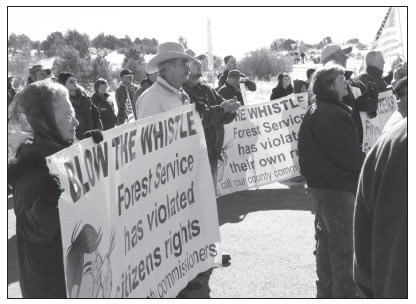
ROAD CLOSURE PROTEST MARCH

Citizens protest proposed road closures and other Forest Service actions at a march in February. Photo by David Grant Long

The biggest change in the new “preferred alternative” for the Boggy-Glade travel plan is a proposal to allow hunters to use ATVs off-road to retrieve big-game carcasses. Previously, the agency had sought to end motorized game retrieval to keep the Dolores Ranger District in line with policies being adopted by the Forest Service nationwide and regionally.

However, curtailing game retrieval proved to be one of the most contentious ideas in the draft travel plan. Many locals said it would be hard on people who couldn’t pack out their game on foot and that it would prompt out-of-state hunters to quit coming to the area.

The agency’s willingness to abandon that policy seemed to please the Montezuma County commissioners when they heard about it from officials who came to the board’s Oct. 17 meeting. Commissioners Steve Chappell and Gerald Koppenhafer appeared happy with the changes. (Larrie Rule was absent because of knee surgery.)

“I really think this shows a positive step by the Forest Service to coordinate and cooperate with local governments and communities and decide what is best for the area,” said Chappell.

Acting Dolores District Ranger Mark Lambert, BLM resource specialist Tom Rice, and NEPA coordinator Deborah Kill said they had taken many of the suggestions sent them by the Montezuma County commission in a July 18 letter.

For instance, the commissioners had suggested allowing motorized game retrieval in the parts of the Boggy-Glade area designated as “F” areas in the old plan, meaning they were open to cross-country motorized use. Though cross-country motorized travel on national forests is ending, Dolores District officials took the suggestion to allow it for the sole purpose of game retrieval during hunting season (mid-August through mid-November) in those specific areas.

Big-game retrieval using ATVs no more than 50 inches in width would be allowed up to one mile from designated motorized routes in authorized portions of the Boggy area. Hunters would have to carry a validated carcass tag.

The practice would be allowed for five years, after which time it would be re-evaluated to see whether it was causing resource damage, the officials said.

In proposing this, the Dolores Public Lands Office is “going against the consistency recommendations of Region 2,” Lambert told the board. Region 2 encompasses national forests and grasslands in Colorado, Nebraska, South Dakota and Wyoming.

“Allowing game retrieval does not follow consistency,” Kill echoed. “We’re making a case that the combined factors in Boggy- Glade make it a place where we would like to deviate from that consistent message from the regional office.”

“I think it’s real good and appropriate to take this action,” Chappell said. “I know it’s putting you out on a limb, but I think the hunters and outfitters in this area depend a lot on that game. I think this is what the public wants, to keep the traditions of their hunting and game retrieval.”

James Dietrich, county federal-lands coordinator, told the Free Press that members of the Montezuma County Public Lands Coordination Commission had likewise seemed receptive to the changes when told about them recently.

“I didn’t hear any negative comments,” he said. “A lot of them were saying, ‘This is good — they’ve really coordinated with us and responded to our concerns’.”

Boiling point

An earlier version of the travel plan for the popular Boggy Draw-Glade area northwest of the town of Dolores was adopted in 2010. It drew widespread criticism from local residents as well as the Montezuma and Dolores County commissioners. The plan proposed closing 62 miles of public roads – mostly two-track dirt roads and user- created routes. It would have created 63 miles of new ATV roads as well. However, the proposed closures and the end of crosscountry motorized travel prompted outrage.

The plan was appealed by seven parties and was overturned by San Juan National Forest Supervisor Mark Stiles. Ironically, however, the appeal that was upheld was based mainly on the fact that road densities in the new plan were too high, exceeding thresholds established in the forest’s recently revised draft Resource Management Plan.

The controversy boiled for months, prompting a protest march in February of this year in which approximately 100 people walked a quarter-mile to the Dolores Public Lands Office carrying signs calling for more road access.

Other protesters parked trucks covered in anti- Forest Service signs at key intersections in Cortez and Dolores off and on for weeks.

Tensions bubbled over when a local resident loudly confronted one such protester in Cortez, swearing at him during the angry exchange. He was cited for disturbing the peace, but was acquitted by a municipal judge on free-speech grounds.

The Montezuma and Dolores County commissioners appointed publiclands coordination commissions to look into road issues. Some of the most vociferous critics of the Forest Service accused the Montezuma County commissioners of being timid for trying to work things out with the agency.

Montezuma County Sheriff Dennis Spruell, sympathetic to the critics, said more than once that he might have to cite or arrest Forest Service officials if they tried to close roads in a manner he considered contrary to state or county law.

Publicity over the fracas attracted the attention of the non-profit Southern Poverty Law Center, which monitors domestic terrorism; the center published a report that labeled the situation “a part of the second wave of the anti-government ‘Patriot’ movement that roiled America and spawned much violence in the 1990s.”

More roads; a new trail

After the Boggy travel plan was overturned, the Dolores Public Lands Office took a new round of public comment and developed a revised environmental assessment, which was released on Oct. 24.

In addition to the policy regarding game retrieval, changes in the new preferred alternative included:

• Twenty more miles of motorized routes would be provided, for a total of 379 miles of open roads.

• The overall management plan for the San Juan National Forest would be amended to increase the permitted road density from 1 mile to 1.2 miles per square mile.

• As a boon to hikers and bikers, a new non-motorized trail would be created between Dolores and House Creek.

• The agency would consider using lessdrastic methods of decommissioning old roads. In the past, the agency had bulldozed closed roads and built enormous berms across them, making them hard to navigate even by foot, something that Sheriff Spruell said had prompted his outrage over the policies.

“We have created a decision tree of things the implementers can consider as they decide what method would be the best for decommissioning,” Kill told the county commissioners. “Keeping all those tools in the toolbox but making efforts not to use the heaviest type of work unless absolutely necessary.”

The comment period ends Nov. 23, after which time the agency will decide whether to adopt its preferred alternative and will issue a final decision.

‘Poorly thought out’

But if the county commissioners found the Forest Service’s concessions a welcome development, not everyone agreed. Jimbo Buickerood of the San Juan Citizens Alliance, a local environmental non-profit, called the agency’s new preferred alternative “an incredible surprise” and said the reversal on motorized game retrieval was “poorly thought out.”

First, he said, the policy ignores guidance from Forest Service leadership.

In 2005, the Forest Service adopted a nationwide travel-management rule that requires individual forests to specifically identify which roads and trails are open to motor-vehicle use. Travel off those designated routes was to be banned.

The 2005 rule did allow forests to name corridors where “the limited use of motor vehicles within a specified distance of certain designated routes” could be allowed for vehicle-assisted dispersed camping or big-game retrieval. But in 2006, then-Forest Service Chief Dale Bosworth issued a directive saying that, “Such designations represent site-specific decisions associated with specific roads and trails or road or trail segments, rather than a blanket exception to the rule” and that such designations “will be applied sparingly to avoid undermining the purposes of the rule and to promote consistency in implementation.”

And in April 2007, Region 2 sent out a letter to forest supervisors that said, “Over time, the long term goal for the Rocky Mountain Region’s forests. . . will be to strive towards designating individual spur routes or dispersed camping sites” rather than having broad areas with exceptions to the ban on cross-country motorized use.

Buickerood said this makes it clear that off-route motorized travel is to be allowed only in very narrow circumstances.

“The Forest Service is moving to a protocol where everything is closed [to motorized travel] except where marked open. This is a complete reversal of that. There will be dozens of square miles that will be open without being posted. This is very confusing to the public.”

If motorized travel is allowed one mile from all the roads in the Boggy-Glade area, almost the entire landscape would be open to ATVs, he said. (According to Lambert, two-thirds of the landscape would be open.)

“There are very, very few areas , just a few square miles across the whole landscape, that are not reachable by one road or other,” Buickerood said.

He said making sure that only hunters are going off-road will be very difficult.

“I’m already hearing from other Forest Service employees in other parts of the forests that they cannot believe this decision that the Dolores District is rolling out.

“The reality is that the forest has difficulty right now enforcing regulations regarding off-road travel and this will only exacerbate the problem.”

He also said the change “flies in the face of the recommendations of the agencies’ own biologists” regarding the harmful effects of motorized use on wildlife habitat.

“Why they would choose to do something that would be non-consistent with the other forests in the region, that is both confusing to the public and contrary to the management protocol and damaging to wildlife and watersheds – I can’t imagine,” Buickerood said.

He said the claim that motorized game retrieval is needed to maintain hunting traditions is absurd, since generations of hunters harvested animals without vehicles.

“I’ve talked to a number of people, including leaders of the older generation of Montezuma County, who say, ‘My dad told me when he took me hunting as a child not to ever shoot an animal where you can’t get it back to the road or back to the horse.’

“The reality is, hunters for decades retrieved their game without any motorized use. Game retrieval by vehicle is not a traditional activity – it’s only a couple decades old.“

Help with enforcement

At their meeting with the county commissioners Oct. 17, forest officials called on the county to help them educate the public and enforce the regulations.

“We are going to heavily rely on help through education and patrolling and some enforcement,” Lambert told the board. “Based on past experience, we know there are some compliance issues. . . . We are looking at this on a trial basis and we want to review it again in five years.”

Kill said the officials would like to continue meeting with the commissioners or with the Public Lands Coordination Commission to talk about education, flyers, and monitoring.

Rice said each year the Dolores Public Lands Office contributes a limited amount of funding to the sheriff ’s office for help with patrolling, “so this is an opportunity for them to help.”

“I think they will take that on,” Chappell said.

However, Buickerood told the Free Press he is skeptical about how well the policy could be enforced. “In his public statements Sheriff Spruell has indicated that he might very well not enforce Forest Service road closures, so one has to ask, ‘Why would the Sheriff now step forward to help the Forest Service to enforce illegal motorized game retrieval?’ It seems very unlikely that the Forest Service can count on the sheriff ’s assistance should they decide to sanction motorized game retrieval.”

Spruell could not be reached for comment, but Undersheriff Robin Cronk said the sheriff ’s office would not be enforcing things such as violations of rules about motorized use.

“That’s probably not going to happen,” Cronk said. “That’s their job, not ours. When it comes to Forest Service and BLM and DOW [Division of Wildlife] laws, we won’t be enforcing those and stepping on their toes and doing their job.”

The sheriff ’s office does help with forest patrols to look for violations of state and county laws, such as drunk driving, he said. Not the norm

In an interview with the Free Press, Lambert said the means of enforcement and education are still developing. Agency officials have met with the Montezuma County Public Lands Coordination Commission and the Dolores County commissioners to brainstorm ideas.

“We need that help,” he said. “It’s not like we’re saying, ‘If you don’t help we’re not going to do it.’ It’s more, ‘If we don’t get your help we don’t think it’s going to work’.” Lamber said, however, he would welcome any help that might be offered through either the Montezuma or Dolores County sheriff ’s office.

“But if it doesn’t make sense for some reason, we don’t want to foist that on them. We’re just going to put it on the table as something to look into.”

Lambert said he doesn’t know how many forests nationwide allow motorized game retrieval, but within Region 2, there is one that does – the Rio Grande National Forest in south-central Colorado.

The Kaibab National Forest in Arizona (not in Region 2) also allows game retrieval up to a mile off designated routes, and Lambert said he believes it is being contemplated in some other forests in Arizona and New Mexico.

Lambert has only been acting district ranger since Sept. 26. However, he said he was involved in developing the Boggy plan through his previous position with the San Juan Public Lands Center in Durango and worked closely with the previous acting Dolores District ranger, Connie Clementson.

The plan “was discussed quite a bit over the past several months by the ID [interdisciplinary] team and at various different levels,” he said. “It’s certainly something that we’ve talked about on a forest level and [Forest Supervisor] Mark Stiles is aware of it and is in support of this office in going forward with this.”

Dave Dyer, forest planner with the Rio Grande National Forest, said that forest has not finished a complete overhaul of its travel plan because of budget constraints. Until it does, motorized game retrieval will remain in place there.

“We are currently not looking at abandoning our motorized game retrieval. It will probably be in place until the plan revision or a full-scale travel plan,” Dyer said.

“We very much have a motorized community that wants to use the forest, as well as the other side – the quiet-use folks, who don’t want motorized – so we’re dealing with that on a case-by-case basis until budgets improve.”

Big-game retrieval is allowed in most places where there are authorized motorized travelways, Dyer said. Game retrieval is permitted up to 300 yards off the motorized routes during hunting season, only in the afternoon. (The Dolores District did not set time-of-day restrictions.) Motorized retrieval is the exception rather than the rule nationwide, Dyer said.

“There’s not a lot of forests anywhere in the country that authorize it,” he said

A question of liberty

Bud Garner, who was emcee of the local chapter of the 9-12 Project and Tea Party until he quit recently to run for county commissioner in 2012, has been one of the most vocal critics of the Forest Service.

He called big-game retrieval a “minor issue” and told the Free Press he has larger concerns with Forest Service policy.

“My big issue, as you well know, is liberty, and I see no liberty in the federal government disobeying the Constitution.” He maintains the federal government is not authorized by the Constitution to own vast tracts of public land, and the existence of national forests is thus unconstitutional.

“They should not even exist – the organization, I mean – the Forest Service.

“We’re not going to solve the constitutional problem over a little kerfuffle over big-game retrieval. The problems still exist.”

Garner also points to state statutes concerning highways that say that “all roads of the public domain, whether agricultural or mineral” are public highways and that anyone other than municipal or county officials who tries to close them is guilty of a misdemeanor.

“They’re not obeying state law,” he said of the Forest Service. “I think they are trying to portray themselves as having come around, but they still have an attitude, and it’s institutional – it’s not this individual or that – that the federal government is the end-all and be-all of everything.”

However, Garner added, “If big-game retrieval is your issue, it looks like the Forest Service did make some movement on that.”

Another opportunity

Lambert emphasized that the new gameretrieval policy is only for the Boggy-Glade area. “It doesn’t mean we will be proposing it for other places. It doesn’t mean that we won’t, either, but it is an issue that we looked at specifically for this area, considering the issues on the ground and bringing into account support from the counties in helping us implement this.

“We want to talk with the public and the counties and other constituencies on how we monitor the use to see if it’s working or not. If we’re seeing rampant abuse and non-compliance, that will fit into future decisions on whether to continue this or not.”

Lambert said the office is looking forward to hearing comments on the new proposal. “We have made some significant changes since the last one and we want constructive feedback on what we’re now proposing.”

Published in November 2011

Fear of flying: An Air Force proposal sparks concern


Is the Four Corners ready for war games? The U.S. Air Force is targeting the area, saying the rugged mountains and steep valleys of Southwest Colorado and northern New Mexico are essential for low-altitude, nighttime training missions that keep American pilots sharp.

But locals fear crashes, deafening jet noise, frightened wildlife and livestock, and the disruption of the peace of rural life.

AIR FORCE TRAINING MAP“I’d like to have a button in this room you could push that simulates exactly the sound of a C-130 flying overhead at 300 feet off the ground. My guess is that it’s not pleasant,” stated Andrew Gulliford, a Fort Lewis College professor, at a Oct 11 public hearing on the proposal in Durango.

“The proposed map for these trainings includes the Weminuche Wilderness. San Juan wilderness offers three things: silence, solitude and darkness. There are too many people and resources at risk with this proposal.”

Under the proposal, 688 missions per year, or three every night, would depart from Cannon Air Force Base in New Mexico at dusk, with each sortie lasting five hours. Approximately 10 percent of the training missions would be flown between 300 and 500 feet above ground, 40 percent between 500 feet and 999 feet above ground and 50 percent between 1,000 feet and 3,000 feet altitude. They would fly over a vaguely hourglass-shaped area in northern New Mexico going north and west into Southwest Colorado over cities including Cortez, Mancos and Dolores.

The proposal was revised and the fly zone was made smaller after an earlier version was floated in 2010 and drew considerable comment.

The Air Force held 17 public hearings on the new proposal throughout the affected area. Durango’s gathering offered nearly unanimous resistance to the proposal, with only one citizen out of 45 showing support during a show of hands.

“I represent 50,000 people in La Plata County and I have not heard one comment in favor of this project,” said Wally White, a La Plata County commissioner.

The exception at the hearing was Zane Wood, who spoke on the importance of the U.S. military training missions.

“Ladies and gentlemen, we are at war, the enemy may be in this room and those that stand between us and the enemy need training,” testified Wood. “Regardless if you are woken up or your horse is scared, the military must train or the enemy will be at our door, kill our children and attack our women. We must sacrifice and I don’t care if you lose sleep. Unless you are willing to stand between us and the enemy, then you should support the military training, so I hope this goes through. I’m all for it.”

Citing a need for “less sterile,” more challenging mountain terrain to train pilots, Cannon AFB hopes to expand its low-altitude, night-time training boundary to include 18 counties in Southwest Colorado and 14 counties in northern New Mexico, including land in the Navajo Nation.

Under the revised plan, outlined as a proposed action in an environmental assessment, training missions would be only for the C-130J transport plane and the CV22 Osprey (a dual-propeller helicopter/plane hybrid). No one area would be flown over twice in one night, and the aircraft would not fly lights-out, to increase visibility for other planes.

The expanded fly-over range would be used for flight practice by the 27th Special Operations Wing based at Cannon AFB. Crews would be practicing low-altitude, inflight refueling between two aircraft, lowaltitude formation operations, simulated

drops, and the use of night-vision goggles. “Air-crew survivability in combat requires the constant exercise of perishable flying and crew coordination skills in challenging environments that closely simulate the conditions and terrain of actual combat,” the report states.

Air drops or parachuting would not occur, the Osprey would not perform hovermode maneuvers, nor would landings occur at local airports. Planes would return to Cannon or Melrose AFB following their overnight sorties.

The reasoning for the expanded Colorado range, according to Air Force Col. Larry Munz, is that “we need to be prepared by flying over larger areas never seen before, and our pilots need the experience of flying low in challenging terrain at higher altitudes where the air is thinner.” He added that “there is no indication of significant impact.”

Military preparedness is not all about war, said Col. Munz, but is for humanitarian purposes as well.

“We respond to humanitarian disasters, and we need the practice to be able to effectively drop off supplies in earthquakes and tsunamis zones like Haiti and Japan.”

During a meeting break, C-130 pilot Major Jeremiah McClendon explained that the mountainous Colorado area is preferred because “following modified contour routes is the most difficult thing we do. We fly low altitude not because it is fun, but because we don’t want to get shot, so we fly under the radar.”

Wanting further study

What concerns critics of the plan is the very large area that would be open to unannounced flight training at very low altitude, 300 to 500 feet above ground. Typically Cannon AFB uses set military training routes (MTRs) around eastern Colorado and southern New Mexico that stay the same, and are generally less invasive and more predictable for populations below.

The proposed changes to a larger area with specific routes unknown to the public warrant examination under a more-rigorous process and the issuance of an environmental impact statement, according to opponents. They say research is needed to identify no-fly zones such as cattle and sheep operations, wilderness areas, mountain communities, tourist areas, avalanche zones near people and roadways, cultural sites and wildlife habitats- such as those of the Rocky Mountain bighorn sheep, mule deer and elk, which are known to experience increased stress due to low-flying aircraft.

“An EA is a low-ball, quick and easy way to do this,” said Gulliford, an environmen tal studies professor at FLC. “This study is a joke, patched together from dated studies from other areas. The citizens said no before and are saying no again because the impacts are extraordinary. An EIS is needed that addresses concerns by county and community, not just one map” showing a new training area.

Because the Air Force declared a finding of “no significant impact” in its environmental assessment, a more comprehensive environmental impact statement is not required under federal environmental law.

Stephanie Strine, Cannon AFB publicaffairs officer, said concerns are being listened to and that the flight plan and boundary were adjusted based on comments and concerns heard during previous community meetings in 2010.

“The map when we started was bigger than now,” Strine said. “Based on community feedback, it is smaller, so comments last time affected the boundary.”

For example, American Indian lands in the Taos, N.M., area were avoided to protect cultural sites and communities. Southeast Colorado was removed from the proposed flying range due to public concern as well as areas near Aspen where there is sensitive mule-deer habitat. Strine interprets a larger, low-altitude training zone as less invasive than the traditional, more predictable military training routes.

“It is a less-concentrated impact when training is conducted in a larger area,” she said.

‘We can’t see them’

The unknown routes of the proposed low-altitude training area are a safety concern for commercial and private pilots. Military aircraft don’t necessarily communicate their positions and flight plans with civilian or commercial planes, according to a local pilot.

With advanced, long-range radar systems, the C-130 and Osprey can monitor other planes far in advance and adjust course. But civilian and commercial aircraft don’t necessarily have that capability.

“They can see us, but we can’t always see them, so communication is key,” said Joe Gemperline, a general aviation pilot in the Durango area. “It is quite a shock factor when you come over a ridge and see a C-130 climbing toward the same pass.”

Gemperline said a separate, dedicated radio frequency is needed to warn commercial and general aviation pilots of military flight activity in the area.

Michael Lavey, a Navy veteran from Cortez, testified that the scope of the proposed flying range seemed too broad.

“It seems excessive, too many sorties, and the altitudes they are talking about are too low,” he said. “I moved to Southwest Colorado for the peace and quiet and I worry that this will jeopardize that. It sounds like their minds are already made up.”

The proposal states that heavily traveled civil aviation corridors, airports and landing strips would be avoided.

Ranchers face burden

Cannon AFB has set up a claims office for livestock losses from low-flying military aircraft. Public-relations officer Strine said the program will adjust flights to avoid sheep and cattle operations during calving, branding and herding when the animals are particularly vulnerable to stress and stampede. But that ranchers must contact the base with the specific locations and times to avoid that area.

“We fly in rural areas and avoid settlements, but there are times when we don’t see a community until it is too late. If that happens and a horse runs into a fence, then contact us and we will take it into account and stop flying over that house,” she said.

The number to call for ranching concerns and claims is 575-784-4131.

Ranchers don’t have time to think about military aircraft when they are gathering their herds, responded Carol Miller of the Peaceful Skies Coalition, a group fighting the proposal.

“We want to know where and when they are going to fly,” she said. “The Air Force has plenty of mountains on their bases in New Mexico, Nevada and California. Now they want Southwest Colorado mountains so they can militarize the entire U.S.”

Dan Randolph, executive director of the non-profit San Juan Citizens Alliance, said the flyovers are an unfair intrusion for local ranchers.

“It is a huge burden to the ranching community to call Cannon regarding livestock issues,” Randolph said. “There needs to be a better method, identified in an EIS, for that system. A lot of these rural areas do not have phone service.”

Ned Harper of Dolores cited a Diné College study of the impacts of low-flying military planes on sheep-herding activity on the Navajo Nation.

“People were terrified, sheep ran in every direction, horses ran in every direction, hotdog pilots fly lower than allowed,” he said. “Bringing the military here is too invasive.”

Mike Olson, a former Navy pilot, agreed that the location was wrong.

“We used to fly fast and low in similar mountains and this is not the right place; it is quiet here, a very important and special place,” he said. “Go to Nevada and California where they are set up with ground-based radar to pick you up, go to places with resources already in place to get the training, we don’t need more areas for training.”

Pristine mountains

Regarding noise, the Air Force’s studies report that overall operations would not exceed noise standards identified by the EPA as a threat to public health and welfare. Single- exposure noise levels generated by the C-130 and CV-22 Osprey could be as high as 98 decibels and 90 decibels respectively.

The study calculates that persons sleeping in a residence outside the avoidance areas could be awakened once per year by lowflying aircraft, or once per two years if the windows are closed.

The potential for crashes or refueling accidents also was a worry for meeting attendants. “To pick an area like this to practice refueling is irresponsible – it puts our headwaters at risk if gasoline is spilled,” said Miller of the Peaceful Skies Coalition. “This plan is trying to create a giant military training route.”

Added Judy Harris, “If there is a crash, what system is set up in our community to deal with it?”

Flying such low missions could also affect future wilderness designations, which specifically prohibit the noise and pollution of motorized intrusions.

“Establishment of low-level flight paths could preclude areas from protection,” said Randolph, of the San Juan Citizens Alliance “People here are already impacted by federal energy actions; this military fly zone would add to the cumulative impacts. There has been no discussion of hunting and fishing impacts either.”

According to the Air Force’s EA, “Threatened and endangered or candidate species locations and critical habitats identified by management agencies would be avoided by a minimum of 1,000 feet altitude.”

The pristine, wild nature of the San Juan Mountains should be protected, said others.

“A previous speaker said we have to sacrifice, but if we continue to sacrifice the cougars, bears, elk and solitude of our wilderness areas, what will we have when it is done?” said outdoor enthusiast Amy McClintock. “Let us not say, ‘Be damned!’ to the tourists who come here for the solace and the wildlife. I request that the proposal be withdrawn.”

Published in November 2011

The Diversity of Indian Country: Author sees new energy in Native American communities

Indian Country is a vibrant and diverse locale, says Catherine (“Everybody knows me as Cathy”) Robbins, author of “All Indians Do Not Live in Teepees (or Casinos),” published by the University of Nebraska Press.

“Modernity and a restorative vision of the past have led to new energy among Native Americans.”

Robbins believes the teepee symbolizes this vibrancy. Plains people keep teepees next to their houses for ceremonial purposes or daily living.

ALL INDIANS DO NOT LIVE IN TEEPEESThe teepee also reminds us of the diversity of Indians. Navajos build hogans. The phrase “All Indians Do Not Live in Teepees” comes from a Navajo woman.
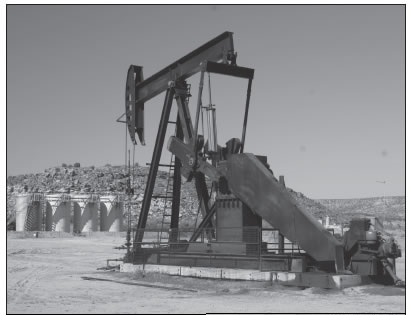


The book covers a range of issues currently important to Native groups across the nation, including science and medicine; governance, law, gaming, arts, and communication.

To focus these disparate subjects, Robbins used a repatriation theme. The book’s introduction provides two examples.

The first happened at Cabrillo National Monument on Point Loma, San Diego. “A gorgeous cliff jutting into the Pacific Ocean,” says Robbins.

Sometime between 11,000 and 30,000 years ago, the Yumeyaay Diegueno people settled on Point Loma.

Then Portuguese explorer Juan Rodríguez Cabrillo landed at San Diego Bay in 1542, followed by the Spanish, Mexicans and Americans. By 1990, the Yumeyaay Diegueno had 13 small reservations in the San Diego area. About 2,200 of the 20,000 tribal members lived there.

The Cabrillo National Monument commemorated European conquest. Then in 2006, Yumeyaay Diegouerno elder Jane Dumas got her people their own national flag to fly beside the European banners.

“It is a symbol of the love and sacredness they attach to their occupied homelands — lands they never left,” says Robbins.

The second incident involved the 1999 return of 2,000 sets of ancestral remains to the Jemez-Pecos Pueblo in New Mexico from Harvard’s Peabody Museum, under the Native American Graves Protection and Repatriation Act.

According to Robbins, the return of the remains was about more than bodies. It was about a community restoring memories “ripped from it.”

“Repatriation has expanded the concept of sovereignty,” she says. “It is a metaphor for cultural identity and to live as one wishes.”

She admits that despite pockets of successful repatriation that keep people “fired up,” Native Americans suffer much pain.

“Most Indians live in cities and towns, and life can be very difficult,” she sighs. “There’s nothing for young people [on reservations] and that’s pulling reservations apart.”

A native of New York City, Robbins became interested in Indian affairs when she arrived in New Mexico in 1969 as a reporter. She wrote for local papers as well as regional and national publications including the New York Times “when they took me on as one of their army of stringers.”

Over the years she collected research and story clips on Native American issues. A 2002 move to California led to an examining of the accumulation.

“I thought there might be a book, but I didn’t get serious for a while because we had . . . grandkids to help raise.”

Still, she sought Indian people and talked to them about their lives. Soon, she realized she was researching a book.

“I wrote a couple of chapters to show to an agent. The University of Nebraska Press took on the project. And in 2005, I got serious.”

Why? “Because I got a contract. And it’s like climbing a mountain. It’s there. I think the book was inside me for a long time. The more I learned about the Indian people, the more I wanted to know.”

Despite her curiosity, she almost dropped the book project because she was not Native American. “Who am I, this white lady writing about Indians?”

Yet, as she studied her notes, she realized she had seen things others hadn’t seen and believed she had a right to her vision as a writer and reporter.

She continued seeking out Indian people, exercising caution and using courtesy when she approached them.

In New Mexico, people knew her work and that gave her an entree to explore her ideas and ask them questions.

When she visited Native Americans in other parts of the country, she attended pow wows, and visited casinos, museums, and community centers to meet and eventually talk to people.

Sometimes they decided not to talk. “You just have to shrug your shoulders and find another way to tell the story,” she says.

Once she had gathered her research, putting together “All Indians Do Not Live in Teepees (or Casinos)” became “a serious management issue.” She had two bankers’ boxes full of notes from before she started updating her material by traveling to Indian Country from California to the Dakotas. After her trips, she had more to organize.

Used to cranking out 1,500- to 3,000- word articles, she faced thousands of words and 400 pages in the book, and struggled with chapter order.

“Putting it together was a matter of thinking out the story. Once I realized that repatriation was my theme literally and figuratively, things fell into place.”

The book became as much a labor of love as raising her grandchildren.

“It was a good feeling. Though it was hard work, I had a lot of joy.”

“All Indians Do Not Live in Teepees (or Casinos)” came out this past September to good reviews. She considers the book an incomplete picture of contemporary Native America.

“Indians are weavers of a destiny far more interesting than any we could make for them,” she asserts.

Published in Arts & Entertainment, November 2011

A game most foul

This October, who is to say which will be scarier, Halloween or the World Series.

The public is led to believe that professional sports represent the epitome of good health and physical fitness in their players. If you’re a baseball fan, you’re probably snickering by now. I know, some of these guys are not in the best shape, and they also have habits that can turn a spectator’s stomach. In both the dugout and the locker room there probably are other habits we may not want to talk about, and we’re lucky they don’t often allow television cameras in there either.

The advent of widescreen, digital television claimed to usher in an era of unparalleled spectator enthusiasm. As Queen Victoria might have said had she been born a baseball fan, I am not enthused. Actually, the only baseball I ever watch tends to occur when I’m on the couch with my relatives in Minnesota. They watch a ton of baseball, and at least a couple more tons of other sports each spring, fall, and winter. Their couches sag, and they all own big televisions.

If you’ve stayed with me this far, no doubt you’re beginning to suspect I have nothing good to say about baseball, our good old American pastime. But I do own a film Ken Burns completed — 10 DVD discs and 1,140 minutes — and he never mentioned the subject I want to discuss.

You see, this summer I finally understood why watching baseball may be beneficial, even healthy. I found I can lose about a pound of weight every nine innings, and up to three pounds during a doubleheader. All I have to do is sit in front of a 60-inch high-definition plasma-screen television at a friend’s home and watch these professionals spit. The spectacle kills my appetite.

Yes, I said spit, though I could have said hocking a loogie. That guttural whoosh that resonates deep in the chest and ends with a plug of part snot and part saliva forcibly ejected from one’s mouth. To cough up a phlegm wad. Sputum, spittle, snot ball, slobber, drool. You know, spit. That disgusting little habit that makes men men.

My understanding of basic biology reminds me the body is composed mostly of water, and spitting as often as professional baseball players spit must account for their attempt at staying fit. Water holds extra weight. I don’t know how else to explain it. We amateurs might try to imitate the pros during the off-season by inviting a few neighbors over and spitting into a bucket (once fashionably known as a spittoon), or even more disgusting, we could film our get-togethers and upload them to YouTube. There’s no telling what it takes to get the spit to hit the fans.

If America wasn’t so stuck with the program of rotating its sports seasons, baseball’s major leagues could operate a successful weight-loss clinic in its off season, bringing in millions of additional revenue dollars. All the producers would have to do is zoom in on the constant flow of spit the players produce, not on the baseball.

They might call this new season, “Spitball.” There might even be a slogan, something like “Drop unwanted pounds of weight, watch our athletes expectorate.”

Whoever wins the World Series would ultimately be irrelevant. Well, maybe not entirely irrelevant. Go ahead, continue to cheer for the Rockies, or whatever team you choose, and maybe our support will help that team win a World Series during some future fantasy season, but I’d be satisfied watching a few professional baseball games on a big-screen television with my friends if we could also get serious about losing (weight, of course).

David Feela writes from Montezuma County, Colo.

Published in David Feela

Government regulations running amok

About 10 years ago, when we started in the nursery business, at a little place on Montezuma Avenue in Cortez, Colo., we learned about seeds. We sold seeds there as seeds had been sold there for years, in package and in “bulk.”

For us, bulk seed was five crookneck- squash seeds sold for 20 cents. It did not take long for us to realize that we were losing money selling these seeds at such low quantities. There was, after all, the cost of the seeds, the seed envelope, rent, labor, the nursery license, the scale license (both payable to the State of Colorado, Department of Agriculture, Division of Plant Industry), and shrinkage – some seeds fall to the floor, or go unsold.

For every way there is to make money through imagination and labor there is another way to take this wealth away. Here is the stench that now pollutes us.

Some time back we received a letter from a Mr. Brian Allen, Colorado Department of Agriculture, Division of Plant Industry, addressed to someone other than us, informing us that we had to pay a $50 fee in order to sell “bulk” seeds, or quantities of seed greater than one pound, in Colorado. According to this Mr. Allen, this fee was at the request of the Colorado seed “community.” As we already had a Colorado Nursery License, and a Colorado Scale License, both of which were required for us to sell seeds, and as the letter, being addressed to someone other than us, contained all of the ineptness of a bureaucratic money grab, we ignored it.

Then, this last spring, we received yet another letter from Mr. Allen informing us that he had called our nursery and confirmed that we were in fact selling seed in bulk, and that if we did not pay the fee we would be further fined.

Addie, my wife, remembered a call by someone asking if we sold bulk seeds. That person made no effort to identify himself. Apparently Mr. Allen believed that he should act in some stealthy Sherlock Homes fashion in his official role as an employee of the State of Colorado, without need to explain or justify why we should pay the taxes which fund his employment.

Naturally, we became full of justifiable rage. At a time when most businesses are struggling to stay afloat, for government to ask anything more of business should require a civil request with comprehensible reasoning. As this was not done, we took our anger and transformed it into what we believed would be a simple remedy. I e-mailed Agricultural Commissioner John Salazar, Division of Plant Industry head Mitchell Yergert, and State House Rep. J.P. Brown.

Unfortunately, but predictably, nothing happened. I doubt that the message ever made it past Mr. Salazar’s handlers. Mr. Yergert referred it to an underling who emailed us back with the section and article of the Colorado seed act, but did not address the fact that this amounted to a triple taxation on a single product. Mr. Brown emailed us that we seemed to have a point, that he would see what he could do about it, and then nothing.

There are two factors in this situation that must be addressed, the first being the role of government in regulating at this level, the second being the competency of government. For each of the last 10 years that we have been in business, our nursery has been inspected by the state nursery inspector, David Gordon. We have never felt apprehensive or intimidated by Mr. Gordon. We have never objected to his inspections. While no business is perfect, we have always felt that that the health of our plants and the quality of our seeds speak for themselves.

Mr. Gordon’s job is to ensure that pests or diseases are not brought into nurseries and then released out into the communal landscape. We have always believed that being inspected is a small but worthwhile government intrusion. We have never questioned the nursery registration fee which is part of this. A disreputable nursery or box store bringing in the lowest-quality stock attainable, whether it is pest- or disease-free or not, could produce devastating results. Imagine your landscape without trees. Ips beetles, emerald ash borers, Dutch elm disease have devastated or are still changing entire ecosystems.

A small bit of government that seeks to educate, eradicate, and enforce is a reasonable price to pay for the benefit of the plant industry and the quality of life of citizens.

Our objection to this triple tax on seeds – the nursery license, the scale license, and now the seed license – is justified. The state’s reasoning for this seed law was to prevent people from being sold poor-quality seed, or seed contaminated with weeds. Fair enough on paper. But the state does not independently verify seed-germination results. A business could put new germination dates on its seed stock without ever actually testing the seed for germination quality or the presence of weeds, and the state would never know. Consumers would notice poor germination or the presence of weeds and would naturally shop elsewhere.

Consumers can regulate this themselves. Have there been riots on the streets of Greeley or Meeker, public outrage in the streets, over the issue of low-germinating seeds? Of course not. This is government developing regulations for a problem that does not exist.

The state is without consistent enforcement on seed-sellers. Is every mail-order, Internet, feed-supply, hardware, and healthfood business that is selling seed paying the same fee and maintaining consistent germination standards? After 10 years in business, the only reason we came to the notice of the state bureaucracy was that Mr. Gordon saw that we had failed to germination-test our grass seed about two years ago (an oversight on our part) and noted it on his form that went back to the state. Mr. Gordon requested that we get an updated lot test card from our supplier, Southwest Seed, which Walt Jr. promptly brought over.

Since then we have not let that ball drop again. But if this is such a problem why are they not actively searching all web sites, cataloging all catalogs, raiding all farm-supply and hardware stores in search of bulk seed? Instead they use it as an excuse to further tax those that are already being bled.

Another absurdity of this is the scale to which they are purporting a need to enforce: loose bulk seed or packages of seed greater than one pound. A government trying to regulate the selling of 70 cents’ worth of pea seeds or four pounds of blue gramma grass seed is a government trying to justify an existence that it should not have. A bluegrasstype “soccer mix” is seeded at a rate of five to eight pounds per 1,000 square feet, native blue gramma/buffalo grass at two to three pounds per 1,000 square feet. Is the purpose of government to regulate how much grass that you can buy at a time for your yard? How can the state justify interference in the private sector over such piddly crap? Why are we are funding this behavior at a time when we cannot fund schools in Colorado?

Another issue is the size of the fee. The state charges $10 for a cigarette distributor’s license but $50 for a seed license. That $50 is about 7 percent of our total sales in garden seed. When you add on the nursery license and the scale license, you the consumer are being charged about 25 cents out of every dollar by the state for the privilege of buying bulk seed, plus sales tax.

We are not alone in this. Greenfields Seed, our garden-seed supplier from Grand Junction, says most of their wholesale customers are like us, small independents selling loose seed as a convenience to their customers. And in talking to both Greenfields Seed and Southwest Seed, our seed community, neither one of them requested that the State of Colorado impose another fee upon us or them.

The second issue is the competency of those in government. If your salary and benefits are funded through tax revenues, remember that you work for us: We the people who create the wealth through our labor and risk-taking. When you demonstrate such arrogance and incompetency, our reason for funding you ceases to exist.

Finally, the issue for us is not just about a bungling bureaucracy, or a fee to pay, it is about the seeds themselves. What we are talking about with these bulk seeds are a few old hybrids, and mostly, open-pollinated seeds. Seeds that can be passed from hand to hand, generation to generation. Seeds that can provide food security to a population.

If a government denies these seeds to its people through corruption or stupidity that forces seed-sellers to no longer carry these seeds, then what is the purpose of this government? When can we say that enough is enough?

We sell these seeds not because they are a major source of revenue; they are not. We sell them because they are culturally important, a piece of our continent, a part of our main. Wando and Green Arrow, Champion and King Banquet – for us the question remains, what do we do with these seeds? Do we pull them down from the shelf, and surrender to the greater bad, or do we pay the fee and become an accessory to the stupidity and corruption that our government has become?

Jude Schuenemeyer is co-owner of Let It Grow Nursery and Garden Café in Cortez, Colo.

Published in Jude Schuenemeyer

Better communication through technology

At work, I am responsible for the very generic “info@…” e-mail inbox. I have my own also, but the general mailbox gets a lot more mail and what comes in there tends to be a bit more entertaining than in mine.

So the big thrill of my day is getting to work and checking my inbox to see what juicy items have come in overnight.

I would like to share one morning’s worth, minus the really appalling, raunchy, overtly sexual ones that can’t be repeated in print.

And, yes, I get a TON of those.

From: Subject:

1. Vacation Alert – Earn Six Flags tickets!

2. Surveys – Angry Birds Survey

3. My expert loan mod – Avoid foreclosure, get help now

4. SIDNEY ROSEMARY – Penis Enlargement Pill – CHEAPEST PRICE!

5. Postmaster – Buy high-quality pharmaceuticals, you can

6. Mora – Order Viagra online with huge Discount

7. Postmaster -+TyCQEnK2YAGQGnfl

8. Kean Group Corp – USB Car Mouse Gift

9. Mr. Omar Garashi – Contact me

10. Trudy Sixta – A genuine way to enlarge your ____ at home

11. KrisNancee – Safely lose 1-2 pounds per day before the holidays

12. LAURALEE BERRY – Purchase fake watches

13. Max-Gentleman – Max-Gentleman *Enlargement* Pills

14. Open Eye Corporation – Free Dementia Reports

15. Mrs. Jasmeen Murad – Donation from Mrs. Jasmeen Murad

16. Your Best Friend – hello

17. COMPAGNIE HEINEKEN –Votre maison au bord du lac? Partir de 40,000 euros

18. Pabitra Pradhan – Haven’t heard back from you

19. Postmaster – If porno films are not fun but only sad memories

20. CIMB BANK MALAYSIA – Good day dear this is deal of 40.5 millions from CIMB Bank

21. COMPAGNIE HEINEKEN – A Votre Amiable Attention

22. Max-Gentleman – Max-Gentleman *Enlargement* Pills

23. No-Reply – Vriaqra Ssexxual Lifestyle

24. Yoshiblade – New ceramic knife guaranteed to stay sharp for life

25. Monica – My friend steals houses from banks

26. Mary McPhee – Dear Beloved in Christ

27. Sammie Oenn – Awake your amorous Spirit

28. Angel of Peace – Crystals of light from the vortex

29. I’m young again and full of energy – She will be happy

30. Glady Morgan – Rock solid, bigger Harder

31. Dr Bosley – We can fix your hair loss

32. Searches – Your ex is looking for you

32. Searches – Are you BROKE?

33. Camper – Sseexsxual & Erotic Pifllls

34. Alan Ohara – Stay effective as a lover

35. Vivian Cosmos – I want to know you More

36. Jarvis Sherman – Mature Dating

37. Denny Bravo – Large Dating

38. Super Daily Values –You can never have too much fun this summer

39. Watson – My proposal for review

40. I’ll be with her again – Today I want to offer you

41. accu lotto – Congratulation; Congratulation; Congratulation

42. Aggressive Locomotive – Be proud of your P.E.N.I.S.!

43. Facebook – Aseela Ismail wants to be friends on Facebook

44. Jess Ardella – Best replica watches at $130 each 45. Jeff – About your pack of cigarettes

46. Shawna – Fake Watches Free Shipping

47. ANGEL – Looking for Something?

48. Lilly Fontenot — You have go new “show interest” from ladie

49. Indian Dating — 1000 of pictures & videos of beautiful Indian Singles

50. Sexymilf.com — Married but lonely wives in search of attention (my favorite)

That is just a small sampling. I get upwards of 450 emails a day. It makes my job exciting and certainly gives us all something to talk about. If you have any comments… send me an email.

Suzanne Strazza writes from Mancos, Colo.

Published in Suzanne Strazza

Who is Grover Norquist?

Who is Grover Norquist? He is a hero to some, but when you delve into what he proposes to do, you may revise your opinion. Norquist proposes to shrink the greatest government in the history of mankind to the size he is – puny.

Norquist, president of Americans for Tax Reform, apparently hates government. “I don’t want to abolish government. I simply want to reduce it to the size where I can drag it into the bathroom and drown it in the bathtub,” he has said.

He is a sly one. Like a carnival barker he shouts out all the glorious, exciting and mystifying things we will experience if we support his game. The sad part is, we enthusiastically do.

Norquist repeatedly claims taxes are evil. If you take a moment to collect your thoughts, you realize we cannot run this government without taxes. Our forefathers, immigrants who settled this fruitful land, levied taxes and/or fees to support the infrastructure of cities and towns. They built schools, roads, railroads, sewers, water lines, and fire stations – not to mention law-enforcement agencies and the military.

It was different forms of oppression that drove our forefathers to brave the trip across the seas to a new land where they could make a government led by the people – not the Grover Norquists of the world.

We dutifully go to the polls every two years and cast our vote for the candidate of our choice. As we happily send these lawmakers to office, we expect they will do our bidding. But Norquist has already taken control of some of them. He holds our elected officials hostage with the pledge that he arm-wrestles them into signing.

They take an oath when elected with their hand on the Bible when they are sworn in as our representatives. This is the oath:

I, [elected person’s name], do solemnly swear or affirm that I will support and defend the Constitution of the United States against all enemies foreign and domestic, that I will bear true faith and allegiance to the same. . . . So help me God.”

This oath of office is required by the sixth article of the Constitution, and as provided by Section 2 of the act of May 13, 1884.

Grover Norquist’s pledge?

“I, [some intimidated official], pledge to the taxpayers of the state of [whatever] and to the American people that I will:

“One, oppose any and all efforts to increase the marginal income tax rates for individuals and/or businesses; and

“Two, oppose any net reduction or elimination of deductions and credits, unless matched dollar for dollar by further reducing tax rates.”

In the 112th Congress, 238 House members, 41 senators, 13 governors and 1249 state legislators have been intimidated into taking this absurd pledge. They have sold their souls for their turn at his pole. If there were that many elected officials that had turned to Communism we would be up in arms. I see no difference in his group. Anyone who willfully tries to bring down this great nation from inside or out is a traitor.

Of course, Norquist and ATR deny that they are trying to bring the country down. But what else can you call it, when you adamantly oppose any tax increases for any purpose – whether to build a school or create a water district? Norquist also opposes health-care reform that would provide coverage for everyone. Easy for him to do that, since he can doubtless afford health care on the $200,000-plus annual salary he makes for his part-time job with ATR.

I am proud to pay taxes and I have been fortunate to have done so from the age of 16 on. I have seen the remarkable results and growth of our nation, the many benefits our taxes have provided. I could list them but you know what they are.

To turn this system over to Grover Norquist to me is no less an act of treason than those deeds perpetrated by the Communists in the 1940s and ’50s.

Let’s not fool ourselves. All the things we need to make a great society have to be paid for, whether through taxes or unregulated corporate fees. As the bumper sticker states, “Freedom isn’t free.”

Norquist is not concerned about us small taxpayers. His supporters are big-monied investors, top CEOs, large corporations, who pay little or nothing in taxes yet get large refunds. Without taxes how are we to support our system? By fees, of course, levied by his group with a small handling charge. One wouldn’t expect them to do it for free!

Galen Larson writes from Montezuma County, Colo.

Published in Galen Larson

Perry watch: Pledge and consequence

Oh, what fun. Regressive Ricky is in the race — and, snark aside, it looks as though the gentleman from Texas might have a fightin’ chance at the White House.

Cringe.

OK. That was the last time for snark, I promise. There are genuine concerns about this candidate’s social agenda, namely, the worry that his agenda trumps reality, reason, and the American way.

In late August, Rick Perry revealed his penchant for signing pledges, when he inked a promise to support a Constitutional amendment defining marriage as limited to man plus woman. The pledge also swears defense of (Bill Clinton’s) Defense of Marriage Act, that he will appoint judges and attorneys general who are like-minded on the subject, and that he will also “appoint a presidential commission to investigate harassment of traditional marriage supporters” (Associated Press).

I invite my fellow Americans to put aside their personal views on the particular question of gay marriage. I want them to think about how much common sense, let alone leadership ability, a candidate has when he places strictures and conditions on how he will undertake the complicated task of being president — before he even is president — without due regard for the inevitability of conflict between his pledge and his duty. That’s called painting oneself into a corner.

And Perry wasn’t alone. Jumping off the cliff with him were desperate-for-radicalbase votes Michele Bachmann, Mitt Romney and Rick Santorum.

Now think about this pledge specifically:

1. When it comes to citizens, the Constitution is a generally permissive document, not a restrictive one. Meaning, it enshrines individual rights, rather than spelling out which rights the government will deny to people — or in this case, will deny to only a certain type of people. The amendments which have changed this (for example, making it so women could exercise their right to vote) have altered the document to expand individual rights, not reduce them.

Maybe you’re fine with this particular type of people — gays and lesbians — being denied rights you enjoy. But once explicit denial of rights starts creeping into the Constitution, have you considered what might one day become of the rights you cherish? If not, start imagining the unimaginable. And when it does, remember: You helped it happen by not standing up when others were being trampled.

I don’t think I’m going too far when I say we should not support candidates who have proven they will not support all Americans, and by their own declaration, have no intention of representing all Americans, when some of those Americans happen to be gay. Perry, Romney and Bachmann have all signed the dotted line.

2. Republicans like Perry bemoan government intrusion into our lives. And they should — everyone should. But on the same token, perhaps their stances and pledges ought to reflect that. Marriage is a private matter between consenting adults. Why, then, is Perry so gung-ho on regulating it federally? (Rhetorical question, of course. As governor of Texas, he’s already proven a willingness to insert the government between a woman and her doctor.)

3. The calls for appointing judges and attorneys general who favor traditional marriage proves the definition of “activist judge” is indeed one who rules contrary to your own beliefs. Stacking the bench with those explicitly in favor of your causes? Hey, no activism here! Who wants a judge who objectively applies the law, regardless personal beliefs and political pressure? (Answer: Those seeking justice, but never mind.)

4. The worst for last: The investigatory commission. Of the many words to describe this, “creepy” works best.

Shouldn’t Perry and the others first establish that trad-marr groups are being harassed with such great regularity that an investigatory body is needed? (Tax dollars to give the Consumer Protection Bureau the teeth it needs to keep big banks’ robber barons from raping us? Hell, no! Tax dollars to investigate the supposed harassment of ideological groups likely to support and fund Rick Perry, Mitt Romney and the rest? Hell, yeah!)

Further, what is this commission empowered to do if it thinks it finds harassment, and what would constitute “harassment”? The cynic in me suggests harassment would be defined in some way as public criticism of gay-marriage foes; protests, and other activity protected by the Constitution our president is elected to uphold.

The brat in me would suggest that, in cases where there actually is harassment, municipal codes or state criminal laws concerning harassment could be used to address the matter — an argument sure to find traction among social conservatives, who after all argue that we don’t need “special laws” to protect the victims of certain crimes.

It seems this talk of a commission is one of two things:

• It is a meaningless, feel-good pipe dream, a wild and fantastical promise the candidates have neither the intention nor ability to keep, one made to placate their perceived “base.” This is a shameless ploy typical in politics, but it is not leadership.

• It’s framework for a witch hunt.

Mr. Perry is teetering on a precipice, one he is either too dumb to see, or too arrogant to care about. He expects you to march lockstep with him, shouting “Lemmings for Perry!” all the way down, just because he panders well.

Let him fall alone.

Katharhynn Heidelberg is a journalist in Montrose, Colo.

Published in Katharhynn Heidelberg

Planning for a possible shale-gas boom on public lands


A new type of drilling that separates natural gas from shale rock could create a flood of new wells and mineral leases in Montezuma and Dolores counties, including on public land.

The anticipated surge may be a windfall for the oil and gas industry as well as the local economy, but critics worry that allowing too much development sets up the region as a “sacrifice zone” that threatens human health and the environment.

 SHALE-GAS EXTRACTION PUMP

Energy development on public lands has long been controversial. The San Juan Public Lands Center recently released a draft supplement to its proposed revised land-management plan that is specifically oriented to planning for an anticipated boom in shale-gas extraction. Photo by Wendy Mimiaga

At a recent public meeting in Dove Creek, Pam Leschak, a fluids geologist with the San Juan Public Lands Center, picked up crumbling black rock off a table and broke it open, releasing a distinct and recognizable gas odor.

“That’s the hydrocarbons locked up in this piece of Honaker shale,” she explained. “In this gas-play area, the gothic formation reaches 100 feet thick in places, which is preferred by drilling operators.”

The San Juan Public Lands Center has released a supplemental environmental impact statement on gothic-shale gas as part of its proposed master land-management plan and is seeking public comment through November. The gothic-shale gas play area stretches in a huge swath from Mancos through Dolores and up to Dove Creek, encompassing 1,000 square miles (646,000 acres) of Forest Service, BLM, county, state and private lands.

Public-lands officials admit that gothicshale gas was not on their radar screen, and that industry data on its potential prompted increased projections for gas development in the area.

“The previous plan did not consider the gothic-shale gas because we had no proposals for that – the technology was not there,” explained Mark Lambert, acting district ranger for the Dolores Public Lands Office, to a dozen citizens at the hearing in Dove Creek on Sept. 8.

“But because of public concern about shale gas, and interest in it from developers with new technology, we found ourselves with missing information and so we went back to address it.”

Multi-stage hydraulic fracking technology, a new and controversial process that uses water, sand and chemicals to release gas from underground rock – along with more perfected directional drilling – is expected to boost natural-gas development, according to public-lands officials.

In the past, such gas was typically drilled for only in geologic forms where it pooled between rock layers, something that does not happen as much within the proposed gothic shale area. Currently only 34 percent of the area is leased for gas development, but the new technique could open it up for additional leases.

The federal government owns mineral rights under public land and sometimes under private parcels (called a split estate). The BLM manages those rights and leases them to companies for drilling in exchange for a 12.5 percent royalty.

Multiple use or sacrifice zone?

The potential increase in drilling, or Reasonable Foreseeable Development (RFD) in agency-speak, has more than doubled in the area from the earlier estimates by the federal agencies.

The San Juan Public Lands Center has been working since 2006 on a revised version of its land-management plan. The original plan published in 2006 called for an RFD of 1,185 wells in the San Juan Public Lands planning area. Now the agencies say the potential for new shale gas could increase that number by 1,769 wells, bringing the maximum potential for new wells in the particular region to 2,954 wells, or 2 1/2 times what was previously predicted.

Montezuma County includes 56 percent of the gothic-shale gas play area and is projected to see up to 990 new gas wells, according to the report. Dolores County has 36 percent of the targeted gothic shale and could see an additional 637 gas wells.

Add in all of the pipelines, roads, well pads and other infrastructure (known as surface disturbance) required to get the gas out, and the footprint increases from 4,122 acres estimated in 2006 to an estimated 10,919 acres of disturbance under the new proposal, assuming full gas-field development.

The increase in potential gas development prompted the center to hold off on finalizing its revised management plan until a supplement could be written to address energy development.

The supplement notes that “the vast majority of the area . . . has a long history of multiple uses that are consistent with proposed leasing activity with little in the way of competing uses.”

That sentiment rankles environmentalists and landowners who may feel the “disturbance” of gas development more than others. During the presentation, Lambert noted that the area “has a history of extractive uses, logging, oil and gas, but very special places, such as the Dolores River, Mesa Verde National Park and wilderness study areas would be exempted” from oil and gas development.

“What about my house? I think it is a special place, are you going to protect me?” interrupted Sheila Wheeler, a landowner near the cross-hairs of gas-field expansion northwest of Dolores. “They are getting ready to put up wells near my home. What difference is my voice going to make? If it doesn’t, then this is just B.S. and you are just here to placate us and calm us down.”

Lambert responded that concerns are being considered, noting 18,000 comments were received and the original plan was redirected for three years to reanalyze where leasing should and should not occur.

“The last version of the plan was not adequate for water and air [quality protection], so we went back and put in additional protections and mitigations. It is not a process we take lightly,” he said. Once developers propose leases, more specific reclamation, operation rules and environmental analyses takes place as well, he said.

“What I want to know is, how do we change the status of this area as being a sacrifice zone for oil and gas?” Wheeler said. “Are we being experimented on here? I am talking about the home factor, clean air and water, not corporations making money.”

“It is not a sacrifice zone,” Lambert said. “These numbers are the potential. We are not expecting a huge boom because there are still a lot of aspect of the technology still being worked out.”

The oil and gas industry is one of the few business sectors with recent job growth, which hits home in economically challenged areas such as Montezuma and Dolores counties.

“It provides jobs that you need to buy food and stay healthy,” remarked audience member Kim Dullivan, to which Wheeler replied, “I grow my own food.”

‘Conflict of interest’

Gas wells interrupting the peace of rural life frequently spark resistance that simmers to the surface during public hearings. At another meeting by the Public Lands Center held in Cortez Sept. 14, discussion focused more on the impacts drilling has on local water and air quality, and human health and monitoring.

“Are you here to protect me, or oil and gas?” asked Joanie Trussel, a landowner near Mancos. “Is it a conflict of interest that you approve wells and receive royalties?”

“We have a mandate from Congress to lease federal minerals and also to protect human health,” responded Mark Stiles, San Juan National Forest supervisor. “We don’t see the money that comes in – it goes straight into the general fund.”

Officials emphasized that the draft supplemental EIS is in the public-comment and planning stages, and that no new leases have been requested or approved pending the complete environmental study.

“Is there some area in here that should or should not be leased? That is the first level of analysis,” said planning-team leader Shannon Manfredi at the Sept. 8 meeting. “For instance, we want to know from the public about areas with steep slopes or with cultural resources, or winter range for elk, or other sensitive species. We do not have a project on the table, but we are making a decision on what is available, so then the question becomes how to control the pace of that development, reclamation and design features. I would predict an increase in leases.”

Thirst for water

Natural-gas drilling and the hydraulic fracking process require a large amount of water – million of gallons per well – but where will it come from and what happens to it once it is used?

Leasing industrial water from McPhee Reservoir is one potential source, private ponds another.

“The developers will need to buy that water from somewhere and its availability could limit the potential development,” Manfredi said.

Leschak added that the industry is concerned about limited water resources “and it is very much in their minds how to do this with less water.”

Often developers of gas wells will have evaporative ponds on site to hold so-called produced water that flows to the surface from the drilling process.

“We would like to stay away from evaporative ponds because of surface-contamination issues,” Leschak said. “I’d like to see more emerging technology for using less water and better disposal.”

One solution may be mobile water-treatment plants, she explained. Containers are brought to the well and convert produced water into clean water. The concentrated waste is then shipped to containment centers such as the one near Naturita. Deep injection wells to dispose of water are another option, or using CO2 pressure for fracking instead of water.

“My concern is fracking fluid becoming stranded underground, where it goes into plants or contaminates water for wildlife and people,” Wheeler said.

Airshed concerns

The energy development overall in the Four Corners contributes to dangerously high levels of ozone pollution, a threat to human health and the environment. According to the EPA, coal-fired power plants and sprawling oil and gas fields in New Mexico have pushed ozone levels in the region right up to the allowable limit of 75 parts per billion.

To better measure air-quality impacts from a potential spike in new gas wells, pipelines and compressors in Montezuma and Dolores counties and the San Juan National Forest, the Colorado Department of Health and Environment has installed pollution monitors in Cortez and Norwood.

“There is no question that Southwest Colorado has some issues with visibility, in particular with nitrous oxide,” Stiles said. “The revised analysis of [gas] resources has prompted a new air-quality model, and having air monitoring in Cortez and Norwood will give us a new angle of information based on wind flows.”

A 200-page addendum to the supplement lays out proposed new standards and guidelines for protecting air and water. Debate over how rigorous the standards should be has already begun.

The study suggests that regulators may wait until 210 wells have been drilled before air-modeling efforts begin to address ozone emissions. Environmental groups, such as the local San Juan Citizens Alliance, prefer that “pollutants, including ozone generated by the development of the Gothic Shale field, must be addressed from the outset rather than waiting until an artificial threshold has been reached,” stated executive director Dan Randolph in a press release.

“With the area on the brink of exceeding the national standard for ozone, the time to address the issue of ozone toxicity is now, not after drilling hundreds or thousands of additional wells.”

Carefully planned phased development of new gas fields in the region is also a key factor to safe energy growth that better protects air and water resources, said Jimbo Buickerood, public-land coordinator for the alliance.

“Let’s take the example of northwest New Mexico, where oil and gas just kept rolling out and rolling out, and the area became overwhelmed,” he said in an interview. “We are on the cusp of this now and so we have a golden opportunity to work up a more sustained ramp-up where the negatives are minimized.”

Phased development is not favored by industry and is generally untested, Buickerood said, but the possibility that oil and gas development could come all at once makes it a good strategy to try.

In a nutshell, phasing would rely on certain triggers, such as numbers of wells, or amount of surface disturbance, or a certain amount of years that would stop or slow down development to allow time for well-site reclamation and environmental review before more wells are given the go-ahead.

“If the sweet spot for gothic shale is found, then it could really take off and there is nothing really prohibiting a worst-case situation where it is developed as fast as possible and all at once,” Buickerood said.

“Phasing allows for gradual ramp-up so that counties can prepare, so clean-up can be completed at well sites before moving on. Plus it spreads out the jobs and minimizes the boom-bust cycle common with oil and gas.”

Published in October 2011

The furor over school funding: Testimony by two local teachers spotlights budget woes

Related stories

When attorneys for the plaintiffs in Colorado’s landmark Lobato case went looking for teachers to testify about school-funding shortages, they interviewed dozens of educators around the state – and settled on three.

One was from District 11 in Colorado Springs. The other two were from Montezuma- Cortez District Re-1.

The testimony by Cortez Middle School’s Justine Bayles and Kemper Elementary’s Matt Keefauver was among the most dramatic in the 25-day trial in Denver District Court. The trial, which concluded Sept. 2, paraded a panoply of witnesses, including school superintendents, parents, and pupils from 21 different districts, national education experts, state legislators and state officials.

Keefauver’s and Bayles’ stories of struggling to work with outdated textbooks and a dearth of supplies were widely quoted in the media around the state, but they also struck home in Montezuma County, casting a spotlight on the finances of the county’s largest school district.

Re-1 Superintendent Stacy Houser told the Free Press the impacts of school-funding cuts are being felt system-wide – in aging facilities, larger classes, a smaller staff, and a chronic shortage of supplies.

“Certainly the facilities are a problem. That hits us every day,” Houser said. “We have large class sizes in elementary now, larger than in the past. We have had to drop some of the special classes like PE. Textbooks – we have had to postpone buying some of them.

“Administration – we had a director of transportation and director of maintenance. We eliminated both those positions.

“Almost at every level you could say that the impact to finances has been affecting the district.”

Near the bottom

Statistics paint a dark picture for local schools:

• Colorado ranks 40th among all states in per-pupil K-12 funding, according to 2008 data from the EPE Research Center, a division of Editorial Projects in Education, and as of 2010 spent $1,919 per pupil less than the national average.

• Among the state’s 178 school districts, Re-1 ranks 169th in per-pupil spending, according to state data. Colorado’s No. 1-funded district is Cheyenne County (Re- 5). Mancos is at No. 156 and Dolores/ Re-4A is No. 161. Higher up on the list are Durango (107), Telluride (14) and Dolores County (6).

• According to 2010 data from the Kids Count Data Center, 40 percent of Colorado’s students are eligible for free or reduced lunches. In Re-1, 62 percent are eligible. In Mancos, the number is 58 percent; in Dolores Re-4A, 36 percent.

Paper and pencils

What the numbers translate to is a tough situation for teachers, pupils and parents. Keefauver, a fourth-grade teacher in his eighth year in Re-1, said the lack of school supplies is a particular problem.

“I think the most acute shortage is in basic supplies,” he told the Free Press. “Things like copy paper, rulers, pencils. We at Kemper no longer have a classroom budget at all and haven’t for the last two years.” Last year, Kemper administrators for the first time asked each student to bring a ream of paper to class.

“When things are economically difficult for everyone and we ask families to supply a ream of copy paper on top of all the supplies they’re expected to bring, it really makes it difficult,” Keefauver said. “I feel bad for some of those families. You have three kids and you have to buy three reams of paper. I hate that they have to do that.”

But teachers are being hard-hit as well, he said.

“The first three weeks before school started, I spent $200 out of my own pocket on basic supplies for the classroom, things like card stock that I could use for signs. “Last Thursday we had an experiment in math that involved raisins, and graphing the raisins in a book. I had to spend $12 on raisins so I could do one experiment in one hour in my math class. You’re just nickeland- dimed to death.”

Prior to coming to Montezuma County, Keefauver taught for eight years in Buena Vista, a smaller district but one with more resources. “The community was completely supportive of education,” he said. “They passed a referendum and built a beautiful new school.”

For the past four years, Re-1 teachers have gone without pay increases, and this year they are being required to take two furlough days.

Keefauver said he obtained his master’s degree last November, which boosted him up on the pay scale, but the furlough days wiped out the increase.

This summer he worked at a local garden center and sold home-grown herbs at the farmers’ market to earn extra money for classroom supplies. Keefauver said he was not alone. “There’s a group of teachers from Manaugh [Elementary], three or four, who sell home-made bread and jewelry and house plants. They haven’t been to a professionaldevelopment conference in, like, four years, and they want to go.” Another group sold baked goods so students could afford a field trip, he said.

Keefauver recalled that he choked up during his testimony when asked whether he will remain in education. “It’s almost degrading to make so much less money than I was before, while being expected to do more. I want to stay in education. I love teaching. I love kids. This is my 16th year teaching, but at some point I have to ask myself, is it worth my sense of self-worth?

“I got into it because I thought it was a righteous livelihood. Now I kind of question that. I sometimes feel like I’m a nun entering a convent and taking a vow of poverty. ‘Give me less, that will be even better!’ ”

Drawing an airplane

Cortez Middle School’s Bayles echoed Keefauver’s concerns in her testimony during the trial, according to trial transcripts. She said 26 students in one of her classes were working at four different levels, yet there was not enough assistance from support staff to enable her to juggle all the kids’ different needs. Bayles also spoke about a shortage of supplies for science experiments, and a need for better textbooks. Teachers must share books between classes, switching them to different rooms throughout the day, and the books are often old, battered, and outdated, she said.

One day while she was helping a socialstudies teacher erase penciled-in profanity from textbooks, she testified, “All of a sudden, the book flopped open to this page. There was a picture of the Twin Towers, and someone had drawn an airplane flying into the towers.”

The other teacher told her, “Some of my students have taken the liberty of updating my book. You don’t need to erase that one,” and they laughed, she told the court.

“It was just a little comic relief, but we erased the profanity but left the airplane going into the Twin Towers.”

Unequal funding

Houser said the education-funding crunch can be traced back to passage of the TABOR tax-cutting act in 1992, or even to the state’s 1982 Gallagher Amendment, which effectively reduced residential property- tax assessments.

In Colorado, schools receive funding from a variety of sources, including some federal funds for certain special needs, but the bulk of funding comes from the state (about 65 percent) and the local districts, through property taxes. The local share has been declining for some 25 years.

In 1994, the state created a complicated school-finance formula under which the legislature sets a base amount of per-pupil funding each year. Then additional considerations such as numbers of at-risk students, cost of living and district size are factored in, and a per-pupil amount is set for each district. Districts receive different amounts of state aid based on the amount of local revenues.

The result is a huge difference in the amount of funding, and thus the type of schooling, provided in different districts. According to the per-pupil ranking from Education Week, the state’s No. 1 district spends $37,789 per pupil, while Montezuma- Cortez, at No. 169, spends $6,746.

Those inequities are at the heart of the Lobato case. Originally filed in 2006 by a high-school student, Taylor Lobato, and her family from rural Center in the San Luis Valley, the lawsuit was thrown out by some lower courts but reinstated by higher ones. Other school districts joined in the battle as time went on.

The State Constitution mandates that the state legislature “establish and maintain a thorough and uniform system of free public schools throughout the state.” In 2009, the Colorado Supreme Court ruled that courts have the authority to review the school-finance system to see whether it meets this standard, thus allowing the Lobato case to move forward.

Plaintiffs contend that the state is unfair in forcing school districts to meet accountability standards while not ensuring that they have resources to do so.

Poorer districts don’t produce as many property-tax revenues as wealthier ones, and the cash-strapped state has been unable to make up for the shortfalls. Yet poorer districts are where students need more resources, not fewer.

Keefauver said the school system becomes a mirror of the community, and in Re-1, both are hurting. “There are – and this is not an exaggeration – there are students in our school who rely on breakfast and lunch being provided at school. Those are the two consistent meals they get during the day. What happens during the summer is really questionable. You don’t know if they’re eating on a regular basis or not.”

Once, he said, a girl told him, “Mr. Keefauver, I can live with you. I can clean, I can cook and I can make cornbread.” “I said, ‘You have a place to live, you live with your mom,’ and she said, ‘They make me live outside like a dog.’ ”

Keefauver said he doesn’t believe that was literally true, “but she definitely didn’t want to go to her house. I just didn’t see those types of situations in Buena Vista. There, it was like the Cleavers [of the idyllic 1950s sitcom], for the most part.”

Funding and learning

Critics have said that “throwing money at the problem” won’t solve it, but money certainly is a factor in a quality education, Houser said.

“I can’t throw out a figure and say, ‘This correlates to student achievement,’ but in a struggling community like Montezuma County, to say that money does not help – that is tremendously short-sighted. I think the funding does directly impact student learning in our district.”

For instance, he said, four years ago 70 percent of first-graders were coming into the classroom with a below-grade-level vocabulary. “That happens coming into the schools, not IN the schools,” Houser said. “Those students will take more resources to enable them to succeed. The more we have to enlarge classes and do away with necessities, the more they will suffer.”

A few years back, he talked to a superintendent in Montrose who was worried about having to increase class size to 20. “I said, ‘You’re kidding me. We’re going to have to up it to 25.’”

Re-1’s four-day week, adopted to save money, also has a detrimental effect, making scheduling much tougher, Houser said. “It makes it more difficult to get all those needs met for the different groups in a classroom.”

He said he has seen no evidence that lack of money affects teacher performance, but it certainly affects retention, particularly when there are districts an hour to the south, east or north offering higher pay.

‘Most people don’t know’

The point of the Lobato lawsuit isn’t to denigrate communities for being short of funds, but to question the way schools are funded, plaintiffs said. They did not seek a monetary judgment but a ruling that the current system does not meet constitutional requirements.

The state legislature would then have to decide how to remedy the situation. However, studies commissioned by the plaintiffs estimate that full and fair funding could cost $2 billion to $4 billion more annually than the state spends now.

As of press time, District Judge Sheila Rappaport had not issued a ruling. Whatever decision she makes is sure to be appealed.

Prior to the trial, Gov. John Hickenlooper stated, “If we lost this decision and suddenly had to find even $2 billion, the consequences to our prison system, to our highereducation system, to our health-care system, I think would be devastating.”

Keefauver said he was disappointed in Hickenlooper’s response. “I know the money isn’t there, but he should just say, ‘When things change we need to re-evaluate.’

“The reality is that the money doesn’t exist to magically make all of these problems go away, everyone knows that, but what we really need to do is involve the community so that people realize that these kids are all our kids and, not to be a cliché, but they really are the future. We all need to step up. It could be coming in to the classroom and volunteering. That doesn’t cost a thing.”

He praised Houser and the Re-1 board for supporting him and Bayles for testifying. “Stacy was the one that suggested it. I want the reality of the situation out there because I think most people don’t know.

“I don’t think we can continue to ignore the problem of funding for education in perpetuity.”

Ballot-box remedies

Voters tried to help in 2000 when they passed Amendment 23, which established a formula for annual increases in school spending. However, the legislature substantially changed the interpretation of the amendment to try to save money.

“Amendment 23 was intended to offset some of the ratcheting-down and keep K-12 above the tax cuts,” Houser said, “but the last three years that did not happen, because of the state’s finances.”

Over the past three years, Re-1’s budget was cut $1.5 million, $1.5 million and $1 million, Houser said. The entire Re-1 budget is approximately $28 million.

“I’m hearing we can expect the same-size cut for the coming year,” he said. “Every year you think this is the last time, but word is they’re looking to make up another $500 million shortfall.

“If we have to cut another $1 million or $1.5 million, I totally don’t know where it’s going to come from,” he said. “I told the principals last year that the cuts we make are going to have direct impacts on students and families.”

A measure on the November ballot, Proposition 103, would raise the state sales and use tax from 2.9 to 3 percent and the state income-tax rate from 4.63 to 5 percent for five years. The expected $3 billion that would be generated would go to public schools and higher education.

But even if it passes, Proposition 103 is not a remedy, just a way to keep education from sustaining further cuts over the next five years, Houser said.

“There is going to have to be a statewide, maybe constitutional, remedy and I’m hoping Lobato will be the instigator for that.”

Houser said educators look at achievement standards and say, “How can we achieve those goals with the cards they dealt?”

“Lobato is one situation where we have said, ‘We want a different hand. We want a different set of cards.’”

‘It breaks my heart’

At the end of her testimony in Denver, Bayles spoke about the importance of education. She read a paragraph one of her students had written as part of an assignment. His writing was unskilled, she said, but the message was powerful.

“He talks about how – what his family life is like at home. He talks about alcohol and how he sees people in his tribe – all he sees is drunk people everywhere and how he has to run from the cops because of certain family members. . . .

“He just wants to be a normal — he wants to live a normal life, and he states that in this letter. . . . And just the last few sentences of it, he says, ‘I know if I do the right thing, my future children will have a better life than me. I will never treat my future children the way I lived. They will not grow up like me.’

“And the first time I read this, I just – I bawled. I just cried, and it’s heartbreaking because education is what breaks the cycle; and he does not have the skills to be able to do that. And he never returned back to school after this year. So I don’t know where he is.

“And this is just one of many. And . . . it breaks my heart because education is what is going to get these students where they want to be.”

Published in October 2011