To walk or ride?

After my grandparents proved up on the homestead here in Montezuma County, they rented it out to a neighbor so they could go visit family in Texas. They were travelling by covered wagon and going by way of Wolf Creek Pass, a literal wilderness then, which was mostly a one-lane wagon road with turn-outs when meeting traffic. My mother and her sister had to walk up in front far enough to warn if a car was coming so they could warn it to pull into a turnout for passing and not to scare the horses pulling the wagons. Those old cars were kinda noisy. Transportation the people used then was walking, horseback, horse and wagon and cars. Isn’t it amazing that they all shared the same narrow muddy and rocky trails and roads and respected the others’ right of use, even helped them if necessary as they worked together to open up the massive wilderness? My, how things have changed!

A number of years ago, I was fortunate to have a friend take me horseback up to Navajo Lake in the Lizard Head Wilderness. That last mile up the open face is pretty steep with switchbacks and you need a good horse, as a fall would cause rolling for a looong way down. On our way back down, right near the upper part of the open face, we saw what looked like some strange alien creatures wobbling up the trail making funny noises. We thought maybe they were from Roswell, N.M.? Our horses didn’t know what to make of them and commenced to get skittish. We were able to get their attention and have them climb up off the trail (it was too narrow to pass on) and to stand very still. It turned out they were hikers working on their bucket list of 14ers, with their large backpack of tents, etc. plus snowboards sticking up high waving around on the backpacks. Snowboards? They said they take the boards up with them and ride down where they can. I figured they had been oxygen-starved at birth. They were very cooperative and we got passed with no mishap. That is simply common courtesy of people using the same trail or road on any of our public lands — wilderness or otherwise, it is all the same.

EARLY TRAVEL ON WOLF CREEK PASS

This historic photo depicts early “wilderness” travel, sharing the roads and trails with all others. It was taken in early June of 1923 going up the south side of Wolf Creek Pass, heading north, stopped at a “pull-out” for passing cars and other wagons. Dexter Gill’s mother was 8 years old, and walked ahead to warn other means of transportation. That was the sharing of the means of transportation routes through the “wilderness” in the early days.

Today, some people don’t want others to use the same public lands, roads and trails they want to use. There is a lot of consternation over a recent proposal to allow mountain bikes to use some trails in designated wilderness areas. Wait, aren’t these “public” lands? Aren’t mountain-bikers also “public”? Let’s look back at how this problem began.

Back in 1964 a group decided to designate some public lands with a new definition called “wilderness” with the idea that it would be managed to look kinda like man had not been there, even though many have been. Congress passed the “Wilderness Act,” Public Law 88-577, on Sept. 3, 1964. I remember it well. To allay any concerns, they state in Sec. 4(a) regarding “Use of Wilderness Areas” (1)”Nothing in this Act shall be deemed to be in interference with the purpose for which national forests are established as set forth in the Act of June 4 1897, and the Multiple- Use Sustained-Yield Act of June 12, 1960.” Which was so far, so good, everything would continue as usual, with just a little extra care in management activities. However, in the same section they inserted a paragraph titled “Prohibition of Certain Uses” where it stated “there shall be no use of motor vehicles, motorized equipment or motorboats, no landing of aircraft, no other form of mechanical transport…within any such area.” Whoops, they lied; there is a big change after all!

So what is the problem with a mountain bike on the trail? Nothing, except it is considered “mechanical.” They are no noisier than many hikers and they cause no more erosion possibilities than hikers, and less than horses and wildlife. So why not have mountain bikes on some of the trails? Why was the prohibition paragraph in the Act anyway?

I would hypothesize that the drafters of the Act were selfish romanticists that wanted lands set aside specifically for their own dreams of experiencing the past time of the explorers, trappers and Natives without the realistic hardships and certainly with no responsibility. There was apparently no concern of future users’ interests, or for the future health of the area that would be designated “wilderness.”

The San Juan National Forest comprises 1.8+ million acres and of that, about 700+ thousand acres or a full 40% of the forest is designated wilderness where only hikers and equestrians are permitted in. No mountain bikes, no ATVs, no snowmobiles, no drones, nothing mechanical or motorized, regardless if it makes sense or not!

Today, mountain-biking is a popular sport that also contributes to the physical and mental health of those participating, just like it does for the hikers for their choice of “transportation.” In addition, it is very much of an economic benefit to the local area. There is no reason for a conflict over trail use between bikers, hikers and equestrians in wilderness areas, or elsewhere. Recreationists just need to respect and appreciate each other’s common right to use the public byways and lands, just like the early settlers did. The continued exclusion of one person’s use over another’s for no valid reason, but a difference in ideology, only divides the populace. It is time to revisit the ill-conceived wilderness regulations that have eliminated the care, protection and use of the public lands of the state.

Dexter Gill is a retired forest manager who worked for private industry, three Western state forestry agencies, and the Navajo Nation forestry department. He writes from Lewis, Colo.

Published in Dexter Gill

Citizens march for peace, solidarity

Sixty people bearing signs such as “Love Wins” and “Stand United” marched a mile along Cortez’s Main Street on Saturday afternoon, Nov. 12, in what was billed as an event to promote unity and healing.

Organizer Molly Cooper of Dolores was emphatic that the event was not a protest of any kind, but an effort to stand firm against hate and in favor of a unified community.

She said the march, which was put together in just a couple of days, went wonderfully and exceeded her expectations. The people who walked from City Park toward City Market and back were met with some puzzled looks and many honks, but got mostly positive reactions. A few folks joined the march as it went by.

“There are still la lot of conversations I hope we can create as a community and bring people together to have an outlet instead of division,” Cooper said.

About 60 citizens walked along Cortez's Main Street on Nov. 12 to support peace and healing.

About 60 citizens walked along Cortez’s Main Street on Nov. 12 to support peace and healing.

Published in November 2016

Bootleggers Anonymous

I never imagined that listening to music would harden me into a criminal. But here I am, a renegade pirate sailing an outlaw ship on a wave of sound, striking fear into the hearts of strained metaphors everywhere. For I am now, unofficially and illegitimately, a bootlegger.

To keep the feds off my back, I won’t go into details except to tell you that I recorded full audio from both Neil Young + Promise of the Real shows in Telluride last month. From the pit, just left of center stage, on a recording application cleverly concealed within an iPhone 4.

Look, if it makes any difference to you, I didn’t do it to get rich. Even if I sold the tape at ten bucks a head to everyone in the audience — which I totally did not attempt to do — I would still not recoup what I spent on a concert T-shirt.

So why did I do it? I did it to capture the experience of hearing The Man (not to be confused with “the Man”). I did it for the lifetime bragging rights. I did it because I enjoy listening to live music from state-of-the-art sound systems, only at home and in garbled facsimile. I did it for the only reason a pirate does anything, excepting doubloons or wenches or eye patches or notoriety: because I didn’t figure I would get busted.

Between my disguise (a plaid flannel shirt) and the all-weekend wrist band I obtained on the down-low in exchange for a ticket, getting into the venue and avoiding detection from the Man (not to be confused with “The Man”) were the easy parts. But to record my first full-length bootlegs, I still had to overcome significant challenges. I’d say, at a rough estimate, I had about one significant challenge for every beer sold on the premises.

Now I am a bit of a relativist. I think there is no wrong way to enjoy a concert, so long as that enjoyment does not involve arriving at showtime and wedging your three beers into the already-quite- intimate space around those of us who waited in line for hours to earn our prime seats. To fight for these “seats,” by which I mean “standing room so sardined that your back hurts before the opening number,” you’d almost have to be the kind of person who pays a $125 cover to get drunk on $10 beers.

However, one’s magnanimity wears off when one is attempting to preserve history on an iPhone. When one is striving to perfect the art of bootlegging on one’s first try, one is less enamored with screaming, yelling, jostling, catcalling, Freebirding, and getting pushed out of the way so you can buy three more beers since (spoiler alert!) you spilled your first three.

In regular concert-going life, one doesn’t remember the weeble who wobbled a beer on one’s shoes, or the brah who picked a fight because “his buddy is up there somewhere” and one wouldn’t let him cut through, even though one grew genuinely afraid of leaving the venue on an EMT’s arm. But when one is bootlegging, one records every little peep from the audience, and one wants to remember Neil Young, dammit, not the way one sounded while yowling along with Neil Young.

The whole project was being shot to pieces before my very ears. My bootleg would not be a triumph of piracy and outlawery. It would be a testament to the crowd, the plebes, the people who are not true “fans” because they don’t enjoy a concert the exact same way I do.

Midway through the first show, Mr. Young pulled out the electric guitar and delved deep into an extended jam. The song was longer than some bands’ entire reunion tours. The song ran longer than a TV series on Fox. The song was so long that I saw a man leave his wife in the pit, return with a beer, and successfully salvage his marriage. And the song was glorious. It harmonized me with the universe, resonated with the cores of the mountains on every side, and defied further figurative language. It was worth the price of admission, plus the T-shirt.

And it made me forget all about my bootleg. I was there, completely there, completely present, completely alive while the song lasted.

I listened to the recording after the show, and yeah, it sounds like I taped it with a tin can and a piece of string. But it springs my memories of the show. In all the noises, I remember the alpenglow of the opening numbers, the awe of the epic jam, the guy next to me peeing on the ground. I’ll hope for a live album of the music someday. For now, I have the awareness of having experienced that moment.

And one final note to the Recording Industry Association of America: you need not worry about anyone else hearing this tape. Somewhere in the middle, I started singing along.

Award-winning writer Zach Hively writes from Durango, Colo. He can be read and reached through http://zachhively.com and on Twitter @zachhively.

Published in Zach Hively

Time in a bottle (Prose and Cons)

In their 2011 memoir We Wanted to be Writers, authors Eric Olsen and Glenn Schaeffer recount their experiences (in “Life, Love, and Literature”) at the storied Iowa Writers’ Workshop while arguing that their mid-1970s MFA classmates – a gilded cohort that included Jane Smiley, Joe Haldeman, Sandra Cisneros, Allen Gurganus, Joy Harjo, Douglas Unger, Jayne Anne Phillips, and Michelle Huneven – were, in their words, “the most decorated in the history of American letters.”

THE TERRANAUTS BY TC BOYLEWhether true or not (and Stanford’s Stegner Fellowship cast of the late 1950s, which included Larry McMurtry, Edward Abbey, Ken Kesey, Wendell Berry, Robert Stone, and Gordon Lish would certainly quibble), there’s no arguing with the fact that their Iowa class did produce one of the more versatile and imaginative storytellers of the baby boom generation in the person of T. Coraghessan Boyle, author of such acclaimed and eclectic titles as The Road to Wellville, The Tortilla Curtain, and The Harder They Come.

In The Terranauts, his 16th novel to date, Boyle uses the real-life Biosphere 2 vivarium project of the 1990s as the basis for a compelling and thought-provoking examination of the frailties of human nature.

When first we meet Dawn Chapman, Ramsay Roothoorp, and Linda Ryu, they are three of the 16 finalists vying to become part of an eight-person team that will live for two years inside the Ecosphere, a domed, self-sustaining environment in the Arizona desert that’s a melding of Big Science technology and Big Top showmanship. The brainchild of flamboyant eco-visionary Jeremiah Reed, the Ecosphere is engineered (with rainforest, savanna, desert, ocean, and marshland biomes) to support its inhabitants physically while supporting itself financially from their relentless exhibition to the media and the ticket-buying public.

The final eight – four men and four women – are chosen not just for their technical expertise, but also for their telegenic qualities and their perceived ability to withstand the psychological stresses of extended, close-quarters isolation. But tensions arise from the outset when Dawn and Ramsay are selected for the mission while Linda – Dawn’s avowed best friend – is not. These three narrators then chronicle the socalled Terranauts’ progress in alternating firstperson chapters as what begin as petty jealousies soon metastasize into profound interpersonal dysfunction – think Peyton Place meets Ecotopia with an unhealthy (and winking) dollop of Lord of the Flies.

The novel is rich – perhaps overly so – in Biblical allegory wherein the Ecosphere (or E2), the ostensible prototype of an off-earth colony, is hailed as a kind of New Eden with Dawn (team nickname Eos) as its Eve and Ramsay (Vodge) its Adam, their incipient attraction undermined by the poisonous Linda (Komodo), and all of it overseen by the hovering omnipresence of Jeremiah (G. C., for God the Creator.)

In the hands of a lesser writer, The Terranauts ($26.99, from Ecco) might have wandered into soap-opera territory or, worse, into the mists of sci-fi dystopia. But by burrowing deeply into his characters’ psyches even as he pushes them to the limits of human endurance, Boyle confects a gripping narrative in which his lab rats – and that’s essentially what they are – are reduced by time and tribulation to their elemental selves. The results vary, of course, and that’s precisely the point of both the experiment and the novel; that stripped of the trappings of their celebrity – the matching red jumpsuits and the glossy magazine covers – the Terranauts are flawed human beings whose pride and cowardice, lust and envy will eventually, in the crucible of isolation, define them.

While some may find fault with the novel’s claustrophobic setting and extended timeframe, Boyle’s seamless prose and his prodigious talent for character development combine for an excellent read, and one that ought to make his Iowa classmates proud.

Chuck Greaves is the author of five novels, most recently Tom & Lucky (Bloomsbury), a WSJ “Best Books of 2015” selection and a finalist for the 2016 Harper Lee Prize. You can visit him at www.chuckgreaves.com.

Published in November 2016, Prose and Cons

Cabins for rent: Management of two historic guard stations in the San Juan forest is set to go to a concessionaire

ASPEN GUARD STATION NEAR MANCOS, COLORADO

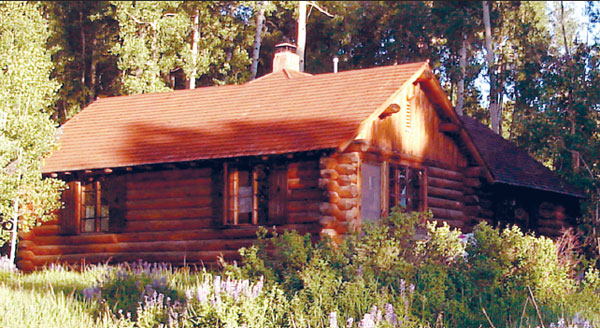
The Aspen Guard Station in 2006, when it served as home base for an artist-in-residence program run by the San Juan National Forest. The building was constructed in 1933 by Civilian Conservation Corps craftsmen using the scribed-log method, which overlaps custom-notched logs at the corner, eliminating the need for chinking between logs. Photo by Sonja Horoshko.

For 16 years the U.S. Forest Service operated an artist-in-residence program at the Aspen Guard Station in the San Juan National Forest, providing 118 artists with an opportunity to stay in the rustic cabin, then interpret their experience and share it with the public.

But the program quietly disappeared in 2011 due to reductions in operating funds and staffing shortages at the U.S. Forest Service Dolores District offices.

Now, forest officials are planning to let a concessionaire begin renting out the station as well as a similar one in the Glade northwest of Dolores.

Pieces of history

The historic Aspen Guard Station, a 1933 cabin built by the Civilian Conservation Corps, is nestled in a meadow surrounded by the largest aspen forest in Colorado accessed on the road to Sharkstooth Trail on Hesperus Peak in the La Plata Mountain Range. It served as a residence for forest rangers and managers for decades.

The artist-in-residency program began when lifestyles and technology made it unnecessary for rangers to live in the cabin full-time.

“It became harder to find seasonal crews willing to stay at such an isolated cabin, especially because there is no electricity, only kerosene lighting in the evenings, no television,” said Ann Bond, public-affairs specialist with the San Juan National Forest. By the 1980s, officials were considering tearing the station down. Instead, Bond created an artist-in-residency program in 1995 that operated until 2011, revitalizing use of the cabin through the work of the artists staying there.

Although the building is equipped with a functioning kitchen and wood stove, a living-dining room, two bedrooms with beds, water and an up-to-date indoor bathroom, there is no electricity. Kerosene lamps mounted on the walls and two sky tubes provide the only supplemental lighting and in the studio room, a converted garage on the back of the original structure.

The residency awards were granted on the basis of a competitive application process juried by a team of volunteer arts professionals and managed by Bond.

No stipend was included in the award, nor reimbursements for travel or per diem. The building was used by the selected artists for two weeks in trade for a contribution of art inspired by the remote location and a requirement that they present a workshop to the local Montezuma County community.

The Aspen Guard Station cabin is one of numerous forest guard stations built in the early half of the 20th century. A similar, even older building located on the Glade in an grassy meadow 24 miles east of Cahone was also affected by budget cuts in the Dolores District.

The white, stick-frame, 1916 Glade bungalow was used as administration housing during the development of the San Juan National Forest. Now one of the oldest USFS administrative holdings, it is valued for the several eras of design and construction it represents, including CCC renovations during the 1930s. It was preserved during 2009-2011 after Forest Service archaeologists assessed its historical value and the issues necessary to save the building.

“The preservation of the building was a beautiful project,” said Julie Coleman, USFS archaeologist.

“The officials were considering tearing it down, but we applied for funding from a combination of government sources and grants to help preserve it and relied on the volunteers. It feels good to see it in that field today.”

The American Recovery and Reinvestment Act of 2009, commonly referred to as the stimulus or the Recovery Act, put $563,000 into historic San Juan Forest building preservation, but Coleman clarified that all of it went to a site at Chimney Rock near Pagosa Springs.

The budget for the Glade preservation project was nearly $100,000, she explained. It came from the Bacon Family Foundation of Grand Junction, Colo., and Colorado State Historical Society funds. The money didn’t cover labor, which was furnished entirely by 16 National Smokejumper Association volunteers. They worked one week every summer for three years to complete critical needs such as repairing rafters, replacing the plywood overlay and cedar shingles. Doors and windows were restored, and the exterior siding was repaired, sanded and painted white.

The building was not preserved for use as an arts residency, but served as temporary quarters for seasonal administrative duties, such as hunting-season management, and for archaeology assessment teams and firefighters while decisions about its future were on hold.

Tightening belts

According to Dolores District Ranger Derek Padilla, the loss of the residency program at the Aspen Guard Station in 2011 was a matter of budget cutbacks as Congress tightened the belt on federal lands agencies.

“The program and the Aspen and Glade guard stations facilities were affected by decreasing federal funding,” Padilla said. By the time he came on duty at the Dolores District in 2010, he said, the staff was at capacity.

“We were unable to oversee the program. We had to make some tough decisions based on the numbers of employees available to coordinate the Aspen Guard Station AIR program. It was getting 100 to 200 applications a year. Someone had to review them for acceptance and coordinate the procedure, inspect the facility, manage the upkeep, make sure it was safe for occupancy. The residency program was not essential for running the forest.”

But arts can be valuable resources to flesh out history, adding nuance and emotion to the story of time and place.

Painter Thomas Moran explored the Yellowstone region with the Hayden expedition during the mid-19th century, when the Western wilderness was a pathless, picturesque landscape. His paintings and drawings, along with images by others such as photographer William Henry Jackson, influenced Congress to establish the national-park system. As a result, Yellowstone became the first national park.

“Many of America’s most treasured Western national parks, monuments and forests would not have been preserved were it not for artists and photographers whose work captures the imagination of citizens and elected officials alike,” Dan Puskar, executive director of the Public Lands Alliance, told the Free Press. The Alliance is a non-profit based in Washington, D.C., that advocates for collaborations between public-private partnerships, increased funding for public lands and better learning opportunities for America’s visitors.

Artist-in-residence programs continue this tradition, Puskar said. “Their work can be the catalyst that encourages someone to visit a public land for the first time. Without the power of art, they may never get exposed to a park or forest’s wildlife, geology or history. It is because AIR programs play this vital role that many nonprofit partners of federal and state public lands support or manage them.”

John Peters-Campbell, a professor of Western art history who has taught in Beijing, China, Fort Lewis College in Durango and the University of Colorado at Colorado Springs, told the Free Press that Moran’s 7-by-12-foot oil painting, The Grand Canyon of the Yellowstone, 1872, depicts a “fanciful rendering of an actual site” downstream from Lower Falls at Yellowstone.

Campbell said he was 12 in 1965 when he visited the canyon for the first time. “The impression it made has never left me and when I saw the enormous painting it shocked me into an obsession with the American West and painters who represented the American landscape. The image of the canyon is one Moran repeated obsessively for the remainder of his career. Unsurprisingly,” he added, “the view in the work of art is an actual place in the park now called ‘Artist’s Point.’”

‘A sense of ownership’

In an effort to nurture that relationship, a plethora of government-sponsored artist-in-residence programs have developed over the last 20 years. Their popularity among professional artists is due in part to the access they gain to subject matter valued by the general public. In turn, the economic value of artists’ portfolios increases with awards for residencies in the park system or forests.

An implicit benefit to the managing entities is the increased awareness of public-land attributes and values resulting from marketing during exhibitions and performances after the residency.

Ed Singer of Gray Mountain on the Navajo Nation, produced large bodies of visual art that have been on display in a multitude of gallery and museum exhibits since his 2009 residency at the Aspen Guard Station.

Juantio Becenti of Farmington, N.M., has composed several string quartets, elegies to the mountain that have premiered in major venues in New York City as a result of the influence of his residency.

“It’s been seven years since my residency,” recalled poet/photographer Jan Duda Dixon, “yet I can still remember the fragrance of fallen leaves and the pines outside the cabin door. What a sweet sanctuary. I especially valued the endless hours without interruption to write, a settling into an unbounded spaciousness where I felt free to be creative.”

The Aspen residency program was one of the first in Southwest Colorado and popular with artists across the country.

“They promote a more thoughtful and informed kind of land use,” said Peters- Campbell, one of six arts professionals who served on the jury selection process for the Aspen residencies. “It was a very successful arts program that advanced the awareness of public-lands management and value far beyond the aesthetic, in that they give public lands back to the public, enriched and vivified, and provide a sense of ownership for a public which may or may not be able to visit them.”

A shift in focus

During the past five years, plans for the two buildings shifted toward using non-governmental concessionaires to develop a profitable public cabin-rental program at both sites.

This direction, as well as the development of a cabin-rental prospectus for the two buildings, has been on hold while the Forest Service sought to fill vacant seats on the Resource Advisory Council, a group of local citizens that advises the agency on decisions concerning projects and funding issues. A March 2016 posting on the San Juan Forest Service website describes the request for new RAC members and the interests they must be qualified to represent. The list includes organized labor or non-timber forest products, harvester groups, outdoor recreation, OHV use, commercial recreation, energy and mineral development, timber industry, grazing and other permit holders, environmental groups, archaeology and history, wild horse and burro interests, hunting, local elected officials, American Indian tribes, and school officials.

There is no category representing the arts except where they could fit in the “affected public at-large.”

Moving forward

Progress on the cabin rental program was delayed by the RAC vetting process, Coleman explained, “but it finally finished in mid-October. Now we can move forward with decisions on the building.”

Tom Rice, recreation program manager with the Dolores District, hopes that the cabin-rental prospectus for the two sites will be finished over the winter. “We expect the prospectus to go out this spring [2017]. Any interested private commercial or non-profit business can apply if they are able to handle operations, maintenance, insurance, marketing, fee collections, ground inspection and maintenance, water systems and even dealing with problem guests. There’s a lot to the management of such a program.”

Agency officials are already aware of two applicants. They have worked with both of them and know they are qualified.

The Mancos-based Jersey Jim Foundation, which raised funds for the Jersey Jim Fire Lookout Tower northeast of Mancos about a mile from the Aspen Guard Station, developed the rental program there and handles all the reservations, operations and maintenance for the tower.

Rocky Mountain Recreation Company, a private company based in California, provides management services to campgrounds, marinas, day-use areas and other recreation sites for federal, state and local agencies. Services include maintenance and management of marinas, campgrounds, water recreation facilities, fast-food service, fuel docks, boat rentals, bait-and-tackle stores and the sale of sundry items and services. It operates all of the developed Colorado campgrounds in the Pike and San Isabel Forests and the San Juan National Forest.

The cabin-rental program would transfer the work load to somebody else, Rice said. In addition, “since Mesa Verde, Mancos State Park and Canyonlands have developed their residency programs, the interest in the Aspen Guard Station has dropped off. That deep bench of artists in the past just isn’t there today. It has not been important to have the program.”

Rice said no artist-residency program was included in the prospectus for the concessionaire. “We are leaving the business of the cabin-rental program to the concessionaire because we are basically not going to tell them how to operate it. The commercial operator has to make money, too.”

Padilla added that there are no plans to include an artist-residency program at either site. “We are definitely not giving that any consideration, even though it does have some benefit. We are making an effort to be fiscally responsible.” He explained that the district will either “utilize the cabin-rental concessionaire or physically remove [the buildings].”

Mixed-use programs

But some progressive mixed-use approaches to forest cabin programs are in the works elsewhere in the USFS. Chris Fabbio, director of the artist-in-residency program at the Angeles National Forest in California, told the Free Press that their mixed-use program will be operational soon.

“We are currently working on restoring a couple cabins in the forest. The plan includes cabin rental during ski season, artist-in residency in summer, and outdoor education other times. The restoration process will take a couple years as funds become available, so there’s nothing available yet.”

Salt Lake City psychotherapist and poet Renee Podunovich said there should be balanced use in such places as the San Juan Forest’s guard stations. “Offer one week a month for artists and rent the cabin the other times,” she suggested.

Podunovich said her own stay in the Aspen cabin “was spent finishing the manuscript for my second book of poems and falling into a timeless rhythm with the natural world, wild horses, mountain arnica, trails leading through new and old-growth aspens, star-watching and drinking tea in the cabin when it rained.”

The Dolores District office hopes to have the concessionaire in place and cabins available for rent in summer 2017.

Published in November 2016

Sparks fly over differing Bears Ears proposals

Long-awaited legislation to define management of 18 million acres of federal land in Utah got a hearing before a House committee in September, but it appears unlikely to become law before President Obama leaves office.

The Utah Public Lands Initiative, HR 5780, sponsored by Utah Republicans Rob Bishop and Jason Chaffetz, is attempting to re-designate public lands in seven eastern Utah counties, based on local stakeholder input. The bill is an attempt to forestall the creation by Obama of one or more national monuments in Utah.

BLM Director Neil Kornze

BLM Director Neil Kornze

The legislation includes San Juan County, home of a region known as “Bears Ears,” as well as the northern Ute land now in the forefront of the dispute.

The PLI bill would split 1.2 million acres of current BLM land around Bears Ears into two National Conservation Areas, with remaining acreage to stay under BLM control.

A number of environmental, conservation and archaeological groups, and 276 American tribes support the national monument proposed by the Bears Ears Inter-Tribal Coalition (Navajo, Hopi, Zuni, Ute Mountain Ute and Uintah Ute) and submitted to the Obama administration for executive action earlier in 2016. They argue that that the hundreds of thousands of archaeological sites in the Bears Ears area in southern San Juan County justify monument status and stronger protection from vandalism and looting, as well as mining and extraction. Their 1.9 million-acre monument proposal includes a provision to establish a unique co-management structure shared between Department of the Interior and five tribes with ancestral ties to the land.

The PLI bill is supported by Utah’s entire congressional delegation and Gov. Gary Herbert, as well as elected officials in seven counties, including all three San Juan County commissioners.

Spirited testimony

The bill was introduced in the U.S. House in August. A hearing was held in September before the House Committee on Natural Resources, chaired by Bishop.

One of the bill’s provisions would exchange 100,000 acres of scattered Utah School and Institutional Trust Lands Administration sections on the Uintah and Ouray Indian Reservation for a large block of BLM land on the East Tavaputs Plateau, in Uintah and Grand counties. SITLA would get the land and the minerals in the exchange.

That proposed swap has sparked a firestorm.

Six business leaders from the northern Ute tribes wrote an op-ed in the Salt Lake Tribune. It focused attention on the reservation land exchange that would consolidate acres rich in natural resources to make oil and gas exploration affordable in remote locations. The consolidation would increase royalties to SITLA, a state government enterprise that funds schools, prisons and other government entities with money earned from revenue generated on land designated for this purpose in Utah.

The op-ed charged that the PLI bill attempts “to push through the U.S. House the first Indian land grab in over 100 years, roll back federal policy to the late 1800s. It would have a devastating effect on our reservation and the precedent it sets for federal Indian policy.”

Shaun Chapoose, chairman of the tribal business committee, has since notified SITLA officials that they are no longer welcome in Indian Country.

At the PLI hearing, Colo. Rep. Jared Polis, a Democrat, criticized the bill. He said the Ute Tribe was originally from Colorado “and I plan to stand up for tribal sovereignty because [the PLI] is offensive to the concept of tribal sovereignty as well as our nation’s agreements with tribal nations.”

Polis admonished Bishop, “Certainly, I find it unacceptable that this bill contains language that ranges from a public-land giveaway to failure to protect the Bears Ears region, environmental concerns and of course the fact that the legislation steals land from the Ute Indian Tribe.”

The hearing was fraught with disagreement over various provisions, including BLM and Forest Service management practices and the PLI provisions handing over permitting and regulation of energy development on federal lands to the state. House representatives on both sides of the Bears Ears issue repeatedly questioned the testimony of San Juan County Commissioner Rebecca Benally, in order to assess her claims about tribal opposition to the monument proposal.

‘Bullied’

Her constituents, Benally said, are the Native people of San Juan County. They “have been bullied by the federal government and their own tribes.” She described the Bears Ears monument proposal as a “cynical political stunt, a hoax, entirely the effort of out-of-state interests, so-called environmental and special-interest groups and corporate benefactors.”

“The three tribes in San Juan County, Utah, oppose the national monument proposal,” Benally told the committee.

Arizona Rep. Raul Grijalva, a Democrat, asked Benally to explain the fact that six of seven Utah Navajo chapters officially support the monument proposal, as well as 26 Southwest tribes and 250 tribes of the National Congress of American Indians. “Are these resolutions from sovereign units of government important in this decision?” he asked.

“Again, I will qualify my answer by saying that … some of these were passed by only 17 or 18 people versus over 2,000 Utah Navajos that live in the county opposed to the national monument,” Benally replied.

According to the 2010 census there are 7,300 Native Americans living in San Juan County, slightly over 50 percent of the total county population. Oljeto Chapter is the largest of the seven chapters, with just over 2,200 people, while Aneth, Benally’s home chapter, is second-largest with nearly 1,990.

All seven Utah Navajo chapters are very rural. They are characterized by multiple jurisdictions, a mix of political and sovereign boundaries. Each elects a slate of local chapter officials.

Meanwhile, San Juan County’s county commission districts divide Utah Navajo representation between two districts. Benally, District 2, represents five of the seven chapters, where nearly 97 percent of the constituency is Navajo. Bruce Adams, District 1, represents the two most remote districts, Oljeto Chapter in Monument Valley and the furthest west, Navajo Mountain. Representation on the Navajo Nation Council, the legislative branch of the Navajo government, is also split between delegates David Filfred and Herman Daniels, Jr.

Oljeto Chapter president James Adakai told the Free Press people are apprehensive about Benally’s statements because she suggests that their vote of support for the monument doesn’t matter to elected county and state leaders.

“Her comments are causing disharmony,” Adakai said. “I talk with the people in my chapter. Fair representation by local and state officials really concerns them. Representation of our people starts in the chapter-level elections. We support the monument proposal.”

But Benally’s testimony at the hearing maintained that the PLI is best for her people and the protection of Bears Ears. When questioned by Rep. Cresent Hardy of Nevada, a Republican, about looting on public lands, Benally said she believed the monument designation would increase vandalism and theft because she had learned a few weeks before the hearing in a meeting with the BLM “that there was only one incident in the Bears Ears region this past five years. It will in crease because a monument designation brings thousands and thousands of people and there’s less boots on the ground to give protection.”

A fact sheet posted in May on the Friends of Cedar Mesa web page states that the BLM Monticello Field Office investigated at least 28 incidents of looting or vandalism at archaeological sites in San Juan County between 2011 and 2016 on land the BLM manages. The statistics do not include incidents on other federal or state trust lands. There may be more than 50 incidents in San Juan County since 2011. Seven have been reported in the first six months of 2016.

Benally did not reply to a request for an interview.

K’aayelli descendants

Utah Sen. Mike Lee held a press conference a week after the hearing. It drew criticism from tribes for its misrepresentation of tribal authority by showcasing three Blanding people as “Utah Navajo,” implying they represent the Navajo people when they are not elected officials. Governor Herbert and the Utah congressional delegation joined the three Navajo speakers, who explained their ancestral ties to Bears Ears.

It is the “birthplace of our leader, Chief K’aayelli,” Suzie Philomon told the gathering. The local Navajo people rely on Bears Ears, said Lewis Singer. “It’s a place to gather piñon nuts, medicinal herbs and life-sustaining natural resources, such as firewood.”

Danielle Shirley told reporters that monument supporters “appear to be more interested in making profit.” She said a monument designation will bring “high foot traffic, meaning more destruction to our sacred ground, more money to outdoor and environmental groups and corporations and not to the people of the county.”

Philomon alleged that the National Park Service desecrates ancestral burials, citing instances in Canyon de Chelly and Effigy Mounds national monuments. “We, the local natives of San Juan County, Navajos and Utes, as well as Anglos,” said Philomon, “have managed to protect this land and will continue to do so.”

The 1990 Native American Graves Protection and Repatriation Act requires federal agencies and institutions to return Native American human remains, funerary and sacred objects. NAGPRA also establishes procedures for the inadvertent discovery or planned excavation of Native American cultural items.

Effigy Mounds Superintendent Jim Nepstad told the Free Press that there are 200 ancient mounds in the Iowa park. In 1949-50, and sporadically as late as 1971, there have been 40 or 50 excavations during which archaeologists encountered many burial sites. “The good news is that 20 tribes are all of the same mind with the monument management now, and all of the repatriations have been completed under NAGPRA regulations. They have gone well. They have been put to rest.”

The Descendants of K’aayelli, a nonprofit established in 2014, claim they are heirs to territory around Bears Ears. They say their ancestors occupied the land for more than 400 years until 1933, when they were relocated to Aneth Extension reservation land. In a Sept. 21 statement the group said they have been ignored and misrepresented by Senator Lee, that they take issue with Lee’s press conference announcement referencing “Utah Navajo” in the title and a Descendants of K’aayelli petition of support that does not exist. Their statement lists five Navajo individuals in Lee’s press release, including Philomon, Singer and Shirley, who “are not elected officials (county, state or tribal) and only represent themselves.”

The Sept. 21 statement says, “Through a majority vote of the residents in the Aneth Extension we oppose the UPLI. We speak for ourselves and request that others not speak on our behalf.”

‘A small number’

The Navajo Nation Office of the President and Vice President also weighed in on Sept. 21, writing that the press conference was “another attempt to show selective opposition to the proposed Bears Ears National Monument by using a handful of members of the Navajo Nation, while ignoring the clear support of the elected leadership of the Navajo Nation.”

In the statement, Council Delegate Filfred, who represents Aneth Chapter, said, “Some Utah politicians are intentionally trying to give the impression that the Navajo Nation and tribal governments are divided and opposed to Bears Ears National Monument, when just the opposite is true. They put forward the voices of a small number of Native Americans opposed to the Bears Ears Monument but fail to highlight the voices of dozens of tribal governments that support the monument. I urge them to stop and listen to elected tribal government leaders who speak on behalf of their people.”

The PLI passed the House committee mark-up session on Sept. 22. Inter-Tribal Coalition Co-Chair Regina Lopez-Whiteskunk, a member of the Ute Mountain Ute Tribe, condemned the rush job Bishop has employed in the closing days of the 114th Congress, adding, “This bill is absolutely ludicrous, shameful….[The PLI] will place our common cultural, air, and water resources in greater jeopardy. The Coalition cannot in good conscience stay silent on the imminent danger posed by this bill. The Bears Ears Inter-Tribal Coalition stands in unified opposition to PLI.”

Published in November 2016 Tagged

Emergency funding: Dolores County residents are voting on a mill levy for ambulance service

In November, Dove Creek and western Dolores County will try to resolve a conundrum created by the special election in 2015 that approved formation of the Dove Creek Ambulance District.

The purpose of creating this district was to improve emergency medical and ambulance services in the western part of the county through more-reliable funding and governance. But the vote was separated into two parts: in the first referendum, voters could approve the formation of the district. The second referendum sought a mill levy of 2.75 mills to fund the newly formed district.

DOVE CREEK AMBULANCE FACILITY

Residents of Dove Creek and western Dolores County will be voting on a ballot question to fund their ambulance district through a mill levy. Photo by Carolyn Dunmire.

As expected in this fiscally conservative part of the state, voters supported the formation of the ambulance district but did not approve the funding. Since then, the ambulance district has been operating in limbo with a mix of part-time and volunteer staff that is not sufficient to provide 24/7 ambulance coverage. The problem may have been best

summed up by Deanne Knuckles at the Dolores County Commission meeting on April 4. She said people told her that they voted against the mill levy because they believe that Dove Creek will always have an ambulance. That has proven to be true. However, without personnel to ride in it, it’s the same as not having ambulance service.

With an average of three calls per week, the Dove Creek Ambulance District has been struggling to provide adequate emergency-response staffing as they transition from a volunteers to paid staff. The ambulance district has placed another mill-levy proposal on the November ballot that they hope will resolve the current staffing crisis. The question facing voters is determining how much ambulance service is appropriate for Dove Creek and how to support this service – with tax dollars or volunteer hours.

Changing times

“The days of the all-volunteer ambulance service are over,” declared Dove Creek Volunteer Ambulance Service board president Joyce Barnett during an interview. She says the reality of local residents having to work out of town, the cost and time needed to keep up the training required to be an emergency medical technician (EMT), and demographics are all playing against staffing the Dove Creek ambulance with volunteers.

These same factors are creating staffing crises in many other rural communities. With longer commutes and work weeks, many of the folks who would regularly volunteer for the ambulance, fire department, or library board are away from home during the week when they are needed. And they are unwilling to give up their precious weekends to community service.

The high-tech revolution and the risk of litigation risk have both made it difficult for “regular” folks to volunteer for emergency services. Hundreds of hours of training must be completed to learn how to properly use all the life-saving devices included in a modern ambulance, to say nothing of the protocols and communication knowledge required to participate effectively in an emergency medical response system with other responders and medical professionals.

Finally, the aging of local communities is becoming more evident with each passing day. The population of Dove Creek, like Montezuma County and the state of Colorado, is becoming older, which means residents are more likely to be on the receiving end of emergency services than in the provider position. Barnett herself is a perfect example. As she explained in a letter to the editor in the Dove Creek Press on Sept. 8, Barnett is shifting her role in the community. “I have never regretted my choice to become a paramedic and if this old woman could still do the things my mind says I could, I would still be riding [in the ambulance] but there comes a time when you have to be realistic and take care of the health you have and not be crippled and a burden to family and friends. I am still trying to take care of this community by trying to find a way to keep well-trained people ready when you call that emergency line.”

‘Unacceptably slow’

The Dove Creek Volunteer Ambulance Service (DCVAS) started in 1952. The ambulance was staffed by people who lived and worked locally, in a time when community service was an important part of professional life. Dove Creek residents who had medical training volunteered to help with the ambulance service.

Over time, the Dove Creek community invested in training for citizens who expressed interest in participating in the ambulance service. Today, residents in Dove Creek have three additional options for emergency medical response: from the Pleasant View Fire Protection District (approximately 15 miles from Dove Creek), Southwest Memorial Hospital ambulance (35 miles away), and the San Juan Hospital ambulance in Monticello, Utah (25 miles distant).

The ambulance staffing situation became acute this spring when several key volunteers and employees were not available for ambulance runs. Dolores County Sheriff Jerry Martin explained the problem to the Dolores County commissioners at their April 4 meeting. He said, “when the dispatcher spends 30 minutes looking for personnel to ride Dove Creek’s ambulance and eventually has to call the Cortez ambulance, that is an unacceptably slow response time.”

Furthermore, the lack of ambulance staffing is taxing other county services. Martin described a situation when an emergency call came in the middle of the night and Monticello’s ambulance would only respond within the town limits of Dove Creek. Martin had to find the patient a ride into Dove Creek so that they could get picked up by Monticello’s ambulance.

This crisis highlighted the fundamental problem for the Dove Creek ambulance – lack of trained staff to respond to emergency medical calls. Several solutions have been proposed:

  • Fund the newly formed ambulance district to a level that will allow for sufficient paid staff. It is estimated that 24/7 staffing would cost at least $150,000 per year depending on how over-time and on-call hours are paid.
  • Continue to work with a mix of paid staff and volunteers. The DCVAS administrator is currently being paid to be on-call 48 hours per week. In addition, Dolores County offered the services of their director of emergency services to be available on-call on a volunteer basis when he is working, usually 8 a.m. to 5 p.m. Monday through Friday. This leaves a gap of evenings and weekends to be filled by volunteers.
  • Train new volunteers. The latest EMT class started promisingly with 19 students, but will only graduate six. The cost of the class was subsidized by the county, Pueblo Community College, and the Dove Creek Fire Protection District. Despite the reduced cost, it is likely that the barrier to completion was students’ time commitment with 178 hours of class time and additional time required for practice and testing.
  • Transfer ambulance-service provider from Dove Creek to the San Juan or Southwest Memorial Hospital ambulance and potentially increase response times. This option would potentially increase response times and move governance of the ambulance service from a local non-profit board to an outside provider.

Gauging support

To gauge interest and support for the ambulance district, the DCVAS board conducted a survey over the Fourth of July and published the results in the Dove Creek Press on Sept. 8. Of the 106 responses, 105 responded positively to the need for a local ambulance in Dolores County/Dove Creek and 95 of the respondents said they believe that ambulance personnel should be paid. More than 3 out of 4 of the respondents believed there was not adequate funding for “our community ambulance” and provided funding ideas such as taxes, a mill levy, grants, fundraisers, nursing home profits, taxes from marijuana sales, auctions, bake sales, yard sales, and funding from the county, town, banks, or military.

Financial support for the ambulance district is currently provided by Dolores County, the Dove Creek Fire Protection District, the Town of Dove Creek, the Dove Creek Community Health Clinic, grants, service reimbursements, and a $100 ambulance card – paid voluntarily by households within the district. Only a portion of this funding can be used to pay staff. For example, in August 2015, Air Products, the operator of the new helium plant southeast of Dove Creek, donated $90,000 to the DCVAS to pay for half of a new ambulance. The DCVAS board is holding this money in a savings account until they can find matching grant funding for the ambulance purchase. None of this generous donation can be used for staffing the ambulance today.

The ambulance-funding situation is especially interesting for residents in Cahone s who live inside the Pleasant View Fire Protection District boundary. Property owners currently pay a mill levy to this district for fire and emergency medical response services. This amounts to about $80 each year.

Jeff Yoder, chief of the Pleasant View Fire Department, said they have an ambulance that would respond to a 911 call at my house and a volunteer staff that includes a paramedic and several EMTs. According to Yoder, in situations that are not life-threatening, they prefer not to transport patients to the hospital, but would contact Southwest Memorial Hospital or Dove Creek ambulance to provide these transport services. When they do provide transport services, he noted, they cannot transport patients to Utah, although they sometimes they meet the ambulance halfway to shorten transport time.

He enthusiastically supported the Dove Creek ambulance, saying, “We work well with those folks.” He added that they do not hesitate to respond to calls in the surrounding area including Dove Creek and are dedicated to providing the best emergency response possible.

Other services

The funding proposal that will be put before voters in November is a mill levy of 2.5 on property within the Dove Creek Ambulance District. According to the Dolores County Assessor’s Office, the mill levy would cost residents about $20 per year for every $100,000 in property value. The Assessor’s Office estimates that it would raise about $319,289 annually. According to the text of the referendum, the purpose of the new tax is to pay “the district’s administration, operation, and maintenance expenses and other expenses without limitation.”

In a letter to the Dove Creek Press published Aug. 25, Jenni Albin, district treasurer/secretary, said approval of the mill levy would create jobs and keep the “ambulance service in the hands of Dolores County Citizens.”

In other discussions, Barnett mentioned that regular ambulance staffing would allow the district to offer other community services such as free CPR training, wellness events like blood-pressure clinics, in-home elder fall prevention program, and high school EMT courses.

Ultimately, district residents will be voting on how they want to support ambulance service in Dove Creek. The current staffing crisis is unlikely to resolve without additional funding and volunteers. The challenge facing Dove Creek is how to support essential community services at a scale appropriate for smalltown populations.

In the case of the ambulance, residents don’t seem willing to pay for three full-time paramedics to staff the service for three runs a week. However, most community residents want ambulance service. Therefore, they may need to be willing to provide some of their time and expertise in addition to “paying at the office” to make these services feasible.


Published in October 2016

Uplift conference draws diverse crowd

UPLIFT CLIMATE CONFERENCE

More than 100 young adults attended the second annual Uplift Climate Conference. The represent communities of the Colorado Plateau region who are concerned about climate change. Photo by Michael Remke.

A group of concerned millennial citizens gathered in August to recognize the diversity they believe is missing in climate- change conversation. The second annual 2016 Uplift Climate Conference was held at Chris Park in the San Juan Forest, near Durango, to bring together the experience and concerns of young people living on or near the Colorado Plateau.

In geology, uplift is a vertical elevation of the Earth’s surface that occurs in response to natural causes. It exposes rocks that were once deeply buried. The group chose the name because much of the region was carved by the geologic processes that led to the rise of the Colorado Plateau. It was also chosen because of the metaphor.

The group alleges that their point of view and experience are not welcomed at discussions about environmental issues with decision-makers in the region, nor are the voices of indigenous communities.

“Millenials are incredibly aware of the Anglo, hetero-centric, older dominant culture. For us, the people who represent this region are the people of the region,” said Frankie Beesley, a student in the Northern Arizona University Sustainable Communities master’s program and one of eight organizers. “Diversity and inclusion was key at the conference. A lot of young people here know the reality of climate change, but don’t know the story behind the change.”

She joined Claire Martini to create the second conference. They estimate more than 100 people representing communities as diverse as Hopi, Salt Lake City, Colorado Springs, Albuquerque, Grand Junction, Greasewood, Pinon and Tuba City on the Navajo Nation.

Climate change is the ultimate threat to the places they love, explained Martini. “It’s never far from our minds. Still, we don’t see anyone talking about the area specifically. We have organized young adults with personal experience and a lot at stake around the Colorado Plateau. The area is ground zero for climate issues.”

Many of the 28 conference speakers and the organizers were from marginalized communities. Keynote speaker Jihan Gearon, executive director of Black Mesa Water Coalition, talked about regional issues, navigating contradictions, and working toward just transitions in energy.

Other speakers and panelists included Lauren Wood, director of Green River Action Project; Janene Yazzie, senior planner, Little Colorado Watershed Chapters; Marshall Masayesva, program director of Adventures for Hopi, Andres Esparaza, adjunct professor at Western State Colorado University and Ambassador for Latino Outdoors, Anthony Ciocco, coordinator of the Southwest Conservation Corps Ancestral Lands Program and White House Champion of Change 2014.

Sixteen panels and workshops highlighted the “Story of Us,” said Martini. “One significant point is our need to know our roots and how issues relate to what we know from our own experience. As we explored natural-resource concerns, everyone agreed that water is the key issue in every Colorado Plateau community.”

Conferees agreed “different approaches may be required to get us heard,” said Beesley. “We should spend less energy on Colorado River policies and more on grassroots relationships to the water, for instance. Water is less about bending former Arizona Senator Jon Kyl’s ear and more about what can be done in each community at the grassroots level.”

Everyone knew the problems, but “the solutions are really hard,” Martini said. “The scale of politics in each area and water politics is so different. In some, we will need to attend, be heavily involved in city councils. Other solutions may require that we be loud, get louder, be critical of the normative narrative, and be aware that we are also part of the challenge. Who is represented at the discussion? Who is missing?”

Music and art were present at the conference, too. Performance poet, singer-songwriter Lyla June Johnston, co-founder of Taos Peace and Recon ciliation Council, N.M., explained in her address to the group that writing for peace is serving humanity, strengthening our capacity to love. “when we tap into this explosive force the muse can truly work through us.”

In a reflection on how visual art can increase consciousness, Salt Lake City Artist Alisha Anderson produced a conceptual work at the conference that weighed leaves found at the site against a lump of oil shale she brought from the Bookcliffs in Utah. She placed the shale on one side of a balance scale Anderson built for the conference project and then passed out needles and thread, asking everyone to sew together leaves found around the campsite.

The next day, conferees placed the leaves, one sewn package at a time, into a hand-made twig basket hanging opposite the oil shale on the balance. At the start, the basket hung high above the level of the heavy oil shale. Slowly, strand by strand, the leaves in the basket gained weight. Eventually, the oil shale rose higher and higher on the balance scale until the two were equal in weight.

“The leaves and the oil shale are both organic material, yet both have different qualities,” Alisha explained. “I hope to demonstrate that the accumulation of the small can outweigh the seemingly solid, entrenched large. The project was about the collective power in small acts.”

The young activists agreed that the most critical take-away from the conference was the need to bring Uplift back to their communities and find solutions, to speak out, to acknowledge the work of others. Since the conference closed, Uplift declared support for the recent Friends of Cedar Mesa [Utah] request of their community to, “Tell the Hole-in-the-Rock Foundation to include a conservation easement on a section of Comb Ridge. This is a special place, let’s protect it. Don’t sell Comb Ridge.”

Uplift also sent a letter of support for the demonstrations against the Dakota Access Pipeline in North Dakota. “Youth of the Colorado Plateau are raising our voices in solidarity with the Standing Rock Sioux Nation… in firm opposition to the Dakota Access Pipeline, which would desecrate sacred burial sites and pose a grave danger to the Missouri River, which is their main water source,” the letter states. “We stand in solidarity to resist the continued neglect of Indigenous rights. The Dakota Access pipeline isn’t a simple, risk-free energy development. The fact of the matter is, pipelines leak and we don’t have adequate technology to detect the inevitable spills.”

Uplift is operating under sponsorship of the Grand Canyon Trust and the Northern Arizona University Landscape and Conservation Initiative. Uplift hope sto be a stand-alone non-profit soon, Martini said.

Ethan Aumack, while not a millennial himself, attended the climate conference. He is enthusiastic about the work they are doing, “especially given the specter of global warming facing us in the Southwest,” he said.

As conservation director at Grand Canyon Trust, he is aware that many more supporters are needed, “especially younger folks who are concerned about and engaged in advocacy. Uplift has become an authentic way for the next generation of advocates to develop their own ideas, strategies, and actions around global warming.”

“A year ago, when we organized the conference on San Francisco Peaks, we really wanted to reach diversity among young people. We wanted to found a youth movement around climate justice and now we completed our second conference,” Beesley told the Free Press on her way back to Flagstaff.

“The result is a little bit intangible immediately after the conference. But we feel we have created a particular space that had not been available to us before we organized.”

Published in October 2016

A dream come true: A new center for the arts is opening in Cortez

A new arts center is opening in Cortez after an intense, 18-month renovation process to transform a 1950s gas station into a practical yet inspiring studio space. The building design and space planning had to function on multiple platforms, as its moniker implies: The Dream Machine, a place for music and the arts, education and entertainment.

DREAM MACHINE ARTS CENTER OPENING SOON

Brandy Salyers begins rendering the Dream Machine arts center logo on the former 1950s gas station as construction on the renovation project continued through late September. Classes begin at the new center for music and arts, education and entertainment on Oct. 10. Salyers, an archaeologist, is offering instruction in color and design as well as drawing and painting. Courtesy photo.

“It reflects the positive energy, the inventive spirit of the arts,” says Simone Sanchez, founder of the center. Her career in professional music production, as a voice director and coach, singer and songwriter, has taught her to expect change, to be flexible.

When she first began the project, Sanchez thought the center would focus primarily on music. But it grew to include visual arts as news of the ambitious venture spread through networks of regional artists on-line and at her popular local performances.

The extensive repurposing on the retro building has also attracted attention on the busy thoroughfare. Local crews worked with her, converting it into a landmark destination in the Cortez art district, a block north of Main Street at the West Y.

“I’m lucky to find this building. The community of professional artists concentrated within a few blocks has helped establish identity here. But I didn’t anticipate how much construction investment I’d have to make, or the amount of upgrading that would be needed to create a versatile space. As the concept solidified, it had to support the many genres of arts education and performance mentoring the center is offering.”

The arts is a demanding business, she explains. Arts education must not be afraid to set a high standard for success while giving students the skills to explore mediums and develop strong work habits. Informing young people with skills and knowledge to help their performance and make dreams come true is tantamount to witnessing enchantment. “We need it all,” says Sanchez, “a solid, beautiful, safe and fun place to work where we help the arts come alive. We need each other.”

Sanchez will be teaching private vocal instruction at the center. She has been performing in theaters and other venues since she was 7. “During all the years of experience I learned to go after the venues I want, but then the more I performed the more venues began calling me with booking requests. It works both ways.” Her parents encouraged her vocal ambitions, supported her talents and discipline. They were absolutely positive about her aspiring vocal career, she says, and her desire to study classical music in college where she trained as an opera singer.

“But I began my family just after college. I had three children to support, and I was a single mom for a large part of that time. So I diversified my range of styles and enlarged my genre base to include ensemble pop and rock ’n’ roll, jazz and the blues. I have always had a desire to perform and I adapted to meet that need as my life responsibilities changed.”

Lessons about the demands of a life in the arts are part of her approach to education. “I want students to know the truth, yet I don’t want to squash their dreams. I ask them to do the research, to find out how other artists support themselves from their art medium. It’s a delicate conversation, but in the end a student understands how other people feed that artistic side of their lives. It is a marriage between art and the reality they will face. How to make art live in your own life.”

The Dream Machine will open its doors on Oct. 10. The professional faculty includes well-known musicians, such as guitarist Billy Kneebone. He’ll be teaching group guitar for middleschool students and older.

Renita Conny offers classes on flute, piano, ukulele and beginning guitar for all ages, “but,” says Sanchez, “there is a requirement. The young ones have to be able to read to take Conny’s classes. Our faculty has come together as professionals and we’ve worked to set manageable tuition fees for students and parents that also place value on the skills of our teaching staff.”

Brandy Salyer has been turning The Dream Machine logo into an architectural mural on the freshly painted, steelcolored building. It was designed by Farrell Greenlee, whose digital design service, Spiphy Graphix, is located a half block north of the Dream Machine on Piñon.

“He understood us immediately. We are so happy with his interpretation of our concept, how he blended the music with the art, the sense that we are working together in the center and, now, finally, it’s been wonderful to watch Brandy create our logo outside. We’re ready to open.”

Salyer, an archaeologist, will be teaching classes in color and design and also drawing and painting for middle school through adults. Moriah Ragland is offering early childhood art classes at the center this fall. Shane Snyder will teach rock band ensemble and Sabrina Geisler, an events planner, has created a writing class titled Lyrical Composition. She is also offering a class for yoga practitioners.

“Marinda Harrison will teach the popular wire-wrapping technique in a jewelry class,” Sanchez says. “It’s an example of the varied slate of classes Dream Machine is offering. Classes will change as more people express interest in teaching and more students express interest diverse mediums. I am open to variety and quality classes as well as stand alone workshops. It’s evolving as a creative hub for the arts. Maybe we’ll even offer a workshop in pennywhistle.”

More information on Dream Machine classes can be found on Facebook, at wwwdreammachinecortez.com, and at 970-560-6409, 100 N. Piñon Dr.

Published in Arts & Entertainment, October 2016

Bootleggers Anonymous

I never imagined that listening to music would harden me into a criminal. But here I am, a renegade pirate sailing an outlaw ship on a wave of sound, striking fear into the hearts of strained metaphors everywhere. For I am now, unofficially and illegitimately, a bootlegger.

To keep the feds off my back, I won’t go into details except to tell you that I recorded full audio from both Neil Young + Promise of the Real shows in Telluride last month. From the pit, just left of center stage, on a recording application cleverly concealed within an iPhone 4.

Look, if it makes any difference to you, I didn’t do it to get rich. Even if I sold the tape at ten bucks a head to everyone in the audience — which I totally did not attempt to do — I would still not recoup what I spent on a concert T-shirt.

So why did I do it? I did it to capture the experience of hearing The Man (not to be confused with “the Man”). I did it for the lifetime bragging rights. I did it because I enjoy listening to live music from state-of-the-art sound systems, only at home and in garbled facsimile. I did it for the only reason a pirate does anything, excepting doubloons or wenches or eye patches or notoriety: because I didn’t figure I would get busted.

Between my disguise (a plaid flannel shirt) and the all-weekend wrist band I obtained on the down-low in exchange for a ticket, getting into the venue and avoiding detection from the Man (not to be confused with “The Man”) were the easy parts. But to record my first full-length bootlegs, I still had to overcome significant challenges. I’d say, at a rough estimate, I had about one significant challenge for every beer sold on the premises.

Now I am a bit of a relativist. I think there is no wrong way to enjoy a concert, so long as that enjoyment does not involve arriving at showtime and wedging your three beers into the already-quite- intimate space around those of us who waited in line for hours to earn our prime seats. To fight for these “seats,” by which I mean “standing room so sardined that your back hurts before the opening number,” you’d almost have to be the kind of person who pays a $125 cover to get drunk on $10 beers.

However, one’s magnanimity wears off when one is attempting to preserve history on an iPhone. When one is striving to perfect the art of bootlegging on one’s first try, one is less enamored with screaming, yelling, jostling, catcalling, Freebirding, and getting pushed out of the way so you can buy three more beers since (spoiler alert!) you spilled your first three.

In regular concert-going life, one doesn’t remember the weeble who wobbled a beer on one’s shoes, or the brah who picked a fight because “his buddy is up there somewhere” and one wouldn’t let him cut through, even though one grew genuinely afraid of leaving the venue on an EMT’s arm. But when one is bootlegging, one records every little peep from the audience, and one wants to remember Neil Young, dammit, not the way one sounded while yowling along with Neil Young.

The whole project was being shot to pieces before my very ears. My bootleg would not be a triumph of piracy and outlawery. It would be a testament to the crowd, the plebes, the people who are not true “fans” because they don’t enjoy a concert the exact same way I do.

Midway through the first show, Mr. Young pulled out the electric guitar and delved deep into an extended jam. The song was longer than some bands’ entire reunion tours. The song ran longer than a TV series on Fox. The song was so long that I saw a man leave his wife in the pit, return with a beer, and successfully salvage his marriage. And the song was glorious. It harmonized me with the universe, resonated with the cores of the mountains on every side, and defied further figurative language. It was worth the price of admission, plus the T-shirt.

And it made me forget all about my bootleg. I was there, completely there, completely present, completely alive while the song lasted.

I listened to the recording after the show, and yeah, it sounds like I taped it with a tin can and a piece of string. But it springs my memories of the show. In all the noises, I remember the alpenglow of the opening numbers, the awe of the epic jam, the guy next to me peeing on the ground. I’ll hope for a live album of the music someday. For now, I have the awareness of having experienced that moment.

And one final note to the Recording Industry Association of America: you need not worry about anyone else hearing this tape. Somewhere in the middle, I started singing along.

Award-winning writer Zach Hively writes from Durango, Colo. He can be read and reached through http://zachhively.com and on Twitter @zachhively.

Published in Zach Hively

Local ballot measures easily approved

Voters gave resounding approval Tuesday to ballot measures that will allow local entities to initiate the construction of high-speed broadband in the town of Dolores and the unincorporated areas of Montezuma County, the initial step in establishing such a system. The votes to  “opt out” of SB 152, a state law prohibiting such action were:

1-A (county) Yes: 8469, No 368

2-A (Dolores) Yes: 371 No: 62

By a large margin voters in Montezuma School District Re-1 also approved spending funds that had been reserved for building a sports complex at the new high school to tear down the asbestos-infested old high-school building. That vote was: Yes 5358, and No 3078.

The Mancos Library District was given  permission to raise its property tax mill levy by two mills, or about $2 per average residence. The vote was: Yes 1207, No 630

Published in November 2016

Our beautiful community deserves more

I was introduced to Cortez and Montezuma County 42 years ago on a little venture to To-hell-you-ride while living in Flagstaff, another small town. Telluride could have been bought for $500,000, more or less, and the seller would have laughed all the way to the bank.

I came up here to hunt and fish on vacations with my boys. Later in my life, while getting ready to retire with my second wife, we wound up here again. We had searched Montana, Idaho, Washington, Oregon looking for a place with the four seasons (but not too severe in either heat or cold) where she could garden, with mountains, forest and a small-town atmosphere. Picky, weren’t we?

I didn’t know it then, but Willetta had been through here many times with her first husband. One day I mentioned that I knew of a small town in Colorado we should look at called Cortez, and she told me she’d been there many times, coming through from Texas en route to other destinations, and whenever she hit Mancos and Cortez, she felt she had arrived in paradise.

So we hooked up the Airstream and headed for Cortez to find some land. We located at a trailer court and were treated magnificently by the young couple who owned it. I took off back to the company I worked for while Willetta searched for a place. I called most every night to get her reports.

One day she phoned my office, excited as all get out, to ask if I could be home this weekend, as she had found her place. I say “her place” because I have found that a happy wife makes a happy home. So I made arrangements to come home, and we drove down M Road to the end, then turned on 22 Road, got out and walked across an open field, seeing neither light poles nor fire hydrants. I kept wondering where my lady was taking me. We trundled through the cedars and down a path to the edge of a canyon with a stream.

When she told me the acreage, I said no, no, no. But when she turned back from the canyon’s edge and put her arms around me and said this was her dream, I melted like a soft ice-cream cone. It’s not wise to wake a person from their dream. So we purchased 360 acres of piñon and cedar with a canyon and stream and two acres of garden area. Put a cardboard box (double-wide manufactured home) on the edge of the canyon until we built our home (that never happened) and settled into Valhalla.

Sadly, in the years that we have lived here (she is still with me every day, even though she has passed), I have seen our area slide backwards, partly because of jealousy and lack of teamwork. Cortez, a place Willetta loved and was active in, has become a company town with money flowing out instead of in. Our downtown has some local retail, but not the diversity it had in the old days. Instead, the corporate black hole on the east side sucks in all the customers. The company store and its brats, the dollar stores, are never good for community or consumers.

Cortez and Montezuma County were settled in the late 1800s. A hundred years later, this was a great small community with thriving local businesses providing most any thing one needed in a friendly atmosphere with clerks who went out of their way to serve you. Those have been replaced by big boxes staffed with employees who have a “take-it-or-leave-it” attitude. Who can blame them? They’re barely scraping by on the wages they earn.

I realize some of this is the way of the world these days, but I also believe we need stronger leadership to help counter these trends. We need big ideas to advance and spread our agricultural base. We need to develop value-added products we can sell locally and outside of the area. We need new industries with jobs that pay well. Instead, all we hear are plans to pump up tourism – what will that get us but more restaurants and more waitressing jobs?

I feel lucky to have lived here in Cortez’s golden age. I may not live to see it, but I hope this area will someday experience such a time again.

Galen Larson writes from Montezuma County, Colo.


Published in Galen Larson

Our health-care system lacks heart

On Sept. 8, I read a well-written but misleading letter to the editor in the Durango Telegraph. The letter dismissed ColoradoCare Amendment 69 and praised the perfection of our current Colorado workers comp arrangement. The author, a big-time insurance executive, skipped over the many reasons so many workers feel abandoned, cheated and locked out by what they experience as an adversarial workers comp insurance bureaucracy.

Too many workers find themselves forced to deal with insurance representatives, investigators and regulatory agents who seem to view every claimant as an enemy. Instead of being allowed to focus on resolving questions and healing, injured workers too often find themselves having to struggle for legitimate compensation from a hostile system.

I felt compelled to give voice to the ignored side of this story. For my response I did a lot of internet trawling for information and my, oh, my, the onslaught of ugly stories and sad facts overwhelmed me at times.

First, revelations of the scandalous health-insurance executive perks, bonuses, golden parachutes and such that have been paid for by developing a culture dedicated to rejecting claims.

Then the seemingly inhumane expectations, stress and over-orked conditions doctors and nurses must endure. At 400 work-related doctor and medical-student suicides a year in the United States, it’s a professional crisis. Of course, dealing directly with this problem would impact the corporate bottom-line, so the problem gets swept under the carpet, just another costly externality to ignore as much as possible.

Even more startling was all the evidence that shows “independent medical exams” have become anything but impartial efforts to arrive at the truth. Patients complain of feeling like they are up against a stacked deck. The negotiation and appeals processes are likewise rigged against workers, who are treated more like bothersome expenses than humans trying to get the health care they need.

In the middle of all this I learned of the strange ongoing saga of Dr. Tom Horiagon of Denver, master of occupational health (also internal medicine, pulmonary, critical care and sleep medicine) and his non-profit clinic that was summarily shuttered in a couple hours. What could the man have done to deserve it?

It wasn’t patient complaints; there were no professional or medical misconduct charges against this doctor. His sin was being a vocal advocate for down ’n’ outs and injured workers. His non-profit clinic had insurance companies on edge because of the precedent he was trying to establish and they took their gripes to the Colorado Medical Board.

It appears he took his patient advocacy too far when he agreed to accompany a couple patients to their IMEs because they didn’t trust the good faith of the examiner and desired a knowledgeable witness, which is legally permissible.

That precipitated a bizarre cascade of events and bureaucratic moves that culminated in Dr. Horiagon receiving two-hours’ notice before his practice was forced to shut down, leaving needy patients without their doctor. The drama continued snowballing and within a couple weeks he found his license suspended without due process – once again, bureaucratic fiat stomps the opposition.

I contacted Dr. Horiagon. He was helpful and informative, sharing many documents and responding to questions. The more I read, the more childish this saga felt, which would have been comic if not for its intent to destroy a good man’s career.

I asked him about independent medical examinations. He responded: “The process of doing IME’s, or formal second opinions, will never be fair to workers if the only second opinion you can get is from a physician who is paid by the insurer.

“There are companies of physicians, like Integrated Health Management, that only exist to knock out claims. CMB was well aware of the IME advocacy I did.

“Giving my IMEs away for free was unprecedented in Colorado, not to mention that I was Level II-certified in DWC/CDLE Level II full accreditation, and have four board certifications, worked at NIOSH, and have specialty training in occupational medicine from the CDC and Harvard School of Public Health.

“So these exams would have been worth quite a lot if I worked for the dark side. The CPHP records I got from a subpoena document this very clearly.

“The physicians in the current system who do IMEs for cash are paid to lie for the insurers. It is that plain and simple. And the level of training they have is minimal compared to my training.”

Dr. Horiagon has spent the last year forced to squander his precious time and resources struggling to regain his rights within a medical regulatory system that does not want to hear from him. What I found most unsettling was that as I accumulated more information, it became plain that Dr. Horiagon is but one of many such instances. Try googling “Physician Health Programs (PHPs) under fire” or “Pauline Anderson at MedScape. com,” it’s an eye opener.

What happened to the humanity that used to infuse our health-care system? How can we recapture some of that? It will never come about with profits-obsessed, amoral corporations who created these conditions to begin with. That’s why I support ColoradoCare Amendment 69 with all its warts and yet-to-be-resolved details and challenges.

It’s going to force We the People of Colorado to take some responsibility for our own health-care system. We will need to become engaged. We will need to encourage and support integrous professional medical groups, IT resources and others working together.

It’s a challenge, but a constructive one. It sure beats constantly banging our heads against the brick wall of corporate self-interest while nothing changes, or worse. Vote for ColoradoCare – vote YES on Amendment 69.

Peter Miesler writes from near Durango, Colo., and has started a blog dedicated to sharing information that supports these claims — Amendment69-info-kiosk.blogspot.com.

Published in Peter Miesler

Bridget, again

In January of 2004 a column appeared in this very publication titled, “Confessions of a Frivolous Woman”; it centered around one main character – Mr. Darcy.

I wrote it.

I confessed to an unabashed love for Colin Firth (who is the quintessential Darcy.)

I also confessed to being frivolous.

I have matured significantly and no longer consider myself to be such.

I am still madly in love with Darcy.

In 2004 I stated, “Colin Firth (Mr. Darcy) is the all-time greatest man to have ever walked the face of this earth. Simple as that.”

Last night I watched the brand spanking new Bridget Jones movie in which Firth revives his role as Darcy, the reserved (uptight) barrister with whom Bridget (definitely not uptight – actually kind of a shit show) falls in love.

My feelings have not waned, even a bit. If anything, my passion has deepened.

Twelve years ago I also told the world, “I live for movies where the not-quite-perfect gal gets the oh-so-perfect-guy who’s not so perfect to start with and who ultimately realizes that she is truly perfect in every way. I am a director’s dream; I laugh when I should, swoon when I’m supposed to, and sob right along with the heartbroken heroine, feeling better only when she does.”

It happened again last night – possibly because in addition to knowing that Darcy will fall for me as soon as he meets me, I also know that Ms. Jones and I would be the very best of friends if we were to have the opportunity to hang out.

I love her with all of my heart.

The movie begins with the funeral of Daniel Cleaver; I was wondering how they managed to get Hugh Grant out of Jones’ world. It was a tidy solution.

Until it wasn’t – but that’s another tale to tell.

So the handsome competition against whom Darcy is pitted is Patrick Dempsey.

Ding Dong.

Or “Ding Fing Dong” as my gal B said.

He is beyond yummy. He, as Bridget’s paramour, is perfect in every way: charming, smart, sweet, romantic, lovely, a gazillionaire.

He’s not McDreamy for unknown reasons.

Sex with Darcy looked a little awkward in comparison to sex with Jack Qwant.

I found myself, just like Bridget does, torn between my old love for Darcy and the newness (and utter sexiness) of Qwant.

Right there, in the glorious yellow recliners in the Gaslight Theater, I began to suffer minor feelings of guilt.

Was I betraying Darcy?

Was I betraying Firth?

I vacillated, I swooned, I agonized.

Unlike Bridget, I am not pregnant and uncertain about the paternity of my unborn child.

Thank God.

If I were, we’d be having a different discussion altogether.

And I’d probably be having one with my shrink too.

But, how could I possibly waver from Darcy?

I feel unfaithful.

Does this mean that in my real life I am indecisive, non-committal, and untrue?

Could something new and shiny distract me from my heart’s true love? Another movie was playing in Durango last night – a movie that I had every intention of seeing. A movie in which my dear friend starred.

A serious movie about a man and a horse.

As my day at work wore on, my resolution to drive all the way over the hill dissolved. After rising at 4:45 for the fourth day in a row and spending 11 hours on my feet for those four days, I decided that a short visit with my neighbor and a hot date with my book was the perfect end to my workweek.

But the combination of Colin Firth at the Gaslight Theater with the curl-up seats tugged at my heart strings.

Then, my neighbor, mother of two small children, said, “What are your plans tonight? When Husband gets home will you take me away?”

Well, obviously the answer was yes. I am always happy to provide escape for a fellow mom going bat-shit crazy day in and day out with multiple under-8-year-olds.

We could have gone somewhere in town.

We could have hung out at my house.

We could very easily, since we were open to the half-hour drive, have gone to the man/horse film.

But the stars aligned; obviously we were destined to see the ultimate chick flick – to feel giddy, to tear up, to giggle, to agonize, to cheer on our friend, and to fall in love.

Sorry, horse.

I won’t spoil it for anyone but let me just say that, for me, my adoration for Darcy won out. I remain faithful.

Which is probably good news for my boyfriend.

Suzanne Strazza is an award-winning writer in Mancos, Colo.

Published in Suzanne Strazza

Don’t try this at home

We’ve all been there. You’re washing your dishes for the week, and just when you think you’re all done, you flip on the garbage disposal. You don’t hear the blades gargling on a cereal spoon. This is a victory in your book. So you turn off the disposal, and you start to walk away, and then you stop because the drain just burped a sudsy gallon of chunky salsa into your sink basin.

I am generally a fan of modern technology. But I am less a fan of ancient technology. Plumbing has been around literally since Roman times. It predates everything else I use in my daily life, with the possible exception of breathing. Yet for all its longevity, plumbing has received fewer updates than my iPhone. And kind of like my iPhone, it works really well, until it doesn’t.

So with my sink brimming with Satan’s mouthwash, I figured I better take quick action. I dropped everything else I had going on, and I went straight to bed.

Why not? Maybe whatever was stopping the pipes would pass by morning. And I always first attempt to solve home-related problems by ignoring them until they go away.

This method works really well, for instance, with an icy sidewalk. I could risk my own neck to sprinkle salt or sand on the ice. But if I just let Nature run her course, that ice will melt via entirely chemical-free processes by at least May.

Plumbing, though, is a more sensitive beast. Because plumbing is entirely concealed by walls and dirt and mystery, you cannot ever actually see what is wrong with it. It simply tells you, in no uncertain terms, that you have a problem, and that problem is you.

Oh, yes. Stopped plumbing passes judgments unlike any other house issue. Tornado ripped the roof off ? That blows. Mice chewed up your insulation and your electrical wiring? Those little buggers. Your plumbing is backed up? WHAT HAVE YOU DONE.

I think we are judged by our plumbing problems because of what we regularly put down the tubes. Each and every one of us does it, except for women, who don’t do that. And, sure, you can take a certain pride in stopping the flow of traffic to an entire house. But you at least want to earn your bragging rights.

It’s the pits when the pipes betray you for something you didn’t do. At one point in college, I was visiting my then-girlfriend’s parents’ house. Dinner was just being served, and I excused myself to wash up in the hall bathroom. I was not there for an inordinate amount of time — it was, in fact, extremely ordinate — and when I pushed the lever, the toilet did not even pretend to flush. It rose like King Triton himself was exhaling water from the other side.

What does one do in a moment like that? It’s not like one can hold back the tide with one’s hands. Sure, one can grab every towel in the room and build better dikes than New Orleans has, but when the toilet does not stop gushing, one has no choice. Even though one did only a Number One — and it wasn’t even a hefty Number One! — one must still go back into the dining room, take one’s seat at the table, and seize the moderate pause between dinner and dessert to say, “I’m afraid we can’t see each other any more.”

All this to illustrate that, unlike other life problems, plumbing concerns do not disappear simply because I ignore them. When I woke the morning after my sink yarked the dishwater, I decided I better enter the world of addressing problems head-on.

So I persevered with a slow-draining kitchen sink for another four or six days. And then I opened the cabinet doors under the sink to discover actual pipes. I drew on my intensive training in literary analysis to determine that I had no business under there.

That’s when I texted the landlords, because they have a vested interest in maintaining the property and I have a vested interest in recovering my security deposit. They called a real, professional plumber, who came to the house and ran the water for 20 minutes and promptly declared that there was no problem after all.

I didn’t believe him until I experienced the drain myself. The sink now empties like a champ. That’s how I learned this invaluable lesson about home repair, and how it is just like a standardized test: go with your first answer. So next time, I’ll just stop doing dishes altogether.

Zach Hively writes from Durango, Colo. He can be read and reached through http://zachhively. com and on Twitter @zachhively.

Published in Zach Hively

Olympic and burkini fever

Two images.

One: A young woman in a spangled leotard balances on one leg, arms wide, poised to spring, on a balance beam.

Two: A woman on a beach, surrounded by police, face obscured, as she removes a long-sleeved swim shirt.

The first image is of Alexa Moreno, Mexican gymnast and Olympic athlete. The second is of a Muslim woman in France, being forced to remove parts of her swimsuit because it is too modest, too “foreign,” too “religious.”

It wouldn’t seem these two images have much in common. But both gained publicity for much the same reason: either the response they drew, or events that prompted the capturing of the image to begin with, show that, even now, women’s bodies are considered public property.

In Moreno’s case, images of her sparked something that perhaps does not often occur in tandem with the description “Olympic gymnast.” Twitter and social media trolls poured in with comments about how “fat” Moreno was.

Yes. Really. This 99-pound woman is “fat.” This solidly muscled woman, who could kick her haters to the moon with her powerful legs, is “fat.” This Olympic athlete is “fat.” Because she has extraordinary muscle tone and dared wear a leotard showing it. Because she didn’t look like an anorexic 8-year-old. Because you can’t see every rib etched out on her. Yeah. Fat.

This woman and her extraordinary accomplishments were reduced to what perfect strangers — sitting at keyboards or staring at their phones and tablets — thought about her body. No doubt, these people all were perfect physical specimens themselves, who could do at the drop of a hat what Moreno had trained her whole life to do.

The headlines that lead search results are the ones about how she was “bodyshamed,” not about her achievements. Calling out the idiots who tried to shame this powerful young woman is appropriate (and viewers did so, too); unfortunately, it allowed the trolls to set the narrative about her Olympic experience. I am aware this column does so, too.

But Moreno doesn’t need to be defended. She needs to be celebrated. After all, there are other images of Alexa Moreno. My favorite shows a young woman in a sparkly blue leotard, running, muscled arms in motion, face set with determination. Oh, and the other shots of Moreno on the beam, where she was presumed to be “fat,” show her flying.

Once again, women are reminded that, if not even an Olympic gymnast is “good enough,” then they have no prayer. Their bodies, by virtue of appearing in public, are fair game for ridicule, judgment, criticism. And control.

The C-word is alive and well. You can see that in the picture of the woman on the French beach, who is surrounded by people acting as a literal dress police. She had been wearing a burkini, a fulllength swimsuit with skirting and waterproof hat.

Thirty or so French cities banned the burkini over fear of Muslims — I mean “terrorism”! Because who knows what the women might be hiding in their bathing costumes? (Pretty sure ISIS hadn’t thought of that. Until now.)

A French court ruled in August that mayors cannot ban the swimwear. But the prime minister and president are on record supporting the ban. And France’s law prohibiting women from wearing the burqua itself in public was upheld by the European Convention on Human Rights, reports CNN.

France’s rigidly secular dress code extends beyond the beach. France is a secular nation, you see. And Islam oppresses women, by forcing them to cover up.

That’s the reasoning. It is true that some people, in the name of Islam, control women and punish them mightily for even the slightest straying.

In a distressing number of instances, “straying” is basically when a male in their family decides he has been dishonored by something a woman has done, or failed to do. So she dies. (This isn’t to say “honor killings” are happening left and right, or that all Muslim men participate in them, or support them. The book “Honour Killings” catalogues a number of such murders, including among Christian households.)

I do not support forcing women to cover up to satisfy others’ sensibilities and fears. But neither do I support forcing them to disrobe to satisfy others’ sensibilities and fears. France, too, is controlling women through its burkini ban.

The irony is staggering.

The ban rightly triggered backlash. I was surprised to hear of the dictate; my thoughts went immediately to two things.

One, is France banning wetsuits? Because that’s the same thing as a burkini; it’s just that men also wear wetsuits.

Two, I remember when I first heard of a burkini, years ago, before anti-Muslim paranoia got such a firm foothold. In my memory, they weren’t being marketed as particularly religious attire, just as a modest swimsuit option for women who wanted one.

I wanted one. (Minus the head covering.) I didn’t feel it was my “duty” to cover up. I wasn’t being pressured by a man, for any reason, let alone a religious one, to cover up. Certainly, I am neither a closeted Muslim nor openly Muslim. I just wanted practical swimwear in which I could be comfortable. Like its fashion twin the wetsuit, options in my size and budget just weren’t there.

France’s burkini bans are certainly not as oppressive as honor killings or the number of other rules imposed on women in the name of Islam (or other religions). That doesn’t mean they are not at all oppressive. It’s simple, really: Whether you are a man who thinks women are showing too much skin, or a government who thinks covering up is too religious … STOP TELLING WOMEN WHAT TO WEAR.

Stop treating women as public property, whose every move must be scrutinized, particularly with regard to appearance.

When a woman takes to the balance beam or uneven bars or the floor routine at the Olympics, assess her on her performance — with a heavy dose of humility as after all, you are merely a spectator.

When a woman takes to the beach, be it in a burkini or a bikini, a nun’s habit, a wetsuit, a one piece, a pair of old shorts and a T-shirt, leave her be.

She is not there for you.

Katharhynn Heidelberg is an award-winning journalist in Montrose, Colo.

Published in Katharhynn Heidelberg

A stitch in time: Quilting soars to creative heights, earning recognition

ART QUILT EXAMPLE

Southwest desert landscapes inspire the art quilts Janice Hoffman stitches from fabric scraps. She uses her personal portfolio of photographs as a starting point for the exhibition pieces. Photo by Sonja Horoshko

Forty years ago, Cortez resident Tammy Wilson, a member of the Ute Mountain Ute Tribe, was given a quilt made by her auntie. The traditional piecework design radiates out from the center in a mix of brightly colored, carefully placed two-inch squares of cotton cloth.

Synthetic fabrics were not common when her aunt hand-stitched the squares together. Instead, the quilt was made from worn clothing washed, ironed and cut carefully into squares of the same size of many different weaves and a mix of printed patterns that eventually became a king-size bedcover. The entire back layer of the quilt is a white-and-green calico cotton that, when stitched with the top and the middle batting layer, produced a heavy, warm blanket for the cold Colorado winters.

The process took months to complete. She was a little girl when her aunt finished and gave it to her as a gift of respect, identity and, “mostly love,” she says.

Wilson hasn’t slept without it since.

“It reminds me of home. It feels good, yes it does, to sleep under it. But now the quilt is wearing out,” explains Wilson, pointing out the fraying seams. “It’s hard to find help with repairs because I don’t sew.”

Traditional quilts, typically women’s handiwork, are considered textile treasures. According to Elizabeth Wayland Barber, a textile archeologist, women began spinning fiber, making clothing and other household applications 20,000 years ago. In her book Women’s Work, she explains that ancient history and economic records omit half of the influential role women played in the social development of culture. In fact, she writes, right up to the Industrial Revolution the fiber arts were an enormous economic force, belonging primarily to women.

The extremely perishable nature of the work adds to its invisibility in the historical contribution. Cloth ravels. It wears out. It must be replaced, rewoven, re-stitched, repaired. Much of it is recycled, especially in rural communities like Montezuma County where until the last 20 years a minimal variety of new fabric – on the bolt – was available. Like women everywhere, resourceful rural housewives salvaged scraps of cloth to use in the painstaking, fastidious quilting tradition that kept the family warm under a beautiful textile art.

According to textile historians, piecework quilts flourished from 1870 to1910. During that time they introduced a fresh textile-design element that eventually led to the development of unique American patterns such as the “Log Cabin,” still one of the most basic, revered historic designs. Many distinct cultural and regional leitmotifs developed organically as women worked alone at home incorporating their personalities or messages into the patterns. Rituals grew from the work as well, like “quilting bees,” a gathering of close friends helping each other with an often unwieldy, heavy quilt.

The message is in the medium, according to author Robert Shaw, independent curator and scholar of American arts and crafts, who has written that during the first 40 years of the 20th century, quilts were often used to express political statements as well as some form of domestic beauty, especially during the Great Depression.

His recent book, American Quilts: The accounts of gender bias in the textile arts. As an example, the groundbreaking Amish use of color, form and movement in quilts influenced the development of abstract expressionism in American studio painting. “The distinctly American idioms and artistry employed by American quilt makers created works that, had they been produced by men working in studios, would unquestionably have been declared works of art worthy of museum walls,” writes Shaw.

Like most local Montezuma County quilters, Janice Hoffman learned the history and techniques of the craft as she sewed and fell in love with quilting. She has made piecework and patterned quilts for many decades, always enjoying the process and the result. But while her husband, an artist and educator, was still alive he asked her why she was using patterns made by other people. “Why don’t you use your own ideas, your designs? he asked.

She began investigating “art quilts,” a movement that grew out of the 1970 resurgence in handmade quilting that frees the seamstress from the traditional piece-work pattern approach in order to use the materials freely as needed to “paint” an image. “At some point after the ’70s, quilters wanted to take the textile medium one step further,” she says, “take an approach to the medium much like a watercolorist or oil painter, abstract or realistic.”

While living in Florida, Hoffman found a branch of the Studio Art Quilt Association, a nonprofit organization promoting quilting as a creative visual work. The final fabric handiwork must still adhere to the traditional structural requirement that any quilting be worked and stitched together in three layers – a top and backing and a layer of batting, for warmth, in the middle.

The SAQA group promotes the “art” in art quilting through programs that educate and develop design skills as well as sewing techniques. Today its membership has reached nearly 4,000 and it is a highly respected visual-arts resource for museum and academic collaboration.

The George Washington University Museum and the Textile Museum recently hosted a juried exhibition with SAQA, titled, Stories of Migration: Contemporary Artists Interpret Diaspora.

The six-month show opened in April 2016, displaying art quilts and textile / fiber arts submissions that responded to the theme of a sudden human displacement and dispersion of large populations from an established ancestral homeland. Resettlement issues, grief, loss and hope were rendered in fabrics, thread and fibers such as wool and silk, cotton balls and cocoons. One artist even plaited Bandaids into a mandala weaving.

Hoffman signed up for classes that helped her focus on surface techniques, including hand-stitching and embroidery. The education also opened the door to an array of material options more suitable for quilts intended for display rather than bedcovers. New synthetic fibers and even fabric painting and dyeing techniques, like traditional Japanese indigo dyeing and Indian batik and tie-dye, filled her quilter’s kit with a variety of possible approaches.

By the time Hoffman returned to Montezuma County, she was using her own photography portfolio of high desert landscapes as a base for quilting scenes, building up overlapping fabric shapes to create the form of a mesa, waterfalls, distant mountain ranges, local plant materials, earth and sky.

It is a time-consuming approach to visual art, because the fabric medium has a strong material memory and definition. Learning the limitations is an ongoing process, like trying to make a flat-finish, shiny chintz look like a fuzzy, forested mountaintop. It probably won’t work.

Each quilt, whether an art piece or a traditional pattern, can take most of a year to complete. The cost associated with just the labor component puts most quilts out of consumers’ reach, especially in rural markets. Yet Hoffman and most quilters work at it happily and continuously because they love the craft, the lasting friendships that come with the sewing circles, the memories implicit in the quilt-making and the beauty it contributes to family and community.

Quilters, an energetic and positive group, share their camaraderie in the Cortez Quilt Company every day the shop is open among the vibrant selection of materials, sewing machines, yarns, books and patterns.

Classes are offered, too, and exhibitions of local quilt work rotate on the display walls. Groups gather around the wide expansive tables working together solving technical issues, clipping snippets of cloth, top-stitching, folding hems and tracing patterns while others learn sewing-machine basics on demonstration machines around the room.

The patrons at the Quilt Company and the more than 100 members of the Dolores Mountain Quilters Guild often contribute to local fundraisers because their work can bring top dollars during a benefit auction. Made in Montezuma, a fundraiser held in October to benefit the Southwest Memorial Hospital Foundation, received a bedcover donation from a group of local quilters last year. At the annual fall event, the quilt brought $1,100 to the foundation coffers.

It is estimated that 1,500 quilters practice their craft in Montezuma County. Of that number, Hoffman believes there are 10 to 15 who are aware of the expressive opportunities in art quilting.

“I hope to generate interest in opening a local SAQA chapter here. We certainly have the talent, too, but for now, the SAQA memberships may be a little steep. It will be enough, for now, to educate ourselves on the freedom found in the art approach to quilting, to get together, share ideas and find a direction.”

Quilting in all its forms is evolving and finally claiming space in mainstream museum shows and venues devoted to fiber arts. “The Studio Art Quilt Association gallery page is so inspiring. I would encourage people to take a look at the website,” Hoffman adds. The burgeoning collections of artist portfolios posted at the site are simply luscious.

The art quilt organization and information meeting will be held at noon, Thursday, Sept 8. It’s a brown bag lunch at the Cortez Quilt Company, 40 W. Main, Cortez. All are welcome, even beginners.

Published in Arts & Entertainment, September 2016

Rocky Mountain is leaving Colorado’s health-care exchange

Health-care options for Coloradoans in general and rural residents in particular who buy individual health-insurance plans through the Connect for Health Colorado exchange are set to decrease at the end of the year.

Rocky Mountain Health Plans, a small independent non-profit insurer based in Grand Junction, Colo., will exit the marketplace, leaving just one other insurer, Anthem Blue Cross/Blue Shield, available for exchange clients as of now in Southwest Colorado.

RMHP had been providing reasonably priced individual and group policies to West Slope residents for more than four decades.

In fact, President Obama traveled to Grand Junction in 2009, while campaigning for the Affordable Care Act, to praise RMPH as an example of what other health-care providers could and should be. The New England Journal of Medicine has also cited the company as a model of how to provide affordable care in rural areas.

But that’s now changing in two big ways.

First, RMHP President Steve Erker- Brack announced in late July that the company had begun the process of joining forces with the largest for-profit health-care firm in the state and nation, a merger that requires the expected approval of state officials.

“The partnership with UnitedHealthcare will offer significant enhancements for current and future RMHP members throughout Western and rural Colorado . . . and make health care more affordable and accessible,” he wrote in a colorful two-page brochure mailed to policy- holders, a message brimming with upbeat bullet points.

Erkenbrack assured his customers the company remained “committed to providing access to the high-quality health care our members and local communities deserve and expect.”

But hard on the heels of that rave review, RMHP members who are covered through individual or family plans under the Affordable Care Act, known as Obamacare, received notice in late August that their policies were being discontinued at year’s end.

“After careful consideration, RMHP has determined that we will no longer be able to offer our Members a competitive product in the Individual and Family Health Insurance Market,” states a letter from Michelle Walker, director of sales administration, which offers no further explanation of the cancellation. Members whose polices are being terminated are simply advised they “may begin shopping . . . immediately” for a replacement plan from another company.

Leanne Hart, RMHP director of marketing and communication, confirmed in a e-mail that approximately 3,100 members in Montezuma, Dolores and La Plata counties are having their polices cancelled.

Hart said the company will continue to offer individual and family coverage only in Mesa County (the Grand Junction area) through Monument Health, a coalition that includes St. Mary’s Hospital and primary-care doctors in that area.

“Monument Health builds on our past successful initiatives with providers and has proven, thus far, to be a more sustainable product compared to those offered in other service areas,” she wrote.

RMHP will continue to offer supplemental coverage for Medicare clients, as well as regular coverage through employer- based group plans.

Based on preliminary requests for rate increases – as much as 40 percent — submitted to the Colorado Division of Insurance, individual health-care-plan premiums are expected to jump significantly next year, while at the same time, consumers’ choices will become fewer.

UnitedHealth, RMPH’s new partner, will not be selling any individual plans next year in Colorado, nor will Humana, according to the Denver Post, and Anthem Blue Cross/Blue Shield, which has asked for a 26.8 percent rate increase, will discontinue its PPO individual plan and offer only an HMO statewide. Those changes will affect about 92,000 people in Colorado, or about 20 percent of the individual-plan market.

Close to a half-million Colorado residents buy insurance through individual plans – as opposed to small-group and other employer-based coverage – but in rural areas in particular there are few choices of providers, and premiums are markedly higher than in urban areas.

Of the nine regions used to determine rates in the state, Montezuma County is included in the most expensive one, according to Jamie Meier, a health coverage guide with the Piñon Project in Cortez. A proposal studied in the legislature that would provide a uniform rate throughout the state, lowering it by 20 percent in this area and increasing it 9 percent in the Denver area, appears to have no chance of passage, Meier said.

“It’s pretty much shot out of the water, unfortunately,” he said.

Meier said with tax credits available in the marketplace, the expected increases will be mitigated for some lower-income groups, and will have no effect on the third of Montezuma County residents on Medicaid.

“This is hurting the working families and individuals who are making a pretty good living – too much for the tax credit,” he explained, such as a couple whose combined income is $70,000. “I wish I had better answers for them.

“Rocky’s had such a good history in our area, it’s just kind of a bummer they’re pulling out,” he said, although RMPH will still be offering employer group plans here.

The Anthem HMO plan does have the advantage of being a statewide network, he said. A disadvantage is that care received in New Mexico or other places outside Colorado would not be covered unless the facility were part of the Anthem network.

A spokesperson for Southwest Memorial Hospital in Cortez said Anthem insurance is accepted there and by the physicians it employs.

Published in September 2016 Tagged ,

A steep divide: Locals plead for a conservation easement for a tract on Comb Ridge

PROPOSED SALE OF CEDAR MESA DISCUSSED AT BLUFF COMMUNITY MEETING

Citizens packed the Bluff, Utah, Community Center on June 7 to give their views about a proposed sale of school-trust land west of the town. The vast majority opposed it. Photo by Gail Binkly

Opponents of the sale of a tract of state trust land near Bluff, Utah, are pleading with the potential buyers to put a conservation easement on the property to protect it from development in the future.

But the group seeking to purchase the site seems disinclined to pursue the protective designation.

At issue is the fate of a 640-acre section owned by Utah’s State Institutional Trust Lands Administration (SITLA), six miles west of Bluff on steep, scenic Comb Ridge.

Earlier this year, the nonprofit Hole in the Rock Foundation nominated the parcel for auction – essentially asking for permission to bid to buy it. SITLA’s mission is to manage its trust lands to raise money for its beneficiaries, which are primarily Utah’s public schools.

A furor erupted over the proposal. At a public meeting in Bluff on June 7, close to a hundred locals packed the tiny town’s community center. Dozens spoke in opposition to the auction, relating personal accounts of their close ties to the square mile of land, which although not technically “public” has always been open for public use.

“The comb is the spine of Mother Earth,” said Georgiana Simpson of Bluff. “It’s this magical place you can go.”

“It’s like our town park,” agreed Tamara Desrosiers, a 27-year resident of Bluff who now lives in Cortez, Colo. She is a member of the board of directors of the Bluff-based nonprofit Friends of Cedar Mesa, a conservation group. “This is where we go for our barbecues, our parties, our bridal showers.”

Greg Child of Moab, Utah, another FCM director, said he walked the entire 120-mile length of Comb Ridge 12 years ago and didn’t encounter a single “No Trespassing” sign. “Can a stipulation be placed on that land so all members of the public can walk unobstructed across its length?” he asked.

Locals begged the Hole in the Rock Foundation to seek another site to purchase, and for SITLA to say no to the sale.

But SITLA is proceeding with the auction, set for Oct. 19 at the Little America Hotel in Salt Lake City.

At the June 7 meeting, SITLA Director Dave Ure said the agency is often “damned if we do and damned if we don’t,” adding that SITLA has been sued on numerous occasions for not accepting offers that could increase funds for its beneficiaries.

“It’s in our beneficiaries’ best interest to move forward with the sale,” Kim Christy, SITLA’s deputy director for surface and external relations, told the Free Press. In response, FCM has been asking its supporters to contact the Hole in the Rock Foundation about arranging a conservation easement for the parcel.

On its website, FCM says such an action would “demonstrate and maintain positive working relationships between the Foundation, the residents of Bluff and visitors from around the region that have used this property for decades as if it were public land.”

The site continues, “This solution is a classic compromise where everyone gives up something. The Foundation would give up some development rights in exchange for permanently allowing public access and limiting their future development. Conservationists would give up the dream of this land being true public land for future generations. However, the practical result would be a win-win compromise. . . .”

FCM assistant director Amanda Nichols told the Free Press she is hopeful an easement may yet be implemented. “Ever since we heard about the auction, we have been looking for a win-win solution and we think a conservation easement is best.”

But Lynn Stevens, a member of the foundation’s board of directors, said the board has discussed the idea but is not interested. “HIRF is seeing no advantage whatsoever to a conservation easement,” he told the Free Press. “I’ve read all the Friends of Cedar Mesa stuff that constantly refers to it as a win-win. Well, we don’t see any win in it whatsoever for the foundation.”

Christy said SITLA has no position on a conservation easement for the tract.

“If a conservation easement is consummated, it would have to be between the purchaser and FCM or their affiliates,” Christy said. “It’s not something we would orchestrate. I understand that is still being strongly advocated, but we have no position one way or another.”

The Hole in the Rock Foundation is a nonprofit dedicated to preserving and promoting the legacy of the hardy pioneers who settled the Bluff area.

The foundation has steadfastly maintained it has no interest in developing the property or closing it to public access, but wants to own it in order to guarantee its use for youth hikes and other events commemorating the pioneers’ courage and endurance.

“The reason we want to buy this is because it’s representative of the terrain over which the pioneers in 1879 and 1880 had to travel in wagons to get to Bluff,” Stevens told the Free Press. “And there is significant evidence they actually crossed part of this piece of land.”

In a June 8 op-ed piece in the Salt Lake Tribune, Stevens wrote, “The foundation’s interest in purchasing this particular section of trust land relates directly to one of its primary purposes: to educate young and old about the history and current relevance of this story. This property is significant because it allows participants to literally walk in the footsteps of those original pioneers, to see and feel and experience, on the ground, what those early pioneers saw and felt as they struggled to cross the terrain on their way to Bluff.”

In his column, Stevens quoted former University of Utah history professor David E. Miller, who wrote, “In all the annals of the West . . . there is no better example of the indomitable pioneer spirit than that of the Hole-in-the Rock expedition of the San Juan Mission. No pioneer company ever built a wagon road through wilder, tougher, more inhospitable country, still one of the leastknown regions in America.”

Stevens said some people don’t understand that the foundation intends to keep the tract as it is.

“[FCM’s] appeal to the world has resulted in nearly 100 emails so far to us,” Stevens said, “one of which is very disturbing in a way. It was from a person that was at the [June 7] public meeting, where I said we would not build a fence around the property. His entire appeal was about how difficult it would be for him to walk around a fence.”

He said the foundation’s board sees no reason to alter the site. “We’re buying it because of what it is.”

It’s possible some signs would have to be put up, and perhaps Porta-Potties on a temporary basis. “If we have 200 or 300 teens there for a day, it would be short-sighted if we didn’t have some Porta-Potties and remove them,” Stevens said.

The foundation has no plans to limit access, he added. “Access and use of that would not be limited to people who are members of the Mormon Church.”

But FCM and its supporters say, without a conservation easement, there is no guarantee that future directors of the foundation would not someday erect structures or fencing on the site. Furthermore, they could choose to resell the property to someone else who would want to develop it.

For that matter, the Hole in the Rock Foundation may not even wind up with the winning bid at the auction.

SITLA’s Christy said he isn’t aware of other potential buyers interested in the tract, but if there are any, the agency can’t pick favorites.

“In a sale of this nature, the prevailing party will be that party that bids the highest amount,” Christy said.

He said SITLA will set a minimum acceptable price, and interested parties will submit sealed bids. The three highest bidders, along with anyone else who is within 80 percent of the third-highest bid, will qualify for the oral auction to follow.

Stevens said he thinks it unlikely there would be much competition for this parcel unless it comes from a conservation group such as FCM.

“As far as we know, we’re the only ones interested,” he said, adding, “It’s 90 percent solid, exposed sandstone slickrock.”

“We are scared of the potential of other buyers,” said FCM’s Nichols, “because if there were someone else coming forward, we’re not in discussions with them about a conservation easement. Anyone else could own it and sell it off to developers. Or the buyer could also decide later on down the line they no longer wanted to allow public access.

“People have been asking about FCM buying it, but we’re not in the real-estate game and don’t have the budget to make a competitive bid.”

Although the Comb Ridge sale has drawn a great deal of attention, it is just one of 13 SITLA parcels slated to be put up for bid in October for either sale or lease.

SITLA’s narrow mission of maximizing profits off its lands has periodically come under criticism when popular or scenic parcels were involved.

In an editorial in 2013, the Salt Lake Tribune called for the legislature to modify the agency’s legal mandate.

“SITLA’s codified mission is to make as much money as possible on lands it oversees, which goes into a trust fund to make even more money, a tiny bit of which goes to fund public education,” the Tribune said. “That single-minded mission, which does not allow SITLA to consider the long-term value of any parcel of institutional trust lands, should be changed by the Utah Legislature.”

However, no move has been made in that direction.

Recently, SITLA and the Hole in the Rock Foundation have discussed the idea of auctioning off less than the entire 640-acre Comb Ridge parcel.

“Initially we were staged to offer the full section,” Christy said, “but frankly, in mind of what was expressed at the community meeting, we opted to shrink the footprint.”

He said this is an effort to keep from carving out a piece from “the overall continuum of Comb Ridge.”

He said the smaller parcel being contemplated lies north of Utah Highway 163 and essentially east of the lip of the ridge. SITLA is in the process of having that portion surveyed, but it is estimated at 380 acres.

Stevens said the smaller parcel would be a better fit for the foundation’s purposes.

“Originally SITLA had insisted we would have to buy 640 acres, but the recent indication is they are having surveyed a reduced footprint,” he said.

“There are several advantages of the smaller piece: It’s the property we wanted initially; the price will surely be less; and there is a very minimal amount of archaeological Anasazi artifacts in that part of the section, so we would not have to go to extraordinary means to fence that off and protect it.”

But Nichols said FCM does not see the sale of a part of the tract as offering any advantage.

“We wouldn’t see a smaller parcel as any positive compromise because to us what is important is protecting the integrity of the Comb Ridge as a whole. Even if a small part were privatized, there might not be public access.” She said she continues to hope the foundation will reconsider and adopt a conservation easement.

“We feel like we have the united support of the town of Bluff right now. People are phoning and emailing every day to see what they can do to help,” Nichols said.

“We will keep approaching it with kindness and respect. That’s been the tone of the conversation so far and we want to keep it that way.”

Published in September 2016 Tagged ,

Universal health care: Has the time come?

Coloradoans consider Amendment 69

Four years after Colorado citizens voted to legalize recreational marijuana use, a committee to provide single-payer health care has put the state back at the forefront of a national debate, this time on health-care reform.

Under the Affordable Care Act, or Obamacare, the state can opt out of the federal program if it obtains approval of a waiver to replace it with a Colorado- based solution.

ColoradoCare could resemble systems in Canada and some European countries, where every resident has health coverage financed by taxes instead of private insurance premiums, but Colorado would be the first U.S. state to pass an amendment offering universal health coverage for its resident citizens.

To receive the waiver from the federal government the state program must guarantee it can provide benefits at least as comprehensive as the essential health benefits that all plans in the individual and small group insurance market must cover. It must also provide cost-sharing protections and coverage at least as affordable as those in the marketplaces and assure that a comparable number of people have health coverage as under the current ACA law.

Advocates say they have such a state-based alternative in the form of Amendment 69 on the Nov. 8 ballot. If passed, it will establish a single-payer universal health-care system called ColoradoCare, run by an elected, 21-member board of regional trustees from around the state.

Under the proposed system, there would be no deductibles, and designated preventive and primary care services would have no co-payments. Beneficiaries would be permitted to choose their primary care providers and would still be covered when temporarily living, or traveling, in another state

Proponents say establishing a universal system would remove the complex, expensive bureaucracy created by multiple insurance companies competing in the ACA’s insurance exchange and replace it with a non-government healthcare financing system. The cost, labeled a premium tax, would be 10 percent of employment-based income.

Opponents say the new system would be a financial disaster and would induce physicians to flee the state.

Unfettered access

State Sen. Irene Aguilar, D, a physician and chief architect of the legislation, represents Denver Senate District 32. She has worked for two decades as a primary-care provider for Denver Health and Hospital, serves on their board and practices medicine at the Clinica Tepeya, caring for the uninsured.

“People are sick enough when they go to the hospital,” she told the Free Press. “It’s not good for a person on a budget. We see total costs of health care go down when patients have unfettered access to quality care because preventative care goes up.”

Aguilar was vice chair of the Colorado Health Benefit Exchange Implementation review committee, 2014-2015, an oversight committee established by the state legislature in 2011 to review and comment on the financial and operation plans of the state-based insurance exchange. Health insurance exchanges are regulated marketplaces in which individuals and small businesses can shop for health insurance, or be referred to public health programs.

She sponsored legislation to expand Medicaid in Colorado and align health laws with the ACA. In order to proceed if Amendment 69 passes, she explained, ColoradoCare must receive the required waivers and necessary funding from the secretary of Health and Human Services. Medicaid would not be reduced.

Kent Rogers, CEO for the Southwest Health System, Inc., which operates Southwest Memorial Hospital and the Southwest Medical Group, told the Free Press the implementation of Obamacare has been a boon to formerly uninsured people. “Everyone has always had access to the emergency room, but now they have greater access to consistent non-emergency care,” Rogers said.

“It is especially noticeable with diseases such as diabetes, congestive heart disease, as an example.” Rogers believes the ACA is a more reliable model for health care than the unknown Amendment 69, “because we don’t know what Colorado Care will actually do. There are more questions than answers.”

Rogers said his 17 months as director of SHS in Montezuma County is his first experience working with Medicaid expansion. The Amendment 69 program would “be a regressive move in Colorado health care,” he said. “Under the Affordable Care Act the percentage of uninsured Colorado residents has decreased from 14.3 percent in 2013 to the current 6 percent. That’s less than half of what it was,” and below the ACA target.

In a recent analysis of the proposed amendment, the Colorado Institute of Health, a nonpartisan health policy institute, says the plan would not directly employ health-care providers. They would continue to work for private practices, clinics, and hospitals and be reimbursed for the health services they provide, just as insurance companies, Medicare and Medicaid do now.

Private health insurance could still be available, but ColoradoCare would displace much of the private market. The system would be a lot like primary education. Taxes are paid to support public education. Even if a parent chooses to send their children to private school they still pay taxes that provide free education through twelfth grade. Although Amendment 69 would provide tax-supported health care to all residents, there would be nothing to stop people from buying private health insurance.

Providers would not be obligated to accept the rates set by the new single-payer system. However, ColoradoCare would dominate the insurance market, so it could be difficult for providers to avoid contracting with it, the analysis says.

“We don’t know what ColoradoCare will do,” Rogers said. “Maybe our qualifications as a provider would go away. Regulations will be designed by a 21-person board to cover the entire state. How will it affect our corner of the state? What’s the plan? It’s not written down. I have zero confidence.”

Unforeseen variables

The Colorado Institute of Health analysis expresses concerns around the board’s scope of authority to manage a costly program that has many unknown variables. It suggests that care providers might leave the state and that chronically ill patients may move to Colorado.

Retired Army National Guard Lt. Col. Retha Williams worked half her 27-year nursing career in the military and the other half in public, non-government practices. She retired to run a farm near Arriola, north of Cortez. She believes some of those concerns are exaggerated.

“I’ve heard doctors say they’ll leave the country, but I also know they are under a lot of pressure from insurance companies to join medical clinics and groups. The insurance companies make money by cutting back. Doctors are aware of pressure that can come from insurers if they sometimes spend too much money on their patients. It used to be that the medical profession was the strongest lobby in Washington, but now it’s the insurance companies.”

Williams has heard that there can be as many as 10 administrators, assistants and clerical staff hired for every doctor under the current system. She believes it’s time for something new.

“Even if this costs me more, I don’t care. Everybody deserves quality health care. I believe in this for the average citizen who needs help. I have seen it. I’ve seen people turned away in ER. It’s just not right.”

According to cost estimates projected for 2019 at the ColoradoCare web site, total premiums plus out-of-pocket expenses paid by state residents under the current system are slightly over $31 billion. The ColoradoCare package would cost taxpayers $4.5 billion less in that same year than the current system, according to the Amendment 69 website.

Some of the savings come from reducing redundant insurance-industry administrative services and decreased bureaucratic paperwork done at provider offices. Among other cost-saving benefits touted at the site, ColoradoCare will have the opportunity to purchase bulk pharmaceuticals and medical equipment which will supposedly reduce expenses by another $1.2 billion annually.

By midsummer, fears that the projected ColoradoCare savings are overestimated prompted Aguilar, who serves as assistant majority leader and chairs the Senate Committee on Health and Human Services, to clarify that Colorado’s Blue Ribbon Commission on Health Care reform projected a budget surplus with a single-payer plan.

In 2013, the Colorado Foundation for Universal Health Care published an economic analysis by Dr. Gerald Friedman, a health economist at the University of Massachusetts Amherst. It compared a Colorado universal health-care plan to the health-care system in operation at the time as well as to the scenario if the Affordable Care Act were repealed. The CHC cooperative proposal was renamed ColoradoCare in 2015. While the plan’s basic structure is the same as the 2013 proposal, many policy features have been refined. The analysis has been updated with 2019 projections.

The analysis “projected the surplus and the state’s fiscal note of Senate Concurrent Resolution 13-002 projected savings to our state budget,” Aguilar said. The full report is online at the Colorado Health Institute Economist site. “It is brief and well written, and I encourage everyone to read it,” she wrote on the site ColoradoPols/Politics, News and Inside Information.

Even opponents of universal health care admit costs would be reduced each year, she said, “resulting in a $2 billion budget surplus and leading to fiscal sustainability through 2028 without premium increases.”

For two decades Aguilar witnessed firsthand the devastating effects of the inability to afford basic health care. “I was ecstatic to learn that there was a solution that was both socially just and fiscally conservative,” she said.

Will it work?

But Bud Garner, a member of the local, politically conservative 9/12 Project, is worried about the constitutionality of the amendment. “Where does it say in any constitution that health-care insurance coverage is a right that should be protected?” he asked.

He said there are no provisions in any federal or state founding document that guarantee a right to health care.

“It’s a practical matter. Our tax rate would be far and away higher than New York’s. Somebody has to pay for free health care. We have reached the point that somebody [else] has to pay for what people want, like free health care. Look what happened to Obamacare. Big insurance companies are pulling out because they can’t afford to lose millions in profits every year.”

In August, a month after the Department of Justice blocked Aetna’s proposed $34 million merger with Humana, Aetna announced it would diminish its participation in ACA insurance exchanges by pulling care out of 15 state marketplaces due to a second quarter $200 million loss. The company statement follows concerns raised earlier in the year by other companies about the sustainability of the insurance exchanges that offer access to tax-subsidized health insurance.

UnitedHealth Group and Humana are scaling back their participation in the national ACA marketplace exchanges while Blue Cross Blue Shield is considering the option, although after evaluations of future 2018 projections they may re-enter the exchange.

Colorado is the 10th most competitive insurance market in the country, Rogers said. “Despite the public perception, it is a very competitive insurance market. When you abolish competition you take away incentive.”

But Williams’ has a different view. “I’ve been a nurse all my life. I’ve watched insurance premiums quadruple while people were turned away from primary care and emergency rooms for ridiculous reasons. Bottom-dollar prices to walk through the doors jumped from $25 to $125 in just one year. Yes, that was 20 years ago in Phoenix, but it was the beginning of this escalation.”

The Colorado Institute of Health, which does not advocate for or against the amendment, found both positive attributes and long-term negatives in its analysis. ColoradoCare would save billions of dollars in administrative costs and insurance-company profits, reallocating that money to coverage of remaining uninsured residents.

But the institute also projects that revenues won’t be able to keep pace with increasing health-care costs, resulting in losses during the first decade. Ultimately, the study concludes, the program would find itself in the same financial dilemma as the current health system.

“ColoradoCare is a constitutional amendment. How do you repeal it if it doesn’t work?” asked Garner. “Folks won’t. It historically just doesn’t happen.”

Rogers said his concerns are not answered in the amendment. “How’s the board going to decide what we get to do? I do not see how it’s currently written that we can accomplish lowering costs to provide higher quality,” he said. “If it doesn’t work and we want to [rescind] the amendment, it will require another constitutional amendment.”

Support for Amendment 69 is found on one site, ColoradoCare Yes, which has taken in nearly $700,000 in contributions. Ivan J. Miller, executive director of ColoradoCare Yes and a psychologist in private practice, provided approximately 31 percent of all in-kind donations in the form of printing services.

Two opposing sites, Coloradans for Coloradans and the Committee to Stop ColoradoCare, have garnered close to $4 million to fight the amendment.

According to Ballotpedia, the top donor in support of the initiative is Lyn Gullette, executive director of Cooperate Colorado and a psychologist in Louisville, Colo. She provided $122,000 to the campaign war chest.

Anthem, Inc., is the top donor opposing the amendment. The insurance company contributed $1 million, 27 percent of the opposition financing.


Provisions of ColoradoCare

Other key features of the system proposed under Amendment 69 are:

  • Employers would pay 6.6 percent in lieu of the medical portion of workers compensation, providing substantial savings in premium and administrative costs to businesses that currently provide employee medical insurance.
  • Individuals would be responsible for the remaining 3.3 percent premium paid on before-tax income. Self-employed taxpayers are responsible for the full 10 percent on net income, equivalent to the federal self-employment tax formula, as are people with non-payroll income sources, such as capital gains.
  • However, high-income earners would pay ColoradoCare taxes only on income below $350,000 for a single person or $450,000 for married couples who file jointly. All premium money paid to Colorado Care is tax-deductible.
  • Premiums are collected from everyone based on their individual ability to pay. All money collected from the premium tax would be pooled to provide for the operations of ColoradoCare, establish the authority to purchase pharmaceuticals and medical equipment, fund an office to prevent and investigate fraud and establish rules and procedures to assure financial sustainability.
  • The Colorado Care website provides a calculation worksheet sheet for individuals, families and businesses. According to their studies, 80 percent of Coloradans will pay less for health coverage than they do now.
  • The payment schedule exempts individuals on Medicare making less than $33,000, and joint filers at $60,000.
  • In addition, the tax premium proposed is designed to allow exemptions to pension/annuity income in accordance with Colorado law. The deduction allows exemptions of up to $20,000 or $24,000, depending on the age of the taxpayer.

Resources

The following websites provide information on Amendment 69, ColoradoCare:

Description, Support and Opposition Financing

Ballotpedia, a neutral, accurate encyclopedia. Search: Colorado Creation of ColoradoCare System. Click on key links and people, such as Sen. Irene Aguilar (D-32). https://ballotpedia.org

Analysis

Colorado Institute of Health, http://www.coloradohealthinstitute.org/ Search: Key Issues ColoradoCare

Support

https://www.coloradocare.org and http://www.coloradocareyes.com

http://senatorireneaguilar.com/index.html

Home

http://www.healthcareforallcolorado.org/

Opposition

 http://www.coloradansforcoloradans.com/

Independence Institute, about public policies personal and economic freedom, based in Parker, Colo.: https://www.i2i.org/

Advancing Colorado, a free-market advocacy group http://www.advancingco.org/

Published in September 2016 Tagged ,

Another sparkling mystery from Tana French Prose and Cons

Most mystery-series authors write a book a year at the behest of their publishers.

But since the success a decade ago of her acclaimed Dublin Murder Squad debut In the Woods, Tana French has written and released a new Murder Squad mystery only every two years, straight through to the release this month of The Trespasser, the emotionally charged and intellectually satisfying fifth book in her series.

THE TRESPASSER BY TANA FRENCHThanks certainly to French’s skill as a writer, but no doubt as well to the two years she takes to write each of her mysteries, the Irish author’s tales sparkle with assured effervescence. French’s first four Murder Squad mysteries feature suspenseful story lines, intriguing characters, enjoyably colloquial dialogue, and enough arresting-yet-plausible plot twists to satisfy the most demanding mystery reader. The Trespasser offers more of the same only better for the simple reason that its plot is set deep within French’s fictitious Dublin Murder Squad, pitting against one another several of the squad’s hypercompetitive detectives, all of whom harbor dark secrets and murky pasts.

The bulk of French’s latest installment takes place in the form of in-station interrogations and dialogue between squad detectives — in lesser hands, hardly scintillating stuff. In The Trespasser, however, the action scenes that spice the average murder mystery are hardly missed. Rather, the interplay between the squad’s detectives is chockablock with conversational nuance and shifting suspicion, bearing readers easily and relentlessly through the story.

In addition to her every-other-year book-release pace, another of French’s commendable novelties is that, rather than feature the same sleuth for her entire series, the Irish author keeps her books fresh by selecting a different squad detective to lead the reader through each of her tales.

The Trespasser is told from the first-person perspective of insecure Dublin Murder Squad detective Antoinette Conway, who dreamed her promotion to the squad would be different. Since joining the squad, Antoinette’s work life has been a stream of thankless cases, vicious pranks, and ongoing harassment. She’s close to the breaking point when she and her partner are handed a case that looks to be yet another straightforward lovers’ quarrel gone bad. The victim, Aislinn Murray, is blond, pretty and dead in her catalogue-perfect living room, next to a table set for a romantic dinner with her prime-suspect boyfriend.

But the murder doesn’t want to stay in its by-the-numbers box. Other squad detectives push Antoinette to arrest the boyfriend, fast. There’s a shadowy someone lurking at the end of the young detective’s road. A friend hints that she knew Aislinn was in danger. And as Antoinette digs into the case, everything she learns takes the victim further from the glossy, passive doll she seemed to be, and closer to a pair of increasingly suspect Murder Squad detectives.

Dangerous currents are flowing beneath the squad’s shiny, polished surface. It’s up to Antoinette and her partner to trace those currents, no matter how deep into the squad they may lead.

Tana French’s latest shines with two years of writer’s polish itself. For those new to French, reading The Trespasser likely will result in binge reads of her four earlier Dublin Murder Squad mysteries, too — as well it should.

Scott Graham is the National Outdoor Book Award-winning author of eight books. Yellowstone Standoff (Torrey House Press), the third installment in his National Park Mystery Series, was released in June. Visit him at scottfranklingraham.com.

Published in October 2016, Prose and Cons

Cat fight: The threatened Canada lynx is a factor in lawsuits over the Village at Wolf Creek

The future of a seldom-seen feline and the fate of a luxury development on Wolf Creek Pass, seemingly distinct issues, are inextricably entangled.

The status of the shy, snow-loving Canada lynx, listed as threatened under the Endangered Species Act, influences discussions about the proposed resort, while the final decision about the project – whenever it comes – will certainly impact the animal.

CANADA LYNX

The lynx, a threatened species, is a factor in discussions about the controversial Village at Wolf Creek proposal in Colorado’s southern San Juan Mountains.

A recent court decision has complicated the picture. On Sept. 7, a U.S. District Court in Montana ruled that the U.S. Fish and Wildlife Service had wrongly decided not to include southern Colorado when it designated critical habitat for the rare animal. In a lawsuit brought by five environmental nonprofits including WildEarth Guardians, Chief District Judge Dana L. Christensen ordered the service to reconsider its “final rule” regarding lynx habitat, issued two years previously.

Court proceedings are also a big part of the picture regarding the “Village at Wolf Creek,” a Texas billionaire’s proposed development high on the snowy pass, south of U.S. Highway 160. The highly controversial project, which could accommodate 8,000 people, would include up to two hotels, 16 condominiums, 46 townhomes, 138 single-family homes, and 221,000 square feet of commercial space.

On Sept. 29, attorneys for Rocky Mountain Wild, the San Juan Citizens Alliance, and two other environmental groups filed an opening brief in their ongoing lawsuit against the U.S. Forest Service and Fish and Wildlife over the approval of a land swap that would provide access to the 290-acre private inholding in the Rio Grande National Forest where developer “Red” McCombs hopes to build the Village. The land swap would give McCombs 205 acres of national forest land on the pass in exchange for 177 acres of private land he owns elsewhere in the forest, in order to provide year-round vehicular access from Highway 160 to the Village site.

“I feel we’ve got some really strong claims in there,” Matt Sandler, attorney for Rocky Mountain Wild, told the Free Press.

The brief argues that the Forest Services failed to do a thorough-enough review of the land-swap proposal before approving it in 2015, arguing the agency unlawfully limited the scope of its environmental analysis and failed to analyze other options. The brief also asserts that the review was “biased and conflicted,” based on tens of thousands of pages of correspondence between agency officials and the developers that were obtained through lawsuits demanding information under the Freedom of Information Act.

“By providing land adjacent to U.S. Highway 160 with unfettered and unrestrained access,” the brief states, “the Forest Service paved the way for a development proposal that would detrimentally impact one of the most important wildlife corridors in the Southern Rockies.”

Wolf Creek Pass, the plaintiffs argue, “is cherished for its wilderness lands, remote location, and natural beauty.”

The San Juan and Rio Grande National Forests meet at the top of the pass and “are managed to protect habitat for a variety of wildlife, plants, rare aquatic environments, fragile high alpine ecosystems, and the unique Wolf Creek Ski Area,” the brief states. The ski area, located far from transportation hubs, sits in an area known for receiving “The Most Snow in Colorado” (an average 465 inches annually), according to the brief.

The proposed Village would be built at an elevation of between 10,860 feet and 10,240 feet. “If constructed, this would be the highest town in North America,” the brief states.

“Wolf Creek Pass is a wild place that has been managed for limited use to preserve it for generations to come, until the Forest Service approved [the] plan to create an urban center at the base of the Wolf Creek Ski Area.”

The 159-page brief contains more than 30 pages relating to the lynx.

The bobcat-sized, big-pawed cat is native to Colorado and many other states with snowy, high-elevation forests, but it was extirpated here by habitat loss and trapping. In the 1970s the last known lynx in Colorado was clubbed to death by a trapper near Vail Pass.

However, in 1999, the state Division of Wildlife (now Parks and Wildlife) began releasing lynx taken from Canada into the southern San Juan Mountains near Wolf Creek Pass in an effort to re-establish the animals, which were declared federally threatened in 2000. Although the first cats released all died and the reintroduction was widely criticized, more were turned loose, and eventually a self-sustaining population developed.

“In 2010 we deemed the effort a success because we hadn’t done any releases since 2006 and we were continuing to document reproduction,” said Eric Odell, species conservation program manager with Colorado Parks and Wildlife.

Odell told the Free Press that at that time the agency ended its intensive monitoring and stopped trapping and radio collaring lynx. “It’s very invasive,” he said. “There is an impact to the animal and also it’s very expensive.”

Monitoring continues through methods such as trail cameras and snow tracking, which provide less-detailed data but give information about whether the animals occupy certain territory. Although not all the data has been analyzed, he said the lynx appears to be doing well.

The predators rely almost exclusively on snowshoe hares in other parts of their range in the lower 48 states as well as Canada and Alaska, he said, but in Colorado they have learned to survive by eating a fair amount of other prey, such as red squirrels.

While the felines have roamed into New Mexico and Utah and have spread to other parts of the state, such as south of Interstate 70 in the Vail Pass area, the San Juan Mountains remain their “core area” in Colorado, Odell said.

He said he doesn’t expect the court decision about critical habitat will have a major impact on CPW’s efforts regarding the lynx because the state is no longer actively managing the population.

“We have done what we set out to do, establish a self-sustaining population in the state,” Odell said, though he added that over time the species could still fail.

The potential impact on the Village of the critical-habitat ruling is unknown.

“Colorado habitat is really important to the lynx,” Sandler told the Free Press. “And I can’t imagine a critical-habitat designation in Colorado without Wolf Creek Pass.”

However, even if Fish and Wildlife ultimately decides to include Colorado in critical occupied habitat for lynx, the decision likely will be years in coming.

“If things really get moving [on the Village], it’s going to be harder for a judge or an agency to really put a stop to it,” Sandler said.

But concerns about the lynx are a key factor in arguments in the Sept. 29 brief.

The plaintiffs assert that lynx are heavily using what is termed the “Wolf Creek Pass Landscape Linkage” area, “and the viability of this linkage is important to the recovery of lynx in Colorado.”

They say lynx frequently cross Highway 160 because it runs between two breeding areas, and increased traffic associated with the Village would mean many more of them would be killed by cars.

The plaintiffs cite comments from CPW voicing concern about “dispersed winter recreation from cross-country skiing, snowshoeing and snowmobiling into lynx hunting areas and travel corridors, which could result in either direct movement out of the area by lynx, direct mortality from illegal take, or disruption of lynx hunting activities, all of which could result in lower productivity of lynx in the general area.”

“This is the time when the Forest Service is supposed to be looking at all the potential impacts,” Sandler told the Free Press. “We’re saying they haven’t given it that hard look that they should have. They aren’t doing what they should be legally to protect the Canada lynx.” The plaintiffs challenge the Forest Service’s approval of the land swap on numerous other bases as well.

They say the agency was improperly and unduly influenced by McCombs, who as a billionaire was able to bring political pressure to bear on the agency.

They argue that numerous public comments oppose the development.

“A key public interest identified in the public comments confirmed that the remote Wolf Creek Pass is a place people go to escape the grind of daily life which generally involves developed landscapes, populous environments, and traffic,” the brief states. “The land exchange and subsequent large scale development is going to bring all of this hustle and bustle to Wolf Creek Pass. The solitude and rather pristine setting will be no more.”

Plaintiffs also say the Forest Service failed to follow its own rules about land exchanges, to consider alternatives such as over-the-snow access in winter, and to analyze other factors and impacts it should have.

All documents and arguments are expected to be in the hands of Senior U.S. District Judge Richard P. Matsch by Feb. 2, 2017, according to a release from the conservation groups. The developers have agreed not to begin construction of the Village until legal issues have been resolved.

Published in October 2016 Tagged

Don’t try this at home

We’ve all been there. You’re washing your dishes for the week, and just when you think you’re all done, you flip on the garbage disposal. You don’t hear the blades gargling on a cereal spoon. This is a victory in your book. So you turn off the disposal, and you start to walk away, and then you stop because the drain just burped a sudsy gallon of chunky salsa into your sink basin.

I am generally a fan of modern technology. But I am less a fan of ancient technology. Plumbing has been around literally since Roman times. It predates everything else I use in my daily life, with the possible exception of breathing. Yet for all its longevity, plumbing has received fewer updates than my iPhone. And kind of like my iPhone, it works really well, until it doesn’t.

So with my sink brimming with Satan’s mouthwash, I figured I better take quick action. I dropped everything else I had going on, and I went straight to bed.

Why not? Maybe whatever was stopping the pipes would pass by morning. And I always first attempt to solve home-related problems by ignoring them until they go away.

This method works really well, for instance, with an icy sidewalk. I could risk my own neck to sprinkle salt or sand on the ice. But if I just let Nature run her course, that ice will melt via entirely chemical-free processes by at least May.

Plumbing, though, is a more sensitive beast. Because plumbing is entirely concealed by walls and dirt and mystery, you cannot ever actually see what is wrong with it. It simply tells you, in no uncertain terms, that you have a problem, and that problem is you.

Oh, yes. Stopped plumbing passes judgments unlike any other house issue. Tornado ripped the roof off ? That blows. Mice chewed up your insulation and your electrical wiring? Those little buggers. Your plumbing is backed up? WHAT HAVE YOU DONE.

I think we are judged by our plumbing problems because of what we regularly put down the tubes. Each and every one of us does it, except for women, who don’t do that. And, sure, you can take a certain pride in stopping the flow of traffic to an entire house. But you at least want to earn your bragging rights.

It’s the pits when the pipes betray you for something you didn’t do. At one point in college, I was visiting my then-girlfriend’s parents’ house. Dinner was just being served, and I excused myself to wash up in the hall bathroom. I was not there for an inordinate amount of time — it was, in fact, extremely ordinate — and when I pushed the lever, the toilet did not even pretend to flush. It rose like King Triton himself was exhaling water from the other side.

What does one do in a moment like that? It’s not like one can hold back the tide with one’s hands. Sure, one can grab every towel in the room and build better dikes than New Orleans has, but when the toilet does not stop gushing, one has no choice. Even though one did only a Number One — and it wasn’t even a hefty Number One! — one must still go back into the dining room, take one’s seat at the table, and seize the moderate pause between dinner and dessert to say, “I’m afraid we can’t see each other any more.”

All this to illustrate that, unlike other life problems, plumbing concerns do not disappear simply because I ignore them. When I woke the morning after my sink yarked the dishwater, I decided I better enter the world of addressing problems head-on.

So I persevered with a slow-draining kitchen sink for another four or six days. And then I opened the cabinet doors under the sink to discover actual pipes. I drew on my intensive training in literary analysis to determine that I had no business under there.

That’s when I texted the landlords, because they have a vested interest in maintaining the property and I have a vested interest in recovering my security deposit. They called a real, professional plumber, who came to the house and ran the water for 20 minutes and promptly declared that there was no problem after all.

I didn’t believe him until I experienced the drain myself. The sink now empties like a champ. That’s how I learned this invaluable lesson about home repair, and how it is just like a standardized test: go with your first answer. So next time, I’ll just stop doing dishes altogether.

Zach Hively writes from Durango, Colo. He can be read and reached through http://zachhively. com and on Twitter @zachhively.

Published in Zach Hively

GOP’s mindset is hard to fathom

On July 19, Ben Adler at grist.org reported on the GOP Platform’s environmental goals, compiling a list of 11 highlights. Republicans want to:

• Cancel the Clean Power Plan

• Abolish the EPA as we know it, or, barring that, “Forbid the EPA to regulate carbon dioxide”

• Stop environmental regulatory agencies from settling lawsuits out of court

• Revoke the ability of the president to designate national monuments • “Oppose any carbon tax”

• Kill what minimal federal fracking regulations exist

• Expedite export terminals for liquefied natural gas

• Turn federal lands over to states.

• Halt funding for the U.N.’s Framework Convention on Climate Change (IPCC)

• Build the Keystone XL pipeline and more like it.

What’s up with the GOP’s seething hostility towards our own government? If not our current government, what is the alternative? Regional power struggles? The real problem with our government is the outside power-brokers who are only concerned with their own immediate self-interest.

State governments are easier to own by ruthless interests, so where would that leave We the People’s interests when it comes to divvying up the last of our unmolested landscapes?

Then there is that adolescent GOP contempt for regulations. Can’t we be a bit pragmatic? What would driving be like without regulations? Regulations are necessary for a structured society and to protect people, property and our well-being.

Also, let’s not forget we exist in an increasingly crowded country and world. Everyone’s self-interest steps on someone else’s self-interest. A healthy society requires give and take, mutual respect, a touch of empathy and rules of order. This GOP rejection of rules, mixed with xenophobia and hostile absolutism, can only lead to breakdown and chaos. Unfortunately it seems that’s exactly what some of them are after.

Every bit as incomprehensible is the GOP’s hostility towards our Earth’s environment. It’s as if they still haven’t figured out that our complex society would be impossible without Earth’s bounties. Their fossil-fuel obsession seems to blind them to everything else going on upon our planet.

This fossil-fuel addiction is significantly increasing our planet’s atmospheric insulation, thereby warming, energizing and altering the climate system upon which we depend. But they continue to deny that with a faith-blinded ferocity that beats all. Pursuit of profits is apparently all they have eyes for. The GOP platform’s preamble offers no better than:

“The pursuit of opportunity has defined America from our very beginning. This is a land of opportunity. The American Dream is a dream of equal opportunity for all. And the Republican Party is the party of opportunity. Today, that American Dream is at risk. Our nation faces unprecedented uncertainty with great fiscal and economic challenges, and under the current Administration has suffered through the longest and most severe economic downturn since the Great Depression. …”

Empty bromides and stupefying claims. Our “opportunities” are founded on our resource-rich lands, not someone’s moxie! The 2008 crash was created under eight years of the Bush/Cheney Administration, not that plenty of Democrats don’t share blame, but Obama? Really?

This dramatizes the real problem, the Republican refusal to recognize their own mistakes, so we remain in cycles of destructive choices leading to more destructive choices.

Every couple years we have a congressional election. It’s about the only time the average U.S. citizen’s opinion actually matters and it’s amazing how many rational American citizens pass on their privilege and duty – then wonder why our government is going the wrong way.

Every other election it’s big time, when the Executive Branch of our government is at stake. Our democracy’s survival demands an informed and engaged citizenry. Where are you?

This year it matters more than ever. At least to us who believe in rationalism and confronting challenges with learning about and understanding the situation at hand – then working in cooperation with others to deal with it.

Sen. Bernier Sanders’ fans would do well to understand that only if Clinton becomes the President will Sanders be able to wield the power of his supporters’ convictions as they give strength to his voice. Remember Mr. Sanders understands the nut and bolts of government like few others. He has also shown humility and realism, he shunned the pull of demagoguery where others have fallen. He is a man of substance and constructive pragmatism, a man capable of going the long haul. He could be a force to be reckoned with. But only if his supporters now make the effort to vote for Hillary Clinton and the Democratic ticket.

I’m not saying Democrats have all the answers; they certainly don’t, and yes, they are as trapped within the world of super-donors and lobbyists as Republicans are.

But they are the only show in town!

At least Democrats acknowledge the need for fact-based learning and that matters a great deal as the GOP sinks ever deeper into delusion and a worldview that’s profoundly disconnected from our down-to-Earth realities.

This year’s presidential election can be boiled down to one question: “Do you believe dogmatic faith should trump objective observation, evidence and learning?” You must realize a vote for Mr. Trump, or a no-show, is a vote for facade and hostility-laced bluster over thoughtful substance and constructive engagement.

Peter Miesler writes from near Durango, Colo., and hosts a blog that confronts climate science contrarians. http://whatsupwiththatwatts.blogspot.com.

Published in Peter Miesler

Junk car

I just cleaned out my truck.

Before you get too excited, it was a surface clean.

No rags, cleansing agents, or muscle power used in the process.

And I didn’t actually get to the glove compartment or the ashtray-slash-mini junk drawer. I also didn’t touch the center console because I am afraid to venture there. I finally packed everything in there tightly enough that it tenuously closed. Opening it would be like a Jack in the Box.

But I did hit the front seat, back seat and bed of the truck, and I would like to share with you what I found.

I think that this says a whole awful lot about my life these days.

(The order of the list reflects the order in which I found things.)

7 empty bags of swine food

1 can spray-on cross-country ski wax

14 empty egg cartons

My boyfriend’s road atlas because I can’t find my own

3 Chacos

Running shoes Tretorns (tennis shoes that are currently serving as gardening shoes)

My father’s favorite wool blanket that went to see Dolly Parton at Red Rocks

1 green work glove, plus 2 purple ones

A small collection of Band-Aid wrappers

Just under $17 in change

6 mini (full) notebooks

1 leaky ballpoint pen

8 empty protein shake bottles – bulking up, you know

(HA! Have you seen my skinny arms?)

1 bug headnet

1 tin bucket with my gardening tools

Another tin bucket with gardening tools that aren’t mine (?)

Ziploc bags galore – we can’t reuse them at work and I can’t bear to throw them away

Bill Henry’s clean-out-my-truck broom

1/3 bag stale pita chips

1 jar peanut butter

Menu from the Cattle Drive Coffee Shop – they serve Moose and More (danger danger)

One hot-water bottle (otherwise known as a douche bag)

Some sort of Makita power tool

1 pair of long underwear

A plastic spoon – broken but still usable if I am careful with my upper lip

Salt shaker

Where are my jumper cables?

They apparently live in the garage instead of the car

3 crazy creek chairs

2 shirts from the free box

1 skirt for the free box

My ditch boots – yay, both of them!

A Blue Jay Track jacket (my children haven’t run track since middle school – has it been in my car for 4 years?)

1 dog chewy

30-something gauze pads (no Band- Aids, tape, etc.)

A basket of water bottles – no lids 1 sock

4 cam straps

2 empty mosquito sprays

A just-in-case Rubbermaid containing a Carhartt jacket, a running jacket, 2 pairs of pants, 1 pair of shorts, 2 long sleeved shirts and a sleeping bag

Oh, and another pair of running shoes

Mike’s Alaska raincoat – he wore it holding a stop sign on the Seward Peninsula

1 trucker’s hat, 1 straw cowboy hat, and a floppy orange sun hat that looks divine with the aforementioned raincoat.

Another pair of Chacos

My 20-year-old wind shirt that I bought at a yard sale because Kate told me I couldn’t live without it – she was right

Oh, hell, yeah – there’s my spare key!

U dig-it

A backpack Disintegrating dog bed – I really need to get him a new one

Another egg carton

Another blanket

The snack bag that we took to Dolly Parton

That show was in July

Sunscreen

Bottle of Tums

A bra catalog for women who have boobs

3 dog leashes (we have 2 dogs)

Running shoe – Jeeze, how many pairs of running shoes can a gal own?

2 hardboiled eggs rolling about in the truck bed

Utah Atlas

4 cookbooks

Empty perfume bottle

5 pairs of over the counter reading Glasses

My missing wallet

A ham bone

My gym teacher whistle (I subbed in March)

My non-functional garage door opener

Paint chips – I painted the house in February

11 to do lists dating back to my job in January

Note about Lena Dunham butt dialing?

A pig bucket

More running shoes and another cookbook

*Right now you’re probably wondering if I drive a semi

Dolly Parton CD

Ice Cube CD

4 zucchini

2 full bug sprays

A cucumber

Handful of sugar packets

Countless hair elastics – the breeding Type

An athletic catalog for football players

Nail polish

Pens for writing in my journal, pens for lists while I’m driving, broken pens, pens for my hair, pens I’ve pilfered from various locales

½ pound of dog hair

A lot of rocks

Suzanne Strazza is an award-winning writer in Mancos, Colo.

Published in Suzanne Strazza

Really?

Sha na na na na, Dip dip dip, Mum mum mum – Get a Job! Remember that song by the Silhouettes in 1957? Probably most of you don’t, but I sure do. I was doing just that, trying to get a job!

Recently I heard a presentation by the promoters of Teen Maze where they said their goal is to help our youth be able to stay here to get jobs and work instead of leaving for the big cities. Of course that would mean jobs would need to be available, as well as housing or at least land they could build a house on. Do we wonder why that is of concern? I’ve heard it said “we are a dying community”! Huh?

Well, I understand that a major portion of the personal income here is from out of the area such as working out of county or even state. When those jobs end, where do they go? Aging retirees bring in retirement funds and Social Security, and I’m one of them. The odds are that 99.9 percent of my group will be in the happy hunting grounds pushing up tomatoes and daisies in 10-20 years or less! The non-producing soft wealth sources to the local economy will go kerplonk and there are not enough jobs and youth left here to pick up the economic loss.

So where do we start to develop businesses for our new youthful workers to find jobs? Look at what we have been blessed with right here. We have outstanding agricultural crop lands, great livestock range, oil and gas and minerals, and forests in need of management. So it looks like there are plenty of potential opportunities. We can expand what we already have with new and added-value products. We can look for new opportunities, especially in using the dying forest instead of burning it. We can expand on recreation-business opportunities.

We are sitting on a virtual gold mine of opportunity; all we need is some ingenuity and can-do attitude. Uhh, we do need something else – willingness and desire to grow our economy. We can no longer depend on the government; we have to do it as our grandparents and parents did in converting Montezuma County from the dry, dusty high desert into the verdant green fields, pastures, lakes, and irrigation systems we enjoy today.

Wow, I was getting all excited, but then remembered that there are actually people here and around us that do not want our economy to grow or for our youth to work here and build families. Growth would mean change, and the only change they want is for their personal wants to be met. A piece of broken pottery from a trash heap or a jumping mouse have become more important to “protect” than the future of our youth and county.

One big problem to contend with is the land base to work from. Our country was built upon the right to own property. Private property provided for a man’s family to have life, liberty and to pursue his happiness. Unfortunately, that “right” to private property has been curtailed by the federal government’s withholding of the states’ public lands. This has resulted in Montezuma County only having 28 percent of the land available for private ownership and economic development. All the rest is federally controlled outdoor open space, which could be for recreation use, if we could just use it.

In my search for economic opportunities, I checked in on the state’s Great Outdoors Colorado (GOCO). Wow, here are grants from state funds for recreation, trails, habitat development, etc. This is great! Then I was dumbfounded to find that over the past 20 years, as of this June, $9,234,926.70 has been spent right here In Montezuma County on 50 projects. Bet you didn’t know that. However, $7,418,203 of the $9 million went to private property owners to ensure their property would not be available for economic growth and business development for jobs for our youth and future. That amounted to an additional 4,889.17 acres of potential economicuse land deleted from the already paltry 28 percent of our private land base.

To add insult to injury, the “protected” land that the state paid for is not even open to the public for hunting, recreation, fishing etc. The true definition of “protection” in this land conservancy program is actually “waste.” Could that $7 million have been much better spent on developing wildlife habitat, recreation roads, trails, facilities and opportunities on the public and state lands that the public could benefit from? Something is smelly in Denmark, well, maybe here too!

It is interesting to note that the GOCO program was established by Colorado constitutional amendment in 1992, the same year that President Bush signed the U.N. Treaty at the Earth Summit in Rio, whose goal is to end all private land ownership worldwide. The state’s GOCO new strategic goal #2 is a perfect fit for the “Rewilding of America” plans, which removes man’s use of the public lands and reduces private land ownership for development, via the various land-conservancy programs, which neither protect or conserve the lands or resources.

Since GOCO funds are to improve Colorado Outdoor Recreation resources, how about all the funds be directed through the county governments for use on projects that the county determines will best benefit the local outdoor recreation opportunities and economy?

Dexter Gill is a retired forest manager who worked for private industry, three Western state forestry agencies, and the Navajo Nation forestry department. He writes from Lewis, Colo.

Published in Dexter Gill

The horse gets his name

All the powerful stories of knightly triumph have those moments when the laurel-sitting heroes pull themselves out of their comfort zones and onto paths of even greater glory. And in the case of truly gallant heroes, they also get a horse. My own moment (and my own steed) arrived when I got a mountain bike.

For years now, I have been a road biker exclusively. When people talk about taking the local trails, I respond with enthused non-committance. “Oh, yeah! Dead Cat Descent. Man. Go you,” I say. “Me? Oh, no mountain biking for me. I can’t risk going 127 Hours just yet.”

Of course, if I had ever mountain biked, I would have rocked it. I just had really good reasons for not mountain biking, like not having a mountain bike. Then someone had to go and generously give me their old ride.

This bike is no show horse. It is a hardtail, weighs as much as five road bikes, and sports — sit down, fainters — mere 26-inch tires. I mean, I’m not saying it’s the kind of bike you ship to third-world countries along with all the “Super Bowl Champion Carolina Panthers” T-shirts, because at least it has front shocks. All I’m saying is that this bike is a little closer to Ichabod Crane’s Gunpowder than it is to Gandalf ’s Shadowfax.

A rickety steed never stopped a true sportsman, though. So I agreed with myself that I would learn to mountain bike — as soon as I checked the bike out, washed the frame, lubed the chain, adjusted the seat, installed toe clips, pumped up the tires, test-rode it around the block, watched how-to videos online, read the trail maps, consulted my horoscope, and waited for the right weather.

While I waited, I had to come to grips with a certain fact: that excelling at mountain-biking meant I would have to excel at falling. Falling was a given. All mountain-bikers fall, and then they brag about how many ribs they cracked. To be perfect at mountain-biking, I would have to give up on having my face unsmashed by fence posts.

Well, dammit. I could get good at falling. In fact, I made falling a goal. I declared that when I took my steed for its virgin spin, we would ride until I fell.

So when the stars finally aligned, my bike could stall me no longer. I rode up to this back training ground at the local college. I went at a time when I expected no other cyclists, so I would have free rein over the grounds. Yet this space is also — in support of the school’s interdisciplinary liberal arts approach to all subjects — a Frisbee golf course. And several groups of Frisbee golfers mingled about.

It would have been easy to let their presence deter me. After all, they might laugh at my poor bike! But I believed in my ride. Screw whatever these frolfers thought of my wheels.

I have to say, parts of my first mountain- bike excursion were easy. The easiest parts of all were forgetting that I had brakes, and how to use them. So on the little downhills, the bike flailed about like Pokey while I masterfully jockeyed it out of the weeds. But we were doing it — careening through wide, sloping turns. Skidding out on straightaways. Dodging frisbolfers. We even rode over a rock! And to be honest, I don’t remember which way we were going when the bike wiped out.

What I do remember is getting up, dusting off my Spandex, collecting my water bottle from the brush, and fist-pumping to the sky. I did it! I fell like a pro, and I didn’t even fall for… let’s take a look at my phone… man, my screen sure is shaking a lot… do some tough basic subtraction… nine whole minutes!

Now, that may not sound like a lot of time to you professionals reading this. But to this noob, it felt like — well, like time didn’t exist while I was riding. It felt gooooood. Like being high on adrenaline and not dying even though you have every right to be dead by now. A lifetime’s worth of action packed into nine whole minutes, and it wasn’t even prom night.

Although I fulfilled my promise to go until I fell, and even though I suspected I might now require arthroscopic knee surgery, this ride wasn’t finished yet. Oh no. I still had to ride home, and I wasn’t about to let a bunch of frigolfers see me walking my bike back to the road.

Without going into details, we made it back. I interneted a list of famous horses before the shock wore off and came across Rocinante. According to the tamper- proof Wikipedia page, “Rocinante is not only Don Quixote’s horse, but also his double: like Don Quixote, he is awkward, past his prime, and engaged in a task beyond his capacities.”

Now, I’ve never read Don Quixote, but that sounds like an apt bike name to me.

Zach Hively writes from Durango, Colo. He can be read and reached through http://zachhively.comand on Twitter @zachhively.

Published in Zach Hively

The horse gets his name

All the powerful stories of knightly triumph have those moments when the laurel-sitting heroes pull themselves out of their comfort zones and onto paths of even greater glory. And in the case of truly gallant heroes, they also get a horse. My own moment (and my own steed) arrived when I got a mountain bike.

For years now, I have been a road biker exclusively. When people talk about taking the local trails, I respond with enthused non-committance. “Oh, yeah! Dead Cat Descent. Man. Go you,” I say. “Me? Oh, no mountain biking for me. I can’t risk going 127 Hours just yet.”

Of course, if I had ever mountain biked, I would have rocked it. I just had really good reasons for not mountain biking, like not having a mountain bike. Then someone had to go and generously give me their old ride.

This bike is no show horse. It is a hardtail, weighs as much as five road bikes, and sports — sit down, fainters — mere 26-inch tires. I mean, I’m not saying it’s the kind of bike you ship to third-world countries along with all the “Super Bowl Champion Carolina Panthers” T-shirts, because at least it has front shocks. All I’m saying is that this bike is a little closer to Ichabod Crane’s Gunpowder than it is to Gandalf ’s Shadowfax.

A rickety steed never stopped a true sportsman, though. So I agreed with myself that I would learn to mountain bike — as soon as I checked the bike out, washed the frame, lubed the chain, adjusted the seat, installed toe clips, pumped up the tires, test-rode it around the block, watched how-to videos online, read the trail maps, consulted my horoscope, and waited for the right weather.

While I waited, I had to come to grips with a certain fact: that excelling at mountain-biking meant I would have to excel at falling. Falling was a given. All mountain-bikers fall, and then they brag about how many ribs they cracked. To be perfect at mountain-biking, I would have to give up on having my face unsmashed by fence posts.

Well, dammit. I could get good at falling. In fact, I made falling a goal. I declared that when I took my steed for its virgin spin, we would ride until I fell.

So when the stars finally aligned, my bike could stall me no longer. I rode up to this back training ground at the local college. I went at a time when I expected no other cyclists, so I would have free rein over the grounds. Yet this space is also — in support of the school’s interdisciplinary liberal arts approach to all subjects — a Frisbee golf course. And several groups of Frisbee golfers mingled about.

It would have been easy to let their presence deter me. After all, they might laugh at my poor bike! But I believed in my ride. Screw whatever these frolfers thought of my wheels.

I have to say, parts of my first mountain- bike excursion were easy. The easiest parts of all were forgetting that I had brakes, and how to use them. So on the little downhills, the bike flailed about like Pokey while I masterfully jockeyed it out of the weeds. But we were doing it — careening through wide, sloping turns. Skidding out on straightaways. Dodging frisbolfers. We even rode over a rock! And to be honest, I don’t remember which way we were going when the bike wiped out.

What I do remember is getting up, dusting off my Spandex, collecting my water bottle from the brush, and fist-pumping to the sky. I did it! I fell like a pro, and I didn’t even fall for… let’s take a look at my phone… man, my screen sure is shaking a lot… do some tough basic subtraction… nine whole minutes!

Now, that may not sound like a lot of time to you professionals reading this. But to this noob, it felt like — well, like time didn’t exist while I was riding. It felt gooooood. Like being high on adrenaline and not dying even though you have every right to be dead by now. A lifetime’s worth of action packed into nine whole minutes, and it wasn’t even prom night.

Although I fulfilled my promise to go until I fell, and even though I suspected I might now require arthroscopic knee surgery, this ride wasn’t finished yet. Oh no. I still had to ride home, and I wasn’t about to let a bunch of frigolfers see me walking my bike back to the road.

Without going into details, we made it back. I interneted a list of famous horses before the shock wore off and came across Rocinante. According to the tamper- proof Wikipedia page, “Rocinante is not only Don Quixote’s horse, but also his double: like Don Quixote, he is awkward, past his prime, and engaged in a task beyond his capacities.”

Now, I’ve never read Don Quixote, but that sounds like an apt bike name to me.

Zach Hively writes from Durango, Colo. He can be read and reached through http://zachhively.com and on Twitter @zachhively.

Published in Zach Hively

If you remember the ’60s. . . (Prose and Cons)

Samuel Anderson, the guileless protagonist of The Nix, Nathan Hill’s sprawling debut novel, is a Chicago college professor with a past that’s as murky to him as his future. Samuel, whose mother abandoned him at age 11, medicates the stress of his daily existence with alarmingly large doses of online gaming while contending with the likes of Laura Pottsdam, a conniving student intent on getting him fired, and Guy Periwinkle, a New York book publisher threatening suit over Samuel’s failure to deliver a long-overdue manuscript.

THE NIX BY NATHAN HILLThen, in the midst of these plebeian travails, Samuel’s routine is upended when the video of a rock-throwing assault on U.S. presidential candidate Sheldon Packer goes viral and the assailant – the so-called Packer Attacker – turns out to be none other than Faye Andresen- Anderson, Samuel’s long-lost mother. The opportunistic Periwinkle, hoping to strike while the klieg lights are hot, proposes that Samuel settle their dispute by writing a quickie, tell-all biography of his estranged mother, who’s become an internet sensation. Accepting the assignment, Samuel sets out to chronicle the life of a woman he barely knows and, in the process, discover the hidden truths that underpin his own existence.

“Any problem you face in a video game or in life is either one of four things: an enemy, obstacle, puzzle, or trap,” advises Pwnage, Samuel’s gaming mentor, early in the novel. “That’s it. Everyone you meet in life is one of those four things.”

Proving the wisdom of this insight, Samuel uses an old photograph of his mother as a kind of treasure map that leads him, circuitously, from a leafy Chicago suburb to a Gulf War battlefield to the 1968 Democratic National Convention, epicenter of the Vietnam-era antiwar protest movement, and, it turns out, the launch pad for all that follows, both in Faye’s life and in Samuel’s own.

The Nix ($27.95, from Alfred A. Knopf), while often comedic, is in the end a bittersweet story of loss, yearning, and rediscovery told from over a dozen character viewpoints. These include Bishop Fall, Samuel’s best childhood friend, and his sister Bethany, a violin prodigy whose first kiss will haunt Samuel for the rest of his days. They include Faye, both as an earnest Iowa schoolgirl and as the troubled adult whom Samuel will come to know only gradually, and mostly through the eyes of others. They include Pottsdam, Periwinkle, and Pwnage, the latter a kind of idiot savant who, when not dispensing his cryptic wisdom, lives in thrall to his cherished World of Elfquest video game. And they include such real-life characters as the poet Allen Ginsberg, newsman Walter Cronkite, and Senator Hubert Humphrey.

And therein lies the book’s Achilles’ heel. While Hill’s prose can be lyrical in the mouths of many characters – young Samuel in particular – the cacophony of voices lends a disjointed quality to the novel and, in the worst of auctorial sins, affords the reader not-infrequent glimpses of the writer’s hand at work.

The nix (or nisse) of the book’s title is a vengeful spirit of Norwegian myth; a great white horse that picks up children only to drown them in the sea. “The things you love the most can hurt you the worst,” Faye warns her thennine- year-old son. It’s both a foreshadowing of their relationship and, ultimately, the moral of this impressive, if mildly flawed, debut novel.

Chuck Greaves is the author of five novels, most recently Tom & Lucky (Bloomsbury), a WSJ “Best Books of 2015” selection, Macavity Award finalist, and finalist for the 2016 Harper Lee Prize. You can visit him at www.chuckgreaves.com.

Published in Prose and Cons, September 2016

The power of pictures: A Mancos exhibit showcases the historic and history-making work of William Henry Jackson

The power of a photograph to change the course of history was more apparent 150 years ago, when the explorer William Henry Jackson took a picture of land near Yellowstone River that led to the declaration of the region as the first U.S. National Park.

The 150-foot hot-spring geysers had been just rumors until Jackson brought back photographs in 1872 of the picturesque, pristine and dramatic landscape. The evidence played a large role in the creation of Yellowstone National Park 10 years later.

CLIFF PALACE CABINET-CARD PHOTOGRAPHY WILLIAM HENRY JACKSON

“Two Story Cliff Palace,” by William Henry Jackson, a rare cabinet-card photograph, is among the works on display at FAD Furniture Art & Design Gallery in Mancos. Jackson’s work from the David Butler collection includes photochrom cabinet cards and mini black-and-white images of his travels with the Hayden Exhibition.

Jackson’s work was one of a kind. It was the context of how news travelled in the late 1800s.

Today, with deepening global access to visual storytelling on social media and the broad access to advanced visual technology, the number of images produced and shared on the Internet last year increased to 2 trillion, according to Anna Dickson, content and community photo lead at Google. In a story in Vantage magazine, Dickson presents the issue as a search for technology that can find the best of what interests people today.

“The future of photography isn’t just about the tools we use to create it; it’s also about access to those photos and then using them to communicate with the world. We need to figure out how we surface the images people want to see and find the stories that people want to tell.”

It wasn’t such a technical challenge in the old days. What people wanted to know and see required physical strength and a courageous explorer or survey party willing to scale mountains, descend canyons and run the waterways of the Wild West. Much of 19th century manifest destiny was influenced by the subject matter early photographers chose during their arduous expeditions.

William Henry Jackson produced a vast body of photographs over his lifetime, 1843-1942. Today’s technology can produce and share many times his entire achievement in just a few web hours. Side by side, Jackson’s thousand images, made by hand during his career, against the trillions posted instantly online last year, challenge the viewer to seek the value in his experiential reality against the increasingly artificial reality available online.

Fortunately, David Butler, a local collector and connoisseur of Jackson’s photographs, and FAD Furniture, Art & Design, a new gallery in Mancos, have teamed up to offer an exhibit of the real deal. The gallery is showing a selection of Jackson’s original photographs from Butler’s private collection.

Butler’s quest started in the early 1970s, when Butler was on a field excursion to the ghost town of Webster, Colo. with his Denver high-school teacher, Robert Brown, author of Ghost Towns of the Colorado Rockies. The students used it as a reference book. Inside, a photo of the town was credited to Jackson. Butler said he never forgot how it felt to be in the same place where a famed photographer had stood a century before.

Twenty-five years later, Butler found one of Jackson’s photographs in an antique store. He recognized the image, remembering the quality and the feeling he had in high school. That was the moment he started to collect Jackson’s photos, one by one.

He still finds them. But when eBay became a viable marketplace he watched for listings. “A Jackson photochrom or an albumen print would crop up from time to time, but one day a listing went up with 40-50 pieces. I called the eBay store owner, and asked if I could buy them all.”

The owner of the prints was very knowledgeable about Jackson’s work, informing Butler of Jackson’s unusual life story and his large body of work as one of America’s finest 19th-century photographers. In the 1990s Butler bid on a vast compilation of Jackson’s work, archived for 60 years, nearly forgotten, and added them to his growing collection.

“It’s one thing to have them in your own personal life, lay your eyes on the contextual beauty they represent, but it’s the kind of life story and success that should be shared with the public,” he explained. It’s why he is glad to put the work on display in the gallery for two months.

When the U.S. Department of the Interior organized the Hayden Survey Party in 1867, it charged the team with mapping unknown regions of the American West.

Three years later, Jackson joined the party as chief photographer, which gave him the opportunity to travel throughout the West, including to Mancos, where he became the first to document the ruins near Mesa Verde with thousands of photographs.

Gallery owner Collete Webster told the Free Press that Butler’s estimable collection of Jackson works is expected to attract a lot of attention from tourists visiting Mesa Verde because some of the original prints in the exhibit are among the first images ever made there. Butler is including 10 imperial-size Mesa Verde cabinet cards, 7.25 by 9.25 inches, mounted on heavy-weight card stock suitable for prop-up display in a parlor cabinet. They are just one of the many camera and plate sizes Jackson used.

Under grueling conditions, he and his team of five to seven men packed photographic equipment on the backs of mules, including three camera-types. The fragile, heavy glass photo plates were coated, exposed, and developed on site, before the photochrom color emulsion dried. Without light metering equipment or sure emulsion speeds, exposure times required inspired guesswork. Butler has selected 13 framed original photochrom of national-park landmarks for the exhibit at FAD.

The exhibit will also include Butler’s collection of mini-cards acquired from eBay six years after his initial contact with the owner. They are about 2 by 3 inches. “No one had seen this size and we didn’t have a clue how they were intended to be used. It was a mystery.”

Butler enlisted the help of a gallery in Aspen to investigate the provenance and authenticity. “They are originals, but still the tiny size is puzzling. They were probably destined to be pasted in a book, as was customary in those days.”

All the work in the Jackson exhibit induces an intimacy with the viewer, Butler observes, a respectful observation of something very real and rare today. He says the new gallery displays work in a more professional approach than many venues these days because Webster understands the scale of the work and its quality. They are not reproductions or new photos, he says, with a ragged border filter on the edges.

“These are the real thing. Sometimes people come up at a exhibition reception and ask me when I took the photo, or where. They really didn’t look at the image, or they didn’t know what they were looking at if they did.”

He hopes to share Jackson’s story, to help people understand the value of such an exceptional life and how people depended on his work for news of the West at a time when travel was slow and everything was very far away.

Webster is delighted to stage the exhibit. “It’s a fascinating look at the early photochrom process, Jackson’s breathtaking early images of Ancestral Puebloan cliff dwellings, and rugged western landscapes.”

Published in Arts & Entertainment, August 2016

The quiet renaissance of Dove Creek: With new construction and commerce, the town is awakening

NEW SENIOR CENTER WORK BEGINS IN DOVE CREEK

Work begins on the site of a new senior center in Dove Creek. The center is being built with the help of a $2 million grant from the state. Photo by Carolyn Dunmire.

You wouldn’t know it by driving through town other than to catch a glimpse of a sign announcing the site of a new senior center or the availability of smoked meats at the Sinclair station, but Dove Creek, Colo., is experiencing a renaissance.

“Dove Creek and Dolores County are waking up after a 30-year slumber,” said Dan Fernandez, retired CSU Extension agent in Dove Creek and a long-time member of Dolores County Development Corporation.

The underpinnings of this rebirth lie in dedicated and patient people in Dove Creek, many of them newcomers, who are finding ways to harness the potential of this resource-rich but economically poor community.

“Dove Creek really is somewhere special,” said Cristy Jenkins, facilitator for The Community Voice, a recently formed community group. “I think the best part is the people. We have some amazing artists, thinkers, musicians and engineers. You can visit a neighbor and be blown away by the beautiful garden they have created, or an off-the grid house they built with their own two hands. We have farmers working hard to bring food to America’s tables. We are raising the next generation of young people, with skills and talents all their own.”

Pay it forward

While it is difficult to precisely identify when the alarm clock sounded that roused Dove Creek from its slumber, one of the groups that set that alarm was the Community Pay It Forward Club, formed by a small group of volunteers in 2013.

The founders of the club challenged the community to keep Dove Creek “Somewhere Special” (the town’s tag line) by investing in their future. They set the bold goal of raising $100,000 over three years to create a community endowment.

According to the club’s 2013-14 Giveback Catalog, “The earnings on the endowment will be directed to the Dove Creek region’s community needs and projects, such as senior care, early childhood education, promotion of the arts, emergency services, and a recreation center.”

The club partnered with the Paradox Community Trust, a regional non-profit investing in community development, to hold contributions from local folks who care about Dove Creek.

While the Community Pay It Forward Club did not reach its cash goal, they did build a community endowment by catching the attention of the Colorado Trust, a non-profit that is working to support challenged communities in Colorado.

Jenkins explained that the trust has shifted its focus from “dumping money into communities for project work” to effecting change. Dove Creek was one of eight communities selected by the trust to participate in a process designed to give voice to residents and include them in identifying and implementing solutions to community problems.

About 15 residents have consistently participated in the ongoing process, which started in October 2015. Initially, the community formed a “resident team,” many of them members of the Community Pay It Forward Club, that developed the general approach for identifying problems and solution. The resident team dubbed the process “The Community Voice” and hired a part-time facilitator with Colorado Trust funds.

The first phase involved interviews to collect comments about likes, dislikes, and what to change in the Dove Creek community. With this information, and input from ongoing community meetings with the resident team and others, the group plans to have a firm plan for sustainable change prepared by March 2017, Jenkins said. “The plan will be submitted to the Colorado Trust for further support on learning and planning.”

In the next phase, the group will dig deeper to find root causes of community problems such as a widely dispersed and declining population, poverty, a lack of health and shopping services, and a shortage of modern housing and commercial buildings. While Dove Creek has been using a similar but more informal process in the past to seek solutions, this is the first time there has been outside support to specifically target voices not usually heard at community meetings. One of the common complaints in community meetings is that “the same folks organize everything in Dove Creek” (although that may be a natural result of the town’s population of just 721).

In addition, Dove Creek is determined to resurrect its Chamber of Commerce, which has all but disbanded because of lack of leadership. The Dolores County Development Corporation (DCDC) won funding from the Paradox Trust Community Challenge to fund a part-time chamber director. Further support from the Colorado Department of Tourism has been made available to train the new director.

“This will be a great boost to the business community,” said Gus Westerman, director of DCDC and the current CSU extension agent for Dove Creek. “The support of the Colorado Department of Tourism will also provide a foundation for promoting annual events in Dove Creek such as the Pick ’n’ Hoe,” a celebration held over the July Fourth holiday.

21st century makeover

The soon-to-be-visible evidence of Dove Creek’s awakening is the groundbreaking for the new Dolores County senior center and public service building. This new campus for Dolores County senior and public services will finally corral far-flung services in one central location in Dove Creek. The public service center will combine three Dolores County departments (road and bridge, GIS, and emergency services) into one modern facility. The senior center is scheduled to break ground in early September and be completed by late spring, depending on winter weather delays.

While a new senior and public service center have been envisioned for years, they were finally able to reach fruition with the help of outside funding.

“It has taken years of dedicated hard work and repeated applications to shake loose the needed funds,” Fernandez said.

For example, the funding for the new Public Service Center was provided in part a by $2 million grant from the Colorado Department of Local Affairs (DOLA), one of the largest grants ever received by Dolores County.

Nita Purkat, director of senior services for Dolores County, listed the three main reasons a new senior center is needed. “First of all, we have been paying increasing maintenance costs on a building we don’t own.” The current senior center is in an old school building in Cahone that is owned by the Dolores County School District. “We just can’t afford to keep paying rising maintenance costs on an old building.”

The second reason for moving the senior center from Cahone to Dove Creek is to provide better accessibility to services. Purkat said the senior population (60 or older) is expected to be the fastest- growing part of Dolores County’s population. Currently, senior services are “10 miles out” from the main population center, Dove Creek.

Purkat estimated the senior-services office serves about half of the 400 to 450 seniors in Dolores County. She expects that they will be able to reach a greater percentage of this population in the new location.

Finally, transportation for Dolores County’s senior and disabled populations is now dispatched from Cahone. “The 10 miles each way between Dove Creek and Cahone really add up – up to 10,000 dead head miles per year,” Purkat said. The senior-services office is not reimbursed for those miles.

“The new senior center will be an important addition to a healthy community,” by supporting both social and physical health of the fastest growing part of the Dolores County adult population, she said.

Another improvement has been an expansion in the services of the popular DC TV station, broadcasting from the tower atop the county courthouse in Dove Creek and transmitted to the greater community by Southwest Colorado Television Transmitter Association. DC TV is already known in the community for its evening news broadcasts featuring local students and 4-H participants, which have been produced for 16 years.

Wayne Johnson, director of the SWCTTA, provided funding for a pilot local news program at noon on Monday, Tuesday, and Wednesday each week as well as Talk Tuesday, a live interview show. He said in an interview on Talk Tuesday on July 26 that “we’ve always been a believer in local because the big stations don’t have the money and manpower to come out and do stories in small areas unless it bleeds.”

Kendra Cook, station manager for DC TV and News at Noon, explained that the broadcast also includes a detailed local weather report, important for Dove Creek since it is outside regional radar views, as well as High County Happenings with upcoming local events.

Each news show is rebroadcast through the day and available on youtube and through the Dove Creek Broadcast News Facebook page. Cook reports that they are gathering more viewers each month, and several feature stories have had thousands of Facebook likes.

The ‘chicken’

One local resident that has the potential to hinder development in Dove Creek and Dolores County is the Gunnison sage grouse. This ground-dwelling bird was recently listed by the U.S. Fish and Wildlife Service as a threatened species requiring new regulations that will protect the bird and its habitat.

When the Dolores County commissioners saw that the potential critical habitat for the Gunnison sage-grouse included most of the western part of Dolores County, they immediately rallied residents to oppose this listing. But, seeing the writing on the wall, they also supported state and private habitat conservation efforts. Early meetings hosted by the Colorado Department of Parks and Wildlife to sign up landowners to participate in a volunteer sage-grouse habit-conservation program met with mixed reviews. The remark that imprinted on me at the meeting that I attended was “they’re gonna use that chicken to take your land.”

Despite the opposition, several brave landowners stepped up to protect the grouse habitat they owned. Working with the Montezuma Land Conservancy, they put their land in conservation easements with the specific purpose of enhancing and protecting grouse habitat.

Dan Fernandez and his wife, Anita, changed their retirement plans to conserve habitat. “I purchased the land to develop and to use the proceeds for retirement. We even put-in utilities,” he said. “But I just couldn’t see houses on that land. I just couldn’t do it.”

At the annual MLC picnic in July held on Fernandez’s property, conservancy director Jon Leibowitz proudly showed off a map of MLC’s easements in Dolores County. They have conserved enough private land adjacent to state and federal plots to create more than 5,000 acres of mostly contiguous sage-grouse habitat. Is it enough to save the bird? It is too soon to say, but it is an important regional success story that highlights the new partnerships forming between private landowners, the state, and federal land managers around Dove Creek for better resource management.

Beyond the Pick ’n’ Hoe

The Dove Creek economy has been based on mining and agriculture (famously pinto beans) that are both celebrated on the Fourth of July with the annual Pick ’n’ Hoe celebration. The DCDC’s efforts to expand and diversify Dove Creek’s business base are starting to pay off.

DCDC operates the Weber Industrial Park in Dove Creek on land donated by the Weber family trust. DCDC invested in infrastructure and utilities to lease locations for future businesses in the park. Once home to a now-defunct biodiesel facility, the park is seeing new activity with a variety of businesses moving in.

Carhart Customs was recently featured in the Region 9 Economic Development District newsletter. Kyle Carhart, the owner, purchased one of the buildings abandoned by the biodiesel operation and has grown his fabrication and heavy equipment repair business to support five employees.

DCDC also supports local entrepreneurs with a revolving micro-loan fund. Some of these loans have been used to revive Dove Creek’s retail and restaurant scene. The owners of the Sinclair station, Laurie and Mike Steele, have expanded their convenience store operation to include smoked meats (with their on-site smoke house), and recently added an ice-cream parlor.

Stateline Bar and Grill, located west of Dove Creek on the Colorado-Utah border, has been open weekends and hosting live music in a beautiful outdoor patio and large paneled bar. And there are even rumors of a new bakery coming to Dove Creek.

The future of agriculture in Dove Creek may also expand beyond beans. Extension agent Westerman has been overseeing trials of industrial hemp at the CSU Experiment Station in Yellow Jacket. Industrial hemp is defined as plants with 0.03 percent THC (the psychoactive component in marijuana) or less. The station is in the second year of trials to test hemp varieties for growing characteristics and water use.

“The results are promising,” Westerman said. “However, seed availability is a big issue.” Westerman noted that the Colorado Department of Agriculture is working on a hemp-seed certification program that should improve seed availability in the future. And since the county commissioners have lifted the prohibition on industrial hemp growing, there could be a new source of green for Dove Creek.

The future looks bright for a rejuvenated Dove Creek. But can it be sustained? Each of the new developments have made an effort to recognize the “invisible infrastructure” of community knowledge and support needed to sustain these new buildings, programs, businesses, and conservation efforts. The community has consciously developed grass roots solutions that include a diversity of members and voices. Let’s hope they don’t hit the snooze button and go back to sleep again.

Published in August 2016 Tagged

Differing views of a landscape: The Bears Ears battleground attracts a record crowd at a meeting in Bluff

A July 16 listening session in Bluff, Utah, with Interior Secretary Sally Jewell brought together two factions with diametrically opposed views on public lands management.

One group supports the Utah Public Lands Initiative Act, introduced by U.S. representatives Rob Bishop and Jason Chaffetz of Utah two days before Jewell arrived in San Juan County. Under that act, the area around Bears Ears would become a national conservation area with two separate parts.

The other group prefers a national monument proposal put forth by the Hopi, Navajo, Zuni, Ute Mountain Ute and Uintah Ute tribes as the Bear Ears Inter-Tribal Coalition.

The highly publicized meeting attracted an estimated 1,400 concerned citizens representing diverse interests.

The two sides met inside and outside the Bluff Community Center, turning it into a battleground for the secretary’s attention. Rows of brightly colored, handmade signs depicting clashing sentiments about the fate of Bears Ears were crammed onto fences and posts.

Dueling T-shirts were everywhere: brown ones representing monument opposition forces, blue ones indicating monument supporters. Zuni dancers, Navajo fry-bread stands, native cowboys on horseback, archaeologists, local tour guides and recreationalists sported the well-known Diné Bikeyah Bears Ears icon printed on a sky-blue shirt that said, “Protect Bears Ears. Hopi, Dine, Ute, Zuni.” The opposition shirts included the Navajo word “Dooda,” meaning “absolutely not.”

A long line snaked across an open field onto a dirt residential road and up toward a nearby rock face as people tried get one of the 500 seats inside the hall, or in the 400-seat overflow tent equipped with audio broadcast and coolers of bottled water.

Many entered the “lottery” for a chance to voice their opinions directly, while others filled out comment cards.

Early in the day it was clear that record numbers would attend. The session began at 1 p.m., but at 10:30 a.m., when the doors opened, all seats filled within minutes. The overflow tent filled just as quickly, while the last folks in line settled in side by side, elbow to elbow along the speckled patches of shade found under the sparse trees at the sides of adjoining roads to wait in 104-degree temperatures three hours more for Jewell to arrive.

States’ rights

The meeting took place mid-point in Jewell’s four-day tour of the rural southeastern Utah landscape, where she met with various communities and organizations and hiked with guides to rockart sites in Bears Ears to view damage caused by looters.

Later in July, she visited Grand Canyon National Park, leading to speculation that President Obama may also be considering creating the Greater Grand Canyon National Monument adjoining the park. Conservationists have called for a monument to protect the canyon’s views and watershed from uranium development and other threats.

But in much of Utah, the idea of any President’s being able to create a monument with a stroke of a pen, as Bill Clinton did in 1996 when he protected the Grand Staircase-Escalante area west of San Juan County, inflames residents.

Utah is the hub of a faction that seeks to gain control over federal public lands. Utah State Rep. Ken Ivory (R., District 47), a strong supporter of states’ rights, sponsored HB 148, the Utah Transfer of Public Lands Act, in 2012. It demands that the federal government turn federal lands back to the state of Utah.

The legislature passed the bill and Gov. Gary Herbert signed it, stating that it “is only the first step in a long process, but it is a step we must take.”

The St. George News quoted U.S. Sen. Orrin Hatch of Utah, a supporter of the bill: “Utahns can manage the lands in our state far better than any bureaucrat in Washington ever could.”

All three San Juan County commissioners are at the forefront of the anti-monument, anti-federal-lands movement. It has grown to include nearly all Utah elected officials – state, local and national – and a handful of Navajo supporters from Aneth Chapter in San Juan County. Aneth is the single chapter of seven Utah Navajo Nation chapters to rescind its support of the Inter-tribal Coalition’s national-monument proposal.

San Juan County Commissioner Rebecca Benally, elected in 2014, represents the 97 percent Navajo district located in the heart of the Aneth oil and gas field, where Resolute Oil, Navajo Nation Oil and Gas, and other energy companies create local job opportunities when the economy is thriving.

Benally even joined the opposition in loudly booing Navajo Nation President Russell Begaye during his public comments before Jewell in support of the Inter- tribal Coalition’s monument proposal.

By and large, however, tempers stayed under control, though the anti-monument forces did a lot of booing.

The only major outbreak by the pro-monument faction was a burst of sardonic laughter and boos when San Juan County Commissioner Bruce Adams spoke about his Mormon ancestors’ arrival in Utah as pioneers. “Nobody had really settled here before,” he said.

‘Misinformation’

Archaeology Southwest President and CEO Bill Doelle waited patiently in the hall prior to Jewell’s arrival, hoping his name would be drawn in the lottery. (It wasn’t.) He was prepared to represent the 1,300 members of his group, a Tucson- based nonprofit dedicated to protecting archaeological sites in the American Southwest and Mexican Northwest.

ANTI-MONUMENT SIGNS IN BLUFF

anti-monument signs in Bluff on July 16. Photo by Gail Binkly.

“The ongoing looting, grave robbing and vandalism in the Cedar Mesa and Bears Ears region has insulted Native American spirituality, marred the scientific record, and erased American history,” Doelle said later online. “In June 2016, more than 700 archaeologists signed a letter to President Barack Obama urging him to designate a Bears Ears National Monument in southeastern Utah, to use his authority to do so in order to protect historic landmarks, archaeological sites, and other objects of historic or scientific interest on lands owned or controlled by the federal government… to accomplish conservation goals in the public interest.”

At the Bluff session Doelle told the Free Press he valued the presence of diverse people with strong connections to the lands.

He also observed that it seemed impossible to tell if anyone on the dais agreed or disagreed with any speaker. (In addition to Jewell, officials were BLM Director Neil Kornze, National Park Service Director Jonathan Jarvis, Acting Assistant Secretary for Indian Affairs Larry Roberts, Undersecretary of Agriculture Robert Bonnie, and U.S. Forest Service Associate Chief Dan Jirón.) “The federal team up front at the dais listened carefully to everyone. Jewell was actually taking notes on every speaker. Every opinion was valued.

“The process was very well organized, but it distressed me to listen to so much misinformation about the restrictions people believe the monument will bring, especially to native people.”

It is a matter, he said, of reading the coalition’s proposal, which offers protection of traditional native uses such as collecting firewood.

President Obama has created six national monuments with ties to tribes and native practices. As in the Rio Grande Del Norte monument, designated in 2013 in New Mexico, each contains a management guarantee that assures tribal access consistent with the 1996 American Indian Religious Freedom Act, which states that nothing will enlarge or diminish the rights of any Indian tribe or pueblo.

At Rio Grande an additional clause in the monument proclamation pledged, “Nothing in this proclamation shall be construed to preclude the traditional collection of firewood and piñon nuts in the monument for personal non-commercial use consistent with the purposes of this proclamation.”

“The Bears Ears Inter-tribal Coalition is unique,” Doelle said. “It has never happened before that tribal leaders collaborate and request co-management of any federal land off-reservation.”

The monument proposal is posted on the coalition’s website. “The NCA [designation] supported by the congressional delegation [in the PLI] has been a much more closed process,” Doelle said.

‘The first to stop them’

Ron Eberling, who lived in Southwest Colorado for 30 years before moving to Blanding, stood in the community hall with the people wearing brown “Dooda Monument” shirts.

“I got involved with the Safari Club, four-wheeling and guiding people in the area in order to show them the beauty of the land,” he said. “I show them how to appreciate the land without destructive behavior. I know people come here mostly from Colorado and they are often the ones looking to get inside the ruins.

“Why do they want us out of there? It upsets me that they want us out of there,” Eberling said. “They accuse us of destroying the Native American ruins when, in fact, if we see someone doing that we’d be the first to stop them. I practice being a good host, a good neighbor and also work on search and rescue, and I sure would never harm my own back yard.”

Published in August 2016 Tagged ,

Plan for high-speed Internet in county runs into a delay

It’s not quite as simple as E=MC2. (Economic prosperity equals Montezuma County 2.0.) Time, that ever-elusive fourth dimension, simply ran out.

A broadband system delivering internet services at the speed of light to all residents won’t be coming to Montezuma County as fast as hoped, but enthusiasm for building its infrastructure remains high among proponents.

For several months the county commissioners have been promoting broadband availability as a powerful economic stimulus as well as an essential tool for future generations, and voted last month to place three questions key to its creation on the November ballot, including approval of a one-cent sales tax.

But at the end of July, time to address some of the more complex issues involved had slipped away.

For months the county, city, Montezuma Community Economic Development Association, and other entities had been working hard to get the tax issue onto the already-lengthy November ballot, buoyed by the unanimity of support from all the county’s major governmental entities.

But then at their meeting July 25, the commissioners heard from their attorney, John Baxter, that it would be extremely difficult to prepare the necessary ballot language by the state Department of Revenue’s deadline at the end of the month.

Now the sales-tax question will now have to wait until at least 2017. It could be on the next general-election ballot, or sooner via a special election.

Voters will be still be asked in November for permission to construct the broadband infrastructure through a process known as “opting out of SB 152,” a state law the prohibits local entities from providing internet services. Many other communities in the state have already taken this path, since the law is widely seen as favoring telecom giants, especially in more remote areas where little or no competition exists.

The commissioners approved the wording of the “opting out” ballot question in July, but some issues related to the sales-tax question and the composition of the board that would manage the broadband system are yet to be settled.

The county would only build and operate the actual physical infrastructure and either charge a user fee to competing IS providers such as Verizon and CenturyLink, or form an agreement with one IS provider for exclusive use for a number of years. (Farmers Telephone in Pleasant View has been mentioned as one possible partner in such a public/private venture.)

In an interview with the Free Press Aug. 1, Commission Chairman Larry Don Suckla conceded the commissioners may have been trying to do too much too quickly, and said the timing needs to be right. “There’s no sense in doing a sales-tax proposal if it fails,” he said.

He reiterated his conviction that building a broadband system is essential to the county’s long-term economic health.

“We believe in it,” Suckla said, while noting that there remain many skeptics (some of whom were highly vocal at a recent town-hall meeting). “I’ve had a lot of phone calls, met a lot of people that were very concerned about what we’re trying to do. After visiting with them they were more open to the idea, they were just wishing it could be done in a different way.”

Still, he heard no suggestions on alternate means of funding the project.

“I’m not sure there is a different path than the sales tax,” he said. “They’re very concerned about government controlling it versus private enterprise, but I don’t know how to pacify those people.

“I do know this: If we rely on private enterprise to get the best broadband in this community to all residents, then we’re going to be waiting forever, because it won’t happen.”

At the commission’s Aug. 1 meeting, OFS, a company that specializes in manufacturing fiber-optic cable and designing broadband systems, made a detailed presentation on what building the infrastructure would involve.

OFS engineer Jeff Bush displayed a Google Earth-based map that showed how fiber cable would be strung throughout the county, mostly on power poles but underground in some areas.

Bush reassured the commissioners that a fiber-optic system would not become obsolete in the foreseeable future, one of the chief concerns they’d heard from skeptics. The equipment that transmits signals through the glass fiber is constantly being improved, he said, but the fiber itself does not deteriorate and is likely to remain the fastest delivery method for many years.

Suckla told the Free Press it is essential to demonstrate to consumers that the cost of using the broadband system would be significantly less than what they currently pay for Internet, phone and TV.

And the commissioners believe county- wide broadband infrastructure would jump-start the economy. “I believe 100 percent that putting broadband throughout the county would put us a notch up – put us in a different category to prosper down the road.”

Some older residents who don’t use the Internet have come out strongly against the plan, Suckla said, “but I believe our younger generations, especially the kids, won’t be able to do without it.”

Suckla said the proposed one-cent sales tax, which would exclude food and agricultural products and equipment, is conservatively expected to raise about $1.5 million a year. It most likely would sunset when revenue bonds used to finance the system were paid off. User fees would pay for operational and maintenance costs.

Suckla said the commission is opposed to having an independent authority similar to a special district managing the system, but favors a five-member board appointed by the county commission.

“Your current board is 100 percent against an authority versus [an appointed] commission only because another idea hasn’t presented itself.”

Suckla said he hopes voters will pass the SB 152 opt-out question that will be on the ballot this fall, because it’s a necessary precursor to the other measures. “If we lose 152, we’ll be one of the first counties that doesn’t get that passed.

“In my 3 1/2 years as commissioner, I’ve never seen so many people come off the sidelines and confront me on what we’re doing. We have a lot of bright people in this community and they’re standing up and speaking.

“Hopefully if we get it all sorted out we’ll get it done, because I believe, and a lot of people do, that this will be good for future generations.”

Published in August 2016 Tagged

How to keep your friends in an election year

Friends add spice to our lives. We all need someone to hang out with or to shoot the bull with.

However, this presidential election is already one of the most divisive in history, and will likely only get worse. So I’ve developed a handy Friendship Guide to follow so you can preserve all the relationships in your life. The Friendship Guide should be strictly adhered to until November 8th.

Most importantly, some words must not be uttered. One such word is “Trump.”

For example, if you say “Trump is a lunatic,” you will only anger all your lunatic friends who do not want to be compared to Trump. You should also avoid all card games that require a trump card.

In fact, “Trump” can be so divisive that even words that remind you of Trump should be avoided. Thus, between now and the election, a trumpet will officially be known as a “horn-thingy.”

Another word that should be equally avoided is “Hillary.” (So between now and November 8, I will call my sister “Grizelda”).

If, perchance, you are discussing Mount Everest and find it necessary to mention Sir Edmund Hillary, please refer to him as “Sir Edmund Mountain- Climber Dude.”

Avoiding the name Hillary may not be enough, as certain words have come to be associated with her. Just to be safe, avoid usage of words such as “corrupt” or “E-mails.”

You might say something completely innocent, like “E-Harmony is the place to find E-Males,” and it could get misconstrued.

Make every effort to also avoid using words that could inadvertently lead to a political discussion – words like “conservative,” “liberal” or “scumbag.”

Or “third party.”

You might tell your friend “This is the third party I’ve gone to this month” and they hear “I’m voting third party because Trump and Hillary are bozos.”

Or a young mother trying to potty-train her child may tell her girlfriend, “This is her third potty this week,” and the friend hears, “I’m voting third party because Trump and Hillary are full of crap.”

Just think about what you’re saying, folks. Some words will automatically trigger images in other people’s minds. If someone says “handsome,” for example, you know you immediately think of me.

“Benghazi” brings to mind one candidate and “small hands” calls the other to mind.

Sometimes you can find yourself in a political drama without even trying. Say you’re talking about the left-field wall in Boston’s Fenway Park.

You can’t say “left” to a conservative. And “wall” will set off a liberal. So what to do? No! Calling it the Green Monster doesn’t work either. After all, “green” will bring a third party to mind and “monster” could describe either candidate, depending on your point of view.

The solution is to call it “Yaz’s Place.”

The person you say it to will immediately start trying to remember how to spell “Yastrzemski” and you will be long gone before they can figure that one out.

If you follow my handy Friendship Guide you should be able to get through this election without losing any friends. And friendship is more important than any stupid old election.

So follow this guide and you won’t get Berned.

John Christian Hopkins, an award-winning novelist and humor columnist, is a member of the Narragansett Indian Tribe. See his writings at http://authorjohnchopkins.blogspot.com.

Published in John Christian Hopkins

Riding roughshod over nature

We have many folks here that want the Forest Service to allow them and their ilk the right to drive their four-wheel gas-guzzlers anywhere there is the faintest route through the brush. If it’s a trail from the past, then it should be a road for them. Never mind that these machines cause erosion, make a lot of noise, and produce carbon dioxide that adds to global warming – oops, there is no global warming, I would know that if I listened to them instead of the scientists who actually conduct research.

The first time I came to Cortez was in 1973 on an elk-hunting trip. We stayed at Stoner Lodge and hunted on Stoner Mesa. The road at that time stopped at the cattle guard. Then it was hike and walk, in a very lovely, primitive area. We scored an elk and deer, and enjoyed a blizzard. I had a lovely experience – found a small trail downward into Stoner Canyon. It was a great hike through wonderful scenery. It took all day to traverse the canyon to finally exit. Sure, I stumbled over downed timber and through scratchy brush. Isn’t that what adventure is all about?

Now, I drive up to Stoner Mesa and find not the peace and natural conditions of the past but roads everywhere and the noise of the cheese-and-Big- Mac cult riding in pickups and four-wheelers. In general these drivers aren’t us old geezers that are much touted as the excuse for needing more roads. These road hogs proclaim, “The old duffers should be able to get back into the beautiful, undisturbed areas they saw when they were young and fit!” Well, why not leave that discovery to our next generations so they can see these sights as we saw them – not littered by empty beer cans, fast-food wrappers, shotgun casings and more? How is it these riders of the now-trashed purple sage cannot carry out their duffle empty when it seems so easy to carry it in, full?

As I travel around the United States of America, stopping to enjoy our national parks, I see the same destruction brought by those that claim to want to enjoy them. I find to my horror that we have made them into theme parks with the Golden Arches instead of natural arches. Here, where there is plenty of motorized access, not much of nature is left. A mob of human beasts trying to get a picture of the scenery through the haze of the gas-guzzlers.

And if a stupid person sees a bear or bison and gets chased and mauled by either, the response is, “Get out your guns, we’ll show them, the inhabitants of this forest!” We don’t grab our rifles and chase down a driver who runs into or over a pedestrian on the street because he is looking down at his cell phone. But let it be a bear or lion we lose a scrimmage with, and saviors rush out and shoot indiscriminately till they kill enough of the animals to think they finally got the one that tried to defend its privacy and territory. Oh, if I remember history, didn’t we do that to the supposed savages as we drove them from their homes? It all depends on who has the might to prove who is right. We humans are not all that humane when we invade others’ abode.

We are an animal like no other; we respect no one – and definitely not the source of our livelihood. We overpopulate like locusts but fail to remove or destroy our garbage. Even the dung beetle knows better than that. We devise methods of destruction that outshine anything nature can do. We are smarter than our maker, aren’t we? I don’t think so.

We so-called civilized beasts are more savage than any wild animal. They may tear and scatter their prey about, but they are not equipped with means to kill many at one time. And they don’t destroy the air, water and soil for the accumulation of mammon.

In that trek on top of Stoner and down the canyon, I saw many animals. Blew on my elk call and watched a young one, curious about the sound, approach me and be prodded back to the herd by his elders. As I sat under a rock eating my sandwich, I never once thought of shooting the big bull boss. Nor did I think, My gosh, why not a road back into here? It would have ruined the serenity of the place.

But with these road-builders’ mentality, every location must one day be festooned with trash – the flags of progress, I call it. Anyone for a Bud?

Galen Larson writes from Montezuma County, Colo.

Published in Galen Larson

Thoughts on the GOP platform

The GOP Convention gave me a reason to read the 2016 Republican Platform. This is the distillation of their rank and file’s world outlook along with their wish list, so it’s worth paying attention to. I had intended to report on its sketchy content. Instead, I found myself overwhelmed by their attitude, which needs to be considered before the content can make sense.

For someone like me, a liberty-loving rationalist who’s into the scientific enlightenment (the one that rescued humanity from religious superstition), someone who believes in evidence-based constructive learning, it’s a horrific document.

What makes it especially frightening is its absolute self-certainty, along with a disregard, if not hatred, for all who are outside of their religious/philosophical tribe. It reads like there’s no more room for reason with this new Republican crowd; it’s their way or else, consequences be damned.

Here’s how they start: “We believe in American exceptionalism. We believe the United States of America is unlike any other nation on earth.” This sounds more like over-compensating barroom braggadocio than any sort of serious adult contemplation about our complicated world and USA’s place in it.

“Exceptionalism”? America certainly is unlike any other country in the world, but does that make us, its citizens, superior to all other peoples on our planet? Isn’t that totally counter to what our Declaration of Independence declares – “All men are created equal” and all of that?

A point most overlook is that it’s not we who made our country exceptional. It was the land and resource cornucopia our pioneering forebears found from sea to shining sea. The land and its opportunities made us an exceptional people! It was not the other way around. Yet the GOP willfully ignores such physical and historical realities.

Finishing their mind-numbing preamble, I had the distinct sense of a people lost in some imaginary past and incapable of absorbing the profound changes in the greater world. Sure, we remain the world’s superpower, but given all that has happened these past decades, running around proclaiming our “exceptionalism” seems childish, if not foolish.

The GOP’s platform frames all our problems as someone else’s fault. It seems as though they have a pathological aversion to recognizing their own mistakes and constructively learning from them – and god forbid communicating with or learning from an adversary. Thus we are doomed to repeating cycles of escalating disasters.

To me it seems neo-Republicans are so frozen within their fear-driven echo chamber that new information has no way of gaining access. Instead they double down on giving lip service to ancient tribal holy books and pretend cherrypicked passages can guide us in these radically changing times.

Trump’s preacher Mark Burns put it this way during his convention invocation: “Lord, we’re so thankful for the life of Donald Trump. We’re thankful that you are guiding him – that we, together, can defeat the liberal Democratic Party, to keep us divided and not united, in Jesus’ name – if you believe it, shout Amen!”

Later in an interview he confirmed: “I was just doing what I’ve always done for Mr. Trump at his rallies. And that’s just to rally the people and to declare to them that – not so much God is on our side, because God represents everybody for those who believe in him, but that – to remind the people, you know, we are a country under God, indivisible.”

God represents everybody “for those who believe in him,” and the rest of us can go to hell.

I’m still trying to figure out what “to keep us divided and not united, in Jesus’ name,” is all about. What I do know is that Jesus was a great man and a wonderful guide and support to help many of us through our own trials and tribulations – but to think that he’s “God Almighty” and in charge of the solar system and our planet, that’s simply disconnected.

Preacher Burns’s own words convinced me he and his flock are too full of themselves to have the slightest appreciation for the unknowable “God Almighty of Time and Creation, Life and Love” or he wouldn’t talk with such simplistic egomaniacal certitude. Their own Bible warns them in the book of Job, God is beyond human understanding. But do any take heed?

No doubt Burns and his fellow New Age Republicans have a god they believe in passionately, but that’s their beloved personal affair, a figment of their communal imagination, rooted in primal human dreams and needs, as opposed to being rooted in the physical reality of our evolving living planet. Don’t get me wrong, it’s a beautiful thing, but it’s a personal truth, not a universal truth. Nor is it a guide to dealing with our challenging future.

Sadly, I and anyone else who holds these thoughtful views and who openly objects to their childish and oh-so-hubristic conceit of speaking on behalf of the God Almighty are perceived mortal enemies. It’s tragically counter-productive in an evolving world where more than ever we need each other to keep ourselves honest.

Peter Miesler writes from near Durango, Colo., and hosts a blog that confronts climatescience contrarians at http://whatsupwiththatwatts.blogspot.com.

Published in Peter Miesler

She’s gone country

“She’s gone country, Look at ‘dem boots  She’s gone country, Back to her roots  She’s gone country, A new kinda suit  She’s gone country, Here she comes.” — Alan Jackson

Having grown up where I did and how I did, the world that existed in country songs was as foreign to me as Mars; it was also a place I had no interest in visiting. The tales in those mournful tunes had nothing to do with me. I didn’t drive a truck.

My mom was a Southerner so I did know sweet tea, grits, and y’all.

I believed, as most people in my East Coast, well-mannered world did, that “country” meant uneducated hillbillies.

Western movies were for rough-around- the-edges men who wanted to fantasize about the Wild Wild West and shooting Indians. Cowboy boots on women were for themed events; on men they were just silly.

“Real” horsemen and women rode over jumps designed to look like English countryside stone walls in foxhunting blazers with nary a smile on their faces. Anyone stupid enough to get on a Bucking Bronco just reinforced the uneducated hillbilly theory.

So now here I sit, 21 years of Montezuma County under my belt, trying to decide if I am going to hit up Fiesta Days today to watch one of my sons’ friends ride saddle bronc.

Right? I know a rodeo-er! How cool is that?

I have known this young man since he picked a fight with my son in kindergarten because he didn’t approve of E’s purple socks. These days he sits on my patio, drinks Coors Light (uneducated hillbilly?) and entertains me with stories about living the rodeo dream.

Beer, Broncs, Barrel Racers. I laugh so hard I almost pee my pants, and yet there is an undercurrent of awe running through me. I’ve been to the Rodeo – I’ve seen that to ride a giant beast that’s doing it’s best to launch you across the ring, hopefully breaking some bones in the process, takes a courage beyond that of an equestrian fox hunter – and that’s hot.

Not the teenage boy – rodeo life in general. Don’t even get me going about Barrel Racers.

Suddenly I realize it has happened, irrevocably; I am now more west than east. I’ve lived in Montezuma County longer than any other place in my life.

I own red boots.

I am now a Country Girl who is the expert on all things rural.

(Obviously this all needs to be taken with a giant grain of salt because no matter how hard I try to hide it, I’m still a Jersey Girl who played tennis at The Club growing up.)

I live on “land” as in “Do you have land??”

We raise chickens and pigs.

My kids fish for crawdads in the middle of the night with rotten bologna and cheesecloth.

I travel with a hoe in the back of my truck.

My first cowboy boots were purchased at a bizarre thrift store that existed for a brief time in an old motel lobby in Cortez. I bought them but was too afraid to wear them.

I thought it was pretentious of me.

And then I wore them to death – they had holes and tears and one of the heels fell off. When it was time to replace them I decided that I would splurge and buy a new pair, so off to Boot Barn I galloped.

I looked at every women’s boot and some men’s’ too. I tried on more shoes than I could count – until my feet actually got sore from all of the yanking on and yanking off.

My wandering eye was repeatedly drawn to the red embroidered ones.

“No Suzanne, you need something practical – something that goes with everything…

“You can not be the gal who moved west from New Jersey and bought red cowgirl boots to wear with all your trendy outdoor gear from Patagonia.”

“Sure you can,” said the saleswoman.

I studied the ultra-pointy toes and thought – “I can’t pull those off – only real country girls can.”

And then out I strutted in my new red kicks.

Then one day while wandering the aisles at Big R, I spontaneously grabbed a pair of sparkle jeans and paid for them before I could chicken out.

Took months for me to get up the guts to wear rhinestones on my ass but I so badly wanted to be able to pull them off that I forced myself out the door shimmering away.

And that was pretty much it – you know – “Clothes make the man” – I had the clothes so…

I’ve gone country.

When I am shaking my sparkling booty all over the county, I worry about looking like a poser. I study gals who are the real deal and internally criticize all of the places where I missed the beat. I wonder if there is any way that I could pull off one of those huge turquoise and rhinestone cross necklaces that seem to be the emblem of authenticity.

I don’t think I can, but I never thought that I’d wear red boots either.

We went out in the rest of the world this week and it gave me the immensely satisfying opportunity to call “poser” on everyone around me, leaving me to feel superior and singing Alan Jackson.

Dolly Parton.

Dolly Parton at Red Rocks.

Hell, Yeah.

It takes all kinds to make an audience at a Dolly Parton concert. Apparently gay men love her; they made up 60 percent of the crowd. Then there were the old folks who’d loved Dolly from the beginning making all of the young whippersnappers look like amateurs.

There were the Boulder cowgirls who all wore the short-dress-jean-jacket-straw-hat- and-boots-semi-formal-of-the-West uniform.

I had come so close but decided on jeans at the very last moment. If I hadn’t, if I had worn the uniform, I couldn’t have been nearly as self-righteous and condescending as I was able to be.

My closest neighbors at the show were the totally hammered middle aged housewives screaming “Dolly Dolly Dolly” while pumping their fists in the air until one of their troop fell headfirst into the crowd, thankfully shutting her up.

Then there was me – fabulous and more real in my mere existence. I didn’t cruise down from my million-dollar home in the foothills to play country for the night hoping that Ms. Parton would sing 9 to 5 because that’s the only song of hers that I know.

I drove 8 hours from the actual country to see my gal who I listen to every day because she’s a part of my life.

This Jersey Girl is the real deal.

She’s also an insecure, pompous, hag who has one foot on the golf course and one in the pigpen who can only worry about how she’s dressed and being cool.

Suzanne Strazza is an award-winning writer in Mancos, Colo.

Published in Suzanne Strazza

Is there a doctor in the forest?

How are trees like salt? Salt is good and in fact is a necessity in sustaining our bodies in a healthy condition besides making many foods more tasty. Having the right amount of sodium in our bodies keeps all the different parts operating in balance. It preserves our food and can get rid of pests. Ever sprinkle a little salt on the pesty slug bug? If you didn’t do that as a kid you led a sheltered life with no fun experiences.

However, if we take in too much salt, that is bad for our bodies. Soon we have kidney, liver and heart problems among other associated issues, and may soon be checking into prices of caskets. Salt is good, but too much can be very bad!

Like salt in our bodies, trees are good and a necessity in a healthy forest, after all trees are what makes a forest. A healthy forest of trees provides shelter for the soil, all kinds of wildlife (including man) and protection of the watershed to sustain the rivers and lakes. The various trees provide food and medicine for man and beast.

In a natural environment, the trees tend to keep increasing in numbers, crowding and shading out the smaller shrubs and grasses. Soon you have very little grass and shrubs to feed the wildlife. The newer trees are small and stunted, not even good for bird nests, and certainly not suitable for wood shelter for man. The meadows have waned and the water for the streams has greatly reduced. The numbers and variety of wildlife have gone down due to the unhealthy conditions.

What has happened? Too many trees! As the forest ages, the good tree in nature increases in numbers, and it becomes a factor in the destruction of its own environment with, insects, disease and fire. It cannot think or do anything about it. This is nature’s way. Calling it a wilderness, or roadless area, or national monument or park will not change the processes of nature and protect it. It will die out in either small or large units. Recently we have been seeing this process take place in very large sections in all Western states. Very slowly, the forest will be regenerated to start the process all over again. This is the socalled “balance of nature,” the swing from high populations of trees and wildlife down to very low populations of both like a seesaw, there is no sustained balance.

The obvious question is, can’t we do anything to prevent the wide damaging swings in forest condition? After all, man was created with the special ability to think, reason and act in ways that could benefit the forest, wildlife, waters, and other men. Recently, the district manager for the state wildlife department said that the local elk herd had been going down in numbers, and not recovering. It just could be that the forage and habitat the elk depend upon has been going down as well, due to, you guessed it, too many trees. Back in the late ’70s, the feds decided to no longer actively manage the trees in our forest, thus returning it to more of the natural system of decline, which we see happening with the insect outbreaks and un-natural large very hot fires.

Do you want to see the elk herd come back healthy? Do you want to see a stable flow of water in the river for agriculture as well as more recreation? Do you want to see our local economy grow where people can have jobs that enable them to recreate even a little? Well, guess what, we can have it all! We just need to emulate nature by actively doctoring/ managing the forest resources and using the excess trees to produce jobs and economic wealth while improving the watershed, elk and all wildlife habitat.

The local Forest Service is finally proposing to do some planned doctoring/ management in a few of the dying spruce and aspen areas to improve the health of the forest, water and wildlife. I’m very encouraged to see this finally taking place. It will be interesting to see how the eco-terrorist groups deal with this as they routinely sue (at tax payers and forest health expense), to stop economic and healthy forest management actions. What is being proposed is a small drop in the bucket (one little aspirin) of what is needed to restore the forest from 40 years of neglect, and there are a lot of other issues to deal with such as rebuilding markets, and industry capability. We will discuss some of that later. In the meantime, when you see a logging truck going down the road, you can know that load of logs tells you the “doctor” is working to improve watersheds, elk and other wildlife habitat, recreation opportunities, economic stimulus and restoring a piece of forest to renewed health. The beauty of it is, the timber companies are paying us to let them improve the forest, instead of us paying the federal government to burn it down. When was the last time you called a contractor to repair your house, and he paid you to let him do the work? Well that is what the loggers are doing to repair the “forest house”. Go hug a logger, he’s the true environmentalist and forest doctor!

Dexter Gill is a retired forest manager who worked for private industry, three Western state forestry agencies, and the Navajo Nation forestry department. He writes from Lewis, Colo.

Published in Dexter Gill

PLI legislation is introduced at last: Supporters say it’s the right solution; critics, that it’s too little, too late

Just prior to Interior Secretary Sally’s Jewell’s July 16 listening session in Bluff, Utah, about a possible Bears Ears National Monument, U.S. representatives Rob Bishop and Jason Chaffetz, both Utah Republicans, introduced the long-awaited final Public Lands Initiative bill.

Among many other things, the sweeping legislation offers a management alternative for the Bears Ears area, which surrounds the recognizable twin bluffs north of Cedar Mesa, near Natural Bridges National Monument.

Until July 14, only discussion drafts of the bill had been made public though the counter proposal, the Bears Ears Inter- Tribal Coalition’s national-monument plan, has been floated since late 2015. The monument proposal recommends that the ancestral area, rich with cultural sites and a significant indigenous archeological record spanning thousands of years, be deemed a 1.9-million-acre national monument. In a key provision, five tribes closely tied to the area – the Ute Mountain Ute, Navajo, Zuni, Hopi and Uintah Ute tribes – would share management with the federal government.

But Bishop and Chaffetz have offered up a land-management bill much larger in geographical scope, gleaned from input of local stakeholders in seven eastern Utah counties, including San Juan, where the Bears Ears landform is located. It required three years and 1,200 meetings with 120 groups for the congressional team to cobble together a plan governing the fate of 18 million federal acres in Utah’s eastern counties.

Rural communities are divided over whether designations should allow motorized vehicles, energy extraction and grazing activity that could diminish the cultural resources and natural beauty as well as inhibit traditional native uses of the land, such as herb-collection, ceremonies, hunting and firewood-gathering.

Bishop and Chaffetz hope to see the Utah Public Lands Initiative Act passed before President Obama’s time of office expires, along with his authority through the 1906 Antiquities Act to declare national monuments. Bishop has said he plans to “fast-track” the legislation, but it would be an uphill battle to have it become law before 2017.

PLI revealed

The final PLI bill includes a number of changes from the draft version.

In addition to a 300,000-acre increase in conservation-oriented designations, the initiative adds 10,400 acres to what is called “new recreation and economic development,” bringing the total to 1.15 million acres. While the 360 miles of rivers protected under the Wild and Scenic Rivers Act (including 23 miles of the Dolores River in Utah) increased by 55 miles, 311,000 acres were consolidated for SITLA land, 18,779 added in Arches National Park and a new Jurassic National Monument in Emery County was proposed for designation.

Included in the bill is a revamped 1.4-million-acre plan for the Bears Ears region, designating it a national conservation area and eliminating the tribal-comanagement idea. A complementary bill was introduced at the same time by the Bishop-Chaffetz team aimed at “ensuring land use certainty” by allowing new or expanded existing national monuments in the seven PLI counties only through an Act of Congress, prohibiting use of the Antiquities Act there. Passage of the bill could set the stage for similar actions in other Western states where roughly half of the land is managed by the federal government. (In Utah the total is 62 percent.)

“Utah is a public lands state. It has always been, and it always will be,” Bishop in a statement. “The question is how those public lands are managed. That’s where local government has the advantage. PLI takes that premise and builds it to a reality.”

But critics say the PLI bill is too generous to the energy and mineral extraction industries. In regards to the Bears Ears area in particular, the Inter-Tribal Coalition – five regional native tribes backed by an additional 26 tribes – has instead asked for a declaration by President Obama that would protect the estimated 100,000 archeological sites and their tribal sacred lands as a national monument.

The conflict has thrust Bears Ears into the front lines of a Western land war.

A deeper look

The PLI plan carves Bears Ears into two national conservation areas – the Indian Creek NCA, tailored for outdoor reaction and grazing, and the Bears Ears NCA, focused on tribal access and cultural-resource protection. Management of the Bears Ears NCA “elevates tribes,” according to the language in the PLI, to “cooperating agency” status with the Department of Interior, providing a government-to-government seat at the management table, while creating a tribal commission for advisory purposes, and the appointment of a tribal liaison to serve as the primary point of contact for tribes.

But conservation organizations see this as an inadequate approach. The Southern Utah Wilderness Alliance criticizes the plan because, according to a statement, it “fails to protect over half a million acres of the Bears Ears region; diminishes the Coalition’s voice in management of the reduced Bears Ears NCA by creating a ten-member advisory committee with only one tribal representative. It promotes motorized recreation in this region; allows grazing in currently closed areas like Grand Gulch, Fish, Owl, and Arch Canyons; and prohibits the agency from protecting hundreds of thousands of acres of wilderness.”

Tim Peterson, Utah Wildlands Program director for the Grand Canyon Trust, was present at the Bluff listening session. He says the PLI bills would diminish the voice of the sovereign tribes in management of the cultural landscape.

In a statement on the Trust website, Peterson explains that “the disappointing package of bills fails both the Bears Ears Inter-Tribal Coalition and America’s birthright of wild and pristine public lands… encourage[ing] rampant development of dirty fossil fuels and uranium, forever prohibit[ing] sensible management of livestock grazing, and hands over public lands and public roads to the State of Utah to further the anti-public lands agenda.”

But others support the PLI proposal.

In a letter, Kathleen Sgamma, vice president of government and public affairs for the Western Energy Alliance, said they were proud to participate in the PLI process as one of the 120 partners.“We understand that when there are multiple stakeholders with diverse interests, the need for compromise is paramount… Given the complexity of the bill… designations that lock away lands from energy development should be minimized as oil and natural gas leaves a small and temporary impact on the land and coexists with other multiple uses of public lands such as recreation, ranching and protecting natural resource values. As we’ve learned from the shale revolution, industry is able to tap new resources … that we couldn’t develop just ten years ago.”

Uranium on the horizon

Robert Tohe, a citizen at the Bluff meeting, called attention to expansion plans for the Daneros Mine, a uranium project located in the heart of Bears Ears country. Daneros is in the Red Canyon in San Juan County. Fifteen miles of dusty Radium King Road snakes through canyons and washes until it meets State Highway 95. Some 23 miles later, after the uranium trucks turn toward Blanding and the White Mesa Mille, they pass Natural Bridges National Monument and Bears Ears. Many conservation groups and tribes are concerned that the area was left out of NCA protection in the PLI. It would instead remain under BLM management, and open to future energy development.

Energy Fuels Inc., a Canadian company, holds 100-percent interest in various mining claims, including Daneros and adjoining historical mine sites which can be developed in conjunction with the Daneros project. The company also owns White Mesa Mill, located between Blanding and White Mesa, a Ute Mountain Ute hamlet in the county.

The White Mesa Mill is central to the highest-grade uranium mines and deposits in the U.S., according to the Energy Fuel website, and is the only fully-licensed and operating conventional uranium mill in the United States able to process more than 8 million pounds of uranium per year. In the company’s proposal to expand, they point out that although the mill is on stand-by at this time, it has “the ability to significantly boost uranium production as the expected uranium market recovery occurs.”

The plan has undergone a required Environmental Assessment evaluation, but according to Anne Mariah Tappe, an attorney and energy-program director for the Grand Canyon Trust, “although BLM requires an EA for mine expansions, this is a ten-fold expansion and should require an Environmental Impact Statement,” a much more thorough study.

Peterson said, “Daneros is excluded from the PLI’s NCA, and would remain regular BLM land, under their management, as would most of the uranium belt around Moss Back Butte and White/ Red Canyons,” just below Highway 95, 30 miles as the crow flies from the scenic Valley of the Gods. Early in 2016, Energy Fuels notified the BLM of its plan to expand operations at Daneros from 4.5 acres to 46 acres. They hope to add two new portals, install drainage-control structures, mine infrastructure, an office/shop complex and up to eight additional ventilation holes. Total ore production for the life of the mine would increase from 100,000 tons over seven years to 500,000 tons over 20 years, expanding the maximum ore production to 72,000 tons per year.

Air quality and possible downwind atmospheric contamination were listed among the many concerns identified in the public comments, but the biggest issue is calling for the BLM to require the Environmental Impact Statement.

In the summary of public comments, the agency responded, “The primary purpose of an EA is to briefly provide sufficient evidence and analysis for determining whether to prepare an EIS or a FONSI, Findings of No Significant Impact.” The public-comment period closed on Aug. 1.

Lights, action

Redhorse Corporation completed the EA in January 2016 concluding that mine operations will not adversely affect Natural Bridges National Monument.

Sarah Fields, director of Uranium Watch, a nonprofit based in Moab, Utah, said among many of her concerns about the mine expansion is the lack of oversight and follow-through by the BLM, which has just two rangers for the 1.8-million- acre Monticello Field Office area.

“Daneros is located in a steep canyon. Last year, for instance, a huge storm in late November created a big wash-out there. It wasn’t investigated until April because BLM doesn’t monitor that drainage,” Fields explained. “The longterm plan for care of the waste piles is an issue, too.” But she is apprehensive about another, subtler form of contamination that may impact the quietude and dark skies of the public lands nearby. “Bears Ears, like Natural Bridges and the Daneros mine, is off the grid, so electricity from generators [at the mine] will create sound emission. There will be lights there, too, at night and lots of trucks travelling the roads. All of this disturbance can travel downwind toward these pristine places.”

Even if the Inter-Tribal Coalition is successful in its bid to protect Bears Ears with the larger monument designation, “production at the existing mine will be grandfathered in,” Tappe explained. “That’s a given, but what it would do is require a much harder look at the expansion through an EIS and tribal weigh-in. There’s a huge legacy of contamination and too little cultural consultation with the tribes. It illustrates how the tribes should have more input in decision-making on ancestral lands such as Bears Ears.”

In a strategy letter sent to Secretary Jewell regarding plans for the PLI Act, the congressional delegation said they would convene a formal hearing during the latter half of August in which “all sides of the debate will be represented in order to better understand the best path forward for Bears Ears.” The group also intends to address the House Committee on Natural Resources in September.

But Lee Lonsberry, Bishop’s chief of staff, told the Free Press that the dates and locations could not yet be confirmed.

NAVAJO NATION PRESIDENT RUSSELL BEGAYE

Navajo Nation President Russell Begaye addresses federal officials July 16 in Bluff, speaking in support of the Bears Ears National Monument proposal. Photo by Gail Binkly.

Meanwhile, Sen. Mike Lee, the Senate sponsor of the package of bills, scheduled a field hearing of the Senate Energy and Natural Resources Committee in Blanding, Utah, July 27. As promised, all sides were invited. But Mark Maryboy, a Navajo and board member of Utah Diné Bikeyah, the founding organization of the Inter-tribal Coalition, declined the invitation.

“These meetings have repeatedly proven uncomfortable for native leaders because of the levels of disrespect and disregard for traditional viewpoints,” stated the former San Juan County commissioner. “The intimidation tactics currently being used by Blanding residents against Native American supporters of a Bears Ears National Monument are astounding, as was on display on July 16th with the booing of Navajo Nation President Begaye by Commissioner Benally and her supporters.”

In a July 23 letter to Senator Lee, Maryboy also called attention to Commissioner Bruce Adams’ comment at the July 16 listening session that Mormons were the first people to settle San Juan County, calling the remark “offensive.” Maryboy added he had “no assurance that the meeting on July 27th will provide a respectful forum for me or other supporters of a Bears Ears National Monument to be heard.”

SAN JUAN COUNTY COMMISIONER REBECCA BENALLY

San Juan County Commissioner Rebecca Benally speaks against the monument proposal at a July 16 listening session before federal officials in Bluff. Photo by Gail Binkly.

Willie Greyeyes, chair of the nonprofit Utah Diné Bikeyah, said in a statement that supporters of the monument had come out 2 to 1 to opponents at the July 16 session. “It is clear that Native Americans in Utah and around the region strongly support the national monument. A misinformation campaign was launched in June to turn people against a Bears Ears National Monument by spreading lies and telling supporters to stay away due to the potential for violence.

“This PLI field hearing is a thinly veiled effort to make it appear that there is more opposition than truly exists. The majority of San Juan County citizens support the Bears Ears Inter-Tribal Coalition.”

SISTERS NATION COLOR GUARD

Four branches of the U.S. military are represented in the regalia worn by military veterans of the Sisters Nation Color Guard. From left, Michela Alire, U.S.Army; Belinda Running Wolf Metteba, U.S. Marine Corps, both of Ute Mountain Ute Tribe, Towaoc; Candice Pioche, U.S. Air Force, Cheyenne River Sioux and Navajo; and Carisa Yazzie Gonzales, U.S. Army, Navajo. They attended the listening session in support of the Bears Ears Inter-Tribal Coalition National Monument. Photo by Lyn Lundberg-Mathews.

But in his introductory remarks on the long-awaited bill Chaffetz said he is convinced that the PLI is the best overall solution. This legislation “goes beyond conservation. In the case of Bears Ears, it safeguards access of traditional tribal uses and provides a meaningful seat at the table for tribal interests. Let’s give weight to the broad coalition of interests and enable a comprehensive solution to lands disputes that have plagued the West for generations.”

Supporters of the monument disagree. A key group of Utah sports, health and outdoor recreation companies is planning a press conference Aug. 4 at 11 a.m. at the Summer Market in Salt Lake City. They are calling for President Obama to declare a national monument at Bears Ears.

According to a statement, the event will bring together thousands of retailers and manufacturers to show a unified voice in support of efforts to protect the area.

The businesses include include Osprey Packs, based in Cortez, Colo., Patagonia, Keen Footwear, Rossignol, Black Dianond Equipment, The North Face and many more.

Published in August 2016 Tagged ,

Smartphoney

I have recently turned myself on to the concept of mindfulness. The basic idea behind mindfulness is to become fully present and engaged with one’s own body, thoughts, emotions, and surroundings in any given moment. I am in love with this calm and connected perspective on life. In fact, everywhere I go, I keep reading all about mindfulness on my smartphone.

I recently got my very first smartphone. Let me tell you, this new approach to engaging with the world has changed my life. I’m already talking about my phone like other people talk about their cats.

It is truly an honor to be on the leading edge of the smartphone crowd. My newest goal is to evangelize the joy of smartphones to all the people who have never yet heard of them — or worse, those stubborn Luddites clinging to outdated notions of a telephone.

“Telephones were invented for text messaging and lighting your way to the bathroom in the dark!” is how people justify their flip phones in the face of progress. The deep dark truth is, I was once one of these people. I did not want to “upgrade” to a smartphone because I believed I would spend my entire life constantly looking for a place to charge it.

But now I see that I was simply being unmindful of the technological present. I was clinging to the past and not living in the moment, which I now do by posting photographs of my breakfast to the Internet. I seriously wish that more people would start sharing all the essential moments of their everyday lives. It would make the Internet a much more fascinating place to visit.

In my old troglodyte days, I was always looking off to the future. Where will my life be in 10 or 20 years, I wondered. And also, when can I check baseball scores?

No longer, muchachos! The smartphone enables me to remain engaged in the present. I am fully aware of where I am — say, a peaceful sub-alpine forest, with the aspen leaves quivering into estival shades of living joy — while at the same time cursing an umpire’s blindness.

No matter whether I am in that forest, at the grocery store, or trucking down the highway with the cruise control on, this handy little device keeps me connected to the world around me in every conceivable direction. Why, as I write these very words, I am listening to the Wimbledon finals, scheduling an appointment, receiving real-time photographs of my mother’s dog, and striving vehemently to stay connected to a Wi-Fi signal. And I am giving each distraction my full attention! It’s incredible. Technology is like magic, only with autocorrections.

Of course, like any brand new technology, the smartphone has downsides. Those are, generally, that I don’t understand what the phone is telling me. I will be downloading an app for checking weather while looking into what exactly is a Snapchat anyway, and suddenly my phone will beep like R2-D2 at a surprise birthday party. But it won’t tell me why.

Maybe it downloaded updates? Maybe it successfully received the stolen plans to the Death Star? Maybe I pressed the beep-beep button? I, as the telephone operator, have no way of knowing.

But the reasons to curse at my phone are far outnumbered by the reasons I will never ever let it out of my sight again. The number one reason I love my smartphone is, as I mentioned, that I can… something. Was it count my calories? Look up a margarita recipe? Calculate the What3words address of my toilet?

No! Mindfulness. That’s it. I can read all about mindfulness everywhere I go.

Mindfulness is a lifelong practice. Mindful people take years and years to awaken to their experiences. It can take this long to learn to view your feelings without judgment or criticism. I think waiting is the worst, though. I hate the frustration of waiting. So thank goodness I’ve received an express course in mindfulness. After all, there’s an app for it.

My mindfulness is why this particular column reads so clearly, so powerfully, and so free of autocorrected miss takes. It may even win me a Pulitzer for its consciousness- expanding commentary, but who am I to plant that idea in the minds of the prize board? To be honest, I’m not even concerned with awards and acclaim. I’m much more concerned with finding a power outlet and a charging cable, pronto.

Award-winning writer Zach Hively writes from Durango, Colo. He can be read and reached through http://zachhively.com and on Twitter @zachhively.

Published in Zach Hively