The Trump years: How will they affect the region?

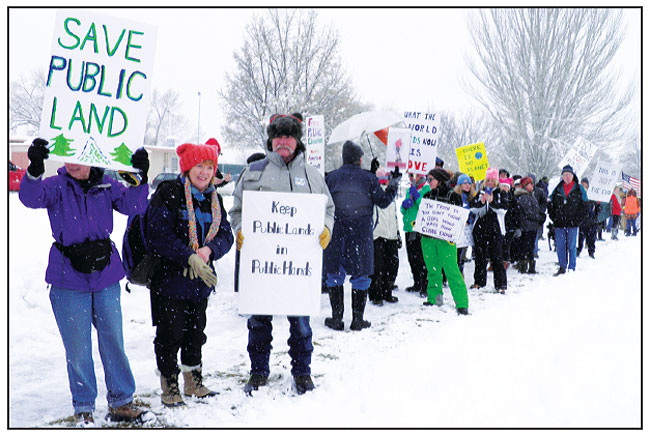
PROTEST MARCH IN CORTEZ THE DAY AFTER PRESIDENT TRUMP'S INAUGURATION

Protesters march in Cortez the day after Donald Trump’s inauguration. More than 500 people braved the snow and cold to join with millions of marchers nationwide. Photo by Gail Binkly

Critics are already speculating that Donald Trump won’t last more than two years as president – that he’ll resign or be impeached before his term is out.

But his supporters predict he’ll prove so successful that he’ll easily win re-election in 2020.

Whether they last two years or eight, whether they usher in a golden age of peace and prosperity or turn into (to use one of Trump’s favorite words) a “disaster,” the Trump years will have a major impact on the United States in general and the West in particular.

Here, where large portions of individual states are made up of federal land, where much of the population is rural and earns below-average income, the policies of Trump and the Republican Congress will likely have an out-size effect.

Just days into the new administration, the Four Corners region was already seeing some of those impacts.

Here is an overview of a few of the key issues and areas:

The EPA

The flurry of proclamations hurriedly decreed in Trump’s first week included an executive order plainly aimed at paralyzing or euthanizing the EPA. The order froze funding for new EPA grants and contracts for work such as restoring contaminated sites and enforcing clean air and clean-water regulations.

Spokespeople for U.S. Rep. Scott Tipton, a Republican representing Colorado’s Third District, hastened to issue assurances that the freeze would not cut funding for cleaning up the new Bonita Peak Mining District Superfund site near Silverton. That area was the source of contaminated waters that poured through a breach in a mine portal and turned the Animas River a turgid orange in 2015.

However, the freeze does apparently mean no new EPA funds for what are known as brownfield sites – former industrial sites such as gas stations and mines that have been left abandoned and contaminated.

A number of such sites exist in Montezuma County – for example, a decrepit former convenience store/gas stop west of Mancos, and the ghostly remains of the M&M Truck Stop at a major intersection near the state weighing station – but presumably won’t be receiving federal funds in the near future.

The Montezuma-Cortez Re-1 School District, with help from the City of Cortez, had applied for a $250,000 EPA grant to aid in demolition and abatement work at the old high school, which contains asbestos, lead and even mercury.

Kemper Principal Jamie Haukeness, who is spearheading the demolition effort, told the Free Press that he’d immediately thought about a possible impact on the grant request upon learning of Trump’s action.

“I read about that freeze a couple days ago and thought, ‘Oh, no, this is not good.’

“I was very concerned about it affecting our grant, because as I understand it, it would freeze all EPA grants. I have not heard back from the individual in Denver that we submitted that with,” Haukeness said.

When pre-bid and walk-through meetings for the project were held in January, a dozen asbestos-abatement contractors came from around the Southwest, Haukeness said, including a few local companies. Bids were due on Jan. 31.

Haukeness said he spoke Friday to Mark Rudolph with the Colorado Department of Health and Public Environment, a specialist with Superfund Brownsfield grant program. He said Re- 1’s application was in front of their review board and he hoped to have more information soon.

“Hopefully, with this EPA grant going in earlier this month it will be excluded from whatever Donald Trump is referring to – that’s the best-case scenario,” Haukeness said.

The demolition will go forward even without the grant, which wasn’t a sure thing anyway, but officials had hoped the money could help defray the estimated $1.3 million cost. Any funds remaining after the demolition are to be put into renovating the old Panther athletic stadium.

“Not getting the EPA grant would mean there would be less money available to make improvements on Panther Stadium,” said Jack Schueneyemer, president of the Re-1 school board.

“The more outside funding we can get for the demolition project, that would be more money we would have to upgrade Panther Stadium.

“I think everything is up in the air in terms of federal grants. I would hope anything that’s in the mill at this point in time would be processed.”

According to the federal government website USAspending.gov, Colorado is slated to receive $6.37 million in EPA grants and contracts in the 2017 fiscal year, while Utah is to receive $2.6 million.

In a Jan. 26 letter to White House Chief of Staff Reince Priebus, Colorado Sen. Michael Bennet, a Democrat, wrote that he had “serious concern regarding the EPA’s suspension of grant and contract awards.”

“More broadly,” he wrote, “the Colorado Department of Public Health and Environment (CDPHE) receives approximately $28 million from the federal government each year for environmental programs, the majority of which consist of EPA grants or contracts. State and local governments in Colorado use these funds to clean up contaminated sites, protect our clean air and water, permit oil and gas operations” and more, Bennet wrote.

The suspension, even if temporary, could affect communities across Colorado, Bennet said. “This lack of communication regarding the extent and length of this freeze has led to confusion and uncertainty. This makes it even more important that the Administration work quickly to detail whether the suspension affects ongoing remediation projects and existing awards.”

As of press time, the question had not been cleared up.

Repealing the Affordable Care Act

Plans by Congress to repeal Obamacare are already being widely trumpeted despite no replacement being in sight, meaning millions could lose their health-care coverage and go back to obtaining treatment at emergency rooms only when an illness becomes critical.

Rural hospitals such as Southwest Memorial in Cortez have benefited from the ACA because it meant more people were insured and therefore the hospital had to write off fewer costs for ER visits by the indigent. That may be reversed if the ACA is repealed and its replacement covers fewer people.

Federal hiring freeze

In one of his first acts as president, Trump ordered a hiring freeze throughout the federal government. The order affects hiring for all new and existing jobs, though it exempts jobs in the military, national security, and public safety.

The prohibition is intended to halt the growth of government until a long-term plan can be developed for shrinking it. The directive created a climate of uncertainty and caution among local governments and agencies that rely on federal funding and support.

A federal hiring freeze, as part of a larger plan to shrink the federal budget, could have major ramifications in the Four Corners.

In Montezuma County, federal employees make up a significant portion of the workforce. About 70 percent of the county’s land area is federal or tribal land.

Federal dollars are often involved in local projects and programs.

Trump’s memorandum did not provide an exemption for seasonal positions with the Forest Service and other federal agencies. The Forest Service and Park Service are already advertising for seasonal workers in a variety of roles – including rangers and firefighters. The agencies were seeking clarification on whether those positions could be filled.

“If we’re prepping for a fire season, or for any kind of work on these public lands that can only be done in summer – resource extraction, mediation, restoration – if you’re not hiring people to do the job or oversight, it’s really difficult to see how it helps anyone,” Jimbo Buickerood of the nonprofit San Juan Citizens Alliance told the Free Press. “In the longer term, it could create more economic hardship for our region.”

Freezing or shrinking budgets would likely mean job layoffs and delays in or elimination of projects already planned but not yet funded.

According to usaspending.gov, for 2017, Colorado is receiving $6.5 billion in federal funds, $16.3 million of which has been awarded to Montezuma County and $1.9 million to Dolores County, through federal contracts, grants, loans, or cooperative agreement awards.

Colorado’s funds include grants to the CDPHE, Department of Local Affairs, Colorado Coalition for the Homeless, and many other entities. A total of $425,000 in grants has been awarded to Re-1 and $206,000 to the Ute Mountain Financial Services Department.

The category “other financial assistance” includes $2.5 million to Fort Lewis College, $163,000 to Montezuma County, and $155,000 to Cortez Apartments, according to the website.

Utah is getting $2.1 billion in 2017, of which $6.2 million is going to San Juan County. Those funds include $4.7 million in grants to the San Juan County School District and $452,000 to the Utah Navajo Health System, Inc.

The border wall

After Mexico’s leaders indicated they would not be willing to help pay for a border wall, Trump raised the possibility of levying a 20 percent tariff on Mexican imports – and that raised the possibility of Mexico’s retaliating in similar fashion.

According to an article in the Denver Post, the tariff could prove damaging to key businesses in rural Colorado. Mexico is Colorado’s second-largest trading partner, behind Canada, and its share of Colorado’s exports is on the rise, the Post said. Mexicans buy Colorado beef, pork, chicken, and cheese. Through November of last year, Mexico had purchased some $103 million in beef from Colorado producers.

Furthermore, according to the Post, Mexico is buying an increasing amount of natural gas from the United States, so producers in the Four Corners states could be harmed if a trade war results in Mexico buying less of the fuel.

Proponents of the border wall say it will keep the United States safer and mean more jobs for Americans.

Energy policy

The United States is close to being energy-independent, and its imports of fuel fell throughout the Obama administration, according to politifact.com.

However, critics say Obama was too restrictive of drilling, particularly on federal lands.

Trump is expected to be much friendlier to the energy industry, something that could prove a boon to the Four Corners, where oil and gas drilling have dropped precipitously in recent years.

In a press release submitted to the Free Press as an opinion column, Robert L. Bradley Jr., CEO and founder of the Institute for Energy Research, an industry nonprofit, hailed the new administration and voiced eagerness over its potential to open up drilling.

“Breakthrough technology has opened reserves of previously inaccessible oil and gas,” Bradley wrote. “Rather than welcoming this bounty, Obama restricted access and blocked infrastructure development.

“Trump’s energy-policy era can find inspiration in Ronald Reagan’s 1981 removal of price and allocation controls from oil and petroleum products. … The 40th president’s boldness should guide Trump as he removes ill-conceived regulations, opens areas for energy development, and improves energy infrastructure.”

Bradley called on the Trump administration to open up more offshore and onshore areas to drilling and give states more authority to lease federal land within their borders for energy extraction.

However, the regional fall-off in carbon- dioxide and natural-gas production has been largely attributed to declining oil prices rather than government regulations. It’s unclear whether opening up even more lands for drilling would cause prices to rise enough to make drilling profitable again in the Four Corners.

The methane rule

Late in Obama’s administration, the BLM issued regulations requiring energy producers to curb natural-gas flaring, venting and leaking on both public and tribal lands. The so-called methane rule was touted as a way both to reduce emissions of the potent greenhouse gas and to increase royalties paid to government, as more methane would be captured and sold rather than wasted.

However, Republicans may take action to undo the methane rule. According to an article in E&E News, this would actually mean fewer jobs for energy workers who would have been hired to patch pipelines and fix equipment venting the gas.

But the Western Energy Alliance, a trade group, supports nixing the rule, saying companies are motivated to reduce waste on their own and do not need federal interference. Environmentalists disagree.

“The methane rule is what we call the wasted-gas rule,” the San Juan Citizens Alliance’s Buickerood said. “If you don’t implement that, we have this wasted product that causes greenhouse gases. The collection of it becomes a revenue source for the federal government, so not moving forward on that would not be a benefit.”

Pipelines

In keeping with his pro-energy policy, Trump swiftly issued executive orders attempting to give a green light to the Keystone XL and Dakota Access pipelines. Both are highly controversial and have generated enormous resistance, although experts have commented that to some degree the disputes are mainly symbolic. The oil that would flow through the pipelines will merely be transported in other ways that may be even less safe, critics say.

Keystone would carry crude oil from tar sands in Canada to refineries on the Gulf Coast. Its supporters tout it as a job creator, but most of the positions it creates would be for construction; it is expected to generate just 35 permanent jobs.

Trump’s order did not mean the project will start right away; it allowed the developer, TransCanada, to reapply for a permit. An environmental review will still have to be conducted.

Likewise, Trump’s order regarding the Dakota Access pipeline does not mean construction will resume immediately. Instead, it tells the Army Corps of Engineers to “review and approve in an expedited manner, to the extent permitted by law.”

The Dakota pipeline runs from oil reserves in North Dakota to refineries in Illinois. It is largely complete, but construction has been halted on the final section, which would burrow under a lake used by the Standing Rock Sioux tribe. The tribe says the pipeline threatens its water supply and would disturb sacred grounds near its reservation.

Under Obama, the Army Corps of Engineers had decided to seek an alternate route. Now, the project is poised to resume.

The Dakota dispute is seen not merely as an environmental issue, but one involving rights for a sovereign Native American tribe. It drew thousands of protesters from around the country and world, and is being watched closely by American Indians.

Navajo Nation President Russell Begaye and Vice President Jonathan Nez voiced concern about Trump’s order to jump-start the pipeline project.

“If an oil spill happens, it will not only impact Indian Country but it will impact millions of people who utilize the water for livestock, farming, and recreation,” Begaye said in a release. “We hope President Trump understands that Native Americans will always stand to protect our land, water, air and resources given to us by our Creator.”

“In essence, President Trump is setting the tone for his administration,” Nez said in the release. “If this is what we as Native nations have to look forward to then we need to stand together in protecting our lands and natural sources from any further mismanagement or environmental disasters.”

In a media conference call Jan. 24, environmentalists lambasted Trump’s order and promised a battle.

“The Dakota Access Pipeline is one of the most powerful environmental justice flashpoints in American history,” said Bill McKibben, co-founder of the group 350.org.

“President Trump will live to regret his actions this morning,” said Sierra Club Executive Director Mike Brune. “He unwittingly began to build a wall – a wall of resistance and defiance. … This fight is far from over. The millions of Americans and hundreds of tribes that stood up to block these pipelines will not be silenced.”

And Dallas Goldtooth of the Indigenous Environmental Network called Trump’s orders “insane and extreme and nothing short of attacks on our ancestral homeland.”

National monuments
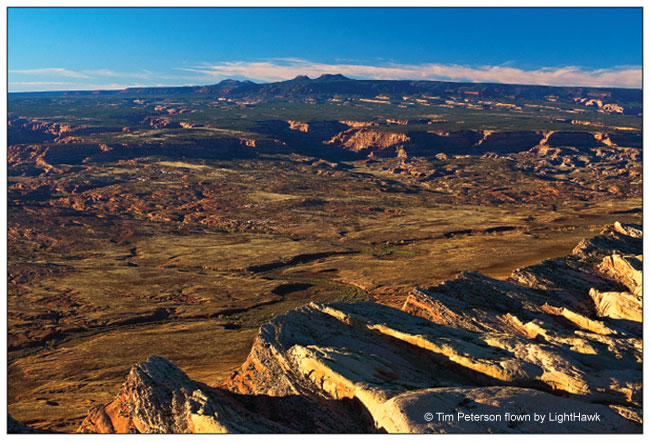
WOODENSHOE BUTTES AND THE BEARS EARS OVER CEDAR MESA AND COMB RIDGE

Woodenshoe Buttes and the Bears Ears over Cedar Mesa and Comb Ridge. Republicans in Utah are hoping President Trump will act to overturn the recent designation of 1.35 million acres in San Juan County as Bears Ears National Monument. Photo copyright Tim Peterson

Furious with Obama over the more than two dozen national monuments he created under the authority of the 1906 Antiquities Act, GOP lawmakers are hoping to undo some of them and limit future presidents’ ability to create new ones.

Utah’s legislators are already working on a resolution asking Trump to overturn the just-created Bears Ears National Monument in San Juan County, a 1.35-million-acre reserve of rugged canyonlands rich in archaeological and cultural resources. They are also hoping Trump will drastically reduce the size of the 1.9-million-acre Grand Staircase-Escalante National Monument in southern Utah, designated by Bill Clinton in 1996.

Both efforts will be met with stiff resistance from conservation groups. Furthermore, it’s unclear that presidents have the authority to undo other presidents’ monuments or even to drastically change their boundaries. Congress could take such an action, but it would be an uphill battle, although with Republicans holding both houses, this might be a narrow window of opportunity for them to try it. In addition, there will likely be a major effort to revise the Antiquities Act itself.

“There is no precedent nor any mechanism for downsizing or reversing the Antiquities Act order,” commented Buickerood. “There have been little tweaks to monuments, that’s it. Every analysis I’ve seen in the conservation community says there’s really no mechanism for that. SUWA [the Southern Utah Wilderness Alliance] and others would take it to the Supreme Court.”

Of course, Trump is about to appoint a new Supreme Court justice and will likely have the opportunity to appoint an additional justice or two over his term.

Still, Buickerood believes the wheels of change will grind slowly, despite Trump’s impatience.

”I think the new administration is a little naive, thinking it’s easy to grease the skids for anything to happen really quickly,” said Buickerood. “There’s an incredible structure of public laws and administrative procedures. And the women’s march the day after inauguration showed what an incredible amount of concerted resistance there is.”

Those are just a few of the policies and issues the new Congress and administration are pursuing that may impact the Four Corners. There are numerous other possibilities, of course: eliminating the Endangered Species Act, transferring federal lands to the states and/ or selling some of them off; and locally, halting the BLM’s master leasing plan process in Montezuma and La Plata counties. In every case, Republican pushes will engender resistance, but the GOP has the bit in its teeth and is eager to go. Hang on, it’s going to be a bumpy ride.

Published in February 2017

Deadly dozen (Prose and Cons)

The cliché that certain crime novels “transcend the genre” is as shopworn as the genre itself can sometimes be. But there’s no disputing that a new generation of crime novelists, many of them women, are rewriting the rules and bringing unprecedented levels of emotional nuance, depth of character, and linguistic elegance to a literary form whose most celebrated practitioners too often depend upon formula and rote. Evoking the works of Ruth Rendell, Kate Atkinson, and Laura Lippman, these page-turning novels are as much driven by the inner workings of their characters and the complexities of their relationships as by standard tropes of the three-act plot structure.

THE TWELVE LIVES OF SAMUEL HAWLEY BY HANNAH TINTIHannah Tinti is one such writer, and her magnificent The Twelve Lives of Samuel Hawley – a tightly woven braid of gritty noir and coming-of-age innocence – is one such novel.

The eponymous Hawley is a man with a past, and that past is written all over his body – literally – in the form of 12 bullet scars. We get a glimpse of that body early in Twelve Lives, Tinti’s second novel following her acclaimed 2008 debut The Good Thief, when Hawley, newly arrived in the sleepy fishing village of Olympus, Mass., strips down to compete in the town’s annual Greasy Pole Contest. Not a man who ordinarily subjects himself to public scrutiny, Hawley does so here in hopes of easing his teenage daughter Loo into community life. Hawley, you see, will do just about anything for Loo, and the urgency of his omnipresence proves both bane and balm to a troubled girl grappling not only with a new hometown but also with the headaches and heartbreaks of young adulthood.

Hawley’s scars, we quickly learn, go more than skin deep. A series of flashbacks – one for each bullet wound – reveal his peripatetic journey from petty thief to underworld courier to avenging assassin. Along the way he finds love with the impetuous Lily, Loo’s mother, only to lose her to the sudden violence of a past that, despite Hawley’s Herculean efforts to escape it, shadows him still and threatens to resurface at any moment. So even as Hawley strives to quit running and confect some semblance of a normal life for Loo, he remains the kind of man who keeps his cash on hand, his bags always packed, and his guns ever within reach.

As for Loo, her father’s past is as opaque to her as her attraction to Marshall Hicks, an oddball classmate and son of the town’s reviled gadfly. It is the counterpoint of Loo’s halting navigation through the shoals of adolescence – her first crush, her first kiss, her first love – that gives depth and resonance to what might otherwise have been a straightforward tale of crime and redemption. Instead we get to revel in Tinti’s magical melding of the internal and external, of past and present, and of cause and terrible effect.

For Hawley, that means accepting his wife’s death and embracing his role as a parent. For Loo, it’s uncovering her father’s baggage and helping him shoulder it. And for the reader, it’s the giddy thrill of surrendering to a master storyteller at the top of her game.

For those who might doubt my premise that women are the future of crime fiction, Samuel Hawley ($27, Random House/The Dial Press) stands as a thrilling Exhibit A for the prosecution.

Chuck Greaves is a member of the National Book Critics Circle and the author of five novels, most recently Tom & Lucky (Bloomsbury.) You can visit him at www.chuckgreaves.com.

Published in March 2017, Prose and Cons

Once upon a time in Berkeley. . .

So the recent flurry of news stories about the muzzling of Milo Yiannopoulos – a trendy alt-right provocateur whose paid appearance at UC-Berkeley was cancelled in February after some left-wing student tantrums – stirred in me nostalgic memories of a somewhat similar time a half-century ago when I had one such brush with Big Doings.

In both cases, a central issue was our freedom as Americans to speak out, no matter how despicable or contemptible or even “unpatriotic” the words might be.

Until recently, baiting transgenders, Muslims and people of color had made Yiannopoulos a pretty good living – along with being an editor at Breitbart News, the love child of racist/sexist Steve Bannon, now Donald Trump’s right-hand man in the White – ahem – House. (Of course, Yiannopoulos’ fortunes have since taken a downturn – Breitbart canned him, a book deal was scotched and an appearance at CPAC, the annual orgy of the right wing, was cancelled after recordings came to light that showed him condoning pedophilia.)

So anyway, let’s return for a few minutes to those wonderful days of Yesteryear, in this case 1964 – the Autumn of Our Discontent in Berkeley, Calif., just a few years before the Summer of Love (another countercultural phenomenon to which I was privy) was proclaimed just across the bay.

Dubbed the Free Speech Movement, the happening’s protracted labor and birth occurred on the same campus where its demise has now been prematurely pronounced. I’d arrived a few weeks earlier – an aimless, rootless college dropout from Boulder, Colo., who was looking for some meaning in life, or maybe just a good relationship, or at least a good time. Politics, left or right, was a ways down on my list of passions. But when I couldn’t get day-labor jobs, I found the campus an ideal spot to hang out – dirt-cheap food in the cafeteria, a great library and friendly fellow travelers.

The hub of the university’s universe was Sproul Plaza, a huge paved courtyard with a giant fountain at the end of Telegraph Avenue, where crowds of students and non-students – the likes of me – mingled and traded sophomoric insights, a sort of Platonic vision of what higher education was supposed to look like. (How could it be otherwise, Socrates?)

For the politically inclined, the plaza, teeming with young impressionable minds and boundless energy, had for many years been an ideal recruiting spot to pass out information and propaganda. But what with the civil-rights unrest down South and the Vietnam War heating up, university officials had caved to political pressure and banned advocacy and fundraising activities on campus – which quickly proved to be like throwing a match into flammable liquid. After all, many young guys who were vulnerable to being drafted for cannon fodder found a lot of personal appeal in the anti-war sentiments.

In defiance of the ban, Jack Weinberg, a dedicated left-winger, set up a card table in the plaza that balmy October for CORE (the Congress of Racial Equality) to distribute material and solicit funds. He was promptly arrested and stuck in the back of a campus police car that had unwisely driven onto the plaza – a very bad strategic move, since the vehicle was immediately surrounded by a horde of indignant students who refused to allow its departure.

I lived a few blocks away and soon became aware of the hubbub, which I found interesting, though not inspirational in any political sense.

For the next two days Weinberg remained in situ, eating peanut-butter sandwiches passed through the car window and occasionally relieving himself in a bucket. Outside, students continued to hold the vehicle immobile. The top of the car was transformed into a speakers’ platform, and fiery oratory continued night and day from a host of free-speech supporters, most notably Mario Savio, who became a leader of the movement. The impasse quickly became national news and “negotiations” were conducted between student representatives and the administration.

As I said, my part was only as a witness, someone there to eat the free sandwiches being passed out while agreeing that authority sucked and war was bad.

Finally a compromise was reached and Weinberg was released with no charges filed. However, the fire he had lit continued to burn brightly for months, as masses of adamant if peaceful protesters staged sit-ins and rallies to demand a change in university policy.

Then one day in early December, it came to a head. I was sitting along Telegraph a few blocks down from Sather Gate when a low rumble grew into a loud roar as row after row of motorcycle cops in riot gear rode by, part of a larger force assembled to clear the plaza. It was like a scene out of a Cocteau movie.

The mass arrest of about 800 demonstrators was quickly accomplished (with no violence, fortunately) and the “suspects” were all released on their own recognizance a few hours later.

But their victory had been achieved. In January, UC-Berkeley’s freshly installed chancellor announced new policies that recognized their right to freedom of expression.

Thus the Free Speech Movement was born, and it has since been remembered proudly as part of Berkeley’s heritage. Until, that is, Yiannapolous’ invitation to speak there was canceled in the name of public safety. Berkeley, it appears, no longer stands for free speech.

It’s unfortunate. Because now, all these decades later, I like to believe I’m a bit more mature in my views and a little less confused. And this much has become clear to me:

Suppressing speech or any form of non-violent expression only lends credibility to those being gagged. In some instances, such as the civil rights and anti-war movements, the results of the gagging ultimately proved positive for society. Government attempts to smother dissent only created an echo chamber that helped nurture the protests into a din heard round the world, hurrying the notion of white supremacy and the domino theory of monolithic Communism onto the dung heap of history.

When speech is anti-civil rights instead of pro, however, it’s very tempting to want to muzzle the speakers. Don’t let the neo-Nazis, the anti-Semites, the Muslimophobes spew their rhetoric and we’ll have a better world – that’s the thinking. But it’s wrong. As the saying goes, we wouldn’t need a First Amendment if no one said anything objectionable. And it’s better if even poisonous views can be heard in the open rather than allowed to flourish in secret. Sunshine remains the best disinfectant.

As far as Yiannapolous, shutting him up only increased his power to draw likeminded bigots to gatherings like CPAC (at least until his apparent ambition to become president of the Man-Boy Love Club was exposed and he became radioactive).

No, free speech wasn’t dealt a deathblow by not allowing him to spout his garbage, but it did make lefties look like they have a double standard.

Milton said it best: “Let her [Truth] and Falshood grapple; who ever knew Truth put to the worse, in a free and open encounter.”

That’s a lesson that should be remembered at Berkeley and everywhere else. David Long writes from Cortez, Colo.

Print this article


Published in David Long, March 2017

My alternative life story

So you think you know me? Well, what if I shared my life story with you – using alternative facts?

First, let me assure you that nothing would change from the original story of my birth.

I was born a coal miner’s daughter. As some of you may recall, I am an only child. Unless you count my siblings. But this is my story so I’ll decide what is or isn’t a fact.

Okay, maybe I do have a brother named Edward. And my name is John. Some of the more astute readers may look at those names and say, “A-Ha! John and Edward KENNEDY!”

Yes, I’m a scion of the famous Kennedy family. Or, I would be, if I knew what the hell a scion is. But my Kennedy kin kind of disavowed me because I did not have the attractive, athletic build they favored.

I wasn’t Hyannisport material, as much as I was Hyannisportly.

So I packed my grip and left the compound behind. The Compound W, that is. As things turned out, I wish I had kept the Compound W.

I moved to New York City, figuring if I could make it there, I could make it anywhere. I spent my teenage years in New York, living underground as a mutant ninja turtle.

Until the day I was accidentally bitten by a radioactive writer. I soon realized that I was developing super powers and, thus, I became the Amazing Writer-Man. I started with line type, cut and paste, until the day I became a bonafide Worldwide Web Slinger.

But it wasn’t that easy. When I first began to develop my writing skills, I realized one important thing: with great power comes great irresponsibility.

Of course I abused my newfound writing gift; though some of my best work can still be found on some of your finer restroom walls.

When I tired of my endeavors in potty poetry, I began to think of how I might make my mark upon the world.

Baseball fans may recall how I broke the coloring barrier. It seems that I could never stay between the lines.

Still needing to make a living, I moved to Memphis and soon became the Alternate Facts King of Rock and Roll, with such hits as “That’s All White, Mama” and “Hit the Road, Black.”

About that time I met The Colonel.

Colonel Don was a tireless self-promoter, but he knew what the audience wanted. Originally I was billed as John the Pelvis, but that name didn’t catch on. And then Sun Records signed some kid whose name actually rhymed with pelvis – what were the odds? – and my label dropped me.

I wonder whatever happened to that pelvis kid? He’s probably working in a fast-food joint in Kalamazoo or something.

After failing as John the Pelvis, I reinvented myself as The Hillbilly Albino Cat. I was a major draw at certain hooded conventions, where it turned out Colonel Don was also popular.

Soon albino cats everywhere were holding lighters up in their tiny paws and shouting “White Pawer!”

They decided they weren’t going to take it anymore. But the Albino Cats bided their time. They knew if they could find an Albino Cat with orange hair, they could make him president of the United States.

As for me, I tired of the rock god’s lifestyle. I mean, you can only grab so many women by their whatever before you just want to kick back and watch “Game of Thrones.”

I accepted my destiny to become the Amazing Writer-Man and spent many enjoyable hours producing fake news all across the country.

But after my fourth Pulitzer Prize, I decided to step away from my lucrative journalism career and experience life as an impoverished would-be author.

John Christian Hopkins, an award-winning novelist and humor columnist, is a member of the Narragansett Indian Tribe. See his writings at http://authorjohnchopkins.blogspot.com.

Published in John Christian Hopkins

The Great Wall

about it. We’re building the wall. We’re building the wall. In fact, it’s going to start soon. Way ahead of schedule, way ahead of schedule. Way, way, way ahead of schedule. It’s going to start very soon.” — Donald Trump on Feb. 24

Where did all the so-called Christians go? My guess is, the same place they hid when Hitler was persecuting the Jews. Any time a so-called leader uses hatred in order to lead, one should be wary, as you may be next if you speak against his program.

Americans used to hate walls. Remember when the Soviet Union put a wall up between Berlin and East Berlin in Germany? They manned it with sharpshooters to kill people that tried to cross.

“Mr. Gorbachev, tear down this wall!” Ronald Reagan said in 1987, and everyone cheered. Now, we want to erect the walls.

What kind of America have we become that allows mothers to be separated from their children, that returns people to conditions of poverty and political persecution? Not something I can be proud of for myself or my country.

We’re told the ultimate cost of this wall is maybe $30 billion. Imagine $30 billion for early childhood education, infrastructure, even cleaning up some of the toxic messes left by the polluters Trump loves so much.

“And remember, we are getting the bad ones out. These are bad dudes. We’re getting the bad ones out, OK? We’re getting the bad – if you watch these people, it’s like gee, that’s so sad. We’re getting bad people out of this country, people that shouldn’t be, whether it’s drugs or murder or other things. We’re getting bad ones out, those are the ones that go first and I said it from day one.”

There are always a few rotten eggs in a basket, true. Some of the undocumented people who come across our border are drug-dealers or thieves. But most are not. And, remember, some of our worst crimes are committed by our own citizens and misguided youth:

  • A Planned Parenthood clinic, Colorado Springs, Colo., Nov. 19, 2015.

Three dead – a police officer, a war veteran and a woman, all of them parents.

  • A black church in Charleston, S.C., June 18, 2015. Nine dead.
  • Sandy Hook Elementary School, Conn., Dec. 14, 2012. Twenty-six dead.
  • Tucson, Ariz., Jan. 8, 2011. Six dead and a U.S. representative left with permanent brain damage.
  • Oklahoma City, Okla., April 19, 1995. One hundred sixty-eight dead. All crimes committed by Americans, not undocumented immigrants.

We are not perfect and the only one who supposedly was, they crucified. The last time I took inventory of the human animal (or maybe we should call ourselves a fungus creeping across the globe), they all were constructed fairly much alike. But we have allowed ourselves to be brainwashed into thinking we are very different and the only way to be safe is to keep the “other” people out.

So I guess we’ll build this wall. Maybe crime will end and Americans will flock to the low-paying, back-breaking jobs the immigrants were doing, cleaning motel rooms, picking chilis and lettuce 12 hours a day, laying shingles in the hot sun. And with our trade policies we will help ensure Mexico doesn’t have enough jobs for its own people.

And then we will be a great country.

Galen Larson writes from Montezuma County, Colo.

Published in Galen Larson

Making lyric mud in Todos Santos

BAJA CALIFORNIA SUR … It was the late great Hobo bard Utah Phillips who made me do it … Go back with me to Marin County. North of San Francisco. 1976. When California’s children, post-Sixties, were still flowering. It was at a Bicentennial Folk Festival that Phillips told the crowd a rousing tale between Wobbly songs. And the story’s punchline went: “Every so often you have to wake up, and jump off a cliff ” … Damn right, I thought! Been following that sage advice – to grand effect – ever since … So, it seemed fitting, or at least psychologically appropriate, after 20 years’ indentured public service, that I do something wild. … I signed up last spring for a five-day architectural ceramics workshop north of Cabo San Lucas in Baja California Sur (rockartus@aol.com). I’d heard about Donna Billick’s Heaven on Earth event at a Community Built Association gathering in Manitou Springs – Colorado Springs’ liberal tourist twin – thanks mainly to my amazing community artist/activist buddy Steve Wood, who has a ceramic bench in Telluride, another in Todos Santos… Here was a whole different crowd of artist types – not makers of verse but makers of sculptural clay art. Murals, fireplaces, gates and doorways. This was a cliff to jump off of at 71. So I made travel plans to give myself a week alone after the workshop in this magical Mexican pueblo village. More relax-in-place adventureville than busy tourist tour chase. A stranger making friends and learning to be happily alone. I walked a lot. Through town with its prosperous plaza hotels and upscale restaurants. Out to the beach. Ate great meals. Downed many a margarita (my fave alcoholic). Met great new people and a few old Telluride friends. And came home with lots of stories.

LA POLICIA … I love exploding stereotypes. And the disastrous way my trip to Mexico began helped me do just that … Getting to the Los Cabos International Airport later than I should have, I encountered some unsettling surprises. Taxis from the airport up to the village of Todos Santos, where my Heaven on Earth workshop was located, were not affordable as I’d hoped – they would have cost more than my flight from Montrose. So I took a cheap taxi to the local bus station. Or so I thought. It was more a jitney than a taxi, spending almost an hour dropping off tourists at luxury beach hotels before dumping me and two bags at a darkened barrio in San Jose de Cabo. It only took a few minutes of sign language and pidgin Spanish to learn that the bus station was closed, and a bus to Todos Santos wouldn’t leave until the next morning … A foreign traveler’s nightmare. Alone. Late at night. More money with me than I should have had (to pay in cash for the workshop). Nowhere to stay. Unable to understand any of the little Spanish I barely spoke … I started wandering up a busy street. Got vague directions to a “hotel” that only had expensive “suites” way beyond my means. Then out on the street again. When who should come to my rescue, but two Mexican policia? They motioned me over to their squad car. The cop riding shotgun stumbled his way through my tortured, two-year-old’s explanation of my plight. He was good-natured. Told me to get in … The uniformed duo took me to a marvelously unassuming storefront hotel in the town’s historic district, a couple miles from where they’d picked me up. Shotgun parlayed with the owner, told me a room only cost $26 dólares a night, and made sure to insist the clerk not charge me more. And then the two cops left. This was a happy ending. I was rescued by the Mexican police! How’s that for an anecdotal antidote for the Mexican-baiting infecting our nation?

GERNOT HEINRICHSDORFF … Life is mysterious, where it takes us and who develops into our friends. Gernot was a dear friend. He and his wife Ava became Colorado surrogates for the grandparents I never had … His was a wild life. Drafted into the Luftwaffe as a young man, he was forced to fight on the Russian front, and after being wounded managed to make it to the American zone, where he was captured and detained (the Russians didn’t take many prisoners) … Released, he became a landscape architect like his mother – the first woman in Germany to pursue that craft. … Emigrating to America, he ended up in Colorado Springs and married Ava, the amazing Hungarian- American daughter of celebrated concert violist Ferenc Molnar, who had emigrated himself to the U.S. in 1926 … Gernot taught landscape design, wrote articles, and was a working sculptor. Before the term “xeriscape” existed, he specialized in indigenous materials and water-conserving designs. Besides residential and commercial landscapes his projects include city and regional parks, national monuments, creative playgrounds, greenways, traffic islands, campgrounds, schools, churches, and 16 environmental communities. He was a “design-build” landscape architect who installed his own projects, often single-handedly … As a sculptor he worked primarily in concrete, expressing natural rock formations and water effects inspired by the Colorado Plateau, Grand Canyon, and lava flows. … In the 1970s Gernot was featured in Sunset magazine for his creative playgrounds. In the 1980s and 1990s his gardens were again featured in Sunset and other publications. Town and Country listed him as one of America’s notable landscape architects. … He is best known to us on the Western Slope as the designer and builder of Infinite Nature, the Courtyard of the Science Building at Mesa State College in Grand Junction, for which he was awarded the national Excellence in Landscape Merit Award by the Associated Landscape Contractors of America. He inspired everyone who came in contact with him. As his wife noted, “Most of his clients became cherished friends who valued Gernot’s imagination, humor, wise perspective and generosity.” Although not a client, I valued Gernot for those same qualities … Although he passed in December, the man will live on to inspire me in overcoming hardship, respecting nature and in that mysterious process of creative imagining.

THE TALKING GOURD

Dove Creek

“Hey friend,” Ernie asks
He wants a favor

We’ve been pols in adjoining counties
Different parties. Redneck & hippie
But we’ve helped each other out
more than once

“Write me a poem”
he says
“about odd friends”

& McRedeye laughs
We’ve all come to know
you don’t always dance
with the one you come with

“Odd friends?
Ain’t that the truth, Ernie”
I chime in

And there’s no denying
some of the most virulent
opinionated
hardcore issue opponents
I’ve tussled with

& even a few half-soused
jock talk bigmouths
I’ve met at conferences
hotel bars or hospitality suites
have turned out
to be quite charming souls

Not opposed to goodness

Maybe a little twisted
Like a grain elevator
gone to seed

Or yellow tractors
chained to their rusts

So, why is it
McRedeye wonders
that some of the people you
fast friend in life
can be crazy bi-polar opposites
you never would have
expected to nod to
on the street

Let alone
trust like a sister
Like a brother

To deeply appreciate

Art Goodtimes writes from San Miguel County, Colo.

Published in Art Goodtimes, March 2017

Enough daydreaming

I mean, that’s the next President up there on the dais in front of our Capitol building and what was there this quadrennial? A scowling vindictive narcissist telling the world:

“From this day forward, it’s going to be only America first, America first.”

The image is out of a nightmare, but we are living this one and the damages will be irreversible. Trump declared we are no longer the United States of America, we are from this day on the Corporation of Amerika.

Going forward, the amoral business interests of a rare few are the only things that matter in this government. The genuinely horrifying reality I’m struggling with is that such an ourageously self-destructive, childish attitude appears to sit well with most Americans.

What happened to us? Have we forgotten that we are a country of immigrants with loved ones and family connections to every country in the world? Weren’t we the proud leader of the world not long ago? America set the inspiration and moral standards for other countries to follow and now this?

It’s true that we have long since lost our absolute world supremacy, but we were still the cornerstone to a civil (if frazzled) global community. Now, rather than learning from our mistakes and taking a sober assessment of our Earth and the future we are inexorably moving into, we wrap ourselves in a child’s temper tantrum: “It all about me, me, me!”

How is it that so many Americans are on board with that? Have we become a nation of such scared citizens that we run into the arms of the first strongman with easy answers who comes along? Someone who pretends all our problems are the fault of others, rather than being the legacy of a string of short-sighted self-interested choices.

In these days, when the reality of global warming and biosphere destruction and social disintegration is knocking ever harder on our door, what Trump is offering America and his corporate buddies is akin to the American Indians’ Ghost Dance – a dying people’s last desperate attempt to return to better days when Earth was a cornucopia and opportunities were boundless. It didn’t work for them, and it won’t work for us or our corporate overlords now.

We have got to make it here on this living planet that We the People and our avarice are mangling beyond redemption. I know we are always supposed to end on a hopeful note, but I’m done with progressive daydreaming. We’ve handed our government over to people who have contempt for our government and want to destroy it. It’s worse, many are faith-shackled and literally want to see End Days of Earth and seem more than happy to help that along. Imagine, it’s going to be even worse than you dare imagine.

Then take a sober look at how we collectively allowed this to happen. The next two and four years could be our greatest hour, or it could be the final nail in the coffin. America, it’s your move.

Peter Miesler writes from near Durango, Colo., and hosts the blog No-VillageAtWolfCreek.blogspot.com.

Published in Peter Miesler

No place like home for the holidays

I bought an old pickup truck last month. And just in time, too! Because with a truck, I was sure to have somewhere to sleep for the holiday season.

Okay, I’m making it sound worse than it was. After all, the pickup has a shell in back to keep the snow off my air mattress. Besides, I was set to join a fine tradition of Christmas orphans. George Bailey’s dad bit it til he was dead. And does Charlie Brown even have parents? The fact that both my mom and my dad are alive and well only made me the luckiest orphan in the history of Christmas, even if I had no home to call my own.

About that no-home thing, let me explain. My landlords are selling the house I rent with my dog. Now, I understand my landlords (who ought to feel ashamed of themselves) having no qualms about evicting me. I mean, I’m a writer; it’s a wonder I ever make the rent. But the dog? He doesn’t chew the carpet. He doesn’t scratch new entrances through the doors. He makes grown men go “awwwaddapreddiepuppeeeee.” Yet my landlords (shame!) can sleep at night knowing he could become a street hound on 30 days’ notice.

(He also comes with impeccable references… you know, if you happen to have a modest in-town home with fenced yard and washer/dryer in need of a respectable tenant, or barring that, a local writer who totally does not deal drugs on the side.)

In complete fairness, I must mention that this house has technically not sold yet. Which technically means I can stay here, at least until the mistletoe comes down. But let’s not allow facts to get in the way of a really good narrative. I’m kinda digging the idea of living life on the road, just me and my dog and a well-loved Chevy old enough to be my girlfriend. Think of the freedom of that life. Think of the spontaneity. The ruggedness. The resourcefulness. The royalties from the inevitable country-music hits.

And this whole truck setup will offer me the perfect camouflage for Trump’s America. Whatever your political persuasion, you cannot argue that things are about to change. And in this new world, we pasties in pickups will get the run of the place. I’ll be a covert redneck, learning the forgotten ways of my hill-folk forebears. Then, come the apocalypse, I will finally have something beneficial to contribute to the remnants of society besides mean copyediting skills: I don’t know what that something will be, exactly, but the odds are that I will perform it better with a warm generic beer in my hand.

That is, if I can keep my truck running in the meantime. It turns out that 26-year-old vehicles require a certain amount of mechanical aptitude. Don’t get me wrong, I know things about cars. This one time, I even held a flashlight for the guy replacing my clutch.

But I admit I don’t know everything about cars. It’s theoretically possible that I could be out raising hell with the guys when my truck stops working, and I don’t even have a flashlight to shine around the engine compartment.

Normally, in such a situation I would say, “I have to get home and feed my dog. I’ll come back for the truck later,” and then I would leave the keys on the seat and hold out for the insurance money. But in this narrative, my co-hellraisers would say, “Bruh, you live in your truck, remember? And your dog is right here. And heezzuchaguhboiyesseeizz!” And I would be stuck admitting I don’t know how to fix my truck.

But that’s okay! Because in this narrative it turns out that these macho white guys, even the ones with Confederate flag underwear, are actually decent people. They’ll circle their trucks and offer me their tools. They’ll say things like “Here, let me show you how to purge the intake on your ignition manifold,” and they will teach me all about the inner workings of my pickup truck, and we’ll drink warm generic beer. And in exchange I’ll teach them how to match their pronouns to their antecedents. And then we’ll light a fire and cook the weakest among us, because you must remember this is a post-apocalypse scenario and food is scarce.

Now, this narrative may sound like the dire imaginings of a crazy person. Especially considering that the house didn’t sell before Christmas, and I had a real home with running water for the holidays. But going forward, I’ll take my chances living out of my truck. You’ve got to admit, it sounds a whole lot better than spending the snow season moving furniture.

Zach Hively writes from Durango, Colo. He can be read and reached through http://zachhively.com and on Twitter @zachhively.

Published in Zach Hively

Ten questions for Anne Hillerman: The best-selling author and daughter of Tony Hillerman discusses his legacy and more

On Wednesday, Jan. 11, at 6 p.m. author Anne Hillerman will be speaking at the Cortez Public Library (202 N. Park St.) to kick off its 2017 Amazing Authors Tour.

Daughter of the late, legendary New Mexico novelist Tony Hillerman, Anne burnished her father’s literary legacy in 2013 with the publication of Spider Woman’s Daughter, the 19th entry in the wildly popular series of reservation-based mysteries featuring Navajo tribal police officers Joe Leaphorn, Jim Chee, and Bernadette Manuelito. A critical and commercial smash – it won a prestigious Spur Award from the Western Writers of America and was a New York Times bestseller – Spider Woman’s Daughter was followed by Rock With Wings in 2015, and will soon be joined by Anne’s third novel in the series, Song of the Lion, in April 2017.

ANNE HILLERMAN

Anne Hillerman

We sat down with Anne to discuss her work, her father’s influence, and what the future holds for some of America’s most beloved fictional characters.

With your background in journalism, you were always the natural choice to continue your father’s legacy. Describe for us that decision, and the work that went into making it a reality.

During what turned out to be Dad’s final years, my photographer husband Don Strel and I created a non-fiction book, Tony Hillerman’s Landscape: On the Road with Chee and Leaphorn which featured pictures of the places in Navajoland he had written about and quotes from his novels about the places we selected. I added some non-fiction descriptions of the places. Dad served as a consultant on that project but died before it was completed. When the book came out, we went on tour with Don’s slide show and my stories about growing up in the Hillerman household. Inevitably, one of the first questions from someone in the audience concerned the continuation of the series. Did Dad have any more mysteries at the printer, sequestered away in his computer, with an editor?

I had to say no, that Shapeshifter (2006) was Dad’s last novel. Each time I said that, I could see the disappointment on the questioner’s face, and I felt a pang of sadness. I was mourning the loss of my dad but, like his fans, I also was grieving the end of a series I had read and loved since my early college days. I had lived with Joe Leaphorn, Dad’s first Navajo crimesolver, for years before Dad introduced him to the reading public in The Blessing Way (1970) and with Jim Chee even before People of Darkness (1980). Those characters were like family.

Eventually, encouraged by some outspoken writer friends, I decided that, while I would always miss my Dad, I could try to write a novel to give Jim, Joe, and the other wonderful characters another chance at life. I spent about three years learning to craft a novel as I was writing the book that became Spider Woman’s Daughter. My mother, my Dad’s first and best editor, gave me her love and support. Carolyn Marino, the editor who worked with my Dad at Harper- Collins, took me under her literary wing. Readers responded with enthusiasm. I’m glad Dad never suggested that I continue the series. I would still be rewriting chapter one. Sometimes, things work out.

Bernadette Manuelito is a minor character in your father’s later books, but has moved to the foreground under your tutelage. Was that a premeditated decision, or did the character just speak to you?

Actually, both. I always liked Bernie and saw her as a character with more potential than Dad gave her. When I decided that I would attempt a novel in his footsteps I knew that I could not pretend to be him. I had to give the continuation of the series my voice, but stay true to the guidelines he had established.

Bernie had been Chee’s girlfriend and sidekick in several books and has a big role in both Sinister Pig and Skeleton Man – but was never a crime-solver herself. To elevate Bernie to prominence, I had to give her a big case to work. In Spiderwoman’s Daughter, she operates as the top dog, with Chee as her sidekick and Leaphorn, Dad’s most loved character, in a precarious position.

Bernie did speak to me clearly in the second novel, Rock with Wings. Originally, I had planned for her and Chee to work together. Bernie refused to cooperate, so I ended up with parallel stories with Bernie’s involving more danger and worse bad guys. I marveled at my Dad’s ability to keep things a little less complicated.

Speaking of your father, do you ever feel him looking over your shoulder and, if so, is that always a good thing?

Yes and yes. My Dad had a wonderful reputation in the Southwest for befriending would-be writers, giving free advice and cover blurbs. Besides being a fine writer he was a fine person and a wonderful father. I go back and read his books when I’m missing him. It helps.

Share with us, if you would, your writing process. Pen or computer? Plotter or pantser? Sharer or soloist?

I have learned that I have to write every day when I have a book in progress, even if it’s only an hour’s worth. Mornings are my best times, but when life gets in the way, I still try to squeeze in however many words I can muster. It’s tough when I’m on tour or visiting friends or family, but it’s worth the effort.

I write on the computer, an old desktop, in my office at home with a view of trees, a bird feeder, and the occasional visiting deer. I write on a laptop when I’m on the road.

My process falls somewhere between plotter and just-let-it-flow. I summarize the book in a letter to my editor, and I refer to that when I get stuck. When I start, I know the main setting, and I have an idea of the crime to be solved and some clues as to who the villain could be and the villain’s motivation.

I don’t do much sharing of unfinished work. I might invite a writer friend out for coffee with the hidden agenda of talking through a writing problem, but because my process is so fluid, it doesn’t make sense to show anyone anything until I feel that I have a solid first draft. Then I show it to my agent and a friend who is a skilled reader and content editor. By the time they are ready to talk about it, the manuscript has set for a while without my tinkering. I listen to their opinions and give the book a thorough re-read and re-writing, usually making far more substantive changes than either reader has suggested. I usually show the book to my agent again, mostly now to help with typos, redundancy and the like. Then my editor gets a crack at it. During both of these final steps I’m working on the next book while I await their verdicts.

So-called cultural appropriation – the use of borrowed elements from another, minority culture – has been a hot topic of late within the literary community. What are your thoughts on the subject?

I know this will sound naive, but I think the backbone of fiction is putting one’s self in someone else’s skin, time traveling, exploring new possibilities. Men write about women and vice versa. We write about the past and the future. We pretend to be animals and even God. Fiction needs to be fearless. I encourage people to tell their own stories and to use their research skills and imaginations to tell stories they make up, too. I think anyone writing about any culture needs to be respectful. The Navajo people used my Dad’s books to teach reading in reservation schools and many Native fans have told me they are happy that I am continuing the series, especially since the tradition of strong women is such a vital thread in the Navajo world.

For over a decade, you and Jean Schaumberg hosted the wonderful Tony Hillerman Writers Conference, first in Albuquerque, then later in Santa Fe. What are some of your fondest memories?

The early conferences in which my Dad was able to participate especially stand out in my memory. Dad and Wes Studi, the actor who played Joe Leaphorn in the movies Robert Redford made for WGBH and American Masterpiece Theater, had a lovely dialog about the transition from book to screen. Jonathan and Faye Kellerman joined us one year, and Jonathan mentioned how a review that Dad wrote for the New York Times of his first book helped launch his career.

In 2008, my Dad died on Oct. 26 and the conference was two weeks later. I was in shock, as were many of those in attendance. The other authors – you were there, Chuck! – asked me if we could create an improvised “memorial evening” to Tony, actually just an excuse to sit around and tell stories about him, share some memories over a beer or two. Lots of tears, lots of chuckles. It helped all of us deal with the loss and honor the man.

In think it was in 2006 that Craig Johnson – now a much-published New York Times best-selling author – won the Tony Hillerman Short Story contest that the conference sponsored. Craig and his wife Judy drove down from Ucross, Wyoming to Albuquerque in a blizzard to receive the award and, he said, to meet Tony who was one of the authors he admired. Johnson is a smart, generous man with the same wonderful, self-deprecating sense of humor as my Dad. I was thrilled that the award went to someone to whom it meant so much.

As part of the conference you also awarded the Tony Hillerman Prize, which launched quite a few writers’ careers. Looking back, who are some of your favorites?

All but one of the winners were able to come to the conference as our guests, so Jean and I got to meet them. They are wonderful people and fine writers: Christine Barber, Tricia Fields, John Fortunado, Andrew Hunt, and CB McKenzie. I also appreciated the wisdom of the judges in not awarding the prize in 2009 and 2012. Because the conference is now in hiatus, the prize has been shifted to Western Writers of America and, if the judges have found a manuscript to their liking, will be awarded this June. The prize is a $10,000 advance and publication with St. Martin’s Press.

You seem to have a soft spot for libraries. Where does that come from?

When I was a child, my mother and I went to the library at least once a week, coming home with a bag of books. I loved it. When I grew older, I walked to the Santa Fe Public Library almost every day after school to wait for my father to finish his work at the newspaper. I felt so at home there, thrilled to be surrounded by so many stories. My mother was an avid reader and a committed library patron, and I think her passion rubbed off on me.

Both of your novels became New York Times bestsellers, which must have been hugely gratifying. Has that changed your life?

Yes, in a lovely way. It has enabled me to become a full-time writer and to have a multi-book contract. Writing is demanding, so it’s nice to be able to focus on the stories without having to worry about freelancing, doing newsletters, or all the other jobs writers take to pay the bills. The recognition has brought me some lovely invitations including the opportunity to represent New Mexico at the Library of Congress Book Festival. I owe much of this to my dear Dad’s fans who were willing and eager to take a chance on the new kid.

Lastly, what does the future hold for Leaphorn, Chee, Manuelito, and, most importantly, Anne Hillerman?

That’s a great question. I’m currently working on the second book of the three-book contract. I’ve had some nibbles from producers interested in taking Bernie to the screen. The more I write, the more I come to treasure spending time with these characters.

Published in Arts & Entertainment, January 2017 Tagged

The protection racket

It’s 1956, we are driving our car across the Mexican border into Nogales Sonora. Look, there is a parking place near some shops. We get out, lock the car and immediately a young boy comes up and offers to “watch our car” for us. He will “protect” it for 50 cents until we get back.

We had some fairly nice hub caps so decided it was a wise investment, gave him $1 to make sure. He did well, our hub caps were still there when we got back. Yeah, we knew it was a protection racket. Then there are the stories of the mob offering to “protect” a small business from a known arsonist in the area, for a small cost. It only took one that refused the “protection” for the others to decide to “hire” the services.

Recently we read where Obama “protected” thousands of acres of states’ lands by declaring them a national monument. They claim the Colorado Roadless Rule will “protect” 4.8 million acres. We pay for carbon credits, to “protect” the earth from climate change. There is the spotted owl and of course the Mexican jumping mouse, which we are told need to be “protected.” Do you ever wonder how stating that there might be some potential habitat for a mouse, bird or bug works to miraculously “protect” or “save” it? Shucks, they don’t know how many there are or where they are! How do they know if a mouse is endangered, and then who cares? My cat loves them.

The World Wildlife Fund claims 200 to 2,000 species go extinct every year. However, in 1980 in Panama they found 1,800 new species of beetles they didn’t know existed, on just 19 trees. The World Resources Institute stated, “Surprisingly, scientists have a better understanding of how many stars there are in the galaxy than how many species there are on Earth.”

Sooo how do they “know” how many, if any, species are going extinct? Fact is they don’t! So how do they “protect” something they don’t know exists, or that it needs or can be “protected”? They don’t! Are they trying to override nature’s law of “survival of the fittest” and evolution’s rule of “natural selection”?

I have wondered just what is being “protected” from whom or what? That of course raises the question of, What is protection? The dictionary refers to it as “something that keeps a person or thing from being harmed, lost, etc.” Does designating public lands as wildernesses, national monuments, national conservation areas or parks “protect” them from harm or loss? What does it protect them from? Does it protect them from wildfires, insects and disease, dying of old age, wind storms, landslides, earthquakes, floods? Nope! Wait – it “protects” from nasty drilling, right? Did you know right here in Montezuma County there have been over 900 oil and gas wells drilled over the past 70 years? About 120 are active and producing jobs and wealth for the county residents. Where are the 780 old wells? Don’t know, do you? What “harm, loss or damage” was done from drilling? Nothing!

So what do these designations “protect” them from? YOU! They are protected from YOU enjoying and managing them for increased land and resource health and wisely using parts of them for betterment of the lives of you and your neighbors and the rest of the county and state.

Our local San Juan National Forest is comprised of about 1.9 million acres. In the past, environmental corporations had about 22 percent of it “protected” as wilderness areas. Recently they got 32 percent more “protected” as roadless areas, which are quasi wilderness. Together about 54 percent of the forest, 1+ million acres, has been “protected” from most of the public, you, resource management and health improvement.

So why are the so-called “environmental/ conservation” corporations pushing for more wilderness, monuments and endangered species “protection,” less recreation use, and no drilling and other economic uses? Well, there is only one thing left that has not been mentioned. It is the old classic of “follow the money.”

The “environment” is the tool the corporations use to incite emotions to bring in money for them to claim to “protect” something that is nebulous in people’s minds, knowing the people will respond to a declared “crisis” that needs their support, especially their money. As one of the supporters, you will sleep much better believing you helped save the planet that has existed millennia before and will be here millennia after your dust spot in time ceases to exist. That is the “protection business” the corporations are in.

Nothing has been or is “saved” or “protected” by the environmental corporations. Wildfires still burn more wilderness and “protected” areas every year. Insects and disease have devastated vast acres of spruce and pine timber throughout the state and that continues. One thing that has actually been protected is the income of the environmental corporations that promote leaving the land and resources to stagnate, die, burn off and be wasted. The 2014 IRS 501(C3) records shows one of the larger environmental corporations here in the Southwest receives over $14 million a year and pays the chief fundraiser about $900,000 a year. A couple of local ones receive over $400,000 per year and pay their execs $47,000 to $100,000 per year.

These corporations lobby Congress, legislators and agencies for laws, rules and actions that can be used to convince you to send them more money to “protect” the environment from the public and resource managers, while the land manager gets the blame when the resource is not “protected.” The “environmental movement” is today’s “Protection Racket”! The resources lose and are harmed, and the people lose.

Do we want to truly “protect” our resources and economic lives? Then it is time to let the professional resource managers manage the forest, range, water, and minerals to improve them, free from the environmental corporations “protection rackets.”

Dexter Gill is a retired forest manager who worked for private industry, three Western state forestry agencies, and the Navajo Nation forestry department. He writes from Lewis, Colo.

Published in Dexter Gill

No admission

“No” is one of the most important words people learn as toddlers. It establishes boundaries, builds a sense of self, and enables one to sing the Bob Marley song “No Woman, No Cry.” So I am pretty proud of myself for learning, finally, to just say NO when people ask if I ski.

Not skiing is the blasphemy I’ve cradled ever since moving to Southwest Colorado. And I don’t even have the deflector shields of handy excuses for not skiing. It’s not because skiing is expensive and I don’t have the gear (even though it is and I don’t). I, quite simply, just don’t want to ski. I don’t want to learn. I don’t want to try it, because I won’t like it. And I’m tired of burying this part of myself under an avalanche of shame.

Around these parts, I could say something as unorthodox as “I’m part of President Obama’s gay menagerie,” and the most severe response I might get is “Do you want another beer?” But for years I have repressed my entire lack of skilust, because other people get flayed with ski poles for admitting that they don’t ski.

I’ve seen it happen. It’s like a Choose Your Own Adventure:

Chapter 1: You are with a group of friends when one of them asks you, “Do you ski?” You sense that your entire future rests upon your answer. (If you lie and say yes, go to Chapter 2. If you say no, go to Chapter 4.)

Chapter 2: “What kind of skiing?” they ask in a strangely cultish unison. (If you mumble words that might sound like skiing terms, go to Chapter 3. If you stare blankly, go to Chapter 4.)

Chapter 3: “Come with us this weekend!” one of your friends says. “I have my old gear you can use if you need it, and if the kind of skiing you mumbled requires a lift ticket, my buddy will get you a discount.” (You are forced into a corner, and rather than actually go skiing and make a fool of yourself, you admit that you do not ski. Go to Chapter 4.)

Chapter 4: Your so-called friends gape at you. “You seriously don’t ski?” they say. “Surely you must be mistaken. Everyone skis.” (If you decide to backpedal, go to Chapter 2. If you decide to fake a serious ski-related injury, go to Chapter 5. If you stick to your guns, go to Chapter 6.)

Chapter 5: Your friends offer you sympathy over your trashed ACL and suggest you go skiing together next winter. You have averted disaster for another year. The End.

Chapter 6: The pack of your former friends closes tightly around you. The light dims, and you welcome the inevitable onslaught. At least, in death, you will never again have to answer questions about skiing. The End.

This year, I am finished with choosing the same old adventures. I’m writing a new chapter, where I declare unabashedly that I CHOOSE NOT TO SKI and I will have tons of fun without paying for the privilege of breaking my femurs.

Holy powder days, what a liberating sensation this is. I’m going to declare all sorts of other things I’m supposed to like that I don’t! You ready for this? I don’t like New Year’s Eve. I don’t like the NFL. I don’t like that I don’t understand what the hell a “tapas” is. And I really don’t like lists.

However, as many toddlers learn by the time they’re 30 or 40, “no” is way more powerful when it is coupled with the power of “yes.” Saying nein frees me to be loud and proud about also saying ja. If I am crystal clear about both what I like and what I don’t like, then I will live life true to myself, even if I lose my remaining friends.

So what do I like? That is an excellent question, one I intend to spend much of 2017 exploring. There must be lots of things in the world to enjoy beyond not skiing. Like not snowboarding, for instance. But for the present, it turns out I really, really enjoy just saying no to things.

So come on. Make my day. Ask me to ski, please, so I can turn you down. And if you don’t like my answer, then ask me again. Because I might be willing to give cross-country a shot.

Zach Hively writes from Durango, Colo. He can be read and reached through http://zachhively.comand on Twitter @zachhively.

Published in Zach Hively

A lie is a lie

Post-truth.

Truthiness.

Alternative facts.

Some of the terms we’ve been hearing lately are inventive; one is even humorous — and intended as such. But all of them mean the same thing, and there’s nothing funny about the suggestion that we live in a “post-truth era.” All of these terms mean “lies.” It doesn’t matter how you package a lie, it is still a lie.

More dangerous is complacently believing that this actually is a “post-truth era.” While it is perhaps difficult to tell fact from fiction in the echo chambers of the Internet, that is not permission to surrender; as citizens, we do not get to shrug off our responsibility and then claim helplessness because someone has coined new words for lying.

I’m thinking of a few specific “someones.” The mediocre reality show has been and repeatedly bankrupt real estate magnate who became president has, with his surrogates, already grown a bumper crop of lies.

Exhibit A: The Fragile Narcissist In-Chief

Donald Trump, after trashing the intelligence community for its conclusions that Russia wanted him to win, went before the CIA to proclaim his love for the agency. And also to brag about how smart he is. And of course to call the media, apparently without a hint of self-awareness, “among the most dishonest human beings on earth.” Their sin? “ … they sort of made it sound like I had a feud with the intelligence community.”

If by “sort of,” Trump means “totally reported my own words as I threw a hissy fit about the unflattering allegations in a dossier,” then, sure. Witness his own Tweet on Jan. 11:

“Intelligence agencies should never have allowed this fake news to ‘leak’ into the public. One last shot at me. Are we living in Nazi Germany?”

I believe I have mentioned that Trump may lack self-awareness. At his CIA visit, he went on to say the media had been “caught in a beauty” of a lie over accurate reporting as to the size of his inauguration crowds versus Obama’s first-term turnout. He added: “I think they’re going to pay a big price.” Translation: “I will do my best to make sure they pay a big price, and in the process, also cut off the American people from accurate information.” Not only does accurate reporting rankle the guy who now has the nuclear launch codes, but what he’s perturbed about is, essentially, rally numbers.

At his first press conference after winning the Electoral College, Trump also railed against particular networks, refusing to take their questions on the basis that they were “fake news.” (Another world leader once called the media the “lying press.” That person was Hitler.)

But a story is not false merely because someone dislikes it. Trump signed up to be president (at least for the glory and adulation part), and it’s no one’s fault but his own that he doesn’t know what he is doing. Criticism comes with the territory. He’d better get used to it.

Exhibit B: Sean Spicer

Press secretary is a tough job. Spicer showed in January that he is in no way capable of it. He claimed that Trump’s inauguration was the most widely attended and viewed, ever, which is completely at odds with reality.

He tried to suggest that white ground coverings just made empty spaces stand out more than they had at Obama’s inauguration, and that greater security measures kept more people off the Washington Mall. The Secret Service said measures were not significantly different, per the New York Times.

On video, an angry Spicer reads as if from a script, claiming the media deliberately misrepresented the photos to “minimize” Trump’s “enormous support.” He further took a shot at a reporter who had incorrectly said Martin Luther King’s bust had been removed from the Oval Office. Spicer raved about this error as if it were The Worst Thing Ever, proof positive that all media are “reckless.” (And therefore, lying to them is OK?)

Then, in perhaps one of the most stunning lies of the day, he said Democrats had placed national security at risk by “stalling” confirmation hearings for Trump’s national security pick.

For those who may have missed it, a number of Trump’s Cabinet picks have been overwhelmingly unqualified for their jobs; some have not gone through the level of vetting required by law, and some have been found not to have made required disclosures. (Looking at you, Steve “the paperwork is complicated” Mnuchin.) But by all means, blame the Democrats as heel-draggers because Trump failed at the outset to adhere to the selection process.

“We’re going to hold the press accountable as well (for divisions in the nation),” Spicer fumed, before stalking out of the room.

Translation: “We’re going to continue to frame the press as your enemy. We want to control the information. It makes it easier for us.”

Exhibit C: Kellyanne Conway

Conway has been shilling for Trump since taking over his campaign, spinning so much it’s a wonder she’s not developed vertigo. But after the Spicer disaster, Conway outdid herself.

NBC’s Chuck Todd asked Conway why Trump had sent Spicer out to discuss a “provable falsehood,” with respect to inauguration numbers. Conway attempted to deflect by talking about the executive orders Trump had signed and what happened in the months prior that brought the public out.

Todd then had the nerve to ask why, if the size of the crowd does not matter after all, Trump had sent out Spicer “to utter a provable falsehood.”

Conway’s response? That if Todd was going to keep questioning the press secretary, “I think we’re going to have to rethink our relationship with the press here.” When Todd pointed out that she wasn’t answering the question, Conway, too, began talking about the MLK bust. Soon after, she uttered the words I hope haunt her for years to come: “Our press secretary gave alternative facts.”

Todd responded: “Alternative facts are not facts.”

It was like shouting into a tornado.

Alternative facts are not facts, but apparently, Conway hopes that if they are repeated often enough, they will become the equivalent of facts in people’s minds.

I would say we cannot let that happen, but in significant ways, we already have — such as when people, before Trump was elected, and independently of what he was doing, heralded this as the “post-truth era.” The national media did not help matters later, covering in breathless detail every trivial aspect of Trump’s campaign, and treating his candidacy as a joke, rather than as a threat. He was given free publicity because network executives thought ratings were more important than actual reporting.

Trump did not give us the talk of, and near-acceptance of a “post-truth era.” The seeming embrace, by some, of a post-truth era gave us Trump. On balance, the Trump candidacy had the feel of a giant con and the Trump Administration, to date, is one of gaslighting those who try to tell the truth. “Gaslighting” comes from the 1944 movie, “Gaslight,” and refers to making someone appear insane, or making that person believe he or she is insane, so that the victim doesn’t even trust his or her own judgment. It is aimed at destroying the victim’s power and ability to challenge the abuser.

When the media present facts — photographs, videos, Trump’s own words — he and his propagandists pounce with cries of “fake news!” and “dishonest media!”

When Walter Shaub Jr., head of the Office of Government Ethics, wrote Senate Democrats that vetting for Trump’s Cabinet picks hadn’t been conducted entirely in accordance with the Ethics in Government Act, Toxic Human Being Jason Chaffetz sent him a letter alleging that OGE Tweets in November had “publicized private discussions” with Trump’s counsel with respect to Trump divesting his business interests.

Chaffetz scolded Shaub:” “Your agency’s mission is to provide clear ethics guidance, not engage in public relations.” He noted that the OGE’s statutory authorization lapsed at the end of the fiscal year and that the House decides whether to reauthorize it. He wrote: “To help the committee understand how you perceive the OGE’s role, among other things, please make yourself available for a transcribed interview …”

In other words: “Shaub doesn’t know his place and now we’re going after him for Tweets that have exactly beans to do with whether Trump’s Cabinet picks are being properly vetted. This is to punish him for pointing out the Ethics in Government Act issue.”

When former CIA director John Brennan commented that Trump’s speech before the CIA was a “despicable display of self-aggrandizement,” Trump mouthpiece Reince Priebus declared Brennan was just “bitter” that he had not been retained.

Conway chimed in that Brennan is “a partisan political hack.” (Apparently, she has as much self-awareness as her master). In other words: “John Brennan is washed up — really, kind of a terrorist, and you can’t trust him!” Lost in the noise machine’s cacophony: That Trump, while standing in front of a CIA memorial wall, blathered about the turnout for the inauguration, the media, and how “smart” he is. Seems an awful lot like self-aggrandizement to me.

The Trump strategy is to deflect, deny, project and sabotage. The endgame is far more than protecting Trump’s eggshell- thin feelings. It is to undermine public faith in the traditional institutions for fact-checking and research, and, really, anyone who speaks out about what his administration is doing.

That is why his propagandists go off the rails when speaking to the press. It is why he Tweets while the world burns. Or, in “alternative-fact”-speak, it’s so he can “communicate directly with the people.”

Direct communication is well and good, but it cannot be the only way by which the people learn about what he is doing. The reasons for that should be obvious: Neither he nor any other elected official can actually be forced to tell the truth and, worse, Trump appears to have a pathological aversion to doing so.

There is a reason why press freedoms are enshrined in the Constitution. And Trump finds it much easier to erode faith in the press than to repeal the First Amendment. But the press is not the only victim, or even the primary one. America is the victim. If you cannot, or will not, watch what your government is doing, then it can do anything at all.

Katharhynn Heidelberg is an award-winning journalist in Montrose, Colo.

Published in Katharhynn Heidelberg

Khan’s latest is informative, provocative (Prose and Cons)

Like the best murder mysteries, Colorado author Ausma Zehanat Khan’s third Esa Khattak/Rachel Getty mystery, Among the Ruins, is informative and provocative as well as entertaining. Khan, a Muslim writer, editor, and community activist who arrived in Denver by way of Toronto, bases her series on her background as an international human rights attorney.

AMONG THE RUINS BY AUSMA KHANIn her first two mysteries, 2015’s The Unquiet Dead and last year’s The Language of Secrets, Canadian Community Police officers Esa Khattak and Rachel Getty investigated hate-based crimes that threatened to shred Canada’s social fabric. The two books were lauded by the likes of the New York Times, Washington Post, and Associated Press as “superb,” “compelling,” “thoughtful yet suspenseful” police procedurals that offered “powerful insight into the Muslim community.”
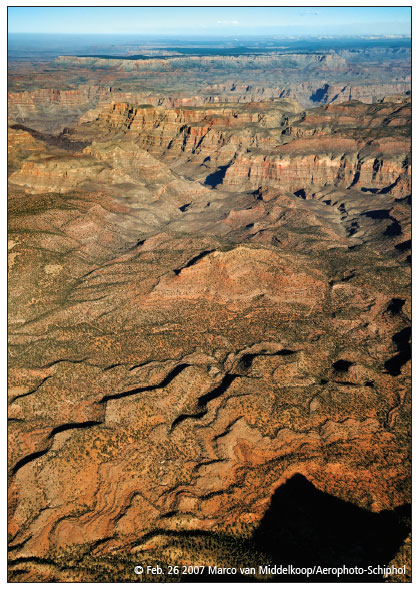
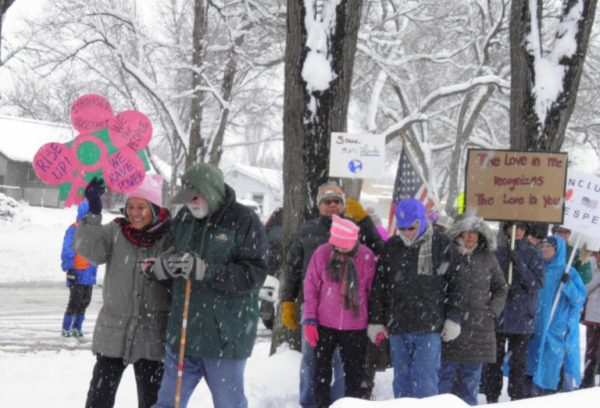
Khan heads further afield with Among the Ruins, setting much of the story in Iran, with her focus on that country’s brutally repressive government.

While on leave and traveling in Iran to reconnect with his cultural heritage, investigator Khattak is asked by a Canadian agent to look into the murder of a Canadian-Iranian filmmaker in the country. Under heavy surveillance, Khattak and his police partner Getty uncover a decades-old conspiracy stretching from Tehran to Toronto, and from the reign of the Shah straight through to the country’s viciously corrupt presentday rulers.

The two investigators make for a likable detective duo. Middle-aged Khattak is suave and handsome, devoted to putting his keen intelligence to work helping others, even at his own peril, and even, in the case of Among the Ruins, while on vacation. His young assistant Getty is rougher around the edges, the victim of a violent upbringing still finding her way in the world — save for her devotion to Khattak, which is absolute.

Khattak, in Iran, and Getty, in Canada, use encrypted communication techniques to together unravel the case of the murdered Canadian filmmaker, inexplicably imprisoned and tortured to death despite an assured international outcry. As Khan has Khattak and Getty uncover clues to the case, she takes the reader on a tour of modernday Iran. Khan also reveals the inner workings of the Iranian regime in a heartbreaking side story that details the horrors practiced in secret jails on Iranians who dare challenge their government’s legitimacy.

The combined result of the primary mystery and companion thread is an engaging yet poignant tale of intrigue that serves as a cautionary tale for those who believe in the principles of democracy. As Khan makes clear by setting Among the Ruins in both the Middle East and North America, the distance from an open society to behind-bars persecution is never far, whether in repressive Iran, or seemingly free Canada and the U.S.

Scott Graham is the National Outdoor Book Award-winning author of the National Park Mystery Series for Torrey House Press. The third book in the series, Yellowstone Standoff, was released in June. Visit Graham at scottfranklingraham.com.

Published in February 2017

Toxic transportation?: Proposed routes for hauling uranium from mines near the Grand Canyon are sparking tribal opposition

Native American tribes in the Four Corners region are gearing up for a battle over plans to haul uranium across their lands to the White Mesa Mill near Blanding, Utah.

White Mesa is the only fully-licensed, conventional uranium mill in the United States. It is also the only mill capable of processing vanadium, a mineral used in steel production and large-scale battery storage for community solar, wind and geo-thermal energy projects.

AERIAL VIEW OVER GRAND CANYON

An aerial view over the Grand Canyon from the southwest above Hualapai and Havasupai reservations.

The mill, owned by Energy Fuels Resources, Inc., a Canadian company, accepts uranium ore and alternative uranium feed sources and is permitted to store uranium wastes in containment cells at the site.

According to the company’s website, of the seven uranium mines in the Four Corners states, two are near the Grand Canyon, and two near the newly designated Bear Ears National Monument.

The Canyon Mine, six miles from the Grand Canyon, is within Havasupai reservation land in Arizona in the Kaibab National Forest. Originally owned by Energy Fuels Nuclear, the mine was purchased by Denison Mines in 1997 and by Energy Fuels Resources Inc., in 2012.

After a series of public hearings in 2016, the Arizona Department of Environmental Quality issued an air-quality permit to Energy Fuels Resources to operate Canyon Mine near Red Butte, a mountain held sacred by the Havasupai Nation. According to documentary film producer and Indigenous Media founder Klee Benally, the Red Butte- Canyon Mine location was determined eligible for the National Register of Historic Places as a traditional cultural property in 2009. At the hearings, ADEQ affirmed that Arizona state law does not allow the department to include non-air quality requirements in the processing of these permits.

No laws currently ensure protection for sacred sites on federally held lands, said Benally.

According to information released in a statement by the Grand Canyon Trust, a 2010 U.S. Geological Survey report noted that past samples of groundwater beneath the mine exhibited dissolved uranium concentrations in excess of EPA drinking-water standards. Groundwater threatened by the mine feeds municipal wells, seeps and springs in Grand Canyon, including Havasu Springs and Havasu Creek.

Aquifer protection permits issued for the mine by Arizona Department of Environmental Quality do not require monitoring of deep aquifers and do not include remediation plans or bonding to correct deep aquifer contamination.

According to HaulNo!.org, the website for a group organizing an awareness campaign about the route, the public expressed additional concerns about the proposed route Energy Fuels may use to haul radioactive ore 300 miles to the White Mesa Mill. The trucks are to be covered in tarps. ADEQ responded by making the requirements more stringent, requiring the tarps to lap over the edge of the truck beds by 6 inches, secured every 4 feet with a tie-down rope.

But critics say the uranium poses a serious threat to the watershed and the people on the haul route. “It should stay in the ground,” testified Benally at the August ADEQ hearing, “or you’re going to have a serious battle.”

Examining alternatives

Arizona State Route 64 provides the eastern access to the Grand Canyon, and the most direct egress to White Mesa Mill in Utah from Canyon Mine. The road is winding and crowded with slow-moving, heavy tourist traffic.

However, up at park headquarters the highway turns south toward Tusayan, through Havasupai tribal land. Although the southern access – Route 64 connecting to U.S.180 and I-40 – will add mileage to the haul, it is a less congested route, taking the ore through Flagstaff. There the trucks turn north on Highway 89 to access a nearly nonstop course through the Navajo Nation beginning at Gray Mountain, the edge of the reservation.

Haul No! is planning an “action tour” along the proposed route, where 25 trucks could be hauling up to 30 tons of ore per day when the mine is fully operating. The production of high-grade uranium ore could be as high as 109,500 tons annually.

Energy Fuels is permitted to stockpile up to 13,100 tons of uranium ore at Canyon Mine.

Curtis Moore, marketing vice presi dent for Energy Fuels, told the Free Press that the company is still looking at alternate haul routes. “We’re still considering our options. We’re looking at a few different routes, and times of day, like night schedules to avoid tourism. The mine may or may not be in production in the future.”

But the route on the map today, shown on the Indigenous Actions website, crosses through a dozen Navajo Nation chapters including Cameron, Tuba City, Kayenta, near Monument Valley, Red Mesa and Montezuma Creek, where it turns north through Ute Mountain Ute tribal land at White Mesa, the native community three miles south of the mine.

Unhappy history

Today, more than a thousand abandoned uranium mines and surface sites still await remediation from extraction during the Cold War. Health problems from exposure to soil and water contamination continue to plague the Navajo people. Many of those sites are on the current haul route.

In 2005, the Navajo Nation Council passed the Diné Natural Resources Protection Act, prohibiting uranium-mining and processing on any Navajo sites or land.

A reinforcement measure, the Radioactive Materials Transportation Act of 2012, prohibits the transport of equipment, vehicles, persons or materials for the purposes of exploring, mining, producing, processing or milling any uranium ore, yellowcake, radioactive waste or other radioactive products across the Navajo reservation.

The act gives the nation the right to regulate transportation of uranium materials, charge a fee, restrict routes and time of day for transport, or completely disallow it.

In 2013, Eric Jantz, staff attorney at the non-profit New Mexico Law Center in Santa Fe, told the Free Press then that the fundamental definition of “sovereign nation” gives tribes the right to exclude people from their land.

At that time, Wate Mining was faced with a similar uranium-transportation challenge in Arizona. The mine site was located on a parcel of state land in Big Boquilllas Ranch sandwiched between the Hualapai and Havasupai reservations and surrounded by Navajo Nation checkerboard fee land. There was no access to transport options from any direction without permission from the Navajo government. The mining company applied to the Navajo Nation Department of Justice asking to transport the ore out of the site to the Blanding Mill. The request was denied.

Resolutions of Opposition

In December, the Oljeto Chapter, in Monument Valley, unanimously passed a resolution asking the Navajo administration and council to ban the transportation of the ore through the Diné communities. A week later, a similar resolution was passed at the quarterly meeting of the Western Navajo Agency Council, the group of chapters directly impacted by the haul route.

“Oljeto and the surrounding communities have been plagued by decades of toxic uranium-mining activities, causing serious health problems for Diné miners and families,” wrote James Adakai, president of Oljeto Chapter, sponsor of the agency resolution. “We support Havasupai tribal council opposing the mining permits because it will desecrate their sacred lands and damage their water supply. Now it goes to the capital of the Navajo Nation for final approval.”

Martin explained that he is “not sure” concerns about the sovereign right to ban transportation over reservation land are accurate, that “state and federal” regulations possibly supersede tribal regulations.

But Walter Phelps, Cameron Chapter council delegate, told the Free Press that the resolutions will come before the Navajo Resources and Development Committee first. “We are able to enforce it through the Navajo Department of Transportation,” he said, and the NDOT rangers will police the highways in order to protect public safety.

Changing state transportation laws takes time, explained Roger Clark of the Grand Canyon Trust. “If the Navajo legislation plays out, it will be interesting to follow. Hopefully there will be an opportunity to debate [the interstate commerce laws] and stop the haul route.”

Energy Fuels remains somewhat vague about the hauling details. “They hold all the cards,” Clark told the Free Press, “but that doesn’t mean the affected people should sit on their hands and wait.”

Published in January 2017 Tagged , ,

How much is enough?

It was Sunday afternoon in southern Arizona, just after a big Christmas dinner. The comment was made that someone knew a good place to go arrowhead and pottery-shard hunting on some BLM-controlled land. After wandering around, we found a few pretty neat-looking points. It was fun being out “exploring,” whether we found anything or not. These days, that opportunity to explore on the public lands of the states has pretty much ended. Roads and access are being closed to the general public on the states’ lands that are controlled by the federal government. Economic development, recreation and resource use and protection are being stymied by numerous laws and regulations, one of which is the Archaeological Resources Protection Act (ARPA), enacted in 1979, which was intended to strengthen protection for the 1906 Antiquities Act. This Act and the rules and regulations promulgated under it have delayed and/or significantly raised the cost of any resource improvement and protection action while creating another large federal empire.

I recall when I was still in resource management, shortly after ARPA was enacted, that we were going to do some forest reforestation projects. That should be a good thing, right? Well, the newly empowered archaeologists said no way without paying for a survey to ensure no damage will be done to a possible archaeological site.

What? The area had been driven over, grazed over and burned over for the past 100 years, and there was nothing out there to damage. Well, the short story is, we (you the taxpayer) paid $40,000 for a survey that produced two 1½-inch binders of neat maps and descriptions of campfire sites and scattered trash sites, noting and mapping such things as “burned tennis shoe,” “rusty tin can,” etc., and an occasional finding of an old broken pottery shard. When challenged, the archaeologist laughed and told me ARPA was just an employment act for new college grads. He didn’t like it, as they already have more sites to study than can be done, and these federal “must do” surveys reduce and degrade his work opportunities as a studied experienced archaeologist.

Now, before you get your knickers in a twist, I’m not suggesting we should plow up Mesa Verde or Hovenweep. Perish the thought. I enjoy old history as much as or more than the average guy. But it does seem to me things have gotten way out of reason. They speak of our “archaeological resources,” apparently not realizing that a resource is something to be “used” for our advantage, not to prevent progress. Also, they speak of the “value” of the resource. What is value and to whom? We had opened a used book store and got educated real quickly on value. People would come in and want us to buy their “old” book that they knew was real valuable. They were so disappointed to learn that “old” does not impart value, but rather that it is scarcity of the item and number of the buyers that establishes the value. A thousand of the same thing and only three people wanting it really devalues it to nothing.

Mesa Verde Park has over 4,700 archaeological sites, including 600 cliff dwellings that they know about. How long and how many people will it take to garner the archaeological information? So how valuable and important is the possibility of a new lithic scatter, small pile of rocks or trash dump, out in the farm and ranch land, to cause it to hold up or stop road improvement, recreation development, farm improvement, etc.?

The Bears Ears area is an interesting subject in this discussion. Very few people had ever heard of it until some personal interest groups promoted it as a potential national monument to “protect” it. Now the entire nation knows about it, and what is there to be supposedly “protected”? That is like putting up a “do not touch, wet paint” sign. They want to advertise for more people to come to an area that they want to keep people out of. What am I missing?

But then you have to remember the old adage of “follow the money”! The behind-the-scenes environmental corporations make their tax-exempt money from inciting public emotions over faux environmental issues. This is a perfect example, since if they were truly concerned with protection of the natural resources and archaeological items, they would have kept their mouth shut and talked quietly with the state and county about how to better manage the area. Instead, they want the inept federal government to spend more tax money that it doesn’t have, to deny access to most of the public that pay the taxes.

Archaeological sites have been a tourist draw for quite some time and are an opportunity to learn from history, although there is not much evidence that we have ever learned much from history, we just seem to repeat it. I have wondered what future archaeologists will think when they dig into the Montezuma Valley. Will they wonder what this people (us) did besides preserve past failed civilizations at our own expense? We will have studied what the failed civilizations did, but could not do better as it might cover or ruin the failed past. Continually paying to find ways to not develop, improve and protect our resources and economy is killing us. How many “sites” do we need? The 1979 ARPA needs to be drastically re-evaluated and greatly modified.

Dexter Gill is a retired forest manager who worked for private industry, three Western state forestry agencies, and the Navajo Nation forestry department. He writes from Lewis, Colo.

Published in Dexter Gill

Why archaeology matters

By Leslie Sesler

Dexter Gill believes that ARPA, the Archaeological Resources Protection Act, should be revisited (Four Corners Free Press, January 2017). That may be a good idea. But first, a little history and background seems to be in order, so that we can all understand what we are talking about.

The history of archeological and historical preservation in the United States began in the early 1800s, when a number of historical associations led the effort to save Independence Hall in Philadelphia, an icon of our American Revolution, from demolition. In 1853, the Mount Vernon Ladies Association of the Union organized to save the home of George Washington. When a petition to Congress failed to generate federal interest in preservation, the group raised private funds and purchased Mount Vernon themselves.

A decade later, a group of local citizens began taking steps to preserve the Civil War battlefield at Gettysburg. In 1864, this group was granted a state charter to act as the Gettysburg Battlefield Memorial Association, with 522 acres set aside as a memorial. One of the reasons Civil War battlefields such as Gettysburg are so well-preserved, that so much is known about the momentous events that transpired there is that the citizens of the surrounding communities took steps to preserve the physical remains, the landscape, and the local knowledge of place that is so important to understanding this terrible era of U.S. history.

The Gettysburg Battlefield Memorial Association dissolved after about 15 years, due primarily to financial burdens, and the memorial was turned over to the federal government under the care of the War Department. The government attempted to acquire land in addition to the original 522 acres that had been preserved (troop movements during the battle covered as much as 15,000 acres; the government wanted to acquire about 4,000 acres for preservation).

The problem was that Gettysburg, and nearly all Civil War battles, were fought on private land, and some landowners disputed the government’s authority to condemn private property for such use. The first lawsuit against the federal government’s attempt to condemn land for a battle memorial was filed by the Gettysburg Electric Railway, who built a rail line through the center of the battlefield, despite objections from veterans and other interested citizens. The Supreme Court ruled in favor of the federal government. The ruling, “United States Government v Gettysburg Electric Railway Co.,” has been cited countless times since as a precedent in federal condemnation actions, and serves as the basis for the Antiquities Act.

The court said the preservation of our national heritage was in the best interests of the public, “for the benefit of all the citizens of the country for the present and for the future. Such a use seems necessarily not only a public use, but one so closely connected with the welfare of the republic itself as to be within the powers granted Congress by the Constitution for the purpose of protecting and preserving the whole country.”

I take the Supreme Court to mean exactly what it said. That historic preservation is for the benefit of all of the citizens of this country, and by extension, that includes the preservation of all of its citizen’s history, including Native American prehistory.

Ten years after the Supreme Court ruling, Congress enacted the Antiquities Act of 1906. It provided for the protection of historic and prehistoric remains and monuments on federal lands by establishing penalties for disturbance of antiquities, gave the President authority to declare historic landmarks, historic and prehistoric structures, and other objects of historic or scientific interest on federal land as national monuments, and established a permit system for conducting scientific archaeological investigations.

By the 1960s it was apparent that the penalties for looting and vandalism of archaeological resources on federal land established by the Antiquities Act — a $500 fine and three-month maximum jail sentence — were insufficient, and that many archaeological sites were being destroyed by such actions. (A study conducted for Congress in the 1980s documented that fully one-third of known archaeological sites on federal lands in the Four Corners states had been damaged by looting or vandalism).

There was also concern by the public over destruction of historic and prehistoric resources as a result of government- sponsored public-works projects and development. Congress began to rectify this situation in the 1960s. The 1966 National Historic Preservation Act (NHPA) is the most comprehensive legislation, and requires, among other things, that historic and cultural properties are appropriately considered in planning any action involving federal land, federal money, or federal minerals.

The Archaeological Resources Protection Act (ARPA) was passed in 1979. As amended in 1988, ARPA significantly strengthens the penalties for looting and vandalism of archaeological sites on public and Indian tribal lands and places important protection and management responsibilities on federal agencies. In a general sense, antiquities legislation requires artifacts, structures, and culturally produced features to be preserved in place, where their makers and builders left them, whenever possible.

In order for an agency to manage a resource, any resource, they must have an idea of what the resource entails. That is why archaeological inventory is done for any development action that occurs on federal lands, such as timber sales on Forest Service lands, or gas and oil leases on BLM lands. These inventories are typically paid for by industry, who is reaping profit from public resources, and not by taxpayers.

And yes, archaeological inventory does include historic items such as old tin cans. Archaeological resources are assessed according to certain criteria established by the NHPA, as to whether or not a particular archaeological site is eligible for the National Register of Historic Places. Archaeological sites assessed as eligible need to be protected from development or have other measures set in place to mitigate the damage or destruction of such sites. Sites that are not eligible for the National Register, and this would include most of the tin cans that Mr. Gill is worried about, do not qualify for any special protection measures.

Archaeological resources are finite. No more PaleoIndian camps are being created; no more Ancestral Puebloan cliff dwellings are being built; no more 15th century Ute wickiups or 16th century Navajo hogans or 18th century pueblitos are being constructed. Archaeological sites are lost to natural deterioration and erosional forces every day, and are damaged by natural events such as wildfire; they are lost to development on private land; and sadly, despite laws protecting cultural and historical resources on public land, destruction is still occurring in the form of looting and vandalism.

Archaeology is a resource. What Mr. Gill does not understand is that the use of resources does not necessarily imply consumption. Take his family’s Sunday afternoon gambol on BLM land to search for “arrowheads”. (We do hope that none of them ended up pocketing their pretties, as that would be thieving from the rest of us). They were undoubtedly using archaeological resources for entertainment. The desert Southwest is one of the few places on the planet where anyone can wander around on public land and look at archaeological sites for days and days, free of charge. Mr. Gill insinuates that this is all a thing of the past – that people can no longer access public land for public enjoyment. This is simply not true. Sure, there are roads that have been closed and maybe you can no longer just drive anywhere you please. But these restrictions, and they are certainly not everywhere, are on vehicles: four-wheel drives, four-wheelers, side-by-sides, motorbikes, etc., not people. Corporations may be people, but as far as I know, vehicles are not people. And unfortunately, some of the road closures are related to destruction of archaeological sites by careless off-roaders and those that use vehicles to carry their pot-hunting gear into remote archaeological sites.

Archaeological resources are also used in other ways that benefit our community. Take Mesa Verde National Park. This World Heritage Site draws hundreds of thousands of visitors from around the world who spend money here. The park is one of the biggest employers in the county. Its existence is eminently tied to the Antiquities Act.

There are many other archaeological treasures in the immediate area that entice visitors to stay longer, maybe buy dinner, or spend another night. Places such as Hovenweep National Monument, Lowry Ruins, and oh, yeah, and that other one, NO National Monument, otherwise known as Canyons of the Ancients.

And then there is the Anasazi Heritage Center, a by-product of the Dolores Archeological Program, a multi-year, multimillion- dollar research project associated with the construction of McPhee Dam. Due to that persnickety antiquities legislation, action was required to mitigate the destruction of hundreds of archaeological sites that dam construction would require. The project brought hundreds of archaeologists and millions of dollars into Dolores and the surrounding communities. And yes, most of these people were young college graduates who needed jobs. The Dolores Archaeological Program had a mandate to hire local young people. For two summers, dozens of local youth were hired and trained to work on archaeological survey and excavation crews, and as lab technicians, under the auspices of the Youth Conservation Corps and the Young Adult Conservation Corps. (That is where my nearly 40-year career in archaeology began. A real, live government program success story!)

The Dolores Archaeological Program and subsequent projects related to the water produced many thick scientific volumes for scholars to ponder, and other worthwhile results: advancements in archaeological methods and theory, identification of the growth and demise of prehistoric communities at McPhee and Grass Mesa, and drawings and documentation of historic structures that were ultimately destroyed by McPhee Reservoir.

The Dolores Archaeological Program and related archeological projects also brought more tangible, if less visible, benefits. Many of those young archaeologists chose Montezuma County as the place where they wanted to raise their families. Many remained in the archaeological profession. Several started their own consulting businesses, drawing more archaeologists into the area. Some went to work for Mesa Verde National Park. And many became researchers and educators at Crow Canyon, a not-forprofit archaeological research and education organization. Crow Canyon brings many people into our area for hands-on experience; they provide amazing educational opportunities for students; they partner with Native Americans to create a more accurate and respectful connection between the past and present; and they are on the cutting edge of archaeological research.

Archaeologists are some of the movers, shakers, and doers of our community. If you attend any community event anywhere in the county, it is likely that archaeologists or former archaeologists will be there in support. Walk into any restaurant in Cortez for dinner, and an archaeologist will probably be there.

Preservation of our archaeological resources, which are uniquely visible and uniquely accessible, as compared to much of the world, has been and will be a key to our economic viability. The Archaeological Resources Protection Act and other antiquities legislation has been of significant benefit to the Four Corners region, protecting a valuable resource that we can proudly share with the rest of the world.

Leslie Sesler writes from Dolores, Colo.

Published in Guest Column

Women’s March for Unity draws 500 in Cortez

About 500 people in Cortez joined more than a million people worldwide in the Women’s March for Unity Saturday – a demonstration for civil rights and progressive causes and a protest against Donald Trump’s administration.
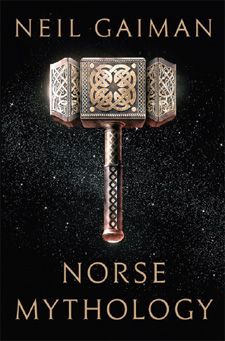
Braving eight inches of slushy snow, the Cortez marchers walked down Montezuma Avenue from City Park to City Market and back along Main Street. They carried signs ranging in tone from amusing to angry to passionate: “The 1950s are knocking – don’t open the door”; “Sex change for Trump”; “Tiny hands off public lands”; “There is no Planet B”; “My p—y grabs back”; and the now-classic “Love trumps hate.” Some quoted Bible verses, such as, “I was sick and you looked after me” – on a sign expressing concern about the future of health care in America.

Meanwhile, marches were occurring in every state in the union, according to published reports. In Colorado, 100,000 people gathered near Denver’s Civic Center, according to the Denver Post. The protests appeared to indicate a newly energized progressive movement after a divisive presidential election in which the popular-vote winner by some 3 million votes did not take office.

Montezuma County strongly supported Trump in the election, choosing him by a 2-1 margin over Hillary Clinton. But Saturday’s march occurred without incident, drawing mostly curious stares or supportive honking and waving from passing drivers.

Published in December 2017

How much is enough?

It was Sunday afternoon in southern Arizona, just after a big Christmas dinner. The comment was made that someone knew a good place to go arrowhead and pottery-shard hunting on some BLM-controlled land. After wandering around, we found a few pretty neat-looking points. It was fun being out “exploring,” whether we found anything or not. These days, that opportunity to explore on the public lands of the states has pretty much ended. Roads and access are being closed to the general public on the states’ lands that are controlled by the federal government. Economic development, recreation and resource use and protection are being stymied by numerous laws and regulations, one of which is the Archaeological Resources Protection Act (ARPA), enacted in 1979, which was intended to strengthen protection for the 1906 Antiquities Act. This Act and the rules and regulations promulgated under it have delayed and/or significantly raised the cost of any resource improvement and protection action while creating another large federal empire.

I recall when I was still in resource management, shortly after ARPA was enacted, that we were going to do some forest reforestation projects. That should be a good thing, right? Well, the newly empowered archaeologists said no way without paying for a survey to ensure no damage will be done to a possible archaeological site.

What? The area had been driven over, grazed over and burned over for the past 100 years, and there was nothing out there to damage. Well, the short story is, we (you the taxpayer) paid $40,000 for a survey that produced two 1½-inch binders of neat maps and descriptions of campfire sites and scattered trash sites, noting and mapping such things as “burned tennis shoe,” “rusty tin can,” etc., and an occasional finding of an old broken pottery shard. When challenged, the archaeologist laughed and told me ARPA was just an employment act for new college grads. He didn’t like it, as they already have more sites to study than can be done, and these federal “must do” surveys reduce and degrade his work opportunities as a studied experienced archaeologist.

Now, before you get your knickers in a twist, I’m not suggesting we should plow up Mesa Verde or Hovenweep. Perish the thought. I enjoy old history as much as or more than the average guy. But it does seem to me things have gotten way out of reason. They speak of our “archaeological resources,” apparently not realizing that a resource is something to be “used” for our advantage, not to prevent progress. Also, they speak of the “value” of the resource. What is value and to whom? We had opened a used book store and got educated real quickly on value. People would come in and want us to buy their “old” book that they knew was real valuable. They were so disappointed to learn that “old” does not impart value, but rather that it is scarcity of the item and number of the buyers that establishes the value. A thousand of the same thing and only three people wanting it really devalues it to nothing.

Mesa Verde Park has over 4,700 archaeological sites, including 600 cliff dwellings that they know about. How long and how many people will it take to garner the archaeological information? So how valuable and important is the possibility of a new lithic scatter, small pile of rocks or trash dump, out in the farm and ranch land, to cause it to hold up or stop road improvement, recreation development, farm improvement, etc.?

The Bears Ears area is an interesting subject in this discussion. Very few people had ever heard of it until some personal interest groups promoted it as a potential national monument to “protect” it. Now the entire nation knows about it, and what is there to be supposedly “protected”? That is like putting up a “do not touch, wet paint” sign. They want to advertise for more people to come to an area that they want to keep people out of. What am I missing?

But then you have to remember the old adage of “follow the money”! The behind-the-scenes environmental corporations make their tax-exempt money from inciting public emotions over faux environmental issues. This is a perfect example, since if they were truly concerned with protection of the natural resources and archaeological items, they would have kept their mouth shut and talked quietly with the state and county about how to better manage the area. Instead, they want the inept federal government to spend more tax money that it doesn’t have, to deny access to most of the public that pay the taxes.

Archaeological sites have been a tourist draw for quite some time and are an opportunity to learn from history, although there is not much evidence that we have ever learned much from history, we just seem to repeat it. I have wondered what future archaeologists will think when they dig into the Montezuma Valley. Will they wonder what this people (us) did besides preserve past failed civilizations at our own expense? We will have studied what the failed civilizations did, but could not do better as it might cover or ruin the failed past. Continually paying to find ways to not develop, improve and protect our resources and economy is killing us. How many “sites” do we need? The 1979 ARPA needs to be drastically re-evaluated and greatly modified.

Dexter Gill is a retired forest manager who worked for private industry, three Western state forestry agencies, and the Navajo Nation forestry department. He writes from Lewis, Colo.

Published in Dexter Gill

Winter’s Tales (Prose and Cons)

Norse mythology permeates our Western culture, from the seven days of the Gregorian calendar (four of which are named for the Norse gods Tyr, Odin, Thor, and Frigg) to the symbolism of Biblical Christianity (Odin, the all-father of Norse myth, is crucified on a tree, his side pierced by a tormentor’s spear.) For most of us, exposure to the tales of Thor and Loki, Odin and Heimdall began and ended with the Marvel comic books of our youth, or with their more recent cinematic adaptations. At the other end of the spectrum, translations of ancient texts like the Volospa, the Prose Edda, and the Volsung Saga captured this pre-Christian folklore of the Germanic peoples – the so-called Vikings – who inhabited today’s Scandinavia and preserved it for modern scholars.

NORSE MYTHOLOGY BY NEIL GAIMANIt’s appropriate, then, that British author Neil Gaiman’s writerly influences include both comics and classical literature, and that Gaiman has himself become something of a cultural icon, thanks in part to an avid fan base of over 2 million Twitter followers. So who better than he to straddle the rainbow bridge between comic kitsch and arid scholarship in order to bring the legendary gods of Asgard to a new generation of readers?

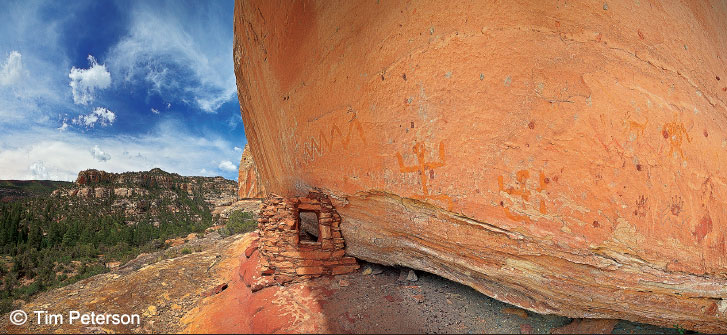
Norse Mythology, Gaiman’s 12th novel following such mega-bestsellers as American Gods and The Ocean at the End of the Lane, is chockablock with gods and dwarfs, ogres and trolls, monsters and giants. It spans the eons between the frozen mist world from which all life began and Ragnarok, the final, flaming battle between the forces of good and evil.

Along the way we traverse the nine worlds and meet such memorable characters as Odin, the one-eyed god king whose twin ravens Huginn (thought) and Muninn (memory) circle the worlds to bring him knowledge of all things; and Thor, the mighty thunder god whose magical hammer Mjollnir, the lightning-maker, never misses its target and always returns to his hand.

We meet Jormungundr, the Midgard serpent that encircles the globe and is the son of Odin’s half-brother Loki and the frost giantess Angrboda; and Freya, fairest of the goddesses who wears the golden neckless of the Brisings and whose feathered cloak bestows the power of flight.

Gaiman curates the Norse pantheon to present over a dozen mythic parables for our enjoyment and edification. We learn, for example, how Odin traded his right eye to the giant Mimir in order to drink from the well of wisdom, and how the dwarves Fjalar and Galar brewed the mead of poetry from the blood of the wise god Kvasir. We learn how the scheming god Loki rescued the golden apples of immortality from the changeling giant Thiazi, and how Thor’s feats of strength and bravery won the cauldron of the sea giant Hymir and with it an endless supply of ale for the Aesir’s annual feasts. Lastly we learn the terrible secret of Ragnarok, which marked the end of the god-times and the beginning of our modern world.

While his is certainly not the first book to ply these icy waters – works by Kevin Crossley-Holland, John Lindow, H. R. Ellis Davidson, E. O. G. Turville-Petre, and Roger Lancelyn Green, among others, precede him – Gaiman’s Norse Mythology ($25.95, from W. W. Norton) is a timely treat for readers of all ages, a welcome addition to the canon, and a perfect companion for those cold winter nights when the whistling wind or the hoot of an owl leads a cabin-bound dreamer to wonder, what if ?

Chuck Greaves is the author of five novels, most recently Tom & Lucky (Bloomsbury), a WSJ “Best Books of 2015” selection and a finalist for the 2016 Harper Lee Prize. You can visit him a www.chuckgreaves.com.

Published in January 2017, Prose and Cons

Are the Indian Wars starting up again?

News analysis

The last “war” between the U.S. Cavalry and an American Indian tribe occurred near Nogales, Ariz., in 1917. The 10th Cavalry – the Buffalo Soldiers – clashed with a band of Yaquis.

It’s been nearly a century since there has been a traditional Indian war in the country. But could that be coming to an end?

President-elect Donald Trump’s campaign promise to build a wall across the southern border with Mexico will be opposed by at least one of Arizona’s Native American tribes.

“Over my dead body will a wall be built,” Tohono O’odham Vice Chairman Verlon Jose told the Washington Post recently.

CHIEF RED CLOUD

Chief Red Cloud, a leader of the Lakota Indians in the 1860s, defended his people’s land against the U.S. government.

The Tohono O’odham Nation consists of four non-contiguous pieces of land that include portions of Pinal, Pima and Maricopa counties. Traditional tribal lands also stretch into Mexico. However, the Mexican side is not part of the reservation and tribal members living south of the border are not included in Bureau of Indian Affairs membership rolls.

The 28,000-member tribe has one of the largest reservations in the U.S., roughly the size of Connecticut. The largest parcel consists of 2.7 million acres. The second-largest parcel, San Xavier, includes 71,095 acres just south of Tucson.

In all, the 2.8-million acre Tohono O’odham Reservation also shares 76 miles of border with Mexico. Many tribal members on the American side have relatives and friends living in Mexico.

Trump’s proposed 50-foot-high, nearly 1,000-foot-long wall would cut the Tohono O’odham Nation off from their many Mexican relatives.

Before Trump tries that, he’d better come talk to the tribe, Jose said. Otherwise he’ll end up with another Standing Rock situation, the vice chairman added.

A multitude of Native American tribes and their supporters are holding protests near the Standing Rock (Sioux) Reservation in North Dakota in an effort to stop a planned oil pipeline from threatening water quality and sacred lands.

Originally the pipeline was to come close to Bismarck, N.D., but the city fathers feared that a break in the pipeline would ruin their water supply. So they forced a re-routing of the DAPL.

But the new route could now ruin the tribe’s water supply if a break or rupture were to occur.

Tribal members from across the U.S. have flocked to Standing Rock to bring supplies and support. The ongoing protest has been countered with guard dogs, water hoses and tear gas.

Now, with tensions mounting in North Dakota, the Southwest is looming as another site for a potential battle over tribal sovereignty.

Tohono O’odham tribal members live on both sides of the border and cross back and forth using their tribal IDs. Vehicle barriers are set up to stop traffic, but the tribe has resisted the idea of a wall.

That area around the Tohono O’odham Reservation is located in what the Department of Homeland Security calls the “Tucson Sector,” a nearly 270- mile stretch considered a hotbed for illegal immigration and drug smuggling.

Other tribes – including some in Texas and California – may be in the same predicament, where their reservations border Mexico.

Although the Tohono O’odham tribe has opposed a wall, it has tried to work more closely with Homeland Security and immigration services to curb illegal activity.

But all has not gone smoothly, as many tribal members report being harassed by Homeland Security officers, Jose reportedly said.

Tribes are uneasy now, as Trump is generally seen as being hostile toward Native Americans’ treaty rights.

In the 1980s the billionaire sued to prevent the Mashantucket Pequot tribe from operating a casino, saying, “They don’t look like Indians to me.”

There are currently nearly 600 federally recognized tribes in the U.S., each with some type of treaty with the U.S. But what if the U.S. president decided to take action contrary to tribal wishes?

Treaties were made with tribes even before there was a United States. And they were generally broken by the non- Indian partner. When the U.S. wanted to do something, Indian treaties did not deter it.

In fact, the U.S. Supreme Court has determined that Native Americans are “domestic dependent wards” to the United States. And, while treaties promise tribal sovereignty – allowing tribes to govern themselves and make their own laws on reservations – the simple fact is that the federal government can – and has in the past – imposed its own will on tribes.

Maybe the most famous of Indian wars was in 1876, culminating in Custer’s Last Stand. But few actually know the reason for the war.

In 1868, the U.S. surrendered in what is known as Red Cloud’s War. (It is the only war that was won by the Indians.) In the Treaty of 1868 the U.S. ceded land to the Sioux – which included the tribe’s sacred Paha Sapa (Black Hills).

The treaty also said that no white man was allowed on the Sioux reservation without the tribe’s approval. Six years after the Sioux were promised this land for as long as the sun shone and the wind blew, rumors circulated that there was gold in the Black Hills.

The government sent Gen. George Armstrong Custer to explore the Black Hills – without the tribe’s approval. The flamboyant Custer reported “gold from the grassroots down.”

A gold rush was on, treaty be damned.

Instead of enforcing the 1868 treaty, the U.S. decided to buy the Black Hills. But the Sioux refused – because they believed the Black Hills was where their ancestors’ spirits dwelt.

The Congress decided it would pay $6 million for the Black Hills, a laughable sum considering that billions of dollars’ worth of gold and silver spewed from the Black Hills mining operations over the years. Many fortunes – including the Hearst family’s – arose from the U.S. decision to forcibly “buy” the Black Hills.

As recently as the late 1950s, the government suddenly decided to detribalize several tribes – including the Menominee – and threw thriving native communities into disarray. The Congressional action was later reversed.

So could the situations in Arizona and North Dakota lead to another Indian war? It may be time to circle the wagons.

Published in December 2016 Tagged ,

Hibernation ends for Bears Ears: Obama makes a long-awaited monument proclamation, sparking mixed responses

NATIONAL MONUMENT PROTEST IN MONTICELLO, UTAH

President Obama’s proclamation of a 1.35-million-acre national monument in southeastern Utah prompted a protest in Monticello, Utah, from locals who said the designation should be Overturned. Photo by Gail Binkly

Both delight and rage greeted President Obama’s designation of the Bears Ears National Monument on Dec. 28.

Native American tribes hailed the historic inclusion of five tribes in the monument’s management, while environmentalists and archaeologists praised the idea of protecting 1.35 million acres of fragile desert landscape and stunning red-rock scenery.

The new monument is 550,000 acres shy of the 1.9-million-acre proposal that had been put forth by an intertribal coalition. Still, coalition members said they were honored by the designation on a landscape rich in natural and cultural resources, including more than 100,000 archaeological sites. The land base is considered sacred homelands for the Hopi, Zuni, Ute Mountain Ute, Navajo Nation and Uintah Ute tribes that comprise the coalition.

“President Obama has been consistent in his commitment to work with Tribal governments, and this historic designation builds on his legacy,” said Navajo Nation President Russell Begaye in a statement. “We are particularly pleased that the designation affirms tribal sovereignty and provides a collaborative role for tribes [while] ensuring a seat at the management table.”

Bears Ears National Monument represents the first “truly Native American National Monument in U.S. history,” said Regina Lopez-Whiteskunk, Ute Mountain Ute tribal member and former tribal councilperson, also a coalition member. “We all share gratitude for the courage of President Obama embracing this moment to change history rather than repeat history. We want to continue … better relationships and clear communication, with tribal entities recognized as sovereign voices.”

The nonprofit Friends of Cedar Mesa, based in Bluff, Utah, said in a web posting, “The President’s action protects tens of thousands of archaeological sites – exactly the ‘objects’ the Antiquities Act was created to protect – that make the public lands near Bluff so unique. In fact, the Bears Ears Monument contains more cultural sites than any other National Monument or National Park in the United States.”

ANCIENT GRANARY AND PICTOGRAPH PANEL IN BEARS EARS NATIONAL MONUMENT

An ancient granary and pictograph panel in the new 1.35-million-acre Bears Ears National Monument in southeastern Utah. Photo copyright Tim Peterson

But elected officials across Utah were nearly unanimous in expressing outrage over the President’s use of the Antiquities Act to protect the area.

“I am deeply disturbed by what has resulted from a troubling process,” said Utah Gov. Gary Herbert, promising to seek to undo the designation under the Trump administration.

A number of state and local elected officials spoke at a protest in Monticello, Utah, the day after the designation was announced.

Utah Congressmen Rob Bishop and Jason Chaffetz had put forth a legislative alternative called the Public Lands Initiative under which the Bears Ears area would have been designated as two national conservation areas totaling about 1.2 million acres.

But their bill died in Congress, and monument supporters said it was time for Obama to act.

In a video statement, Bishop said Utah was “saddened” by the announcement. He said the monument process had taken place “in secrecy and in shadow,” and promised the state would seek all means to overturn the monument, whether through legislative, judicial, or executive action.

“As Utahns, we will fight to right this wrong,” Bishop said.

No president has ever unilaterally overturned another president’s national monument and it is not clear that such an attempt would be legal. However, Congress has the authority to undo monuments or simply to render them meaningless by refusing to fund their management.

Although critics protesting the proclamation have spoken of the land being “taken,” it is not actually changing hands. Currently managed by the U.S. Forest Service and Bureau of Land Management, it will continue to be managed by those agencies.

An advisory committee will be established under the Federal Advisory Committee Act with representatives of state and local governments, tribes, recreational users, local business owners, and private landowners. That committee will help develop a management plan.

Additionally, as was requested in the intertribal coalition’s proposal, a tribal commission consisting of one elected officer each from the Hopi Nation, Navajo Nation, Ute Mountain Ute Tribe, Ute Indian Tribe of the Uintah Ouray, and Zuni Tribe is also to be established. The Bears Ears Commission is intended to ensure that management decisions reflect tribal expertise and traditional and historical knowledge.

SAN JUAN COUNTY COMMISSIONER PHIL LYMAN SPEAKS AT PROTEST

San Juan County Commissioner Phil Lyman speaks at the Dec. 29 protest in Monticello, flanked by Commissioner Bruce Adams. Photo by Gail Binkly.

The commission is a first for tribes on non-reservation land.

Utah Diné Bikéyah, the grassroots organization that more than six years ago began the Native effort to be included in decision-making about the future of federal lands in southeastern Utah, said in a statement that the declaration marks the first time Native American tribes have called for and succeeded in protecting their ancestral homelands through a president’s national-monument designation.

Some individual Native Americans, particularly from Utah Navajo lands near Bears Ears, have voiced concern that the monument will mean reduced access for them.

But the proclamation provides for “access for tribal members to continue traditional cultural and customary uses, consistent with the 1996 American Indian Religious Freedom Act, including collection of medicines, berries and other vegetation, forest products, and firewood for personal noncommercial use. . .”

“Rarely do tribal traditional knowledge and the healing powers of such wisdom spill over into national politics so much as to inspire thousands of people from a myriad of backgrounds,” said Eric Descheenie, Arizona representative- elect and a former co-chairman of the intertribal coalition. “So many people from many walks of life, professions, religious traditions, and industry have championed our truth to the White House to achieve Bears Ears National Monument. I’m proud of our beautiful movement and all the people behind it.”

The proclamation says valid existing rights, including water rights, are to be honored.

The proclamation includes an offer to trade public land with the state of Utah. It authorizes the Interior Secretary to pursue an exchange of monument inholdings currently owned by the state and administered by the State of Utah School and Institutional Trust Lands Administration (SITLA) for land of equal value managed by the BLM outside the monument. Such information is due on Obama’s desk by Jan. 19, the proclamation states.

Also on Dec. 28, Obama issued a proclamation creating Gold Butte National Monument, in Clark County, Nev. It spans nearly 300,000 acres northeast of Las Vegas and protects cultural resources, geological formations, and plant and wildlife habitat as well as Native American historical sites and areas currently used for traditional tribal purposes. Like Bears Ears, the monument area includes abundant rock art, archaeological artifacts, and rare fossils.

In a statement, Interior Secretary Sally Jewell praised the designations. “The rock art, ancient dwellings, and ceremonial sites concealed within these breathtaking landscapes help tell the story of people who have stewarded these lands for hundreds of generations,” said Jewell, who visited Bluff, Utah, near Bears Ears, in June and heard a parade of local citizens speaking both for and against the monument.

“Today’s action builds on an extraordinary effort from tribes, local communities, and members of Congress to ensure that these treasures are protected for generations to come, so that tribes may continue to use and care for these lands, and all may have an opportunity to enjoy their beauty and learn from their rich cultural history.”

Former Navajo Nation president Peterson Zah acknowledged the long, patient effort of the many tribal organizers who sought the monument. “The President’s designation is a testament to the will of sovereign Indian nations, as well as the hard work of our people on the ground who worked tirelessly years ago leading up today,” he said. “It was their vision, determination, and purpose rooted in our traditional ways that contributed greatly to today’s shared accomplishment.”

Board members of the Utah Diné Bikéyah gathered in mid-afternoon near Bluff when they heard the news.

“It was time for a ceremony today,” said former San Juan County Commissioner Mark Maryboy, a Navajo, “and a time to relish for us all, for the moment.” In a telephone call to the Free Press, he said, “I kind of don’t know what to do with myself because all along a lot of people said it couldn’t happen. Yet it did. Everyone worked together and for so long. Now, it is here and it was worth every effort.”

He added that the group will hold a community celebration in Monument Valley at the visitors’ center from 9 a.m. to 2 p.m. on Jan. 7.

“Mormon history, the Constitution and laws, and white man’s history are written on paper,” said Zuni Cultural Resources Advisory Committee Chairman Octavius Seowtewa in a statement. “Our history—the Native history—is written in stone on canyon walls. We celebrate knowing our history at Bears Ears will be protected for future generations, forever.”

Published in January 2017 Tagged

Poetry, precise and uncluttered

In 1964, Japan Air Lines National Haiku Contest attracted 41,000 entries. That’s a tremendous outpouring of syllables struggling to imitate a traditional poetic form. Haiku, as most of us learned in school, consists of 17 syllables in a highly condensed and structured vocabularic container.

A bitter morning:
Sparrows sitting together
Without any necks.

— J.W. Hackett (1964 Japan Air Lines)

American writers of English, of course, do not produce authentic Japanese haiku. The two languages are only slightly compatible, and the success of their efforts varies, all too often in the eyes of those who are obsessed with counting syllables.

EVEN NOW BY JILL SABELLA & ROSEMERRY WAHTOLA TROMMEREnter Jill Sabella and Rosemerry Wahtola Trommer, with their new collaborative effort: Even Now (Lithic Press, 2016). Together they have produced an extraordinary hybrid which combines three-line poems with threeline brushstroke drawings. Reminiscent of the old form, the book marries verbal and visual expression and the two are literally one.
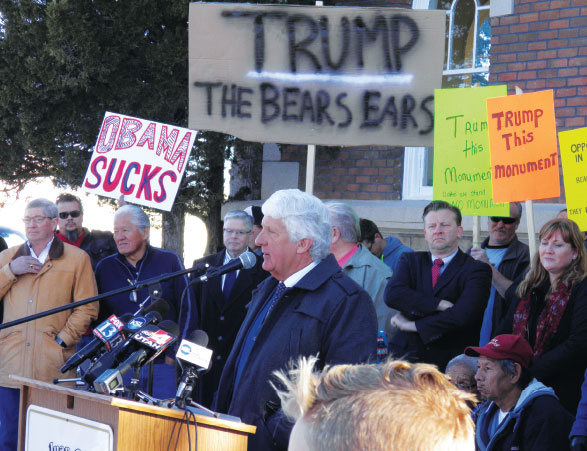
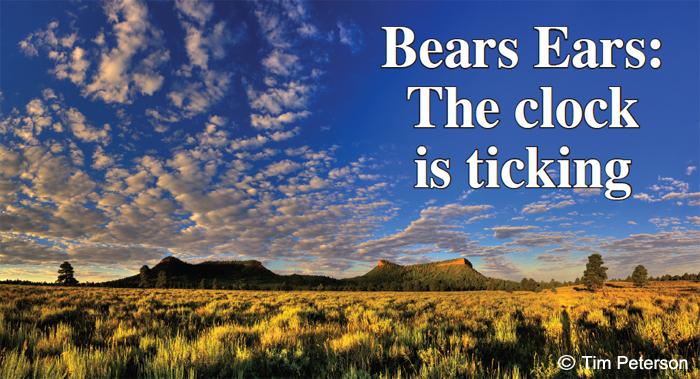
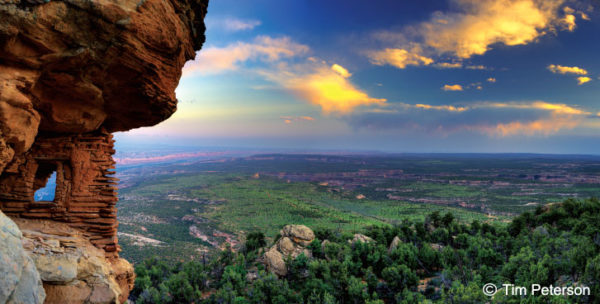
sunset so pink
the mind undoes another button —
the whole world blushes

Try to simply read it like a book of poems and it’s an impossible task, because each drawing — a triplet of brushstrokes — hovers on each page like a black sun above a verbal horizon. They are time lapse cameras mounted to tripods collecting the same light. And they are so much more. This review, stodgy with paragraphs, cannot competently demonstrate how intuitively the two depend on each other, but hold their book in your hands and it’s obvious, undeniable, remarkable. You’ll inhale the book with one breath, exhale it with another, then go back and forth, rediscovering the layers you missed.

it’s not what I
expected said the fish
given wings

Like the triumphs of evolution, these pairings adapt, informing each other with expansive images and precise, uncluttered lines and language. Nothing is so satisfying as reading a page that ripples the brain, touching both the head and the heart.

Lithic Press has produced an elegant volume, 6 inches square, 45 flutterings thick, complete with an introduction. It’s well worth the $20 price tag, this encounter with a new species of expression.

Published in December 2016

Sage-grouse plan released

The BLM is seeking public comment on the Gunnison Sage-Grouse Rangewide Draft Resource Management Plan Amendment and Draft Environmental Impact Statement.

The BLM manages about 623,000 acres, or 37 percent, of Gunnison sagegrouse habitat across the range of the species. Within Utah, the BLM manages about 4,338 surface acres of critical habitat in the Moab Field Office and 4,979 surface acres within critical habitat in the Monticello Field Office.

The draft Resource Management Plan Amendment and draft EIS consider actions that could be implemented on BLM-managed lands and do not affect state, county, and private lands.

The draft plan considers four alternatives with a wide range of management options. These options range from leaving management of Gunnison sage-grouse habitat as it currently is, to focusing primarily on conservation by avoiding any impacts to habitat of Gunnison sage-grouse. It includes a preferred alternative that provides for management flexibility using appropriate measures to mitigate impacts to Gunnison sage-grouse habitat. Public comments will be used in developing a final EIS and proposed plan amendments for up to 11 BLM Resource Management Plans, including those for Moab and Monticello Field Offices. The deadline for public comments is Jan. 9, 2017.

Based on a January 2013 US Fish and Wildlife Service (USFWS) proposal to list the Gunnison sage-grouse as endangered, the BLM began to analyze current conservation measures and consider additional protections for the bird on public lands in southwestern Colorado and southeastern Utah. In November 2014, the USFWS listed the Gunnison sage-grouse as threatened.

To review the documents, go to http://bit.ly/1Uusw8C. Comments related to the Gunnison Sage-Grouse Rangewide Draft RMP Amendment/ Draft EIS should be submitted by Jan. 9, 2017, using the comment form at: http://1.usa.gov/1Uusw8C, or by emailing gusg_amend@blm.gov, or faxing 303-239-3699. The public can also comment via mail to Gunnison Sage- Grouse EIS, Colorado State Office, 2850 Youngfield St., Lakewood, CO 80215. For more information, contact Bridget Clayton, BLM Colorado Sage- Grouse Coordinator, at bclayton@blm. gov or 970-244-3045.

Published in December 2016 Tagged

Presidential proclamation inspires a protest

In northern San Juan County, Utah, President Obama is a man who can do nothing right – the worst President ever. So the day after he proclaimed a new national monument encompassing 1.35 million rugged acres in the county, residents gathered in Monticello to protest what they view as his latest outrage.

Conservation groups and Native American tribes have hailed the Dec. 28 announcement of the creation of Bears Ears National Monument, but critics view it as an over-reach of executive authority and an unmitigated disaster.

On Dec. 29, a crowd estimated at more than 300 shivered in the midmorning shade at the west entrance of the courthouse, bearing signs that said, “Trump this monument,” “Locals matter,” and “Obama sucks.”

BEARS EARS MONUMENT PROTEST IN MONTICELLO

Utah Congressman Rob Bishop addresses a crowd of protesters in Monticello the day after President Obama proclaimed the Bears Ears area a national monument. Photo by Gail Binkly

A plethora of elected officials spoke, including Utah Congressman Rob Bishop, Utah Lt. Gov. Spencer Cox, several members of the state legislature, and a number of San Juan County officials. All were unanimous in their anger over the designation.

“President Obama, you have offended every person in San Juan County,” thundered County Commissioner Bruce Adams, to wild cheers. He blamed “pressure from environmental groups and out-of-state tribal leaders” for the proclamation, which had long been anticipated or dreaded, depending on one’s point of view.

Bishop said the 1906 Antiquities Act, which gives presidents the authority to create national monuments, “is used in shadows and in secret” and has been abused by three leaders in particular – Jimmy Carter, Bill Clinton, and now Obama, who has employed it 29 times to either create or expand protected areas.

Bishop said Utah’s congressional delegation is “committed to working with you to change this. We will work to right this wrong.”

Bishop had launched a massive effort called the Public Lands Initiative to gather public input for a compromise bill that he hoped would provide an alternative to national-monument status. However, Native American tribes said their voices were not heeded during the process and pulled out of it, supporting the monument instead. His bill later died in Congress.

Donald Trump had a strained relationship, to say the least, with the state of Utah during the campaign and even after the election, but at the Monticello protest he had nothing but supporters, many of whom lofted signs calling on him to overturn the designation.

However, it is unclear whether he can do so unilterally. The Antiquities Act does not specifically forbid one president from undoing another’s monument, but it also does not say that it can be done or how it could be. Presidents have occasionally changed an existing monument’s boundary, but have avoided trying to overturn one – partly because setting such a precedent could mean presidents creating and undoing each other’s monuments willy-nilly. It’s expected that if Trump attempts to unilaterally unwrite monument proclamations, the effort will wind up in the Supreme Court.

But Congress could overturn a monument as well as the Antiquities Act itself, and many speakers in Monticello supported doing so.

Commissioner Phil Lyman called on his fellow commissioners, the sheriff, the governor, state legislators and other elected representatives, and Trump to “reverse midnight Maui executive orders,” a reference to the fact that Obama was in Hawaii when the proclamation was made. Obama also designated a 300,000-acre monument in Nevada on the same day.

Lyman, who led a protest ATV ride through Recapture Canyon on BLM land in 2014 and spent 10 days in jail for it, took time to lambaste the media for its coverage of issues in southeast Utah, which he termed “lies, lies and more lies.” He said the press fails to report on “the false narratives of environmentalists,” a remark that drew a host of cheers.

He had plenty of criticism for the Obama administration as well, saying the monument designation was “designed to incite.”

“This is not a government of or by the people,” he continued, ending his comments with, “President Trump, trump this monument!”, which drew loud applause.

Merri Shumway, vice president of the San Juan School District board, said she was speaking for generations of schoolchildren in the county and voiced concern about how the monument might affect funding for education.

The proclamation calls for the Interior Secretary to state School and Institutional Trust Lands Administration to examine how SITLA holdings within the monument might be swapped for federal public lands of equal value elsewhere. Shumway said the trades might result in a loss of property-tax revenues for the school district .

“I appeal to the state and SITLA not to trade,” she said.

Monticello Mayor Tim Young said locals are the stewards of public lands including the Bears Ears region, and “it’s pristine because we take care of it.”

Although the monument’s creation was called for by a coalition of five Indian tribes in the region, a contingent of Native Americans came to the protest to say they did not support the designation nor the intertribal coalition. Eighty-seven- year-old Betty Jones, speaking in Navajo (later translated), said she believes Obama may not even be human and that he “has stolen our land.”

The land in question has not changed hands; it will continue to be managed by the BLM and the Forest Service, with advice from a commission made up of one representative each from the Navajo Nation, Hopi Nation, Ute Mountain Ute Tribe, Ute Indian Tribe of the Uintah Ouray, and Zuni Tribe — the members of the intertribal coalition that had sought the designation.

However, some tribal members living close to the area fear that changes in management could result in diminished access for them.

Suzy Johnson charged that Obama had “failed the grassroots natives” and had “taken” Native American grazing areas, watering holes, hunting grounds, and firewood. “Your name and signature will perish with the wind and set with the sun forever,” Johnson said.

Published in January 2017 Tagged

Bears Ears: The clock is ticking

BEARS EARS BUTTES

cultural site in the Bears Ears area, above Cedar Mesa and Comb Ridge. Photo copyright Tim Peterson

Critics hope any national-monument designation can be undone under the Trump administration — but it won’t be easy

Time is running down on the Obama administration, and in the Four Corners area, a lot of people are holding their breath.

Less than two months remains for the President to proclaim any new national monuments he might want to add to the list of more than 25 he has created already. Two much-discussed possibilities are the 1.7-million-acre Greater Grand Canyon Heritage National Monument adjoining Grand Canyon National Park; and Bears Ears National Monument, some 1.9 million acres in southeast Utah.

But there is opposition to both proposals, particularly Bears Ears, and now that a Republican is scheduled to take over the highest office in the land, opponents wonder whether Donald Trump and/or the Republican Congress can simply undo whatever Obama might do in the area.

The answer is “maybe,” but it won’t be simple.

‘A special category’

Unilateral actions taken by United States presidents can, in general, be rescinded or countermanded by subsequent presidents. But the century-old Antiquities Act, which gives them the authority to create national monuments, may be one exception to that rule.

“Presidents certainly have modified or revoked executive orders, and at times executive orders and proclamations have been used interchangeably to carry out land actions,” states a 2000 report by the nonpartisan Congressional Research Service on the topic of presidential authority to modify or eliminate national monuments.

“But some see the proclaiming of a national monument as a special category of action that may not simply be undone.” Another Congressional Research Service report done in 2016 found essentially the same thing. “The Antiquities Act does not expressly authorize a president to abolish a national monument established by an earlier presidential proclamation, and no president has done so,” it said.

In rare cases, presidents have tweaked the boundaries or allowed a monument designation to be “upgraded” to a national park or wilderness area.

However, Congress can and very well might endeavor to “de-designate” certain national monuments created by President Obama, particularly any created at the very end of his term.

Tim Peterson, Utah wildlands program director with the nonprofit Grand Canyon Trust, told the Free Press he believes there is still a good chance that Obama will proclaim the Bears Ears and/or the Greater Grand Canyon national monuments before he leaves office. Peterson also believes opponents will then endeavor to undo either or both of those designations.

“I would expect that Congressman Bishop would make an attempt at that,” said Peterson, referring to Utah Congressman Rob Bishop, a Republican who is chair of the House Committee on Natural Resources. “I think that’s realistic, given his statements on the record and his opposition to Bears Ears in particular and the Antiquities Act in general.”

In an effort to thwart the Bears Ears designation and possibly others, Bishop three years ago launched a massive effort called the Public Lands Initiative. After gathering input from thousands of stakeholders in seven eastern Utah counties, Bishop and other legislators including Utah Congressman Jason Chaffetz sponsored a bill offering a huge package of management measures for some 18 million acres of federal public lands in those seven counties.

One component of the PLI bill would protect 1.2 million acres of the Bears Ears area as a national conservation area, a less-restrictive designation than a monument.

However, while the PLI bill had one committee hearing in the House, it has not advanced and as of press time did not have a Senate sponsor, so it will likely have to be reintroduced in the next Congress if it is to move forward. A companion piece that sought to end the use of the Antiquities Act in the seven Utah counties affected by the PLI legislation never even received a hearing.

‘Difficult politically’

But critics say the PLI bill is not protective enough of areas such as Bears Ears, which is rich in cultural and archaeological sites. Five regional Indian tribes – the Navajo, Hopi, Ute Mountain Ute, Uintah Ute, and Pueblo of Zuni – are calling on Obama to proclaim it a monument instead, one that would be managed largely by those tribes, along with three federal lands agencies. A total of 26 tribes have individually expressed support for the monument, and the National Congress of American Indians, representing more than 250 tribes, has passed a resolution in support of Bears Ears.

If Obama does designate Bears Ears a monument, Peterson expects any effort to rescind that designation would face a battle in Congress, despite the fact that Republicans hold small majorities in both houses.

“Their success in undoing Bears Ears is a little less likely because this initiative carries such backing,” Peterson said. “That makes it more difficult politically,” he added. “It makes it different from some other monuments in some ways because there is stronger support.”

However, resistance to the Bears Ears monument proposal has also been fierce, especially in San Juan County, Utah, among both the non-Native American community and some local tribal members. The three-member county commission, including Rebecca Benally, a Navajo, is united in opposing the proposal. A coalition called Save the Bears Ears has sprung up to fight the monument.

BEARS EARS ABOVE CEDAR MESA AND COMB RIDGE

Cultural site in the Bears Ears area, above Cedar Mesa and Comb Ridge. Photo copyright Tim Peterson

Hot issue

Federal lands in general, and national monuments in particular, have become a hot-button issue in recent years. The GOP platform approved at the party’s national convention this summer, specifically calls for the creation of no new monuments without the approval of Congress and state legislatures.

Bishop’s office did not respond to a request for comment.

A spokesperson for Colorado Third District Congressman Scott Tipton, a Republican from Cortez, said in an email to the Free Press that Tipton supports national monuments, but only if they have broad local backing. If he doesn’t believe certain ones do, he would help strive to overturn them, wrote Liz Payne, communications director in Tipton’s Washington, D.C., office.

“Congressman Tipton firmly believes that national monument and national park designations should be driven at the local level,” Payne wrote.

She discussed two areas in Southwest Colorado that were the focus of recent efforts for protection, Chimney Rock near Pagosa Springs and Hermosa Creek near Durango.

“In the cases of both Chimney Rock and Hermosa Creek, there was broad local support for designating the areas – Chimney Rock as a national monument and Hermosa Creek as protected public lands/wilderness – and Congressman Tipton worked bipartisanly to advance legislation through both chambers of Congress,” Payne said.

“In the case of Chimney Rock, the political climate was such that the Senate was not able to advance the bill, and therefore, the final option for designating the land was through the Antiquities Act.” Obama made Chimney Rock a national monument in 2012.

Payne said Tipton will rely on Utah legislators’ opinions to guide his response to any Bears Ears monument.

“Chairman Rob Bishop and the Utah Congressional delegation undoubtedly have ears on the ground to gauge the pulse of the communities surrounding the Bear’s Ears area. Should the Administration take actions that are contrary to the desires of the local communities, Congressman Tipton will support efforts taken by the Utah delegation to rectify the situation.”

Payne also wrote that Tipton would oppose any possible monument designation on the lower Dolores River in Colorado. Though the river corridor is not considered likely for a monument proclamation at this time, the idea has been broached in conservation circles. A local committee involving four counties and other stakeholders has been meeting for years to craft possible legislation to create a national conservation area instead, but Montezuma County recently withdrew from that effort.

“Congressman Tipton will oppose any unilateral designation of the Dolores River area,” Payne wrote. “The community stakeholder groups are working through the process, which should be allowed to continue without a heavy-handed unilateral designation that ignores local input.”

‘No authority’

Republican and Democratic presidents alike have used their authority under the Antiquities Act to set aside special areas. Nearly every president since the act’s passage in 1906 has employed it at least once, beginning with Theodore Roosevelt and including Herbert Hoover (who set aside what is now Arches National Monument in Utah), and George W. Bush (who created the Pacific Remote Islands Marine National Monument).

But though presidentially proclaimed national monuments (Congress can also create them) are sometimes unpopular in the immediately surrounding communities, they enjoy broad support from conservation groups and often prove to be a boon to local tourism economies in the long run.

Still, the Antiquities Act was created to preserve, well, antiquities, and critics have fumed at the way presidents such as Bill Clinton and Barack Obama have wielded it to protect broad swaths of land, such as Clinton’s 1.9-millionacre Grand Staircase-Escalante National Monument in southern Utah, and Obama’s Northeast Canyons and Seamounts Marine National Monument, 4,913 square miles of ocean southeast of Cape Cod.

Many states’-rights advocates and others would like Donald Trump to try rescinding some or all of Obama’s monument proclamations, which cover 553 million acres of land and ocean so far, especially any that he might do in the waning weeks of his administration.

However, it’s not at all clear that Trump would prevail in the legal challenges that would inevitably ensue.

The Antiquities Act contains no language providing a means for a president to revoke another president’s monuments. There are no court cases establishing a precedent.

Back in 1938, U.S. Attorney General Homer Cummings concluded that while a president could legitimately modify a monument (something many of them have done), he could not eliminate a monument that had been created by a previous president.

“The Opinion [by Cummings] noted that there was no separate statutory authority for the President to revoke or terminate a monument, and therefore any authority that existed for this purpose must be implied by the other powers given the President in the Antiquities Act,” states the 2000 research paper by CRS.

“The Opinion then reasoned that because the President had no inherent authority over lands, the President was acting only with authority delegated to him by Congress; a monument reservation was therefore equivalent to an act of Congress itself; and the President was without power to revoke or rescind a monument reservation.”

Many presidents may be hesitant to test the legal waters regarding revoking monuments because, if it proved possible to do so, then any monuments they created could also be swiftly overturned. However, it’s certainly within the realm of possibility that Trump might not have the desire to protect any lands at all through a monument proclamation, so he might not worry about setting a precedent.

Legal analysts believe the easier way to “undo” some or all of Obama’s monuments would be to turn to Congress, which does have clear authority to abolish national monuments.

Or instead of formally “unwriting” some of Obama’s protective proclamations, Congress could simply decide not to adequately fund the special areas.

Another option is weakening the Antiquities Act itself.

“This is an issue that Congressman Tipton has been working on as a leader in the Congressional Western Caucus,” his aide, Payne, said in an email to the Free Press. “With Republican control of the House, Senate, and the White House, there may be an opportunity to pass legislation that ensures the Antiquities Act is used for its original intended purpose in the future, rather than as a mechanism to block large areas of land from multiple use.”

But, she added, “We won’t know for sure what the political climate surrounding this issue will be until we are in the 115th Congress.”

‘An attack on all’

The Grand Canyon Trust’s Peterson told the Free Press he is definitely concerned about such possibilities.

“I would expect there would be a movement among the majority in the House to limit the power of the Antiquities Act or to repeal specific monuments, but it’s just speculation,” he said.

“I am concerned about the erosion of the Antiquities Act as well as various energy policies and regulations issued under President Obama being rolled back or modified in a way that’s detriment a l to conservation.”

However, Peterson said, any such attempts will face considerable resistance.

“Polling demonstrates that Americans are broadly supportive of public lands, broadly supportive of national monuments, and should the Congress attempt to take action on [legislation to weaken those] there would certainly be a difficult fight.

“I think there’s a lot of support for the Antiquities Act in the coming Congress and it’s really hard to say at this point what might happen. We would certainly do all we can to work with allies to make sure that legislation like that did not pass the House and Senate and become law. It’s certainly something we’re thinking about moving into this new climate.”

Asked whether it might be easier for Congress to focus on undoing specific national monuments, in particular Bears Ears, should it be proclaimed as such, Peterson said he did not necessarily think so.

“There is a strong coalition of groups that will be really dedicated to defending all national monuments,” he said. “An attack on one will be viewed as an attack on all, and I’m confident recreationists, sportsmen, conservationists and many others would step forward in that case.”

Published in December 2016 Tagged

The patriotic duty conservatives avoid

Isn’t it strange that those who are so adamantly opposed to taxes try so hard to get on the tax-supported welfare wagon by seeking political office? Politics is apparently the next step up for those who can’t make it in the real world.

It should be a patriotic duty to support this great nation and its endeavors. But when people say they “support” this nation, they mean by waving flags and reciting the Pledge of Allegiance. They never think that paying taxes is considerably more important than giving lip service to patriotism.

Without taxes we never would have attained the prominence in the world that we have. Those monies are used to build and nourish all our amenities. Think what a nation without taxes would be like. Is the military supposed to come knocking on our doors requesting a handout in order to protect us in times of conflict? Are we to develop our own personal police forces, build and maintain our own little stretches of road, construct schools for every neighborhood, build our own hospitals, airports, and meeting buildings?

What has happened to the statesmen who extolled the virtues of office by serving “thee,” not “we”?

Let’s bring this down to the local level. Why can’t we find money to hire the 10 additional officers that our sheriff says he needs? I am sure he with his experience knows what he requires. Why can’t we have a rehab and detox facility here? It sure would be better than people pissing the park, puking on the sidewalk and sniffing paint. But we don’t have the money, because people don’t want to pay more tax. Shouldn’t Christ’s children be concerned about the sick and infirm? I read many books, and one of those given to me by someone professing to be holy seems to say that Christians are duty-bound to care about those less fortunate than themselves.

I have paid my fair share of taxes, both in my business and labors. True, I often don’t care for the things our taxes are spent for. For instance, I would like a larger portion to be spent on education than on war. Education is never as expensive as ignorance, war equals postpartum abortion, and diplomatic talking means behind hearses we are not walking. I would rather have diplomatic talks for years than a war for a day. I’ve never seen a war that was settled; it always requires diplomacy to end it.

Those that built this nation were traitors to the King. Fortunately, he was 3,000 miles away or we would now be a monarchy. Yet there were territories that had to be pressured into contributing to form a union espousing freedom for all (except the slaves, women and the poor, of course). It was and still is a trial-and-error adventure.

Most of this land we call America was purchased from other countries, or obtained through military actions, both paid for with tax money. Which part would any of you sell to get your money back? Of course, the incoming administration is all for doing just that, shedding and selling off public lands. We have elected the very persons that would give it away with the stroke of a pen. As Pogo said, we have met the enemy and he is us.

We have turned this nation over to a group that pays no taxes yet lives off the levies paid by others. Where would they be if they did not have roads and highways for transporting their goods, law enforcement to protect them from would-be robbers, county clerks to record the deeds to the lands they own? They call taxes unnecessary but ours have given us just about the highest standard of living in the world.

All the hypocrisy makes me glad that I’m soon 87, on my way to heaven. (My friends will know why that makes me chuckle.)

Galen Larson writes from Montezuma County, Colo.

Published in Galen Larson

Bears Ears monument announcement draws praise, ire

By Sonja Horoshko

and Gail Binkly

Both delight and rage greeted President Obama’s designation of the Bears Ears National Monument on Wednesday, Dec. 28.

Native American tribes hailed the inclusion of five tribes in management of the monument, while environmentalists and archaeologists praised the idea of protecting 1.35 million acres of fragile desert landscape and stunning red-rock scenery.

The new monument is 550,000 acres shy of a proposal that had been advocated by an intertribal coalition. Still, coalition members said they were honored by the designation on a landscape rich in natural and cultural resources, including more than 100,000 archaeological sites. The land base is considered sacred homelands for the Hopi, Zuni, Ute Mountain Ute, Navajo Nation and Uintah Ute tribes that comprise the coalition.

“President Obama has been consistent in his commitment to work with Tribal governments, and this historic designation builds on his legacy,” said Navajo Nation President Russell Begaye in a statement. “We are particularly pleased that the designation affirms tribal sovereignty and provides a collaborative role for tribes [while] ensuring a seat at the management table.”

Bears Ears National Monument represents the first “truly Native American National Monument in U.S. history,” said Regina Lopez-Whiteskunk, Ute Mountain Ute tribal member and former tribal councilwoman, and a coalition member. “We all share gratitude for the courage of President Obama embracing this moment to change history rather than repeat history. We want to continue … better relationships and clear communication, with tribal entities recognized as sovereign voices.”

“The President’s action protects tens of thousands of archaeological sites – exactly the ‘objects’ the Antiquities Act was created to protect – that make the public lands near Bluff so unique,” said the nonprofit Friends of Cedar Mesa in a web posting. “In fact, the Bears Ears Monument contains more cultural sites than any other National Monument or National Park in the United States.”

But elected officials across Utah were nearly unanimous in expressing outrage over the President’s use of the Antiquities Act to protect the area.

“I am deeply disturbed by what has resulted from a troubling process,” said Utah Gov. Gary Herbert, promising to seek to undo the designation under the Trump administration.

Utah Republicans Rob Bishop and Jason Chaffetz had put forth a legislative alternative called the Public Lands Initiative under which the Bears Ears area would have become  two national conservation areas totaling about 1.2 million acres.

But their bill died in Congress, and monument supporters said it was time for Obama to act.

In a video statement, Bishop said Utah was “saddened” by the announcement. He said the monument process had taken place “in secrecy and in shadow” and promised the state would seek all means to overturn the monument, whether through legislative, judicial, or executive action.

“As Utahns, we will fight to right this wrong,” Bishop said.

No president has ever unilaterally overturned another president’s national monument and it is not clear that such an attempt would be legal. However, Congress has the authority to undo monuments or simply to render them meaningless by refusing to fund their management.

The proclamation says the monument will be managed by the U.S. Forest Service and Bureau of Land Management. Valid existing rights, including water rights, are to be honored.

An advisory committee established under the Federal Advisory Committee Act and composed of state and local governments, tribes, recreational users, local business owners, and private landowners is to help develop a management plan.

But, as was requested in the intertribal coalition’s proposal, an additional tribal commission consisting of one elected officer each from the Hopi Nation, Navajo Nation, Ute Mountain Ute Tribe, Ute Indian Tribe of the Uintah Ouray, and Zuni Tribe is also established in the declaration. The Bears Ears Commission is to ensure that management decisions affecting the monument reflect tribal expertise and traditional and historical knowledge. It will provide guidance and recommendations on the development and implementation of management plans.

The co-management commission is a first for tribes on non-reservation federal land.

Utah Diné Bikeyah, the local grassroots organization that began the effort to be included in the Utah federal lands designation process more than six years ago, explained in a statement that the declaration marks the first time Native American tribes have called for and succeeded in protecting their ancestral homelands through a president’s national monument designation.

The proclamation language provides “access for tribal members to continue traditional cultural and customary uses, consistent with the 1996 American Indian Religious Freedom Act, including collection of medicines, berries and other vegetation, forest products, and firewood for personal noncommercial use. . .”

“Rarely do tribal traditional knowledge and the healing powers of such wisdom spill over into national politics so much as to inspire thousands of people from a myriad of

backgrounds,” said Eric Descheenie, Arizona representative-elect and a former co-chairman of the intertribal coalition. “So many people from many walks of life, professions, religious traditions, and industry have championed our truth to the White House to achieve Bears Ears National Monument. I’m proud of our beautiful movement and all the people behind it.”

The proclamation includes an offer to trade public land with the state of Utah. The declaration authorizes the Interior Secretary to pursue an exchange of monument inholdings currently owned by the state and administered by the State of Utah School and Institutional Trust Lands Administration (SITLA) for land of equal value managed by the Bureau of Land Management outside the monument. The deadline on the potential for such an exchange is due on Obama’s desk by Jan. 19, the proclamation states.

Also on Wednesday, Obama issued a proclamation creating Gold Butte National Monument, in Clark County, Nevada. It spans nearly 300,000 acres northeast of Las Vegas and protects cultural resources, geological formations, and plant and wildlife habitat as well as Native American historical sites and areas currently used for traditional tribal purposes. Like Bears Ears, the monument area includes abundant rock art, archaeological artifacts, and rare fossils.

In a statement, Interior Secretary Sally Jewell praised the designations. “The rock art, ancient dwellings, and ceremonial sites concealed within these breathtaking landscapes help tell the story of people who have stewarded these lands for hundreds of generations,” said Jewell, who visited Bluff, Utah, near Bears Ears, in June.

“Today’s action builds on an extraordinary effort from tribes, local communities, and members of Congress to ensure that these treasures are protected for generations to come, so that tribes may continue to use and care for these lands, and all may have an opportunity to enjoy their beauty and learn from their rich cultural history.”

Former Navajo Nation president Peterson Zah acknowledges the long, patient effort of the many tribal organizers. “The President’s designation is a testament to the will of sovereign Indian nations, as well as the hard work of our people on the ground who worked tirelessly years ago leading up today,” he said. “It was their vision, determination, and purpose rooted in our traditional ways that contributed greatly to today’s shared accomplishment.”

Board members of the Utah Diné Bikeyah gathered in mid-afternoon near Bluff when they heard news of the monument declaration.

“It was time for a ceremony today,” said former San Juan County Commissioner Mark Maryboy, “and a time to relish for us all, for the moment.” In a telephone call to the Free Press he said that regardless of how much everyone hoped and prayed for the declaration, “as the President’s term wound down, all of a sudden it happened. I kind of don’t know what to do with myself because all along a lot of people said it couldn’t happen. Yet it did. Everyone worked together and for so long. Now, it is here and it was worth every effort.”

He added that the group will hold a community celebration in Monument Valley at the visitors’ center on Jan. 7. Details are to be released later.

“Mormon history, the Constitution and laws, and white man’s history are written on paper,” said Zuni Cultural Resources Advisory Committee Chairman Octavius Seowtewa in a statement. “Our history—the Native history—is written in stone on canyon walls. We celebrate knowing our history at Bears Ears will be protected for future generations, forever.”


Published in December 2016

America, it’s time to start talking

It seems to me the single most important lesson of this election is that “The Lie” has become acceptable mainstream political currency. Though the Left is guilty of this, Trump and his Alt-Right champions and Republican tea-partiers have taken it to an entirely new level.

Sure, politicians have always added their creative spin to the truth, but this is something different. Namely, a complete rejection of ethics and honestly appraising the evidence at hand.

It manifested itself in Trump and the Alt-Right’s disregard for, and their hideous incivility and hostility towards, bona fide experts across the entire spectrum of our society.

Well, that is, if those experts happen to bring unwelcome news about the reality of the physical world we depend on. On the other hand, any two-bit dilettante gets treated as a singularly authoritative “expert” if they spin a pleasing yarn. That is, plastering over serious down-to-earth facts with cynically crafted bull-poop whose sole intent is to hide from a true assessment.

Why would any forward-thinking adult embrace such childish misdirection and such mediocre fairy tales? By what twisted logic do we rationalize ignoring evidence-based constructive learning and the increasing understanding that has come through generations of work by dedicated, capable individuals the world over?

What happened to humanity’s Intellectual Enlightenment? It suddenly seems farther away than ever and getting dimmer fast.

Why are Republicans so hostile towards maintaining a healthy environment? Surely they realize we depend on a healthy Earth along with its myriad of natural subsystems all humming together to produce this fantastical whole that we were born into (but that our corporations are destroying at breakneck speed).

And now we have Trump the Russian Obligate President, a man whose winning campaign was based on contempt for others and a card house of lies cemented with anger and fear-mongering.

How did the American people allow this con job to go down? It’s simple – divide and conquer! Fabricate and lather up tensions between America’s various social classes. We were all, left and right, made to be scared as hell of the other. Finding hostility and fault in everyone else, but never turning the mirror on ourselves.

Too few have the curiosity or courage to recognize that none of our problems are new, except that we have saturated the landscape with hungry, greedy masses of consumers who give nothing back. In today’s public discourse we deny mistakes rather than learn from them. Everyone finds fault in others while ignoring their own. Does God forbid accepting responsibility for the messes we’ve been creating for ourselves?

When traveling, I’m consistently shocked at how many people take our functioning cities and travel networks for granted. Never thinking about what it takes to keep the grocery and department- store shelves stocked. Not the slightest appreciation of, nor interest in, the complexities and wonders that make their world function.

It’s even worse with our political system. Way too many citizens take it for granted, assuming the stability we’ve always known will always be there. They are satisfied letting others do the tedious chores that make a democracy function.

Guess “We the People” learned a big lesson there. No one has our backs, not our political leaders, not our favorite pundits, nor the once-proud news media, nor that favorite group we give money to, nor anyone else.

No worries, America, our newly empowered oligarchs are more than happy taking care of business while we continue our slumber. America, where are you?

The internet is full of bubbles, but out here in the fields and on the streets of America, we deal with each other on a day-to-day basis and until recently, for the most part, we were doing okay with it. I’m friends with some frightfully farright people. Yet we share the same work and living ethics, we cooperate and trust each other. Friendships and blood cross surprising bounds in the real world.

The oligarch’s media machine doesn’t want us realizing that basic truth. They thrive on a public that is too busy distrusting and hating each other to focus on the real enemies of the American Way: greed, willful ignorance, apathy and lack of ethics.

Now, as never before, is the time when not thousands but millions of previous political sideliners owe it to their country to become engaged, get informed, start the dialogue across those left and right fences of our own backyards with family, co-workers and friends. A real national grassroots effort to start a genuine national dialogue with renewed involvement and fresh in-touch leaders working to make our admittedly flawed political system function more sanely. Democracy – live it or lose it. America, it’s your move.

Peter Miesler writes from near Durango, Colo., and hosts the blog no-villageatwolfcreek.blogspot.com/.

Published in Peter Miesler

Groundhog, fish and hay

That is an interesting symbiotic mix. I reckon I better explain the relationship. A groundhog is a mammal that goes by different names such as marmot, woodchuck, whistle pig, and of course groundhog. In this case I am referring to a favorite fishing hole for locals. If you want some really nice trout fishing, you go up to Groundhog Reservoir.

Where does hay fit in the picture? Groundhog was constructed to store water for a better-controlled release of water in the Dolores River for irrigation of the growing agriculture in the Montezuma Valley, especially in dry years. This is the perfect example of our ancestor pioneers working to harness water in the Dolores River drainage to build the agriculture we have today, and with recreation being an added benefit. Wait! That is not the end of the story. Today there are groups that want to end a 78-yearold economy of agriculture, recreation and the environment in Montezuma and Dolores counties.

TROUT STREAM NEAR GROUNDHOG RESERVOIR
A naturalized trout stream at Groundhog Reservoir approximately 4 miles below the diversion as it appeared on Oct. 25, 2016. The stream had run free for 78 years supporting cutthroat/brook trout in numerous pools as well as beaver ponds. Photo by Dexter Gill.

In 1905, authorization was given to build a water storage dam and reservoir. Work was started in 1907 on the Groundhog Reservoir and dam. Unfortunately, a big flood came in 1911 and washed it out. Not giving up, it was reconstructed in 1938 and included 8 miles of small drainage diversions on Beaver and Little Fish Creeks to ensure adequate water to fill the reservoir. After proving its worth, a final storage appropriation was issued in 1962 for 21,700 acre-feet. A beautiful water body combining benefits for agriculture, recreation and municipal water, as it contributes to McPhee Reservoir, which was constructed in 1986, and get this, the diversion developed an additional high mountain trout stream with beaver ponds and new wetlands and has been free-flowing year-round for 78 years. Today, summer cabins are scattered through the aspens. A campg round, boat ramp and small store are available for the recreationists. The area is adjacent to the newly developing Lone Cone State Park to the northwest. A beautiful symbiotic relationship has been created between agriculture, fish and wildlife and recreation for man. This is all now threatened!

Hey, where’s the water? By mid-October, the locals noticed the 78-year-old stream had suddenly stopped flowing. The trout were being left high and dry to die! It turned out that the Colorado Water Conservation Board decided to shut it off at the 78-year-old diversion box, which has never had any measuring devices on it, to honor a “call” on the lower Dolores River below McPhee Dam.

The “call” was for 76 cfs (cubic feet per second), which is a lot of water, to meet the instream flow rights “to preserve the natural environment to a reasonable degree”, whatever that is. So to meet that “call”, the Little Fish diversion, which had never been administered for 78 years, was totally shut off, diverting it away from the now-naturalized stream, directly into the Dolores via Fish Creek. It’s interesting that with the direct flow into the Dolores, the full total flow of the Dolores River just above McPhee is averaging only 65 cfs and going down, which is about 10 cfs LESS than the “call” for additional water. Due to lack of natural flow, other water and storage rights, not one single extra drop of water made it down to the lower Dolores for which the “call” was made to preserve a faux environmental need that did not exist.

Why was the “call” made? Simply because the law said they could! Maybe to see what would happen? There was not one single benefit to any resource achieved. What did happen was that several miles of mountain coldwater trout stream with beaver ponds and wetlands and drying up! Will Groundhog ever fill again? If the new water rules are followed in the future, that is a good question!

How did this happen? Back in 1973 (35 years after the Little Fish diversion was constructed) the state established a new “InStream Flow Program” to try to abate the federal government’s insatiable desire to gain control over all the state’s waters, which also coincided with the rapidly rising tax-exempt environmental corporations’ pushing for new laws and regulations to benefit themselves. Resource history and science was lost in the rush to “salve the emotions.” Today, the federal agencies and environmental corporations have and are gaining control over the waters using the states’ own regulations and laws, all at the expense of the resources, local needs and economies.

A note of interest is that the regulations for “instream flow” deal with controlling what water exists and is predicted to exist by the climate-change-hoax models. The established science of forest and range management and use can readily produce additional water availability that all users need, but has been ignored since the late 1970s and still is. Apparently the environmental corporations and governments would prefer to see the 78-year-old Little Fish diversion fishery environment and Groundhog lake fail, than to admit that the current environmental laws and regulations were ill-conceived and in need of massive revisions. The water-control interest by the federal government is statewide, negatively affecting many counties and communities and the entire state’s agriculture and recreation economy. This issue should not be simply accepted as another unsolvable government power grab, but rather use it to stimulate the needed changes, for the benefit of the resources and the local counties.

The counties must have a mechanism of control over their lands, resources and economies. The one that controls the water controls the people.

Dexter Gill is a retired forest manager who worked for private industry, three Western state forestry agencies, and the Navajo Nation forestry department. He writes from Lewis, Colo.

Published in Dexter Gill

Catatonic water

Some people went home for the Thanksgiving holiday. I went to bed.

And can you blame me? There are so many reasons to be tired. It’s go-go-go all day long, working and grocery shopping and playing with Google doodles. I need some serious rest and relaxation, and last month’s bonus hour of turnback- the-clock sleep just didn’t cut it. So I decided to go to the local hot springs for the very first time.

Why not? Nothing says “relaxation” like slipping into a pool of hot water — water that stains the earth the full color spectrum of a 1980s San Diego Padres jersey — with a dozen or so strangers. But hey, at least they’re not naked!

I figured no nudity was a given. I mean, we’re not in some exotic European backwater here. But plenty of posted signage around the facilities reminds you to wear a swimsuit because your body is a shameful slab of flesh that no one wants to look at, unless one is a perv or you are really hot.

Now, if there is one place in the area where all kinds of people could go naked, these hot springs seem like the place. We are already submerging all our nakedness bits in the same pools of water. Breathing the same steamy sauna air. Stepping on the same dressing- room floor when I don’t get my bare foot back in my flip-flop fast enough. There’s really not much else for us to share. Could I actually pick up any more contamination through my eyeballs?

This being the United States of America, the answer is, “Hellz yes I could. I can absorb all you strangers and your shared bodily slough through my skin and my nostrils. But I durst not absorb the image of your nudity through my eyeholes into my soul, where it might — nay, where it wouldst — taint my fragile virtue.”

Don’t blame this repressive opinion on me. I’m merely thinking the thoughts of my culture. And if this is our cultural opinion of the human body — which, let’s be honest, it is — then it’s small wonder that my own needs some soothing care and healing warmth in what is, essentially, volcano spit.

I’m hardly hyperbolizing. There’s water underground, toasting itself atop the earth’s molten belly. The earth hocks it back up like a sulfuric loogie. And then we take baths in it.

Neverminding the obvious conclusion that we are seated atop a potential eruption— it’s pretty friggin’ empowering to soak in volcano saliva. Or maybe that’s just me, since I love volcanoes. I’m basically a volcano expert. And everything I know about volcanoes, I made up as a kid while drawing dinosaurs. Volcanoes were everywhere in dinosaur times, and they were always erupting. You couldn’t sneak past a Eodromaeus without stepping on an exploding volcano. If volcanoes are like the earth’s zits, only awesomer, then the prehistoric earth looked like my face at fourteen.

But where Clearasil still doesn’t do the trick for me, the earth has cleared its skin right up. It has only the occasional stress breakout in places like Hawaii. And if these hot springs are as relaxing as advertised, maybe they’ll do a thing or two for my own complexion.

Yet it was with no such hopes of miracle cures that I dipped into the steaming tub on a clear autumnal afternoon. I just wanted to relax for a few minutes, ease away my tension, and leave feeling lighter, running faster, and jumping higher.

Even so, I realized right away that this place was truly removed from the world. Here, no one was talking about the election results, because no one was talking, period. No errands to run. No to-do lists, no niggling work assignments. No looming apocalypses. No judgmental cultural norms making me shield my man-nips from public view. All there was was… patience.

I could bob in these pools and heal myself for as long as I wanted, or until closing time, or until I couldn’t take it anymore because the water is really hot. But I was on my own sched. No one else could tell me what to do, dammit. I gifted my body the warmth of the earth and a break from time. Now, with my newfound relaxation, I’m going to sleep like Rip Van Winkle. Please don’t wake me up until the holidays are over.

Award-winning writer Zach Hively writes from Durango, Colo. He can be read and reached through http://zachhively.com and on Twitter @zachhively.

Published in Zach Hively

A view of the election: unvarnished

In the wake of Donald Trump’s election, I will say one thing emphatically. I hope with every fiber of my being that I am completely wrong about him. Wrong, wrongedty wrong-wrong-wrong.

Unlike Rush Limbaugh’s snarling when President Obama was elected, I do not hope that Trump fails to help our country. I hope he does great things for America, despite the overwhelming odds facing someone with no applicable experience.

But hope is different from belief. Hope is what you have when logic and reason have failed – or, in this case, when others’ logic and reason have failed you.

Belief can be based on hope and optimism, but it can also derive from experience.

When it comes to Donald Trump, I hope for the best, but I do not believe. He’s given me no reason to. To borrow from Maya Angelou, when someone shows you who he is, believe him the first time.

Trump is the one who traded on disunity and disrespect, as well as flatly unconstitutional and potentially Republic-ending propositions. He is the one who fanned the flames of discord and partisan rancor into a raging inferno, while making insane promises he has neither ability nor intent to keep.

This self-centered, thin-skinned, unqualified man exploited fear and rode a tidal wave of it to the most powerful position on earth.

He encouraged and enabled those who view as something less than human gays, lesbians, transgendered, bisexuals, Muslims, Mexicans, and women. He mocked countless people and diminished them.

He has made statements about dismantling the First Amendment so that he can go after journalists over critical coverage, even over perceived slights. This is not what presidents of free people espouse. This is a page from an autocrat’s handbook.

While on the campaign trail, he suggested the unlawful practice of “stop and frisk” was a good idea, thereby showing that his regard for the Fourth Amendment is as about as great as his regard for the First.

He wants to eject the stranger and elevate the wealthy at the expense of the poor — the opposite of what Jesus taught. If you voted for Trump because you thought he was a godly candidate, you have been conned. It is that simple, that stark. Whatever possessed Christians to vote for this man, I am sad that it was greater than their love for the Lord.

Trump has proved that a man can get away with anything, even veiled hints that he finds his own daughter sexually attractive, and that it’s his right to grab women’s sexual organs when the mood strikes him, because, well, he is rich.

This is the man the KKK endorsed. Repeat that a few times until it sinks in. (And don’t forget his appointment of Steve Bannon, a propagandist adored by white supremacists.) This is the man whose election ISIS is celebrating, because those extremist murderers hope it will bring about instability, even civil war. I would hope (there’s that word again) that this is something that would immediately sink in.

Trump said he admires Vladimir Putin, and, when asked about Putin’s deadly retaliation against Russian journalists, said that at least the walking soul-void was a strong leader. Putin, in case you’ve forgotten, is former KGB and came up as an actual communist. He is dictator in all but name. And he is going to enjoy having a weak and easily goaded U.S. president very, very much.

Trump’s flaws are far, far beyond “saying mean things,” or being rough around the edges. If you think that is the problem people have with him, you have been cocooned from facts that are glaringly clear to the rest of us.

So, as the people who are responsible for Trump sit down and pat themselves on the back after their morning-after graciousness, I would like one favor.

Understand that while graciousness is certainly more helpful than gloating, you don’t get to preach about others “being hateful” when you elected the embodiment of pure hatred. You just don’t.

Despite all of the above, I’ve had someone ask me how Trump is a hatemonger. Answer: Trump’s own words.

If you claim to reject hate, maybe you should have paid attention to those words. Where was the talk of love and unity when Donald Trump was attacking reporters and openly applauding a foreign strongman who has jailed, possibly even killed, journalists?

Where was this preaching when he blew dog whistles about Mexicans and Muslims? When he spoke of punishing women for exercising a legal right? When he rode high on chants of “lock her up,” in reference to an opponent who hasn’t been charged with, let alone convicted of, a crime?

Where was this talk when he attacked the heritage of the judge who was presiding over one of his many lawsuits?

Where was it? Where is it now, since he’s begun hiring people who are accused racists?

And yet, people ask how Donald Trump has enabled hatred. Really?

I am not gay, Muslim or Mexican- American. In no way would I suggest that things are as dangerous for me as they have become for them.

A friend of mine, who is here legally, pursuing citizenship, working and paying taxes, was accosted at a store within a week of the election. She was called a drug dealer because of her car; it was assumed she didn’t speak English, and, it was said, “our new president will kick all this trash out.”

Her response was to smile at them. She is a better person than me.

No, I am not gay, Muslim or Mexican. I am a woman and a journalist, though. While I accept the election results, I struggle mightily with what they mean for me. And here it is:

Every person I know who voted for Trump, in the instant they did so, effectively said they were OK with the dismantling of my profession and my possible jailing or worse. I am never going to accept that. Sorry, not sorry.

Imagine you are sitting at the table with family and friends whom you’ve known and loved your whole life. Suddenly, they begin openly plotting you harm, or praising the hit man they think will get the job done. Then they become indignant and accuse you of overreacting when you refuse to stay for dessert. That’s one way of explaining how I feel right now.

Attacks on press freedom are more important than what might happen to me, however. The issue is what happens to your right to know what your government is doing; the apparatus that protects that right (the First Amendment), as well as the means by which it is (supposed to be) done — a free press.

I’d like to think Trump supporters care about that. Again, I’m not sure whether I can believe that all of them do. Within two days of the election, someone had delightedly posted a link about Trump declaring flag-burning as treason.

Of course, the story is false. But that it exists and is being shared as a good idea is quite telling: some people cherish the fantasy of limiting a right through presidential fiat, so I can only conclude they wouldn’t miss the First Amendment if it did fall. Trump cannot undo any amendment single- handedly; that doesn’t make what I’m seeing any less disturbing.

Disturbed though I am, I have to find a productive means of channeling it. My family, friends and neighbors are not my enemies, even if my emotions do gallop between despair and incandescent fury.

I’m grappling with how agreeable I must be. There is being reasonable and carrying on, but there’s sitting back and doing nothing in the face of danger. Where do I strike the balance? For now, I can only wait and see.

I am left with banking on the hope that I am wrong about Trump, even though a number of his post-election decisions show a man who is dangerously fragile and woefully unprepared. My hope and my fervent prayer is, even if the worst comes to pass for me, that at least Trump supporters will be spared dire consequences from this election.

Remember, though, Trump has given us no reason to believe that.

Katharhynn Heidelberg is an award-winning journalist in Montrose, Colo.

Published in Katharhynn Heidelberg

Catatonic water

Some people went home for the Thanksgiving holiday. I went to bed.

And can you blame me? There are so many reasons to be tired. It’s go-go-go all day long, working and grocery shopping and playing with Google doodles. I need some serious rest and relaxation, and last month’s bonus hour of turnback- the-clock sleep just didn’t cut it. So I decided to go to the local hot springs for the very first time.

Why not? Nothing says “relaxation” like slipping into a pool of hot water — water that stains the earth the full color spectrum of a 1980s San Diego Padres jersey — with a dozen or so strangers. But hey, at least they’re not naked!

I figured no nudity was a given. I mean, we’re not in some exotic European backwater here. But plenty of posted signage around the facilities reminds you to wear a swimsuit because your body is a shameful slab of flesh that no one wants to look at, unless one is a perv or you are really hot.

Now, if there is one place in the area where all kinds of people could go naked, these hot springs seem like the place. We are already submerging all our nakedness bits in the same pools of water. Breathing the same steamy sauna air. Stepping on the same dressing- room floor when I don’t get my bare foot back in my flip-flop fast enough. There’s really not much else for us to share. Could I actually pick up any more contamination through my eyeballs?

This being the United States of America, the answer is, “Hellz yes I could. I can absorb all you strangers and your shared bodily slough through my skin and my nostrils. But I durst not absorb the image of your nudity through my eyeholes into my soul, where it might — nay, where it wouldst — taint my fragile virtue.”

Don’t blame this repressive opinion on me. I’m merely thinking the thoughts of my culture. And if this is our cultural opinion of the human body — which, let’s be honest, it is — then it’s small wonder that my own needs some soothing care and healing warmth in what is, essentially, volcano spit.

I’m hardly hyperbolizing. There’s water underground, toasting itself atop the earth’s molten belly. The earth hocks it back up like a sulfuric loogie. And then we take baths in it.

Neverminding the obvious conclusion that we are seated atop a potential eruption— it’s pretty friggin’ empowering to soak in volcano saliva. Or maybe that’s just me, since I love volcanoes. I’m basically a volcano expert. And everything I know about volcanoes, I made up as a kid while drawing dinosaurs. Volcanoes were everywhere in dinosaur times, and they were always erupting. You couldn’t sneak past a Eodromaeus without stepping on an exploding volcano. If volcanoes are like the earth’s zits, only awesomer, then the prehistoric earth looked like my face at fourteen.

But where Clearasil still doesn’t do the trick for me, the earth has cleared its skin right up. It has only the occasional stress breakout in places like Hawaii. And if these hot springs are as relaxing as advertised, maybe they’ll do a thing or two for my own complexion.

Yet it was with no such hopes of miracle cures that I dipped into the steaming tub on a clear autumnal afternoon. I just wanted to relax for a few minutes, ease away my tension, and leave feeling lighter, running faster, and jumping higher.

Even so, I realized right away that this place was truly removed from the world. Here, no one was talking about the election results, because no one was talking, period. No errands to run. No to-do lists, no niggling work assignments. No looming apocalypses. No judgmental cultural norms making me shield my man-nips from public view. All there was was… patience.

I could bob in these pools and heal myself for as long as I wanted, or until closing time, or until I couldn’t take it anymore because the water is really hot. But I was on my own sched. No one else could tell me what to do, dammit. I gifted my body the warmth of the earth and a break from time. Now, with my newfound relaxation, I’m going to sleep like Rip Van Winkle. Please don’t wake me up until the holidays are over.

Award-winning writer Zach Hively writes from Durango, Colo. He can be read and reached through http://zachhively.com and on Twitter @zachhively.

Published in Zach Hively

Exploring the changing face of the Western world Prose and Cons

Amid this year’s pre-holiday blizzard of book releases, British author Zadie Smith’s Swing Time stands out. Eagerly anticipated by her legions of fans, Swing Time is Smith’s first novel in four years, following 2012’s experimental NW. As a young, biracial, female author, Smith is considered a touchstone of her generation, and of the changing face of the Western world. Each of Smith’s five celebrated novels to date has been closely examined through that lens; Swing Time no doubt will be as well.

SWING TIME BY ZADIE SMITHFor those curious to learn what the spirited parsing and animated discussion of Smith’s growing oeuvre is all about, Swing Time offers a good place to start. Unlike the challengingly unconventional NW, with its lack of plot line and jarring changes in structure, Swing Time is a conventional novel featuring the journalistically precise and emotionally true descriptions of people and places for which Smith has been known since the release of her breakthrough debut, White Teeth, 16 years ago at age 24.

As in her earlier novels, Smith features a pair of characters in Swing Time whose relationship serves as the novel’s through line. The book’s unnamed first-person narrator and Tracey meet as children in dance class. They are immediately drawn to one another as the only biracial students in the class. “Our shade of brown was exactly the same,” notes the narrator, “as if one piece of tan material had been cut to make us both.”

The story moves back and forth in time between the girls’ upbringing in 1980s working-class London, and the narrator’s all-consuming work in young adulthood as the personal assistant to Aimee, a jet-setting, Lady Gaga-like mega-star.

The story finds its legs when the single- monikered pop star determines to “save” a bit of Africa by bestowing her fame and munificence on a small village in an unnamed West African nation. While Aimee blithely flits in and out of the village, it falls to the narrator to bring the star’s self-focused generosity to life. The assistant’s support, on Aimee’s behalf, of a school for girls in the Muslim community leads to discord that eventually reaches into the lives of the assistant and her pop-star boss, with momentous consequences.

Smith’s previous novels have been praised for the “exuberance” of her writing as well as her characters. In Swing Time, Smith’s prose is unequivocally and sparklingly exuberant. But the same cannot be said of her first-person protagonist. The explanation — or, some readers may think, the blame — for that lies with the secondary roles Smith has chosen for her unnamed narrator, both in the narrator’s childhood relationship with Tracey, who becomes an acclaimed dancer, and in the narrator’s job as a personal assistant. Exuberance simply isn’t a characteristic that easily lends itself to those who live and work in the shadows of others.

Despite that dampening character decision by Smith, Swing Time is a keenly observed character study, one that is preoccupied with the choices people make and the roles they decide to play in their own life stories as they mature — not unlike the choices and decisions Smith is making with her novel-length stories as she matures, too.

Scott Graham is the National Outdoor Book Awardwinning author of the National Park Mystery Series for Torrey House Press. The third book in the series, Yellowstone Standoff, was released in June. Visit Graham at scottfranklingraham.com.

Published in December 2016, Prose and Cons

Shiprock stands with Standing Rock: The Navajo Nation is asked to sever ties with banks that are supporting the pipeline project

The Navajo Nation Shiprock Chapter is supporting protesters battling a pipeline at Standing Rock, N.D., and has passed a resolution asking the Navajo Nation to sever relations with Wells Fargo Bank, which is financing the energy project.

The chapter hosted an emergency meeting a few days before Thanksgiving to discuss the situation. The meeting was open to people living in the Northern Navajo Agency and the Four Corners region, regardless of their home chapter affiliation, or even tribal affiliation. Few chairs were empty.

SHIPROCK CHAPTER VOTES ON WELLS FARGO RESOLUTION

Voters pass the Shiprock Chapter resolution requesting the Navajo
Nation pull its money from Wells Fargo Bank. The Nov. 22 emergency
meeting was called by chapter President Duane “Chili” Yazzie
to inform the community about the situation at Standing Rock, ND,
where 11 of their youth are camped in solidarity with the Water Protector
demonstrators. The resolution passed unanimously. Photo by Sonja Horoshko

Chapter President Duane “Chili” Yazzie offered the audience an opportunity to watch recent Internet video posts streamed from protest camps located on the 1851 Ft. Laramie Treaty land beside the Standing Rock Sioux Reservation in North Dakota. Many of the videos show the Oceti Sakowin Camp and gatherings on the road or bridge where demonstrations against the Dakota Access Pipeline and Energy Transfer Partners company, the developer of the 1,700-mile crude oil pipe, take place.

The opportunity to take chapter-level action turned urgent when Shiprock resident and youth organizer Graham Biyáál and others encamped in support of the mostly Native American protesters, who call themselves the Water Protectors, streamed events to social media the night of Nov. 20. They were filming police spraying unarmed demonstrators with water cannons in subfreezing temperature, resulting in nearly 100 hypothermia cases.

The protestors were demonstrating at the bridge that night after the Morton County Sheriff ’s Department and the State of North Dakota barricaded a highway leading to it, obstructing emergency services. The videos showed Water Protectors hit with rubber and sponge bullets and mace as the water cannons pointed directly at individuals and across the crowd from side to side.

It is also alleged that a New York woman, Sophia Wilanky, was hit in the arm by a concussion grenade thrown at her from law enforcement. She was reportedly in a Minnesota hospital undergoing multiple surgeries to save her limb.

Biyáál was also hit by a rubber bullet and sprayed with mace while demonstrating at the barricades. He was treated at the first aid tent and then returned with his camera to describe the situation and plead for help.

Biyáál has been posting regular live streams of the events since his arrival earlier in the month after he and 50 native students ran 1500 miles from Flagstaff, Ariz., to Standing Rock with to join the Water Protectors at the camp.

Many in the Shiprock audience had heard about the reports from Standing Rock, but without Internet service they had not seen the broadcasts. The audience watched a selection spanning the four-month-old protest. One showed dogs threatening the Water Protectors.

Four resolutions

Yazzie then introduced four resolutions that expressed the concerns of the Northern Navajo people and actions they hoped would defuse tensions at Standing Rock and bring attention to law-enforcement actions at the demonstrations.

Three of the resolutions were grouped together. The first expressed the “unequivocal support of the concerned people of the Shiprock, Navajo Nation people, in the strongest terms for the position of the Standing Rock Tribe and the Water Protectors in Cannon Ball, North Dakota.” The resolution gave 10 reasons for support, including the lack of consultation with the tribes about burial and land sites sacred to the Sioux tribe and the potential for contamination of water if and when the pipeline leaks.

The second resolution called on North Dakota Gov. Jack Dalrymple, the Morton County Sheriff, North Dakota State Police and all other law enforcement to cease using violent and militarized means against the Standing Rock Sioux Tribe and their supporters.

The third resolution sought support from New Mexico and other U.S. congressional delegations. “These acts are violations of the standards of American freedoms and contravenes of the United Nations Declarations of Indigenous People,” the resolution said.

All three resolutions passed unanimously.

The pipeline protest has spread worldwide, with indigenous tribes from Australia to Arctic Norwegian Saami communities sending resolutions of support resolutions and often delegations to Standing Rock.

But other actions seek to punish the banks and lending institutions financing the $3.7 billion pipeline project. Wells Fargo, one of the largest investors, has invested $467 million in it. Water Protector protesters are calling on people to close their accounts at Wells Fargo and the other 37 banks listed on the roster.

The fourth Shiprock resolution asked directly for an economic embargo on Wells Fargo Bank, recently admonished in a Navajo Nation Budget and Finance committee meeting for the services they provide to the Navajo people. The committee told a Wells Fargo Bank representative that the tribe is contemplating “divorcing” the bank if it doesn’t improve services to the Navajo people.”

Budget and Finance chairman Seth Damon said, “It seems Wells Fargo hasn’t stepped up to the plate. If we separate our ties with Wells Fargo that’s going to send a shock wave in Indian Country.”

The resolution stated the request of Navajo Nation Council Speaker Lorenzi Bates, President Russell Begaye and Vice President Jonathan Nez to divest all Navajo Nation funds and assets from the Wells Fargo Bank. Nearly two billion dollars in Navajo capital and assets are deposited in Wells Fargo bank,” the resolution states.

“The facts [are] a grave affront to the dignity of the Diné and are of utmost dishonor of the Navajo Nation…It is not acceptable that Navajo money is part of the financing package for a project that the Navajo Nation has publically opposed.” The resolution also requests that the money not be deposited in any bank or financial institution financing DAPL.

President Yazzie told the Free Press that if the chapter members submit a resolution requesting Shiprock Chapter monies be withdrawn from the Wells Fargo Bank in Shiprock, where they are currently held, the members will vote on it at the next chapter meeting, Dec. 4.

Wells Fargo enjoys a near-monopoly on the Navajo reservation. It has branch banking offices in Window Rock, Tsaile, Piñon, Tuba City, Crownpoint, Chinle, and Kayenta. The corporation also provides numerous ATMs and additional banking locations in border towns such as Gallup, Albuquerque, and Flagstaff. Although other banking options are available in border towns, the Bank of America ATM in Window Rock is the single other banking convenience on the reservation.

The resolution passed late in the evening 122-0-0.

SNOW AT OCETI SAKOWIN CAMP, NORTH DAKOTA

The snow has begun to fall at Oceti Sakowin Camp, North Dakota, Nov. 24, near the site of a protest against the Dakota Access pipeline. The U.S. Army Corps of Engineers at first told the Standing Rock Sioux Tribe that they could camp there during the protest. On Nov. 25 they reversed the decision, notifying the Standing Rock Sioux Tribe they must leave by Dec. 5. They have prepared a Free Speech zone on the other side of the river. Photo by Graham Biyáál

Lives in the balance

Navajo President Begaye and Vice President Nez issued a statement the following day and sent a letter to President Obama asking him to intervene in the standoff.

“The extent of military force and the violent repercussions suffered by residents and demonstrators is uncalled for and excessive, to say the least,” said Begaye. “We are calling upon President Obama to take expedient action on this issue and permanently halt any further construction on the Dakota Access Pipeline in support of the Standing Rock Sioux Tribe and in recognition of the tribe’s dispossessions to the land and the importance of Lake Oahe to the Tribe.”

The Missouri River feeds into Lake Oahe, the main source of water for the tribe and millions of others downstream.

According to Standing Rock tribal records, the Ft. Laramie treaty grants the care of the Missouri River waters near the proposed pipeline route to the Lakota, Dakota and Nakota nations.

Begaye also asked the Morton County Sheriff ’s Department to consider the repercussions of their actions. “We don’t believe a peaceful protest warranted the water cannons, rubber bullets or concussion grenades that were used against unarmed demonstrators,” said Begaye. “We support peaceful demonstrations.”

Nez said Obama must put an end to the Dakota Access Pipeline construction because the lives of Native American people hang in the balance.

“The Morton County Sheriff ’s Department use of water cannons to spray protesters with mace-laced water during subzero temperatures is not only unjust, but a reflection of the racial tensions boiling over throughout the United States,” the vice president alleged. “People are going to die if no action is taken. It’s imperative that we do something before the Trump administration takes office.”

Obama intervening?

The Standing Rock Tribe, Water Protectors, tribal and non-tribal allies were heartened in September when Obama intervened after a federal judge re-affirmed the Army Corps of Engineers decision to permit the pipeline construction. Despite the judge’s ruling that the company is in compliance with applicable laws, the Department of Justice, Department of the Army and the Department of the Interior announced later that the U.S. Army Crops “is determining whether it would reconsider any of its previous decisions.” They called on the company to voluntarily halt construction within 20 miles of the river and further stated that the company was not allowed to drill under the river until the permitting had been reviewed and a decision made.

However, Energy Transfers Partners, the pipeline parent company, continued working on the pipeline and is now poised a half-mile from the river ready to proceed when and if the dispute is settled and they can meet their contractual deadlines for the project in early January 2017.

Numerous video posts shared the statements of Tribal Chairman Dave Archambault II, who spoke with hope about that support from the federal government. “The Obama Administration has asked Tribes to the table to make sure that we have meaningful consultation on infrastructure projects. Native peoples have suffered generations of broken promises and today the federal government said that national reform is needed to better ensure that tribes have a voice on infrastructure projects like this pipeline.”

In mid-November the Army Corps, still reconsidering the routing, emphasized to Energy Transfer Partners that “building without permits is a violation of federal law.”

The majority of the pipeline is on private land and needs no federal permits, but it needs Army Corps permits where it crosses a number of waterways as well as in locations near culturally sensitive areas.

The Standing Rock Tribe has demanded a full Environmental Impact Statement process, which has not occurred. They allege that the pipeline company broke the 1,700-mile length of the pipeline into smaller segments to streamline to eliminate the need for a full EIS.

Industry opinion

According to an October opinion piece submitted to the Free Press by Merrill Matthews, resident scholar at the Institute for Policy Innovation in Dallas, Texas, “the federal judge presiding over the case says the pipeline company and the U.S. Army Corps of Engineers have been diligent and respectful in their efforts to address Native American concerns.”

Matthews said the tribe asserts the Corps didn’t consult them, “But U.S. District Judge James Boasberg wrote in his September opinion that the Corps reached out to the tribe multiple times with little to no response.”

Matthews quoted from the judge’s decision:, “The Tribe largely refused to engage in consultations. Eventually, the tribe responded, but at the last-minute [in an] effort to stop all progress.”

The op-ed piece points out that the tribe claims the pipeline ignores Indian heritage lands. But the judge disagreed, writes Matthews, noting the company used “past cultural surveys” to avoid historic sites, and it “mostly chose to reroute” where “unidentified cultural resources… might be affected. The pipeline route had been modified 140 times in North Dakota alone to avoid potential cultural resources.”

“That’s accommodation, not exploitation,” Matthews concludes.

In September, Energy Transfer Partners CEO Kelcey Warren issued a company statement saying, “We intend to meet with officials in Washington to understand their position and reiterate our commitment to bring the Dakota Access Pipeline into operation.”

But on Nov. 17 the Standing Rock Sioux Tribe posted a comment made by Warren the day before, who said, “I really wish for the Standing Rock Sioux that they had engaged in discussions way before they did. I don’t think we would have been having this discussion if they did.

“We could have changed the route,” Warren said. “It could have been done, but it’s too late.”

The 2014 meeting

Just prior to Thanksgiving, Chairman Archambault responded to Warren, pointing out that the Standing Rock Sioux held a meeting with DAPL representatives before permits were submitted by the project companies and more than a year before the Draft Environmental Assessment was released.

“When the Dakota Access Pipeline chose this route, they did not consider our strong opposition. Our concerns were clearly articulated directly to them in a tribal council meeting held on September 30, 2014, when DAPL came to us with this route.”

On the audio file of that council meeting, Chairman Archambault explains that Energy Transfer Partners / DAPL representatives as well as the Army Corps of Engineers were invited to the meeting to answer questions and concerns raised by the tribe about the location of the pipeline and explore assurances that they would be admitted into the assessment processes.

The DAPL representatives were present but the Army Corps did not attend.

Treaty boundaries

An issue for the tribe was the absence of consultation. By law the tribe must be included and their input completed before licensing of the project can be confirmed by the Army Corps.

Archambault explained that the tribe recommends using the Ft. Laramie Treaty boundaries for assessments, because before the current federal boundaries, it was home to the tribes. “In our 2012 standing resolution, we opposed any pipeline construction inside those [Ft. Laramie Treaty] boundaries and continue to do so. The assessment has not asked for our input. Our tribal historic preservation office is able to help remind DAPL that our input is required.”

The tribe expressed concern about cultural resources found en route, especially because the boundaries used by the Army Corps of Engineers and the pipeline company reduce the historic amount of land occupied by the tribe. But DAPL representatives affirmed at the 2014 meeting that they will reroute as necessary for threatened and endangered species and cultural resources discovered during construction.

“We work with the federal agencies on their data bases. We have the protocol in place with the contractor if they come across cultural resources — who they have to identify and that they don’t continue to construct. So that’ll be addressed in the contractor’s contract.”

But tribal officials pointed out that many records of cultural knowledge and historical sites on the pipeline path are held only in tribal archives, and much of those oral. “It is not in the tribe’s tradition to release this information, the stories, to the public,” the chairman explained, “but we would be willing to work with DAPL and federal agencies to locate places of concern.”

“If you are willing to share the information we will take that into consideration in the route,” the pipeline representatives replied.

A representative of the Tribal Water Control Board also at the meeting raised opposition to the pipeline. “We have intakes in the Missouri River and we use that for water on our reservation. All pipelines leak. They will contaminate the water we use for beneficial consumption,” she explained.

A former tribal chairman told the DAPL representatives that the lands “hundreds of miles north of the reservation” are ancestral, according to the Ft. Laramie Treaty. “You are bound by Section 106 of the National Historic Preservation Act 1996 (NHPA) and the 2004 revisions that cover historic properties to adhere to those federal laws for the protection of our people. It is very cruel to go 50 feet north of current federal reservation boundaries and say you are not [on tribal land.] We are the keepers of the Missouri River to the east bank. That is statutory.”

Section 106 of the National Historic Preservation Act requires federal agencies to take into account the effects of their undertakings on historic properties, and afford the Advisory Council on Historic Preservation a reasonable opportunity to comment. The historic preservation review process mandated by Section 106 is outlined in regulations issued by ACHP. The regulations also place major emphasis on consultation with Indian tribes and Native Hawaiian organizations. Even if an Indian tribe has not been certified to have a Tribal Historic Preservation Officer on its lands, it must be consulted about undertakings on or affecting its lands.

DAPL representatives used the 2014 meeting to describe the safety precautions designed into the pipeline that include shut-off valves at the river-intake locations in the event the pipeline leaks.

The group also presented facts about the economic impact on North Dakota. Short-term benefits from construction activity add 40 jobs, long-term impact increases North Dakota tax revenue by $13.5 million per year after the pipeline is in service sometime in 2016. It also creates 12-15 full-time jobs while enhancing the oil producers’ ability to move the oil in an energy-efficient manner from the Bakken Formation in northwestern North Dakota. The Bakken oil field is one of the largest contiguous deposits of oil and natural gas in the United States.

However, Archibault followed the trail of promises made by ETP / DAPL at the 2014 meeting and pointed out in his recent response that the meeting produced no record of the apprehensions expressed at the gathering. “A document prepared by DAPL never mentions any of the concerns stated in this meeting, nor does it mention the Standing Rock Tribe. Energy Transfer Partners’ assertion that they ‘didn’t know’ of our concerns is false,” said the chairman.

December

After the resolutions passed at the Shiprock Chapter meeting, Biyáál’s mother received a phone call from her son at Standing Rock. She held the phone next to the mic at the lectern while he expressed his gratitude to the people for their support, describing what help they need now in the camps as they prepare for winter.

A veteran from the Iraq War took the lectern. “What I have done in war gives me nightmares. Imagine what is happening to the Water Protectors at Standing Rock and how it will affect them,” he said. “I took an oath to protect the U.S. constitution and now what has happened in Standing Rock is more than about water. It is about human-rights violations. . . . The veterans are gathering in uniform at Standing Rock on December 4. We are not done. We are reminding ourselves of our oath and standing with Standing Rock.”

The day after Thanksgiving, the Sioux tribe was notified by the Army Corps of Engineers that on Dec. 5 all lands north of the Cannonball River, the 1851 Ft. Laramie Treaty land location of the Oceti Sakowin camp, will be closed. The letter states that the closure is for safety concerns, and that they will allow a “free speech zone” south of the Cannonball River on Army Corps lands.

Chairman Archibault responded in a statement, saying, “Our Tribe is deeply disappointed in this decision by the United States, but our resolve to protect our water is stronger than ever. The best way to protect people during the winter, and reduce the risk of conflict between water protectors and militarized police, is to deny the easement for the [Missouri River crossing into] Oahe Lake [the tribal source of water], and deny it now. We ask that everyone who can appeal to President Obama and the Army Corps of Engineers to consider the future of our people and rescind all permits, and deny the easement to cross the Missouri River just north of our Reservation and straight through our treaty lands.”

Forbes magazine published a recent article about the economic pressure on the DAPL pipeline company because of the Standing Rock opposition. Their timeline is short, explained author Bob Eccles, which affects their ability to pay back loans and build profitability. He describes the oil reserves that have already been discovered, such as those the pipeline will transport from the Bakken oil fields, as “stranded assets,” meaning that, as a result of the Paris climate accord that went into effect November 2016, these reserves cannot be extracted.

“Why provide financing to a project that may not be completed?” Eccles writes.

The Sioux tribe has asked the NGO First People Worldwide to coordinate a shareholder advocacy campaign. According to First Peoples Worldwide Founder and President Rebecca Adamson, “The tribe is demanding that the market capture the full social and environmental costs of the pipeline, and investor response has been overwhelmingly positive. The standoff shows the pressing need for integrated reporting and better Environmental, Social, Governance data. Nothing in the company’s quarterly filings would have enabled investors to foresee a problem of this magnitude.”

Published in December 2016 Tagged , ,

The play’s the thing: Tennyson, Welty revive community theater at the Sunflower

SUNFLOWER TROUPE FOUNDERS PEGGY TENNYSON AND KIM WELT

Sunflower Troupe founders Peggy Tennyson and Kim Welty are in rehearsal now for their second production, “Sylvia,” by playwright A.E. Gurney, on Dec. 8 and 11. Photo by Sonja Horoshko

In this age of flat-screen devices and digital storytelling, rich, stimulating, live theater performances may no longer take center stage in our entertainment options.

But two local actors see this circumstance as a timely opportunity and are working to bring community theater productions back to life on Main Street at the Sunflower Theatre.

One year ago, when Kim Welty and Peggy Tennyson discovered their mutual acting backgrounds and love of theater, they bravely decided to produce a play on the theater’s tiny stage.

“It’s a small venue. The stage is only 13 by 17 feet. No wings. No back stage. It feels raw, almost like a black box,” said Welty.

Black-box theaters are a relatively new staging option used for experimental theater production or to adapt an untraditional space to theater performance. The space wasn’t ideal and, last year, the list of what wasn’t perfect for theater production was long. It included a cadre of actors, and funds to manage production costs.

But they had the desire to act and produce, and the lively spirit they share translated into the energy they needed to get a production up and open to the public. Somewhere during their initial efforts they named the company the Sunflower Troupe, piggy-backing on the recognition of the theater where they perform.

“We both feel the passion for acting,” said Welty. “It always lingers after you’ve done theater work, as we have earlier in our lives, even as I did in small community theater productions decades ago in college.”

But theater was Tennyson’s first career. She had an early love of music – piano and vocal – that began in junior high school and community theater in Rockford, Ill.

“By the time I was in high school, I was an experienced actor working with adult actors and companies,” Tennyson said. “It was an advantage for me, an opportunity to polish my skills. You never stop learning in performance art – dance, stage blocking, movement, character development.”

She also trained with speech pathologists in New York City, where she learned elocution and vocal mechanics at the Voice Foundation, a division of Julliard School of Music.

Later, she auditioned for a position with the Houston production company Theater Under the Stars.

“It was very top-notch. Very professional. I auditioned and was accepted into the company,” she said.

“I performed every vocal style in musical theater work. It was thrilling work.”

A miracle on Main Street

LIVING ROOM STAGE SET FOR "MIRACLE ON SOUTH DIVISION STREET"

The living room stage set for the Sunflower Troupe’s 2015 production,
“Miracle on South Division Street,” was built from up-cycled material and donated props. The group hopes to attract support for set construction, technical lighting and sound, and costume design. Courtesy photo

In their first year of collaboration, Tennyson and Welty have learned a great deal.

“We’re now set to understand more about marketing to the community,” said Welty. “Last year we offered some acting classes but we didn’t really market them very well. The response was so minimal, we cancelled them. We now know we have to dig a little deeper and approach our public relations with more professionalism.”

Producing a play is a daunting endeavor, but they forged ahead nonetheless, scheduling “Miracle on South Division Street” for December 2015. The New York Times called the play by Tom Dudzick a “sprightly, gentle comedy where revelations that might remake a family’s sense of itself are each rolled out in service of laughter” It features a Roman Catholic, Polish-American family on the East Side of Buffalo who maintain a shrine built in 1943 by their grandpa, commemorating a vision of the Virgin Mary preaching world peace.

Welty and Tennyson thought it would be good subject matter for Montezuma County. And they were right. Actors auditioned and rehearsals were scheduled. Tennyson coached thespians who had never performed before, helping them find the confidence to bring the play to life. Costuming, make-up and sound work, lighting and ticket sales were all handled by the cast, as there were no funds to hire people for these production challenges.

Tennyson found a few used costume storage boxes in disrepair at the Cortez Cultural Center. The center was glad to get the unused boxes out of the building. Welty and Tennyson pulled them apart, and with a little sweat and creativity, the material was transformed into the flats used in their first stage set.

The flats became walls after Tennyson wallpapered them, establishing the living-room set on stage, and the show could go on. And then, to their great joy, on opening night the theater filled. The show continued to play to a total of 250 people over four nights.

The success of that first play was something of a miracle for the Sunflower Troupe.

‘A perfect place’

Plans are now under way to produce “Sylvia,” by A.E Gurney. It premiered off-Broadway in 1995 after many producers rejected it.

Background information written by Patrick Pacheco quotes Gurney as saying that the play was rejected many times because “it equated a dog with a woman, and to ask a woman to play a dog was not just misogynist, but blatantly sexist.” Gurney added that he did not think that way. He said the play has a “timely message of the need to connect in an increasingly alien and impersonal world. There is a need to connect, not only to a dog, but to other people through the dog.”

It’s “a love story, of course,” wrote Eileen Warburton for 2nd Story Theater, Rhode Island, in 2014, “or at least a story about a man’s relationship with one of those magical animals people in stories so often meet just when they’re at a troubling crossroads in life, an animal that is a guide to finding the best in ourselves…. our propensity to project human characteristics and motives onto our non-human companions is dramatized by having the adopted dog played by a sexy, adoring young woman.”

Rehearsals are scheduled and play dates are booked for the second week in December. “We have to work around day jobs. It’s the nature of theater in this community, where everyone has multiple jobs,” said Tennyson. While she works as the director of the troupe, she also teaches and coaches the actors during rehearsal. She views the startup troupe as professionals and coaches them to perform on that level.

Welty, the producer, and Tennyson made a casting decision that will enlarge the pool of actors interested in live theater. “There are multiple characters in Sylvia, but traditionally there are three smaller roles always cast with one actor,” Welty said. “We are casting those roles with three actors this time in order to give more people a chance to perform.” People who have no interest in performing but still love “The Roar of the Greasepaint – The Smell of the Crowd” are also welcome to work with costume design, stage sets and lighting, playbill production and ticket sales.

“This is a great opportunity for us all, but for me it’s a chance to make a dream come true. Montezuma County is a perfect place for our fledgling communitytheater troupe,’ Tennyson said.

They plan to amplify their production schedule with quality offerings they can manage on the tiny stage, nourishing the company and increasing interest among the community. “We are also exploring a range of offerings that could include a musical review, or even collaborations with travelling companies.”

For now, though, they are reaching out to find people willing to perform even if they are inexperienced in theater, who want to learn everything from improv to voice to character study.

Classes in Acting 101 are being offered. “It will teach you everything you want to know,” Tennyson explained. “Improv, too. People love improv.”

Winter acting class dates are Jan. 17, 24 and 31, and Feb. 7, 6 – 7:30 p.m., $10/class and open to high school age and older.

“Sylvia” will be performed in the evening Dec. 8, 9, and 10, and in a Sunday matinee on Dec. 11.

For more information call Tennyson at 832-452-7019, or email peggytenny@gmail.com.

Published in Arts & Entertainment, November 2016 Tagged

Going green in Dove Creek: Dolores County gives the go-ahead to plans for hemp-processing

The sunflower-processing facility in Dove Creek’s industrial park sits empty, a painful reminder to local farmers of unfulfilled promises of good times to come. After two years of operation, its owners could not overcome the negative economics of selling sunflower oil in a commodity market for food use, biodiesel or feedstock.

One problem is the scale of the facility, experts say. It is too large to be a pilot plant and too small to operate competitively with large oil-press plants. After years of exploring options to restart the facility, the Dove Creek Development Corporation watched the anchor tenant in its industrial park go into receivership, and finally be sold by the bank to a local, private party.

But recently, a new white hat has ridden into town. Bayfront Capital, LLC, a private equity firm from Bradenton, Fla., has made an offer to buy the facility to process industrial hemp.

The prospect of renewed operations with hemp has brought both hope and heartburn to the Dolores County commissioners and economic-development decision-makers.

Both the county and DCDC are involved in the deal because the land on which the facility is located is owned by DCDC as part of the Weber Business Park. The current land-development agreement between DCDC and Dolores County requires a public meeting to be held regarding new businesses, at the request of the county commissioners or planning commission.

On Oct. 31, with a dozen members of the public in attendance, the commissioners met with Bayfront Capital representative Les Vandenberg, a Durango real-estate agent handling the property sale. In addition, a representative from the Colorado Department of Agriculture, Duane Sinning, participated by speaker-phone, and extension agent Gus Westerman represented DCDC.

“We are closing in on getting that plant bought,” Vandenberg said, explaining that Bayfront Capital has a team that’s been doing “intense research” for the past four months. The Florida company holds the franchise for “form block” and plans to use both the sunflower- processing facility and adjacent cement plant to manufacture concrete block. This mortar-less block uses hemp fiber to add structural integrity.

“The headquarters for the form-block venture will be in Dove Creek,” he said. “In fact, Dove Creek will be in the company name.”

The operation is expected to employ about 12 people at the hemp-processing plant and an additional five or six at the cement plant.

Most of the meeting focused on questions by the commissioners related to the legal status of hemp on the federal and state level. Sinning assured them the county would be on solid ground to move forward with the processing plant.

“It is perfectly legal to process hemp imported from China or Canada in the U.S,” he said.

Sinning explained that if a processor can show the hemp was purchased from a registered grower using certified seed, or with test results showing THC levels below 0.3 percent, it is treated like any other agricultural commodity in Colorado. No additional testing or documentation is needed.

“Think of it like corn,” he said.

Still, there was a lengthy discussion on the legality of growing hemp in Colorado, a much thornier issue than processing it.

Amendment 64 to the Colorado Constitution defines industrial hemp as “a plant of the genus Cannabis and any part of that plant, whether growing or not, containing a Delta-9 tetrahydrocannabinol (THC) concentration of no more than 0.3% on a dry weight basis.” Or, as stoners know, hemp is the stuff with too little THC to get you high, no matter how much you smoke. Hemp and marijuana are classified as the same cannabis plant, but unlike pot, hemp has been bred to contain low levels of THC and high levels of oil and fiber for nonpsychoactive uses.

Hemp oil and one of its components – cannabidiol, or CBD – are the target products for the Dove Creek facility. There is currently a shortage of hemp processing facilities in Colorado, and it commands a higher price than THC.

The bottom line is that hemp farmers in Colorado could potentially make more money than pot farmers, if they could overcome the regulatory and processing bottlenecks.

Growing, processing, or possessing the cannabis plant, whether industrial hemp or marijuana, is still illegal under the Federal Controlled Substances Act without a Schedule I drug permit. Nonetheless, Colorado and several other states (and possibly five others, after the Nov. 8 election) have enacted legislation that allows cannabis to be grown and used for medical and recreational purposes. In addition, 28 states including Colorado allow growth and research of industrial hemp. And even though cannabis is still illegal on the federal level, the 2014 Farm Bill allowed universities such as Colorado State University to start researching industrial hemp.

This flurry of legislation has resulted in a patchwork of regulations in Colorado because the state left the final decision whether to allow growing, processing, and selling the weed up to local authorities.

Dolores County decided to opt out of the opportunity to allow recreational cannabis operations. The commissioners passed an ordinance banning marijuana- cultivation facilities, along with manufacturing and testing facilities and retail marijuana stores, within unincorporated areas of the county.

However, the ordinance clarifies that “marijuana does not include industrial hemp nor does it include fiber produced from these stalks, oil, or cake made from the seeds of the plant, sterilized seed of the plant which is incapable of germination, or the weight of any other ingredient combined with marijuana to prepare topical or oral administrations, food, drink, or other product.” Thus, the ordinance makes it legal to grow and process industrial hemp in Dolores County.

Currently there are no commercial hemp-growers in the county on the Colorado Active Industrial Hemp Registry. Five are listed in San Miguel County and five in Montezuma County, including Colorado State University’s Southwest Colorado Research Station and Perez Agricultural in Mancos.

On Oct. 31, issues related to the federally-owned Dolores Project, which provides irrigation water to Dolores County farmers, were raised – specifically whether it would be legal to use a federal project’s water to supply the hemp operation. It was pointed out that water from the Dolores Project is used to irrigate hemp grown at the Southwest Colorado Experimental Station in Yellow Jacket.

Landowners adjacent to the Weber Business Park raised concerns, based on their experience with the sunflower plant, about noise, odor, dust, and traffic. One neighbor said “the smell was terrible” when the sunflower plant was operating. Another said her bedroom windows faced that plant and the noise had been so disturbing she wished she had moved.

Westerman said noise, odor, and dust from the new facility would be the “same or less than sunflower facility.” This brought snorts of discontent from the audience. He added that DCDC had updated the park management plan to better protect neighbors.

“DCDC wants the park to be a good neighbor,” he said. “We want to bring benefit to the community and we will work with you to resolve these issues.”

Commissioner Ernie Williams also addressed the public’s concerns.

“The county will have to work with DCDC and the company to resolve potential traffic and emergency-response issues after the business plan has been submitted,” Williams promised.

Williams added that options could include impact fees or other measures imposed on companies like Kinder Morgan to mitigate impacts to county roads and services.

County Attorney Dennis Golbright assured the audience, “The county has teeth to enforce health and safety standards and to resolve nuisance problems.”

Sinning said other counties in Colorado are encouraging this type of development via economic incentives. In addition, Colorado is actively promoting hemp-growing and processing.

Vandenberg estimated that the deal would close in mid-November and operation is expected to start four months later. The next regulatory step will be for the new owner to negotiate a lease with DCDC to operate a business in the industrial park. The county commissioners requested that they be kept informed of the lease negotiations and start-up process. Commissioner Doug Stowe encouraged the public, particularly neighbors of the business park, to participate in the process early.

(For background on the sunflower plant, see “Field of Lost Dreams,” Free Press, March 2011, at https://fourcornersfreepress.com/news/2011/031103.htm)

Published in November 2016 Tagged

The soul of apple cider

Nina Williams uses a hook to shake a branch and loosen the apples
Williams and Jay Kenney of Clear Fork Cider Company dump apples into crates on for transport to the cider press.
The Northwest Mobile Juicing Unit used to produce cider.
Apples entering the press
Andy Brown of C2 Cider tasting his custom blend.
An apple-mix line-up featuring tiny crab apples, Jonathan, red delicious, golden delicious, Gano, Yellow Bell Flower, and even mystery apples

It is said that the soul of cider is grounded in the soil (the French term is terroir). In the Montezuma Valley, the deep roots of the old apple trees are also grounded in the agricultural community. The investments made more than 100 years ago in irrigation and trees make the Montezuma Valley unique on the map of cider apples in Colorado. The fruits of these trees are a testament to the knowledge and respect old-timers hold for this land and the heritage of the community.

Montezuma Orchard Restoration Project (MORP) went on an apple-picking spree to gather enough apples to run a mobile juice-press unit visiting Montezuma County in mid-October. This pilot project was designed to prove that Montezuma Valley apples can support the burgeoning apple-cider industry by producing and delivering apple from some of the rarest apple varieties in Colorado.

MORP volunteers worked approximately 250 hours to pick, gather, and haul 850 bushels of apples to the Russell Vineyard, where the father-son team of Ed and Ryal Schallenberger had moved their custom juice unit from Montana. The resulting 2200 gallons of raw Montezuma Valley Heritage Blend Apple juice was purchased by five different cider-makers located primarily in the Denver area. One drove an empty truck down from Denver to fill with juice. The remainder was transported to Denver at night to take advantage of natural refrigeration.

The success of the pilot project is best summarized in the $3700 that went into the hands of local orchard owners. The heirloom apples. would have fallen on the ground without this new market opportunity.

MORP is still calculating the final numbers and sorting through the lessons learned for the project.

Published in November 2016

Out of a home?: When Montezuma County sells its Justice Building, the Bridge shelter may have to move — but where?

MONTEZUMA COUNTY JUSTICE BUILDING USED BY THE BRIDGE EMERGENCY SHELTER

When Montezuma County completes its new courthouse, it plans to sell the Justice Building, which is used at night by the Bridge Emergency Shelter. Photo by Sonja Horoshko

Cortez, which offers an overnight refuge for the homeless, may soon be out of a home itself.

The construction of Montezuma County’s new courthouse is having a domino effect on the entities that use the old Justice Building in Centennial Park, including the Bridge. As the county prepares to move its operations – county court and probation offices – into the new, $8 million courthouse, county officials are hoping to rid themselves of the aging facility.

That means the Bridge, which has operated rent-free in the building for over a decade, may have to go elsewhere – unless a deal can be struck with the Justice Building’s new owners, whoever they may be, that would allow the shelter to continue operating there.

Representatives of the county, the city, and the shelter have been meeting to look for a solution. But the discussion raises some tough questions:

  • Is the city’s park system the best location for a shelter that serves not only the homeless, but the intoxicated?
  • If not, what is the best location?
  • And if another location is selected, how can an organization that relies on community generosity for much of its operating budget afford to buy, build, or renovate a new home?

“We’ve been living in limbo for awhile,” said Laurie Knutson, executive director for the Bridge. “When they first talked about building a new courthouse, we started asking what was going to happen to us. For over two years we haven’t gotten an answer.”

Shelter from the storm

Every night from mid-October to mid-April for the past 10 years, as shadows lengthen and the air grows chilly in Centennial Park, people have gathered at the back entrance of the Justice Building. At 6 p.m. – no earlier, no later – the door opens and they are invited into a haven of light and warmth. It’s a modest haven, with concrete floors and walls, where clients sleep several to a room. But it offers a hot supper served by volunteers; an evening of TV-watching, conversation, card games and camaraderie; and breakfast the next morning.

Then, at 7 a.m., the clients are turned back out into the cold to fend for themselves for 11 hours while the building is used for other purposes.

The Bridge had its beginnings in an even more modest operation dubbed the Christian Emergency Shelter that operated out of The Chapel, a building south of Cortez on Highway 491. The effort involved volunteers driving a van around town, looking in parks, fields, and other likely locations for intoxicated folks who were in danger of freezing. They were shaken awake on benches and rousted from under bushes. (Sometimes they were even allowed to hide their bottles for retrieval the next day.) They were brought to the shelter for the night, then driven back to town the next morning.

That largely ad-libbed, informal effort evolved into the Bridge, which began operating in the Justice Building in 2006, occupying the space left vacant when the county jail was moved to its current location. The Bridge’s future was never assured – year after year, its directors had to ask permission from the county to keep utilizing the space – but every year they’ve been granted permission to stay. Funding was likewise never guaranteed, and in 2012, the Bridge nearly shut down for lack of money.

But it survived, and has kept growing and adding services.

A changing clientele

The nonprofit now has paid staff, though it still relies on volunteer help, especially with fundraisers.

The shelter is tightly run. Incoming guests are breath-tested; those who are intoxicated are put in a separate room and aren’t allowed to eat with the others. Bridge staff work to help clients — many of whom are military veterans — obtain medical care, housing, schooling and counseling as needed. Staff members work with the day-labor program, also housed in the Justice Building, so guests needing temporary jobs can find them.

Over time, the clientele has changed. A facility whose main purpose was once to keep the intoxicated from freezing now serves mainly sober people. (In the 2015-16 season, 21 percent of the total 6,035 bed-nights were for those assigned to the alcohol unit.) Strikingly, of the 323 different individuals served last season, 26 percent were 55 or older, and one was 81.

Many, according to Knutson, are caught in the local housing shortage, unable to save enough to put down a security deposit and a first and last month’s rent on an apartment.

“Rents have soared across the country and there is no place for many low-income people,” she said. “The shelter has become the de facto residence for people who can’t afford other places.” Community leaders agree that the services provided by the Bridge are invaluable. But just where and how it can continue to operate remains an unanswered question.

‘Untenable’

Some tension exists between people who believe the shelter should remain in the park or at least in a central location in Cortez, and others who suggest it consider finding a new site altogether, perhaps even out of town.

“The folks with the Bridge think it should be somewhere between Empire and Seventh Street,” Cortez City Manager Shane Hale told the Free Press. “They have some good reasons. My position has been more, ‘Why don’t we take a look at what is in the greater Cortez area? Is there something else that would work?’ If not, then go to the county commissioners and say there’s nothing available.”

One suggestion has been to clean up and renovate the deteriorating M & M Truck Stop, which sits outside city limits several miles south of Cortez on Highway 491, to house the Bridge. However, Knutson said that option simply isn’t viable.

“The [shelter] board is committed to remaining a low-barrier shelter, which we’re very proud of, and that means access,” Knutson said. “We aren’t halfway to Mancos, halfway to Towaoc, halfway to anywhere.

“For people to get all the services they need, they need to be able to walk to reach us. Here’s the reality about the M&M – there are no sidewalks outside the city core. We have an increasingly elderly population. I could not walk there with a full backpack, and someone who is 70 couldn’t either. It’s an untenable location.”

Hale said he understands those concerns. “Laurie says they can’t really shuttle people down there in a van because they’re not on a schedule, they may not have a watch, they may not be thinking about it. And we certainly don’t want people walking down 491.

“I just don’t want us to limit the discussion based on, forgive the language, half-assed research. If there is something south or north or east or west of town, we should look at it. If it doesn’t work for other reasons, we can reject it based on what we know, rather than on what we presupposed.”

Hale said the question needs to be asked: If the community were starting from scratch, would it locate a homeless shelter in the city’s central park system?

Problems in the parks

It’s a question many have raised.

Police are regularly called to the sprawling complex, and to the library at the south end of Centennial Park, to deal with complaints about drunkenness, indecent exposure, and disturbing the peace. Some involve Bridge clients; some don’t. However, a portion of the public firmly believes that the Bridge attracts street people to the parks and library, and if it were moved, problems would be reduced.

“I have been vocal about the fact we have a lot of issues in our park system,” Hale said. “There are people who are loud or violent or exposing themselves, things like that. That’s bad PR for the city. I don’t want our young mothers in the area to choose not to go to the city park.

“However, I don’t think that’s necessarily reflective of the Bridge. You can be drunk in the park and also have a home.

“Also, most of our issues in the park are in the summertime when the Bridge is not operating. We do have probably more interactions with the library in the winter, and some are not as favorable as we would like.”

Hale said this is the time to consider other options. “The Bridge has been in the Justice Building because it was the only space available, but if they aren’t able to stay there, let’s look at an opportunity to go someplace else. A shelter could be designed as a shelter.

“I think reinvesting in the Justice Building is silly. Renovating some buildings is a labor of love. With that one, it is just labor. What about the Justice Building is worth saving?”

Convenient location

For Knutson, the answers are obvious. The building is centrally located, easily accessible by foot from most parts of Cortez. The police department is a short distance away; police can be called in case of problems and can easily bring clients to the facility.

The space now used by the Bridge has been divided into eight sleeping rooms, each with a bathroom and shower. After many years, the facility finally has a fully functional kitchen as well.

“To re-create all that would be hugely expensive,” she said.

The shelter operates on a tight budget of about $220,000 annually. Roughly one-third comes from grants, one-third from the community (donations by individuals, businesses, churches, and board members), and one-third through fundraisers and governmental contributions.

“We cannot afford to buy the building,” Knutson said. “We’ve been gifted with free rent and utilities all these years, and we know that will be coming to an end. As an organization that is growing up, we realize we can carry some of the load.

“All kinds of options are being pursued by myself, the board, and the city.”

Knutson doesn’t see many alternative sites. “If we’re right near Main Street, or in the heart of downtown, or in a residential area, I don’t think that’s a win-win for the community.”

She said she knows there are issues with people hanging out in the park and library, but she doesn’t believe removing the Bridge from the park will solve the problem.

“Libraries across the country have become the day shelter for homeless people. That is not acceptable and it’s not the purpose of the library, but people will find places where they can be reasonably comfortable.”

‘Need to be transparent’

At an August meeting of the Montezuma County Commission, chairman Larry Don Suckla said he was “constantly being bombarded” by concerns about the Justice Building becoming a vacant eyesore once the new courthouse is completed. And a representative of the Children’s Kiva Montessori School, now housed in a warehouse in downtown Cortez, expressed interest in buying the building.

Kiva board president Nathaniel Seeley said the school is rapidly outgrowing its current location and could finance the purchase through a long-term mortgage.

“The Justice Building is a great opportunity [because] there’s not much else available that meets the standards for schools,” Seeley said, adding that having children romping in the park would be “a good thing – a compatible use.”

While recognizing the need for a shelter, Suckla said the question of its location adjacent to a park where families socialize and recreate must be broached, even if it is “very politically incorrect.”

“What’s said in private is, the location is bad,” Suckla said. “We need to be transparent about this problem.”

At the meeting, Sheriff Steve Nowlin expressed support for the shelter and said he is part of a group effort that includes Southwest Memorial Hospital and the Ute Mountain Ute Tribe to establish a detox center as well, perhaps in the Justice Building, and this could offset some of the costs of maintaining the facility. The sheriff ’s department uses the basement for long-term storage of material evidence that can’t be destroyed, he explained, because it is related to murder and sexual assault cases.

“I don’t know what we’ll do if the Justice Building goes away,” he said.

Shelter board member Doug Greene pointed out that if the Bridge is closed, the burden on both law enforcement and the hospital would increase significantly.

“If there’s no shelter, the homeless become the community’s responsibility,” Greene said.

A possible alternative?

At the commission’s Oct. 21 meeting, Suckla proposed another alternative that would involve the Cortez School District Re-1 relocating its administrative offices to the Justice Building from the former Downey Grade School on North Elm, and the Kiva moving to Downey, with the shelter staying put.

He told the Free Press the idea wasn’t actually his, but something he’d overheard being discussed.

“I haven’t talked to Re-1,” Suckla said, but currently “you have administrators in a school, you have schoolchildren who are in a warehouse, and it doesn’t make sense.

“Why not put the children in a school building and put the people who work in offices in an office building? Everyone gets what they want and the Bridge gets to stay there.”

Suckla wasn’t sure just how the sale of the Justice Building would be handled and whether it would have to be put out to bid, saying he would have to consult the county attorney. He said the county is in the process of obtaining a grant to appraise it and determine whether asbestos is present.

But time is of the essence.

“After the new courthouse is built, the Justice Building will be a liability to the county and we need to do something with it,“ he said. “The sooner everyone knows what’s going on, the longer they have to make other arrangements, if need be.

“I don’t see the county kicking the Bridge out if we haven’t made arrangements to do something else with it.”

Ethical and pragmatic

Hale told the Free Press the city supports the concept of the Bridge and he is working to make it succeed.

He has spoken with Ken Charles of the state Department of Local Affairs and believes there may be an opportunity to obtain grants to build a new shelter. “I’m trying to turn up whatever stones I can.”

Hale said there are very pragmatic reasons to support the Bridge

“If the police department picks somebody up sleeping in the park, they can take them to the Bridge for about $20 a night, or to jail for $50 a night, or the hospital for hundreds a night.

“Or they can just stay in the park. We’re trying to promote this area. Do we want there to headlines like, ‘Somebody else froze to death in the park’?”

But beyond that, he said, there are moral and ethical reasons to keep the shelter.

“I believe we should judge any community based on how they treat their poorest, as well as their animals. You can be tough on poverty, but these are people without any voice. If you make the decision as a community to fund the Bridge, it’s not because you have to, it’s just because it’s who you are. All life has meaning, all live has value.

“There’s really no counter argument. No matter what your world view, you come to the conclusion the Bridge is necessary.”

Published in November 2016 Tagged , ,

Losing in the Pectoral College

The result of November’s big election sure caught me by surprise.

I never even thought he had a chance, but, then, what do I know?

But it really happened: The Rock was named People magazine’s sexiest man alive. You heard right, I said sexiest man alive.

My first reaction was, “What the heck! HELLO – I’m still alive here!”

I’m not jealous or anything. Okay, maybe I was a little at first. I’m over it now and I realize that People had a difficult decision to make and they went with The Rock instead of me.

I’m content to know that I probably won People’s popular vote but lost in the Pectoral College.

Still, it’s easy to see how People found itself in this unusual situation.

It’s hard to differentiate between The Rock and me.

I mean, we have the same basic body parts – just, maybe, in different sizes and distribution. Look at The Rock’s biceps, for example. They look like massive pythons.

You can see his muscles ripple.

I’ve got muscles, too, but they’ve sagged to my ankles. Gravity’s a bitch.

When he was a professional wrestler, The Rock was known for “laying the smack down.”

I’m best known for gobbling the snacks down.

The Rock used to finish off his opponents with “the People’s Elbow.”

I’ve been known to finish off plates of elbow macaroni.

The Rock never failed to the lay the smackdown on his foe’s “candy ass.”

With all the Twinkies and Snicker bars I’ve snacked down, I’ve got a candy ass. So you can see how People could confuse us.

The Rock knows his way around the ring.

I know my way around a Ring Ding. The Rock was master of the choke slam.

I’ll probably choke on a Denny’s Grandslamwich. Kind of like Mama Cass.

So, you see, it’s easy to confuse me with The Rock.

The Rock has millions of fans who think he’s cool.

I have a lot of fans. Only I have to plug them in to keep me cool.

The Rock will be starring in action movies for years to come.

You can find me in the theater, too. Only I’ll be missing all the action because I’ll be standing in the concession line trying to refill my popcorn. And maybe get some Red Vines.

Will I ever be named the sexiest man alive?

Every time I think I have a chance, I get beat out by some Brad Pitt or Sean Connery fella.

I guess I’ll have to take matters into my own hand. Just like in high school.

But what’s the use? People has spoken.

I guess I have to accept it for now.

But there’s always the next election and maybe I’ll end up holding the trump card then.

John Christian Hopkins, an award-winning novelist and humor columnist, is a member of the Narragansett Indian Tribe. See his writings at http://authorjohnchopkins.blogspot.com.

Published in John Christian Hopkins

Sitting on a plane. . .

Sitting on a plane next to, not only a bigot, but a preacher bigot.

Just as I sat down we had a brief discussion regarding his Bojangles Fried chicken which is really, in my humble opinion, rude to eat in the close confines of an airplane, what with the smell and the grease and the eating with your hands and chewing on bones and licking your fingers and all. His wife, across the aisle was just downright disgusting with hers – it was unbearable to watch.

Anyway, I began to read, working on a book with big enough words that I am having to take notes. I think that I appeared rather engrossed.

So he leans over and says, “Tell me something, you’re from Colorado, what do you think is the problem with the Indians?”

No shit.

What is the problem with the Indians??????????

And who decided to show up at that moment to join the conversation? Suzanne the polite girl raised with proper manners, trained to not make waves in conversations with strangers.

I hate her.

First, I politely asked him to clarify what he sees as “The Problem.” I was hoping that I had misunderstood what point he was making.

He proceeded to talk to me about entitlement, lack of motivation to “improve themselves,” and cars in the front yard.

Holy Moses.

I fumbled with, “sweeping generalizations,” “it’s complicated,” and finally, “I’m a bleeding hearted liberal.”

I was livid.

I’m sitting in seat E, which means the middle seat. I was trapped by his large white self-righteous arse.

The man on the other side of me turned his entire body towards the window and buried his nose further into his book.

Lucky guy.

I picked up my pen and book and wrote something in the margins so I would appear very busy and important.

No luck.

“Don’t they want to better themselves?” Can we not use the word “they”?

Or “Those people.”

He pushed, I wiggled, he pushed more, and I finally said, “Okay, I can only speak to my own experience, but what I’ve seen is that in order for a person to ‘better themselves,’ there needs to be opportunity and support. Not everyone has that.”

And have I mentioned poverty and racism?

“Well, let me tell you about my (white) German ancestors who came across on a boat and took a wagon to Arkansas and built lives for themselves. A wagon, I tell you. That was hard and intimidating. They bettered themselves.”

Implied – if they could, then those silly Indians can.

Wagon folks, have you met the handcart gang? They’re really badass.

“Well, it’s not really for me to say.” Back to book.

“And let me tell you, my wife is 1/8 Cherokee and she is proud of her heritage.”

Bully for her. She’s got grease all over her chin.

“You know, the coolies came over from India and their descendants are now doctors.”

Oh, those people.

“And the Chinamen built the railroad. First generation, rail workers; second generation, engineers; third, lawyers.”

By this time I’m white-knuckling the pages of my book, I’ve squeezed my pen so hard that it’s broken.

“So do you know the Sequoias? (I think that’s who he said.) You know, normally it takes 2500 years to develop or eradicate a language and (some dumbass do-gooder missionary) managed to completely erase their language in just one generation.”

And then the kicker…

“That’s God’s work right there. That is grace.”

Oh, bless me, Jesus. Give me patience. Help me to not commit murder. So I’m finally getting up the courage to put a stop to this conversation and then, bam, he leans in closer, I lean back against the guy in the window seat, and Preacher Bojangles says, “I know a missionary who has converted over a thousand Africans living in huts. Now one of those converts is my oncologist. That is a miracle.

Those people wanted to be better.” And there it was, “those people.” I want to scream. I want to claw his eyes out.

And I am being a total puss. I’m furious with myself, actually fully ashamed.

I think, I hope, that if I wasn’t trapped in the air somewhere above Oklahoma, that I would have the courage to shut this man down.

I would like to believe that I would stand up to this horrible human being. A goddamn Christian minister.

What about Love?

Oh yeah, Love means conversion, it means imposing your belief system on another person, another culture. It means ‘saving” people from themselves.

When he started in about his “negro custodian” who “came straight out of the bush,” I said, “Excuse me, I need the restroom, I might be sick.”

He jumped up, I ran into the bathroom and stared at myself in the mirror, “Grow a set Suzanne.”

Instead of returning immediately to my seat, I made my way to the back of the plane where a friend of my kids was sitting.

“Help me!!! I’m sitting next to the world’s biggest bigot. He wants to talk about the Indian Problem.”

“Praise Jesus” she replied.

I returned to my seat and plugged in to Dr Dre. LOUD.

I left one ear bud hanging.

Then, inspired, I whipped out my brand new coloring book titled, “Color me F@#ing Calm.”

I know, not good enough, not standing up for what’s right, not putting this pompous lard ass in his place.

But not only was I raised with good manners, I also mastered the fine art of passive aggressing people.

We made it through the rest of the flight with no interaction. When the window seat man wanted to pee I was worried that it would provide and opportunity for Preacherman to jump back in.

I closed my eyes and pretended to sleep.

As we began our decent, I did unplug.

I actually wanted to hear what the pilot was saying in case he was letting us know that we were all about to die.

My favorite bigot saw an opportunity and grabbed it:

“Are you a believer?”

In your “God” ????????? You’ve got be kidding. “No.”

“You know…”

“No, thank you, I am really comfortable with my beliefs.”

“But…”

“No. I’m good. Really.”

“Well, I’m sure that there’s a church in your community that would take you into the fold.”

“You know, I live in a predominantly LDS community,” and I was going to continue with something about how welcoming they are but he interrupted.

“Mormon? Oh. Ummmmm. Huh. Well, everyone makes their choices.”

And not another word was uttered.

Suzanne Strazza writes from Mancos, Colo.

Published in Suzanne Strazza