Taking it to the people? As the Navajo-majority commission seeks to reverse course on fighting the Bears Ears reduction, there is a call for a referendum

San Juan County, Utah, Commissioner Bruce Adams – now the only Republican on the three-member county commission – is urging his fellow commissioners to put Bears Ears National Monument to a vote of the people before taking any further actions in regard to the controversial designation.

“I think the Bears Ears issue is a really, really important issue to the citizens of San Juan County,” Adams said at the commission’s April 16 meeting in Monticello. “So I would suggest. . . we first ask the citizens in a vote what they would like to do with Bears Ears.”

He added that he is “uncomfortable with the three of us trying to make a decision on Bears Ears” and said he is willing to accept whatever the county’s voters decide. However, the board tabled the idea for a future discussion.

Adams’ suggestion came toward the end of a lengthy and typically tumultuous meeting for the commission, which underwent an upheaval in last year’s election. Thanks to a federal judge’s ruling that the county’s voting districts had to be redrawn and all the commission seats put up for election, Navajo Democrats were able to gain control of the commission for the first time in the county’s history.

Now, the board – which is chaired by Kenneth Maryboy, with Willie Grayeyes the other member – is wrestling with a host of difficult and controversial issues and facing pushback no matter what actions it takes. Meetings have been packed and the public-comment segments have been drawing plenty of participants.

There were seven resolutions up for a vote during the regular portion of the meeting and another four that were discussed during the workshop.

Adams’ suggestion about the county-wide referendum on Bears Ears came as the commission was considering a resolution to authorize the county to file a lawsuit against its own attorney, Kendall Laws (the county attorney is elected, not appointed).

Grayeyes and Maryboy have accused Laws of not following the board’s instructions and of having conflicts of interest.

The resolution states that Laws “has a history that raises legitimate questions concerning his actions as the County Attorney.” Laws is the son of Kelly Laws, who lost to Grayeyes in the 2018 general election.

Kendall Laws, the resolution states, “participated in and directed an unlawful investigation into the residence status of Willie Grayeyes.” A Blanding citizen had questioned whether Grayeyes actually lives in San Juan County, and Grayeyes was thrown off the ballot by the county but then ordered back on by a judge. Kelly Laws has filed an appeal of that decision with the Utah Supreme Court.

The resolution also accuses Laws of refusing to prepare an inventory of all the civil litigation in which the county is involved, as requested by the county commission earlier this year.

“The litigation inventory is essential for the governance of the County, as it is believed the County has exhausted its financial reserves in the last four to five years through expenditures of up to $5 million in legal fees to outside attorneys for civil litigation,” the resolution says.

The resolution cites Salt Lake County Commission v. Salt Lake County Attorney, a 1999 case in which the Utah Supreme Court upheld the right of a county commission to hire outside counsel at county expense if the county attorney “is unwilling or unable to perform his or her duties.”

However, the court stated in its ruling, “The County Attorney is the legal representative for the County and cannot be displaced by the Commission without the agreement of the attorney or a formal declaration by an appropriate authority that the attorney is unavailable to act in that capacity.”

It added, “First and foremost, the parties should attempt to settle the matter among themselves.”

The proposed resolution states that commission chair Maryboy has attempted to meet with Laws “to discuss his failure to comply with the lawful directive of the County” but that the attempts had been unsuccessful.

The resolution calls for a lawsuit against Laws and the retention of outside counsel.

But Adams argued that the commission needed to take more time before authorizing a lawsuit against Laws.

“I don’t know if one elected official can sue another elected official,” he said, suggesting Maryboy check with the state attorney general’s office.

“I was hoping to pass it today,” Maryboy said. “I certainly will try to reach out to those in the appropriate areas but I still do feel that our county. . . has been shortchanged” by the attorney.

He said he had previously asked for Adams’ support for a different countywide referendum regarding the Utah Navajo Trust Fund and Adams was “adamant” that it would be too costly. “How is this going to be different?” Maryboy asked.

Adams said the Bears Ears referendum could be added to the ballot for the next regular election at no additional cost. “Is it going to make any difference in the next month? Two months? Six years?” he asked.

He then made a motion to place such a question on the ballot at the next election, but was reminded that the matter they were discussing was the resolution about Laws. Grayeyes then made a motion to table that resolution, and it passed 2-0, with Maryboy abstaining.

After further discussion about the need for transparency and the fact that a Bears Ears referendum wasn’t even on the agenda, the board agreed to table that discussion until a future meeting.

A referendum, of course, could not tell courts or a president what to do, but Adams appears to hope it would influence whether the county stays involved in legal battles over the monument.

Bear Ears remains one of the most controversial issues in a county that has been rife with controversy over the years.

President Obama used his authority under the Antiquities Act of 1906 to create a 1.3-million-acre monument at the end of his term, in 2016. A year later, President Trump slashed the monument to about 200,000 acres.

While San Juan County officials then in power cheered Trump’s action, Native American tribes were furious, as a coalition of five tribes — including the Navajos, Ute Mountain Utes, and Hopis – had supported the original monument.

Republicans throughout Utah, however, say the larger monument represented a federal overreach, and there are some citizens in San Juan County who worry that it would bring a flood of tourism to a delicate area. Tourism has been extremely high in the state in recent years – indeed, at the April 16 commission meeting, one visiting member of the Grand County Council to the north of San Juan County, Evan Clapper, told the board, “We have more tourism than we can handle, quite honestly.”

But monument supporters say the designation will help bring more protection to the area, which is replete with cultural and historical artifacts and sites.

In a letter to the editor in the San Juan Record and the online Canyon Echo, James Adakai, chair of the San Juan County Democratic Party, called Adams’ proposal for a citizen referendum on Bears Ears “laughably ironic.”

“Two years ago, the former white-majority Commission, of which Adams was the chairman, never proposed ballot referendums before passing previous resolutions condemning President Obama’s proclamation establishing the BENM,” Adakai wrote.

“Further, the former white-majority San Juan County Commission wasted no time with a referendum to get San Juan County citizens’ input before deciding to intervene on behalf of defendants” in a lawsuit filed by Native American tribes and environmental groups when the Trump administration reduced Bears Ears, Adakai noted.

On Feb. 19 of this year, the new commission voted 2-1 to pull out of an effort to intervene on the side of the Trump administration in the monument lawsuit. That decision infuriated county Republicans, some of whom have complained at commission meetings that they feel the new board isn’t listening to their concerns and that it is acting on behalf of environmental groups.

On April 16, Bob Turri, a 50-year resident of the county, told Grayeyes and Maryboy, “I do not like or agree with any of the decisions you have made for this county. . . You are only a puppet for special-interest groups.” He added, “I can only guess what your rewards might be to represent their goals.”

He said the commissioners aren’t writing the resolutions themselves but with the help of outside counsel “and I don’t know if you understand what they mean or what the results might be.”

He concluded by referring to a proposal to put a temporary moratorium on commercial businesses along Highway 191 in the Spanish Valley area in the northern part of the county. “How do you plan to replace those lost monies? Do you plan to raise taxes on those of us who pay taxes?” he asked.

The latter comment was a pointed reference to a sore issue with some of the Anglos in San Juan County, who have questioned why the county should be run by members of the Navajo Nation, who don’t pay property taxes.

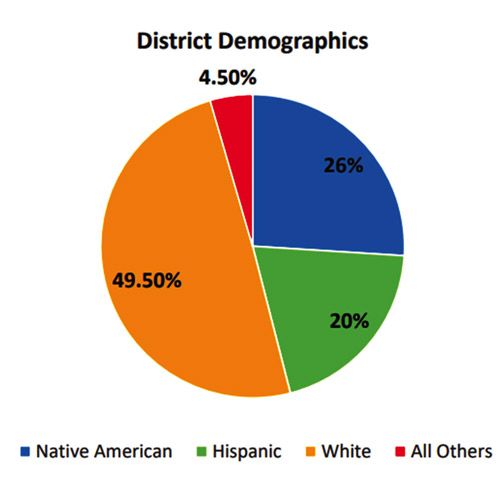
But Navajos now have a slight majority in the county, according to the most recent census data, and they have said for years that the county has neglected their needs. They also point out that they spend money and pay sales taxes throughout the county.

Published in May 2019 Tagged

Should commissioners serve just two terms?

Montezuma County Commissioner Larry Don Suckla, who is in the middle of his second and theoretically final four-year term, recently raised the idea of asking voters to extend term limits for the commissioners. The board voted unanimously on April 15 to authorize the drafting of a ballot measure that would allow commissioners to serve three consecutive terms, but at their next meeting they held off on taking a formal vote to put it on the ballot. Instead, they said they will wait for more public input before making a final decision.

We at the Four Corners Free Press tend to oppose term limits on general principle because, in theory at least, an informed electorate can always impose its own term limits on any elected official.

The reality, however, is a little different.

First off, a good chunk of the electorate in any location is not particularly well-informed. Those who aren’t informed tend to vote (assuming they vote at all) for familiar names or for the initials R or D on a ballot.

Furthermore, running for office – even for county commissioner – can be a very expensive proposition. That’s one reason that, over the years, the Montezuma County commissioners have tended to be individuals who were fairly well-to-do even before they got into office. Add to that four or eight years pulling down an annual salary that is now about $60,000 a year (set by state statute), and they’ve positioned themselves to outspend most any opponent who might want to challenge them. And don’t forget the commissioners also have a $34,000-a-year dues, training and travel budget that enables them to go around the state and country, thus increasing their name recognition. All of that combines to make incumbency a major advantage. Don’t believe it? Try to remember the last time an incumbent Montezuma County commissioner was denied a second term by a vote of the people.

The fact that there were four candidates running for a single commission seat in the most recent election was largely due to the fact that there was no incumbent on the ballot.

In arguing for allowing commissioners to serve three terms in office, Suckla made the point that it takes time for them to make contacts that presumably help them to do their job better. The board also commented that letting commissioners have three terms would make them “consistent” with the clerk, treasurer, assessor, and sheriff, all of whom voters have already agreed to grant up to three terms. (In addition, in 2004 Montezuma County voted to eliminate term limits altogether for the county coroner.)

The flaw in that argument is that those other jobs are not policy-making or political in nature, in contrast to the commissioners’ job, and they require a special skill set. A good clerk needs to know how to run a clerk and recorder’s office, a good assessor understands tax assessment, a good sheriff needs both administrative and law-enforcement skills to oversee a large, complicated operation. Commissioners, on the other hand, can be anyone. Ideally, they have ample administrative and budget expertise, but many do not, at least not when first elected.

And while it can be difficult to find local people qualified for positions such as assessor or district attorney – and interested in running, given that they can make more money in the private sector – there is no shortage of conservative folks willing to run for commissioner, especially since the salary represents a princely sum for most locals.

But some commissioners certainly may deserve more than two terms in office. The statesmanlike Tom Colbert served three terms back before state voters passed the two-term rule in 1994, and there are others who may merit a longer stay.

Term-limit questions tend to be referenda on the popularity of whichever officials are currently in office. That’s unfortunate, because the question really deserves to be decided on its merits regardless of who the sitting officeholder might be. So if you believe county commissioners should be able to serve more than two terms, urge the current board to put the question on the 2019 ballot, and then vote in favor of the measure. In other words, don’t support the measure simply because you like Larry Don, as an example, and likewise don’t shoot it down just because you don’t like him. Cast your vote while thinking about the long term, because the decision will apply to future boards, not just this one.

Published in Editorials

Instant karma

Maybe John Lennon was right about Instant Karma. Maybe it will look you right in the face.

Or stomp on it.

In South Africa, three poachers slipped into Kruger National Park hoping to bag a rhino. You just know that trying to kill an endangered species is inviting some bad karma.

Sure enough, one of the poachers was trampled to death by elephants and then eaten by hungry lions!

You have to be wary of animals – especially a cassowary.

A cassowary is a flightless bird, like an emu, that stands about six feet tall. It can run more than 30 mph, so don’t think you’re going to outrun one. They are native to Australia, so the odds of encountering one are slim. But weird things happen in the Sunshine State. A Florida man was raising cassowaries to sell to people who collect exotic birds. One homesick cassowary figured if he couldn’t get back to Australia he might as well send the breeder Down Under. While in the bird’s cage the breeder tripped and fell – and the cassowary promptly attacked him with its four-inch talons. The man was killed.

Since we’re talking about Florida, how about this story? A man attempted to use a fake $100 bill to buy scratch-off tickets. Maybe he should have spent it on reading lessons, since the bill had “For Movie Use Only” stamped on it.

Sometimes people are just looking to start some crap.

Ohio residents Bo Cosens and Rachel Sharrock live next to a school. The teachers had been on strike for three weeks and the dastardly duo was fed up with noise from the picket line and the constant horn-honking of supporters. But when they took action, the stuff really hit the fan.

Maybe the nefarious neighbors sang “Skip to my Loo” as they baked cookies for the teachers – using laxatives as a secret ingredient!

It didn’t long for law enforcement to track down the “poopertrators” since the couple made a Facebook video of them making the cookies. Now the pair of wasteful wastrels face one felony charge and several misdemeanors.

None of the striking workers ate any of the contaminated cookies – but maybe a lizard did. In South Africa, Nick Evans came across a Nile monitor lizard in a gas-station restroom. He suffered minor wounds as he wrangled the reptile into submission. He later released it back into the wild.

Jeff Heinig of Michigan is a lucky man. Even his mistakes turn out to be profitable. He bought a Lucky for Life lottery ticket but didn’t match any of the numbers. He threw the useless ticket in the trash – until the next day.

Heinig happened to see the winning numbers and realized they were the numbers he always played. He had checked his ticket before the drawing!

Heinig retrieved his ticket and claimed his prize – a cool $25,000 a year for life!

People in Pflugerville, Texas, really like snakes, apparently. Usually the most exciting thing in town is trying to pronounce Pflugerville, but that changed when the local library announced it was hosting an anti-prom event that would include a DJ and snakes.

The library was deluged with callers asking about the snakes, so the library had to issue a correction. The ad that promised snakes was just a typo – it should have said snacks.

Not to worry, though. The Pflugerville library does have an event with snakes coming up in May!

Finally, let’s wish good karma to Frederick, a cashier at a Greenfield, Mass., supermarket. When an elderly woman didn’t have enough money for groceries, Frederick gave her $20 to buy her items.

John Christian Hopkins lives in Sanders, Ariz.. He is a veteran journalist – but never an enemy of the people.

Published in John Christian Hopkins

Gold rush

Of all the great journeys man and dog can partake in together, I am about to embark on one of the warmest, wildest, and most personal of all.

Trust me when I say that I have no idea who my dog — let’s call him Hawkeye, because that is his name — is named for. He came with the name; he’d had it for six years before he was abandoned, and who was I to instigate an identity crisis by changing it? His name, however, is useful for breaking up the general populace into three distinct segments:

  • Those with enough experience to remember that M*A*S*H has apostrophes in it;
  • Those hip enough to know that there is a Marvel superhero named Hawkeye, apparently; and
  • Those columnists who vaguely recall from their Later American Literature course that James Fenimore Cooper named the titular character in Last of the Mohicans after the University of Iowa football team.

Hawkeye has received mention in these pages before now, but I’m afraid he never received a proper introduction. Unfortunately, a truly proper introduction would involve mutually invasive explorations, and truth be told, Hawkeye isn’t too keen on you getting that close to his nether bits. So perhaps you shall remain distantly passing acquaintances.

I’m generally proud of Hawkeye for maintaining his bodily autonomy. Dogs shouldn’t have to give in to unwanted physical contact any more than white male landowners do. No means no, even if it also means that he’s not getting much more action south of the collar than his human is. He at least gets belly rubs every day, owing to his skill with waking me up with a paw to the face before dawn. That’s about the only time man or beast gets to venture anywhere near his tender vittles. And that’s precisely what is going to make our pending adventure so daring.

I’m trying to think of the gentlest way to describe the path Hawkeye and I need to take together. But I can’t stop thinking of the image my veterinarian put in my head. “It’s actually easier with a soup ladle,” she said, “because you can stick it under there without having to go under him yourself.”

Is this the mark of true best friendship? If our roles were reversed, would Hawkeye follow me around, brandishing a soup ladle, waiting for his chance to slip into the bathroom with me first thing in the morning and hoping I either don’t notice or don’t care? Or would he do what my mother did when I was young, and just hand me an old peanut butter jar (sans peanut butter, thank goodness) for me to fill at my leisure during a road trip?

Perhaps it depends, as so many things do, on context. I like to believe that if I were struggling with an unidentified digestive malady, something of greater depth than “I wonder if it was the ice cream or the Oreos that sent me running at 2 o’clock this morning,” and I needed a sample in order to analyze if I was leaking out much-needed proteins, Hawkeye would take on anything in his power to collect that sample for me, once he got tired of fetching his tennis ball.

Because it is Hawkeye struggling with an unidentified digestive malady, one that has taught me to wake up immediately when he puts his paw to my face in the middle of the night, it looks like I’ll be figuring out how best to capture his essence. Soup ladle or no, I’ll need a lidded container to transport it to the vet’s office. I rather want a glass vial with a cork stopper, because life presents all too few opportunities for a man to hand over liquids, and the more cinematic the better. But the glass vials I’m picturing have really narrow necks, and so that leaves me to choose between a yogurt tub in the recycling bin, a water bottle I probably shouldn’t use anymore but have a sentimental attachment to, and a Ziploc baggie.

Figuring out my vessel is just procrastination, though. Really, I fear that stalking my dog around the yard for his morning ablutions will crank up his innate anxiety, and he won’t trust me ever again. Or that the crinkle of a sandwich bag under his hind-leg salute will send him spraying every which way. As dog’s best friend, I of course will not waver. I will stay true. I know exactly what to do, from years of experience: I will call my mom and ask her to do it for me.

Zach Hively writes from Durango, Colo. He can be reached at http://zachhively.com.

Published in Zach Hively

One of the most dangerous women in America

Mother Jones

Mother Jones

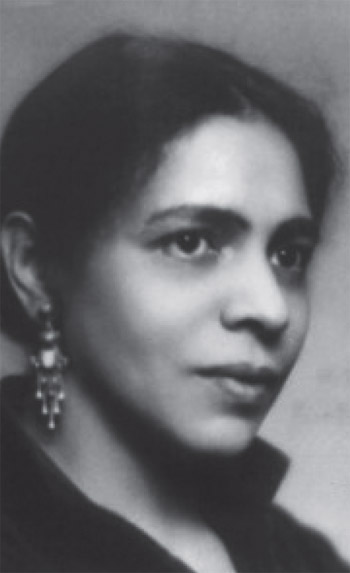
Mary Harris Jones was born on May 1, 1830, in Cork, Ireland. She was the daughter of Roman Catholic tenant farmers, Richard and Ellen Harris. During her early years, she and her family fled the Irish Potato Famine, which ravaged more than a million families. The Harrises immigrated when she was around 10 years old, to Toronto, Canada, Michigan and Chicago, Illinois.

She attended Normal School in Toronto but the Harrises were victims of discrimination because of their immigrant status and their Catholic faith. These were difficult years for the family. While Mary did not graduate from the school, she absorbed enough information and training to secure a teaching position at a convent school in Monroe, Mich., when she was 23. She was paid $8 a month and she described the school as a very depressing place. She soon tired of this position and moved to Chicago.

Mary experienced many personal tragedies during the first part of her life. She lived in Memphis for a time, marrying George Jones, an ironworker and strong union supporter, in 1861. George was a member and organizer of the National Union of Iron Moulders, which later became the International Molders and Foundry Workers Union of North America. This union represented ironworkers who specialized in building and repairing steam engines, mills, and other manufactured goods. They had four children, three girls and one boy, together, but an outbreak of yellow fever killed her husband and all her children in 1867.

After this loss, which was a real turning point in her life, she returned to Chicago and established a dressmaking business. Her shop was flourishing but after four years she lost her home, shop and all of her possessions to the Great Chicago Fire of 1871. This huge fire destroyed many homes and shops. Jones, like many people there, helped to rebuild the city.

She wrote in her autobiography that this was the beginning of her work as a labor activist.

She worked with the Knights of Labor, often giving speeches to inspire the workers during strikes. She began organizing strikes and protests, which occasionally ended with the police shooting and killing protestors. The Knights mainly attracted men and by the middle of the decade membership numbers were over a million, making them the largest labor organization in the country.

The Knights ceased to exist after the Haymarket Riot of 1886 when fear of anarchy and upheaval incited by unions led to a bomb being thrown into an altercation between the Chicago police and workers who were striking. With the dissolution of the Knights, Mary became involved with the United Mine Workers, frequently leading strikers in picketing. She believed that workers deserved better pay and working conditions. Her activities and deep caring for the workers she supported earned her the nickname of “Mother Jones.”

In 1901, workers in Pennsylvania’s silk mills went on strike. Many of them were young women demanding to be paid adult wages. The 1900 census had revealed that one-sixth of American children under the age of 16 were employed. Mary traveled to Pennsylvania, where she encouraged the wives of the workers to organize into a group that would wield brooms, beat on tin pans, and shout “join the union!” She felt that wives had an important role to play as nurturers and motivators of the striking men, but not as fellow workers. She claimed that the young girls working in the mills were being robbed and demoralized. The rich were denying these children the right to go to school in order to be able to pay for their own children’s college tuitions.

In 1903, Jones organized children who were working in mills and mines to participate in a “Children’s Crusade,” a march from Kensington, Pa., to Oyster Bay, N.Y., the hometown of President Teddy Roosevelt, with banners demanding, “We want to go to school and not the mines!”

As Mother Jones noted, many of the children at union headquarters were missing fingers and had other disabilities, and she attempted to get newspaper publicity for the bad conditions experienced by children working in Pennsylvania. However, the mill owners held stock in most newspapers. When the newspaper men informed her that they could not publish the facts about child labor because of this, she remarked: “Well, I’ve got stock in these little children and I’ll arrange a little publicity.”

Some called her a firebrand, others an activist, some called her one of the most dangerous women in America. Whatever you call her she was a formidable and tireless force. Known as the miners’ angel, Mother Jones became an active campaigner for the United Mine Workers Union. A political progressive, she was a founder of the Social Democratic Party in 1898. Jones also helped establish the Industrial Workers of the World in 1905.

Nothing could dissuade Mother Jones from her work. At the age of 82, she was arrested for her part in a West Virginia strike that turned violent, and was sentenced to 20 years. But her supporters convinced the governor to grant her a pardon. Jones, undeterred, returned to organizing workers.

Margaret “Midge” Kirk is a slightly eccentric artist, writer, bibliophile, feminist scholar and hobby historian who lives in the SW corner of Colorado. She can be reached at eurydice4@yahoo.com or visit her website www.herstory-online.com.

Published in Midge Kirk

Derelicts

The former M&M Truck Stop south of Cortez. Photo by David Feela.

I pulled in, prompted by pure nostalgia, for a closer look at the abandoned M&M Truck Stop south of Cortez. For over a decade of Fridays my wife and I ate breakfast there before rushing off to my teaching assignments at the local high school. The restaurant’s doors have been closed since 2001. Behind the building an updated Colorado Port of Entry still monitors commercial truck traffic, 200 truckers a day on average pulling off the old scenic Highway 666.

When the truck stop first went out of business, I hoped it was only a matter of time before some enterprising investors would reopen it. The location is situated perfectly, just off a major north-south highway through the Four Corners region. Commercial traffic, including tourists, check their fuel gauges when encountering open country. Nineteen years later I am abandoning all hope.

If the State of Colorado had a registry for historical wrecks, this derelict of a truck stop should appear near the top of the list. Unlike the Titanic, the wreck is not hidden beneath miles of impenetrable ocean. Every person who drives by has little choice but to gasp at both the enormity and longevity of this monument to neglect.

The pumps are gone, many windows are broken, wide open to incoming weather, birds, and vagabonds. Two plate-glass entrance doors remain boarded over after having been kicked in. The glass, never cleaned up, lies scattered like immortal ice cubes across the entry. Young trees reach up through the asphalt, a few leaning toward the structure for support. On a sill I spotted (but didn’t touch) a row of plastic bottles lined up like bladders in the sun, filled to the neck and capped, a dirty yellow liquid reflecting the light. Graffiti adorns the outside surfaces. I didn’t have the nerve to go see how the building fared on the inside. The owner(s) of this truck stop of horrors ought to be required by our county to sleep there every Halloween.

Derelict buildings don’t only occupy war zones. You can find them in nearly every town. Each property starts life as an ambitious structure, then years of trying to run a business or make a home matures them, but eventually their pointless neglect ends with abandonment. Rather than leveling the old sense of purpose before moving on to better things, the past is left standing, deteriorating bit by bit, even infecting other buildings in the community with a strain of architectural leprosy. Just west of the truck stop you’ll see collateral damage has crept across the highway where three former business buildings also stand empty, all signs of life support disconnected.

A few historical structures fit into a niche worthy of protection. I suppose the truant or distracted owners rationalize that their derelicts qualify as historical and by leaving them fall to pieces some kind of contribution toward educating the locals has been bequeathed. Or better yet, they’re just stubborn or lazy. Hard to explain the kind of thinking that turns the past into a festering boil.

Another miserable wreck leers at travelers between Cortez and Mancos along Highway 160, a former gas station/ convenience store/tourist attraction/ stocked-fishing-pond-sorta-camping-facility which imploded over a decade ago. Local gossip suggests a gasoline storage tank leak followed by an argument with the State of Colorado prompted a dispute. The place closed down and the property owner used it to vent his anger at passersby, going so far as to taunt spectators by crudely painting “toxic site” in large letters, allegedly “sponsored by the State of Colorado.” All we see is the eyesore, caught between the two, an unresolved derelict of a dispute, the public saddled with another festering boil of an ex-business that promises to rot before any common sense is applied.

But there is always hope. After several years of wrestling with a high price tag to remove environmental hazards while demolishing our abandoned 1960s-era Cortez high school, its deconstruction and disappearance has finally been completed. A GOCO grant provided the City of Cortez with some funding to help purchase its 14-acre site where officials plan to install a south-side park for city residents.

As a former teacher from that recently demolished building, I look forward to sitting under a shady tree, or stretching out on the cool grass, perhaps on the exact spot where my old classroom might appear in my dreams. If any former students walk by, I hope they let me sleep.

David Feela, an award-winning poet, essayist, and author, writes from Montezuma County, Colo. See his works at http://feelasophy.weebly.com/

Published in David Feela

At Dachau, birds and a warning

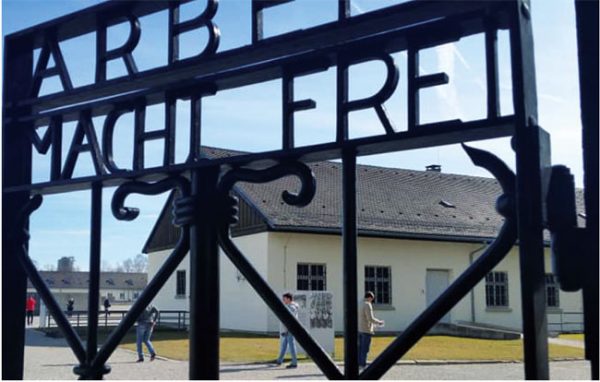
A reconstructed gate at Dachau prison camp. The original is locked inside the museum after being stolen in 2014 and recovered. “Arbeit macht frei” means “work makes (you) free.” Photo by Katharhynn Heidelberg

Albert told me the weather is always dreary when people go — cold, rainy, gray. Given my friend was speaking of the concentration camp at Dachau, it seemed fitting that the sky above would reflect the grim reality below.

It was sunny. It was March 3, and when I walked through the gate declaring “Arbeit macht frei” at Dachau, it was sunny and warm and the birds sang.

They sang then, too. When the Nazis began bringing Jews, gay people, Poles, Gypsies, Jehovah’s Witnesses and other hapless scapegoats to their death camps, the birds sang. The sun shone. Nature ground on, while below, the lives of people who’d been demonized as “other” were taken.

On March 3, 2019, it felt wrong. Because I was standing in the place of one of the greatest wrongs in human history. There, the museum is so packed with information, it cannot all be absorbed:

  • A watch belonging to Albert Frohn, “arrested for unknown reasons” and liberated in 1945.
  • A photo of Imre Vidor; dead in 1945, within a month of arrival.
  • A photograph of a female Nazi measuring a woman’s “Gypsy” facial features, the victim’s humiliation palpable.
  • Historic propaganda to fool the foreign press: “Using specially selected groups of prisoners whose appearance corresponded to certain racist clichés they tried to demonstrate to the visitors the ‘racial inferiority’ of the prisoners.”
  • From Munich administration files: “16 dead from Dachau were brought via a removal van … to the crematorium, first without names, just dressed in dungarees, a towel over their mouth, beaten and unrecognizable, corpses among them look well-nourished and cared for, bruises on the arms and legs which indicate torture, some were bound.”

Prisoner Jean Bernard contradicts the “well-nourished” part: “There are other things you can eat. First there are dandelions. … Unfortunately, there are only a few of them at our worksite.”

Another prisoner account tells of a guard tempting him with a sausage and potatoes at Christmas, then informing him he is unworthy of such a meal.

“And imagine, the Americans came in,” the transcript of an oral history states. “…. And then they found this train with 3,000 corpses. And they found the corpses by the crematorium too. … There were Americans who said to me, ‘Now I know why I am fighting this war’.”

There are two crematoria. The larger one is in “Baracke X,” near wooded grounds where four British women who parachuted in as part of the resistance were shot. (Many others also were murdered there.)

The crematorium was built in 1940, outside the prisoner’s camp. I saw the ovens and gurneys. I realized that where I stood, above me, people had once been hanged. I stepped quickly into the next room. It had a low ceiling, with vents in the wall and the ceiling.

I’d walked into the gas chamber. And people were posing for photos, because, as deep as they were into history, they were deeper into the “capture it on camera” mode.

I got out as fast as I could.

The victims of the Holocaust were not just abstractions flitting through the pages of history books. These were people who loved pets, their children, their homes, hobbies. They were people.

And we need to hear them.

“The modernization of society. . . evoked fears and resentment,” reads a placard at Dachau’s museum.

“The opponents of modernism rejected the cultural diversity of an open society. Instead, they strove toward a ‘national community’ of cultural uniformity achieved through authoritarian means. These ideas were interspersed with racist, and more often, antisemitic prejudices.”

When we read this, we have a duty to understand in terms of now, not just then.

The sentiments the placard referred to should sound familiar, because they are being played out in many places, including here at home.

No, we are not Nazis, and Nazism does not rule here. Nor is the situation anywhere near as dire as it is in other places. No, our president is not Hitler.

But he has a demonstrated authoritarian bent and we’ve plenty of disaffected people who blame the “other.” We have leaders who do not hesitate to whip up the masses against immigrants. The president even screams about building an actual wall and has circumvented Congress’s constitutional control over the public purse — a chilling violation of the separation of powers.

Attacks on the press, on courts, on any institution that can offer even a tepid check of the potential dismantling of our republic — all are increasing. Almost two summers ago, we had actual Nazis marching in the streets of Charlottesville, and Heather Heyer was murdered.

Don’t overlook the ongoing war against asylum, which is fervid in painting classes of people as “other,” and targets brown-skinned people almost exclusively.

It is not illegal to seek asylum. If your sons were forced to join drug gangs; if your daughters were raped and trafficked; if your husband was murdered; if your life was threatened, you, too, would flee — even if seeking asylum was illegal. You would not patiently wait “in line” for the years-long process of immigration. Because you would die first.

Yet our government ramps up the rhetoric. It has taken steps that in the long run will worsen what is driving asylum- seeking (by cutting aid in the places from which people are fleeing).

It has built camps in our deserts for migrant children.

It has lost track of children courts have ordered to be returned to parents (while somehow it is able to keep track of journalists reporting on the situation). Children have died, even if they have not been tortured and murdered.

Still, people spout the same line: That it’s the parents’ fault for bringing their kids to the border.

It may be comforting to believe that. But it is nonsense: Once this country takes possession of these children, it becomes completely responsible for what happens to them. Period. Those who are uncomfortable with that reality could do with some introspection.

Dachau is a good place to start.

But even that might not be enough. When people think of the Holocaust, many seem to draw only the lesson as it pertains to Jewish persecution. They see plainly that this is wrong.

They fail, though, to draw the broader lesson necessary to prevent fear-mongers like Hitler from rising to power again — even as they chant, “Never again.”

On this same trip, a man indicated to me that he was OK with gay people being assaulted because they are gay, and also said a Muslim congresswoman could not be a patriotic American.

We’d both visited Dachau.

There, the sun shines. The birds sing.

And a memorial declares: May the example of those who were exterminated here between 1933 – 1945, because they resisted Nazism, help to unite the living for the defense of peace and freedom and in respect for their fellow men.

Katharhynn Heidelberg writes from Montrose. She cried when she typed this column’s final line. All the same — everyone should go to Dachau.

Published in Katharhynn Heidelberg

A Greatest Generation mom

The month of May is full of promises. Usually, the weather is very agreeable, especially after a long winter like the one we just finished. Abundant sunshine, green grass, and a kaleidoscope of floral blooms bursting forth from flower beds bring a sense of harmonic convergence. The calves are exploring their pastures and a field of triticale is looking good. Hummingbirds and thousands of bees and other pollinators swarm the big willow and fruit trees in my yard. It is so tranquil that thoughts of the political world in Denver and Washington D.C. seem a million miles away.

The 12th of May this year is Mother’s Day. I often tell my family that I consider every day to be Mother’s Day. There is seldom a day that goes by that I do not talk with my Mom on the phone, or with my daughter. A day never passes without consciously thinking of both of them at some point during the day. My mother turned 97 this past Valentine’s Day, still active and mentally sharp. She is the very embodiment of what Mother’s Day honors. As part of what is known as the Greatest Generation, she lived through some of America’s best and worst days. She was raised by a single, working mother in an era when almost all the other kids had dads who worked and moms who stayed home. No time to worry about social norms and things that couldn’t be changed.

Resiliency would be one word that could define her, smart would be another. In an era that now calls for endless government social programs, with more regulation of people’s lives, my Mother’s generation of women forged a nation of post WW II children without much help from the government.

Pearl Harbor changed her young life. Within a month, she and my Dad got married and shortly after that, he was off to training, preparing to face the tyranny that was raining down on the world. My Mom would find work in the PX near the base. By the end of September 1943 she would give birth to my oldest brother, John. My Dad was in the first wave to hit Omaha Beach in Normandy and would eventually be in Berlin with a contingency of American soldiers, as General Patton rolled in. My Mom was balancing motherhood and doing her part on the home front.

Generally speaking, after the war, life settled into a routine that played out across America. Moms kept sharp eyes on their children and the neighborhoods, as dads went to work to provide a better life for their families than what they had. Between the Great Depression and the second war to end all wars, this generation of Americans knew how to deal with life. President Eisenhower played golf, built infrastructures like the Interstate Highway System and in a great farewell speech, warned America of the threat of an alliance between Congress, the military, and the industrial complex. As the Supreme Allied Commander in WW II, Eisenhower could speak with authority, the difference between a strong America and an overwhelming bureaucracy that could undermine democracy.

It is true that my Mom didn’t have the option of choosing between 50 different brands of ketchup in a grocery store aisle, or 150 television channels, but somehow my siblings and I thrived. Our meals were simple and nutritious. My folks raised seven kids on an electric lineman’s salary, and sent us to college as well. Another tribute to the sense of purpose that defined that generation of mothers. Some feminists of today mock the notion of the nuclear family, but given the social problems that we currently are experiencing, it might be a good idea to reassess the policy goals of allowing government schools to become de facto parents. When my daughter was in college, she commented on the fact that other than one other person, everyone she knew had been raised in split families.

As the Sixties unfolded, President Kennedy said we should put an American on the moon, and we did. Mom set the tone for reading material in our home. Shoddy journalism was not allowed. She would subscribe to the Atlantic Monthly, Time, Newsweek, National Geographic, and in the latter part of that decade a new magazine called Psychology Today. We built models of the Apollo space modules and followed every mission that was launched. A set of World Book encyclopedias sat in the living room, along with a dictionary. When you have to actually look up words, it does wonders for retention.

As my older siblings left home and my Dad became the manager of the local power company office, my Mom would pursue a college education of her own, from a branch of Ohio State University near us. She would be an active champion of women’s rights as a founding member of a local chapter of the Women’s Action Equity League. An opportunity came up to travel to Europe with her sister. My Dad declined to go, saying he had seen Europe once, and once was enough. It was one of a few times that he made reference to WW II. Yet, he encouraged her to go, so she did.

My mom is a strong woman, who has endured the loss of her husband, and knew the heartache of burying two of her sons and a grandson. Yet, she soldiers on.

The point of all of this is: If you have a mother, take the time to honor her this Mother’s Day. As that country song goes, you’re not that busy.

Thanks, Mom. For the life you lived and for the life you gave me.

Valerie Maez writes from Lewis, Colo.

Published in Valerie Maez

Endangered? What?

Do you remember just a few years back when they improved Highway 145, the Dolores highway, and widened it for turning lanes at the junction with Road P? Everything was going well and suddenly it stopped and they pulled out without finishing.

What happened? The report was that it was getting close to nesting season for the Southwest willow flycatcher and there was some of their habitat on the side of the highway, so the construction equipment might disturb nesting if there happened to be any flycatchers in the area. Are you serious? Well, it seems that in 1995 the bird was claimed to be endangered by the U.S. Fish & Wildlife Service under the Endangered Species Act, so you can’t do anything that might possibly disturb them. So trucks and equipment working slowly on the road are more disturbing than the trucks that would previously go speeding by and engaging their Jake brakes at that curve? Of course the question is, were there ever any flycatchers there in the first place? Didn’t matter, their perceived habitat was there, which had previously been created by irrigation works and road ditches. After supposed nesting season, the construction continued at additional cost.

So what is my point? Last year, 2018, our local area suffered with three major wildfires – the 416, Burro and the Plateau – which all combined burned nearly 70,000 acres of forested critical watersheds. Setting aside the finger-pointing rhetoric, the results have been distinct damaging changes in forest canopy, soils, erosion, flooding potential, insect infestation potential, wildlife habitat, forage, viewscape, and recreation potential, to name a few.

The ending of active forest management began back in the ’70s with a flurry of environmental laws that had little or no scientific basis. One of those laws has been used most frequently to prevent healthy management of the forests and range lands of the state. That would be the Endangered Species Act of 1973, a very clever hoax. What is so egregious about it is it has no scientific basis, but is based solely on what is not known. Take the Southwest willow flycatcher, for example, they do not actually know how many there are or how many there used to be or where or if you can find one, so they do not really know if they are endangered or not. But they say they are endangered, so who can dispute it? Under the ESA, you must not disturb the “habitat” that some think they must have to survive. These fires damaged and changed significant habitat for all wildlife, including any threatened and endangered species. Wildlife will adapt to natural changes and they will adapt to man’s actions as well.

The whole concept of endangered species is questionable. Even the World Wildlife Fund acknowledges that “extinction” of species has been and is a natural evolutionary process. They make a guess that IF there are 100 million different species of life and IF the extinction rate is .01 percent per year then 10,000 species go extinct each year. They just “don’t know” any of it! It is estimated by some that about 15,000 “new species” are identified each year and that 86 percent of all species on earth are yet to be discovered, not including what might be in the oceans. Are the 10,000 that go extinct making room for the 15,000 new species being “discovered or created”? Are they now endangered since they only found the one or two? How long have they existed before they found them? They just don’t know what they claim to know! There is a saying, “just because someone says something is so, does not make it so.” It just could be they have a nefarious ulterior motive and agenda.

We are now finding out that there is a very real need to restore the health, active management and use of the forest and range lands of the state. We are faced with the problem of dealing with the ESA, and other similar restrictive laws, in securing project approval for management action. It takes an average of three years of studies and plans to secure approval for an action. Then it is still subject to litigation from so-called environmental groups who claim the study did not adequately consider potential impacts on some endangered mouse, bug, bird or weed.

Here in Colorado, any project by the Forest Service must consider 74 species on the state Threatened & Endangered list, plus an additional 26 species on the federal list that says could possibly be found in Colorado. They look for perceived habitat possibly existing for things like big-eared bats, northern pocket gopher, Southwest willow flycatcher, New Mexican jumping mouse, gray wolf, etc.! This list can keep growing as they find new species they didn’t know about. I wonder, why do all these species still exist here after all the clearing, logging, ranching, farming, housing, roads, mining, ski runs and wildfires over the past 143 years? It very well could be because of all those actions that created better and more diverse habitat for wildlife, thus increasing both the numbers and biological diversity of species that have been able to continue existing and flourishing due to man and in spite of the natural evolution extinction process.

What is really “endangered”? The health of the public lands of the state and the local economy that is dependent upon those lands and resources! This continues to be threatened by those seeking to end resource management using the Endangered Species Act as evidenced by the push to drastically increase and protect gray wolves in western Colorado, further endangering forest and watershed health and local economies.

Dexter Gill is a retired forest manager who worked for private industry, three Western state forestry agencies, and the Navajo Nation forestry department. He writes from Lewis, Colo.

Published in Dexter Gill

Plea agreement reached in auto-shop embezzlement; sentencing set for June

The former manager of the Midas auto shop in Cortez pleaded guilty April 18 to both felony and misdemeanor theft from the business, which has since been re-organized as America’s Auto Care center.

Nathan Wilkinson, 38, was accused of stealing more than $75,000 in money, goods and services from the Midas franchise through a variety of schemes.

Wilkinson was arrested last October following an investigation by Cortez Police Detective Jennifer Goodall after his practices raised concerns for owner Cody Dennison.Goodall’s affidavit contains numerous accounts of the ploys Wilkinson used to milk money from the business, a favorite being to “void” sales receipts after a transaction was completed and pocket the proceeds.

He was fired last July after his duplicity began to unravel, sparked by a customer’s complaint that the new tires installed on his vehicle were the wrong size, according to the affidavit.

When finance manager Susan Carver tried to look up the transaction in the company’s records, however, she found only a “voided ticket,” indicating the sale had not gone through. That customer, who had a receipt for the tires, recalled that Wilkinson had asked him to pay in cash, and had been acting “strange” at the time.

A subsequent audit by Midas found more than 50 tickets totaling over $16,000 had been voided by the suspect, according to the affidavit.

Wilkinson was alleged to have ordered dozens of tires through a wholesaler not usually used by the business, then to have sold them for cash and intercepted the invoices when they arrived in the mail. Carver said she first became aware of this situation when the vendor called and said a bill for nearly $15,000 was past due.

In her affidavit, Goodall said that based on information supplied by Carver and Dennison, she had compiled a spreadsheet showing that just over $75,000 had been drained from the business through missing deposits, unauthorized discounted parts, work done on personal vehicles, voided receipts, cash and tire sales not entered into the company’s data base and other methods.

Although sentencing is set for June 4 after a pre-sentencing investigation is conducted, the plea agreement stipulates that Wilkinson will be placed on probation for two years and pay restitution of at least $60,000.

Under the terms of the agreement, the guilty plea on the felony theft charge is being treated as a “deferred judgment and sentence,” meaning if Wilkinson complies with the conditions of his probation, it will be dismissed.

Dennison told the Four Corners Free Press that Wilkinson had seemed to them to be a very likeable person.

“We did think super highly of him and I think that’s what caused us the most trouble – I wouldn’t have thought this in a million years – because he is a personable and nice guy.

“We have a strong back office but Nate was good – it happened within three months – he definitely knew what he was doing.”

Published in May 2019 Tagged

Eating like a Parisian

I love to travel … and eat. Not necessarily in that order. When I am feeling wanderlust and don’t have any imminent travel plans, I turn to library books to take me away.

Lately my travel bug landed on Paris. (This was even before the terrible fire at Notre Dame. I have the library book receipts to prove it). Based on my reading, the unifying theme for any trip to Paris is food. Although I did not find a book titled, Eat Your Way across Paris, it is obvious that eating is an important part of any experience Parisian. Rather than an all-you-can-eat blitz through the city, the concept of eating in Paris is slow, tasteful, and luxurious. Parisians pride themselves in relishing every morsel of food, culture, and art and they expect tourists and travelers to do the same.

After a winter huddled next to the woodstove and behind the television, this vision is irresistible. My books enticed me with visions of open, airy, wine-soaked afternoons imbued with the smells of fresh baked goods complimented by the bite of sharp cheese. Ah…. Paris.

My book report on my virtual tour of Paris can be summed up by the adage, “quality over quantity.” To Parisians, it is more important to savor every morsel rather than blaze through a plate of chilaquiles.

I think I finally have found the reason why Frenchwomen don’t get fat – they are satiated by aroma alone. The secret to this approach of mindful eating is to recognize that food has many attributes such as taste, color, and terroir. It should be noted that in this model of eating, convenience is not an attribute of food. Furthermore, more is not better – better is better, fresh is better, and local is best.

Using the French guide to evaluate my food situation, I have adopted a few of their habits to enhance my eating experience. These include investing time and money in the best-quality local food, and taking time to prepare and eat it like a Parisienne.

First, I have adopted eating meals in courses. It all started when my husband decided to incorporate “happy hour” into our day after his recent solo trip down the Colorado River in the Grand Canyon. He used happy hour to mark the transition from river time to establishing a camp and downing some calories before it got dark. (His trip was during the short days of February).

Now, we start our evening meal with a small bite of fine cheese, olives, canned fish, or pickled vegetables accompanied by a modest drink of wine or spirits. It makes every day feel like a celebration and slows down the hectic pace of life to a leisurely one that is focused on savoring our daily accomplishments in the fading light. After this break, I can prepare a smaller sized dinner (better for evening digestion), and we pace ourselves through the main course and a light dessert. Do not be fooled, Parisians love their sweets and no meal would be complete without something sweet at the end. At our house, this course is based on the extensive stash of frozen peaches from the abundant harvest of 2015. A reminder to stay on top of the freezer rotation.

Another aspect of French eating that I have adopted is “café culture.” While I live too far out of town to use the local coffee shops and restaurants as my living room, I am determined to break up my trips to the big city with a stop for a cup of coffee and a bite to eat in a public place where I can watch the world go by at my leisure.

I am always rushed when I am in town. My visit to town is a sprint to the grocery store, gas station, and hardware store following the most efficient route to each. What a revelation to break up my campaign with a stop to look up and notice the gardens in bloom and the friendly faces around me.

This leads me to the final change in my food habits. Putting a face on my plate. Who grew this food I am eating and what is the story behind it? I usually get my local food fix at the farmers market, where I can explore and ask the farmers directly about what they are growing and how it is doing. I really appreciate the weekly updates on “my pig” that is being raised for me at a nearby farm/ranch. While I don’t go so far as to name my pork, it makes me feel a deep connection to my food and anticipation for what new recipes I might try with the upcoming ham hock or pork chop.

Recently, we started getting milk and cheese delivered by a local micro-dairy. I forgot how special you can feel when the milkman stops by and fills your box with fresh dairy products. I even get an update on the herd and what the cows are eating. And the taste more than compensates for the slightly higher costs. I feel like I am eating pure milk rather than wondering what chemical is thickening my cottage cheese.

This conversion to eating like a Parisian has introduced me once again to the abundance of high-quality local food that blesses our community. We have access to fresh meat, dairy, vegetables, fruits, and wheat flour. It is hard to find that wide array of fresh local foods in any big city. So, I hope you will join me in seeking out local, fresh foods and take the time to enjoy them during happy hour, at the local café, or with dreams of Paris dancing in your head. Bon Appetit!

Carolyn Dunmire gardens, cooks, eats and writes in Cahone, Colo.

Published in Carolyn Dunmire

Hotter but not necessarily drier: The Four Corners is projected to be 5-6 degrees warmer by 2050 and to see more extreme weather events, from floods to droughts

There’s bad news but also some good news about the impending impacts of climate change on Southwest Colorado and the Four Corners, according to a researcher who gave a presentation in Cortez on April 11.

The bad news is that the area is going to grow warmer in coming decades even under the most conservative scenarios for climate change.

The good news is that this may not mean less overall precipitation. In fact, there could be more.

Seth Arens, a research integration specialist with Western Water Assessment, told the audience that data specific to Montezuma County indicates that by 2035 the area will be an average of approximately 4 degrees Fahrenheit warmer than it is now. That’s under either high or low-emissions scenarios for greenhouses gases. By 2050 the area is projected to be 5 to 6 degrees warmer, and by 2100 it could be 6 to 9 degrees hotter.

“We are currently on a high-emissions trajectory unless we take seriously reducing emissions of greenhouse gases,” he said.

Climate models are complex and although very reliable at projecting temperatures into the future, they are much less certain about predicting precipitation, especially in the Four Corners, Arens said.

“Climate models are a little less certain about precipitation in general but here in this region specifically they are even a little less certain,” he said.

While the Northwest is reliably expected to grow wetter and southern Arizona to grow drier, the Four Corners is “in one of these zones where it’s in between so precipitation is little less certain for this region, as it is for Utah and the intermountain West.”

He said so far there is “no discernible trend” in precipitation for Montezuma County. Historically it has varied widely from year to year and that continues to be the case.

2018, for instance, was a year of historic drought. A typical year in the upper Dolores River Basin sees about 30 inches of precipitation, Arens said, 18 inches of which typically leaves through evapotranspiration (evaporation and plant transpiration), leaving 12 inches as runoff.

During a drought year there is less precipitation and increased evapotranspiration; a severe drought year may have just 20 inches of precipitation, with 14 of that leaving through ET, meaning just six inches left for runoff, or half of normal. This is a common occurrence, Arena said. Even though the area is receiving two-thirds of its normal precipitation, just half the typical moisture is available as runoff because soils are extremely dry.

In 2018 in the Four Corners, he said, 14.8 inches of precipitation fell – less than half of normal – and 12.5 inches was lost to ET, meaning a scanty 2.3 inches of runoff. That represented less than a fifth of the normal amount.

“By all historical records it was the most extreme drought. . . since about 1900,” he said, the severest drought on record for this region.

Now, the area is coming off a bountiful winter that had numerous snowstorms. McPhee Reservoir is set to fill, there may even be a small managed release for boaters, and for the first time in its history, Purgatory Ski Resort is going to be open in May.

But that’s just a blip in time, and people have to consider the big picture, he said. Southwest Colorado has been in a drought since about 2000.

“It’s been an exceptionally wet winter and I think that’s great from our perspective,” Arens said, “but that doesn’t change the fact that there has been nearly 20 years of drought.”

Precipitation is only part of the picture, he said. Temperature is a factor, and as it increases, so does ET. Since 2000, the area has been about 1.6 degrees warmer than its 20th Century average. The rising temperatures, of course, aren’t just happening locally, but around the world.

Arens said greenhouse gases, which trap heat in the atmosphere, are at their highest levels in at least 800,000 years. “Man is making an impact on climate in this world,” he said.

As a young graduate student in 2001, he and others had to measure carbon dioxide in the atmosphere. At that time it was about 362 parts per million. Now it’s at 412 ppm. All this warming will affect the precipitation picture.

“Warming alone has an impact on drought and water availability,” Arens said. It means more rain but less snow will fall, especially during the “shoulder seasons.” Peak runoff arrives earlier and there are reduced annual flows in the Dolores River Basin.

Arens said there is enormous variability in streamflows in the Dolores River from year to year, but since 2000 they have been 21 percent below the 20th Century average.

However, climate modeling can’t predict with any reliability what that will mean for overall moisture in the area, he said. There is expected to be an overall decline in snowpack of 10 to 30 percent over the next 30 years, he said. Runoff will decrease and there will be a change in the timing of runoff.

However , warmer air can hold more moisture, so it’s possible annual precipitation will increase. But weather extremes and severe events are also going to be increasing.

Over the next 30 years there will probably be another one to four severe droughts lasting multiple years, he said.

Heat waves are likely to grow in severity and frequency along with droughts, and there will be more wildfires. And more extreme precipitation events are likely, leading to flooding, debris flows and landslides.

In answer to a question, Arens said groundwater levels in the Colorado River Basin are likely to fall, but he doesn’t expect people’s wells to dry up entirely. “Groundwater is an understudied part of the picture,” he said.

He was also asked about the dust-on- snow phenomenon that causes early melting in the San Juan Mountains. Arens said this is one of just one or two places in the world “where dust deposition on snowpack has a tremendous impact on water availability and timing of runoff.”

“The very high mountain range here acts as a catcher’s mitt for anything blowing from the west,” he said. The Colorado Plateau in Utah has a great deal of terrain with loose dust that can be picked up by winds, partly because of livestock-grazing over the last century. “That makes those soils more available for transport by wind, and the San Juan Mountains provide a place to catch that.”

Dust “completely changes the energy balance of that ecosystem” because it doesn’t reflect light as well as snow. Just as wearing a black shirt on a 100-degree day is hotter than wearing a white shirt, a blanket of dust increases heat.

“Dust isn’t black but it’s much darker than snow so much more radiation from the sun can be absorbed,” Arens said. That means the snowpack melts sooner and overall there is less water available in the rivers.

That’s certainly a concern for Cortez, which has no source of water but the Dolores River and McPhee Reservoir. The city brought together a group of elected officials, citizens, and staff “to promote the long term, sustainable development and wise use of water,” according to a statement on its website, and partnering with Western Water Assessment is part of that effort. Arens’ presentation was one of several presentations the city offered in April on water and wise water usage.

City Public Works Director Phil Johnson said at the forum that the city has no target for reducing water consumption, but would like to whittle down per-capita usage, currently at 200 gallons per day. In contrast, the city of Santa Fe, N.M., uses about 90 gallons per capita per day.

Johnson said any reductions will be mainly in use for lawns and landscaping, not in water used in the home.

Arens was asked whether there will still be snow for skiing by the year 2100.

“I sure hope so,” Arens said, adding that he is teaching his 8-year-olds to ski. He said there should be snow at higher elevations by the end of the century, but lower-elevation sites will be less viable.

The city has more information on its website, www.cityofcortez.com. Click on the Water Is Our Future tab.

Published in May 2019

Some thoughts on magical thinking

It’s an enchanting idea, isn’t it, that denying something is true, even if it’s a fact, can make it untrue. How convenient. Apparently believing in false ideas will turn them into truth, eventually. We have become so entranced that we forget, or flatly deny, the ecological and environmental rules that are in place on this humble little planet – laws that cannot be wished away. Modernity is asleep at the wheel, and lost in magical thinking. We seem to actually believe that our man-made fantasies trump natural law. We are dreaming our way into a psychic house of mirrors, filled with endless illusory reflections of an elusive self.

Meanwhile there are the environmental and ecological rules for the game of Life, and no amount of haggling can make the rules not true. They are not an alternative truth. They are the bottom line. The natural world is throwing the yellow penalty flag. There’s a referee in the room, blowing her whistle on our grand and un-ruly game of one-upmanship and planetary degradation. Meanwhile we ignore the flags and whistles and proceed merrily along “subduing the Earth.”

Now, subduing the Earth is a classic example of magical thinking that has haunted Western civilization since the Bible was translated into English. But dominion over the Earth must end as a mythic idea.

Another classic example of magical thinking is the notion of manifest destiny (God likes us best!), which has been the justification for all manner of rape, pillage, and plunder. But now we know that our place in the biological scheme of things demands a much more humble stance, one that plays by the rules and finally recognizes: no rules, no game, no destiny manifest.

There are so many examples of magical thinking to choose from these days that it’s hard to pick examples, but the notion of unlimited growth comes to mind. Who cares if the rules dictate limits on our finite planet? Our wishful thinking can’t accept limitation. We think the planet will just get fatter along with us.

I could go on of course, but space is limited so I’ll leave exploration of further examples up to you. You could start with the idea of a superior race or religion.

What would it mean to awaken from our fantasies and turn our attention to the realities that confront us on the ground, those pesky environmental rules of the game of life itself ? Ironically, doing so would make our destiny manifest, which turns out to be the greatest dream of all – the dream of the Earth – a seventh- generational understanding.

All of this, of course, means that we ourselves are the responsible party here. Our very future, as destiny, is up to us, and our manifest response to our self-created dilemmas. Ouch! We are so hoping for the cavalry to come over the hill and save the day. A radical new president perhaps? How about UFOs on the White House lawn. Some folks figure they’ll just transfer their conscious selves into a robotic body. What fun – clever escapism. Others promote the bizarre idea of spraying chemicals into the stratosphere, thereby cooling the planet – magic at its best. Divine intervention is popular, in which case everything should be collapsing now anyway, right? The end is near. Why then bother with those fussy and demanding rules when the game will be over shortly anyway? So go ahead and drill, baby, drill.

Waking from any delusion is painful, especially when it has become a comfort zone that is widely shared and therefore self-validating. Oh, how we lie to ourselves in order to assert power over truth. We want to stuff the facts into a closet and shut the door. Or build a wall to keep them out. They get in the way of our quest for military-industrial hegemony and paranoid nationalism. So it seems to me that if we slip slide much further into Shangri-La La Land we will be condemned to babble on toward our own self-meditated end of time. Prophesy fulfilled.

Chip Schoefter writes from Goodman Point in Montezuma County, Colo.

Published in Columns

A great victory

June 28 was a great day for America. What happened that morning represented a triumph of epic proportions – good over evil, the little guy over the powers of giant corporations.

No, we’re not talking about the U.S. Supreme Court’s decision regarding the Affordable Care Act. We’re talking about what happened afterward.

In the moments that followed the release of the high court’s ruling, there was a mad stampede of journalists competing to be first to put the story out. In the old days, they would have been elbowing each other out of the way at telephone booths. In the present, of course, their stampede was only to their laptops and smart phones, but it was every bit as frantic and frenzied.

Who would be swiftest to announce the momentous news? Reporters pored over the 59-page ruling, their brains practically smoking as they tried to process the information and digest it for dissemination to the public. Who would win the race? Who would have bragging rights and prestige until the next big piece of Breaking News?

As it turned out, Fox News and CNN were first to trumpet the news on-air, apparently after reading only the first page or two of Chief Justice John Roberts’ majority opinion.

“The Supreme Court justices have struck down the individual mandate,” cried CNN’s Kate Bolduan, while Fox’s Bill Hemmer proclaimed, “The individual mandate has been ruled unconstitutional.”

The only problem was, they were both dead wrong, a mistake later compared to the “Dewey defeats Truman” headline in the Chicago Tribune in 1948.

Or, as Comedy Central’s Jon Stewart chortled later, “Like many of our most dramatic moments, it was a work of pure fiction.”

(For the record, NPR also got it wrong on its first Twitter feed, as did the Daily Caller. MSNBC held off, with Chris Jansing saying, “It may take us a while to parse this decision.” The venerable New York Times likewise took the time to get the facts correct.)

Meanwhile, those who really knew the score were turning to the reporting of an 81-year-old man on a little-known resource called SCOTUSblog (for Supreme Court of the United States) – and three minutes after the ruling came down, he stated that the individual mandate contained in the health-care act had been [[upheld.]]

“#SCOTUS upholds #ACA individual mandate,” read the blog’s Twitter feed.

The reliability of former Supreme Court reporter Lyle Denniston, technology-averse and so old that many folks might expect him to be in a retirement home, is apparently no secret to Washington insiders. Fox News reportedly began to reverse its erroneous live statements after checking Denniston’s blog (“We are now getting conflicting reports,” Hemmer lamely walked it back), and President Obama – who had been viewing the incorrect statements on TV – was given a thumbs-up gesture by his White House counsel, who was following SCOTUSblog.

It was a triumph of experience over youth, brains over technology, and wisdom over recklessness.

So satisfying.

CNN corrected its report; Fox just said that it had “reported the facts as they came in” (true, except for the fact that its “facts” were wrong!).

While the high-paid anchors at two major cable networks were left with egg (sunny-side up, in the case of Fox) on their faces, forced to change their message to one of “widely different assessments” emerging and so on, those who held off in order to make sure they put out an accurate report – amazing idea! – emerged triumphant, like the slow-moving tortoise in the old fable. And foremost among the tortoises was the old guy who obviously is not quite ready for the nursing home. In fact, he has become something of a minor celebrity, to his apparent discomfort.

“I’m afraid I will be accused of false modesty if I say what I really feel, which is that in all of my years of journalism, I had never wanted to be part of the story,” he told CNN. “I grew up in journalism believing that the story was the story – and not the messenger.”

Score one for the old-fashioned, experienced journalist.

And just remember: The race is not to the swift. . .

Published in Editorials

Questions, questions

With the arrival of spring and its subsequent snowstorm, my thoughts have turned to this year’s garden. What will happen out there in 2019?

Spring is the season of hope and decisions. What to plant? When to plant? How to set up irrigation so that when the dry spell arrives in May or June, there is water delivered to each tender plant?

What about pest control? Could companion planting save my taters from beetles? Or will bigger guns be required?

With this record-setting start to the water year, it seems like a good idea to try some water-loving vegetables. We have had good success with dryland-ish asparagus. How about leeks or other members of the onion family, like shallots? Do I dare try celery? Wonder if they are distasteful to grasshoppers? Perhaps the grasshopper population took a hit with this sustained, cold winter?

During my first survey of the parts of the garden that are no longer snow-covered (although three more inches arrived last night), it looks like the red onions that didn’t grow last year overwintered and I may have an early start on my onion crop. My self-seeding arugula is coming back, although it looks kind of feral and the taste is rather spicy. It might be perfect for a spring tonic, although I think my husband would revolt against that offering. My perennial calendula plants are starting to peek through the crust and last year’s load of seeds are covering the ground. I probably should remove those seeds if I want to control where these prolific flowers grow. They are supposed to be companion plants, not the main event.

When will it be dry enough to plant my peas? The moisture level is probably OK, it is the ground temperature that really matters. If I plant the peas too early in this wet ground, they could rot before it gets warm enough for them to germinate. Perhaps I should read the package? But I don’t have a package because I saved these peas from the pods that I missed from last year’s crop. I guess I could Google it.

Is it too wet and cold for potatoes? They grow in Ireland, for goodness sake. I want to get them in early so that when the grasshoppers arrive, the plants are big enough to endure a trimming. I guess I could also plant some greens, kale, or Swiss chard. But will I just be feeding the grasshoppers when the leaves are large enough to eat? Baby spinach, anyone? The timing of these early-season crops is dependent on how long I am willing to hand-water. I usually use surface soaker hoses for irrigation, and they don’t do well in freezing temperatures. So when this river of moisture from the Pacific finally runs out, I will have to provide supplemental water on my over-achieving March sowings by lugging watering cans. Perhaps I should wait a week or two to sow seeds. I will just have to channel my seed-planting energy to starting tomatoes, chilis, and squash. Get an early start on my salsa garden. I even purchased pink banana-squash seeds on sale last fall to avoid the double-cross this year.

My gardening nemesis is seed-starting. I can save seeds. I can transplant seeds. I can even sow seeds in the ground successfully. But starting seeds in planting “medium” in those little pots that I dutifully saved from the plants I bought last year, when my starts failed, is my Waterloo. I have read books and watched YouTube. I have tried lights, heating pads, and sunny corners. As anyone who knows me well would attest, I just don’t have the gentle touch required to coax seedlings out of the husk and into the sun. Maybe 2019 will be the year I finally succeed?

The other thing I noticed in the garden was a soft green fuzz growing over the entire surface. Weeds! With all this ground moisture, the one thing I am sure to grow a lot of this year is weeds. There will have to be some forethought on planting what I want to grow to make it easier to discourage what I don’t want to grow. Perhaps mulch or strategic irrigation? I could get an early start on weed removal and just till the whole garden surface. Though tilling like that does a number on the soil that I have been so carefully cultivating and could remove a lot of the ground moisture. Could I live with a weedy garden this year?

The final question underlying all the others is, why bother at all? A backyard garden can be a huge time sink that demands back-breaking work, and often brings heartbreak with each crop failure. I am still traumatized by last year’s hopper war. And for what? Because there is no more satisfying meal than one that includes a home-grown tomato. There is no match for the freshness of a salad made from just-cut greens. It is impossible to describe the subtle flavor of potatoes that still have a little red dirt on their skin. The foodie term is terroir (pronounced terr-wah), a French word for the unique “earthiness” of flavor that carries the taste of a place.

I taste home in my garden-grown veggies. I hope others can taste it in the food that I share with friends and family. Why do I bother with a garden? Because there is no better way to feed my soul.

Carolyn Dunmire is an award-winning writer who gardens, cooks, and eats in Cahone, Colo.

Published in Carolyn Dunmire

Lands, people and future

Who are you? Throughout history people have been identified with or by a land area they resided in. Some by a country, a region, or even more local features like a canyon. Where are you from? Well, I’m from Lewis, Colorado, which was once referred to as “Little Texas” when my grandparents homesteaded here. They came here in the homestead days for the opportunity to secure some land that would be theirs to work, develop and live in freedom exercising their God-given liberty while raising a family in their own chosen ways and beliefs. The people that lived and developed this area were independent, tough, hardworking, honest and God-fearing. They had to be, since they were the ones responsible for their own lives and the land. That defined who they were as “Coloradans”, and they were proud of it, and I am proud to have that dryland dirt farm in my heritage. When asked where I’m from in these times, I am quick to say, “Southwest Colorado, in the Four Corners”; otherwise I get a sly grin and snicker from the questioner, thinking I could be from the Front Range.

A homesteader in the winter of 1928, one of the people who built Montezuma County.

A homesteader in the winter of 1928, one of the people who built Montezuma County.

While land defines us, land is critical for man to exist as it provides a “place to be”, and from it comes water, food, shelter, clothing, pleasure and awareness of creation and need to be thankful to our Creator. If you have not felt and smelled freshly plowed soil or felled a tree for lumber or fuel and harvested vegetables from a garden, then you will never understand the oneness you feel with the Creation you are part of. After all, the dirt is what man was formed from and to the dust he will return, everyone. Yep, the latter has and will continue. I’m thinking that “pushing up tomatoes” would be quite fitting for an old farmer. To make use of all that is provided, we must work, conserve and develop the resources to enjoy the God-given rights of Life, Liberty and Pursuit of Happiness that we were assured would be protected by the Constitution. Of note, the first draft of the Declaration of Independence said “Life, Liberty and Land” – later changed to happiness, as that would include land.

So what is my point? The future of a healthy land depends upon man’s ability to tend it, use it and improve it for man’s benefit. That future is being threatened by special interest groups that call themselves environmentalists, a very misleading term. They seek to end beneficial and economical use and improvement of the resources on the public lands of the state, which is 36 percent of the entire state. These past several years we have witnessed the damage to the critical watersheds and resources due to environmental “do-nothing” policies on the public lands. The lives of the 26,000 residents (and probably that many horses) of Montezuma County are also at stake. Management and use of the land and resources is where the wealth and economy is generated. Agriculture, mining, construction, manufacturing and retail provide the bulk of revenue for the economy to enhance the lives of residents. According to the Region 9 Economic Development report, in Montezuma County 63 percent of the wages earned run from less than $27,000 up to $41,000 with only 36 percent higher. The average for all income levels is only $34,900 per year. Recent talk suggests they want to raise wages, especially for teachers, so where is the new income to come from? Where is new wealth generated? From the land through mining, agriculture, manufacturing, etc. However, the environmental groups want mining/ drilling to stop and close road access for management use and protection on public lands. Wood product manufacturing has been seriously curtailed since 1976 on the forest land. If you want a better local economy and jobs for better salaries, then the mining/drilling, forest resource management, manufacturing and agriculture will have to be rebuilt and enhanced.

You say, OK, let’s do it! It’s easier said than done since the county has very little control over the public lands and resources. How did this happen, and is there any possible solution? First answer is two parts: The first is that our “government” is not operating in accord with the “Rule Book” (the Constitution), thus providing for numerous unconstitutional acts enabling outside special-interest corporations’ control of the states’ public lands via the federal agencies and laws. Second is that the education system has failed to educate on how our government was designed to operate. It was established as a Constitutional REPUBLIC with a REPRESENTATIVE government of “We the People”, not a democracy. Education of our full true history must be restored, teaching our history and how to build lives, community and economy from the resources our Creator has made available.

So, is there a solution? The solution is quite simple; however, making it happen these days will be very difficult. First up, the state government must secure the sovereign authority to govern ALL the lands and people within its defined boundary as intended in the Constitution. Next, the state government must fully recognize and implement the representative system where the county’s Board of Commissioners is the responsible representative for all governance of land and people within the county. The counties are responsible for the people and land; the legislature is responsible for enabling, NOT dictating, the county’s needs and concerns to be met under and in pursuance to the constitutions of the State of Colorado and the United States.

How will the land define who we were in history? Were we lazy and selfish or were we hard-working good stewards of the land and resources we were entrusted with? The land is our future and will be our history. We must gain control of our own destiny and future!

Dexter Gill is a retired forest manager who worked for private industry, three Western state forestry agencies, and the Navajo Nation forestry department. He writes from Lewis, Colo.

Published in Dexter Gill

Agents of chaos at warp speed

Most of us would like to believe it would be difficult to graduate high school or be granted citizenship, without a thorough understanding of the three branches of the United States government and the foundational documents from which they are derived. Specifically, the Constitution, the Bill of Rights and the amendments. No country can long survive without a majority of its citizens possessing a clear understanding of what constitutes good civics.

I can, to this day, hear the voice of my high school teacher who taught the required U.S. Government course. Politicians and political parties, he would say, come and go, but the U.S. Constitution and its accompanying Bill of Rights favors no political party. These documents served to protect all of our citizens. The concepts that we have the right, as Americans, to walk freely in public places, choose our religion or have none, defend ourselves, our homes, our property, the right to due process, were truly revolutionary. The world had never seen anything like it, and more than a few thought we wouldn’t be able to keep it.

The last time I checked, there were over 600 movies and television shows that depict in one form or another America’s demise. Everything from alien invasion, terrorists, hostile nations, climate change, or agents of chaos in our midst. Of all of them, I think the most likely is agents of chaos. America excels at meeting challenges, but deceitfulness is sly.

All elected officials take oaths to defend and protect the Constitution of the United States. It is not a Republican or Democrat, male or female, black or white, or any other color, oath. It is an oath that protects all of us and when you are entrusted with an elected position, that oath binds your word to us. Like it or not, we do have the means to remove you, should you break your word.

On the Ides of March of this year (March 15, 2019) Gov. Jared Polis signed into law SB19-042, the National Popular Vote bill. This law eliminates Colorado from using the Electoral College system of electing the President and Vice President of the United States. The Electoral College is embedded in the Constitution. It is a mechanism that provided balance between large and small states, urban and rural populations. A republic, which is what the Founding Fathers crafted, protects against mob rule. This should be common knowledge by any voting citizen. So, the question becomes how could any legislator, especially representatives with rural constituents, vote in favor of abolishing that system?

Agents of chaos need certain elements to be present in order to achieve their objectives.

  1. Money. The lessons of Watergate apply here. Follow the money trail.
  2. Massive propaganda dissemination. Hello, social media platforms, cable news outlets, and technology.
  3. Breakdown of trust in government. Almost everyone I know has a story to tell about governmental overreach, a sense that the status quo has rigged the system.
  4. Willful ignorance and apathy. Evil rises when good people do not act to stop it. Get informed, get involved. All of these elements are present today. As the Grateful Dead song says, “there is danger at your door”.

I am a believer that vigorous debate and intellectual honesty, which are currently almost non-existent, are vital to a strong democracy. The over-powering urge to win at any cost and just stick to talking points is strangling our political system.

There is a petition being drafted to have a ballot initiative to correct the actions of the extreme Democrats in the Colorado Legislature. I would urge registered voters of all political persuasions to sign it and vote for its passage. The petition will be available to sign at the Cortez Library on April 6 from 10 a.m. to 2 p.m. It will also be at the Gun Show at the fairgrounds.

For those who might question my motivations, I would tell you that if Republicans had been this reckless, my position would be the same. Not on my watch, and hopefully not on yours.

None of us should sit back and look the other way. I would like for that teacher I had back in high school to be able to stop turning over in his grave.

Valerie Maez writes from Lewis, Colo.

Published in Valerie Maez

We need jobs, not a gun sanctuary

When are we going to get some adults in office in our local area, instead of a group of persons that are still playing cowboys? The Montezuma County commissioners held two meetings in February, one in a larger room, for a charade of a discussion on a gun resolution. There was never any doubt of what they were going to do, so why did they waste our time and theirs?

Why weren’t they coming together instead and trying to create ideas to get the local economy going and produce jobs that will pay a living wage? There are such jobs out there, it just takes some research, time and effort.

Cortez’s economy has changed for the worse since my wife and I decided to settle here 30 years ago. Back then we could get the majority of our necessities right here in town. I myself started a small business here that has morphed into a larger one. I no longer own it but am proud of the way it has grown. Unfortunately, many of our retail stores have closed, our downtown consists mostly of restaurants, and most of our construction companies have left.

How can we revitalize things? Jealousy seems to hold us back and the lack of leadership does not help. Another problem is a lack of cooperation among different entities. I worked for an int e r na t iona l company for 18 years till it was bought up by Kuwait. There were a number of positions in my category and I had to work with not only my crew but with other superintendents to get the project completed. We had meetings every evening to discuss our plans, down to what equipment was needed and what would be the next phase. No one tried to outshine anyone else, the whole point was to finish the job. But I see little of that type of cooperation here.

We need to show what we have to offer. Since our base is agriculture, that’s where we need to concentrate. Be different and offer something no one else does. If Gilroy, Calif., can attract 20,000 persons to a garlic function year after year, we should be able to come up with something. But our problem is we elect politicians instead of statesmen, or statespersons.

I would like to see more people write to the local papers to share their ideas for revitalizing our economy. Yes, you can write, just put your ideas down. If someone laughs, gets upset with you or chimes in, you have achieved your goal.

And don’t be afraid to get up and say something at a meeting. If nothing else, a good laugh will break the ice.

Let’s put together a break-bread meeting to talk about our economy. If someone else would care to start one, I will furnish the pie and coffee.

It’s time to quit playing cowboys and do something to bring jobs to our local people. There aren’t any jobs associated with a “gun sanctuary” that I know of.

Galen Larson writes from Montezuma County, Colo.

Published in Galen Larson

Airing my laundry

I have decided that the mark of adulthood is not a steady job or a retirement plan. Nor is it buying my own groceries and forgetting my family’s birthdays all by myself. No, I will finally be an adult when I no longer have to go to the laundromat.

I’ve been an adult in the past, and let me tell you, I can hardly wait to be an adult again. Those stages when I cohabitated with both a washer and a dryer were among the most sanitary years of my life. I didn’t have to stretch the same pair of boxer briefs for days at a time unless I chose to. I didn’t have to hoard quarters like I was one of the Mario Bros. questing for Princess Peach. And if I wanted to start a load, go for a hike, and forget all about the clothes in the washer until I started another load the next week, well, that was my prerogative.

Having access to in-house laundry facilities is, I believe, a fundamental human right. If you made me choose between W/D hookups and fiber internet service, I would choose both. No human being should have to load up a basket with dirty laundry — which, by definition, you are not supposed to air in public — and take it to a facility where other people take their own dirty laundry, which is dirtier than yours because it’s not your dirt.

As if stuffing a washing machine without any idea who or what stuffed this machine before you isn’t disconcerting enough, other people use different products than you do, with different smells. And the only thing worse than other people not using bleach to kill all the mystery gunk in their socks is the people who DO use bleach, because it splotches your favorite concert tee that you already resist washing so the holes don’t get any bigger.

Even more dreadful than using the laundromat is using the laundromat without a vehicle. Oh, I’ve been there, back when I thought I was an adult because, for the first time in my life, I couldn’t take my laundry back to my mom’s house while she cooked me dinner. Every month, I loaded up a bag of clothes like a disgruntled Santa and trekked downhill to the bus stop, then had to haul the same bag back uphill, until I just started burning my clothes after wearing them.

At another stage in life, I was half an adult. I had a washing machine, but no dryer, which would have been handy because I lived in such a humid climate that my clothes molded on the dryer rack before they finished drying. So I dried clothes by turning on the oven and creating a broiler tunnel with bedsheets, and offered thanks to the gods for the simple words “utilities included.”

For two years now, I have been forced back into the adolescence of not washing my own clothes at home. Sometimes, I am spared the germophobic trauma of the laundromat by a dear friend allowing me the use of her home facilities, or opting to take a road trip to my mom’s house instead of just buying new Fruit of the Looms. I’m constantly re-evaluating my life choices to determine how I can make friends with laundry rooms who live even closer to me.

Of course, using a laundromat comes with perks. This I cannot deny. I have had the opportunity to acquire several washcloths and even a pair of tighty whities that jumped my laundry train somewhere along the tracks. I can take my laptop with me to pretend I will get work done in the 22 minutes of the spin cycle, or in the extra 30 minutes of drying because it turns out the first dryer was busted. I get to meet people whether I want to or not, because they want to meet me, and I refuse to leave the premises lest I abandon my wardrobe to the mercy of bandits.

And anymore, when I leave the laundromat with a basket of unfolded clothes because I really don’t want them touching who-knows-what-happens on those laundromat tables, I come to a place of quiet gratitude. I am fortunate to live in a community with laundry facilities. I am fortunate to have the physical capacity to get my clothes there, and the resources to wash them. Heck, I am fortunate to have clothes at all. Without them, I’d have precious few places to stash every quarter I find.

Zach Hively is an award-winning writer in Durango, Colo. He can be read and reached through http://zachhively.com and on Twitter @zachhively.

Published in Zach Hively

Good sugars instead of ‘white death’

ERYTHRITOL … That’s my nonsugar, zero glycemic index sweetener of choice these days – usually in combination with stevia. Stevia can have a slightly bitter aftertaste, although it is deeply sweet, so I tend not to use it alone in place of sugar … Erythritol (1,2,3,4-butanetetrol) is a sugar alcohol (also known as a polyol), found naturally in some mushrooms, pears, soy sauce, wine, cheese, sake, watermelon and grapes. It has 60-70 percent of the sweetness of sucrose. Part of the structure of polyols resembles sugar and part resembles alcohol, but they contain no ethanols. And they do not cause tooth decay. Other polyols include maltitol, sorbitol and xylitol. The latter gives me the runs a lot. While erythritol can have a small laxative effect, I find it not as extreme on my gut microbiome … “Erythritol has a higher digestive tolerance compared to all other polyols because about 90 percent of the ingested erythritol is readily absorbed and excreted unchanged in urine,” according to Boesten, den Hartog, de Cock, Bonnema, Bosscher and Bast, Health Effects of Erythritol, March,13015. “We conclude that erythritol could be of great importance and could be considered to be the preferred sugar substitute for a rapidly growing population of people with diabetes or pre-diabetes.” This study and others like it have found sugar alcohols to be safe for human consumption on a daily basis and in high amounts … Erythritol is made by fermenting the natural sugar found in corn. It is heatstable up to 160 degrees C. While some polyols are low calorie, erythritol has zero calories. It does not raise plasma glucose or insulin levels. More than 90 percent of erythritol is absorbed in the small intestine, so minimal amounts reach the colon where other polyols end up causing gas, bloating and diarrhea. Studies have shown that erythritol is easier to digest than xylitol. Both have to been shown to have no carcinogenic properties. An antioxidant, erythritol helps fight free radicals, being so readily absorbed by the body but not being metabolized (it is excreted unchanged) … Erythritol is the most expensive of the polyols to make, and so it often combined with a bit of organic stevia to give it that extra sweet kick … My sweet product of choice right now is Pyure’s Organic Stevia Blend from Naples, Fla. It is primarily erythritol (in spite of its name) mixed with stevia and some natural flavors. I use it for sweetening my hot morning dandelion-chocolate-lapsong souchong drink. It’s most noticeable as well in my dark chocolate hit (Lily’s Sweets from Boulder) … But every good review should have at least one negative comment, to show that the piece is not simply a booster for some marketing program. So, you should know that erythritol can be fatal to fruit flies, and it has been suggested as a possible insecticide … And you might also be interested that three of the researchers in the study cited — de Cock, Bosscher and Bonnema — work for Cargill Research & Development, while the other three are associated with Maastricht University’s Department of Toxicology in the Netherlands.

BILLY JOE MOFFAT … Jill Lawson did a lovely elegy in the Four Corners Free Press out of Cortez (February issue) for this legendary Western Slope figure who passed away in December. Thanks to some mutual friends, I got to know Billy Joe. Even got to soak in his Paradise Hot Springs once … Although many folks have forgotten, he wrote a financial column for the old San Miguel Journal that Jim Davidson founded in Telluride back in the ’80s. It was simultaneously hilarious and informative – since Billy Joe had paid his dues as a Wall Street broker, a very successful one. But he loved the mountains more than money. Did a turn as Dolores County commissioner. Was a DJ stalwart KSJD, although those of us in San Miguel County also remember his “Best of Jazz” show on KOTO, and some knew that he’d played tenor sax in and around Chicago as a young man. He was also a classic photographer whose iconic prints you may have seen around the region and not realized they were his … A big man with a big presence. As one of his neighbors on the West Fork told the Free Press, without Billy Joe “this valley will never be the same.”

ODDITEMS … As a poet, I love new words (“neologisms” as linguists call them). I’ve made a few myself (paleohippie, glummick). But when a word jumps from private jargon or the Urban Dictionary of current slang to the Oxford English dictionary, it’s considered legit and available to formal English users. I love one of this year’s borrowings (from Hawaiian pidgin) that just made that leap: hammajang (as in “messed up” or “in a disorderly or shambolic state”). The Oxford notes that it is used chiefly as a predicative, especially as “all hammajang” … Kathy Berg at the Cortez Library is organizing a first ever Cortez Literary Arts Festival this coming June 7-8. For more info, contact kberg@cityofcortez.com

CRESTONE POETRY FESTIVAL … Peter Anderson and the Crestone Creative District hosted a second annual poetry fest in Crestone last month. There were workshops and performances, open mics and plenty of time to hike around the beautiful slopes of the Sangre de Cristo Mountains … Poets from all over the Western Slope attended, including former Western Slope Poet Laureate Aaron Abeyta of Antonito in the San Luis Valley, William Pitt Root and Pamela Uschuk of Durango, nationally recognized poet Mark Irwin of Salida, and cowboy poet Peggy Godfrey of Moffat … New Mexico sent a contingent including Robyn Hunt, Debbi Brody, Anne McNaughton, Gary Worth Moody, Renee Gregorio and John Brandi. Nathan Brown from Texas made it up. Front Range poets included Colorado Poet Laureate Joe Hutchison, 2018 Cantor Award winner Prof. Jane Hilberry of Colorado College, Julie Cummings, and slam poet headliner Adrian H. Molina of Denver. And there were lots more poets in attendance, bringing powerful voices from all over the state … Rosemerry Wahtola Trommer and I got to emcee on Saturday night’s Poem- a-Palooza, and Sunday morning we had a marvelous Gourd Circle … Mark your calendars for next year. Crestone is shaping up as the most exciting poetry gathering in the state.

Art Goodtimes is a former county commissioner in San Miguel County, Colo.


THE TALKING GOURD

One in Winter

when cold enough
the river becomes its own obstacle —
oh heart, stay warm, stay warm

Rosemerry Wahtola Trommer
Placerville, Colo.

Published in Art Goodtimes

Gut reflex

Generally speaking, a frost heave is prompted by freezing conditions. It has nothing to do with vomit. Moisture penetrates the soil and as the ice expands, the ground swells. It’s a natural phenomenon, especially in Vermont. Nothing to worry about, unless you are pouring concrete in the winter, or spending way too much time visiting Robert Frost shrines along the poet’s old country roads.

I’ve been there, and it’s impossible to overstate how many parks and public pull-offs host tourist displays of Frost’s most memorable poems, shellacked onto plaques, burned into birchbark, or fastened to various shrubs and trees along any number of nature walks in the tame northeastern woods.

April is National Poetry Month, and in my opinion many otherwise literate readers suffer from a sometimes justifiable aversion to picking up a book of poems. They re-experience a sort of gag reflex from their school days when they were forced to memorize the likes of “So doth the spring rise forth,” etc. If you think I’ve been unfair or even deceptive in leading you toward a discussion of this month’s poetry celebration, I apologize. I couldn’t think of a less poetic way.

Poetry is not a best-selling commodity. The New York Times, for instance, does an admirable job with its commentary about the genre, but if a volume of poetry showed up on its list of weekly best-sellers, I’d buy stock in that book. Of Amazon’s 50 top-selling poetry books, some of them are not poetry, and quite a few are Dr. Seuss books, and also Homer’s Iliad and Odyssey, written around the 9th century BC. For some reason the love of poetry seems has skipped more than one generation.

I was thrilled to see Mary Oliver’s poetry appear in the top 50, but when I learned of her death this January a light went out. She’s by far America’s best-selling poet, and for good reason. Readers understand her without the aid of an interpreter. Maybe you should look up one poem she’s written. Chances are, whichever one you choose, it will be a good one. Chances are, you will want to read it to someone else.

For many decades the Robert Frost estate aggressively pursued copyright infringements for any unauthorized use of his literary publications, but the new year marked a poetic change. Frost’s most famous poem entered the public domain. Stopping by Woods on a Snowy Evening — likely his most recognized and loved poem — became your property too. You can print it, paste it, or paint it on the side of your house with no dire consequences, except perhaps a few curious looks from your neighbors. You can even sell a copy of it, properly attributed, if you find anyone willing to pay hard-earned cash for something that’s free.

For the sake of exercising my spirit of ownership, I want to legally reproduce the poem in its entirety right here, right now, just in case you’re not sure which one I’m writing about.

Frost believed people should sample a little poetry now and then: “Unless you are educated in metaphor, you are not safe to be let loose in the world.” Many who originally read the poem as part of a school assignment can at least recall the last two lines just before, perhaps, waking up beside a puddle of drool on the desktop. So here goes:

Stopping by Woods on a Snowy Evening

by Robert Frost

Whose woods these are I think I know. His house is in the village though; He will not see me stopping here To watch his woods fill up with snow.

My little horse must think it queer To stop without a farmhouse near Between the woods and frozen lake The darkest evening of the year.

He gives his harness bells a shake To ask if there is some mistake. The only other sound’s the sweep Of easy wind and downy flake.

The woods are lovely, dark and deep, But I have promises to keep, And miles to go before I sleep, And miles to go before I sleep.

There. I’m finished promoting poetry until next year, and I will not sneak another poem into a column until you forget I said I wouldn’t. But don’t write off the entire month of April because of poetry. And don’t read anything sinister into the presence of the woods where the man and his horse decide to make their contemplative stop.

There’s always hope. National Comic Book Day arrives in September, National Newspaper Week unfolds in October, and National Novel Writing Month eats up all of November, which ought to make the possibility of reading just one short poem next month look pretty good.

David Feela, an award-winning poet, essayist, and author, writes from Montezuma County, Colo. See his works at http://feelasophy.weebly.com/.

Published in David Feela

If it wasn’t for bad luck …

I tell you, I can’t catch a break. Nothing goes right for me.

Just the other day I was watching a Youtube video by some 15-year-old boy who is known as The Backpack Kid. It’s called “Flossin” and it looked like fun. Being the fun-loving person I am, I decided to try “Flossin’.”

That’s when my body decided to remind me that I was a long way past 15.

My dentist told me that I should floss more. My creaky old bones said, “Not so fast, Fred Astaire.”

Now, thanks to Backpack Kid, I am Backache Man. Instead of “Sweatin’ to the Oldies” I’m groaning like an oldie.

Well, maybe Backpack Kid did me a favor. I threw my back out before I discovered “shuffle dancing.”

Sometimes I think a rain cloud follows me wherever I go.

I mean, Sara and I were at Wal-Mart a few weeks ago. She was grocery shopping and I was following her around like a dutiful husband.

“Should we get asparagus or zucchini?” she asked.

“Uh-huh,” I replied absent-mindedly.

Then, suddenly, it was like I was in a Greek myth and I heard the siren call of the candy aisle.

“Jooohn …”

I followed the voice.

“Pssst!” whispered the Almond Joys. “Sometimes you feel like a nut.”

“Sometimes you don’t,” the Mounds bars countered.

“Over here,” the M&M’s softly called.

It became a musical serenade.

“Dig if you will a picture of you and I engaged in a kiss …,” the Hershey Kisses cooed.

As a diabetic I knew that candy probably wasn’t the healthiest option. But the cookie aisle was too far away.

Just then an unexpected surge of willpower overcame me. I started to leave the candy aisle when the strangest thing happened.

A bag of Sour Patch Kids leaped off the shelf! Rather than let those poor kids fall to their doom, I caught them in midair. The only way to save them was to adopt them, so I held on to them tightly as I followed Sara to the check-out.

I slid them nonchalantly toward the cashier. “Do you have ID?” she asked.

I was stunned. Did she know I was a diabetic trying to buy candy? Had the police issued an all-points candy bulletin for me?

I should have checked the back of the M&M box to see if my photo was on it.

“Seen this man? Don’t sell him candy!”

At least my attempt to rescue the Sour Patch Kids was eventually successful. Until, that is, I opened the bag.

What is going on with all this snow? Now, I know some people like snow. The scientific name for those people is Moronicus Idiotas, I think.

I moved to Arizona 14 years ago, after Rhode Island suffered through a hard winter with more than 100 inches of snow.

“I’m done with this crap,” I told myself as I gave away my winter clothes. I wouldn’t be needing them anymore!

Admittedly I didn’t know a lot about Arizona; just that it had cactus, sand and scorpions. I had never heard of the High Country. So I was a little perplexed when I awoke one morning in Window Rock and saw snow on the ground.

Of course it wasn’t like New England snow, which hangs around like an unwanted houseguest. Arizona snow fell during the night and was gone by 10 a.m. the next day. I don’t mind that kind of snow.

But this winter has been bitterly cold and full of snow.

I don’t know what you think about climate change, but when I see the temperature in Phoenix is lower than Westerly, R.I. in mid-winter, I know something is seriously wrong.

One thing I know for certain. If this winter was a harbinger of things to come, I may be moving back to Rhode Island, where it seems to be getting warmer.

John Christian Hopkins lives in Sanders, Ariz., with his wife, Sararesa. He is a veteran journalist – but never an enemy of the people. He is the author of many books, including “Carlomagno: Adventures of the Pirate Prince of the Wampanoag.” He is a member of the Narragansett Indian Tribe of Rhode Island.

Published in John Christian Hopkins

A key voice in the Harlem Renaissance

Nella Larsen was born Nella Walker, in Chicago on April 13, 1893, to a Danish mother, Mary Hanson. Her father, Peter Walker, was a black West Indian. Whether her father died or simply left a Chicago that was becoming segregated is uncertain, but he left her life when she was 2. She knew little of him.

NELLA LARSEN

Nella Larsen

Her mother raised her and eventually remarried a Danish man, Peter Larsen. Her stepfather disliked her and resented her color. She had a half-sister, Anna. Nella was thrust into an all-white environment in Chicago, where students were primarily from Germany and Scandinavia. She felt like an outcast who fit nowhere, even at home.

In 1907 she moved to Nashville, Tenn., where she attended high school at Fisk University’s Normal school, in a teacher training program. This was her first real introduction to a predominantly black environment. Her attempts to assimilate were difficult and awkward. At Fisk, she was still separated by her background and life experiences from most of the students, who although black, were from the South, many descended from slaves. Biographer George Hutchinson noted that Larsen was expelled from school for a violation of Fisk’s strict dress and/ or conduct codes.

She traveled to Denmark and lived for a few years with relatives there, where again she was the unusual one, being of mixed race. She claimed to have a few good memories of that time in her life but still struggled to find a place where she belonged. Back in the U.S., she enrolled in the Lincoln School for nurses in the Bronx. In 1916 she graduated with the equivalent of a registered nurse’s degree and earned the second highest score on a civil service exam. She was hired by the city’s Bureau of Public Health as a nurse. She worked in the Bronx through the 1918 flu pandemic.

Here she met Elmer Imes, who was the second African-American to receive a Ph.D. in physics. They married in 1919. The Harlem Renaissance was just beginning to take shape in the 1920s and Larsen and Imes belonged to a large circle of black intellectuals that included W.E.B. DuBois and Langston Hughes.

In 1921 she was assisting at the New York Public Library as they prepared for their first exhibition of African-American artists when she realized that she had a passion for art and literature. This resulted in her enrollment and graduation in the library’s teaching program, run by Columbia University, and she became the first African-American graduate and passed her certification exam in 1923. She worked at the library as a children’s librarian.

In 1925, she took a sabbatical for reasons of health and began to write her first novel. She became a writer active in Harlem’s interracial literary and arts community, publishing two books. While they were not financially a great success she did receive significant critical acclaim.

Nella Larsen received a number of awards for her writing and in 1930 she was the first African- American woman to receive a Guggenheim Fellowship for creative writing. She, along with her contemporary, Zora Neale Hurston, is considered to be one of the most important female voices of the Harlem Renaissance.

Margaret “Midge” Kirk is a slightly eccentric artist, writer, bibliophile, feminist scholar and hobby historian who lives in the SW corner of Colorado. She can be reached at eurydice4@yahoo.com or visit her website www.herstory-online.com.

Published in Midge Kirk

Motley musings

  • Remember when many of us believed Walmart was the enemy of local business, responsible for the downfall of downtowns everywhere? A lot of folks refused to shop there. Now, many of the same people tell me they buy everything from Amazon. There’s more than a little irony there. At least Walmart has brick-and- mortar stores and provides jobs for local people. Walmart may not be the most generous employer in the world, but neither is Amazon, by all accounts.
  • Speaking of local business, the new Local 2 Local Checks & Cash Initiative seems to be gaining ground, with more customers paying for their restaurant meals and other local purchases with cash or checks instead of credit cards. The idea, as noted in our article last month, is to reduce the amount of money that pours out of the local economy in the form of credit-card fees (estimated at more than $6 million in Cortez alone).

But, of course, there are naysayers. Some comments on social media run along the lines of, “Credit cards are the way of the future. Merchants need to take that into account.” Well, that may be true, but there is no harm in asking people to use cash once in a while. None of the merchants have said they simply won’t accept credit cards, so if you are passionate about your plastic, go ahead and use it. After all, it doesn’t matter that much whether local merchants make it. Why do we need them, anyway, when we have Amazon? We can just order everything we need online and have it delivered to our doorsteps. And when it comes to jobs, we can all go to work at the local Amazon warehouse. . . Oh, wait.

  • I’ve grown exceedingly tired of what passes for dialogue today, which is basically people screaming at each other on cable news shows or across social media – no one listening to anyone else, just calling each other names. A good conversation can be a real pleasure, even – or especially – between people with different views, when those people are willing to listen carefully, concede a point, then make a point of their own. As in, “Yes, you’re right about that, but I also think that. . .” I enjoy such discussions and can learn from them. Apparently most people don’t feel that way, however – they’d rather spend all their time in a fuming, furious lather, worked up about “liberals” and “snowflakes” or “rightwing zealots.” It’s fine to be passionate, but when you’re passionate every waking hour about every possible subject, doesn’t it get a little tiring?
  • The gun debate is certainly one issue that inspires a great deal of rage. I can understand both sides of the argument. When it comes to freedom vs. safety, I tend to lean more toward the freedom end of the spectrum. (If all we care about is being safe, we should put computer chips in everyone’s bodies and cameras across every inch of the earth, and then we could eliminate crime. Total safety, zero privacy. It sounds awful.) So I am sympathetic to people’s desire to keep their firearms, and I don’t think it’s unreasonable to imagine that there could come a day when those arms might be needed to fight a totalitarian government. An unarmed populace is more vulnerable.

But am I right on board with the NRA and its supporters? No. Some of the arguments they put forth make no sense. For instance, they contend that the tool used to commit mayhem doesn’t matter, only the intent. They’ll say, again and again, “If someone is determined to kill a person, or even a lot of people, they’ll do it – if not with a gun, then with a knife, or a rock.”

Well, if that’s true, then why do they want to own guns? Why don’t they defend their homes with knives and rocks and baseball bats? Clearly, the type of weapon and its availability do matter, whatever your intentions. I’m also annoyed by gun-rights advocates who talk about defending the Constitution but don’t seem to care about any part of it but old Amendment 2. Now, this certainly isn’t true of all gun-rights advocates. Some are familiar with the entire document and do voice concerns about violations to other portions of it. But I didn’t hear a lot of Second Amendment backers expressing outrage when Donald Trump called for shutting down media outlets he personally doesn’t like (a violation of the First Amendment), or back when law-enforcement agencies began seizing cars and homes from people alleged to be drug dealers before they were convicted (remember the Fifth Amendment?).

  • But hypocrisy isn’t the exclusive province of the right. No, all of us are hypocrites to some extent, and I see plenty of contradictions between preachings and practice when it comes to climate change.

On the one hand, you have people who choose not to believe that it’s happening, thus giving them the excuse to squander as much oil and emit as much carbon dioxide as they like without guilt. On the other, you have those of us who believe climate change is real and is being fueled by human behavior, but who aren’t really willing to alter much in our own behavior in order to benefit the planet. We hop in the car without a second thought and drive two hours to Moab for a bike ride, or an hour and a half to Farmington to speak out against oil and gas wells. Our kitchen counters, our smartphones and our desktop computers are built of elements quarried from mines that ravage the earth. We travel around the world in planes, trains and automobiles to research books decrying the melting of glaciers and the death of coral reefs. If we want to convince other people that we truly care about the planet, we’re going to have to set a better example.

  • And, finally, on an entirely different note, many thanks to the Emergency Department and inpatient-care staff at Southwest Memorial Hospital for taking good care of David during his stay there this winter with a bout of pneumonia. Everyone from the doctors to the nurses to the cafeteria’s dietitians was concerned and helpful. He’s doing well now.

Gail Binkly is editor of the Four Corners Free Press.

Published in Gail Binkly

Speak (of) no evil?

Entertain a scenario: An angry young man stalks your neighborhood, committing crimes. But no one tells you who it is, even after his arrest, for fear of “giving him attention.”

Entertain a few questions: Who was Ted Bundy? Do you believe knowing the answer somehow disrespects the people he killed? Or that knowing his name changes anything he did, and how much he enjoyed it?

Few people would accept the first scenario — they have the right to know who is accused of committing crimes against them and how their police and judicial systems are spending their money. It also serves the public interest to be able to ensure even the most odious of defendants is fairly treated, and that’s a little difficult to track without so much as a name.

The second list of rhetorical questions may be a little dicey, prompting an old debate about feeding into monsters’ sense of notoriety. But the answer to the yes or no questions posed is, honestly, “no.” Ted Bundy’s name is basic information. The hypothetical offender in the first scenario is basic information. Even the name of an adult graffiti vandal is basic information, although people have argued reporting it “glorifies” what they’ve done.

These issues have arisen in the wake of the mass murders of Muslims in Christchurch, New Zealand. Men, women and children were cut down:

Atta Elayyan, Mucad Ibrahim, Sayyad Milne, Lilik Abdul Hamid, Areeb Ahmend, Tariq Omar, Sahid Suhail, Syed Jahandad Ali, Haroon Mahmood, Farhaj Ahsan, Maheboob Khokhar, Muhammad Haziq Mohd-Tarmizi, Asif Vora, Ramiz Vora, Ansi Alibava, Ozair Kadir, Haji Daoud al-Nabi, Ali Elmadani, Husna Ahmad, Naeem Rashid, Talha Naeem, Amjad Hamid, Kamel Darwish, Linda Armstrong, Mohammed Imran Khan, Mohamad Moosid Mohamedhosen, Hamza Mustafa, Khaled Mustafa, Junaid Ismail, Abdelfattah Qasem, Ashraf Ali, Ashraf Ali Razat, Mathullah Safi, Hussein Al-Umari, Musa Vali Suleman Patel, Ashraf al-Masri, Hussein Moustafa, Mounir Soliman, Zeeshan Raza, Ghulam Hussain, Karam Bibi, Abdukadir Elmi, Mohsin Al Harbi, Osama Adnan Youssef Kwaik, Mohammel Hoq, Mohammed Omar Faruk, Muhammed Abdusi Samad, Muse Nur Awale, Amhmen Gamaluddin Abedl-Ghany, Zakaria Bhuiva.

Their “sin” was of being different than the man accused of killing them, Brenton Tarrant, 28.

New Zealand media debated whether to identify him by name. Prime Minister Jacinda Arden, who has shown remarkable leadership in this crisis, has vowed never to speak it.

To be clear: I do not suggest Arden, as an individual, is wrong not to speak the shooter’s name. That is her choice and there is no small measure of nobility and compassion in that choice.

The issue for me is the number of people in our own country who seem to be advocating censorship of unpleasant information because a remorseless individual might get his jollies out of receiving “credit” for a monstrous crime.

The number of comments made by U.S. citizens that beg U.S. media to follow suit and that suggest mass killers not be named is staggering. Understandable as it is, that mindset is also short-sighted and based on emotion, not reason.

As an overall, society-wide strategy, hiding such basic information as an offender’s name changes nothing; prevents nothing, and arguably conceals important knowledge. Whether an offender revels in his notoriety isn’t something the media or anyone else can control, no matter how much we might wish the opposite.

The prospect of an offender enjoying the attention — whether the offender is a graffiti vandal, a Ted Bundy or a Brenton Tarrant — does not free the media or law-enforcement officials from providing information and it does not free individuals who choose to access that information from understanding it. This information includes basics — like murder suspects’ names.

Put simply, naming a killer is not condoning a killer, consciously rewarding a killer or creating future killers. It’s telling others who he is.

Also, although I lack sufficient knowledge of Tarrant’s mental state or psychological history to speak in absolutes, it stands to reason the man revels in the act more than anything. Concealing his name is not only a disservice to the public, but pointless: We are all talking about what he did, and no one I know of is suggesting we should not.

Individuals can choose whether they want to access information, but they do not have the right to make that decision for other people by putting up roadblocks to its release.

Neither is the mere act of analyzing what he did “forgetting the victims.” It is entirely possible to assess what was done — with the goal of preventing it from being done again — and to remember, honor and respect those who were murdered. Unfortunately, some present this as an either-or proposition. But one way to honor the victims is to get at the root causes of their murders.

Honoring victims also involves examining the ease of access to the most efficient and convenient tools at the disposal of violent, angry people. Like it or not, those tools are guns. New Zealand acted quickly; its solution is unlikely to be palatable, legal, or effective in America (it is true that criminally minded people are unlikely to adhere to an assault-weapons ban), but that does not mean there should be no conversation about weapons-access.

At the very least, there could be broad acknowledgment that a tool like a gun greatly increases an evil person’s ability to inflict harm. The mere acknowledgement is not a threat to gun rights. Like the name of the perpetrator, it is a basic fact.

Since 51 people were gunned down in their houses of worship, New Zealand has banned Tarrant’s manifesto, too.

That is more understandable, given the document is said to actively promote more murders and acts of terrorism. There is a difference between simple knowledge — the suspect’s name — and giving his twisted, hateful message a forum by publishing it, which I would not advocate.

New Zealand went even further, making it an offense for individuals to so much as have the manifesto, an offense that according to TIME, could result in a 10-year prison term. People are debating whether that goes too far, whether it would serve to lend “the document and the gunman mystique,” as TIME put it.

The manifesto’s words need not be broadcast, but unfortunately, neither can they be erased. The best hope is that counterterrorism and law enforcement officials who are scouring its every line draw something from it that can serve to prevent a future attack.

Danish journalist Claus Blok Thomsen, quoted in TIME’s article, illustrated the risks of even well-intended censorship: He said media covering the trial of Norway’s mass murderer Ander Breivik’s trial did not discuss Breivik’s “far-right ideology.”

Yet, Thomsen said when he interviewed victim families, they were angry: “They said when we start to censor ourselves we just make him into a martyr. We are not able to learn how mad this guy was, what his thinking was, until everything is out in the light,” Thomsen said.

The bottom line of reporting the truth, no matter how unpleasant, yet doing so responsibly, is a fine one to walk. But censorship of basic details, whether through media self-censorship or government-ordered censorship, achieves nothing meaningful and may even be harmful. American citizens should be the last to advocate for that, no matter how heinous the crime.

P.S.: Lynda Ann Healy, Donna Mason, Susan Rancourt, Roberta Kathleen Parks, Brenda Ball, Georgeann Hawkins, Janice Ott, Denise Naslund, Caryn Campbell, Julie Cunningham, Denise Oliverson, Nancy Wilcox, Melissa Smith, Laura Aime, Debra Kent, Susan Curtis, Lisa Levy, Margaret Bowman, Kimberly Leach, Lynette Culver.

These are the names of Ted Bundy’s known victims, excluding women he attacked but who survived, as well as names of possible victims of his who have not been confirmed. Any errors or omissions were not intentional.

Katharhynn Heidelberg is a journalist in Montrose, Colo.

Published in Katharhynn Heidelberg

Former manager of Cortez auto store faces felony charge in embezzlement

The former manager of the former Midas auto shop in Cortez is facing charges of felony theft for allegedly embezzling just over $75,000 from the business during a three-month period that ended with his termination last July.

According to the affidavit for arrest warrant, Nathan Leo Wilkinson, 38, used a variety of methods to steal the money, including asking customers to pay in cash, pocketing those funds and voiding the sales tickets.

Wilkinson is also accused of ordering large quantities of tires from wholesale vendors, selling them by the truckload and keeping the proceeds. He allegedly would then intercept the invoices from the daily mail so the finance office remained unaware of these purchases and debts.

The arrest warrant for Wilkinson was issued Oct. 26 following a lengthy investigation by Cortez Police Detective Jennifer Goodall. Following a series of continuances and other procedures in Montezuma County Court, Wilkinson is now set for arraignment on April 18 in the 22nd Judicial District court. He remains free on a $2,000 bond.

According to the affidavit, the shop’s finance manager, Susan Carver, called police on July 21, 2018, and told the responding officer that Wilkinson had just been fired.

She said she was alerted to one alleged theft the previous day, when a customer came in saying he had bought four new tires for $471 but they were the wrong size. He reportedly had a copy of his receipt, but when Carver looked up his order, it showed a ticket that had been voided by Wilkinson. The customer said that Wilkinson had been “acting strange” and had asked him to pay in cash, supposedly because he had already done the books for the night.

After that, Carver reportedly found a total of 53 voided tickets adding up to $16,900. She also told police that a vendor, Tire Dealers Warehouse, had called Midas saying they were past due for a $14,790 bill, although Carver said the Cortez store had not used that company since January 2018.

Further work by police in cooperation with Carver found that the total missing amount was $75,096. The total included “missing deposits, discounted parts, work done on personal vehicles, voided receipts, parts ordered and not entered into the database, sales conducted from voided tickets and cash not entered into the database, and tire sales which were not entered into the database,” according to the affidavit.

Goodall interviewed another former employee who was fired along with Wilkinson. According to the affidavit, he admitted having new tires put on his 2004 Ford Excursion at Midas for free, but said Wilkinson had told him that he could pay them off over time. The ex-employee said he had not actually made any payments before he was fired.

He also told police that Wilkinson had ordered 16 tires for a man in Page, Ariz., who runs a tour company, who picked the tires up in a large pickup truck. He said he was certain the man had paid for them. However, according to the affidavit, Carver said she believed the transaction had been done in cash and the tires were never placed into the Midas system, just “rolled out the front door of the store.”

Wilkinson also is alleged to have had parts installed and other work done on his vehicle and his family’s vehicles, such as a lift kit on his father’s vehicle and tires for his Jeep, without paying for them.

Cody Dennison, the owner of the business, told the Four Corners Free Press that according to the DA’s office, Wilkinson has been offered a plea bargain under which his felony theft charges would be deferred for a probationary period of two to four years, during which time he would be required to pay full restitution for the myriad thefts, and if he satisfied these conditions, the charges would be reduced to a misdemeanor conviction.

A motion for a restitution order in the amount of $76,096.04 was filed in district court by Assistant DA Matthew Margeson on Jan. 24.

“If he completes the probation and pays back all that restitution, then he would get away with a misdemeanor,” Dennison said “If he does not pay back all that restitution at the end of his probation, the felony would stick and it goes into a judgment.”

Dennison said he had some concerns about the possible plea bargain. “I voiced my concern [to the district attorney’s office] because they’d offered him the same plea bargain when they thought he’d stolen only $12,000.

“I guess my main regard is I don’t want this to happen to anyone else, because it’s not fair for small business owners that do what they can to help the community and provide for other families.”

Dennison now operates the business under the name of America’s Auto Care, with stores in Cortez and Durango. He said he’d previously owned five Midas stores, but sold them to create his own brand.

“ W e rebranded to keep the money local,” he explained. “We’re going to survive this and keep our heads above water, but the biggest lesson it’s taught me in business is – it’s a sad world but there’s [crooked] people out there and you’ve got to watch everyone.”

Published in April 2019 Tagged

Hearing the cultural story: The Navajo Nation Human Rights Commission comes to Cortez

In an effort to learn more about discrimination in the Montezuma-Cortez public school systems the Navajo Nation Human Rights Commission invited Native students and parents to a hearing in Cortez. It was one of nine hearings held in border towns surrounding the Navajo Nation, including Cuba, Albuquerque, Gallup, Holbrook, Winslow, Flagstaff, Page, Blanding, and Farmington.

Leonard Gorman, director of the Navajo Nation Human Rights Commission, listens to testimony during a hearing on race relations in the public schools. The Cortez meeting was one of nine held in border towns around the perimeter of the Navajo Nation in March. Photo by Sonja Horoshko.

Leonard Gorman, director of the Navajo Nation Human Rights Commission, listens to testimony during a hearing on race relations in the public schools. The Cortez meeting was one of nine held in border towns around the perimeter of the Navajo Nation in March. Photo by Sonja Horoshko.

Testifying before the commission opens the door for individuals to tell their stories to a sanctioned entity where they can seek authoritative advice, air the complaint and possibly seek further legal help. This is the first step to identifying issues that may otherwise go unnoticed or be dismissed as inconsequential by officials in border towns. Predatory lending, voters rights, funerary practices, racism in the schools or other institutions are all topics of interest to the HRC.

“I’m a historian,” Jennefer Denetdale, NNHRC chair, said. “I understand the link between the poor infrastructure on the Navajo Nation and how it accounts for more dependence on border towns.

“Seventy percent of Navajo money flows off the reservation as a whole,” she said. An even higher percentage leaves the reservation in areas where access to border towns is more concentrated and direct. “Thus payday loans and pawn industries are two areas we investigate and, if possible, resolve the issues. I’ve been on the HRC for seven years now and I see encouraging signs.”

Of students enrolled in the Montezuma-Cortez RE-1 School District, 26 percent are native, 20 percent Hispanic, 49.5 white and 4.5 other ethnic groups. The native population is split evenly between the Navajo and Ute Mountain Ute tribal affiliations.

“We hold these hearings in good faith. People bring their issues to us. Yet, understandably, some people are afraid to speak in public about their experiences,” Denetdale told the Four Corners Free Press. “At hearings we are also able to raise awareness about other methods of registering a complaint in private – written form or online or how to discuss experiences in person or over the phone with our office staff. It is always a productive time for the commission.”

A backstory

Cortez resident Art Neskahai, Diné chairperson of Southwest Intertribal Voice, spoke at the hearing about his experience when his children began attending schools here in 2001. When he enrolled his children, they were immediately placed in the Individualized Education Plan without his consultation, he said.

“My children felt stigmatized by the separation from regular classes. It was assumed they didn’t speak English because we had just moved from Shiprock to Cortez. They stayed in those classes nearly all their school years. The IEP classes were supposed to give individual attention to basic skills but it didn’t seem like they did to me.”

Re-1 board member Lance McDaniel, who attended the meeting, told the Free Press that the IEP is a plan developed “between teachers, counselors and parents for the benefit of the child. Districts do get extra dollars for children with IEPs, but it does come with a stigma attached. Most IEP students are typically [children] with behavioral issues or kids with disabilities. Art had a valid point if his children were kept in an IEP for the length of their time as students.”

During those years Neskahai got involved with the school. He attended curriculum and school board meetings where all the decision-makers and administrators were white, he said. “I tried to address the issues, the lack of transparency about Title VI and Johnson O’Malley funding, the law passed by Congress in 1934 to subsidize education and other services to Native Americans, especially those not living on reservations.”

Neskahai told the Free Press he couldn’t understand the administrative bureaucracy, “It was hard to untangle. I couldn’t get anywhere. Then I organized on my own to get a Human Relations Coalition here in 2006.”

“Today, I have hope,” he said. “I believe the native community is strong enough, more confident and that organizing [the coalition] again could help build a good relationship with the school system and local governments. Maybe we could even see an audit of the Indian funding, to learn exactly how it is spent.”

Reaching out

Today, the RE-1 district reaches out to Native parents with multiple efforts designed to strengthen resources for native families. The Indian Policy and Procedures Presentation, a document produced every year, is found on the RE-1 website by its acronym, IPP DATA Presentation. It’s the place where parents can find facts about how native students, identified as Navajo or Ute in the graphs, are performing in language arts and mathematics. It is very accessible, showing bar graphs with text for all grade levels, and compares the current year to two previous years. Trends in performance levels are clearly visible.

Opportunities for parents to engage directly with the school in matters regarding their child’s education are offered through the Communication Support Committee and the Parent Advisory Committee for Parents of Indian Students.

This graph shows demographics of students in the Montezuma Cortez Re-1 School District.

This graph shows demographics of students in the Montezuma Cortez Re-1 School District.

While parents are encouraged to attend the monthly board meetings they are also invited to participate in the spring Parent Accountability Committee for parents of Indian Children, where their input and the needs of the native students can be discussed with administrators and teachers.

In addition, the IPP document outlines mechanisms of support offered by the school district that ensure inclusive cultural identity and awareness programs are available to all students in all grade levels. The Native American Club provides access to off-campus cultural events, brings cultural programming to the schools and continues to support students attending the national American Indian Science and Engineering conference each year.

The IPP document is very comprehensive. It provides a lengthy amount of detailed information in a clear and concise format and it is easy to access online.

A curriculum complaint

Although the Cortez meeting was sparsely attended, one parent drove from Durango to talk with the commission about the curriculum at her daughter’s middle school, which does not include native history, or a cultural point of view. No hearing was held in Durango because it doesn’t adjoin the Navajo reservation.

“My daughter is disengaged,” she said, explaining that the gap in presenting historical diversity hinders her daughter’s progress and self-esteem.

“As a parent I want my child to be engaged. I do not think the curriculum provides that for a native student. The school does not believe that colonization is a favorable topic,” she said. “The school does not believe that native history is relevant.”

Gorman asked for context.

“Jamestown,” she said. “The curriculum does not mention what happened to the Native people and culture at Jamestown. I supplement my kids’ education, so naturally they question these assumptions, the gaps. I grew up in a border town, Winslow. I recognize what normalizing behavior is. Many parents are in the same situation but do not speak up.”

She added that she feels the Title VI funds, intended to support native education in public schools, “may be being used for all minorities, including LGBTQ.”

Denetdale suggested she consider filing a formal complaint with the NNHRC. There will be more investiga tion into the use of funds if she includes a specific incident about funding in the filing.

Understanding history

Denetdale graduated high school in 1976 from Tohatchi’, N.M., on the reservation. “I had no inkling of Navajo history until college, when professors like Lucy Tapahonso introduced me to my own history. Now, 40, 50 years later, we’re still dealing with this issue, Our children do not know their own history. It is not just what our children need, but what all students need to understand history.”

Each hearing has drawn complaints about the lack of native curriculum and cultural sensitivity in the classrooms, the commissioners said.

Gorman describes Durango as the place where Dibé Nstaa, the Navajo northern sacred mountain, overlooks the community, and therefore “we are grounded in the facets of being Navajo because Dibé Nstaa is there,” he said. “To focus on these thoughts about native history and education where the community has a territorial view of the Navajo is appropriate, especially for Ute and Navajo persons.”

The commission set aside other engagements during the current fiscal year to focus on these concerns as a result of an incident in Cibola High School in Albuquerque, N.M., when a teacher was placed on leave for allegedly making a culturally insensitive remark to a student and snipping another student’s hair.

“Clearly cutting a student’s hair was an assault, a physical assault on a student,” said Denetdale in her opening remarks. It happened during a Halloween celebration at the school in late October 2018. The ACLU has now filed a lawsuit on behalf of the student’s family.

In a letter sent to the superintendent of Albuquerque Public Schools the following December, Leon Howard, legal director of the ACLU of New Mexico, wrote, “Anyone with even an iota of cultural awareness knows that in Native American cultures hair is sacred — particularly for women. Beyond that, the cruel implications of …[the teacher’s] actions hark back to the era of Native American boarding schools, when the cutting of Native students’ hair was a form of punishment inflicted by school masters in a racist attempt to strip children of their heritage and culture.”

Gorman reiterated that the schools everywhere need to not just talk “about” natives and offer extracurricular activities, but actually “recognize various aspects of our cultures, teach cultural values and language equally in the curriculum.

“At the core of the issue is the Western culture telling us, ‘You can’t be different’,” said Gorman. “But all people have a right to be unique and different.”

Renewed efforts

Years ago the Human Rights Commission made great progress working with the school system in Southern Utah, Gorman said.

“It was good work and now it has slipped. Those good works have to be renewed again. The system reverted to its old ways. We let our guard down. We have to rekindle our concern. We have to ask how Indians are being treated in all schools, including Navajo Nation, Bureau of Indian Education, public, private and parochial.

“We have been to Cortez several times for hearings on this and other topics and hope to foster a good relationship and communication with the school system.

“Everyone has a story. It is the essence of human life. We have to treat each other respectfully and interface with other governments and groups.”

For more information on the Navajo Nation Human Rights Commission and how to file a complaint visit their website, www.nnhrc. navajo-nsn.gov or call 928-871-7436. The Navajo Nation Human Rights Commission is located in St. Michaels, Navajo Nation ( Arizona).

Published in April 2019

Gun battle continues: Montezuma County commissioners explain their ‘sanctuary’ resolution as Colorado’s legislature passes HB-1177

Following their passage of a resolution naming Montezuma County a “sanctuary county for the right to keep and bear arms,” the county commissioners have expounded on their decision, both verbally and in print.

The resolution, passed Feb. 28, is not legally binding, but it has prompted a considerable amount of both praise and criticism. It came in response to a bill in the Colorado legislature, HB 19-1177, which allows the issuance of “extreme risk protection orders” that enables law enforcement to temporarily take away someone’s firearms.

The bill is intended to reduce suicides (more than half of which are committed using firearms) as well as homicides. The bill had passed both the state House and Senate at press time and was headed to Gov. Jared Polis to be signed into law.

Commissioner Keenan Ertel told the Four Corners Free Press by phone that the commissioners wanted to send a message that they are standing up for constitutional rights. “Our intent was to reinforce the Second Amendment,” he said. “The Second Amendment guarantees every legal citizen of this country the right to bear arms in their home to protect themselves from enemies foreign and domestic.”

Ten or more other counties in Colorado have passed similar resolutions, including Weld and El Paso. And in other states where similar “red flag” legislation is under consideration, some counties and municipalities are also proclaiming themselves gun sanctuaries. More than 25 of New Mexico’s 33 counties have reportedly passed such resolutions.

The issue of gun safety vs. gun rights continues to spark furious debate. The Farmington Daily-Times reported that when the Aztec, N.M., City Commission voted 3-2 on March 26 against a “Second Amendment Preservation City” resolution, the crowd became so unruly that the Aztec police captain shut down the meeting.

The Feb. 28 public meeting at which the Montezuma County commissioners approved their resolution was standing-room- only, but the crowd remained civil, though some people who spoke against the resolution said they were nervous about publicly calling for gun safety in a venue packed with Second Amendment advocates.

The majority of that audience was clearly supportive of the commissioners’ resolution, many of them speaking out in praise of the board.

However, there has been some backlash from the portion of Montezuma County – roughly 40 percent, judging from votes in local elections – that is more progressive in its political views.

“While you guys are at it, how about making Montezuma County a sanctuary for survivors of domestic violence?” wrote Carol Bylsma of Dolores in a letter to The Journal.

“How about making our county a sanctuary for our children so they can attend school without fear of a gunman murdering them? . . .

“Nope, not our county commissioners, they just want to promote fear.”

On March 12, local resident Wayne Schoefter came to the commission meeting to argue that the resolution could harm the county’s image and prove bad for tourism.

He also said it was inappropriate for the board to take such a stance, arguing that their role is primarily “fiduciary.”

Some residents have questioned what a “gun sanctuary” actually entails, asking whether it means no gun restrictions are to be enforced and that felons could possess firearms in such localities.

A yawning chasm

The chasm between viewpoints on gun control is reflective of the partisan divide stretching across the country. That divide is being felt keenly in counties such as Montezuma – where all three commissioners are deeply conservative despite a significant portion of the populace that isn’t – and San Juan County, Utah. There, a judge’s ruling has caused a shift in control of the three-member county commission, giving a majority to Navajo Democrats after decades of white Republican control. The change has so angered the Republicans, who feel disenfranchised, that there is talk of splitting the county into three counties.

HB 19-1177 may seem like a fairly innocuous piece of legislation to spark such a furious debate.

The measure provides a framework under which a family or household member, or a law-enforcement officer, can petition the court for a temporary order to seize the firearms of someone believed to pose a significant risk to himself or others.

It comes as the U.S. firearm suicide rate has surged 61 percent over the past decade among children and teens, and increased 19 percent among the population overall, according to the Centers for Disease Control.

Research shows that the use of firearms greatly increases the chance that a suicide attempt will succeed.

The bill is also intended to prevent mass shootings. One of its sponsors is state Rep. Tom Sullivan, whose son was gunned down in the Aurora theater shooting in 2012.

But Ertel told the Four Corners Free Press he believes the legislature is taking the wrong approach. “They’re trying to conflate mental-illness and domestic-violence problems with weapons or gun ownership, and I think they’re two very distinct concepts,” he said.

Ertel said HB-1177 violates the concept of due process.

“When you take a person that’s angered or in a mentally unstable state of mind, you say, ‘We’re going to protect the people from that person that’s in that frame of mind by making a phone call or a statement to a judge prior to any due process’. You allow somebody the right to come into that person’s home and remove anything.

“They’re trying to use mental illness to control the ownership of guns in our country. I think it’s an atrocity. They’re trying to circumvent the Second Amendment by using mental illness. They’re taking away due process.”

Due process?

The legislation does establish a process for taking someone’s firearms. The person petitioning must show “by a preponderance of the evidence” that the subject of concern “poses a significant risk to self or others by having a firearm in his or her custody or control or by possessing, purchasing, or receiving a firearm.”

The petitioner is required to submit a signed affidavit stating facts to support the issuance of a temporary ERPO. A hearing is held; if the court decides to issue a temporary order, it must schedule a second hearing no more than 14 days later to decide whether to issue a continuing ERPO. Counsel is to be appointed to represent the respondent at the hearing.

Anyone who presents a “malicious or false petition” for a temporary ERPO can be sued for actual damages, attorney fees, and costs.

“This is a sound improvement to ensure respondents have the opportunity for proper legal representation to safeguard their rights and interests,” stated Colorado Attorney General Philip Weiser in testimony supporting the bill.

He noted that currently a person can lose access to his or her children without being given representation.

But critics of the bill still believe it will likely be misused by people such as vindictive ex-spouses and that it violates the Fifth Amendment’s prohibition against the taking of “life, liberty, or property” without due process.

‘Missing the boat’

When someone poses a threat to himself or others, Ertel said, there are other options for dealing with the matter. “I think any time you have a person that is publicly exhibiting instability, anger or an endangerment to the family or public, that’s where your health professionals and law enforcement come in, if it’s to that point,” he said.

“They step in and say, ‘We need to have this person evaluated, taken into a hospital situation, a mental-assessment facility’. Give them some time to be evaluated. You have mental-health professionals temporarily remove that person from that situation. By all means you have a mental-health professional or law enforcement remove them from the ability to harm anybody or harm themselves. Some sort of intervention. “I think that’s where the state is missing the boat. Our state government and possibly federal government are overlooking mental health. So many people have mental issues that adversely affect themselves and society. That’s where the battle needs to be waged – intervention, psychological help, psychological evaluations.”

Ertel noted that the county, in addition to passing the sanctuary resolution, sent the Colorado General Assembly a letter “that clearly explains we feel that mental health is the issue.”

“Montezuma County recognizes the legitimate need to help those struggling with issues pertaining to mental health,” says the letter, dated Feb. 28.

It refers to an Jan. 29 article in The Journal headlined, “State looks to expand opioid treatment centers, but not in Southwest Colorado,” in which Montezuma County is mentioned as having one of the state’s highest overdose death rates.

“The County’s elected officials urge the assembly to spend resources to aid the mental health and substance use crisis rather than compromise the rights of law-abiding citizens,” says the letter, which was signed by the three commissioners and County Administrator Shak Powers.

“Mental health is the issue,” Ertel told the Free Press. “That’s where we need to focus our attention.”

Taking an oath

At the Feb. 28 meeting, Commissioner Larry Don Suckla had suggested eventually passing an actual ordinance, which would have the force of law, stating that the county protects constitutional freedoms. So far, no such measure has been put before the board.

Suckla did not return a phone call seeking comment.

Commissioner Jim Candelaria was out of town at press time and could not be reached. However, he sent a letter to a local citizen in which he explained the board’s vote.

“It is our belief that resolution 4-2019 upholds the oath that we took while also making the statement to our state legislators that we, Montezuma County, believe HB-1177 is unconstitutional,” wrote Candelaria in the March 26 letter.

He said it violates the Second, Fourth, and Sixth amendments to the Constitution.

The Second Amendment concerns the right to bear arms. The Fourth protects people against “unreasonable searches and seizures.” The Sixth involves criminal prosecutions and ensures, among other things, “the right to a speedy and public trial” and the right for a person accused of a crime to be confronted with witnesses against him or her.

Gala Pock of Pleasant View had written the commissioners a letter dated March 19. “If the Commissioners were to be invited to address the students at a local high school, recognizing that school students seem to [be] a major target of shooters, what would the Commissioners say about their reasoning for passing Resolution 4-2019?” she asked.

In the response, Candelaria cited the oath taken by the county commissioners and other elected officials in which they swear to “support the constitution of the United States, the constitution of the state of Colorado, and the laws of the state of Colorado. . .”

“If the BOCC were to be invited to a local high school to explain our adoption of resolution 4-2019, it would closely resemble the above paragraph,” Candelaria’s letter stated. “We would take delight in offering an educational assembly to our young citizens.”

He added, “We believe that resolution 4-2019 is not merely a statement that deems [the county to be a sanctuary county]. We believe it to be a statement that the BOCC is well aware of our oath and we intend to uphold it. It is our understanding that HB-1177 infringes upon the Second, Fourth and Sixth Amendments of the constitution of the United States. Ultimately, our passing of resolution 4-2019 is not about firearms, it is about the protection of all of our constituents’ constitutional rights.”

‘Typical of the Democrats’

But Attorney General Weiser has said he believes HB-1177 IS constitutional.

“Justice Antonin Scalia noted that the Second Amendment, like other amendments in the Bill of Rights. . . does not create an unlimited and absolute right,” Weiser said in his testimony.

He added that there is precedent establishing that “reasonable restrictions on categories of persons, including those struggling with mental illness, are permissible under the Second Amendment.”

Ertel disagrees.

He said Democratic legislators are “trying to circumvent and nullify” the right to bear arms. “That’s where our ire was raised,” he said. “This is a political maneuvering-around to try to reach an end goal of gun control.”

He said such behavior is “typical of the Democrats.”

“They do it all the time,” he said, adding that he was worried about what else might be coming, with both houses of the legislature and the governor’s office under Democratic control. “They’re going to be shoving it down our throat. This is just the beginning.”

Ertel mentioned what was called the “51st State Initiative,” a 2013 ballot measure in which 11 rural counties, most in northeastern Colorado, sought to secede and form their own state because of their political differences with the Front Range. Six of the counties failed to pass the measure, and even if all had voted for it, it would have needed approval by the state legislature and then both houses of Congress in order to take effect.

“If this state keeps going the way it’s going, I don’t know,” Ertel said. “I don’t know if that’s something Montezuma County should think about.”

He speculated that if things ever got that bad, Montezuma County might want to become part of Utah, New Mexico or Arizona.

Published in April 2019

A Scandinavian mystery worth lauding

Swedish author Helene Tursten has gone against type over the last decade to create the highly praised Detective Inspector Embla Nystrom mysteries, including her latest installment in the series, Hunting Game, just released in the United States.

HUNTING GAME BY HELENE TURSTENMany of today’s most popular Scandinavian murder mysteries tend toward bloody violence perpetrated by sullen sickos under brooding gray skies ready to downpour at any moment.

Rain still falls in Hunting Game; the mystery is set in the drizzly backcountry of Tursten’s damp homeland, after all. But there is an underlying sunniness to homicide investigator Embla that lends Hunting Game a welcome sense of conviviality — or, dare it be said, hygge — in the face of life’s sometimes fiendishness.

Embla runs against type as a Nordic female, too. In her free time, she is a prize-winning welterweight boxer and an experienced hunter. The plot of Hunting Game turns on the latter of those pastimes, when Embla takes a vacation from her stressful detective job to participate in the annual elk hunt of her family and friends.

Embla finds upon her arrival at her uncle’s cabin in rural Sweden that an unfamiliar face has joined the hunting group: computer expert Peter Hansson, wealthy, secretive, handsome, and newly divorced.

In the wake of his divorce, Peter has gutted and rebuilt his old family mansion in the countryside near the hunting camp, complete with private, sealed-off rooms and a high-tech security system. After laying eyes on Peter, Embla declares him a ‘hottie’ to a female friend joining her on the hunt. Her growing interest in the enigmatic newcomer leads her to call on her professional skills to surreptitiously explore his suspicious home.

Hunting Game unfolds at a leisurely pace in conjunction with the commencement of the multi-day hunt. Readers come to know the hunting party’s quirky members, who are sure to become suspects when the inevitable murder occurs. Before that defining event, the appearance of a ghostly apparition at the hunting camp and the placement of a venomous snake in the camp outhouse serve as harbingers of the deadly dealings to come.

The tale revs up when two members of the hunting party go missing and one of them is found floating facedown in a lake on the hunting grounds. Given her personal involvement in the hunt and her position with the police force, Embla is drawn deep into the case. As she investigates, her decision-making skills are tested by her attraction to Peter, to her and others’ peril.

The tension between Embla’s dueling workvs.- life sensibilities makes Tursten’s Hunting Game a pleasure to read—without the depressing wade through blood, gore, and existential gloom typical of so many murder mysteries by Scandinavian authors these days.

Scott Graham is the National Outdoor Book Award-winning author of the National Park Mystery series for Torrey House Press. The fifth book in the series, Arches Enemy, will be released in June. It is available for preorder at scottfranklingraham.com.

Published in Prose and Cons

The problem with plastic: Local business owners say ever-growing credit-card fees are draining their lifeblood

A number of Montezuma County merchants and restaurant owners are organizing an effort to address the increasing use of credit cards.

The problem with plastic is the processing fees that business owners pay to support the convenience at the expense of their own profit margins. It represents a huge amount of money taken straight out of the local economy, they say.

“When I began Stonefish in 2010, credit-card use was 40 percent of my business. At that rate it was manageable. But today it’s 94 percent,” said Brandon Shubert, co-owner of Stonefish Sushi & More, in Cortez.

“But it’s escalating as the economy recovers, impacting retailers’ cash flow and how much money stays here to the benefit of our own residents.”

Tazewell Vass, co-owner of the Dolores Food Market, is joining Shubert and other local retailers in an initiative to increase public consciousness about the impact processing fees have on their small businesses and the subsequent loss of money in the local economy.

They are optimistic that the program, Local 2 Local Checks & Cash, will reduce credit-card use and revive the use of local checks and cash.

“If I can bring credit/debit card use back down to around 60 percent it would create a kind of security to business at Stonefish that benefits more than just the restaurant,” Shubert said.

He is aware that consumers like the incentive programs that benefit them every time they use the cards – earning them airline flight miles, discounts on car rentals and hotels, merchandise, and cash back.

“But we are the originateng source of that incentive revenue,” said Vass. “We are fundamentally the ones who pay for those programs. It’s withdrawn from our accounts every month. Real money. Local money. It goes away and never comes back.”

A million cuts

Vass has been talking about this for years, he told the Four Corners Free Press. “Electronic transaction credit-card fees feel like death from a million cuts. It is rich irony that they are named discount or swipe fees, when in fact the money comes straight out of the retailer’s pocket.”

The total amount is staggering.

If a single local retailer pays $50,000 in annual processing fees – which is common here – then how much processing- fee money actually leaves the county? Vass asked. There are more than 300 businesses on that scale or larger, he said.

A rough estimate of the total amount leaving the county in processing fees could be as high as $10 million to $15 million a year.

Although there is no concrete data, Raquel Moss, director of the Cortez Area Chamber of Commerce, agreed that the issue is worth considering. Understanding how hard it is to address spending habits, the program they are working on has a huge educational component, she said.

“Grassroots movements in our community have been pretty successful over a period of time, eventually changing the hearts of consumers. So, because this is in the schematic stage, we are interested in exploring the topic with them and other businesses in the community affected by the processing fees.”

Swiping money

Swiping a card or clicking a “buy” button initiates a series of transactions that shift money from consumer to bank to merchant. Banks, payment networks such as Visa Inc. and Mastercard Inc., and payment processors such as First Data Corp. and Worldpay Inc. fight intensely for a share of that revenue. As the amount of money involved in credit/debit-card transactions grows, startups and other companies seek to siphon a portion of these fees. But retailers are coming up with creative local ways to lower the amount they pay.

Educating the public, as the Local 2 Local Checks & Cash group hopes to do, is one of them. People simply do not know the cost to the retailer, Vass said.

“I am certain not many people think about how these escalating fees affect local small businesses,” said Vass. “For instance, you really have to wonder how many U.S. businesses operate with swipe fees that take three times our 1 percent net profit, as is now the reality for many retail businesses.”

The rates vary by card and by transaction, explained Vass. American Express is the most expensive, but it also represents a higher-transaction consumer with more available expendable income. Reward and gift cards charge the most, he said, “and, if you think about it, the fees we take out of our businesses every month are, in reality, what pays for the incentives offered by the card companies. We pay for those miles.”

Today, in the push by millennials to create a paper-free economy, plastic or digital may be good for keeping records accurate, and consumers’ pockets free of clutter, but, he contends, “retailers are the ones paying for that convenience, not the banks or the consumers.” And the cost is increasing, said Laurie Hall, co-owner of the Farm Bistro in Cortez. “In the 10 years that we’ve had our restaurant, our average credit-card fees have risen from 2 percent to 3.4 percent, and there’s no reason to think that they won’t continue to rise. It’s a system that takes real money out of our local economy, buying nothing but convenience.”

Concern about the processing fees is not limited to Montezuma County. According to the Salt Lake Tribune, a Salt Lake City chain, Smith’s Food & Drug Stores, will no longer be accepting Visa credit cards for payment, beginning April 3.

The stores, owned by the grocer giant Kroeger’s, said in their announcement that the decision was based on the “excessive interchange and network fees that Visa and its issuing banks charge retailers.”

Boom times after 2008

The economy gradually regained stability after the Great Recession of 2008 and a lot of the increasing strength was due to spending habits. “From 2007 through 2011 consumers reduced their debt at a pace not seen over the last 10 years,” according to a Federal Reserve Bank study published in 2013. Consumers paid down more than one-third of the overall reduction in combined credit-card and auto-loan balances, the report said.

Between 2008 and 2013, overall household debt of all types fell $1.3 trillion. Consumers bit the bullet. During a time of deep job cuts, households pulled back sharply on borrowing. Part of the move was voluntary, the report says, not a reaction to higher lending standards.

“When we started our business, customers were cautious about credit-card use,” said Melissa Shubert, co-owner of Stonefish. “It was just a few years after the 2008 recession. I am certain that businesses begun at that time were basing operating budgets on the 40 percent credit-card use we experienced then. People are feeling good about the economy now, and we’re glad.”

But from 2012 to 2015, credit and debit, including prepaid and non-prepaid card transactions, continued to gain ground, accounting for more than two-thirds of all non-cash payments in the United States. According to the Federal Reserve Payments study released in December 2016 the number of domestic non-cash payments totaled $144 billion — up 5.3 percent annually from 2012. The total value of these transactions increased to nearly $178 trillion. The processing fees are a fluctuating percentage of that total.

“The high percentage of card use today is a much bigger risk for retailers, entrepreneurs and small businesses,” Shubert said.

Local money?

A former professor of finance and economics at Grand Canyon University, David Coit, emphasized that it is difficult to define the notion of local money. Where money comes from initially is very hard to identify, said Coit, a business valuator and advisor who recently relocated to Montezuma County from Phoenix,

As an example, he said, consider what percentage of money being spent in the county is generated here. Look at the high government employment in Montezuma County, and the additional money that travels into the county from other states and bordering tribal nations. It is impossible for local economies to hold money still and to pinpoint where it originates.

“Regarding credit-card fees, I agree that alternative payment options could be effective through a strong public awareness campaign,” Coit said. “It can increase an understanding about the costs of doing business today, what the local retailers face as they work to increase their net returns and grow their business, and what options consumers can use to participate in building a stronger local economy.”

Although he advises that business owners can search for providers offering lower processing fees, there are other options, such as enticing customers to use cash or checks rather than credit or debit cards.

Payment options

The Federal Reserve Board and the Federal Reserve Banking Services are entities of the Federal Reserve Banking System responsible for promoting consumer protection, research and analysis of emerging consumer issues and trends. The 12 Federal Reserve Banks and their 24 Branches are the arms of the Federal Reserve System. Each Reserve Bank operates within its own particular geographic area, or district, of the United States gathering statistics and other information about the businesses and the needs of local communities in its region.

Among the myriad U.S. economic activities the groups track national three-year aggregate trends for non-cash payments. Data, from recent publications shows that in 2017 the value of a payment influenced a consumer’s choice to use cash, debit, credit, or other forms of payment. When the transaction was less than $25, cash was used, while credit and debit cards were used more frequently for payments valued between $25 and $100. Checks and electronic payments were used more frequently for transactions valued $100 and over. Since the majority of all consumer payments are for less than $25, cash is overall the most frequently used instrument.

Cash use is lowest among 25-to 44-year-olds. Households with incomes of about $100,000 use credit cards to pay for the largest number of monthly transactions, 33 percent, followed by cash as the secondary payment method.

Coit said check-verifying systems have improved recently. They let businesses know immediately whether the check is good. The practice will help local retailers accept local checks. If the local initiative can encourage use of checks and cash with an organized, accurate, identifiable, and informative campaign then it will have a positive influence on the local economy. The habit of using credit cards is the core issue, said Coit. “It may be hard to influence change.”

Consumers use card payments to track their business expenses, a very real record of accounting. “We certainly don’t want to discourage credit or debitcard use entirely,” said Shubert. “We are just ratcheting up the awareness about the impact on the local economy.” That money could be put to better use in the community buying more local ads, creating jobs, expanding or replacing equipment, or playing more substantial roles in not-for-profit partnerships, he said.

Cash flow can be affected by the many days needed to get the money in the bank account. The card companies get their fee immediately at the time of the transaction, yet it can take up to three days to see the money deposited in local bank accounts.

“A lot of interest is made on the transaction during the interim days before the payment for our services or goods comes back to us,” Shubert said.

Bigger checks

Surveys of the largest U.S. depository and financial institutions conducted from 2012 through 2017 show check payments on a fast decline. However, the monetary value of checks is on the rise, increasing nearly 8 percent in 2017. People write checks less often, but for larger amounts.

ATM withdrawals declined, too, but, as with checks, the amount people withdraw is increasing. “The habit of getting immediate cash from a machine is growing everywhere, but in our local economy, it is now routine commerce,” Shubert observed.

“In Colorado the pot business is all cash, and many dispensaries have an ATM machine on-site. People know they can’t buy at the pot stores without cash.”

The rollout

The emerging group of local retailers is hoping an awareness campaign will reduce the amount of local money leaving the community in processing fees. They are definitely not discouraging all credit-card use, but are hoping local residents will consider how the fees impact retailers. They understand how much everyone relies on cards for convenience. They say big retailers such as Walmart and City Market can absorb the fees more easily than local small businesses, due to the volume of sales they do.

“But the smaller, local businesses carrying a disproportionate share of the burden, are the very fabric of our local economy, our retailers in the hood,” Shubert says. “This is a positive campaign launched by local retailers that can help local clientele support keeping the money home when possible. It will not dissuade the use of credit/debit cards, but just help reduce the use and support the reciprocal community economy, not just our own businesses,” he says. “It’s the right thing to do.”

The Local 2 Local Checks & Cash Initiative group is reaching out to business people interested in this topic. They plan to provide stickers, posters, and support material identifying businesses that encourage use of local checks and cash. For more information contact Shubert at 970-565-9244 or Vass at the Dolores Food Market, 970-882-7353.

Published in March 2019

Frustrating!

The teenage years were very frustrating for many young people. The time in life when things were changing and you were trying to get a hot date and right there on your face was a big red zit! You cover it up with makeup. Then another one and another, they just keep popping up. The solution lies in locating and treating the base cause, not just treating the visible evidence on the surface that keeps popping up. That describes my frustration with the lack of management of the lands and resources of the “public lands” of the state.

Public lands have zits? Yep, they are “spot fires” popping up all over, some grow into actual wildfires, other “spot fires” are political, and these are the worst zits to deal with in management. Remember now that good conservation is to manage the lands for “the greatest good for the greatest number.” The single most important conservation management is to produce water from the public lands. To do that requires care and manipulation of the vegetation by such means as thinning the forest trees in some areas and regenerating trees in other areas. Grazing the grasses and shrubs to keep them in check is necessary to keep them healthy and protect the soil. That is it! Simple and to the point!

So what are the zits? One of the first big ones was the political establishment of the Wilderness Act. That has nothing to do with conservation or protection and benefits only about 2 percent of the population. Next on the list is the Endangered Species Act, which again has nothing to do with land conservation or protection, but only feeds the desires of select groups. Then comes the archaeological and historical preservation acts, which also serves a very select group of interests and inhibits management and recreation uses. Don’t get the lynch rope ready just yet, hear me out.

Over the last 6,000 years of recorded history, the earth has been in a state of constant change in climate, vegetation and life forms. Here in Colorado, every day, trees and other plants die, soil is eroded, wildlife die, about 105 people die (4 every hour). On the plus side, new plant life comes up and new wildlife and people are born, weather changes. All life dies, some sooner and some later. Point is, it has and is ALWAYS changing, yet some groups think they can influence politicians to pass laws to stop nature’s constant changes from happening to their preferred interests and stop other men from using and benefitting from the natural resources. It even gets worse as they seek to take control over millions of acres of critical watersheds, ending beneficial conservation management and use by the greater population in the state.

Here in Colorado there is a total of over 24.5 million acres of public lands in federal control (36 percent of the state) of which the Forest Service and BLM together control 22.8 million acres. Most all is critical watersheds. There are 44 wilderness areas covering 3.8 million acres and about 4 million acres of designated roadless areas, and 54 wilderness study areas covering 772,000 acres, for a total of about 8.6 million acres or 38 percent percent of the combined Forest Service and BLM public lands that is OUT of conservation management where they are left alone to die, rot and burn. Access use is limited to only two small recreation user groups, hikers and equestrians. Historic grazing had been permitted to continue, but is gradually being forced out by activists promoting more large predators such as Canadian wolves and of course more bear and lion. They are now trying to take out even more of the lands from conservation management and put it into more wilderness designation to further limit access to only hikers and equestrians. What about the much larger recreation economy and need for watershed management industries of which all are eliminated from that 38 percent of falsely called “public” lands?

Don’t get me wrong, I love to hunt, fish, and hike and archaeology has always been a great interest. I used to go arrowhead hunting and exploring ruins, until they made it against the law for the public to participate. So what is the problem? The lands are not public at all, but are under the remote control of environmental activist corporations. The lands were designated as part of the State of Colorado at statehood, but never allowed the state control of them. The counties are charged with the health, safety and welfare of the entire county, but have no authority on the federally controlled lands to ensure the health, safety and welfare (i.e., economy) of the lands.

In Montezuma County, 73 percent of the county is not able to be managed and controlled as per the state constitution and laws.

Is there an answer? Simply have the governance and control over the lands placed at the local and most efficient level of government, the county. What? The county can’t do that, it is too small. Do you realize that Montezuma County is larger than 33 countries, including Samoa, Luxembourg, Dominica, Singapore, Guam, Liechtenstein, and Monaco (Cortez is bigger than Monaco). Colorado is larger than the U.K., Greece, Costa Rica and many more. Bottom line is, you cannot govern something you have no control or authority over. Right now the State of Colorado has no control over 36 percent of its land and Montezuma County has no control over 73 percent of its land. The economy and future of both are controlled by outside interests. Thomas Sowell, economist and social theorist, said “It is hard to imagine a more stupid or more dangerous way of making decisions than by putting those decisions in the hands of people who pay no price for being wrong.”

Dexter Gill is a retired forest manager who worked for private industry, three Western state forestry agencies, and the Navajo Nation forestry department. He writes from Lewis, Colo.

Published in Dexter Gill

Let them eat SALT

Marie Antoinette, the last Queen of France, has been credited with the saying “let them eat cake.” There is no proof that she actually said that, but her opulent life style and complete indifference to the winds of social change that was sweeping France made her susceptible to the accusation. She and her husband, King Louis XVI, ruled France in the fashion of the imperialist aristocrats that they were. The King was guillotined in January 1793. She followed him to the guillotine in October of the same year. The people of France, inspired by the American Revolution, had decided that they had enough of their leadership. As in America, the French people had been taxed disproportionately that led to the inevitable class warfare. In both cases the existing government had piled up massive debts and kept raising taxes on segments of the population that were easily marginalized while exempting favored segments.

Sound familiar?

In today’s America we are seeing a rise in what is known as State and Local Taxes, SALT for short. In rural areas, an increasingly popular method for reducing one’s SALT load are conservation easements.

Currently, it is estimated that 56 million acres in the United States are now enrolled in some form of conservation easement. In Colorado latest figures cite an estimated 3,084,735 acres in these easements and on a local level, Montezuma Land Conservancy holds over 42,000 acres in Trust. Another way to visualize these figures is that if you doubled the land of all the national parks in the contiguous United States you would need more to equal the amount of land held in trust as open space. Of that 56 million acres, one half is in the Western one third of our country. Media headlines invariably celebrate the protection of open space, another victory for wildlife and the planet. A family farm saved for future generations. Absent, for the most part, in these public announcements is the loss of revenue, and the fact that some of these lands can and are being developed.

The IRS is questioning clauses in these easements that involve issues of over appraised values, merged estates, vague development details, and floating home sites to name a few of the more problematic concerns. After all, if you have been paid to forego development rights, it is only reasonable to expect there to be no development.

On Feb. 4, I listened to heart-wrenching stories of people who in good faith wanted to preserve their land only to blunder into a governmental nightmare.

As I listened to testimony on House Bill 19-1091, a bill that called for transparency in conservation easements, I began to see the absolute injustice that these easements are bringing to Colorado. Individuals from Colorado’s Front Range to the western edge around Grand Junction testified how they had been misled by various groups representing land trusts, and the economic hardships they were now facing as a consequence.

Erik Glenn, executive director of the Colorado Cattleman’s Agricultural Land Trust (CCALT) testified against the bill. Essentially he maintained that the bill, as written, violated the privacy and property rights of easement holders and that it would expand government. He went on to compare that what had happened to the previous individuals testifying to the subprime mortgage meltdown of 2008. Those individuals had been deceived by unscrupulous financial advisors like Bernie Madoff. Not his problem, nor was it government’s responsibility.

Perhaps. Perhaps not.

The sheer number of acres in conservation easements affect property tax revenue. It doesn’t take a crystal ball to see that when states lose revenue, others need to pay more to compensate for that loss.

The fact that GOCO money is also being funneled towards these easements in various ways tends to negate the privacy rights issue. In addition to GOCO funds, some easement holders are benefiting from government farm programs as well. According to the Environmental Working Group only 30 percent of Colorado farm producers apply for subsidies. Some of these private landowners are making Queen Marie Antoinette and King Louis XVI look like amateurs when it comes to raking in public funds while lowering their tax obligations.

I emailed every member of the Rural Affairs and Agriculture Committee after HB 19-1091 was killed on a party line vote. I requested information as to why they voted against transparency and how they thought a bill that addresses the problems associated with these easements could be passed. As I write this, out of the 11 committee members, only two responded. Both of them were Republicans.

Colorado Coalition of Land Trusts (CCLT), which is an industry in itself, will be proposing legislation later this session to extend the tax credits which are set to expire on July 1, 2019. They also say they want to address transparency and disclosure issues. I believe it is time to allow the tax credits to expire. Simply put, there are just too many unresolved problems with conservation easements. Allies of the conservation industry have been wildly successful in sugar coating easements as a win/win scenario. Eventually, the truth about the dark side of these easements will seep into the general public’s consciousness on a level that will demand attention.

Valerie Maez writes from Lewis, Colo.

Published in Valerie Maez

Celebrating Women’s History Month

CELEBRATING WOMEN'S HISTORY MONTH PHOTO COLLAGEHighlighting the vital role played by women in history is the goal of Her- Story. Women have always been driven by their dreams, which has resulted in amazing accomplishments. We draw inspiration and strength from those who came before us. They are part of our own story. Only through an inclusive and balanced “history” can we know and celebrate how important women have always been in our country, in society and in the world. We celebrate Women’s History Month each year in March, which highlights the contributions of women to historical events as well as events in contemporary times. It is celebrated in the U.S. the U.K and Australia.
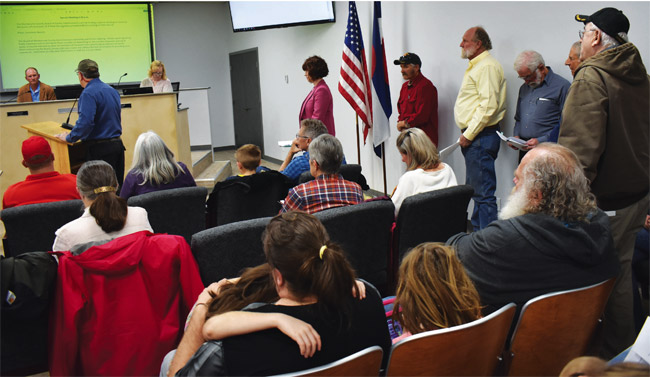


In the U.S., Women’s History Month dates back to 1910-11 in remembrance of a strike of the International Ladies Garment Workers Union that took place in Chicago, known as the Hart, Scahffner and Marx strike. Women showed their capability to unify ethnic boundaries in response to an industry infamous for low wages, long hours – sometimes 75 hours a week – and poor conditions. The strike began with 16 women protesting; soon 2,100 others joined and eventually 41,000 women walked off the job and stayed out for 14 weeks until some of their demands for better conditions were met.

Later, it commemorated the Triangle Shirtwaist Fire of 1911 in Manhattan when 146 women perished. They were mostly young, some only teens who were immigrants and spoke little or no English, and were working 12 hours a day every day. They either died in the fire that broke out of the eighth floor of the wood frame building or died as a result of jumping out the windows to the sidewalks below. They couldn’t escape because the doors were locked to prevent them from stealing or taking unauthorized breaks. An unauthorized break often meant taking time out to run down eight flights of stairs to use the outhouse located in the back yard of the factory.

In the words of President Carter in 1980: “From the first settlers who came to our shores, from the First American Indian families who befriended them, men and women have worked together to build this nation. Too often the women were unsung and sometimes their contributions went unnoticed. But the achievements, leadership, courage, strength, and love of the women who built America was as vital as that of the men whose names we know well.”

Some women you may not know but would probably find inspiring or at least interesting who were born in March:

  • Hallie Quinn Brown, educator, activist, black historian, and suffragist
  • Jane Arminda Delano, unified the nursing associations of the Army Nurse Corps and the Red Cross during WW I
  • Rebecca Gratz, educator, visionary and aid worker
  • Alice Henry, activist, educator, writer and feminist
  • Jessie Donalson Hodder, women’s prison reformer
  • Myrtilla Miner a Quaker educator who opened a Colored Girls School in Washington, D.C.
  • Emily Elizabeth Parsons, Civil War Nurse
  • Norma Collins Roberts, Farmer, writer and author of the Yankee Cookbook
  • Sarah Royce, a strong American pioneer Woman
  • Agnes Repplier, a rebel with degrees from University of Pennsylvania, Temple, Yale, Columbia, Marquette, and Princeton
  • Lillian Welsh, an educator, and physician
  • Candice Thurber Wheeler, artist, organizer, established the Society of Decorative Art in New York City and the Women’s Exchange
  • Narcissa Whitman, first white woman to cross the Continental Divide.

Margaret “Midge” Kirk is a slightly eccentric artist, writer, bibliophile, feminist scholar and hobby historian who lives in the SW corner of Colorado. She can be reached at eurydice4@yahoo.com or visit her website www.herstory-online.com.

Published in Midge Kirk

The celebrated flagger of Calaveras County

A steep Highway 49 weaves snakelike through the dry, golden hills of the Golden State as it crosses into Calaveras County. I pulled up beside a road worker holding his traffic sign. I had been warned, over five miles back, that road construction was under way. I should be prepared to stop. There might be delays. I watched the car in front of me accelerate and latch on to the end of a string of travelers being tugged along like a choo-choo train by the flashing lights of a pilot car. My road worker simply shrugged and waved him through.

I was not so lucky. Maybe I should have barreled through and disregarded any frantic signals, or if I’d had the foresight to roll up my windows and play a little music, I could have avoided being flogged by a flagman’s tale.

He and I looked each other over. He was a portly little fellow, nearly as wide as he was tall. He held his sign in one hand, the word Stop facing me instead of oncoming traffic, and the word Slow aimed toward himself. His other hand rested against my door frame, either to keep me inside or more likely to give himself some additional support.

When he spoke he shouted, a habit from working around diesel engines and heavy equipment, but I could only hear birds chirping in the trees, not even the sound of another vehicle pulling up to idle behind me. We were alone. He started his commentary with a question he never intended me to answer, and what follows is every detail I could remember faithfully put down, without ever once interrupting him:

Ya goin’ along like the rest of them I suppose ta Angels Camp, aren’t ya? Well, it’s goin’ ta be more than a little deelay cause that pilot car driver has a queer way about doin’ his job. If it were me, well, I’da stablished a rootine that coulda tole drivers and flaggers like me zackly how long we’s gotta be out here in the sun bleeding sweat. But he’s a funny sort, ordered me ta stand right here, but this spot gotta be near ten miles away from where just one dozer is scrapin’ up a shoulder. Don’t seem right ya need 20 miles a clearance — that’s 10 on each side — ta keep one piece a equipment from gettin’ in traffic’s way. I betcha he’s gettin’ paid by the mile and not just the hour like the rest a us.

One time once we was doin’ some resurfacing on 101, he took darn near a haft hour ta cover a three-mile section of gravel, draggin’ must ta been a hundred cars that had been waitin’ fer him ta get back from the other side. Jonesy said betcha he keeps a girl, meets her along the way fer some retoolin’ if ya know what I mean, and makes everyone sit still till he gets ready ta go again. Ya see, nobody knows what’s goin’ on tween here and there. They just know ta go when a guy tells ‘em ta, and ta stop when somebody else says stop. This walkie-talkie fer instance, tells me when ta let ya go. It’ll just squawk and ya know, sometimes I think it’s him, the pilot car driver, on the other end, not the fella standing like me twenty miles from here.

Anyways, nother time we — the guy on the other end — got ta talkin’ one day afta work, and we thought maybe if we follered the pilot car once, we’d see what the driver was up ta, but it was kinder risky, leavin’ folks in their vehicles with no one to tell them to stay put. So Greeley, that was his name before he got fired — course, that would still be his name come ta think — puts his scooter in the back a his truck under a tarp and when the pilot car driver takes off with his next string a vehicles, he unloads the scooter and starts er up, sticks his sign in the dirt with his bright vest tied ta it like a scarecrow. But no sooner than he catches up with the caravan the whole bunch stops and he can’t see up ta the front a the line ta see why, so he gets nervous and turns around and scoots on back ta his post only ta find the wind has knocked down his makeshift signal and released a string of vehicles that shoulda been waitin’, all coming straight fer him. Well, he turns round agin and sorta takes over, waving them along as a kinda pilot scooter, figurin’ when he gets them caught up ta the first bunch, he can go back with no one the wiser. But every time he goes back, there’s another bunch creepin’ up the road. It’s sorta like them Bible fishes and loaves except by now the supervisor is showed up at my end, hot mad and wonderin’ what’s goin’ on. So I squawk Greeley on the walkie-talkie and tell him ta watch out but I don’t hear nothin’ cept static.

I guess Greeley finally couldn’t take it no more, he just left his truck and rode his scooter on down the mountain all the way home. The supervisor hadta mail him his notice of dismissal. The wife showed up outta nowhere a couple days later and picked up the truck. Didn’t explain nothin’ ta no one.

That’s why I just stand here and do my job, figurin’ that pilot car got it in fer me, cause he knows I know somethin’ ain’t right. Too bad Greeley got all the blame but least it didn’t stick ta me.

Look it that ball a dust there, comin’ up the road. Either a dust devil or the pilot car. You just wait here and I’ll get my walkie-talkie from that there stump. Tell ya how much longer yer goin’ ta be. Could ya holt this sign a minute?

When he leaned his post against my car and shuffled off toward the side of the road, I shouted after him, “You say, I should just follow that dust trail?”

The automatic window soundlessly slid closed and I accelerated in the direction of the whirling dervish, just in case the pilot car wasn’t able to rescue me for another half hour.

David Feela, an award-winning poet, essayist, and author, writes from Montezuma County, Colo. See his works at http://feelasophy.weebly.com/

Published in David Feela

A divisive issue

Perhaps Sherlock Holmes is needed? After all, the game’s afoot – but not everyone wants to toe the line.

For roughly a century the non-native – mostly Republican – voters in San Juan County, Utah, have controlled the political landscape. Despite Native Americans making up half of the registered voters in the county, the district maps were drawn in such a way to ensure that two of the three seats on the county commission would always be kept in non- Native hands.

Until the November 2018, election, that is.

After a federal court ruled that San Juan County districts were “racially gerrymandered” to discriminate against Native American voters the district boundaries had to be redrawn.

This led to Native candidates, both Democrats, winning two of the three commission seats for the first time ever.

The entrenched Powers-That-Be were determined not to go gentle into that good night.

First, losing Republican candidate Kelly Laws challenged the residency of Navajo Willie Grayeyes. But when the district court recently ruled in favor of Grayeyes it appeared as though a new reality had come to San Juan County.

The bell had tolled on the Old Guard that had kept a firm grasp on county political power for a hundred years. What can be done now?

It’s elementary, really.

State Rep. Kim Coleman, R-Salt Lake City, wants communities to be able to break away from existing counties and form their own.

It’s an idea backed by State Rep. Phil Lyman, R-Blanding. Lyman, a former San Juan County commissioner, thinks San Juan should be split into two or three separate counties.

The idea has nothing to do with discrimination, divisiveness or now having two Navajo commissioners, Lyman insisted. It’s just a matter of better representation. After all, the American Revolution was fought because citizens wanted better representation from their government, Lyman said.

His home community has been “disenfranchised” by the new voting district map, Lyman insisted.

San Juan County’s other Navajo commissioner, Kenneth Maryboy, summed up Coleman’s legislation in one word: “Stupid.”

Maybe, while he’s at it, our pipesmoking super sleuth could unravel the mystery of why county Republicans – who ignored fair voter representation for a century – are suddenly concerned.

Or has Kenneth Maryboy already solved that puzzle?

The white Republican establishment just doesn’t like seeing natives in leadership positions, Maryboy deduced.

John Christian Hopkins lives in Sanders, Ariz., with his wife Sararesa. He is a veteran journalist – but never an enemy of the people – and a former nationally syndicated columnist for Gannett News Service. He is the author of many books,including “Carlomagno: Adventures of the Pirate Prince of the Wampanoag” and “Loki: God of Mischief.” Hopkins is a member of the Narragansett Indian Tribe of Rhode Island.

Published in John Christian Hopkins

Stand up, sit down: Flag flaps wave on

Colin Kaepernick has reached an agreement with the National Football League over what amounts to the loss of his job for exercising his rights. The agreement, announced in mid-February, resolves the former 49ers quarterback’s claim of collusion that kept him from playing, after he knelt when the national anthem was played pre-game. A teammate, Eric Reid, also knelt and was part of the settlement.

Because it’s subject to a nondisclosure agreement, the public may never know for certain how much the NFL paid for its decision to punish players it deemed insufficiently patriotic — possibly at the behest of a draft-dodging, racist president, who railed “get that son of a bitch off the field right now. Out! He’s fired.”

There’s a caveat to all this, of course: a private employer doesn’t necessarily have an obligation to protect the First Amendment. It does have the obligation, though, not to scheme to destroy former employers’ career prospects.

Further, Kaepernick’s signed agreement hardly puts the matter to rest. The public remains divided over whether standing for the anthem is a right or an obligation. (Spoiler alert: It isn’t an obligation.) And it’s seen in cases that continue to crop up, despite settled law.

As of February, a Florida boy was facing misdemeanor charges of “disruption” of a class. The source of the disruption? A substitute teacher’s disturbing ignorance of school district policy for Polk County Public Schools, Florida law — and the Constitution she thought she was honoring by ordering the student, 11, to stand up.

According to published reports: The sixth-grader refused to stand because he views the flag as “racist,” then got into a disagreement with the sub, who asked why he didn’t go to another place to live. The child replied “they brought me here.” The sub in turn said he could always go back, “because I came here from Cuba and the day I feel I’m not welcome here anymore, I would find another place to live.”

What happened next has not been made entirely clear from media reports.

The teacher called the school office to deal with the child, who then reportedly refused to leave class after being told multiple times to do so. The boy also allegedly made threats while being taken to the office — allegations his mother later disputed.

It may not be that he was arrested specifically for “not standing,” as some reports have characterized it, but whatever the disruption was, it clearly arose from him exercising his rights.

Those yearning for the days when “the pledge was said in school” appear unaware that the pledge is still said in most schools. It’s just that it cannot be mandatory, and this was established in the 1943 Supreme Court case, West Virginia State Board of Education v. Barnette. In this decision, the high court reversed a case from three years earlier, which held students who were Jehovah’s Witnesses could be compelled to recite the pledge. The 1943 ruling held the free speech clause of the First Amendment barred schools from making the pledge — or saluting the flag — mandatory.

Yet, in 2017, a Texas teen was briefly expelled for not reciting the pledge — and when she sued, the state’s attorney general filed to intervene … on behalf of the school’s unconstitutional policy, which itself was based on an unconstitutional Texas law requiring students to say the pledge, or opt out with parental consent.

The plaintiff, India Landry, reportedly reached a confidential settlement in late 2018.

At the heart of such incidents: emotion- driven ignorance that kicks into high gear whenever the pledge or anthem comes up.

Simply put, people confuse the appearance of patriotism (saluting a flag) with the substance of patriotism — to the point of overlooking the fact that coerced loyalty is not loyalty, but the very definition of “big government,” and what occurs in dictatorships. That is true, even if one happens to like the show of loyalty that is required.

In the wake of the protest movement Kaepernick triggered, people boycotted the NFL, filled social media with inaccurate posts about “the pledge not being said in schools,” and, in the case of one Colorado Springs shopkeeper, refused to sell Nike products after the athletic apparel giant signed Kap for an ad campaign: “Believe in something. Even if it means sacrificing everything.”

Stephen Martin, owner of Prime Time Sports, took that to heart. He boycotted Nike, deeply discounting thousands of dollars worth of existing Nike merchandise he had in stock.

He recently announced his business will close: Martin, according to published reports, is on the hook for the merchandise he was contracted to sell, as well as for his building lease, so he’s going out of business and into debt.

In one respect, he too, took a stand (so to speak) for his beliefs. He does not deserve mockery, even if the Constitution does not protect against bad business decisions the way it protects free speech.

But he also missed the same basic point that most people — who understandably appreciate what the flag represents, as well as appreciate the military — miss when they get stirred up about patriotic symbols. In an interview with national publications, Martin stated: “You don’t trample over the men who have given Colin Kaepernick and me the right to free speech.”

First, rights are not “given.” They exist as part of the fundamental human condition and are either guaranteed by government or not. They are either protected by law, custom and, when necessary, military force, or they are denied by same. But “the government” did not “give” us the right to protest. It enshrined the right into law. It may seem like hair-splitting, but there is a difference.

More to the point: If the objection to kneeling during the anthem is that it somehow “disrespects” veterans who “fought for our rights,” what, exactly, should we do with these hard-won rights? Put them on a shelf, so we can point and declare: “Behold! Our beautiful rights!”?

This notion is offered as a deliberate absurdity to underscore the obvious answer: We honor those who sacrificed for our rights by exercising those rights, or else those people sacrificed for nothing.

So, exercise your rights by standing for the anthem or pledge, if you want. Exercise them by remaining seated at your middle school desk. Exercise them by kneeling on the sidelines of a football field while the anthem is played.

Exercise them by boycotting the NFL, if what players are doing angers you — that’s your right, too. Or, in the case of Martin, boycott Nike, even if it costs you your business.

But understand our rights either exist for all of us or, if they can be revoked or curtailed based on the strength of public outrage, they don’t technically exist for any of us.

Katharhynn Heidelberg is an award-winning journalist in Montrose, Colo.

Published in Katharhynn Heidelberg

The satisfaction of hanging on to absolutely everything

In this column, I have summed up how to fill your space with items in a way that will change your life forever. Can’t be done? I bet I’ll get that a lot and it makes sense, considering that almost everyone has experienced a relapse into zealous attempts to get organized.

Have you ever hoarded fiendishly, only to find that all too soon your conscience or your spouse has cleared your home again and taken who-knows-what to the thrift store donation center? If so, allow me to spill the secret of mastery. Start by gathering. Then utilize your space, haphazardly, entirely, in one go. If you subscribe to this practice — the HiveZac Approach — you’ll never see your floor again, sparing you untold hours cleaning it.

Although this method runs counter to current popular trends, everyone who completes my universally applicable training will likely keep their house attached to the earth by sheer force of gravity — with other magical results, too. Filling their houses with items probably will touch all other facets of their enviable lives, such as their ability to keep a job and custody of their children. Having dedicated more than some percentage of my week to this subject, I know that hoarding can transmogrify your existence.

Does it still sound too good to be truly free of hantavirus and other rodent- borne maladies? If your idea of hoarding is collecting one scrap worth something, someday, in a pinch, each day or stocking under your bed one found object at a time, then you’re right. It won’t have much effect on your life expectancy. If you dedicate yourself to this approach, however, hoarding can have an uncatalogueable impact. In fact, not even knowing what you have or where you keep it is the truest spirit of hoarding.

I have never read a single home or lifestyle magazine. That’s how I’m able to tackle hoarding so seriously. Now is the best time to begin your own life of hoarding under my tutelage, visiting homes and offices where all of a sudden everyone is getting rid of so much stuff. I can give hands-on advice (with rubber gloves on) to people who find hoarding difficult, who hoard but suffer bouts of spring cleaning, or who want to hoard but don’t know how to acquire things indiscriminately.

The number of items my clients will acquire, from clothes and remnants of undergarments to other people’s photos, dried-up pens, waiting room magazines with the addresses cut out, and makeup scraps, easily surpasses health code regulations. I do not exaggerate. I have envisioned myself assisting clients who have scored two U-Haul trucks’ worth of unwanted goods (including the trucks themselves) in a single go.

From my meditations upon the craft of acquiring and my dreams of helping functioning humans become packrats, I can say one thing with undeserved confidence: A drastic disintegration of the open spaces in a home causes proportionately drastic changes in personal hygiene and neighborhood property values. It is life transforming.

I mean it. Here are some of the testimonials I will soon start receiving on a weekly, even monthly, basis from future former clients:

“With your help, I lost my job and found undocumented work doing something I never dreamed of doing. Your course taught me to see that I need absolutely everything I can get my hands on. So what if I’m now divorced? I’m much happier this way. Someone I have been stalking on Facebook for years recently contracted tetanus from my front yard.

“I’m delighted to report that since stockpiling my property, I’ve been able to keep the meter reader from accessing my meter. My dogs and I are having a great time, even though I don’t know how many dogs I have anymore. I’m amazed to find that just bringing things home has changed me so much. I finally succeeded in losing twenty pounds, now that I cannot reach the kitchen.”

The results of the HiveZac Approach will inevitably change the future. Why? Because the ripple effect states that every action has an equal and opposite legal action. We don’t live in a vacuum, after all. Nor do we need to use the vacuums that we have stashed around here somewhere. Even if you can’t see anything else after completing my course, you will see quite clearly that you need all that you can get in life.

This is what I call the satisfaction of hanging on to absolutely everything. By putting your house in disarray, you will see your furniture and decorations come to life. Literally, with mold and mushrooms and such.

This — this is the satisfaction I want to share with as many people as possible.

Zach Hively writes from Durango, Colo. He can be read and reached through http://zachhively.com and on Twitter @zachhively.

Published in Zach Hively

HB 19-1177: What it would and wouldn’t do

Colorado’s HB 19-1177, a form of what’s called “red-flag legislation,” is designed to allow family or household members and law officers to petition a court for a temporary extreme risk protection order (ERPO) when someone is at risk of doing harm with firearms.

A dozen other states have similar laws, according to the Denver Post, but how effective they are is unclear.

Although the laws have been promoted in response to mass shootings such as the one a year ago at a high school in Parkland, Fla., they seem to be utilized more often to prevent suicides. The Denver Post, which reviewed how the laws have been applied in several states, said suicide prevention was the No. 1 reason for gun seizure in all those states.

How effective were the laws in reducing suicide? According to the Post, one study found that suicides by firearm declined 13.7 percent in Connecticut after the law was passed in 1999, and 7.5 percent in Indiana. However, the drop in Connecticut was offset by a rise in suicides by non-gun methods.

Montezuma County Sheriff Steve Nowlin told the Four Corners Free Press he has doubts about the usefulness of such legislation and doesn’t support it.

“To me it’s a civil matter. It’s a family issue. Why is the government getting involved? Who’s ‘at risk’? Who’s going to determine that – a judge? Really? Just because a person says ‘this person appears to be unstable to me’? How do you know that?”

But at press time, HB 1177 appeared to have a good chance to become law. The House passed it on March 4, sending it to the Senate, and Gov. Jared Polis has said he would sign it.

Under the law, the person petitioning for the emergency order must show by “a preponderance of the evidence” that the person in question poses a significant risk to himself/herself or other people by virtue of having a firearm. The petitioner has to submit a signed affidavit setting forth facts in support of the temporary ERPO, under penalty of perjury for false information.

Counsel is to be appointed to represent the person in question at the hearing. The ERPO process does not involve charging the person with a crime, but is a civil proceeding.

If the temporary ERPO is issued, the court must schedule another hearing in 14 days or less to determine whether to issue a continuing ERPO that would prohibit the person in question from possessing, controlling, buying or receiving a firearm for 364 days.

However, the person can petition the court to reconsider the order.

Nowlin said he understands the reasoning behind the bill and the desire to prevent harm, but he doesn’t believe this is the answer. “We’re not taking people’s cars away and that’s the No. 1 cause of injury and death in this county,” he said.

He said there are other means to handle situations where someone is threatening to harm others.

If someone threatens to shoot up a school, for instance, he said, “We pick a person up. Look at all [their] avenues of communications. I can obtain a search warrant and look for corroborating evidence. If there is, that’s a felony, that’s how that would be dealt with.

“If they’ve committed a crime, deal with it on the criminal side.”

Likewise if someone is threatening to harm himself or herself, there are existing options for handling the situation, Nowlin said. “We already deal with that almost on a daily basis and we take care of that without the law — we get the family professionals involved.”

Asking a court for an emergency order doesn’t necessarily mean it will be granted or extended, the Denver Post said.

Statistics show that 30 percent of Connecticut’s cases are dismissed after an initial gun seizure, the Post said.

Colorado’s law would provide that judges can issue a gun-seizure order and a search warrant at the same time. In some states, law officers who contact a disturbed person to take their firearms have to go back to a judge to get a warrant if the person won’t surrender the weapons, thus setting up the potential for an angry, dangerous second confrontation.

Published in March 2019 Tagged ,

The word ‘sanctuary’ poses problems, sheriff says

Montezuma County Sheriff Steve Nowlin says a resolution passed by the Montezuma County commissioners stating that the county is “a sanctuary county for the constitutional right to keep and bear arms” won’t alter how he does his job.

“It’s just a political statement,” he told the Four Corners Free Press. “It has no authority over what I do or don’t do.”

However, while he was prepared to sign the first resolution considered by the commissioners – which simply expressed “opposition to infringement upon the constitutional right to keep and bear arms” – he won’t sign one calling the county a gun sanctuary, he said.

“If they are going to put in that it’s a sanctuary county for guns, that means no laws apply and I can’t sign it,” he said.

Nowlin said he is bound by his oath of office to uphold state law as well as the constitution. He says he fully supports Second Amendment rights, but he has concerns about labeling the county a “sanctuary” for those rights. “It puts me in the middle of something I don’t want to be involved in,” he said.

“I understand people’s feelings on both sides of the aisle, I really do,” Nowlin said. “I’m just going to use common sense and the best judgment for everybody. We’re not going to go in and start taking people’s guns. I’m not going to violate somebody’s constitutional and legal rights and property possession.

“I want to support responsible lawful gun ownership. That’s what we want here. I support that 100 percent. We all do.”

A county resolution is merely a statement and doesn’t have the force of law, but Commissioner Larry Don Suckla has called for the commission to pass an actual ordinance – which is a law within the county – declaring the county to be “a sanctuary county for constitutional rights.”

Nowlin said he doesn’t necessarily oppose such a measure, though he isn’t sure what practical impact it would have. “If you want to declare a sanctuary for the constitution, what does it mean? But I’m good with that, I guess,” he said.

Published in March 2019 Tagged ,

‘A sanctuary county for the constitutional right to keep and bear arms’: The Montezuma County Commission makes headlines with a new resolution, and there is talk of passing an ordinance

Citizens line up to take their turn at the podium during public comments at a Feb. 28 special meeting of the Montezuma County Commission. At the meeting, the commissioners voted 3-0 to pass a resolution calling the county a “sanctuary county” for gun rights.

Cheered on by an overflow audience deeply concerned about gun rights, the Montezuma County commissioners on Feb. 28 unanimously passed a resolution aimed at opposing Colorado’s “red-flag” legislation.

“Montezuma County, Colorado, is a Sanctuary County for the Constitutional right to keep and bear arms,” the resolution states.

The measure has no legal impact, but was designed to send a message to the Colorado General Assembly, which appeared likely to pass a bill allowing for the temporary seizure of guns from disturbed people.

A resolution “is really just a position statement,” explained county attorney John Baxter at the start of the meeting. “I don’t think people can necessarily consider it a promise or guarantee of what might or might not happen in Montezuma County.”

He noted that the county sheriff is independently elected and the commissioners can’t dictate how he does his job. Also, the city of Cortez has its own police department and the town of Mancos has its own marshal’s office, which operate without county oversight.

The resolution, Baxter said, represents “what the elected officials believe.”

‘Sanctuary’

But despite the fact that the resolution was symbolic, it generated an enormous amount of interest, reflecting the fears that have been sparked in rural Colorado by HB 19-1177.

The bill sets up a procedure to allow family members and law enforcement to petition a court for the temporary seizure of firearms from a person believed to be at risk of harming himself/herself or others. (See HB 19-1177: What it would and wouldn’t do.)

At press time it had passed the state House and was headed to the Senate.

There was never any doubt that the commissioners would pass some sort of resolution voicing opposition to the bill – the only question was which of three draft measures they would choose to support.

At the board’s regular Tuesday meeting on Feb. 26, the commission considered a resolution titled, “Opposition to Infringement upon the Constitutional Right to Keep and Bear Arms.”

A number of people addressed the resolution, most in favor of it.

The text of that resolution, however, did not mention the word “sanctuary,” and Commissioner Larry Don Suckla wanted the word included.

“Why do we have sanctuary cities all over this country for illegal immigrants?” he asked.

Sheriff Steve Nowlin said he strongly supports gun rights, but voiced concern about signing on to a resolution that would indicate he wouldn’t enforce a law passed by the Colorado legislature. He noted that his oath of office commits him to follow the constitution and state law both.

“My feeling is the commissioners don’t have the authority to bind you to anything,” Baxter told Nowlin at the Feb. 26 meeting. Without the sheriff ’s endorsement of the resolution, he said, “I don’t think legally we have a lot of ground to stand on” in trying to force the sheriff not to enforce red-flag laws.

Commissioner Jim Candelaria said he did not want to put law enforcement “in harm’s way” and made a motion to approve the resolution without the word “sanctuary.”

But Suckla was insistent that the word be included. “I really feel it needs the word ‘sanctuary’,” he said. “I don’t understand how all these other communities can do it with the word ‘sanctuary’ and we can’t.”

Montezuma County was reportedly the second county to pass such a resolution in Colorado, after Fremont County, and other counties were considering similar options. A number of counties in other states have passed measures calling themselves gun sanctuaries.

Candelaria’s motion died for lack of a second.

Suckla then called for Baxter to draft another resolution “with ‘sanctuary’ all over the place.”

Candelaria asked for time to study the new draft, and the board opted to hold a special meeting on the issue the evening of Thursday, Feb. 28.

‘Imagine the chaos’

That gathering drew well over 100 people to the commissioners’ meeting room – many of whom had seldom if ever attended a commission meeting before. Some additional people spilled over into the county annex, which was set up for video viewing of the meeting.

The audience was greeted with copies of three resolutions: the original one that had failed on Feb. 26; the one that ultimately passed, stating that “Montezuma County is a sanctuary county for the constitutional right to keep and bear arms;” and a third labeling the county “a sanctuary county for constitutional rights.”

More than 30 citizens spoke during public comment. Most supported approving the second or third resolution.

Amanda Winter of Dolores said the red-flag legislation means “anyone with a vindictive ex” would be in danger of having their guns taken away.

“It’s not going to stop until the people stand up and take a stand, and we ought to thank the commissioners for taking that stand,” said Robert Smith of Road 20.

“It’s such a blessing to have commissioners who take their oath of office serious,” said Debbie Boyd of Lewis. “Guns don’t kill people, people kill people. You can remove all the guns and it won’t change anything.”

Dexter Gill of Lewis agreed, saying there are other ways “through the mental system” to handle a situation where people are threatening to harm themselves or others.

But some citizens spoke in opposition to the resolution. “Just imagine the chaos if everyone only followed the laws they agreed with,” said Ellen Foster of Dolores. County resident Janet Hough said she believes HB 1177 will help prevent gun violence, particularly suicides. She said 68 percent of suicides in Montezuma County, and half of those statewide, are committed with firearms.

County resident Rebecca Busic said she worried about the precedent the commission was setting and said a future commission – which might be more progressive in nature – could look back to this resolution and use it as the basis for declaring the county an “anti-fracking sanctuary” or something similar.

Sheriff Nowlin spoke at the end of the two hours of public comment. “I think everybody is reaching for the same thing,” he said. “They want not to have their rights taken away and I think you all know I’m right there with you.”

He said he doesn’t see the need for HB 1177 because the system already works to save lives and protect families when someone is considering committing gun violence.

He said he supports gun rights and constitutional freedoms, but opposes the use of the word “sanctuary” because it means “a safe haven.”

He said he was willing to sign the original resolution that didn’t contain the word.

“What message you want to send, you send,” he said, adding, “It’s not going to have an effect on me.”

‘A disarmed nation’

In the ensuing board discussion, Candelaria and Commissioner Keenan Ertel indicated they were favoring the third option because of its support for broad constitutional rights.

But Suckla made a motion to pass the second option instead, the one naming the county a sanctuary for the right to keep and bear arms.

Candelaria promptly seconded that motion, saying the board had waited long enough and didn’t need to consider the matter further. “We are continually being overrun by what the legislature is doing,” Candelaria said, adding, “Our rights are continually being eroded.”

Ertel agreed, saying, “A disarmed nation is a nation that’s very easily controlled.”

The resolution passed unanimously.

There was then some confusion as to which resolution had been approved, as all of them carried the same number. So the board went through the process a second time, with Suckla making the same motion, Candelaria seconding it, and all three voting in favor.

Suckla said he would also like to create and pass a county ordinance, a measure that does have the effect of law.

He later clarified in a phone interview with the Four Corners Free Press that the ordinance he wants to see passed would be similar to the third proposed resolution, which said the county was “a Sanctuary County that wishes to protect U.S. and Colorado Constitutional rights.”

However, Suckla said, he envisions that the ordinance would not contain the word “sanctuary.”

He said he understood that there was confusion about what sort of ordinance he had been calling for at the end of the meeting. “It was pretty loud in there,” he said.

Published in March 2019 Tagged ,