Still bogged down over roads and travel in Boggy Draw

Related: Chappell says county is concerned about locals

It was a cautiously cordial meeting Dec. 20 in Dove Creek between two sets of local county commissioners and several San Juan National Forest officials, but at the end the parties appeared as far apart as ever on issues of forest management.

Discussion of the travel-management plan for the Boggy Draw-Glade area of the national forest, which includes portions of Montezuma and Dolores counties, dominated much of the meeting. The commissioners for both counties continued to insist the plan is too restrictive of motorized access – even though the plan was recently overturned on appeal because it allowed a higher-than-usual road density in one area.

Steve Beverlin, Dolores District Manager for the San Juan forest, said the revised Boggy-Glade travel plan should be signed and in effect by the end of January. It will be very similar to the plan that was overturned on appeal, with language added to clarify why the decision was made to exceed the national-forest guideline on road density in the particular area, he said.

“We don’t anticipate closing any more roads” to meet the density guideline, he said.

While that was good news to the county commissioners, they continued to contend that the new plan’s ban on motorized game retrieval and its proposed closure of some 62 miles of public roads will discourage hunting and harm the economies of both counties.

Beverlin explained that the 2005 Travel Management Rule adopted by the Forest Service nationwide required national forests to designate a system of motorized trails and roads, and to prohibit cross-country travel off those routes.

While unpopular with some motorized users, the cross-country travel ban is the Forest Service’s effort to deal with the explosion in ATV use nationwide and the fact that some users were causing erosion, stream damage, and scars from off-road use.

The ban on the use of motorized vehicles to retrieve game is in line with the general trend nationwide, Beverlin said.

However, Dolores County Commissioner Julie Kibel said the Forest Service did not adequately consider the economic impacts of the new policy.

“We are an economically deprived county,” she said, adding that she has heard some hunters and guides saying they won’t be back to the area if they can’t retrieve their game with ATVs.

Beverlin said specific information would be needed to document the claim of economic harm, as the Dolores Public Lands Office had done an economic analysis as part of the plan and found no major adverse effects.

“Get a record of [hunting] license sales from the Division of Wildlife,” suggested Montezuma County Commissioner Steve Chappell.

But Beverlin said the Forest Service had asked the DOW about such data, and wildlife officials said there was no change in license sales from previous years and no increase in the number of licenses turned back in the local area this year.

Dolores County Commissioner Ernie Williams said it might take several years for the effects to be felt, and Beverlin noted that travel-management plans are to be reviewed annually.

Chappell said the counties “would like to see from the Forest Service a little more give, because what we’re hearing from our constituents is that things are too rigid.”

“We were remanded on our [Boggy-Glade] decision because we exceeded the road-density guideline in a management area,” Beverlin said. “We heard from people that they wanted more roads, and we included them, and that’s why the plan was overturned. If we had interpreted the guidelines as rigid numbers that would mean another 20 miles of road would be closed.

“We tried to provide the opportunity the public was asking for.”

Deborah Kill, National Environmental Policy Act coordinator for the Dolores Public Lands Office, said the idea behind some road closures was to improve wildlife habitat. “If animals are there and the quality of the hunt is good, it’s possible you could have more people coming” in a few years, she said.

And audience member Matthew Clark of Trout Unlimited said he is a hunter and angler who has lived in Montezuma County all his life and supports the road closures. “There are a lot of hunters really happy about them,” he said.

Hunting numbers are declining nationally for many reasons, so even if numbers are down locally, it isn’t necessarily because of new restrictions on forest use, he said.

“There’s equally as many studies that show that people want to go hunting in roadless areas and wilderness, because that’s where the big bulls are,” Clark said. “There’s more than one perspective to that and I think the Forest Service has done a pretty good job.”

However, Chappell said hunting’s decline nationwide is because of the fact that most states are far more restrictive of hunting.

“Fifteen years ago I started applying for a hunting license in Arizona and never got one,” he said. “If people apply and apply and never get one, they lose interest.

“Colorado’s the only state that has opportunities for young hunters to get a tag. . . . These other states have decided to go to elite hunting and trophy-type hunting, and that has eliminated their hunters. Colorado has kept an active group because they sell [tags] over the counter.”

Dolores County’s Williams asked whether special permits could be issued for motorized game retrieval for the handicapped. Beverlin replied that the DOW already issues permits for disabled hunters and seniors.

“That’s only for hunting, not game retrieval,” Williams said.

Irvin Frasier, town supervisor of Dove Creek, said the 2005 travel rule provides for game retrieval by permit.

“You’re correct,” Beverlin said. “There is some flexibility there, but it would be rare, because it’s hard to enforce and to set the standards for how does this person get a permit over others.”

Motorized game retrieval and road closures “are huge issues to our constituents,” Kibel said. “We’re not going to hear the end of this. We need to continue working with you guys.”

Williams agreed. “Right now we see a wide gap between citizens and government,” he said. “We can tell that by just parking a county vehicle somewhere overnight. It used to be you could park it anywhere and people would protect it. It was their tax money. It’s not that way any more.”

Williams asked if there could be a trial game-retrieval area designated.

Beverlin said that was unlikely. “People over me weren’t real amenable to game retrieval,” he said. “Most plans don’t even analyze it. It’s not even included. We recognized its importance in the area by including it in the analysis of the plan.”

“I respect the fact this is the way other travel-management plans are going, but not every shoe fits,” Kibel responded.

She said big-game retrieval “is getting to be an issue to the point where I’m fearful for people’s safety.

“When I was campaigning, people didn’t want to talk to me about what I was going to do as commissioner. They just wanted to tell me they were adamant about protecting their public lands. . . .

“I want us to make a difference. I want these issues to be resolved and I want to be heard. I want to do it in a way where we’re not fighting, but come to an agreement.”

Dolores County Commissioner Doug Stowe said he wants to keep management on a local level, not national. “If we leave it up to Washington and you’ve either got to be 25 years old [to go hunting] or you don’t go, we won’t have anything left,” he said.

The commissioners and Beverlin agreed that regular meetings are helpful, and decided to have another one on Monday, Jan. 17, at 1:30 p.m., this time at the Montezuma County courthouse in the commission meeting room.

Published in January 2011 Tagged

Chappell says county is concerned about locals

Related: Still bogged down over roads and travel in Boggy Draw

Now that representatives of Montezuma and Dolores counties are meeting regularly with San Juan National Forest officials, Montezuma County Commissioner Steve Chappell is hopeful that the counties will be better-informed about what the Forest Service is doing.

However, he said the Montezuma County commissioners remain frustrated with what they perceive as inflexibility on the part of the agency.

“My overall feeling is it’s like beating on a brick wall,” Chappell said. “I just don’t think we’re moving even the littlest bit.

“I think if we’re going to accomplish anything, it’s going to have to be at a higher level. The people we’re talking to just carry out the orders of people higher up.”

Chappell cited as an example the agency’s new policy against motorized game retrieval, which was implemented in local travelmanagement plans and has proven unpopular with a large portion of the local public.

He recounted that at an Oct. 4 meeting with Dolores County regarding its appeal of the new Boggy-Glade area travel-management plan, Dolores District Ranger Steve Beverlin asked if they would give up that appeal in exchange for having motorized game retrieval reinstated.

“They said, ‘Sure, if you can guarantee it,’ and he said, ‘I can’t guarantee anything.’ So they said no. Basically, he doesn’t have anything to throw on the table.”

Chappell said game retrieval is a particular sticking point with locals because many of them hunt not for recreation or trophy racks, but simply for food.

“A lot of families depend on this for their meat, especially in the rural areas like Montezuma and Dolores County,” he said. “Every family member will get a [deer or elk] tag in the hope of getting one or two animals. That’s their meat supply.”

Chappell said his family is among those who depend on game. “Honestly, we could afford to buy hamburger, but we prefer elk,” he said. “It’s leaner, and that’s important for people with heart problems.”

Chappell said he understands banning cross-country motorized travel in general, but believes hunters should be able to use an ATV to pack out their meat.

“Limit the off-road travel to only game retrieval, so you don’t have guys running all over the place with their four-wheelers and guns, trying to hunt,” he said. “Nobody really appreciates that, not even good hunters.

“But once you’ve got a 700-pound animal on the ground and you’re in your 50s or 60s , it’s a problem. Sure, you can quarter it up, but you can’t pack it out. With a fourwheeler you can.”

Chappell said the other aspect of the travel- management plan that frustrates many locals is the closure of some roads to motor vehicles in the Boggy-Glade travel plan. A total of 155 miles of roads are scheduled for closure, though 93 of those were for administrative use only and were not open to the public.

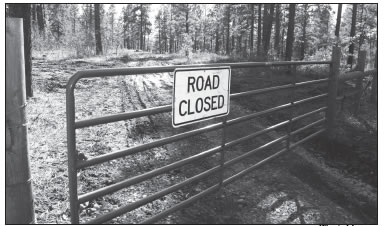
When decommissioning roads, agency personnel may place large boulders and berms across them. In addition, the pathways are sometimes mechanically torn out to discourage people from driving on them illegally.

Chappell said these acts strike many people as needlessly destructive to the terrain. “One thing hunters and recreationists are saying is that the Forest Service damage to the roads when they’re closing them is so severe, you couldn’t do that much damage with a four-wheeler. They are taking rippers and ripping up rocks, pushing down live trees, making a mess. People who really appreciate the forest – they are appalled.”

He said the impacts of such travel-management decisions on local counties were not adequately considered when agency personnel approved the plan.

“Agencies are supposed to coordinate with state and local governments to make sure they’re not affecting their economies or their land-use plan, but I don’t think there was much consideration of the economic effect of these road closures and no game retrieval. It wasn’t apparent to me.”

However, Chappell said the Montezuma County commissioners – like their Dolores County counterparts – do not approve of vandalism to Forest Service signs, gates, and other property, even if it is prompted by frustration over new policies.

“None of us approve of vandalism and we don’t condone it at all,” he said.

Chappell also said he wants issues to be worked out without the need for dramatic clashes. “I don’t think we want to be confrontational, but we definitely want to work on things.”

He said the county-appointed publiclands committee is working hard to find roads that might qualify as RS 2477 routes, a designation for old byways that pre-date the formation of the national forest. However, Chappell acknowledged that getting that designation involves a difficult court process and a judge’s approval.

In the meantime, he said he is pleased that the counties are having regular meetings with Forest Service representatives.

“I think it will really help. I don’t think we have a problem other than we’re upset, as well as our constituents, that we aren’t kept in the loop and really weren’t considered in all this. At least the process is there for future hits that the public might take – at least their representatives will be at the table and have a bit of forewarning.”

Neither Beverlin nor National Environmental Policy Act Coordinator Deborah Kill of the Dolores Public Lands Office could be reached for comment over the holidays.

Published in January 2011 Tagged

Artist Keith Hutcheson’s vision of the outdoors

Keith Hutcheson is a contented artist today. His retrospective painting exhibit at the Anasazi Heritage Center is an opportunity to survey decades of his own visual art work hanging as a portfolio in its entirety for the first time. He sees the diligence, but not the effort and is surprised by the amount — 60 large oil paintings done over 30 years while living in the Four Corners region.

“It’s satisfying,” he says.

"UNTITLED" BY KEITH HUTCHESON

Untitled, 2009, is an oil on canvas that is on display at the Anasazi Heritage Center as part of the Keith Hutcheson Retrospective 1973 – 2011. The show continues through March 18. Admission to the Heritage Center will be free through the end of February.

When Michael Williams, exhibit specialist for the Anasazi Heritage Center, proposed the show, Hutcheson wondered if he had enough work to fill the large, open space. Although it had been stacking up in an extra bedroom in his home and had accumulated in friends’ collections over time, he was surprised by the deep introspective volume of subject matter, the consistent number of large canvases.

“It really struck me to hear so many of the guests at the opening say exactly what I was feeling: ‘I had no idea you had painted this much!’”

The special-exhibits hall is the best opportunity in the region to offer an unobstructed and focused view of any public presentation. True to the professionalism of the Anasazi Heritage Center, the Hutcheson Retrospective is an example of discriminating planning and intent. Each piece is hung thoughtfully in museum-style welcoming the viewer through the space easily, engaging mind and heart with Hutcheson’s bold color and large familiar view of his subject matter — the Southwest’s rivers, canyons, mesas, forests, clouds and rocks.

As an avid, often solitary, fly fisherman and hiker, he has seen all that the viewer sees in the paintings. He’s been there, and brought his feelings home, putting them quietly on the canvases in his studio.

It’s the “deliciousness of the painted surface” that he likes, the business of being alive, how to capture the flesh of the natural world.

The Heritage Center is a top-flight museum. Enticing as Hurcheson’s rivers and rocks may be, don’t touch the paintings!

But Hutcheson does. Walking up to one of his river works in the exhibit he reaches out to it. “The painting becomes the teacher,” he says, while touching the surface of one of the three large river rocks in “Untitled,” 2006. It is a poignant gesture, suggesting that he cannot resist the painting’s call to take him back in time to a place where he actually felt the rocks beneath the surface of the water through his waders, bent down into the river to take up a fly on the end of a line stuck there in the shallows near the bank.

We, too, the observers, know or sense we’ve been there with him, going with the flow of his subject matter. It’s a compliment to the viewer, close to the bone of our own experience, that by his modest approach he lets us in, lets us tag along with him through the painting to the place it represents.

“It’s easy to be present in the land and water. We’re fully there in the natural world,” he says, assuming we have been there because he has been there.

But how does he paint flowing water if he’s standing in the middle of the river? Where’s the canvas?

“You can’t hold a paint brush and a fly rod at the same time,” he says. “It’s impossible to set up a canvas and work in that circumstance while you’re fishing.” Instead, back in the studio, Hutcheson paints a series of powerful hints for us about where we are standing with him.

The oil painting “Untitled,” 2009, is a case in point of painted suggestion. A transparent plane on the surface of the water — tough enough as a subject — that begins in the upper left corner, floats out in a few canvas inches toward the viewer, and trails away. From that point on Hutcheson gives us more information by painting the shadows of the ripples instead, that fall over and around the rocks in the water at the river bottom. The method implies that the water is flowing toward us, that we are standing in it. He does not need to paint the water, but only the intimation of its presence around us.

The approach is complex, a visual puzzle. But his personal experience in the water gives him the power to wield the details in loaded brush strokes that help us complete the surface of the water in motion in our mind, the direction he sets for us by showing us the consequence of the sun-drenched moment on the river.

That is all he shows us. We fill in the blanks.

Although he never paints from photographs, he does use them as a reference to construct the painting in his studio. In doing so, he diverges from today’s marketdriven technique where many artists enlarge landscape photographs printed in giclée format on stretched canvas and then paint over the image. It renders something that seems masterful on first view, but is actually not more painterly than a contemporary, dimestore, paint-by-number kit. To a novice eye it is a barely discernible trick.

But to that same viewer, Hutcheson’s adherence to painting for the sake of the painting, the process and subject matter, it is an opportunity to be truly brave with the painter. To look instead of assume. Hutcheson’s work is generous. He’s willing to show his vulnerability.

“You can learn how to live by living,” he says, “and in doing so you sense the wonder of life. It’s challenging to make a painting, but it’s okay because the creative process is its own reward.”

For 29 years Hutcheson taught art in Montezuma-Cortez High School. He is highly respected by his students for the dignity he brought to the process of making art and the encouragement he provided to the novice art audience.

“I used to teach that there is nothing mystical or profound about it. It is just that you do something on the big white empty canvas and then you do something else until it feels right.” He could be talking about solving a routine plumbing problem or describing a moment with Click and Clack, the Car Guys, under the hood of a Jeep.

That is the magic in his work. It is facing you directly with all he has to offer the viewer. The integrity of the painting, painter and viewer is intact, in balance.

“Ten years ago I used to think a lot about the growing demand for entertainment in art, how it was changing painting into a personality culture. Then I gave all that up. The paintings I make are not about me. These paintings are alive. When I held up my 6-month-old grandson and walked him in front of the work, his eyes locked on the paintings and you could watch him marvel at what he was seeing.”

Hutcheson is not a naïve painter. His mastery improves with each new work while staying focused on offering viewers something they wish they had done themselves.

That is the inspiring element in his work. His humble personality throws open the door of collective experience relating common grounds to high art by exposing the dubious assumption that painting, or “Art,” is motivated by extraordinary feats of fame, intellectual vigor and entitlement, or technical accomplishment.

“I do it,” he says simply, “because I am always caught in jaw-dropping wonder at what I see and feel when I’m hiking or flyfishing. Everybody projects their own impressions on your paintings. The painter has no control over people’s responses. It is rewarding enough to just share this experience with a retrospective exhibition like this.”

Published in Arts & Entertainment, January 2011 Tagged ,

Will the wolverine be restored to Colorado?

Colorado’s wolverine population has grown recently. It’s up to a total of one.

In 2009, a male wolverine trapped and collared in the Grand Tetons of Wyoming journeyed 500 miles to Colorado and took up residence in the high peaks around Rocky Mountain National Park, where he remains.

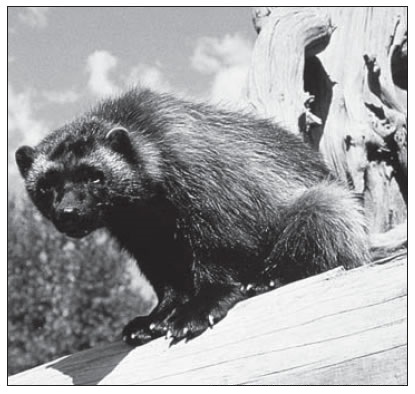
WOLVERINE

A wolverine sits near an interstate in Washington state. The U.S. Fish and Wildlife Service recently decided the animal, which is the rarest carnivore in North America, is “warranted but precluded” for listing and protection under the Endangered Species Act. Photo by Jeffrey Lewis/U.S. Department of Transportation

It was the first confirmed sighting of a wolverine in the state since 1919.

That could change, however. In July 2010, the Colorado Wildlife Commission approved a request by the state Division of Wildlife to begin discussions with stakeholders about a possible wolverine reintroduction. Though still in very preliminary stages, the idea gained impetus in December, when the U.S. Fish and Wildlife Service announced that it was adding the animal to its list of candidates for endangered-species status.

The population of wolverines in the contiguous United States was found to be “warranted but precluded” for protection under the Endangered Species Act. That means that while the agency deemed the population to be in need of protection, rule-making on behalf of the wolverine is precluded by the need to take measures for other, higher-priority species. Candidate species do not receive protection under the ESA.

That status will be reviewed annually.

In the meantime, Colorado is moving ahead with discussions about what a reintroduction might entail and what its effects might be.

Opening the dialogue

“We have had stakeholder meetings to present the idea,” said Eric Odell, DOW species-conservation coordinator, by phone from Fort Collins.

“We don’t have permission from the Colorado Wildlife Commission to go forward with the reintroduction, just to open the dialogue.”

Meetings have been held with agricultural interests, winter-recreation groups, nongovernmental organizations such as conservation non-profits, and other agencies. In addition, the DOW is working to develop a candidate conservation agreement between the federal land-management agencies, such as the Forest Service, and the Fish and Wildlife Service.

“We anticipate determining how federal land-management practices and the use of the federal lands would or would not be impacted by doing a restoration,” Odell said.

“One of the sideboards we’ve been using for the whole idea of this restoration is, we’re interested in doing it, but not at any extensive political, social or economic costs.”

The DOW had talked about a wolverine reintroduction at least a decade ago, when the Canada lynx was being brought back to Colorado. However, that effort raised such controversy, and took so many resources, that the DOW put the wolverine on the back burner.

This year, the agency announced that the lynx reintroduction was a success, with the felines reproducing faster than they are dying. More than 140 lynx have reportedly been born in the state since the animals were first released into the San Juan Mountains of Southwest Colorado in 1999.

Odell was not involved in the lynx reintroduction, but he said the agency “learned a lot from it – both technically and in regards to how to do it from a political standpoint as well.”

While the wolverine restoration might be similar to that of the lynx, it would differ in some ways, he said. “I don’t think we went to the same extent of getting stakeholder input as we are now,” Odell said. “We’re learning from our previous effort.”

He said so far, the feedback at the stakeholder meetings has been mixed.

“The ag groups are somewhat concerned with the potential impacts on grazing – not with direct take or predation [of livestock], because that’s not an issue. The non-governmental organizations are very enthusiastic. The backcountry recreation and ski industry – their concern is loss of access, area closures. What we are hoping to accomplish is minimizing or avoiding any kind of impact like that.”

No backcountry closures were involved in the lynx reintroduction that he knows of, he said.

‘Chasing the Phantom’

Wolverines have a reputation as vicious, even frenzied fighters – “the Tasmanian devil of America,” Odell said. “But they’re nothing like that.”

However, these large weasels (generally 25 to 40 pounds) are indeed opportunistic, powerful creatures that survive in a very challenging environment: cold, barren slopes of high peaks, tundra and boreal forests where snow is deep late into the spring. Food is scarce in such places, but the wolverine has adapted by learning to eat almost anything – from berries and insects to squirrels and marmots to the occasional deer trapped in deep snow. It will also eat carrion, even crunching up bones with its strong jaws.

Researchers say wolverines can smell a carcass buried in 20 feet of snow and will fearlessly challenge much-larger animals, even bears, over kills. They are wide-ranging and largely solitary, though new findings show that kits stay with their mother for up to a year and the father helps teach the kits how to find food.

There has been a surge of interest in the species recently. Last year, PBS aired “Wolverine: Chasing the Phantom,” film-maker Steve Kroschel’s account of his 25 years caring for injured and orphaned animals on a preserve in Alaska, where he became one of the few men in the world to raise wolverines in captivity. The documentary shows him romping and playing with two grown wolverines that he brought up.

And in the book “The Wolverine Way,” published in 2010, author Douglas Chadwick, a volunteer with the Glacier Wolverine Project, celebrates the animal’s wild spirit and tenacity.

The rarest carnivore in North America, Gulo gulo (Latin for “glutton”) was never abundant in the Lower 48 states, researchers say. Although Michigan is nicknamed “the Wolverine State,” the species was reportedly extirpated there 200 years ago, though some animals eventually moved back down from Canada. The only known wild wolverine in Michigan in modern times died of natural causes in March of last year.

Because the animal is so solitary and secretive, dwelling in extremely remote areas, it’s very difficult to establish its population. According to “Wolverine: Chasing the Phantom,” the worldwide population is estimated at 15,000 to 30,000, all in cold, northern latitudes, especially Canada. According to different sources, there are 200 to 250 wolverines in the Rocky Mountains in Idaho, Wyoming and western Montana, plus a few more in the Northern Cascades of Washington state.

The population living in the contiguous U.S. is considered a distinct population segment by the Fish and Wildlife Service, and that is the population that is a candidate for endangered-species listing.

Needing deep snow

In the past, wolverines were extirpated from the Lower 48 primarily by humans, who trapped them for fur and also poisoned them because they raided trap lines. Today, the greatest threat to the species is climate change, which could reduce the snow upon which the animal depends.

It’s especially adapted for surviving in snow, with feet that act almost as snowshoes, and females make their dens 15 feet deep or so in snowpack in February.

“Research coming from the Rocky Mountain Research Station in Montana shows that one of the most indicative features of wolverine habitat is areas that retain deep spring snowpack,” said Odell. “Those areas are used for dens. That’s part of the reason behind the Fish and Wildlife Service decision that it was warranted but precluded – the research indicates climate change was a big issue.”

Computer modeling of future climate change indicates Colorado’s high mountains might remain good wolverine habitat in coming decades.

“Some of the models are showing that places at higher latitudes but lower elevations may lose snowpack, and Colorado may have some of the best wolverine habitat,” he said.

“That’s part of the idea of the restoration effort, addressing climate change, which the Endangered Species Act doesn’t have a good way to do. This may be a way for the Division of Wildlife to address one of the primary threats to the species.”

Wolverines were likely native to the state, he said, though it’s difficult to come up with hard evidence. “In the early 1900s, people didn’t keep track of the distribution of species the way we do now. We certainly expect that they were here, though they were never high-density animals.”

Wolverines “were extirpated from the Sierra Nevada and southern Rocky Mountains” in historic times, according to a fact sheet from the Fish and Wildlife Service. Colorado’s carrying capacity for the species is probably about 100, according to information from the DOW.

No threat

Odell said, despite the wolverine’s feisty reputation, it poses no threat to humans. “There is no need for people to be concerned about being attacked by a wolverine. They are very solitary, not like wolves in a pack.”

Ag producers should have little to worry about as well, he said, because wolverines’ diet consists largely of small mammals and carrion. “They may rarely kill or depredate on young ungulates. It’s happened on a handful of occasions.”

One big issue will be whether the presence of wolverines requires restrictions on winter recreation in remote areas. Snowmobiles and cross-country skiers can disturb denning females, causing them to move their young.

At this point, the DOW will move ahead with continued dialogue, Odell said, repeating that a restoration effort has not been approved.

“We will continue to meet with stakeholders to see if we can come to some agreements,” he said, “so we can go forward with a restoration while not causing tremendous political or economic impacts to the users of the state.”

Published in January 2011 Tagged ,

‘Two Spirits’ will get a national airing on PBS

“Two Spirits,” the award-winning documentary about the murder of a gay Cortez teen in 2001, will gain a national audience this summer when it is broadcast on PBS.

The film is scheduled to be shown June 14 on PBS stations across the country as part of the network’s “Independent Lens” series. The showing will take place almost exactly 10 years after the murder of 16-yearold Fred Martinez.

“Two Spirits” director and producer Lydia Nibley said the timing is right for the broadcast. June is Gay Pride Month, and “PBS wanted to honor that celebration,” she said.

“Two Spirits” uses the murder of Martinez to contrast the way that gender identity is viewed in traditional Native American cultures vs. European-Christian society.

Martinez, a Navajo boy who told his mother that he felt as if he was both a boy and a girl, was considered nádleeh in his culture – a male-bodied person with a feminine essence. The film explains that traditional Navajos recognize four genders: masculine men, feminine women, nádleehi and dilbaa —female-bodied people who possess masculine traits.

Martinez, who sometimes dressed in feminine ways and had endured bullying and discrimination from some of his peers at Montezuma-Cortez High School, disappeared one night during the Ute Mountain Rodeo in 2001. Children discovered his badly beaten body five days later, on June 21, in a rocky area just south of Cortez.

The young man who killed Martinez, Shaun Murphy of Farmington, N.M., told friends he had “bug-smashed a hoto [slang for a homosexual].” Murphy pleaded guilty to second-degree murder and is serving a 40-year prison sentence.

The film includes interviews with Martinez’s mother, Pauline Mitchell; a Cortez man, John Peters-Campbell, who befriended Mitchell; and gay/transgendered Native Americans and gay-rights advocates. Navajo composer Juantio Becenti of Cortez, who appears in the film, composed original music for the documentary.

Lois Vossen, series producer for “Independent Lens,” said Nibley sent her a copy of the film a couple of years ago. “It captured our interest immediately because it was such a different, incredible story of traditional and modern views, and how this different [Native American] tradition has been lost or almost lost in our modern world. We didn’t think our viewers probably knew about that.

“Claire [Aguilar], my co-curator, and I knew immediately we wanted it on ‘Independent Lens’.”

Vossen said she likes the way the movie interweaves historic and current perspectives. “At first you think it’s going to be just a modern story about a horrendous crime and civil rights and the story of this one young person, but the story behind it, of the tradition, is really striking. People should expect to find a very modern story with very deep roots and to be surprised by what they learn, that there is a longstanding history around this issue.”

Despite its grim focus, the documentary includes moments of hope and humor. “Although intense and gut-wrenching at times, it is very, very accessible,” Vossen said. “The content encompasses the worst of mankind and the best in terms of people helping and healing and encouraging people to be their true selves.”

In conjunction with the national broadcast, the film-makers are seeking funding for an effort to ensure that at least 6 million people see the film.

“We will be doing extensive outreach,” Vossen said. “Two Spirits” will be part of PBS’s Community Cinema series, which offers thought-provoking films at small venues around the country a month prior to their television broadcast. The Durango and Mancos public libraries are hosting Community Cinema showings.

Nibley, who along with co-writer and producer Russell Martin worked for five years on the documentary, said she is hoping to use social media to gain it a wider audience.

“We’re encouraging people to sign up on the film’s website and on the Facebook page.

“We want to have house gatherings on the day the film is shown so people can watch it together and get involved in the discussion. And we want screenings with communities of faith,” she said.

PBS will continue to air the film at different times over a three-year period after June 14, she said.

“Two Spirits” is being used as a teaching tool in anthropology, Native studies, gender- studies and social-work courses at colleges and universities, Nibley said. It has won awards at festivals worldwide, including the Monette-Horwitz Distinguished Achievement Award for outstanding activism, research, and scholarship to combat homophobia; and “Best Documentary of 2010” at the Copenhagen Gay-Lesbian Film Festival in Denmark. It received a standing ovation from a sell-out crowd of 500 at its world premiere at the Starz Denver Film Festival.

DVDs of “Two Spirits” are available at Notah Dineh and the Cortez Cultural Center, both in Cortez, as well as through the web site www.twospirits.org. It is available at wholesale prices for non-profit organizations to use as an educational or fundraising tool.

Published in January 2011 Tagged ,

Medical marijuana on federal lands: What are the regulations?

The use of marijuana for medical purposes has become legal in three of the Four Corners states, but because the drug is still banned federally, it remains illegal on national- forest land, in federal housing and on some Indian reservations.

New Mexico, Colorado and recently Arizona all have passed medical-marijuana laws allowing residents with certain ailments – and a doctor’s recommendation – to obtain a license allowing limited possession, use, cultivation and purchase of marijuana.

However, the director of a group that advocates for the legalization of marijuana for adults reminds holders of medical-marijuana cards that the forbidden foliage is technically illegal at any location in the country because the federal government does not recognize the medicinal use of marijuana.

“Really, anywhere in the country it is still illegal,” said Mason Tvert, director of Safer Alternative for Enjoyable Recreation (SAFER), “so there is no guarantee” that a person holding a medical-marijuana card will be safe from prosecution.

Especially on federal property, users of MMJ should inhale with caution. Every year citations are issued for people smoking pot on national-forest lands in Colorado, including in the San Juans, despite state permission for its limited use, said Brian Vicente, a lawyer with Sensible Colorado, which monitors and promotes MMJ laws.

“We hear from five or six medical-marijuana patients per year who were cited for smoking marijuana on federal lands, usually at a designated campsite,” Vicente said. “In court the charges are often dismissed because it is not considered a priority.”

That is largely due to a national directive by President Obama instructing federal attorneys to avoid using funds to prosecute the legitimate sale and use of medical marijuana in states where it has been legalized. The directive, called the Ogden memo, is not legally binding, and it is still up to the officers’ discretion whether to cite users of MMJ.

“When tickets are issued on federal land, we see this as federal agents not listening to the will of Washington, so it would be worth considering fighting the ticket by going to court and holding up the memo that medical-marijuana patients are not supposed to be prosecuted,” Vicente said.

Local national-forest policy may reflect some leeway regarding Colorado’s medicinal use of marijuana.

Asked about enforcement on the forest, Ann Bond, San Juan National Forest spokesperson, would only recite this statement regarding the issue:

“Possession of marijuana is still illegal under federal law and applies to federal lands, and citizens have the same rights to privacy on federal lands as they do off of federal lands.”

In other words, the message may be that holders of MMJ cards should keep a low profile and consume the drug within a private setting such as a tent or camper, not out in the open such as on a raft, in a vehicle or on a trail.

Tribes grapple with issue

If the legalities involved in using medical marijuana on public lands are unclear, they are even more so when it comes to MMJ on tribal lands.

The Four Corners has numerous Indian reservations, including the Ute Mountain and Southern Ute reservations in Colorado, and Jicarilla, Hopi and Navajo nations in New Mexico and Arizona. Those lands are managed in part by the Bureau of Indian Affairs, under the U.S. Department of Interior, but they are also considered sovereign nations under tribal government control.

Sovereign status allows tribes to adopt state laws or not, to some extent. Tribes within the Four Corners states that allow medical marijuana either do not honor the laws or are just beginning to address the issue, according to an investigation by the Free Press.

For the Southern Utes, the federal jurisdiction and BIA funding negate Colorado’s marijuana laws, said Sgt. Matt Taylor of the tribe’s police department.

“Having a medical-marijuana card on the Southern Ute reservation will do you no good because [MMJ] is not recognized federally, so you will be charged,” said Taylor, adding that citations have been issued recently.

“A guy had his card on him but still received a ticket because those cards will not be honored.”

Attempts to determine the Ute Mountain Ute tribe’s policy on medical marijuana were unsuccessful.

For other tribes, the subject has not been considered or is under review.

“You are the first person that has ever brought it up,” laughed Sgt. Joey Garcia of the Jicarilla tribal police in New Mexico. “We’ve never come across a situation like that, so we are not really sure if we recognize those laws or not. It is something that the tribal council would have to decide.”

An assistant in the Jicarilla tribal office said honoring New Mexico’s medical marijuana laws has never been considered by the council, but would be discussed if the issue arose.

Much of northern Arizona, a state which approved medical marijuana last November, contains the Navajo Nation, whose leaders are just beginning to grapple with the issue.

A task force including representatives of law enforcement, criminal courts and the health and social welfare departments is being formed to come up with a policy, or legislation regarding medical marijuana on the reservation, said Patsy Yazzie of Navajo Nation legislative services.

“There have been recent meetings about it with our police because of Arizona passing the law, but nothing has been adopted so we’re still in the planning stages,” Yazzie said.

“It sounds like what is going on is that tribal members living off of the reservation get their medical marijuana prescription and then come back onto the reservation.”

The Flathead Indian Reservation, located in northwest Montana, does not recognize that state’s medical-marijuana laws and considers use, distribution and possession of the drug a criminal offense. According to the Missoulian newspaper, tribal elders with the Salish, Kootenai and Pend d’Oreille peoples on the reservation decided last May that marijuana has no cultural significance and that “we as a people have other indigenous means to deal with pain.”

Interestingly, county attorneys there warned that non-tribal residents who provide medical marijuana to Indians on the reservation can be charged with felony distribution because of the tribe’s decision. It was advised that non-Indian MMJ providers within the Flathead reservation boundaries ask customers about tribal affiliation before supplying marijuana.

Allowed at VA clinics

While the federal government asserts medical marijuana is a prohibited substance, it has compromised by allowing patients treated at Veteran Affairs clinics and hospitals to use it within the 15 states that have legalized the drug, according to a directive issued last summer.

The new guidelines reverse a policy that veterans could be denied pain medication and benefits if they were caught using medical marijuana. A letter, published by the Associated Press, from Dr. Robert A. Petzel, the VA undersecretary of health, states: “If a veteran obtains and uses medical marijuana in a manner consistent with state law, testing positive for marijuana would not preclude the veteran from receiving opiods for pain management.”

The federal government has been less lenient when it comes to patients using medical marijuana within federal housing complexes.

The Santa Fe New Mexican reports that Robert Jones, a 70-year-old cancer patient who grows and uses medical marijuana under a state license, was informed in October that he would no longer receive a federal housing subsidy for his apartment in Las Vegas, N.M., because the drug remains illegal at the federal level. He is appealing the decision.

In Michigan, a state where MMJ is legal, federal housing authorities are also cracking down on residents of subsidized-housing facilities who use the drug on the premises. Residents face eviction within 24 hours if caught with medical marijuana, regardless of whether they are complying with state law. According to a memo obtained by the Kalamazoo Gazette, the U.S. Department of Agriculture Rural Development program states that federal law banning marijuana pre-empts state law, that landlords are responsible for monitoring illegal drug use, and that leases can be terminated if drug policy is violated.

Furthermore, according to the memo, a medical-marijuana user could be denied entry into a dwelling until the person “agrees not to commit drug violations in the future and has completed, or is in the process of completing drug-related counseling.”

Other USDA officials report that because of the directive by the U.S. attorney general to not prosecute MMJ users, landlords have some discretion on enforcing the federal rule if the resident is in compliance with state rules.

“Residents subject to eviction from federal housing is one of the forms of lingering discrimination regarding medical marijuana users,” Vicente said. “It is heartbreaking. It is a complicated landscape and patients should do the best they can to educate themselves on the law.”

Little reciprocity

A common question is whether one state’s medical marijuana card is valid in other states that have legalized the drug. Only a few states have such reciprocity agreements, Vicente said. Arizona, Michigan, Montana and Rhode Island all value other states’ cards but with some limitations. For instance, in Arizona an MMJ card-holder from Colorado could possess the drug but not purchase it. Colorado’s medical-marijuana laws have no reciprocity agreements with any other state allowing the drug.

Medical-marijuana users are only partially protected by the laws of the state where it is legal, and remain at risk of prosecution by federal law enforcement. Keeping a low profile and following the state’s rules on use of medical marijuana are critical, Vicente says, advising those facing an officer to be mindful of their rights and “do not consent to a search.”

As far as tickets for medical marijuana, Tvert of SAFER advises resistance, at least in the case of minor offenses.

“I would encourage anyone to challenge the ticket,” said Tvert. “If you possess a small amount, the federal government has been pretty clear that they do not handle small cases involving marijuana.”

Jeff Dorschner, a spokesman for the U.S. Attorney’s Office in Denver, agreed that the smallest cases are of less concern to law enforcement. Whether the Ogden memo’s advice to back off MMJ users and dispensaries is honored depends on the gravity of the offense involved, he said.

“It is the difference between speeding 5 mph over the speed limit and 30 mph over in a school zone,” he said. “But we had a guy with past felony drug convictions growing more than he was allowed within 1,000 feet of a school, claiming medicinal marijuana, and that is being prosecuted.”

Published in January 2011 Tagged

Helping Native Americans to be heard

Ever since the advent of the reservation system, Native Americans have struggled with poverty, unemployment and alcoholism. Art Neskahi of Cortez believes that some of those problems can be traced to the disconnection between Indians and their historic roots.

“The deepest wound that was left in Native Americans was from our culture and religion being taken away from us,” said Neskahi.

“The basis of our culture is our ceremony and religion.”

Neskahi is working to repair some of that damage through his non-profit organization, Southwest Intertribal Voice. “Our goal is to address concerns and issues of native people in Southwest Colorado.”

Neskahi is well-qualified to understand the sense of loss that can sometimes result when Native Americans are severed from their roots.

ART NESKAHI

Art Neskahi of Cortez is the head of Southwest Intertribal Voice. Photo by Wendy Mimiaga.

He and his family live south of Cortez on three acres that was part of 160 acres purchased by his father in 1967. His father farmed the land, using his kids as cheap labor. After the children grew up and moved away, his father sold all but 28 acres.

A Southern Baptist preacher, Neskahi’s father used 24 acres as a home for his nonprofit called Compass Crusade For Christ. It was his vision to worship Christ using Native American ceremony. However, traditional Christians in Cortez disapproved of the idea, and refused to support him. At the time of his death, his father had turned away from the Southern Baptist Church and was fully practicing Native American spirituality. “It was the happiest I’d ever seen my dad,” said Neskahi.

Neskahi now practices the peyote religion, which he said was brought to the Southwest from the Cheyennes by Neskahi’s paternal grandfather in 1932. This form of indigenous spiritual belief varies according to the tribe practicing it, but it includes belief in a supreme being and the importance of avoiding substance abuse.

When Neskahi’s parents decided to marry, his maternal grandfather said he would not let his daughter marry a non-Catholic. At that time, the paternal side of his family converted to Catholicism. Neskahi was raised Catholic and had no ties with his Navajo relatives, who were still living a traditional Native American way of life.

It wasn’t until years later, after the demise of a marriage and a 10-year stint with alcoholism, that Neskahi found his way tentatively back to his spiritual roots. He was looking for help with his alcoholism and sought the assistant of a seer.

The seer helped him to forgive himself for things he had done in the past and helped him form a different relationship with the spirit that is present in alcohol – in keeping with some Native American teachings that all things have a spirit and one must have the right relationship with those spirits.

“My family all returned to Native American spirituality right before they died,” Neskahi said. “That made me want to turn back to it, since I figured inevitably I would go that route anyway.”

Southwest Intertribal Voice began as the All Nations Medicine Lodge in 1998, and by 2005 had evolved into SIV, a 501 (c)3 organization. The 24 acres that was part of Neskahi’s father’s non-profit now belong to SIV. Neskahi has big plans for this land and SIV, and is looking for support from the community.

The vision closest to his heart is for SIV to provide a much-needed positive influence in the lives of the young people in his Native American community. He has observed that Native American youths raised off the reservation, away from their culture and spirituality, often flounder. He would like SIV to help reconnect them with their culture.

Neskahi and SIV used to be supported through the Cortez Cultural Center but have since left it.

One of his missions is for the SIV land to become a ceremonial ground for families and clans, particularly those who live off the reservation and have no place to go for ceremony.

“The basis of our culture is our ceremony and religion. Ceremonies are specific to what your tribe is, and your particular situation. This land can provide a place for whatever it is you may need.”

He would like to have a teepee and a hogan on the land that could be used for many different ceremonies. Teepees were used by Great Plains tribes as homes and ceremonial spaces, and are used in the peyote religion as the sacred space.

The first part of the ceremony will be to erect the teepee. “Everything is symbolic,” said Neskahi, “from the order in which the poles are placed to the direction of the door.” The ceremony would end with the teepee being taken down.

In cold weather it is common to use a hogan for ceremonies. Hogans, or round houses, originated with the Navajos and are dwellings as well as a place for sacred rites. The door is always at the east to face the rising sun.

Because ceremonies often take an entire day, evening and the next morning, Neskahi would like to build a dining hall as well. He envisions solar panels, wind turbines, composting, and gardens.

SIV currently hosts a sweat lodge on the first and third Wednesdays of each month on the tract 7 miles south of Cortez. These sweats are free, and tribal as well as non-tribal folks are welcome to attend. The sweats are conducted by Darwin Whitestone, a member of the Cree tribe with a master’s degree in social work.

The sweat lodge on the SIV land is a lowlying round frame built from red willow. During ceremonies it is covered by a large army tent. A fire is built outside the lodge to heat rocks that are then placed inside the lodge. Neskahi would like to invite other tribes to do sweats on the SIV land.

“By participating in the ceremonies at SIV young people can reconnect with who they are within their clan and learn to see the ties and support of their clan,” said Neskahi. “They can learn how to see themselves within their family, and can learn how to be a positive influence to those around them.”

Neskahi looks back on his own childhood and wonders how his life would have been different had he been raised within the Navajo community. “Not having cultural support left a hole inside me, that I was never, until much later, able to fill,” he said.

Neskahi also has a much broader vision for young Native Americans. He recalls how governments and churches around the world have issued public apologies to native people for the horrific mistreatments of the past.

His vision is that Native American children, whether living on the reservation or not, will have the option of attending their own schools that will steep them in the culture and religion of their people. Neskahi would like to see these schools funded by the government and churches.

Currently the Navajo Nation is looking in this direction, and would like to become the 51st state in terms of education, he said. Due to the location of their reservation, the Navajos contend with three different states’ boards of education. By separating themselves from these ties, they could initiate their vision of a new paradigm of education.

Neskahi points out that there are private schools in Cortez where children can be schooled within their religion. Why not one for Native American youths?

Neskahi said, “The literal translation of Neskahi is ‘Fat’. I think it was a way to describe my family because they were good gardeners and good hunters and were also skilled in storing all this food for the long winter. This is good planning for the future.”

Neskahi hopes the work he is doing now will pay off in the future, and thus he can live up to his name.

If you have an interest in finding out more about Southwest Intertribal Voice, wish to take part in any of the activities, or want to lend your support, Neskahi would be pleased to speak to you. He can be reached at 970-739-7280.

Published in January 2011 Tagged

The French don’t say cheese

I admit I’m no professional, but my compact digital camera captures such perfect pictures — even without smiling — and Paris is filled with such perfect scenes. The most photogenic city in the world. Just point and click. The Eiffel Tower, Notre Dame, Luxembourg Gardens, Arc de Triomphe, Versailles, the list goes on.

Did I mention my French crimescene photo? Ah, so now you’re interested. Our guidebook advised tourists about a scam where a stranger appears to pick up a gold ring from the ground, almost from under your feet, then politely asks if you dropped it. You didn’t, but as the ring is held up and more closely examined, it reveals a 24-carat stamp inside the band. The stranger even asks your help in translating what the marking says. Of course, he or she has no use for the ring, circumstances being somewhat dire at the time, and offers to let you have it for a small finder’s fee.

The first time the scam happened to us, Pam and I were passing through Luxembourg Gardens. I nearly tripped over the person who reached toward my feet. In his hand, a gold ring! I stared at it, the sun glinting off its surface, wide as the palace gates at Versailles. He asked if I dropped it. I shook my head, no. He wondered what kind of marking was inside. I unfolded my reading glasses.

“24-carat,” I said.

His eyes widened to the size of two dinner plates. I stood there, so mesmerized as the drama unfolded he could have unbuckled my belt and asked me to step out of my pants. Then I felt Pam’s hand at my elbow, nudging me away. No thank you, she was saying, no thank you.

“Did you see that? Exactly as the guide book described it,” I said, as we hurried away.

“Yes, and you played the part of a victim so well,” she replied, a compliment that I felt lacked a certain authenticity.

The second time, we were outside the Louvre, strolling through Louie’s gardens. While the next finder scrutinized the ring to locate the engraving, I pulled out my camera. “Just hold out your hand,” I urged. The camera flashed. She closed her fist and hurried away with the ring.

It happened two more times. By then I was getting the hang of it, felt I could almost help train the crime ring. “Don’t speak English” would be my first piece of advice, or practice speaking very poor English. And let’s not everyone use rings. How about a 24-carat crucifix on a chain? Or a pocket knife? Tourists want variety, I’d preach. That’s why they don’t stay home.

By the fifth time I was getting frustrated, being taken for such an easy mark. The streets were full of tourists. Did someone stick a sign on my back: Pick me! Was I the tourist equivalent of a dodo, so obviously at the edge of extinction?

I had this idea, the next time I encountered a “ringer.” Right away, quick as lightning, when he or she asked if I’d dropped it, I’d snatch the ring up and say, “Yeah, thanks, I was wondering where that went,” and then disappear into the crowd.

Sadly, five times was the charm, as the French optimists say. All the way through Charles de Gaulle Airport, I tarried and tried to look pathetic. Nobody approached. Nobody offered me a chance at redemption.

I smiled as I filed through customs in Denver, declaring to the officer in charge a small package of Jalesburg cheese and one gold ring. Surprisingly, he let me through.

David Feela writes from rural Montezuma County, Colo.

Published in David Feela

Remembering the hardships of the past

Our families came to Colorado by twist and by turn. Sometimes it took a few generations to reach this land from the old country. Other times the first family members to cross the water made it all the way to the Rocky Mountains. There were always stops along the way. I can just faintly imagine the beauty and hardships that these folks experienced crossing the continent, living on the Great Plains a hundred years ago or more.
But I have heard them tell of it; this is one of those stories.

On a cold winter night, somewhere closer to Leoti, Kan., than to any other place, a child was born. In spite of snow drifts up to the horse’s belly, the doctor arrived in time.

The mother had a hard pregnancy. I believe that she was blinded by it, quite sick indeed. And she lost blood during the birthing.
If it was because the boy was a boy, or that he was breathing more than his twin sister, all energy seemed to drift to him.

The girl was so small that she was from palm to tip the size of her father’s hand. Someone wrapped her in linen and laid her on the table for dead. While most worked without success for the life of the boy, a neighbor lady, a grandma, saw the girl breathe. The grandmother gave her whiskey from an eye dropper and put the girl in the oven to keep her warm.

Helen Dolores wore doll clothes as an infant. As her mother was sick and exhausted by the ordeal of her birth, it was for her father, Tom, to care for her. The girl and her father bonded in a way that she and her mother would not.

Within a few years the family moved to Colorado and another child was born, a girl named Billie Louise. The pregnancy was healthy and the birth without complication. Billie was her mother’s daughter, and a joy to all in the family. About six years later, near the end of December, Billie caught a fever. She died on Christmas Eve.

I do not want to imagine what it was like for one of them to lose the other. Helen and Billie were as close as two people with that much life in them could be. They were sisters.

“Why Billie? Why Billie?” Helen’s mother cried out. I do not know that she meant one child over the other but I think that it was a painful tattoo upon Helen all the same.

Time passed and Helen had a family of her own. She lived for her children, she would say. Each Christmas in slacks, legs crossed, with cocktail in hand, she would tell them stories of an earlier Christmas, of brightly wrapped presents left unopened beneath the Christmas tree.

When Helen was older she would tell her grandchildren stories of being born in a blizzard on the high plains of Kansas, of the snow being up to the belly of the horse that the doctor rode. She told of a sister named Billie, of unopened presents, and a mother crying, “Why Billie?”

She told these stories not for pity but because of a graceful understanding of the gift of life. Helen was not born an only child. Whenever her grandchildren would fight in front of her she would threaten to knock their heads together to make them gratefully remember that they had each other, that they were family and that mattered more than jealous affections for a toy.

As her mind changed, some stories changed or finally fell out of a darkness that could no longer hold them. Helen told some of her grandchildren of lying in the open casket with Billie, a house filled with grief not noticing her, Helen not understanding cold death. And she told how her father Tom, who had red hair, finally consoled her, when no one else thought to know where Helen was, or how Helen was, though she was the child that lived.

This December, trees will be trimmed and presents will spill forth beneath them. Shiny new ornaments carefully selected from the 20-something themed trees available from your local retailers will gracefully hover above all of those things; the good deals and thoughtful gifts that hopefully someone can use or would want. But this year in spite of the promotions and marketing, of following on Facebook, of tweeting on Twitter, this year remember the child.

Jude Schuenemeyer is co-owner of Let It Grow Nursery and Garden Café in Cortez, Colo.


Published in Jude Schuenemeyer

Snowed under

Every year, when the snow flies, I am reminded of my winter in Utah, where every minute of my day was influenced by snow. And with those thoughts, comes the story of one particular day. . . .

I was living, alone, in the Wasatch Mountains. It was a 3-mile ski in, over a pass, across a huge meadow and into the woods where my little A-frame cabin sat perched on the hillside. I had electricity, but no heat and no running water.

Honestly, it was heaven, until S, the guy who owned the cabin, who was my occasional lover, returned unexpectedly from South America and suddenly, we were living together.

The one plus about our co-habitation was that he brought with him a snow machine.

I was very anti-motor, but there were times when it came in handy. Like the day my friend was supposed to come visit and I asked to borrow the damn thing so I could pick her up instead of making her ski all the way in.

He said yes, on the condition that I would “run an errand” for him first. I had to take something up to another friend’s cabin about two miles away as the snowmobile flies.

Well, his machine had a little trouble starting, and the easy solution was to pour gas into the carburetor, which was fine when I was at home, but not so easy to do when I was somewhere else without a gas can.

I knew that if I could prop the throttle open and give that pull-thingy a hard tug at the same time I could get it started. Unfortunately, I was too small to do both simultaneously.

So, slightly panicked at the thought of telling my sort-of boyfriend that I had to leave the snow machine at the neighbor’s, I began looking around for a solution to my dilemma and came up with…

A hair elastic.

Genius.

And it worked. Turns out, a little too well. The snowmobile started up like a champ, but then I gave the throttle a little squeeze, a little more juice and the damn elastic tightened up and suddenly we were at full throttle and I was not sitting on the machine.

In a millisecond, I was on my ass in the snow watching the snow machine race in a straight line across the football-field-sized meadow in front of me.

“This can’t be happening,” ran through my head as the snowmobile cruised farther and farther away from me. Somewhere in the back of my head was also a voice saying, “Suz, you’re hurt.”

But I didn’t have time to worry about that.

Then, in what seemed like slow motion, as I told myself that this couldn’t possibly end badly, it hit a tree – a huge ponderosa. But it stopped and that was a plus.

Adrenaline coursing through my veins, I ran (as much as you can in waist-deep snow) across to the tree, telling myself that maybe it wasn’t so bad.

Then, amidst much creaking and groaning, the tree fell over onto the now-quiet machine.

F#$%.

Still in denial about the collateral damage, I made it to the tree and out of the corner of my eye I saw the bird that had been in the tree but was now in the snow, dead.

F#$%.

Just as you’ve read about, the superhuman strength that comes in a desperate situation helped me to push the tree off the snowmobile. And there it was, flattened, crushed with the front end wrapped in a U-shape around the base of the now-stump.

Yes, it was as bad as I had imagined. Worse, actually.

Knowing that I was hurt and that I only had so much post-trauma adrenaline, I made the walk back to my cabin. When I got home, I took my glove off to see my thumb dangling lifelessly, nothing holding it place but skin.

We had just gotten one of the very first cell phones – about the size of a baseball bat – so I called a snowmobile company that ran tours around my “neighborhood.” I begged them to send someone up to get me, knowing that I wasn’t going to make it out on skis.

When the guide got me down to dry ground, he asked if I wanted to go to the hospital or to my boyfriend’s work site first.

Duh, hospital! I wanted to put off telling the S for as long as I possibly could.

After the doctor told me I need surgery, put a cast on my hand, and put me on painkillers, I went to the construction site where S was working.

I walked in, hand held up in front of me, like a white flag of surrender, declaring, “I am hurt, please take great pity on me,” and told him what had happened. Fortunately, he was nice about the whole thing, even holding my other hand through the operation.

So, each year, when the snow begins to fall and everything around me turns white and I am reminded of that fateful day, I think that maybe I should move south.

Suzanne Strazza writes from Mancos, Colo.

Published in Suzanne Strazza

What ever happened to Christmas?

What happened to Christmas? – now the “holiday season.”
A time that has lost its original reason.
No more holy night, peace on earth, goodwill toward men
As we keep sending troops to Afghanistan.What is that sound? Is that sleigh bells a-ringing?
No, just the busy cash registers ca-chinging.
The TV abounds with corporate pitchmen Hawking cheap goods to help out the rich men.
Nothing was made in the old USA. What happened to Christmas on this holy day?Black Friday sales – oh, what a joy.
Elbowing each other for the latest hot toy.
We shiver in line all night like dull sheep
To get an HDTV at a price that’s real cheap.Sale madness abounds, so we must dash around
Running our credit card into the ground.
Or go online shopping – a way set aside
For those too lazy to get off their back side.Many years have passed, many sermons were given
About a virgin birth and a child from heaven
Greeted with gifts of incense and myrrh –
All turned into a quest for diamonds and fur.What happened to Christmas? It became a charade.
Football, feasts and Santa parades.
But if St. Nicholas really did come,
Our kids would all say, “That’s so dumb,
Who is this guy? Some kind of bum?
The real Santa sits at the mall chewing gum
To cover his whiskey breath. You can’t fool us!
His chair is in front of the old Orange Julius.”Many preachers of sermons in years long past
Tried to woo us from worshiping the golden calf.
Now we no longer battle our inner greed
IPods and cell phones are all that we need –
Not kindness or charity, that spirit of giving
That transforms just existing into truly living.We once cared about others who had little or none,
But to think of them now just spoils our fun.
We whine, “I’m so poor!” if we don’t own a fleet,
And our home is under four thousand square feet.So God bless the strip malls and all the big chains
Forged with links of envy and workingclass pain.
Keep your smile fixed in place, all shiny and white.
Merry shopping to all, and to all a good night.Galen Larson writes from rural Montezuma County, Colo.


Published in Galen Larson

Beware the little black [Face]book!

Has Facebook replaced “the little black book”? Marriage crusaders and others given to artificial moral panic seem to think so.

Facebook, we’re told, is being used by cheaters to facilitate their cheating. Or, as Rev. Cedric Miller essentially proclaimed to his congregation, Facebook is an evil portal to the seedy world of adultery.

He first told his married church leaders to delete their Facebook accounts or resign, and suggested congregants share their user names and passwords to the social networking site (a tacit endorsement of husbands and wives spying on each other; so much for trust, eh?). Then he went further: Couples, he said, must pull the plug on Facebook to “save” their marriages.

It was a peculiar commandment. Forget, for a moment, that it assumes extreme weakness and immorality on the part of every parishioner at his New Jersey church.

The more salient point is, some old fashioned muckraking by the the Asbury Park Press revealed 2003 court documents proving Miller has an insider’s view of adultery: His wife had an affair with a church assistant. And sometimes, he joined them, as did the assistant’s wife. During — wait for it; it gets worse — church meetings and Bible studies, when apparently, everyone gave the Seventh Commandment a miss.

Miller admitted his behavior only after the article appeared. (A telling point.) Later still, he offered to resign, apologizing for his “foolishness” when the paper’s “old news” hit the stand. But it didn’t change his stance on Facebook by an iota. That tawdry foursome business happened a long time ago, he told reporters.

A long time ago — without the aid of Facebook. And that’s precisely the point. Technology is not the problem, people are. Facebook has no inherent power that can force anyone to stray from wedding vows. It has no ability, on its own, to force feral brats to bully other kids, or cause complicit parents to indulge this atrocious behavior. Nor can it bring about dozens of other social calamities unless a human being makes a deliberate choice.

We’ve been making bad choices for centuries, quite without the lure of Facebook. We’ve been making excuses and finding scapegoats for just as long, especially when it comes to failures at properly tending society’s No. 1 sacred cow: marriage.

Women are temptresses, history claims, while men can’t help themselves because they’re “not getting enough at home,” or “have needs” (while women don’t!).

In past decades, we blamed women for going to work with men, thereby creating “opportunity.” To this day, single women are stereotyped as predatory beasts — because, wink, wink, single women can’t possibly be happy as they are, or fulfilled without a man — and the married man is himself cast as their passive victim.

We’ve blamed the Internet in general, to the extent of claiming there’s such a thing as a “virtual affair.” We’ve even begun labeling as “emotional affairs” the innocent friendships between members of the opposite sex, if one or both friends are married. It’s a new twist on the old standby belief that men and women cannot possibly be just friends, because we’re all inherently lustful and lack control.

Explore the blogs of certain websites for married folks, and you’ll find them lit up with “rules” husbands and wives proudly announce having imposed on the supposed loves of their lives. Much as we know the marrieds can’t really have meant to mimic the control-and-isolate dynamic of domestic violence, that’s how many of these “rules” strike objective viewers. At a minimum, they reveal staggering immaturity on the part of the very people society has anointed the “real” grown-ups.

But all of this distracts from a reality that is no less true just because it’s hard to admit: Adultery, like marriage, is a choice. Human beings, not Facebook, make choices; the worst that can be said of technology is that it facilitates choices and can be misused.

Miller’s parishioners have a choice to make, too. They can choose to recognize that if a social networking site threatens their marriage, it’s the strength of their marriage that needs re-evaluated, and not just in terms of their Facebook use. They can choose to conclude — via a confidence vote pending at the time of this writing — that a pastor who is an adulterer (and, technically, a liar and a hypocrite) might more easily lead them astray than Facebook. They might choose to blame adultery on, uh, adulterers. Wacky, I know!

They can also choose to simply ignore Miller’s absurd dictum, on the basis that he is not God.

Far from it.

Katharhynn Heidelberg is a journalist in Montrose, Colo.

Published in Katharhynn Heidelberg

Recall fails

Voters gave an overwhelming stamp of approval to the Cortez City Council, turning thumbs down on a recall effort by a margin of approximately 82 percent to 17 percent.

The recall was initiated because of the council’s approval last year of the final plat for a small subdivision called Flaugh-Clark. Critics said the city was paying too much for a right of way through the Flaugh property to create a thoroughfare to the nearby Brandon’s Gate subdivision.

Supporters of the council said the right of way was needed.

Councilors Matt Keefauver, Robert Rime, Donna Foster, Betty Swank and Mayor Dan Porter were targeted for recall. However, just one candidate got on the ballot to replace any of the targeted council members.

Published in December 2010

Wind-farm veto is overridden

A long-stalled wind-farm project at Gray Mountain near Cameron, Ariz., is moving forward despite a veto by Navajo Nation President Joe Shirley, Jr.

Navajo council delegates voted to override the veto on Nov. 23 after first failing to muster enough votes for the override.

The wind farm’s approval came after a fierce struggle in recent weeks.

On Oct. 21, Bobbie Robbins and Raymond Maxx, Tuba City council delegates, and Jack Colorado, Cameron Chapter delegate, co-sponsored a council resolution supporting Navajo Nation lease negotiations with IPP and Sempra Generation to develop a 500-megawatt wind farm on Gray Mountain [Free Press, November 2010]. The legislation passed the council in spite of a surprising allegation made by council delegate Norman John during the floor debate that afternoon that he might have been offered a bribe for his vote to approve it.

On the weekend prior to the veto, Tuba City’s Maxx talked with the president and felt hopeful that he would support the legislation that would bring jobs and economic benefit to the depressed area of the Navajo Nation. But on Nov. 8, Shirley vetoed the measure, saying he was concerned that John’s allegation had not been immediately addressed.

But since that allegation, said Bruce McAlvain of IPP, “the Ethics and Rules Committee has written a letter stating that they have not heard anything from John and have not been asked to investigate any of his allegations.”

Co-sponsors of the wind-farm legislation had been prepared for a possible veto and had been lobbying council delegates to call for an override if necessary. On Nov. 23 the override went to the council. On the first vote that morning the override legislation failed 57-19-12 (it needed a two-thirds majority vote to pass – 59 votes). But a second vote passed 64-8-16, giving approval to lease negotiations between the Navajo Nation, Sempra Generation and IPP. According to the lease negotiations, the developer will fund 100 percent of the $1.25 billion project. Construction is to be completed by 2013.

Published in December 2010

Uranium mine to move forward near Gallup

Opponents of a new uranium mine recently approved on the border of the Navajo Reservation near Church Rock, N.M., failed to win a review of the mine’s license by the U.S. Supreme Court on Nov. 15.

According to Uranium Resources Inc., the refusal of the Supreme Court to hear the case means legal challenges have been exhausted and the way is clear for the company to move forward with plans to extract 13.7 million pounds of mineralized uranium northeast of Gallup.

“It clears the last remaining legal challenge to our Nuclear Regulatory license and we will move forward towards the final development of the Churchrock/Crownpoint project,” stated Don Ewigleben, CEO of URI, in a press release. “We will continue to educate the community on the project, our focus on safety and the environment as well as the economic opportunity it creates for the area.”

Hydro Resources Inc, a subsidiary of URI, will construct and operate the mine.

The Navajo Nation vigorously fought the project, claiming the mine’s in-situ extraction technique would threaten to pollute an aquifer used by 15,000 Navajos, but the nation’s high court let stand a federal appealscourt decision upholding the mine’s license to conduct in-situ recovery of uranium ore. (Free Press, July 2010)

The mine is located on private land on the border of the Navajo Nation, which banned uranium-mining in 2005 because of its legacy of illness and environmental destruction across Dinetah, the Navajos’ homeland.

The question decided by the court in HRI vs. EPA is whether the private land in the “checkerboard area” of the Navajo Nation constitutes federally protected “Indian Country” as legally defined by the U.S. Supreme Court.

Feasibility studies will continue on the site until the end of 2011, according to URI, and assuming there is appropriate financing and a recovery in the price of uranium, construction is expected to begin in 2012 with an expected mining rate of 1 million pounds per year.

Despite URI’s assertion that the mine has cleared all hurdles, plaintiffs’ attorney Eric Jantz, of the New Mexico Environmental Law Center, says more permits and environmental reviews are required.

“They do not have the state permit they need to go forward – they need to renew their discharge permit and they need to get a temporary aquifer designation from the state,” he said. “The idea that the mine can go forward at any time is not right.”

In-situ leach mining is a controversial new method involving injecting chemicals into the uranium ore to release it and then pumping the solution to the surface, rather than digging up the ore.

Opponents of the mine argue that insitu leaching permanently contaminates groundwater with injected chemicals and radioactivity from disturbed uranium ore. Industry experts argue they have proven they can return the water to safe levels following extraction, and the Nuclear Regulatory Commission agrees.

But opponents to the mine, Eastern Diné (Navajo) Against Uranium Mining and the Southwest Research Information Center, say there are too many unknowns, and the risk to a critical water source is too great to allow the mine.

“In-situ cannot be done safely,” Jantz said. “Data shows that once the groundwater is contaminated, it can’t be cleaned up because the radionuclides change the geochemical nature of the aquifer and it is never the same.”

He criticized the NRC for approving another uranium mine in the Church Rock area where a previous uranium mine’s tailing ponds breached in 1979, contaminating local rivers and soil to this day. The area is now a Superfund site.

“NRC’s position seems to be that this is like a Brownfield area since it is already contaminated,” Jantz said. “So essentially what they are saying is that it is a sacrifice zone.”

Published in December 2010

A twist in the controversy over travel management

A county crusade against a plan to close some roads on national-forest lands north and west of Dolores stalled last month when several appeals demanding greater motorized access were officially denied while one appeal seeking to reduce road density was upheld.

The successful appeal by Colorado Backcountry Hunters and Anglers, a group advocating for improved wildlife habitat, means the Boggy-Glade travel-management plan of the San Juan National Forest has been overturned.

The Forest Service considered appeals from seven entities regarding the travel plan, which was approved by Dolores District Ranger Steve Beverlin in August.

Appeals came from the Dolores County Commission, the Dolores County Development Corp., the Town of Dove Creek, the Dove Creek Chamber of Commerce, and two individuals, in addition to the successful appeal.

Appeals can be made only by entities that submitted comments during the original public-comment period. Montezuma County did not meet the deadline to give comments, but sent a letter of support for Dolores County’s appeal, based on the belief that the counties would sustain economic hardships from the closure of roads used for hunting, firewood-gathering and other purposes by locals.

The issue of motorized access in the national forest has been hotly debated during packed Montezuma and Dolores commission meetings recently. There have been veiled threats against public-land agencies, increased vandalism of forest signs, theft of gates, and heated exchanges between the public and government officials, all highlighting the passions surrounding publiclands access.

Under the plan, 155 miles of roads were proposed for closure, but 93 miles were for administrative use only and were not open for public use anyway, Beverlin has said. The remaining 62 miles were to be replaced by 63 miles of ATV roads, he said.

The plan also banned cross-country motorized game retrieval in keeping with a similar trend on forests nationwide.

San Juan National Forest Supervisor Mark Stiles upheld the plan on all points raised in six of the appeals, but in a Nov. 12 decision letter, Stiles stated that two of nine points in the other warranted a reversal.

“My decision is to reverse the decision in whole based on . . .appeal points one and two,” Stiles wrote.

Bob Marion, a volunteer “forest watcher” for the group that filed the justified appeal, did so in part because road densities in the new travel plan exceed thresholds established in the San Juan National Forest’s recently revised Resource Management Plan to protect big-game habitat.

Those directives state that road density should be “moderate” and not exceed onehalf to one mile per square mile of constant roads, yet 40 percent of the travel-management plan area went over that limit, according to the appeal.

“Our interests are really wildlife and wildlife habitat and I don’t think the decision adequately addressed those needs,” Marion told the Free Press.

“Elk need protected areas that are welldefined and a substantial distance from motorized roads. I think the science is clear that road density excludes elk because they have less and less areas where they can go and not be disturbed.”

The travel plan put road density at 1.13 miles/square mile, or 0.13 over the maximum allowable range (equal to 19.9 miles of road) in the MA6B management area. The area covers 40 percent of the 245,800 acres in the travel plan, according to the appeal.

Marion disagreed with the travel plan’s statement that the excess amount “is negligible.”

“This is a large variation from the prescribed density. Twenty miles of road in the MA6B area is far from negligible and amounts to a violation of the existing Forest Plan,” the appeal states, which requests a decrease in the number of miles of roads to comply with the forest plan.

Studies from the Colorado Division of Wildlife support the claim of too many roads, according to the appeal. In a response to a draft management plan from 2009, the DOW stated that several roads in the Boggy- Glade area “parallel each other, are short, have no specific destination and branch out or spider web onto abandoned railroad grades, logging and fire roads, bisecting large areas of the forest, making them less valuable for wildlife.”

The second appeal point upheld by Stiles involved inconsistency with the overall forest plan regarding winter closure of trailheads to protect elk habitat.

Certain areas north and east of the Bradfield Bridge and west of Narraguinnep Canyon, including roads FR 504 and FR 504E, should be closed to winter motorized use to be consistent with the San Juan National Forest management plan, but are not, according to the appeal.

The area is important winter range for game and deserves protection from motorized use, according to the appeal. The Colorado Backcountry Hunters and Anglers group is concerned that a lack of winter refuge is a limiting factor for elk in the Boggy- Glade area and pushes them onto private land.

“The DOW has clear evidence that the elk come down to these areas in the winter, but instead of using the Boggy-Glade area as winter habitat they cross the river and move right through it because of the disturbance due to motorized traffic,” Marion said. “This becomes a financial issue because the elk go from public land to private land around Dove Creek, where they eat feed intended for livestock.”

The Boggy-Glade Travel Management Plan now sits in a bureaucratic limbo and cannot be implemented. The agency can put out a revised edition, or conduct another environmental assessment and then submit a new decision based on that, all subject to appeal.

In the meantime, wildlife in the area can only react to the conditions, positive or negative, established by managers and users of public lands.

“To me this discussion is not pro or con motorized use. I think that is phrasing it the wrong way,” Marion said. “It is an issue of protecting wildlife habitat that the forest plan specifies, because the elk cannot speak for themselves. People will come back to hunt here and maybe more so because the hunting experience will be better.”

Another travel-management plan, for the Rico area, was likewise overturned on appeal in December 2009 and is awaiting revision. That one was also overturned on the basis of complaints about too much motorized access.

Published in December 2010

A non-traditional holiday

Some theatre companies slate themselves to perform the usual plays or musicals at Christmas time: “A Christmas Carol,” “The Nutcracker,” all the traditionals. But the Durango Arts Center is grinning all the way with an original musical written and produced by Durango playwright Dinah Swan.

“Christmas Presence” is a family musical comedy set in Durango. A week before Christmas, a typical American family, the Truemans, are planning their typical holiday celebration when Betty, the mother, has her arm twisted into agreeing to host a family of foreign immigrants for a few days.

BOONE BRIGSBY, GARTH SIMPSON, AND JUDY HOOK AT THE DURANGO ARTS CENTER

From left, Boone Brigsby, Garth Simpson, and Judy Hook rehearse a scene from the lighthearted musical comedy, “Christmas Presence,” at the Durango Arts Center. The original play will be preformed in December.

The immigrants turn out to be a huge, voluble family called the Udahvelatroikas, babbling in a mysterious Eastern European language and obliterating the Truemans’ traditions with their own. There are many comic clashes and misunderstandings.

This musical, featuring a cast of Durango actors, is stuffed full as a Christmas stocking with dancing, heart-warming music, stunning costumes, impressive acting, and even an inspired dose of the Christmas magic that came to life in our imaginations when we were kids.

Swan wrote “Christmas Presence” in 1997 when she was teaching at Fort Lewis College. “We were looking for something different,” said Swan, “we had done all the usual.” At the time it was a play with five songs.

Then in 2007 Swan’s husband was teaching at Oxford University and Swan had the opportunity to produce “Christmas Presence” for the second time.

“We had a lot of help with choreography and music this time, and it really helped the play expand into the musical it is today.”

For the third production of this musical Swan has a volunteer cast ranging in age from 11 to 70, and her husband Terry, the DAC’s board president, is the director. “This show is our gift to the DAC,” she said.

“Christmas Presence” is engaging for children as well as adults, Swan said. There will be eight evening performances: Fridays and Saturdays, Dec. 3 and 4, 10 and 11, 17 and 18, at 7 p.m.

There will also be Sunday matinees Dec. 12 and 19 at 3 p.m. Tickets are available at the DAC, online and at the door before each performance; they are $10 for adults and $5 for children 12 years and under.

All performances are at the center, 802 E. Second Ave.

“Christmas Presence” is a fundraiser for the DAC, and proceeds go to support the center’s many projects.

For those not familiar with the scope of the DAC, it goes far beyond offering entertainment and providing a venue for forums and film showings. Center personnel teach art in schools and senior centers; they invite the community (kids as well as adults) to come to the center and participate in art classes.

The DAC hosts a two-week intensive art program for young girls. It also hosts the Children’s Musical Theatre. All the center’s programs are offered at as low a cost as possible and often scholarships are available.

For information about these and other programs offered by the DAC go to www. durangoarts.org.

“Expressing ourselves and our feelings through art is like free therapy,” says DAC executive director Sheri Rochford Figgs.

The DAC sponsors “Holiday Art Olé,” a chance to buy Christmas gifts made by mostly regional artists who have crafted jewelry, ceramics, baskets, fiber, fine art prints, and more.

The center will be open Tuesdays through Saturdays from 10-5, and on Dec. 3, 10, and 17 it will be open until 9 p.m.

The DAC is also offering a “Revisit the Sixties” fundraiser and celebration for the whole family on New Year’s Eve. It will be from 8 p.m. to 1 a.m. at the DAC. Admission is $50 a person and includes appetizers, champagne at midnight, and a cash bar. All proceeds support DAC programs.

The night will feature a ’60s-themed ballroom dance party hosted by Denise Kroger (owner/operator of Come Dance Tonight! ballroom studio in Cortez, Colo.)

For those a little nervous about their moves, Kroger will be offering some quick private lessons before you hit the dance floor.

In the theatre, Tracy Lynn Thomas (who played Patsy Cline in the recent smash hit “Always Patsy Cline” at the DAC) and a couple of her Broadway friends will be presenting a show.

And there will be big-screen televisions for viewing the “Ball Drop” in Times Square.

For an extra $10 a child, the DAC will provide an educational, yet fun evening for them.

For more information, call 970-259-2606.

Published in Arts & Entertainment, December 2010

Montezuma County turns to the state Supreme Court

Disappointed by a Colorado Court of Appeals ruling, Montezuma County will petition the state Supreme Court to hear its appeal in a case involving how personal property owned by oil and gas companies is taxed.

A three-judge appeals panel on Nov. 18 upheld a previous decision by the Colorado State Board of Assessment Appeals that slashed the county’s valuation of pipelines and equipment owned by Questar Exploration and Production for the 2007 tax year.

“Obviously we don’t know if the Supreme Court will take the case, but we’re going to ask them to consider that,” said Assessor Mark Vanderpool after the commissioners unanimously voted Nov. 22 to continue the fight.

Vanderpool, the commissioners, and commission attorney Bob Slough have long contended that the state’s recommended methods for assessing energy companies’ equipment and production are inadequate and allow the industry too much leeway.

At stake is hundreds of thousands of dollars in tax revenue annually in Montezuma County and potentially millions of dollars statewide.

The dispute began in 2006, when Vanderpool – concerned that oil and gas companies were essentially self-reporting the value of their personal property – sought approval from the county commissioners to hire an accounting firm with expertise in energy appraisals to provide a valuation. The commissioners agreed, and the county contracted with Visual Lease Services, of Oklahoma, to conduct new appraisals and inspections of equipment and pipelines. The resulting valuations were 300 to 500 percent higher than had been reported by the companies, according to Vanderpool.

The actual value for personal property owned by 16 energy companies operating in Montezuma County jumped from $24.6 million in 2006 to $56.8 million in 2007 after the audit.

Local taxing districts received approximately $595,000 in additional revenue as a result of the increased property valuations in 2007.

Most of the companies accepted the new valuations, but Questar appealed to the Board of Assessment Appeals, saying the methodology used to arrive at the new valuations was not the one recommended by the state Division of Property Taxation.

The state provides appraisal guidelines and instructions that include a method of valuing oil and gas equipment. Vanderpool, however, believes those guidelines, which are not mandatory, do not result in an accurate value.

One of the main points of disagreement in the different methods is the typical “lifetime” of pipelines. The shorter the lifetime, the greater the amount of depreciation allowed for when deciding the equipment’s value.

The state guidelines set a lifetime of 14 to 17 years for pipelines, but Visual Lease Services believes the typical lifetime is 30 years or longer, according to Vanderpool.

Following the independent audit, the county set Questar’s valuation at $6.6 million and later increased that to $7.65 million after the company appealed the first amount to the county board of equalization, which is the three commissioners acting in their assessment-judging capacity.

But on Dec. 9, 2009, the state Board of Assessment Appeals found that Questar’s own valuation of $2.02 million was “more persuasive” than the $7.56 million, according to the decision written by the Court of Appeals panel. The county appealed, claiming the board had basically just rubberstamped Questar’s valuation.

But on Nov. 18, the appeals court supported the Board of Assessment Appeals, stating, “Our review of the BAA’s order is limited to determining whether the BAA committed procedural errors or errors of law. . . .The BAA, not this court, acts as the fact finder. . .Because there is sufficient evidence in the record to support the BAA’s findings of fact, we decline to disturb the order.”

The Court of Appeals ruling was an unpublished decision, meaning it does not set precedent or become case law. However, if the Supreme Court should decide to hear the case, its ruling would have broad ramifications for counties statewide that depend on property taxes from oil and gas companies to bolster their budgets.

If the Supreme Court refuses to hear the case or the county ultimately loses at that level, the extra tax dollars would have to be abated, or refunded, to the companies, and the only likely recourse would be to try to persuade legislators to change state law to support a different method of valuing oil and gas equipment.

Published in December 2010

LouAnn Jacobson on her decade with the monument

A decade after she became manager of Canyons of the Ancients National Monument, LouAnn Jacobson is finally getting a chance to enjoy the backcountry of the enormous, rugged landscape west of Cortez.

That’s because she retired Oct. 1.

LOUANN JACOBSON

LouAnn Jacobson has retired from her position as manager of Canyons of the Ancients National Monument. Photo by Wendy Mimiaga

Until then, she had little time to explore what is one of the nation’s premier areas set aside to protect ancient cultural resources.

On her final day, she went for a hike, she said. “I wasn’t going to spend my last day in the office. I hiked to an archaeological site I had never been to before. It was a beautiful day.”

Ten years of hard work marked by periods of controversy and criticism have not changed Jacobson’s love of the 170,000- acre, BLM-managed monument, which was designated by President Bill Clinton in June 2000 over the stormy objections of many local citizens concerned about restrictions the new status would bring.

“One of the things that I want to do now that I have more time is explore a lot of backcountry, having that same sense of discovery that the public has. I have never lost that excitement of finding an archaeological site or seeing artifacts on the ground. I still have the little-kid approach.”

Many delays

Jacobson has been the monument’s first and only manager so far. (Heather Musclow is acting manager since her departure.) She served as interim manager for five months immediately following the designation, then was named to the permanent position.

“When they were getting ready to advertise the job, I decided – after months of saying I didn’t want to do this permanently – that I was emotionally and mentally invested in what was going to happen. So I sort of made the conversion that this was something very important to me and something I wanted to do.

“I started out with a certain level of trepidation of what I was getting into, but ultimately I’m really glad that I spent my last 10 working years doing this. It was an incredible experience.”

The experience had its ups and downs, of course. One of the most difficult tasks – and one of the main causes of criticism leveled at Jacobson – was the process of getting a management plan in place. That process took 10 years.

“Never did I think it would take so long to get the plan done,” she said. “Never in my wildest dreams and/or nightmares.” She said the BLM generally expects resource management plans to be completed in about three years. Because of bureaucratic delays, it took almost two years just to get the notice of intent to start the process published in the Federal Register, she said.

“That should have been a sign of what was going to happen.”

Part of the subsequent delay was the result of the high level of public interest in the plan, she said.

“The agency’s expectation, and it’s the proper one on some level, is that there be a lot of public involvement and public meetings,” she said.

“But the expectation of having all this public involvement and doing it in three years is pretty unrealistic.”

LOUANN JACOBSON AND BRUCE BABBITT AT LOWRY RUINS

LouAnn Jacobson shows then-Interior Secretary Bruce Babbitt around the Lowry Ruins in 2000, before Canyons of the Ancients was made a national monument. Photo by Gail Binkly

The BLM decided to form a monument advisory committee, and didn’t want to start the planning process until those individuals were chosen, so that further slowed the process. The openings had to be advertised in the Federal Register and the committee members had to be appointed by the secretary of the Interior after a selection process.

Then the contractors the BLM had hired to handle writing the plan turned out to be a disappointment, Jacobson said. “We ran into problems with unsatisfactory performance and escalating costs. My decision to terminate those contracts, which is pretty unusual, also led to delays.” New contractors had to be hired and brought up to speed, she said, but in the end the change “certainly saved the government money – potentially hundreds of thousands of dollars.”

The plan was finally approved in June of this year, despite appeals filed against it by about a dozen parties, including Montezuma County. The current commissioners have been vocal critics of the monument, saying it imposes too many restrictions on livestock-grazing and oil and gas extraction.

Jacobson said the level of scrutiny and controversy, however, has not always been so high. “For awhile the local scrutiny actually diminished, and I would credit the monument advisory committee. They were meeting almost every three weeks and identifying the issues that were of concern to them. This provided an opportunity for the public to express their concerns, to talk to the advisory committee and BLM in an open forum. Those meetings and discussions helped to bring the level of concern down a bit.

“Along the way, [then]Secretary [Gale] Norton sent a letter to local governments and asked if they wanted to do something about the Clinton monuments, and the Montezuma County commissioners at that time sent a pretty complimentary letter back, talking about the committee.

“It’s only been in the past three or four years that some of the controversy has risen to the top again, particularly around some of the issues about oil and gas, and grazing.”

Now that the plan is in place and a logjam over a proposal to drill carbon-dioxide wells in an area with high cultural-site density has been broken, Jacobson hopes the controversy will subside again.

“I think we’ve demonstrated on the oil and gas side that we’ve set the tone to move forward with some pretty complicated projects,” she said. “Kinder Morgan [the CO2 company] hung in there for the time it took to work it out. They addressed our concerns and we learned how not to do things. Mistakes were made on both sides and we figured out how to resolve those. But along the way the commissioners were expressing concern about what we were doing and how long it was taking.”

Jacobson said she now gives a presentation to land managers about the Kinder Morgan project and how the issues were worked out.

Managing Canyons of the Ancients has always been tricky, Jacobson said, because of “the juxtaposition of really high cultural resources site density and fluid mineral leasing.”

The monument is part of the BLM’s decade- old National Landscape Conservation System, a collection of some of the country’s most spectacular public lands.

“Every area in the system has unique qualities,” she said. And each landscape has different issues. “The ones in Arizona are seeing horrific problems with illegal immigration, people tramping through the desert,” she said. “Other areas have more conflicts with grazing than we do. I’m thankful for many of the things I don’t have to think about.”

Canyons’ special concern, of course, is pot-hunting – the illegal looting of ancient artifacts. “It comes and goes, but right now it seems like pot-hunting and vandalism is on the upswing,” she said. “Our law-enforcement officers have their hands full. We’re lucky that we have two full-time law officers and a third to help, but with 170,000 acres, [catching offenders] still means being in the right place at the right time.”

There have been successes in recent years in nabbing pot-hunters, she said, but getting the cases through the court system remains a challenge. “There have been some disappointing sentences coming from the 2009 Blanding actions [that resulted in the arrests of 24 people for pot-hunting-related charges],” she said. “It’s still difficult getting people in the courts to understand that there is harm in these crimes, that they’re harming the Pueblo people and the Native Americans living today. It’s very emotional for them. And looting means the loss of opportunities for research and science and future generations.”

More people, more rules

Jacobson said she believes conflicts over public-lands management will intensify in coming years.

“More and more people are seeing public lands as a place to recreate, so it’s the lovingto- death syndrome. Unfortunately, some of the impacts that come with the increased interest result in more regulation. You see all the issues arising with travel management with the Forest Service – it’s occurring on the BLM side too. There are so many usercreated roads that are duplicative and are impacting resources.

“The interest in public lands is going to increase as people seek respite in the backcountry from urban intensity and busy lives.”

Another huge issue facing public lands, she believes, is the spread of invasive species and their impacts on native species and natural resources.

“I think those were the two top priorities we were looking at in implementation of the RMP for Canyons.”

Jacobson’s philosophy as manager was to keep most of the monument fairly rugged and undeveloped. “I think the outdoor-museum concept is working pretty well for us.

“The day after the monument was established we sat down and thought about, where are we going to send people that want to come here? We picked places the BLM had already been sending people to – Painted Hand, Lowry Ruin, Sand Canyon Trail, Sand Canyon Pueblo – and the next 10 years we stuck with that really, really close.”

Volunteers and staff at the Anasazi Heritage Center, which is the administrative center for the monument, have become good at matching visitors with appropriate destinations, depending on the vehicle they drive, how fit they are and how much time they have. Visitors are urged to stop at the Heritage Center first to get information about trails and sites, as well as the “Leave No Trace” ethic.

Changing the name of the Heritage Center (“Anasazi” is considered an outdated and somewhat offensive term) was something Jacobson never had time to do. “We had other things to deal with first,” she said. But some day a new name will be chosen.

In addition to finally getting a plan in place, Jacobson is proud of having helped to establish solid relationships between the monument and Native American tribes to enhance the center’s interpretation and education programs. Twenty-five tribes have affiliation with the monument, and there are close personal relationships with individuals from 10 or 12 of those tribes, she said. “Every time we get together with tribal elders I learn something new,” she said. “It’s a different way of thinking about things, and I think a better way.”

Another accomplishment during her term, she said, is the acquisition of approximately 7,000 acres of private land in parcels within or adjoining the monument. “As controversial as the acquisitions are on some level, we have worked only with willing sellers and have acquired some incredible archaeological sites – some of the most important sites in the history of Southwest archaeology. Those resources are now protected by federal laws and I think that’s very important.” Some key riparian areas have also been purchased, she said.

The volunteer program has been another success, she said. “We went from no volunteers on the ground to almost 250 people now, both with the Heritage Center and the monument. A lot of people deserve credit for that – the San Juan Mountains Association, the Elderhostel, the colleges.”

In the future Jacobson plans to be a volunteer herself, working mainly on projects outdoors.

“The volunteers set a great example for how to be retired,” she said, “and I intend to follow their lead.”

Published in December 2010

Housing problems on the Navajo reservation

A child peeked out from behind the serape blanket covering the door of the shack where Marlene Kerley and her three children live. Her home is located behind a small rocky escarpment that hides her from the view of tourists driving the scenic highway in the Painted Desert to the Grand Canyon in Arizona.

Broomstick dowels served as the posts to hold up her roof, while layers of towels covered the windows above her children’s beds. The stove pipe intersected the roof near the broomstick. There was no plumbing and only a plastic dish pan for a wash basin.

MARLENE KERLEY NAVAJO RESERVATION

Marlene Kerley stands at the door of the shack where she raised her three children on the western side of the Navajo Nation. Housing remains a problem on much of the reservation as younger generations seek to abandon traditional hogans for more modern shelter. Photo by Sonja Horoshko

Every fall she wrapped the home inside and out with plastic that to keep away the snow and cold.

Walter Phelps of Leupp, Ariz., organized a house-raising project when he learned about Kerley while campaiging in the rural Navajo area during his successful bid to represent the Navajo people of Cameron, Coalmine, Leupp, Birdsprings and Tolani Lake as their council delegate in the new 24-member legislature.

“I do feel that Marlene’s situation is much more common than leaders want to admit,” Phelps said. “Navajo’s situation can be compared to other tribal communities, especially San Carlos here in Arizona, who I know have some serious housing needs as well.”

Kerley walks with a cane. She is hopeful that her dislocated hip is healing because of the care she receives from Indian Health Service in Tuba City, 28 miles away.

That care feels right, even hopeful, unlike the community assistance she requested at her chapter for repair of the leaking layers of second-hand roofing material that did not materialize. “I have been asking for help from our delegates and the Navajo Housing Authority, but no one responds to me.”

Although Kerley fell through the cracks of public assistance she persevered, raising her family in two lean-to rooms built with her own resourcefulness, nearby refuse at a transfer station, and materials cast-off from neighbors.

“Mr. Phelps came inside to talk to me about our community issues. It was the first time anyone had come to talk to me,” said Kerley. “I showed him the pole holding up the roof, and the mold growing on the beam there. I told him the truth about home conditions and showed him mine.”

Substandard conditions among Native housing are staggeringly common. April Hale, communications manager for the National American Indian Housing Council in Washington, D.C., provided statistics to the Free Press showing that 1 in 5 Native Americans live in overcrowded homes and on some reservations, nearly 25-30 people live in a three-bedroom home.

“About half of Native American homes are considered inadequate by any reasonable standard and less than half of all reservation homes are connected to a public sewer,” Hale said.

Although 20 percent of Indian homes nationwide lack complete plumbing facilities, on the Navajo reservation, nearly 31 percent lack complete plumbing.

Housing and Urban Development defines a home as substandard if it is dilapidated and does not provide safe and adequate shelter, endangers the health, safety or well-being of a family in its present condition, has one or more critical defects, or has a combination of intermediate defects in sufficient number or extent to require considerable repair or rebuilding.

It is also considered substandard if it does not have operable indoor plumbing or a usable flush toilet, bathtub or shower inside the unit, no electricity or inadequate, unsafe electrical service; no safe, adequate source of heat; or if it should, but doesn’t, have a kitchen.

Jack Colorado, current and outgoing council delegate representing Cameron Chapter, said the first he heard about Kerley’s situation was at a chapter planning meeting when she requested help. “I was told the discretionaryhousing funds at the chapter were depleted. I suggested she see the IHS because sometimes they help with environmental issues, like the mold in the inside of her home. After that, I never received any updated information on her.”

When Kerley welcomed Phelps into her home he says he was shocked “by her living situation and how kind she is,” said Phelps, “even in this circumstance.”

Kerley showed Phelps the documentation for her home-site lease and requests for help, telling him, “I paid for this.”

Initially, when he discussed her circumstances with his staff and family, “I just wanted to repair her roof, patch it to keep rain from coming through, stop the mold and mildew. But one of my staff members took a camera over there to see for herself. She literally cried when she returned after meeting Marlene and seeing how she fell through the cracks of the bureaucracy.”

The staff member challenged him, asking how he thought walls that weak could hold up a new roof. Then, he added, “I asked her and the staff if they are suggesting I build a new house? The answer was, ‘yes.’ I asked them in return to volunteer, back me up.”

That was the turning point. The group announced the project as a house-building event, hoping to attract the volunteer construction muscle and the skill they needed to erect the framing for sides and roof in one day.

Phelps went to the Navajo Housing Authority with a pick-up truck and a flatbed. He was sent out to the material yard behind the offices where he was told to load up whatever he needed.

“I took everything I could think of to get the job done, even a doorknob set and some roofing,” Phelps said, but he wondered if the Navajo people would come to help one of their own.

Early on the morning of Sept. 4, Phelps drove over to Cameron, 82 miles north of his home at Leupp on the reservation. Turning in to the site on the rocky road, he saw 15 vehicles parked in a circle around the stem-wall foundation.

Men in work clothes with tool belts strapped to their hips waved at him. Women pitched tents for cooking. Teens from the Church of the Nazarene in Flagstaff unfolded tables and chairs, and an elder uncle from the Cameron community carried wood to a fire pit, stacking it beside the cook pots and the camp fire where vegetables were chopped for mutton stew to feed the construction crew at noon.

Women came bearing watermelons for dessert, and men rolled up their sleeves and worked on the framing with hammers and levels in hand, balancing on wood rafters under the hot sun. The temporary community hummed with excitement.

At 10 in the morning ten people lifted the first wall upright under the clear blue sky. Applause erupted while Kerley and her three children watched from the shade of a golf umbrella.

“My children heard Mr. Phelps tell me he would get some people together from here to build us a new, safe house. When he left, my children said they didn’t believe him and I shouldn’t either because nothing good ever happens anyway.”

Although volunteer crews went back the next weekend to pour the concrete floor, install the electrical wiring, hang the three windows and a door and partially shingle the new roof on the one-room house, according to Phelps there is still more to do before the family can move out of their shack.

That first weekend, “we ran out of roofing,” but he was hopeful they’d get the last three squares needed and the dry-wall up before the weather turns cold out here. “I am confident we can do it. It is a new beginning.”

Skip Curley, president of the board of directors for Fort Defiance Housing Corporation, dba Sandstone Housing, a not-forprofit organization providing housing for Navajos, describes “substandard” as a culturally ambiguous term.

“Elders love their hogans, which lack amenities like flooring and plumbing. But the structures are culturally traditional and they prefer to live in them. They are,” in fact, very beautiful in their simplicity. “The elders are very comfortable in them.”

But he describes their grandchildren as the “other group,” the younger generation with a higher, urban standard of living. They expect to drive new pick-ups and live in homes with amenities their grandparents never dreamed of.

He added that modern reservation families find it difficult to get a loan on trust land, “so they get their home-site lease and then build out themselves.”

Sandstone Housing’s loan program is federally subsidized because loans from the private sector are non-existent. “You cannot collateralize trust land.”

The federal government developed construction guidelines to support the subsidized loan programs.

“On the reservation the guidelines include a construction engineer to oversee the code,” said Curley. “But traditionalism plays into the code, too. When I worked for pueblo housing, the federal government wouldn’t let them build with adobe even though the buildings there had been standing for hundreds of years.”

After years of debate, “they finally compromised. Pueblos would have to put rebar in the adobe to help keep it from falling down.”

HUD interactive maps show 2009 statistics for low-income households in Coconino County, where Kerley lives, as typical of all the counties in the Navajo reservation: 10,125 (76 percent) are low-income houses. Of those, 945 are substandard units; 960 are overcrowded, 5,780 are cost-burden units (paying more than 30 percent gross income towards housing costs.)

Homes lacking complete kitchen or plumbing facilities are the most severe housing problem, followed by overcrowding, followed by cost-burden. But if a household has more than one of these problems it is counted with the most severe problem.

Progress on Kurley’s new one-room home continued during the next eight weeks. The roofing was donated, a new outhouse built. And when electricity and water arrive Kerley’s house is ready with wiring and plumbing.

The doors and windows are thermal panes and located where she is protected from the frigid wind coming down Gray Mountain.

Early in November, Phelps sent out a succinct e-mail: “During the past couple of months we had the privilege to help build a small but safe dwelling for Marlene Kerley in Cameron.

“Marlene had been living in a ‘shack’ with her three children, but through the generous donations of many individuals with caring hearts and the skilled labor of many others, she will be spending this winter in the newly completed home. She has invited us all to attend her house warming on November 13. . .”

The housewarming was a celebration. The Kerley family even has a few new furnishings. Her home is secure, the roof won’t leak and the stove’s warmth will spread evenly through the one room they now call home.

She hopes to add on some day, but in the meantime she is convinced that her life is turned around.

“This changed my children. It changed my family. Now they will believe. I prayed and prayed for help. I think an angel brought everyone to us.”

Published in December 2010

Citizens of Cortez initiate city-council recall


Related

To recall or not By Dan Porter

A committee of concerned Cortez residents has initiated a recall of five city council members which includes Betty Swank, Donna Foster, Matt Keefauver, Robert Rime and Mayor Dan Porter. The committee cites misuse of tax dollars, lack of due diligence and secrecy in city government as three of the major reasons for recall.

The final approval of development of the Flaugh-Clark subdivision at tax payers’ expense was the spark that ignited the recall. The council has already sanctioned the spending of more than $300,000 of our tax dollars for the Flaugh-Clark subdivision. Council will argue that this project was started by previous city staff and they were obligated to continue the process. However, all five of these persons were on council when the contract was signed in 2008 and there was no “obligation” until the contract was signed. A recent editorial in the Cortez Journal alleged that the council could not foresee the economic downturn and just made “an error in judgment” when they allowed this project to progress. The economic downturn was already in full swing in May of 2008 and at the May 27, 2008, council meeting, city manager Jay Harrington stated, “is it worth $250,000, no way; is it good public policy, no way.” Yet the council voted to move forward with the project. Had the Flaugh-Clark subdivision project been presented as an expense of our tax dollars, more citizens may have been at the August 24, 2010, to protest the final approval. Once again, the council cast an affirmative vote even though the majority of the citizens at the meeting were against the development. City officials have stated that the development of the subdivision was posted as all other subdivision projects. This is true and therein lies the dishonesty as all other subdivisions are paid for by the developer and not with city tax dollars.

City officials assert that the Tucker Lane extension is a vital thoroughfare for Cortez however, it will be years before the road is completed and hinges on development in Brandon’s Gate. Why are they spending upwards of $300,000 in this current economic downturn for a road to nowhere?

Mayor Porter and others have stated that a recall election would cost the tax payers $8,000 to $10,000. The city is wasting much more than this year after year for their personal benefit. In 2008 and 2009 the city council spent $5,860.25 on Christmas parties and since April of this year, they have spent more than $1,534.82 catering in meals on council nights. The citizens of Cortez pay them a good wage ($400 per month for council members; $500 per month for Mayor) to be on the council and they should not be using tax monies as their personal entertainment fund. This is an appalling use of our tax dollars as there are families in Cortez who cannot afford to go out for dinner or even buy their families a turkey for Christmas dinner. I am not against the city having Christmas parties – they should just have potlucks like everyone else and not waste our tax dollars on such frivolities.

These city-council members blatantly overlook the concerns of citizens and have acted in a manner inconsistent with the values of the citizens of Cortez. They have allowed Jay Harrington to utilize emergency ordinances to pass controversial issues (such as the Medical Marijuana Dispensaries and the Hydro-Electric Plant) instead of putting the issues to vote, by the public, as they should.

In an article in the Cortez Journal, Mayor Porter mentioned a lawsuit the city has with the developers. This is merely an attempt to deflect the citizens’ focus from the real issues. The lawsuit has no bearing on the recall. However since he brought it into the discussion, we would like to know why the city put a gag order on this action to keep the citizens of Cortez from finding out the true issues. What does the city have to hide?

We feel that the current city council is not doing the job that the tax-paying citizens of this city elected them to do. When elected to an office we believe that you are there to serve the people and watch out for their best interests. The people we are seeking to recall have failed in that job. If you would like a say in the future of Cortez and how our tax dollars are spent, please sign a recall petition.

For more information please visit our website (www.cityofcortezrecall.com) or visit the Recall Headquarters at 34 E. Main.

Jodie Henley is a citizen of Cortez.


To recall or not

By Dan Porter

Related

Citizens of Cortez initiate city-council recall By Jodie Henley

You may have noticed the recent efforts to recall five members of the City of Cortez Council. Many of the issues and accusations listed in the petition have been brewing for the last three years and, as the mayor, I welcome the opportunity to have the appropriate public discourse of the recall issues.

A small group of developers and contractors have been continually questioning the decision- making process of the City of Cortez. Many of the issues raised in the recall petitions follow the political campaign launched by the “Group of Four” in April during the recent city council election against myself and the other incumbents.

This small group of developers and contractors, who live outside the city limits, spent over $3,400 this past spring in an effort to influence the city’s voters. After their efforts failed, they have had to wait the required six months before supporting a recall effort. That time has now come. Members of this group filed a lawsuit against the city in federal court in April 2009, and trial is set for July of 2011. Members of this group have admitted to secretly recording discussions with city officials, have attempted to insert themselves in city personnel issues, have filed 20 Colorado Open Records Act requests since June, 2009, receiving approximately 8,055 pages of documents, 45 DVDs, and have addressed City Council at least 40 times since the beginning of 2009.

Recently, one member of the group accused the city of bribery or paying “shut-up money” referencing a double payment of one of their invoices. After reviewing the issue with the finance department, the double payment was a basic human error and internal controls have been strengthened to prevent this in the future.

While I welcome participation in the public process, the actions of this small group borders on obsession. I often receive comments from the public about this group attempting to bully our city. It is a credit to our staff that they have continued to provide quality services and complete innovative projects for the city while these distractions continue to occur.

I am proud of how the city’s employees have addressed our financial challenges over the past two years and have maintained services (in some cases increasing them) with declining financial resources. The costs of holding a recall election are estimated between $8,000 and $10,000. To spend $8,000 to $10,000 of public funds so soon after a regular election is extraordinarily difficult to justify.

I do realize there is some public concern about the extension of Tucker Lane to serve the Brandon’s Gate Subdivision and the Flaugh-Clark Subdivision. I can assure you that the failure to complete the city’s obligations outlined in the land purchase agreement would potentially have cost the city significant funds.

When I voted for the contract to purchase the land from the Flaughs, I truly believed that the long-term connection provided to Brandon’s Gate through Tucker Lane out to Highway 145 would be a public benefit. While this was a difficult decision, the majority voted for what we felt was the best option. In retrospect, the developers of Brandon’s Gate should have been required to pay for this connection as a requirement of annexation to the city.

I am proud of the work accomplished by the city during the past few years during difficult financial times. From improving our alleys for a relatively low cost to upgrading our irrigation systems to operate more efficiently, the city staff has worked hard to do more with less. The city recently completed many innovative projects such as the energy upgrades at the recreation center and the construction of the hydroelectric plant at the water plant. Our on-going “fiber to the business” project is designed to help economic development and even our modest signage and mural projects have enhanced the downtown.

Last year, the full-depth reclamation and chip-sealing of the roads in our low- to moderate- income neighborhoods with 50 percent paid by outside funds has improved the quality of life in our community. A section of the Mesa Trail has been completed and we have plans to finish Mesa Trail and improve pedestrian safety along 7th Street next year. The annual sidewalk and drainage improvements continue to upgrade our infrastructure. We have continued to move forward during these fiscally challenging times with a diverse city council that agrees to disagree on contentious issues.

Please feel free to contact any of the seven council members with questions. We need to work together as a community and not be bullied into stepping back in time. Electing city-council members that are sympathetic to this group’s cause could adversely impact the federal court case.

The real outcome of a frivolous recall election is that good people avoid public service in the future, and critical community discussions that we need to have are diminished. The question becomes, “What do you want for the future of our community?”

Thank you for your time.

Dan Porter is mayor of Cortez.

Published in December 2010, Election

Life, the universe and one thing

A hammock is a time machine. I purchased mine cheap at the Waba Sabi Thrift Store in Moab, Utah. Some guy named Eddie Bauer had his name stitched into the fabric, but that was all right with me. I have no problem traveling on Bauered time.

It feels like years since I first hitched up the contraption between two sturdy trees, the sun burning high above me in the Manti-La Sal National Forest. I grabbed my pillow before climbing in, and I would encourage other time travelers to do the same.

Pillows help tremendously when dealing with the impact of time. The promontory where I camped overlooked an undeveloped and uninhabited canyon. Far below over a scramble of steep, rocky terrain I heard a rush of water, at a distance I did not plan to hike. I did, after all, own a time machine.

Sunlight filtered down through the leaves, so the light flickered, almost like the same pillar of transporter energy that I’d seen Scotty engage on countless reruns of Star Trek. I closed my eyes and I was gone.

Perhaps my molecules were reassembled in another place, perhaps not, but my consciousness came to rest before the ruins of a settlement. Real estate of a different time: The Home of Truth. The year was 1933.

I had driven past the ruins of the settlement on many occasions while driving into Canyonlands. The place looked like one of those themed dinner ranches where tourists pay to taste the smoke of barbeque while partying in the Old West. You know, cowboy songs and cowboy poetry, that sort of West.

This time, however, I had done a little research.

A crimson veil fell across my eyes and I saw a colony of devout believers and their messiah, Mary Ogden, settling into the Dry Valley. Mrs. Ogden claimed to receive revelations directly from God through her typewriter. These revelations included a dogma that advocated reincarnation, resurrection, and a form of spiritualism involving vibrations, spiritual planes, soul language, conversations with the dead and other astro-esoteric notions.

Nearly 100 followers joined her by 1935, living communally, the same way developers today design eco-friendly gated communities. Mary Ogden’s Home of Truth was off the grid, but in an entirely different way.

Then I woke, understandably disoriented.

The pleasure and the trouble with hammocks is that confounded rocking motion, which must also imitate the way we settle on the places where we decide to live.

It’s like a huge cosmic pendulum, back and forth, back and forth, never arriving or staying at a happy medium. Either we lull ourselves to sleep, believing any spot on the earth is ours for the taking, or we wake up with a thud, having fallen from grace and our visions of Eden, in a subdivision organized around a maze of shopping outlets.

Mrs. Ogden, I learned, organized her colony into three portals: The Outer, the Middle, and the Inner Portal – the one where she resided. She served as financial director for the colony, controlling all its decisions. She offered her followers eternal salvation if they handed over all their earthy possessions.

The wind stopped blowing, my time machine stopped glowing. I sat straight up and a revelation came to me. I didn’t even have a typewriter.

The key to living a good life is simple.

Buy a hammock.

David Feela writes from rural Montezuma County, Colo.

Published in David Feela

Chicken-hearted

This fall, with great anticipation, our girls began school at Battle Rock Charter School in McElmo Canyon. At the end of their first week of school I had a special dinner waiting for them when they got home. There was local lettuce and local sprouts, tomatoes and eggplant from our farm, and baked potatoes from my parents garden. And there were beautiful steaks waiting to be thrown on the grill.

That afternoon, as the girls came skipping off of the bus, all was set for a family celebration. As Cecilia set forth with basket in hand to collect the eggs I began to grill the meat.

That morning when I fed the chickens I noticed that one of the black hens was brooding in an unusual spot near their yard gate. Now not being a chickenologist I spared it few thoughts. Either the chicken would still be there, dead or alive when we got home, or it will have moved or been moved by what ever felt like eating it.

It was with no great surprise that I heard Cecilia shouting from the coup that a chicken was dead.

I have all due respect for (most) all living things but I was not going to sacrifice a perfectly good dead cow to the unattended grill for the sake of a not too useful dead hen.

I acknowledged the fact that the chicken was dead. I quickly went over to the coup and assured Cecilia that she could pass by the chicken without fear of hexing or any other type of paranormal dead chicken experience. I remained dutifully at this post until Cecilia recovered the eggs and exited the questionable environment.

In the mean time, Gillian Rose, alerted to the poultry fatal emerged at the coup.  As Cecilia passed through the gate Gillian bent over to over to examine the dead bird. Her head tilted this way and that so as to absorb all of the deadness that this chicken had to offer.

I left Gillian there to contemplate the flies buzzing over the lifeless eyes and I returned to the grill.

I was aware that there was in fact some risk in leaving a child unattended with a dead bird. I am sure that pandemic outbreaks of mad chicken disease result from just such a mixing of children and dead poultry. I honestly considered the risk to be quite small.

Every parent has moments were good judgment lapses. Sometimes you just forget to pick up the kid from where ever they are at. Or there are occasions when the advice that you give them lacks basic common sense. For example, once Cecilia came running back from the coup yelling “Skunk!”.

“Skunk?”

Gillian perked her head above her current project.

” Skunk Gillian. Go get it!”

Which led to her immediate, yet fortunately, tardy pursuit.

But I did not believe for an instant that this situation with that dead bird constituted any such occurrence.

So back to the grill I went.

A few minutes later the house erupted as Addie let out a full volume ‘the Sleeping Ute just woke up!!’ kind of scream.

Gillian Rose, natural born farm girl, had just entered the kitchen proudly holding the dead chicken by its legs high above her head, so that Addie, vegetarian since birth, could get a good look at it.

The resulting startle of a five year old girl entering the kitchen holding a dead chicken upside down was predictable to anyone but Gillian Rose.

Equally shocked by her mother’s reaction Gillian flung the chicken out side of the kitchen door and began to scream herself blue.

A short time later, with child consoled and laughter abated, we sat as a family eating a dinner celebrating our life on the farm


Published in Jude Schuenemeyer

Wedding-bell blues

I just went to a wedding.

But this was no ordinary wedding. This was Lucy’s wedding.

Who’s Lucy? She was my very best friend in high school and the only person from high school with whom I keep in touch. When I think back to those awkward formative years, all of the good memories include Lucy.

A little background on this wedding. . .

Lucy, who is a manatee specialist and lives half the year in Florida and the other half in Gabon (Africa), never married because she never met a man who could embrace her lifestyle. Last winter she met a Senegalese sea turtle expert and the rest is history.

So not only have we all been waiting for over 25 years for Lucy to get married but she is moving to Senegal, so this was a last chance to see her unless I somehow manage to get myself to West Africa, which is highly unlikely.

This also meant that everyone else she invited would be there too. In other words, marking the “yes” box on the invite meant that I was headed to a mini high-school reunion.

I almost backed out.

Here I was, walking into the lion’s den, so to speak: 10 individuals with whom I had had no contact since I ran away with my high-school diploma.

All in the same place at the same time.

I mentally prepared myself by assuming the worst of each of them. They would be stressed out from their corporate lifestyle, overweight for sure, pasty white from never going outside, miserably unsatisfied parents who didn’t know their children as well as their nannies did, married to uptight, balding men.

I couldn’t have been more wrong in my superiority. No one looked like she had aged a day. Actually, since none of them spends time in the high-altitude sun, they weren’t nearly as wrinkled and weathered as I am. There were some gray hairs but other than that, no one looked any different than in high school.

Shit.

The spouses that came to the wedding were charming, funny, handsome and adored their wives.

I am divorced. And the only one of my kind at the wedding. It sort of makes you feel like a pariah to be divorced at a wedding – like you are the bad-luck charm and should avoid talking to the newlyweds for fear of rubbing off on them.

But I did spend a lot of time catching up with the others.

Here is a sampling of some of the weekend’s conversations…

One of Them: “Meet my husband, we have been together since freshman year in college and we are still madly in love.”

Me: “Oh, mine just walked out on me after 15 years.”

One of Them: “I run a publishing house.”

Me: “I work three jobs to put enough food on the table for my teenage sons.”

“I own my own business.”

“I work in a place that has no indoor plumbing. I pee in the driveway.”

(In the rain. Sometimes in front of my coworkers.)

“My children are competitive sailors.”

“Mine are super competitive football players – on the Wii.”

“I live in a house (read: mansion) in the area where we grew up.”

“My house is being foreclosed upon so I just moved into a tiny rental in a tiny town on a dirt street, four doors down from my ex.”

“I make my own bread and goat cheese.”

“I serve my kids frozen Taquitos because I am too lazy to cook.”

“I got married at The Plaza.”

“I got married outside and it snowed.”

“We served lobster tail.”

“I had a potluck.”

“I just ran a 100-mile race, in the Wasatch mountains.”

“One time, I got off my ass and walked 3 miles.”

“I just took my children to Paris, Barcelona and Venice.”

“I took mine to Utah.”

And on and on.

Crazy thing is, I never felt judged. I even began to think that maybe I had imagined that the high-school years were miserable. Maybe I fit in more than I remembered. And then it happened. . .

“Slug lips! It’s so good to see you!”

Ah, yes, I was right. High school was torturous. But, even with the re-surfacing of the hated nickname, I still had fun. Maybe 27 years apart did soften the edge.

I danced. I laughed. I even caught myself screaming, “Oh my god, it’s so good to see you!” (even though I swore that I would NOT be that “Oh my god” person).

I will probably stay in touch with some of them now.

Or maybe not.

But I am glad that I had this opportunity to see everyone. Thrilled that Lucy finally found love and that I was able to share this with her before she moves halfway around the world.

And, even though, in comparison, my life looks a little less shiny than many of theirs, I was happy to return home to Colorado.

Besides, a lot of people pay a lot of money these days to have slug lips like mine.

Suzanne Strazza writes from Mancos, Colo.

Published in Suzanne Strazza

The greatest gift

Much has been said about what we will leave our children. We can leave them money and material things; we can leave them homes, farms and jobs.

But the greatest gift of all is an education. Everything else can be lost or taken away, but a good education cannot. And a good public education should be free because it helps us all — every person in this country.

Why free? Because education is the basis for all progressive societies. Lack of education has destroyed more empires than war. When only an elite few are educated, all suffer. When all are educated, we flourish.

An excellent example is Korea. South Korea is educating its people and they have flourished. North Korea, with no education beyond propaganda, has produced a society of impoverished slaves.

To allow our educational system to wane as we are willing to do speaks of selfishness and ignorance. I often hear people say, “I have no kids in school – why should I pay for someone else’s child to be taught?” These folks forget that someone in the past paid for their education.

I personally am very pleased that the doctor that treated my illnesses had a good education. Also, it was nice of Edison to give me light, Ford to make the automobile more affordable, the Wright brothers to bring us flight. Without education, we could have remained like our ancestors, living in trees and peeling bananas.

Driving through Cortez, I see the small children when they start school, marching proudly through those doors with their new clothes and notebooks, thinking they are learning to be educated citizens. Sadly, they may be wrong. We are now lagging behind many other countries. Out of 30 comparable nations, we are 25th in math, 21st in science, according to a recent survey. We didn’t put a man on the moon with those numbers.

Why? Lots of reasons. A shorter school year than the top countries (Finland is No. 1 in science and math). A low graduation rate. (We are No. 20 on that list.)

But mostly I think it’s priorities and attitude.

We pay many coaches more than administrators or teachers, and bus our student-athletes many miles to play games, but shortchange our children when it comes to the things that really matter. Why should there have to be bake sales to raise funds for the band, or teachers dipping into their own pockets to provide school supplies? We are obsessed with sports, but very few highschool athletes will ever attain the multi-million- dollar status of those cocaine-sniffing, drug-injecting, wife-abusing flash-in-thepan heroes we tell our kids to look up to.

We need teachers and instructors, a top grade of educators that can and should demand higher pay. We put the future of our society in their hands but expect them to do it for a pittance.

We need to make sure our schools, both K-12 and higher education, have the funds they need to do the job. And I don’t mean funds from corporations. John Hickenlooper, the Democratic candidate for governor, recently said he wants oil and gas companies to chip in to a scholarship fund for college students. Well, I don’t think we need to encourage corporate influence into our students’ thinking.

We need to be willing to pass bond issues and any other funding needed for our schools. Money invested in education gives the greatest payback of any enterprise invented by homo sapiens. Education fosters thinkers, dreamers, challengers and do-ers.

But money is not all there is to education. A lot depends on attitudes, and we live in a culture that doesn’t value learning unless it’s about ways to program the newest electronic gizmo.

In many other countries, students regularly learn two, three, even four languages. Here they don’t feel they even need to learn how to speak or spell our own language cor rectly. We have an attitude that disrespects teachers, schooling, and being smart. Just look at our politicians and how we make fun of those that are “intellectual”!

I believe that if I don’t learn something new every new day, I have wasted it. Sometimes the things I learn give me incentive to think and explore the other side, as all questions have at least two sides. By not examining both, one is half-educated. No wooden board is sound unless examined on both sides. Am I well-educated? Not by some standards. But I was taught to think, and that has served me well.

Critical thinking is one of the most important aspects of education. One can graduate from the finest school with a Ph.D. but in reality, one should never complete the education process. Education is a lifelong journey with new lessons every day.

An education is the most valuable possession a person can have. It can and should be passed on to coming generations for free.

Galen Larson writes from rural Montezuma County, Colo.

Published in Galen Larson

Counties continue the fight against road closures

Montezuma County hopes to join ranks with other conservative-leaning counties to fight federal land-management plans that sometimes permanently close historic roads crossing public lands.

San Juan, Teller and Moffat counties in Colorado, along with San Juan, Garfield and Kane counties in southern Utah, have re-opened closed roads, or have a process to identify and protect historic roads, under the auspices of an antiquated federal law known as RS 2477.

ROAD CLOSURE SIGN

The closure of some roads in the Boggy Draw-Glade area in a new travel-management plan proposed by the San Juan National Forest has prompted Montezuma and Dolores counties to seek more power in dealing with the Forest Service. Photo by Wendy Mimiaga

The 1866 law is a left-over from early mining-camp laws. Advocates say it guarantees public rights-of-way traversing federal lands today.

But for a county to successfully prove that a historic road pre-dates a federally reserved national forest, thus exempting it from federal control under RS 2477, is relatively rare. And gathering the information can be a time-consuming, costly endeavor ultimately leading to the courts.

“This will be quite an undertaking for the county commission, staff time and the public’s time, so we need a strategy on how to start down this road,” said Dewayne Findley, the chair of a special advisory group set up by the Montezuma County commission to research the matter. But, he cautioned, with a limited budget, “if we have to go to court for a long battle, then we have lost.”

Moffat County has been researching historic roads to establish protection under RS 2477, “and it took them two years to gather research on 30 roads,” said James Dietrich, federal land coordinator for the county, during an Oct. 12 meeting. Public help in identifying the history of local roads is a key element of the process, he said.

In Silverton, for example, the public has a large role in the process. Affidavits were taken from old-timers, miners and loggers about roads they used and depended on, the minutes of county meetings were researched a hundred years back to determine if roads on public lands were ever maintained by the county, and newspaper archives were combed through to gather evidence of a road’s existence and importance to a community.

Old maps are also very valuable in determining a road’s history and use, something locals are already bringing in, Dietrich said.

“We’re scanning these older maps brought in by the public and adding layers to our maps, but it is a time-consuming process,” he said. “All the easy research has been exhausted.”

The next step is to overlay roads decommissioned by the Forest Service in the Boggy- Glade and Mancos-Cortez travel plans onto a single map, he said, and then try to determine if any of them qualify as RS 2477.

When a road is decommissioned by the Forest Service, it is not just closed but removed entirely. The targeted route is bulldozed and recontoured with berms or into a draw to prevent vehicle access, and then revegetated.

According to a study by the county, for a road to qualify as protected under RS 2477, it must have been existence before 1905, the year the Forest Service was created. But others believe roads within the forest established before the 1976 Federal Land Management and Policy Act was passed also qualify.

“Only Congress has the authority to close these roads under FLMPA, and the Forest Service has ignored that,” asserted Dennis Atwater, an audience member at the publiclands commission meetings who has been critical of the San Juan National Forest’s lack of coordination with counties on local landuse issues. “Because the Forest Service plan crosses county boundaries they are mandated to respect county land-use plans.”

Atwater continued that Montezuma County “has a flawed process” when it comes to keeping local roads from being closed on federal lands, citing controversial road closures on the BLM’s Canyons of the Ancients National Monument, west of Cortez.

RS 2477 has become a rallying cry for conservative counties across the west. When citizens become frustrated by road closures on national-forest or BLM land, counties often use the claim of RS 2477 standing to “undo” the closures.

Such efforts have not often been successful in the courts, however.

The Tenth Circuit Court of Appeals ruled against Kane County, Utah, and the Utah Association of Counties after Kane County passed an ordinance opening a large stretch of federal land to OHV use, took down 31 BLM signs and put up signs of their own. Kane County had claimed RS 2477 rights for those roads, but they had not been adjudicated. Environmental groups sued.

“Kane County cannot defend a preemption suit by simply alleging the existence of R.S. 2477 rights of way; it must prove those rights in a court of law. . .,” the Tenth Circuit wrote.

A re-hearing en banc for that case has been granted.

In another case, the Tenth Circuit ruled against Kane, Garfield and San Juan counties in Utah over those counties’ doing unapproved road construction on roads across public lands.

Montezuma County commission attorney Bob Slough warned the commissioners at their Oct. 18 meeting that any county that ignored such court orders could be found in contempt of court, leading to officials potentially being thrown in jail.

Members of the Montezuma County public- lands group noted that Dolores County has a more effective process in dealing with Forest Service land-use issues, holding more regular briefings with forest officials and participating in travel-management publiccomment protocols. For example, Dolores County is formally appealing the Boggy- Glade travel plan, whereas Montezuma County missed the deadline to voice concerns and thus lacks legal standing to appeal.

One approach being considered by Montezuma County is to incorporate a forest road map into the county land-use code. Specifically identifying public rights-of-way in BLM and Forest Service areas within the land-use code would presumably force a public hearing at the county level if any changes to that road were proposed.

“Once we establish that a road is a public right-of-way, then it cannot be closed without a public hearing in this room,” said Montezuma County Commissioner Gerald Koppenhafer during the Oct. 12 meeting. “We need to get some teeth in our land-use codes to force [the Forest Service] to coordinate with us and make their plan work with our land-use plan.”

Determining which road closures and/or policies to challenge within the Montezuma County section of the San Juan National Forest is critical, remarked Koppenhafer.

“We will have to pick and choose what issues will affect the county the most because the number of things going on in these forest plans is unreal,” he said. “It has been discouraging because in the past none of our appeals or concerns have been recognized but I think we have to continue to try. I realize these are public lands, but we are the ones who live here and are more impacted by these decisions.”

In some states, counties band together to fight federal land plans that close roads in their area, a strategy that would work well with Montezuma and Dolores counties, officials said during another meeting Oct. 26.

“The more we act in concert with each other, the more effective we can be,” said Ron Heaton, a member of a Dolores County advisory committee on federal land plans. “We’ve got a David-and-Goliath situation here.”

The Montezuma County public-lands committee considered closing its meetings to avoid negative publicity and discuss issues without the Forest Service being able to read about their strategies, but the idea was dropped. “I don’t like cutting the public out,” Koppenhafer said. “We’ve never had a closed session and I don’t intend to start.”

The committee’s next scheduled meeting is Tuesday, Nov. 9, at 6:30 p.m. upstairs in the county courthouse.

Published in November 2010

Healing the human heart

When it comes to human behavior, Kate Niles isn’t much interested in simplistic views about good and evil. She’s fascinated by the vast region that lies between – the complex shadings that make up the human psyche.

“I like to get beyond the black and white, and the judgment, to the gray area,” said the Durango, Colo., author. “I think the reason I like to write novels, the reason I like anthropology, is I’m such a big-picture person.

KATE NILES

Kate Niles

“Why are we the way we are? Novels give me the canvas to explore some of that stuff.”

Niles has spent her life studying, in one way or another, the reasons people do the things they do. She has worked as an archaeologist, anthropologist, and teacher, and is now a probation officer in Durango.

“Probation is fantastic for the gray areas,” she said, “because you are seeing people who have done something criminal, but you have a very human conversation with them. They surprise me. I love that because that’s where the hope lies, in staying with the complexity.”

Niles’ two novels, “The Basket Maker” (2004) and “The Book of John” (new this year), do not shy from complexity. The first tells the story of Sarah Graves, a young woman enduring sexual abuse and finding aid from unusual sources. ForeWord magazine gave that book its 2004 Editor’s Choice Award for fiction.

“The Book of John,” deals with a 50-year-old male archaeologist struggling with a learning disability and a troubled marriage very different material.

Yet the novels have much in common. Both are probing examinations of the human heart, gracefully written and densely psychological. Both use Native American culture to shine a light on American culture as a whole. They are steeped in the atmosphere of the Southwest – even though much of “The Book of John” actually takes place in the soggy Pacific Northwest, where John flees to live among the Makah Indians. And both deal with the theme of coming to terms with the past – whether the distant past represented by archaeology, or the individual past each person accumulates throughout life.

Niles knew “pretty early” that she wanted to be a writer. “I was probably 10 or 11,” she said. “I started keeping a journal. Then I read ‘To Kill a Mockingbird,’ and that was it. I knew I had a novel in me. But I put it on the back burner for a long time.”

The reason, she said, is she had to wrestle with her own past. “I couldn’t write a novel until I knew the story of my own life.”

That story includes some of the most horrific type of abuse any child can suffer: sexual abuse at the hands of her own father. It began when she was just 3, recurred when she was 6 or 7, and then became regular when she was 10.

Niles said she feels no embarrassment now about the incest, but she certainly did when she was young.

“I think the shame the victim feels is very, very real. It’s worse if the perpetrator is somebody you really love. That is the mindfuck that’s worse than anything else.

“This is a person in a position of trust that you love. When this happens, it’s devastating. You end up with a form of Stockholm Syndrome. A lot of stuff gets mooshed together that shouldn’t have been.

“In a nutshell, it breaks your heart. It can break you.”

Yet, like Sarah, her protagonist in “The Basket Maker,” Niles survived. “I was blessed with some things. I was from a middle- class academic family. If I had been born into poorer circumstances I might have been a borderline-personality case or a suicide or something, though there are some amazing women out there who have survived more than I have. I have been very, very blessed.”

Niles’ father was a scientist, and her mother had a doctorate from Yale. Niles’ feelings about them remain a complex mixture of love and loathing; to this day she doesn’t entirely understand their behavior. She said her father was a pedophile – “this Jekyll-and-Hyde kind of guy. I’m realizing now how sick he was.”

Her other “pretended not to know what was happening to me, but at some point she did,” Niles said. “Her response to me was jealousy. She was very messed-up – histrionic, narcissistic. Her betrayal of me was so intense – she just devoured me so that it felt very dangerous to be a girl, to grow into any kind of healthy sexuality..”

Niles found escape at school, and in the beauties of “things like Mesa Verde and the mountains, and books and libraries. They kept me from going insane.”

When Niles was 11, the family moved from Albuquerque to Southern California, where her father had grown up. The move “pulled us out of isolation” and allowed her father to “go back to his old haunts,” and the sexual abuse stopped at last.

As a young woman, Niles went into therapy and cut off communication with her parents, but she did confront them later, shortly before she got married in 1996. Her father died in 2007, and she was able to obtain “some good closure.” Her mother is still alive.

Niles incorporated her childhood experiences into “The Basket Maker,” but the book is fiction, not a memoir. She personified the Southwest’s mountains, which had helped heal her, as entities that look down on Sarah. “They serve as kind of a community to pull the girl out of this situation she was in.”

In “The Book of John,” she chose a completely different protagonist – a skilled archaeologist who feels like a fraud because he is dyslexic and relies on his wife to cover for his uncertain writing skills. John reaches a crisis when he discovers an Ancestral Puebloan site with undeniable evidence of cannibalism and realizes his work will receive more attention than ever before. Panicking, he flees the Southwest for Neah Bay, Wash., where he lives with the Makah while pondering his past and his future.

“I knew I had an archaeological story in me,” Niles said. “It was my first love and my first professional career.”

Niles based John loosely on someone she knew who did not come to grips with his shortcomings, walked away from love, and died an early death. Having become a teacher after her stint in archaeology, she had seen the devastating effects learning disabilities can have on men. “They were supposed to be tough, but many were relying on a woman behind the scenes,” she said.

In her novel, John slowly learns to accept his disability rather than hide it. “In his own awkward, dorky male way, he begins to reckon with himself. But in real life, the guy this was based on someone who couldn’t do it.”

Niles’ novels make compelling reading, but they aren’t the sort of pot-boilers that make the bestseller lists. She sometimes despairs about the future of literature. “I hear of good writers being shut out of the process because they aren’t going to make a million bucks. It adds to my kind of low opinion of the critical-thinking skills of this country, its inability to stay with more than a sound bite.”

She fears this generation is witnessing the demise of fiction, or at least literary fiction, but she continues writing for the niche audience that relishes thoughtful, nuanced works. “I guess you just do it because you have to. I try to do it so it’s deserving of an audience. There’s a bunch of us flying under the radar.”

Niles, who lives with her husband and partner of 20 years and her 12-year-old son, enjoys her work as a probation officer. She has counseled sex offenders and says “most that are considered okay for community supervision were not nearly as dangerous as my father was.”

“I couldn’t stay in academia because I was just following the path of my parents. But when I decided to go into counseling as a profession, a lot of demons came up that I hadn’t dealt with in quite the same way before.” However, she believes in confronting one’s inner torments. “If you don’t deal with what’s in you, it’s going to destroy you. You have to look the demons squarely in the face.”

Niles said she has no new book in the works, but she will write another some day. “There’s so much I want to be able to talk about in the human condition.”

Whatever she writes, it won’t be about black and white, but the gray fog that encompasses so much of human behavior.

Kate Niles will have an appearance at the Mancos Library some time in coming months – check the Free Press for details.

Published in Arts & Entertainment, November 2010

Perils of the Grand Canyon: Why hikers die

Park officials say Gavin Smith and his four buddies did everything right in the weeks leading up to their day hike in the Grand Canyon.

But fateful decisions they made after they got there may have cost the 30-year-old his life.

HIKERS IN THE GRAND CANYON

Hikers in the Grand Canyon face a plethora of perils, including heat, sudden storms, and precipitous drop-offs. Death is a constant in the Grand Canyon, and it is often the fittest people who succumb. Photo by Wendy Mimiaga

Smith and his friends, who grew up together in Lawrence, Kan., were on what was to be a day hike to the river on the remote Lava Falls Route, near Tuweep in the Toroweap Valley west of Havasu Canyon and accessible from the North Rim. About halfway to the river, Smith decided he shouldn’t push his limits. He’d wait there for his buddies to reach the river and return.

That was about 9 a.m. on Tuesday, Sept. 28, and it was the last time his friends saw him alive. One of his friends found him dead that afternoon, 100 yards from a parking area adjacent to the trailhead.

Smith became either the fourth or fifth accidental death at Grand Canyon this year. Officials aren’t sure whether an earlier falling death was an accident or suicide. Either way, “it’s still within the average of what we see every year,” said Maureen Oltrogge, public affairs officer for Grand Canyon National Park. His death was believed heat-related.

Death is a constant in the Grand Canyon, whether by falling, drowning or succumbing to the extremes – searing heat in the warm months or frigid winds and snowstorms in winter. And Smith’s manner of death has been happening for as long as people have been visiting the place.

“Almost routinely — despite the canyon’s infamous heat, its lack of water, and its lethal cliffs acting as ramparts to imprison the parched hiker away from the river of life flowing within view so far below — hikers underestimate levels of heat and thirst in the Grand Canyon,” wrote Michael Ghiglieri and Tom Myers in their 2001 book “Over the Edge: Death in Grand Canyon.” When the book was written, 65 known deaths had been blamed on environmental factors – usually heat leading to heat stroke or cardiac arrest.

‘It doesn’t take long … ’

In the decade since the book’s publication, the number of deaths in the Grand Canyon has held steady at about 12 a year. Out of that, says Ken Phillips, the park’s chief of emergency services, usually two or three are suicides and a couple are accidental falls. A smaller subset includes drownings, plane crashes and lightning strikes. The largest category – about three or four deaths a year – involves cardiac arrest, which is what generally happens when people die from heat or when they’re not adequately conditioned for the Grand Canyon’s rugged terrain.

Many people are simply unprepared, Oltrogge says. They start down from the Bright Angel trailhead gripping a sports drink in one hand, and that’s all they’ve got. Their shoes may be flimsy. They’re lulled by the easy downhill trail, the extreme beauty and the pull of the river, which is deceptively far away.

The Smith case was different.

“They had done their homework, they had researched the trail, and came prepared,” Oltrogge said. Although the trail isn’t recommended in the hottest times of the year, the group was hiking in September, and probably didn’t expect 100-degree temperatures that were being intensified by the volcanic rock.

Still, Smith’s instincts were technically correct.

“He knew his limitations,” Oltrogge said. “He had nothing to prove. He said he would sit there and wait.” And that’s where the fatality began, because the rest of the group continued to the bottom of the canyon without him.

“The only thing he did wrong was that he was left by himself. It was sad because they tried to do the right thing,” Oltrogge said. “You never want to leave an individual by themselves. Once you start to suffer from the heat, you lose your sense of reason.”

Deaths still happen in larger parties, like the 1990s husband-and-wife team Paul and Karen Stryker, who showed up with too little water for the inner canyon’s searing summer heat – and turned up their noses at lateseason creekbed potholes teeming with life. Later, in their delirium of heat and dehydration, they headed down Cremation Canyon instead of staying on the easy Tonto and South Kaibab trails, their planned route, for one more easy mile to the life-saving river. Paul died, but Karen and her horrific story survived. It leads off the chapter on environmental deaths in Ghiglieri’s and Myers’ book.

Indeed, heading down the Bright Angel Trail is ill-advised for dress-shoes-wearing, out-of-shape folks from other places toting single bottles of beverage. But those aren’t the only people at risk.

Take Margaret Bradley, who in July 2004 died from dehydration during an attempt to run nearly 30 miles on Grand Canyon trails. The 24-year-old marathon runner and medical student got separated from her running buddy when the two ran low on water and made a fateful decision – she would go to the river, and he would hike out.

But she didn’t know the canyon, and was also found dead in Cremation Canyon, where temperatures at that time were estimated at over 120 degrees Fahrenheit.

“This is a tragic reminder that even the most physically fit person can run into trouble in the inner canyon during summer months when temperatures are extreme,” Phillips said at the time.

When it comes to statistics, Margaret Bradley is an outlier by virtue of her gender. The vast majority of people who have died in the Grand Canyon have been males, all but 6 of the 65 people reported dead from environmental factors in Myers’ and Ghiglieri’s 2001 book. Of the people they reported to have died by falling off the rim or from a cliff or steep trail, 71 were male and 17 were female.

Phillips says suicides reveal a gender divide: “I’ve been here 28 years and only two females have thrown themselves off the rim of the canyon. We see several suicides a year.”

But he’s observed – and the numbers confirm – that even the accidental deaths show a marked biological influence.

“It’s definitely younger males that take higher risks than females. It’s a proven fact,” he said. “It has a lot to do with testosterone. Males put themselves at greater risk, attempt things that females wouldn’t normally do, whether it’s swimming in a river, climbing an exposed cliff face or just getting farther out on a promontory.”

Andrew N. Stires is a classic example. A witness told rangers the 42-year-old Burbank, Calif., resident was trying to hop from one outcropping to another on Oct. 1 of this year when he plunged from the South Rim near the visitor’s center. Rangers recovered his body about 500 feet below the rim.

Staying safe

As the Grand Canyon’s longtime spokesperson, Oltrogge has written press releases and participated in interviews about countless deaths. Still, her voice catches with emotion when she talks about them. “Any fatality that we have here is too many,” she says.

Education has become a high priority for Grand Canyon staffers who hope to prevent as many deaths as possible.

Hiking information, including trail conditions and weather, can be obtained on the park’s web site at www.nps.gov/grca/ planyourvisit/backcountry.htm. There’s also a backcountry information hotline at 928- 638-7875, which is answered on weekday afternoons.

Phillips advises hikers to plan as much as possible using those resources, guidebooks and maps before they arrive at the Grand Canyon, and then check in at the Backcountry Information Office.

“They’ll size somebody up,” he says. “They’ve got experience and they can spend time one-on-one with somebody.”

But it’s best not to wait until arriving at the park to book multi-day backpacking trips, he says – because too many people get locked into overly ambitious itineraries when their preferred routes, often the easier ones, are taken. And that’s a recipe for distress.

“Sometimes people get so driven by their itinerary or a goal, getting to the river and back in one day, or if they’re in the canyon and they’ve got a plane to catch. They push on regardless, rather than saying, ‘Hey, I need to adjust my plans,” he said.

Phillips advises people to be willing to scale back their plans to day hikes when necessary, camping in the Grand Canyon Village campground or on Forest Service land outside the park.

“One of the best ways to enjoy it is a day hike,” he said. “Go down partway, come back out. It’s a great way to enjoy the canyon without having all that weight on your shoulders.”

Once you’re inside the Grand Canyon, park officials say, a few key precautions can save lives.

• Stick together, and absolutely avoid leaving a weaker, slower-moving group member behind. Be willing to relieve such a person of some of his weight so he can keep up. In case of injury or other physical trouble, having more than one person on hand leaves someone to hike to a ranger station or signal for help.

• If using a signal mirror, don’t stop signaling until help has arrived.

• Consider toting a satellite phone; cell phones won’t work in most parts of the Grand Canyon.

• Also consider carrying a GPS tracking device such as the SPOT system, which retails for about $150. This allows you to transmit “I’m okay,” “help” or bread-crumbstyle location signals to family or friends who can follow your progress online, or SOS signals to emergency responders.

Phillips did say that SPOT systems have been abused in non-emergency settings more often than they’ve been helpful. One group in 2009 activated their rented SPOT device three times – first because they couldn’t find their water source, and a second time because their water tasted salty.

“The third time we said, ‘Look, you’re coming out,’” Phillips remembers.

He added that the SPOT “is a device that really does work, but people should recognize that it’s an emergency device, reserved for use when you really do have a true emergency.”

Published in November 2010

A step forward for the Cameron wind farm

The residents of Cameron, Ariz., a chapter in the Navajo Nation Western Agency near the Grand Canyon, feel a little like David with his slingshot.

Armed with only a humble weapon – a local community initiative to develop a wind farm in their own back yard with the developers they trust – they face forces that are daunting.

JOE SHIRLEY AND ED SINGER GRAY MOUNTAIN ARIZONA

Navajo Nation president Joe Shirley (right) arrives at Cameron Chapter in the Navajo Western Agency to tour the site of the proposed community-initiative wind farm on Gray Mountain, Ariz., with Ed Singer, Cameron Chapter president, on Aug. 3, 2009. Shirley must decide whether to sign or veto legislation to move forward with the wind farm. Photo by Sonja Horoshko

During the past four years, multiple Goliaths have charged over the steep, rocky reservation canyons assailing Cameron’s resolve, challenging the community’s right to development control and revenue return on their project. The latest opposition is, surprisingly, the Navajo Nation central government, the Navajo Tribal Utility Authority, a non-profit Navajo Enterprise, and the forprofit subsidiary, NTUA Wind, Inc.

At stake is the revenue return to the Navajo Nation and ownership of the project.

By the beginning of summer 2009, International Piping Products, a company based in Texas and chosen by Cameron officials to work with the chapter, had finished the oneyear feasibility study needed to determine the wind capacity on Gray Mountain near Cameron. The chapter was poised to launch a 500-megawatt wind farm to jump-start economic development in the impoverished community.

But bureaucratic delays in the Navajo governmental process and interference by outside developers eager to get in on the wind-farm potential hampered the project, and it began to fall behind the schedule the chapter had worked out with developers Bruce McAlvain of IPP and the management team of Sempra Generation, a renewable- energy company developing large-scale projects throughout the southwestern United States.

One giant step

Sensing a gridlock when negotiations stalled, the community reached out for help from other chapters. Over the past 18 months they have built a strong alliance focusing on other Western Agency delegates. Using the network to lobby the Navajo council, they worked hard to keep them informed on the progress of negotiations and the time frame so critically impacted by delays.

Meanwhile, IPP launched ad campaigns drawing attention to the delegates’ opportunity to “clear the air” for future Navajo grandchildren.

Then, on Oct. 21, the Cameron Community wind farm took a giant step forward toward reality. The Navajo Nation Council passed a bill 41-23 to approve land-lease negotiations between Sempra Generation /IPP and the Navajo Nation for the development of a wind energy project on Gray Mountain. It was sponsored by Raymond Maxx and Bobbie Robbins, council delegates from the Tóh Nanees Dizí /Tuba City Chapter, and Jack Colorado, Cameron Chapter delegate.

Mitch Dmohowski, director of development for Sempra Generation, answered questions and explained details of the Sempra / IPP proposal after Ed Singer, Cameron Chapter president, addressed the council delegates in Navajo.

Singer later told the Free Press, “I used creativity to describe our process and our need to work together. In Navajo there is no word for ‘art’ per se, but many activities can be described as creative. The most obvious is the activity of drawing – how my community, in seeing their own needs, is creating the beginning of a drawing.”

Singer told the delegates it was time for them to collaborate and finish the drawing by making their mark with a yes vote. He also reminded them that four years ago the Western Agency, 18 chapter delegates and chapter officials, had passed a resolution 63-0 in support of the Cameron Chapter resolution to build the wind farm.

Council delegates debated the legislation discussing Navajo employment, job creation, revenue to the communities and the central government and ownership. But soon a chant came from the floor, “Vote! Vote! Vote,” and Speaker Lawrence T. Morgan called for the delegates to cast their votes.

Now the tribe waits to see whether President Joe Shirley, Jr., will veto the legislation.

‘A top-shelf deal’

The historic vote came after years of hard work by Cameron Chapter officials. When the project became bogged down, they began inviting officials from their central government to visit the site and people. None responded at first. And so it was a hopeful sign when Shirley finally agreed to come to the chapter on Aug. 3, 2009.

“I took President Shirley on a Maverick helicopter tour where the wind farm will go in on Gray Mountain,” said Singer. “That same day he said he strongly supported the wind farm and Cameron community.”

Accompanying the president to the discussion that day was Navajo Attorney General Louis Denetsosie, whose son, Warren Denetsosie, “is the legal counsel for NTUA,” Singer said, adding, “How’s that for conflict of interest?”

Jim Sahagian, a Sempra director of the Gray Mountain project at the time, sat directly across from Shirley while he told Sahagian that Sempra was “to negotiate with NTUA and to come back to him in his office if negotiations got problematic,” Singer said.

The gauntlet was down. Negotiations for control of the project began with NTUA as Sempra put the deal on the table. Sempra offered to fund the entire $1.5 billion upfront costs of development and construction. At the end of that phase, the Navajo tribe would be able to buy in at 20 percent equity for that percentage of the cost of the project at that time.

No tribal investment money would be needed to build the project.

Sempra projected a 24-month construction schedule that would take the energy to connection on the transmission lines when the 250 turbines are operational.

“It’s a top-shelf deal,” said McAlvain. “Even if the nation puts no money at all in the project, they are guaranteed 20-year minimal lease revenues of 3 percent of gross to central government, and 1 percent gross to the local community – paid first, before anything. If the nation chooses to invest in 20 percent equity ownership of the project at the end of construction, we will welcome their partnership.”

Translated into cash for the tribe, “3 percent is $3.7 million a year or $74 million over 20 years with no investment, an infinite return,” said Dmohowski of Sempra Generation. “The local community will make $26 million over 20 years.”

This lease revenue could make it possible for the Cameron Chapter to buy into an equity position for themselves without the help of Navajo central government.

51/49 or 80/20?

NTUA counter-proposed with 51 percent NTUA tribal ownership / 49 percent Sempra. The model, referred to often as an “51/49 mantra,” came from the negotiating NTUA was doing at the time with Mission Energy and Foresight Wind Energy to partner in a much smaller, 85-MW utility-scale wind farm on Big Boquillas Ranch land near Seligman, Ariz.. The preliminary partnership structure was needed for the council legislation that, if passed, could clear the way for the lease and financing agreements to develop the renewableenergy project now called “Big Bo.”

Tribal equity obligation is 51 percent of the estimated $150 million price tag to build out the first phase of Big Bo. The project was scheduled to begin construction in December 2010 and be completed a year later. In order to reap the benefits of investment tax credits, the NTUA board of directors authorized formation of a for-profit subsidiary, NTUA Wind, Inc., that can develop, finance, construct, own and operate the Big Bo wind farm. NTUA Wind, Inc., will control and manage 51 percent of Boquillas Wind, LLC, while Mission Energy and Foresight Wind Energy, the experienced partners in the deal, will own 49 percent.

Big Bo lease revenue for the tribe is split, with 0.5 percent of gross to NTUA and 3.5 percent for central government. Because Big Bo is located on fee simple land and no people live there, no percentage goes to benefit a local community. Thus, Cameron officials say there is no comparison between this deal and the Cameron community initiative project.

By the time the Big Bo legislation passed in January 2010, press releases predicted that the shovel would be in the ground December 2010. The latest NTUA flyer passed out on Oct. 21 to council delegates at the morning caucuses stated that the turbines will be bought by Dec. 31, 2010.

Gross or net?

Michael Connolly Miskwish, a natural resources and energy consultant with Laguna Resource Services, Inc., and a graduate student in economics, is a member of California’s Campo Band of Kumeyaay Indians. In 2005, his tribe put up a 50-megawatt wind farm on their 25-square-mile tribal land base. They are now expanding their wind farm with another 160 megawatts, hoping to complete construction in two years. The Campo tribe has gained experience as well as revenue from the first phase of their wind farm and will now be an equity owner in the expanded project.

“Sometimes the more ownership you have, the less royalty money you make. There are ways to structure,” Miskwish said. “Sometimes getting a percentage of the gross might be more than a percentage of the net as an equity partner.” The tax implication in each project is also crucial, “especially state taxes paid to states instead of to the government where the land is located, like tribal land.”

In a paper published with the American Bar Association’s Native American Resources Committee Newsletter, “Capturing the Full Benefit of On-Reservation Renewable Energy,” in November 2010, Miskwish wrote, “Tribal economic development has long been hampered by the infringements of state tax policies onto Native lands.

“Renewable energy holds a tremendous promise for tribal communities across the nation. Yet, current policies are hamstringing tribal development and putting them at a competitive disadvantage … Federal help in limiting state encroachment into tribal economies is desperately needed in many areas, but nowhere is it as clearly unfair and regressive as in the commercial wind/renewable energy sector.”

One line item rarely exposed to the public is the construction payroll. For the Gray Mountain project, construction is expected to generate 400 jobs, a mixture of full- and part-time employment in a community where the 75 percent unemployment rate hasn’t changed for a decade and 38 percent of families live below the poverty level. The construction jobs will flood Cameron with paychecks that could approach a million dollars a year in Navajo-preference construction- worker wages.

Getting the project up and running is critical to producing economic benefit for the Cameron community. Delays have stalled the project now for more than three years. “NTUA has put a stop to negotiations by sticking to one position,” said Singer. “To negotiate in good faith you must disclose your limitations and they haven’t done that. When they did reply it was always the 51/49 mantra and no less.”

‘The clock is ticking’

Now that the legislation has passed the council, it must go to President Shirley and his team of advisors, which includes Chief of Staff Patrick Sandoval. The Free Press met with Sandoval at the Tuba City District Court on Oct. 28.

Sandoval said the president gets a 10-day review period on every bill. During that time his staff reviews the legislation and refers it to the president for his approval or veto. “He uses all 10 days,” he said, “before announcing a decision.”

However, Sandoval, said in his opinion, “The Sempra / IPP offer is not a good deal for the Navajo people, I mean all the Navajo people. How much more money goes to the developers?”

He questioned Sempra’s ownership structure of the wind farm, adding that, “the developers have not given enough benefits to the local community like other projects have.”

But according to McAlvain (Choctaw / Irish), director of the IPP feasibility phase of the project, “We worked for three years identifying immediate needs that we could help with in the community.”

High on the list are the septic tanks and 12 stock dams IPP repaired, he said, “and more than 50 trips hauling water to the elderly and disabled, and wood to the chapter. There is always something to do there, some assistance needed.”

President Shirley was also in Tuba City District Court on Oct. 28. He told the Free Press that he hadn’t received the Oct. 21 legislation yet and that he generally doesn’t announce his decision until the full 10 days is up.

George Hardeen, his spokesman, confirmed that procedure, “unless,” he said, “there is a public signing ceremony, like our casinos or uranium bans.”

In a follow-up telephone conversation a day later, Hardeen said the legislation had come over to the president’s office. “The clock is ticking.”

Sempra has over 2600 megawatts of operating projects in Arizona, Nevada and California. According to Dmohowski, “the company has signed renewable-energy power purchase agreements with three California projects and is in advanced negotiations with other Southwest additional wind and solar projects. The huge Gray Mountain wind energy project can be operational in 2013. “

Delays at this time are critical for any renewable-energy developer because the market for California and Arizona utilities is dwindling as they reach their portfolio targets and transmission space is taken up by other regional projects. “Normally it takes less than three months to secure a lease with a typical landowner – Gray Mountain wind has taken over three years and counting,” Dmohowski said.

Passage of this legislation was critical to the timing of the project, “IPP/Sempra had to stop spending on development until legislation had passed council sustaining the possibility of securing a lease with the Navajo Nation,” said McAlvain.

Robbins, co-sponsor of the legislation, knows that Shirley favors the 51/49 NTUA structure that locks out the people of Cameron, who feel that NTUA is not concerned with their best interests and does not have the collective management or skilled experience of the Sempra/IPP developers.

“If the president vetoes the legislation, we will vote to over-ride before our terms are up and the new 24-seat council is in place,” Robbins said. “This council finally understands the Sempra deal and really wants it. We’re all looking down the road 20 years from now at the positive change we made for our people in this session. Sempra’s proposal is straightforward and a much lower risk to the novice Navajo Nation renewable energy ventures. Sempra/IPP has a much higher probability of success in actually getting a project built.”

Delegate Key Yazzie Mann, K’ai’bii’tó, voted yes on the legislation. Walking out of council chambers, he felt proud to be with the Cameron wind-farm team. “This was a vote for the local people, finally.”

Published in November 2010

Voters say yes to the GOP, no to ballot issues

Nov. 2 was a good night for Republicans in Montezuma County.

Voters favored every Republican candidate on the ballot, locally or statewide, and Republicans won the only three contested races in the county.

Cortez Police Sgt. Dennis Spruell realized a long-held dream when he garnered 60 percent of the vote to win the race for sheriff over two unaffiliated candidates, Jerry Ayers (29 percent) and Sam Sparks (11). Spruell had always hoped to finish his lengthy lawenforcement career as sheriff, he told the Free Press.

“I’m kind of really riding the dream right now,” Spruell said the morning after the election. “I’m excited. I had a lot of people telling me it was going to go this way but I didn’t want to believe it till the votes were counted.”

Spruell said he will be “a constitutionalist sheriff.” “I believe in the Constitution, I’m going to support the Constitution.”

He also said he will be a “community sheriff” who will reach out to the citizenry through various methods, including booths at fairs and trade shows, in order to make himself approachable.

He also pledged to bring the broader law enforcement community together. “Rather than just being a law-enforcement department, I want to combine all our efforts – the city police, sheriff’s department, highway patrol and so on – because bad guys don’t have boundaries. I work well with all the other agencies and I know I can do that.”

Spruell will replace Republican Gerald Wallace, who initially chose not to run again, then tried but failed to get on the ballot as the American Constitution Party candidate.

Incumbent County Commissioner Steve Chappell easily grabbed a second term in office with 93 percent of the vote. His only opponent was a write-in candidate, Jim Cooper.

Two-term County Clerk Carol Tullis coasted to a victory over her Democratic challenger, Tammy Neely, with 66 percent of the vote.

Republicans Sherry Dyess (treasurer), Mark Vanderpool (assessor), Ernie Maness (surveyor) and Charlie Rosenbaugh (coroner) were unopposed.

Southwest Colorado

Montezuma County voters even favored Republican Dan Maes, who got just 11 percent of the vote statewide, in the governor’s race, giving him 38 percent, John Hickenlooper 37 percent and American Constitutionalist Tom Tancredo 22 percent. Hickenlooper won the contest statewide with 50 percent.

Locals likewise went big for Tea Party candidate Ken Buck for the Senate, giving him 59 percent of the vote. Buck, however, was apparently edged out by less than 1 percentage point by incumbent Democrat Michael Bennet statewide in a teeth-gnashingly close contest. Interestingly, Montezuma County gave 250 votes to Green Party Senate candidate Bob Kinsey – about five times as many as there are registered Greens in the county.

Republican Russ Wasley had no difficulty unseating incumbent Mac Myers to become district attorney in the 22nd Judicial District, which includes Montezuma and Dolores counties. Wasley captured 60 percent of the vote in the district.

Cortez businessman Scott Tipton, a Republican, managed to oust incumbent Dem John Salazar in the 3rd Congressional District, a seat that traditionally switches from one party to the next over the years. Tipton grabbed 50 percent of the vote on his second try for the office, while Salazar had just 46 percent.

Republicans won all three legislative races in Southwest Colorado, with Ellen Roberts capturing the 6th District State Senate seat, Durango’s J. Paul Brown triumphing in the 59th House District, and Montrose’s Don Coram winning in the 58th.

In Dolores County’s only contested race, incumbent County Commissioner Julie Kibel (R) was re-elected easily with 780 votes to Democrat Cliff Bankston’s 216.

Ballot questions

Across Colorado, voters just said no to a slew of ballot questions. Three tax-slashing provisions – Amendment 60, Amendment 61 and Proposition 101 – failed big statewide as well as locally. 60 got just 24 percent of the statewide vote, 61 got 27 percent and 101 garnered 32 percent.

Proposition 102 (to change state bail rules), Amendment 62 (granting fetuses “personhood”), Amendment 63 (to nullify health-care form), Referendum P (to change regulation of bingo and raffles) and Referendum R (to exempt some possessory interests from taxation) all failed.

The only ballot question that passed was Amendment Q, to allow for a provisional site to be the seat of state government in an emergency.

The only state question that was favored locally was Amendment 63.

Two local questions – to let the county commissioners serve three terms, and to exempt the Montezuma County Hospital District from TABOR revenue limits – both failed, by no votes of 70 percent and 55 percent, respectively.

Utah

Across the Colorado border in San Juan County, a Democrat scored a surprise victory in the sheriff’s race. Rick Eldredge, a Utah Highway Patrol officer, stopped Republican Mike Lacy from serving a fifth consecutive term, gleaning 60 percent of the vote.

Republican Phil Lyman, who ran unopposed, was chosen to replace Lynn Stevens on the San Juan County commission.

Statewide, ultra-conservative Republican Mike Lee, who had ousted 18-year incumbent Bob Bennett in the primary, glided to victory over Democrat Sam Granato in Utah’s Senate race.

Utah voters approved all four proposed amendments to the state’s constitution. Amendment A clarified which elections can be by secret ballot. Amendment B established new residency requirements for anyone appointed to office in the state legislature. C allowed tax exemptions for certain property owners if the land is used to irrigate land, provide domestic water or provide water to a public water supplier. D created a legislative ethics commission.

Arizona

The state’s citizenry passed Proposition 106, an anti-health-care-reform measure that would amend the state constitution to bar requirements that would force state residents to participate in a health care plan. The amendment is considered largely symbolic, as state laws cannot trump federal measures.

Voters also narrowly defeated Proposition 203, which would have legalized medical marijuana. The question failed by a 50.5- 49.5 percent margin.

New Mexico

In a race that featured two women and some of the nastiest campaign ads anywhere, Republican Susana Martinez topped Lt. Gov. Diane Denish 54 to 46 percent to become New Mexico’s first female governor and the first Hispanic woman to be a state chief executive. Incumbent Gov. Bill Richardson was term-limited.

Navajo Nation

Ignoring criminal charges against him, Navajos selected tribal Vice President Ben Shelly over New Mexico Sen. Lynda Lovejoy as their next president. Shelly garnered 50.3 percent.

Shelly and his running mate, Rex Lee Jim, face charges of conspiracy, fraud and theft in complaints involving tribal discretionary funds. Shelly has denied the charges and said he took money from the discretionary fund for a general family emergency.

Incumbent President Joe Shirley Jr. was term-limited.

Lovejoy remains a state senator.

Published in Election, November 2010

The campaign charade

I think — therefore I am dangerous.

I don’t think — therefore I am extremely dangerous.

Elections – a time every two years when a political system of welfare, devised by people that need it the least, get elected on the premise they will do something for those that need it the most.

Politics is a game played to excite the masses. We behave like a 2-year-old, banging on pots and pans and eagerly ingesting another case of pablum. Same box, new ribbons, same bland, strained mush.

What a farce. At one time there was the possibility of electing someone who was honest and not for sale. But through the years the American voters, who now are informed mainly by sound bites provided by slick Madison Avenue advertisers, have become more and more enamored of empty suits funded by mega-corporations.

We subscribe to the illusion that we the voters elect these national-level corporate lackeys. Well, if you think your contribution of 50 bucks will buy you an audience with them, I’ve got a golf course on the moon I’d like you to investigate.

Do you know that our elections can even be swayed through foreign companies’ contributions due to the recent Supreme Court ruling?

We not only vote these people in but provide them with a pension, health care, Secret Service protection, and free mailing privileges. Most of them are already rich, yet they come begging to the people for funds to finance their campaigns – and we the sheep to be shorn gladly give to them with the mistaken impression they will do our bidding instead of their corporate masters’.

Here’s a question: Why would these welfare recipients spend millions on primaries and untold millions more for the general election to get into a position that pays a $100,000 salary? Common sense would tell one that spending that kind of money to get such a meager salary should make one suspicious of the motive.

Taxes – they all promise to lower taxes. Well, how are they then to run the government with no money? How to build and repair the infrastructure? They refuse to give the people they promise to work for any real health-care reform, yet they let us pay for their health-care plans.

Imagine that we the people are a company and we hired these candidates to work for us. How long do you think any of them would stay employed if all they did on the job was bicker? Any company would fire the whole bunch. But we can’t really do that. The elections are staggered so we can’t fire the whole group at once. In any other form of employment, you must produce something tangible. Only in government can you continue to be employed by producing nothing.

You can pick the brightest, most honest, down-to-earth person you want, send him or her to join the other charlatans, and if your person doesn’t play ball, he will be shunned – put on no committees and kept from doing any good at all. And if we do send a new person to Washington, he or she is a junior senator or representative and considered very low on the hierarchy. Why is that, if all persons in the United States are supposed to have equal rights? We who voted for change are relegated to the end of the line. No equal rights there.

A candidate in California spent $78 million to get her on the ballot in the primary. How much will she spend to get elected? Do you really think she is concerned about the electorate? Flash: As this is written, this candidate has just increased her ability to purchase her place in Congress to $115 million. Why would anyone spend that kind of money to get into office? Is it to help the common man? You have to be totally ignorant or in the process of being committed to an institution to believe that.

It is close to comical to listen to politicians today. They tell us with a straight face what they are going to do. I was under the impression that hirees are supposed to do what we want them to. If you ask them a simple yes or no question, they will maneuver all around it to duck a simple answer.

The American voter is lackadaisical about the most important process of democracy that Third World countries are denied. We listen to corporate propaganda and vote the tie and the lie and wonder what happened to our country. We elect prostitutes supported by their corporate pimps and expect heavenly results. Hum.

We used to have politicians with credibility; now it’s mostly with criminality. And this isn’t likely to change even if the Tea Party newcomers get into office. Because they only pretend to offer us something new.

What they are really offering is more of the same: ignorance and lies. It will take more than a few new faces to make a difference. The whole system needs to be reinvented from the ground up. But, wait, that would take work. Maybe we’d better just kick back and watch TV instead.

Galen Larson writes from rural Montezuma County, Colo.

Published in Galen Larson

A mosque in a hard place

Imagine Bible-burning parties. Imagine they’re not only called for, but enthusiastically advertised – by religious leaders. Imagine the rest of the country reacting with vehement opposition to your new church because they don’t like where it’s being built, and choose to ascribe to it symbolism you never intended.

Imagine others picketing another church, hundreds of miles away, because it’s planning an expansion. Imagine vehicles at this church’s construction site being set on fire by a person who, though too cowardly to reveal his or her face, wants to make sure you get a “message.”

Imagine if all of this was driven by fear on the part of extremists who use your genuinely held beliefs to advance their murderous political agenda. Imagine being the hapless target of that fear.

You don’t have to imagine it. It’s happening in America. Just substitute “mosque” where I’ve said “church” and “Qu’ran” where I’ve said “Bible.”

The plans to build an Islamic cultural center and mosque two blocks from Ground Zero in New York have been in the works for quite some time. In 2009, talking head Laura Ingraham told Imam Rauf’s wife, Daisy Khan, on Fox, “I can’t find many who really have a problem with it. . .I like what you’re trying to do.”

How the tune has changed! The punditry has ramped up public fury. The fear seems to be that the terrorists will enshrine the center as a “victory monument.”

This fear is baldly exploited by North Carolina congressional candidate Renee Ellmers, whose first TV ad states, “After the Muslims conquered Jerusalem and Cordoba and Constantinople, they built victory mosques. And now they want to build a mosque by Ground Zero.”

The xenophobic, fear-mongering ad continues by criticizing Ellmers’ incumbent opponent: “Where does Bob Etheridge stand? He won’t say.”

One of the biggest problems with that line of thinking is that “the terrorists” aren’t building the proposed center. It’s being built for American Muslims, who somehow got this nutty idea that the First Amendment protects expressions of their faith, too. Not all Muslims are terrorists. Nor are all terrorists Muslim. (Tim McVeigh, anyone?) It is ironic that the very people who are so concerned about what terrorists think are the ones imbuing the mosque and center with pro-al Qaeda symbolism.

Thing about al Qaeda, it’s run by a sociopath, and sociopaths are the ultimate opportunists. We cannot control how bin Laden’s propaganda machine spins this issue, but we can sure as hell send him the message that we’re not afraid. Not of him, and certainly not of a building just because it happens to be a mosque.

As (conservative!) columnist Kathleen Parker said, nobody has the right to never have his or her feelings hurt. (Heaven knows that’s what I thought some time ago, when Muslims elsewhere in the world staged violent protests because a Danish newspaper printed cartoons of Muhammad.) People do have the right to worship freely, to draw cartoons. And to build mosques.

Yet some residents of Murfreesboro, Tenn., don’t seem to grasp that. They’re opposing plans to expand a mosque that’s been standing in Murfreesboro for 30 years. The Islamic Center of Murfreesboro wants to move from its rented space, and received approval in May to build a mosque.

The opposition has been ugly. Television footage showed one protest sign reading, in essence, that Muslims could build a mosque in American when a church could be built in Saudi Arabia. This shows a mind that is impervious to simple logic: This is not Saudi Arabia. We have the right to worship as we wish, and we’re supposed to be better than the tyrannical Wahabbists that control the petrol-kingdom half a world away.

Then there’s this shockingly low moment for the Tennessee opposition:

Construction equipment at the new mosque site was torched; arson was confirmed. The arsonist has not been caught, but on the surface, it seems as though someone is trying to intimidate Muslims through criminal acts. If that is the case, the arson is not only a distasteful display of intolerance, it’s ironic: This is how the terrorists operate.

Intolerant dumb-assity elsewhere:

A Gainesville, Fla., church giddily announced a Qu’ran burning party for Sept. 11. Pastor Terry Jones said he wanted to show the world that he thinks Islam is “of the devil.” Conveniently, once Jones had exhausted his 15 minutes of fame and had been excoriated by people around the world, “God” suddenly told him to call off his little bonfire.

We claim to be the “land of the free,” yet the more vocal among us betray a primitive ignorance-based fear of objects – buildings and books – which they believe need to be destroyed so they can feel “safe.” After more than two centuries as a free republic, and the benefit of millennia of history showing the futility of religious warfare, this is how far we’ve come?

I don’t want to believe that. I want to believe that most Americans understand we can’t control what terrorists (of any stripe) think or do. We can, however, control what we think, how we react, and we can uphold the beliefs that make this country strong.

Freedom is not free, says the bumper sticker, and it’s not risk-free, either.

We can remember why America is a better place to live than, say, Saudi Arabia. At a minimum, we can truly reflect on “what would Jesus do” and come up with something other than burning the Qu’ran, or trying to burn equipment at a Tennessee mosque site where our countrymen want to gather and exercise the same rights we exercise when we go to church o Sunday.

Standing firm for religious freedom isn’t about trying to persuade al Qaeda that we’re not such a bad lot, so leave us alone, please. It’s about understanding that our constitutional rights exist for all of us, at all times, or they don’t really exist for any of us.

Katharhynn Heidelberg is a journalist in Montrose, Colo.

Published in Katharhynn Heidelberg

A fight rages in Southwest Colorado over closing forest roads

A proposed travel-management plan that bans motorized big-game retrieval and closes some roads in the Boggy-Glade area of the San Juan National Forest has sparked anger and resistance in Montezuma and Dolores counties.

The controversy prompted the hasty creation of an advisory group to challenge the travel plan’s legality, as well as a movement by both counties to seek status as “coordinating counties” with the Forest Service.

“I would be for a resolution that would halt tearing up roads until RS 2477 issues are resolved,” said Montezuma County Commissioner Steve Chappell at the board’s meeting Oct. 4 after a lengthy discussion of forest travel-management issues.

However, as of press time the commissioners had not opted to adopt a resolution.

The discussion was dominated by county resident Dennis Atwater, who read a lengthy statement detailing his research on public access to federal lands.

Atwater charged that the Dolores Public Lands Office has been decommissioning roads and tearing them out without first establishing if they fall under the protection of RS 2477, a federal law from 1866 that granted a right-of-way for highways across public land. RS 2477 was repealed in 1976 under the Federal Land Policy and Management Act (FLPMA), but valid rights-of-way that existed on the date FLPMA was adopted remain valid.

Atwater also said that counties need to seek “coordinating” status under FLPMA and that it would make them essentially equal to the Forest Service in planning.

One man in the audience of more than 40 called for Sheriff Gerald Wallace to deliver a resolution to Forest Service officials requiring them to “cease and desist” on the Boggy- Glade travel-management plan.

Wallace, however, said that while he would be willing to take the resolution, he did not believe it would be legally binding without an actual court order.

“I would be happy to deliver it, but it would not make them stop,” he said.

Commission attorney Bob Slough said he thinks too much emphasis has been placed on the meaning of the word “coordinate” in federal law. “Thinking ‘coordinate’ means you’re equal to Congress and federal land managers — do you think that is what the courts are going to decide? You have to use common sense.

“A resolution saying you’re equal to Congress is like me saying I’m the fastest runner in the world because I say so.”

Slough said, to assert claims of 2477 protection, there must be evidence to support the roads’ status or federal judges will simply rule against the counties.

Commissioner Gerald Koppenhafer agreed that evidence is needed.

“We will keep those roads open if we can show they are 2477s,” he said. “But we better have some evidence if we’re going to win.”

Confusion, walk-outs, finger-pointing and name-calling – including veiled threats against the Forest Service – have predominated at several contentious meetings over the issue in recent weeks. The first meeting of the new Montezuma County Public Lands Cooperative Committee, in fact, proved so rancorous that it caused a backlash of concern about citizens’ hostility toward Forest Service personnel.

“We have had a lot of fall-out from the last meeting, so we need to have more civil discourse in this process if we are going to be effective, so please keep the dialogue respectful and courteous,” urged Dewayne Findley, chair of the 13-member committee, during the group’s second meeting on Sept. 28.

The committee was formed by the county last month to promote more local influence into Forest Service decisions and advise the commissionon federal land issues.

“We had an offer from forest officials to meet with us here tonight, but we declined so we could get more focus,” Findley said.

He then tabled the meeting agenda on travel-management for the popular Boggy- Glade region northwest of Dolores, citing lack of direction for the committee from the county commission.

The action effectively cancelled the Sept. 28 meeting and prompted 12 of the 25 members of the audience to walk out in obvious disgust.

“There was a huge misunderstanding that this committee was formed to deal with travel management,” said committee member Chris Majors.

However, Montezuma County missed the deadline to submit concerns during the official comment period for the Boggy-Glade plan and thus, under federal law, lacks standing to formally appeal the plan. However, Dolores County did submit comments challenging certain aspects of the travel-management plan and is proceeding with an appeal.

“We are outside the process and there is nothing to do but follow the [Dolores County] appeal,” Majors said.

Both sets of county commissioners are calling for more local control and input into forest management plans to secure more access to public lands for traditional uses such as grazing, hunting, firewood-gathering and logging.

Julie Kibel, Dolores County commission chair, told the Free Press the board wants more coordination early in the process with federal land agencies on public-land plans.

“We are requesting that they start the process over, because feel like we are being squeezed out of a lot of places,” Kibel said in a phone interview. “We feel that the Forest Service rushes and hurries up to get their plan through. We’re being treated like part of the public in the comment period, when they should coordinate with us earlier on in the scoping process.”

In its letter of appeal, Dolores County stated that not enough time was given to the local community to comment on the Boggy- Glade plan because “the first scheduled meeting was not noticed in the Dove Creek Press, only in the Durango Herald.”

Dolores County also is “requesting that an economic impact study be done to make the determination of significant impact in regards to the social and economic wellbeing of the citizens of Dolores and Montezuma counties,” states the appeal. Regarding proposed road closures, Dolores County wants more study on forest roads that the county alleges have RS 2477 status.

Kibel stated that of particular concern is the ban on motorized cross-country travel because she says it impairs big-game retrieval during hunting season, access to grazing permits and firewood-gathering.

“Eighty-nine percent of the letters [of comment] asked that big-game retrieval stay in place, but that was totally ignored, and to me that is not listening to the concerns of the public,” she said. “Our county is 18.9 percent unemployed, so that hunting and firewood-gathering helps people get through the winter, and I don’t want to see people lose out on that access.”

But Steve Beverlin, manager of the Dolores Public Lands Office of the San Juan National Forest, which oversees the Boggy- Glade area, said his hands are tied regarding the ban on cross-country travel.

“The Forest Service’s national travel rule, which came out in 2005, prohibits crosscountry [motorized] travel on every forest in the nation,” he said. “So I have no flexibility on that whatsoever.”

Beverlin explained that 155 miles of roads in the Boggy-Glade area are proposed for closure, but 93 miles were for administrative use only and were not open for public use anyway. The remaining 62 miles will be replaced by 63 miles of ATV roads, he said.

“To help offset the loss of those roads, we traded roads that fit a full-size pick-up to trails not wider than 50 inches for ATV access.”

He defended the plan’s proposed road closures as necessary to protect wildlife habitat and stop illegal cross-country motorized travel, and pointed out that there are still 355 miles of designated roads in the area.

“People are frustrated because 67 percent of the Boggy-Glade area is known as an ‘F’ area [under the old plan] where cross-country [travel] is OK,” but the new travel plan, if finalized, would put an end to it, Beverlin said. Getting local communities to respect road closures is a slow process, Beverlin said. In the Glade and Thomas Mountain areas near Disappointment Valley, several roads were decommissioned in 1983, but 10 years later, they were still being used, he said, so they were decommissioned again.

“Then in 1999, in cooperation with the DOW [Colorado Division of Wildlife], we installed gates to try and further enforce road closures and encourage designatedroute travel. But during the Boggy-Glade decision process, I visited all over that country and found the public was still using the decommissioned roads,” Beverlin said. “So the [Boggy-Glade] plan closes a lot of routes in that area, so now the public has to walk in and walk out in some places. Of the whole landscape [managed by the DPLO], that area is probably the biggest change.” For advocates of increased access to public lands, the combination of proposed road closures in the Boggy-Glade area, the ban on cross-country travel, and road closures in the Cortez-Mancos travel-management area have caused emotions to boil over.

On Sept. 21, at the first meeting of the Montezuma County Public Lands Coordination Commission, several outbursts by citizens were documented by the Cortez Journal, and caught the attention of Forest Service officials.

“People were quoted saying, ‘We have pitchforks and we should go tar and feather them,’ and one said, ‘Let’s get the sheriff and go arrest them’,” Beverlin said. “We took that very seriously as a potential threat against federal employees.”

The comments triggered a security protocol, Beverlin said, prompting an all-employee meeting at the Dolores Public Lands Office and meetings with the Montezuma County commissioners and others to help de-fuse the situation.

“We make sure that federal employees are respectful and courteous to the public, and they have every right to expect that same level of respect back,” he said.

Meanwhile, the Montezuma County commissioners are pushing for stronger language in a memorandum of understanding between them and the DPLO. The MOU, which expired Sept. 30, outlines a cooperative and information-sharing system between the federal land agency and the county, which is 78 percent federal public lands.

The commissioners believe replacing the word “cooperation” in the document with “coordination” will legally force the Forest Service to heed the wishes of the county regarding management of federal lands in the local area.

“Coordination is more powerful than cooperation and puts forest plans more in harmony with the county land-use plans,” said Atwater at the Sept. 28 meeting. “The Forest Service has an obligation to meet with the county and they have not done that.”

Beverlin disagreed, telling the Free Press that Forest Service officials meet regularly with the county commission regarding changes in public land management, that they forward relevant information and are always available for meetings with them.

“We routinely update the commissioners on projects across the San Juans and I have met with them face-to-face on these travelmanagement plans and the process,” he said. “We issue some 50 decisions on projects per year, so it is sometimes difficult to know exactly what they are interested in, but they are notified and we rely on them to say what they are interested in.”

He said the DPLO did receive a letter from Montezuma County requesting jurisdiction of the Dolores-Norwood road for snow-removal, “but they did not comment on anything else.”

The move for counties to seek “coordinating” status has gained momentum in the area, with San Juan County, Utah, also reportedly interested in obtaining such status, which county commissioners in the region hope will grant them greater standing in the eyes of federal land agencies.

Beverlin said he is certainly willing to have more communication with Dolores and Montezuma counties.

“We need the dialogue, because everybody has a favorite way of enjoying the forest and they want that particular interest preserved,” Beverlin said. “Right now people are focusing on disagreement and conflict, and I can understand that, and if it takes the Forest Service and BLM meeting with the commissioners once a month to discuss all the projects we are doing and ask them if they want to put together a subcommittee or need more information, then I am happy to do that.”

He repeated that message at an appeals hearing for the Boggy-Glade decision that was held in Dove Creek the afternoon of Oct. 4, following the discussion of the Montezuma County that morning.

The appeals hearing included Forest Service officials and representatives of the parties appealing the Boggy decision, including Dove Creek, Dolores County, the Dove Creek Chamber, and the Dolores County Development Corp. Those parties repeatedly pressed Beverlin to say he would remand the travel-management decision, but he declined. “I’m not inclined to do so because I think it was a good decision,” he said.

He also declined to rescind the ban on motorized big-game retrieval, saying it was in line with the trend in forests nationwide.

Commissioner Kibel asked how Forest Service officials know they aren’t decommissioning RS 2477 roads. Beverlin said their policy is “that counties come forward to us and we evaluate those [assertions] on a claim-by-claim basis.” No claims have been made on Dolores Public Lands, he said.

Commissioner Doug Stowe said the counties would like more input into forest planning at the front end. “Governmentto- government meetings are more helpful at the start of the process,” Stowe said, “so we can better represent our constituents’ concerns. We feel like our opinions don’t count because they are at the end of the process instead of the beginning.”

Dolores County officials said the travel restrictions might mean fewer hunters and thus less money for the area, but Beverlin said the removal of some roads should improve elk habitat and increase herd size.

The hearing was to try to resolve issues before moving forward with the appeal. The appeal will now be decided by higher-level Forest Service officials and a final decision is expected by Dec. 6.

Published in October 2010

Salazar: 3rd District needs a moderate


Colorado’s sprawling 3rd Congressional District spans 54,100 square miles and a diverse population that includes blue-collar Democrats in Pueblo, staunch conservatives on the Western Slope, and a large number of independents.

John Salazar believes he’s the right person to represent the district because he walks a moderate path.

JOHN SALAZAR

John Salazar

“I’m not about being far left or far right,” said the 57-year-old from Manassa, one of only a half-dozen active farmers in Congress. He noted that National Journal Magazine, a non-partisan publication, rated him this year as one of the most centrist members of Congress, based on his roll-call votes.

“It’s a hard district to represent. You can’t be an extremist and represent all the people,” Salazar told the Free Press in a phone interview Sept. 22. “A centrist reaches to both sides and tries to build consensus.”

Salazar, one of the fiscally conservative Democrats known as Blue Dogs, was elected to Congress in 2004 and returned to office by large margins in the next two elections. In 2006, he defeated Cortez Republican Scott Tipton 62 to 37 percent.

Tipton is challenging him again, and this time around, the rematch looks a lot tighter. Tipton is waging a strong campaign, bolstered by voter antagonism toward incumbents, help from Republican strategist Karl Rove, and the endorsement of Sarah Palin.

But Salazar has the backing of groups ranging from the National Rifle Association to the Colorado Fraternal Order of Police and several farm organizations, further demonstrating his moderate approach.

“Nobody has ever heard me get on the House floor and beat up Republicans,” Salazar said. “I think the Third District needs someone who can work with both sides of the aisle.”

Salazar has certainly voted both sides of the aisle during his tenure. He said no to some measures popular with Democrats, such as cap-and-trade legislation to rein in greenhouse-gas emissions and the $700 billion bank-bailout bill. But he voted in favor of Obama’s health-care bill and, more recently, toed the party line in letting the House adjourn without voting on whether to let the Bush tax cuts expire. Salazar has called for a one-year extension for the tax cuts.

Salazar said he has no regrets about supporting health-care legislation, labeling it “the largest deficit-reduction measure ever.”

“The Congressional Budget Office had told us if we didn’t deal with the upward spiral in health-care costs, we would end up bankrupting our Medicare by 2018,”he said. “We had to do something.”

If implemented as written, the bill will cut spending by $1.2 trillion over the next decade, he said. But more can be done to cut health-care costs – such as allowing the government to negotiate drug prices, something currently forbidden under legislation passed in 2003. Salazar himself sponsored such a measure.

“I’m pushing to allow Health and Human Services to negotiate prescription-drug prices with pharmaceutical companies,” Salazar said, “because the VA pays sometimes less than half what Medicare does for the same drugs from the same company.”

That could save $100 billion a year in three years, he said. Without changes, Medicare will soon be spending $189 billion annually on prescription drugs. “We should use that power to negotiate lower prices.”

Salazar said he also supports allowing prescription drugs to be purchased from Canada, where they are cheaper. “I’m all for it,” he said. “They’d have to be administered through the FDA and I don’t know what jurisdiction they have over it – that’s always been the argument. But a lot of those drugs come from the same exact companies that produce them for the U.S.”

Salazar supported the idea of a “public option” – a government-run insurance option – though the final health-care bill did not include such an option. However, he said the final bill accomplished much of what a public option would have done. “What we’re trying to do is create competition among insurance companies,” he said. “We do that through health-insurance exchanges.”

The exchanges created a government managed exchange in which private companies will compete for clients among individuals and small businesses. The plans in the exchange must be “transparent” so consumers can easily compare their options, and must meet certain standards, such as covering preventive care and not excluding people with pre-existing conditions.

“Once we create those insurance exchanges, everyone will be competing for a basic health-care plan. People will go with the best insurance plan and the one that suits them the best,” Salazar said. “The biggest problem is we have some states resisting even the health-insurance exchanges. We do what we can. The most important thing is that we find those savings so we can provide a health-care system that middle-income people can afford.”

On the issue of medical marijuana, which has been legalized by 14 states so far, Salazar said he is happy to let the states decide, despite the fact that marijuana remains illegal under federal law. “I don’t know there is that much of a conflict. The states have the right to do whatever they need. I support what the states do.”

On an even hotter issue, illegal immigration, Salazar said progress is at a “stalemate.” “I don’t know if it’s ever going to get resolved.” He supports legislation that would beef up border security, allow some illegal immigrants to become legal members of the work force, and provide for a guest-worker program.

“First, we need stronger border security, but the most important thing is we need to require, and I mean require, illegal immigrants to become legal by passing a background check, paying all back taxes, learning English. And we need a tamperproof ID system to give employers the ability to know if they’re legal.

“We’re not talking about citizenship. We’re talking about a legal work force.

“The one thing we don’t need is to pass separate immigration laws in every state [like Arizona’s]. Immigration is under the jurisdiction of the federal government.”

Salazar said Arizona Sen. John McCain has supported reasonable measures to deal with immigration but had to do a “flip-flop” this year because of political pressure. “I’m hoping that once the political season is over, we can sit down and talk.”

Salazar said there are some exaggerated fears about illegal immigration.

“We’re a country of immigrants. I would say the large portion or a lot of immigrants, whether legal or illegal, are paying Social Security taxes and taxes they never reclaim. I’ve seen studies showing that it would have a devastating effect on the economy if these folks weren’t here to be able to help us raise our crops and put them in the bin and get them to the store shelves. I don’t think they’re as big a drain as people make them out to be.

“We do need to make sure our country is secure. I haven’t seen any terrorists coming from the southern border but there have been some attempts on the northern border.”

As a fiscal conservative, Salazar supports PAYGO legislation, which was in effect in the 1990s. PAYGO said that Congress can approve no spending increases or tax cuts unless they are paid for by taking something else out of the budget.

“When they allowed those rules to lapse in 2002, we pushed this country into deficit spending. Some terrible problems have happened during the past 10 years.

“Under the last president we had the largest tax cut in history, which is fine, except following that we had 9-11. We had to create another department, Homeland Security. We borrowed the money from China. And we had to fund two wars.”

Balancing the budget and getting people back to work are two of the major issues Salazar wants to work on if re-elected. “We are adamant about looking at the recommendations of the President’s commission on debt reduction.”

Salazar is proud of his accomplishments, including helping secure $1.75 million for the Jackson Gulch Rehabilitation Project to repair infrastructure carrying water to the town of Mancos, Mesa Verde National Park, the Mancos Water Conservancy District, and the Mancos Rural Water Company.

Salazar also helped get nearly $300,000 in stimulus money for the San Juan Bioenergy Plant in Dove Creek and funding for the massive Lower Arkansas Valley conduit to provide drinking water for 40 counties.

“I’ve been fighting for my district hard over the last six years. There’s a lot of people that think there’s a lot of pork coming here, but these projects have been badly needed.”

Salazar is a staunch foe of the expansion of the Army’s Piñon Canyon Maneuver Site near Pueblo because it would mean condemnation of private land. “I want to protect the ranchers in the Piñon Canyon area. We have created a one-year funding ban so the Army can’t condemn those properties. Those folks are really suffering because of the threat of condemnation.”

He has also made veterans’ issues a priority, pushing for guaranteed funding for the VA health-care system and sponsoring the 2006 bill that made it a federal crime to wear false combat medals. He is sponsoring legislation to get federal money to help Durango’s Fort Lewis College pay the tuition for Native Americans students there.

But the current acrimonious political climate causes him some frustration.

“I could walk on water and I’d be criticized for not swimming,” he said, echoing a comment he made at a recent debate in Grand Junction regarding the current antiincumbent mood in the country.

Salazar is a member of the House Committee on Appropriations and the Energy and Water Development and Military Construction/ Veterans Affairs subcommittees.

He said he is task-oriented.

“I’m a farmer. I’m a worker. When I get on a tractor or a horse I like to look back at the day and see results.”

Published in Election, October 2010

Tipton touts free-market solutions


If at first you don’t succeed, try, try again. . . .

For Cortez businessman Scott Tipton, his second run for Congress has a certain ring of familiarity. His opponent, incumbent Rep. John Salazar, is the same as in 2006, the long and winding roads through one of the largest districts in the country still seem to stretch endlessly as he drives himself from one campaign stop to another, and many of the same burning issues remain.

SCOTT TIPTON

Scott Tipton

Tipton, with little support from the national Republican machine, lost that contest four years ago by a nearly 2-1 margin, but is poised to do much better next month in a race Washington pundits have labeled a toss-up.

What gives the former state representative a more realistic hope of winning the seat is the mood of the country.

Voters are angry, according to the polls, and do not particularly care upon whom their bipartisan wrath falls as long they’re members of the Washington establishment.

And voters are scared, looking for any solutions to seemingly intractable problems, including an anemic economy and the resulting dearth of jobs.

Tipton, owner of Mesa Verde Pottery in Cortez, said he understands voters’ pain.

“I’ve walked a good majority of the Main Streets in the 3rd Congressional District and I’m seeing businesses that are dying – Closed signs, For Sale signs, Going Out of Business signs,” Tipton said in a phone interview with the Free Press.

“We’re seeing our communities suffer and that’s got to be our focus right now. We have to be able to get our people back to work because we have communities that are not just in a recession, but in a depression.

“I think we have to have a Congressman who’s going to be putting forward ideas that are sensible and also attainable,” he said.

Those ideas include his “10-10-10” proposal: reducing discretionary federal spending by 10 percent and at the same time reducing the capital-gains and corporate income taxes to a 10 percent, with no deductions or exclusions. He does not offer specifics about what programs would be cut or how such sweeping tax reductions would affect federal revenues or the deficit.

“I’m not saying no government,” Tipton told supporters at a Sept. 4 meeting in Cortez. “Government has a role to play, but it needs to be a limited role.

“We all know we need to pay taxes. There is no free ride. Somebody has to pay, but we can over-reach.”

One of the programs that over-reaches, Tipton believes, is President Obama’s health-care reform programs, even though certain provisions that took effect just last month are seen as long-needed by many advocates. No longer can insurance companies cancel policies because of an extended illness, nor can they deny children or those with pre-existing conditions coverage, and young people can stay on their parents’ insurance until age 26.

According to a recent government report, however, 50 million Americans still have no health insurance, many having lost their coverage along with their jobs.

Tipton believes economic growth that creates more jobs in the private sector will provide employer-based health care for some of these. He advocates allowing insurance companies to sell policies across state lines and creating individual medical savings accounts as workable solutions to the health-care crisis, and the best way to keep premiums affordable. He also believes tort reform would significantly cut health-care costs.

“We need to get America back to work,” he said, maintaining Obama’s stimulus package has failed to have a significant impact and created only about 600 jobs in the 3rd District.

He conceded, however, that problems in the health-care system that can’t be solved by the free market would still need to be addressed.

“We have people who are basically uninsurable – they’ve got a pre-existing condition that does not cash-flow out for insurance,” he said. “Can we create pools – that’s an area the government can look at, but it needs to be separate from what the Obama administration and John Salazar are proposing.”

Tipton said even though his opponent has portrayed him as being opposed to providing health care to children and otherwise uninsurable adults, “That isn’t the case, but there’s a better way to approach it.”

On one aspect of health care that has been much in the news lately, Tipton said the Colorado legislature had “none too successfully” tried to deal with regulating medical- marijuana dispensaries earlier this year, a full decade after voters approved a constitutional amendment legalizing the drug for certain ailments.

“Colorado made that choice and the amendment was passed,” he said.

“Everybody’s heart was in the right place,” he said, “but we’ve now put our police, sheriff’s departments and communities in very uncomfortable positions in terms of monitoring this.”

Tipton said President Obama had caused problems by announcing that federal marijuana law would not be strictly enforced in states that have approved medical use of the drug.

“We’ve got a federal law and the president said, ‘No, we’re going to ignore it’.”

But he stopped short of saying DEA agents should go back to arresting medicalmarijuana users.

“This is down to the state and community level right now,” he said. “[Obama] has already made that call and it’s going to be out there – I think that he helped create a problem.”

Tipton said he believes it would be better for medical-marijuana patients to take doctor-prescribed synthetic THC in the form of pills manufactured by pharmaceutical companies.

On the knotty issue of air quality in the Four Corners, Tipton offered an idea that would involve using federal tax dollars to buy equipment to modernize the worst polluters, such as the notorious Four Corners Power Plant on Navajo Nation land near Shiprock, N.M.

“We have very unique circumstances in terms of what we’re dealing with locally,” he said, because Colorado is downwind from the plant yet has no say in its operation.

“Just south of us we have the most polluting plant in the United States.

“I can remember as a boy you could see Shiprock every day,” said Tipton. “We’ve got to be addressing what’s certainly become a health concern.”

The Environmental Protection Agency’s latest budget request allows for 3,000 additional employees for enforcing current regulations, Tipton said, suggesting this money could be diverted to pay for air-cleaning devices in dirty power plants.

“Is there a portion of that budget we could spend less on bureaucracy and have it dedicated to actually correcting the problem?” he said. “Could we use some of that money to put scrubbers in down there [at Four Corners]?

“We know we’re in debt through the roof in this country, but theoretically the money is in the barn for the EPA in that budget, so rather than just paying for bureaucracy . . . could we use some of those resources to actually help fix the problem.”

Tipton would not say whether he supports Desert Rock, a giant coal-fired power plant proposed for the Navajo reservation, saying he would have to review his notes to see what technology would be involved.

At any rate, he said, the cost of clean-air technology has to be balanced against the impact on energy costs to consumers, particularly senior citizens and others on fixed incomes.

“They didn’t get a cost-of-living increase, even though Congress did in this last cycle, and all of a sudden they’re supposed to come up with 8 to 10 to 15 percent more just to keep warm in the wintertime.”

Tipton vowed not to support any cuts to Social Security programs, and said he is “not on board” with the idea of raising the retirement age.

Although Tipton appears to have the lukewarm support of the Tea Party-9/12 crowd, he parts company from some of their more radical views.

The so-called “birthers,” who believe President Obama has a fake birth certificate and was actually born in Kenya, are just flat wrong, he said.

“Obama is our president and he is an American, period,” Tipton said emphatically. “If there were any ‘there’ there, don’t you think Rush Limbaugh, Sean Hannity or Bill O’Reilly would be running with that?

“Obviously I greatly disagree with the president’s economic policies, but I do not question [his origins or citizenship] at all.”

Tipton left himself some wiggle room when stating his position on the provision of the 14th Amendment that grants U.S. citizenship to anyone born on American soil, suggesting its meaning is subject to “interpretation.”

“They’ve said it’s settled law based on a Supreme Court ruling, but there may be some challenges there,” he said. “There are different interpretations of what that means according to the Supreme Court.”

However, he added, “Anyone who’s been born here until that is addressed is an American citizen — that’s not even up for debate.” Although Tipton said illegal immigration is an issue to which there is no perfect solution, he was enthusiastic about a “red-card” plan being touted by a Parker businesswoman that would recruit foreign workers for specific jobs during specific time periods and grant the workers unfettered travel across the border during their period of employment. These guest workers would be provided with ID cards embedded with a microchip, thus enabling employers to immediately verify their status.

“This is a step in the right direction because it . . . deals with the amnesty issue,” he explained. “People are going to have forewarning that we’re going to be drying up the job supply . . . because you’ve got to have this card if you’re going to be working here legally,” and employers will no longer have an excuse for hiring illegals.

“It’s time for John to come home,” Tipton replied when asked to comment on his opponent. “The votes he’s cast over these last 18 months dispel the notion that he’s been an independent voice for us. He’s voted with (House Speaker) Nancy Pelosi 97.2 percent of the time.

“That is not an independent voice.”

Published in Election, October 2010

Whitehead: Set priorities for budget


It’s time to prioritize with an eye to getting lean and mean, says Sen. Bruce Whitehead. Whitehead, a civil engineer and water guru, aims to continue as senator in District 6, the seat to which he was appointed in 2008.

Projected state budget shortfalls for Fiscal Year 2011 exceed $1 billion, and according to The Associated Press, Gov. Bill Ritter could have to trim millions more from 2010’s budget as well, despite having already shored up a $60 million cut with money from Colorado’s medical-marijuana registry, and cannibalizing the funds local governments receive from federal minerallease revenues.

SEN. BRUCE WHITEHEAD

Sen. Bruce Whitehead, D-Hesperus

The dire picture doesn’t change the state’s balanced-budget requirement. Decreased revenue equals cuts.

“That’s a concern to everyone. Everyone will feel the impact to that, and already has in some ways,” Whitehead said. “I believe we need to look at efficiency, and that will help resolve some of that.”

Whitehead said he’s already found ways to increase efficiency, and acted on them: for example, he was Senate sponsor for HB 1403, a bill that saved $200,000, just by allowing the Colorado Secretary of State’s office to use e-mail instead of postcard notification for those who opt out of notices by mail.

He said he hopes such common-sense practices can be in put in place to stave off across-the-board cuts. His opponent, Rep. Ellen Roberts, says an across-the-board cut will be necessary to address shortfalls.

“I am not a proponent of an across-theboard cut,” Whitehead said. “We will have to prioritize and determine what our most critical programs are.”

Like Roberts, Whitehead labels education a high priority.

“I think K-12 should be near the top. It’s our kids’ future. As we look at trying to lure business back to the state, one of the things they are going to look at is what kinds of educational opportunities are out there for their employees” and their children, Whitehead said, calling education the basis for the state’s recovery.

“That will be hard. It will mean more efficiency in government,” he said.

“Without the revenues, there have been some discussions about the fee structure,” he added.

One such fee structure, FASTER, raised motor-vehicle registration fees and changed late-fee rules. Whitehead was not in office when FASTER was put in place. But he heard from constituents who were having a hard time with new fees imposed on trailer registrations. Whitehead then proposed an adjustment to reduce late fees for trailer registration, fees he said didn’t generate a major source of revenue to begin with.

FASTER is, he said, an example of how a fee can be used to offset costs — in this case, costs to the transportation department.

Whitehead said he’s no proponent of fees, but that the legal interpretation by which the Legislature is bound holds that fee increases are not new taxes in disguise.

“That (fees are not taxes) has not been the interpretation of the Attorney General’s office,” he said. “I think we have to go with that interpretation.”

He reiterated the need for prioritization.

“We’ll need to decide what types of services to maintain, and how to do it,” whether by fee structure, or through the budget. If that can’t be done, the service won’t be available, Whitehead said. Three questions already facing voters this fall could make a bad economic situation worse, Whitehead and Roberts agree.

Amendment 60 would makes significant changes to property-tax law — including the requirement that enterprises and taxing authorities pay property tax. It wipes out local voter-approved exemptions to the Taxpayers Bill of Rights, which caps the amount of revenue state and local governments can retain.

Amendment 61 bans state and local governments from using any form of debtfinancing; under a strict interpretation, a county government couldn’t even lease office equipment without voter approval.

Proposition 101 would cut state and local vehicle taxes, plus telecommunication taxes, and drop the income-tax rate to 4.5 percent next year, then by 0.1 percent each year, until the rate is 3.5 percent.

“This would have a devastating effect, not only to the state, but also to local governments, special districts, and school districts,” Whitehead said of the impact if all three measures pass. Prop 101, for example, would reduce the Montezuma County school districts’ revenue of $1.1 million from ownership taxes in 2009, to $19,148, according to the Bell Policy Center.

“Folks have already suffered cuts. There’s talk of backfill from the state, but the state can’t do that,” he said. The devastating effects of the amendments and Prop 101 will reach further than people might anticipate — down to wastewater districts, Whitehead said.

“I believe they’ll sound appealing on the ballot, but I hope people will become educated on the impact.”

When it comes to the hot-button issue of medical marijuana, Whitehead says the Legislature needs to respect the will of the people, who in 2000, passed Amendment 20. The law allows people with certain debilitating medical conditions to legally use marijuana, with physician approval and successful application to the state medicalmarijuana registry.

“I approve of what the voters approved in 2000. I think we as legislators and citizens of Colorado have to go with the laws that are in place,” he said. “It is a legal use for medical purposes.”

But, he said, Amendment 20 didn’t exactly put firm rules and framework in place. Then the Obama Administration announced that enforcing federal marijuana laws would no longer be a priority. Medical-marijuana centers in Colorado mushroomed, and the number of patients on the state medicalmarijuana registry also exploded .

Hence, Whitehead’s yes vote on HB1284 and SB109, measures that tightened restrictions on medical-marijuana centers, limited the number of patients a caregiver can serve, and required doctors prescribing the drug to have a bona fide relationship with the patient. More controversially, HB1284 allows local governments to ban dispensaries, or to ask voters whether to allow or ban the businesses.

“The intent is for medical purposes,” said Whitehead. “We want to make sure it’s available to people as voters approved, but it shouldn’t go beyond that.”

The rules and licensing procedures should be reviewed, and may need adjustment, he added. “But I think it’s a good start. … It gives the local governments something to work with.”

Whitehead, who carried 16 bills his first year in office, says his commitment to Colorado shows, especially when it comes to the lifeblood of the Western Slope: water.

Whitehead was executive director for the Southwest Water Conservation District when he was appointed to fill Jim Isgar’s senate seat in 2008. He worked for the Colorado Division of Water Resources for 25 years, was executive director of the Animas- La Plata Water District, and served on the Colorado Water Conservation Board.

“There’s competing interests for water in Colorado,” he said. “There’s always fear (of losing water rights). What we need to do is be efficient in our use.”

Colorado’s growing population also means growing demands on already slim water resources. Whitehead promotes local waterstorage projects, and collaborative efforts, such as those of the Hermosa Creek Working Group, which is working on special legislation to protect both water and other uses, such as grazing, hunting, fishing, and mountain- biking, in the area near Durango.

Whitehead said statewide discussion on water needs to continue as demands for the precious resource increase, and the state also needs to avoid the “buy up and dry up” of agricultural lands’ senior water rights.

He was Senate sponsor for HB 1051, which standardized reporting requirements for water-use and conservation practices in the state among larger water providers.

Some of his other bills dealt with natural resources, species conservation and energy.

“I was actually accused of being a very bold freshman legislator. I jumped right in,” Whitehead said. “I’m looking forward to building on that foundation.”

Serving Colorado has been “a privilege and an honor,” he added. “I’m not a typical politician. This is the first time I have run for election. I know there is a feeling out there that anyone who is an incumbent should not remain. I think there is a need for continuity,” he said.

“I’m trying to do what is right for my constituents.”

Published in Election, October 2010

Roberts calls for across-the-board cuts

The Legislature needs to act immediately to deal with Colorado’s budget crisis, Rep. Ellen Roberts says. Roberts, a Durango attorney and House District 59’s representative since 2006, hopes to unseat Bruce Whitehead in Senate District 6.

Colorado’s budget shortfall could exceed $1 billion in Fiscal Year 2011, and millions more in cuts for this year could be coming, despite Gov. Bill Ritter’s use of $60 million from Colorado’s medical-marijuana registry and federal mineral-lease money usually reserved for local communities.

REP.  ELLEN ROBERTS

Rep. Ellen Roberts, R-Durango

Critical services are at stake, and, says Roberts, prioritizing spending is not enough.

”It always sounds good to say, ‘We’re going to sit around and say what’s a priority,’ but the bottom line is, it’s rare to get any kind of agreement,” she said.

“To me, it does make more sense to do a certain percentage reduction that is applied by agency heads and, presumably, the governor.”

Roberts said she would like to see the next governor propose across-the-board cuts of a percentage that matches the shortfall.

”We’re relying on the department heads to figure out the priorities within the department.”

The state would have to determine what percentage to cut. She voted last session for a proposal that would have called for a 2-percent cut., but it failed. Whatever the percentage cut this time around, “it needs to match the shortfall,” Roberts said.

As does her opponent, Roberts considers education a high priority.

She said Colorado needs a strong showing of support for higher education, which too often is on the budgetary chopping block.

“I think that’s very short-sighted,” Roberts said, explaining that an educated work force is critical to attracting new business to the state — and business is critical to Colorado’s recovery. The state, she believes, needs to step up efforts to make itself more business- friendly, and higher education is only one of the issues to address in this regard.

The state has lost 170,000 private-sector jobs since 2008, but has seen a growth of 10,000 in government-sector jobs, she said.

“That’s what I think has people very angry. It’s not OK.”

Roberts wants to repeal bills she says have created an unstable business environment, and she’s taking aim at the “Dirty Dozen,” 12 bills that repealed sales-tax exemptions and income tax credits. Roberts said this was done without enough research into credits and exemptions’ importance to business, and that shows a lack of governmental self discipline.

“I would specifically repeal the Dirty Dozen to reverse that message, and say we can balance the budget in a different way — which is, we will look at cutting spending.”

Roberts also want to reduce the amount of business regulations and fees. This, she said, is what constituents, including smallbusiness owners, have told her they would like to see happen.

“They also struggle with a lack of responsiveness from the state government when they have a problem,” Roberts said. More than once, accountants have determined the Department of Revenue erred against businesses, but when the business owners try to resolve the problem, they can’t even get a live human being on the line.

“That’s the type of thing that drives people out of the state and someplace else where they think they’re going to be treated more fairly,” she said.

Roberts is no fan of fee-structure strategies, such as FASTER, which raised motorvehicle registration fees. “I definitely think FASTER was a new tax, one that should have been put to a vote of the people,” she said. “That was brought out and passed on such a fast timeline, and implemented where people were hit with penalties.”

She said it was county clerks who had to deal with unhappy residents. “It was a real shame what we put our county clerks through. They were on the firing line.”

FASTER was introduced to help Colorado fund critical highway and transportation needs. While Roberts said transportation is an essential need in the state, “I just think there’s another way to go about doing it.” The state should put together another referendum to take before voters, she said.

Three ballot measures — Amendments 60 and 61, plus Proposition 101 — would exacerbate the state’s budget woes if passed. The amendments make radical changes to property-tax laws, remove voter-approved exemptions to the Taxpayers Bill of Rights (a series of revenue-capping amendments), and cut vehicle taxes so drastically that everything from school districts to fire districts, hospitals and libraries will take a hard hit.

It’s difficult to say what Colorado would have to cut if one or more of the measures passes, Roberts said.

“To me, those are too extreme, in terms of cutting at the local level for services that people depend on, like fire districts, school districts, mosquito-control districts,” she said.

“Those are basic infrastructure services that all of our communities need. It will make it difficult for businesses to stay in a state where we can’t even provide basic infrastructure.”

The measures have been linked to tax foe Douglas Bruce, the author of TABOR, who in September was fighting a court order to answer questions about his role in getting them on the ballot.

Roberts served with Bruce during his brief tenure in the Colorado House of Representatives.

“I definitely recognize his handiwork. I think he and some of his friends are pushing these forward, and they’re taking advantage of people’s anger and frustration,” she said. “But they’ve put the aim on the wrong target.”

As for medical marijuana and the revenues it brings, it has its place, but Roberts says regulations were needed to ensure it is being used in accordance with Amendment 20. The amendment, passed in 2000, allows people with debilitating medical conditions to obtain a state registry card, upon physician recommendation, and to use marijuana for pain management.

“I think there are times where there are patients where medical marijuana is the only accepted pain medication for them. I don’t have a problem with it being prescribed by a medical practitioner in appropriate situations,” Roberts said.

“I do have a problem with people taking advantage of situations and creating controversy in communities, and hardship for law enforcement and medical providers.”

Roberts voted in favor of HB 1284 and SB 109. The House bill imposed new rules for medical-marijuana centers, and also allows local governments to ban dispensaries, or allow voters to do so. The Senate bill requires a stronger doctor-patient relationship for recommending medical marijuana.

The two medical-marijuana bills were “immense” in scope and size, she said, and the state needs to see how they work out. “We need to let the dust settle,” Roberts said.

The candidate said she is a strong voice for the Western Slope’s water needs, and has never had any trouble finding experts to advise her on water issues, for all that she respects Whitehead’s personal expertise.

In the House, Roberts saw 33 of her bills pass, despite being in the minority party. “I listened to the people in my district. I drafted legislation that would deal with trying to get the state government to work better,” she said, referring to state-level health-care reform that captured costs and reduced administrative burden.

She also carried bills for hospice and palliative care, rural health care, water, energy and private property rights.

“I’m prepared to do the hard work, and I have a record to show that. I do seek common- sense solutions,” Roberts said.

“I bring Republican principles to the table, but I do not hesitate to accept good solutions from the other side of the aisle.”


Published in Election, October 2010

Two tribes come together to revamp the Four Corners monument


The good news is the Four Corners Monument has finally undergone a much-needed renovation.

The bad news is that the renovation was much smaller than originally envisioned and doesn’t include running water or electricity.

CLEAL BRADFORD ACCEPTING AWARD

Cleal Bradford, former director of the Four Corners Heritage Council, is recognized Sept. 17 for helping to bring about improvements to the Four Corners Monument. Photo by Susan Thomas/Geotourism Stewardship

Still, the $1.1 million project represented the culmination of years of planning and a successful effort by the Navajo Nation and Ute Mountain Ute Tribe to overcome disagreements in order to accomplish a long-held goal.

“We have been working on this since 1993, when we first had the idea to make improvements here,” said Martin Begaye of the Navajo Nation at the Sept. 17 dedication of the new plaza where four states meet. Begaye and Manuel Heart of the Ute Mountain Ute Tribe were co-chairs of the project team.

“It has been a long and arduous journey,” Begaye told the assembled crowd on the bright, windy day. “There have been setbacks. There have been times when we just let the project sit for months and months because there were some obstacles that we encountered.”

In 1999, Congress appropriated $2.25 million for a large-scale revamp of the landmark on the condition that each of the four states also contribute approximately $500,000 apiece. In 2003, Colorado became the fourth state to pledge its share, and the project appeared to have a full head of steam. The Four Corners Heritage Council, created in 1993 to work on heritage tourism projects in the region, was set to disburse the federal funds and oversee the work.

Plans included an interpretive museum that would educate tourists about Native American culture and the Southwest. In addition, permanent vendor booths, an amphitheater, restrooms with running water, and electrical power for lighting and vendors were planned.

But the effort stalled repeatedly as the Navajos and Utes, who share ownership of the monument area, disagreed over boundaries and the division of monies. Eventually New Mexico and Utah withdrew their funding and Colorado pulled out of the Heritage Council.

However, the project’s proponents persisted, finally managing to bring about a Memorandum of Understanding between the Diné and the Utes late in 2009 for a scaled-down renovation.

“People said it would never happen, but the challenge was there to create a partnership of all Southwest entities – the federal government, state governments, and two tribes – to share a goal for a win-win project,” Heart said.

Earlier this year, the Utes’ Weeminuche Construction Authority built an expanded, handicapped-accessible plaza of granite, bronze, brass and sandstone.

The dedication ceremonies were attended by well over 100 people, including Colorado State Sen. Bruce Whitehead, new Mesa Verde Superintendent Cliff Spencer, and Ute Mountain Ute Chair Ernest House.

Also finished are brick vendor booths on the Colorado side that replaced some of the old plywood booths. The tribes are seeking funds to renovate the old booths on the other sides, Begaye said.

There is still hope of someday building the long-envisioned interpretive center and a paved parking lot.

Heart told the audience the interpretive center will be on the New Mexico- Colorado state line and will have electricity and running water. “It will give us, the two tribes, the chance to teach and tell our true values,” Heart said.

Many individuals were thanked for their part in the project, but Cleal Bradford, former executive director of the Heritage Council, was specially recognized by the Utes and Navajos for his unflagging efforts. The two tribes gave him commemorative woven blankets.

Bradford, who had told the Free Press in 2009, “I just hope I live long enough to be able to go down there and see a ribbon-cutting,” said, “This has been the most fun summer of my life as I’ve participated in this project.”

Randy Bloom of the National Society of Professional Surveyors, was on hand to announce that, contrary to previous reports, the monument is in the right location. “The good news is that this monument is truly in the right place,” Bloom said “The bad news is, I don’t care what your GPS receiver tells you, we’re not going to move this thing. It’s going to be here forever.”

James Dion of the National Geographic Society announced that the society is creating a participatory web site and hard-copy map guide for the region. People can go to www.fourcornersgeotourism. com to nominate places in the Four Corners for inclusion in the map.

Published in October 2010

Up in the air: People and objects will be flying at the first Durango Juggle Fest


Only five percent of the professional jugglers around the world are women. Erin Stephens of Durango is one of that rare breed.

Stephens’ talents and those of a host of other performers will be on display at the first-ever Durango Juggle Fest Oct. 15-17.

ERIN STEPHENS JUGGLING ON STAGE DURANGO COLORADO

Erin Stephens of Durango will be one of the many jugglers and other artists featured at the Durango Juggle Fest Oct. 15-17. Photo by Greg Thomas/Opt Photography

So prepare to be in awe as people magically flip objects, flip each other, and flip themselves through the air.

“We will have jugglers, unicyclists, poi spinners, acrobats, contact jugglers, acro-balancers, object manipulators, and circus freaks of all kinds,” said Stephens.

for the uninitiated, poi spinners whirl balls on strings, contact jugglers roll objects on their bodies, and acro-balance is a form of gymnastics featuring breathtaking feats of balance.

Stephens will be performing in the public show Saturday, Oct. 16, along with a number of International Jugglers Association award winners and talent from around the United States and Canada, including members of the local Salt Fire Circus troupe.

Stephens was 11 when she got involved in an after-school program that featured a juggler teaching his art to the kids. He told Stephens she had real potential.

“I was so excited, I went home that night and practiced for four hours,” recalled Stephens, now 29. “Then my brother crushed one of my Styrofoam balls and I cried and cried.” The next day her mom bought her three bouncy balls and Stephens spent the next four years practicing with those.

“I had no coach or teacher at that time, and my only goal was to see how long I could go before I dropped a ball,” she said.

When she was 14, Stephens’ whole perspective shifted drastically when she saw a man at a park juggling with four clubs. “I never knew a person could juggle with more than three items or with something different than balls,” she said. So she expanded beyond her three bouncy balls – she now juggles with as many as seven items.

Stephens began working with a coach and by age 15 she was performing at festivals.

To share her enthusiasm, Stephens started a club at her high school. Members met at lunchtime and Stephens taught the aspiring performers.

“It was great to provide an alternative to the traditional sports, music, and theatre that most high schools offer.”

Teaching young people to juggle has become a passion for Stephens. During her college years, she had a dream to get similar programs into every school – a goal she is still pursuing.

“We would get kids into the juggling programs who had low self-esteem and low grades, and the juggling, and the enthusiasm they developed for it, changed their lives in all areas,” Stephens said. “Teachers used to thank me because they saw so much improvement in their students.”

Stephens was awarded a performing- arts scholarship to the University of California- Santa Cruz, but three weeks into her freshman year she suffered a life-altering juggling accident. “I was standing on a guy’s shoulders and fell off. I fractured four vertebrae and squished three disks.”

Stephens was in a back brace for three months and it took her two years to get back into juggling. “My back has never fully recovered, but I loved juggling too much to give it up.”

At that time she changed her college focus from performing arts to youth empowerment through circus arts, enabling her once again to working with kids and juggling.

Stephens eventually followed a nanny job from California to Bayfield, Colo., and began training for the New World Juggling Federation Championships. She placed third overall twice – the first year as the only female competing against men, and the next in a newly formed women’s division.

Stephens sustained more injuries, however, and was forced to take a break from performing.

But the call of the bouncy ball was too strong, and after she moved to Durango in 2007, she auditioned for the Salt Fire Circus, and has done three different shows for them since.

She was recently elected to the board of the International Jugglers Association and is a proud member of the Fort Lewis Juggling Club, which in conjunction with the Salt Fire Circus is presenting the Durango Juggle Fest.

“Our goal is to build juggle and circus energy in the Four Corners,” said Stephens.

Besides the much-anticipated public show on Saturday night, the fest will include workshops, shows, games, and open practice space. An invitation is extended to jugglers of all skill levels.

The fest will also host a rather large local community of unicyclists and will include a mountain unicycle ride.

Whether you’ve been wanting to learn for years, enjoy juggling as a hobby, or are a professional circus performer, this festival has the potential to educate and inspire you – and possibly, like Stephens, turn you into an aficionado.

Published in Arts & Entertainment, October 2010

Power to the people?


I camped two nights in LaPlata Canyon, early June. Spring runoff was at its peak. The sight and sound of water just 100 feet from where I rested my head had to be exactly what the manufacturers of sound therapy machines were after when they digitalized the soothing nuances of nature and recorded them to be played on portable devices designed for a bedside table.

I suspect the manufacturer of the portable generator running in the campsite beside mine was not concerned that the word “soothing” would never be used to describe its product. Watts, fuel consumption, total weight, peak performance and efficiency had to be its buzz words. And buzz it did, all afternoon, cranking out the power to run my temporary neighbor’s second home.

His 36-foot fifth-wheel trailer with dark tinted windows and an expandable room sucked power like the dry earth sucking up the spring runoff. I checked the rig out when nobody was home, paced its length and scouted its license registration. A few neatly sawed logs were stacked picturesquely beside the fire ring. They gave the campsite primitive look, but the image that popped into my head involved roasting marshmallows over a burning generator.

I also checked out the machine, a 7.8 horsepower gas model, scanning it for a kill switch I could flip if it continued its rattle. Who would leave it running all day without at least returning before sunset to shut their power station down?

The first night of my camping expedition, a truck finally pulled in, parked, and somebody promptly turned the generator off, exhibiting a modicum of woodsy etiquette. Park campgrounds everywhere prohibit the use of generators at night while campers try to sleep.

The next day after I returned from my morning excursion, the same generator rarified the air, and again, nobody home. How rude, I said to the tree beside me, to leave a noisy generator running without being obliged to listen to it.

I am not, however, blind to the advantages of the gas engine. I had just anguished over the purchase of a lawn mower for my three acres, having spent days looking at rechargeable electric models.

I wanted something small, quiet, and more responsible than a traditional gas mower, but every online forum recommended an electric for cutting up to an acre. My lawn exceeds those expectations, especially when I spend so many summer days camping.

The back of my pickup truck held a reconditioned gas mower. Any moral high ground over my neighbor had been leveled by that purchase.

As dusk approached, I scouted my neighbor’s site once again, scrutinizing the generator more closely. Then I had an idea.

When he finally pulled in to shut off his generator, I would climb out of bed and start my new lawn mower. Maybe make a few passes around my campsite, spruce up the grounds around the old spruce trees. Maybe be a good neighbor and offer to cut his site. Let the engine idle for a half hour or so between our campsites, break it in properly.

When he actually pulled in and shut down his power plant, he spoiled my plan. I wanted to get out of bed, but the sound of spring runoff rushed through the open window. A breeze stirred the aspen leaves above me. Birds chirped. Even better than silence, the sounds of a primitive campground returned. Powered by nature.

I fell asleep and slept deeply all night. I woke before sunrise and packed up, prepared to head home. I did slam the truck door quite a few times. Unnecessary, really, but not uncalled for.

David Feela writes from a quiet location in Montezuma County, Colo.

Published in David Feela