Swamp doves and saloons

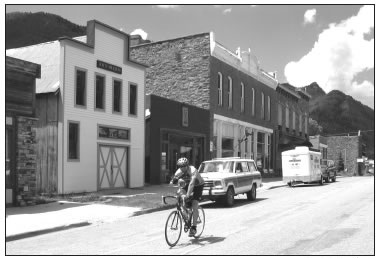
Red Mountain Mining District, 1891. The fall wind whips down Main Street. Saloon and restaurant windows glow. The smells of coffee, hot bread, cigars and stale beer waft from open windows.

A man shouts. Shots echo. In the bars, no one pays attention. It’s just another night in Red Mountain Town

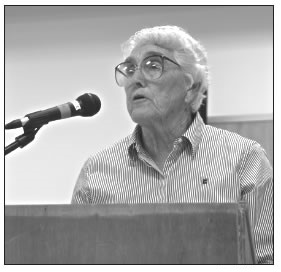
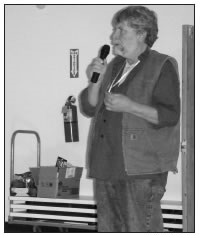
Red Mountain Mining District, 2009. Historian Lisel Dees stands on flattened ground where Red Mountain Town’s train depot once sat. Lifting a Xerox of the Sept. 11 Ouray Solid Muldoon, she reads:

“One Mr. Cowan shot one Mr. Newton with a 44-calibar pop Saturday night. The row took place in a house of ill repute. . . over the attention – not to say the smiles – of a Swamp Angel. . . .”

Dees bursts out laughing. “ ‘Swamp angel, soiled dove.’ That was the terminology of the day for a prostitute.”

Dees works with the Encore College for People over 55 at San Juan College in Farmington, N.M.

She became interested in the Red Mountain Mining District while working with Fort Lewis College’s Office of Community Services and a Durango archaeological firm to research the history of some of the structures in Red Mountain Mining District. Her objective was to apply for preservation grants from the state of Colorado. She now teaches a yearly class that culminates in a tour of the district for Encore at San Juan College.

The rowdy Red Mountain Mining District encompassed an area from Silverton to just south of Ouray. The discovery of high-grade silver ore in 1882 brought miners pouring into towns like Chattanooga, Red Mountain City, Ironton, Guston, and Eureka.

Some $30 million in silver, copper, lead and zinc came out of diggings named the Yankee Girl, the Colorado Boy, or the National Belle.

“Today that would be about $250 million,” Dees explains. “The Yankee Girl was the mine by which all others were judged.”

Hard to picture now. Rocks, trees, and hills glisten with chilly rain. Mist curls around abandoned mine head frames. The site of Red Mountain Town is a wide scar between bluffs, nothing more. Then Dees opens the August 1885 La Plata Miner.

“The new town of Red Mountain is now wearing a very business-like aspect. All of the buildings are situated on the same street and close together. The majority of them are two stories high and erected in a substantial manner. The merchants all say that business is really good and . . .one is led to the conclusion that the camp is in enjoyment of a boom.”

It becomes easy to picture a construction gang grading Main Street to conform to the nearby wagon road, and the eager miners awaiting access to the city’s three restaurants and saloons, general mercantile store, shoe shop, butcher shop, surveyor’s office, livery stable, and Chinese laundry.

According to an 1885 census, of 126 inhabitants in Red Mountain Town, 112 were single or divorced miners. Five women and three children lived there.

About half the people came from Europe. The rest grew up in America.

They probably arrived in Red Mountain Town on mules obtained to the south in Chattanooga. Relatively free of avalanches and with a good water supply, Chattanooga provided the perfect spot for packers to ready the animals for prospectors. Local businesses benefited from the rush. One restaurant boasted a chef from Chicago’s Palmer House.

Dees’ laugh rings above the sharp wind. “It was probably one of the only places in southern Colorado you could get kippered herring.”

Kippered herring or not, life in a mining town like Red Mountain was no tailgate picnic. With a glint in her eyes, Dees points to a lone building near the old railroad bed. “Guess what that is.”

One look and and it’s not hard to know the local jail has survived on bedrock. Two-by-six pine timbers reinforced with stout nails create a solid unbreakable box divided into two cells.

Red Mountain Town had a reputation as the roughest place in the district. A Congregationalist preacher who attempted to start a church there fled to Guston. When a disgruntled former saloon employee pitched a beer keg through the bar’s window, his ex-boss jabbed a pick ax through the man’s eye.

In 1891, a traveling temperance organization tried to mount “Ten Nights in a Bar Room,” a play depicting the evils of drink.

“Well, where in Red Mountain are you going to have a play other than the saloon?” Dees chuckles. “So the bar-keeper hung a curtain over the bottles and served water for the duration of the play. When they were done, the newspaper reported that the saloon did a booming business.”

Not all towns were as boisterous as Red Mountain. Ironton, a few miles to the north, had two churches, a waterworks, wooden sidewalks, and a school. By the 1890s, tourists regularly visited Silverton and Ouray from Denver.

The boom years ended in 1893. The market for silver plummeted because Congress repealed the Sherman Silver Purchase Act, a law allowing silver to back up the U.S. Treasury. Furthermore, Red Mountain District miners now had to dig deeper for ore. Corrosive water ruined equipment. Mining was no longer profitable.

In 1900, companies dug horizontal tunnels between shafts. These passages drained water and made ore easier to retrieve. The Treasury Tunnel caught the attention of the New Yorkbased Newmont Mining Company and the Callahan Zinc-Lead Company of Wallace, Idaho.

The two consolidated several area mines into Idarado, for Idaho and Colorado. Zinc and lead became important for the World War II effort. Idarado operated through the 1950s and 1960s, finally closing in 1970.

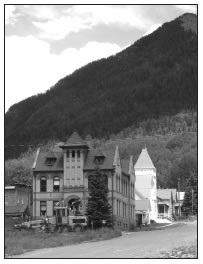
Today, Idarado’s tailings pile covers most of Ironton. Only the south end of town sits in an aspen grove. White bark stands in sharp contrast to the weathered walls of empty homes.

“Mining is by its very nature boomand- bust,” reflects Dees. “What we see here is a remnant of a life.”

Published in Arts & Entertainment, August 2009

Pondering the future of food

Most of us live a fast-paced, busy life with little time to prepare food, much less to consider what we’re actually putting in our mouths. But food was the topic for the recent Moving Mountains Symposium that introduced the Telluride Mountainfilm weekend — specifically, “What’s on the dinner table in the year 2050?”

It’s a simple question with a complex answer, with myriad factors to consider, from soil health, to climate change, to peak oil, population growth, food distribution, and basic survival needs.

MELISSA BETRONE AND DIA COUTTOUW WASHING FRESHLY HARVESTED GREENS NEAR DOLORES COLORADO

Melissa Betrone (left) and Dia Couttouw wash just-harvested greens at Rude Becky’s Flower Farm near Dolores. Interest in locally grown foods is soaring in the Four Corners region. Photo by Wendy Mimiaga

Bill McKibben, author of “Deep Economy,” got the session rolling by warning of serious systemic breakdowns in worldwide food production and distribution. We are using up aquifers, causing salinization problems in our soils; we are running out of arable land; we are facing peak oil with a production mode that uses 10 fossil-fuel calories to produce 1 food calorie; we’re losing land to the sea as oceans rise; and, he exclaimed, “Now we’re changing the weather!”

Dennis Dimick, executive director of National Geographic, carried on this sky-is-falling theme with a discussion of the world’s soils. He presented images of the Roman Road, which at one time fed the most advanced civilization in the world. It is now home to a few goats that graze among boulders laid bare through centuries of soil erosion caused by poor stewardship of the land.

Dimick mentioned the Nile Delta as well, which suffers from too much salt in its soil as a result of hundreds of years of irrigation. He pointed out that when you lose soil you lose your civilization, and asked everyone to consider, “What is soil? Can we save it? Can we save ourselves?”

One of the things that might help save our soils is the use of perennial crops in place of the annuals upon which we have come to depend.

Jerry Glover of the Land Institute in Kansas brought some plant specimens to demonstrate the tremendous power of perennial crops in accessing water and nutrients from the soil. A collective gasp went out from the crowd as he unfurled his short-stem prairie grass to reveal roots as tall as he stood on the stage, with an equal height of top growth. He said that before mechanization, agricultural production was influenced by native plant communities and therefore relied much more on perennial life forms.

Nowadays, he said, “Agriculture is the number one threat to biodiversity and ecosystem function.”

“We have become the managers of ecosystems by providing the necessary inputs to the plants we use,” Glover stated, but without soil, “we are nothing!” Soil ultimately provides the materials, plants do the work and humans live — a simple equation made complicated, he said, because humans are lousy managers of ecosystems. If we fail to acknowledge this Glover predicts a continuation of global unrest, political unrest and war.

GMOs (genetically modified organisms) may provide a solution to some of the problems Glover described. Pamela Ronald of the University of California at Davis and co-author of the book “Tomorrow’s Table,” advocated the use of genetically modified crops as a tool to address the inherent risks of agriculture.

Ronald pointed out that despite record food surpluses in 2008, the world overall also experienced record levels of hunger.

By utilizing genetic technology in food crops we may be able to reduce the use of harmful inputs to agriculture, foster soil fertility, reduce erosion, maintain the economic viability of farmers and rural communities, and produce abundant, safe, nutritious food for even marginalized populations around the world.

“The broad scientific consensus is that GE (genetically engineered) crops on the market are safe to eat and have clear environmental benefits,” she enthused.

Another topic mulled at the symposium was meat. Is there a future for meat-eaters when factory farms rely on cheap fuel, feed, meat products, eggs and dairy and pay no heed to the environmental consequences of this production system?

Gene Baur of Farm Sanctuary thinks not. He said factory farms perpetuate unhealthy and unnatural living conditions for the sheep, pigs, cows and chickens we eat, and pollute air and water, contribute to climate change, burn up fossil fuels, and create human health problems through the use of antibiotics in animal feed. He advocated a move away from mass-produced animal products, and warned that as other less-developed nations aspire to the dietary standards set by the United States, the environmental degradation caused by this system will replicate around the globe.

This sentiment was echoed by Roz Naylor of the Stanford University Program on Food Security and the Environment. She said her work has shown that issues of food supply are inherently linked to global population growth. But it’s more than just a matter of more mouths to feed — as lessdeveloped countries achieve greater economic prosperity, they also increase their consumption of meat. “As people make more money, they buy more meat,” especially as they aspire to the lifestyles of the Western world.

On the other hand, Dave James of the James Ranch in Durango suggested that it is not meat production and consumption that is inherently destructive, but the manner in which it is done. He spoke of the four keys to civilization: “solar collection, cycling of nutrients, rain penetration and community dynamics.” Beef cattle, it turns out, are remarkable at transforming 400 acres of high-altitude grass pasture into 130,000 pounds of meat per year.

And with an appropriate rotation in an intentional system, James said, cattle can be instrumental to achieving the four keys to civilization, as demonstrated by the multi-generational family operation of James Ranch.

To Dan Barber of Blue Hill Restaurant and the Stone Barns Center for Food and Agriculture, turning grass into protein sounds great, but he wonders what is a truly sustainable protein.

“We are on the verge of an ecological credit crisis,” he stated, and, “our ability to feed ourselves is becoming compromised.” What is needed, he believes, is a deeper look into the details of food production, harvest and distribution in order to rout out those products that create the most waste within the system. After doing so one almost always is led back to what is produced locally on a smaller scale with more attention to ecological concerns and our ability to perpetuate food production in the long term.

Ultimately, said Barber, we need to get away from a system in which we constantly “take more, sell more, waste more.”

To Ann Cooper, author of “Lunch Lessons: Changing the Way We Feed Our Children,” access to nutritious food on a regular basis is a matter of social justice. She has done a lot of work within the school lunch program, and firmly believes that “we have to think of food as a means to health.”

She said our household budgets still use the same percentage overall for health care and food as 50 years ago, but the share that goes to food has diminished while the share going to health care has increased.

“Food is the natural remedy to cure the body,” Cooper said, but you have to be able to get food — especially healthful food. When two-thirds of the money spent on school lunch programs goes for staff and administration, that leaves less than a dollar per student per meal to spend on the actual food. It’s a crisis that needs to be addressed, especially when experts predict that one in three children today will develop diabetes and/or become obese because of their diet.

“We can’t produce enough insulin” to deal with this issue, Cooper said, adding that ultimately we need to “turn off the television, cook with our kids, and eat with our kids.”

It’s clear that feeding ourselves 40 years from now is intrinsically related to how we feed ourselves today. The industrial model of food production and distribution has some big, perhaps insurmountable, flaws. We produce a lot, but at what cost?

Researcher, author, traveler and educator Helena Norberg-Hodge urged the audience to consider, “What is taxed? What is regulated? What is subsidized?” When you subsidize infrastructure and food-production systems that transport food around the globe, you ruin local food economies.

“We need a dramatic and urgent shift in education to reemphasize local knowledge and teachings,” she said. In addition we need re-evaluate the message that the future is urban and only urban.

The value of local cannot be overstated, she said. “Localization leads to diversification on the land, which results in higher productivity of the land.” It also helps to build community and support individuals’ self-esteem. Food is culture, and culture links us to each other, and when we belong we feel good about ourselves. The psychological benefits of local trade and the ecological benefits of local production need to be recognized and encouraged if humans are going to survive. “We need to stop the addiction to growth through trade!” Norberg-Hodge exclaimed. “We need to not reward for using a lot of energy and punish for using a lot of labor. We need to re-regulate global trade and de-regulate local trade.”

Here on the Colorado Plateau with its limitless horizons, remoteness and sparse population, it’s easy to forget that there is a crowded world out there, teeming with nearly 7 billion people, 1 billion of whom are starving. Yet here we do have people who are hungry. Here we also have people who have had their traditional food customs wiped out through the globalization, whether we’re talking about Native Americans who through cultural oppression lost their knowledge of wild-foods preparation or German immigrants whose grandchildren no longer make sauerkraut in the traditional earthenware vessels.

Here, agriculture is a part of our world, and yet how many producers are forced to sell outside the area to get a better price for hay, or because there is nowhere local to process animals for sale? How many producers have seen their land becoming polluted with salt because of the quality of irrigation water? How many farms have gone into foreclosure because the price of wheat tanked? Why are the bean silos empty? Why is the local creamery a distant memory?

It’s not that we can’t grow our own food, we can. It’s that the living to be had as a farmer, rancher, grower, producer, is tenuous at best. “Eating is an agricultural act,” according to Josh Viertel of Slow Food USA. We all do it every day, and yet we expect our food to be cheap and plentiful.

If we continue with the industrial food-production mode, the experts predict our land will erode away, our water will become polluted, and 9 billion people will be fighting over a food supply meant for 8 billion.

But it’s not too late. We can reconsider production modes, develop new technologies, and put more people back on the land. To do so we must act on a policy level.

Bill McKibben reminded his audience that while we can be our own worst enemies, “Humans are the antibody.”

Recently, for the first time in decades, there was an increase in the number of farms in the United States. We need to continue this momentum and augment the philosophy of “small is beautiful, big is subsidized,” with changes in personal consumption and policy. Visit the farmers market, slow down for the cattle drive, buy eggs from your neighbor, plant a garden, and savor the food on your plate today.

Published in August 2009

KSJD celebrates move downtown, transfer of license

Back in 2003, the future looked bleak for community radio in Montezuma County. KSJD 91.5 FM, an educational station operated by the San Juan Technical College as a training ground for broadcasting students, had been closed because of cuts in higher-education funding. That left the Montelores region with nothing but stations owned by outside interests.

A few people who were producing and listening to local shows on KSJD decided they couldn’t let local radio die, so in March 2003 they called a meeting of interested parties. A hundred people showed up. Out of that was born a revitalized KSJD and an effort called the Community Radio Project, now a 501 (c) 3 nonprofit.

This month, CRP and KSJD will be celebrating two new and significant milestones — namely, the transfer of the radio-station license from the Technical College to CRP, and the purchase of a historic downtown building to house the station (as well as other ventures).

A block party for KSJD and Cornerstone — the project to purchase and renovate the historic Montezuma Valley National Bank Building at Main and Market in downtown Cortez — will take place on Saturday, Aug. 15, from 5 to 9 p.m. at the bank building.

It will celebrate the countless hours of effort by countless volunteers that have made KSJD the only locally owned, full-power electronic media outlet in Montezuma and Dolores counties — and also celebrate the success of Cornerstone in obtaining the bank building.

“It’s worth noting that CRP got its start at a meeting at the [now-defunct] Magpie Coffeehouse, which was in the bank building,” said Jeff Pope, executive director of CRP.

People are sometimes confused about why a radio station would become involved in buying, renovating and preserving a historic building. The fact is, the station and the Cornerstone project are not directly connected.

“There’s no real link between KSJD and a historic building,” Pope said. “We just needed a place to go. Being on the campus had a lot of advantages, but we were not in the population center of our service area. So our goal was to move downtown.

“We looked at a number of places, but this one walked right in front of us, so to speak, when the owners [Chuck and M.B. McAfee] said they would offer us the building.”

The building project is under the umbrella of CRP, not KSJD, and it involves more than the radio station. The ambitious $1.1 million effort is also aimed at establishing a public outlet for the arts, music and entertainment. Organizers envision the renovated bank building as containing the KSJD studios and offices, other offices available for rent, and a common space for cultural exhibits, performances and gatherings. Some $270,000 has been raised so far.

“We have had a wonderful partnership with the state historical fund, which is helping make the local dollars go farther,” Pope said. “For every dollar we get locally we can get matching funds of up to $3.” Other funding partners include the Ballantine Family Fund and numerous local donors.

Cornerstone will be renovated in a two-phased project, Pope said. The first phase involves building office spaces and studio space. In 2010 and 2011, the project will build the performance venue and make structural upgrades.

Pope said Cornerstone fits under CRP’s mission “to promote and sustain non-commercial, community-based broadcasting that supports the inclusive voice, education and interests of our diverse rural audience. . . .”

“When we looked at the opportunity to expand our capacity, to reach out and have more volunteers, one of the key things we wanted to do was move into Cortez,” he said.

Pope sees community-based media as critical for an informed and involved populace. “But it’s a dying breed,” he said. “Media have been more and more consolidated since the 1996 Tele–communications Act, which means less choice locally. Community media is locally owned and locally controlled and at its best it works to reflect the values of the community.

“Community radio and newspapers create what I like to think of as a fabric that helps hold the community together, whether by covering sports or offering chances to learn about local political controversies.”

KSJD has just three fulltime paid staff members, so its efforts are hugely dependent on volunteers. There are 70 on-air DJS, Pope said; the youngest is 9 and the oldest is over 70. He said the contribution they make goes far beyond playing music.

“When a local volunteer creates two hours of music, 36 songs, and weaves them into a package, you could look at that as an oil painting, a work of art.

“For the listeners, to have a live person who has the local context in mind is extremely important. With automation and media consolidation, on most stations in our area your local weather forecast is coming from far away. It’s important to be able to look out the window and see what’s really happening, or to say, ‘Watch out for cattle on Highway 160,’ or whatever.”

In addition to local DJs, KSJD does run nationally syndicated programming such as National Public Radio news, Morning Edition, and Native America Calling. It also broadcasts local forums and offers a twice-monthly news talk show.

Now that CRP owns KSJD’s license, it has a green light to keep seeking to broaden its audience and better serve the region. KSJD has created one of the only satellite studio networks in the Intermountain West, Pope said, by building a studio in Rico so residents can broadcast live across the listening area.

KSJD broadcasts at 1,200 watts across Montezuma and Dolores counties. Courtesy of the Southwest Colorado Television Translator Association, it also serves Mancos at 104.1 FM and the Pleasant View area at 91.1.

KSJD has also received a permit to build a new station to serve western Dolores County and southeastern Utah.

“I do think community radio matters,” Pope said. “People want to be able to come on the air and express something, and KSJD gives them that opportunity.”

Published in August 2009

Appearance of invasive sage worries officials

There’s a new weed in town — and it’s kind of a bully.

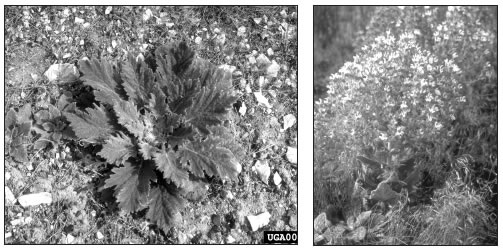
Mediterranean sage, an invasive ornamental plant, has popped up in Montezuma County on Road 30, 1 mile south of Highway 184. It was spotted in July by Kirk Swope, a county weed technician, who owns a piece of property that has been invaded by the plant. How the noxious weed came here remains a mystery.

Swope said the sage is also present on the property of his neighbors across the road, who came from Monte Vista, Colo., bringing cows and hay with them, so there has been speculation that perhaps the seeds were present in the hay. However, no one has found the weed yet in Monte Vista, “so we’re not sure that’s how it got there at all,” Swope said.

MEDITERRANEAN SAGE

Mediterranean sage, an invasive noxious weed spotted recently in Montezuma County, has large, woolly, aromatic leaves and produces showy white flowers. The plant is sometimes sold as Ethiopian sage in nurseries, according to the Colorado Weed Management Association. Plants grow to 2-3 feet in height. Photo on the left by Lloyd Andres/USDA Photo on the right by Eric Coombs/Oregon Dept. of Ag.

In fact, Montezuma County has the dubious distinction of being only the second site in Colorado where Mediterranean sage has been found — the other being Boulder County, where the plant has taken over 400 acres.

Swope said the sage is considered a threat because it is “very invasive and hard to kll, as most weeds are.” A biennial or short-lived perennial, it produces up to 100,000 seeds per plant. Furthermore, he said, “Most of the chemicals it takes to kill it, you have to be a licensed operator to buy. So we’re really trying to knock it out.”

Swope said Montezuma County Weed Program Supervisor Don Morris spent two weeks cutting and sacking the plants found along Road 30.

He said he hopes that people will be on the lookout for Mediterranean sage and will contact the weed program if they think they spy it. “We want to catch it so it won’t turn into a Canada thistle, that’s everywhere,” Swope said.

Weeds are a perennial (no pun intended) problem in the region and across the West. It is estimated that 10 percent of Colorado’s native plants have been replaced by noxious weeds, and on Western public lands weeds are spreading at about 4,600 acres per day, according to estimates by federal land managers.

Noxious weeds are a serious problem because they drive out the native plants upon which wild animals depend and compete with agricultural crops, costing farmers and ranchers money. Some weeds actually create their own toxic chemicals that prevent other plants and grass from growing near them; others have root systems that starve out native species; and some simply reproduce so rapidly that they can win the race against all competitors.

Once established, noxious weeds can lower the value of one’s own property and can spread to neighbors’ land.

In Montezuma County, Canada thistle, musk thistle, and knapweed are among the most troublesome invaders.

Swope said hoary cress, or whitetop, also “for some reason really came on this year,” perhaps because of the early moisture.

There are several options for controlling noxious weeds:

• Chemicals. Local farm stores have a variety of chemicals, and nurseries often have organic sprays as well.

• Insects. Biological control agents “have some value but are not good to rely on for quick control,” said Morris. Still, they can stress the invaders and slow them down, and are generally safe to use. The Division of Plant Industry Insectary has a variety of insects available for specific weeds. Call 866-324- 2963 or see www.ag.state.co.us/ dpi/insectary/bpcs.html.

• Cutting. Chopping off whole plants at the base before they flower will keep the plants from going to seed, if done regularly. However, it won’t get rid of the original plants. The Montezuma County Weed Program offers a program that will reimburse property owners within the county for half the cost of their chemical or biological controls per year, up to $250.

Swope said not a lot of people have taken advantage of the program so far this summer.

“The money’s there, so people should contact us,” he said.

Published in August 2009

Opinion: Disputing claims quoted in the 9-12 article

Re. David Grant Long’s article in the Free Press, August ’09 issue, I have a few comments.

David’s article quoting me about not fighting fair but about fighting to win lacks any context, which is not entirely David’s fault since he wasn’t present during prior discussions at earlier meetings where we went over the dishonest and unfair tactics used by the Obama forces when staging so-called “town meetings” to sell their various agenda items. We noticed that they were packing the auditoriums with their own supporters and allowing the general public to enter only after all the seats were taken. The most recent examples of that tactic being used wherever Obama shows up, would be his “town meetings” in Grand Junction and Montana. We were also concerned about union thugs shouting down and working over some of those who oppose Obama’s effort to take over health care as we have seen in other parts of the country. We expect Udall’s “town meeting” in Durango on August 27th to be run similarly since we’ve already got a list of the ground rules that heavily favor supporters of the notion that the earth is warming despite evidence to the contrary that’s been accumulating for the last eight years (Cap and Trade).

Tonia Gurnea, chair of the Montezuma County Democratic Central Committee, won’t be cut any slack, as David has been, because most of what she said (in the article) is pure, intentional fabrication. For years I’ve been dividing liberals into two types: those who know they’re lying and those who don’t. Gurnea knew she was lying.

We were firm with Ann Brown (Senator Bennet’s local representative) but we were polite and fair at both meetings. Gurnea’s claim that Ann Brown came out to us when we were gathering prior to the second meeting and said she would give us a half-hour of her time is false. Ann came out and said angrily that she wasn’t going to talk to us, that she was here to work with citizens who were having problems with federal agencies such as Veterans Administration or Social Security. Her hostility toward us raised the decibel level. We told her that we were not going away, that she was as close to the senator as we were able to get, and her job included forwarding our views on the issues to the senator. We also told her that if any citizens with any other issues showed up, we would yield the floor to them. None showed up while we were there. Ann finally caved and decided to give us a half-hour.

In David’s article Gurnea said that I claimed that I had “done research that showed all gays are pedophiles…”. Not only did I say no such thing but nothing like that was even alluded to by me or anyone else. That statement by Gurnea is a complete fabrication and there are at least 20 people who were in attendance who will swear in a court that her statement is a lie. Gurnea went on to say, “Ann tried to explain to them that wasn’t the way it was, but of course, they knew more, she knew nothing and they went on and on…”

Ann Brown clearly had no idea that the “hate-crimes” bill protected pedophiles because she was staring at us in utter disbelief. She didn’t know that the Republicans tried to get pedophilia removed from the protected list and she didn’t know that the Democrats overrode that Republican effort. Pedophiles are protected by the hate-crimes bill.

As a result of Gurnea’s intentional misrepresentations and outright fabrications of things that she claims I said, I’m now being subjected to phone harassment and threats. Toni owes me a retraction and an apology and right now I’m building my case against her in the event that I don’t get it.

Roger Hazlewood Montezuma County, Colo.

Published in August 2009

The 9-12 Project: Who are they and why are they controversial?

There’s a new political group in town, and its members are passionate, outspoken and, at least according to some accounts, downright intimidating.

But whether supporters are seen as belligerent or simply ardent, the Four Corners 9-12 Project is drawing a lot of interest. A meeting July 20 at the Cortez Elks Club drew more than 100 people for a discussion of health-care reform, which those who spoke at the gathering stridently opposed.

And Bud Garner, a de facto leader of the loosely organized Montezuma County group until permanent officers are chosen, said a turnout of 50 or 60 has been typical for other meetings.

The 9-12 groups were sparked by talk-show host Glenn Beck, a Fox News Network star who recently gained the national spotlight by declaring President Obama “a racist” with “a deep-seated hatred for white people.”

“The 9-12 Project is designed to bring us all back to the place we were on September 12, 2001,” states the mission statement on the group’s web site, www.the912project.com. “The day after America was attacked we were not obsessed with Red States, Blue States or political parties. We were united as Americans . . .

“That same feeling – that commitment to country is what we are hoping to foster with this idea. We want to get everyone thinking like it is September 12th, 2001 again.”

The group’s philosophy is based on nine principles and 12 values reflecting conservative and Libertarian beliefs. The nine principles include declarations that “America is good,” “I believe in God and He is the center of my life,” and, “The family is sacred — My spouse and I are the ultimate authority, not the government.”

Garner said the local group was formed after a Bayfield woman organized the first 9-12 group on Colorado’s Western Slope. Groups have also sprouted in Farmington and Aztec, N.M.

Although the nine principles and 12 values don’t mention specific current events, the groups have not hesitated to take stances on these issues.

Among the other topics broached at the July 20 health-care meeting in Cortez were a pending hate-crime bill, which one member said would protect sexual predators and punish people who try to stop child molestations, and anticipated Democratic attempts to pass a comprehensive reform of immigration laws.

9-12 Project member Roger Hazlewood, well-known locally for his advocacy of unfettered gun rights, stated that defeating immigration reform was crucial. “If they get it passed, then there it not going to be a two-party system in this country,” he said, “because if you are an illegal who comes into this country and you’re offered freebies by the Democrats, who are you going to vote for?”

Many of the comments echoed the sentiments of such right-wing media luminaries as Rush Limbaugh and Laura Ingram, and the packed house was advised to visit the conservative Internet sites News Max and World Net Daily for accurate, objective reporting.

“What we do is study [pending] legislative actions at the national, state or local level,” Garner, who chaired the meeting, told the crowd. “We try to find out as much as we can in a timely manner and instruct each other so that we might take action with our elected representatives.

“What we don’t do is gripe,” Garner. added. “This is not the place to vent your spleen.” He added the 9-12 Project does not involve itself in conspiracy theories. “If that’s your hot-button issue, fine. There may be some but we don’t know about them.”

At the meeting, Trudy Chittick, CEO of Southwest Memorial Hospital, addressed some of the proposals being considered in Congress and their possible impacts on health-care facilities.

She said efforts to contain costs in other countries such as Canada have led to long waits for non-emergency care and to scheduling procedures such as MRIs in the middle of the night. And efforts to expand coverage in Colorado through Medicaid are straining already-tight budgets. Out of more than $26 million in annual revenues, Southwest operates on a margin of $100,000 to $200,000, she said.

Although there are differences, she said, a national plan could resemble the plan in Massachusetts, which requires its citizens to have health care. She said that while it has shortcomings it also has some positive features.

But the sentiments voiced at the meeting were vigorously opposed to any national health-care plan.

One woman urged the crowd to petition their state legislators to pass a “Right of Sovereignty” referendum that would allow Colorado residents to vote on whether to participate in any national health-care plan.

Illegal immigration is seriously affecting health-care costs, she asserted. “These darned illegals are swooping up Medicaid,” she said, recounting that her insurance carrier had invited her to come to Grand Junction to observe the large number of undocumented workers signing up for it there.

“Keep in mind that [Colorado] senators [Michael] Bennet and [Mark] Udall along with Representative [John] Salazar endorsed comprehensive immigration reform,” she said. “This is a sneak way to describe amnesty, followed by U.S. citizenship, automatic membership in labor unions and retroactive Social Security for all illegals in the U.S.”

She said liberal forces in Congress “see amnesty as a great way to bring new voters to the Obama administration.” Her remarks drew loud applause.

But while much of the views of the 9-12ers are not new, the group is sparking some controversy because of its tactics toward politicians.

Hazlewood invited the Elks Club gathering to attend an upcoming seminar put on by Rocky Mountain Gun Owners head Dudley Brown to teach ways “to make politicians do what you want them to do, or, failing that how to make them feel a lot of political heat when they don’t do it.

“It’s not going to be about playing fair — it’s about winning,” he said.

The Four Corners group has already been engaging in what some people see as over-the-top strong-arm tactics during public meetings with Congressional aides.

A June meeting with representatives of Senator Bennett’s Southwest Colorado staff prompted charges from both sides of high-handed and intimidating behavior, including, according to one witness, an avowal by one 9-12 member that four of the group was armed with handguns.

Tonia Gurnea, chair of the Montezuma County Democratic Central Committee, said she attended the June meeting and another previous local meeting put on by Bennet’s regional representative, Ann Brown and was aghast at the behavior of the 9-12 group. Gurnea said the meetings were more directed toward addressing constituents’ specific needs — issues involving Social Security and the Veterans Administrarion, for instance — rather than serving as town halls, but the 9-12 group members were given time to speak their piece.

“Ann literally gave them maybe two hours the first time,” Gurnea recalled, “and basically didn’t get to talk to anyone else — maybe one or two people.“ However, relations were civil.

But at the next meeting June 24 at the county annex in Cortez, things got more heated.

While the group was gathering outside, Brown told Gurnea she needed to devote her time to other constituents and didn’t want to be monopolized by the 9-12ers.

“I said, ‘Well, it’s going to be the same thing — if they were coming with something new it would be different, but they’re not — it’s the same old, same old’.”

When Brown went out and informed them she could give them only a half hour, “they became belligerent and informed her she couldn’t stop them from coming in,” Gurnea said.

The group insisted providing individual constituent service was “unconstitutional” at any rate because it is not mentioned in the founding document.

“In this instance it was the hate crimes bill (they wanted to speak against),” Gurnea said. “Roger Hazlewood . . . stood up — they were all nodding their heads and agreeing totally — and said they opposed the hate-crimes bill because it is about gays.” She said Hazlewood said he’d done research that showed all gays are pedophiles and the bill would prevent people from defending children against sexual assaults and in fact would protect child molesters.

“Ann tried to explain to them that was’t the way it was, but of course they knew more, she knew nothing and they went on and on — they were yelling and [another staff member] said at one point she felt threatened. She made it clear she felt very intimidated.”

At this point, one source reported, one of the 9-12ers assured the other staff member she didn’t need to be afraid because four of them were armed and would protect her.

“Ann did not get mad, did not yell, did nothing but try to de-fuse [the situation],” Gurnea said. “Of course, they’re calling us a bunch of communists, a bunch of socialists, anyone who believes in Obama because he’s a Nazi and going to take over the world.”

But a letter from 9-12 member Thomas Butler published in the Cortez Journal gave a differing account of the dust-up, maintaining Brown “came out of the building and stated in a very belligerent manner that she would not meet with a group of people like the assemblage of which I was a part. She was there to speak with individuals. Several people stated that we were individuals and asked if she. . . was refusing to hear our concerns. Brown stated she would grant 30 minutes. . .” He wrote that 30 minutes for 30 or 40 people was inadequate, and concluded, “Come election time, I will remember.”

Garner said Butler’s account of the meeting with Brown was a good synopsis; however, a subsequent meeting in Durango with three of Salazar’s aides went better. “They were cordial and interested in our view [but] they did not have a clue about the issue we wanted to talk about [health care].”

Garner denied having personal knowledge of any of the 9-12ers carrying weapons at the June meeting.

“I didn’t frisk them,” he said, “and it doesn’t matter anyway. That is a perfectly legitimate function of a citizen of the United States. If anyone there was carrying a weapon, they are constitutionally authorized to do so — that’s no big deal.”

Garner, who said he was authorized to speak for the 9-12 group and thought his views would generally reflect those of its other members, said their opposition to national health care is, “It is unconstitutional just as Medicare and Medicaid and so many other things are unconstitutional.”

He said if the Constitution does not specifically authorize the federal government to do something, it cannot do it. “Nowhere in there is there authorization for the federal government to be involved in health-care issues.”

He said the reform proposals are “absolutely” unconstitutional, as is Social Security, which he called “a Ponzi scheme” that “makes Bernie Madoff look like a kindergartener.”

However, he said, the group knows that “Social Security is not going to go away. Medicare and Medicaid are not going to go away… When I say they’re unconstitutional, that’s theoretical. The reality is, they exist. We are making no effort to make them go away.”

But they do want to stop any move toward national health care. “You’ve got your health care issue, I’ve got mine, you take care of it. We are each personal free agents. Take care of yourself. It’s not the government’s job. Nor is it my job to tell you what you can and cannot do.”

He said the current proposed legislation “will scare you to death. Have you read it? Read HR 3200. You cannot possibly have an intelligent conversation with me or anyone else until you read it because you won’t believe me when I tell you what’s in it.”

Media stories of critically ill people being denied access to care are misleading, Garner said. In some cases, he said, people couldn’t afford health insurance because they made “stupid choices” such as buying boats and expensive homes.

For genuinely poor people who contract serious illnesses, Garner recommended they “make arrangements with the hospitals and hospitals to make monthly payments.”

At any rate, they should not expect taxpayers to help them. “Where did that unfortunate situation gain the authority to steal from other people to pay for their health care? Where did the authority come from for you to steal from me to take care of you?

“That’s what welfare is — you’re stealing from one to give to another.

“And the vast majority don’t need it if they would get off their butts and go to work. The few that remain that are tragic situations can be handled quite nicely at the local level. The federal government has no constitutional authority to do it.”

Published in August 2009

Between a rock

I had never seen a cairn the first time I hiked a trail in canyon country almost 30 years ago.

In Minnesota where I was raised, if anyone planned to use rocks as markers they’d have painted them white and lined them up along the driveway. I’d like to think I was not the only newcomer to the desert Southwest to be confused by a pile of rocks, but it’s possible.

Since then I have hiked many trails and come to appreciate these stacked rocks as a subtle system of canyon turn signals. Most of the time when a hiker comes upon a cairn, the next one is visible in the near distance. This is not, however, the case in deep back country. Here a hiker can easily get lost, owing to the way the native rocks used to assemble cairns blend in with the rocks around them, and also to the tendency for the human mind to aimlessly wander while the body trudges along the trail.

My mind, for instance, wanders quite a bit. Once on a hike to Fisher Towers near Moab, I took a wrong turn and nearly ended up stuck on all that slickrock after dark. The guide book called it a “day hike” which meant I should have started in the morning, not in the late afternoon. But how long could it take to walk 4.2 miles? The map estimated walking time at around 2.5 hours, and the book described it as a “Popular, easy-to-follow trail.”

I missed a cairn about two miles out and probably wandered another mile before realizing the only stacked rocks in the distance were far too large to be cairns. I think they were the Fisher Towers, though I never found out. The sun had already dragged huge shadows out from under the rocks, changing the landscape into an alternate reality. By the time I’d made it back to the last cairn I remembered, the sun had melted into the horizon. I had no flashlight, no companion, and no sense. Luckily, I followed the right rocks this time and they took me back to where my car served as a mechanical cairn left in the parking lot, a perfect pile of junk to leave in case park personnel had to organize a search and rescue.

One other reason I get lost so often is because the desert Southwest has a noteworthy cairn that leads to a place not plotted on any map.

When Ed Abbey died, his friends — sworn to secrecy — spirited his body away and buried it illegally on public land somewhere in the canyon country that Abbey loved. When I come upon a healthy pile of rocks in some difficult and inaccessible area, I tell myself, Don’t worry, it’s just another cairn erected to lead me to safety, but a tiny part of me still walks around it, looking for the skeletal remains of a foot or hand that might be sticking out from between a couple stones. And I say to myself, Ed, if you’re under there, just stay put.

Then I turn and hike briskly away in virtually any direction.

David Feela writes from rural Montezuma County, Colo.

Published in David Feela

Dyeing for perfection

The first time I colored my hair was in college. I had a date for a formal dinner dance with a young man from a VERY respectable family. I won’t name names here, but suffice it to say that there is a well-known Center in NYC with an ice-skating rink and extremely large Christmas tree, named after his family.

I wasn’t excited about the guy himself but I did sort of imagine him as somewhat of a Sebastian from “Brideshead Revisited” — young, wealthy, reckless, flamboyant and most likely, gay. As I would be his perfect arm candy, I figured that he would be the perfect accessory to a brand new ’do.

Note: This was back in the day when the only hair-color alteration that a nice girl performed was a bit of summer “frosting.”

So, I wanted to be a redhead like my beautiful friend, Carrie. I had always envied the status that she enjoyed by having flaming red tresses in a world of boring blondes and brunettes.

On the day of the event, I went to the drugstore, picked out a color, read the directions and concluded that this would be a piece of cake.

Somehow in my excitement to unleash the new me, I lost track of the time. My date arrived while I still had the plastic cap on “cooking” my locks. When he knocked at the door, I quickly rinsed out the color, flipped my hair upside down, blew it dry, threw on my gown and heels and ran out the door.

“Wow,” he began, “you look…”

“Thank you,” I demurely replied, quite confident in my glamorous-ness. I held out my arm and allowed myself to be escorted into my waiting chariot.

The dining room was candle-lit as was the ballroom. My Sebastian turned out to be quite entertaining, getting extremely drunk and nicknaming me “Red.” We danced the night away until the very wee hours.

The multitude of comments that I received about the revamped me convinced me that my peers found me daring, bold, and perhaps even sultry. There were a few mirrors around, but who needed one – my martini-fortified confidence made me skate right by without a glance.

When I crawled out of bed the next morning, still sporting the gown, I caught a flash of magenta out of the corner of my eye.

Good God, it was my hair! Not red, not auburn like the box promised, it was Barbie pink.

And I wonder why I never again heard from Sebastian.

So, after calling Carrie in hysterics and a $50 repair job, a deep sink into a tar pit of humiliation and a two-day hangover to boot, I was able to conceive of showing my face around campus once again.

You would think I would give up on hair-dyeing.

Oh, but so not so. I have since been auburn, golden, raven-tressed, aubergine (fancy for purple eggplant) platinum, quite a few shades of orange, and once, accidentally, green.

I have had Tom in the store at 10 p.m. reciting to me the color names off the fronts of boxes over the phone so that I could repair damage before having to go to work in the morning.

I have called friends at their jobs, demanding that they fake sickness so that they can leave to turn green back to brown.

I have tried permanent, semi-permanent, highlighted, professional and hennaed. I have dyed my eyebrows to match the top. I have burned off said eyebrows and scorched my forehead.

I have even tried to abstain. Rumor has it, my natural color is a good one. I actually believe that. I get stopped in the hair-care aisle by women wanting to replicate it. If it came in a box, I would certainly try it.

But I can’t stop myself. I don’t shave, wear makeup or pay for salon treatments. I cut my own hair and wear second-hand clothes. I am not a girl who fusses.

It’s just that those damn boxes in the City Market with all of their shiny new hues and enticing names like Golden Cappuccino and Southwest Desert Sand scream my name. They beckon me in my sleep, tug at my shirtsleeve while I shop for bananas across the store.

Eventually, I always cave. The rush of closing in on just the right color particularly if it’s on sale, is just so good, I can’t live without it.

Let’s face it, as much as I want to deny it, I am a woman who dyes her hair.

Suzanne Strazza writes from Mancos, Colo.

Published in Suzanne Strazza

Dolores County nixes a moly mine

Commissioners cite lack of detail in Outlook Resources’ plan

A proposal to mine a molybdenum deposit potentially worth billions of dollars in the mountains east of Rico was turned down June 11 — or actually June 12 — by the Dolores County Commissioners.

STORE FRONTS IN DOWNTOWN RICO, COLORADO

Recreation, tourism and residential growth now characterize the former mining town of Rico. On June 12, the Dolores County commissioners rejected a proposal for a molybdenum mine near the town. Photo by Wendy Mimiaga

Approximately 130 residents packed the town hall to denounce the mine slated to be built on private land 1 1/2 miles from town in the Silver Creek drainage, the town’s water source.

During a six-hour meeting that began June 11 and continued past 1 a.m. the commissioners listened to a spokesman for applicant Outlook Resources describe the underground mine operation, then took public comment.

But in the end, the legacy of western Colorado’s former mining boom, which left abandoned mines, polluted mill sites, contaminated soil and toxic tailing ponds strewn across the mountains, doomed the plan.

“Mining is our past, but I don’t believe that it is our future,” said Rico Mayor Barbara Betts. “Mining jeopardizes the safety of our children, our water and our air. We are a small community of 225 residents, but we are a mighty force. If the board approves this, there will be a fight all the way.”

The commissioners took public comments for three hours, held a 20- minute executive session, abandoned a plan to continue the hearing at a later date, and then denied the application in a 3-0 vote, to raucous applause from locals.

They cited an incomplete application that failed to lay out the specifics of the mine’s impacts, and said the proposal was too speculative. Issues included industrial truck traffic through residential areas, uncertainty over milling sites, lack of financial backers for the project, the amount of water it would require, and safety issues.

Of specific concern was the applicants’ request for a 30-year time frame to explore and mine the site. State and federal permits typically are for 10 years, and assurances that those permits would be obtained at a later date were questioned.

“A 30-year time frame is too open-ended,” said Commission Chair Ernie Williams in voting to deny the project. “I do not like tying future boards to something they can lose control on, plus the environmental laws will just get stricter and stricter over time.”

Dolores County does not have zoning laws, and applicant Mark Levin, owner of Outlook Resources, argued mining is a historic right in the heavily mined region.

“I want to validate mine use for the property,” Levin said. “I am asking the commissioners to recognize mining as a use by right. The potential is for 200 to 300 high-paying jobs in the area and increased tax revenues for the town. I hope over time I earn the trust of the skeptics.”

“Why come to us now?” asked Williams. “Why not prospect first and come to us after you know what’s there?”

“Because no one will put up the money if there is a question of fundamental mining use for the property,” Levin said.

RICO, COLORADO

Rico is known for its scenery. Photo by Wendy Mimiaga

“Colorado has already validated mining as a use by right, so I do not think this board has to decide on that,” Williams said.

Of those who spoke at the hearing, critics outweighed proponents 28-1.

“This town is based on recreation and beauty of the environment,” said resident Craig Spillman. “That is our use by right today. As a former miner I’ve seen the boom and bust. Remember what happens when the investment dries up and people are out of work.”

Resident Gary Reid agreed. “Rico was a mining town. Now it is a resident community. Colorado has a terrible mining legacy, and the contaminated soils and clean-up we have endured in Rico is a prime example.”

A contentious issue was that access to the proposed mine site is along Mill Road, a residential street. The applicant successfully proved that it is a historic route dating to the mining heyday more than a century ago and is therefore considered legal access.

“That was back then when there were no homes,” countered resident Patsy Engel. “Now things have changed; there are three subdivisions with 24 lots along that road now.”

Steve Garchar, a member of the Dolores County Planning Commission and the sole proponent who spoke out, responded that the extra tax revenues could be used for public-works projects such as a central sewer system, which Rico still lacks.

“Every person knew when they moved here that Rico had a mining history,” Garchar said. “These roads were built for everyone. This is a great opportunity.”

Val Truelson, a Dolores town trustee, said he is in support of mining, but urged denial of the application because it grouped substantial exploratory drilling with a major mining operation to follow.

“Those two activities should be applied for separately,” he said.

The speculative nature of the project drew a lot of criticism.

“He said he could mine molybdenum, or zinc or copper, or shelve it, or sell it to someone else. The ore could be processed in the next county over,” said resident Lori Adams “How does any of this benefit Rico?”

Levin explained that the lack of funding is a “chicken-and-egg” issue for mining. Bankers require promising exploratory core drills to justify the investment. Five such core samples done by the Anaconda Mining Co. showed good promise for molybdenum. Levin said 100 or more test holes would be required to verify the deposit, estimated to be one mile beneath the surface. Each exploratory drilling costs $1 million, he said.

The location of the mine incline — tunnels that deliver the ore out of the mine — was another unknown. One suggestion by Levin was that the incline would exit in La Plata County in upper Hermosa Creek, an area now being considered for wilderness protection.

Another option discussed was to slurry the ore in pipelines along the Dolores River corridor, “to perhaps private property in the high desert,” Levin said, estimating that such a slurry would cost at least $100 million.

Responding to opponents’ concerns, Levin argued that state and federal permits for mining the property adequately address environmental issues and safety. He added that mining would not likely begin for 10 or 20 years.

“This deposit is not going away,” he said. “The state has strict regulations that address every environmental concern here tonight. I’ll be a good steward of the land. If I don’t do this, somebody else will.”

This was the second failed attempt by developers to access the molybdenum deposit located a mile under the rugged Rico Mountains. In 2008, Bolero Resources Inc, of Vancouver, British Columbia, entered into contracts to purchase land for a mine in Rico, but the deal fell through because clear title could not be verified.

Test holes drilled in the 1980s by the Anaconda Mining Company resulted in estimates of 198 million tons of molybdenum ore at the site, owned by the Webster Estate. That could produce 273 million pounds of molybdenum, according to industry estimates, worth $2.4 billion at the current price of about $9 per pound, down from $35 per pound at the end of 2008.

The Rico deposit is estimated to rival that of the Henderson molybdenum mine near Empire, Colo., the largest producer of the metal in the world.

Molybdenum is an element used to strengthen steel and other metals. It is used to make auto parts, stainless- steel products, tools, liners for nuclear reactors and mountain bikes.

Published in July 2009

Pot-hunting frequently involves grave-digging


Related stories

Pot-hunting crackdown

Arrests create uproar in Utah’s San Juan County

‘Leave them alone’

A dirty little fact about pot-hunting for Ancestral Pueblo artifacts is that it frequently involves digging up burials – grave-robbing, in other words.

The days when settlers could find pots and other relics on the ground are long gone. These days, the most valuable artifacts are generally either in sheltered caves, or underground in middens (disposal areas) accompanied by human remains.

“Typically the most likely place to find a whole pot would be with a burial,” said Leslie Sesler, a staff archaeologist with La Plata Archaeological Consultants. “In the pot might be a whole stack of bone gaming pieces or turquoise. Sometimes there are offerings like whole birds that were stuck in there and covered up. Jet pendants – a lot of the small things could be coming out of burials.”

The types of burials likely to yield pots and other artifacts would be from the Basketmaker III period through Pueblo III, or from about 500 A.D. through 1300 A.D., Lesler said. Search-warrant affidavits for the suspects in the pot-hunting investigation show that burials are often mentioned.

The affidavit for Vern and Marie Crites of Durango describes the couple as dealing in objects associated with graves and in one instance says Vern Crites uncovered a skeleton on a dig.

During a meeting Feb. 19, 2008, at the Crites home, Vern Crites handed the source “about nine six-inch long sticks,” the affidavit states, adding that he called them “prayer sticks” and that he had bought them from a waitress.

According to the affidavit, the source and Vern Crites discussed the legality and sensitivity of possessing the prayer sticks and agreed they were trouble. Later, archaeologists determined that the prayer sticks were at least 100 years old and were “funerary objects” used in sacred ceremonies and covered by NAGPRA, the Native American Graves Protection and Repatriation Act.

Later in the Crites affidavit, an incident is described when Vern Crites, Steve Shrader of Durango (also charged in the case; he killed himself on June 19) and the source allegedly met on Aug. 26, 2008, and went searching for artifacts on public lands in Colorado. At one point, the trio stopped driving, and “Crites pointed to an area and informed the Source that there were burials that had not yet been dug,” the affidavit states. “Crites told the Source that he wanted to return with the Source and excavate the site.”

On another trip on Sept. 14, 2008, Vern Crites, the source and Richard Bourrett, 59, of Durango (also charged in the investigation) allegedly ventured into San Juan County, Utah, for more artifact-hunting. They began digging with shovels into a midden area.

Burials are often in houses or in middens, Sesler said. “If they’re in the midden they’ll be in a pit with some stuff. Sometimes somebody fairly important or relatively rich will have a lot of stuff buried with them, but the average burial will have a pot or two.”

According to the audio recording and surveillance by BLM officers, the three uncovered human remains, including a skull. Soon they decided the area might have already been dug and covered it back up.

“Wished that fella had still been intact, the skeleton I mean,” Crites allegedly commented.

The affidavit for Aubry Patterson, 55, of Blanding, recounts that Patterson had an ambivalent attitude toward human remains.

“Patterson told the Source that he has not dug up a burial in a long time,” the affidavit states. “Patterson stated he had a boy die on him, and since then he no longer likes to dig up burials.

Patterson told the Source that he accidentally dug up a few burials, and indicated once he hits them that he can’t help but dig them up.”

Patterson allegedly “dug up two guys accidentally,” the affidavit states, but “neither one of them had anything on them.”

David Lacy, 55, of Blanding, allegedly dug up two sandals from a burial site in a cave in Cottonwood Wash, according to the affidavit in his case. He allegedly sold them to the source, along with a blanket of yucca fibers and turkey feathers, a knife, a menstrual- pad loincloth and an atlatl weight.

But not every suspect is alleged to have plundered burial sites.

According to his affidavit, Brunt Bullock, 61, of Moab, allegedly told the undercover operative “he does not dig up burials, if he sees bones, he is out of there.”

Published in July 2009

‘Leave them alone’

A modern-day Puebloan says disturbing artifacts shows disrespect

Related stories

Pot-hunting crackdown

Arrests create uproar in Utah’s San Juan County

Pot-hunting frequently involves grave-digging

Ancestral Puebloan dwellings and burial sites aren’t sources of buried treasure but places with spiritual and historic significance that should be revered, according to the modern-day Pueblo people who are related to the “ancient ones.”

“Although we’re not living there any more, the spirits of our forefathers, of the people who were living there, are still in those areas,” said Peter Pino, tribal administrator of the Zia Pueblo near Albuquerque, N.M.

“We hold those places in high regard because of that spiritual and physical connection.”

Pino said in the language spoken by the Zia Pueblo, there’s a special name for the area around Hovenweep and Canyons of the Ancients national monuments and westward into Utah, where much pot-hunting occurs these days. The name means “west of many houses [referring to Mesa Verde].”

“We still have a name for that place. We still address it. We still have a connection to it and we still have pilgrimmages to that area. Our forefathers are not forgotten. They’re still part of our spiritual world. We’re not just telling stories.”

Pino said it is always troubling to see ancient cultural sites picked apart for artifacts, but it is worse when people do it for money rather than mere souvenir- hunting or scholarly research.

“My experience with people raiding and stealing from the sites is they’re not doing it for their own use, they do it to make money,” Pino said. “That’s what’s really disturbing. Some of those items are going for huge amounts. That’s not right.”

Poverty and the bad economy are sometimes used as excuses for pothunting, but ironically the people who are often the most impoverished — Native Americans — and who have the easiest access to ancient sites rarely raid them. Pino said that is not surprising.

That’s really being disrespectful and you’re not going to see Native people doing that. Those things are not ours to take and exploit and abuse.”

The Puebloans know about exploitation and abuse. The population of Zia Pueblo today is 870, Pino said. When the Spaniards first came to the area, the population was an estimated 10,000 to 15,000 and there were five villages occupied and flourishing. By 1890 there were only 97 people remaining in Zia Pueblo and it was believed the tribe would soon vanish.

“Today we have only one existing pueblo,” Pino said. “The others are in ruins. We’ve never dug in those other areas. We’ve never disturbed or tried to develop them for the general public. We go to those sites to pray.”

Pino said Puebloans and most Natives believe ancient cultural sites ought to be left alone — not plundered, not even preserved or restored — although they recognize that there are national parks and monuments devoted to taking care of cultural resources for future generations. “The government has national parks and some of those national parks are resources that were left by our forefathers. Those are developed areas and that’s fine. We don’t have control over the land there.”

However, the Puebloans believe it’s better to let natural processes and time have their way with ancient artifacts, dwellings and remains.

“The respect we show to those sites is to leave them alone. If nature takes a wall down or allows a tree to fall on the wall, we accept that. It goes back into nature. The clay goes back into the earth. The earth is the one that owns it. Our Indian philosophy is that anything on the earth should be respected.”

In 1996, after a wildfire scorched a large petroglyph panel in a backcountry area of Mesa Verde, park officials talked of perhaps trying to protect the remainder by attaching it with an adhesive or coating it. But after consultation with Native American tribes, officials decided to leave it for the elements.

That’s how pots, artifacts and burial sites should be treated, according to Pino — left to return to nature. “The pot belongs to our forefathers and to Mother Earth,” he said. Disturbing burial sites is an especially grievous act, Pino said.

“Any time you start digging up burials, that’s a higher encroachment on the spirit world. When you start digging up graves you’re cutting off the migration of the dead spirit to the point of origin so they could be given another assignment. I think that’s the highest level of disrespect.” Most people would not want their own ancestors’ final resting places plundered, Pino said.

“How would they feel if we went — or if they went themselves, and I wouldn’t put it past them — to dig up the remains of their forefathers because they have treasures with the burials?”

Today, when Pueblo peoples prepare offerings to be buried with someone, they tear up or put holes in the offerings so no one will want to dig them up again. But collectors will pay money even for even broken Ancestral Puebloan pottery, Pino said.

“Recently I personally have thought we were going down the right path in repatriating some of the human remains” under the 1990 Native American Graves Protection and Repatriation Act, he said.

“We’ve had some reburials and reinterments. I thought we were all going down that path of finally righting a wrong, and when there are still people out there committing the same injustice as their forefathers did to the remains of our forefathers, that’s really disturbing.

“It’s like we’re repeating history.”

Published in July 2009

Pot-hunting crackdown

Indictments of Four Corners residents prompt cheers, anger

Related stories

Arrests create uproar in Utah’s San Juan County

‘Leave them alone’

Pot-hunting frequently involves grave-digging

Sandy Bielenberg remembers the day in early 2007 when she came across a looted Ancestral Puebloan site.

She had been to that place on Canyons of the Ancients National Monument a little more than a year earlier while on one of her rambles with a friend in the backcountry.
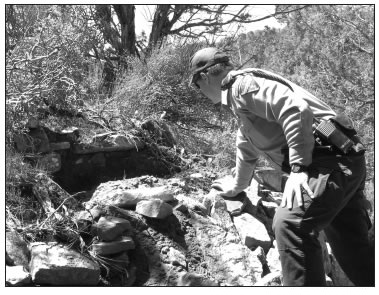
RANGER EXAMINING HOLE DUG BY ILLEGAL POT HUNTERS

A BLM law-enforcement ranger examines a hole dug by illegal pot-hunters on Canyons of the Ancients National Monument. Photo by Ann Bond/San Juan Public Lands Center

“We could tell there was a site ahead because of all the potsherds,” recalled the Cortez resident.

“It was a pristine, beautiful place. There were not a lot of recent footprints. The site was quite large. There were no cliff dwellings, but it looked like there was a ceremonial site. It was just an incredible place.”

When she came back with a friend in 2007, she noticed as they approached that the large potsherds that had been scattered all over were mostly gone.

“Then we came to this one part that had had a little structure and it was completely dug up. I was stunned. I had a camera, but I was paralyzed. I didn’t even think of taking photos.

“I was so upset and devasted, I just wanted to get out of there right away.”

She went home and called BLM law enforcement personnel. Officers and an archaeologist accompanied her back to the site, looking for any evidence left by the pot-hunters, but there was none.

An area about 15 feet long by 5 feet wide had been dug up under a small rock shelter, and three or four smaller areas, maybe 2 by 4 feet, had also been dug, Bielenberg said.

It soon became clear that this had been more than a storage or ceremonial site, it was a burial site.

“There were a lot of bones uncovered. After the law-enforcement guys did their assessment, one of them took us to one rock. There was a crack in the rock, less than a foot wide at the top but maybe 18 inches at the bottom. These grave-robbers had lain on their stomach and pulled everything out of there. The law officer shone his flashlight in, and there was a skull.”

Bielenberg said if she were to return to that site, “It would never have the same feeling for me. You like to feel that sense of discovery and of being with the ancient ones. That was completely gone.

“It was such a violation. It was an affront.”

‘Manifest Destiny’

The kind of looting of Ancestral Puebloan sites that Bielenberg stumbled across is a fairly common occurrence in the Four Corners area, by all indications.

On June 10, after a 2 1/2-year investigation, federal authorities swooped down on two dozen suspects alleged to have been part of a ring trafficking in ancient American Indian artifacts throughout the Four Corners. Twenty-four people were charged with a total of 115 felony counts and a few misdemeanors, including violations of the 1979 Archaeological Resources Protection Act (ARPA) and the 1990 Native American Graves Protection and Repatriation Act (NAGPRA), theft of Indian tribal property, theft of government property, and transportation of stolen property.

The arrests came after an undercover investigation involving a dealer listed only as “the Source” in search-warrant affidavits. Working with the FBI and BLM, the source bought, sold and swapped artifacts while wearing a recording device.

The transactions involved 256 items for which the source paid $333,685 – items including a blanket made of yucca fibers and turkey feathers, a copper bracelet, sandals, pendants, knives, bone gaming pieces, a shell necklace, mugs, axes, pots, ollas (large jugs), baskets, sacred ceremonial prayer sticks, and more.

The source was paid $225,000 for his services, according to one affidavit. (The source is referred to as masculine although this does not necessarily indicate the source’s gender, the affidavits say.)

The investigation resulted in indictments against the defendants by a Utah grand jury. The charges were announced with great fanfare by Interior Secretary Ken Salazar, Assistant Interior Secretary for Indian Affairs Larry Echo Hawk, and other officials with the U.S. Department of Justice and FBI.

The charges created a furor in the Four Corners, particularly in San Juan County, Utah, home to all but six of the defendants.

But others, including archaeologists, public-lands officials, and aficionados of the ancient dwellings and relics of the Four Corners were quietly ecstatic.

“People are cheering,” said Fred Blackburn of Cortez, an author, historian, and amateur archaeologist, shortly after the raids were announced.

Blackburn, who worked for the BLM three decades ago, said he believes the investigation was well-handled compared to some previous efforts, including a major raid in the 1980s that proved unsuccessful in getting any convictions.

One important factor was obtaining audio recordings of the suspects saying the artifacts had come from public or tribal lands, Blackburn said. According to the affidavits, the suspects allegedly can be heard saying where the artifacts actually came from. Illegal pot-hunters typically sign false “letters of provenience” for buyers stating that their treasures came from private land.

Collecting historic and cultural relics from private lands is not illegal (however, disturbing human remains is forbidden). It is illegal, however, to collect artifacts from public and tribal lands.

Blackburn said looting of ancient sites is widespread. He sees it as a form of racism.

“It’s the mentality of Manifest Destiny,” he said. “You know, ‘It’s our God-given right to find stuff, to go treasure-hunting. These people and their graves don’t really count.’ It’s really prejudice.”

If prosecutors obtain convictions against some of the defendants, it will serve as a deterrent, Blackburn believes, but the effort will be long and difficult.

“There’s an enormous amount of money and stress involved in prosecuting these cases,” he said.

Potsherds disappearing

Canyons of the Ancients Manager LouAnn Jacobson says looting occurs regularly on the monument.

Less than a year ago, an illegal excavation was found at a site that is listed on the National Register of Historic Places. She declined to name it.

“It involved major excavation in a room,” Jacobson said. A hole several feet deep was dug and a standing masonry wall was damaged. It was impossible to tell what, if anything, was taken, she said, and there were no clues as to the perpetrator.

Archaeologist Linda Farnsworth said there have been a half-dozen serious incidents of pot-hunting since she began working for the monument in August 2005. “These were the sort where there was really severe, extensive damage,” she said. “There are also probably a dozen smaller incidents every year. It keeps us pretty busy.”

Digging up ancient American Indian artifacts on public lands is clearly a breach of federal laws. But there is a lesser type of looting that goes on continually – the casual pilfering of small surface artifacts such as shards of broken pottery, called potsherds.

A section of ARPA exempts “arrowheads located on the surface” from protection, but that doesn’t include pieces of pottery. However, all sorts of recreational users of public lands find themselves pocketing the occasional distinctively marked potsherd.

Between the serious pot-hunting and the minor scavenging, it may seem as though protection of artifacts is an impossible goal. In the past decade or so since the monument’s Sand Canyon trail became widely publicized, the potsherds that lay scattered around every ruin have disappeared.

“Black-on-white pottery is almost an endangered species,” agreed Bielenberg.

Jacobson and Farnsworth believe that education is making a difference, though it’s difficult to be sure.

“We’ve worked really hard to get the message out that people should come to the Anasazi Heritage Center first” before hiking the monument, Jacobson said. “They receive Leave No Trace messages on how to travel in the backcountry without impacting it.” The Heritage Center also has a short film called “Visit With Respect” that shows the connection between Ancestral and modern Puebloans and emphasizes respect for cultural sites.

“I think it’s really encouraging that most of the vandalism reports come from the people,” Farnsworth said. About 50 sites are being monitored by volunteer “site stewards” provided by the non-profit San Juan Mountains Association, “but I don’t think we can ever stop our efforts.”

Landscape littered

It must be noted that not everyone views cultural resources with awe or even respect. For many locals, the constant proximity to ancient artifacts and dwellings breeds, if not contempt, at least a great deal of familiarity.

People who live outside the Four Corners do not always understand that the entire landscape was once inhabited by the Ancestral Puebloans as well as other ancient tribes and that there are remnants of their presence all over. Bits of pottery, tiny shriveled corncobs, metates (grinding tools), even the occasional sandal are not difficult to spot while walking in the backcountry. Farmers plow around ruins on their own lands. Old-timers often have huge collections of artifacts – generally taken from private land, but not always.

“The landscape is littered with pieces of arrowheads and broken pottery exposed by time and the elements,” wrote Craig and Dorothy Leavitt of Utah in the June 24 issue of the San Juan Record. “Next time you go on a family outing, heaven forbid that you step on a piece of broken pottery, you just might find yourself rounded up and herded into a concentration camp.”

The concept that “every potsherd is precious” can indeed be a tough sell to locals when there are literally millions of artifacts sitting in the basement of the BLM’s Anasazi Heritage Center – most excavated prior to the construction of McPhee Reservoir. “They tell us not to even pick up a potsherd, but the federal government flooded thousands of sites when they built the dam,” one local environmentalist, now deceased, was known to remark.

“I think there’s probably a sense that some of it, like arrowheads and pottery shards and stuff like that – what does it hurt to pick it up?” said Bruce Adams, chair of the San Juan County, Utah, commission. “What about these people offshore that find this sunken treasure that you always see on Discover TV? You see them with their cameras finding things and they’ll say, ‘That looks like a human bone’ and there’s not a big hoopla made about that. I’m not saying things shouldn’t be protected, but it seems like there are different standards.”

Adams is not alone. The Las Vegas Review-Journal in a recent editorial even called for “a cooperative, rather than an adversarial, approach” under which the most archaeologically promising sites would be set aside, with residents told, “Harvest the rest if you can.”

While many people enjoy the insights gained from studying past cultures, some locals scoff at the idea that there are any major lessons left to be learned about the Ancestral Puebloan culture, and regard archaeologists as dabblers in increasingly arcane esoterica. They are quick to seize on any evidence of hypocrisy on the part of federal agencies, such as reports of BLM officials discarding or destroying artifacts — for instance, stolen pottery that is sometimes returned to the agency by guilt-ridden individuals – because there is no place to store them. Such tales abound.

Farnsworth admitted, “I know that [curation] is an issue” but said it’s not something she deals with directly. She did say that artifacts that had been removed from their original site and then returned would have “limited information potential.”

Curation costs from $400 to $500 a square foot, according to archaeologist Lesie Sesler of La Plata Archaeological Consultants, so not every artifact is going to wind up in a museum.

There is also a perception that archaeologists merely do legally what pot-hunters do illegally – which may have had some truth in the past, when archaeologists removed what they found (though it was taken to museums rather than private collections).

However, that type of archaeology has largely been abandoned except in rare instances when a project such as a highway is going to damage a cultural site. Archaeology now involves taking samples instead of relics. Sites where digging occurs are carefully refilled with their contents left intact.

“There’s no need to collect every potsherd or lithic [stone] tool,” Blackburn said. “That creates a tremendous amount of artifacts to store. People don’t need to dig much any more unless there’s a huge specific reason. Just studying the artifacts already in museums would create a lot of graduate- student degrees for years to come.”

The Crow Canyon Archaeological Center near Cortez, one of the few institutions doing pure archaeological research, studied the Goodman Point ruins extensively for the past several years. “They excavated less than 1 percent of the whole site,” Sesler said.

Techniques are “very surgical” and involve small test pits and samples. “They’ll try to hit, say, a hearth, and they can find out the last meal somebody ate, the construction date of the hearth, what things were on the floor so you can see how the room was abandoned, things like that.”

“The current philosophy in terms of excavating is to do the absolute minimum, because cultural resources are non-renewable,” said Jacobson. “The standard procedure now is to involve Native Americans prior to any excavation to hear their concerns, and that influences whether the excavation even takes place at all.”

There are no excavations taking place on the monument currently, she said, though there are some large-scale inventories to record information about what is visible on the surface.

Only about a fifth of the monument has been surveyed systematically, according to Farnsworth.

‘Joy of discovery’

Blackburn said he does not believe past archaeologists are completely blameless in fostering the attitude that artifacts are to be plundered (an attitude celebrated in popular films like the “Indiana Jones” and “Tomb Raider” series, which make modern archaeologists cringe).

Still, the fact remains that pot-hunting generally involves digging up burial sites, an act of enormous disrespect. “I’ve heard comments that excavating sites and damaging cultural resources doesn’t hurt people, but the modern Pueblo people are connected to the Ancestral Puebloans,” Jacobson said. “Excavating burials and pot-hunting does hurt them.”

Both serious pot-hunting and casual scavenging ruin the chance of researchers learning anything from a site – and there are still things to be learned, according to Sesler. Archaeologists would like to know more about the influence of the Chaco Canyon settlement on people in the Mesa Verde area, how much influence people in meso-American and northern Mexico had on local tribes; and how ancient settlements in this area are related to the modern Pueblo tribes further south, for example.

Nabbing relics is also against the law, a fact hammered home by the recent arrests. “It is against the law to excavate a site on federal land and to pick up artifacts on federal land, and I think that needs to be acknowledged,” Jacobson said. “I personally don’t get to pick and choose the laws I follow. I don’t think any of us have that choice.”

But more than anything else, removal of artifacts wipes out the pleasure that future visitors could have had. Artifacts on public lands don’t belong to individual pot-hunters or even archaeologists; tbut to the tax-paying general public, the people that might be thrilled by the sight of potsherds or a hand axe. While it may seem there are relics everywhere, they are disappearing every day.

“If everybody picks up an artifact it doesn’t take long till they’re gone,” Jacobson said. “When the evidence on the surface is gone it not only impacts the archaeologists’ ability to interpret what happened in the past but impacts other visitors’ experience. They can’t see the artifacts and have that sense of discovery.”

Blackburn is an advocate of the “outdoor museum” concept – where people see artifacts in their natural setting. But he admits the idea is “pure utopia.” The compulsion to collect and hoard runs deep.

“It’s never been stopped in human history,” Blackburn said. “The Romans used to sell Egyptian artifacts. It’s like picking up shells off a beach. It’s part of our nature.”

Once, he and a friend who also believes in the “outdoor museum” made a replica of an artifact, labeled it as such and placed it in southeastern Utah’s famed Grand Gulch area. Almost immediately, it disappeared.

People will have to fight the impulse to grab and collect, however, if the Four Corners area is going to retain the tangible remnants of the history that lends it much of its magic.

“What is the drive behind collecting things?” mused Bielenberg. “Why do we feel the need to collect a potsherd? Is it displayed prominently in your house or is it like a souvenir you throw away 10 years later? Does it become junk?

“Isn’t the joy of discovery enough, or does it have to be the joy of ownership? Why don’t we want to give the joy of discovery to everyone? That’s a mystery to me.”

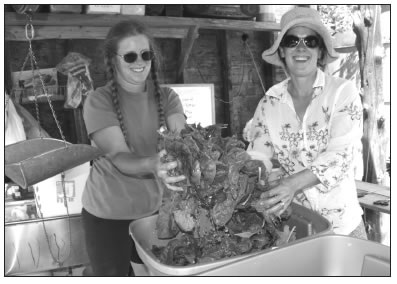
Published in July 2009

Arrests create uproar in Utah’s San Juan County


Related stories

Pot-hunting crackdown

‘Leave them alone’

Pot-hunting frequently involves grave-digging

The June 10 federal raids serving warrants on suspects in an alleged pothunting ring created a furor in San Juan County, Utah, home to 18 of the 24 people charged with various violations of archaeological laws.

In an area where family homes often contain collections of ancient Indian artifacts gathered generations ago, many citizens bristled at the sudden portrayal of their close-knit community as a nest of grave-digging law-breakers.

Even Marilyn Boynton, a Free Press contributor who moved to Blanding, Utah, a couple of years ago, felt defensive on behalf of the county.

“[Interior Secretary] Ken Salazar made it sound like all these people are law-breakers and looters,” she said. “Most people have artifacts that were collected years and years ago, before anyone knew it was wrong.”

The anger turned to shock and grief when, the morning after the arrests, Blanding physician James Redd – one of those accused of illegal pot-hunting and trafficking in artifacts – killed himself by carbon-monoxide poisoning. Another suspect, Steven Shrader of Durango, shot himself to death June 19.

While commentary in the Salt Lake Tribune was divided on the fairness of the arrests, letters to the editor in San Juan County’s two local papers were running largely against the raids.

“All the artifacts in San Juan County are not worth the life of a person – any person,” wrote Craig and Dorothy Leavitt in the San Juan Record.

“. . .admittedly, I may be an insensitive slob, but what is so criminal about the behavior of these tax-paying citizens raided and humiliated by the regime’s Gestapo?” asked another letter- writer, Dan Barber of Kanab, Utah. “Seems to me the ‘desicrated’ [sic] artifacts allegedly ‘stolen’ from public property should be in the hands of a care-taker who appreciates them rather than crumble away into nothing in some dusty, musty, forgotten cache!

“The Native American heritage (r.e. [sic] the sacredness of the artifacts) has in no way been trampled on or defiled (as a few activists would have us believe) by the discovery and removal of said artifacts,” Barber wrote.

At least one of the defendants allegedly agreed, apparently viewing himself not as a thief of time, but as a protector. According to the search-warrant affidavit for Kevin Shumway, 55, of Blanding, he allegedly told the undercover source in the case, “you know, the sad part about it is if it wasn’t for us that do this they’d have nothing, it would be gone.”

“My grandfather, Albert R. Lyman, collected artifacts all his life, as did everyone in the county in those days,” wrote Scott Lyman in a letter to the Record. “He donated his entire collection to the museum. . . Today he would probably be summarily arrested and perhaps incarcerated for life. . .

“Some of those ‘artifacts’ were given to them [local people] by local ‘Native Americans’ or sold to them for a meal. No one considered themselves to be felons or even pot-hunters, but simply citizens of an area brimming over with things left by the previous people who live there,” Lyman wrote.

However, search-warrant affidavits for the suspects allege that they did far more than take care of artifacts left them by their grandparents.

The affidavits, based on an undercover investigation involving an informant who recorded conversations with the defendants, allege that the suspects sold and swapped artifacts they often collected themselves from public or tribal lands.

The affidavit in the case of Joseph and Meredith Smith, 31 and 34 respectively, of Blanding, alleges that Smith told the informant in October 2007 while discussing his collection that he had collected “all the artifacts himself. . . within the last two years.”

And the affidavit for Jeanne Redd, wife of the late physician, alleges that Redd met with the informant at her home on Aug. 30, 2007, and displayed her collection of artifacts, which included two pendants. “Redd told the Source that she found the two pendants. . . at Burial Mounds, lower Recapture Canyon, within the last eight years,” the affidavit states.

Still, the raids left many people confused. “I think a lot of people are worried that the FBI is going to arrest them for their collections,” said Bruce Adams, chair of the San Juan County commissioners.

“A lot of people 30 or 40 years ago went out every weekend and hunted for arrowheads and things and have nice collections.”

Although the 1906 Antiquities Act was designed to protect antiquities on federal lands, it had no real enforcement mechanism and was widely ignored. The Archaeological Resources Protection Act passed in 1979 marked the first real effort to rein in pot-hunting.

After the raids, Adams fielded questions from media from all over the country. “I’m telling everybody the same thing. We believe in the rule of law and we’re not trying to decide whether somebody broke the law. The court system will do that.” Adams added that he believes digging up burials is wrong.

But he said the county commissioners have concerns about how the raids were conducted, concerns they expressed in letters to the lieutenant governor and Utah’s senators.

The senators, Orrin Hatch and Bob Bennett, later called for an investigation of the raids, which reportedly involved 150 BLM law officers, FBI agents and federal marshals.

The county commissioners also asked Sheriff Mike Lacy to conduct his own investigation of the agents’ behavior. Lacy’s office did not return a phone call asking about his conclusions.

Adams said he and the other commissioners doubted the necessity of so many federal agents, armed and in bulletproof vests, descending on San Juan County June 10 to serve 12 warrants.

“Why all these agents in flak jackets with weapons drawn?” Adams asked. “None of these people had a violent background. None were believed to be drug dealers or murderers.

“If the Justice Department had called the sheriff he would have called them on the phone and they would have shown up at the courthouse in Moab.”

Adams said he had been told that Redd, who was 60, was handcuffed, thrown against a wall, and taunted by agents saying things like “This is the worst day of your life,” “You’re going to lose your license,” and “Your wife is going to prison for 30 years.”

“There was no consideration that he was innocent until proven guilty,” Adams said. “By the time he got home from his arraignment he was a beaten man. Those were the things the sheriff told me happened.”

The father of one defendant also told Adams his son, Nick Laws of Blanding, that Laws’ toes were broken during his arrest, but no one could be found to confirm that.

The U.S. attorney for Utah, Brett Tolman, responded to the charges in a press release on June 17, stating that the FBI had notified the San Juan County sheriff six days before the raids and local police departments the day before.

“The felony arrests of the defendants were made in accordance with the agencies’ [FBI and BLM] standard operating procedures,” the press release said.

Tolman also said none of the charges involve mere possession of a protected artifact, but rather trafficking.

Steven Killpack, the Utah federal defender, told the Free Press his office is representing about 10 of the defendants. Killpack said his attorneys’ concerns about the way the raids may have been conducted would be limited to whether the conduct had anything to do with the cases, such as if it involved suppression of evidence. However, he said comments by prominent politicians do raise questions.

“Any time you have people of importance like Senator Hatch, Senator Bennett, or Mark Shurtleff [Utah’s attorney general] who have expressed concerns about the procedures, then certainly we want to look at them very closely because typically those individuals are slow to express criticism of law-enforcement procedures, and that’s a red flag,” Killpack said.

Killpack added that defendant Shrader of Durango had been a client of his office and that he was “surprised and saddened” by his suicide June 19. “He had outlined what appeared to be a plausible defense,” Killpack said.

Adams said he has received hate mail for speaking out against the raids. “There were some rude things, some profane things.”

Adams said although the ruins and artifacts do draw tourists and carry a cultural heritage, the people of San Juan County are beginning to view them as more of a pain than a treasure.

He said he does not believe laws such as ARPA should be changed, but that the BLM should change its policies.

“The BLM has a huge opportunity in this part of the country to display this but they have taken no steps to get a place where people could go out in the wild and see what the resource is.

“We have Edge of the Cedars [State Park Museum in Blanding] but we need some kind of trail that would go by several sites in a natural setting. Wouldn’t you want somebody to take you out and show you? I think that’s the BLM’s responsibility. But to me they just want to lock it up and hide it.”

Published in July 2009

A feast for music-lovers

The Clavier Trio is among the plethora of talent that will be featured at Music in the Mountains 2009

Last year when the Clavier Trio performed at Carnegie Hall to a sold-out house, an usher came back stage during intermission and handed violinist Arkady Fomin a note.

THE CLAVIER TRIO

From left, David Korevaar, piano; Jesus Castro-Balbi, cello; Arkady Fomin, violin, make up the Clavier Trio, which will preform three concerts during the Music in the Mountains Festival this month in Durango and Pagosa Springs.

Fomin thought it was coming from an old friend.

Wrong! A critic for Strad magazine said he liked the concert, and that the Clavier deserved the applause it received — even if the accolades came in the wrong place.

Amid laughter, Clavier cellist Jesus Castro-Balbi explains, “We had a few people clapping between movements, which you’re not supposed to do.” Fomin didn’t care. “It was not only a good concert, it was a very good intermission because of this note.”

He, Castro- Balbi, and the Clavier’s third member, pianist David Korevaar, plan to bring both humor and musicianship to the Music in the Mountains Festival, a series of classical and world music concerts taking place in Durango and Pagosa Springs July 10 through Aug. 2.

Conductor Guillermo Figueroa will return for his second season with the 23-year-old festival. Figueroa is music director and conductor of the New Mexico Symphony in Albuquerque. This season, Figueroa will conduct six of the eight Festival Orchestra concerts. Music in the Mountains will also feature seven Chamber Music concerts, several benefit and gala events, pops and Celtic music, and more.

To view the full schedule, visit www.musicinthemountains.com.

The Clavier Trio will offer two programs in a series of three concerts of what Korevaar considers their specialty: memorable programs.

Their first program, entitled “Passionately Romantic,” features Russian composer Anton Arensky’s “Piano Trio in D minor Op. 32,” and Franz Schubert’s “Piano Trio in B flat major D. 898 (Op. 99).”

Castro-Balbi describes Arensky’s work as lush with rich instrumental colors, and long singing lines. He believes it goes well with the Schubert trio: “One of (his) great later works.”

The cellist adds, “I think Arkady has a knack for putting together pieces in a nice combination.”

Clavier’s second performance, ‘Transfigured Night,” features Arnold Schoenberg’s “Verklaerte Nacht,” Schubert’s “Notturno in E flat D. 897,” and Mendelssohn’s “Piano Trio in C minor Op 66.”

“[This] program is more than interesting,” exclaims Fomin. “It’s unique.”

The pieces all relate to night. “Verklaerte Nacht” depicts two lovers who wander down a darkened forest path.

Schubert’s “Notturno” connects to darkness more indirectly. Military bands played the first nocturnes to settle the soldiers in the evening. Later, nocturnes became quiet pieces for civilians to enjoy.

Korevaar describes Schubert‘s “Notturno” as “a very beautiful and heartfelt piece. At the same time it has some very strong kind of military band sounds to it. It’s an interesting mix.”

Night also figures into Mendelssohn’s “Piano Trio in C minor op 66.” Its scherzo in particular recalls his music for Shakespeare’s “A Midsummer Night’s Dream.”

The piece has an additional intriguing feature. “He masterfully inserted Lutheran hymns,” says Fomin, chuckling again. “In the middle of passionate spots, really exciting playful movements, suddenly there is a Lutheran hymn. I like it.”

Mendelssohn may have added the hymns as a tribute to Bach, or he may have been acknowledging his own background. His father and mother converted from Judaism to Christianity, then stressed religions tolerance to their children.

“This is a somewhat autobiographical piece, I think,” says Fomin.

Fomin started the Clavier Trio in 1997 at Conservatory Music in the Mountains, when he and two colleagues played chamber music together for recreation, and discovered they enjoyed working together.

“Different people [from Korevaar and Castro-Balbi],” he explains. “I was the same except a little younger.”

The ensemble performed in the inaugural Dallas Symphony Orchestra Chamber Music Series, served as trioin- residence at Fort Lewis College; and performed to critical acclaim at the Bargemusic Concert Series in the Weil Recital Hall at Carnegie Hall.

When the original pianist left the group, Fomin called upon Korevaar, whom he had known as a music student in the 1980s at Juilliard. “I would have then called him a budding musician then,” Fomin says.

“I hope I’ve bloomed by now,” Korevaar shoots back. Currently, he’s an associate professor of piano at the University of Colorado, and travels throughout the United States as a chamber musician and soloist.

Then the Clavier’s cellist left. Deciding he couldn’t hire another outof- towner, Arkady Fomin called Castro- Balbi, whom he heard play with the Dallas Symphony, and who he knew performed throughout the Americas and Europe.

“His first question was, ‘What happened to the previous cellist?’” Fomin says as Castro-Balbi begins to laugh.

Assured the former cellist left on good terms, Castro-Balbi agreed to audition for the Clavier.

Guffaws explode as Fomin adds that the Clavier in its present form has been together for five years.

“Time flies when you’re having fun,” Korevaar retorts.

“Our different backgrounds help us,” muses Fomin, who grew up in Latvia, came to the United States 35 years ago, and has played with Yefim Bronfman, Pinchas Zuckerman, and Nadja Salerno-Sonnenberg.

“We find a way to come together in music. Not only to make ourselves more [fulfilled] but to bring the joy of music to others.”

Published in Arts & Entertainment, July 2009

This couple makes community support a way of life


It didn’t take Jack Schuenemeyer long to get involved in the community after arriving in Cortez in June 2001. By July he was helping to get a recreation center built in Cortez.

“He wanted a place to swim,” said his wife, Judy, with a laugh. Since then, the Schuenemeyers have made involvement their way of life.

JACK AND JUDY SCHUENEMEYER

Jack and Judy Schuenemeyer

A committee to accomplish the goal of building a rec center had been in place since the mid-’80s, and in the mid 90s they got a bond issue on the ballot, but it was voted down. Undaunted, proponents launched another initiative in 2000.

Jack jumped in to lend a hand campaigning for public support, and this time the bond passed.

One can now find Jack at the Rec. Center five days a week in the early hours of the morning.

Soon after the bond issue passed, Friends of Recreation for a healthy Community was organized, with Jack and Judy among the founding members.

“The mission of the organization, which is a private, non-profit, all-volunteer group, is to provide scholarships to members of the community who otherwise would be unable to participate in center activities,” Judy said. Judy was president from 2002 to 2005 and Jack was president for a year. Both are still active board members. “Friends” has obtained funding for 228 scholarships so far.

Jack and Judy followed their son, Jude (owner with wife Adie of Let It Grow Nursery) to Cortez. They had been residents of Delaware for the previous 25 years. Jack, who has a doctorate in statistics, currently has his own statistical consulting firm, with his office upstairs in Let It Grow. This is a fulltime operation for him, with part-time help from Judy — but they manage to find time for many other projects. Judy was born and raised in Denver. After raising three children, she attended law school. Judy was an attorney at Community Legal Aid Society and was its executive director for nine years prior to her retirement.

Both the Schuenemeyers are members of the League of Women Voters, a non-partisan political organization and encourages informed participation in government and works to increase understanding of public policy issues.

As part of their work with the league, the Schuenemeyers became involved with the Four Corners Air Quality Task Force, a coalition of state, federal, local and tribal officials and interested citizens that worked to assess the effect of sources of pollution (such as power plants in New Mexico and car exhaust) on air quality in the Four Corners. The group put together an advisory report that was presented to various agencies.

Jack also served as a board member and president for the Piñon Project, a non-profit organization dedicated to enriching the quality of life of individuals and families in the community.

Jack went drag, sang and danced as one of the “Dreamgirls” in a family comedy put on as a fund-raiser for the Piñon Project. When asked if he had portrayed Diana Ross, he donned a sheepish grin and replied, “I’m not sure.”

Jack also served on the Cortez Parks, Recreation, and Forestry Advisory Board and led the compiling of a 10-year master plan for Parks and Rec that is being implemented now. One element of the plan is a community garden where locals will be able to grow veggies.

Jack is president-elect of the Cortez Area Chamber of Commerce, has chaired its education committee, and involves himself directly with local political campaigns.

Judy has served as a board member for SouthWest Colorado Concerts, was an active volunteer with the Violence Prevention Coalition, and is board secretary for Onward! A Legacy Foundation, which managers scholarship funds and endowment funds for individuals, families and non-profit organizations for charitable purposes.

Judy is also a reader at St. Margaret Mary Church. She spends her free time, when it’s not snowing and when she’s not helping raise her two grandchildren, in her garden and orchard.

Jack and Judy are room leaders for the annual Teen Maze, an experiential learning experience for teens.

On the first Friday of every month, local artists get together for a Culture Café hosted by the Montezuma Arts Council and chaired by Jack. The arts council is working on the compilation and publishing of an arts directory and calendar of art-related events.

The arts directory is in its final stages. The calendar, which is still in development, will help ensure that when Rhonda Allmon is planning a dance recital it won’t conflict with a concert put on by SouthWest Colorado Concerts.

The council also has a long-term vision of being able to fund and build a facility in Cortez for arts and other community events. Ballot, anyone?

Published in July 2009

The fifth season: fire

Worried a stranger had been secretly hanging around my house, maybe checking out the tools in my barn, or worse, peeking in my windows, I started double-checking my locks at night and watching surreptitiously after dark from an upstairs window. It was not clinical paranoia that ruled my imagination. I’d actually seen evidence of the alleged crime: cigarette butts scattered in my yard, often near the house, and I don’t smoke — at least not for the last 30 years.

Then one windy day, standing on my porch, I watched a neighbor toss a cigarette off his deck and onto his driveway. I realized that his cigarette butts were migrating during our fierce spring storms over to my yard. To finally understand the mystery was a relief, but now I’m feeling guilty because I can’t help thinking of my neighbor as a butt head.

What I mean by a butt head is anyone, male or female, who thinks cigarette butts don’t qualify as litter. So as not to be misunderstood, these folks may contribute in many meaningful ways to their community, but their butts do the world no good.

Anatomically speaking, I know that’s a tough image to visualize, someone’s butt getting in the way of their vision. It’s tough enough to remain a smoker these days with outrageous tax increases and the flurry of antismoking campaigns. I’d be inclined to feel sorry for the smoker, except what’s up with the flick of a cigarette butt out the window of a moving vehicle? And what’s up with the heel that swivels to crush a discarded cigarette without bending over to pick it up?

Cities all across America enforce do-do laws, insisting that if you do let your dog crap on the sidewalk or in the park, you do not ignore it — instead, you pick it up. Some cities even provide bags. I’m going to be a happy man when the first city in America passes an ordinance that requires smokers to pick up their smoldering butts. Maybe it will even provide tinfoil envelopes.

And there’s something else. In a landscape where aridity is a way of life and wind only takes a day off every month, butt heads are more dangerous than mere litter bugs. They are the whiff of smoke I catch in the early morning air, the haze that makes the horizon the same color as the sky. They are 1,000 acres transformed into an ash tray, a competition with lightning to see which can be more deadly. They are a smoking gun along every roadside in the West.

So go ahead, as an old anthropology professor used to say, smoke ’em if you got ’em. It’s not a crime, though being a butt head ought to qualify as a misdemeanor.

David Feela writes from rural Montezuma County, Colo.

Published in David Feela

Why local economic development doesn’t succeed

For 30 years I’ve been living in Montezuma County, and I’ve seen our local officials drive this county and city downhill with closed-minded, shortsighted decisions. Progress doesn’t seem to be their governing position unless it suits them or their friends.

In the time I have been here we have lost more than 20 important businesses from Cortez and have become a proud home to five secondhand stores, empty buildings on Main Street and a few junk stores masquerading as antique shops.

We struggle with an anti-government, anti-environmental attitude, not realizing our local government is the second-largest employer in the county, and our beautiful environment is the reason many people move here.

Very few entrepreneurs and civic leaders have any original thoughts. Someone comes up with a creative idea and 10 copy-cat businesses jump in, and all struggle for survival, not realizing they are strangling the golden goose.

This community that is so attached to the flag and patriotism welcomed with open arms a company that ardently supports a Community country we fought and lost two wars with: China. I couldn’t believe it when the great slayer of small communities approached our city fathers and local business people and they groveled before the vultures, giving them a large tax break while they slyly grinned as door after business door closed.

In the 1980s, Cortez, a small but thriving town, had a tremendous number of business possibilities. But gradually, with no leadership or vision, just excuses, we have dwindled to our present state. And then there’s our old-fashioned pigheadedness. Some store owners in downtown Cortez won’t do the simplest things to improve business, like stay open after dark during tourist season (when the folks are leaving the Indian dances and “Black Shawl” play at the Cultural Center, one of the city’s best features). Nor will they open up on a Sunday when we have special events coming through like the Ride the Rockies bike tour, which appears here every couple of years. There’s a golden opportunity to show off our local businesses and area, but instead these visitors wander around downtown and find nearly everything closed except, thank heavens, eateries like Blondies and Mainstreet Brewery.

What about economic development in the county? It’s still boom-and-bust and kissing the backside of the oil and gas companies, terrified they will leave — and leave they will, as they have before.

Everyone seems to look down on agriculture as a viable business, but maybe we are thinking of the wrong type of agriculture. Ask most people here about agriculture and it is hay, beans and large herds of cattle. My question is: What about flowers, bulbs, seeds, fruit trees, berries, herbs, garden greens, and so on? Almost anything will grow here — chickens, ducks, geese, game birds. We should take advantage of niche markets and work together instead of jealously competing with one another.

The two self-defeating phrases I hear are “it won’t work” and “it can’t be done here.” With that attitude, people are guaranteed to be 100 percent right.

We are also hampered by our lack of land-use planning. A little background:

Some time back the county’s citizens pressured the commissioners to come up with a land-use plan. A non-partisan working group was chosen to come up with the plan. Eighteen months later “LIZ” was unveiled. Landowner-Initiated Zoning allowed each landowner to designate the use of his land be it agriculture or residential. Industrial or commercial uses required county approval.

It is interesting that such an important piece of local legislation, LIZ, was never voted on by the people at large. The people voted to advise the commissioners to come up with a plan, which they did, but the people were never allowed to vote directly as to its acceptance or refusal.

Now we are in a mess from confusion about what should be allowed where. The commissioners are in a quandary over some of their decisions and losing a series of lawsuits. But the citizens are equally to blame. Most people in the county only rise up and complain when their particular ox is gored and something is about to happen next door to them that they don’t want. If these different groups ever joined forces they could over-ride the minority that rules.

Truth is, there is a paradise to be had here. But without effort or ingenuity, we will continue to be like the proverbial dog sitting on a burr, howling dismally but too lazy to move off our asses.

Galen Larson writes from rural Montezuma County, Colo.

Published in Galen Larson

The threat of loose dogs

Following an attack by two pit bulls on a Montezuma County woman in May, the county commissioners are planning to consider adopting some type of dog-control ordinance later this summer. What form the ordinance might take has yet to be decided.

Currently, the county has no specific dog-control ordinance but operates under state laws.

Nancy Thomas, a well-known county resident who has a wildlife preserve near Totten Lake, was attacked by two pit bulls on May 13 when she knocked on a neighbor’s door. She was hospitalized for treatment of a fractured wrist and severe lacerations.

The neighbor was reportedly horrified by the attack and the dogs have since been euthanized. It is not big news when dog bites man, the old journalistic saw goes, because it’s such an ordinary happenstance. (Now if man bites dog, that is news!)

Certainly, dog bites rarely make the news in Montezuma County because they are an all-too common occurrence, sometimes with painful and permanent results.

Not a month goes by without two or three dogbite incidents being investigated by local law enforcement, and those are only the ones that are reported — usually if the victim ends up getting medical treatment.

More than 30 dog bites were reported in the county during 2007 and 2008, according to Melissa Mathews of the county health department, and this year is right on schedule for a similar number. In fact, the county ranks among the top counties in the state in the number of dog bites reported. (In 2004, a third of Colorado’s reported bites were in Montezuma County.)

Last month a Dolores woman was also charged and attacked by two dogs while biking along the West Fork Road north of town. One dog latched onto her leg as she tried to outrun them, causing her to crash and sustain injuries that required medical attention.

That victim, who declined to be interviewed because of a pending court case, did say that she was not the only one to have been attacked by those dogs, whose owner was charged with unlawful ownership of a dangerous dog (second offense).

But because of a state statute known as the “first-bite-free law,” holding owners responsible for their canines’ behavior can be difficult. Under that law, a prosecutor must prove the owner knew the dog was dangerous before it bit someone.

Sheriff Gerald Wallace says the problem is ongoing.

“It’s a regular occurrence — just not to the severity that Nancy got attacked,” Wallace said. “Over the past couple months I’ve been working with the [county] commissioners and I’ve given them copies of what other counties have for animal-control ordinances.

“They’re discussing it and I think we’re going to set up a public meeting in the near future to gather some input and see what they want to do,” he said, “but I believe there’s definitely some action that need to be taken.”

Wallace said presently under both state and local law, owners of known vicious dogs can be prosecuted.

“But it would be nice to be able to deal with it before it becomes a vicious attack,” he said.

One sticking point is that state law requires that additional local ordinances may be passed only in conjunction with licensing dogs, and that may not be acceptable in this area.

“I know that licensing isn’t a very popular thing,” Wallace said, but there may be a way to skirt that condition. “The county attorney is looking at that.”

Other counties have what’s known as “care and control” ordinances, he explained, which protect dogs by penalizing neglect and requiring the animals be under control of their owner, meaning the dogs must stay on the owner’s property.

“We get a lot of calls where people are running down the road getting fit or whatever, and a dog will run out and bite them,” he said. Another problem is dogs rushing out to attack other dogs that are being walked on leashes.

“I know there is definitely some concern over the fact that there are dogs out there that are not being kept under control.”

Dogs that chase livestock, also a commom problem, may be shot and sometimes are, but ranchers sometimes learn this has happened only after a cow or calf has been killed or injured.

Wallace has proposed designating one deputy to deal with animal-control problems as well as agricultural issues such as water disputes, and said an officer is probaby going to assume those duties later this summer.

“I really wanted to find the right person and it’s taken me longer than I would have liked,” he said. “[Concerning] the animal-control portion of it, until we get an ordinance in place, there’s really not much that can be done.” As former sheriff Joey Chavez told the Free Press (April 2004), deputies currently have no authority to round up strays or other out-of-control dogs and even if they do the department becomes responsible for any kennel fees or other costs associated with impounding them.

Wallace said if the county commission does decide to adopt an animal- control ordinance, it would be complaint-driven and not proactively enforced. But if someone were menaced by a dog in the county, it would be one more tool for dealing with such situations.

“If [the owners] did abide by it, then great, but if they didn’t, then the next step after the verbal warning would be to give them a citation.

“I think it would help by educating people that there is an ordinance and helping prevent something like what happened to Nancy.”

Wallace said Thomas was “healing very well” from her injuries.

Published in June 2009

A stray-cat solution: Trap, neuter, release

Turned loose to fend for themselves, domestic cats can breed like rabbits.

Some don’t survive long on their own, but others learn to scrounge scraps and catch mice and birds. And if they aren’t spayed or neutered, they can produce a plethora of kittens. Females may start breeding at 6 months and can produce two litters a year.

Soon you have a colony of cats, many feral and unapproachable. They generally pose no threat to humans, but they may spread disease to pet cats and can become a nuisance because of yowling, urine-marking and other behaviors related to mating.

What to do? Animal-lovers hesitate to have the cats trapped and taken to the animal shelter because they know the felines will just be euthanized. Intentional killing is the No. 1 cause of death for domestic cats in the United States, according to the nonprofit Alley Cat Allies, and euthanasia of stray cats is an enormous expense for government- funded shelters.

However, a new movement known as “trap-neuter-release” offers a different solution: trap feral cats, neuter them and turn them loose to live out their lives without reproducing.

This cuts down on the yowling and other problems, provides a humane alternative to euthanasia, and leaves a stable cat population in the original site. (If the cats are just taken and killed, other ferals will likely move in.)

The philosophy is gaining popularity nationwide. In Cleveland, for instance, more than 300 roaming cats were neutered and returned to their neighborhoods. The city paid $30 of the $40 fee to neuter each one; citizens paid the rest and agreed to feed the strays. The city has earmarked $40,000 to neuter 1,333 cats in 2009, according to the Cleveland Plain Dealer.

Now, Southwest Colorado’s own humane society, For Pets’ Sake, is trying out the TNR program locally.

“I’ve been wanting to do it for at least four or five years because there’s an obvious need,” said Marian Rohman, president of the FPS board.

At the end of last summer, a person from the animal-welfaresupporting Summerlee Foundation approached For Pets’ Sake and said grant money was available specifically for working with feral cats.

It took Rohman till January 2009 to organize a core group of a dozen people and get the ball rolling on the Feral Cat Project.

There is a definite need in the region, she said. “We hear from so many people who say, ‘There are kittens in my woodpile, what can I do?’”

At the Cortez Animal Shelter, which serves Montezuma County and takes in animals from surrounding areas as well, 692 cats were reportedly brought in during 2008. Of those, 309 were judged to be feral, and all 309 were euthanized.

Of the remaining 383 non-feral cats, the majority (179) were euthanized after failing to be adopted or reclaimed. A lucky 164 were adopted, 19 were reclaimed, eight died in the shelter, and 13 were euthanized at the owner’s request.

So 100 percent of the ferals and 48.8 percent of the others were killed.

So far, Rohman’s group has worked with eight colonies of feral cats in Cortez, Dove Creek, Mancos and Pleasant View, and has spayed and neutered 63 animals. Rohman generally works with property owners who contact her rather than the other way around, and only with people who aren’t responsible for the cats being there in the first place.

“A lot of our colonies are really barn cats,” Rohman said. “We try to make a judgment call on whether the people got stuck with them when they moved in, or were just irresponsible owners. Those people get lower priority.”

The effort began with funding largely from FPS; several other donations have kept the program going. So far the project has spent a little more than $3,900 and has about $900 left.

“Right now we only have enough money to try and finish the colonies we’re working on,” Rohman said. However, she has applied for a grant from PetSmart Charities and will be applying for another from the Summerlee Foundation. So far there has been no word on whether either application will be funded.

The bulk of the costs is for spaying and neutering, Rohman said — even though all the veterinarians in Montezuma County have agreed to do the work at a discount. All the captured cats get a rabies shot, too, as well as treatment for minor medical conditions such as bad teeth.

Other costs include traps, food to maintain the colonies, and small shelters for the cats that have no place to get out of the weather. “Flooring stores have donated pieces of linoleum, and every lumberyard has given lumber,” Rohman said. “We are still spending about $25 per shelter for insulation.

“Our goal is for every cat to have food and shelter. We provide the food. We have several people who are willing to take on the responsibility of seeing that these cats get fed every day.”

So far, because the operation has been small, expenses have not been great. However, if the project is to make serious inroads into the stray-cat population, it will need more money for food, shelter, and veterinary work.

Through word of mouth the group has already been made aware of about 26 different colonies with about 420 cats. In May, the Mancos Town Board gave approval for the project to take care of ferals in its Cottonwood Park.

“So we could use an endless amount of money,” Rohman said with a laugh.

In addition, the project needs information about feralcat colonies, to show a need when applying for grants. To provide the location of a colony, e-mail Rohman at inthepj2@dishmail.net, or call For Pets’ Sake at 970-565-7387 and leave a message for her.

Published in June 2009

Montezuma County says no to a proposed waste site

The June 1 public hearing on a proposed solid-waste facility in Montezuma County featured threats to have people removed from the room, a threat to recall the county commissioners, demands for a planning commissioner to resign, and nearly seven hours of heated and sometimes bitter testimony.

Other E & P waste facilities have been proposed in area

Counties welcome the energy industry because of the tax revenues and overall economic boost it provides them, but local officials and residents alike are less eager to take in the wastes produced by oil- and gas-drilling.

Such wastes include the waters and chemicals that are used in drilling and “fracturing” of rock. These fluids typically contain salts, additives such as bentonite, baking soda, soap and cellulose, but they also contain small amounts of toxic chemicals used by the companies.

Other energy wastes include petroleum-contaminated soils that are generally spread out across acres of land and left to break down through the action of bacteria and the sun, a process called “land-farming.”

The Cajon Mesa Recycling Facility rejected by the Montezuma County commissioners on June 1 was not the first such facility along the Hovenweep road to be turned down.

In 2007, the state of Utah denied an application by Contract Environmental Services of New Mexico to construct a single lined evaporation pit for commercial disposal of oilfield brines at an existing land farm about a mile from the main entrance to Hovenweep National Monument.

“We got a lot of [negative] comments from Hovenweep and other folks,” said Gil Hunt, associate director for oil and gas with the Utah Division of Oil, Gas and Mining. “We basically decided what they were proposing and where it was located wasn’t in the public interest.”

Part of the problem was the proximity to the Hovenweep National Monument, he said, but there were also concerns about gruondwater contamination because of a nearby spring. “We looked at all of those things and decided it was not a good place,” Hunt said.

Among those objecting to the proposal were the San Juan County commissioners, according to Commissioner Lynn Stevens. Although San Juan County does not have its own permiting system for such facilities, it “strongly objected” to the state about the proposed expansion of the Contract Environmental Services facility.

The facility does have a permit from the state of Utah for a composting land farm to handle soils contaminated from oil spills, Hunt said.

It also has a permit from the Utah Division of Solid and Hazardous Waste to operate an asbestos landfill.

Hunt said Contract Environmental Services is under new ownership since the evaporation-pond proposal and the company has a good record at the site. “There have been no problems.”

A new facility for E & P (exploration and production) wastes from oil and gas has been proposed west of the Utah state line and about 15 1/2 miles southeast of Monticello near Eastland, Hunt said. The proposal by Coal Bed Creek Construction, owned by David Cressler of Dove Creek, Colo., is for a 10-acre facility with two 500,000-gallon evaporation ponds.

According to the San Juan Record, a county resident came to the commission meeeting in Monticello on May 11 to express concenrs about the proposed ponds. On June 2, an on-site visit with the applicant, the county commissioners and state officials was slated to make an evaluation of the proposed location, Hunt said. If the proposal moves forward, there will be a public hearing about it, probably in Monticello, according to Stevens.

But in the end, the decision came down to some lines in the county landuse code and a state statute.

“I have to respect the land-use code because that’s what I was elected to do,” said Commission Chair Larrie Rule shortly before the board voted 2-1 to deny an application for permits for the Cajon Mesa Recycling Facility. The decision stunned many of the two dozen or so people remaining in the audience, which had started out at over 100, after the all-day hearing. It also stunned the applicants, who had received recommended approval from the planning commission after a twopart public hearing lasting more than 10 hours.

“Yes, very much so,” Nathan Barton, engineer for the project, told the Free Press when asked if he had been taken by surprise.

Brothers Casey and Kelly McClellan had sought to build a facility to process, store, treat and recycle wastes from energy exploration and production, known as E & P wastes. The facility was proposed for 83 acres of a 473- acre tract lying between Hovenweep National Monument and the BLM’s Painted Hand Pueblo off the remote and narrow County Road 10.

There was some question about whether the applicants needed to seek industrial zoning for their property (it currently is zoned A-80, for large-scale agriculture) or could simply obtain a special-use permit and high-impact permit for a conditional use. In March, the planning commission unanimously recommended approval of the facility and said it did not believe the applicants needed new zoning but could just seek the permits.

The project would have included eight 4-acre evaporation ponds to treat the briny, chemical-containing liquids used in oil and gas drilling, plus a “land farm” to treat petroleum-contaminated soils.

The applicants said the facility would provide a much-needed service to support the area’s growing and lucrative energy industry.

Opponents, however, raised the specter of potential pollution of neighboring farms, ranches and BLM lands via airborne particulates from the evaporation ponds or groundwater contamination through breaches in the ponds’ liners or berms. They also said the site was inappropriately close (under a mile) to the signature ruin of the BLM Canyons of the Ancients National Monument, Painted Hand.

“The BLM is the source of most of the materials we expect to receive at this facility,” Barton countered. “If it is appropriate to have oil and gas development on the monument, then there should not be a problem with having a facility like this supporting that oil and gas production in a facility adjacent to the monument.

“It’s got to go someplace.”

‘Chicken Littles’

But others disagreed. Erin Johnson, an attorney hired by the Hovenweep Alliance, a grassroots group opposing the project, called the proposal “a classic example of incompatible land use” because it involved “a heavy industrial use located in a prime agricultural area and surrounded by important cultural resources.”

BESSIE WHITE

Bessie White of Pleasant View speaks out against a proposed solid-waste treatment facility near Hovenweep on June 1. Photo by Ned Harper

Bessie White, a long-term farmer in Pleasant View, concurred. “This is probably the best and most profitable [agricultural] area in the county,” she said. “This area is too good to be changed in any way.”

John Wolf of Pleasant View questioned the numbers given by the applicants that indicated the site would draw just 10 trucks a day. He said that would not be sufficient to keep the evaporation ponds at capacity and didn’t account for the trucks required to provide fresh water for revegetation and remove the recycled oils and salts.

“This is a major industry,” he said. “It’s the largest facility of its kind on the Western Slope.”

At times the testimony strayed into broad philosophical questions about what type of development would be best for Montezuma County.

Proponents often cited the fact that oil and gas production provides some 40 percent of the county’s tax revenues (the overwhelming majority of that is from carbon-dioxide production by Kinder Morgan).

“If this facility does not go through it will stop the drilling!” shouted Sam Bangs of Pleasant View, who said the energy money is badly needed.

Richard McClellan of Road H called opponents “the same group of Chicken Littles screaming no matter what it is” and said the project would boost the economy. “In the past we have let ridiculous opposition drive off things like a state prison,” he said. “What we’re looking at here is salt water.”

But Judy Schuenemeyer of Cortez said, “Jobs are always used as an excuse for doing things that cause problems later.”

And county resident Deb Campbell said there are many things besides oil and gas that bring dollars into the area. “I’m one of them,” she said, recounting that she moved here six years ago, bringing all her assets and her own business, “because it was a beautiful place, a safe place and a healthy place to live.”

“Will the oil and gas industry walk away if this project is not approved? I doubt it,” Campbell said.

David Baker of Lewis said he had been disappointed in the commissioners’ decisions about energy and drilling proposals in the past. “It appears you have been making decisions totally in favor of the industry to the detriment of the landowners,” he said, and threatened to mount a recall effort if the board approved the Cajon Mesa Recycling Facility.

Deb Barton spoke passionately in support of her husband, Nathan. She is the county’s landfill manager but made it clear she was not on the clock while attending the hearing.

Citing her extensive background in solid-waste management, she said she was sure the E & P waste facility would be safe – safer, in fact, than a landfill, because, “I don’t know what comes into the landfill.”

“I would rather live next to an E & P waste facility than all the multiple housing developments we are breaking our land into,” she added.

Chuck McAfee of Lewis said he supports the energy industry and co-owns land with his brother that is leased for natural-gas production. However, he opposed the waste facility, saying, “I guess I’m a member of the Chicken Little crowd that was identified earlier.”

McAfee was one of several people questioning whether Casey McClellan had crossed ethical boundaries by serving on the planning commission while the proposal was being considered – although McClellan recused himself from all discussions and voting. McAfee said McClellan had talked the county planning director, Susan Carver, out of making the applicants seek industrial zoning instead of a special- use permit.

“What really matters is the appearance [of impropriety],” McAfee said, and called for McClellan to quit the planning group. Casey McClellan was not present at the public hearing.

McClellan later said he had skipped the hearing because of advice from Andy Hill at the Department of Local Affairs in Denver.

“A couple of months ago, the heat I was taking over being on the planning commission concerned me so much I called her,” he said. He told her he was considering resigning.

“She said, ‘It would be a shame for you to resign, because planning and zoning commissions need experienced people’,” McClellan said. Hill then advised him to have his agent handle the hearings and not even to be in the room.

David Heck of Gilbert, Ariz., a for mer Cortez resident, defended McClellan at the hearing. “He recused himself from this whole process,” he said. “I hate to see somebody lynched up here who is not even in the room.”

Heck said E & P wastes should be treated at a central facility such as the one proposed. “That water is out there in the pits, in hundreds of locations scattered all over this land,” Heck said. “What’s being proposed is to gather that up, take it to a safe location and process it.”

A number of people called for the facility to be sited “someplace else” in the county, ideally near a highway to handle the trucks but far from farms and homes.

However, Bob Clayton, operations superintendent for Kinder Morgan, commented, “I have really scratched my head. . . I’ve been unable to really think of a location in this county that would be more remote.”

‘Very significant’

When public comments ended initially, the commissioners gave Barton and Kelly McClellan a chance to respond. Several audience members objected, saying they had already had their chance to speak.

“I don’t care if it takes a week, we’re going to get every piece of information,” Commissioner Gerald Koppenhafer stated, adding that the public would also get another chance.

When a few people kept objecting and yelling sarcastic remarks, Rule told them he would have them removed if they did not stop, which they did. A sheriff’s deputy was present throughout the hearing, but there was no other trouble.

After comment finally ended, commission attorney Bob Slough noted that that, under the land-use code, conditional uses allowed on ag lands must satisfy certain conditions, including the statement that the proposed use “does not create any danger to safety in surrounding areas.” He then read from Colorado law stating that “disposal of wastes from oil and gas energy and production raises public health concerns. . .”

“That’s very significant,” Slough told the board. “These are the kinds of questions you have to deal with in deciding whether you can legally approve placing this kind of facility in an A-80 zone.”

Koppenhafer then said that, although he believed opponents’ concerns could be mitigated and the facility operated safely, he did not believe the proposal met the code requirements.

Rule agreed. Both made it clear, however, that they were extremely reluctant to deny the application.

Commissioner Steve Chappell said, “I think this whole industry needs to be addressed.” He said a central E & P waste facility is needed and added, “If you don’t think this is isolated enough, where are you going to put it?”

Chappell refused to second Rule’s motion to deny, and voted against that motion.

Considering options

Casey McClellan later told the Free Press that he was “disappointed” by the decision but happy that the commissioners apparently saw no flaws with the project’s technical merits. “The impression I got was the commissioners felt like everything could be mitigated.”

He said the language about the danger to safety could be applied to almost any project. “There might be a danger in you walking down the steps in your office. There’s danger driving your car down Main Street. If that language is all it takes to stop this project, then that language could stop any project.”

He said the applicants are still “mulling things over and trying to digest it all” but that no option was off the table yet, including applying for industrial zoning or suing the county over the denial, although he was reluctant to do either. He said they definitely will try again to get the project approved in some form. “It will come up again, that’s for sure.”

McClellan said he still believes this is the best location for the facility in Montezuma County.

“We are in the middle of the highest concentration of federal minerals in Montezuma County.

“I would venture to guess that nobody came up with a better alternative” for the location at the hearing, he said.

Barton echoed that, saying, “I cannot find any place in the county north of the Ute Mountain Ute line that is not within a half-mile from a residence” where the facility could be placed. State law says such facilities must be at least a half-mile from homes.

McClellan said there aren’t many possibilities for use of that private tract, which formerly was a campground that never made much money. “People say we’re destroying prime agricultural land, but our land is far from being prime ag land. It’s sagebrush and pinons and junipers. We really looked at this as a way to keep this property intact. Let’s say we never build this facility here. What are we going to do with the land? Maybe this will be a 35- acre subdivision. Is that better?”

McClellan said he was disappointed that some people who had previously praised the planning commission now were attacking him and the group. “Some of the opponents previously said this is the best commission they’ve ever seen. But as soon as their thinking disagrees with yours, we’re a horrible group. It’s really disappointing.”

Published in June 2009

Fashion show: An exhibit displays New Mexicans’ historic styles


What’s coming out of the closet? The Land of Enchantment’s best attire, for the exhibit “Fashioning New Mexico.”

Why? To celebrate the brand-new New Mexico History Museum, which opened Memorial Day weekend in Santa Fe.

TRADITIONAL FLAMENCO DRESS

This flamenco dress is one of the many items from New Mexico’s past that are part of an exhibit of historic fashions at the newly opened New Mexico History Museum in Santa Fe.

And to fete the ordinary citizens who became part of New Mexico’s history as they dressed to commemorate births, marriages, graduations, first communions, military accomplishments, and anniversaries for the past 180 years.

“Fashioning New Mexico” shows off the best of 4,000-plus costumes in the collection of the old history museum, the Palace of the Governors. Begun in the 1850s and later donated to the Palace by the Historical Society of New Mexico, the assemblage represents the clothes people wore for their special occasions from the 1830s to about 1970.

“We’re one of the few state museums to focus on that,” explains the New Mexico History Museum’s senior curator, Louise Stiver. She adds that other institutions emphasize fashion design and designers, not the people who wore their creations.

Unfortunately, visitors to the Palace of the Governors have not been able to see most of its textiles, or learn about the people who owned them, because of the Palace’s limited display space. The new history museum offers 96,000 square feet in which to solve that problem.

Stiver selected about 350 costume and accessory pieces that had interesting stories for “Fashioning New Mexico.”

“I tried to really pick clothing that was identified with particular people or to particular families here.”

The show includes a boy’s first deer dance costume, children’s sailor suits, fiesta dresses, a brocade wedding gown with a long train that came west with the grandchildren of the woman who wore it in Brooklyn in 1882, and a yellow flapper dress that belonged to an artist who dared run off to Paris to sculpt in the early 1920s when most women stayed home.

“A lot of people think New Mexico was sort of remote by European standards. But in fact, people were really quite fashionable,” Stiver says. “Some of the fabrics they imported were quite fabulous.”

Long-established trade routes allowed New Mexicans access to those fabulous fabrics. Bolts of Chinese silk came to Mexico City via Manila as early as the 1500s. Caravans carried the cloth up the Camino Real to Santa Fe.

In the 19th Century, ready-made clothes rattled over the Santa Fe Trail from St. Louis, where seamstresses knew the latest Paris designs.

New Mexico women owned dresses for every time of day and occasion, walking, traveling in a carriage, horseback riding, hunting, visiting, church, dances and balls.

“You name the occasion and they had something for it,” Stiver chuckles. “We sure don’t dress like that today.”

She proposes that their elaborate costumes reflected the lives they led. Because women didn’t work outside the home they had time for elaborate social gatherings with strict dress codes, right down to proper underwear. “Fashioning New Mexico” has several samples of undergarments, “because people are curious about what {was worn} under clothing.”

Men and women both wore corsets, though women’s were more elaborate than men’s. Bustles and crinolines molded and squeezed female bodies to fit clothes.

“You can imagine the sheer weight of having five or six petticoats under a heavy wool dress,” says Stiver. “A lot of people in the 19th Century were much smaller than us.”

Fortunately fashions changed when women finally entered the work force. “There was a real liberation in the late 1800s. Their lifestyles could no longer accommodate tight corsets.”

“Fashioning New Mexico” examines that change, as well as the making of clothing and its treatment when not being used. During the 18th and early 19th centuries, families passed special garments from generation to generation.

A hundred years ago, readymade clothes came from sweatshops where men, women, and children worked long hours in dark, cramped, unventilated quarters.

“That has not changed,” muses Stiver.

Neither has saving certain items: wedding dresses, special children’s outfits — such as for a first birthday — and military uniforms. For some individuals, appearing in the right costume is as important today as it was in 1850.

Stiver began developing “Fashioning New Mexico” for the new museum in 2004. She wrote grants to raise funds for the restoration of many of the costumes, and to provide state-of-the-art storage facilities for them. For 3 1/2 years a textile conservator worked with the New Mexico History Museum staff to prepare the show.

“It’s just been fun to see what we have in our collections,” Stiver says.

She also enjoyed visiting museums across New Mexico and private donors to borrow contemporary items. She particularly liked being able to include textiles from the entire state in “Fashioning New Mexico.”

Until large exhibit spaces became available, objects and artifacts from the Rio Grande corridor and points north represented the entire history of New Mexico. Now, the history museum can expand its shows to include all regions of the state.

Stiver hopes that in “Fashioning New Mexico” she has created an exhibit that makes people think about how New Mexicans have used and worn clothing. Hands-on educational components allow museum visitors to lace up a corset, peek under crinoline, and see how they might have looked in coats and shirts of the last century.

“We’re trying to get people to think about how they dress, and how clothing influences our appearance today and how we think about it.”

Published in Arts & Entertainment, June 2009

A case for pinon management

There is vigorous discussion today amongst different camps of forest managers and scientists concerned about fire control and fire use. A new component in the debate is the idea that forest fires put out an immense amount of CO2, which has consequences for global warming.

As reported elsewhere, forest scientist Tom Bonnickson has been upbraided by others in the forestry and environmental communities because he promotes the logic that it is good to use trees for their product, thus reducing the density of the forest stand to make it more fire-safe. Bonnicksen is seen by his detractors as a reckless forest destroyer. But the alternate point of view holds that the real recklessness lies in trying to preserve the forest until it is burned in hopeless fury.

Typically the discussion centers on species like ponderosa and lodgepole pine, which are valuable lumber species, but it is also pertinent for our piñon-juniper forest just as it is for all the others. Piñon-juniper is Colorado’s most widely distributed forest type, as it is found in our drier environments at the lower elevations. Sometimes it is seen as valueless, in which case there are attempts to eliminate it outright. And, in other cases, when value is detected, the forest is high-graded to take the best trees for poles and clear wood, leaving a degraded stand behind.

The newer concern about forest fires producing CO2 is a viewpoint not too welcome to fire ecologists, who have been telling us for some time that fire is basic to the ecosystems they manage. Thus foresters have been lighting controlled burns and have been accepting of free-ranging uncontrolled burns in remote   areas because they believed the fire had a natural role in the health of their territory.

For a long time I thought this way, too. But now there is this change in opinion that we do not want fire because of its global consequences — no matter how beneficial it can be locally.

Bonnicksen’s point is that it would be far better to take out the logs before they burn. The carbon they contain should be usefully sequestered in constructed works. But, secondary to this, the logs can be beneficially used for stove wood.

Since homesteading days our southwestern piñon-juniper has been largely unmanaged and is now a stagnant tangled mess. It took a long time to get this way. Some researchers say this is the natural order. Their studies show that piñon-juniper forests naturally go for 400 years between burns. But after 400 years, the piñon-juniper burns with the satanic fury we have seen in some places.

And now it is pretty clear that the piñon has a difficult time getting seed back into the burned soil to grow a replacement stand. From such an observation, there is an intuitive argument that ferocious, satanic fires simply do not belong in the PJ.

The plea here is that we recognize that there is value in our long-neglected piñon-juniper forest. It is legitimate to use the trees for posts and firewood. Trees need space to grow. The 2003 beetle kill greatly reduced the number of piñons and provided space for the few trees left. Now, at my place north of the San Juan Basin Technical College, a wood-cutter is taking the bug-killed trees and some of the poorer junipers and selling the product for firewood. People who buy it contribute to making the land fire-safe and promote a favorable ecology. The cutter sells the wood in our local economy for his profit.

Our local forests should have an understory of grass and forbs. The open-spaced trees in the piñon-juniper give a chance for this to happen. I firmly believe this was the picture before overgrazing removed the forest understory in the late 1800s. Up to that time, periodic low-intensity fire promoted the grass and, on a chance basis, killed individual trees. Space was maintained between them.

So, can we understand that horrific satanic fire has no place here? In the face of the potential for global warming there is new reason to see that it is environmentally wrong. It denies us use of forest product. On the other hand, In our high-desert piñon-juniper, management can increase the production of useful wood.

But now there is the nuance introduced above. I bring it up for the particular attention of the county fire organizations. Given that satanic fire is so wrong, light, gentle fire would be nice. This fire will reinvigorate the native grass. It will create conditions for the sprouting of the native seed which has been stored in the soil for decades, and it will keep the trees spaced out. A handsome park-like stand of piñon-juniper will be perpetuated.

Is this scheme correct? Isn’t it the best management practice for the forests and woodlots of the agricultural lands in Montezuma County? Can’t we thin the stagnant tangled forest, use the product, and make the land firesafe? Could we then make it clear that when only the grass under the trees is burning in a light fire, it will be best to stand back and let it continue?

There is an informal group of county landowners and managers asking these questions and we propose a meeting in the field to search out what one another thinks. A date will be picked. Call me at 565-8907 if you want to be included.

On the other hand, if you just want firewood, harvested with the environmental logic discussed here, use the same number.

William Hendrickson writes from rural Montezuma County, Colo.

Published in June 2009

A bug, a bush and a bird: The tamarisk controversy


In 2001, a foreign species of beetle with a voracious appetite for the invasive tamarisk plant was released as part of the largest bio-control experiment in U.S. history.

And although eight years later the plan is succeeding in killing off the most despised non-native shrub of the Southwest, the law of unintended consequences has also come into play.

TAMARISK GROWING ALONG THE COLORADO RIVER IN THE GRAND CANYON

Tamarisk chokes out other vegetation along the Lower Colorado River in the Grand Canyon. Photo courtesy of Tamarisk Coalition

This story puts human folly and ingenuity up against nature’s ability to adapt and survive. It shows how a rare native songbird, a tiny beetle from Kazakhstan, and a shrub from central Asia respond to the human compulsion to control our environment.

As with many land-management efforts, this one has also spurred controversy, triggered a lawsuit and sparked a impassioned debate on how to best care for the natural world.

The tale begins in the early 1800s when the problem of bank erosion on Western rivers was “solved” by importing and planting the tamarisk shrub/tree, also called salt cedar.

Fast-forward 200 years, and the competitive tamarisk is considered the largest threat to riparian health in the West. It has crowded out the native willows, cottonwoods, sagebrush, rabbitbrush, and grasses. A tamarisk mono-culture chokes out all competing vegetation along rivers such as the Dolores, Mancos, Colorado, Gunnison, San Juan, Rio Grande, Green and Arkansas — as well as countless streams, arroyos and lakes.

TAMARISK BEETLES

Tamarisk beetles are small, but effective at controlling the fast-growing exotic plant. Photo by Dan Bean/Palisade Insectary

With roots up to 100 feet deep, the plant sucks down water-tables and springs and lowers river levels. It poisons the soil for other plants with its high levels of salt. Wildlife and livestock consider the leaves distasteful. Once-popular beach campsites are now filled in with the tall bushes. Movement along the shoreline through these thick forests is impossible, both for wildlife looking for a drink and humans casting a fishing line.

Add to that the fact that heavy stands of tamarisk are prone to wildfires, which destroy any native trees and shrubs remaining in the area. And the subsequent burnt litter actually stimulates the re-generation of the tamarisk.

For a time, the situation looked hopeless. Tamarisks are difficult and expensive to kill, seem to thrive on drought, and have no natural enemies. . . . that is, not in the Americas.

Arsenal of bugs

But then researchers looked overseas at the tamarisk leaf beetle (Diorhabda elongata), which is native to the Mediterranean and Asia, where it feeds exclusively on the local varieties of tamarisk, controlling their population halfway. So why not bring it here? asked American scientists.

In 1992, the U.S. Department of Agriculture gave approval for controlled releases of imported beetles on small test plots in the West. Ten years of additional study led to a widespread release program in 2001.

It’s been an effective tool for tamarisk control, reports Dan W. Bean, a leading author on the subject and director of the Palisade insectary of the Colorado Department of Agriculture.

“The results so far have been very good. In the places where the beetles have been for a while, like on the the Lower Dolores and Colorado rivers, the beetles have opened up the canopy, more sunlight is being let in, and it looks like the willow is making a strong comeback,” he said.

It takes 2-4 years for generations of the ladybug-sized beetles to significantly reduce a tamarisk forest. Thousands of beetles descend on one tree and eventually defoliate it. They spend the winter in the debris under the tree and emerge again in the spring.

On the banks of the Colorado River near Moab, Utah, the bug’s slow but steady work has turned the bushes brown, an astonishing sight to many used to the pervasive jungle of tamarisk crowding the campsites and shorelines.

The most remarkable attribute of this leaf-beetle is that it eats only tamarisk, and will starve if none is around.

“In the insect world it is considered a specialist that feeds on one plant,” Bean explained. “Not many things can eat tamarisk because it is bitter and salty. It’s pretty much poisonous to most native insects, but the tamarisk leaf beetle is highly adapted to it.”

A big concern of skeptics was that native vegetation would end up on the beetle’s menu. But extensive studies, as well as regular sweeps of release sites, so far confirm that the beetles are not eating native vegetation. They may land on native plants but they do not lay eggs or feed there, he said.

So-called host-range switching is not likely for the Diorhabda because if there were to be any crossover it would be to a closely related species of tamarisk, of which there are none here, Bean said. Just as in their native Kazakhstan, the bugs and tamarisk keep each other in check. As the tamarisk population wanes, so do the bugs who feed on them.

“They just become another leaf beetle in the ecosystem,” Bean said.

Nature’s irony

But there was a catch, as there always is.

The problem involves a native bird, the Southwestern willow flycatcher. Since 1995 the small bird has been listed as endangered (meaning extinction is imminent) under the Endangered Species Act, a status that gives special protection to its habitat.

The Southwestern willow flycatcher breeds in dense riparian vegetation along rivers, streams, or other wetlands. The vegetation can be willows, seepwillow, or other shrubs and smaller trees, but it needs to be dense and close to water.

The bird is down to an estimated 900 to 1,300 breeding pairs scattered across the Southwest, from southern California to western Texas. Its range includes Arizona, New Mexico, the southernmost part of Utah and extreme Southwest Colorado. It migrates to Central America in winter, returning to the Southwest in the spring to breed and raise young.

As tamarisk replaced willows along many waterways, biologists feared the worst, but they found that the willow flycatcher has adapted to nesting in tamarisk, which along with development and dams is blamed for the loss of 90 percent of the riparian habitat the bird requires to breed.

Along the Colorado River, 61 percent of flycatcher nests are now found in tamarisk, and 27 percent of its range is dominated by tamarisk, according to the Center for Biological Diversity. The nonprofit group estimates that the birds are spread out over 300 sites.

Recognizing that invasive tamarisk held some nesting sites for the flycatcher, the bio-control program criteria prevented releases of the tamarisk leaf beetle within a 200-mile buffer zone of known nesting zones. Researchers claimed the beetle would not do well in the southern climate where the flycatcher is most prevalent.

But they underestimated the beetle’s potential range and the human motivation to combat tamarisk.

“Under the Endangered Species Act, no harm can be done to critical habitat of the flycatcher,” explained Meredith Swett, a scientist with the Tamarisk Coalition, a riparian conservation organization based in Grand Junction. “The researchers believed the beetle would not reproduce well below the 38th parallel, but the beetles did manage to adapt to lower latitudes where the flycatcher is. That is problematic because it violates the Endangered Species Act.”

Then, in St. George, Utah, another problem arose. In 2006, local weed managers took it upon themselves to travel to a beetle release site near Delta, Utah, and collect some of the insects. They returned home and illegally released them into the Virgin River valley, a known nesting site for the flycatcher that lay within the 200- mile buffer zone. By 2008, the beetles were flourishing, reportedly defoliating a tamarisk with a flycatcher nest in it, and putting other nests at risk.

“It is too bad those people did that,” said Bean. “On the other hand, I think the beetles would have eventually made it there anyway.

“But it would have been better if the Utah folks had held off to give the Fish and Wildlife Service time to do some willow revegetation work there so the bird would have some place to turn to when the tamarisk was defoliated. It pushed the issue and made everyone quite nervous about the situation.”

It’s here

Locally, the tamarisk beetle was briefly released on a test site in McElmo Canyon in Montezuma County in 2007, county officials report. The yellow-striped bug has been spotted around Cortez, and there are significant numbers along the Dolores River from its confluence with the Colorado to just a few miles downstream from McPhee Dam, Bean said. Those beetles migrated upriver from release sites in the Moab area.

Through an agreement with the Ute Mountain Ute tribe, the Color-ado Department of Agriculture conducted a more substantial release on the Mancos River where it flows through the Ute Mountain Ute reservation.

“We had an agreement with the tribe that if the beetles arrived there naturally, we would help them with a release and monitoring,” Bean said. “We worked with the tribal council and their environmental center to do the bio-control on a really bad infestation of tamarisk along the Mancos River.”

The Ute Mountain reservation is within the 200-mile off-limits zone for the beetle because of potential willow flycatcher nesting sites in northern New Mexico, but “we made the exception with the tribe because they are their own entity, they wanted it, and they already had beetles on their land,” Bean said.

Control by beetles works well in remote, inaccessible areas such as lower McElmo Creek, said Don Morris, Montezuma County weed supervisor.

“Tamarisk there blocks drainages, and it is expensive and labor-intensive to try and get in some of these places and control it manually,” he said. “We’ve seen some success, but there are some unknowns.

“In theory, if the beetles run out of tamarisk they will starve, but in five years or 30 years, who knows? They might get hungry enough and revert to eating other plants.”

At the request of the U.S Fish and Wildlife Service, scheduled releases by the U.S. Agriculture Department of the tamarisk beetle in western Colorado have been halted to protect the willow flycatcher thought to be in northern New Mexico. The beetle will continue to be introduced in other parts of the state, especially along the tamariskinfested Arkansas River.

“There will be no more releases in western Colorado, due to the flycatcher, but I think the beetle will continue to move naturally into your area,” Bean said. “We will continue to monitor that area and if we see patches of tamarisk defoliation we will alert locals to it.”

Restoring the balance

Another challenge facing the tamarisk bio-control program is revegetation with native species after the tamarisk has been killed by the beetle.

In some cases, river areas include native species alongside tamarisk, giving them a good chance to re-establish once the tamarisk is reduced. In other cases, active restoration programs will be needed.

“For it to be successful, the beetle release must be followed be re-vegetation as soon as possible. Otherwise, the control technique will end up destroying habitat for wildlife and then put stream banks at risk for erosion,” said Stacy Kolegas, executive director of the Tamarisk Coalition. “We’re not real sure how native plants will respond. If they don’t take off we will need to actively help restore them.”

Another problem is that pioneers who brought the tamarisk here failed to record what was there originally, explained Montezuma County’s Morris.

“So now we don’t exactly know what to go back to, because there is no record there,” he said.

Researchers have had to rely on old photographs to try to determine what was historically present. Interestingly, many places where tamarisk now flourishes were devoid of vegetation 150 years ago, a testament to the adaptive nature of tamarisk, growing where no native plants could survive.

Revegetation programs are just beginning to take shape so it is too early to claim the bio-control program is a success for native flora and fauna.

“It may be a good thing in the long run for the Southwestern flycatcher because tamarisk will be replaced with willow and other native species,” surmised Swett, of the Tamarisk Coalition. “In the short term, however, there could be losses of birds.”

Filing suit

That’s unacceptable to the Center or Biological Diversity and the Maricopa (Ariz.) Audubon Society. They have filed a lawsuit against the U.S. Department of Agriculture’s Animal and Plant Health Inspection Service (APHIS) and the U.S. Fish and Wildlife Service for “indiscriminate introduction of the tamarisk leaf-eating beetle into critical habitat of the southwestern willow flycatcher,” according to a March 27 press release.

The environmental groups hope the suit will force modification of the beetle program and increased habitatrestoration efforts.

“We face loss of the flycatcher in the Southwest because APHIS has broken its promises and refuses to take responsibility. We must now appeal to the courts to help us save this adorable little migratory songbird,” said Robin Silver of the Center for Biological Diversity.

“The law requires that all federal agencies consult with the Fish and Wildlife Service when their actions jeopardize a federally protected species,” added attorney Matt Kenna of the Western Environmental Law Center, representing the plaintiffs.

The divisiveness over the bug, the bush and the bird will undoubtedly continue. For purists, it seems nonsensical and risky to combat an exotic species by introducing another one. For land-managers battling a highly invasive species, the beetle program is a practical solution with acceptable risks.

“Both sides tend to the extreme,” Swett said. “Some think the beetle will eat all the flycatcher habitat and it will be catastrophic. On the other side, the beetle’s movement is a patchy, slow process that will gradually give more room for native plants.”

The middle-ground solution seems to be enacting aggressive plant-restoration programs where tamarisk has been eliminated.

“The real key is getting native vegetation re-established, and I think that will ultimately benefit the flycatcher, more than having a tamarisk monoculture,” Bean said.

Published in June 2009

And now for something completely Vonnegut…

Roughly two years ago, a man of genius took an awkward fall, which amounted to his last bow, as he left the stage that Shakespeare has compared to this world. On April 11, 2007, this man exited without ever saying a direct word to me. I did manage to see him perform at Fort Lewis College back in the early 1980s and thanks to my friend Bob, I now possess a signed copy of Vonnegut’s “Timequake.”

If I had my way, Kurt Vonnegut’s name would show up in dictionaries of the future, not only as a reference to the deceased author of “Slaughterhouse Five” and 24 other literary works, but also as a synonym for telling the truth with just enough humor to make somebody listen. I know it’s difficult to imagine an author’s last name used as a verb, as in The President tried to vonnegut the press conference, but skepticism hung in the air like cigar smoke. Isn’t the use of Vonnegut’s name here so much more pleasing than having to beat around the George Bush?

In his final book, “A Man Without a Country,” Vonnegut mentions the name of a British general, Henry Shrapnel, a man who engineered a means to send metal fragments out from an exploding shell or bomb, all for the sake of killing and maiming additional victims that the blast did not knock into obscurity. Vonnegut writes, “Don’t you wish you had something named after you?”

What a terrible thing, to have Shrapnel’s bloody name preserved in the lexicon and not Vonnegut’s. At least Alfred Nobel had the audacity to obscure his notoriety as the inventor of dynamite by dedicating his fortune to the pursuit of peace. Andrew Carnegie, the steel company magnet, attracted so much wealth that near the end of his life he gave huge sums away to build Carnegie libraries in communities all across the country. He’s remembered for his generosity, not his heavy-handed labor tactics.

Thomas Crapper wasn’t so lucky. Thomas (in this case I prefer the informality of first names) had no vision when it came to foreseeing how posterity would remember him. Or if he did, he must have cringed at his own ingenuity until the day he died.

Vonnegut himself was no slouch at coining words. I remember his invention for achieving space travel with chronosynclasticinfindimulum, and the rhythm of that word has lodged in my brain for over 30 years as musically as Mary Poppin’s supercalifragilisticexpealodosis. I still smile at Vonnegut’s imaginative precursor to Viagra in his novel “Slapstick,” a sexual practice referred to as “bookamaro”o where two people press the soles of their feet together for erotic thrills. Of course, he also became the master of transitions threaded throughout his novels, with the likes of So it goes, So be it, Hi Ho, and Good for You.

Like Mark Twain, Vonnegut the humorist got more cynical as he aged. Two of his habits nearly did him in: Smoking in bed – which started a fire in his home – and consuming a regular nightcap, a practice which helped him sleep so soundly it nearly turned him into toast.

It is tragic that he once felt so bad about the world where he lived that he attempted to take his own life. That he lived long enough (84) to be disappointed by humanity is not a surprise; that he remained able to laugh up until the end is a miracle.

David Feela writes from rural Montezuma County, Colo.

Published in David Feela

One man’s story: A personal remembrance


Related story

How do you get street people off the streets?

This is about my desire to impress upon people the importance of The Bridge Emergency Shelter. I could begin by giving statistics about homeless people in the United States. Statistics like, “Over the course of one year, between 2.5 million and 3.5 million people will live either on the streets or in an emergency shelter.” or “It is estimated that 23 to 40 percent of homeless adults are veterans.”

WENDELL HARRIS

Wendell Harris, Roni Anthony’s uncle, was a homeless man in Cortez until his death from exposure in April 2008.

While those type of statistics are quite overwhelming at first, I don’t believe we carry them with us. How does one gauge “a million”? How can we feel empowered to make a difference, even if we do grasp the idea of more than a million people having no place to call their own, to be safe and warm and fed? How can we help veterans or people with mental illness?

Pretty soon, those type of overwhelming statistics are forgotten, mostly because there are no human emotions attached to statistics. While they may be important bits of information they have no name, no face, no soul, and they give us no idea how to get involved and make a difference in the lives of REAL people.

Wendell Harris is one such client that shows the importance of the shelter. Wendell spent many a cold night at the shelter, was warmed by a hot meal and drink, and had a warm dry place to rest his head at night. Many people saw Wendell walking around town, or gave him work. He was a slim figure in denim with a dusty cowboy hat and a wisp of dark curly hair underneath and the bluest eyes a person could have. He had a polite and quiet manner, for the most part, and sometimes was accompanied by a heeler dog.

Since the first incarnations of the shelter in Cortez, Wendell was there. Sometimes sober but sometimes caught up in the grasp of a demon that never let him go. Because of alcohol, he gave up the life that most aspire to and gave in to a life on the street. In the last years Wendell always did his best to work but he never held a steady job. He failed to make the kind of lasting relationships that carry people through difficult times along with good ones, and he pushed those away who truly wanted to help him and love him. He could not shake his demon, and even though he tried many times to do so, in the end the fight was too much.

Yet it wasn’t always that way. As a girl I spent many summers with my cousins in our beautiful Colorado mountains at a family cabin. We rode horses and checked cows, we learned how to bugle for elk and cook on an open fire. We learned how to appreciate tall wildflowers because of magnificent summer storms, and spent many afternoons on horseback watching quietly for elk and bears. We learned how to work hard and not complain. Some were hard and important lessons, but, oh, the water tasted sweeter at the end of the day when you forgot to fill your own canteen. We learned not to be prissy girls who refused to get our hands dirty. All lessons that have served me well in life.

Wendell had a hand in each of these memories. Our Uncle always had time to give us, and while we were never coddled, we always knew we were loved. He had a story and a smile, he cried tears at the death of pets and friends and family, he loved and he hurt. He was a human being with God’s light in his eyes, yet there was a flaw. I read a quote that stated “Homelessness is an inadequate experience of connectedness with family and or community.” I feel that this was the case with Wendell. He never felt that he “fit,” and, unfortunately, alcohol never judged him as he felt the world somehow did.

As a grown woman I saw one of the idols of my childhood turn into a lost soul. It was an extremely difficult thing to know that he was now classified as one of those 2.5 million statistics. There was no way to reach out to him, to let him know that he was worth more than the way he was living. That his artistic talent and love for nature should be things that bolstered him up and kept him going.

He always felt that we judged him, probably because he judged himself so harshly. However, the shelter never judged him and I don’t believe that he ever felt that it did, or he wouldn’t have spent one single night in the place. Holding true to their Vision Statement they provided him shelter in a manner supporting his dignity. They opened their doors to him, listened to him, and encouraged his self-sufficiency. As his family, we had fewer sleepless nights knowing that he would be fed and warm when the winter winds were blowing. The shelter became the safety net that Wendell would not allow us to be. We will always be grateful.

In April 2008, Wendell passed away from exposure due to intoxication one week after the shelter closed for the season. There was a cold snap, and he was finally able to be free of that awful word “alcoholism.” To help combat the loss I got involved in fundraising for the shelter. Some good must come from Wendell’s story, and he would like to know that the shelter was able to continue to provide for those who felt they had no other options.

It is a cause now very dear to my heart. To be honest, before my personal involvement, it was easy to dismiss homelessness. It was too simple to let the title “homeless” be what defined a person. Statements like, “Why can’t they get a job?”, or, “If they’d give up drinking, drugs, etc., they could make a life for themselves just like the rest of us have to do.” I feel ashamed that those were my words at one point in my life. Now, I believe that it is not for us to judge the shoes that we have never walked in. I cannot know another person’s struggle, but I can do my best to lighten their burden along the way.

Danny Glover said once, “No individual can end homelessness, but we can each find our own way to embody the struggle against it. We must decide to act. But first: We must decide to look.”

I am thankful that my uncle showed me the way. Through my loss I hope that I can show others.

You see, all of the people who use the shelter are human beings. There is always a niece or a sister who remembers a better time in that person’s life. A mother who remembers a warm smiling baby, a teacher that felt joy when a student learned to read or add, an animal who felt the warm loving touch of that person, or a stranger to which a simple smile and “hello” was given.

Each person that comes to The Bridge in search of a warm meal and shelter from the storm, whether that be the cold winter nights or the storm in their soul, each of those people is a light in the world. When their light is gone, it is extinguished for good. We have lost something.

The problem of homelessness goes beyond race, addiction, age, or infirmity. All walks of life could find themselves suddenly in need of a caring hand to guide them through. In today’s economy it could be a loss of employment or a sickness that brings one to the title of “homeless.”

The Bridge is constantly making efforts to be true to its name. It evolves all the time with ways to help people keep that light burning, and to “bridge the gap” between homelessness and self-sufficiency.

However, people must get involved and decide to “look.” Look at the story in the eyes of people who are homeless. Look at the countless people who believe in this cause and with unwavering devotion show up each and every time slot that needs to be filled to help homeless folks down their difficult road. We want to be the shelter from that storm that some can’t otherwise find their way out of.

I’ll leave you with this:

“We think sometimes that poverty is only being hungry, naked and homeless. The poverty of being unwanted, unloved and uncared for is the greatest poverty.” — Mother Theresa

Roni Anthony is a member of the board of directors for the Bridge.

Published in May 2009

How do you get street people off the streets?


Related story

One man’s story: A personal remembrance

This is the second part of a two-part series. The first installment was published in March.

In mid-April, a Cortez man moved into a new apartment. He furnished it simply: a bed, a few chairs and a table, a TV, a couple of lamps. It was an unremarkable event except for one thing: he had been homeless for more than four years.

CHRISTINE AND JERRY CHADWICK SERVING LUNCH TO THE HOMELESS IN CORTEZ

Christine and Jerry Chadwick of Dolores, members of the Johnson Memorial Methodist Church, provide a free lunch to all comers April 27 at the First United Methodist Church in Cortez. The Methodists provide lunches three days a week for street people, alternating with St. Barnabas Episcopal Church. Photo by Wendy Mimiaga

“When his last marriage ended, he just dropped out,” said John Van Cleve, manager of the Bridge Emergency Shelter, where the man had been a frequent client.

For some time, “Brian” (not his real name), a Navy veteran who served during Vietnam, was one of Cortez’s street people. During winters he spent his nights at the Bridge shelter and his days in public buildings such as the library. In summer months, when the Bridge is closed, he stayed in an abandoned car.

“That’s how he lived for a long time,” Van Cleve said.

One night at the shelter, Brian approached Van Cleve about getting assistance. Van Cleve found out he was eligible for an old-age pension, “and we started working from there.”

“We had to get his papers,” Van Cleve said. “Homeless people tend to lose all their birth certificates, Social Security cards, driver’s licenses, things like that.”

But with Van Cleve’s help, Brian was able to obtain his pension, along with health care from the Veterans Administration and subsidized housing through the Housing Authority of Montezuma County.

“It’s pretty tough getting subsidized housing. There’s a long waiting list,” Van Cleve said. “But we found a landlord who was willing to work with us.”

Now Brian has a home.

“It’s nothing wonderful,” Van Cleve said. “He doesn’t have a car or a phone or cable. But he has everything he needs. It’s amazing how many people have stepped in and given him stuff. It’s really nice to see how happy he is.”

Brian represents one of the successes in the ongoing efforts of shelter workers and others to get people off the streets of Cortez and into better living situations.

Such successes come slowly, however. The people who hang out in the city’s parks and along its byways — some of whom are genuinely homeless, some of whom have families but aren’t welcome at home for various reasons — are a very diverse group with different needs and problems.

Brian was not a chronic drinker, just someone who had dropped out of society under the crush of too many stresses. But many other street people do have substance-abuse problems, primarily with alcohol. Others have one form or another of mental illness. Some simply can’t deal with authority figures and thus can’t hold a job.

Most spend some time at the Bridge Shelter, which since 2006 has operated out of the Justice Building at the corner of Mildred and Empire. What they get is a warm meal and a bed; the shelter is not open during daylight hours, and there are no medical personnel on hand and no paid counselors.

Shelter workers, however, are not shy about badgering the clientele to quit drinking (if that is their problem) and to seek help. And, once in a while, the nagging works — or people just decide on their own to change.

Another of the shelter’s long-term clients, “Leonard,” is a bright, talented man who used to own his own business. “If you met him on the street you’d have no idea he was homeless,” Van Cleve said. “But he had a problem with binge drinking.”

Recently, however, Leonard found a job, started going to Alcoholics Anonymous and “cleaned up his act,” Van Cleve said. Now he has his own apartment and is reportedly doing well.

Another shelter client, a good-natured, likable man with a powerful alcohol addiction, was persuaded this winter to enter treatment at Peaceful Spirit Alcohol Rehab Center in Ignacio, Colo. Another client is headed to a treatment facility in Gallup, N.M. And yet another has been trying to stay sober and has been reunited with his family on the Navajo reservation.

“We’ve had five or six clients that we’ve been able, with a lot of help from different people, to move out of the homeless situation and into something different,” said Van Cleve.

“But you can’t do that for everybody. There has to be some desire on the part of the person to change. We’re not thinking we’re going to cure everybody, but if we can help a handful, that’s good.”

Tolerance varies

Homeless people and transients have existed as long as civilization itself. Many cultures revered traveling priests and monks who lived off the charity of others. The Depression era had its hobos and rail-riders; big cities worldwide have always had beggars and panhandlers.

In Cortez, the number of chronic street people — those who hang out in public, sometimes drinking, sometimes not — is probably around two dozen, according to Police Chief Roy Lane. It isn’t their number that prompts concern, but the problems they cause. Those who drink get into fights with each other, stagger into roads, trespass on private property, pass out in parks, occasionally shoplift and annoy ordinary citizens. In the view of some people, they harm the city’s image. They also are at risk of dying on cold nights.

In April 2008, just after the shelter closed for the season, a man named Wendell Harris died of exposure in Cortez. Last February, Herman Scott, another shelter client, froze to death in Parque de Vida after refusing assistance from the police.

Street people can also be a concern because they don’t get regular health care and are perceived, at least, as being likely to carry germs they could spread in parks and libraries. Scott had a serious case of MRSA, the dangerous antibiotic-resistant staph infection, and was reportedly supposed to go to the Northern Navajo Medical Center in Shiprock, N.M., the day he died.

Tolerance for street people varies from town to town and from person to person. The homeless have strong advocates as well as vocal critics. Municipal officials everywhere struggle to balance compassion with common sense and the need for orderly streets with the civil rights of the down-and-out.

Cortez, like other towns bordering Indian reservations, faces the additional problem of those Native Americans who come into the city to drink because they aren’t allowed to on the reservation. Both the Navajo Nation and the Ute Mountain Ute Reservation are “dry.” Thus, Indians who do drink in Cortez tend to do it in the open and are more visible than Caucasian alcoholics drinking in their homes. And perhaps because of their visibility, there seems to be more concern about their drunken misdemeanors than there is about, say, drunks shooting up road signs or smashing mailboxes, a common occurrence in Montezuma County.

While some people favor a get-tough policy toward substance abusers, in effect telling them to “snap out of it,” liberals tend to see “getting them into treatment” as the answer. However, that is far easier said than done.

The Bridge shelter is a stopgap measure that gets people off the street at night. It is sometimes criticized as coddling alcoholics and enabling them to continue leading dissolute lifestyles. However, the picture is more complex than that, says M.B. McAfee, chair of the Bridge board and one of the prime movers behind its creation.

“In one sense, yes, the shelter is enabling them because we don’t have any way to do any follow-up after they leave in the morning when they’re relatively sober,” she said.

“Or you can look at our mission statement, which is simply to keep people from dying. In that regard we’re doing what we said we would do and we’re doing it really well.”

And the fact that the homeless and alcoholics have a place to go where people care about their welfare could help push them toward changing their lifestyle by boosting their self-esteem.

Listerine and hair spray

But changing is not easy and generally requires far more support than can be offered during overnight stays at a shelter. Many in Montezuma County have called for an actual detox facility that would be able to keep people for several days until they are genuinely sober and able to think about entering long-term rehabilitation.

“The bottom line is, any decision to do something about detoxing is an individual decision, and for our core of drunk people, the pull of the bottle is far stronger than the pull to get sober,” McAfee said. “All detox will do is give them an opportunity.

“There are maybe a few of our chronic drunk folks who would go to detox and might even go to rehab, but generally that’s not going to change the look of the people in the park. We’re still going to have drunks in the park.”

That’s something that many citizens find unacceptable, and officials struggle to find solutions.

After concern was raised at a Cortez City Council meeting this winter about drunks hanging around Mama Ree’s restaurant across from City Market, the city took letters to liquor-dealing establishments reminding them not to sell to intoxicated people, and the city offered a “refresher course” about liquor laws.

Some cities, including Farmington, N.M., and Seattle, Wash., have banned certain types of alcoholic beverages such as cheap “fortified” (high-alcohol) wines favored by street drunks. However, McAfee noted that just keeping alcohol away from alcoholics — even when it can be done — doesn’t mean they won’t get intoxicated.

“When they can’t buy liquor, they’ll get Listerine and hair spray, which causes diarrhea and incontinence, so we’re getting messier clients,” she said.

Other solutions involve trying to get people to go somewhere else. The city of Cortez removed a couple of benches on Main Street in front of City Market because they had become popular places for street people to hang out.

And the police have been diligent about discouraging people from drinking in public places. “They’ve been giving out citations for trespass and open container,” said Van Cleve.

But taking people to jail on minor offenses just to keep them off the streets is costly. Last year, according to Chief Lane, the police department spent more than $40,000 to incarcerate people for offenses related to substance abuse and loitering in the parks. In general, area law officers have welcomed the Bridge as an alternative to detention. Both Montezuma County Sheriff Gerald Wallace and Lane are members of the shelter board.

For the Bridge to evolve into an actual detox, it would first have to have a building where it could operate 24/7 year-round. Currently the clients must exit by 7 a.m. because the Justice Building is used for court purposes in the day. Then the facility would have to be staffed; at present there are one full-time and four part-time paid positions, and those are only seasonal. A caseworker position funded by the Ute Mountain Ute tribe is not yet filled.

‘A de facto detox’

The obstacles involved in getting street people to adopt a different lifestyle are enormous. Those who are alcoholics simply cannot get sober and stay sober without long-term treatment, and even then the odds of success are slim.

“Just detoxing them is not enough,” Van Cleve said. “We already have a de facto detox center. It’s the jail. They can be in there for months and as soon as they get out they get totally wasted. We need a comprehensive program. You aren’t going to get results unless you can motivate people to change.”

But for people to change, they have to see a real reason to do so, a hope of something better. For an alcoholic or drug addict to stay sober takes tremendous, unending effort. For an alcoholic street person with no job prospects and no support, there is no reason not to drink.

“I have seen clients who come in, and when they’re sober they’re the most depressed people you have ever seen,” Van Cleve said. “They have nothing in their lives, nothing to look forward to — no job, no house. They get a few drinks and they’re laughing and happy. They’re just trying to make themselves feel better, to have a place to sit in the sun and feel good.”

McAfee agrees. “People who turn to addictions are in a life that they perceive as too painful to deal with,” she said. “They’ll talk about the six people in their family who died in the last year, or losing their mother and their nephew within a few months, things like that.”

Even when someone is motivated to become sober, getting long-term inpatient treatment can be difficult. For Native Americans, there are several options in the Four Corners area. In addition to Peaceful Spirit on the Southern Ute reservation, there is a rehab facility in Gallup, N.M., and a new one being constructed in Shiprock, N.M. However, the logistics involved in getting into those facilities can be a problem. To get into the rehab in Gallup, for instance, clients must be at Shiprock’s Navajo Medical Center at 7 a.m. on one of three days a week and must be one of the first four people in line. Then they will be evaluated and possibly sent to Gallup.

For non-Indians on Colorado’s Western Slope, Grand Junction’s Colorado West Recovery Services and its Salvation Army center both offer residential treatment, but there is a waiting list at Salvation Army and CWRS costs more than $5,000. Outpatient counseling is available from several agencies in the Four Corners, but that is rarely sufficient for street alcoholics.

And treatment can be pricey for non- Native Americans. Most insurance companies that cover substance-abuse treatment pay no more than half the cost, which for a three-week program can be several thousand dollars.

If someone has both substanceabuse problems and mental-health issues, treatment is even more problematic. The state Mental Health Institute in Pueblo, Colo., offers a program for people with those dual challenges but the waiting list is so long, it can take months to get accepted.

Over-reacting?

McAfee recognizes that it can be difficult for sober people who are struggling to hold jobs and pay their bills to understand why street people who aren’t even working deserve much help. She said she visited a facility in Holbrook, Ariz., that she considers a model for how things could be done.

Holbrook, which is also a border town and is similar to Cortez in population and economy, has a shelter that offers an austere holding place for drunks, with mats on the floor and water and granola bars for fare. Across the street is a “dry” shelter that is also a transitional-housing facility. An adjoining woodworking shop offers part-time work for people at the shelter, who make desks and bunk beds sold locally. They pay a small amount for their keep and gradually learn job skills and responsibility.

McAfee would like to see something similar in Cortez.

Most cities large enough to have shelters do separate the intoxicated and the sober homeless. In Durango, there is a detox facility operated by the Southwest Colorado Mental Health Center and an alcohol-free homeless shelter run by Volunteers of America. People can stay for two weeks free at the homeless shelter; if they want to stay longer, they can apply for the transitional- living program and, if accepted, must pay nominal rent.

“If we could have a building, we could do a detox center and have a transitional-housing thing,” said McAfee, who envisions some sort of after-care for sober clients and a case manager who could teach people how to negotiate the system and obtain needed assistance from the VA, Medicaid, Medicare, and so on. “I think it would be a remarkable resource for our community and it’s something that is needed more and more as we’re plunging into the darker times.”

But the darker economic times mean that a capital campaign for a new building would be extremely difficult to mount at present.

Van Cleve says he understands why some citizens think the Bridge is too gentle with street people, but he doesn’t see much of an alternative.

“We do enable some people,” he said. “They know they can get drunk and come to the shelter and we’ll clean them up and put them to bed, and in the morning they run as fast as they can to where they have their bottles. It’s discouraging and hard, and we get tired of it.

“But I think my job as a conservative citizen is to try to keep these guys alive, not make their problems worse.

“I see folks come in and they’re very beat up. What does that say about our community?

“I really feel like we’re over-reacting to these folks in some ways. They’re being thrown in jail to placate owners of businesses or folks that just want these people to disappear. I understand that people don’t want their customers harassed. and I don’t blame the police for doing their job.

“But the problem is, what are we going to do with these folks? Keep arresting them for what I consider to be minor offenses? Show them the edge of town? Or provide a facility of some sort?

“We have no place for these people to be. We have to figure out what is the most Christian way to deal with them that also addresses the problem, without hounding them and making their lives miserable.”

Published in May 2009

Lower water levels for Totten Lake


Because the aging dam at Totten Reservoir east of Cortez does not meet state specifications, the Dolores Water Conservancy District, which manages the reservoir, will be lowering the water level for an indefinite period while officials decide what to do. The dam is in no danger of leaking or breaking, officials emphasized.

“We’re going to have to do some work on Totten,” said DWCD Manager Mike Preston. “We need to either make some investments to bring the dam up to standard, or lower the lake level to some degree.” However, he said the reduction should not be dramatic.

AN EAGLE FLYING ABOVE TOTTEN LAKE

A bald eagle soars over what appears to be an island but is a cluster of coots, a type of waterfowl, who huddle close for protection at Totten Reservoir. Although no longer needed for irrigation, the lake has become a haven for birds and other wildlife. Photo by Deb Campbell

“I don’t anticipate any kind of drastic reduction. We took it down 3 feet last year and nobody really even noticed.”

Dam safety inspections conducted by the Colorado Division of Water Resources have found that the riprap inside the dam is not up to par, Preston said.

“The riprap is funky,” he said. “We would have to take out the old riprap that didn’t meet specs and replace it with riprap that meets the specifications.”

The cost would be at least $300,000 to $400,000, he estimated.

Preston said the 3-foot reduction was done to ease the pressure on the dam. “If the dam is brimful you’re putting maximum pressure on that structure, so the compromise you can arrive at with the dam inspector is to take the level down where we’re able to comply with their safety requirements. It’s very conservative and very cautious.”

Fish and birds

The future of Totten Reservoir, which is designed to hold about 3,400 acre-feet when full, has periodically been the subject of speculation.

A reservoir at Totten was constructed by the Montezuma Valley Irrigation Company in 1907, but it was washed out shortly thereafter. In 1965, according to historical records, a 29-foot-high dam costing $200,000 was built at the site, again by MVIC, and the lake was used to store water for irrigation.

The reservoir was filled with spring runoff, according to Bureau of Reclamation reports, with 40 to 45 cubic feet per second of Dolores River water being passed through Totten until mid-July and released into McElmo Creek for irrigation.

After McPhee Reservoir was completed in 1987, water was diverted from that reservoir through the Dolores Tunnel and Rocky Ford Ditch to Totten.

But following completion of the Towoac/Highline Canal in 1992, Totten Reservoir “was taken off-line and is no longer a major part of the regional irrigation system,” according to the Bureau of Reclamation.

About five years ago, Totten was acquired by the DWCD, which also manages McPhee. MVIC continues to manage Groundhog and Narraguinnep reservoirs.

Though it isn’t used for irrigation any longer, the small lake has become a popular fishing spot (despite high concentrations of mercury in some of its fish) and a haven for birds including blue herons, geese and ducks, bald eagles, gulls, red-winged blackbirds, black-necked stilts and many more. Upscale homes have been built on the banks overlooking the scenic reservoir, and a private riparian wildlife reserve is nearby.

Thus, any talk of lowering the water level prompts concern about the effects on wildlife and on surrounding residences.

Cheap water

Ken Curtis, an engineer with the DWCD, said the problems with the dam arose because Totten Reservoir has sat at the same level for 20 years.

“In most of that time it’s been idle and it has sat full,” Curtis said. “That let the ice in the winter, and the waves and wind in the summer, do erosion damage to the high-water line, and that has been noticed by the state engineer.”

Dams aren’t meant to have their water at the same level all the time, Curtis said. “All the erosion has been focused at the high-water line. We want to go fix it, but it’s fairly costly.”

Curtis said in the next few years area residents should expect to see the water level vary from 4 feet below full to 2 feet below full. The lake won’t likely be filled again unless the repairs are made.

It’s possible Totten could be drained temporarily if some new maintenance issue arose, Curtis said, but draining it permanently is not being considered right now, contrary to rumors.

“If we were never going to use it, then we would have to consider that,” he said, “but in the next five to 10 years, I don’t foresee it. Our board might have to consider draining it but it wouldn’t be something we would take lightly, and of course we would announce it to the public.”

Preston said right now the district does not receive the revenues from the reservoir that it would need to repair the dam. “From a management standpoint, if I want to make that investment, I want it to be tied to some new revenue generation, and right now I’m not generating the revenues it would take to make the repairs.”

However, Preston said district officials regard the reservoir as important and are not eager to drain it. In addition, there is a minimum fishery pool of approximately 500 acre-feet mandated by a lease with the Division of Wildlife dating back to the 1960s, and Totten is required to support the nearby Simon Draw wetlands, also managed by the DOW, which were created as mitigation for salinity-control work done as part of the Dolores Project.

“There are releases from Totten into that wetlands,” Preston said. “We owe the wetlands x amount of water.”

Preston said the district would like to find a new buyer for Totten’s water, which is decreed for irrigation. With climate change potentially bringing about a drier Southwest, an existing reservoir isn’t something to abandon, he said.

“Totten having existing storage is a very valuable asset and something that is hard to achieve from scratch in this day and age,” he said. “We intend to make that a long-term community resource. But, like any other enterprise, we’re trying to make our investments to where they will yield a good return.

“The long-term program for Totten is really tied to seeing how we deal with the financial side of that.”

Preston said the district may be “in a holding pattern” for a while regarding the reservoir. “That may involve lowering the lake levels to some degree but in no way does it involve draining the reservoir,” he said.

“If you’ve got a bucket already there, it’s the cheapest water you could ever store. It’s far cheaper than starting from scratch. Some day it’s going to pay off. We just have to nurse it along till that day comes.

Published in May 2009

A life’s work: Feela’s poetry book is ‘an atlas of where I’ve been’


To Montezuma County writer David Feela, poetry bursts with emotion — the kind that explodes from the heart and imagination.

“Prose is beer. Poetry is whiskey,” he says. Feela has just brought out his first full-length book of poetry, ‘The Home Atlas,” a print-on-demand volume published by Word Tech Editions.

POET AND FREELANCE WRITER DAVID FEELA

David Feela, a prolific poet and freelance writer living in Lewis, Colo., has just published his first full-length book of poetry, “The Home Atlas.” Photo by Wendy Mimiaga

“It’s 72 pages long and took 35 years to write,” he explains. “I mean, there are poems in there from when I was still in college, all the way to recent times. It’s truly an atlas of where I’ve been.”

He’s been all over. “The Home Atlas” explores compass points from the esoteric to the humorous.

Asked to select a poem to discuss, he chooses “A Marriage Counselor Discusses Adam & Eve,” calling it a genesis for the book, and a modern understanding of the Bible.

Her initial complaint
was based on a lack of choice,
a resentment she harbored
until the day she died.
Adam, after all, was
the only available man.
She took him for better
but felt she got all the worse.
He didn’t share her grievance.
In fact, he couldn’t believe his luck.
He awoke from a nap
to find his first woman
naked and toting lunch.
Naturally, Adam wasn’t perfect
but he went on and on
about the snake,
as if Eve was the cold-blooded one.
And truth be told,
Eve liked the snake,
maybe even better than Adam.
Thought it at least understood
how to have a conversation.
In the end, of course, it was
a beginning.
The two reconciled, had kids,
went into business together:
Paradise Tours.
All their customers wanted to buy
a few acres and build
but in Eden the covenants were explicit:
no people.

Unusual points of view and quirky images fill many of the other poems in ‘The Home Atlas.” Take “Lifeboats” on pages 45 and 46.

I’ve been thinking about being rescued
from my life, relying on someone else
to figure out what I need.
I’d be willing to wait a while longer – if I have to –
for the right kind of person
but he or she had better be
quicker than the last fifteen years.
I’ve also been thinking about staying put
so someone can find me,
like the survival books recommend,
not wandering in circles
only to find myself back where I started.
I’d build a fire
if I had some matches,
maybe do some light reading
until the night grew too dark to see.
By the time the stars made an appearance
I’d hope the one I’ve been counting on
will have noticed the smoke,
wrapped me in a blanket
and helped me to a clearing
where my future will be anchored
like a cruise ship
with a buffet that’s always open
and a horizon full of ocean
to suggest a backdrop of adversity.

“There is that sense of sometimes you have so much going on in your life that you wish someone else would take care of it,” he muses.

Not only that. Who would thing of a lifeboat as rescuing a person from life?

Feela thinks his word connections arrive from his perceptions of situations as well as from their reality. “There has to be something of truth . . . so people can shake their head and say, ‘Yeah, that’s exactly what it is.’”

Geography helps define that truth: The Minnesota farm where he grew up, St. Cloud State University where he got his education, and Southwest Colorado, where he spent the last 27 years teaching at Montezuma-Cortez High School.

In the verse “1965,” he recalls how he felt as a child sitting at Sunday dinner. The adults talked. He listened — and thought.

On racial tension my father said,
“You don’t put a cow
in the same stall with a horse “
The table smiled and nodded,
took a warm-up in its coffee cup,
dug into a deep bowl of ice cream
and said, “Yup,
sure is going to be
a hot one this summer.”
I sat listening—maybe twelve—
at the edge of myself,
staring at their hands
like they were scoops of trouble:
one with liver spots
the size of sugar babies,
one with chewed nails,
fingers of ringed gold;
another with knuckles cobbled
like a handful of dice,
white as ivory.
Silver spoons clattered
against china bowls
and I was afraid to move
for fear they would notice
the unwashed part of me
out of the shallow part
of those deep bifocals, turn on me,
and pull me from my chair.
I glanced at my hands hanging limp
as evening primrose blossoms
before the cool night comes on,
and I knew these hands didn’t belong,
not here. I saw how the raspberries
left a streak of blood in every bowl,
how nothing that was white
would stay just white anymore

Feela does his best writing in the morning, before the day’s distractions start. He does not set out to develop a poem, an image, or a connection, but jots down ideas, then plays with what he’s written, as if he were doing a puzzle. “Suddenly when you see a solution, you see your mind lean toward what the answer is.”

He admits that many failed poems inhabit a box in his barn. “You’ve got to go through the stupid ones to get to the good ones.”

Instinct tells him when he’s written something good. So does his wife, Pam Smith. She’s his “front line” editor, whose judgment he trusts completely.


Published in Arts & Entertainment, May 2009

A new film remembers the life and death of a Cortez teen

Teenager. Beyoncé fan. Beloved son. Transgendered Navajo. Murder victim.

Eight years after Fred Martinez’s brutal beating death in Cortez, filmmakers are preparing to release a documentary that pays tribute to his too-short life and places his gender identity within a cultural and historical context.

"TWO SPIRITS" MOVIE POSTER

The movie poster for “Two Spirits” shows Fred Martinez very near the Cortez site where he was brutally murdered on June 16, 2001.

“Two Spirits: Sexuality, Gender, and the Murder of Fred Martinez,” tentatively slated for release on DVD in June, provides a rich and varied look at gender identity in Native American culture and its clash with the far more rigid European tradition that harshly judges sexual differences.

Martinez was nádleehi, a male-bodied person with feminine essence. Navajos recognize four genders: men, women, nádleehi and dilboa — a female-bodied person possessing masculine essence.

“As a director, I had to find a way to expand the story of Fred’s short life and murder to a second storyline that would follow the genocide, the forced loss of culture and other factors that have resulted in many tribal communities losing touch with their traditions around multiple genders,” said Lydia Nibley, who produced and wrote “Two Spirits” with her husband, author Russell Martin.

“Two Spirits” is part of the Fred Martinez Project educational outreach program, which was honored with the Monette-Horwitz Distinguished Achievement Award for combating homophobia. Nibley said the film will be used in violence-reduction efforts, suicide-prevention programs, safeschools initiatives and LGBT (lesbian, gay, bi-sexual and transgendered) equality efforts.

The project is seeking more outreach partners, especially in the Four Corners region, where Nibley expects “Two Spirits” to resonate with people all the more personally.

The film was seven years in the making and its producers are still raising funds to put the finishing touches on it.

“We’ve screened early cuts of ‘Two Spirits’ to get a sense of how different audiences respond and we often hear the comment that much of what people see in the film is totally new to them. That’s very exciting,” Nibley said.

The music in the film includes pieces by rock star and activist Patti Smith as well as by Native American artists who record with C anyon Records. Navajo composer Juantio Becenti of the Four Corners, who appears in the film, also wrote original music for the documentary.

PAULINE MITCHELL SITTING AT THE GRAVE SITE OF HER SON

Pauline Mitchell of Cortez, Fred’s mother, sits at his memorial site.

Martinez was 16 in June 2001, when he told his mother, Pauline “Paula” Mitchell, goodbye one night and headed off to the Ute Mountain Rodeo carnival. He never came home. Children discovered his badly beaten body five days later, on June 21, just feet away from where he once was photographed with his arms stretched high, face toward the sun.

The man who killed Martinez, Shaun Murphy of Farmington, N.M., coldly referred to crushing the teen’s skull as having “bug-smashed a hoto (slang for a homosexual).” Murphy is currently serving a 40-year prison sentence.

“Two Spirits” goes beyond chronicling the crime, however. It’s intended to raise awareness about hate crimes, as well as to highlight the past, when the Navajos honored two-spirited people.

“It’s come out really well,” said Cathy Renna, a Gay and Lesbian Alliance Against Defamation activist and filmproject participant. In the aftermath of Martinez’s murder, Renna came to Cortez to facilitate working with law enforcement and the media.

She said murders like Martinez’s are not as rare as some people might think, but his death had raised unique issues.

“Fred’s case was just horrific. The Native American gay and lesbian community is invisible,” Renna said, adding that even within the gay and lesbian community, few were aware of the Navajo view on gender.

That’s not to say Fred Martinez was the only modern transgendered Native American. Far from it, “Two Spirits” shows. It features several interviews with transgendered Native Americans, including locals, all of whom furnish a valuable outlook on gender identity in North America.

FRED MARTINEZ DRESSED IN FEMlNINE ATTIRE

Fred Martinez in his feminine guise. Martinez considered himself “two-spirited” meaning he had both male and female traits.

“Do not automatically assume a girl is a female and a boy is a male,” transgendered Navajo scholar Wesley Thomas says in the film, while another interviewee states: “The place where two discriminations meet is a dangerous place to live.”

After Martinez’s death, the LGBT community felt it had to fight for justice, Renna says in the film, also pointing out gender-bias crimes are directed against an entire group of people, not just an individual.

Still, Nibley and Renna expressed hope that prejudice against transgendered people might be decreasing, in both society and the judicial system.

Just last month, a Greeley jury convicted Allen Andrade of murdering Angie Zapata, a transgendered woman. The case was tried as a hate crime. According to the Denver Post, Andrade’s defense suggested he’d become enraged upon discovering Zapata was biologically male. The prosecution argued Andrade had already known that, and that he said: “all gay things need to die.” Andrade is facing a life sentence.

Echoing Renna, Weld County District Attorney Kenneth Buck wrote in a Denver Post guest column: “Bias-motivated crimes are particularly heinous because they target an entire community of people, not just the actual victim. … (perpetrators’) actions are actually intended to intimidate a much wider circle and send a message that anyone who is different could be next.”

As for Cortez after the Martinez murder, Renna and Nibley said local and national media covered the crime and surrounding issues well, and helped raise awareness.

“As a result of Fred’s murder, the community faced the truth about the bullying that Fred and others like him experience, and local schools have adopted a gender-neutral dress code,” Nibley said. (Martinez was once sent to the principal’s office for wearing pink sparkly ballet flats — even though his mother noticed a girl at the school wearing identical shoes was not punished for it.)

“We heard a police officer say that he stops LGBT youth to inquire if they feel safe,” Nibley said.

“Gay friends told us they feel more visible and more respected in the community because of the solid reporting done by local papers and an increased awareness about LGBT issues and concerns in the Four Corners region.”

Nibley said the film’s primary theme was that nature provides a variety of people in the human family — “and that fundamental respect and dignity is a birthright.”

“ Two Spirits,” she said, calls for a return to traditional values.

“I like reclaiming that phrase from people who use it with a narrow, patriarchal and short view of history,” Nibley said. “There have been many cultures in North America that have held a respected place for people of multiple genders and we need to learn from those perspectives in the 21st century.”

For more about “Two Spirits,” visit www.twospirits.org.

Published in May 2009

All Fools Month

April Fool’s Day is not enough. I propose to dedicate the whole month of April as All Fools Month to commemorate the American consumer.

I can’t imagine another species that would revel more in being played for a fool. When training any animal, you start slow, one trick at a time. That’s what the corporations have done to us.

First we gave up our day of rest for stores and their employees, Sundays. That was the first foolish thing the consumer consented to. Oh, sure, some people rejoiced: whatever we couldn’t remember to buy on Saturday, we could now get on Sunday. One more chance to splurge! We can even buy liquor on Sundays — hurray!

Then our holidays were corrupted and conscripted by capitalism. “Peace on earth, good will toward men” turned into “spend, spend, spend.” Jesus tried to save us from the moneychangers and greedy, and now our supposedly holiest day, his birthday, has been turned into a celebration of such greed. Now all of our days of commemoration, sorrow and patriotism have been taken over and turned into holidays for buying mattresses, cars and trinkets and wandering through malls — with a guilt trip placed on us if we don’t participate. The original meanings of these days has been lost forever.

What else have we lost through our rampant lust for cheap goods? Well, the Mom and Pop stores, good service, local products, things like that.

I remember a conversation I heard around a pitcher of suds. The younger folks were extolling the convenience of the behemoth big-box stores when an older person spoke up and said, in his younger days, his mother just phoned the butcher, grocer, pharmacy and hardware store and placed her order — and it was delivered to her door. She just said “charge it” and there was no interest, no credit report, no signature needed. The delivery man collected at the end of the month. A great system. It employed local people, it required little if any long-distance trucking, the products were American-made with quality and pride. If one did purchase a foreign product it was made by craftsmen, not child labor. Italian shoes, suits from Scottish wool, furniture from France and England, made with class and designed to last a lifetime.

Well, we gave that up in favor of the convenience stores and warehouse clubs and fast-food joints and we’re sure better off, aren’t we?

What about service stations? We just had to have cheaper gas, even if it was only a couple of pennies cheaper than the other guy’s. So the service stations, to become competitive, had to drop the “service” part and turn into gas stations only. No more window-cleaning, tire-pressure checks, oil checks and catching up on local gossip. At most stations now you never even have to talk to another person. You pay at the pump with your credit card. Wonder how long it will be before they just scan our fingerprint and suck the money directly out of our checking account?

Next went the clothing stores and the rest of the small entrepreneurs that made downtowns vital. They all had to flock to malls or go out of business. No more tailors or seamstresses; after all, our clothes are so cheap now (made by women and kids in foreign sweatshops) that there isn’t any point in mending them. Just throw them away and buy new ones! Good move for corporations, foolish for consumers!

We have become a throwaway nation, swimming in junk. We rent storage units to store the things we don’t need but can’t bear to part with. Then we have room to rush out and buy more. The soft tones of common sense are never heard above the shouts of greed.

Now to our favorite corporation, Wal-Mart. We sacrified over 100,000 of our young, not to mention legions of wounded, fighting the Chinese and communism. But thanks to Sam Walton and his heirs, we have built China into our largest debt-holder. And, of course, for the small retailers hanging on by their teeth, there is no tax relief, but for the Wal-Marts and other mega-stores there are huge tax benefits granted by the town fathers.

We “save money” by buying inferior merchandise and in turn get lower wages for our citizens and drive American manufacturers overseas. What a bargain!

Last but not least, the mega-banks, where you are not known by face or name, where you must fill out a ream of paper to get a small loan with Mafiatype usury interest rates. People have gone to prison for charging 30 percent interest, but our banks and credit-card companies aren’t much better.

Who’s at fault? Go look in the mirror.

If you disagree, feel free to express yourself in the Free Press. Otherwise, I will continue to propose that the month of April be declared All Fools Month, in honor of the American consumer.

Galen Larson writes from Montezuma County, Colo.

E-mail this article    Back to archives

Published in Galen Larson

A sustainable future for Cameron?

Despite controversy over a wind farm, the Navajo chapter looks ahead

Julia Curley spoke up at the February meeting of the Cameron (Arizona) Chapter of the Navajo Nation.

LARRY AHASTEEN, RAYOLA WERITO, AND JACK COLORADO POSING WITH SOLAR PANELS IN NEVADA

From left, Larry Ahasteen, a member of the Cameron anemometer crew; Rayola Werito, Cameron community-services coordinator; and Jack Colorado, Cameron delegate to the Navajo tribal council, pose near solar panels at the opening of Sempra Generation’s El Dorado thin-film solar plant in February in Nevada. Photo by Sonja Horoshko

She told her fellow chapter members the time has come for the community to consider their grandchildren’s future. Last week, she said, her sheep moved halfway up nearby Gray Mountain. When she climbed the rocky slope to bring them home she stopped to sit and rest, and considered how the time for grazing large flocks of sheep on Gray Mountain has almost passed.

“We have a new future before us,” she said, “one that the Navajo wind farm could support, a new, clean economic future that will be good for our grandchildren.”

Curley was one of many residents expressing opinions about the longterm benefits and compensation to the community that could come from a proposed wind farm on top of Gray Mountain.

More than 50 people, a larger crowd than usual, gathered in the small chapter house. They came in response to the controversy swelling around development rights for the wind farm.

International Piping Projects and Sempra Generation, companies that have been working with the chapter for two years on preparatory steps for a wind farm, are seeking support for further steps in the permitting process with the Division of Natural Resources, a division of tribal government in Window Rock.

But the central government run by President Joe Shirley, Jr., has opted instead to partner with a Boston-based company headed by Joe Kennedy II to develop a wind farm on the same mountain.

The resulting controversy [reported in the Free Press in December 2008 and January 2009] has set the project back for months or years.

‘Trusted members’

“We are resolute in our decision that IPP and Sempra are the best partners for the Cameron Chapter. They have the experience, financial resources and long-term commitment needed to develop, build, own and operate this project thereby creating real benefits for the Cameron Chapter and the Navajo Nation,” wrote Cameron Chapter President Ed Singer in a recent letter to Kennedy. “And they have become trusted members of our community.”

But Kennedy’s nonprofit, Citizens Energy, and its for-profit subsidiary, Citizens Wind, had meanwhile partnered with Diné Power Authority and the Shirley administration. The Cameron community, which lies far from Window Rock on the northwestern part of the reservation near the Grand Canyon, knew nothing of the partnership until it was reported in the Arizona Republicon March 28, 2008.

Kennedy drew a standing ovation when he spoke before the tribal council, but got a frostier reception from the Cameron people during a meeting at the chapter house on Dec. 11.

Kennedy later sent a letter to Singer arguing that his company should be chosen to develop the wind farm because it would give more to the tribe than Sempra. He made reference to a $430,000 grant Citizens Energy gave to the Navajo Nation last winter, reminding Singer that $300 of it was dedicated to the Cameron community for help with heating costs.

It was an unintentional example of the reasons many Cameron residents prefer Sempra over Citizens. Whether or not Citizens gives the tribe more money, they say, the chapter itself will likely see many more direct benefits from Sempra, which has already improved roads, stock ponds and Internet service.

Kennedy reportedly was to attempt to remedy that feeling by making a sudden appearance at Cameron on April 1 to offer the community a $50,000 grant toward individual heating expenses. Singer, however, said he might reject the grant because the money is connected to Citgo, which helps fund Citizens. Citgo receives oil from the controversial Venezuelan regime run by dictator Hugo Chavez.

Singer also said the grant would have too many strings attached to it.

Singer and Kennedy have traded barbs and insults in letters to the editor in regional papers. On Jan. 13, Singer wrote, “As the President of the Cameron Chapter of the Navajo Nation, I demand that you immediately stop interfering with our community based initiative to develop the Navajo Wind Project on Gray Mountain in Cameron, Arizona. We have repeatedly told you that we do not need or want your involvement in our project.”

He reminded Kennedy that Citizens has not completed any work in the community — no anemometers, no feasibility studies.

“If you are honestly committed to helping communities such as ours, please stop interfering with the Cameron Chapter… Instead,” Singer wrote Kennedy, “we suggest you support wind development elsewhere including the Cape Wind Project in Massachusetts.” That project has been famously opposed by many in the Kennedy clan, though not necessarily Joseph II, because it is near their beachfront compound.

A celebrity back East

That comment made Singer a celebrity on Jan. 22 in Massachusetts when the Cape Cod Times honored his comment as its “quote of the day.” The Boston Herald picked up on the story as well, running the headline, “Joe Kennedy Tries Wind Grab.”

But Kennedy was undaunted. His letter back to Singer accused the president of putting the interests of a select few above the concerns of the many. He wrote, “In fact, your advocacy may be denying many members in your community the right to open, honest discussion about the lawful development process of projects on the Navajo Nation.”

The back-and-forth continues in the press. Singer published letters to Kennedy in ads run in the Four Corners Free Press, Navajo Times and the Hopi-Navajo Observer, a tactic he said was necessary because his first letter to the editor at the Navajo Times was not published.

In the latest round, Singer demanded that Kennedy leave the reservation or be thrown out. He quoted President Shirley, who said during a speech on Feb. 2 in Farmington, N.M., that “the battle cry of the people should be independence… it’s your house, it’s your castle… you can throw someone out if you want.”

Meanwhile, Sempra Generation has continued to work with the Cameron community.

“We employed as many as 25 local people, preferring to work first with Gray Mountain residents, then we branched out to Cameron and Tuba City,” said Bruce McAlvain, IPP project manager. The crew poured concrete footers, hung guy wires, programmed instruments, cleared roads and hoisted towers.

On March 22, Cameron chapter residents passed two resolutions submitted by Sempra/IPP that gave approval for those companies to conduct all necessary environmental, scientific, and engineering studies for the future wind farm and to commence landlease negotiations through the central government.

Walking the walk

The decision about which company will do the project may not come for months, as the Navajo Natural Resources Committee works out rules that will govern future similar developments.

But while the battle continues, a remarkable vision binds the Cameron people — a dream of a more prosperous future and an increased sense of pride and dignity.

HYBRID WIND-SOLAR SKID UNITS AWAITING INSTALLATION

Four pre-assembled hybrid wind-solar skid units await installation at homes in the community of Cameron, Ariz., on the Navajo Nation. The units provide power to homes where it is not feasible to connect to the electrical grid. Photo by Sonja Horoshko

It is their fundamental collective position to “walk the walk” of renewable energy. In 2006, Rayola Werito, chapter community-services coordinator, wrote a $1.9 million grant to bring Sacred Power hybrid wind and solar energy units to 100 previously powerless homes in the community, where even running water is a rarity. The preassembled skid units are individually delivered and installed at each residence. They provide clean, renewable energy with an 800-watt fixed solar array panel and a 800-watt wind turbine.

Eighty-five have been installed in the Cameron community from the original 100 in the grant. Fifteen are being delivered this year. And plans are being made to order another 100 in 2010.

“It’s an opportunity for people to learn to be judicious about how they use electricity, how to plan their day around the sun and the wind. It is great to look around our community and see the units beside all the homes,” said Werito.

Last year Sempra leased a building near the chapter house for its project offices. They installed a hybrid system, too. The large 2.6-kv turbine and a thin-film solar panel supplementing conventional electrical power sources at the office building will be donated to the community after the project is completed and Sempra moves out.

The chapter house itself, designed and constructed in the early 1960s, is also in line for green energy. It will be replaced with a new building by 2012. Werito contacted a high-school classmate, Michael Lomakema, who works as a project engineer with an architectural firm located in Phoenix.

Schneider Shay Pian & Pittenger Architects, LLC, have been designing large-scale projects on the reservation for 30 years, including the Cameron elementary school just a few miles down the road from the chapter house.

Recently, when chapter representatives met with the architectural/ engineering team, they expressed interest in biomass systems, radiant floor heating, passive solar, earth plaster and the use of a pellet stove for heating the meeting hall.

Lead project architect Carlos Murrietta commented, “I have always wanted to design a building to meet the needs of a client willing to address green building as a viable option and economically wise solution.”

Listening to elders

The architectural firm prefers a symbiotic design that provides a deeper relationship to the community.

“When we worked on the Cameron school we listened to the elders,” explained Herb Schneider, a partner in the architectural firm. “It made all the difference in a successful design process.”

When Murrietta asked Cameron resident Leonard Gillmore about his vision for the chapter house, Gillmore described how the building could show a sense of strength.

“We have been so disempowered by the lack of water… remaining vigilant about the effect Peabody Coal mining operation has had on pristine water and working as activists through the Black Mesa Water Coalition to protect the water on top of Black Mesa [that] it would be great to see some water outside the chapter house… a water element. It would send the message that we survive. The water is here. We are still here.”

Michael Lomakema, a member of the lead design team, grew up in Tuba City, Ariz. As assistant project manager for Coe and Van Loo, the engineering company associated with the project, he said, “It has always been my desire to get an education and then go back to help my community, be part of the future. Never in my wildest dreams did I imagine I’d be working with the nation on this scale.”

Singer’s vision extends far beyond wind power and a green chapter house.

“I hope to see free mass transit for the area — hydrogen-fueled, local mass transit that will help business. People will be able to get around, get to work without waiting for a family ride, always being the spectator instead of a participant. Services at Tuba City and Flagstaff, medical appointments and other necessities become accessible. It could also help the local tourism economy.

“As it is right now, many border businesses practice economic racism. Tour companies are told to not let their passengers buy from locals. But if we were able to move tourists around to alternative sites where they can interact with our people, they would experience genuine cultural exchange instead of canned tourism.”

Singer added that he and others believe it is possible to provide clean energy throughout the community through biofuels and dedicated wind turbines.

If that becomes reality, the traveling public that pours through Cameron en route to the Grand Canyon could be riding free hydrogen-fueled transportation. It’s possible that ball caps, Tshirts, and key chains will be emblazoned with the new poster children of U.S. renewable-energy policy: Native and natural, Navajo Wind — empowered by a community vision that provides green energy for all.

Published in April 2009

On location: Guymon’s oils show southeastern Utah’s wonders

“If you’re a retiree and want to learn something wonderful, come learn to paint,” advises Blanding, Utah, painter and art teacher Gary Guymon. He speaks slowly in a phone conversation from his home, but joy fills his voice.

A public-school mathematics and art teacher in California, Moab, and Blanding for 30 years, he followed his own advice in 1995 when he left the classroom for good.

PAINTING BY GARY GUYMAN

One of the paintings by Blanding, Utah artist Gary Guyman, that is currently on display at Edge of the Cedars State Park Museum.

Now through June, his oil paintings will hang at Edge of Cedars State Park Museum in Blanding. Most feature the landscape of southeastern Utah, which he describes as “one of the prettiest in the world.”

He paints on location en plein aire, an umbrella keeping him in the shade. If glare from the brilliant sun bounces off his palette or canvas, he can’t work. “Your eyes tend to restrict and you paint too dark.”

Drawn by the beauty of southeastern Utah’s seasons and skies, he works in all weather except downpours — oil and water don’t mix. When he returns home from painting, he cheerfully eliminates bugs and sand from his images by scraping upward with a palette knife to keep the grit from grinding deeper into the paint.

“Some people might call me kind of crazy. They see me off by the side of the road in all kinds of weather painting.” A tiny laugh wobbles his voice. “You’re out there in the wind. You tie things down and go for it. If it’s a wintry day, as long as the sun’s shining and you’re dressed for it, you can paint out in the snow on the mountain.”

If the weather’s really nasty, though, he will start a painting outside and return to his studio to finish it. At age 70, though he’s “still just a kid,” he finds bitter days harder to withstand than when he was younger.

Guymon chooses his subjects spontaneously as he drives along back roads, keeping away from tourist spots such as Rainbow Bridge, where people talk to him and interrupt his painting process. ”They tell you their grandma was an artist,” he chuckles.

As he meanders, something he can’t quite describe attracts him to a spot. “Maybe it’s . . . the color or the light or how things are coming together,” he muses. “I suppose that’s quite an individual thing.” He adds that he can find interesting compositions in his own or his neighbors’ yards.

He tries to finish a painting in 2 1/2 to three hours, relying on quick brush technique as the sun moves across the sky. If he can’t complete an image, he puts it aside and until the next day presents proper lighting conditions.

Brush strokes must become as spontaneous as fingering a flute or bowing a violin. “So you’re more into what you’re trying to get the subject to look like.”

An impressionist painter, he spent years learning his style. He begins a work by drawing no more than five basic shapes and filling them in with turpentine-thinned paint. That process allows him to determine which colors work together.

Next, he thickens the pigment to define lights, darks, and shadows. He fills in details to finish the painting. “That’s the big secret of making a painting work.”

He believes a strong relationship exists between art and mathematics. “In math you’re making comparisons. In art you’re doing the same kind of thing. You have to figure ratios.”

However, while math offers one right way to solve a problem, painting offers many acceptable solutions to a puzzle. Some answers just work better than others.

Besides landscapes, he paints historical subjects. He loves the history of southeastern Utah, particularly the period when the Utes, Navajos, and Mormons came together. “Those are interesting stories. I was lucky to know some of the folks who came into the area, and as a kid I used to talk to them.”

They told him that Four Corners was “kind of a blank map” in the 18th and early 19th centuries. American surveyors arrived in the 1870s, though records show that the Spanish wandered in as early as 1772.

In the early 20th Century, the LDS Church sent “a guy named Francis Hammond” from New York to develop southeastern Utah. Hammond selected the town site for Monticello, and recommended the land around White Mesa for ranching.

Guymon’s grandfather and grandmother helped settle Blanding. Guymon kept journals and made tapes of the tales he collected from them and other pioneers.

He admits that true impressionist paintings don’t tell stories. But he can use some impressionistic techniques in historical paintings by incorporating people’s interactions, as well as old barns, grazing horses, and a cowboy or two into his landscapes.

His show at the Edge of Cedars contains 45 paintings and hangs through June 30. “People have enjoyed coming to see it,” he says.

During April and May, he’ll teach oilpainting techniques to four or five people at a time so he can accommodate different skill levels. People interested in taking a class should call the Edge of Cedars State Park Museum.

He believes schools should include art classes, and loves teaching kids. “If we’re going to have children that are going to make great contributions, we need to allow them to have creative experiences.”

Published in April 2009, Arts & Entertainment

The hotly debated Hovenweep waste site passes a hurdle


A proposal to build a large and highly controversial waste-treatment facility in western Montezuma County won a unanimous thumbs-up from the county planning commission on March 26.

Despite efforts by Planning Commission Chair Jon Callender to limit speakers’ time and avoid redundant comments, the hearing soon turned into another of the grueling marathons that have come to characterize land-use debates in the county.

LIONFIRE CAMPGROUNDS

The old Lionfire campground on the Hovenweep Road is the site of a proposed facility for oil and gas wastes. The proposal passed the Montezuma County Planning Commission on March 26. Photo by Wendy Mimiaga

The meeting began at 6 p.m. in the county annex before a crowd of more than 150, but the vote on the permit for the “Outhouse Recycling Facility” wasn’t taken till around 11 p.m. — at which time most of the weary audience had departed.

The project now is headed for a hearing before the county commissioners, where it almost certainly will (a) generate another lengthy, impassioned hearing and (b) eventually gain approval.

The hearing date had not been set as of press time, but was expected to be in May or later. The county commissioners said on March 30 that they would probably have to break with tradition and have the hearing at the annex or another large venue.

The proposed facility would accept and treat energy and production (E & P) wastes and petroleum-contaminated soils from the oil and gas industry. It would be located on 83 acres of a 473- acre parcel at 18655 Road 10 (the Hovenweep Road).

The owners are industrial developer Casey McClellan of Mancos and his brother, Kelly McClellan, of Farmington, N.M. Casey McClellan is a member of the planning commission but recused himself from voting.

The facility would include eight 4- acre ponds for evaporating liquid wastes from drilling and production of oil and gas and 8 acres where petroleum- contaminated soils could be spread for remediation. Casey McClellan said the life of the facility would be about 20 years, depending on demand, after which time the site would be “fully reclaimed back to native grasses.”

The March 26 hearing on the proposal was a continuation of a public hearing on Feb. 26.

First, the planning commissioners took up the matter of whether the tract of land should be zoned industrial. Even though no one, not even the applicants, seemed to want such zoning, it took more than an hour for the board to vote against it.

“This property is surrounded on three sides by Canyons of the Ancients [National Monument] and on the fourth by agriculture,” said Jerry Giacomo of Dolores. “If this were [made] industrial, it clearly would be spot zoning, which we all know is illegal in Colorado.”

“Why are you wasting our time with this?” Galen Larson, a rural county resident, then asked the board bluntly. “If it’s illegal, it’s illegal.”

Confusion

But the board’s subsequent 5-0 vote against the industrial zoning left many in the audience confused about how the project could then be approved without it.

Industrial and commercial uses of a wide variety can be allowed on agricultural and unzoned tracts under amendments to the county land-use code adopted in 2008 by the planning commission and county commission. The types of uses are broadly defined as “special uses that are temporary, created by nature, permitted by law or regulation, or are of unusual circumstance so that such a use can be accommodated without the possible detrimental long-term effects that a change to commercial or industrial zoning could have on the neighborhood.”

The special uses require a high-impact permit and special-use permit from the county commission.

Among the types of special uses specifically listed in the code as allowed are sewage systems, oil and gas wells, gravel mines, mobile asphalt plants, and special events such as concerts and motorcycle rallies.

However, language proposed for the 2008 amendments that would have added “public or private landfills” and “waste-disposal sites” to the list of specifically allowed special uses was removed during the July 14, 2008, public hearing before the county commissioners and was never adopted. At the time, several citizens objected to including such uses on the list, and the commissioners’s attorney, Bob Slough, said he did not think they belonged. There has been no discussion since of adding them, according to county planning director Susan Carver.

However, the list of special uses is not an all-inclusive list of the only uses allowed through the special-use-permit system.

The 2008 amendments have been controversial ever since they were proposed, but the planning and county commissioners say they are useful because they allow farmers and ranchers struggling to make a living to have some industrial or commercial activities and keep their land zoned as ag.

Others see the amendments as a giant loophole. Chuck McAfee of Lewis, a frequent critic of the county’s land-use policies, concurred that industrial zoning should not be given to the McClellan parcel but added, “It seems you can do almost anything on agricultural land regardless of what it is” and said the amendments are “inconsistent with the initial premises of the zoning system.”

“You shouldn’t be able to use a permit for 20 years,” agreed Hal Shepherd, former Cortez city manager, now a rural resident.

Not considered toxic

At the Feb. 26 hearing, citizens raised a number of concerns about the facility that were to be addressed by the applicants. The applicants’ 15-page typed response, however, was not presented to the county planning office until late the afternoon of March 25, according to Carver.

The response was promptly posted on the county web site and was handed out at the meeting, but its tardiness sparked criticism. Board member Guy Drew said, “I really don’t appreciate the timing of that. Had I had a job working 9 to 5 I wouldn’t have had the opportunity to view that. If I had been sitting in your [Callender’s] chair we would have continued this till the next meeting.”

SEMI TRUCK DRIVING DOWN THE HIGHWAY

Increased truck traffic on rural roads was a concern raised about a proposed waste site near Hovenweep, but proponents note that roads 10 and BB already see numerous oil and gas trucks. Photo by Wendy Mimiaga

Environmental engineer Nathan Barton, agent for the project, took issue with opponents’ use of the terms “toxic” and “hazardous” to describe the waste facility. He argued that it was improper to use either label because the wastes do not fall under those terms as defined by federal and state law. “This is E & P waste as defined by federal and state law as related to oil and gas production and exploration,” he said.

E & P wastes uniquely associated with oil and gas were exempted by the EPA in 1988 from the provisions of the federal law that governs management of hazardous waste, though critics at the time said the decision was purely political.

The officially exempted wastes are the only types that will be accepted at the facility, Barton said. Such wastes will include produced water — water resulting when operators inject fluids into oil and natural-gas wells to force the precious substances to the surface — and drilling muds and petroleumcontaminated soils.

However, opponents of the project maintained that, regardless of legal definitions, the wastes would contain hazardous and toxic materials. Among the most toxic sustances used by the industry, they said, is fracturing or “fracking” fluid, a mix of water and chemicals injected during drillings.

Barton said produced water in this area is “9- or 10-pound water,” meaning that a gallon weighs 9 or 10 pounds instead of the normal 8 because of the high salt content. Most of the additional material is chlorides, carbonates and bicarbonates, Barton said.

Lynn Anderson of Road 10 said “produced water” is “really is a euphemism.”

“It’s really a chemical soup. Water is the carrier but there are all kinds of hazardous and toxic substances that are hazardous enough they don’t have to be present in high levels.”

Such sustances may include hundreds of chemical additives with harmful health effects, according to the Endocrine Disruption Exchange, a nonprofit based in Paonia, Colo.

Anderson said produced water is frequently involved in spills, and cited spills of more than 1 million gallons of water containing E & P wastes that occurred in February 2008 near Parachute, Colo., migrating through the ground and into Parachute Creek.

“This proposed waste facility is on high ground that slopes toward Hovenweep Canyon,” Anderson said. ‘It’s scary but easy to imagine a similar scenario.”

Board member Tim Hunter criticized Anderson for mentioning the Parachute incident, saying that facility was for wastes from “coalseam production.”

“It’s a surface facility to contain water with hazardous substances, and heavy snowfalls caused it to overflow,” Anderson responded.

John Wolf of Pleasant View said the liquids could be also contaminated by radiation if the drilling pushed through layers of rock containing uranium. However, Barton said such formations are rare and usually thin.

Proprietary information

Betty Ann Kolner of Road BB cited an incident that happened in July 2008 in Durango, when an emergency-room nurse at Mercy Medical Center who had treated a worker involved in a spill of frac fluids became critically ill herself. While she hovered near death from organ failure, the company that made the fracking fluid (a brand called ZetaFlow), refused to disclose its chemical content because it is considered “proprietary information.”

That prompted Dominic Spencer of the Bill Barrett Corporation, an energyexploration company that has been very active in Montezuma and Dolores counties, to say that all operators have the required Material Safety Data Sheets for the fluids they use present on location at drill sites.

JOHN WOLF

John Wolf of Pleasant View cites his concerns at a Montezuma County Planning Commission meeting March 26 about a proposed 83-acre facility for oil and gas wastes. Photo by Gail Binkly

However, Lynn Patrick of Mancos, a naturopathic doctor, said the MSDS sheets can be vague. The sheet on ZetaFlow lists a “proprietary phosphate esther,” not the specific chemical compounds. She said chemicals used by the energy industry can cause many serious adverse health effects.

Spencer said Bill Barrett does not use ZetaFlow, but another brand with different ingredients.

‘Respectful listening’

It was clear there was widespread concern about the project. Opponents presented petitions; Carver said later she had counted 746 signatures, although she couldn’t say if any were duplicated. And most of the citizens who spoke at both meetings voiced opposition to the facility.

However, some favored it.

Chuck Banks of Farmington, N.M., a former Cortez resident, cited the need for jobs in the area.

Gregg Tripp of County Road P, a petroleum engineer, addressed one question that was not explored in much depth — whether it was better to have E & P wastes left on site at numerous scattered drilling locations than to have a central facility. He commented, “We say we don’t want it in our backyard. If we don’t do it, we’re going to have it in everybody’s backyard because it’s going to be in every one of those locations. Make sure it’s managed correctly, but we still need to do it.”

As the audience grew tired and fidgety, tempers heated up, and mumbled comments about the speakers — on both sides of the issue — grew louder.

“We aren’t going to have any tourism at $6-a-gallon gasoline,” grumbled someone after a comment about impacts to the national monument.

“Get me a tree to hug,” snorted another man when Scott Clow of the Four Corners Recycling Initiative was advocating that the produced water be “put back where it came from,” by injecting it back into the ground.

“In 20 years we’ll all have cancer!” cried an audience member on the other side of the issue when Nick Richins of Vernal, Utah, predicted that in 20 years there would be a new energy source and sites for oil and gas wastes would no longer be needed. Richins added that he had showered that morning with gas-heated water and had driven to the meeting using fossil fuels, remarks that drew considerable applause from part of the audience.

Callender was at last forced to admonish the attendees to engage in “respectful listening.”

‘A bit hypocritical’

The applicants answered the concerns by citing the need for such a site to encourage energy production in the area and stating that it would follow all laws and regulations and was unlikely to cause problems for neighbors.

Casey McClellan said the project would have economic benefits far beyond the two full-time people it would employ. By keeping waste-disposal costs lower for energy companies, it would encourage further drilling, meaning that oil and gas workers would spend money in the economically depressed area and more new homes would be built.

In a response to concerns expressed at the February meeting by monument manager LouAnn Jacobson about the site’s proximity to the monument’s signature ruin, Painted Hand, McClellan said, “It’s a bit hypocritcal to say, we’re OK with the 250-plus wells that are already in Canyons of the Ancients. . . but we’re not too happy with the piece of private property that wants to clean up E & P wastes.”

McClellan and others also cited the fact that oil and gas development provides 40 percent of Montezuma County’s property-tax revenues. However, of that 40 percent, the vast majority — more than 90 percent — comes from carbon-dioxide production, not oil and natural gas. CO2 produces fewer wastes of the sort that would be handled at the facility.

In response to concerns that the project would mar the beauty of the Trail of the Ancients scenic byway, Barton said the byway — which includes Highway 491 north and county roads BB and 10 — already contains many other commercial and industrial sites. However, none of those are on Road 10 except an 80-acre waste facility on the Utah side that handles asbestos and petroleum- contaminated soils.

The applicants said they had shifted their original site one-quarter mile to make sure it would not be visible from the road.

Barton also pointed out that the byway was chip-sealed several years ago with money that came from an energy-impact grant and that the paving had helped tourism.

Concerns had been expressed about traffic impacts to the narrow county roads. The facility would not be required to pay impact fees under the land-use code because the applicants say it would not generate more than 15 vehicle trips per day, the threshold for such fees. However, Carver told theFree Press she intends to propose that the applicants enter into an agreement with the county to pay some road maintenance costs.

Several citizens urged the board in vain to table the proposal for further study.

“If this goes by without one official word of caution, that’s a travesty,” said M.B. McAfee of Lewis. She advised the county to consult experts in energy development and have an independent panel to review the application as well as to plan for energy development locally on the broad scale. “There’s no need to hurry. The resources aren’t going away.”

The planning commission did not apparently ever entertain the idea of not recommending approval for the permits. However, they forwarded to the county commissioners suggestions for many stipulations to accompany the permits, including requiring third-party environmental monitoring of water and soil both on and off site, posting all monitoring data on the web, preparing a traffic study, demonstrating dust control, monitoring wind activities, erecting wildlife fencing, chip-sealing interior roads to reduce dust, and creating a night-time mitigation plan.

A ban on night-time operations to which the applicants had agreed was nevertheless removed from the motion.

Published in April 2009

Arguing over New Mexico’s air quality


Ship Rock, a legend of Navajo culture and a classic local landmark, has become shrouded in a veil of industrial smog.

The 1,700-foot sentinel rising from the northern New Mexico desert has for generations been a part of the breathtaking view from surrounding areas. Its craggy shape is a symbol of clear skies, clean air and good health. But in recent years, pollution from New Mexico power plants, increased traffic, and the booming oil and gas industry have obscured the view of Ship Rock, or wiped it out completely. As the smog accumulates, prevailing winds push the foul air northward into Southwest Colorado and beyond, prompting a health controversy that crosses political lines and geographic boundaries.

SHIPROCK NEW MEXICO

Ship Rock, the craggy sentinel that gave Shiprock, N.M., its name, and is the most identifiable landmark for miles around, is increasingly obscured by regional haze. Colorado State Rep. Scott Tipton has called for New Mexico to force the Four Corners Power Plant to reduce emissions that drift into Colorado. Photo by Wendy Mimiaga

“Just as New Mexico would not accept toxic pollutants to be dumped by Colorado into the Rio Grande river, neither should Colorado allow avoidable pollutants to flow into our state from New Mexico,” wrote Scott Tipton, a Republican Colorado state legislator, in a March 17 letter to Interior Secretary Ken Salazar.

In the letter, Tipton, along with Colorado Attorney General John Suthers, urged Salazar to clean up the Four Corners Power Plant, located on the Navajo Nation, whose “excessive emissions have traveled across state and sovereign lines, clogging the air and damaging the health of Southwestern Colorado residents.”

Tipton pointed out that the plant’s emissions are the largest single source of nitrogen oxide, a major component of smog, in the United States. Furthermore, it “has been expelling pollutants in significant excess of comparable coal-fired power plants for the past several decades. For example, the FCPP produces over three times the nitrogen oxide (NOx) emissions as the Coronado power plant in Arizona,” he wrote in the letter.

Ozone, a colorless gas, is a secondary pollutant created by a chemical reaction in the atmosphere where the sun heats up volatile organic compounds and nitrogen oxides, a byproduct of burned fossil fuels. Ozone is a known health hazard that can cause asthma, damage lung tissue, increase risk of the heart attacks and lead to premature death.

‘Something strange’

Air-quality monitors are sited throughout the Southwest to detect levels of ozone in violation of the federal Clean Air Act. Once a monitor detects ozone levels above 0.075 parts per million, the area is given nonattainment status, which triggers a flurry of often-expensive corrective pollution measures.

But when non-attainment levels occurred at a monitor at Navajo Lake last October, “something very strange happened,” said Mike Eisenfeld, New Mexico energy coordinator for the San Juan Citizens Alliance, an environmental watchdog organization based in Durango.

Shortly after ruling the area was in violation of the Clean Air Act, the New Mexico Environmental Department reversed its decision, claiming the monitor had malfunctioned. The Navajo Lake data, which averaged at .077 ppm for an 8-hour period, was thrown out and fresh readings with a newly installed monitor showed the area was barely in attainment at .075 ppm.

“They said that a solenoid was malfunctioning, but can’t that be an argument that anyone could use at any time?” Eisenfeld argued. “How does a community address that . . . where perhaps industry influence played a role.”

Lack of good-faith cooperation among the energy industry, regulatory agencies and public-health advocates regarding air quality is a concern and fuels suspicion, he said. When the monitor’s data was determined to be invalid, “a new one was installed with a couple of industry guys out there doing the analysis, and when we protested that we weren’t invited they said it was an inadvertent oversight. That’s unacceptable.”

On March 12, Mary Uhl of the New Mexico Department of Environment informed the Four Corners Air Quality Group of the change in ozone status. In an e-mail, she wrote:

“The NMED and the EPA are currently conducting a joint investigation into the validity of the data; however, at this time, there is substantial doubt that the data is valid, particularly data collected in October 2008 that would indicate that the area would not attain the federal ozone standard. Due to this recent development, the state of New Mexico will not recommend ozone non-attainment status for San Juan County and part of Rio Arriba County, as was previously posted on our website.”

Uhl explained that an extensive audit of the monitors at the Navajo Lake site, conducted on March 4, showed the site “recorded levels of ozone that did not appear to correlate with levels of ozone recorded at other monitors in the region.” She added the suspected faulty monitor and an additional monitor installed at the site passed an initial performance test, “however, shortly after the audit a problem was identified with the subsequent monitoring data collected.”

Eisenfeld says proper oversight of the monitors needs improvement; otherwise it threatens the validity of certified ozone data in court.

“In our neck of the woods, the energy industry has a lot of influence, and you’ve got to predict that somebody will want to challenge that the data is verifiable,” he said, adding that it is not uncommon for ozone monitors to spike like the one at Navajo Lake. In Pinedale, Wyo., for example, a monitors had spikes of 0.120 ppm.

“But whether the ozone level is 0.077 or 0.075, it is still a huge problem,” Eisenfeld said. “Our area ozone levels are comparable to major urban centers like Denver, Dallas, Houston and Phoenix. There is a very high probability that (non-attainment) will happen again in our area within the next two years.”

Studied to death

For Tipton, now is the time to act on cleaning up regional pollution.

“We have a problem, and I don’t need another study to tell me that I can no longer see Ship Rock because of all the haze,” he said in a phone interview. “Those power plants are producing energy for New Mexico, Arizona, California and Nevada. So they get the juice, and we get the junk.”

He suggests more investment in technology to improve air quality, such as installing scrubbers on power plants, and advancing alternative energy such as solar and wind.

“But with (alternative energy) we don’t have the technology available yet to maintain our energy needs,” Tipton said. “This country has a huge abundance of coal reserves, so I think the incentive is to use it, but do so more cleanly. With the stimulus package, maybe we can create a costshare program to improve power- p l a n t emissions. That would be a win-win situation to help clean up the environment and provide energy.”

Tipton contends that the EPA has been arbitrary in the way it evaluates and enforces air-quality standards in the country.

“I get weary of the attitude that rural America isn’t worth as much as urban American, that somehow we can afford to pollute more here,” he said. “Our people, our quality of life, our water and air are every bit as important as in New York or anywhere else. It is time to push this agenda aggressively.”

Killer ozone

A study of ozone published in the March edition of the New England Journal of Medicine shows long-term exposure to the gas is more lethal than previously thought.

The study, which spanned 18 years and involved half a million people, showed that even low-level exposure to ozone can be fatal. The EPA has reported it is reviewing ozone standards, and may impose stricter regulations in light of the new medical evidence, reported the Los Angeles Times.

The newspaper noted that 345 counties nationwide are in violation of ozone standards, potentially affecting more than 100 million people. Michael Jerrett of the University of California at Berkeley, coauthor of the study, concluded that ozone exacerbates respiratory conditions already responsible for some 240,000 U.S. deaths per year. People with conditions such as chronic obstructive pulmonary disease, emphysema and pneumonia are most affected, according to the study.

“Clean coal” is aggressively being promoted under a $45 million ad campaign, but there is no such thing, according to Larry J. Schweiger, president of the National Wildlife Federation.

In an excerpt from his upcoming book, published in the organization’s magazine, Schweiger warns of the health dangers of burning coal. Mercury is a particularly dangerous emission from coal-burning, especially for children.

Schweiger cited a study by the University of Texas Health Science Center that links mercury exposure to higher rates of autism in children. The study found that for every 1,000 pounds of mercury released by power plants in Texas, there was a corresponding 3.7 percent increase in autism rates at local school districts.

“With increases in coal-burning and mercury in the human environment, there should be little wonder why autism is the fastest-growing developmental disability, increasing annually by 10 to 17 percent,” wrote Schweiger.

Another danger of coal pollutants is increased radiation exposure. In a study published in Science, neighbors of coal-fired power plants were found to be at a higher risk of radiation exposure than neighbors of nuclear power plants.

In the end, public awareness, stricter pollution controls and political pressure to protect human health are the keys to improving local air quality, said Eisenfeld of the San Juan Citizens Alliance. There is a definite down side to violating the Clean Air Act standards, he said, not just for public pride and scenic views, but for industry as well, which would be forced to cough up millions of dollars for technological improvements under the law.

“The people of the Four Corners should be irate,” said Eisenfeld. “Why should one of the most remote and beautiful parts of our country be sacrificed for cheap power and revenue? Everyone wants to pretend that the air quality here is fine, but it is not.”

Published in April 2009

Return of the dodo

The sandhill crane is a very old bird, some 9 million years according to fossils unearthed in Nebraska, but I’m not such a bird brain as to drive to Nebraska in January just to say I’d seen the oldest crane. No, I said to myself, I’m going to impersonate a snowbird and go to southern Arizona, down near Mexico’s border, where sandhill cranes migrate each winter in reported numbers that exceed 20,000, doing what ever cranes do best in that lush mush of grass and soil along the San Pedro River.

That was my plan. Until I spotted the flycatcher.

A vermillion flycatcher, to be specific. Actually, I don’t know much about bird identification. I stared at the little puff of red through my binoculars, all ruffled against a stiff breeze blowing off the surface of Whitewater Draw. It had rained all night and in the morning the earth was a thick reddish paste that stuck to my boots, increasing my height by at least an inch in my first 100 yards of slogging toward the viewing platform.

I saw plenty of cranes, and they were inspiring. They waded in the water, foraged in the fields, flew in crane-like formation across the horizon. I thought I’d seen it all.

But the flycatcher caught my eye. Compared to a crane, it was a tiny bird, but such an unmistakable bright red against the drab grays and browns of the season. My binoculars brought it close enough to study every detail, from its small bill to its short, stubby tail. I stared and stared until I realized I was looking at something I’d never seen before.

Back at the San Pedro House, a BLM-supported birding facility and gift shop, a dry erase board hung outside on the porch with black maker notations under the heading “Recent sightings.” I scanned the list: over 50 birds since the beginning of January, including a dusky flycatcher, a gray flycatcher, a Hammond’s flycatcher, but no vermillion flycatcher. Aha! I thought, so I went inside to let the world know.

A sincere older couple dressed in matching orange fleece vests approached the desk while I browsed through the identification guides on the book shelves. They walked straight to the counter and explained in a kindly manner that they’d spotted a Painted Bunting, which, according to guide books, was not due to arrive in the area until early summer.

“We thought you’d like to know so you could include it on your list outside,” the orange-bellied man chirped.

“I’m sorry,” the person in charge cackled, “that list is for people who know what they∂re talking about.”

I had never seen a vermillion flycatcher, much less one in a wild and natural setting, so that tiny bird, though hardly endangered, will always be a rare one for me, but to the bird woman of San Pedro House, birds were a specialized business, which might explain why so many species eventually become extinct. The fascination with seeing something for the first time is woefully underrated. We are only obsessed with seeing it for the last time.

It’s also true that too many people have no interest in seeing the world with fresh eyes, which might explain why every mall across America contains nearly the same outlets. If shoppers were the equivalent of bird watchers, their daily sightings list would be the map beside each escalator assuring them that another Starbucks is only 500 feet from “You are here”.

When the couple turned to leave I followed them out the door, keeping my vermillion flycatcher to myself. They wandered across the parking lot toward their car, laughing the entire way. I didn’t doubt they’d spotted exactly what they described, and judging by their laughter, they recognized the cackle of a dodo when they’d heard one, too.

David Feela writes from rural Montezuma County, Colo.

Published in David Feela

Media-made ‘experts’ are hazardous to your health

Dump your Jewish friends.

You read me right — dump ’em. Only, it’s not really dumping. It’s for your own self-preservation, so that makes it OK, even laudable.

Relax. I’m just taking a page from the book of MeMe Roth, whom the media have enshrined as an obesity “expert.”

MeMe, whose greatest hits include calling “American Idol” winner Jordin Sparks a walking disease because she’s bigger than a size 2, in January launched a diatribe against the Fox show, “Diet Tribe.”

“Diet Tribe” is about friends banding together to lose weight. You’d think, when “find a buddy” tops the list of weight-loss tricks, these people’s initiative would score some points.

Not with Meme.

She thinks hanging out with fat people will make you fat (look out, Gail!), so really, these pathetic people are sabotaging themselves. It’s not enough that they are trying to conform to her silly standards while simultaneously promoting self-loathing among other fat people. They’re not trying weightloss the right way!

As you might’ve figured, Meme says people should dump their fat friends; hence, the tongue-in-cheek suggestion to jettison your Jewish pals.

She told Neal Cavuto of the Fox network that “study after study” shows

obesity is contagious among friends. “This is a life-or-death matter,” she said primly, exhorting us all not to hang with people who weaken our resolve to be healthy. She even compared eating to alcoholism.

(I’d launch into my own diatribe about how fat and health are not mutually exclusive and how food, unlike alcohol or tobacco, is a necessity, but we’ve been down that road before.)

Though Cavuto did an admirable job of grilling her, even accusing Meme of branding fat people with a scarlet letter, he failed where it counted most.

He didn’t ask what studies show you can “catch” obesity, nor did he question her qualifications.

According to Elle magazine, which dubbed her a “health guru,” Meme has a certificate in nutrition through a sixmonth program — obtained well after she became a public busybody. Elle‘s strategy was to trot out real experts, some of whom bolstered Meme’s viewpoint and — a rarity in the mainstream media — a few who did not. No editorial sleights-of-hand can hide it, though: Meme is about as much an expert on obesity as I am in Hebraic studies.

Meme’s more applicable qualification is her marketing background. That explains her skill at manipulating others, and she no doubts relishes the irony each time her detractors are forced to spill ink on her.

Here’s what might explain her hatred: On the web site for NAAO (which Elle tellingly hinted was a “onewoman show”), it emerges Meme became terrified of fat after some jerks at her wedding began taking bets on how long it would take her to become fat, like the rest of her family. She then became obsessed with weight.

So inside, she’s still a terrified little bride, but frankly, I don’t care. Meme Roth doesn’t have the right to inflict her internal misery on others, let alone be hailed as a crusader and/or martyr. She isn’t telling a hard truth. She is repeating statistical lies.

For instance, the idea that obesity is socially contagious is simply untrue.

The study Meme was possibly referencing was released in 2007, by Dr. Nicholas Christakis and James Fowler. The study purportedly showed obesity spreads among friends, even longdistance friends. The idea caught on like wildfire; it’s possible you even read one of the many reports about it.

The study supposedly proved having a fat friend increases your risk of becoming obese by 57 percent. The researchers claimed their analysis showed “a direct, causal relationship.”

But it doesn’t.

Researchers Jason Fletcher and Ethan Cohen-Cole have tested the social-networking theory by using conditions no halfway sane person could believe are contagious, such as acne, height and headaches.

Their findings, as recounted by nurse Sandy Szwarc: Social networking increases your risk for growing taller by 58 percent; your risk for zits by 62 percent and your risk for headaches by 47 percent — similar to the supposed 57 percent increase in risk for obesity.

I didn’t find this information on Fox, or for that matter, CNN. It was reported by Szwarc, who pointed to the British Medical Journal‘s December debunking of the social-networking theory.

She concludes what should be obvious: Physical traits are not contagious. Yet, she said, no amount of objective science could penetrate the “popular acceptance of this (social-networking) theory.”

Szwarc is a widow who scrambles for funding to keep her blog, Junkfood Science, going. Fox is a multi-billion dollar empire. Where is its excuse for not knowing enough to challenge the likes of Meme Roth?

Szwarc may have hinted at the answer: Obesity is the scapegoat du jour. It is popular to espouse the theories beloved by Meme.

Call it the Ann Coulter effect: Meme gets air time and ink because she is a slender blonde who spews outrageous bile at the drop of a hat.

Szwarc is one of the few people out there who actually follows the money in obesity studies, frequently straight back to those who have a vested interest in obesity being an “epidemic.” More than once, too, she’s pointed out the number of news reports that are little more than reconstituted press releases originating from the same vested interests.

Now, guess which of these two women is dismissed as a crank? It ain’t Meme.

That’s because it’s popular to bash fat people in the name of “health” and/or the government’s bottom line. But passing off as an expert someone who is just a minimally qualified hatemonger does not serve the public well.

Katharhynn Heidelberg writes from Montrose, Colo.

Published in Katharhynn Heidelberg

Park death raises community concern


Related storyHome address: The parks of Cortez

When 52-year-old Herman Scott of Cortez lay down for the last time in the city’s Parque de Vida the night of Feb. 12, his death sent ripples of concern through the community.

First, there was shock that someone could freeze to death in the city when there was a free shelter nearby, a shelter to which Scott had gone numerous times before.

Then there were worries and fears over the widely disseminated fact that Scott had been infected with MRSA, Methicillin-Resistant Staphylococcus Aureus, a contagious antibiotic-resistant germ, and that his infection might signal that the disease is becoming a broader danger to the public.

Health officials refused to discuss Scott’s particular situation because of privacy mandates for their profession. However, numerous other reliable sources confirmed that Scott had had MRSA and that this was widely known.

But there is absolutely no need to panic about MRSA, said Opal Stalker, public health supervisor with the Montezuma County Health Department who gave a presentation at the Cortez Public Library on Feb. 26.

Staph germs are everywhere and generally don’t pose a threat to healthy people. And with good cleaning and hand-washing techniques, disease transmission can be prevented, she said.

There were also rumors after Scott’s death that he had been kicked out of the Montezuma County Detention Center and shuffled among hospitals and agencies because no one wanted to pay for his treatment.

Montezuma County Sheriff Gerald Wallace said that was not the case and that Scott was being treated privately.

He said the jail has housed several inmates with MRSA as well as others with different infectious diseases. How each case is handled depends on the individual circumstances.

Sometimes jail officials will indeed try to get the person released early because of the danger of the germ spreading to other inmates in the jail, which is always at or near full capacity.

“We look at what they’re in the jail for,” Wallace said. “If it’s a municipal charge like trespassing, something minor, we’ll probably get them released early and get the charges either furloughed or get them home detention.

“We do not have a hospital ward with a full-time doctor.”

There is a full-time nurse on staff, he said, but the jail lacks the medical equipment to treat serious conditions.

In Scott’s case, Wallace said, “he was here on a municipal charge and he definitely had a situation which we could not risk spreading to the rest of the inmates, so we got with the city attorney and worked out a situation to get him out early.”

Scott was released to the care of relatives and was receiving medical treatment, Wallace said.

“But then he just chose one night to stay in the park.”

Inmates in jail on more serious charges would probably not be released early and would have to be treated for any medical condition, Wallace said. Colorado is one of the few states where the law says, if an inmate has a pre-existing or self-inflicted injury or disease, payment for treatment is the responsibility of the inmate. However, if the inmate needs medicine or treatment and doesn’t have money to pay, “we will pay for it but try to go after the inmate for the money later,” Wallace said.

Last year the jail had to arrange treatment for an inmate with a MRSA infection so serious it required intravenous antibiotics at a cost of about $40,000, Wallace said.

“We ended up paying for the whole bill because it couldn’t be proven that he had brought that in from outside,” he said. The county’s insurance policy did not cover the treatment.

Wallace said the jail can’t afford to screen everyone for MRSA, at $17 a test, but that officers are careful to make sure any inmate with a wound is seen by the nurse or doctor and treated. He emphasized that people with medical conditions who aren’t released early will be treated, even if they can’t pay.

“We will definitely pay for it and try to get the money later,” Wallace said.

Cortez Police Chief Roy Lane said police had contacted Scott in Parque de Vida around 4:30 or 5 the evening that he died. They offered him a ride to his relatives’ but he refused, so they gave him a blanket. At some point in the night, Lane said, “he either lay down or fell on the cement,” which was cold, and died of hypothermia. “MRSA had nothing to do with his death,” Lane said.

He said the police check the parks at night looking for anyone who might be sleeping or passed out, although how frequently they check depends on the other calls they have.

“We sweep the parks every night,” Lane said, “but he was in a part where you had to almost walk up to him to see him.”

M.B. McAfee, chair of the board of directors for the Bridge Emergency Shelter, which operates in the Justice Building in Cortez’s Centennial Park, said Scott was a welcome client there.

“He was quiet and kind, he was always grateful for the meal, always said ‘thank you’ and ‘please’,” McAfee said.

“We will miss him.”

Published in March 2009

Home address: The parks of Cortez

First of a two-part series

Related story

Park death raises community concern

Nobody knows exactly what to call them. They aren’t synonymous with the homeless, because some of them do have places they could go if they wanted, or if they were sober. They aren’t exclusively alcoholics, though most are very heavy drinkers.

Some people call them, affectionately, “the park rangers” because they hang out in Cortez’s parks. Other citizens label them major nuisances, threats to the public, and a lot worse.

At any rate, they’re the folks who huddle on sunny benches in Cortez on wintry days. Some pass out in roadways or throw up in alleys. Some trespass and get taken to jail. Many scrounge or panhandle to collect enough money to buy a bottle of vodka for a few hours of happy giddiness. If they can’t get the money, they steal a bottle of mouthwash.

The debate over what to do about them is about as old as alcoholism. Does showing compassion encourage their bad behavior? Is it better to harass them and drive them “someplace else”? Or try to find some means of treatment that will make them into productive citizens?

The familiar debate heated up last December, when Ted Villelli, owner of Mama Ree’s Italian restaurant in Cortez, came to address the city council.

“Imagine you’re sitting in a restaurant and you and your wife are having a nice dinner, and all of a sudden you look out the window and there’s somebody either throwing up or urinating or crawling in the alley while you’re eating dinner,” he said, clearly frustrated and angry.

“How are you going to feel?”

Villelli said his business has been in its location across from City Market for two years, and during that time, drunken, smelly street people have frequently staggered around his establishment, falling down in the streets, panhandling from passersby, making crude comments.

“This is supposed to be a tourist town,” he said, echoing a sentiment shared by many citizens. “What is this representing to the people that drive through this city?”

He said the community enables the drunks by giving them the Bridge Emergency Shelter to go to. Cities such as Farmington, N.M., and Durango, Colo., take a tougher stance and thus don’t have such a problem, he said.

“Make it annoying for them to come to this city,” he urged. “Have the police go on full patrol and every time they’re sitting there, tell them that they have to move on, they cannot be there.

“They’re degrading our city.”

Villelli added, “It’s a nuisance and I really feel the city must take a stand.”

‘Not a pretty sight’

But is the solution really so simple? City officials say no.

Police Chief Roy Lane said the city already sends plenty of such miscreants to jail. Last year it spent $130,000 or so to incarcerate people in the county detention facility for municipal offenses. About a third of those arrests involved crimes related to substance abuse and loitering in the parks.

There’s a group of about two dozen people with which the city deals constantly, he said. For many years they were the same folks, but some of those old-timers have died and some new ones have taken their place. “I think our homeless population, for lack of a better word, seems to be a little younger, and we’re seeing more Navajos than in the past,” Lane said.

But he doesn’t believe the crowd now necessarily represents a major influx of miscreants drawn here by the emergency shelter.

Lane said it’s a little misleading to compare Cortez’s situation with a city such as Durango, a college town with a very different sort of problem with intoxication. As far as Farmington and Gallup, they have cracked down on the sale of certain types of liquor in markets and convenience stores, and do have some tougher policies, but New Mexico has different laws to enable such practices, Lane said.

Lane has worked in border towns adjoining the Navajo reservation for 42 years and doesn’t believe Cortez’s situation is worse than most other such municipalities’. Nor does he think the situation is necessarily worse now than in years past.

“I don’t see any more problems than we’ve dealt with from year to year,” he said.

And although citizens worry about street people harassing and maybe even accosting passersby, Lane said the bench-sitters pose far more of a danger to themselves than to anyone else, sometimes getting into drunken squabbles that result in assaults.

“As far as them being a hazard to anybody walking down the street, well, they’re not a pretty sight to see but though they may ask for money, in my opinion they’re not a hazard to the general public. If they get off by themselves where the public doesn’t see them we don’t have that many issues.”

Police reports rarely if ever document complaints that ordinary people have been seriously threatened by the street folks.

Looking for answers

The city is always looking for solutions, according to City Manager Jay Harrington. Following Villelli’s comments, city councilors tried to brainstorm new ideas.

The city, at the request of City Market, has since removed two benches that sat along Main Street in front of the store because they had become a place for street people to hang out. They had spurred complaints, partly because some were “getting a little frisky” on the benches, Lane said delicately.

The city is offering a refresher class for liquor-store and bar owners on laws regarding liquor sales. And the city attorney is examining the legalities involved in dealing with habitual drunks – for instance, would it be legal to compile a list of such folks to discourage liquor stores from selling to them?

“There’s a fine line there involving people’s rights and how you declare someone ‘habitual’,” Harrington said.

One of the touchy issues involved in the question of Cortez’s street people is that many are Native American – usually Ute or Navajo – and that any policy of “harassing” them to make them move on raises questions of racism as well as violations of rights in general.

“We get watched with a fairly close microscope from the state civil-rights commission,” Harrington said at the Dec. 9 council meeting.

Both the Ute Mountain Ute and Navajo reservations are “dry,” meaning liquor is not allowed to be sold or possessed, so those nation’s residents who want to drink drift into border towns. In contrast, non-Indians can drink in their homes rather than in parks and public places.

Public intoxication by itself is not a crime in Colorado. “Colorado treats it more as a disease, so we can’t run out and pass an ordinance against public drunkenness,” Harrington said. However, possessing booze in Cortez’s parks is a municipal offense.

The street drunks brought to jail are apprehended for other offenses, usually minor, such as trespassing, lewd conduct, or disturbing the peace, which requires a complainant.

The offenders themselves are often aware of their rights and resentful of being told to move on when all they are seeking is a warm, comfortable place to sit in a boozy stupor. One Native American man, when cited for trespassing near City Market, reportedly said indignantly, “They say I’m trespassing – well, they’ve been trespassing for 300 years!”

It should be noted that though most of Cortez’s “hard-core” street people are habitual drinkers, others who hang out on benches or in parks have mental illnesses or addictions to drugs besides alcohol.

“People call it a public drunkenness issue, but it’s much more,” Harrington said. “How do we deal with an entire population base that kind of slips through the cracks?”

Providing shelter

The problem is certainly not unique to Cortez, but it takes different forms in different cities, Harrington added. Even in upscale Telluride, where he worked as city manager, “we had the woodsies who lived in the woods all summer” and had to be evicted by the Forest Service.

And metropolises such as Denver have an enormous homeless population. Harrington said he visited there recently and saw a long line waiting outside the shelter – everyone ranging from teens to the elderly.

There seems to be less of a problem along the Navajo Nation border in southeast Utah, but that’s likely because Utah’s liquor sales are strictly controlled, confined to bars, private clubs and stateowned liquor stores. In San Juan County, the only liquor store is in Monticello, far north of the reservation boundary.

Cortez spends “a fair amount of its resources” dealing with the issue. Not only the police, but the parks and library staff have to manage and clean up after street folks.

And although there are citizens like Villelli who believe the Bridge Emergency Shelter, a volunteer-supported overnight shelter that operates during the winter months, merely “enables” heavy drinkers, most lawenforcement officials and civic leaders say the shelter has been a blessing because, in addition to helping the homeless, it provides a safe place for drunks to sleep. The alternatives are to let them freeze to death outdoors or find an excuse to jail them – which costs about $50 a night vs. some $17 or so per client in the shelter.

“It helps us because if we have a non-combative person who is out on their luck, there’s a place to take them,” said Montezuma County Sheriff Gerald Wallace, a member of the shelter board.

“The shelter is a wonderful thing for us,” said Lane, also a board member. “It gives us some relief. Otherwise they either end up dying or being in places where they don’t need to be. In years past they used to be in the post office at night.”

“The shelter does an incredible job with the limited resources it has,” Harrington said. “I think everyone should be able to sleep inside and not be exposed to the elements.

“Does it enable bad behavior patterns? Possibly, but isn’t it humane and necessary? I wouldn’t serve on its board if I didn’t think so.”

Cortez gives $6,000 a year to the shelter from its police-department budget, and Montezuma County provides the use of the facility, including maintenance and utilities. The county has also pledged land to build a new facility if that should become possible.

Some critics say the tribes should do more, since it’s their members who cause many of the problems.

The Ute Mountain Ute tribe has contributed $19,000 to the shelter as well as a full-time case manager to help treat any clients, not just Utes. However, the Navajo Nation has yet to step forward.

The shelter’s clients certainly include drinkers, but it also provides a haven for plenty of sober, temporarily homeless folks who are just trying to save money to get their own place. Other clients live in places like Cahone and can’t afford transportation to their jobs in Cortez every day.

So there seems to be widespread agreement that the shelter is a good thing, a feeling verified by the support it receives from average citizens as well as public officials, both through monetary donations and volunteer service.

But that leaves the problem of the street people – because they are, indeed, a problem for owners of certain businesses, in particular City Market and Wal-Mart. Besides merely hanging around outside and startling customers who aren’t familiar with them, the street people throw up, shoplift, urinate in public and create concerns about health and safety.

“I have sympathy for the [business] folks,” Lane told the city council. “City Market has always been the place where these people gather.”

The problem is clear but the answer is not, he said.

“I won’t deny there’s an issue. If there was a way to get rid of that issue, I would love to do that. Unless we have some other tool with which to do this, we will continue to fight the fight and do the best we can.”

M.B. McAfee, chair of the Bridge board, said the board is always struggling to find ways to do more than just house people.

“If people are urinating around his [Villelli’s] business and causing problems, I’m so sorry,” she said. “That’s just awful. We are always trying to find ways to improve what we do.”

Next month: Some different perspectives on the street people and the opportunities – or lack thereof – for treatment.

Published in March 2009

The threat of MRSA: Should you be scared?

Television commercials to the contrary, it’s impossible to make the world germ-free, and there is no need to panic over each new disease that makes the headlines.

That was the reassuring message given by Opal Stalker, public health supervisor for the Montezuma County Health Department, at a presentation in Cortez Feb. 26.

Stalker gave the presentation to staff at the Cortez Public Library and volunteers for the Bridge Emergency Shelter because of concerns about MRSA, methicillin-resistant staphylococcus aureus. MRSA is a strain of a common staph germ but is more difficult to treat because it is antibiotic-resistant.

“Staph is everywhere,” Stalker said. “There are several species of bacteria. If people have a skin infection, the most likely culprit is staph, but that doesn’t mean it’s methicillin-resistant.”

Staph germs of one kind or another are found on the skin and in the nose of almost everyone, she said. Staph germs are so common that MRSA is not a reportable disease such as tuberculosis.

The strain called MRSA was identified in 1961. It was almost exclusively contracted in hospitals at that time.

But in the 1990s it began spreading into the community, Stalker said. Now, MRSA in hospitals seems to be on the decline but the illness is on the rise among the general populace, even healthy people.

The infection usually starts as a boil or abscess; it may look like a spider bite. If not treated it can become septicemia, a blood infection. “If you have a wound that’s draining or isn’t getting better, you need to see a doctor,” Stalker said. A doctor will lance it with sterile equipment and ascertain whether you need antibiotic treatment; sometimes just draining the wound is enough. He or she may prescribe an antibiotic cream to reduce staph germs in your nose or on your skin.

MRSA is generally not airborne, but in some cases it can spread from a person’s nose to the lungs, in which case the germs could be spread if the person coughs or sneezes.

People can carry MRSA and spread it without actually being infected with it or feeling ill.

MRSA can be contracted if someone with an open cut touches an item that was touched by someone with an open, infected wound. Athletes sharing towels or gym equipment can be exposed. People housed in close quarters, such as nursing-home patients and jail inmates, are also at risk.

The MRSA germ can last up to several days on a surface, depending whether it’s porous or not, whether it’s in the sunlight, and so on.

The best defenses against all germs remain simple: vigorous hand-washing (friction is important) for at least 20 seconds; not sharing towels with strangers; washing towels and sheets in very hot water, perhaps even with bleach.

And, of course, people have natural defenses — skin and clothes are a barrier to germs, and healthy immune systems can fight off many invaders.

“I don’t think the average person should be terribly concerned,” said Lori Cooper, director of public health for the county health department. “Just follow general precautions. Wash your hands, and if you’re on antibiotics, make sure you take the full round. If you have wounds or scrapes, cover them.”

The use of cleaning “wipes” on grocery- store carts, library keyboards or other surfaces touched by many people can also help, Stalker said. She advised library staff to clean surfaces every day and to get rid of any children’s toys that can’t be disinfected daily.

The MRSA threat has prompted lawenforcement offices to intensify cleaning procedures for patrol cars. There are already strict procedures for the jail, Wallace said.

It’s understandable that workers who come into contact with large numbers of people — especially some who may have compromised immune systems, such as street people, hospital patients and nursing-home residents — are worried, Stalker said. MRSA is out there and definitely can be serious or fatal.

The Bridge shelter already has a policy that it won’t house someone with a MRSA infection, but would try to get them care or even give them blankets.

Stalker emphasized that even if someone contracts a MRSA infection, it is treatable with powerful antibiotics. Local hospitals all can treat the infection. “With prompt treatment, there is a very good likelihood of success,” she said.

Published in March 2009

Kids roar for dinosaurs


The young education coordinator introduces herself: “Hi, I’m Kelly.”

“Hi, Kelly,” shout first- through fifth-graders from the local Faith Christian Academy. They have come to the E-3 Children’s Museum in Farmington to learn about every kid’s favorite subject. Kelly Hile grins. “Who’s ready to see some baby dinosaurs?”

FARMINGTON CHILDREN'S MUSEUM

A young patron enjoys an exhibit in “Baby Dinosaurs: A Prehistoric Playground” at the E-3 Children’s Museum in Farmington, N.M.

“Me! Me!” Boys jump and clap. Girls thrust their hands high. Everyone looks beyond Kelly into a huge room holding the exhibit “Baby Dinosaurs: A Prehistoric Playground.” Roars, growls, and rumbles bounce off the concrete floor, reverberating into metal rafters.

“OK!” she shouts above the racket. “Before we go in, what’s a good rule for a museum visit?”

“Don’t touch the exhibits,” someone ventures.

Her grin broadens. “If you can’t touch it we put in a case so you can just look at it. You get to play with everything else and that’s a lot of fun.“

“Yeaaaay!” They dance.

She steps away from the exhibit entrance. The kids churn past her, teachers and parent chaperons straggling behind. She beckons me. “I love telling them they can touch.”

We walk into the Prehistoric Playground. It echoes with squeals of discovery. She points to a Stegosaurus puzzle. “Everything’s right at our knees, which is perfect for the little ones. We’re drawing a lot of parallels between dinosaur babies and human babies.”

A teenage volunteer dodges a maelstrom of boys and steers first-graders to stations where they can pop baby dinosaur puppets out of eggs, draw pictures, make rubbings, or use stencils and stamps.

“What those projects do for kids is help them learn fine motor skills, and grasping something, and making marks in a controlled sort of a way,” says Hile.

The boys surge to a tub filled with rubber grains. Grabbing models of dinosaur legs, they make tracks and roar, loud as any good T-Rex.

First-graders settled, the volunteer beckons fifthgraders to another tub and hands them graph paper with oversized grids. Paleontologists brush away dirt to find fossils, then record their locations, he explains.

The kids grab paint and try it. When one discovers a nest, another sketches it. The volunteer asks, “What kind of eggs are they?”

The question stumps the junior paleontologists. The volunteer points to a chart. After some discussion they decide they’ve found a Segnosaurus, or slow lizard, nest. This two-legged creature lived in Mongolia 144 to 65 million years ago during the Cretaceous Period. It survived on meat, and possibly plants.

As the fifth-graders finish their research, second- and third-graders climb inside two life-sized models of dinosaur nests filled with Hadrasaur (duckbilled dinosaur) and Oviraptor eggs. Based on real discoveries, the nests sit before a mural of the sunrise over a Cretaceous inland sea shore in New Mexico. Silver City artist Karen Carr created that painting, and another depicting alligators, Pterodactyls, and sauropods by a lake.

Scientists know some dinosaurs hatched their eggs like modern birds. “Prehistoric Playground” has a replica of a fossilized mother on her nest. She’s an Oviraptor, a small birdlike Cretaceous dinosaur that walked on two legs, ate meat and sported a bony crest.

The exhibit contains an additional replica of a fossil called Baby Louie, an unidentified embryo from Hunan, China. Scientists find most baby dinosaurs in jumbled piles. Baby Louie’s bones lie in the position they would have in life. As with the mother Oviraptor, no one knows just how Baby Louie died.

Hile ponders. “One of the fun things about dinosaurs is we get to imagine why it is that we find the dinosaur the way that it is. That’s why I think kids love dinosaurs so much. They get to imagine what the world of the dinosaur was like.”

An exhibit case catches one child’s attention. “What’s that?”

“Read the sign.” A teacher points to a child-level plaque The case holds replica thigh bones of adult and juvenile Apatosaurus (Brontosaurus). The sign explains that dinosaurs grew up like any other babies. Their eggs also came in many sizes, shapes, and thickness.

The roaring robots that caught everyone’s attention at the exhibit entrance let out more yowls. The kids discover they are Parasaurolophus, two-legged duckbilled dinosaurs with long crests on the backs of their heads.

The robots represent babbling toddlers, a fractious roaring teen swinging his tail, and peeping babies popping from eggs.

“I like to imagine what they’re talking about,” Kelly laughs.

She doesn’t have time. The students must enter the museum’s inflatable Star Dome and see the 360-degree movie that goes with the exhibit, “Dinosaur Prophesy.” The film explains the latest theory of dinosaur extinction, an asteroid hitting earth, and suggests ways we might avoid that fate.

The show lasts 20 minutes. Everyone watches, but when the last picture fades, chatter explodes.

“I liked the part when the meteor hit . . . When the dinosaur fell, whoa. . . Dinosaurs weighed a lot of pounds.”

One teacher chuckles. “They learn so much better getting their hands in it rather than reading it from a book.”

“I like the way children’s museums have brought that into the community,” adds Hile.

I second that.

Published in Arts & Entertainment, March 2009