A furor over a proposed toxic-waste site near Hovenweep

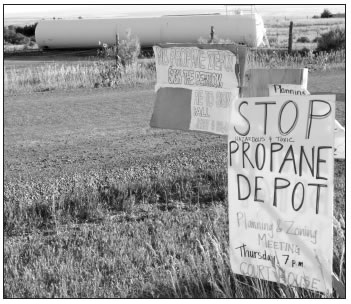
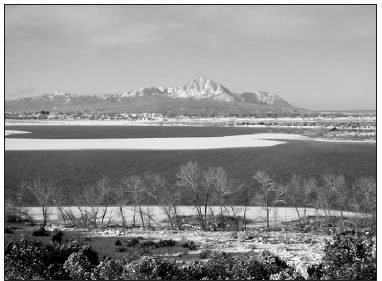
A proposal to create a facility in far western Montezuma County to treat and recycle toxic wastes from the oil and gas industry has horrified many neighbors, tourism promoters, farmers, and environmentalists.

But the developers of the Outhouse Recycling Facility, which would be built on 83 acres of a 473-acre parcel just off the Hovenweep Road (County Road 10), say it would provide a much-needed service in a completely safe manner.

A standing-room-only crowd of about 70 pressed into an overheated meeting room Feb. 26 for a public hearing before the county planning commission. After taking 2 1/2 hours’ worth of comments, the planning board made no decision on whether to recommend approval of the proposal, but extended the hearing to its March 26 meeting.

Brothers Casey and Kelly McClellan of Mancos, Colo., and Farmington, N.M.. respectively, were asking for a high-impact permit and either industrial zoning or a special-use permit for the facility.

Casey McClellan is a member of the planning commission but recused himself from the discussions.

Under county regulations adopted in 2008, some industrial operations — including oil and gas wells, gravel pits and asphalt plants — can be allowed via special-use permits on large agricultural tracts without changing the zoning to industrial. The developers said they preferred not to seek the zoning change but would if it were required.

The facility, run by Four Corners Recycling Systems of Mancos, would treat oil and gas wastes called E & P wastes (for exploration and production).

Nathan Barton, the engineer for the project, said the location off the lonely and scenic road had been chosen from about a dozen possible sites because of its remoteness, geology, distance from streams and lakes, and relative flatness. The nearest residence is more than a mile away.

Barton said the project makes sense because it would mean oil and gas producers operating in Montezuma and Dolores counties and along the Utah-Colorado border would not have to haul their wastes greater distances to existing facilities in Bloomfield, N.M.; Naturita, Colo.; or Lisbon Valley, Utah. That means lower costs for the industry as well as fewer truck emissions, he said.

He said the facility would also provide tax revenues to the county and create two full-time jobs after construction.

But many citizens seemed appalled at the thought of having the waste site near ag land and along a popular tourist route.

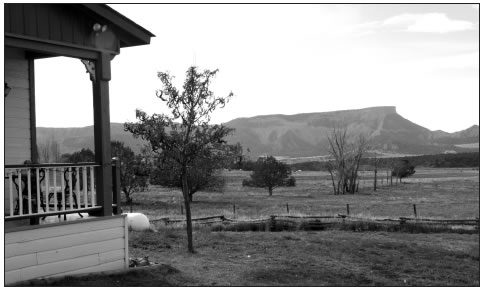
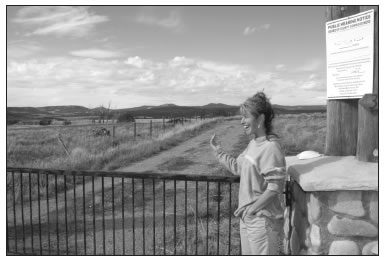
The site, which was a private campground under different owners, adjoins Canyons of the Ancients National Monument on three sides. Its southwestern boundary crosses BLM Road 4531, the primary vehicle access to Painted Hand Pueblo, a destination point for the monument. That same road also accesses one of Hovenweep National Monument’s outlier ruins.

“This would have the potential to negatively impact the visitor experience,” LouAnn Jacobson, monument manager, told the planning commission. She said trail counters showed that at least 2,700 people visited Painted Hand in 2008, adding that she took issue with characterizations in application materials that the nearest “major areas visited” were five to 20 miles away and there was “nothing going on out there.”

Lynn Dyer, tourism director for Mesa Verde Country®, said her phone has been “ringing off the hook” since word had spread of the proposal, with people voicing concerns about impacts to tourism.

She noted that Road 10 is part of the National Scenic Byway system and is “the ony national scenic byway in the entire system that is archaeology-oriented.” Currently a two-state byway, the route is soon to become a fourstate byway and an All-American Road, she said.

“Tourism brings in a third or more of the revenue to this county and employs a lot more than two people,” Dyer said.

She added that the county has spent $50,000 in federal grant money to develop an agritourism program in the area, which also could be affected.

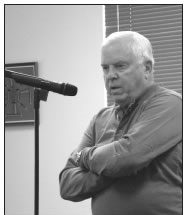
Gary Wright of Road 10, who said he had met with about 40 concerned residents in Pleasant View, said the project could damage agriculture. Millions of dollars were spent to bring water to the general area, and irrigated lands there now produce fruit, alfalfa and other crops. But airborne contaminants blown from the site could ruin that, he said.

“We’re concerned about decreased property values because of what might and what will end up on our land,” he said.

There are days, Wright said, “when the sky is literally brown. All this will end up in the community and on our food that we are attempting to sell.”

He said the application materials were misleading, making the project sound so benign “you could almost put a playground on it.”

But the project proponents said it was essentially benign.

“I have been a little bit surprised at the reaction, because we look at it as a positive,” said Casey McClellan.

“This is an environmentally sound and safe recycling of E & P wastes,” Barton said. The facility would treat up to 60,000 gallons per day of wastes including “produced water” (water and chemicals used in fracturing rock layers to extract natural gas), petroleum-contaminated soils, and drilling mud. The drilling mud consists of clay, chemicals, water and petroleum products.

The chemicals include acids and polymers; the petroleum products have the same ingredients as crude oil, gasoline and diesel, Barton said.

The facility would operate six days a week, with hours varying seasonally, but mainly in the daytime. It would draw wastes mostly from wells within a 75-mile radius, though some might come from up to 150 miles away. It will ultimately provide “usable recyclable materials including water, oil and salts instead of wastes,” Barton said.

Federal and state law allows E & P wastes to be treated or disposed of either at the wellhead, at centralized sites owned by the oil or gas operator, or at larger commercial facilities such as the one being proposed.

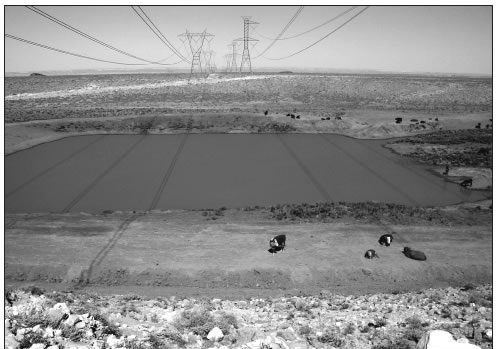
When taken to the Outhouse Recycling Facility, the material will be inspected and run through a series of separators to remove sediment, separate oil from water, and so on, Barton said. The water will be transferred to double-lined basins with leak-detection systems to be stored and evaporated or put through purification systems. Petroleum separated out will be shipped from the site. The clean water that is produced after wastes are removed will be used onsite or hauled away. Collected salts will likewise be used or transported. There will be no burning on-site, Barton said.

The petroleum-contaminated soils will be “land-farmed” on-site and when they meet safety standards will be used for different purposes. No waste materials will be left on-site after the facility is closed. Its life expectancy, Barton said, is about 20 years but depends on demand.

The entire facility would be surrounded by berms and a fence to discourage people and wildlife both. A marshy swale would guard against surface run-off. Basins for holding and treatment of water would be covered by netting to stop birds from landing.

The facility would draw about 10 trucks a day plus a few private vehicles, which would not exceed county threshold standards, Barton said.

Most odor is “very localized,” he said. Sometimes a sulfur odor can be emitted by the bacteria eating the petroleum products but the sulfur odor is not related to toxic hydrogen sulfide.

Barton said the chances of windborne contamination were slight. Sediments will be pulled out of the wastes at the beginning of the process, leaving clay and salts. The operators, he said, must be very careful and will probably vacuum out the residues as water evaporates.

Citizens had a host of other concerns. One of the biggest was safety and road traffic on Road 10 as well as BB and CC, which connect with 10. None of those have any shoulders, and the chip-sealing done in 2005 elevated the surface of 10 considerably, creating steep banks that make it nearly impossible to pull over.

“That’s a farm road from when you turn off 491 to where people turn off to Casey and Kelly’s place,” said Pleasant View resident Bessie White.

“There are a lot of accidents out there,” Wright said, warning that the combination of “trucks, tractors and tourists — the three T’s” — did not bode well. He said the sheriff’s office likely would not have money to pay for additional patrols and the county would have to find funds for upkeep on the road itself.

John Wolf of Road CC said there was a chance the waste materials could include “technologically enhanced normally occuring radioactive materials.” When someone drills deep into the earth and pumps brine or mud into the hole, that mud will pick up radioactivity from any uranium strata, he said.

When the water is evaporated, the heaviest materials will remain at the bottom of the pit, “and uranium and vanadium are the densest materials on the periodic table,” he said.

Even if the operator vacuums up the sediments and scrapes off the lining, the lining itself would then be contaminated.

But not everyone agreed. Lonnie Maloff, a farmer and rancher, said operations like this would help ag folks afford to stay on their land.

“I think we need to wake up and start letting these farmers and ranchers make a living on their place,” he said. “These people move in with these little parcels and try to tell us what we can do on our place.”

Gregg Tripp, a petroleum engineer and long-term resident, praised the design and called the proposal “a pivotal piece for the big expansion that’s going to come from oil and gas in this area.”

They were in the minority, however.

Betty Ann Kolner of Road BB said she had hoped to see more alternativeenergy projects developed and asked whether, after 20 years, the company could get another permit to operate on another portion of its land, then another 20 years later, leading to a de facto industrial property.

Others raised concerns about weed control and watering on the berms along Road 10; possible groundwater contamination; enforcement of standards; and how much the county would really benefit economically from the project.

County Assessor Mark Vanderpool later told the Free Press that, on such a property, the portion of the land that is used commercially would be assessed at commercial rates while the remainder would be assessed as ag land if that was its use. Separate deeds are not required.

All personal property and equipment used for the business would be taxed. However, Vanderpool said he did not know whether the facility would pay a production tax for the materials it recycles — “I don’t know yet if there is value in that sludge, for lack of a better word,” he said, adding that he is contacting the state to find out.

If the operators sell any of the products resulting from the recycling, they would pay county sales tax, but the sales tax is due to expire soon and is only a half-cent on a dollar anyway.

However, at the meeting, planning commissioners said they did not think they should be considering the project’s economic aspects.

The planning commissioners on Feb. 26 indicated they did not think industrial zoning would be required for the project but made no motion to that effect.

The hearing will be continued on Thursday, March 26, and will be the first topic on the agenda.

Planning Director Susan Carver said, before then, the application documents will be posted on the county’s web site, www.co.montezuma.co.us.
Published in March 2009

Concern and excitement about the potential of shale gas

Concerns about a new type of natural gas discovered in Southwest Colorado attracted a crowd of citizens, public officials and federal land managers to a presentation held at Fort Lewis Mesa Elementary School in La Plata County on March 2.

Shale gas is experiencing a boom in the region, and is being profitably tapped using a revolutionary technique involving horizontal drilling. The recent success extracting the gas by the Bill Barrett Corporation has prompted public-lands managers to increase permits for drilling in the area and adjust planning documents to accommodate the industry and protect landowners.

But landowners, most of whom ranch and farm on so-called split estates – where the surface is private but minerals deep underground are federally owned and leased to private gas companies – are worried about negative impacts.

Gothic tale

The Paradox Basin is the remnants of an ancient ocean some 300 million years old that stretches from southeast Utah into Dolores, Montezuma and La Plata counties. The layer is buried at sea level 6,500 to 8,000 feet below the surface.

Deep geologic time, sediment loading over eons, heat and pressure has transformed the organic muck of this shallow sea into what it called gothic shale, explained Pam Leschak, a geologist with the San Juan Public Lands Center.

“Gothic shale is what we call an unconventional (gas) reservoir in that it contains hydrocarbons that are locked up inside hard, heavy, tight rock,” she explained. “A more conventional reservoir such as coal-bed methane or oil will pool into large pockets between layers of rock.”

Releasing shale gas from the rock is a technical marvel pioneered by Peter Moreland, a geologist who meticulously documented the Gothic shale locations and then devised a unique technique for breaking the gas free from the rock.

The rock, formed from organic-rich deltas along the former ocean’s shorelines, are the richest in natural gas. But reaching the resource has always been unprofitable because the layer is only 200 feet thick, which is problematic for vertical drilling.

“Horizontal drilling that can stretch up to 4,000 feet is what makes it fly,” Leschak said. “Then multi-stage hydraulic fracturing pulverizes the rock around the horizontal bore hole and releases the gas, which then cleanly flows up the pipe.”

The advantages of the new technique are that toxic cement is not required, typically used in vertical drilling operations. Also adding chemicals to the water for the fracturing process is not needed, as it is with more conventional drilling operations, she said. Water must be brought in or sold to the company for use at the well.

Recent wildcat wells drilled by Bill Barrett Corporation yielded impressive amounts of gas in the last two years. Three discovery wells between Dove Creek and Dolores produced 6 million cubic feet of gas per day, and “we’re permitting more wells in the area,” Leschak said.

Spacing of wells for horizontal drilling has less impact than conventional drilling, said John Pecor, a BLM petroleum engineer. “You don’t need as many wells. What you could produce in three to five conventional wells can be accomplished in a single horizontal well.”

Typically, shale gas wells will be spaced on 1,280 acres, divided into two sections with four well pads containing two wells each, mineral officials said.

Split estate

Sub-surface minerals are mostly held by the federal or state government, and are leased to oil companies for energy development, explained Jamie Sellar-Baker, a manager with the San Juan Public Lands Office. The result is a split estate, where the surface owned by one party, the ground underneath by another. Private companies who successfully purchase auctioned-off government leases for minerals have a right to drill, regardless of private property on the surface. Permission to access these properties for well construction cannot be denied by the landowner, but surface-use agreements with the oil and gas company work to minimize impacts and reclaim the area when drilling is completed. Surfaceoccupancy rules require drilling for minerals under residences be done horizontally from an adjacent location.

The process of notification of landowners when leases are sold under their feet needs improvement, Sellar-Baker said. Currently lease sales are published quarterly by BLM and posted on its website for 45 days before the sale. Protests can be filed as well as appeals. But there is not a process where each individual landowner is notified of the sale.

“That is a point of contention. Not everyone watches publications when posted so we are looking for better ways to do that,” she said. “If mineral estates under your property are leased, we make sure the landowner is engaged in the good-faith negotiations for surface-use. It behooves folks to talk to their neighbors so that one useplan does not conflict with another property nearby.”

“What if I don’t want a gravel road through my property?” asked a landowner. “Then be prepared for them coming in on muddy ruts,” responded Baker-Sellar. “Gravel is a better way to protect the land in this case.”

Performance bonds are required by the oil and gas company operating the lease to ensure wells are properly plugged and private land is restored. Minimum bonds are $10,000 per well, but is that enough, asked one landowner and what if they leave without completing the reclamation?

Sellar-Baker stated that “if there is even a hint (the lessee) is going to walk, there is action we can take. If a surface owner detects non-compliance we will investigate so that everything is put back based on conditions of the surface agreement before bond is released.” She advised landowners to be very involved in the compliance process of the gas company.

“You know better than us the agreement of how they are supposed to use that surface,” she said.

Landowners do not receive royalties unless they own part of the mineral estate, which is rare. Compensation for private property use is sometimes negotiated with the oil and gas company. The federal government, however, takes a 12 percent royalty of gas profits extracted, 50 percent of which goes to the state coffers.

Government mineral officials emphasize that oil and gas wells are a temporary use of the land, although the definition of temporary can seem questionable. Leases are for 10 years, but if the well is producing at a certain economic rate the lease is extended. Estimates that some shale gas wells could stay in production up to 50 years did not sit well with landowners.

“A 50-year lease when you’re 50 years old is not temporary,” said one in the crowd.

WSAs exempt

Shale gas is thought to lie below proposed wilderness areas south of Mancos in the Menefee Mountain area. Some mineral parcels up for lease showed up in that area, but will be deferred, effectively keeping them offlimits to oil and gas drilling, explained Tom Rice, a natural-resource specialist with the BLM.

Wilderness study areas are in a protectionist political limbo awaiting official action by Congress to either become wilderness areas, or be taken off the WSA list. Until then they must be protected as default wilderness areas, explained Rice.

“So anything that impacts the natural values there is not allowed. If Congress takes them off the list, then those leases could become more available,” he said. Leases that showed up in designated state wildlife areas and wild and scenic river designations were also removed.

Sellar-Baker added that the public-lands management plan needs adjustment for shale gas because “situations exist that did not 15 years ago. For example, we deferred parcels for mineral lease where the Gunnison sage grouse lives until we can determine how to protect that bird. We want to manage minerals while protecting the attributes on the surface.”

A supplemental land-use plan to address the impacts associated with the recent shale-gas boom is in the works, explained Richard Rymerson, the minerals staff chief for the San Juan Public Lands Center.

Proposals for gas-well development have shot up from 300 to 1,700 in the Paradox formation, prompting the public- lands office to adjust the plan, and give the public opportunity to comment on it, he said. Some requirements in the supplemental draft are for protecting wildlife habitat, such as avoiding compacting snow relied on by the threatened Canada lynx, and timing limitations for elk wintering grounds. A network of new wells, pipelines, traffic and roads also impacts air quality, which will be addressed in the new plan, officials said.

At the end of the three-hour presentation, Jack Schirard, a La Plata County resident who owns land in the crosshairs of the shale-gas boom, shook his head. “What can we do?”

“Do some heavy negotiating,” Leschak advised. “Get together with other landowners so you can negotiate with more leverage. It could be more profitable for you and you would have more control.”

The next public meeting on the shale gas boom will be April 16 at 6 p.m. at Fort Lewis Mesa Elementary School. It is located on Highway 141, south of Hesperus, a few miles past Breen, on the left.

Published in March 2009

The price is right?

People are struggling to find a better way to survive these uncertain times. Some have put their faith in the president while others have embraced patience and a sense of history to see us beyond this crisis. I’d like to believe in our American automakers, a think tank of latent innovation that sadly cannot seem to reach outside the box they’ve created. I mean, if they can’t sell the vehicles they’re producing, why would Americans be excited at the news that the automakers are giving them away?

It’s not just the automobile industry. Consider Frontier airline. This company recently announced a new fare structure to “put customers in the driver’s seat.” It will now offer three classes of flights: Economy, Classic, and Classic Plus. Traditionally, it had only two classes: First class and economy. A cynic might conclude that the new fare structure will shrink the number of economy seats available, forcing passengers to “choose the upgrade” because, of course, they want to fly that way. I would recommend, instead, that the automaker’s strategy be applied: Buy one seat and the seat next to you is free. That way, no matter how smelly, overweight, or obnoxious the person assigned to the seat beside you turns out to be, you’ll have the option to keep both seats, securing an insular flight, one that might encourage you to patronize the same airline the next time you fly.

The housing crisis is full-blown. Properties that homeowners purchased only a year ago are barely worth half the seller’s investment. Never mind that the banks that received bailout money to help with foreclosures have used that money to buy up the banks that didn’t get approved for bailout money. What to do? Why not follow the automakers’ lead and offer two houses for the price of one? Apparently, there are plenty to go around. Homeowners will be able to make their payments by renting their second house. I’ll bet they’ll even set reasonable rental rates. No sense in having an unoccupied home next door to you that decreases property values.

The jobless figures continue to rise. Let’s follow the automaker’s strategy for financial solvency to its logical end: Get hired for one job, have to work a second job for free. Of course, Americans have been doing something like this for quite some time just to make ends meet, but once it becomes official, employers won’t have to be portrayed as the bad guys for laying off workers in record-breaking numbers. They’ll have the freedom to employ their pre-recessional workforce at half the salary. And if we can repeal the child labor laws, maybe the kids can fill in for mom or dad while one of them is at home trying to make dinner.

Naturally, America is worried about the escalation of violence in the world. What with Iraq and Iran, India and Pakistan, North Korea and South Korea, Russia and Georgia, Israel and Palestine, Americans realize something drastic must be done. Once again, I propose the American automaker’s answer for survival: Conquer one country, get the one beside it for free. I know, it sounds ludicrous, but remember where we live — in America. All it takes is a trip to Wal-Mart to realize survival is just a matter of marketing, and that the human heart will only be as strong as Wall Street.

David Feela writes from rural Montezuma County, Colo.

Published in David Feela

The strange saga of Frodo and Sam

Price of a baby hamster: $8

Price of dinner for two at the Kennebec: $75

Price of taking mangled, chewed-up hamster to the vet: OUTRAGEOUS!!!

Just before Christmas, trapped in our house, watching the snow fall and fall and fall and fall, four young boys played. While we stared dreamily at the packed car, wondering if we would ever be able to leave for our Idaho vacation, human brothers and hamster brothers played in a wooden, rodentsized Disneyland. Giving up on driving out of town for the day, I called the four boys out to breakfast. Two sets of human brothers came to the kitchen table while one set of hamster brothers realized that they had ended up in the same cage.

Pandemonium erupted.

Bowen noticed that Asa had left the bedroom door open (a major no-no in a house with cats and hamsters), and ran in to close it. Just as he reached for the doorknob, he heard the angry lionlike roars of Sam, attempting to slaughter his smaller, runt-brother, Frodo.

Bowen began screaming and crying. Asa, Simon and Everett raced into the bedroom wondering what the panic was all about. There was blood spurting, fur flying and teeth gnashing. Children were howling, cats circling like sharks and the dog hid under the couch.

We managed to get Frodo out of the cage. He was still alive, but there was a lot of blood. His right eye looked like it might fall out of its socket and his left leg was about to drop off.

Bowen, the animal-lover in the family, wailed that not only was Frodo going to die, but that it was all his fault because he was the one who, in a distracted moment, put Frodo in the cage with his bully brother Sam.

Yes, we have read “Lord of the Rings,” and no, the irony of the fact that OUR Sam and Frodo detest each other is not lost on us.

We recently have lost a dog, a kitten and two hermit crabs. Over time we have lost many more pets than that. This has taken a grave toll on the kids and the idea of another death was unacceptable.

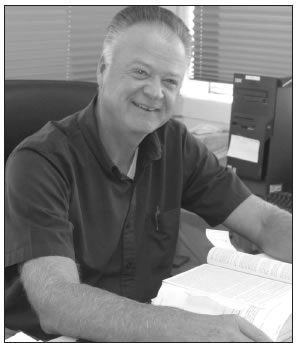
I called Don Schwartz, aka The Saint. He actually said that on a busy day, two days before Christmas, he would accept Frodo as a new patient.

We took Frodo into Don’s office, cold, shaking and traumatized. (The hamster was, too.)

Stephanie and Don took a look at the poor little guy and slowly shook their heads.

“He has to be sedated. I need to know how much he weighs so that I don’t overdo it.”

Well, duh, weigh the guy.

Oh, except the scale is made for dogs and horses, not hamsters. Little Frodo didn’t even register on it.

Next thing we know, I am in the post office, bloody hamster in hand, pushing through the line of pajama- clad folks lined up for the last chance to get presents to their destinations by Christmas Day.

“Excuse me, Don told me that I needed to get my hamster weighed over here, can I cut in front of you?”

Yes, I was in Mayberry.

The very kind gal behind the desk put him on an Express Envelope while faces I know from the school and the library looked on.

“Five ounces!”

Murmurs of “ohhhs” and “poor little guy”s rippled through the room.

“Do you want to put him into the Express Envelope to carry him?” “No, thanks, I’ll just stick him back in my pocket.”

Can you imagine at this point how much Frodo must have wished that Sam had killed him?

Back to the vet for a sedative and a haircut. Just as Don was preparing to shave him bald, I sent Tom and the boys on an errand so that I could tell Don, “If this is ridiculous, then let’s stop all the nonsense and let the rodent die.”

“I saw your son’s face. I am going to save this little guy, by God, if it’s the last thing I do.” Or something along those lines.

Once all of his fur was shaved off, we saw the damage that Sam had done. There was not one teensy bit of skin that was not broken and chewed upon. Don bathed him, warmed him up and shot him full of antibiotics. Tom and the boys came back and Bowen looked as if he had single-handly tortured and killed his best friend. When he found out that Frodo would live, he nearly fainted with relief.

It was this look that made me want to kiss Don Schwartz’s feet.

We brought Frodo home, called off the trip to Idaho and began the process of nursing little Frodo back to health.

He was scary-looking. The thing that makes a hamster cute is that he is fuzzy. Frodo had only a lion’s mane around his head. From the neck down, he was chewed up and scabby. So not cute.

We brought him out for Show and Tell when we had friends over for Christmas dinner.

They didn’t laugh.

One month and $102 later, he is healthy and well. He limps a little and his right eye looks a bit like a pirate’s. We have gotten over our collective anger towards Sam but each of us has a special place in our hearts for the priceless Frodo.

Suzanne Strazza writes from Mancos, Colo.

Published in Suzanne Strazza

What could climate change mean to the Four Corners?


At best, look for a warmer, drier Four Corners region in the next century. At worst, expect severe droughts and water wars.

That was the message given by Dave Gutzler, professor of meteorology and climatology at the University of New Mexico, to a crowd of close to 150 on Jan. 16 in Cortez.

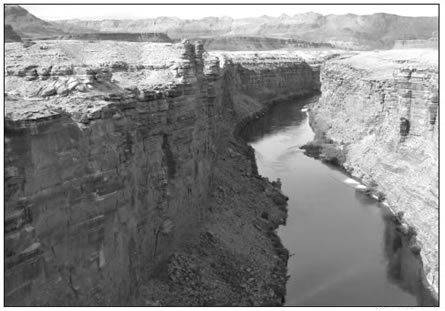
THE COLORADO RIVER

The Colorado River (shown here by Lee’s Ferry and Navajo Bridge) may lose up to 30 percent of its flows in the next century, researchers project. Photo by Wendy Mimiaga

The presentation was part of the annual Crow Canyon Archaeological Center Lecture Series, sponsored by Crow Canyon and a number of local businesses.

Gutzler, who has been with UNM since 1995, has a doctorate in meteorology from the Massachusetts Institute of Technology. He is a direct advisor to the New Mexico State Engineer’s Office and co-chair of a working group on drought prediction.

Gutzler’s talk was low-key rather than alarmist, and he acknowledged that there is “lots of uncertainty” in projections created through computer modeling.

But he believes climate change is occurring, most of it is human-caused, and smart people will plan better ways to manage shrinking water resources.

For instance, streamflows on mainstem rivers in the Four Corners are projected to dwindle significantly in the next hundred years — about 30 percent from 1995 to the end of the 21st century, Gutzler said.

“If this happens, the Colorado River Compact [which governs Colorado River allocations in seven states] would smply be unenforceable,” he said. “We’ll have a water war in the West because we won’t have enough water in the basin to satisfy all the states’ legally apportioned water rights. This is a problem and we need to start planning for this.”

Gutzler presented evidence supporting global warming, but rather than talk about rising oceans and shrinking ice caps, he focused on how the changes are likely to affect the Southwest, which is “what geographers call a climatically vulnerable place.”

Some of the key evidence of a global warming trend:

• The 10 warmest years on record (since weather records were kept) have all occurred since 1997.

• 1998 and 2005 were the warmest years on record.

• The planet’s average surface temperature has heated up a little more than 1 degree Fahrenheit over the past century, “which doesn’t sound like a lot, but in fact, it matters,” Gutzler said.

“We’re really very confident that the climate is really changing, it’s warming up, and the only way to explain it is by greenhouse gases.” Solar fluctuations and volcanic emissions can’t account for the steady upward trend.

As a result, utility companies are already changing their rates to reflect warmer winters and hotter summers. “These warming trends, as modest as they are, are already affecting your life,” Gutzler said. “There is nothing phony, fictitous, or hypothetical about it.

“Global warming is nearly global, every year.”

Of course, temperatures do go up and down, and there will be cooler years within the warming trend. 2008 was one of them, he said.

Tree-ring and other historic data show that, for the past 1,500 years or so, the earth’s temperature has gone up and down and up and down, but has varied by just a couple 10ths of a degree. So a rise of 1 degree is a lot, he said. “It doesn’t prove why it’s happening, but it tells us it’s changing at a rapid rate compared to the last couple millennia.”

Computer modeling indicates humans are the cause of this recent, more rapid temperature increase.

Computer models aren’t perfect, but they are pretty good, according to Gutzler. If you start with the climate that existed at the beginning of the 20th Century and run the models forward, they pretty accurately predict what actually did occur in the 20th Century.

“You get the right answer for the period of time when we know the answer.”

However, if you run the models without factoring in human-caused aerosol pollution and greenhouse-gas emissions, the models predict little variation in temperature, “completely missing the warming at the end of the 20th Century.” When you do add in the human factors, the models predict what did indeed occur.

What those same models show for the 21st Century “depends on what greenhouse gases will be,” Gutzler said.

The most abundant greenhouse gases on Earth are water vapor, carbon dioxide, methane, nitrous oxide, and ozone, in that order.

Computers predict different weather outcomes depending on how much of the greenhouse gases — in particular, carbon dioxide — are put into the equation. “We don’t really know what the CO2 levels will be, because it depends on the choices people make.”

Assuming a “middle” approach, with a less-ambitious policy of curtailing CO2 emissions, it’s projected that northern New Mexico (an area very similar to Southwest Colorado) will see an average increase of 5 degrees Fahrenheit in winter and 7 degrees in summer. And although some years will be colder than others, the trend will be steadily upward.

“By 2050, the coldest summer we see is still hotter than we have ever experienced,” Gutzler warned. “By 2100 the coldest summer is hotter than humans have ever experienced in their history.”

Overall precipitation will not change so much, but there will be a propensity for greater fluctuations. Already, in the past 15 years, northern New Mexico has experienced its driest and wettest winter and summer in recorded history, Gutzler said.

In addition, “the wet places on earth will get wetter and the dry places will get dryer” in the future, he said.

“If you happen to live in one of these places where it’s dry already, then you’ve got a problem.”

Of course, droughts are not new, Gutzler acknowledged, “and you can’t blame people for the fact we have had many over the past millennium.”

Meteorologists are beginning to think that ocean temperatures and currents play a much bigger role in droughts than was previously understood.

When the Atlantic is warm, the United States seems to get less precipitation. And it’s only recently been learned that when the Atlantic is warm and the Pacific is cold at the same time, “there seems to be not much precipitation in the Southwest,” Gutzler said.

That was the situation in the 1950s, when the Southwest experienced one of its worst droughts in the past century.

If climate change continues and the warm-Atlantic-cold-Pacific situation occurs again, the drought will be worse, he said. If the 1950s drought is replayed in 2050, when overall temperatures are higher, “it has big consequences for water resources.”

Again, the problem is not that less precipitation will be falling overall, but that warmer temperatures will affect when and how that precipitation comes down.

Warmer winter temperatures “clobber the snowpack,” he said. Less precipitation falls as snow; what snowpack there is melts earlier, to the dismay of ski-area managers. At some point, cloud-seeding won’t even help, because “the snow won’t stick around.”

“Snow may be non-existent south of the Sangre de Criso range in New Mexico by the end of the 21st Century.”

In the warm future, spring runoff occurs earlier and rivers dry up sooner, Gutzler said.

BIG BEND, TEXAS

Will Southwest Colorado look like Big Bend, Texas (shown here) in coming decades? It’s possible, a drought expert warns. Photo by Gail Binkly

Projections for the Rio Grande River show a huge drop in flows in May and June in future years, “because the snow has already melted and flowed downriver.”

The ground will dry out faster because of warmer temperatures, so less vegetation grows, particularly in southern regions. Higher temperatures promote more evaporation, “and water wafts away to undeserving places like Kansas and the East Coast,” Gutzler said, smiling.

Not preparing for these changes would be “unbelievably arrogant and stupid,” he said.

“I don’t particularly want Southwest Colorado to look like Big Bend [Texas], but the climate is trying to push us in that direction.”

Gutzler said the primary source of carbon dioxide is burning fossil fuels, and the biggest and fastest-growing source of those is coal.

“Sooner or later we will need to reduce emissions from fossil fuels,” he said. “We may be burning less oil anyway, because there will be less oil to burn, but there’s plenty of coal, so we’d better be developing sequestration techniques for those emissions.” Gutzler’s talk was followed by a lively question-and-answer session. Asked whether people would “boil” in the Four Corners, he said no.

“There are places south of us that are 5 to 7 degrees warmer and people there don’t boil. . . but our civilization is fairly well tuned to a stable climate. If the climate of Michigan starts to look like New Mexico in a century, that’s a problem.”

Another questioner asked whether it wasn’t preferable to have a warming trend than a cooling trend. Gutzler agreed.

Orbital fluctations are believed to be the cause of periodic ice ages, he said, and there is one hypothesis that if people had not pumped so much greenhouse gas into the atmosphere so far, we would already be in the very early stages of another ice age. However, real cooling wouldn’t happen for a millennium or so, whereas warming is occurring much faster.

“Five degrees warmer is better than a kilometer of ice,” Gutzler agreed, “but it’s going to take a long time to form that kilometer of ice.”

Mike Preston, manager of the Dolores Water Conservancy District, asked about water-management recommendations. Gutzler said anything that minimizes downstream storage and maximizes it at higher elevations would be good. “Make it legal and feasible to store water upriver,” he said.

‘It’s really nice to come out to a cultural event like this and leave my troubles behind,” Preston commented, to general laughter.

Published in February 2009

A report from the front in the Mexican wolf war


Gila Wilderness, N.M. — Wolves again roam the dense forests here, a stealthy force that restores a balance of nature between predator and prey, and less so, between man and beast. But will it last?

When in 1998 the Mexican gray wolf was returned to the Southwest under the Endangered Species Act, animals as well as people sat up and took notice. For elk, the wolves’ favorite prey, the “primeval dance was revived,” as biologists put it, altering grazing and migration habits and sparking to life a hard-wired instinct to beware of what lurks in the shadows.

A SIGN IN THE APACHE NATIONAL FOREST

A sign outside Alpine, Ariz., in the Apache National Forest explains that wolves are protected and visitors should not harass or kill them unless threatened. Photo by Jim Mimiaga

Ranchers responded to the reintroduction with as much wariness as the elk. For ranchers, bringing back the nemesis that their fathers and grandfathers had successfully eliminated by the 1970s felt like a government betrayal of their way of life.

“Wolves do not belong here, they were removed for good reason and are no longer part of the ecosystem,” said Ed Wehrheim, a county commissioner representing ranching interests for Catron County, N.M. “The re-introduction is just something the environmentalists want to do.”

But multiple lawsuits against the U.S. Fish and Wildlife Service to stop the Southwest wolf-recovery program have failed, and the protected wolves have been allowed to thrive, despite substantial resistance by locals.

Before pioneer days, an estimated 200,000 wolves roamed the West, according to Defenders of Wildlife, an environmental nonprofit. Today, thanks to reintroduction programs made possible by the Endangered Species Act, an estimated 1,500 wolves survive in the wild in the U.S., mostly in Idaho, Montana and Wyoming. The lesser-known Mexican wolf, a distinct subspecies of the gray wolf known locally as the lobo, survives on prime habitat spanning the New Mexico- Arizona border.

A population of 52 wolves, representing 12 packs, roams the Blue Range Wolf Recovery area, a tightly controlled boundary which includes the Apache-Sitgreaves National Forest in Arizona and the Gila National Forest in New Mexico. The area also encompasses the Gila and Aldo Leopold wilderness areas. And since 2002, the neighboring White Mountain Apache Tribe in Arizona joined the recovery program by opening up its 1.6 million acres of reservation for the wolf.

The recovery goal for the program is a stable population of 100 or more wild wolves.

While the return of the lobo has attracted hikers and photographers hoping to glimpse a wolf or just hear a serenade of distant howls, safari groups and outfitters feel the wolf competes with them for the trophy elk coveted by their clients. And so, for wolves both north and south, the debate continues to howl on.

“I think societal values have changed regarding the wolf,” says Chris Bagnoli, a U.S Fish and Wildlife coordinator for the Mexican wolf program. “Before, it was all ‘protect livestock and remove predators’. Fast forward to today and values have changed; it still includes ranchers but the public also wants predators back in the landscape.”

Borderline survival

As the joke goes: Wolves don’t read the rules that spell out the political border between freedom and likely capture and relocation. Three trespass violations in a 365-day period will land a wolf back in captivity, usually at a wildlife museum in Tucson. Including the White Mountain Apache land, the Mexican gray wolf has 10,000 square miles of forests and river valleys where it can legally live within under the reintroduction program. But the area, while significant, can be a limiting factor for wolf recovery, explains John Oakleaf, Mexican wolf field coordinator for the USFWS.

“The northern gray (wolves) have several states where they can roam free and are protected,” he said. “Down here we have tighter boundaries, so this is a significant issue that makes recovery more difficult.”

Biologists want wolves to dictate where they are going to survive, but that is a challenge because “wolves follow the elk across the boundaries, and new packs looking for more territory also cross over,” Oakleaf said. He added that the boundary violations are not common, but can spike some years. One wolf, for instance, twice wandered as far as Grants, N.M., and had to be taken back into captivity.

Boundary adjustments to the wolves’ territory are considered in a public and government review of the program, currently under way. The process, called Rule Modification, requires an additional environmental impact statement that is expected to be completed no sooner than 2012.

Cooperation from the White Mountain Apache tribe has been crucial, Oakleaf said, and a “significant” portion of the wolf population survives on the reservation because of its prime habitat, sparse human presence and abundance of big game. The sovereign nation was not on board at first but has since negotiated an agreement with the USFWS that closely mirrors the government management plan.

“No matter what we did, the wolves kept wandering onto the reservation here, so the tribe decided that it was better to just accept it and manage it using our own people,” said Krista Beazley, a wolf biologist and tribal member. Trophy elk populations on the reservation have supported a healthy hunting-outfitter economy, she said, and the excellent vegetative cover of the rugged White Mountains has also benefited the wolf.

“Studies show that wolves help elk herds by weaning the weak and sick, so it is a balance that helps to stabilize the population,” she said.

Saved from extinction

Like the endangered California condor, the last of the wild Mexican gray wolves also had to be captured, bred in captivity and later released back into the wild in order to survive.

By the 1970s no wild Mexican wolves remained in the American Southwest and just a handful held out in Mexico. To prevent extinction, as required by the Endangered Species Act, five were captured in the late 1970s and put into a breeding program centered at the Wildlife Museum in Tucson. Currently there are 300 captive Mexican wolves in various zoos and reserves, representing three genetic strains.

Smaller than the celebrity northern and timber wolves of Montana, Minnesota and Canada, but packing the same physical punch, sleek Mexican grays can definitely hold their own in their historic range here.

“It’s somewhat of a myth that wolves only prey on the sick, old or weak,” says Oakleaf. “Utilizing advantageous terrain, these wolves regularly pull down healthy bulls as well.”

Pups are being born in the wild, and are proving that they can adapt to terrain and natural prey opportunities, he said. Wild-born wolves are captured when possible so they can be collared and tracked, and second-generation breeding has also proven successful. Den sites are closely monitored in the field, and supplemental food (deer carcasses) is sometimes left for mothers with pups to ensure their survival.

Since the program started, 92 wolves have been released. A dozen were killed by cars, several were illegally shot, some were euthanized for breeding with domestic dogs and still others were captured and taken back into captivity for pursuing livestock.

When wolves wander off the recovery zone, they are captured and relocated back within its boundaries. Every year carefully selected wolves, sometimes a dozen or more, are released in a primary zone around Alpine, Ariz.

Because of the small initial breeding stock, genetic variability has been a concern. Careful breeding, successful genetic research to establish additional lineages, and strategic translocation over time has increased diversity of the breed, Oakleaf said.

Overall, managers are satisfied with the program’s measured success, and after three-year and five-year reviews it was allowed to continue.

“It is rewarding because what we have here in the wild, and some breeding stock in the wildlife museum, are all that are left of these unique animals,” Oakleaf said.

Interestingly, wolves do not require a natural corridor to migrate into new territory, meaning it is possible one could migrate to Colorado, “although the rules now state we must pick them up.” Recent genetic testing of skulls found in southern Colorado and Utah confirmed they were of Mexican wolf lineage, thereby expanding the northern edge of their historic range. One northern wolf from Yellowstone migrated to forest*s around Vail, but it was promptly killed crossing Interstate 70, Colorado’s Berlin Wall for wildlife.

A wolf cafeteria?

Wolves capture the public’s imagination of a West still wild, but not everyone is so enthusiastic.

“I’d say over 90 percent of Catron County is opposed to the wolf being here,” said Ed Wehrheim, county commission chair of Catron County, population 3,500. “Our economy is mostly ranching and we feel the program is going to wipe out most of the ranching in the Southwest.”

So far five ranchers have been put out of business, he said, and more are likely to go under as the wolf pack gets larger, he said.

Government biologists say wolves occasionally kill livestock, but prefer natural game, which is abundant. How much livestock wolves kill is hotly disputed, because kills are hard to verify, occur in remote areas and may have been caused by another predator such as coyotes, cougars or black bears.

Under a program run by the USFWS, the Arizona and New Mexico departments of Game and Fish, and Defenders of Wildlife, ranchers are compensated 100 percent of the market value for a confirmed wolf livestock kill, approximately $400, and 50 percent for a probable kill. But that is not the point, critics argue.

“We’re not in business to raise wolf food,” Wehrheim says, “and that cow is worth three or four times more than the market value to a rancher who raised it and uses it for calving.”

Wolf management to control livestock depredation is a particular challenge in the Southwest, Oakleaf explained, because ranching is yearround so cattle are more exposed.

For the northern wolves the opportunity to grab some beef is slimmer because ranching operations are much more seasonal, he said.

“It is a big issue when livestock are killed because it is money out of the rancher’s pocket,” he said. “Outfitters as well are in direct competition with wolves, but we see it as a balance between tolerance and the impact of wolves being there.”

According to USFWS records, 76 cattle were killed by wolves during the program, and compensation was paid.

But Wehrheim says the county commission’s research puts the number of cattle killed at 1,500 because “what happens is a pack of wolves move onto a ranch where livestock are easy meals and stay there until they put that rancher out of business.”

Opponents of the program, organized under Americans for the Preservation of Western Environment, predict that once the wolf pack reaches 200, they will kill more than 7,000 game animals and head of livestock in a five-year period, costing the county $60 million in lost revenues from ranching and hunting.

“They’re putting wildlife in front of everything and, frankly, we are losing the battle,” Wehrheim said. “They’re like a cult, they worship the wolf and say the wolf is almighty. It is really ridiculous.”

Wildlife managers counter that sincere efforts are made to communicate with ranchers regarding locations of wolves. Collared wolves are tracked by air and ground, and locations are updated weekly on the Arizona Game and Fish web site.

It is illegal to kill or harass an endangered wolf on private or public land unless it is threatening a human life, considered by experts to be extremely unlikely. Managers utilize Range Riders on horses to guard livestock and run off wolves.

Hunting not affected

The number of tags issued for elk and deer season has not been affected by the wolf program, according to Chris Bagnoli, a habitat specialist with the USFWS.

With wolves in the area, elk are more wary, do not hang out in open meadows as much and therefore give riparian plants, such as willows, a chance to rejuvenate.

“The fact that we have not seen a decrease in hunting to me indicates that there is a healthy, functioning ecosystem here that provides the forage, prey and cover for sustaining deer and elk populations, livestock, and wolves as well,” Bagnoli said.

It seems poetic justice that wolves again wander the nearby Aldo Leopold Wilderness, named for the famous naturalist whose life was profoundly changed when working as triggerhappy government bounty man hired to kill wolves.

“We reached the old wolf in time to watch a fierce green fire dying in her eyes . . . and I realized then that there was something new to me in those eyes,” Leopold wrote. “Perhaps this is the hidden meaning in the howl of the wolf, long known among mountains, but seldom perceived among men.”

Published in February 2009

Prairie dogs: Cute? Fun to shoot? Now researchers say they’re smart, too


The common prairie dog may be smarter than you think — a lot smarter, according to researchers who hope to broaden species protection for the burrowing rodent they say has been wrongly tarred as a varmint.

Not only do the creatures live in highly social colonies, and towns within those colonies that have been likened to suburbs. Prairie dogs talk.

TWO KISSING PRAIRIE DOGS

Some people think they’re cute. Some people think they’re fun to shoot. Now, researchers say prairie dogs have the most sophisticated vocalization system of any known animal, and are a critical part of their ecosystem.

“What we’re finding is the communication system borders on language,” Con Slobodchikoff said in a phone interview. “At this point, it’s probably the most sophisticated that has been decoded among animal species.”

Slobodchikoff is a biology professor at Northern Arizona University who’s studied prairie-dog communication for a number of years. He joined forces with The Prairie Dog Coalition and WildEarth Guardians for a publicity push on the dogs’ dialogue — and plight — in Denver on Feb. 2.

Groundhog Day to most folks, Feb. 2 has been dubbed Prairie Dog Day by WildEarth and the coalition because, well, there are no groundhogs in the vicinity. The event was celebrated in Denver with educational trips to a prairie-dog colony, a person wearing a prairie-dog costume, and, the guest of honor, a live prairie dog furnished by the Denver Zoo.

The lighthearted event carried an earnest message: prairie dogs, whose populations have decreased by 98 percent, are worth saving.

That may be a hard sell to farmers and ranchers who view the creatures as a scourge.

But nine different species, including the black-footed ferret, are absolutely dependent upon the prairie dog for survival, said Prairie Dog Coalition Director Lindsay Sterling Krank.

Slobodchikoff said at least 200 species are dependent to some extent on the prairie dog, and breaking down the food chain can have unforeseen consequences to the entire ecosystem.

He also said prairie-dog burrows also help rainwater percolate into underground aquifers. That precipitation could otherwise run off and erode the soil.

“You can think of prairie dogs as the canary in the coal mine,” Sterling Krank said. “What’s happening to them is happening to other species in an ecosystem.”

Prairie dogs are considered a “keystone species” for a reason, she added. Just as the removal of the keystone from an arch can lead to its deterioration, the removal of the prairie dog could destroy critical Western ecosystems.

The dangers prairie dogs face are many, said Lauren McCain of WildEarth. They include poisoning (on the rise), shooting, bubonic plague and habitat destruction through development and the expansion of the oil and gas industry.

“What we’re seeing over the past 100 years is the gradual attrition of what was once the prairie-dog empire,” McCain said.

She, Slobodchikoff and Sterling Krank acknowledged the prairie dog has a lot of negativity to overcome in the West, but also say the dogs have gotten a bad rap.

Countless prairie dogs are poisoned during drought years upon the erroneous belief that signs of colony expansion mean the number of prairie dogs within the colonies has also grown. It hasn’t, McCain said.

Slobodchikoff said it’s also untrue that prairie dogs eat all the grass that cattle could be eating. He said such studies as exist show cattle have gained weight when sharing grassland with prairie dogs.

Slobodchikoff also said he’s found no proven contemporary examples of cattle or horses breaking their legs in prairie-dog holes, although McCain said there could be historical examples of it.

All in all, the prairie-dog enthusiasts said, there’s no reason to eradicate prairie dogs and plenty of reasons to work with landowners and the federal government to better assure their protection.

Finally, there’s the language factor that Slobodchikoff says demonstrates the prairie dog’s intelligence.

It’s not random barking, or even instinctual barking. Prairie dogs speak with a purpose, he said.

“There’s a tremendous amount of information these animals provide each other in the alarm code,” Slobodchikoff said. “It’s very impressive. So far, this is more sophisticated than it is with chimps or whales.”

They have distinct sounds to denote various predators approaching — from coyotes to house cats; from dogs to humans, to hawks. Not only that, but it appears prairie dogs have developed a code to describe individual features, such as the color of shirt a person is wearing, and the color of dogs.

In one remarkable example, Slobodchikoff sent a man wearing a blue shirt into a prairie-dog colony. The rodents emitted a specific call. Then, the man returned carrying a shotgun.

“After that, whenever he came, they labeled him with a different type of call, signifying he was somebody to watch out for, that he was dangerous,” Slobodchikoff said.

But how can Slobodchikoff tell what the sounds prairie dogs make actually mean?

Research. He said he recorded prairie-dog calls in a variety of scenarios and took those recordings back to his lab, where high-tech equipment broke the sounds into a sonogram and measured points on the sound waves. The program was designed to determine whether the sounds were the same for, say, a blue shirt.

“They are,” Slobodchikoff said. “For the different predators, we can play the calls back to the prairie dogs when the predator isn’t there and get responses that are the same as when the predators are there.

“We know that the prairie dogs are responding to information in the call, not just the presence of the predator.” So, do prairie dogs tell each other “Happy Groundhog Day?”

Slobodchikoff and the women erupted in laughter.

“They have social chatter and we haven’t been able to decode these because we don’t have a point of reference,” Slobodchikoff said.

“Maybe in their chatter, they are saying, ‘Are there going to be six more weeks of winter?'”

Published in February 2009

An asphalt plant generates heat in Montezuma County

There was a sense of déjà vu about it all.

During a grueling, six-hour public hearing on Jan. 12, the Montezuma County commissioners listened to pros and cons — mostly cons — about a proposed asphalt operation near Mancos.

AN OVERLOOK OF MANCOS VALLEY

A plume of smelly emissions stretches across the Mancos Valley in July 2007 from an asphalt operation. On Jan. 12, the Montezuma County commissioners approved permits for a different asphalt plant in the same area, but this one is not expected to make the same smelly type of asphalt. Photo by Tom Vaughan/Fe Va Photos

Twenty-six people spoke against the asphalt plant, and five of them also read letters from other citizens opposed to the plant.

Three citizens spoke in favor of the project, two of them sons of the engineer who is working with Four Corners Materials, the applicant.

But, in the end, the comissioners came down in favor of jobs and industry, voting 3-0 to grant high-impact and special-use permits for the plant.

“If we don’t do it in one person’s backyard, we’ll do it in somebody else’s backyard,” said Commissioner Larrie Rule (who is now the chair of the commission).

Commissioner Steve Chappell seemed disturbed there had been such opposition to the proposal.

“It seems every time something comes along that would help the economy, we have a loud outcry,” he said. “I think we have to be careful about destroying the economy and making this just somebody’s playground or retirement area.”

Rule, too, emphasized the importance of jobs. “Not do anything in Montezuma County any more? Do nothing? No jobs? Is that what you want to hear?” he asked the audience.

Commissioner Gerald Koppenhafer cited the county’s need for asphalt. “Montezuma County uses a lot of asphalt to blade-patch our roads,” he said. “We’ve hauled a lot from Farmington, because they are the only ones producing it, and it takes a lot of money. Hopefully this will help the situation.”

But the audience, which had dwindled to a handful by the end of the torpor- inducing marathon, was not persuaded. Several people asked whether the commissioners were even listening to what was said.

“We do listen to people,” Rule responded, “but we still have to listen to the whole county.”

It was a familiar scenario. In the past two years, the commissioners have held several public hearings related to gravel, asphalt, similar industrial/commercial development, and land-use code changes to facilitate industrial-type operations on ag land. In nearly all those cases, despite a parade of speakers opposed to the proposals, the commission has voted to approve them.

But, as Rule noted, the county as a whole appears to have a different slant on things than the people who oppose such projects. Rule and Koppenhafer both won re-election handily in 2008, running against opponents who advocated stronger land-use planning.

In this instance, Four Corners Materials, a company based in Bayfield, Colo, but part of a much-larger corporation, sought permission to operate a hot-mix asphalt plant on property at 39238 U.S. Highway 160, just west of Mancos. Four Corners had already received permits for a gravel pit at the same location, despite neighbors’ opposition.

When granting the permits, the commissioners stipulated that there will be an annual review of the permit and that the company must notify the county if it plans any projects that could exceed limits on air pollution.

The latter stipulation was a nod to neighbors’ concerns about the smell in the summer of 2007 that emanated from an asphalt plant at the nearby Noland gravel pit. In that case, Kirtland Construction was creating a special (and odiferous) type of asphalt, required by the federal government, for a paving job at Mesa Verde.

The county shut that asphalt operation down because it had no county permit, though not until after Kirtland had completed the Mesa Verde job anyway. The owners of the Noland pit then sued the county, saying they shouldn’t need a high-impact permit, but they lost their suit.

The Jan. 12 decision seemed to portend another possible lawsuit against the county, though from the opposite point of view.

In a Nov. 17, 2008, letter to the commission about Four Corners’ asphalt proposal, Durango attorney Jeffery Robbins, representing four landowners near the pit and asphalt plant, said the neighbors “strenuously object” to the proposal.

Robbins said they recognized that the board in July 2008 had changed its land-use code to specifically allow gravel pits and asphalt plants on agricultural lands if permits are obtained.

“My clients do not agree that this change makes sense from a planning perspective,” Robbins wrote. “Quite frankly, if a High Impact Permit procedure can result in industrial and incompatible uses throughout the County, there is no reason for this Board to have zoning at all.”

However, he wrote, even if those changes are accepted, the proposal for the asphalt plant does not meet the criteria set forth in the code because it would “essentially change the neighborhood’s character from its present rural, agricultural nature to one that is commercial or industrial.”

Robbins cited other objections to the proposal and concluded, “. . .these proposed industrial uses cannot be approved by the County because they run afoul of the protections of the zoning code. . .”

Montezuma County was sued successfully over its 2005 approval of a gravel pit on ag lands and its 2004 approval of a warehouse expansion near Mancos. However, those lawsuits occurred before the county adopted its new regulations allowing certain industrialtype activities on ag lands.

Robbins’ firm of Goldman, Robbins and Nicholson was the counsel in both those successful lawsuits.

At the Jan. 12 hearing, neighbors voiced a variety of objections to the asphalt plant, focusing on emissions of pollutants, safety issues related to increased truck traffic, and quality-of-life concerns about dust, noise and lights.

“It’s unfair to make us pay for their economic advantage,” said Mancos Valley resident Dave Sipe. “Why not have the mobile asphalt plant where the project will be? At Mesa Verde or wherever? I haven’t heard of any future paving projects in Mancos.”

Another resident, Sarah Staber, commented, “There isn’t much reason to move to the Mancos Valley except that it’s remote, quiet and pretty. You take away a lot of reasons to move there.”

But Peter Kearl, resource environmental manager for Four Corners Materials, noted that the company has a good reputation and said it does not want to do anything to cause problems for neighbors. The asphalt operation will create three jobs, he said.

He added, “Without paved roads, travel would be much more difficult and dangerous. . . and the quality of life would be clearly diminished if we could not have goods brought to us over paved roads.

“Plants that produce hot mix have to be somewhere,” Kearl added. “They can’t always be in someone else’s backyards.”

Published in February 2009

The aesthetic crossroads of Gloria Emerson


Gloria Emerson closed the doors of her Shiprock, N.M., coffee shop and gallery just after Christmas. It was known to regional collectors of art and poetry as a hub of cultural and political consciousness and aesthetics. Painters and writers that she presented there, across the bridge in a small, retail shopette, are considered the A-Team of reservation expressionists — the La Bohème of the Navajo.

Like many entrepreneurs gifted with the acuity to find, befriend and present edgy, living contemporary artists, she knows what’s out there because she’s one of them.

A DIPTYCH BY ARTIST GLORIA EMERSON TITLED "MANIFEST" AND "DESTINY"

A diptych by Shiprock, N.M., artist Gloria Emerson. “Manifest” is on the left and “Destiny” is on the right. “Manifest” represents hope and pride; “Destiny,” bitter experience.

“I may be the oldest Diné woman painting today in what I call cultural expressionism.”

The diversity of contemporary life on and off the reservation surrounds Emerson’s quests, creating a politically charged milieu from which she extracts experiential truth in painting and writing content.

In her essay, “A Realist View of Image Politics, Reclamation of the ‘Every Indian’,” art critic Nancy Marie Mithlo writes, “Emerson articulates her motivation as a producer of Native imagery as a personal and communal endeavor….It is clear that she locates herself as an active agent within her society.”

During a recent workshop with a select invited group of Native women working in the arts, she was affectionately labeled by them as “an angry artist.” She doesn’t deny the content of their language, but reconfigured the comment, saying back to them simply, “I am your elder.”

As Emerson prepares to turn 71 this spring, she feels the urge to focus her intentions. “I will decide on February 15 which path to pursue — painting, writing or political activism. I hope to have a stroke of illumination then about continuing the [coffeehouse] business and if so, how I can do it in an affordable form.”

Why choose when it is exactly this weaving through multiple genres that is the heart of her work. It parallels the modern complexity of her life. Language, paint, politics.

In 2004, Emerson wrote an artist statement for work published in the book, “Contemporary Native American Art: Reflections after Lewis and Clark,” “I am interested in layering paints, using clashing colors to vibrate around me like those hated oil rigs and transformer lines. I layer paint and colors and mix media until the paintings reach a kind of geography, landscapes that come into their own imperfection.”

One of the original culture workers of the late ’60s, she cannot escape the “project” approach to a creative life. All painting and writing begin with a conscious issue at the core.

“In painting I try to depict mythic time juxtaposed to video time, myths crashing, cascading and reappearing as shadows in the landscape. My paintings are contrived, uncontrived, conscious, unconscious struggles dipping into ancestral memory codes, spinning out yarn that becomes dabs and strokes of paint.… It is really harder to paint now that my vision ages and strokes fossilize.”

But great strength informs her work…and large, abstracted, fundamental subject matter — the landscape of the Navajo reservation amplified by her rigorous pursuit of political / social and academic experience beyond the borders.

Emerson graduated with a master’s in education from Harvard and followed that with work at the Institute of American Indian Arts in Santa Fe, N.M.

In 2003, Emerson was selected as artist-in-residence at the Indian Arts Research Center of the School of American Research, also in Santa Fe. “I submitted a proposal to paint these places around me. The three-month residency included a wonderful stipend and purchase of materials. That’s when I bought myself a new easel and painted as quickly as possible creating a body of 20 new works in three months. At the showing I sold 18 of them. It was incredible.”

Following that success, the SAR Institute asked to publish a book of her poetry and writing using the placebased paintings as the pivotal inspiration.

“I scurried about because I decided to make this poetry, though I had never taken a poetry class in my life. Although I regret that, maybe if I had, I wouldn’t have done what I did.”

The book, “At the Hems of the Lowest Clouds,” camouflages place. Some Navajo people will not read the book because, as Emerson admits, “They believe I have trivialized the traditional story of these places. How could I be so self-centered, egotistical to think that I could make up story of place? It is divine. It comes from the Holy People. To some Navajo readers it is just a lot of mumble-jumble, but that’s fine with me.”

In the forward, M. Scott Momaday wrote, “When I first heard Gloria Emerson speak, I recognized her spirit. It wasn’t what she said… it was the dignity and self possession with which she spoke, and it was the profound silence from which her words emerged.… One must listen to the silence, one must understand that silence is the matrix of language. One must understand the sacred aspect of words and the original, creative nature of story and storytelling.”

Like the language and the life Emerson makes up on and off the reservation, her paintings silently cleave content in half, exposing the visual polarity of issues in quiet imagery. In the diptych “Manifest Destiny,” the left panel, Manifest, is hopeful, innocent, proud; the right panel, Destiny, is real experience, raw, painful.

Her palette is of the earth — blue atmosphere and time; red shadows and heartbeats; yellow light and place; green nourishment and age splitting open at the visual, literary and intellectual crossroads.

Ndi’yi’_ii Summer Signing Farewell

Her gesture like old nodding sunflowers, whispering from a deep far away. Same rhythm, same motion, Fading back into distant Phosphorous mountains. Singing farewell To those deaf to the songs of sunflowers Nodding in the rain.

The decision Emerson is about to make seems at first to split her tools — loaded brush or pen; loaded politics and activism or loaded exhibition space for thriving artists. But we can hope her choice will cross the borders of creativity in a powerful form yet to be realized, a fresh merger of approaches to the manifest forms of Emerson’s perceived creative conundrum. It is her destiny to represent and continue transmitting the highest principles implicit in artistic endeavor.

May it be a peaceful and productive, fluid, long journey for her.

Published in Arts & Entertainment, February 2009

Taking aim at politics

Here’s a bulletin, one that readers may realize is loaded. Militiamen and gun enthusiasts of Montezuma County have been stocking their arsenals, purchasing every available gun in the Four Corners since Barack Obama won the presidential election.

Actually, it’s not just going on here in Montezuma County. All across the nation, gun-sale records are being set. Dealers say they can’t get their hands on enough guns to meet the demand, and they aren’t discouraging anybody either.

Stores across the nation — even in Obama’s home territory of Illinois — have depleted their supplies of ARs, AKs, Glocks, and they are running low on ammo. Fear, they say, has triggered this frenzy. If Paul Revere were still alive, he’d be encouraged to ride his ATV along our county roads shouting, “To arms, to arms, a Democrat is coming!”

With this hysteria packed in like gunpowder around us, I doubt gun owners have noticed that many writers, too, are quietly wondering what will happen once Presidentelect Barack Obama takes the next logical step and bans the ownership of writing utensils in America.

It’s all too possible. Any schoolchild knows that the pen is allegedly mightier than the sword. As soon as the President-elect realizes that pens have the potential to be more dangerous than conventional weapons, we’re going to see a police state where liberals remove the ink cartridges from perfectly good ballpoints in order to destroy them.

It may be too late for America to wake up and read the calligraphy on the wall.

I don’t know what the rest of literate America is going to do, but I’m planning to visit every stationery store across the Four Corners and purchase all the ordinary ink pens in stock. If I can afford it, I’ll buy the fancy fountain pens, gel-tip gliders, graffiti markers, high-lighters, mechanical pencils, regular wooden pencils (in all varieties of hardness), and laundry pens. Especially laundry pens.

It doesn’t take an educated person to realize a bullet can leave an impression, but I’m encouraged by the notion that a good ink pen can make a point.

David Feela writes from rural Montezuma County, Colo.

Published in David Feela

Want to get fit? Buy this!

The other night, around 2 in the a.m. while in the midst of a bout with insomnia, I was intrigued by the voice of a lovely lady and some excited exclamations from a man peeking over her shoulder as she dropped vegetables and fruits into a machine. Out came the elixir of life and the nectar of good health.

And I could have it all by purchasing it in several easy payments. Of course, by just waiting a few months, one can get the same machines in almost-new condition at your neighborhood thrift store for a pittanc, but why wait?

Changing channels, I saw that if I want to get my fast-food-shaped physique in tiptop shape, I will need an array of muscle-toning machinery as demonstrated by a star who played a Texas ranger on the small screen. The contraption cost an arm and a leg, but not to worry, just use the good ol’ credit card. No pain, no gain! With credit there is much pain and not so much gain, but of course you do get Christie Brinkley with your purchase. . . oh, wait, maybe not.

On to another station. For a somewhat lesser cost you can get a contraption to hook into your door frame so you can do pullups and knee bends in the air. By utilizing straps that come with it you can enhance your stomach muscles and get a real alligator belly.

I especially like the ad for the piece of equipment that has stirrups that seem to let you walk on air.

Now, the human body comes fairly well-equipped with all the necessary attachments to keep us healthy and wise (unless we don’t exercise our most important muscle, the brain). So here are some homespun, down-toearth methods of becoming healthy, wealthy and wise for a small sum but large benefits to both purse and body.

• Buy a couple yards of sand. Dump it in a pile, purchase a $20 shovel and spade. Move sand from one pile to another once a day. Good for back, arms, legs and stomach, and the kids get to play in it.

• Use spade to turn over soil and plant a small garden. Use no artificial fertilizers or insecticides; you will be surprised at the benefits.

• Plant a few fruit trees and get food, shade, aroma, and mulch from the leaves. Not to mention the berries and flowers will attract birds, butterflies and pollinating bees, turning your yard into Eden.

Then sit back, surrounded by your loving wife and children, who will admire your talents and enjoy the fruits and vegetables you produce. You have bent nature to do your bidding without harming her. You are now a healthy champ instead of a flabby chump, and it all cost so very little!

This is the month to celebrate some great presidents’ birthdays (Washington, Lincoln), a time to express love (I don’t know why we need a special day to express love for one another; it should be every day), and my 80th birthday — not bad for a short, cold month.

“Education of the mind without education of the heart is no education at all.” — Aristotle.

Galen Larson writes from rural Montezuma County, Colo.

Published in Galen Larson

Why the furor over guns?

Since Obama was elected president on Nov. 4, gun stores have been flooded with folks stocking up on all types of arms. Apparently they think Obama will be coming in the night to steal their handguns and AK-47s. But why all the hysteria about guns? Corporations and losing my right to vote scare me more than the chance of losing my Second Amendment rights. (Obama can’t do that anyway with a stroke of the pen.)

People carry on about their gun rights, but I don’t see these proud arms-bearers volunteering to go to Iraq to relieve those who are serving there. I’m sure our soldiers would welcome some relief.

The last three wars we lost (and we will lose this one) have been fought for the benefit of our corporations, which have no allegiance to country or flag. They pay few if any taxes and have no respect for the working class (serfs, in their minds).

Yet without the working class they could not exist or prosper. They point their fingers at socialism and communism, but don’t mind taking the hardworking people’s money to bail out the money-lenders and Wall Street who through greed brought down the economy of this country.

Please read some history, You Second Amenders, and see what happens when you get up enough nerve to point your weapon at the corporate gods. They will smite you with your own tax-paid protectors. Their hired, well-trained guns will out-shoot and out-man you. (Remember the Pinkertons, the National Guard shootings at Kent State in Ohio, the Army turning on the veterans demanding their $15-a-month promised pension after World War I? And how about Ludlow, right here in Colorado, with the police dynamiting families out of their hovels whose only crime was asking for decent wages and working conditions?)

The Second Amenders are fond of saying there could be no First Amendment rights without the Second Amendment. But the reverse is true as well. If we didn’t have the right to say what we think, to protest, and to assemble, we wouldn’t be able to retain our other rights. The precious freedoms we hold because of the Constitution and specifically the Bill of Rights all hang together. You can’t excise one and say it’s more important than the rest.

Because we didn’t pay attention to whom we sent to Congress, Bush got us into this Iraq mess with a stroke of the pen and our lily-livered Congress on both sides gave him the OK. They are not afraid of people who keep guns in their bedroom. They are afraid of a well-informed people and that is what we are not.

How to overcome this is a rough task. We have few reporters that will seek out and give us a small vestige of truth. Just Ken and Barbie reading from the teleprompter and not even doing a decent job of that.

But there are things we can do. Think think, think. Read, read and read some more.

Question your legislators, representatives and senators, and demand that when they step out of bounds they get punished, as would you.

If they get caught hiding cash in the freezer, lying about house repairs, using their office to get someone fired or backstabbing state attorney generals, we can’t let them ignore the law. We condemn people who are on welfare but never give a thought to the largest welfare recipients, the corporations.

We complain about the farmers when all along it is not the small farmer who benefits from subsidies, it is the corporate agriconglomerates who get the lion’s share, using that money to genetically alter seeds so our only seed source will be the companies. Control is what they are after. Energy, guns, abortion, gay marriage — they’re all a smokescreen to divert our attention while the movers and shakers get control of food and water.

When we lose control of those, all else is a moot subject. One can’t pull the trigger on a weapon when one is dying of hunger or thirst.

Galen Larson, a combat veteran from the Korean War, writes from rural Montezuma County, Colo.

Published in Galen Larson

The royal families in our political midst

The possible appointment of Caroline Kennedy to fill Hillary Clinton’s seat in the U.S. Senate has sparked a debate about how democratic our political system really is. The question is whether we actually have a “nobility” that easily ascends to power while Jane and Joe Sixpack have little to no chance of competing for high office, regardless of their merit.

Kennedy is chiefly known as the daughter of Jack and Jackie Kennedy, president and first lady during (fittingly enough for this discussion) The Reign of Camelot, those thousand days in the early ’60s when he tried to rule the world in a truly facist style while she ruled Washington’s social circles.

Many media pictures of their photogenic kids, Caroline and her brother John-John, charmed the nation as they gamboled around the White House, and the most memorable photos of the assassinated president’s funeral featured them as well. She is only the latest in a extremely wealthy clan that includes the notorious Teddy, the martyred John and Robert, the congressmen Patrick and Joe Jr., the environmentalist Robert Jr. and so on.

Critics of Caroline’s possible elevation to the world’s most exclusive club point out that she has no political experience, and, minus name recognition, few qualifications for the job. During last year’s Democratic primaries, however, she did make several public appearances to endorse Barack Obama, who was running against . . . Hillary, and she can therefore be presumed to be a favorite of the President-elect.

So far she’s shown a marked ineptness in dealing with the media and answering legitimate questions about her positions on key issues. When confronted, she’s ducked, or given lame and vague responses like saying she is “a Kennedy Democrat, a Clinton Democrat and an Obama Democrat.” (Well, that certainly covers it all.) When she recently did consent to give a sit-down interview, she flubbed it in a fashion reminiscent of Sen. Ted’s infamous interview with Roger Mudd when he was running for the presidential nomination a few decades ago. She couldn’t plainly say why she wanted to be a senator other than her family has traditionally been involved in public service. Her awkward and inarticulate answer was fraught with hesitations and “you know’s.” Representing the country’s second most populous state would seem to be too important a role to award it on the sole basis of reflected fame, and New York Gov. David Paterson seems to be leaning in another direction.

But whether or not she gets chosen over more-qualified people under consideration — Andrew Cuomo, son of Mario, for instance — there is a history of political dynasties in this country, perhaps a vestigial yearning for the days when common people were ruled by the so-called Divine Right of royalty.

For instance, the Bush family has been politically prominent since the days of Connecticut Sen. Prescott Bush, through George the First, Jeb the Governor right down to President Shrub, who was as unqualified as could be imagined and proved it for the past eight years with the help of a gullible electorate and a spineless Congress. Historically there were the Adamses, the Roosevelts and several sons of senators serving in their fathers’ footprints.

Not to mention the celebrities who used their fame to gain office: B-movie actor Ronald Reagan, who parlayed hosting “Death Valley Days” on TV to California governor and then president; song-and-dance man George Murphy, elected to the senate from California over Pierre Salinger, Kennedy’s press secretary, who himself was appointed to the seat; and of course, the Terminator, California Gov. Arnold Schwarzenegger, steroid king of Muscle Beach in his weight-lifting days.

What all these people have in common is that they already have lots of money or can easily attract it for their political campaigns (assuming they aren’t appointed to office, thus gaining the advantage of incumbency). And campaigns cost obscene amounts these days, especially in the largest media markets. After Obama’s extraordinary success raising dough on the Internet, no presidential candidate will agree to accept matching federal funds, since this puts a limit on private contributions.

So regardless of how well-qualified ordinary citizens might be for political office, they are at great disadvantage long before any issues are outlined or positions taken — no one’s ever heard of them and they have scant ability to attract large sums of cash.

The answer to this dilemma seems obvious if we want a truly democratic government: modest public financing of political campaign advertising and free and equal amounts of TV and radio time for candidates who qualify for them through some reasonable weeding-out process. (No need to cater to every tinfoil-hat-wearing UFO believer who wants to save the world from space aliens.) No private contributions would be allowed, of course, but all candidates would have a chance for the same level of exposure to present their ideas and philosophy. After all, we already pay for political campaigns even if we don’t personally contribute.

Donations from corporate sources and the wealthy come from the profits made on you and me, and from fat government contracts paid for with our tax dollars. Additionally, huge amounts of money are made by companies leasing the public airwaves, and requiring them to give all legitimate candidates a free and equal voice would only be fair.

Famous and rich people would probably still have an advantage, but they would also have a bigger chance to blow it, as the latest in a string of Kennedys seems to be doing.

David Grant Long writes from Cortez, Colo.

Published in David Long, January 2009

The old ways are best: Mayhew relishes the subtleties of natural chalk

Farmington, N.M., artist Timothy David Mayhew lays a narrow box on a table in my office and opens it. As carefully as a jeweler takes a gem from a case, the smallish, broad-shouldered, gray-haired man removes gleaming red, white, and black chalk. He uses it to create studies of North American animals in their environments, returning later to his studio to make the sketches into paintings.

“It’s a dirty job but somebody has to do it.” Humor bubbles in his softly spoken words. “If you want to really do art well, you have to study from nature.”

RED AND WHITE CHALK DRAWING OF A COYOTE

“Frontal Study of a Coyote on Alert,” a drawing in natural red chalk with natural white chalk on handmade paper by New Mexico artist Timothy David Mayhew.

My breath catches as I look at the vibrant chalk before me. Its hues do not belong to some cheap synthetic drawing material from the art department in a chain store, but to rare natural stone dug from the earth, soft enough for the likes of Michelangelo to saw into sticks and use on drawings in the Sistine Chapel. Natural chalk is an ancient medium, dating to Renaissance Italy.

Taking a split reed from his box, Mayhew inserts a chalk stick in one end and presses it lightly on white paper. “That makes the most beautiful black mark.” A smile curving his lips, he extends the chalk to me. It feels cool and hard.

“These materials are much easier to work with than pencil because they don’t smear. They go on with a light touch and stay,” he explains, adding that he can make a drawing outdoors, stick it into a backpack, and take it safely home.

After the Italians started using chalk, the Flemish painter Peter Paul Rubens (1577-1640) brought it back to Amsterdam after studying in Italy. Artists used chalk until deposits became scare in the 19th Century, and existing mining technology couldn’t retrieve the stone that remained.

Thanks to modern quarries, natural chalk is available once more, but still not easy to get. “The hardest one to find is the natural red, which I think is the most beautiful drawing material that I’ve ever experienced,” says Mayhew, who has located a red-chalk supply in Arizona. His black chalk comes from Normandy, and his white from Dover, England.

“A natural red-chalk drawing will almost jump off the paper at you.” Joy tingeing his voice, he lifts a portfolio off the floor and sets it beside his box.

I lean forward as he opens the cover and displays a red image of a Mexican gray wolf. Intense lines define its paws and nose. “You can make (red) chalk look cooler and warmer just by the way you manipulate it.” He removes a black-and-white drawing of an Alaskan bighorn Dall sheep.

I gasp. Fine sharp lines depict muscles, eye sockets, and the shape of the nostrils. Shadows give the face contour, and the curling horn resembles an etching. Thick fur fluffs along the neck, fading at the shoulder.

Mayhew fell in love with art in his native Michigan because a high-school teacher inspired him. Considering a career as a medical illustrator, he attended both art and medical school. He discovered natural-chalk drawings in the Detroit Institute of Art’s Old Masters Collection.

“They’d just absolutely glow,” he recalls. “I looked around for the materials that created that luster and couldn’t find them.”

Eventually he decided against becoming a medical illustrator, worked as a family practitioner for the Indian Health Service, and began a research project on 15th and 16th Century art techniques. The study included translating manuscripts, some dating to the 1200s. In the British Museum, he discovered a book by Theodore Turquet de Mayerne, a Paris-educated doctor and chemist. De Mayerne mixed paints and varnishes for artists, experimented with pigments, and jotted his findings in Latin, English, and French in the same treatise.

Today Mayhew is a full-time fine artist, and an expert on Old Master materials and techniques. Each April, the Fogg Art Museum at Harvard University invites him to hold seminars for staff and graduate students. Last June he gave public and private lectures at the National Gallery of Art.

He combines black and white chalk Renaissance-style. Like Domenico Tiepolo (1727-1804), he uses red chalk on blue paper, or red and white chalk on blue paper. He blends small amounts of red chalk with black chalk in a style called Tocchi di Rosso, Touch of Red; and lets 17th Century Northern European painters inform his composition and use of light.

He makes his own reed chalk-holders. For an extra light touch, he uses feathers to clamp his drawing sticks. “The quills are donated to me by various geese that fly by.”

His drawings are in the permanent collections of museums including the Boston Museum of Fine Arts; the University of New Mexico Museum of Fine Art; the Tamarind Institute in Albuquerque.; the National Museum of Wildlife Art, Jackson Hole, Wyo.; the National Gallery; and the Cheyenne Frontier Days Old West Museum.

Working with natural chalk has affected his attitude toward his drawings. Though he still uses them as studies for paintings, he has gained respect for their value as art.

I glance at a sketch of an alert coyote. Crisp white lines dominate soft red ones. Indeed, the animal seems about to jump off the paper. I would hope Timothy David Mayhew has respect for his art.

Published in Arts & Entertainment, January 2009

Land-use debates grow more heated in Montezuma County

Disputes over land use are frequently bitter, but a Dec. 15 hearing over the future use of one lot in a residential Montezuma County subdivision may have marked a new milestone: Two sheriff’s deputies were present as a precaution against possible trouble.

Nothing untoward happened and the hearing before the county commissioners went off peacefully, but the fact that officials felt compelled to ask that the deputies be there was an indication of how heated this particular argument had become.

PROTEST SIGNS IN FRONT OF PROPANE STORAGE TANK NEAR THE SWANNER SUBDIVISION

This AmeriGas propane-storage tank, pictured at a lot in the Swanner subdivision near highways 184 and 145 but now at another location, prompted a bitter dispute over what types of uses could be allowed within that residential subdivision. Photo by Wendy Mimiaga

The commissioners voted 3-0 to grant commercial zoning for a 19-acre lot in a four-lot subdivision owned by Richard and Marie Swanner at 27999 Highway 184 — despite opposition from some neighbors and other citizens.

The dispute over what would happen on that lot, which is Lot 4 of a subdivision that was approved in 1995, had raged for six months and included an informal meeting with county commissioners, two public hearings before the planning commission, and two public hearings before the county commissioners.

The controversy began when an AmeriGas propane-storage tank was placed (but not hooked up) on the lot in the spring of 2008.

No commercial or industrial use for the lot had been approved by the county at that time, and neighbors complained, coming to the county commissioners on May 27 with angry comments about their views being ruined and the Swanners not following the county process. The Swanners, meanwhile, maintained that commercial uses were “grandfathered” on that lot.

The commissioners sent the matter to the planning commission, which had a brief public hearing on July 24 to decide zoning and/or use on the tract. At that time the board said the property was zoned A/R ES, a designation for subdivisions that were approved prior to the adoption of the county land-use code in 1998.

This left the question of commercial uses open.

On Sept. 8, the county commissioners had a lengthy public hearing before a packed room to decide the current zoning and/or use of the tract. A dozen people spoke against the propane tank, and others sent letters opposing it. The mood in the room was contentious, with some people calling for the Swanners to produce their property- tax records to show how the property was being used. One man persisted in mispronouncing the Swanners’ name; one called for the commissioners to have a “private meeting” to decide the matter, something they swiftly rejected.

The commissioners eventually decided that the lot did not carry “grandfathered” commercial zoning and the Swanners would have to apply for it if they wanted to do anything on the property beyond its historic uses, which included various kinds of storage and a helicopter landing pad.

The commissioners also advised the Swanners and their attorney, Mike Green, that they did not think it likely that a 30,000-gallon propanestorage tank could be considered a commercial (rather than an industrial use). AmeriGas took its tank elsewhere but the feud raged on, leading to an alleged confrontation between Richard Swanner and a neighbor during which, according to a sheriff’s report, Swanner was cited for menacing after the two argued over where Swanner could drive his tractor. Charges were later dropped.

The planning commission held a public hearing on Oct. 23 and voted 6- 0 to recommend against commercial zoning for the lot.

The Swanners took their case back to the county commissioners on Dec. 15. Green argued that the original subdivision plat and covenants state that Lot 4 is a “commercial/residential” lot, and that the area where it sits, near the intersection of highways 145 and 184, already has many mixed uses, including businesses.

Green said commercial zoning would clarify for the Swanners what they could do on the property. “What I am concerned with is, any time they park a vehicle there or any time Mr. Swanner does anything, there will be questions whether what he is doing is valid or invalid,” Green said.

Swanner said he has few options for using the 19-acre tract because there is no water available for livestock use, it isn’t farmable because of size, and a canyon takes up about 13 acres of it. About a dozen citizens spoke or sent letters arguing against the zoning change, however.

Neighbor Rich Lee said he didn’t see any problem with people storing things on residential property. “My personal observation of this county is that there are hundred of similar properties, even one in my own subdivision where there are two large water trucks parked, and we haven’t taken any issue with that,” Lee said.

Jerry Giacomo agreed and said that although there are other commercial activities in the area, they are on unzoned property. The nearest commercially zoned property is a storage unit 1 1/2 miles away, Giacomo said.

Several people voiced concern that it would set a precedent to zone a tract commercial for the purpose of allowing the landowner to store things on it.

“Storage of materials, parking of equipment and sale of family or farm vehicles do not make a property commercial,” said Sally Cole, a neighbor. “Residents use their property like this all over the county and in other rural parts of Colorado and numerous people, me included, run small businesses out of their homes. We do not want our property re-zoned as commercial and surely the commissioners do not want to begin forcing that process.”

Greg Kemp of Mancos agreed. “Land is supposed to be taxed as it is used,” he said. “If storing construction equipment and construction materials is now ruled as commercial use, it would therefore generate a commercial tax rate. There are at least 10 properties within a mile radius of this one that have that kind of use — storage of construction equipment, construction materials — then out of fairness those would have to be changed to commercial tax rates as well as many other properties throughout the county.”

Neighbor Phil Kemp, reading from a letter he had written, said, “My particular concern with this proposal is the contention that the Swanners’ historic commercial use on Lot 4 might justify a zoning change from residential to commercial. . . .

“There are many other landowners who could use this same argument if they wished to have their property rezoned. This could effectively lead to spot zoning.”

Others said they did not think the county should grant a commercial designation without being told what the proposed use would be, noting that the land-use code speaks of rendering a decision “on the proposed use.”

“You have to have some idea of what is going to be done in order to evaluate what should be done,” said neighbor Charles Cole. “‘We’ll let you know’ doesn’t count as informing the commissioners of the intended use.

“The land-use code pretty clearly contemplates that you know what pig is in the poke that you’re buying.”

Lee agreed. He said he wants assurance there won’t be a “ three-story insane asylum” on the site, “which we probably all qualify for now,” he added, to laughter.

Green said the remark was “inappropriate” and the issue of future use was not relevant at this point.

“It’s relevant to me,” Lee responded. “It’s relevant as heck to me because what are the pathways available to me to protect these rights that I hoped this commission would support?”

But Commissioner Steve Chappell said, even with commercial zoning, the Swanners will have to apply for a highimpact permit if they want to launch any operation that exceeds threshold standards for factors such as traffic, building size, and more.

“People are concerned about what’s going to happen but whatever happens has to go through a process anyway,” Chappell said.

Green agreed, saying the county would have more control over what happened on the tract by zoning it commercial.

Several people asked whether, if the Swanners contended that the historic use of the tract had been commercial, they were paying property taxes at a commercial rate.

Swanner said no, the assessor’s office had been taxing it at the lower, agricultural rate. “I figured if they seen something on there they would have taxed me appropriate,” he said.

Commissioner Larrie Rule commented, “I can’t figure out why if you’ve been paying agricultural taxes on it you want to change it, but I feel like Mr. Green does, we would have more control if it was zoned commercial.”

The board then voted to grant the commercial zoning.

In a post script, on Dec. 29, the commissioners approved a high-impact permit for AmeriGas to house the 30,000- gallon propane-storage tank at 29296 Road J.25 on the south side of Highway 160, in Lot 2 of the Fairgrounds PUD, where the zoning is industrial. Giacomo and Greg Kemp thanked AmeriGas and the county for moving the tank from the Swanner subdivision.

But the Swanner issue has not necessarily been laid to rest — depending on what commercial venture the landowners eventually propose for the infamous Lot 4.

Published in January 2009

Joseph Kennedy, Jr., gets a chilly reception on the Navajo Nation

Joseph P. Kennedy, Jr., gave the tiny community of Cameron, Ariz., a few days’ notice that he wanted an audience with them. His assistants rented the chapter house, bought ingredients for mutton stew and fry bread, supplied cans of fruit medley, and hired some women from the chapter to cook the meal for his meeting the afternoon of Dec. 11.

Kennedy arrived via private plane at the Tuba City airport on Dec. 11 to address more than 50 people gathered in the Cameron chapter house. Everyone else arrived in pick-up trucks, which lined the parking lot.

JOSEPH KENNEDY, JR. AND ED SINGER SPEAKING IN ARIZONA ON DECEMBER 11

Joseph Kennedy, Jr., speaks with Ed Singer, president-elect of the Cameron Chapter of the Navajo Nation, in Arizona on Dec. 11. Photo by Sonja Horoshko

Ed Singer, president-elect of the Cameron chapter, and council delegate Jack Colorado formed the greeting line to welcome Kennedy — the man who wants to build a wind farm on their Gray Mountain land without their consent.

Kennedy circulated through the rows of seated grandmothers and relatives, shaking hands, speaking to each directly, even persuading some of the women to stand and get a hug from him for a photo opportunity. It was all giggles and smiles.

After giving a nod to the code-talkers and thanking the Navajo people for their contribution during World War II, he introduced his wife, Beth, who stood at the side of the room. “I just wanted to have a chance to have a discussion with you about the wind resources you have that may be the best, not only throughout the Southwest but also the entire country,” Kennedy said.

The climate at Gray Mountain- Cameron may be cold and windy in the winter, he noted, but, “that wind can be turned into money and real development for the people of Cameron Chapter and the people of the entire Navajo Nation.”

The audience remained polite and quiet. They already understood the potential value of the wind on Gray Mountain. They had been working more than two years with a developer of their own selection, International Piping Products and Sempra Energy, after the Cameron chapter passed resolutions to develop a 250-megawatt wind farm under a Navajo Nation Local Community Initiative regulation [Free Press, December 2008].

The wind at Gray Mountain, 60 miles south of Grand Canyon National Park on State Highway 89, has sparked the power struggle between the Cameron chapter and the Navajo central government in Window Rock, between the Texas-based IPP and Kennedy’s Boston-based company, Citizens Energy.

The Cameron chapter had chosen IPP and Sempra to build the wind farm when, last March, Citizens and Kennedy announced that they had partnered with the Navajo Nation to develop a wind farm at Gray Mountain through an agreement with Navajo President Joe Shirley and the Diné Power Authority. The announcement came as a shock to the Cameron-Gray Mountain community.

Family ties

On Dec. 11, Kennedy urged the community to give his company a chance, saying he would provide the tribe with more money than IPP and Sempra could offer.

Citizens Energy, a nonprofit company founded by Kennedy about 30 years ago (he is now its CEO), has a for-profit division that deals in wind power, Citizens Wind. Citizens is offering the Navajo Nation $10 million up front for the chance to build a wind farm at Gray Mountain, plus a 20 percent free carry in the equity with an option to buy into 33 percent of the project. But Citizens’ offer is for the central government — not the Cameron chapter.

Citizens Energy, which provides low cost heating fuel to families, has worked with Indian tribes across America, says Kennedy, “assisting a lot of low-income people, who, without our help, will have a much tougher time.”

Kennedy said he hoped to help the Navajo Nation reap the benefits of its resources.

“… [the capitalist system] has never worked very well for the poor and it sure hasn’t worked out very well for a lot of Indians across our country,” he said. “All I am saying is, I kind of get it!

“I have spent a lifetime going and visiting a whole lot of tribes, working with a lot of tribes and tried to get things done.”

Kennedy said Indian people are “faced with a scourge that is the white man who comes in, buys off a couple of Indians, puts a couple of Indians to work for him. Spread a little tiny bit of money out. A little tiny bit of money makes you feel like you’ve gotten an awful lot. I know who these people are and you know who these people are.”

He said he was not like that.

“I am saying to you…I am the nephew of President John F. Kennedy, the son of Robert F. Kennedy. I do not come here lightly. I come here as a serious friend of the Navajo people.”

But the audience at the Cameron chapter house clearly regarded him as an outsider from back East.

Cameron resident Andrea Robbins commented later, “He demands respect from us. But my mother asked me, ‘What about us? We are descendents of Manuelito and Barboncito, Geronimo and Red Cloud’.”

Tangible benefits

Kennedy said he had approached the central government first, rather than the chapter, because that is what he had been advised to do by tribal officials.

“If we had been told that [going to the chapter] was the way to develop on the Navajo reservation, I promise you this is where we would have stopped first. But at the end of the day I have to pay attention to what your elected leaders tell me is the proper way to move forward. That’s all we did. We are paying you so much more, so much more.”

The money will go out to all the chapters, he said.

But he added that he may be able to influence the distribution of the funds. He promised if the Cameron chapter would give him a chance, he would appeal to Window Rock to give more money to Cameron.

Community residents were dubious, seeming to prefer to develop their own project under the Local Community Initiative. They noted that the chapter has already passed resolutions in support of IPP and Sempra. A conditionaluse permit has been issued and an extension of it filed in Window Rock. Anemometers are installed, recording wind data, and the wind farm is past the initial stages. Sempra and IPP representatives have met with the community numerous times, gained the trust of residents, and already provided benefits, including fixing dams and stock ponds and hauling water.

There was widespread concern that, if Citizens were to develop the wind farm, the central government in Window Rock would not return any tangible benefits directly to the chapter, but would keep the money for general purposes.

Mary Begay, a chapter resident, described pipelines and transmission lines “that were run across our land” through agreements with the central government in the past. “To this day we’ve no benefit gained from all these installations,” she said.

Another audience member asked whether Ted Bedonie, outgoing Cameron chapter president and a supporter of Citizens as the developer, is guaranteed a job with Citizens after he leaves office.

Neither Kennedy, his wife, nor anyone on his staff is guaranteed a job, said Kennedy. But he did not directly answer the question about Bedonie’s future with Citizens Energy.

Flaring tempers

As Kennedy answered questions, tempers flared. Singer asked about the Cape Wind/Nantucket sound wind project which the Kennedy family has famously opposed because it would be off the coast in view of their compound.

“Why not in your back yard, but in the Cameron back yard instead?” Singer asked.

Kennedy asked if Singer had a big family and if every one of them had voted for him in the past election. “Yes, they did,” Singer replied, drawing applause. Kennedy said not everyone in his family opposes the project at Nantucket Sound.

Colorado asked a follow-up question about Cape Wind, but was repeatedly interrupted by Kennedy.

“Let me finish my question,” Colorado said.

Kennedy interrupted again, saying, “You gotta listen to what I say, sir. If you don’t listen to what I say, I can’t help you.”

Colorado tried to ask again, but Kennedy continued to admonish him, adding, “I am not going to get pushed around by anyone. I don’t get pushed around by big companies and I don’t get pushed around because you are not listening to what I said.”

And thus the tone of the meeting degenerated while audience members lined up to speak. The remarks were interpreted by Singer, a certified court interpreter, but the process bogged down because it took time and not everyone could hear.

Mary Begay, another resident, said, “I do not like my leaders chastised. I am sure he doesn’t like his leaders chastised. He is our guest here and he should respect our leaders and mind his manners. Our chapter house is small and humble but good ideas with integrity are hatched here.”

“If they so desire our land and resources,” Begay said of Citizens, “our chapter house sits alongside a major highway. There is no need to go to Window Rock. Come here and tell us what you desire. Our land base has been overwhelmed with right-of-ways and I do not like that.

“They do not like wind turbines in Massachusetts. I do not want their wind turbines on my land on Gray Mountain. We’ve chosen one company to work with and that is enough.”

Begay added, “They dare to talk about rules and regulations in Window Rock. They set up a three-branch government and tell us we are empowered locally. Then why is a foreigner here today? He sponsored this meal before us but we are not comfortable partaking of it – it is not appealing as we sift our food around watching him, so ill-mannered in front of us. Let us do our own economic development. Let us do what we want for once.”

A show of hands

But Kennedy told the crowd, “If you think you’re going to be better treated by that other company… you won’t be, and you’ll make a lot more money off what we do. You don’t believe me, you don’t trust me, but you’re wrong about this and I will prove it to you.”

He called for a show of hands to give his company a chance. “How many of you will give us a chance?” A long silence passed. Three hands lifted.

“I can get three votes out of all the people? I get three votes? Three people who’ll say that you’ll give us a chance? It’s not right. Not fair! You’ve blamed an organization for a lot of trouble we didn’t create. We’re not responsible.”

But Kennedy said he believed he could change people’s minds.

“Over time I believe that we will prevail because we’re playing by the rules. We will prevail. We will get that project built. When we do, I hope that when that happens someday down the line in the future, that you’ll recognize it and maybe I’ll get more than three votes out of all of you.”

Citizens provided the tribe a $430,000 grant in March 2008 for energy assistance for low-income families on the reservation. But the money did not flow to Cameron.

Soon after, according to Singer, they learned that it wasn’t Citizens’ money, but that it came from Citgo, a Houstonbased oil company owned by the Venezuelan government that supplies heating oil to Citizens at a 40 percent discount.

In a Nov. 28 editorial, “Dial Joe 4 Chavez,” the Wall Street Journal criticized Kennedy (it called him “Generous Joe”) for his connection to Venezuela and its leader, Hugo Chavez. “Citizens says it passes the savings on to the poor, aiming to help 400,000 homes in 16 states. In the process, Mr. Kennedy happens to get a high-profile publicity plug.”

“We, the people of Cameron chapter, are very well informed and will not do business on our land with companies that funnel money and associate with businesses like Citgo that are direct links to dictators who displace and oppress natives — like us — in Venezuela,” Singer said.

“ ‘Generous Joe’ has been knocking on our door, too. But simply being a Kennedy doesn’t make him right,” said Singer.

“We have been working for three years to structure the wind farm based on our right to develop it as a Local Community Initiative benefiting our local community. We have already selected our partners.”

Kennedy, however, insists he is the only fair player in the game, and that central government calls the shots. The distribution of money is “not an issue we have anything to do with,” he said.

“I get the fact that it appears that IPP has the support of the local community. All I would say is, at the end of the day, if that’s the route the Navajo Nation chooses as a sovereign nation to choose a path of development, then I would expect that IPP would win.”

A meeting had been slated at the end of December for all the parties involved to sort out the question of who has final authority to choose the development company.

Published in January 2009

Funding for the Four Corners Monument may soon freeze up

It’s crunch time for the long-stalled Four Corners Monument rehabilitation project, intended to turn the tacky and run-down tourist attraction into a much more appealing destination for the thousands of people who flock there each year.

But if it doesn’t start moving forward by mid-month, the project will very likely be abandoned.

TOURISTS AT THE FOUR CORNERS MONUMENT IN SUMMER 2003

Tourists visit the Four Corners Monument in summer 2003, when a venture was launched to renovate the site and build an interpretive center. Since then, nothing has changed on the ground, and funding for the project is about to expire unless the Navajo and Ute Mountain nations can reach accord.

As things are now, the $3-per-head entrance fee gains visitors access to a granite slab divided into quadrants marking the point at which Arizona, Colorado, New Mexico and Utah meet — along with some plywood vendor stalls and three Porta-Potties. There is no running water and little shade, but that doesn’t deter hardy tourists who do come there from engaging in an almost compulsive tradition — having their pictures taken with one extremity in each of the states.

Ten years ago Congress appropriated $2.25 million for improvements to the landmark, owned jointly by the Navajo and Ute Mountain Ute tribes, on the condition that the four states pony up a roughly equal amount, or $500,000 each.

That was accomplished in 2003, when Colorado joined the other three states in guaranteeing its share, and plans for the project were announced with great fanfare.

Local tourism organizations were enthusiastic about the improvements, since the monument is for many travellers their introduction to this area. Plans included an interpretive museum depicting Native American culture and Southwest attractions, as well as treelined paths, an amphitheatre, permanent vendor booths and handicappedaccessible ramps.

The Four Corners Heritage Council, a heritage tourism council with representatives from the four states, was to dispense the federal funds and provide some oversight.

Since that time, however, nothing has been accomplished to realize the detailed plans developed by the state of Arizona as its contribution.

The two tribes — each of which were to give 100 acres to the site — have never been able to reach an agreement, prompting Mark Vanderpool, a former board member of the Four Corners Heritage Council, to compare the negotiations to getting the Israelis and Palestinians to reach an accord.

“It was a very frustrating process to try to get the Navajos and the Utes to agree — very difficult,” recently recalled Vanderpool, whose term ended in 2007.

The main sticking points seem to be twofold, although getting either tribe to talk about their differences has proven fruitless for the Free Press.

First off, the Navajo Nation claims — despite a U.S. Supreme Court decision to the contrary — that the boundary between the two tribes’ lands has been incorrectly located, and that it actually owns all the land upon which the monument sits. (The Utes claim the Colorado portion.)

Additionally, the Diné objected to splitting the monetary proceeds with the Utes on an equal basis, reasoning that at least three of the “corners” are on Navajo territory. Location of the various planned facilities has also been a sore point — who gets the interpretive center, who gets the restrooms and so on.

New Mexico and Utah have already withdrawn their funding, and if an agreement is not reached soon between the tribes, what funding remains will disappear, according to Cleal Bradford, executive director of the heritage council.

And although Bradford continues last-ditch efforts to obtain a memorandum of understanding between the tribes, the clock is ticking and fruition of the project is becoming less and less likely.

“The Navajos felt that if they could use that boundary dispute to take full ownership of the project then they wouldn’t have to deal with the Utes,” Bradford said. “But they’ve come to realize that [the dispute] may go on for several lifetimes to have it settled, and they want the project.

“They’ve never not wanted the project — they just wanted full ownership, but they’ve recognized that isn’t going to happen . . . and they don’t want to lose the money.”

Complicating the picture, Colorado recently pulled out of the heritage council, which was created in the early 1990s.

Douglas Slothower, an at-large Colorado board member of the council until his term expired last month, said Colorado Gov. Bill Ritter became fed up with the lack of progress and the infighting that paralyzed the project.

“Our governor has recently written to the three other governors . . . and essentiallly pulled the plug on the Four Corners Heritage Council as far as Colorado is concerned,” Slothower said. “[Ritter] is basically tired of seeing nothing happen, and pulled out.

“If this thing goes belly up, Arizona is quite a large loser,” he added, “because their donation was in-kind. They had about $800,000 that they have [already] spent to create the architectural and construction plans for the site.”

Slothower said the lack of progress was more the fault of the Navajo bureaucracy than the Utes. “You think our federal government is tough to work with, or our state government, just try something with the Navajo Nation,” he said, adding that the Utes are a very “entreprenurial bunch” and more willing to compromise.

“They [the Utes] have always been out front on this idea,” he said, “and willing to work with and sign intertribal documents — they’ve been a joy in my six years of being associated with this.”

The Four Corners Heritage Council is made up of three members from each of the states, Slothower explained, but Colorado now has only one representative — Ute Mountain Ute tribal member Veronica Cuthair — since no one has replaced either Vanderpool or Slothower. The structure of the council requires at least three representatives from each state: one Native American board member and two others, one from the Four Corners area and one atlarge.

Ritter sent a letter to the council in November withdrawing Colorado’s participation as of Jan. 12.

“. . . unless each state is able to raise the in-kind cash match by the end of this year (2008), the federal funds appropriated to this effort will sunset,” Ritter wrote, “and it appears quite unlikely that matching funds will be forthcoming by year’s end or that substantial progress on the project will be made near-term.

“Therefore, the State of Colorado is withdrawing from and terminating its participation in the Four Corners Heritage Council,” effective 60 days from its Nov. 13 date.

Aditionally, the deadline for having an agreement between the tribes and keeping the federal funding is Jan. 13.

But Bradford maintains hope that some accommodation can be reached before then and at least a scaled-down project can still be built.

In a phone interview Dec. 29, Bradford explained that Navajo Intergovermental Relations, an executive committee of the Navajo Tribal Council, had recently approved a Memorandum of Understanding between the Dine and the Utes and it was awaiting Navajo President Joe Shirley’s signature. Then it will be passed on to the Ute Mountain Ute Tribal Council for approval at its next meeting, sometime before tribal officals travel to Washington to attend President Obama’s inaguration.

“We’re anticipating, now the Navajo Nation has approved that, the MOU will be signed [by both tribes] within the deadline,” Bradford said. “It would appear at this point that the construction at the site might proceed to where there would be flush toilets and other acommodations there for the visitors that have never existed.

“What might happen beyond that, we’ll wait and see.”

Inflation has eaten up some of the monies in the past few years, Bradford explained. “It’s been four years since we thought we were going to bid on this project, so we can’t build as much as we could back then” because of rising costs.

“We know we can’t do the original [plan] as it was lined out, but by cutting back a little bit, I think we can still proceed – we’ll just have to wait and see what the two-tribe planning committee comes up with.”

Bradford said he does hope to get some of the lost funding back. “There’s got to be an effort made now to get New Mexico to put their match [$500,000] back in,” he said. “Utah funds were returned and I don’t know what success we’ll have there.

“But the project will proceed at this point as near as we can tell — nothing certain, but at least there’s been some headway.”

A condition of the federal grant was that it would equal whatever the states’ match is. In other words, the $500,000 Colorado share – $300,000 from the state and $200,000 from the Ute Mountain Ute tribe – would be matched with federal money, whether or not the other states put up theirs.

“We can proceed with a portion of the project as we’re developing additional match,” he said.

Bradford said Colorado’s withdrawal from his organization may be a moot point.

“Four Corners Heritage Council had completed most of the projects it was designed to do — this one and one in Monument Valley [Ariz.] were the two last we had to work forward,” he said, “so we were not so concerned about Colorado withdrawing if the project was going to die anyway.”

But if an agreement is reached between the tribes, he plans to call Ritter and ask him to return Colorado to the council.

After all the effort put into the project, Bradford isn’t about to let it go without a fight.

“People have asked me why I’ve hung in there. I’ve spent almost 12 years trying to develop support, and not only hours spent, all of the miles traveled, too.

“I just hope I live long enough to be able to go down there and see a ribbon-cutting.”

Published in January 2009

Turning down the noise

I live on three acres just off the highway. All day the traffic. All day semis, pickup trucks, SUVs, sedans, sports cars, and motorcycles. The noise of living beside a highway, any highway, really. The noise is so much a part of the background that I usually don’t notice it. I’m convinced I live on three acres of rural America where the birds and the bees orchestrate most of the music.

Maybe it’s always been this way, oblivion as the key to survival.

When I first met my in-laws, I traveled to Chicago to officially get acquainted. We sat together in the front yard on a carpet of thick green grass, under an ample canopy of shade. Even during the 1970s the houses around us were stacked like a deck of cards, but my in-laws had the perfect real-estate buffer: They owned a little over four acres in the midst of this suburban sprawl. Of course, they’d moved onto the property just after World War II, when Arlington Heights was still pastoral. Believe it or not, my father-in-law’s household waste, even to the day he died, was still processed through a backyard septic system. City sewer was something he didn’t believe in.

My father-in-law was mixing drinks, gin fizzes, if I remember correctly. We sat across from each other in lawn chairs, making small talk. I forget what we were talking about and it doesn’t really matter, but what I will never forget is the instant when the first in a continuous series of commercial jets flew over our heads, reducing our conversation to incoherent lip flap.

The jets didn’t phase my in-laws. I watched their mouths move, as if the television had been left on after pushing the mute button. I couldn’t hear a word they said until each plane had passed overhead and their voices gradually came back into an audible focus. They were living beneath one of the flight paths for O’Hare Airport and it didn’t matter, because they’d tuned the air traffic out.

I was beginning to think I was no different than my in-laws, indifferent to the noise of the world around me. And then I got away from home for a few days. I spent the time along the Crystal River, immersed in the sound of ice-cold river water gushing over rocks. Rush-hour water. Starlight crashing down from the sky’s black tarmac. That kind of traffic.

And despite the occasional vehicle traveling past on the pavement that thinks it’s an asphalt river, snaking all the way over McClure Pass and down to Glenwood Springs, I finally heard it.

The silence, that is. That rare moment in my life when there was nothing to ignore.

David Feela writes from rural Montezuma County, Colo.

Published in David Feela

A passion for pets

My mamma always called me “Ellie Mae.”

My pappa called me that too.

Now, so does my husband.

Ever since I was a little girl, I was the kid that brought in strays. Kittens, puppies, broken-winged birds, rabid skunks, weird neighbors. You name it, I wanted to give it a home and nurture it. It drove my mother up a wall. She is not the bring-home-the-dregs-of-society type. We were a one-cat, one-dog family. One boy, one girl, a golden retriever and an orange tabby.

We all behaved, including the animals, and chaos, particularly the four-legged kind, was not an option.

Therefore, all my attempts to play Nurse Jane to the rodents, birds and other strays in our New Jersey wilderness were thwarted before I could carry my latest flea bag into the house.

So when I grew up and began to have some say in what MY home would be like, it definitely included animals. After college, and finally completely on my own, Uinta came into my life. I had just been dumped by the love of my life (the first of many) and was a very lonely career girl in San Francisco. I went from shelter to shelter seeking solace and someone who was capable of loving me back.

I came home with the biggest orange tabby imaginable. He was my world, my lover, my best friend. He slept with me, ate my cereal and kept me company on desolate Saturday nights when I stayed home watching taped episodes of General Hospital.

Then, right as my semi-latent eating disorder kicked it up a few notches, his developed too.

This appeared in two ways. The first was that unless I physically put my fingers on his food in the bowl, he wouldn’t eat it. Without my gentle touch, his food bowl would remain full and his stomach empty.

The second piece was a bit more disturbing.

Uinta had the endearing habit of waiting for me to come home from work to poop. He would sit next to the front door, winding himself up like a top when he heard my footsteps on the stairs, then bolt to the litter box the second he got a sighting on my face. Often, in his excitement, he would miss the box completely, adding a little extra something to my welcome home.

Eventually, after many years, Uinta moved on. One would think that having had a mentally ill cat would shy me away from more pets, but it did the opposite. I realized that my purpose on this planet was to take in the mentally ill and twisted little creatures that God or whoever put in my path.

I began combing the shelters, gathering up the most pathetic, soon-tokeel- over cats and dogs. When my husband put a restraining order on my visits to the shelter, the strays began seeking me out.

There was the feral kitten who hid out in our elm tree for three weeks before practically falling out from starvation. Then there was the one that I found (when I was 9 1/2 months pregnant) crawling out of the nearby river, having escaped the bag full of his brothers and sisters.

There was the puppy, Samantha, who bit anyone who tried to get near me, and Reggie, who didn’t know how to bathe himself. Most important was Sally, the reservation dog who looked a bid like Spuds Mackenzie on crack. I was working for the tribe when I saw some teenage boys throw rocks at her. When I asked them to stop they said she was so ugly that they wouldn’t stop until she was gone.

W h o wouldn’t accept such a dare? Into my van went the mangy, tick-ridden flea bag, pregnant and afraid of doors. I called Tom, who was away for work, and said, “What do you think about a dog?”

“Shit. Suz, what have you done?”

We kept her. She was the best, most loyal dog ever and Tom was always thankful that I didn’t listen to him.

Which leads me to the pig and again, not listening to Tom.

One December night, my very pregnant friend Su and I drove over the hill to go to a movie. Now this is no ordinary East Coast, suburban hill. This is a small mountain pass 30 miles long on which the only signs of civilization are a perpetually closed ski area, a gas station that closes at 7 p.m. and a ranch that sports a sign declaring “I’d rather see a cow than a condo.”

Well, so would I.

As Su and I began the descent off the pass, the falling snow became blinding and thick as a down comforter. We crept along at 30 mph, not wanting to end up in a snowbank with her going into labor. Right across from the ranch, I spotted movement on the snowy shoulder.

My Ellie Mae radar signal sounded loud and clear.

“Su. Did you see that?”

“Yeah. What was it? A puppy?”

“I think so. We have to stop.”

Su pulled over and put her flashers on. I caught a flash of something small and frightened. I leapt out of the car and started running up the highway, blinded by snow and the pitch black. Su turned her car around to shine her headlights in the direction I was heading.

I got a glimpse of the paw prints in the snow, much too small and dainty for a dog.

“Su,” I screamed, “I think it’s a cat.

I’ll get it.”

Then, it leapt out in front of me, right into the beam of the headlights. PIG.

A small one, but still, a pig.

I dove after it, grabbing it around the waist. It bit me.

Terrified, I ran back to the car, my pride wounded way more than my hand.

“It bit me.”

“Pigs don’t bite.”

“I swear, it bit me.”

“Good God, Suzanne, I’ll get it.”

I really in good conscience shouldn’t have let the pregnant woman chase a pig on the side of the road, but conscience be dammed, I let her run after him for a while.

After about 15 minutes, we were running out of steam. As we leaned against the car watching the critter run up and down the shoulder of the highway, snorting and squealing, a snowplow came barreling down on us. We ducked our heads as it ran by, turning white with the blinding ice. When we looked back up, the piglet was gone from sight.

The plow had buried him!

We ran over, saw where he was trying to unstick himself and threw a jacket over his body. Su scooped him up and we tossed him tinto the back of her car and headed right over to the ranch.

Realizing that it was very late, we hesitated about knocking. Working ranchers usually go to bed with the sun. But we figured they would be happy to have their little piggy back.

“Hi, we have your baby pig.”

“We don’t have pigs.”

Silence on both ends.

“Do you want a pig?”

“No, but thanks for offering.”

I called Tom. “Honey, guess what I’ve got?”

Su, the pig and I got back in the car and started driving home.

Tom was going to get on the phone and call the DOW, Animal Control, the sheriff and a friend of ours who did have pigs.

Su said that she couldn’t take it home to her house because her dogs would kill it. She dropped me off at my house. In Town. No yard, and very close neighbors. She then took off like a bat out of hell.

My saintly husband just shook his head, half grinning, an expression I have come to know and love.

The boys were up, all kinds of excited about a pig in the house. They named him Snowball.

We put him in a laundry basket in the bathroom. Bowen reached his hand out to pet Snowball and he started snarling and snapping at my 2-yearold’s hand.

I called the pig-friend.

“Eric, how do you tell the difference between a pot-bellied pig and a baby regular one?”

I could hear his brain scream CITY GIRL from 60 miles away.

“Eric, he’s trying to bite us.”

“Suz, he’s not trying to bite, he’s a baby. He is probably just trying to nurse. Let him suck on your fingers. Feed him some corn mush and call me in the morning.”

Well, that pig was not nursing, but because Eric said he was, I repeatedly (and stupidly) let him clamp down on my tender digits.

Having no mush, I mixed up a batch of organic polenta and tried to spoonfeed him.

Pigs are called pigs for a reason. He was scarfing, snuffling, slinging polenta, rolling in it and slurping it. All at the same time. The kids got grossed out and went to bed.

Tom patted me on the head said “I love you” in that exasperated tone that lets me know that I am really testing our marriage vows and headed to bed also. I slept on the couch outside the bathroom, listening to the sound of the monster that had invaded our home.

Next morning, we loaded up Snowball and drove over to Eric’s house. This was one foundling we were not going to keep. When we got to Eric’s he looked into the back of the car and scratched his head.

“Damn, I don’t know what that is.”

Feeling slightly less pathetic, I suggested that he pick Snowball up and take a good look.

Eric climbed into the back of the car, speaking in soothing fatherly tones, then suddenly shouted, “Shit, he bit me!”

Ahhh, totally redeemed.

We passed Snowball on to Eric’s family. Their 8-year-old named him Fireball.

Six months later, Eric’s wife, Laurie, invited us over to say farewell to Fireball.

As we drove to their house, I asked the boys, “Do you understand why we are going to their house?”

“Yeah, they’re going to kill Fireball. Do you think we can have some bacon?”

So much for my concern about shocking them with the reality of where food comes from.

The bacon was delicious. Given that on the day of his death, Fireball weighed close to 600 pounds, it was obvious that he was not a potbellied pig.

I still bring home the occasional stray, but I am really trying to keep it limited to cats that purr and dogs that don’t bite. I am learning. Not so much that there are animals that I don’t want to nurture, but that there is only so much insanity I can inflict upon my family before they all leave me abandoned and homeless.

Suzanne Strazza writes from Mancos, Colo.

Published in Suzanne Strazza

With the election over, it’s time to get to work

The elections are over and soon we will see the changing of the guard. Fifty thousand or more are vying for seats to see the presidential inauguration, a great moment in history.

But how many of these supposedly dedicated voters will continue to be involved? They have done their duty; they voted, and it will all be for naught if they don’t keep working.

Most people know very little about the candidates they voted for, just what tidbits could be garnered from the corporate news media. This nation is supposed to be of the people and by the people, and yet every two years we see fit to turn it over to persons very few know anything about.

The work you put into getting your candidate elected is only one-quarter of it. Now the real work begins. Whether your candidate won or lost, you must stay involved. Write them, email them, call them, annoy them — but get your facts right — they never do. Attend meetings when your congressperson comes to your neighborhood. Go to your local politicians, write letters to the editor, write columns in the Free Press.

Just because you supported a candidate who won doesn’t mean he or she doesn’t need your input aftr the election. Find out who your precinct captains are and attend your party’s meetings, whether you are Democrat, Republican, or Green — if you’re independent, attend them all.

Remember, it is we the people who put the politicians in office to do our bidding, not some self-centered lobbyist. Don’t be afraid to discuss anything with them; remember, they are our employees, not kings and princes. They don’t have all the answers or even the questions. Don’t listen to that old rhetoric that government is too big; we are the government, 300 million strong.

The decisions we help them make now may not affect us immediately, but they will affect the future of your children and grandchildren and if that doesn’t concern you, then you really don’t care much about your children.

We must not continue to let just a few run our great nation when the real wheels of this country are we the people. It really is not a hard task; in fact, it can be fun and rewarding to just attend a meeting once a month and speak your piece, no matter how silly it may sound. There are no stupid questions, just dumb answers.

I, for one, would have preferred our national anthem be “America the Beautiful,” but I still get tears in my eyes when the flag goes by and the “Star-Spangled Banner” is sung. Ben Franklin wanted the turkey to be our national bird and maybe he had foresight; the turkey is stupid. The eagle, however, won out, a brazen bird, a majestic bird, and a bird who will defend his mate and territory. We are the eagles that can make the difference, not the turkeys we elect.

It is up to you. If one settles for second- rate we will never be great. One sees what can happen when we are not informed — just remember the last eight years, when we gave an idiot carte blanche to run this nation. On the other hand, he was true to his word, he took care of his friends: the oil cartels and corporations. This should be a lesson to all: Don’t depend on your candidate to do the right thing once elected.

As for our newly chosen leader, don’t expect too much. He will not be able to do it alone; he will need everyone’s help.

Our men and women in uniform fight for our right to vote. They don’t quit after one battle is won or lost, they continue to the next and resolve to do better. We owe them the same.

Don’t let them down by choosing not to become involved. See you at a meeting around town!

Galen Larson writes from rural Montezuma County, Colo.

Published in Galen Larson

Waiting for that special moment

A while back I met up with an old friend at a wedding in Michigan. We hadn’t seen each other in years, and decided to take some extra time and stroll through town to catch up on each other’s lives. We were browsing a bookstore together, when I started ranting about how email was turning out to be the death of letters.

“Don’t you miss handwritten letters?” I complained. “It was so great to get a letter from you when I was in Canada. Nothing good comes in the mail any more. It’s just full of bills and catalogues. I haven’t had a real letter come to the house in years.”

“Yeah,” she replied, flipping through “Girl with a Pearl Earring” and then putting it back on the shelf.

I kept on talking. “It’s not as if we’ve filled the void with e-mail, either. That seemed to lose all excitement about 10 years ago. After I’ve been through 200 work e-mails a day I can barely make myself open up my hotmail, and when I do, it’s the same thing as the mail – bills and junk.”

She nodded her head, and handed me a book of Billy Collins’ poetry. “You should buy this.”

When I did buy it, she agreed to make a pact with me to send at least two letters a year. Three months after our reunion, a letter arrived in the mail.

This is incredible, I thought, looking at the peach envelope in my hand. She really did it! I started to rip it open and then stopped myself. No, this should really be saved for a special moment. If I open this now, while I’m in the middle of making dinner, I won’t fully appreciate it. I need to save this letter for when I can savor it, when I can respond right away.

I carried her letter with me everywhere I went for two months, waiting for that “special” moment to arrive. It never did. Through business trips to L.A., New York, San Francisco, even a leadership retreat in the mountains, that letter remained sealed. And then I lost it. It didn’t even dawn on me until I started planning my Christmas letters and thought of my friend.

Oh, my God, I thought, I still haven’t read Christy’s letter! It had been months since the letter had arrived, and I realized how ridiculous my desire to save it for a special time had been. I searched everywhere, but the letter never turned up, and as Christmas drew near, I decided that I had to fake a response and keep my pact.

My letter was blithe and funny, never even mentioning her letter. I sounded narcissistic, but at least I kept my promise. During the holidays, I looked for an envelope with her name. Nothing. Not even the kind of Christmas form letter that drives me mad — the kind that goes through each month of the year, bragging about the family’s accomplishments.

Right about New Year’s, a terrible idea crossed my mind. What if there had been something awful in her letter? At the wedding, she was in the early stages of pregnancy. What if she had told me about a miscarriage in her letter? What if her husband had left her and she had poured out her soul to me? What if someone close to her, someone in her family, had died and she told me about it in that letter? Every scenario I thought of made me cringe at the letter I had just sent her. Here I had blathered on about every stupid thing going on in my life, when she had probably been dealing with a horrible crisis for six months or more. I hit my forehead. What an idiot! She would never respond to someone who showed so little empathy for her problems. Of course that’s why I hadn’t heard from her.

After several days of agony, I decided my only recourse was to call her and confess. When I heard the fourth ring, I almost hung up, and then her husband answered.

“Hi, Mark!” I said, thinking – well, at least her husband is alive. “This is Janelle. Is Christy home?”

“Yeah,” he said hesitantly, “I guess you heard the news.”

Oh, no, I thought, here it comes, something awful.

“What’s going on?” I asked, fear in my voice.

“Christy had the baby yesterday!” he announced.

“Oh!” I drew a long sigh in relief. “That’s great!

Congratulations!”

“You want to talk to her?”

“Sure! Love to.”

Christy and I chatted about the baby for about 10 minutes before I decided to tell her the truth about why I called. “Christy, I need to tell you something. I never read your letter. I’m so sorry. I lost it, and I didn’t have the heart to tell you. I bet you thought it was pretty weird that I didn’t say thanks or anything about it in my letter, didn’t you?”

A pause fell on the line, and then Christy said, “Well, the truth is, I haven’t read your letter yet. I was saving it for a special moment. In fact, I thought I’d read it some night when I got up to nurse the baby.”

I started laughing hysterically, and then had to explain why I found the phrase “special moment” so funny.

A few weeks later I found her original letter stuck between the pages of my Billy Collins book. When I read it, I had to smile. It was nothing special.

Janelle Holden, a former resident of Montezuma County, writes from Montana.

Published in December 2008, janelle holden

Vanishing symbol of the West: A new book shows the mustang’s plight

Carol Walker started photographing Wyoming’s wild horses five years ago after an encounter with a gray stallion on a cold April morning. But the veteran wildlife photographer had no idea where the adventure would take her.

“Little did I know I would end up writing a book about them!” Her hearty laugh booms down the phone line from her Longmont, Colo., home.

That book, “Wild Hoofbeats America’s Vanishing Wild Horses,” came about because of what she saw as the plight of mustangs across the West.

Over 2 million of them roamed the range at the turn of the 20th Century. Today, fewer than 23,000 remain, mostly on BLM land. The number has declined drastically over the past decade, as farmers, cattle ranchers, and oil and gas drillers pressure the agency to remove the animals and the BLM complies.

In her book, Walker examines the issue with text and photos of Wyoming’s Adobe Town herd. One of the largest in the United States, it takes its name from a red-rock formation in the dramatic and desolate high desert just over the border from Craig, Colo.

“Something I’ve really been concerned about recently is that there are currently 33,000 wild horses in long-term holding in various states such as Texas, Oklahoma, and Kansas,” she says. “Recently the BLM has started considering euthanizing the horses to save money.”

Wild-horse advocates want the animals relocated and protected. “Wild Hoofbeats” pleads that case by taking an intimate look at the several bands making up the Adobe Town herd, and the consequences of a BLM round up.

Walker began with the pictures and later added text. “Wild Hoofbeats” contains 206 images, including a telephoto shot of a black stallion, and a series of a white mare and her growing brown colt.

Walker tried to select inspiring photos that told a story. “And, of course, in the roundup section there were those [photos] that were just downright upsetting. I felt those had to be in there as well.”

Over her five years studying the herd, she visited it so often that the bands recognized her. Stallions walked within 10 feet of the camera. She got to know family groups, watched foals grow, and saw fillies leave their birth bands to find mates.

“Something I really enjoyed doing was following the bands over time,” Walker states. “I really got to have a relationship with them.”

But it wasn’t all fun. Photographing offered obstacles, particularly during sub-zero winters. “I was always concerned. Am I gong to break down? What’s going to happen?”

She changed a tire in a blizzard. A road grader towed her out of mud. Cell-phone service came in handy several times.

The adventure ended when the BLM rounded up the Adobe Town herd in what is known as a “gather,” to capture animals for adoption and reduce the size of the herd. Walker witnessed the event. Stallions screamed for mares, and mares whinnied after colts as the bands were scattered.

“What was so heartbreaking was to see these mares and stallions that had probably been together for 10, maybe even 15, years getting split up,” she says. “I could see how attached they were to each other. It must have been so wrenching.”

Returning to Adobe Town after the roundup, she spotted only one stallion she recognized. He had a new family.

Walker grew up with horses, and believes they represent a large part of American history. They originated in North America many millennia ago, but later migrated across a land bridge to Europe. Their descendants returned to the New World with the Spanish.

American wild herds have close genetic ties with with the animals the Conquistadors brought. Were they to vanish, part of the West’s landscape and heritage would disappear with them.

Some wild horses can get a second chance after a BLM roundup, if they are put up for adoption. Unfortunately, in the present economy the adoption market is decreasing. Hence many animals remain in longterm holding facilities.

In “Wild Hoofbeats,” Walker examines alternative ways to care for these horses. For instance, the BLM might pay ranchers to let horses graze on leased land, a less-expensive proposition than penning them.

Equine veterinarians are studying various forms of birth control for mares and castration for stallions, but Walker doesn’t think that’s the answer. Wholesale reduction of herds to less than 150 animals decreases genetic viability, resulting in birth defects and unhealthy stock.

She’d rather see more careful management of the horses and their habitats. For example, areas that support wild horses also sustain mountain lions, a good check for the horse population. “The focus of the problem is that the BLM is trying to serve a lot of interests. The horses are being sold short.”

Walker has enjoyed a very favorable response to “Wild Hoofbeats,” which she brought out herself because her original publisher lost interest in the project. A 2009 calendar accompanies the book.

For people interested in wild-horse issues she suggests the web site www.wildhorsepreservation.org. It offers information on the history of wild horses on BLM land, round-up alerts, and information on legislation concerning the animals.

“One of the best things about horses is they are so forgiving. I can do something wrong, or say something wrong, or screw up and they come right back. They have this wonderful patience. I’m hard pressed to find that in people.”


Published in Arts & Entertainment, December 2008

Developer touts proposed village’s green features


Related story

‘Tottenville’ heads to the planning commission

Environmentally responsible, pedestrian- friendly, and economically sustainable. That was the picture developer Dean Matthews painted of his proposed 792- lot “Tottenville” subdivision at an informational meeting Nov. 12 before a crowd of about 70.

Tottenville, which would be built on about 475 acres owned by Scott Tipton near Totten Reservoir east of Cortez, could become the second-largest municipality in Montezuma County if built out as planned. Consequently, it has sparked considerable interest and a number of concerns — among them, traffic and sewage treatment.

On Nov. 12, Matthews attempted to allay some of those concerns.

Tottenville is in a very preliminary stage, with a public hearing planned some time early next year before the county planning commission to see whether the board recommends approval of the zoning for such a high-density development. The county commissioners have the final say over whether the zoning is granted.

The county’s minimum lot size is normally three acres, but smaller lots are allowed in the Urban Services Zone, the zone Matthews and Tipton have applied for. The county land-use code says such zoning is for developments where urban services can be provided. However, Tottenville would not actually receive urban services. Its water would come from Montezuma Water Company and it would have its own sewage-treatment facility and lagoon.

Matthews said he envisions a five phase development that would be built over 15 or 20 years, with the first phase consisting of 106 units and costing about $25 million.

In addition to the estimated 792 single- family homes on lots ranging in size from a quarter-acre to an acre, the development would include commercial districts within each phase, designed so that all residents can easily walk to a café or grocery store.

Matthews said the commercial areas would be designed to service each neighborhood and to “bring outside traffic in” but that they would not harm Cortez’s downtown and would not compete with existing retailers.

Tottenville would have numerous environmentally friendly features, Matthews said:

• Passive solar design would be encouraged in all homes, with building envelopes designed to accommodate south-facing structures. And each house would be equipped with solar panels, which would be owned and maintained by a company of Matthews’. “We want sustainable, renewable energy. This is a responsible way of living,” Matthews said. “We feel this is the best way to develop.”

• Walking and cycling would be encouraged and vehicular traffic minimized. Houses would front on pedestrian/ bike pathways while the actual streets would be behind the homes.

• There would be 120 acres of dedicated open space and wildlife corridors throughout the development.

• Wastewater effluent would be treated and reused for irrigation. Some of the project’s other pluses, according to Matthews, are:

• About 15 percent of the houses would be “affordable and attainable,” at $100,000 to $300,000 apiece, and three lots per each phase would be dedicated to Habitat for Humanity.

• During construction, Tottenville would pump roughly $33 million per year into the local economy.

• It would concentrate growth onto “non-agricultural land bordering Cortez” rather than spread it throughout the county.

“I don’t see a down side to this project,” Matthews said. “If you heard about this project in Colorado Springs, most people would say, ‘Man, that’s a good project’.”

But the audience had concerns, one of which was traffic. Tottenville does not adjoin any highway. As it is planned now, access would be from the west, through an existing city subdivision and onto Eagle Drive, which empties onto Highway 145. A second main access would be via Fairway Drive (which comes out at the Go-fer Store) to the northwest corner of the property.

Matthews suggested the county should also build roads to allow access southward out of Tottenville onto Highway 160. “With the amount of money we’re paying in impact fees, I would hope you would push the county to build those roads to have those cars go south,” Matthews told the audience.

Deb Campbell, a Totten-area resident, asked how many daily vehicle trips the subdivision would generate, saying it could be in the thousands. “These people will bring cars,” she said. “They will not stay in this 475- acre paradise you’re creating.”

Matthews said he has not done a traffic impact study and does not believe the county’s land-use code requires one until after the zoning is approved.

Other audience members asked who would be able to afford to live in the subdivision. Matthews said the development would be marketed on a large scale and that many people coming to Tottenville would provide their own jobs by working out of their homes.

But people questioned whether many residents, particularly those living in the more affordable housing, could pay the homeowners’ association dues, when those dues would have to provide funding for operating the sewage-treatment facility, maintaining solar panels, maintaining roads, enforcing covenants, and running a K- 8 charter school that would likely be built.

“I still see yuppies with heavy coins being more attracted to Durango than here,” said audience member Ned Harper.

Another concern was sewage. The development would have its own system, a low-energy aereated lagoon on five or six acres with constructed wetlands.

“It’s hard to build a small part of a sewage plant,” admitted project engineer Cap Allen, who said most of the treatment facility would be built in the beginning. According to documents submitted with the zoning application, the developers will seek state approval for the full-capacity facility, but “phasing will be used as much as possible as it is not feasible to construct a full facility for the first 100 lots. Full permitting for such a facility is a time intensive process and it is not feasible to have that completed for zoning approval only.”

Whether sewage-treatment approval and other information is necessary for zoning was the subject of a debate between Matthews and the county on Nov. 24.

Matthews said growth is coming to the area no matter what and that he had heard estimates of 5,000 to 40,000 new county residents over the coming years.

“If we don’t plan and design how we’re going to like our community to be, we’re going to have a hodgepodge,” he said.

He said he recognized people’s concerns about the scope of the development. “I understand how big this project is. It’s very large.” But it would not be possibly to create an environmentally sustainable community on a small scale, he said.

“This project is not money-driven, this project is conscience-driven. … I think this is the future of responsible development and responsible living,” Matthews said.

Published in December 2008

‘Tottenville’ heads to the planning commission


Related story

Developer touts proposed village’s green features

The biggest subdivision ever proposed in Montezuma County appears to be headed for a hearing before the planning commission despite a letter from the planning director stating that the zoning application was incomplete and should not move forward.

On Nov. 24, developer Dean Matthews pleaded with the county commissioners to allow his proposal for “Tottenville,” a 792-lot subdivision east of Cortez, a hearing before the planning commission, and won their reluctant but unanimous consent.

“If you don’t submit a bunch of this [information], it’s going to be hard for them to make a decision,” warned Commission Chair Gerald Koppenhafer. “I don’t have any problems sending it to the planning commission, but if they don’t like what you submit, they’re going to reject it.”

The hearing date had not been scheduled as of press time, but the hearing is likely to draw a great deal of comment, if early meetings on the topic are any indication.

AREA NEAR TOTTEN RESERVOIR PENDING DEVELOPMENT APPROVAL FOR ECO-VILLAGE

The area to the north and east of Totten Reservoir (shown here with the western shore in the foreground) would become the home for a 792-lot “eco-village” if plans for the development are approved.

When Matthews held an informal, informational meeting on Nov. 12 to talk about his plans for Tottenville, about 70 people showed up. And a crowd of about 25 came to the commission meeting late on Nov. 24 just to listen to the procedural debate on what Tottenville’s next step would be.

Matthews and the landowner, Scott Tipton, submitted an application to the county on Oct. 23 asking for urbanservices zoning on 475 unzoned acres near Totten Lake. Urban-services zoning is for areas where urban services can be provided; it allows for higherdensity development than the county’s normal three-acre-per-lot minimum.

On Nov. 3, Planning Director Susan Carver sent a letter in response stating that more information would be needed before the application could be considered by the planning commission.

Carver wrote that, because of the subdivision’s potential for significant impacts, the county needed more specifics, including, among other items:

• Preliminary-plan maps with more detail than the original submittals; • A traffic-impact study;

• A drainage study showing existing watercourses, irrigation ditches, pipelines, wetlands and more;

• Evidence that the Colorado Department of Public Health and Environment had approved plans for Tottenville’s sewage-treatment proposal;

• A preliminary draft of protective covenants;

• A geologic-hazards report.

“Your application is considered incomplete as you did not submit the required submittals. . . Therefore, no further processing of the application shall occur until the deficiencies are corrected,” Carver wrote.

But Matthews’ attorney, Kelly McCabe, told the county commissioners that requiring so much information before the zoning was approved was “getting the cart in front of the horse.”

Commissioner Steve Chappell, however, used the same metaphor to describe what Matthews was seeking. “This is certainly a different approach,” he told Matthews. “It’s the cart before the horse. You’re asking the [planning] committee to make a decision without knowing what’s going to happen.”

‘Building a city’

The argument, which continued for an hour and a half, centered on whether the decision to grant zoning to a tract of land is important enough for the county to require detailed information before that decision is made, or whether the detailed studies can be provided later, after the zoning has been granted and a final plan is being considered.

McCabe and county officials debated the requirements of the county’s land-use code and state law. McCabe said Carver was asking for a “site-specific development plan” and that Colorado law said “once you get a site-specific plan approved, you have created vested rights.” He said this was too early in the process to be requiring such a plan.

But Bob Slough, attorney for the commissioners, said the land-use code does allow planners to require more information if they need it in order to decide zoning. He said the term “site-specific development plan,” which was used in Carver’s letter, should not be used when talking about a zoning application, but that her request for more information is “very appropriate to bring these issues out.”

Matthews argued that all he needed in order to apply for zoning was an application form, map, proof of ownership and a pre-sketch plan, and he had submitted those. He said doing the studies that Carver was asking for would be very costly.

“It’s $60,000 to $80,000 for a traffic impact study. If I get turned down [for urban-services zoning] and I’m back to three-acre lots, I’ve lost that money,” he said.

County Administrator Ashton Harrison said Tottenville’s size — which could easily be 2,000 people — justified the request for more information.

“What’s being proposed is bigger than the town of Mancos and the town of Dolores,” Harrison said. “It’s building a city. What Susan has required is very necessary stuff for building a city from scratch. Fifteen years from now [the projected buildout period], we have a new city in the unincorporated area of Montezuma County that the county’s responsible for, with no city council and no town board to take care of things.

“When Susan asked me to read this letter, I thought she was being easy on them.”

Planning-commission member Jon Callender, present at the discussion, said the planning board had met preliminarily with the applicant and had also asked for more studies. “I person- ally will ask for the information in that letter before I could possibly make a decision,” Callender stated.

Serious information

Some of the major concerns that county officials had were Tottenville’s traffic impacts and the viability of its sewage-treatment system, which would include sewage lagoons.

Carver said all she had was third-hand information from Matthews that he had talked to the state health department and Colorado Department of Transportation, and that he would need to show that he had state approval for Tottenville’s central sewage system and for highway access.

Matthews insisted that he could not get the health department or CDOT to give him permits until he has the zoning in place, so he knows how many units he can have.

At the moment, traffic from Tottenville is slated to have highway access from Highway 145 through existing city subdivisions. Matthews said he has a letter from the city of Cortez stating that the city’s streets are adequate to handle traffic coming from the subdivision onto Fairway Drive, Golf Course Lane, and Eagle Drive (yet to be built).

Carver, however, said she interpreted that letter differently.

In fact, the July 15 letter from Jack Nickerson, public-works director for the city, states, “While access would be allowed, traffic impacts created by your development would have to be mitigated by you, based upon the trips generated by the development. Prior to approving such access, the City would require a copy of the Traffic Impact Study in order to determine potential impacts to City streets.”

Slough commented on the drainage issue, noting that the Lakeside development near Totten Lake has its own sewage system and has for years had septic problems that have never been completely resolved, sometimes necessitating county intervention.

He said groundwater in the area around Totten Lake may be lower than normal now because there have been seven or eight years of drought, but if several high-precipitation years should occur, the groundwater level would rise near the surface. “It’s a huge problem out there and a potential liability to the county relating to approving anything out there, and you need some serious information before you approve any of that,” Slough said.

‘Zoning means everything’

But Matthews said this was not the time for him to provide such detailed information. If he gets the zoning he seeks, he said, he will then prepare a detailed preliminary plan, with all the required studies, and present that for county approval. “If I have to do a complete drainage study I have to design every house and commercial building 15 years from now,” he said. “It’s a two-year, $500,000 process just to see if I get zoning.”

He said if the county doesn’t like the plan he presents, it can turn him down at that point. However, the tract would still carry urban-services zoning.

“So you’re saying if the contingencies aren’t met, the zoning goes away?” Chappell asked, as the room full of people shook their heads no.

“Zoning doesn’t mean anything from an attorney’s standpoint,” McCabe said.

“See, our attorney says zoning means everything,” Koppenhafer responded.

“I think zoning is critically important,” Slough agreed.

McCabe said he had only meant that zoning doesn’t grant vested rights, to which Slough agreed.

Matthews was insistent that he wanted to be able to take his case to the planning commission, and that he would offer all the information he could.

All the commissioners expressed doubts about whether the planning commission would find the information adequate to make an informed decision. “If you think you’re going to jump over the hurdles I think you’re going to have another think coming,” Larrie Rule advised Matthews, before the commissioners voted to send the issue on to the planning group.

The planning commission will make a recommendation, but the final decision is up to the county commissioners.

Published in December 2008

A struggle over wind power in the Navajo Nation

Cameron (Ariz.) Chapter of the Navajo Nation Ed Singer

Ed Singer, newly elected president of the Cameron (Ariz.) Chapter of the Navajo Nation, examines data from a wind anemometer. Photo by Sonja Horoshko

The winds that swirl around Gray Mountain in northern Arizona have generated a cyclone of controversy, a power struggle over who will reap the benefits of their energy-producing potential: the Navajo Nation’s central government, or the tiny community of Gray Mountain-Cameron, Ariz.

“For years we have had no room to develop anything or improve our lifestyles,” said Ed Singer, newly elected president of the Cameron Chapter of the Navajo Nation. “Now, it is our turn to take responsibility and profit from it.”

But the chapter is up against a powerful competitor: a corporation started by one of the Kennedys and backed by the tribe’s central government.

At stake is control of a 250-megawatt wind farm, first on the Navajo Nation, that is designed to take advantage of the enormous renewable-energy potential on the sprawling, 26,000- square-mile reservation.

When Singer talks about the dynamic energy in the Gray Mountain- Cameron community — which lies some 60 miles south of Grand Canyon National Park on State Highway 89 — he likes to read from “Arctic Dreams” by Barry Lopez:

“The mingling …[in] border zones … Flying creatures… walk on ice. They break the pane of water with their dive to feed. Marine mammals break the pane of water coming the other way to breathe…in biology these transitional areas between two different communities are called ecotones.”

Singer believes his own community is like an ecotone.

“It’s how we have always been because we are settled in the center between Flagstaff and the University of Northern Arizona, the Grand Canyon and tourist industry and Tuba City,” he said. “We’ve had a lot of practice going back and forth across the three border zones, and we do adapt.”

Two years ago Bruce McAlvain, vice president for corporate development for International Piping Products (IPP) of Texas, arrived at the Cameron Chapter House. He brought with him ideas and plans he hoped to present to the Gray Mountain-Cameron community.

Singer was already aware of the growing interest in the wind on Gray Mountain and the possibility that it could generate electrical power.

“I told him it was the best idea I had heard, the most appropriate use of the land and resources,” he said. “Within two months we had him on the agenda with a resolution to do a wind study.”

After considering the land use and impact issues, the spirituality of wind and the effect collecting it would have on the community, the chapter called for a vote, seeing the project as something the community could support because it could participate in decisions affecting its own well-being and the profits promised some relief for the region’s struggling economy.

The chapter approved it as a Community-Based Initiative under a Navajo Nation regulation giving communities the legal and proprietary right to do business in and for the benefit of their own community.

A 34-year standstill

IPP’s interest in the wind industry began six years ago, McAlvain said, “when we started supplying high-quality- grade steel for the turbine industry. Then we got into other components like yaw bearings, which are what allow the cell to rotate, turn into the wind.”

It was a natural progression from supplying materials to manufacturing to the development side of wind-farming. Because McAlvain is part Choctaw, he began looking at projects on Native American tribal land. It brought him into contact with Bill McCabe, a petroleum engineer at Stanford University who has been a consultant on tribal energy projects for over 10 years.

According to McAlvain, “Bill gave me statistics that show tribes should be receiving roughly $30 billion annually from energy revenues. They currently receive $1 billion.”

IPP looked at four possible projects but selected Gray Mountain as the most promising renewable-energy site. When the community chose McAlvain and IPP, the company set up a not-forprofit named Independent Power Projects.

Its mission provides a working template for other tribal energy projects, educating the community for the time when it would assume the responsibilities of shareholders and decision-makers. It includes a board of directors appointed from the Gray Mountain- Cameron area.

McAlvain and IPP were granted a conditional-use permit from the central government in Window Rock to begin a feasibility study.

Around the same time, a major hurdle fell away with the removal of the Bennett Freeze — a 34-year moratorium on construction and development around the Cameron-Gray Mountain area. The ban had been imposed in 1974 on 1.5 million acres of Navajo- Hopi land by former U.S. Commissioner for Indian Affairs Bob Bennett, while old land disputes between the Navajos and Hopis were hashed out.

The ban forbade any new construction or even repairs to existing buildings, which stopped nearly all economic development in the area. No schools, no new business buildings, no additions on homes.

During those standstill years, however, five transmission lines were built across the Gray Mountain-Cameron area, claiming land for easements for the lines.

The transmission lines were controversial.

“No one in our community knows who delegated the authority to seize the land by eminent domain,” Singer said. “We have asked central government many times and never get an answer. In addition to the effects of the Bennett Freeze we also lost 150 feet from the center of the transmission lines out. When you multiply that by hundreds of linear miles it represents thousands of square miles and a great loss to the future economy.”

The lines are owned by power companies and consortiums such as Arizona Public Service, Western Area Power Administration (WAPA), and El Dorado Energy, owned by Sempra Generation, which sells electricity to the wholesale power markets of Nevada, California and the southwestern United States.

Two coal plants in the Four Corners region already use the transmission lines and a third, the controversial Desert Rock, to be located at Burnham, N.M., is in the planning stages.

Green lights ahead

But the lines may prove a boon to the wind project.

NAVAJO NATION WIND FEASIBILITY

As part of its agreement with the Cameron Chapter of the Navajo Nation to provide community benefits in return for the opportunity to conduct a wind-feasibility study, International Piping Products did improvements such as de-silting this stock pond, which sits under two of the five transmission lines that cross the Gray Mountain area. Photo by Sonja Horoshko

The cost of transmission lines is a significant factor in any power project but particularly relevant to the economic feasibility of the Gray Mountain Wind Farm. Because the lines are already in place, “we — the community of Gray Mountain — are in the queue, at the head of the line,” Singer said.

“In addition,” added McAlvain, “The Moenkopi ISO station is in place.” Electricity is routed through that point two miles south of Cameron to 30 million Californians via a long-distance, high-voltage transmission system that delivers wholesale electricity to local utilities for distribution.

Also helping out the wind farm is a federal tax credit for companies that generate wind, geothermal, and ‘closed-loop’ bioenergy.

And California is requiring 33 percent of its electricity come from renewable sources, McAlvain noted.

McAlvain began the feasibility study with the full backing of the community. They assembled a Navajo crew, training them to construct the anemometers on Gray Mountain to measure the velocity, direction, volume and consistency of the available wind.

IPP got its conditional-use permit in August 2007 and the first anemometer, a 50-meter, went up in October. It measured and collected data for a year, said Singer, a member of the anemometer construction crew. “In the subsequent summer [2008] we put up five more 60-meter towers.” IPP also would like to put up five more anemometers to “fine-tune” the best spot for the turbines.

During the construction phase, negotiations between Sempra Energy of San Diego, Calif., and IPP began. IPP’s proposal to do the initial feasibility stage included researching the best fit for an energy company to join the development team after the feasibility study was completed.

The people of the Cameron Chapter approved Sempra Generation as the company of their choice. Sempra began holding community workshops to answer questions and build a coalition anticipating the time when the changeover would take place from IPP as lead developer to Sempra. The project seemed to have nothing but green lights ahead.

A surprise development

But in spring 2008 the situation suddenly became more complex. Word began to circulate that Navajo Nation President Joe Shirley and the Diné Power Authority (an enterprise of the Navajo Nation) had signed an agreement with Citizens Energy Corp. in Massachusetts to construct a wind farm on Gray Mountain.

The Arizona Republicreported on March 28 that, “Hundreds of windmills reaching nearly 400 feet into the sky could begin sprouting on the Navajo Reservation north of Flagstaff under a new agreement to harness wind energy for electrical use.”

The article said that the Navajo Nation had announced that it would partner with a Boston-based company called Citizens Energy Corp. to build the Diné Wind Project, the first commercial wind farm in the state.

“The enterprise was sealed this month by Navajo Nation President Joe Shirley Jr., other key tribal officials and Citizens Energy Chairman Joseph P. Kennedy II, a former U.S. congressman and son of the late U.S. Sen. Robert Kennedy and Ethel Kennedy,” the Arizona Republicsaid. Kennedy started Citizens Energy about 30 years ago as a nonprofit to provide low-cost heating oil to families. According to Citizens’ web site, “Citizens Energy is heavily involved in the wind energy industry through its for-profit division, Citizens Wind.”

Back in Gray Mountain, Singer had just finished reading “Cape Wind: Money, Celebrity, Class, Politics, and the Battle for Our Energy Future on Nantucket Sound,” by Wendy Williams and Robert Whitcomb. The book describes the controversy over a proposed wind farm in Nantucket Sound; much of the opposition is from the monied people who own beachfront property there, including the Kennedys.

Until the news began to break about Citizens Energy, the people of Cameron-Gray Mountain had never seen any company officials in their community. They were surprised about the agreement among Citizens, the tribal government, and Diné Power Authority.

The Diné Power Authority, said McAlvain, “is supposed to remain neutral. How can they represent the people when they have an agreement with Citizens and give them preferential treatment?”

The community with the transmission lines crossing it, which had been strangled by the Bennettt Freeze until 2006, had not been asked to partner in a project that would construct hundreds of wind turbines on its land with no direct benefit guaranteed to the people living around them.

The Kennedy charisma

In April, Joseph Kennedy Jr. flew to Window Rock to speak to the Navajo Tribal Council. On April 24, 2008, the Gallup Independent reported, “The trademark Kennedy charisma and impassioned speech brought the Navajo Nation Council to its feet as the eldest son of the late Sen. Robert F. Kennedy spoke of the poverty of Indian nations and prejudice in Congress against Native Americans.”

According to the Independent, Kennedy reminded the council that “human beings aren’t all-powerful, that we don’t have some God-given right to just dig up and develop anything and everything that we see to the detriment of local communities as long as some people can get rich.”

The newspaper story continued, “…Navajo Nation President Joe Shirley Jr. announced Monday during his State of the Nation address that the Nation entered into an agreement in principle with Citizens on March 12 to explore wind energy development.”

Gray Mountain-Cameron residents wondered why the Navajo Nation had entered into an agreement in principle without their input.

The story said the venture is expected to create up to 150 temporary construction jobs and 10 to 20 permanent jobs, and provide about $3 million in annual tax and royalty revenues, with an option for the Navajo Nation to acquire majority ownership at some future date.

Kennedy was quoted as saying, “… one thing you’ve got is wind; and you’ve got sun … and with that we can make money.”

Nothing wrong with that, said Singer, except, “Isn’t this the same man who didn’t want his viewshed spoiled by a wind farm in the waters off the shore of Nantucket Sound where the Kennedy family compound is located? Without asking us, Citizens Energy contracts for his company with the central Navajo government to dig up our land and put a wind farm in our immediate backyard. He must think we don’t read and that we’ve never heard about Nantucket Sound.

“It’s OK with him to put what he does not want to look at from his beachfront property in our back desert yard. We all read the book [‘Cape Wind’]. We have heard the radio program where he likened Nantucket Sound to the great national parks. Do they really think we are going to let Citizens Energy up on our mountain?”

But Citizens Energy continues to insist it has business on Gray Mountain. “They are very aggressive about going on the mountain as if they have a right to walk on our property,” said Singer.

“They show up with flyers to hand out at the Western Navajo Nation Parade, which we know will just confuse the people and consequently the project. They show up at planning meetings with requests to get on the agenda for the next chapter meeting.”

At a recent meeting, McAlvain said that the Citizens representative told him and a representative of Sempra they are not backing off the project.

Even so, when Citizens officials asked the chapter to pass a resolution granting them development rights, the community responded with an emphatic “no!” At the same meeting a woman asked the Citizens representative, “What part of ‘no’ do you not understand?”

But the partnership between DPA and Citizens is in place. And Ted Bedonie, the outgoing chapter president, supports Citizens, even though the community he represents has selected IPP and McAlvain.

A place at the table

The first phase of the feasibility study found that the net capacity of the wind is 33 percent. The capacity factor is the actual energy produced over a given period of time divided by the energy that could be produced if the generator ran at full rated capacity during the same period of time. Most wind farms have a capacity of 30 to 40 percent.

The 33 percent figure could be enough to make the Gray Mountain farm profitable, especially considering that its infrastructure is already in place. In fact, McAlvain believes, “It is plausible that a 1,000-megawatt facility could be built there someday.”

But who will ultimately operate and benefit from the wind farm?

The matter is bogged down in legalities at the present and is being reviewed by the Navajo Nation’s attorney general, according to Singer.

Singer ran for president of the Cameron Chapter in November and won. He takes office in January. “Because a component of our local government was not supporting the resolution that the community passed to develop a wind farm with IPP, I ran for the office.

“I want the wind farm to come to fruition. I see it as the single biggest economic impact that can happen in our part of the country. I want to negotiate a better position because we have lived too long with the power lines, the Bennett Freeze and all the recreation activity around our community.”

The people of Gray Mountain- Cameron are suspicious of Kennedy’s energy company. They say this is the people’s land and they have not given Citizens Energy permission to be up on the mountain.

But one way or another, things look good for the future of renewable energy on the reservation.

McAlvain is optimistic. “Now that the local government has a new president I feel we will be able to capitalize on our momentum. The community embraces the project. The key to success is still the people in the community. If they want it, it’ll happen.”

Singer strongly believes in the wind farm. “We are turning to nature and natural cycles. I think the Native Americans have always been more in tune with that and I think from here on the Native American has to be at that table whenever renewable energy is discussed.”

Published in December 2008

Saving dogs and cats in Towaoc

It’s a frosty November morning in Towaoc, and a handful of people are hard at work.

EXECUTIVE DIRECTOR OF THE FOUNDATION FOR THE PROTECTION OF ANIMALS WENDY HAUGEN

Wendy Haugen, executive director of the Foundation for the Protection of Animals, cuddles two strays rescued on the Ute Mountain Ute Reservation by its animal-control personnel. The tribe is working with Haugen’s foundation and For Pets’ Sake Humane Society to sponsor a twice-monthly spaying-neutering clinic to reduce pet overpopulation on the reservation. Photo by Gail Brinkly.

Dr. Susan Grabbe’s mobile veterinary clinic, housed in a van, is parked outside a small former office building that serves as the Ute Mountain Ute Tribe’s animal shelter. An extension cord stretches out the door from the building and is plugged into a port in the side of the van.

Within the shelter, electric heaters are belching out hot air to dispel the chill in the central room, whose barebones furnishings consist of a table, a few chairs, and a plethora of pet carriers, some housing dogs or cats, some empty.

It’s time for the reservation’s twice-monthly spay and neuter clinic, an effort undertaken by the Ute Mountain Ute Tribe, For Pets’ Sake Humane Society and the Durango-based Foundation for the Protection of Animals in an effort to reduce pet population on the reservation and find homes for rescued strays.

It’s 8:30 when I arrive, but already the operation is in full swing. One dog is out in the van, being spayed. Wendy Haugen, executive director of the foundation, and Bill Williams, board member of For Pets’ Sake, are organizing paperwork.

George Wells, director of the tribe’s Wildlife Services Division, walks in the door, which is cracked open by the extension cord. “How about putting a sheet over this to keep it warmer?” he suggests, and goes in search of duct tape or tacks.

The rest of us set out to see which animals are being housed in the other rooms. All have their own little stories. Behind one door are stacked cages for small dogs. Today there are four young puppies, short-haired and mottled brown and black. “I think they’re border- collie mix,” Haugen says.

In another room are two cats, a plump Siamese male and a gray-andwhite female. Both are very friendly, purring loudly when picked up. They are “surrenders” — house pets given up by an owner who moved.

“There are so many cats, it’s hard to find homes for them,” Haugen says sadly. “We did have four beautiful, healthy kittens here last time and they went to Marian [Rohman, president of the For Pets’ Sake board] and they may be adopted at the adopt-a-thon this weekend.”

In a back room is a shy but pretty dog, medium-sized, short-haired and rangy. Her paws are white; the rest of her is tan with brown stripes. When I ask what breed she might be, Haugen laughs. “I think she’s 100 percent reservation dog! She might have some border collie, maybe some boxer.” To me she looks part greyhound as well.

In yet another room is a puppy that everyone is hesitant to pick up because it tried to bite Wells when he rounded it up on the reservation.

Last, we discover a little black dog with a very long snout, huddled timidly in the back of a big carrier in a hall. He was so still, we didn’t notice him at first.

Wells calls him “Jungle Dog” because he was found living under a dead bush. “He had a little tunnel in the branches under there. It was real hard to get him out,” Wells says.

Wells is a jovial jokester who likes to reminisce about the days when there was a trading post in Towaoc. As a boy, he used to listen to the elders who gathered there to drink coffee and swap tales, all speaking in Ute. “It’s not like that any more,” he sighs.

Back in the main room, Stephanie Collins joins Haugen and Williams in doing paperwork and tending to the animals. Collins, a young woman living in Shiprock, N.M., was hired as the tribe’s animal-control officer in October. She is taking classes at Diné College and studying to become a veterinarian.

A woman comes in to drop off a female Airedale and a male Pekinese/dachshund to be fixed. The procedure will be done for free. “They’ll be ready after 4,” Haugen tells her, and the woman kisses the dogs and leaves.

The clinic has been in operation for five or six years, Williams says. It started when his wife was working for the tribe and began taking home some of the more adoptable dogs she saw running loose and getting them fixed.

Williams, who does grant-writing for For Pets’ Sake, says the first time the organization applied for a grant from the Colorado Pet Overpopulation Fund, it included a component to do spaying and neutering on the reservation. “We have been earmarking 25 percent of whatever we get for Towaoc, to do free spaying and neutering here to help the community,”

Williams says. Once or twice a month on Thursdays from September through May, the clinic is in operation; 10 to 15 animals a time are spayed or neutered.

“Last year we had enough money to do two clinics a month,” Williams says. ”At this point we’re a little low, but Wendy’s going to give us some money. She’s been very generous.”

Haugen came to Durango from Portland, Ore., in January 2007. An animal- lover all her life, she has worked as a veterinary assistant, a zookeeper in Chicago, and an animal-control officer in Madison, Wis., and then in Portland.

When her stepmother died of lung cancer in 2006, she left Haugen money to create a foundation for animals. “It was her gift to me,” Haugen says. Haugen moved to Durango to be near her father and started her 501(c)(3) organization, which helps fund spaying and neutering, promotes humane education, and helps in animal-rescue efforts during national disasters. She learned of For Pets’ Sake, which helps companion animals in Montezuma and Dolores counties, and decided to help them out any way she could.

“For Pets’ Sake is the best organization I’ve ever worked with,” she says. “They have a very active board — these people aren’t just on the board for something to put on their résumé. I hold them up as an example for other organizations.”

Haugen starts taking the puppies out of their cages, one by one, holding and fondling them. The pups have been at the shelter about a week and a half, Collins says. They were in very poor condition when she found them, “nothing but skin and bones,” but they’re recuperating rapidly. Collins has been taking them outside for walks and trying to socialize them.

“They eat a lot!” she adds.

Collins’ job involves a lot of driving as she tries to collect strays on a reservation of 993 square miles. “I’m on call and I have to drive up from Shiprock,” she says. “And it’s a little hard to set a trap on one side of the reservation and then go check one on the other side. I tried to get George to hire another animal- control officer, but they don’t have the money.”

Collins also picks up pets and transports them to the clinic for people who want to have them fixed. She even drives to White Mesa, Utah, to collect animals on the Ute Mountain Ute reservation there.

“We have had really good support from the tribe, from George and Stephanie,” Williams says. “We couldn’t get these clinics to work without the animal-control department to bring the pets in.

“They have really been super cooperative. They have been trying to get a real physical shelter, too.”

Williams is easing the timid “Jungle Dog” out of his carrier. Jungle Dog seems skinny and droopy. Williams starts petting him, but the dog is quiet. He was scheduled to be neutered today, but it’s decided he isn’t in good enough shape, so Williams gives him food and water. He perks up and begins sniffing around the room.

Haugen is still playing with the pups. They are lively, wriggling bundles of energy. She calls the La Plata County animal shelter to see if they might take the dogs and try to get them adopted. The shelter agrees so long as the pups don’t have parvovirus, a contagious, deadly dog disease.

“They think there’s a lot of parvo on the reservation,” Haugen says. She says she’ll test one pup, paying for the test herself. It’s a simple procedure; we wait tensely for the results. After about 10 minutes, she gets them — negative.

The pets that have been brought in for the free spaying and neutering are recovering in their cages. One dog named Cupcake is tossing his cookies pretty regularly as a result of the anesthesia; Williams cleans it up.

The total number neutered today isn’t quite enough to make it worth Dr. Grabbe’s while to spend an entire day on the reservation, so Haugen and Williams decide to have the pups fixed as well. One by one they’re taken to the mobile clinic. Soon they’ll be on their way to Durango.

Williams brings out the shy gray-andbrown dog and begins feeding her treats by hand to get her used to people. Her long tail wags happily. “When I was here last time, you wouldn’t even let me talk to you,” he tells the dog.

“This is good to see,” Haugen says, “but then what do you do with her?” She christens the dog “Cheyenne.” We all wish we could keep her, but all of us have full complements of pets already.

Around mid-afternoon the clinic winds down. It’s agreed there will be another one in two weeks. Williams can’t be there but Haugen says she can manage with help from Collins.

So, two weeks later, I return rather apprehensively to see what has become of the strays. Grabbe is busy operating on the two cats and five dogs that have been slated for operations today. Grabbe, a new member of the For Pets’ Sake board, provides her services at a discount to help out the organization.

Haugen is pleased because someone has brought in a purebred Chihuahua for the free neutering. “It’s really cool when people bring in their purebreds to get them fixed,” she says.

Haugen and Collins are eating sugar cookies for breakfast and doing more paperwork. We show each other pictures of our pets on our cell phones and digital cameras, and they update me on the animals from two weeks ago.

Jungle Dog was taken to the Cortez Animal Shelter and adopted. The pups went to La Plata County. Williams is thinking of keeping Cheyenne. And the “mean” puppy that tried to bite Wells has become much friendlier and is able to be handled. A puppy-rescue place in Brighton, Colo., might take him.

But there’s a new batch of dogs to deal with. And the two affectionate cats are still in the shelter, still eagerly purring when they’re picked up. Their fate is uncertain; they’ve already been here a long time.

“Be sure to put in your article that there are some really nice animals to be adopted from Towaoc, and they’re spayed and neutered for free,” Haugen tells me.

I already know that. I adopted a rez cat last winter, a tuxedo with a torn-up tail that was rescued miraculously through Wells’ efforts. She’s one of the sweetest, funniest cats I’ve ever owned.

“And be sure to tell people to check off that box on their state income-tax form to give to the Colorado Pet Overpopulation Fund,” Haugen says as I start to head out.

Then she and Collins are back to work, cuddling puppies in between filling out forms.

“This is my favorite thing to do,” Haugen says. “I look forward to every single Thursday.”

Published in December 2008

Montezuma County takes the lead in scrutinizing oil and gas taxes

An independent audit of the oil and gas industry in Montezuma County has led to a significant property-tax windfall, and the trend is catching on in other Western Slope counties.

MONTEZUMA COUNTY ASSESSOR MARK VANDERPOOL

Montezuma County Assessor Mark Vanderpool pushed for an audit of oil and gas companies that resulted in a property-tax windfall for the county. Photo by Wendy Mimiaga.

As a result of increased property valuations for 16 oil and gas companies audited in 2007, local taxing districts received approximately $595,000 in extra revenue, reports county Assessor Mark Vanderpool.

“Close to 40 percent of our tax base is from oil and gas, and for the last 20 years, the industry has been selfreporting with no meaningful audit in existence, and I have real difficulty with that,” Vanderpool said. “Regular people are assessed for actual value, so should oil and gas.”

Field inspections of every company focused on re-appraising personal property, such as equipment and pipelines. The values found were 300 to 500 percent higher than the reported values, he said. No longer will the industry enjoy relative anonymity, Vanderpool added, vowing to continue the audits “as long as I’m assessor.”

Spending money to make money

Audits for such a complicated and vast industry are far too expensive and labor-intensive for small assessor offices to handle. So in 2006, Vanderpool went to the county commissioners for permission to hire an outside accounting firm to handle the bulk of the audit. They agreed, and the county hired Visual Lease Services out of Oklahoma for $150,000 to conduct new appraisals, research and inspections. An additional $35,000 is budgeted for an annual contract with the firm to continue the industry audits into the future.

The investment has paid dividends. Increased taxes as a result of the personal property audit were approximately $375,000 higher than what they would have been without the audit, Vanderpool said.

And, under Colorado law, when assessors conclude that a company has not reported the correct value of all of its personal property, the omitted amount can be added on to the tax returns for the previous six years. That total, called omitted years, was $191,000 in additional tax revenue for county taxing districts.

In addition, the companies audited paid a total of $215,000 in penalties for excluded property on tax returns. Penalties collected by the county go directly into their budget.

The companies’ actual value for personal property jumped from $24.6 million in 2006 to $56.8 million in 2007 after the audit, according to the assessor’s office.

For the most part, the companies agreed with the updated appraisals, Vanderpool said. The additional tax bills have been paid in full, the revenue was dispersed to the various taxing entities, such as schools and fire districts, and is being used.

But the 2007 audit by Montezuma County is being contested by one company. Questar Exploration and Production challenged the updated appraisals to the Colorado State Board of Assessment Appeals, questioning the methodology used in conducting the audit, Vanderpool said.

Vanderpool told the commissioners Oct. 27 that the methodology was not that recommended by the state Division of Property Taxation, but that their system does not allow for “a meaningful audit” of oil and gas.

The final BOAA hearing took place in Grand Junction in March, but no decision has been handed down yet on the case, despite laws that require a decision be made within 30 days.

Counties around the state are watching the case to see what happens.

“It has statewide ramification,” Vanderpool said. “Other county cases are pending. We’re the ice-breaker.”

The loser will likely appeal to a higher court, and eventually the Colorado Supreme Court, so the final decision could take years. If the county did ultimately lose, the extra tax dollars would have to be abated, or refunded, back to the companies.

CO2 pricing scrutinized

In addition to personal-property audits, Montezuma County is also pursuing a production audit of Kinder Morgan’s carbon-dioxide business.

A production audit analyzes fair market pricing of the carbon-dioxide product, which is extracted from the local McElmo Dome, the largest such reservoir in the country. The gas is then piped to west Texas and injected into spent oil wells to force residual oil deposits to the surface.

Kinder Morgan was singled out for several reasons, Vanderpool explained. Their 2008 production was less than it was for 2007; they use half of what they produce here to inject into oil wells they own in Texas; they are the county’s largest producer; and the royalty amounts they reported to the Montezuma County assessor did not correspond with what they reported to the state.

The audit, which cost $5,000, is expected to be completed in the next two months. Kinder Morgan has been very cooperative, Vanderpool said, considering a surprise visit by the tax man.

“I sent the accountant and two of my employees to Houston, and we audited their offices down there,” he said. “I don’t believe they ever expected us to knock on their door in Houston.”

Preliminary findings indicate the price of 52 cents per 1,000 cubic feet (mcf) reported by Kinder Morgan is lower than the actual market value, Vanderpool said.

“When my people were in Houston they were able to see hundreds of third-party contractors where Kinder Morgan is selling CO2 to other companies,” Vanderpool explained. “Weighted averages of those contracts were conducted to come up with typical pricing, and while it is not complete, it appears to be over 90 cents per mcf.”

Every 30 cents of production translates to $1 million to the county in tax revenues, he said.

Production audits of other companies are expected in the future, Vanderpool said.

Government audits of the oil and gas industry have been catching on, especially on Colorado’s Western Slope, where the resource is plentiful. Moffat, Rio Blanco and Garfield counties are also conducting personalproperty audits of oil and gas companies there. Once word gets out of the payoff for strapped county and state budgets, there will surely be more.

“Oil and gas has been self-reporting for years, and, quite frankly, assessor’s offices have not had the resources or expertise to know whether the reports they get from the companies are correct or not,” Vanderpool said. “Suffice it to say that any time [oil and gas] companies are audited, odds are that the increased assessment will more than pay for the cost of the audit. I’m not saying that they lie or cheat intentionally, I just think that it is important to make sure that the actual value is what’s being put on the tax roll.”


Published in December 2008

Commissioners face continual land-use questions

Since the November election, when incumbent commissioners Gerald Koppenhafer and Larrie Rule were reelected easily, the county commission has taken pretty much the same stance on land-use decisions that it had before.

The board has proven sympathetic to gravel pits and related operations, but has taken a dim view of commercial or industrial enterprises that seek to expand in agricultural areas.

On Nov. 17, the commissioners granted unanimous approval for a high-impact permit and a special-use permit for a gravel-mining and -crushing operation at 39238 Highway 160 that will be the third in a one-mile stretch west of Road 39.

Some three dozen people attended the public hearing and half of them made comments — all opposed to the gravel pit. However, operating under amendments to the land-use code adopted in July that specifically allow gravel operations on agricultural land, the board gave approval to Four Corners Materials to operate on land owned by the Eldon Simmons family.

The commissioners stipulated that the hours of operation be 7 a.m. to 6 p.m., cutting one hour off the evening closing time as proposed by Four Corners, and that there be a yearly review of the gravel mine to check on how any complaints from neighbors were being handled.

Peter Kearl, resource environmental manager for Four Corners Materials, successfully argued that the river gravel in a nine-mile strip of land running through the Mancos Valley was some of the best gravel to be obtained in the area.

“The future for aggregate-mining operations for Montezuma County is this strip,” Kearl said.

He also made the case that it would not be cost-effective for Four Corners to haul gravel from a pit it operates near Hesperus.

One area resident, Betsy Harrison, asked why the company couldn’t buy the aggregate it needs to make concrete and asphalt from already-existing mines such as the nearby Noland pit.

But engineer Nathan Barton said Sky Ute, which operates the Noland pit, would not sell to a competitor, and Rule agreed, saying that when he was in the concrete business, Four Corners would not sell material to him.

Several people asked whether the gravel mined by Four Corners would be sold out of the county. Koppenhafer said very little likely would be.

“If aggregate goes out of here it will probably be to Dolores County,” Koppenhafer said. “They trade equipment and other things to Montezuma County for hard rock because there is none in that county.”

But many Mancos Valley residents are unhappy over what they see as a proliferation of industrial operations in their scenic neighborhood.

Missy Miller of Road 38 said she lives within one mile of the operations and is concerned about the cumulative effect of three gravel pits within our agricultural area — the large truck traffic, particulate dust, noise and light pollution. . .”

During the Noland pit’s operation in 2007, she said, she was frightened to turn left onto Road 38 because of the large trucks “barreling down on me.”

Four Corners Materials is being required by the state to make acceleration/ deceleration lanes at the turnoff to its property.

Several residents commented that Four Corners is owned by a large corporate based in Washington, D.C. “It’s not just a local guy,” said Silvia Fleitz.

Fleitz also read a letter written by Patricia Burke of Road H, who said, “The spine of our valley is becoming an industrial park, with all of the distractions and destruction that come with this. . . When land was vast and uninhabited our closest neighbor was a mile away [and] we didn’t have the responsibilities we have at the present time.”

Felicity Broennan of Road G agreed. “We’re watching a beautiful agricultural valley turn into an industrial use and I’m so saddened by that,” she said. “We have a huge pit operating there now and another pit that’s been approved (by McStone Aggregates). It just seems to me this is insanity to have three pits in a row all operating at one time.”

Tom Vaughan said that, with each new high-impact permit that is approved, “a new status quo emerges,” making other, future operations more likely.

RESIDENT DICK PERRY SPEAKS AT A PUBLIC HEARING

Mancos-area resident Dick Perry speaks out against a proposed gravel-mining operation at a Nov. 27 public hearing. The pit was approved, but must undergo yearly review. Photo by Tom Vaughan/FeVa Photos.

He also said it was difficult to ensure that standards set by the county are followed. “It should not be left to affected citizens to have to hire lawyers to ensure county standards are being met.”

“You’re making a decision that is going to affect this area for a long, long time,” Dick Perry, another neighbor, advised the commissioners.

But both the commissioners and company officials noted that gravel is in constant demand and that sources are limited in the area.

The hearing was slated to be followed by another public hearing on whether to grant Four Corners the necessary permits for an asphalt operation at the same site. But the gravel-pit hearing lasted so long, the commissioners postponed the asphalt hearing until Jan. 12 at 2 p.m.

That discussion is expected to be even more contentious, as Mancos Valley residents have been plagued in the past by noxious odors from a dif ferent asphalt operation. A different public hearing on Nov. 10 drew a smaller crowd, but was interesting because of its ramifications for claims of “grandfathering” for activities that occurred prior to the land-use code’s adoption in 1998.

Richard Vukelich, owner of a two-lot subdivision on Road F near the airport, was seeking commercial zoning and a high-impact permit for an auto-repair and towing shop on the smaller lot, which is three acres and unzoned. The other, 17-acre lot is zoned AR 10-34.

Vukelich said he’d bought the subdivision two years ago and that it had been used previously for a commercial purpose and had been sold to him as a commercial tract.

However, the planning commission had recommended against the commercial zoning, noting there were no surrounding uses that were commercial.

Several neighbors raised objections before the county commissioners. They said the only previous business on the site was a semi-repair and towing shop and that he had expanded that usage by hauling in numerous old cars.

“I believe, as the planning commission does, that this is spot zoning,” said Betty Morris, who lives west of Vukelich. “From Road 21 to the airport except for his three acres is all agricultural/ residential. If it’s zoned commercial and he sells the property, then something could go in there that is even more detrimental.”

Carol Crane of Road F also said he was expanding the “grandfathered” business. She said he had a sign saying junk-metal cars were wanted. “Are we starting a junk yard?” she asked.

Planning director Susan Carver said there were commercial tracts on Road G and that the airport is also commercial.

But commission attorney Bob Slough said the nearest commercial properties were a mile away and that “there’s an argument there” that it would be spot zoning to give the tract commercial zoning.

He also asked whether Vukelich was, as neighbors said, storing used cars on the AR 10-34 tract, “because a person shouldn’t be allowed to create a junkyard, or whatever it is.”

Koppenhafer said, in his opinion and based on an appellate-court decision involving a commercial warehouse that had sought to expand near Mancos, “any expansion of the [grandfathered] use is going to be illegal.”

The commissioners voted 3-0 to define the grandfathered use on the three acres as a towing and truckrepair business only and to deny the request for commercial zoning and a high-impact permit. They also told Vukelich to remove the junk cars.

Published in December 2008

Bowser’s little browser

One Thanksgiving Day – after the dinner hour – my wife and I prepared for a stroll, intending to wear off a rather generous stuffing of turkey. The neighbor’s dog watched us from the edge of his driveway as we stepped out the door, anxious to accompany us, as he had almost every time we left the house.

We opened our gate, as usual, and the dog rushed through it. After running a little to get his batteries charged up, he stopped to sniff and lift his leg on a fence post.

Then it dawned on me that in a sort of low-tech but utterly efficient manner the dog was actually out with us to pick up his pee-mail.

Human beings, for the most part, believe they’ve been given dominion over the beasts, partly because of our alleged superior intelligence. Animals, however, have for centuries possessed a means of communicating with each other over long distances without paying a monthly user fee.

The concept is not that difficult to follow. I’m surprised I hadn’t noticed until now.

Initially, the animals need a provider, a server if you will. That’s where human beings enter the picture. Countless dogs and cats subscribe to the notion, choosing households that function as providers, and thus our pets have cleverly equipped themselves with access to their own version of an information infrastructure.

Naturally, animals are born with the necessary hardware and encryption codes to personalize their locations, combined with a browser that we have for centuries mistaken for a nose. With these minimal requirements fulfilled, the loyal beasts we have thought of as simple pets transform themselves into sophisticated surfers of an organic network, all for as little as a scent.

I realize now, only in retrospect, that I had already used what the animals know, several years ago when my wife and I were camping in bear country. Locals warned us that the bears were bold and overly familiar with a human presence. That evening, after setting up our tent in the backcountry, I lingered outside by the campfire while Pam went inside the tent to get ready for bed.

It was a lovely night, bright moonlight and stars plentiful as popcorn in the big bowl of an autumn sky. I’d almost forgotten about the bears until I heard a strange grumble from somewhere off in the dark woods.

Before going to bed, I decided to pee near each of the four corners of the tent, careful of course not to pee on the tent itself. While I stood peeing I concentrated on the bears, as if trying to warn them to stay away from our tent by telepathy.

We woke that night to the sound of some large animal crashing through the undergrowth. We listened tensely, but the animal veered away from our tent and disappeared until all we heard was the static of crickets. Both of us stayed wrapped in our sleeping bags, speechless, but secretly I knew my pee-mail had saved us.

In all likelihood animal pee is on at least one of your vehicle’s tires. While you’re driving along, talking business on your cell phone with a customer or client who lives across town, realize that you are also the means by which some animal is doing its business. You are like a mobile transmitter generating radial waves, wireless communication, a means by which dogs and cats have sent messages across town ever since Henry Ford pushed his first Model A into the street.

Perhaps I’ve said enough — maybe even too much.

Lately the neighbor’s dog has been acting strangely, sticking uncharacteristically close as we take our walks instead of chasing the usual rabbits out of hiding. He also started playing fetch with a surprising amount of vigor that suggests he’s trying to keep me occupied, distracted. I can’t imagine what he’s heard about us.

David Feela writes from rural Montezuma County, Colo.

Published in David Feela

Why Halloween gives me the creeps

I hate Halloween. Truly hate it. And of course I have two young sons for whom Halloween is the culmination of all things cool and exciting.

Everything that I have decided that I will be against comes out on October 31st.

Commercialism.

Over-indulgence.

Violence.

Stereotyping of the sexes.

Children running wildly out of control.

Could I be a bigger party-pooper?

When I was a child, I loved Halloween. I was consistently a gypsy (the female version of a hobo). I just liked wearing the big gold earrings. And the head scarf.

We lived in an area where the nearest house was a mile away, so we had to trick-or-treat by car, which kept away that out-of-control element. Mom and Dad would load us into the woody station wagon and drive us to the Pattersons’. The Feltzes’, the Wynns’ and the McGuires’.

Mrs. McGuire always dressed up like a witch, which I found very creepy. Not because she was a creepy witch, but because she got dressed up. I was pretty clear that Halloween was for kids, not adults, and since there were only about five houses within a 10- mile radius, it’s not like she was fooling anyone about who she was.

At the end of the night, my brother and I would come home and divide up our candy. Since I was allergic to chocolate, I had to trade all of my Hershey bars and Babe Ruths for Double Bubble and apples (this was pre-razor-blade days).

And we wonder why my memories of Halloween are not all that fond.

As I got older, I realized that with a bit of alcohol involved, Halloween took on a whole new meaning. Suddenly it didn’t matter if I was allergic to chocolate any more, since trick-or-treating usually involved booze instead of candy.

Now, those were the days.

Those were also the days when “costume” meant wearing as little as possible and looking rather slutty, although I do remember one year with my friend Lucy, dressing up as the B-52’s, feeling rather clever.

After college, alcohol led to more “developed” substances for the holiday. So instead of being an excuse to look risqué, all in the name of a costume, Halloween became an excuse to “release inhibitions,” so to speak.

This was all fine and dandy with me until the year that I dressed up as a Bad Acid Trip and every time I passed a mirror, well. . .

Thus ended my dress-up days, until now.

The boys do not see the evening as an excuse to wear minimal clothing or to abuse extra-curricular substances, but instead, they view the night as one when all the rules in our home go right down the tubes.

As they cloak themselves in black, head-to-toe, for the fifth year in a row, carrying ever-increasingly large weapons, the excitement to look as gross and scary escalates into a fever pitch. It’s so intense that even as they prepare for this year, they are plotting for next, scheming about how they can look even more gruesome.

They begged me to hit up Wal-Mart the other day so that they could buy a black robe.

“I have bought you one each year for the past five years – can’t you just wear one of those?”

“Duh. No. This is a different costume. Mom.”

It sure looks the same. Black robe. Black hood. Dagger. Skull necklace.

I must be really old if I can’t see the obvious change from Black Wizard to Skull Guy.

This year they wanted those gross masks – you know the ones…The Scream. I flat out refused. This was going too far. We try to be a happy, optimistic family. Not the Addams Family.

So I said no and then my two closest friends, who are the mothers of their closest friends, said, “Yes”.

Wanted to throttle them.

I was holding my ground until one of these moms, whose standards are way above mine and often put me to shame, said, “Lighten up, Suzanne.”

Humbled, I got the masks and all the boys wore them together Halloween night. The only way to tell the difference between them was the shoes sticking out from under the robes.

And I suppose next year will be the same. We will go out with these same friends and 52 other neighborhood children on that dark night. I will lose track of my boys in the dark. I will wonder how much candy they will be eating as they knock on door after door and I will find myself wondering why I didn’t end up with a Fairy Princess instead of a black creepy-guy wizard.

When we get home, I will want to limit their sugar-intake and throw out the masks. I will wrestle in my own mind about being remotely kind and actually letting them enjoy the night instead of being a total wet blanket.

I will remember the big gold earrings from my gypsy days and remind myself how it’s the details of the costume that make it special. I will tell myself that it’s only one night. I will be thankful that they are not allergic to chocolate. I will go to bed grateful that there will be an entire year before we have to do this again. I will vow that next year, my husband will be home and he will get to do the honors.

And then I will try my damnedest to “lighten up.”

Suzanne Strazza writes from Mancos, Colo.

Published in Suzanne Strazza

Teaching the thrill of discovery

Monticello to house new ‘Canyon Country’ center for outdoor education

Who says a small town can’t do great big things?

Anyone who believes that rural Western towns and the schools within those towns are limited by resources need only look as far as Monticello, Utah, to see that with a little creativity and cooperation, big changes can come about.

This small town sitting at the base of the Abajo Mountains is soon to be home to the new Canyon Country Discovery Center, part of the Four Corners School of Outdoor Education.

The Four Corners School was established in 1984 by Janet Ross, who remains the executive director to this day. Ross, after graduating from Prescott College in Arizona, wanted to settle in the area and have a career in adventure education. As no program existed, she created her own.

Throughout the years of providing educational adventures (or “Edventures”), the school evolved into what it is today. The mission of the Four Corners School of Outdoor Education is to create lifelong learning experiences about the Colorado Plateau bio-region for people of all ages and backgrounds through education, service, adventure, and conservation programs.

Ross’s vision has been to educate people about the Colorado Plateau, the geologic feature that defines the Four Corners. The programming of the school encompasses natural history, canyon-country land use and energy, water and its effects on the region, cultural history, and astronomy and weather.

The Four Corners School educates its students in ways which run the gamut from river-rafting with well-known authors to canyoneering with archaeologists to sitting around the campfire with a Native American storyteller. Their educational practices are place-based, hands-on and fun.

Recently there has been a countrywide trend toward place-based education, which teaches children about all aspects of their communities, often involving locals in the teaching of the “classes.” Much of place-based education involves hands-on learning that takes students out of the classroom and into the outdoors.

In light of the recently passed No Child Left Inside Act, which promotes environmental education (HR 3036 and S 1981), even the federal government has realized the importance of children connecting with their natural world.

The education of regional children is what organizers of the Canyon Country Discovery Center have in mind.

In 1996, following the establishment of the Grand Staircase-Escalante National Monument, then-Utah Gov. Mike Leavitt sent a science advisor to the Boulder, Utah, area to start a science center in conjunction with the monument. However, the community was not supportive of the project.

Then, in 2002, Bill Boyle, editor of the San Juan Record in Monticello, and Bruce Adams, a science teacher and county commissioner, approached Ross with the idea of creating the center in Monticello. After many a meeting it was established that this was something that the community not only wanted but would support, and the project was a go.

“I wanted the community of Monticello and San Juan County to be behind this project and we wanted to do this thing right,” said Ross. A feasibility study was conducted and a detailed business plan drawn up that included the schools, the mayor, the county commissioners, the town and of course, the Four Corners School.

What will the Discovery Center be?

A 14,000-square-foot facility will be constructed close to downtown Monticello and easily accessible for visitors. The main building will be a twostory, east-facing hogan for the handson exhibits. A long building will be attached, housing the lab, offices, a workshop where all exhibits will be constructed, classrooms, a conference room and storage for equipment. The building will be “green-built” to remain true to the vision of the school.

Once the facility is up and running, local schools (within a two-hour drive) will be invited to bring classes there for both day trips and overnights. Students will learn about all five core content areas on which the Four Comers School has traditionally focused. There will be a strong cross-cultural element to the program, which will include students from the neighboring reservation towns as well as teachers and regional experts from these same areas.

The exhibits will consist of intimate learning stations within each of the five content areas: astronomy, water, natural history, energy and culture. Each learning station will provide opportunities for hands-on exploration and learning for individual students.

The staff will be multilingual, speaking English, Navajo and Spanish, so that the learning is accessible to all participants.

For schools outside the two-hour range, Ross says that there will be a “robust outreach program,” simply meaning that if a school is too far away or lacks the resources to travel to Monticello, then the Discovery Center will come to them. There will be traveling staff and exhibits so that no school that is interested will have to forgo the idea of participation in the programming.

Ross hopes to keep costs for participating schools as low as possible. Schools in our area, or in most areas, do not have a lot of extra money for expensive field trips. The Discovery Center hopes to raise enough monies to keep costs to a bare minimum. The program is actively seeking funding through federal and private grants, fundraising and individual donors.

Ross and the community of Monticello believe the Canyon Country Discovery Center will aid in long-term learning. Studies have shown that the more engaged students are in the learning process, the fewer discipline problems there are, and test scores show marked improvement.

Science has traditionally not been included in standardized testing but that is changing, and participation in the CCDC may improve the potential of students being tested.

Place-based education serves the community in that students who learn about the areas in which they live tend to become more engaged in their home communities.

And this is not merely about the community of Monticello, this is an opportunity that will benefit the entire Colorado Plateau.

For more information about the Four Corners School of Outdoor Education or to donate to the Canyon Country Discovery Center, visit www.fourconersschool.org.

Published in November 2008

Conveying a sense of place

The featured artist at the upcoming Bluff Arts Festival, J.R. Lancaster, specializes in tactile paintings and mixedmedia pieces that capture the essence of the high desert.

So why will his talk during the festival focus on a series he’s done about the ocean, called “Skeleton Coast”?

“This was once the Pacific Ocean,” Lancaster said by phone from Bluff. “Three hundred forty million years ago, the ocean came past Cortez and into New Mexico.

“It’s a cyclic thing, the changing of the ocean to the desert. It’s kind of a full circle.

“And it’s not only showing the ocean. I was able to put many aspects of the desert into this series. In these paintings are many things from the desert — rocks and sticks and rock art.”

J.R. LANCASTER "SKELETON COAST," MIXED-MEDIA PIECE

J.R. Lancaster of Bluff, the featured artist at the Bluff Arts Festival Nov. 38-30, will discuss his mixed-media piece, “Skeleton Coast,” during the festival.

The Bluff Arts Festival will take place Nov. 28-30 in various venues around the scenic town. Lancaster will be discussing his work on Sunday morning.

The festival’s theme is the intersection of art and science, and Lancaster is certainly qualified to speak on that topic. Born in the deep South, he worked as a chemical engineer in the 1970s while also delving into amateur photography. He says he uses some of his scientific training in his art today, “coming up with the different materials.”

“A lot of my paintings involve working with natural materials like clay, so I mix them with various synthetic media to get them to bond. The piece I just finished had 15 pounds of clay on it. You have to get it so it adheres to a canvas and doesn’t fall off. You have to know something about marrying materials in a merger of art and science.”

The marriage of art and science is sometimes reflected in his subject matter as well as the media he uses. “I did a series on the spiral form, which is a metaform that shows up in everything from DNA to spiral galaxies.”

Lancaster seeks to give his audience a sense of place that isn’t possible through traditional paintings or photographs. “My paintings have a lot of texture stuff, very organic. There’s a very real tactile sense of the desert.

“I just finished a 4-by-7-foot piece of the San Juan River in a storm. It’s got rocks and things embedded — some of the materials in the field.

“I’m always collecting sand, clay, ant pebbles, tree bark, ash. A beautiful sunset photo can touch you in the heart. These get into you in a cellular level, almost … You can feel them. These things are very much alive. As the light shifts in the house these pieces start revealing different colors.”

Bluff Arts Festival ponders merger of science, art

Science and art are often treated as incongruent disciplines, yet at the fourth annual Bluff Arts Festival, leading artists will demonstrate the beauty, numbers and magic behind this year’s theme, “The Science of Art, the Art of Science.” From Nov. 28 through Nov. 30, scholars, writers and visual artists will converge in Bluff, Utah, to share their thoughts on the intersection of art and science.

The festival starts with a Friday afternoon lecture and hike with artist and archaeoastronomy expert Joe Pachak, who will lead his audience “In Search of Twin Symbolism.” The former director of the Albert Einstein Planetarium, Von Del Chamberlain, will join the group that evening to share his thoughts on “The Eleventh Cosmic Direction” while Pachak continues his discussion on “Bluff’s Sense of Place.”

Saturday begins with the Walking Trail of the Artists, a stroll to a variety of venues spotlighting local painters, sculptors, photographers, and jewelry artists. You may visit with the artists, probing for the inspiration for their work. You will be joined by regional artists and the Utah Science Center’s fabulous Leonardo on Wheels, which will allow you to participate in a flight simulation, create DuffArt (an interesting take on your backside) and See YOUR Insides.

Utah’s poet laureate, Katharine Coles, founder and codirector of the Utah Symposium in Science and Literature, will lead a workshop entitled, “Writing What You Don’t Know.” Later that evening, she will headline the Poetry and Potluck event, a combination of fine local cuisine, acoustic guitar music by Kyle Bauman and local and international samplings of poetry. Coles is joined by up-andcoming Navajo writer Orlando White, as well as local poet and professional entomologist Lorraine Nakai.

On Sunday morning the festival’s featured artist, J.R. Lancaster, will lead a discussion on his multimedia installations, “Skeleton Coast” and “Tree of Life.” Professors Becky Monhardt and Jim Barta lead the grand finale, “Artful Expressions of Mathematical Beauty: Native American Cultural Connections,” using the Navajo baskets and rugs of the Twin Rocks Trading Post as a launching point for discussion.

All events are free, although donations to the festival are appreciated. Reservations are required for the Joe Pachak lecture and hike, as well as the Katharine Coles writing workshop. For more information, visit bluffutah.org/artsfest. htm, e-mail georgianasimpson@yahoo.com, or call the director, Georgiana Kennedy Simpson, at 435-672-2360.

The only problem is, he said, people like to pick things off his paintings. “And it’s not just kids. It’s old guys who want to see how I stuck something on,” he laughed. “I don’t want to put a sign, ‘Please don’t touch the art,’ but I don’t know what to do. My work can be repaired, but some of these artifacts are pretty rare.”

Lancaster has always been involved in art. As a boy, he liked to “make little collages — I still do that,” he said. He eventually became a photographer, “trained in the old Ansel Adams-type school, black-and-white, very technical, precise,” then shifted to color photography.

In 1988 he was commissioned by the Navajo Nation to photograph sacred sites for educational books, so he moved to Chinle, Ariz., near Canyon de Chelly. “That’s where I became interested in prehistoric art. When my contract with the school ended, I wandered over this way. I found out San Juan County is the richest place in prehistoric sites in North America, so I moved to Bluff and did the starvingartist thing and spent a lot of time in the field.”

His hiking and exploring resulted in a book, “Dancing at the Edge of Time,” that looks at prehistoric art from a contemporary artist’s view. Editors are considering the book now.

Over time, he has evolved from a photographer and landscape painter to a specialist in mixed-media works and sculptures. Part of that change was because of his own diversifying interests, but part of it resulted from changes in the environment itself.

“Fifteen years ago, I was still doing a lot of large-format landscape photography and paintings, but my interests have shifted,” he said. “Plus, the landscape has changed so dramatically, especially the atmospheric conditions.

“To get the pristine sunrises and clear vistas with all these coal-fired power plants, it’s almost impossible.”

He does some digital photography, but is thinking of beginning to shoot with vintage 8×10 film cameras. “It teaches you about composition, the discipline of looking. It slows you down,” Lancaster said. “As opposed to take 300 pictures and using PhotoShop and saying, ‘That works’.”

Concern for the environment is a theme that runs through his works. For instance, the Skeleton Coast series employs historic nautical maps as well as hundreds of items collected from beaches. “You can smell the diesel off the maps from the boat [the fisherman] was using,” he said. “And the things that wash up on the beaches — some are plastic doll parts, broken glass. It shows how we’re trashing our oceans.”

Lancaster’s wife, Krisanne Bender, shares his environmental concerns. She is president of the Canyon Country Heritage Association, a group that focuses on issues surrounding off-highway vehicles.

In addition to their home in Bluff, they own 20 “extremely remote” acres near Dove Creek, Colo. Lancaster enjoys the contrasts between Bluff and Dove Creek. “Dove Creek has a very peaceful female landscape of sunflowers and rolling hills,” he said. “In Bluff, there’s a more aggressive male energy in the desert and canyons.”

At Dove Creek, Lancaster has been hauling in pieces of monolithic quarried rock to assemble into a giant “fractured fairy tale” that will have a waterfall or stream running through it. The huge assemblage is partly for their own enjoyment, partly to attract clients. “It’s kind of an adventure. I’m pushing the outside-art thing. I’m entertaining the hunters and the farmers, for sure.”

One farmer who has been in Dove Creek 77 years invited Lancaster to his “farm-implement graveyard of the last 50 years” and told him, “That is yours.” Now Lancaster has a plethora of heavy-metal implements and big chains to use in his assemblage.

The only problem is moving the things to where he wants them.

“I’ve got a rock in the back of my truck now that weighs 1200 pounds,” he said. “I keep thinking I should have done this heavy sculpture when I was younger.”

Published in November 2008

The people’s voice: Cortez library events tap into a ‘hunger for poetry’


POET RAMSON LOMATEWAMA

Poet Ramson Lomatewama will be this month’s presenter in the Cortez Public Library’s “The Poetry Corner Presents” series. Courtesy Photo.

When artist and poet Ramson Lomatewama writes, he draws upon his Hopi background as well as his experience living in urban California for images. “I feel fortunate to have grown up in two worlds,” he says over the phone from Flagstaff, Ariz.

But listeners needn’t be Hopi to understand what he’s saying. “I believe that a poem should speak to a person’s inner mind regardless of cultural images,” he says.

Cortez Public Library Assistant Kathy Berg agrees. “It’s such a unique way of expressing oneself,” she says on the line from her office.

Audiences will have a chance to hear Ramson Lomatewama’s self-expression on Saturday, Nov. 8, when he presents a reading as part of the Cortez Public Library’s ‘The Poetry Corner Presents” series. “We have an actual corner in our library that is a poetry corner,” Berg explains.

In that spot, readers can curl up in beanbag or doublewide chairs with books of verse, select baskets of Haiku to take home, or create poems by moving magnetic words across metal dividers.

When people think about poetry, they often think of the popular classics they may have learned back in school. Most of us of a certain age can recite a few lines from “The Midnight Ride of Paul Revere” or chant, “Quoth the raven, ‘Nevermore’.”

But what about contemporary poetry? How to learn about that?

The idea for the Poetry Corner spent several years “traveling around” Berg’s mind before she organized the first performance last February.

“There’s this hunger here for poetry that nobody tapped or even knew about,” she says. “We’re hoping to nurture and expose all the poets and people who are interested in poetry to other poets in the region.”

When Lomatewama comes to town, he’ll conduct a writing workshop with his reading. He says he considers poetry somewhat like playing a sport. Games have rules, but each player adapts them to a particular situation in his own way. He likes to introduce poetry conventions, then encourage writers to use or twist them to their own needs.

“That makes it more interesting,” says Berg. “Rhyme isn’t always necessary. Now it’s almost like prose. Presentation and inflection make it beautiful.”

Lomatewama writes his poetry in English, the language of most of his audience. Though fluent in Hopi, he uses that language for his private expressions.

Some poems come quickly; others take longer. “You don’t want to bring the soup to a boil too quickly. You want to take time to enjoy the aroma that develops.”

When he’s not writing, he creates silver jewelry and blows glass. Glass creates forms that he finds himself describing in words.

Lomatewama began writing during a difficult period in his life. An educator on the Hopi reservation in the late 1970s, he enrolled in Goddard College in Vermont to get a bachelor’s degree. Separation from family made Lomatewama homesick. His mentor suggested he keep a journal. That developed into verses that included the landscape and life he knew.

“So many people — like teens — need poetry,” muses Berg. “There are a lot of kids who don’t do sports.”

“The Poetry Corner Presents” will offer a variety of performers after Lomatewama, to reflect the Anglo, Native American, and Hispanic cultural diversity around Cortez. All events are free and take place on Saturdays at the library.

In December, Mesa State College Professor of Ancient Studies Luis Lopez comes from Grand Junction to perform in English, Spanish, and Spanglish. He will present a workshop at 2 p.m. and lead an open mic session at 7 on Dec. 13.

Widely published Cortez poet and retired high-school teacher David Feela (a Free Press columnist) reads on Jan. 10 at 7 p.m. “He is so funny, the way he plays with words,” Berg says. “You just can’t get enough of him.”

For Valentine’s Day, the Four Corners regional performing group Growing Voices offers “For the Love of Your Voice,” featuring Tina Deschinie ( Diné- Hopi), Michael Thompson (Myskoke Creek), James McNeley of Cortez, and Renee Podunovich of Dolores. The performance will be at 7 p.m. and will feature Sonja Horoshko as emcee.

“What’s fun is, after the performance the poets hang around,” Berg says. “They’re so engaged with the audience.”

A group called EAR (for Ellen Metrick, Art Goodtimes, and Rosemary Trommer) will perform March 14 at 7 p.m. after giving a workshop at 4.

“They do some (poems) they’ve written themselves. They perform together, they do a little dancing,” says Berg. “If you haven’t seen them together, you have to come.”

In April for National Poetry Month, The WordHorde, a group of young poets from Western State College in Gunnison, will add drama to a performance at 7 p.m. on April 4 under the guidance of their coach, Mark Todd.

“They kind of dress the part like the Beatniks,” says Berg. “I’m hoping to get more kids from the junior high and high school to show that, this is for you.”

David Lee, first poet laureate of Utah, will present on May 9. Known for his humorous poems, he has begun to write verses which Berg describes as “poignant and beautiful.”

“Poetry changes lives,” says a poem by an unknown author, quoted on a Poetry Corner brochure. “In some cases and places, Poetry saves lives.”

The library is trying to give poetry that chance.

The series is sponsored by the library, First National Bank of Cortez, Tierra Madre Herbs, City of Cortez, and KSJD Dryland Community Radio.

Published in Arts & Entertainment, November 2008

Meet the new boss: Election results from around the region

The night of Nov. 4, the weather turned cold suddenly across much of the Four Corners area. Wags quipped that it was hell freezing over — because a black man had actually been elected president of the United States.

On an historic night when Democrats and progressives rejoiced around the country and Republicans licked their wounds, results were more mixed in the Four Corners region.

Even as Barack Obama swept into office on a tidal wave of support from people of all political stripes, Montezuma County remained stalwartly Republican, with 59 percent of its 11,855 voting citizens (a 70 percent turnout) preferring John McCain and Sarah Palin. Obama got 39 percent of the vote and about 2 percent went to minor-party candidates, including 75 votes for independent Ralph Nader.

At least in Montezuma County, the night went smoothly. Two election-related incidents were reported in Cortez. A woman said two Obama supporters were refusing to leave her home until she went to the polls. And a group of middle-school students walking along Main with flags after Obama’s victory reported a man in a pickup had blocked their path across the street, yelling obscenities at them.

But the night was mostly quiet, and around the Four Corners, there was no single clear preference in the presidential race.

• In Dolores County, Colo., a conservative rural area, McCain got 803 votes vs. 356 for Obama, or about 67.5 percent to 30 percent (the remainder went to minor parties).

• San Miguel County, Colo., home of Telluride, proved overwhelmingly in support of Obama, preferring him by 3,345 votes (78 percent) to McCain’s 930. And in La Plata County, Colo., 57 percent chose Obama, 41 percent McCain.

• In San Juan County, N.M., the tally was 60 percent for McCain vs. 38 percent for Obama.

• In San Juan County, Utah, the presidential race was surprisingly close. McCain came out on top with 2,586 votes to 2,322 for Obama.

• Native Americans voted overwhelmingly for Obama. In Montezuma County’s Precinct 6, which is the Ute Mountain Ute Tribe’s district, the vote was 91 percent for Obama, 9 percent for McCain. And early voting returns indicated the Navajo Nation also gave the vast majority of its support to him, although exact numbers were not available at press time. Navajo leaders had endorsed Obama, saying Native American tribes traditionally fare better under Democrats.

The states of Colorado and New Mexico went for Obama, while Arizona and Utah stayed “red” and Republican. Coloradoans definitely showed a Democratic trend overall. The state now has two Democratic senators for the first time since 1979, and Democrats carry a 5-2 advantage among U.S. represenatives. Colorado also has a Democratic governor, state House and state Senate.

Montezuma County bucked the trend by picking Republican Bob Schaffer over Democrat Mark Udall for U.S. Senate by a 54-42 margin (about 2 percent apiece went to the Green Party and American Constitutional Party candidates). Udall was elected handily with a 54- 42 state margin over Schaffer — and Udall’s cousin, Tom Udall, won a 61-39 percent victory over Republican Steve Pearce to become a U.S. Senator from New Mexico.

But Montezuma County voters did not vote across the board for Republicans. They supported Democratic incumbent John Salazar by a 56-44 margin over Republican Wayne Wolf for the U.S. House. Salazar was re-elected easily, getting a 61-39 margin overall throughout the Third District.

Local races

Political party did not always seem to carry an advantage for local candidates.

Montezuma County: Both Republican incumbent county commissioners were re-elected, but by very different margins. Larrie Rule got 53.5 percent of the vote; Democratic challenger Fred Blackburn nabbed 46.5 percent. Blackburn’s was the best showing ever by a progressive-leaning candidate calling for stricter land-use regulations.

In the other district, incumbent Gerald Koppenhafer won in a landslide, with 63.5 percent of the vote. His two unaffiliated competitors split the rest of the pie. Alfred Hughes, who had campaigned hard on a platform of more land-use planning, got 23.5 percent, while Paul Young, who hardly campaigned, picked up 13 percent.

Dolores County: Both incumbent commissioners were re-elected. Democrat Ernie Williams won with 749 (67 percent) votes vs. 376 for Ricardo Archuleta, an unaffiliated candidate. And Douglas Stowe, a Republican, earned 657 (57 percent) votes to 498 for Democrat Tim Huskey, the longtime county road superintendent.

San Miguel County: Art Goodtimes, the highest-ranking Green Party elected official in Colorado (and a Four Corners Free Press columnsit), was re-elected for a fourth term as county commissioner with 1,960 votes (48 percent) vs. 1,302 (32 percent) for D. Oak Smith, a Democrat, and 813 for Republican Bill Wenger.

La Plata County: Both incumbent commissioners will return to their posts. Republican Kellie Hotter, who was appointed to the commission to fill a vacant seat, defeated Democrat Peter Tregillus by a 58-42 percent margin. In the other race, incumbent Democrat Wally White fought off his Republican challenger, Harry Baxstrom, by a 53-47 edge.

San Juan County, Utah: County Commission Chair Bruce Adams, running unopposed for another term, was re-elected.

58th State House District, Colorado: Cortez business owner Scott Tipton, a Republican, easily defeated former Montrose Councilperson Noelle Hagan by a 58-48 margin.

District attorney, 22nd Judicial District, Colorado: Incumbent Jim Wilson, a Republican, came out on top after a nail-biter of a race that saw the lead seesaw throughout the night. Wilson defeated his Democratic opponent, Mac Myers, 6,158 votes to 6,005, a margin of 153 votes, or 51-49 percent. Wilson carried Montezuma County with 5,633 votes to 5,465, while Dolores County went for Myers, 540 to 525.

Ballot questions

In Colorado, which had a slew of ballot questions, possibly the most heated debate took place over Amendment 48, a proposal that would have defined “personhood” as “any human being from the moment of fertilization.”

The amendment was the first of its kind proposed in the nation. Opponents labeled it “too extreme,” and voters evidently agreed, as the amendment lost statewide by a 74-26 percent margin.

Even in conservative Montezuma County, the proposal got thumbs down by a 64-36 margin.

Some local ballot questions of interest around the region included:

• In the Dolores School District, voters approved a measure to allow a mill-levy increase to help pay for school supplies and technology, building maintenance and upgrades, and staff recruitment and retention, passed by a 52-48 margin. The levy will mean an extra $390,000 per year for the district for eight years.

• Voters in the Cortez Cemetery District turned thumbs down on a measure to increase the mill levy to pay for increasing maintenance costs at the cemetery. The vote was 69-31 percent. Representatives of the district had pleaded that the extra money was necessary and had even asked the county commissioners to help them; however, the commissioners said it would be highly irregular for them to give money to another government entity, a special district.

• In San Miguel County, a measure to increase the mill levy by three-quarters of 1 mill to fund improvements to early childhood care and education failed, 1,822 yes to 2,199 no.

• In Durango, voters said yes to a proposal to allow the city to bond $17.5 million to pay for reconstructing Florida Road — to include bike lanes, sidewalks, and more stoplights — by 76 to 24 percent.

• In Monticello, Utah, voters passed to two sales-tax questions. The first, for 1 cent on every $10, would pay to replace the community’s aging swimming pool, the second, of 3 cents on every $10, to help fund road repairs and maintenance.

• Voters in three Albuquerque-area counties said yes to a gross-receipts tax of one-eighth of 1 percent to fund a railrunner express computer train (light rail) and start a regional bus transit system. The margin was 54 to 46 percent.

Published in Election, November 2008

Gravel pits: A contentious issue in Montezuma County

Gravel pits and asphalt plants may not be the most contentious issue facing Montezuma County, but they have to be high on the list.

MANCOS HOME FACING NEW GRAVEL MINE

This home in the Mancos area, owned by Debra Cross, faces land that will be used for gravel-mining and asphalt production; another pit and asphalt plant are planned on the other side of the house as well. While neighbors often hate the impacts of gravel-mining, producers say the resource is badly needed. Photo by Wendy Mimiaga.

Increasingly unpopular with neighbors and people who move to the county for its scenic open spaces, gravel and asphalt operations also supply a much-needed resource for maintenance and improvements on county roads as well as highways.

The result is controversy and conflict.

In just the last few weeks:

• The Montezuma County planning commission recommended approval of a new gravel and asphalt operation near Mancos, despite neighbors’ objections that the area is becoming a de facto industrial zone.

• The county received a favorable ruling from the 22nd Judicial District Court regarding its shutdown of a highly controversial asphalt operation at what is known as the Noland gravel pit, also near Mancos.

• The would-be operators of a gravel pit in the Lewis area that had been shut down because of a Colorado Court of Appeals decision indicated their intention to apply for a new high-impact permit from the county.

A third operation

At its meeting Oct. 23, a grueling session that lasted till 1 a.m., the planning commission considered and eventually recommended approval for high-impact permits and special-use permits for both an aggregate-mining/processing operation and an asphalt plant, each to be run by Four Corners Materials on 94 acres owned by the Simmons family on the north side of Highway 160, west of Road 39.

The tract in question is zoned Ag/Residential 10-34, and under new language added to the land-use code in July, gravel mines and asphalt plants may be allowed on large-tract ag properties.

The town of Mancos expressed concern about the operation in a letter to the county. Planning-commission chair Bob Riggert read the town’s statements, which focused on “the cumulative effect of multiple pits in one place at one time” and asked for a berm to screen the operation from view.

If approved by the county commissioners, the pit on the Simmons property would be the third in a small area west of Mancos. The Simmons pit is at 39238 Highway 160. The existing Noland pit is at 38253 Highway 160, and a new pit by McStone Aggregates is at 38751 Highway 160. All lie on the north side of the highway and west of Road 39.

Three homes would be sandwiched between the McStone and Simmons pits.

In regard to the asphalt plant, the town voiced worries about air quality and odor, and recommended denial of the permit.

The county planning commission heard public comments separately on both the pit and the plant, though per the land-use code it was not conducting a formal public hearing.

Comments about the gravel mine centered on the cumulative effect of all the pits.

Betsy Harrison of Road J.5 noted the three gravel pits lie in a one-mile district “that is within the viewshed of Mesa Verde” and asked why government agencies such as the Colorado Department of Transportation consider each application individually rather than taking into account the total impact. Heavy truck traffic concentrated in that area, she said, would make the stretch of highway “very dangerous.”

Peggy Cloy, who with her husband owns a bed and breakfast on CR 39, said the noise, dust and odors would harm their business. “We have guests who come from all over. They come because of the quiet, the birds, and so on,” she said.

But Peter Kearl, resource manager for Four Corners Materials, said his company needs high-quality aggregate, and the Mancos River area is one of the few local places to get it. “We’re in the aggregate business,” he said. “We use it to make concrete and asphalt.” He said an eight-mile strip in the Mancos area offers “probably the premier gravel deposit in the county.”

Four Corners Materials has operated in Cortez for more than 30 years, Kearl said, but doesn’t have its own gravel pit in this county and has to buy material from competitors.

Members of the planning commission expressed some concerns.

“This is actually converting an area that is in a pretty scenic region to an industrial site,” commented board member Jon Callender. “The only question I have is the intensity in this area at this time.”

Callender noted that Four Corners Materials has a good reputation, “but, sadly, you’re the caboose” (coming in after the Noland and McStone pits).

Planning commissioners Guy Drew and Tim Hunter also voiced concerns about the concentration of gravel mines in the Mancos Valley. Drew Gordanier, however, commented that there are multiple pits in the Dolores River Valley “and to me that’s a very scenic drive.”

The board finally voted to recommend approval of the new gravel mine, adding to their motion concerns about the cumulative impacts, hours of operation, lighting, noise, traffic, and water rights. The vote was 5-1, with Guy Drew dissenting.

‘A horrible experience’

The asphalt-plant proposal drew more comments. Lee Cloy of Road 39 said Four Corners Materials already has asphalt plants in Cortez, Durango, and Aztec, N.M., and asked why the company needs another. He pointed out that emissions from asphalt production include toxic chemicals such as benzene, adding, “The odors don’t cut it. It’s the things you can’t smell and can’t see [that are dangerous],” a comment that drew applause.

FELICITY BROENNAN, CONCERNED ABOUT GRAVEL PITS

Felicity Broennan is one of a group of Mancos Valley residents concerned about the proliferation of gravel pits in the area. Photo by Wendy Mimiaga.

Felicity Broennan of Road G begged the planning board “to consider the cumulative effects of all these things coming into our valley.”

State regulations cover gravel and asphalt operations, but “the oversight process is not very successful,” Broennan said. “We know that pits can and do operate outside those regulations and we have suffered as a consequence of that.”

In the summer of 2007, Mancos Valley residents complained about noxious odors coming from an asphalt plant being operated by Kirkland Construction at the Noland pit. Eventually the county commissioners ordered the plant shut down unless it obtained a high-impact permit, which it did not do.

Ralph Wegner, asphalt-division manager for Four Corners Materials, agreed there had been a problem with that plant. “Residents in that area had a horrible experience,” he said. “Although [Kirkland] said they were operating in compliance with the [state] permit, there were days they obviously couldn’t have been.”

But Four Corners Materials has a good record, he said. There has been only one complaint, three years ago, about odor from the Cortez plant on County Road L, and the company immediately fixed the problem, he said.

Four Corners will be making warm-mix asphalt, which produces fewer volatile organic compounds and less odor than hot-mix, Wegner said. As for the town of Mancos’s concerns, he said, “they have been desperate to get us into Mancos to finish their streets for the winter.”

Wegner said part of the problem with the Noland pit was that Kirkland was making a type of foamed asphalt that had been specified in a contract it had with the federal government to do work at Mesa Verde.

Planning commissioner Dennis Atwater asked whether Four Corners would make foamed asphalt if a contract specified it. “We would probably bid on the work, yes,” Kearl admitted, but added that the Noland plant wasn’t being run properly.

Broennan warned the board that it would be setting a precedent by approving the asphalt operation. Noland’s asphalt plant was shut down by the county and McStone’s was denied because they did not have commercial zoning. “If you approve this, Noland can come back and ask for asphalt, then McStone, and that would lead to three,” she said.

However, Planning Director Susan Carver said, when McStone’s was denied, the new language had not been added to the land-use code allowing asphalt plants on ag lands.

In the end, the planning commissioners voted 6-0 to recommend approval of the asphalt plant, but with stipulations that included baseline testing and ongoing monitoring of air quality, and public disclosure of the air-quality testing.

The matter will now go before the county commissioners. Both the pit and the asphalt plant are slated for a public hearing on the afternoon of Monday, Nov. 17.

‘Adverse impact’

The commissioners have been criticized for not being stricter about regulating gravel and asphalt operations.

However, in the case of the Noland asphalt plant, the commission took flak for shutting such an operation down.

Noland, Inc., sued the commissioners for allegedly exceeding their jurisdiction by forcing Noland to seek a high-impact permit to make asphalt. Noland maintained that its operations should have been “grandfathered” because the site had been operated off and on as a gravel pit since the 1930s and had been used for asphalt production in 1997 by Corn Construction.

But on Sept. 30, District Judge Sharon Hansen ruled in favor of the county, noting that “asphalt production was not an existing use at the time of the adoption of the [Montezuma County Land Use Code in 1998],” and that the asphalt operations at the pit in 2007 “resulted in a ‘degree of adverse impact’ that had increased materially since adoption of the MCLUC.”

Hansen noted that the land-use code lists threshold standards that can’t be exceeded without the operator obtaining a high-impact permit. Among those are standards for odors; dust, smoke and particulates; and traffic. She wrote that a number of persons had complained to the commissioners about such factors as “the long hours of continued beeps, motors and nasty smells”; “fumes that induced tearing and coughing”; and “operative decibel levels sufficient to hear the plant more than one mile away.”

Hansen found that the county had the right to demand that Noland seek a high-impact permit for the asphalt operation. She remanded the matter to the county, however, for further findings on whether such a permit would have to be reapplied for annually and whether each lessee and sub-lessee at the site would have to get a permit.

‘Embroiled in litigation’

Generally the commissioners, both now and in the past, have been sympathetic to the need for gravel and asphalt.

On May 5 of this year, following a contentious public hearing, they approved a high-impact permit for McStone Aggregates to operate the Mud Creek pit at 38751 Highway 160.

However, the commissioners denied McStone’s request for an asphalt plant, saying it would have to first obtain commercial zoning.

Last month, Casey McClellan and Daren and Kathy Stone, owners of McStone Aggregates, and their attorney, Jon Kelly, came before the county commissioners with a question regarding another pit that was approved by the county but rejected at the appellate-court level.

In 2005, the Stones had applied for and obtained a high-impact permit for a sandstone-gravel mine on their 230- acre parcel in Lewis, zoned A/R 35+ (Agricultural/Residential over 35 acres). A neighbor, Chuck McAfee, had objected, and eventually filed a lawsuit against the Stones and the county over the pit.

The case made its way to the Colorado Court of Appeals, which in May of this year found that the county had erred in granting the permit. The court said the county land-use code restricted high-intensity uses on agricultural land to “agribusiness,” and that the gravel mine did not constitute an agribusiness and thus did not conform to the code.

The Stones have appealed that decision to the state supreme court, but so far the court has not agreed to hear the case.

However, in July the commissioners amended the code. Kelly asked whether the Stones could now commence gravel-mining under the newly adopted language.

“My thought is, do we need to go any farther?” he asked. “The zone has been changed to allow a use these folks already hold a high-impact permit for. Let the supreme court do whatever it will do. The Court of Appeals decision has been effectively rendered moot.”

But Commission Chair Gerald Koppenhafer disagreed. “I think if you were going to do something with this, you would need to start this process again,” he said.

Commission attorney Bob Slough concurred. “Otherwise you’re going to be embroiled in litigation,” he said.

“The truth of the matter is, it will probably end up in litigation anyway,” Kelly responded.

“True,” Slough said, “but what you’re litigating will be different.”

Kelly said the amendments to the code had not created a “higher bar” regarding requirements for gravel pits, but the board and Slough disputed that, saying there is now a requirement that operators obtain a special-use permit as well as a high-impact permit and that the standards are higher. Koppenhafer reiterated that they need to “start with a clean slate” and reapply.

McClellan told the Free Press they would definitely apply for a new permit and that he was optimistic about obtaining it. “The fact that the land-use code got clarified really solves a lot,” he said.

Sandstone gravel is lower-quality than river gravel but is used in road base. McClellan said, contrary to public perception, sandstone suitable for making gravel is not available all over.

“Someone said sandstone is everywhere,” he said. “Well, it’s prevalent in the county, but there’s no guarantee it’s good enough for road base. It has to be of a certain quality.”

McStone also operates a sandstone gravel pit in the south part of the county, off Road 21. When it was first proposed, it too stirred controversy.

Published in November 2008

Catching air: The first Dolores Cyclocross is a hit

Nearly 50 cyclists made the trek to ride in the first-ever Dolores Cyclocross Race, held in the town’s Joe Rowell Park on Oct. 18 and 19.

MIKE STEVENS COMPETES IN FIRST DOLORES CYCLOCROSS

Mike Stevens sails over obstacles in first Dolores Cyclocross Race. Photo by Alan Lloyd.

Two Dolores-based cycling groups, the U.S. Women’s Cycling Development Program and the Ciclistas del Rio cycling club, partnered with local bike shop Sol Cycles to host the event.

Cyclocross is a discipline of bicycle racing that consists of many short laps where riders compete over varied terrain that includes obstacles requiring a rider to dismount.

The course had racers winding between baseball fields on grass and gravel, running up the embankment onto a levy, and carrying bikes over four obstacles.

Prior to the first race on Saturday, a clinic was offered to introduce riders to the skills needed to negotiate the typical challenges of a cyclocross course.

Travis Brown, a Mountain Bike Hall of Fame inductee, led 11 participants through the clinic that included how to gracefully dismount a bike, run and jump over an obstacle, and then remount the bike in what appeared to be one quick motion.

The mounting and dismounting of bikes makes cyclocross exciting to watch, and the races attracted many curious locals.

“It is a dynamic style of racing with lots of lead changes,” said Brown.

The Dolores Cyclocross Races had recreational competitors ranging in age from teens to those in their 60s trying the sport out, and many professional cyclists attended the race as well.

U.S. Women’s Cycling Development Director Michael Engleman said cyclocross has been used traditionally as off-season training for road riders.

“Often it was a way to get on the dirt roads at the end of the road season and see some new routes, but racing cyclocross is a way to maintain fitness without having to hold to a strict training plan.”

Because of the semi-technical courses and a short, intense effort in the race, usually 30 to 60 minutes, cyclocross racing has crossover appeal to both mountain-bikers and road cyclists.

Brown, who won two world championships in single- speed racing and multiple national championships in various mountain-biking disciplines, thinks cyclocross has benefits for all types of cyclists. “Cross can benefit road or mountain-bikers because it teaches your body how to handle sustained peak efforts of power.”

Engleman thinks cyclocross is a good fit for the area. “I really see a cyclocross event being big in Dolores and it just seems to fit the outdoor nature of the community.”

After the clinic, Brown said he was impressed with the cooperation between the town and event promoters to come up with what he thought was a fantastic venue for cyclocross racing. “It has become more difficult to promote both road and mountainbike races because of access issues.”

According to Brown, many communities are cool to the idea of using park systems for non-traditional sporting events.

But when approached by Ciclistas del Rio President Lance Webster, the town of Dolores was open to the idea of a cyclocross race in Joe Rowell Park.

“The town is always looking for events that will bring people into town,” said Ronda Lancaster, Dolores town administrator. “It is always a plus for the town to have well-run events that can become annual events.”


Published in November 2008

Budget blues: How local governments are coping with the faltering economy

With the national economy teetering on the edge of a deep recession, local governments throughout the Four Corners are feeling the jitters.

MONTEZUMA COUNTY ADMINISTRATOR ASHTON HARRISON

Montezuma County Administrator Ashton Harrison is proud the county has balanced its budget in recent years. Photo by Tom Vaughan/FeVa Photos.

As a result, budgets for 2009 are set to be lean and mean, even though increased residential growth is creating a demand for more, not fewer, services.

On Oct. 13, the Montezuma County commissioners listened to budget requests from department heads, many of whom asked for more staff or higher salaries for the staff they do have, in order to retain them.

But most of those requests aren’t likely to be fulfilled.

Among the pleas the commissioners heard:

• Sheriff Gerald Wallace said the jail is 22 deputies short and Detention Lt. Vici Worcester and her staff are “lucky to keep their heads above water.” He would like to add one detention sergeant in 2009, another in 2011, and five detention deputies every year for the next four years. Otherwise, overtime costs will rise, he said.

Further complicating the picture, the county’s 0.45-cent sales tax, which is earmarked for the jail and its operations, will probably sunset around the end of 2009, when the bonds used to finance construction of the new jail are paid off. That means some $350,000 a year of operations and maintenance money provided by that tax will vanish.

• The sheriff’s department itself, rather than the jail, is doing better. Wallace said he is seeking a budget increase so one position can increase from half-time to full-time. And the price the sheriff’s office pays to the city of Cortez for dispatch services is expected to rise to about $175,000, up from $90,000 just 3 1/2 years ago.

Wallace said monies from the special law-enforcement authority taxing district created two years ago have helped raise deputies’ salaries to keep them competitive with other law agencies in the area, and he hopes to hire a person who would work half-time on agricultural and water conflicts, half-time on animal control.

• District Attorney Jim Wilson pleaded for funding for a second county court deputy DA. Currently his district court deputies have to help with the county-court load “and their dockets and their cases are suffering.” He said he would like to be able to “quick track” domestic-violence cases so they could be handled within 36 hours, but it simply isn’t possible with the workload his deputies currently must bear. Wilson said he would be happy to share a desk with another person if he could just have another staff member.

• Health Department Director Lori Cooper asked for money to raise her nurses’ wages by at least $3 an hour to keep them competitive. She said she had recently lost a nurse and advertised for a replacement. “I had one applicant, and she said she couldn’t take the job because of the pay cut,” Cooper said.

• Planning Director Susan Carver asked for an additional staff member in her office. Currently, she and her assistant handle, every day, an average of two scheduled meetings with applicants, each lasting an hour or two; four unscheduled meetings with walk-ins; and 16 phone calls. In addition, they must prepare lengthy packets for planning- commission meetings and public hearings.

Carver said she would like to hold work sessions with the planning commission and training sessions for the board and staff, and would like to work on updating the county’s comprehensive plan and revising land-use applications, but there simply is no time.

Revenues are flat

But most of those requests can’t be met in 2009, according to Montezuma County Administrator Ashton Harrison, who is still working on budget recommendations to present to the county commissioners.

“There are real needs,” he said.

“Planning needs a person — they want to do more than just processing applications. The DA needs another attorney, the sheriff needs detention deputies – those are real needs.”

In addition, the DA needs more space, as does the health department. “They’re crammed like sardines.”

However, revenues are “just flat.”

Montezuma County has no sales tax in place except for the jail tax. The county depends on property taxes, which provide 39 percent of generalfund revenues and 28 percent of road and bridge funding. The county also gets money from outside sources such as grants and the Highway Users Tax Fund.

The social services and health departments are largely funded by grants from the state, Harrison said. That’s good, but it also can cause a problem. “I think the feeling is at some point, with the national deficit, they’re going to have to get that spending under control, which means they may have to cut certain programs.”

Also, with declining interest rates, the county may be earning less interest on the money it carries in its reserves. Harrison said Treasurer Sherry Dyess has done “a real good job” of shifting their monies into very safe investments to protect the principal.

Despite continuing residential growth, residential property taxes provided just 21 percent of property-tax revenues in 2007; taxes on oil and gas are the county’s mainstay, furnishing 41 percent. (The rest comes from property taxes on commercial enterprises, utilities, vacant land, agriculture, industry and natural resources.)

Dec. 10 is when the assessor will have his final valuation for the year, and the county budget will be adjusted accordingly. Oil and gas revenues are expected to be down slightly, but the remainder may be up.

Harrison said he will probably be recommending a small across-theboard cost-of-living increase for county employees “but it probably won’t be enough to keep up with inflation.”

Regarding the jail, Harrison said the bond will probably be paid off in 2012, which means the sales tax could be eliminated as early as 2009. “And about $350,000 of that goes into operations for the jail so when the sales tax goes away, that operational money goes away too. So unless there’s a big leap in assessed valuation we’ll have to figure out where to come up with $350,000 in order to keep the jail just operating at its normal levels.”

Another problem looming for the future is the need for more space — not just for the DA and the health departments, but for the courts and county offices. “If we had the money for additional staff right now, where would we even put them?” Harrison asked.

But the good news is that the county has worked hard to keep its budget balanced, “so we don’t have a situation where we have to do a bunch of cutbacks, or eliminate capital projects. We’re not there yet.” In contrast, many states, including Colorado, have hiring freezes and are borrowing money from the federal government to maintain payroll.

“I think we’ve done a good job as a county not overspending our budget. I think we’ll be able to meet our capital needs,” Harrison said.

The county “de-Bruced” (voted to let the county exceed the TABOR revenue limits) in 2002, and that “has helped a lot,” Harrison said.

People sometimes ask why the county doesn’t just spend its reserves when there’s a funding shortfall. “We have to be realistic, being property-tax-dependent,” Harrison said. “If things go south, we will need those reserves to maintain the status quo and not have to cut services. At least for a couple years, I’d like to be able to recommend we maintain services at their current level and not have to cut back or do layoffs.”

The rule of thumb is to try to keep an amount equal to 20 percent of your total expenditures in reserve, he said, and the county does that.

Montezuma County will have a budget surplus of about $300,000 for 2008, much of that from grant-money reimbursements for projects that were paid for in 2007.

In good shape

The city of Cortez likewise has concerns about its budget next year, though Cortez is in fairly good shape overall.

The city gets only a tiny amount of property-tax revenue; most of its money comes from its 4.05 percent sales tax and, of course, from grants. The city had projected a 5 percent increase in sales taxes over 2007 and will likely finish up about 5.2 percent, according to City Manager Jay Harrington. “We’re in a little bit of a wait-andsee mode to see how the rest of the year finishes out,” he said.

The city lodgers’ tax is up 6.3 percent for the year to date.

Still, challenges lie ahead. “Our employee costs and our benefits costs, coupled with our energy costs, are going up higher than the revenue side is,” Harrington said. He doesn’t think that is related to the current economic downturn but is part of a long-term trend.

One place the recession is having an impact is on money from interest on the city’s investments. “We’re looking at being down $100,000 from 2007,” he said.

Energy costs are rising. Even though gasoline prices have dropped recently, the price of natural gas and electricity is not expected to drop significantly.

The city uses a great deal of gasoline to run its fleet of vehicles for the police and parks and recreation. “We’ve been shrinking that fleet, but we have a fair amount on the road,” he said. The city spends about $500,000 a year on natural gas and electricity, the bulk of that for the recreation center.

The public-works department is feeling the pinch from rising road-construction and maintenance costs. Since the early 1990s, state monies for transportation have not been indexed to inflation, he said, even as construction costs soared, “and the local are forced to pick up the slack.”

Realizing it may never be able to afford to put asphalt on all its streets, the city is looking at sealing gravel roads with a mixture of fly ash and cement followed by a light chip-seal on top.

“We want to experiment with different construction techniques because the standard model of building roads out of basically oil-based products is growing too expensive,” Harrington said. “We’re in the grant-writing stage.”

Over the past six or seven years, the city has been able to save money in its reserves, “so we can cushion some of those changes.”

“There are a lot of regional towns and cities that would kind of want to be in the shape we’re in,” Harrington admitted.

Cutting back

That certainly is true.

In Dolores County, Colo., which has no administrator, the county commissioners have been warned by the Colorado Department of Transportation to prepare for possible cuts. When gas prices were high, Highway Users Tax Fund revenues dwindled as motorists drove less, the CDOT representatives said, although they have rebounded somewhat recently.

The CDOT representatives said the state transportation budget is down $300 million and fuel costs are up $2.5 million. What this may mean, according to the Dove Creek Press, is that roads under a certain traffic threshold, such as Highway 141 to Egnar, may end up with less-frequent snow removal.

Navajo Nation Vice President Ben Shelly told the Navajo Times recently that he has warned tribal departments to prepare for reductions in federal grants that may mean cutting staff and services. The Navajo Housing Services Department recently had its funding drop by more than 60 percent.

In San Juan County, Utah, a $24 million project to expand the jail and court system is on hold because the project was dependent on a large grant, and grant funds have withered. Construction of a new reservoir in the county is also being held up by a shortage of funding, according to the San Juan Record.

San Juan County Administrator Rick Bailey said the jail has not had major improvements since about 1980 and is full, creating security issues.

But the jail is not the only area of concern.

Bailey is anticipating some reductions in revenue that will affect other projects and areas. “We know we’re going to get less road tax money because people are driving less and buying fewer gallons of gas. That money will be reduced, but it’s hard to tell how much.”

As a result, the road department will probably do more maintenance and less construction, and may not be able to fill some positions that come open.

And even as highway tax revenues fell, the price of gasoline went up overall in 2008, hurting not only the road department but other departments such as the sheriff and the landfill. “Our senior citizens’ programs even have cut back on some activities and trips,” Bailey said.

Monies coming to the county from the state will likely be shrinking too, he said. The Utah legislature had a special session a month ago to balance its budget, but there is concern that when the solons meet again in January, state revenues may be even less than expected, “so there may be some more hits from the state funds we get.

“It will be an interesting legislative session,” Bailey added.

On the bright side, oil and gas exploration is booming, though it usually takes about a year for the county to see any resultant increase in tax revenues.

“We hope the situation turns around quickly,” Bailey said, “but we’ll have to wait and see, and react to what happens.”

Published in November 2008

Political thistles

I’ve got an acre crammed with thistles. I didn’t do anything to deserve them, and they didn’t do anything to deserve me. When I walk through my field to reach the irrigation gate, I can’t help but think of politics. Thistles have a way of bringing out the tenderness in a person.

One thing I’ve noticed in the short time living at my new property is that I have basically two varieties of thistles and because I don’t know enough about botany to say for sure, I’ve resigned myself to classifying them for my own ease as Republicans or Democrats. The Republicans always seem to outnumber the Democrats in this county as a general rule, but one never knows how the seeds get blown about by the wind, and change happens subtly. Naturally, a few Independents must be mixed into the tangle, but from my porch they all just look like thistles. They pop up just like all those campaign signs you can’t help noticing around the county. Different colors, but they’re everywhere.

My neighbor says I should spray the whole bunch, but he also claims no matter what I do it’s impossible to get rid of them. He recommends going down to the County Extension Office for a little advice. I haven’t gone yet, mostly because I can’t imagine how I’d explain myself.

“Excuse me, I understand you have resources available to help rid me of my thistles.”

“Yes, sir,” the county agent might reply, “but can you tell me which type of thistle you want to eradicate?”

“I think they’re Republicans.”

“Can you be more specific?”

“They look like ranchers wearing big purple hats.”

By then I’d be kicked out of the office, maybe out of the county. Around here people are obnoxiously serious about noxious weed control.

But I’d also like to know why I can’t get a little help in reducing this proliferation of campaign signs. With the November election so close at hand, a person would think the newspapers couldn’t find space for all the articles written by the candidates themselves who hope to be elected. A ongoing debate, for instance, between opponents, in print, responding to each other’s goals, ideals, and ambitions. Long, carefully written essays about life in America and the road we are on. Could it be that despite all the campaigning, in the end nobody running for office has anything to say?

I get the feeling our politicians are experts in signing their names. What the public gets is a noxious infection of political signs, as if the most qualified candidate is the one that can plant his or her name along the most ditches, at the most traffic intersections, and on the most lawns of America.

A similar problem chokes out any healthy discussion of politics on our electronic horizon. A barrage of expensive TV ads designed to discredit one another and reduce political thought to an encounter with a thistle.

Ouch!

Do I need a herbicide, or is a chemical engineer close to developing an effective pestisign?

David Feela writes from rural Montezuma County, Colo.

Published in David Feela

Running on empty

I’ve started running.

My neighbors are thinking “Is that what that is?”

Yes, believe it or not, it is.

It was time to get off my rapidly expanding duff and get some exercise. Due to various illnesses, injuries and ailments, my options were limited to wheelchair racing or running. This week, I am trying running.

I used to run. Long distances, as a matter of fact.

I lived in San Francisco and rode my mountain bike everywhere until my at-the- time-scrawny boyfriend told me that my thighs were getting bulky. Next morning, I rode the bike to the junkyard and ran home, thus beginning the process of de-bulking my legs and initiating my new running career. I ran every day, sometimes twice a day and all day on Sundays. I averaged 60 miles a week. Easy. I often ran until lost somewhere in the Presidio, not caring if it added another five miles to the day.

Now, after a month of serious commitment and determination, I am up to one mile, three times a week.

Is this age?

One of the problems is that the grace is gone. I used to look and feel like an Olympic athlete, hardly ever broke a sweat. Now, I am dripping by the time I get to the bottom of my driveway, wheezing by the next-door neighbors’ driveway and positively staggering at a half-mile.

Then there is the problem with peeing. Since giving birth, bouncing down the road has a decidedly negative effect on my bladder. My “route” is determined by the secluded places where I can duck into the bushes without being spotted by the school bus.

My boys would never forgive me if their schoolmates caught sight of me with my pants down from the windows of the passing vehicle.

So down the lane I go, music playing in my ears; carefully chosen tunes to help set the ideal pace so I don’t get too excited and take off running, exhausting myself in the first 100 yards. I pretty much have to listen to lullabies. I have also found that singing out loud to the tunes not only adds to being winded, but tends to scare off the birds.

I head down the drive and the hill at the bottom of it, shuffle up the next hill, pee, pick up the pace again across the flats then, after peeing, veer around the bend to my biggest hurdle: the dogs. Three of them, plus a wiener dog, run out at me every day, hackles raised, teeth bared. They are probably fine, just a bit freaked out by the lurching, stumbling human being in their midst. But I am terrified of dogs.

My heart races and my feet match the pace. Running forward, eyes looking over my shoulder to make sure I don’t get bitten in the ass, screaming and growling, I throw a rock at the red one, miss and trip over my own feet, landing smack down in the middle of the road.

The dogs cock their heads curiously and decide that I am not worth their time at all. No sport in going after one so weak.

All of this would be bad enough, but to make it worse, the adrenaline rush it has caused has used up every ounce of energy that I have left and I still have to make it back up two hills to get home.

So, after shamefully dragging the duff that I am trying to reduce, back to my house, I resolve to do it better the next time.

I take my dog with me. She will protect me from the vicious killers at the end of the road.

Turns out she is so embarrassed by me that she joins forces with the neighbors and laughs from their front lawn.

I crawl, shuffle, plod, and occasionally break into a slow-paced jog. I stop often to let my dog sniff at a bush, convinced that she won’t catch up if I don’t wait for her. Frequently I need to fast-forward through a song or change the volume on my player. This too requires pausing. Occasionally I stop to look at a cow.

None of this is resting; I could do the distance without breaks. I just choose not to.

And if you believe that, there’s this bridge…

After a month of this, I can’t figure out why it is not getting easier. I used to do this effortlessly and now, every inch is a strain. I think back on those earlier times and wonder what has changed. Is it the fact that I no longer own a bong?

Zoning out certainly takes more work than it used to.

Perhaps it’s the fact that I am no longer severely anorexic; meaning that my need to reduce myself to skin and bones has diminished. Without the 80- pound goal, it’s a bit harder to get motivated.

Which leads me to another issue. This exercise thing has gotten my appetite going. Used to be that anything I ate would either get run off or eliminated by laxative. I could eat whatever I wanted.

So now, I am hungry as a horse and eating like two of them, without the 60 miles or chocolate Ex-Lax, so all efforts to actually decrease my derriere are culminating in a marked increase. Recently, a friend said to me, “Wow, you’ve gained weight.”

My response, Thank you, I’ve started running

My legs are scrawnier (not a good thing) and my ass is bigger. My arms look like string beans and my knees are skinned from falling down. My back hurts, my knees hurt, I am perpetually dehydrated and my feet are getting flat.

Wheelchair racing is looking really good right about now.

Suzanne Strazza writes from Mancos, Colo.

Published in Suzanne Strazza

From fuel to food: As markets change, Dove Creek’s biodiesel plant shifts direction

In late summer, fields of golden sunflowers, heavy heads drooping, line the border of U.S. Highway 491 in Southwest Colorado, near the town of Dove Creek. Farmers in this part of Colorado grow the sunflowers for their oily seeds, which they sell to San Juan Bioenergy, LLC.

SUNFLOWERS NEAR DOVE CREEK

Sunflowers stand ready for harvest near Dove Creek, Colo. Once touted as a source for biodiesel fuels, the regional sunflower crop is now to be used to make cooking oil. Photo by Wendy Mimiaga.

The bioenergy company originally formed about four years ago, with a goal of producing biodiesel fuel for the region. About one year ago, though, market fluctuations forced a change in that mission, and the company, formerly known as San Juan Biodiesel, has changed both its name and its primary purpose, switching from fuel to food production.

“We’ll be using sunflower and safflower oil to sell solely as a food product,” said Jeff Berman, chief executive officer at the company, in a recent interview.

Over the last year, said Berman, the price of sunflower seeds, and, correspondingly, sunflower oil, used for cooking, has gone up dramatically. The plant can now get between $7 and $8 per gallon for selling food-quality oil from the seeds of sunflowers and safflowers. In contrast, diesel fuel prices have hovered in the $3- to $4- per-gallon realm over the past year.

“Sunflower oil has risen to the point where it is one of the highest food grade oils on the market,” Berman said during a recent tour of oil-seed crops held at the Colorado State University Extension research station in Yellow Jacket, Colo.

Greg Vlaming, director of grower services for San Juan Bioenergy, confirmed that food-grade sunflower-oil prices have risen significantly in the past year, partly because large companies have switched to using sunflower oil, which has no trans-fats, to fry packaged foods like potato chips. “The major food companies in this country realized that they couldn’t keep feeding people fatty oil in their foods,” said Vlaming.

The bioenergy company plans to sell its food oil to markets across the country, said Berman, another change from the original goal of the plant, which was to sell fuel to a primarily local market. The plant still aims to use as much renewable energy as possible, and will use a process called gasification to turn sunflower-seed hulls and other plant remnants into a gas that provides part of the electricity to run the plant.

Both Berman and Vlaming said the plant was still pursuing biodiesel as a goal, but on a smaller, pilot-project level. The plant will not use sunflower or safflower seeds to product biodiesel, but has sought canola seeds and used fryer oil, which they would purchase from locations across the Western Slope, as feedstocks for making biodiesel fuel.

As prices for traditional biodiesel feedstocks such as soybean oil rise, biodiesel facilities across the country are turning to alternate sources to produce the raw material for making biodiesel, according to industry reports.

Amber Thurlo Pearson, a communications specialist at the National Biodiesel Board, the primary biodiesel trade organization in the United States, said that other biodiesel manufacturing facilities are also looking to alternate feedstocks as food-oil prices rise.

“Now certain plant oils are uneconomical to make biodiesel with, currently, so you’ll see more diversification of feed stocks,” Thurlo Pearson said.

Alternate sources of biodiesel feed stock include used fryer oil, also known as yellow grease, and leftover animal fats from processing, as well as oil-seed crops such as canola or camelina, a member of the mustard family, that are not fetching such high market prices as food oils. Blue Sun Biodiesel, a company based in Golden, Colo., just received a $41,059 grant from the state of Colorado to commercialize camelina as a biodiesel feedstock.

Across the United States, the industry is also looking into using algae to make biodiesel, although that technology is not yet available at a commercial scale.

San Juan Bioenergy plans to have its grand opening some time in November, said Berman. The plant’s been contracting with growers in the Dove Creek area for four years now, so it has plenty of feedstock for making sunflower and safflower oil.

“We expect to process, before the 2009 harvest, about 20 million pounds of sunflower, safflower, and canola,” Berman said.

This year, the region planted about 15,000 acres of crops specifically for the plant, most of them sunflowers. The Colorado State University Extension research station in Yellow Jacket has worked to support growers by conducting trials of sunflowers, safflowers, canola and camelina in various rotations and irrigation regimes.

For more information, see www.sanjuanbioenergy.com.

Published in October 2008