Reducing smoke

Hey, I smell smoke, where is it coming from? I think it is probably from the forest fire up on the mountain, see? Well, close the windows before our fire alarms go off and it is so thick it is choking me up! Remember those local wildfires, and then later the prescribed fires to prevent wildfires? Yeah, it’s getting to be a routine every late spring, then summer and into the fall. What is going on, it didn’t use to be like this? Well, yeah, it did but was different, and people’s expectations were different.

To start with, up until natural gas came in, our heating and cooking was all done with wood, coal and oil, which emitted copious quantities of sooty smoke when they started up, then settling down to lightcolored wisps when the stove got hot. That was simply the “natural” air we were used to. If somebody’s chimney didn’t have smoke coming out you knew something must be wrong! That was also the time when many sawmills were in the area and kept fires burning in their furnaces for the boilers to run the mill equipment and generate electricity. Excess scraps not useable in the boiler furnace went to the wigwam burners. Actually then the sight of smoke was a welcome sign of life on cold winter days, and actually, when burning right, much of the “smoke” contained water vapor. It was not the black choking stuff we get now with the wildfires. In those days, we were putting out wildfires to protect the valuable timber and other resources, but also doing prescribed and broadcast burning in the fall to clean up logging slash and for rangeland improvement. This was all done with minimal smoke emissions and over relatively short periods of time, and emulating the natural fire regime that had been taking place over time. Then in 1970, the “National Environmental Policy Act” and the “Clean Air Act” came along and everything changed. The Clean Air Act was originally for the large metropolitan cities, but then using the one size fits all concept, extended it to the rural lands, to ensure the entire country would have crystal clear air all the time. This was the beginning of the end in good natural resource use and management.

As more federal acts were passed in the 1970s, further restricting use and management, the forest products industries began closing down. This had two profound effects. First, forest product needs began to be supplied by foreign imports, and the forests began growing overcrowded and stagnated with fuel loading accumulating over the next 40 years. As time moved along, the concept of the “rewilding” of a utopian wilderness began to reveal unintended consequences of massive extremely hot wildfires damaging soils, watersheds, timber, wildlife, recreation and producing mega tons of smoke, ash and that nasty carbon dioxide (that plants love) into the air over extended periods of time and over large areas of the states. OOPS, the environmental ecologists managed to create the problem that they were supposed to have solved. Dang! What went wrong? Very simply, they left out the most important factor in the environmental equation— MAN!

Man has always been an integral part of the natural environment and fire and smoke have always been a part of the environment and will continue to be, regardless of what is done. Removing Man from the environment will not make it a utopian wilderness in balance with itself. So, how do we now solve the issue of too much “bad” smoke and lost resources? Reduce the source of it, the uncontrolled burning of the heavy wood fuels. How do you do that? Remove the wood and convert it into products that improve our society and economy, paying for its own removal. It can be done, but it will be slow since much of the industrial infrastructure equipment and experienced manpower have been eliminated over the past 40 years. The markets for the products have been taken over by foreign entities, so there will need to be new markets developed. Realistic management and use plans must be developed in place of the current ”Wilderness Museum” plan where you look but don’t touch and leave no trace you were there.

It is encouraging to see that things are picking up locally. There are now three small sawmills, a paneling and excelsior plant and now a wood veneer plant, all using local timber that is in desperate need to be salvaged and thinned out. Also, there are now wood millworks and a hardwood flooring and mill works plant. While it is not in our county, the Montrose lumber will be helping to salvage and thin much of our local forest before it dies and burns. Another valuable asset for forest management is the commercial firewood producers cleaning up the dead and dying trees and logging slash. We need to support all our local wood product businesses to enable them to return the forest environment to a healthy condition. Now here is food for thought, did you realize the wood products industries all PAY to do the forest salvage and thinning work and the county receives a portion of that payment? We need the Forest Service to ensure these industries are able to keep a steady supply of product for an efficient and profitable business while restoring the forest to a healthy managed condition.

If we want healthy recreation-oriented businesses, more and varied recreation opportunities, healthy watersheds, increased job opportunities, growing local economy, reduced wildfire smoke, then we need a health action plan for the ENTIRE forest, and get a move on, we are 40 years behind!

Dexter Gill is a retired forest manager who worked for private industry, three Western state forestry agencies, and the Navajo Nation forestry department. He writes from Lewis, Colo.

Published in Dexter Gill

Swan song

LAST COLUMN FOR A WHILE … It came on rather suddenly, as these things do, but my otolaryngologist (now there’s a mouthful) has confirmed I have a case of throat cancer and will need to begin treatment soon. So, I’m clearing the deck. All my jobs and projects have to be put on hold while I focus on my healing … It’s bittersweet to stop writing for the Four Corners Free Press. Gail Binkly is an amazing editor – fiercely committed, smart and collaborative. I have loved working with her for the last dozen years. The Free Press really speaks to the Montezuma Valley community and those of us who live adjacent, as I do, in San Miguel County. While we are widely diverse in our views and beliefs, we all share a love of this special place and the people who make it thrive. The Free Press lets us hear from all sides. That to me is America at its best. A free press, a free people … They say that my type of cancer responds well – in the range of 90 percent – to chemo and radiation. So that’s likely the path I’m bound for. I’m a huge believer in alternative medical strategies, but I’m also convinced – like Dr. Andrew Weil, who is a personal friend – that integrative medicine is the wisest course. So I’m putting my trust in the wise professionals at the Uncompahgre Medical Center, Montrose Memorial and St. Mary’s. I think we on the Western Slope are lucky to have such fine people and institutions working for us … As a poet, I’ve long espoused the mantra “Adventure not predicament.” For me, this cancer is a call to put all my energy into better understanding myself, and into healing myself – not just from illness, but from the terminal busyness of modern life. Cancer forces me to rest. To stop doing everything I’ve been doing. To take care of myself. And to let my family, friends and community do what they can to help. And so, while not really welcome news, there is a blessing hidden in this adversity … So long for a while. I hope to be back in the Free Press pages, if this adventure leads me back to health.

Art Goodtimes is a renowned poet, author, and former county commissioner in San Miguel County, Colo.


THE TALKING GOURD

The Smedley D. Butler Brigade

John Bolton
Mitt Romney

McRedeye has to say
that it’s unexpected truth-tellers
of a completely different
stripe

that make my day

Like Smedley Darlington Butler
in FDR’s day

America’s not perfect
by a long white shot
but it has its heroes

Published in Art Goodtimes

A conversation with Lauren Boebert

Lauren Boebert, a restaurant owner from Rifle, is challenging Scott Tipton for Colorado’s 3rd Congressional District in a GOP primary on June 30. She was campaigning in Cortez on Feb. 7th and 8th. I had an opportunity to sit down and visit with her while she was in town, and ask the following questions.

Q: Current GDP to debt is running around 105 percent. With so many special interest groups demanding public money for their various causes, how would you address this issue, should you be elected?

A: Plain and simple. We need a budget with a balanced trajectory. That is first and foremost. We just cannot keep up this debt. My opponent said eight years ago he was going to bring Colorado sense to Washington D.C. as a fiscal conservative. He just voted yes on a $1.4 trillion budget that encompassed 12 appropriation bills totaling over 2,000 pages within 24 hours. And I said, Scott that’s not what you said you were going to do. That you were going to take care of this. I would really like to serve on the Oversight Committee. Really look into where we are wasting taxpayers’ dollars. There are so many areas. We continue to pay on expired programs. Like the Federal Education No Child Left Behind Act. It expired in 2007, then in 2015 it was brought up for re-authorization. All those years we kept dumping money into it. Right then, Republicans had a chance to defund it. We are just wasting billions and billions of taxpayer dollars. There is a lot of oversight that needs to be done, and really a lot of areas of government that need to be held accountable. It is we the people who are going to get into office and begin to hold them accountable because it’s our money and it’s beginning to affect our lives. It matters when you are taking money out of our pockets.

Q: Dianne DeGette, a Denver area U.S. Congresswoman, held a town hall meeting here in Cortez last August. She is sponsoring legislation that would create wilderness areas on BLM land here so as to create migration corridors for wildlife, such as the wolf. None of our state or federal representatives attended. If you are elected, would you see the need to be at such an event?

A: Absolutely! Just as I saw a need the need to be at Beto O’Rourke’s rally when he wanted to do something outrageous. I would kindly tell MS. Dianne DeGette, Hell, no.

Q: Technology is changing our world. Constitutional rights to privacy and property rights are being compromised. How would you approach this issue?

A: How would I approach it? Everything I want to do is to preserve the rights of the people. So I believe I would protect our privacy. As a conservative I have heard that so many people when they learn of a privacy breach, they say, well, I have nothing to hide. I don’t like that mentality. It’s not that I have something to hide, it’s not the government’s role to be in my private business.

Q: Due to government community block grants, non-profit organizations have exploded in numbers. There is little to no oversight to these entities as far as transparency and accountability. Would you consider an overhaul of this sector so that they would need to submit reports to local elected representatives such as the county commissioners, that identify their financial structure and verification of their work?

A: Simply, yes. There are many of these organizations that go off and do their own thing and then, they have little oversight. One example that I can think of on a federal level, would be the parks and some of the fees that are collected. Congress appropriates money to fund the parks. There is a lot of misuse and mismanagement involved with these funds. So, yes, I believe that there needs to be accountability.

Q: So, as a follow-up. You think it’s like the schools? It’s never enough?

A: Yes, It’s never enough.

Q: Colorado’s 3rd Congressional District covers a large geographical area. When Scott Tipton, who is from Cortez, was elected he opened an office here in Cortez He closed it a few years back, but maintained one in Durango which has been sporadic. The closest main office is now in Grand Junction, which some citizens find prohibitive for their needs. There is a growing sense that due to population demographics we are taken for granted. How would you balance fiscal restraint and adequate citizen representation in the district? I have heard that some constituents have contacted Tipton and have either not been connected or received indifferent responses.

A: That is troubling to hear. I want to represent the people and I am willing to do the necessary travel. I have come to appreciate that every county I visit, there are very impactful people that I would utilize to reach out to people. It is very disheartening to hear that people have called the Congressman and they were unable to connect with him. I am not in this for the position. Last year, with the National Popular Vote issue, I put my foot down and said we need to fight this. This governor is stealing our votes. I made it a priority to save our votes. I was literally face to face with 30,000 plus Colorado voters. Now, because of all that hard work by so many of us, we now get to vote on that issue. Now, it is our responsibility to educate voters about how important the electoral college is, because our votes and our resources will go to California. People are why I am doing this. If I can be voice for the people, I will use it for the people.

Q: Like all political parties, the Colorado GOP has its factions. Recently the more fiscal conservative/constitutional candidates do not seem to benefit from the state GOP’s influence in general elections. Dan Maes in 2010 and Darryl Glenn in 2016 being examples. Should you prevail in the primary against Scott Tipton, are you concerned about that?

A: No. This is a plus-12 Trump District. I know that change scares some. President Trump will campaign hard for Cory Gardner. The Republican that is on the ticket will win this district this fall. So, what I saw in the beginning, we elected a strong conservative. Instead of a strong conservative, we ended up with a moderate. We want someone who will not waiver on principles.

Q: Here in Montezuma County, water is a primary issue. As a U.S. Congresswoman, how do you see protecting our water rights from an ever-increasing demand by urban areas?

A: I have fantastic water advisors from multiple counties. I absolutely will work to protect our water. I would encourage farmers not to sell their water. In Rio Blanco, there is a reservoir that they have been trying to build for ten years. Their water is running downstream. I want to get working for them. It’s just over-regulations from D.C. We saw the same thing in Ken Buck’s district. I am a farmer, I have water rights, so this is an important issue for me. Resources are important to me. The coal plant at Nucla is down to 1 percent carbon emissions. They want to be responsible. Simply put, I want to preserve Colorado’s resources.”

Q: Some citizens think that politicians who financially benefit from their positions have little interest in the working class, once they become ensconced in the bubble of Washington D.C. It is conventional wisdom that once elected, barring a scandal, incumbency is a tremendous advantage. Your thoughts on that?

A.: I am one of those citizens who think politicians greatly benefit. I am of the working class. I don’t believe that our elected officials should benefit as much as they do. Congress isn’t going to pay themselves less. We, the people have to change that. I can do so much more with so much less.

Q: So, what have you experienced while campaigning for office? The good, the odd?

A: The response. It is overwhelming to see people responding. Everybody is looking for a regular person to be elected, that they can relate to them. I do think people see the difference between my opponent and me. Yes, we are both Republicans, but we are not both conservative. As far as odd goes, it seems like some folks are planted. It’s okay, I am not hiding how I feel about Scott’s voting record. I am not backing down from that.

Q: Anything else that you would care to add?

A: I am excited for this change. I am not in this for a career move. I am here to be impactful and promote freedom. I am not looking to go to Washington D.C. and eat filet mignon. I want to save our country. If I am not a viable candidate as my opponent suggests, then he shouldn’t find it necessary to raise a dime running against me.

Valerie Maez writes from Lewis, Colorado.

Published in Valerie Maez

The first woman doctor in Georgia

DR. ELIZA ANN GRIER

Dr. Eliza Ann Grier

Eliza Ann Grier was born enslaved in Mecklenburg County, North Carolina, in 1864 but along with her parents, Emily and George Washington Grier, she was freed by the 13th Amendment to the U.S. Constitution in1865 when she was barely a year old.

Grier eventually earned her M.D., becoming in 1898 the first African-American woman to practice medicine in Georgia. Little is known of Grier’s early life beyond her growing up in Atlanta where she and her family moved in 1869. In 1883, nearly 20 years after her emancipation, Grier entered Fisk University in Nashville, Tennessee with the goal of becoming a teacher. She earned a degree in education from Fisk eight years later in 1891 because she took every other year off to pick cotton and perform other work to earn her tuition to continue her studies.

Shortly before graduating from Fisk, Grier decided she wanted to become a medical doctor. She wrote to the dean of the Women’s Medical College of Pennsylvania requesting information about tuition and the possibility of pursuing advanced medical education. Grier indicated that she wished to become a medical doctor because she could benefit her race more as a physician than as a teacher. She hoped for both admission and financial assistance. The college admitted her but did not provide any help, prompting her to revert to the strategy she employed at Fisk, alternately working again and studying for eight years until she completed her medical degree.

Dr. Eliza Ann Grier became the first African- American woman licensed to practice medicine in the state of Georgia.

In 1897 after graduating from the Women’s Medical College of Pennsylvania, she returned to Atlanta, Georgia. In 1898 she wrote, “I went to Philadelphia, studied medicine hard, procured my degree, and have come back to Atlanta where I have lived all my life, to practice my profession. Some of the best white doctors in the city have welcomed me and say that they will give me an even chance in the profession. That is all I ask.” The North American Medical Review reported: “She will hang out her shingle for general practice, and says she will make no discrimination on account of color.” Grier realized a remarkable achievement.

In 1899, however, Grier moved her practice to Greenville, South Carolina, where she specialized in obstetrics and gynecology. In 1901 she contracted influenza and could not see patients for six weeks. Facing the loss of her practice, Grier wrote a plea for financial assistance to Susan B. Anthony. The famous suffragist could not help her but sympathetically forwarded her request to the Women’s Medical College. It is not known if the college provided help.

Later in 1901 Grier moved to Albany, Georgia, partly because her brother, Dr. R.E. Grier, also practiced medicine there. Tragically, after struggling for eight years to become a physician, Dr. Eliza Ann Grier died in 1902 at the age of 38 after only five years of medical practice. She was buried in Charlotte, North Carolina.

Margaret “Midge” Kirk is a slightly eccentric artist, writer, bibliophile, feminist scholar and hobby historian who lives in the SW corner of Colorado. She can be reached at eurydice4@yahoo.com or visit her website www.herstory-online.com.

Published in Midge Kirk

Stabbed in the heart

Have y’all heard of Masterclass? Become a student? Have y’all heard of David Sedaris?

For those who aren’t in the know, Masterclass is the newest in adults-with-free-time education. It’s the online version of going to a literary festival and hearing your favorite author (economist, do-gooder) speak.

Masterclass popped up on my Facebook page with the ultimate bait (algorithms do indeed work): David Sedaris.

To know David Sedaris is to love him. Adore him.

Although, I do know of at least one man who couldn’t handle the effeminate, short, gay man in a kilt, reading an essay about feeding his fatty tumor to a snapping turtle in North Carolina.

But we’ll get to that in a minute.

Last time I pursued something that “popped up” on my Facebook Page, I ended up in an email battle with China, canceling an order, and then receiving the CHEAPEST, gnarliest, plastic-iest pair of “fashion” boots that I (the fashionmonger) had ever seen.

They went to the thrift store with the paper stuffing still in.

But David Sedaris? I took the bait, I clicked, and up popped this whole program set up for people with the luxury of time to take classes in short little 15 bits, by the ‘masters’ in their field. And right up there with Bob Woodward and Jane Goodall, is the writer who I dream of growing up to be.

I want Scott Simon to call me “the female David Sedaris” on Weekend Edition.

So, with all of that said, I sign up for the class.

In each class video, David sits in a leather chair in a “writerly” den/library and you can see the set lights behind him reminding you that you are being allowed a glimpse into his actual home.

And as I watch him speaking to the camera, I feel as if he is looking directly at me and thinking, “I know you. You were that annoyingly inane woman at Fort Lewis.”

What happened at Fort Lewis? Ah yes. A story I have rarely told due to my continued feelings of deep shame and humiliation. But here it is:

About every other year, David Sedaris comes to The Fort to do a reading and book signing. The shows sell out immediately. Like I said, he is adored.

His book signings are infamous with his fans. He enjoys interacting with people and is notorious for his slightly bizarre conversations that often end up in later essays. He asks questions like, “When was the last time you touched a monkey?”

I am so excited about this that I think I might pull a Spinal Tap and spontaneously combust.

He is my IDOL: the penultimate humorist and essayist. He’s so funny that people pee when they read his stuff.

I spend weeks thinking about what to wear. I have to catch his attention, but not in a flirty kind of way since I am SO not his type (because, to start with, I’m a woman.) And I don’t want to be overdressed. And I want to be comfortable sitting in a theater. And it’s snowing outside so factor in hat, mittens, and BOGs.

I pick out the perfect outfit and my boyfriend and I head over to the Fort and I am so excited to be sharing my all time favorite writer with my guy in addition to my excitement about Mr. Sedaris.

And…turns out that my date couldn’t handle the guy in the kilt.

For weeks, months, even years, I’ve been thinking of what I would actually say to DS if I ever met him. I would need to be totally on my witty-game if I was going to make him want to be my best friend. I could have been heading to the Oscars for a date with Brad Pitt and I wouldn’t have been so concerned.

One thing that I experience with my smidge of fame that I have here in Montezuma County is people I barely know acting supper buddy-buddy, on-the-in with me, because they’ve read something I’ve written.

Like we share a secret. Like You are the person that I chose to tell this secret.

Things like, “Soooo, I hear you snuck away to Utah…” Yeah, everyone knows that –it is not a secret, intimate tidbit you have about me; I wrote about it.

Anyway, we are getting to the point of this whole story.

We are at FLC. I’m standing in line. My (ex) boyfriend is hiding as far away from the kilt as he can possibly get. I’ve got some killer vintage dress on in order say “look how not average and boring I am; I am unique and quirky; you should be my friend.” And my hands are sweating all over my battered, beaten, well-read, super-loved copy of my favorite of his books.

I get to the table, to him, I’m so nervous-excited that there is sweat dripping between my boobs, and I lean in to say something clever and memorable and what comes out instead is “I hear that you…”

This is exactly what I swore I wouldn’t do (because of the certainty of his finding me annoying) and then to make it worse, I proceed to talk his ear off, repeating what someone I know who knows someone who saw him on stage, in another state, shared.

Fake intimacy.

I watch his eyes glaze over, but I’m in too far to stop so I don’t.

AS I am speaking he is dismissing me as yet another boring, run of the mill housewife. I am clearly NOT going to end up in one of his essays.

Although, he has ended up in one of mine, about which, I am sure he’s thrilled.

Suddenly my dress seems ridiculous and my self-confidence in being a witty, interesting human being plummets.

But the worst is yet to come. Besides autographing books, DS is also known for drawing quick, little doodles along next to his name in people’s books, or on a cocktail napkin, or on someone’s bare arm.

So I am about to get a signed copy of Me Talk Pretty One Day AND some original DS artwork.

I walk away from the table, elated by being so close, convincing myself that I wasn’t all that irritating. Then, I open the book to the title page and there, just under his signature, is a pair of scissors dripping blood.

I think he wanted to stab me.

With scissors.

I guess I was actually annoying.

Believe it or not, I was devastated, humiliated, crushed. After a couple of days of beating myself up, I THREW OUT THE BOOK.

Honestly, I did. Right in the trash.

It was too much of a symbol of my failure as a writer, and as a human being.

Of course now I realize that it was classic DS and I should have hung onto that for life. But in the moment, it was just a reminder of my fall from grace.

So here I am, signed up for Masterclass, specifically to take his class, nervous that he can see through the camera from his comfy, leather, writerly chair and see the irritating, inane woman, who he wanted to stab with scissors, and thinking, “Who let her sign up?”

Suzanne Strazza is an award-winning writer living in Mancos, Colo.

Published in Suzanne Strazza

Does that bother you?

There was a time, so they say, that people could disagree on politics while agreeing on certain basics like the common good. Those days, if ever they were, appear to be behind us, as we now can no longer agree on basic reality — just Google the term “false flag” for an example. But I’d like to think at least some vestige of the old-fashioned common good remains. Let’s take a quiz.

“Take her out”

In January, ABC News obtained a recording made during a 2018 dinner Donald Trump attended, at — where else? — one of his properties. Amid discussions about Ambassador Marie Yovanovitch (who would later testify during the U.S. House impeachment investigation), Trump reportedly said: “Get rid of her! Get her out tomorrow. I don’t care. Get her out tomorrow. Take her out. OK? Do it.”

In context, he may have meant to “take her out” of Ukraine, where she was posted. Yovanovitch, who continued serving until April 2019, was portrayed by the now-indicted associates of Trump’s personal attorney Rudy Giuliani as being anti-Trump, as well as a roadblock to his agenda in Ukraine. The ambassador would later testify that the State Department informed her “there were concerns about my security.”

Quiz question: Does this bother you? Does it bother you that a woman serving the United States since the Reagan era was threatened, and possibly more than termination was planned?

Back to that 2018 dinner. Guiliani’s associates, Lev Parnas and Igor Fruma, were there. Trump denies knowing them — does this falsehood bother you?

Parnas’ purported text messages with Giuliani point to an ongoing campaign against Yovanovitch. In one of them, Giuliani remarks “Boy, I’m so powerful I can intimidate the entire Ukrainian government.” It is hard to say how serious Giuliani was. But it isn’t hard to see that he is directing U.S. foreign policy. Considering he is Trump’s personal attorney, not an elected or appointed official, does that bother you?

Mike Pompeo

Also in January, Secretary of State Mike Pompeo took a page from his boss by lashing out at NPR reporter Mary Louise Kelly. Kelly in an interview asked him about Ukraine matters, and even though she later provided an email trail proving that she’d intended to ask such questions, the sitting secretary of state insisted that she had misrepresented her intent when setting up the interview, and that he only was to discuss Iran. In a private meeting after her interview, Kelly reports he cursed her out and had an unlabeled map brought in, demanding that she point out Ukraine on it.

Kelly had no trouble doing so. Pompeo’s response, when NPR reported on his condescending meltdown, was to double down and lie, painting Kelly as someone who could not identify Ukraine on a map, even though she had, and then lambasting her for reporting things he said “off record.”

Does that bother you? That a highly placed U.S. official would: Lose his mind when asked questions about foreign policy; curse at a reporter; condescend to the reporter, then lie about that encounter, too?

After the dustup with Kelly, the State Department denied press credentials to another NPR reporter to travel with Pompeo on an upcoming official trip.

The order of the day is punishment, for actors large and small, if they do anything to displease the administration, even if that “thing” is their actual job and their actual job is informing the public. Does that bother you?

Impeachment

Impeachment of a sitting president, and trial in the Senate, is, by its nature, divisive. But it’s not partisan to say the process should entail evidence and sworn testimony, and careful consideration of that evidence. With Trump’s impeachment, we had senators coming out and saying, before the articles were sent over from the House, that they didn’t intend to so much as look at the evidence (Lindsey Graham), and that they were “coordinating” with the White House (Mitch McConnell).

Does that, and its alarming implications for the constitutional mechanisms for checking presidential power, bother you?

How about the savaging of Utah Sen. Mitt Romney, the only Republican who voted to convict on one of the two articles, having found Trump clearly did abuse his power? How about Trump saying House impeachment manager Adam Schiff “hasn’t paid the price” for carrying out his duties?

You don’t have to agree with Romney or approve of Schiff — the question is whether you are okay with a man small enough to threaten people for not bowing before him, who is using the power of the presidency to settle scores. Does that bother you?

Trump can’t issue a fiat to oust an elected senator or representative — although he would if he could. He can, however, use his clout to have others make their lives miserable, and he can fire the public servants who testified in the House proceedings about his impeachable conduct.

Days after Trump’s predictable acquittal in the Senate, Lt. Col. Alexander Vindman, a decorated officer serving on the National Security Council, was walked out of his office and removed from his post. Vindman offered key testimony in House testimony. His twin brother, Yevgeny, was also fired from his post on the National Security Council, even though he had not testified. Trump also fired Ambassador Gordon Sondland for having given testimony.

In other words, two men responded to orders to testify before the United States Congress, took an oath, and told the truth, and soon after Trump escaped accountability, he retaliated, taking out a third person too as collateral damage. Does that bother you?

Trump didn’t stop there. Trump has painted Vindman as “rogue” and insubordinate; a leaker and a liar with poor judgment. Does that kind of naked character assassination bother you?

Since his acquittal, Donald exerted pressure via Twitter tantrum to have the U.S. Department of Justice scale back its prison recommendation for his crony, Roger Stone. Stone was convicted of lying to Congress and tampering with a witness with respect to the 2016 campaign.

Stone, who has since claimed the jury forewoman was biased and is seeking a new trial, was recommended to receive seven to nine years in prison. But after Trump complained, the DOJ ordered a new sentencing memo seeking a lighter punishment.

All four prosecutors on the case resigned in protest, and some in Congress demanded an accounting of Attorney General William Bar, who at last report was to testify to the House Judiciary Committee March 31. Barr has denied being pressured to intervene, even going so far as to tell Trump to “stop tweeting.”

But multiple DOJ officials were having none of it, writing in a letter that Barr’s actions “speak louder than words.”

Does the prospect of an attorney general meddling with justice for the sake of a president’s pal bother you?

Both before and during impeachment, the Senate had numerous chances to flex its own power as a coequal branch of government, but failed — whether through cowardice or short-sighted opportunism — to check Trump’s excesses. Does that bother you?

This failure has emboldened the dangerous megalomaniac in the White House, who has only ramped up his vindictiveness as he proceeds to lock down other elements of government that are supposed to protect us from a tyrant.

The precedent that was set in impeachment trial was that a president can in effect bribe or threaten a foreign government for “dirt” on a political opponent. It was even advanced that, as long as a president “believes” his being reelected is in the public’s interests, he can do anything to assure it. Does that bother you?

Final question: If Trump continues, and other presidents build on what he established, we will not have a functioning constitutional republic, but an autocracy, in which everyone is subject to the whims of the autocrat.

There’s actually no need to say whether that bothers you. Whatever answers were given to the questions above have established what you are willing to allow.

Katharhynn Heidelberg is a veteran journalist in Montrose, Colo.

Published in Katharhynn Heidelberg

Siri-ously

At the annual winter solstice bonfire we stood around a mound of dry limbs, wrapped in layers of material warmth, anxious for that moment when the fire finally catches and the crisp branches burst into bright orange flames, all of us just waiting to be overwhelmed by a rush of fire and light. The man beside me, blowing into his ungloved hands as if he held a bird’s nest, leaned toward me to ask a flinty question. “At what exact time does the Solstice finally begin?”

December 21st is usually the shortest day of the year, but at what point in time the curtain between autumn and winter gets drawn is anyone’s guess? At least I had no idea. Leaving my hands jammed deep into my pockets, I leaned back and shouted very loudly at the star-speckled sky.

“Hey Siri, what time does Solstice begin?”

Suddenly I became the center of attention. Eyes shifted from the woody mound. I shrugged. The man beside me stepped away, just a bit. Then he clapped his hands and laughed.

“I get it, a cosmic technology joke!”

And just then the fire rushed up its rickety ladder of limbs and stood nearly 50 feet tall, a behemoth clothed in light. I thought, well, maybe now is as good a time as any.

I’m actually pleased that Siri wasn’t listening via any plug-in to the stars, and that Alexa was napping, perhaps in the back of an Amazon delivery truck, or that Google Assistant had more important inquiries, like discovering its own moniker, and that Microsoft’s Cortana hadn’t yet fully answered to its role as the universe’s personal assistant. You see, if I wanted a voice-activated secretary, I would probably have adopted a dog. Possibly a pit bull.

So hackers be warned, those who have broken new ground into the surveillance world by illegally accessing home cameras. Ring devices, for example, have been named in a class-action lawsuit which cites a lack of due diligence by Ring, and especially Amazon, in providing “robust” security protections for their customers. I don’t know which side will prevail in the lawsuit, but sadly—despite the absurdity of revealing one’s presence by talking to his victims— the hackers are not being sued or held accountable for their actions.

Smart phones, iPads and Android tablets, Smart televisions, and even your not-so-smart ding-dong doorbell contain serious flaws, enough to allow criminals into your personal world without much technical effort, partly because users often fail to update security protocols, and especially because we are often too lazy or uninformed about changing the default passwords that came with our devices. Manufacturers continue to defend themselves by explaining in no uncertain terms: default is yours.

A bonfire, though, is the antithesis of technology. It’s a primitive combustible pile of organic fluff that will burn anyone and anything that gets too close. A spectacle so hot any terms of service or privacy policy would not allow the user to get close enough to agree to the risks. Sleepy, disoriented neighbors glancing out their windows, for instance, might mistake the glow for sunrise. Police and fire personnel might grow anxious if the party’s host fails to call ahead, advising them of their plans.

Yet if we take all the obvious precautions, rake debris from around the bonfire site so sparks won’t ignite a brushfire, and arrange a garden hose within easy reach, we are still in danger. To be prepared for an emergency, my friend showed me how to locate the faucet valve and turn the hose on. You could say he retrofitted the old technology and invented a Smart faucet. The mistake he made without realizing it is that he told me.

Maybe the instinct to surround ourselves with cameras and automated, instantaneous answers to our every whim has been instinctively lodged within us since the beginning of human time. You know, that endless “search for meaning” in the chaotic universe. Our cave forefathers and foremothers stared into the fire like we gaze into our backlit phone screens and hope that someone is actually listening.

Of course, theological and technological presences are hardly the same thing. The parable of Steve Jobs, for instance, lacks a moral depth when compared to the Book of Job. Profits and prophets are so easily confused, though biblically Job does end up with all his money returned, plus additional wealth for obeying the directive. His economic boon allows us to disregard his misery.

As technologies advance at an unprecedented pace, we may have reason to feel disoriented, or “disconnected” by our social media. We may have, as the old 1990s Virginia Slims cigarette commercial phrased it, “come a long way, baby” but we are still playing with fire.

David Feela, an award-winning poet, essayist, and author, writes from Montezuma County, Colo. See his works at https://feelasophy.weebly.com/

Published in David Feela

The word of the day

I know many writers—myself, and probably some others too—who never publish about the things they love the most. One might think that these subjects feel too vulnerable to discuss so openly, or that the topics that interest us writers lack general interest in the reading public. One would be wrong. We don’t write about these things we love because the words are confusing.

Here is one example among both examples I can think of right now. On a recent Sunday, I DJed an Argentine tango milonga for the first time. I would love to write about this experience. It involved great personal sacrifice, such as the many hours spent agonizing over which shirt I should wear, and making certain I could cancel my Spotify trial before they charged my card. There was even a daring moment of virtuosity when it came time to connect my laptop to the venue’s wifi. Plus, I am always aching to write about tango. I yearn to stitch it into every piece I write, even if that piece is about six ways to onboard new software engineering managers into a highgrowth startup.

But I don’t write about tango, and I balk at writing about DJing a milonga, because I would need to spend half my time explaining what a milonga is, and the other half whether or not to punctuate DJ as a conjugated verb according to AP style.

The word “milonga” is to a tanguero’s vocabulary what “their/there/they’re” is to all the mothers who communicate using speech-to-text. Once you get other gringos to accept a word that sounds blatantly foreign, you have to decipher its meaning based entirely on contextdependent clues. (Needless to say, we don’t let the word drive anywhere near Tucson or El Paso for fear of it being separated from us.)

For starters, a milonga is an event wherein people dance tango. We don’t call it “a dance” like regular folks do because we tango people possess an elitist sensibility and do not wish our passion to mingle with hoedowns or clogfests or any other dancing cult. So we call it a milonga.

But wait! A venue that frequently holds milongas is itself called a milonga. To native English speakers, this duplication can seem lazy. We don’t say, “Let’s go to the dance at the dance.” No—we have to get creative and say things like, “Let’s go to the dance at the dance HALL.” But in the tango world, we learn to embrace the ambiguity.

Lest you think Argentines lack linguistic diversity, I must tell you that milonga is also a distinct style of dance within tango. It is upbeat, and playful, and it means you can say sentences like, “I sat out all three milongas at the milonga because my foot cramped on the front steps of the milonga,” with perfect obfuscation.

And I’m not even getting into what English speakers have done to the word. Basically, we like to take all that is good and rich in the world, and mangle it into our own. See, for instance, Tex-Mex food. We’ve turned “milonga” into a verb, as we do so well, which means you can actually say… ah, forget it. You get the point.

I put up with these vagaries of lingo because I love this dance—though, I must say, milonga is my least favorite part of the milonga—and I want to talk about it any time I am not dancing it, or watching it, or writing about it in my secret diaries that will be published against my explicit wishes when I’m dead if I’m famous by then. But I cannot ask my readers to invest the time necessary to understand what I mean when I say “milonga.” Even though explaining it each time inflates my word count, I avoid such cheap tactics on principle. Which means, sadly, I don’t write about tango.

It’s probably for the best. I mean, just because I culled through recordings of various qualities from the 1930s and ‘40s for just the right set of milongas (the type of dance one) to play at the milonga (the dance event one) doesn’t mean you all want to hear about them. Just because my foot actually did cramp and I really did sit out all the milongas (the type of dance one again) and watched from the doorway of the milonga (the venue one) doesn’t magically turn my tango adventures into stories other people want to hear. But if this does interest you, come find me, and I’ll berate you until you join our cult. Which, in tango terminology, means “welcoming community.” I swear.

Zach Hively writes from Abiquiu, N.M. He can be read and reached through https://zachhively.com and on Twitter @zachhively.

Published in Zach Hively

The greatest good for the greatest number

About four years ago I wrote presidential candidate Bernie Sanders a letter giving him some unsolicited advice. (A real letter involving words on paper, an envelope and postage.)

Bernie, I says, your agenda is real good but your approach to voters is a little off-key – the first thing you’ve got to do is make them understand what Democratic Socialism is.

At the time it was Hillary hacking away at him with hints of gloom and disaster should he become the party’s nominee and then, unlikely enough, Leader of the Free World. Something like, we would all end up wearing gray pajamas and marching in lockstep to Big Brother’s political pep rallies and government jobs – if we were lucky enough to have one.

Then, of course, with the help of some biased media and for other reasons the wife and I still argue about, the non-cookie- baker won the nomination but lost that November, lost the biggest government job of all to the detestable cretin who now soils the White House carpets. (You know, the orange pancaked made-up guy who fires other government workers if they don’t do exactly what he says.)

But back to the letter: I advised Sen. Sanders, whom I have admired since he was a lowly Congressman and an independent to boot, to quickly buy some time on CNN and MSNBC to explain what being a Democratic Socialist actually means. So they wouldn’t get it confused with the Scientific Socialism of Karl Marx, who was not a lesser known Marx Brother but a Russian revolutionary of many years ago who spent a lot of time in the British Museum working out a political/economic system whereby capitalism and private property would dwindle, then cease to exist and workers would own and control the means of production and everyone would get paid what they were worth and have enough to live on. “From each according to his abilities and to each according to his needs and everyone will be healthy and happy,” is how he put it. (I added that last part, but it was something close to this.)

I already had a pretty good notion of what Sen. Sanders was about, I wrote in the letter, but many others were getting the wrong idea from ultra-conservative Republicans and their mouthpiece Fox News, and sometimes even from “moderate” Democrats.

Well, he didn’t listen – I didn’t even get a reply asking for a few bucks – and he didn’t win enough of the primary races, and the rest is the kind of history that makes you want to cry unless you’re wearing a well-worn MAGA cap and matching T-shirt set.

So here it is four years later, give or take, and once again it’s Bernie vs. the Establishment and once again the “moderate” candidates like Mayor Pete and Joe the Veep are hinting at disaster – that the Donald would make mincemeat out of the Snowy- Haired Man from the Green Mountains should he beat them out, and Super Tuesday will become the Death Knell for not just Bernie and the Democrats but our county and the planet. (Which, if Donald Juan is re-elected, is not all that far-fetched, actually.)

I can’t remember if I mentioned to Bern that he should point out Democratic Socialism works just fine in England and Sweden and a lot of other European countries we like to visit and from where a lot of our ancestors came a few generations ago.

And I’m not sure if I suggested he could point out during debates and rallies that we already HAVE socialism here!

Think FDR! Think LBJ! Think, oddly enough, RMN, a scoundrel for sure, but one who advocated for a guaranteed annual wage for all. And last but not least, think of BHO, who brought us Obamacare, which has saved untold lives and prevented myriad bankruptcies.

And loudly stress that unless the good citizens want to get rid of Social (ahem) Security, Medicare (double ahem), Pell Grants and the many other government programs that have helped 99 percent of us, maybe it’s time we gratefully acknowledge it and no longer fall for The Scare Tactics of the Right-Wing Nuts (lots of whom depend on them programs as well).

So maybe I’ll have to write Bern another letter before it’s too late and take it down to the U.S. Post Office, where some very competent government employees will make sure the mail goes through, as they have for well over two centuries.

David Long is a veteran journalist and co-owner of the Four Corners Free Press.

Published in David Long

Crying wolf

“For over a thousand years, the tale of Little Red Riding Hood has taught children and adults that wolves can’t be trusted.”

That’s how Bob Beauprez, a former U.S. congressman from Colorado, began an opinion column in the Feb. 16 Denver Post in which he opposes the reintroduction of wolves into the state.

Now, understand that we are not urging people to vote in favor of the reintroduction, which is going to be a question on the November ballot. There are many issues that need to be considered and there are some legitimate arguments against the return of wolves.

But on the other hand, there are some ridiculous arguments being thrown about as well, and Beauprez’s column contains some dillies.

For instance, that lead sentence. “… the tale of Little Red Riding Hood has taught…”

Is he really, truly saying that we should base environmental decisions on a fairy tale in which a wolf dresses up in a woman’s clothing and talks? Are we really putting this forth as some science-based argument on how wolves should be judged?

“They are cunning, vicious apex predators,” he goes on in his column.

It’s both amusing and pathetic that he labels wolves as vicious. This is a common tactic in war, of course – slap some derogatory label on your enemies to justify hating and killing them.

In what way are wolves vicious?

Like all animals, they want to survive. To do this, they have to eat. And to do that, they have to kill prey – attacking and bringing down elk, deer and other animals. It is sad for the prey, but you could hardly argue that it means wolves are vicious. They don’t have the option of walking to the fridge and pulling out a package of hamburger, or going out to a restaurant and ordering a thick steak. If they want to eat and feed their young, they have to kill something.

Are they vicious because they attack humans? They don’t very often, but certainly they are capable of it. As far as we know, wolves don’t have a moral code that says, “It’s wrong to attack humans, but it’s okay if they attack, trap, torture and kill you.”

Still, wolf attacks on people are fairly rare. They weren’t common even back when wolves were widespread in this country. Anyone who’s read By the Shores of Silver Lake might recall the way a big wolf behaves when Laura Ingalls and her sister come upon it.

There is only one animal on the planet Earth that can genuinely be called vicious and cruel, and it isn’t the wolf. Wolves don’t imprison other animals in small cages in which they can barely move around, suffering miserable dull lives in order to make money for the owner of a roadside zoo or circus.

Wolves don’t put chains around elephants’ feet and stab them with barbs to make them perform tricks. They don’t trap skunks and set them on fire for fun (it’s been done locally). They don’t kill endangered animals in order to hang heads on their walls, saw off their horns for bogus medical remedies, or create photos to post on Facebook.

Wolves don’t capture members of their own species and torture them for sexual pleasure or force them into prostitution.

So which species should truly be judged the vicious one?

But, again, wolf reintroduction in Colorado is something that may not be right. It’s true that the majority of the people who vote in favor of it will be those living on the Front Range, while the sites where the animals would be released would be on the Western Slope where rural people would have to deal with the consequences. Wolves will certainly attack some livestock, and that is a concern, as Beauprez noted.

And is this proposal even fair to the wolves? In all likelihood they would face a lot of “shoot, shovel and shut up,” just as they did when released in New Mexico.

Furthermore, Colorado’s population is growing madly, which everyone wants because it’s great for economic growth (and making a lot of money seems to be the main reason for human existence). Will there be room for wolves even on the Western Slope for very long? Some folks who say they are in favor of the reintroduction might feel differently if they move here and a wolf snatches up their pet dog or cat from their ranchette.

So these are many factors to consider before voting yes or no on the ballot question.

But however you vote, we hope you base your decision on reason, not fearmongering, name-calling, or ancient fairy tales.

Have you heard the one about the wolf that actually blew down a house?

Published in Editorials

Controversies plague Cortez: Council wrestles with some issues, leaves others to wait for new board

Meetings of the Cortez City Council are generally short and sweet – or so they used to be. Agenda items were addressed rapidly and votes taken speedily. Only a few citizens spoke during public comment.

After an hour and a half or even less, the meetings were adjourned.

But things have changed recently.

The council has been wrestling through a thicket of thorny issues and both the councilors and staff have been facing a barrage of criticism over everything from the length of the meeting minutes (not long enough, one citizen complained, although the city’s minutes are very detailed) to a proposed new land use code to how the board will conduct certain public hearings.

This was exemplified Feb. 25, when the council was supposed to hold a new hearing on a proposed retail marijuana dispensary. The original application by NuVue Pharma LLC, which is based in Pueblo, was rejected by the council on Sept. 11, 2018. The applicants sued, saying the decision was arbitrary.

A district judge agreed, ruling on Nov. 7, 2019, that the city had committed an “egregious error” in denying the application because of the “character of the applicant.”

Judge Todd Plewe said had not followed its own Retail Marijuana Code because, among other things, it had allowed people from all over to speak against the dispensary, even citizens who weren’t city residents and didn’t own property in the neighborhood where the business was proposed. The judge said the city had to hold a new hearing.

But on Feb. 25 of this year, the council had to punt the scheduled new hearing to March because only three members were present who were able to vote, and that did not constitute a quorum.

The seven-member council has been down to six since Jill Carlson resigned last December. She wasn’t immediately replaced because new members will be elected in the April 7 municipal election.

And on Feb. 25, councilors Gary Noyes and Orly Lucero were both unable to attend the meeting. Yet another councilor, Sue Betts, recused herself from the marijuana issue because she had dealings with the law firm representing NuVue, the Whitehair Law Firm of Longmont, Colo.

‘Somebody who owes a lot’

But NuVue owner Dr. Malik Hasan had flown in for the hearing, along with attorneys and witnesses. After the council passed a motion 3-0 to postpone the hearing to either March 10 or March 24, depending on the applicant’s schedule, Hasan was allowed to speak to the council.

Hasan is a retired neurosurgeon living in Pueblo. He said he was born in Delhi, India, but his family had to flee to Pakistan. He eventually went to medical school in London, returned to Pakistan, then emigrated to the United States and became a citizen in 1976.

“I consider myself as somebody who owes a lot to the society in general,” he told the council.

He settled in Pueblo, “a wonderful place where people are very kind, very friendly,” and worked in medicine as well as starting a health insurance plan. He founded the Hasan School of Business at CSU-Pueblo, donating millions of dollars to it and to other philanthropic causes.

He said he has worked with President George W. Bush, who he said “has a very kind heart,” as well as with President Bill Clinton and House Speaker Nancy Pelosi.

In 2015 Hasan entered into the cannabis business, starting Nu- Vue, which now has locations in Colorado Springs and Trinidad as well as Pueblo. He said the Cortez location would be a way to reach people traveling through the Four Corners.

“If I’m wrong, if there is too many stores [in Cortez] and there is no need of it, then my business would fail and I would lose money,” he said.

“He’s not a distant landlord who doesn’t understand the cannabis business,” one of his attorneys, Greg Whitehair, told the council. “He was instrumental in getting institutions of the state to do huge amounts of research” into marijuana. “There’s a lot more here than just trying to open up a store.”

But after Hasan spoke, a local citizen, Duane Cook of Brandon’s Gate on the north side of Cortez, asked to speak on the dispensary issue as well. He said he couldn’t attend either council meeting in March.

That request prompted lengthy discussion.

City attorney Mike Green said allowing Cook to speak would create problems because the actual hearing was not taking place that evening and his comments should be part of the testimony the council would need to consider.

“We’re trying to walk a real narrow line here to be sure that this time everything is done strictly according to the book,” Mayor Karen Sheek told Cook.

She asked whether Cook could give comments during the final public comment session that night. Green said it would not really count as testimony, and recommended against the idea.

“It would be the cleanest way because we are not taking comments at this time about this license application and to do anything that jeopardizes the process at the next hearing I think is ill-advised,” he said.

But Cook was not pleased. “In a democracy, all voices should be heard, right?” he asked.

Councilor Ty Keel, whose final term is ending in April, argued that Cook should be heard from. “We’ve been a council that has two public-comment periods per meeting,” he said, continuing, “I appreciate hearing from people in this community. . . . I am not a lawyer. I sit on this council as a voice for the people and when we stifle that, I have a problem with that.”

But Whitehair said there is a difference between comments made in a forum and those made during a quasi-judicial hearing such as the dispensary hearing. “When you are making decisions that affect significant business interests. . . you actually are sitting as judges,” he told the council.

Green said people who give testimony during NuVue’s or other such hearings would need to be able to be questioned by the applicants or the council.

Finally the council decided not to let Cook address the pharmacy issue that night.

NuVue isn’t the only tough issue the board has had to deal with recently. It came under fire over a new land use code that was about to be adopted. After Dave and Lana Waters, who don’t live in the city but own property in Cortez, complained about parts of the new code, they persuaded the council to delay its vote, which was set for Oct. 8, 2019.

Then the Waterses were able to organize major resistance to the new code, which led to hundreds of people flocking to the newly scheduled hearing on Jan. 28, 2020, to speak against it. Many volubly bashed the council and staff in their remarks.

The council voted 6-0 that night not to approve the new code. They have left that issue for the new council to deal with.

The April 7 election features 14 candidates running for five vacant seats on the city council. Many of them hope to bring a very different philosophy to the council, one that is strongly anti-regulatory.

The Montezuma County commissioners have been critical of the city, and are eager to see a more conservative council elected. At a recent meeting, Commissioner Larry Don Suckla said he thought relations between the city and council would improve as soon as the new board was in place, indicating that he’s confident about who will win seats.

‘Help me’

Among the other topics the city staff and council have had to mull over recently is panhandling. At the council workshop on Feb. 11, City Manager John Dougherty said the complaints to the city primarily involve people outside Walmart. Dougherty said he had dealt with this issue in two other cities where he was in administration, but both of the ordinances those cities passed “got shot down in the courts.”

Green said people can be prosecuted for specific behaviors, but that “holding up a sign that says ‘Help me’ is probably protected” as free speech.

“We have had problems, but have been able to deal with them without an ordinance,” Green said

Acting Police Chief Andy Brock said there are ordinances in place against blocking doorways or other such problematic behaviors. “Store owners have the opportunity to say they want people trespassed (banned from the property),” he added, and the police can remove people from private property for a specified time.

He said the police had looked through 174 reports regarding complaints about people on the street and “just two” mentioned panhandling specifically. Generally, the complaints are regarding drunk or disorderly behavior or harassment of passersby.

Green said that was probably the best way to handle the situation rather than trying to come up with an ordinance to discourage panhandling.

Sheek said the issue might require some public education. “Just because you don’t like somebody holding up an ‘I need help’ sign isn’t enough reason to complain to the police,” she said.

Freedom of speech

Also at the Feb. 11 workshop, the council discussed public criticism of two members of the city’s Planning and Zoning Commission, Lance McDaniel and Rebecca Levy. Some critics had called for the two to be kicked off the commission for remarks they made on Facebook.

McDaniel made a joke about veterans and the naming of parks back in December, and it was widely misunderstood to mean that he was criticizing veterans instead of being light-hearted. Levy also has been bashed for Facebook remarks defending McDaniel. At the workshop, the specific comments weren’t brought up, but Dougherty said the council should come up with a policy that would advise members of boards and commissions that they are considered to be representing the city even when they speak on social media.

However, he and Green also noted that individuals have freedom of speech.

“You can regulate what people say on company time and using company computers,” Green said. “We lack any kind of guidelines for disciplining boards and commissions in general.”

He said the city’s personnel manual could be rewritten to cover not only employees but members of boards, but generally people are still free to say what they want on their own personal time.

Councilor Mike Lavey said a dialogue on the topic needs to be initiated because it is causing considerable disruption. Green agreed but said it would likely have to be handled by the new council.

Lavey and Lucero are the only two council members whose terms won’t be coming up this year.

Sheek and Keel are both term-limited and will be departing. Carlson has already left. Incumbent Gary Noyes is not seeking a second term, but another incumbent, Sue Betts, is.

In addition to Betts, the candidates are Stephanie Carver, Jason A. Witt, Arlina Yazzie, Raymond Ralph Goodall, Rafe M. O’Brien, Justin Vasterling, David N. Rainey, Rachel Medina, Amy Huckins, Geof Byerly, Joe Farley, Bill Banks and Leroy A. Roberts.

Published in March 2020

Taking it to the streets? Dolores to vote on whether to allow OHV use in town

OHVs for rent at Cody Folsom’s Outfitters in Dolores. Folsom advocates allowing the vehicles to operate in town, saying it will provide an economic
boost. Photo by Janelli F. Miller.

On April 7, voters in the Town of Dolores will have plenty of decisions to make. In addition to choosing a mayor and three town-board members and deciding whether to allow retail marijuana stores, manufacturing and cultivation facilities, residents will decide whether to allow the operation of Off Highway Vehicles (OHVs) within town limits.

Why Dolores and why now?

The idea of allowing OHVs to operate inside town has been kicking around Dolores for a few years but gained momentum at a town workshop covering economic development in April 2019.

According to an April 10, 2019, article in the Cortez Journal, Cody Folsom, owner of Dolores Outfitters, which rents OHVs, said permitting them in-town would boost the economy.

“Allowing ATV use on certain routes in town benefits local riders and tourists. They could stop in town for supplies,” he is quoted as saying, using Silverton as an example.

Folsom is a town trustee currently up for re-election. Outfitter co-owner Katie Ward, Folsom’s wife, is on the Chamber’s board, and also supports allowing OHVs in town, as does Ginger McClellan-Swope, who owns the Dolores Outpost Motel. “It would be nice to ride (an ATV) up to Boggy from town, rather than having to load it up on a trailer,” says McClellan-Swope in the article.

Susan Lisak, Dolores Chamber of Commerce manager since June 2019, told the Free Press that “business owners have been asking for OHVs” and that “95 percent of the Chamber members would do well with OHVs” according to a survey she conducted.

Linnea Peterson, owner of the Dolores Food Market and member of the Dolores Chamber, said she was not surveyed. “I’m not pleased with the Chamber saying businesses are in support of OHVs. I feel like I’m misrepresented.”

The Dolores Chamber of Commerce currently has 127 members listed on its website. Thirty-three are located within town limits, but the rest are outside of Dolores, mostly in Cortez but also in a number of other municipalities.

At least 19 businesses in Dolores are not Chamber members.

So “95 percent” of Chamber of Commerce members is not representative of all Dolores businesses.

OHV petition and vote

Dolores Town Manager Ken Charles told the Free Press he learned of the push to allow OHVs in town through discussions with Lisak in the fall of 2019. Lisak said that in October 2019 the Chamber Board wanted to move forward with the OHV issue, hoping to get the measure passed in time for the 2020 tourist season. The Chamber circulated a petition, garnering the requisite number of signatures to ask for a special election on the issue.

At the Jan. 13 Dolores town board meeting, Lisak explained the petition, referencing research indicating that Silverton, which allowed OHV use in 2014, has benefited through increased tourism and revenue.

Dolores Mayor Chad Wheelus took issue with the way the Chamber was attempting to get OHVs approved, saying he felt it had “circumnavigated” the Town Board.

However, Trustee James Biard responded that many businesses in town were “fed up” because the board takes too long to make decisions, which was why the Chamber had moved forward with the petition.

Wheelus and Trustee Jen Stark were concerned about the Chamber’s involvement with a political process, since the Chamber, as a non-profit organization, is prohibited to engage in such activities.

Trustees Melissa Watters, Stark, Tracy Murphy and Wheelus all voiced concern about the cost of a special election. The upshot was that the Chamber’s petition was withdrawn and the board approved a resolution calling for the question to be part of the regular election in April.

OHVs definitely have both proponents and critics. At the April 8, 2019, town board meeting, the first opportunity for public commentary after the workshop promoting OHVs was held, Chamber member and Dolores River Campground owner Laney Beyhan voiced concerns about allowing OHVs. Two other town residents also raised concerns.

But Kirk Swope, currently running for a seat on the Dolores Town Board and married to Ginger McClellan-Swope, is quoted in the minutes as saying “it would help promote.”

Economic development

The primary argument expressed by the OHV enthusiasts is that OHVs will boost town revenue. The idea is that people will come to Dolores specifically because they can ride OHVs in town, stopping to purchase souvenirs, food, and gas, eating at local restaurants and staying in hotels.

“We don’t want this to be drive-through Dolores anymore,” said Lisak. She said demographic analyses of OHV users show they are older individuals with disposable income who buy three times as many souvenirs as other users.

Data is hard to come by. Silverton, population 650 (2010 census) is similar to Dolores and approved OHV use in 2014. According to the town’s website, the general sales tax revenue for all businesses in 2015 was $828,048, rising to $960,000 for the 2019 budget year. This is an increase of $131,952 during the four years that both OHVs and marijuana sales were permitted in town. It is a significant increase, but cannot be attributed solely to OHVs.

In comparison, Dolores, population 926, had a general sales tax revenue for all businesses in 2015 of $311,065, rising to $458,144 in 2019, an increase of $147,079 for the four-year period. During the same time period (2015-2019) the increase in revenue for Dolores – without OHVs– was just over $15,000 greater than that of Silverton, where both OHVs and marijuana sales were permitted in town.

The overall revenue for Silverton is much higher than Dolores, most likely because Silverton has more businesses. Yet Dolores had a better rate of revenue growth, without OHVs.

Arlene Simon, Silverton resident for 45 years, has operated the Hummingbird Shop on Blair Street for 30 years, selling Western art and souvenirs. She said that instead of buying supplies in Silverton, OHV riders “bring most of what they use with them.”

Simon told the Free Press that the presence of OHVs in town hasn’t increased her business.

“I think primarily it’s beneficial to some of the restaurants, and that’s about it,” she said.“However, in our community a great many of those restaurants are gone during the rest of the year.”

Simon added that her sales are actually down. “My observation is that they’re also impacting other motorized users. The ‘Jeepers’ complain about having to share the road with OHVs, so we’re losing those customers, who were very good customers. They came in to town, had lunch and shopped, while now they just stay on the highway.”

Two other communities in Southwest Colorado also recently approved in-town use of OHVs. Dove Creek, population 750, did so in August 2019. Town manager Irvin Frazier told the Free Press, “At this point in time we haven’t noticed any difference in sales tax. That’s not to say that when the weather improves things won’t change, but so far there is no difference.”

Hinsdale County seat Lake City, population 379, approved OHVs in town in 2016. Hinsdale County Sheriff Chris Kamdish told the Free Press, “Most of our OHV traffic is out of town – occasionally they come off the Alpine Loop and come into town.” He said OHVs have attracted more people to town, but doesn’t know the specific economic impact they have had.

In-town OHV use also has economic costs. Lisak said Dolores would have to consider start-up costs like signage, maps and informational brochures.

When asked about increased costs related to law enforcement or road repair, Charles said, “Nobody knows.”

Quality of life

Dolores is the largest municipality in Southwest Colorado to consider allowing OHVs. Residents and business owners are polarized over potential repercussions to quality of life.

“My biggest issue is that citizens are not being properly informed,” said Sheila Wheeler, who is running for a seat on the town board. “If it goes through it will affect everyone. It will change the quality of life in town.”

Jeff Pope, Dolores resident and father of three children, said it would be beneficial to focus on broader economic-development ideas. “What is it that we DO want for our town? What is it that draws people here, that makes them want to live here?” he asked.

Ensuing discussion centered on the quiet, safe and quaint nature of Dolores: a town where children play in the streets, people walk dogs in the middle of the road and stop to chat on the river trail. It is a place where residents hear geese, ravens and kingfishers (and barking dogs!) instead of sirens, gunshots or engines.

“It’s a pedestrian town,” said Pope, who doesn’t worry about his children riding their bikes on roads near his home.

Linnea Peterson, who raised her two daughters in town, values the small-town atmosphere. She recounts the time her young daughter came (safely) face to face with a bear on one of Dolores’ dirt roads. “I’d rather have my daughter encounter a bear than an OHV,” she laughed.

Residents believed that these features are responsible for recent increases in property values and the current low real estate inventory in town.

Raising dust

What about dust? Lisak said that OHVs will only be allowed on paved streets, an assumption shared by Val Truelsen, Ponderosa restaurant owner and town trustee running for re-election. The measure put to voters gives the town board the power to designate “public streets and routes within the town,” but does not specify paved streets only.

How will trustees designate what routes to adopt? Will residents or businesses have any say on whether their road will be open to OHVs? The answers are unknown, especially since three trustee positions on the town board, as well as that of mayor, are up for election on April 7. All decisions regarding OHVs would be decided by the new board.

Lisak seems certain that only paved routes will be approved. “They will go up and down Central, then on 4th Street over the bridge so people can get into town,” she said. “They can visit the pub, the Antique store and pick up things at the grocery store before going back to camp.”

Central is paved from the fire station on the western edge of town to the high school, a distance of 16 blocks or approximately one mile. The only other paved roads in town are three blocks on 4th street, from where it meets County Road 30, crossing the bridge over the Dolores River to Central, and three blocks on 11th from Highway 145 to County Road 31 leading to Boggy Draw. Both 5th and 6thstreets are also paved for one block between Hwy 145 and Central. All other streets in Dolores are unpaved.

But will OHVs stay on paved roads? In Dove Creek, Silverton and Lake City, keeping OHVs on designated routes is an issue. Dove Creek Town Manager Frazier said the trouble they have had is with “a couple of individuals who didn’t understand you couldn’t ride on the highway.”

Similarly, Hinsdale County Sheriff Chris Kamdish told the Free Press, “Most of our stops on OHVs are because they are not following the town or county ordinances. The majority of the calls are complaints about OHVs driving where they’re not supposed to.”

San Juan County Deputy Lowrance also told the Free Press that “there are more calls specifically due to OHVs off the route” in Silverton.

Arlene Simon said in Silverton, “community members are asking the commissioners to set aside a ‘health corridor’ for the community to take their dogs for a walk, where kids can ride their bicycles without fear of being impacted by the OHVs. Because OHVs go everywhere, they have really impeded on the rights of other people,” she said.

Simon’s business is on one of the designated routes in Silverton that is not paved, and she said the town has to pay to water streets to keep dust down.

Lowrance agreed, saying, “There’s definitely an increase in expenditures” since OHVs were allowed, but said it is due to the fact that there is more traffic in general.

“Our county road crews are struggling to keep our roads in shape,” Lowrance said, saying this is especially a problem on back roads. OHVs “have a way of increasing the wear,” he said. “Part of it is their tires, but also it is the riders. You don’t have to have them in 4WD lock all the time, and if you do, when they go around a curve with those aggressive tires it tears up the road.”

Simon agreed. “OHVs kick up a lot of gravel – they are damaging the roads they are using. It’s no secret that the roads are now in very rough condition.” Silverton’s expenditures for gravel used for road repair have dramatically increased since OHVs were permitted. In 2015 the cost was $1832, but in 2019 the town budgeted $9000 for gravel.

Dolores already has road issues. There is no guarantee that only paved routes will be designated by the incoming board or that vehicles will stay on the paved roads once they are in town.

Can Dolores afford to pay more for gravel or road maintenance? Would the town have to water dirt roads because of increased traffic? How much would this cost? These are all questions town residents will have to face if OHVs are approved.

Staging and parking

Other reservations include staging and parking. Where will people bringing their OHVs to town park their trailers to unload the machines?

Lisak said one area being considered for staging was on Central west of town, past the fire station, by the cemetery and Overlook Trailhead (a non-motorized trail actively used by mountain bikers and hikers.) The pavement on Central ends at the fire station – would Dolores pave the road to the suggested staging area? If not, will dust and road wear become problematic? Is there enough parking in town to accommodate increased vehicle traffic because of OHV users? Answers are unknown.

More traffic, more calls

Officials in both Silverton and Lake City said there has been an increase in calls to the sheriff ’s office. In Lake City, Sheriff Kamdish explains this is due to the increase in traffic, not specifically because of OHVs. “It attracts more people to town, therefore we have more people, therefore we have more calls.”

Lowrance said there has been an increase in calls in Silverton, but emphasized the increase in overall traffic. “Any time you have an increase in people and traffic – whether it’s ATV or foot traffic – there’s always an increase in the workload for all emergency services – law enforcement, EMS and fire.”

The number one enforcement problem for all these towns is OHVs going where they are not supposed to go. Other problems include speeding, unsafe driving, illegal equipment, underage drivers, riders not adhering to safety regulations, or driving without licenses.

In San Juan County, there have been fatalities due to OHVs, with the highest number among individuals 11 to 16 years old.

“We’ve have plenty of fatalities on OHVs,” Lowrance said. “There is a concern that a lot of OHV riders don’t have the experience or instruction on how to run these machines.”

The vehicles are not manufactured for use on highways or in towns and do not have safety features required in passenger vehicles, such as turn signals, power steering, or horns.

Dolores Outfitters rents the Polaris RZR 900 four-seater for $350 a day. These machines retail between $14,000 and $16,000, and do not come with windshields or turn signals. ATVs have even fewer safety features.

Lowrance said, “I tend to believe that the way the ATVs are used and advertised causes an increase in the idea that you should drive them fast and have fun. Where the ATVs play a unique role is that there’s inexperience and a lack of instruction. Folks have in their mind that they can do anything on them.”

Which these days, is beginning to include driving them around small towns in Colorado.

Lisak said she doesn’t expect there to be that many OHVs in Dolores.“We would never become a Moab.”

But Silverton’s Simon says it is important to “think about everything on the way in. Anybody going in that direction has got to give some serious consideration to the impact on the community. It’s been a big impact on our community. You’re opening Pandora’s box. Once you go through that door, it’s very hard to go back the other direction.”

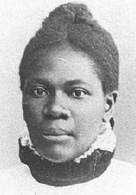
Published in March 2020 Tagged

An effortless switch from literary to mystery

It’s not uncommon for authors of literary fiction to try their hands at the mystery genre. Many bomb out, some spectacularly, incapable of switching from the introspective nature of literary novels to the fast-paced, entertainment-oriented style of storytelling appreciated by most mystery readers.

LONG BRIGHT RIVER BY LIZ MOORE

Not all who make the attempt fail, however. Acclaimed East Coast literary novelist Liz Moore, for one, makes the switch effortlessly with Long Bright River, her latest book, released last month by Penguin Group imprint Riverhead Books.

Moore’s fourth book after three highly acclaimed literary novels, Long Bright River is a profoundly moving crime drama that offers readers an unvarnished look at the opioid epidemic ravaging much of rural and inner-city America.

Set in the blighted neighborhood of Kensington in Moore’s adopted city of Philadelphia, where she is a professor of creative writing at Temple University.

Long Bright River tells the story of Mickey Fitzpatrick, an officer with the Philadelphia Police Department. Though Mickey’s seniority after several years with the department would enable her to work more affluent parts of the city, she instead patrols Kensington, as she has since joining the force. By continuing to patrol the neighborhood’s crime-ridden streets and rat-infested drug houses, Mickey can keep an eye on her estranged sister Kacey, an opioid addict and sex worker on the Ave, as the main thoroughfare through the rough north Philly neighborhood is known.

The novel is set in motion by a pair of simultaneous events — the disappearance of Kacey from the corner she normally works on the Ave, and the first of what quickly becomes a string of murders of young, female sex workers in Kensington. Mickey becomes dangerously obsessed with finding Kacey and tracking down the serial killer, rumored to be one of Mickey’s fellow officers, leading her to make a series of unprofessional decisions that endanger her career and her life.

Nearly half of Long Bright River consists of background scenes intertwined with the present-day mystery. The flashbacks reveal the abusive childhood and adolescence suffered by Mickey and Kacey, leading to the story’s heart-wrenching climax, when the sisters’ past and present inevitably collide.

The undeniable power of the novel lies in the skill with which Moore brings her characters and inner-city Philadelphia to brutal, compelling life. At the same time, the compassion Moore displays for Philadelphia’s most troubled and damaged citizens provides readers the opportunity to comprehend and find sympathy for those trapped by the twin scourges of sex trafficking and drug addiction wracking America today.

Scott Graham is the National Outdoor Book Award-winning author of the National Park Mystery Series for Torrey House Press. The sixth book in the series, Mesa Verde Victim, is scheduled for release in June, and will be available for pre-order through scottfranklingraham.com beginning next month.

Published in Prose and Cons

A load of salt: Options for treating salinity in the Dolores River raise some concerns

The Bureau of Reclamation has extended the comment period for a draft environmental impact statement regarding continuing treatment of salinity in the Lower Dolores River.

The San Juan Citizens Alliance, an environmental nonprofit based in Durango, is raising concern about the alternatives the BOR is offering, including one alternative that would place a new injection well in a wild and remote site near Bedrock, Colo.

“Needless to say, the impacts to the wild character of the Dolores River would be devastating,” the SJCA states on its website.

Comments are now being taken through Feb. 19. The deadline had been Feb. 4.

Earthquakes

Under the Colorado River Basin Salinity Control Act and a 1944 treaty with Mexico, the United States has an obligation to control salt in the Colorado River. The Dolores River is a tributary of the Colorado.

As the Dolores flows downstream from southwest to northeast across the Paradox Valley in Montrose County, it crosses a “salt anticline,” a fold in the rock layers that includes a core of salt left from an ancient sea. The river picks up the salt; according to the BOR, groundwater in the valley is some eight times more saline than ocean water.

To prevent this from traveling downstream, the BOR has been removing the brine via nine shallow wells in the valley and then injecting the removed salt some 16,000 feet deep into the ground at a well about a mile southwest of the Paradox Valley, near the town of Bedrock and just across from a boat ramp. It sits around nine miles from the Utah border.

Now, the current injection well, which has been operating since 1996, has reached the end of its life, according to Reclamation, and an alternative is needed.

The current unit has reached the point where increasing pressure from the continued injection of brine could threaten underground sources of drinking water.

In addition, one of the signs that the well needs to be replaced is increasingly intense earthquakes occurring around the well.

During planning for the original treatment operation, the BOR said in its EIS, “it was recognized that earthquakes could be induced by the high-pressure, deep-well injection of brine.”

An earthquake monitoring system known as the Paradox Valley Seismic Network was created.

The network recorded “more than 7,000 relatively shallow earthquakes” in the vicinity of Paradox Valley since injection began in 1991.

“No shallow earthquakes were detected in six years of seismic monitoring prior to the start of injection operations,” the EIS states.

In the last several years, more and more earthquakes have been occurring over an increasing range, according to Reclamation.

Nearly a year ago, on March 4, the biggest quake yet was felt as far away as Towaoc and Moab. It registered at a 4.5 magnitude.

That led Reclamation to stop injections while it sought alternatives.

The EIS lists four options for future salinity treatment:

  • Alternative A, a no-action alternative, would end salinity-control operations in the Paradox Valley.
  • Alternative B would create a new deep injection well in one of two possible locations, one on Skein Mesa, the other on Monogram Mesa, both near the confluence with Wild Steer Canyon.
  • Alternative C would involve constructing a series of evaporation ponds in the Paradox Valley where salt would precipitate out of the water.
  • Alternative D, a zero-liquid-discharge facility, would involve pumping brine and piping it to a treatment plant where thermally driven crystallizers would be used to evaporate and condense the water. The removed salt would also go to a 60-acre landfill.

All the alternatives would require the use of some BLM lands and that agency would have to give its approval.

The BOR has not identified a preferred alternative at this point in the process but is waiting on public comment. The agency hopes to produce a final EIS this summer and would then select its preferred alternative and have an additional comment period.

Many comments

“We have been receiving quite a few comments,” said Lesley McWhirter, chief of the environmental and planning group of the western area of Reclamation in a phone interview.

The BOR also held two public meetings in January, one in Paradox and one in Montrose. Reclamation officials have also met with the Montrose County commissioners, said public-affairs specialist Justyn Liff.

She said there weren’t many comments related to concerns about the earthquake potential at the two public meetings. “A lot of comments we have received so far have been all over the place,” she said.

In addition, there have been a number that seem to be form letters, presumably generated at the San Juan Citizens Alliance’s website, she said.

McWhirter said all four alternatives in the EIS are considered feasible.

“All the alternatives are viable at this point, including the no-action one,” said McWhirter. Under that one, Reclamation would halt salinity control in the Paradox Valley but would continue to monitor salinity levels.

Some people, she said, have raised the possibility of using the salt commercially, but nothing has really emerged yet.

“There’s been interest here and there to look at the marketability of that salt. Given the isolated area where it’s located it wouldn’t be an economical option, but certainly it’s an option that could be considered in the future.”

Part of the problem, she said, is that the salt is essentially “road salt” rather than “table salt” in its chemical makeup so it would require further treatment.

Better alternative?

The agency needs to come up with some better alternative, according to Mark Pearson, executive director of the San Juan Citizens Alliance.

Pearson told the Four Corners Free Press there are significant concerns about the current options.

Alternative B would create a new well on the Dolores River upstream of the existing well. Pearson said it would involve constructing about a mile and a half of new road, two new bridges over the Dolores River, new pipeline and a new power line.

Reclamation selected this site because it is remote and wouldn’t encroach on the towns of Nucla and Naturita. But the rugged, unspoiled nature of the area is highly valued by environmentalists and recreationists.

All the new construction would greatly detract from the experience of boaters, for instance, Pearson said.

“The Dolores River is one of the last, best unspoiled places on the Colorado Plateau,” Pearson wrote in a column in the Durango Herald. “The Bureau of Reclamation’s plan would convert that last few miles of the magical float through the slickrock canyon into an industrial zone of noise, lights and traffic.”

Piles of salt

Alternative C, which would create 1500 acres of evaporation ponds, is also undesirable, Pearson told the Free Press.

“The ponds will be toxic to birds and wildlife and will have significant mortality to migratory birds,” he said.

Netting could be strung over one of the ponds, but would not completely cover it and thus would not completely protect animals.

Cattle ranchers using the area reportedly are also concerned about how such ponds would affect livestock.

Alternative C would also require a 60-acre “landfill” for disposing of salt, which could eventually be piled 100 feet high.

The unsightliness of such an option drew concerns from the Montrose County commissioners during a meeting with Reclamation officials in January, according to the Montrose Press

“Having these big evaporative ponds and salt piles that we’re going to have out there, the wastes — this is a beautiful valley and I’m really concerned with how that’s going to change that,” Commissioner Roger Rash was quoted as saying.

“It would not be very scenic,” Pearson told the Free Press. “People in Paradox Valley wanting tourism would instead have a giant industrial landscape. “So that option is kind of unlikely, it seems to me.”

Sprinklers

The fourth alternative, D, would involve 80 acres of permanent surface disturbance. It would require the most energy, including 26,700 megawatts per hour of electricity to run the plant, plus 4.2 million CCF (hundreds of cubic feet) of natural gas annually.

“In the other alternative, the zero-liquid-discharge facility, they somehow precipitate the salt out of the brine in some kind of industrial plant,” Pearson said. “It’s probably a lot smaller plant but it has higher energy use and you end up with a salt mountain there. It would be kind of a big impact too.”

Pearson questioned the necessity of simply treating more and more salt in the river.

According to the BOR, 47 percent of the salt comes from natural sources, while 37 percent is produced by irrigation for agriculture. Another 12 percent comes from McPhee Reservoir and 4 percent from municipal and industrial uses.

The current operation intercepts about 95,000 tons of salt annually, representing 7 percent of the salinity in the Colorado River basin overall, according to the BOR’s EIS.

“The objective is less salt at Imperial Dam in southern Arizona,” Pearson said. “Are there more efficient ways to make that happen? Irrigation on the Mancos shale in the Uncompahgre and Grand valleys is the biggest contributor to salt.”

That’s the result of flood irrigation, he said. “Where they have converted to sprinklers, they have reduced the salt load from ag a whole lot.”

Damage downstream?

In a 2012 scoping letter, a coalition of environmental groups including Living Rivers, Sheep Mountain Alliance, Grand Canyon Trust, the Center for Biological Diversity and others said that the Colorado River salinity control program was the result of “flawed river and water management policies” led by Reclamation.

“Nature has been discharging brine into the Colorado River for millennia,” they wrote. “The Dolores and Colorado River ecosystems evolved quite well under these conditions, helping to spawn a thriving desert ecosystem below Paradox Valley.”

They noted that more than half of the salt now flowing into the Colorado River comes from human activity such as agriculture. They called for Reclamation to develop a “more holistic” management plan for the Colorado River.

“It’s far more appropriate that Reclamation look at opportunities to reduce this human-driven salinity, to begin addressing the problem at its source (farming and irrigation practices), as opposed to the continuous intervention into natural processes that cannot be entirely controlled.”

But a letter in November 2012 from the Colorado River Salinity Control Forum, which includes all seven states in the basin, expressed “strong support for Reclamation’s efforts to proceed as expeditiously as possible” to develop options for continued treatment of salinity.”

“Loss of the ability to dispose of collected brines at the project would lead to $20- $25 million of annual quantified damages to downstream users,” wrote forum chairman Larry R. Dozer.

‘The last place’

Pearson said an injection well in a different location might be a better solution, “but they can’t accurately predict what’s going on underground – where the faults are and if they’re hydrologically isolated.”

One way to handle the salt is to leave more water in the river, which dilutes the brine, he said. “This would be a nonstructural solution.”

However, the salt barrier created in the river at Paradox before the water is treated has been functioning as a barrier to the upstream migration of some non-native fish species, at least when the river isn’t high.

Pearson said Reclamation needs to come up with more palatable options.

“Better alternatives are needed,” he said. “The Reclamation staff even acknowledged none of these are very good choices. There’s no easy solution.”

Whatever happens, the landscape needs to be protected, he said.

“The Dolores River Canyon is one of the more extraordinary canyons on the Colorado Plateau and it is a 35-mile section that is completely wild and undeveloped. To just keep chipping away at it with more industrial stuff, it’s unacceptable to do that to the last place that we have. The rest of the Dolores Canyon is more intensively developed down there. This is the one place not yet developed and it should be left alone.”

The draft Environmental Impact Statement is available at http://www.usbr.gov/ uc/progact/paradox/index.html or a copy can be requested by contacting Reclamation. Reclamation will consider all comments received by Feb. 19. Comments may be submitted by email to paradoxeis@usbr. gov or to Ed Warner, Area Manager, Bureau of Reclamation, 445 West Gunnison Ave., Suite 221, Grand Junction, CO 81501.

Published in February 2020

Give me that old-tyme religion

As a free-form cook, I rarely follow recipes. But I am an enthusiastic reader of cookbooks. A paradox, perhaps? I think not. I find recipes authoritarian and confining. There just isn’t enough room for improvisation. Cookbooks offer a wider field of view. They contain suggestions, ideas, and techniques. They are inspiring. And while I am very excited to have recently received copies of some of the trendiest cookbooks on offer including Salt, Fat, Acid, Heat by Samin Nosrat (which can fundamentally change the way you cook) and Deep Run Roots by Vivian Howard (which reads more like a memoir than a cookbook), I am devoted to old cookbooks. The older and more used, the better.

One of my favorites is the Better Homes and Gardens New Cookbook (my copy was new in 1969) with the red-and-white-checked cover and three-ring binder format. Because of the three-ring feature that allows readers to add or remove pages, it is rare to find a complete copy of this book. What is not rare are additions to these old cookbooks. Newspaper clippings or better yet, a handwritten recipe card tucked between the pages are a buried treasure, indeed. Such as the recipe for Venison Roast I found tucked inside the pages of Game Cookery in America and Europe by Raymond R. Camp. There is a stark difference between the handwritten recipe and the published recipes in the book. This recipe for the Venison Roast is a classic home cook approach. The ingredients do not specify proportions or measures for the roast, water, salt & pepper, garlic, flour, or oil. A very freeing ingredient list. What is specified is 1 cup of vinegar and 1 envelope of dry onion-soup mix. These are important to point out, as they are not always in the pantry and may need to be added to the weekly grocery list.

One of the unique techniques included in the recipe is to stuff the roast with garlic, making sure to “plug each hole w/a little piece of meat.” Such attention to detail to avoid losing or burning the garlic during the cooking process is not found on the pages that the recipe card was tucked between. It is remarkable how sparse the recipes in these “classic” cookbooks can be.

It seems to me that the author assumes that the cook using the recipe is already a trained chef. The New York Times Cook Book by Craig Claiborne includes some amazingly pompous statements. Quoting from the Pies and Pastries section, “An experienced cook tosses together a batch of pastry quickly and easily and invariably turns out well-shaped pies with tender, crisp, and somewhat flaky crusts.“ I hope he got death threats for that quip.

I am a very experienced cook and pastry is my nemesis. In fact, I’d like to toss Mr. Claiborne one of my somewhat flaky crusts. However, his recipe for Oso Bucco is divine and my conversion of his Risotto Milanese to the Instant Pot was not an utter failure.

Why, then, do I prefer these old cookbooks? It is because they are based on simple, fresh ingredients. They assume that you will be making the dish from scratch. There is no Trader Joe’s™ pre-packaged curry paste on the ingredient list, and substitutions abound. One glance at Mastering the Art of French Cooking by Julia Child, et. al. demonstrates the versatility of an egg yolk. There are a dozen recipes for mayonnaise and half a dozen techniques for whipping said egg yolk with oil to create homemade mayonnaise. As well as remedies for “turned mayonnaise,” a mistake I am sure to make.

The hidden gems in any cookbook are the scribbles in the margin by a previous recipe-follower or bored child. These notations reveal the essence of the recipe and how it affects the cook and eater.

As a margin scribbler myself, my notes include addition of salt, reduction of sugar amounts or substitution for applesauce, and always a fun one – the circled or underlined ingredient that indicates that this recipe is an utter failure when you forget the baking powder.

A true student of cooking would make notes every time he or she makes a recipe. In fact, I am going to go right now and make notes on converting NYT risotto to the Instant Pot. If I don’t get distracted by the pile of other cookbooks in front of me. Cheers to a New Year full of treasured recipes from old cookbooks.

Carolyn Dunmire cooks and writes from Cahone, Colo.

Published in Carolyn Dunmire

Healthy forests

Flu season is here, so are you going to take some action to prevent catching the flu? The doctors say that to be healthy, don’t smoke, do exercise, eat right, and drink water. How do we measure health? The medical community, with years of experience, has established criteria measuring weight to height and body mass, blood pressure, endocrine levels, blood oxygen levels, etc. If you go to the doctor, they do all the tests then give you a suggested “lifestyle” of eating, exercise, and so on. It is your body so you make the final decisions to take action or not. Of course, if you have a problem, you want the doctor to be well trained, have lots of experience with your issue, and a good record of success treating your kind of issues. Or maybe you could go to the internet or to a good claims lawyer that has been successful in winning lots of medical malpractice suits. Who should you listen to?

Do we want the states’ public lands and forests to be healthy? After all, that is where most of our water, wood products, minerals, forage for wildlife and livestock originate from to sustain our lives and economy. It is claimed that we do care, however, we don’t seem to agree on what determines a “healthy” forest and range and how to measure it, and especially, how to treat it. To start with, it is easier to say what not to do! Do not set it aside to “let nature do its thing.” If you have a cancer you do not sit back and say “let’s see what it will do.” Next, realize and accept the fact that ALL of nature is in constant change, including man, and is constantly experiencing new life, sickness, and death. That is the simple fact of life. Yesterday is gone, tomorrow is not yet, so today is all we have to work with. So what is a “healthy forest” for today? Is our forest sick and in need of treatment?

Well, if you haven’t noticed, the forest from the west end of the Glade all the way east through the Weminuche has contracted some nasty bugs. When checking its vitals, it was burning up with high temperatures, which resulted in severe cases of nasty soil diarrhea literally running down and out Hesperus Creek and in smaller cases on Bear and Plateau creeks. Large clones of oldgrowth aspen are dying out with no replacements for them. All of this has been going on without checking into the Emergency Room Office! It is mind-boggling wondering how this could happen when the radical “environmental movement” had been able to greatly reduce or stop logging, wood gathering, livestock grazing, vehicle recreation use, and off-road camping. They would think that would have protected the forest from getting “sick.” Just avoid contamination by locking out users and “protecting” the forest by designating it Wilderness, Roadless, Natural Area, Special Management Area, National Monument, or National Park, then all would be well. Right? Wrong! So what went wrong? Pretty much everything!

The forest is a complex of life forms forming a symbiotic relationship that together provides a living and thriving environment on a mosaic of differing soils, aspects, elevations and waters. Water is the single most important compound for all life in the forest and beyond. The water enables the vegetation to flourish, providing ground cover of grass and flowering plants, shrubs and the over story of trees. A healthy forest of vegetation provides for the benefit and needs of a variety of animal and avian and yes, Man. Did you ever wonder why our Creator made ONLY man with the ability to manage and manipulate the vegetation on the Earth for the benefit of his and other animal life? The management and use of vegetation has a profound impact on how water is made available for all life in the forest and beyond.

Recently, it was noted that about $50 million from the national forest budget will be made available to the San Juan Forest under the new Rocky Mountain Restorative Initiative to attempt to tackle the nasty failing forest health issue. There will be $5 million per year available for 10 years and will involve private lands in addition to the public forest lands.

Where will this forest “doctoring” be done since close to three-quarters of the San Juan is in designated wilderness and roadless areas where active treatment for health and protection is not permitted? Fortunately, much of what little of the forest remains available for health treatment lies in the Dolores River drainage, where the current latest large-insect infestation is occurring and treatment can be applied. The Forest Service’s experienced “doctors” have already conducted a complete health needs analysis, an EA, and prescribed a sound treatment plan. Kudos to the Dolores Ranger District for this work. Will the work be expedited, or will the usual faux environmental “pretend doctors” and their malpractice lawyers be attacking the health treatment plans looking for a payoff settlement? Who do you listen to, the experienced “doctor” that you are paying, or the snake oil salesman with his personal agenda? It is really frustrating when the faux environmental groups are allowed to treat the public lands as “theirs,” and filing litigation actions to stop, change or delay management to conserve, improve and protect the public lands and resources. The local county government is the legal coordinating authority with the Federal agencies, not ANY special interest group. The interference by the faux environmental groups is costing taxpayers, damaging the economy and retarding much-needed treatment time to regain forest health. Actions must be initiated to end these outside attacks on the local forests and county economies.

Dexter Gill is a retired forest manager who worked for private industry, three Western state forestry agencies, and the Navajo Nation forestry department. He writes from Lewis, Colo.

Published in Dexter Gill

Letting go of our family familiar

SIMBA … You know how there are some things that you firmly don’t want, but that you end up getting, anyway, which then become great gifts? Simba was like that … The kids named her because she looked the part of a lion. A sheep-white Chow with a leonine jaw, black tongue and a proud tail ruff curled above her rump. A Hurricane Katrina rescue dog. Mary picked her up from a foster home in Denver. I had told her and the kids I didn’t want a dog, but they promised me they’d take care of her. It wouldn’t be my responsibility … Hah! Life! I should have known better … Simba was exceedingly loyal to the kids & Mary. Me, not so much. She barked the first couple years every time I drove into the driveway. Chows aren’t affectionate dogs anyway. More independent. Almost like cats … And she had reason to be aloof. Stories about Simba pre- Colorado suggested she had to be captured before being rescued in Louisiana. Must have been tricked with food. Would never eat when I filled her bowl, until I walked off. Had traveled with a partner, they said, living off the land after Katrina devastated the Gulf Coast Aug. 23, 2005 [CE]. Above all, she was a survivor … For me she was untrainable and restless. On the move. A ferocious hunter, if she smelled small game. And she didn’t like fences. Or boundaries of any kind. But I kept her as an outside dog. Hantavirus with the mice. Bubonic plague with the prairie dog fleas. The vectors for disease via a traveling family pet at Cloud Acre made this old pre-school teacher nervous. Mary & the kids always let her roam inside and out. And she deserved that. Loved that. If Mary hadn’t died in 2012, her life would have been easier. With Mary gone, Sara took her for a year, living with her godparents in Telluride. But then Simba bit a little boy who was pulling on her hair. And she ended up at Cloud Acre for the second half of her life … She became my responsibility. I fed her daily. Had to arrange her feeding whenever I left for a couple days. She was the burden I didn’t ask for … But I came to love her irascible soul. She was a good guard dog. Her bark always alerted me to visitors – from her pen under the largest of the three Siberian elm along my place’s fenceline with Lone Cone Road … Another consistent bennie over the last decade and a half, as Sara always pointed out, has been taking Simba for a walk. Although that stock phrase gets it all backwards. She ran and pulled me along – at as fast a pace as she could manage, tugging a slow human behind her. I came to think of her as my trainer (especially in my Sixties) … Because her sense of smell was fine-tuned, I learned to use a retractable leash. Otherwise she would literally knock me over, changing course abruptly, especially at night. But most often we’d race along the county roads of Wrights Mesa at dusk, watching impossible constellations of clouds circle round a Sun sinking into the La Sals. The landscapes were spectacular. As was the dark sky, if we got our exercise in the evenings, particularly if there was some kind of Moon teasing us along … But gradually her eyesight went. One eye. Then both eyes. She could barely hear at the end. I’d have to yell her name and whistle and beat the garbage can cover on the fence to rouse her from her doghouse. And then she’d shuffle around the pen, bumping into things, the trunk of the tree, the fence. Before eventually finding her bowl of food, as if for the first time. Her bowl of water … The kids & I took her to the vet this morning. They were very nice at the clinic. Explained how it would go. Let us all be there with Simba. And it was quick. Her head cradled in Sara’s lap. I’d dug a grave and had warmed topsoil and a large stone to rest atop her resting place. Resting at last. Dear Simba.

Art Goodtimes writes from Norwood, Colo.


The Talking Gourd

Reciprocity

Today I sat outside
in the purple shade
on a warm summer day
sipping cold coconut milk
on the Ghost Town patio
and watched, transfixed
as two birds hopped around
taking turns pecking crusts of bread
And then feeding each other, putting
their desire for companionship
ahead of their hunger.

— Stephanie Osan, Telluride

Published in Art Goodtimes

Not all dreams should come true

Having always loved history I was looking forward to America’s bi-centennial. I envisioned parades and historical speeches. I was excited to see America display its greatness to the world. To revel in how far we’d come in only 200 years.

The anticipation of the revelry came crashing down on Feb. 2, 1976.

I don’t remember any Fourth of July celebrations, no statesman delivering a message for the ages.

All I remember of 1976 was that one day. The day my mother died.

It didn’t surprise me, for I knew it was going to happen.

For as long as I can remember I have had dreams. Maybe it comes with a vivid imagination. I’d have the usual wacky dreams like riding a unicorn across the sky and taking a bite out of marshmallow clouds.

But sometimes the dreams would be different somehow – I felt like I was living the dream, a spectator watching scenes play out.

And those “vivid dreams” would come to pass.

It scared me as a child because I thought something must be wrong with me. I knew early on that I couldn’t tell anyone about it because they’d think I was crazy.

In fact, most people who know me don’t even know of my secret. I’m not sure why I tell it now, maybe because I’m getting old enough not to care what other people think of me. Or maybe it’s a hope that admitting something will help heal the wounds I’ve carried in my soul.

For decades I blamed myself for my mom’s death. I think if only I’d told someone, maybe things would have been different. But who would believe me? The doctors? My father?

I remember the dream. It was the end of January, only a few days before Feb. 2.

I found myself walking into a pitch black room. I saw something in the center, a shape I couldn’t quite make out. A faint light began to shine down from above and I saw a casket. I knew who was in it.

“It’s time to say goodbye,” said a gentle voice that seemed to come from all around me.

“No,” I pleaded. “Not her, not my mom.”

The Voice seemed reassuring, but repeated that it was time.

“Not Mom,” I cried. “Take me instead! Don’t hurt my mom.”

“Give her one last kiss goodbye,” The Voice said.

I awoke, shaken and in a cold sweat. I thought I needed to tell someone, but there was no one to tell. I knew this was one of my vivid dreams because they always had a different feel to them.

The last time we visited my mom at the Boston hospital I was reliving that dream. And I thought I found a way to save my mom. The Voice had told me to kiss her goodbye, so if I didn’t kiss her – she wouldn’t die!

I should have known better, but I was 15 and desperate to protect my mother. I convinced myself I could keep her alive by not doing what The Voice had told me to do.

When it was time to leave I tried to sneak out of the room and then my Mom spoke her last words to me: “No kiss goodbye?”

I mumbled an excuse about having chocolate on my mouth from a candy bar and hurried outside.

I recalled her last words, they were almost the same as The Voice’s. But I was also relieved. I knew I had saved my Mom.

Only I didn’t. And I blamed myself for not being able to protect her.

It’s not an understatement to say that the loss of my mom was the most profound of my life. For decades I closed down every Feb. 2, either didn’t go to school or called in sick to work. I didn’t want to be around anyone. I couldn’t bear to hear other people’s laughter, knowing I would never laugh again.

I hated my vivid dreams.

But they still came sometimes. Other times it was like I just knew something, but couldn’t explain how I knew.

It happened on Aug. 9, 1994.

I was on the Narragansett Indian Tribal Council then and I was running late for a meeting. As I drove past the family house I said to myself, “Hi, Dad.”

And then one of those feelings came over me. Something made me turn the car around and stop home. My dad had just cooked up some baked beans and I had a bowl. As we were eating my brother showed up. We ate and chatted about this and that.

But I was late to my council meeting, so I stood up and walked to the door. Something inside of me made me stop and look at my dad. At that moment, as I looked at him, I suddenly knew I’d never see him alive again.

I thought of giving him a kiss goodbye. The kiss I had failed to give my mother.

But my dad was never the sensitive type. I was afraid if I tried to give him a kiss that he’d punch me. So I got in my car and drove off. Tears stained my face as I drove away, because I knew I had failed both of my parents.

My father died the next day.

And sometimes I wonder that when my time comes will there be anyone to give me one last kiss goodbye.

John Christian Hopkins lives in Sanders, Ariz., with his wife, Sararesa. He is a veteran journalist – but never an enemy of the people – and a former nationally syndicated columnist for Gannett News Service. He is the author of many books, including “Carlomagno: Adventures of the Pirate Prince of the Wampanoag.” He is a member of the Narragansett Indian Tribe of Rhode Island.

Published in John Christian Hopkins

A singer who offers hope

Buffy Sainte Marie

Buffy Sainte Marie

Beverly “Buffy” Sainte Marie was born on Feb. 20, 1941 (or maybe 1942), on the Piapot 75 reserve in the Qu’Appelle Valley, Saskatchewan, Canada. She was orphaned as an infant when both of her parents died. She was adopted by Albert and Winifred Sainte-Marie of Wakefield, Mass. The couple were of Mi’kmaq descent, but her upbringing was completely white. She grew up in the wilds of Maine loving the woods and music, both were her escape. She began to play piano at the age of three, teaching herself, and guitar shortly after that.

She relates that her childhood was abusive in many ways. “It had been going on for generations where native children were removed from the home,” Sainte-Marie says. “What happens to children who are kind of lost in the system like that, they’re assigned a birthday, they’re assigned kind of a biography. So in many cases, adopted people don’t really know what the true story is.” Hence the confusion around her actual birth date.

By the time she was in high school, she was playing in clubs, using her own unconventional tunings. She had no intention of making a career in music but an appearance at an open mike night at Greenwich Village’s Gaslight Cafe brought her to the attention of critics and record companies. By the end of 1963, she had given up her plans to become a teacher and was being hailed as one of the most promising talents on the New York folk scene. Another Indian folk singer, Patrick Sky, taught her to play the traditional Native American instrument the mouth bow, which became a distinctive part of her sound, along with her unique guitar style and her sometimes strident, sometimes delicate vibrato-rich voice. She moved from the coffeehouse scene to appearing at Carnegie Hall, in also in New York, in 1965.

She did attend the University of Massachusetts in Amherst, earning degrees in teaching and Oriental philosophy. While she did not enjoy her early school life, she graduated from the University of Massachusetts in the top ten of her class. Her career in music had taken off but through the Cradleboard Teaching Project, she did manage to teach and continues to do so today.

Shortly after Sainte-Marie began singing professionally, she came down with pneumonia. Unwilling to give up performing, she took codeine to ease her symptoms. The illness persisted for six months, and she became addicted to the drug, recovering only after a painful withdrawal; she also came close to ruining her voice. She wrote of her addiction in the song “Cod’ine.” She appeared on Pete Seeger’s Rainbow Quest in 1965 and in several Canadian Television productions from the ’60s to the ’90s. American broadcasts included American Bandstand, Soul Train, the Johnny Cash Show, the Tonight Show with Johnny Carson. She sang the opening song, “The Circle Game” (written by Joni Mitchell) the film The Strawberry Statement in 1970. She appeared in Then Came Bronson and Mating Dance for Tender Grass. She and her son Dakota, were regulars on Sesame Street for over five years. She appeared on Democracy Now in 2015. She was blacklisted during the 70’s.

Her authorized biographer, Andrea Warner, says: “Buffy has sort of mapped a lot of her life experiences through her songs. She’s given us an incredible map for hope.”

I highly recommend Buffy Sainte-Marie: The Authorized Biography by Andrea Warner, 2018. Also, if you don’t know her music… LISTEN!

There is also a really good documentary on YouTube, Buffy Sainte-Marie A Multimedia Life The Documentary

Check out her discography, I am sure you will be amazed at the songs she has written that were covered by other artists. I was!

Margaret “Midge” Kirk is a slightly eccentric artist, writer, bibliophile, feminist scholar and hobby historian who lives in the SW corner of Colorado. She can be reached at eurydice4@yahoo.com or visit her website www.herstory-online.com.

Published in Midge Kirk

Greed masked as altruism

“For there is nothing hidden that will not be disclosed, and nothing concealed that will not be known or brought out into the open…” — Luke 8:17

“Tell the truth and stand your ground, don’t let the bastards get you down” — Kris Kristofferson

From the Bible to modern times, the effort to confront the more negative side of human nature is a never-ending battle. The overall viability of any great society can be determined by the character of its citizens and those who they choose to elect into leadership roles. The lessons of history teach that fundamental shifts in a society’s overall moral character lead to divisions that can sow the seeds of change. Positive or negative. Any society can and does reflect moral, immoral, or amoral values. History also teaches that social disintegration leads to regime change, often through violence.

There is now a new normal narrative in many media reports, implying without much conscious thought; that a new paradigm of change in social norms has transformed America. At the core of new normal thought is the concept of amoral decision-making by policy makers and leadership as opposed to decision-making based on morality.

An example would be that given the demand by consumers for the legalization of marijuana, and now other drugs, government can generate a revenue stream from a practice once considered a vice and detrimental to the overall well-being of citizens, and thus the country.

Another example would be the issue of technology. Leadership has a constitutional duty to uphold all of our rights. In a Jan. 19, 2020, article, The New York Times reported that a tech startup company owned by Australian Hoan Ton-That has marketed an app called Clearview. This is in use by law enforcement and by anyone who cares to purchase it. A person with this app can take a cell-phone picture of anyone, anywhere, and retrieve every database image of that person. The issue of drones that can fly anywhere has been left unresolved and the silence of our legislators is deafening. It really is the money, honey.

Mark Galli penned an editorial Dec. 19, 2019, in Christianity Today, titled “Trump Should Be Removed from Office.” If you are unfamiliar with the article and you value intellectual honesty you should read it. It is an example of an individual who put his faith above the crowd. The crowd that demands a win at any cost, because the alternative is unthinkable. It’s about the Supreme Court, stupid. What do you think that the Democrats will do with the Supreme Court hanging in the balance?

Over the Christmas holiday there was a car in a parking lot that had a sign taped to the window that read, “Keep your Theocracy out of my Democracy.” Reading that sign I thought about how the United States is a republic with a system of checks and balances to sustain a free people. When the Constitution was written, it was understood that morality was a fiber of our existence. It is what separates us from other species. In the wild, it is primal strength that determines the pecking order. In a free and just society, it is our morality, our intellect, and our abilities that keep us free. I will choose to believe the Supreme Court should be about which laws are constitutional versus ones that are not. Congress has a history of passing laws that violate the constitution.

The increasing polarization of the court by political parties may be the greatest threat of all. The other two branches of our government are increasingly dysfunctional and have been for quite some time. Our morality is being tested.

As a people, one of our greatest strengths has been the ability to recognize that greed and lying are symptoms of an ill person that eventually result in self-destruction. The problem today is that greed and lying have become an acceptable pathway to success, and to hell with the collateral damage to our society.

There is no shortage of people, businesses, government agencies and nonprofits, telling Americans how much they care. Caring has become the new brass ring of opportunism. Volunteerism used to mean that one performed a task out of a desire to do good; to contribute your time, labor, or money to an endeavor one thought worthwhile, at no monetary compensation.

Oh, but it is so much smarter if you can get paid for it.

I once read a story that the actor Paul Newman started a charitable organization that had a stellar reputation for extremely low overhead costs. One of his daughters thought she should get paid for her work with the organization. As I recall the story, Newman conveyed to her in no uncertain terms that if she wanted a job, she should go get one.

Amen.

Valerie Maez writes from Lewis, Colo.

Published in Valerie Maez

Cleared for landing

Recent news suggests the Air in Airbnb comes from CEO Brian Chesky, who recently announced a ban on all party houses in response to a tragic shooting which left five dead in Orinda, Calif. A glass of wine? That’s fine, but he’s forbidding by international edict any of the company’s 2.9 million Airbnb hosts at any of their 6 million locations to allow any of their 150 million users to party with more than 13 people in attendance. Good luck with that.

It just so happens we’d made an Airbnb reservation for a California stay the first week in November, less than a week after the Halloween party murders took place. In trying to clear the platform’s online security gates, I encountered technical glitches and a few misunderstandings which I finally resolved by initiating a real-time phone call, threatening to cancel my booking. When it comes to hanging on to the customer’s money, Airbnb does a five-star job.

In 2008 a couple renters earned a few extra dollars charging strangers inflationary rates to crash on a living-room air mattress. Eleven years later the idea bloated into a $35 billion data-saturated industry. Its understaffed army of 3,100 Airbnb employees tries to offer reasonable assurances that the space a customer is renting will be free of risks and irritations, like inaccurate descriptions, hidden cameras or trap doors. Ultimately, users rely on the host to provide a quality rental experience, and more times than not it works out fine.

Our tiny casita turned out to be comfortable enough, if you don’t count the incoming airlines on identical flight paths cueing up like billiard balls. The wheels and flaps were already down, locked into position, landing from before 8 a.m. until as late as 11 p.m. The planes were often 2 to 3 minutes apart — jumbo jets literally falling from the sky. They came so close an airline ornithologist could have easily identified individual species by the distinctive markings on their tails and under their wings.

After enduring the first day at our rental, I reread the host’s description for booking the property. The details disclosed that air traffic existed in the neighborhood, so it shouldn’t have felt like a surprise. But awareness and experience are two different classes of tickets. These planes weren’t just vaguely circling like buzzards. I worried the pilots might mistake our driveway for their runway.

By no means were we the only people dealing with air traffic, but those who own or rent houses in the neighborhood hopefully are acclimated by now to the relentless audio bombardment. My first experience in the shadow of a passenger jet occurred decades ago while visiting my in-laws, who lived directly under a Chicago O’Hare flight path. I remember sitting in their yard one warm afternoon drinking gin fizzes. As my father-in-law expounded loudly on the world’s problems, a jumbo jet crowded out the sun. His audible voice vanished, replaced by the sound of the jet’s turbines, but his lips kept moving, as if he thought we could still hear him. I nodded, sipped my gin and thought, well, at least one problem solved.

Truth be told, I’m still a flight-path newbie. I was taken aback by the incessant noise because my senses don’t usually occupy an environment where constant noise prompts my brain to develop a protective layer of deafness. The property’s description also lauded the benefits of staying so close to the airport, which would be, it claimed, a convenience for those who arrived by air. It concluded: The air traffic doesn’t diminish the beauty of the neighborhood, which it didn’t, because we spent most of every day away from the casita, touring other sites of the city.

Like most businesses with an eye toward profits, Airbnb aspires to grow bigger by not attracting negative media attention. Five star ratings and glowing customer reviews work like cash in the corporate model of America, which is why I don’t want to be one of their monkeys, pedaling the feedback cycle with another free review. I’m just learning my lessons and moving on, refusing to participate in the rating game, advocating a kind of statistical protest — a stat-in, if you like.

Predictably, online businesses like Facebook, Twitter, Instagram, and myriad other popular sites aspire to become so massive they are incapable of policing the very activities they sponsor. Of course we jeopardize our safety by joining in, or we learn to live with it. Plane. And simple.

David Feela writes from Montezuma County, Colo. See his works at http://feelasophy.weebly.com/

Published in David Feela

The road not (yet) taken

I grew up as a labelmaker kid. Unlike a lot of facts of my childhood, my parents can’t take credit for messing me up with this one. It had nothing to do with their tactics or baggage. This was simply a result of how city life works — even in middling cities with constant identity insecurity, best known for a Bugs Bunny line in a Looney Tunes standard.

Labelmaking is how city kids come to see the world. Walls and fences and streets define who belongs on which side of them. My yard is not your yard, and woe is my wiffle ball that ends up in your rosebushes.

I cannot tell you who I sat next to at any point in elementary school, but I can recreate in vivid if unskilled detail the cartoon pencil that my teacher wrote my name on and taped to the top of my desk so none of the other 34 kids mistook my desk for their desk. She handwrote it because, to be perfectly clear, our school couldn’t afford an actual labelmaker in this labelmaker world. That’s why we Sharpied my name on my pencil box and my binders and certain siblings and my baseball hat. And we kids knew, better than we knew long division, which side of the sidewalk belonged to the third-grade portables and which to the fourth-grade.

Out here, where I now live, the world seeps into itself. Lines shift with the sand in the wind. A barbed-wire fence runs between my land and the no-man’s on the other side… except the surveys show that the barbed-wire doesn’t align with the property line at all. Fence posts mean more than GPS, though, and considering that this land wasn’t made for fences, neither one means a whole lot, as evidenced by the neighbor kid who drives his pickup through my front yard.

This labelmaker kid doesn’t know how to cope out here without delineations and borders. But out here, this is the way. When the Spaniards arrived — which, according to the state history book that once had my name Sharpied on the inside cover, was the first step toward civilization in this corner of the world — they imported their feature-based method of parsing out land grants. No fences, no streets, no Sharpies. His land stops at the river, and yours goes all the way to those red rocks over there.

This method makes sense out here, where the land is not pre-gridded or easily griddable. Google Maps doesn’t even recognize my address. But if you manage to find my hood on satellite view, you’ll still see ghost roads from when some ambitious (and undoubtedly Anglo) developer aspired to build a railroad town, sans railroad, on a topography too wrinkled and stubborn to be waffled. It’s like building downtown Durango in the Canyons of the Ancients.

Most of that white boy’s plans withered. A few houses, mine included, persevered. The street signs are handmade — perhaps by another labelmaker kid who can’t stand to give directions by counting trees. Down my road and around the bend, there’s another sign, this one definitely from a fellow labelmaker: Private Road. No Outlet.

Now, “road” is a generous term. I snuck a little ways down it one day at dusk. Two tracks in the dirt have a little less brush than the neighboring dirt, and they once supported tires. This “road” was “built” over washes and ditches using tires and rocks to dam the dust. Who is surprised that the water has persevered longer than the cars?

But to a labelmaker kid, this sign might as well be electrified and armed. One does not simply walk down a private road. No matter how loosely “road” may be defined, “private” is pretty clear.

Out here, though, there ain’t city parks for walking the dog. Lines are fuzzy, to a point; still, I can’t bushwhack through entire swaths of indeterminate ownership. People do own guns out here, and the sheriff is never the first phone call someone makes. Perhaps that’s the Anglo in me talking. Out here, a road — even a private one — is a passageway. I can’t stumble into someone’s yard on a road.

And, the labelmaker kid still inside me points out one very alluring truth: the sign doesn’t say diddly about trespassing. It’s a private road, but every kid knows trespassing is at least somewhat allowed if it’s not expressly forbidden. And even if it is forbidden, it’s not like anyone else is using this road. No tire tracks, no footprints. No houses or handmade street signs. It’s wide open country, at least as far as I can tell.

So I’m going to try walking it openly, brazenly, in full daylight, and see what happens. And in case I really take to it, I’m bringing my Sharpie with me.

Zach Hively writes from Abiquiu, N.M. He can be read and reached through http://zachhively.com and on Twitter @zachhively.

Published in Zach Hively

The work has just begun

Land-use planning, including zoning, contributes a good deal to preserving our liberty and pursuit of happiness (to borrow from a nicely turned phrase).

But at the very crowded Cortez City Council meeting last month, folks turned out in droves to express (to some degree, at least) the opposite view – that local government designating property uses and structures’ sizes and appearance strikes at the very soul of personal freedom.

Good land-use plans and zoning regulations are based on the principle that there’s a place for most everything, and are intended to keep those uses in their best place.

Of course, it’s certainly possible for regulations to go too far. That was the concern of most of the folks who spoke at the meeting, many of whom had specific, well-researched complaints about Cortez’s new, proposed land-use plan.

The plan was unanimously rejected by the council after they heard hours of testimony against it.

Now there is talk of forming a citizens’ committee to help with crafting a new plan. Some of the critics who spoke even volunteered to serve on such a group, which is great. Because dedicated people will be needed.

Let’s face it. Picking apart and objecting to an already written document is the easy part. Creating a new one will be a grueling task, particularly if the goal is to write it from scratch somehow, as former County Commissioner Kent Lindsay seemed to recommend. His story about how the county commissioners rejected a draft plan and wrote another by sitting down at the table themselves is true, but remember, the commissioners and their staff earn a lot more money than the $400 a month that members of city council do. It might be a bit much to expect councilors to spend hours and hours over months and months producing a new plan. They’re still going to need help from professional planners.

The people who did their research and voiced their concerns at the city meeting deserve great credit. The meeting remained generally civil in tone, despite some nasty rhetoric, and ended on a fairly upbeat note. The council members also deserve accolades for listening to the citizens – not just at the recent meeting, but back in October, when it would have been easy for the council to approve the already-written plan, which was up for consideration. Instead, the board listened to a few people who begged for more time to review it. Let’s give them credit for that.

Did the new plan go too far? It’s clear that it did, at least in parts. Cortez has always been a hardscrabble city. There are legitimate concerns about imposing too many regulations about roof pitches and day-care parking and the way carports have to look, and so on. Our residents have to be able to afford to live here.

But let’s not throw out the baby with the bathwater, as has been said. Getting rid of all land-use regulations and making everything a free-for-all, which some folks advocated, would lead to an endless stream of phone calls to the city police, with residents complaining about dog kennels next door and producing a cacophony of noise, and neighbors operating businesses that take up all the parking along the streets.

“We don’t want government telling us what we can and can’t do with our little slice of Heaven,” seemed to be a popular sentiment.

But what happens to your slice when your neighbor decides to build a machine shop or honky-tonk bar in the midst of your formerly tranquil residential neighborhood, where traffic was limited mostly to the people who live there, and the occasional noises you heard didn’t come from grinding metal or a cranked-up metal band?

What happens to your house’s climbing property value that was one of your retirement resources?

People who have lot sizes of three acres or more can have a little more latitude than people jam-packed together. And folks who move into a city generally want more regulations, within reason, than those who live in the county. They may not want to be regulated like people living in California, but they generally don’t expect their city plots to be little fiefdoms, either.

At any rate, the new council will have a formidable task in sorting all this out. Good luck to whoever wins the races in April.

Remember, the easy part is over. The real work has just begun.

Published in Editorials

BLM’s Southwest RAC has no quorum: U.S. Rep. Scott Tipton is looking into the situation, his aide says

Resource advisory committees that provide citizen input to the Bureau of Land Management are dwindling under the Trump administration, and the situation appears to be similar in Southwest Colorado.

The Southwest Resource Advisory Council, or Southwest RAC, as it’s commonly known, has so many unfilled vacancies it no longer has a quorum. Its next meeting will be a conference phone call.

“We are going to hold a conference call with current members to keep them up to date in March,” said Eric Coulter, public affairs specialist for the BLM Southwest District, in a phone call to the Four Corners Free Press.

People have been nominated to fill the vacancies but the nominations have just been sitting around awaiting approval.

The office of U.S. Rep. Scott Tipton, who represents the Third District of Colorado, is looking into the situation, according to Tipton press secretary Matthew Atwood.

The Southwest RAC consists of 15 members who serve staggered three-year terms. The terms of five of them expired in December of 2019, and two more terms expired in January, for a total of seven recent vacancies on the committee. That’s in addition to three vacancies that occurred in 2018 and have yet to be filled.

That leaves just five active members on the group.

“At this point we do not have confirmation of our 2018 (3 nominations) and 2019 (7 nominations),” wrote Southwest District Manager Stephanie Connolly in an email to the current and former members. “This means we do not have a quorum and can not have an official RAC meeting where you would be able to provide recommendations/ advise to us on our proposals or decisions.

“The leadership team of the Southwest District thank you for your patience and dedication to the RAC. We greatly value your contributions and while we await for the process to be complete, we want to stay in touch with you.”

The Southwest RAC, which generally meets three or four times a year, last met on Dec. 12, before some of the terms were up. Until recently, there were 38 chartered BLM RACs in the West. They generally have 10 to 15 members who represent widely differing interests.

The members of Colorado’s RACs are divided into three categories.

  • Category 1 includes representatives of livestock-grazing, energy, off-highway vehicles and commercial outfitters.
  • Category 2 members represent environmental organizations, archaeological and historical interests, wildlife organizations, wild horse and burro advocates, and dispersed recreation.
  • Category 3 includes representatives of government agencies and elected officials, Native tribes, academic institutions, and the public at large.

The committees cannot make decisions for the BLM, they can only offer the agency advice and input on management of public lands.

The Colorado Southwest RAC represents the BLM’s Uncompahgre, Tres Rios and Grand Junction field offices. The councils, according to their charter, operate on the principle of collaborative decision-making and work to reach consensus before making official recommendations.

However, the Trump administration has issued a national request to reduce the number of RACs nationwide, Coulter said.

The administration announced in early 2017 that it wanted to review the RACs and their charters. At that time, Colorado’s four RACs were suspended temporarily. They were soon renewed, however, with new charters that emphasized energy development, mining, and the creation of jobs.

The Southwest RAC began meeting again at that time, but now is unable to until its vacancies are filled.

RAC members are nominated by either themselves or other people. The nominations are then vetted by state BLM offices and ultimately must be approved by the Department of the Interior.

Coulter said the nominations to fill the 2018 vacancies on the Southwest RAC are sitting at the national office, awaiting approval, while those for the 2019 vacancies are “still with the state of Colorado.”

Atwood told the Four Corners Free Press that Tipton was recently in the town of Nucla for a Chamber of Commerce event and visited with John Reams, chair of the Southwest RAC and one of its remaining active members, and they discussed the situation.

“Some of the nominations have to be approved at the Interior level,” Atwood said.

He said part of the problem may be that 70 percent of the political nominations haven’t been filled in Interior.

However, the RAC nominations should get the go-ahead at some point, he believes.

“To our knowledge there isn’t any real reason they have not been approved,” he said.

RACs nationwide have been in decline since the Trump administration’s review. There are six RACs in Oregon, and three of them have not met in more than two years, according to a December 2019 report by Oregon Public Broadcasting. In Colorado, both the Northwest and Rocky Mountain RACs have become defunct, Coulter said.

The number of RACs in existence has varied over the years, he said. “There were recreation RACs as well” as the general RACs. “The Forest Service also had those.”

Coulter said the agency values the councils and would like for them to continue.

“As BLM we appreciate what the RAC provides us,” he said. “It’s a valuable resource for us. We will continue to pursue keeping the RACs active.”

Published in February 2020 Tagged

What does the future hold for the Bears Ears monument?

BEARS EARS NATIONAL MONUMENT REDUCTION MAPThe Bears Ears National Monument Advisory Committee will meet in Monticello, Utah, on Feb. 25. This is the second meeting of the committee, which met for the first time in June 2019. Thirty minutes each day are allocated for public comments.

But what is a citizen supposed to comment about and how would anyone know what is going on right now?

The intent of the Monument Advisory Committee meeting, as stated in the agenda, is to “provide information on how MAC member input was used in the planning process” as well as to update members on the monument’s status and “review and refresh” the committee’s roles and responsibilities.

According to San Juan County Commissioner Bruce Adams, chairperson of the committee, “All we’re going to do is advise how to implement the decision already made by the BLM.”

The lands now referred as Bears Ears (named after two prominent buttes) are located in Southeast Utah, primarily within San Juan County, and contain spectacular scenery including red rock canyons, snowy mountain vistas and piñon and juniper clad plateaus. It is the landscape some came to know from reading Edward Abbey’s classic work, Desert Solitaire, and others by visiting Utah’s “big five” national parks: Arches, Canyonlands, Zion, Bryce Canyon and Capitol Reef, all in this southeastern part of the state. River runners, mountain bikers, backpackers and rock climbers negotiate slot canyons and remote trails, while ATV/OHV enthusiasts enjoy exploring the remote lands on empty roads. Even houseboaters floating through Lake Powell are keen on the area. Clearly it is a recreational dreamland.

The Antiquities Act

Adding interest and complexity to the region is the fact that thousands of archaeological sites are located here, many important to contemporary Native Americans. These cultural resources are what initiated the most recent effort to increase legal protection for the area, since looting and pothunting have been on the rise.

According to an article in the Durango Herald in May 2016, “between October 2011 and April 2016, the BLM’s field office in Monticello investigated 25 cases of looting, vandalism and disturbance of human remains in San Juan County.” Some of the cases included desecration of burial sites and campers and hikers destroying prehistoric walls, tearing down a historic Navajo hogan, and building fire pits with building blocks extracted from ruins. Pictograph and petroglyph panels have been vandalized, with people scratching their names in the walls, removing rock art, and writing or painting on the panels.

The Antiquities Act of 1906 was President Teddy Roosevelt’s response to pothunting, which was as popular in his day as it seems to be today. The act has three parts, the first stating that “any person who shall appropriate, excavate, injure, or destroy any historic or prehistoric ruin or monument, or any object of antiquity, situated on lands owned or controlled by the Government of the United States”can be fined or imprisoned.

The second part gives a sitting president the power to establish a national monument, stating “That the President of the United States is hereby authorized, in his discretion, to declare by public proclamation historic landmarks, historic and prehistoric structures, and other objects of historic or scientific interest that are situated upon the lands owned or controlled by the Government of the United States to be national monuments.”

The third part gives the Secretary of the Interior the power to grant permits to people who do want to excavate archaeological sites and “gather objects of antiquity” and gives the Secretary power to decide who is qualified to get these permits.

In the 114 years since it was established, the Antiquities Act has been used by every president except Reagan, Nixon and George H.W. Bush.

Teddy Roosevelt established 18 national monuments, including Grand Canyon, Devil’s Tower, Chaco, and the Petrified Forest Other places now known as national parks, including Acadia, Grand Teton, and Olympic, started as monuments.

Although a sitting president can set aside a monument by presidential decree, national parks are created only through acts of Congress. National monuments and parks differ according to why they have been set aside. National parks are dedicated to “conserving unimpaired” scenic, recreational, inspirational and educational purposes and natural and cultural resources. Conservation and recreation are key.

National monuments are established to “sustain the health, diversity, and productivity of public lands for the use and enjoyment of present and future generations.” While they do attempt to preserve resources, existing uses of the land, such as grazing, timber harvesting, oil and gas exploration, hunting, fishing and outfitting are all allowed.

Basically this means that anyone who was using the lands prior to a monument designation will keep their rights. OHVs and mountain bikes are allowed on approved roads and trails, but development of new routes for motorized vehicles is only for public safety or conservation of the monument’s resources.

Presidential back and forth

The tension between preservation and multiple use in the management of national monuments is fraught with political repercussions, as evidenced by the controversies

and confusion associated with Bears Ears. In 2015, the Bears Ears Inter-Tribal Coalition was formed in response to the increased desecration of important and sacred cultural sites in the region. The coalition consists of leaders from the Hopi, Navajo, Ute Mountain Ute, Pueblo of Zuni and Ute Indian tribes, and is an unprecedented tribal collaboration. They joined with conservation groups to submit a proposal for a national monument to President Obama which included 1.9 million acres of ancestral lands under federal jurisdiction on the Colorado Plateau, including over 100,000 documented archaeological sites. They proposed joint management between federal and tribal agencies, and had the support of 30 other tribes.

Obama established Bears Ears National Monument on Dec. 28, 2016. His proclamation included most of the area proposed by the tribal coalition: 1.35 million acres – over 2000 square miles of federal lands.

The proclamation details the rich natural, cultural, geologic, and archaeological resources, reading somewhat like an essay by Aldo Leopold or John Muir, referencing carnivores, eagles, serviceberry. “A few populations of the rare Kachina daisy, endemic to the Colorado Plateau, hide in shaded seeps and alcoves of the area’s canyons,” it states. And, “Throughout the region, many landscape features, such as Comb Ridge, the San Juan River, and Cedar Mesa, are closely tied to native stories of creation, danger, protection, and healing.”

Eric Descheenie, who once led the intertribal coalition, was quoted in the Atlantic a few days after Obama’s declaration, saying, “It actually brought tears to my face. It’s so significant.”

Oil and gas interests?

Not everyone was thrilled, however. Then-candidate Trump seized upon Bears Ears as a key issue of his campaign, vowing to undo what Obama had done, and he followed through almost a year to the date after Obama established the monument.

“It is in the public interest to modify the boundaries of the monument to exclude from its designation and reservation approximately 1,150,860 acres of land that I find are unnecessary for the care and management of the objects to be protected within the monument,” reads Trump’s Dec. 4, 2017, proclamation.

The reduction in size of Bears Ears opens up the protected lands to oil and gas development and mining.

Three days after Trump’s proclamation the Washington Post published an article headlined, “Areas cut out of Utah monuments are rich in oil, coal uranium.” It stated that “BLM maps show high-to-moderate oil and gas development potential in much of the original Bears Ears footprint, and most of the areas thought to have the most oil and gas — and the few existing drilling leases — are outside the new boundaries, according to the Southern Utah Wilderness Alliance.”

Turns out this is not just conjecture. In 2018, the New York Times sued the Interior Department for access to emails that showed Trump was interested in the energy development potential of the lands within the original monument, which is why he shrank the boundaries by 85 percent.

A Times article outlines a series of communications going on behind the scenes for over a year between Utah Sen. Orrin Hatch and then-Interior Secretary Ryan Zinke, detailing the coal, uranium and oil deposits and suggesting new boundaries for the Bears Ears monument as well as Grand Staircase- Escalante National Monument (which sits on the Kaiparowits plateau coal deposits.) The new boundaries in Trump’s proclamation corresponded with those suggested by Zinke, and essentially paved the way for increased resource extraction in what was once the national monument.

Lawsuits

A coalition of tribal entities and local, regional and national conservation groups has challenged the reduction in size of Bears Ears National Monument in federal court. This lawsuit includes three challenges brought by 24 different entities, including tribes, recreationists, archaeologists, paleontologists, historians, and wilderness groups. They asserted that the Trump administration exceeded its authority by shrinking the monument, arguing that only Congress can amend the boundaries of an existing monument.

The Trump administration fired back with an order to dismiss the case, insisting that the Antiquities Act gives the president this power of proclamation and presumably reduction.

At the end of September 2019, U.S. District Judge Tanya Chutkan denied the motion to dismiss. Both sides are gearing up for protracted legal battles.

What does this mean currently? And what impact will this have on the upcoming BENM advisory committee meeting?

In late December 2019, the environment and energy publication Greenwire noted, “The documents show that the U.S. District Court for the District of Columbia will spend the first five months of 2020 focused on dueling motions for partial summary judgment in the cases. Both sides will ask the court to determine whether the Trump administration acted legally when it determined the president could use the Antiquities Act of 1906 to shrink the monuments.” According to court documents, motions will be filed in early February, and “subsequent replies” are scheduled through May 2020.

Committee meeting

Meanwhile both uncertainty and business as usual prevail. The monument currently stands as reduced by Trump into two sections known as the Indian Creek and Shash Jáa units, which are managed jointly by the BLM and U.S. Forest Service. The Shash Jáa Unit contains 97,393 acres of BLM-administered lands and 32,587 acres of USFS-administered lands and the Indian Creek Unit contains 71,896 acres of BLM land.

The Monument Advisory Committee was set up to implement the management plan, which the Forest Service and BLM have spent the past six months developing.

At the upcoming meeting in February volunteer members will review the management plan and be updated on any new developments.

Adams thinks that the advisory committee is “diluted.”

“It’s a pretty watered-down committee,” he said. “They’ve already written the plan – we don’t get involved with the plan. Not a lot of local input.”

When asked what he thought the upcoming meeting would be about, he responded, “Maybe it will be something to do with how they’re going to address parking needs, restrooms, or trails with kiosk information to tell people how to act on the monument once they’re on it.”

The meeting agenda states that cultural resources, recreation and travel management planning will be addressed so that the committee can give feedback to the BLM on these topics. Adams said he’ll be surprised if anyone shows up to comment, noting that “most of the decisions have been made.”

The meeting agenda repeatedly states that the purpose is to discuss “implementationlevel planning.”

The BLM contact person for the committee refused to answer any questions about the upcoming meeting, deferring instead to a “media contact person” who provided web links rather than comments.

Meanwhile the BLM continues to offer oil and gas leases on lands that used to be in the original Bears Ears National Monument. The legal battle continues.

Heidi McIntosh, Earthjustice attorney involved in the litigation, is quoted on the Earthjustice website as saying she looks forward to showing that President Trump violated the law when he dismantled Bears Ears. “We will work relentlessly until we ensure that Bears Ears and Grand Staircase are protected forever as they were meant to be,” she said.

The advisory committee meeting will take place Tuesday, Feb. 25, from 8:30 a.m. to 5 p.m. at the Hideout Community Center, 648 S. Hideout Way in Monticello.

Public comments are scheduled for 2 p.m. and anyone wishing to comment must sign up first.

Published in February 2020 Tagged

Options to treat salinity in the Dolores River spark concerns

By Gail Binkly

The Bureau of Reclamation has extended the comment period for a draft environmental impact statement regarding continuing treatment of salinity in the Lower Dolores River.

The San Juan Citizens Alliance, an environmental nonprofit based in Durango, is raising concern about the alternatives the BOR is offering, including one alternative that would place a new injection well in a wild and remote site near Bedrock, Colo.

“Needless to say, the impacts to the wild character of the Dolores River would be devastating,” the SJCA states on its website.

Comments are now being taken through Feb. 19. The previous deadline had been Feb. 4.

Earthquakes

Under the Colorado River Basin Salinity Control Act and a 1944 treaty with Mexico, the United States has an obligation to control salt in the Colorado River. The Dolores River is a tributary of the Colorado.

As the Dolores flows downstream from southwest to northeast across the Paradox Valley in Montrose County, it crosses a “salt anticline,” a fold in the rock layers that includes a core of salt left from an ancient sea. The river picks up the salt; according to the BOR, groundwater in the valley is some eight times more saline than ocean water.

To prevent this from traveling downstream, the BOR has been removing the brine via nine shallow wells in the valley and then injecting the removed salt some 16,000 feet deep into the ground at a well about a mile southwest of the  Paradox Valley, near the town of Bedrock and just across from a boat ramp. It sits around nine miles from the Utah border.

Now, the current injection well, which has been operating since 1996, has reached the end of its life, according to Reclamation, and an alternative is needed.

The current unit has reached the point where increasing pressure from the continued injection of brine could threaten underground sources of drinking water.

In addition, one of the signs that the well needs to be replaced is increasingly intense earthquakes occurring around the well.

During planning for the original treatment operation, the BOR said in its EIS, “it was recognized that earthquakes could be induced by the high-pressure, deep-well injection of brine.”

An earthquake monitoring system known as the Paradox Valley Seismic Network was created.

The network recorded “more than 7,000 relatively shallow earthquakes” in the vicinity of Paradox Valley since injection began in 1991.

“No shallow earthquakes were detected in six years of seismic monitoring prior to the start of injection operations,” the EIS states.

In the last several years, more and more earthquakes have been occurring over an increasing range, according to Reclamation.

Nearly a year ago, on March 4, the biggest quake yet was felt as far away as Towaoc and Moab. It registered at  a 4.5 magnitude.

That led Reclamation to stop injections while it sought alternatives.


Alternatives

The EIS lists four options for future salinity treatment:

Alternative A, a no-action alternative, would end salinity-control operations in the Paradox Valley.

Alternative B would create a new deep injection well in one of two possible locations, one on Skein Mesa, the other on Monogram Mesa, both near the confluence with Wild Steer Canyon.


Alternative C would involve constructing a series of evaporation ponds in the Paradox Valley where salt would precipitate out of the water.

Alternative D, a zero-liquid-discharge facility, would involve pumping brine and piping it to a treatment plant where thermally driven crystallizers would be used to evaporate and condense the water. The removed salt would also go to a 60-acre landfill.


All the alternatives would require the use of some BLM lands and that agency would have to give its approval.

The BOR has not identified a preferred alternative at this point in the process but is waiting on public comment. The agency hopes to produce a final EIS this summer and would then select its preferred alternative and have an additional comment period.


Many comments

“We have been receiving quite a few comments,” said Lesley McWhirter, chief of the environmental and planning group of the western area of Reclamation, in a phone interview.

The BOR also held two public meetings in January, one in Paradox and one in Montrose. Reclamation officials have also met with the Montrose County commissioners, said public-affairs specialist Justyn Liff.

She said there weren’t many comments related to concerns about the earthquake potential at the two public meetings. “A lot of comments we have received so far have been all over the place,” she said.

In addition, there have been a number that seem to be form letters, presumably generated at the San Juan Citizens Alliance’s website, she said.

McWhirter said all four alternatives in the EIS are considered feasible.

“All the alternatives are viable at this point, including the no-action one,” said McWhirter. Under that one, Reclamation would halt salinity control in the Paradox Valley but would continue to monitor salinity levels.

Some people, she said, have raised the possibility of using the salt commercially, but nothing has really emerged yet.

“There’s been interest here and there to look at the marketability of that salt. Given the isolated area where it’s located it wouldn’t  be an economical option, but certainly it’s an option that could be considered in the future.”

Part of the problem, she said, is that the salt is essentially “road salt” rather than “table salt” in its chemical makeup so it would require further treatment.


Better alternative?

The agency needs to come up with some better alternative, according to Mark Pearson, executive director of the San Juan Citizens Alliance.

Pearson told the Four Corners Free Press there are significant concerns about the current options.

Alternative B would create a new well on the Dolores River upstream of the existing well. Pearson said it would involve constructing about a mile and a half of new road, two new bridges over the Dolores River, new pipeline and a new power line.

Reclamation selected this site because it is remote and wouldn’t encroach on the towns of Nucla and Naturita.

But the rugged, unspoiled nature of the area is highly valued by environmentalists and recreationists.

All the new construction would greatly detract from the experience of boaters, for instance, Pearson said.

“The Dolores River is one of the last, best unspoiled places on the Colorado Plateau,” Pearson wrote in a column in the Durango Herald. “The Bureau of Reclamation’s plan would convert that last few miles of the magical float through the slickrock canyon into an industrial zone of noise, lights and traffic.”


Piles of salt

Alternative C, which would create 1500 acres of evaporation ponds, is also undesirable, Pearson told the Free Press.

“The ponds will be toxic to birds and wildlife and will have significant mortality to migratory birds,” he said.

Netting could be strung over one of the ponds, but would not completely cover it and thus would not completely protect animals.

Cattle ranchers using the area reportedly are also concerned about how such ponds would affect livestock.

Alternative C would also require a 60-acre “landfill” for disposing of salt, which could eventually be piled 100 feet high.

The unsightliness of such an option drew concerns from the Montrose County commissioners during a meeting with Reclamation officials in January, according to the Montrose Press

“Having these big evaporative ponds and salt piles that we’re going to have out there, the wastes — this is a beautiful valley and I’m really concerned with how that’s going to change that,” Commissioner Roger Rash was quoted as saying.

“It would not be very scenic,” Pearson told the Free Press. “People in Paradox Valley wanting tourism would instead have a giant industrial landscape.

“So that option is kind of unlikely, it seems to me.”


Sprinklers

The fourth alternative, D, would involve 80 acres of permanent surface disturbance. It would require the most energy, including 26,700 megawatts per hour of electricity to run the plant, plus  and 4.2 million CCF (hundreds of cubic feet) of natural gas annually.

“In the other alternative, the zero-liquid-discharge facility, they somehow precipitate the salt out of the brine in some kind of industrial plant,” Pearson said. “It’s probably a lot smaller plant but it has higher energy use and you end up with a salt mountain there. It would be kind of a big impact too.”

Pearson questioned the necessity of simply treating more and more salt in the river.

According to the BOR, 47 percent of the salt comes from natural sources, while 37 percent is produced by irrigation for agriculture. Another 12 percent comes from McPhee Reservoir and 4 percent from municipal and industrial uses.

The current operation  intercepts about 95,000 tons of salt annually, representing 7 percent of the salinity in the Colorado River basin overall, according to the BOR’s EIS.

“The objective is less salt at Imperial Dam in southern Arizona,” Pearson said. “Are there more efficient ways to make that happen? Irrigation on the Mancos shale in the Uncompahgre and Grand valleys is the biggest contributor to salt.”

That’s the result of flood irrigation, he said. “Where they have converted to sprinklers, they have reduced the salt load from ag a whole lot.”


Damage to downstream users?

In a 2012 scoping letter, a coalition of environmental groups including Living Rivers, Sheep Mountain Alliance, Grand Canyon Trust, the Center for Biological Diversity and others said that the Colorado River salinity control program was the result of “flawed river and water management policies” led by Reclamation.

“Nature has been discharging brine into the Colorado River for millennia,” they wrote. “The Dolores and Colorado River ecosystems evolved quite well under these conditions, helping to spawn a thriving desert ecosystem below Paradox Valley.”

They noted that more than half of the salt now flowing into the Colorado River comes from human activity such as agriculture. They called for Reclamation to develop a “more holistic” management plan for the Colorado River.

“It’s far more appropriate that Reclamation look at opportunities to reduce this human-driven salinity, to begin addressing the problem at its source (farming and irrigation practices), as opposed to the continuous intervention into natural processes that cannot be entirely controlled.”

But a letter in November 2012 from the Colorado River Salinity Control Forum, which includes all seven states in the basin, expressed “strong support for Reclamation’s efforts to proceed as expeditiously as possible” to develop options for continued treatment of salinity.”

“Loss of the ability to dispose of collected brines at the project would lead to $20-$25 million of annual quantified damages to downstream users,” wrote forum chairman Larry R. Dozer.


‘The last place’

Pearson said an injection well in a different location might be a better solution, “but they can’t accurately predict what’s going on underground – where the faults are and if they’re hydrologically isolated.”

One way to handle the salt is to leave more water in the river, which dilutes the brine, he said. “This would be a nonstructural solution.”

However, the salt barrier created in the river at Paradox before the water is treated has been functioning as a barrier to the upstream migration of some non-native fish species, at least when the river isn’t high.

Pearson said Reclamation needs to come up with more palatable options.

“Better alternatives are needed,” he said. “The Reclamation staff even acknowledged none of these are very good choices. There’s no easy solution.”

Whatever happens, the landscape needs to be protected, he said.

“The Dolores River Canyon is one of the more extraordinary canyons on the Colorado Plateau and the fact is that it is a 35-mile section that is completely wild and undeveloped. To just keep chipping away at it with more industrial stuff, it’s unacceptable to do that to the last place that we have. The rest of the Dolores Canyon is more intensively developed down there. This is the one place not yet developed and it should be left alone.”

The draft Environmental Impact Statement is available online at http://www.usbr.gov/uc/progact/paradox/index.html or a copy can be requested by contacting Reclamation.

Reclamation will consider all comments received by 11:59 p.m. Mountain Standard Time on Feb. 19. Those interested may submit comments by email to paradoxeis@usbr.gov or to Ed Warner, Area Manager, Bureau of Reclamation, 445 West Gunnison Ave, Suite 221, Grand Junction, CO 81501.


Published in January 2020

Cortez’s new land use code: A boon? A disaster? Or something in between?

More than four years in the making, a new land use code for the city of Cortez is awaiting final approval by the city council. However, the code faces strong opposition from a concerned contingent of citizens – many of whom live outside the city.

The group, led by Dave and Lana Waters, maintains that the new code should be scrapped entirely and the existing code should instead be tweaked and revised as needed. City officials, however, say the existing code is two decades old and needs more than just a few revisions.

“A lot has changed in the 20 years since the last code was put in,” Mayor Karen Sheek told the Four Corners Free Press.

The council was poised to adopt the code at its meeting on Oct. 8. However, several citizens including the Waters spoke in opposition to it. Several others voiced support for the new code. After a lengthy discussion, the council voted 7-0 to postpone the second reading until Jan. 28.

Opponents have slated a public forum on Thursday, Jan. 9, at 7 p.m. at the Baymont Inn & Suites, 2279 Hawkins St., in Cortez.

They contend that the proposed code is too stringent and poses a threat to private property rights. They also say that at more than 400 pages it is too lengthy, that there wasn’t enough time for the public to become aware of the draft document, and that it imposes controls outside the city’s boundaries.

But city officials say the new code was developed through a lengthy and very public process with numerous opportunities for input. They say some claims made by opponents are unfounded and may represent misunderstandings of what’s in the code and what is actually different from the old code.

Who should vote?

Although the fact that many of the code’s opponents don’t live within the city may seem strange, an interest by outsiders in the city’s decisions is not unprecedented, as Cortez is the commercial hub for Montezuma County. The question of who should be able to vote in city elections arises periodically. In 2001, when city residents voted in a tax to build a recreation center, many outsiders were indignant, feeling that they should have been able to vote in the election because they spend money in the city.

Montezuma County Commissioner Larry Don Suckla expressed a similar viewpoint at the commission’s Dec. 10 meeting. Dave Waters had come to ask the board to adopt a resolution opposing the city’s new code. Suckla was sympathetic to the request. “I think it’s a good idea,” he said, adding that the code “infringes on private property rights” and that it “doesn’t belong here and I 100 percent believe it does affect the county.”

Suckla said, “People in Montezuma County also pay taxes and help fund the city budget so they should have some say, but you’re not allowed to vote.” There was audience applause.

The board did not pass a resolution opposing the code, however. Commissioner Keenan Ertel said that although Suckla had raised relevant issues, it was “inappropriate for the county to make a statement” and that they should “take the high road.”

Commissioner Jim Candelaria was not present that day, but at a subsequent meeting said he opposes the new land use code. While it clearly isn’t feasible to grant people voting rights based on where they shop, many county residents believe anyone who owns property within a municipality should have voting rights.

“People say, ‘You live in the county, why do you care?’ but a lot of the people in the county own businesses or rentals that will be heavily affected by this,” Dave Waters told the Four Corners Free Press. “We can’t vote or run for office even though we own property.” He and his wife are developers and contractors who have been doing business in the city for 34 years, he said.

“People who own property should be able to vote,” he said, noting that the Cortez Sanitation District, which is a special district, does allow property owners to vote in its elections.

‘Over-reaching’

Waters said he has a number of specific concerns about portions of the new code, including new design and landscaping standards for businesses.

“We have storage units in the city in the industrial park, which is basically what started this whole thing,” Waters said. “We looked at how it was going to affect us.”

They had planned to put up five storage units on a four-acre parcel in phases. “We were putting up our fourth unit when this all came up,” Waters said, “and we had to buy another permit to do our last because we could not afford to wait for the fifth one because of the walls and buffer yards and irrigation and landscaping [that would be required by the new code].”

Waters said they have put in landscaping at his existing units even though they don’t own a water tap at the site. “We went to Four Seasons Nursery and asked what would survive without water and that’s what we planted. We watered them with a water truck the first year. Now they survive on their own.

“But if this code passes it is required that you put in a drip system, so this four acres would have to have a wall around it, and would have to have a buffer yard of trees and bushes and more landscaping. You have to have the same landscaping in the industrial park you do anywhere else in town.”

Improving the city

Sheek told the Free Press the code does modestly tighten design and landscaping standards somewhat in order to improve the city’s appearance. “It wasn’t done in a way to be onerous or to add extravagant costs,” she said.

“Which Walmart would you rather have? The one we have here or the one in Durango [which is more attractive]? That’s what design standards do. A lot of franchise businesses deal with stronger design standards.”

For instance, the existing code required that 10 percent of a business’s property area of development had to be landscaped “for curb appeal, to break up the concrete,” Sheek said. “We moved it up to 15 percent. That will work in some additional expenses, but over the life of buildings, isn’t that worth it to have something that is attractive? People come to communities for the feel and the appearance.

“Many people have commented to me how much nicer the downtown area looks, with medians, trees, flowers in the planters. People have noticed that,” Sheek said. “If you’re taking a road trip which city will you be more likely to have lunch in or spend the night in? A place that’s attractive? If I were relocating a business I would look for a community that is interested in maintaining the quality of life.”

She noted that the city’s extensive parks are beautiful because they’re landscaped.

The new code was written by Kendig Keast Collaborative of Texas. “We hired a company that does these nationwide, highly recommended,” Sheek said.

“The company came and interviewed everybody on P & Z and everybody on city council and staff. They asked, ‘What do you want to see?’

But the initial draft was too urban in feel, Sheek said. “Tracie [Hughes, the city planner] worked with them and continued to tweak and tweak some of the things she knew would not work. She adjusted those. It wasn’t a case of, ‘Give us a boilerplate and we’ll stamp it good’.”

‘Over-reaching’

Waters has other objections to the new code, including one regarding child care.

“If you are a young couple living in town in your own home and one of you wants to supplement your family income, you have to apply to the land use code administrator for a limited-use permit because child care is not a permitted use in R-1 zones.”

Anyone offering child care will have to have additional parking spaces available – one for each three children and one for each provider or employee on duty. He questioned why additional parking is needed when parents will only be dropping off children, not parking all day.

“And at seven children you have to have a buffer yard with trees, bushes and shrubs around your house. This is over-reaching,” Waters said.

Hughes told the Free Press the state makes a distinction between child-care providers that serve up to six kids and those that have seven to 12. “A lot of people don’t want a 12-kid child-care place next to them and having pickups and drop-offs where people are parking in front of their houses,” she said.

Sheek said regulations are needed to help people get along. “You want to project some guidelines so everybody can live together in an area and not fear their livelihood is being infringed upon or that their quality of life is being damaged by what their neighbor’s doing. It’s a fine line.”

Hughes said, “Regulations for urban areas need to be stricter than in minimum-lot- size-three-acres areas. Things are more compact and there are more impacts.”

The influence zone

Another concern expressed by a number of opponents is the term “extraterritorial,” which refers to the area within three miles around the city but not within the actual city boundaries. A number of county residents believe that would give the city the power to dictate to the county what it can do in that area.

However, according to state law, a municipality’s jurisdiction is limited to very specific concerns within three miles of the municipality’s boundaries.

“We only do what the state says we can do,” Hughes told the Free Press.

A municipality has some say over items such as “bawdy and disorderly houses” within three miles of city limits and storage of explosives and waste impoundments within one mile.

“Nowhere do I see that the city has the ability to set design standards for a business or a house outside the city, or say what density a subdivision can have,” Hughes said.

The county also is expected to coordinate with the city’s master streets plan regarding developments in the influence zone. The idea is to avoid having streets that don’t line up, such as the north-south streets on either side of Empire Street in Cortez.

Beyond that, the city has the ability only to give input to the county on developments planned within the three-mile zone of influence.

“The influence area has been in the code for decades,” Sheek said.

However, Waters said the term “extraterritorial” is not in the current code.

He is also concerned about size requirements for lots. “We own part of San Juan Park, the older part of Brandon’s Gate where you drive in from the south,” he said. “It was subdivided in 1956, it was platted. It has some lots in it that are only 6000 square feet. The new code and old code require 7000.

“We have built on the 6000-square-foot lots in the past with no issues, but now the city is saying there are no vested rights in any subdivision that is not built out. We don’t know if it’s an investment any longer. Lots that they used to let us use may or may not be usable in the future.”

He also said there was not enough opportunity for input because many people weren’t aware of the new code.

“We knew it had been in the works for years but not that it was finally done. The only public meetings they had were three meetings last year in a nine-day period in February.”

But the city says there were numerous opportunities for people to weigh in on the code. (See sidebar below.) And the city tries to be as transparent as possible.

“I’ve always found city staff to be willing to talk and explain things,” Sheek said. “I’m available to talk during mayor’s hours.

“We have a city website, you can sign up for notices, you can read my articles [in the Free Press and Cortez Journal], you can come to council meetings, you can view them online – what else would folks like for us to do?”

The council has expressed a willingness to remove a provision in the new code that was roundly criticized by business owners that limits how many posters they can put in their windows. “If people say, ‘We don’t like the window thing’ and council decides not to have that, we can take it out,” Sheek said.

City attorney Mike Green has told the council they can remove sections from the new code and still adopt it, but they can’t rewrite parts without beginning a new process.

If the code is adopted, portions can still be changed, Sheek said. “This is a living document. If something doesn’t work we can change it. Does that take a little bit of time? Yes, but it’s not an insurmountable obstacle.”

Uncertain fate

At a city council workshop Dec. 10, Hughes explained why the staff felt a new code was needed. The current code, she said, lacks clarity in several places, has inconsistency with other things, and doesn’t adequately address changes in use or temporary sales.

She said the new code eases some regulations. It allows more opportunities for second dwelling units for home-owners, and offers an expedited review process. “Let’s not throw out the baby with the bathwater,” Hughes said.

Sheek agreed. “Know what you are talking about,” she urged. “Take the time to read the code or talk to somebody.”

The code’s fate is definitely uncertain. In December, councilor Jill Carlson resigned. Because council elections take place in April, there isn’t time to advertise for and appoint a replacement, so the board is left with six members.

Councilors Orly Lucero, Sue Betts, and Gary Noyes are expected to vote against adopting the new code if it does come to a vote Jan. 28. Even if the other three members vote for it, it would die on a tie.

The newly elected council would then be left to decide whether to completely throw out a document that cost some $200,000 to produce. (A large chunk of that came from a grant.) Creating a new code or substantially revising the old one would mean beginning another lengthy process.


How the city took input on the code

July 14, 2015 — Stakeholder interviews were held by the consultant.

Feb. 25, 2016 — A Citizens’ Advisory Committee meeting was held (with focus group input).

March 1, 2016 — A general stakeholder meeting took place and a workshop with City Council was held.

April 26, 2016 — The code was discussed at a City Council work session.

April 27, 2016 — The code was discussed at a public meeting at City Hall and at a Planning and Zoning Commission meeting.

Planning Commission work sessions on the code were held on Nov. 14 and Dec. 4, 2018.

Public meetings on the draft code were held Feb. 11, Feb. 13, and Feb. 20, 2019.

The Planning Commission met March 5 and May 5, 2019, to discuss the code. Council workshops were held March 12, March 26, April 9, and May 21, 2019.

A joint work session between council and the Planning Commission was held June 25, 2019.

P and Z had its hearing on Aug. 6 to review the code in advance of adoption. P and Z had its official adoption hearing on Sept 1.

Published in January 2020 Tagged , ,

Manifest destitute

Readers of this column know that we seldom review nonfiction here, but that every so often a title comes along that invites an exception. Such was the case with reporter Steve Inskeep’s Imperfect Union: How Jessie and John Frémont Mapped the West, Invented Celebrity, and Helped Cause the Civil War. Not only did the book’s subtitle promise a fresh look at one of America’s iconic frontier figures, it hinted at the sort of inclusive scholarship so often missing in the Western literary canon.

IMPERFECT UNION BY STEVE INSKEEP

Happily, Imperfect Union does not disappoint on either count. For those unfamiliar with his legend, John Charles Frémont led five expeditions westward during the midnineteenth century, first to map the Oregon Trail, then to explore alternative passages across the Rocky Mountains, and finally to survey potential routes for the transcontinental railroad. With the encouragement and patronage of his powerful father-in-law, Missouri Senator Thomas Hart Benton, and with the intrepid guidance of Kit Carson, Frémont thrust himself to the forefront of the Manifest Destiny movement, the notion that all lands west of the Mississippi were ordained to one day become part of a single United States.

The reality behind the Frémont legend is considerably more nuanced, however, as Inskeep (best known as the co-host of NPR’s Morning Edition) details in this meticulously-researched biography. Impulsive and egotistical, Frémont had a unique gift for turning opportunity into tragedy, risking men and materiel on heedless jaunts into deep snows and pointless digressions. His unauthorized foray into Mexican-controlled California in 1846 precipitated an insurrection by U.S. settlers in Sonoma – the so-called Bear Flag Revolt – that Frémont, camped some eighty miles distant, only learned of after the fact. He nonetheless proclaimed himself military commander of U.S. forces in California, only to be court-martialed in 1847 for disobedience of orders. Resigning his Army commission, Frémont moved to California and purchased Las Mariposas, a vast tract of land in the Sierra foothills that, following the Gold Rush of 1849, made him and his wife Jessie fabulously wealthy.

Frémont won election as one of California’s inaugural U.S. senators in 1849, but served only 175 days in that post before losing reelection. His life thereafter can best be described as a long and humiliating fall from grace. His presidential run in 1856 atop the fledgling Republican Party ticket ended in defeat (to James Buchanan) when even Senator Benton, his former patron, refused to endorse him. Later appointed by President Lincoln as Commander of the Department of the West in 1861, Frémont’s conduct in office, including allegations of financial mismanagement and fraud, eventually led to his dismissal. Post-war failures in the railroad business and mounting legal bills associated with Las Mariposas eventually bankrupted Frémont, who died on July 13, 1890, leaving Jessie dependent on his Civil War pension for her survival.

The portrait of John Charles Frémont that emerges from Imperfect Union is that of a starry-eyed striver whose unbounded ambition vastly exceeded his limited competence. How then to explain the fame he enjoyed during his lifetime, and the legend that yet survives him? The answer in both instances is Jessie Benton Frémont. An enormously talented writer, it was Jessie who co-authored (and perhaps ghostwrote) her husband’s vivid accounts of his frontier adventures – accounts that made him one of the nation’s most recognized and admired men. And it was Jessie’s political acumen that burnished the reputation she’d helped create, time and again injecting her husband’s name into Washington debates over the future of a nation riven by Western expansion and Southern secession.

Both as biography and as history, Imperfect Union ($30.00, from Penguin Press) entertains and enlightens, affording readers a fresh perspective on the political and social upheavals that forged our nation and helped shape our uniquely American culture.

Chuck Greaves/C. Joseph Greaves is the author of six novels, most recently Church of the Graveyard Saints (Torrey House Press), the Four Corners/One Book community reading selection for 2019-2020.

Published in Prose and Cons

Time for me to give thanks

Christmas is over, but I believe this is still the season and reason for giving, so I am going to give many accolades to persons who without asking have helped me in my journey to the who-knows-where.

Without using their names, I will start from the top, as they are all top people. None are better than the others. I am honored and in debt to all. We all have a duty to help one another and it would be a better world if more practiced this.

  • A person found me in my time of many problems. Without asking they took it upon themselves to see that I was cared for. Cleaning up the debris I was in. For everyone time is money. They threw their time to the wind and spent it on me.
  • Another person, during the wet cold muddy time last winter when propane was low and finances eroding, pulled up to my place with a load of wood not once but twice and piled it next to my wood-burning stove, keeping me warm and my pipes from freezing.
  • I can’t leave out a friend in Minnesota driving all the way down here to give me a much-needed lift.
  • Another person made it possible for me to write this article and not see what people say is on the other side. In the process of helping me and my charge I had a slight slowdown of my pump and passed out. They took charge and got a doctor to give me time to sing, “So long, it’s been good to know you.” How do you say thanks to that?
  • The hospital staff and doctors, as they say saved my bacon, and helped me alleviate my debt. Who said we don’t have a caring group at our new addition to our hospital? I can find nothing to criticize about them.
  • Our teachers here that allow me to make a small donation to help them get the necessities to teach the basics to those we will leave the world to.
  • I am limited to so many words by Gail and David, but they should get many for struggling to bring us the local news via the Four Corners Free Press. A veteran I met the other day exclaimed, “It is a great paper and gives us a look at both sides of the coin.”
  • I cannot leave out a person I am so, so privileged to know volunteering beyond the call to help this soon-to-be-90-year young person. I am mentally sound (some would take exception to that) but the flesh is getting somewhat shaky. She without being asked volunteered her services beyond what others have done. If there is such a thing as an angel she filled the bill. With no compensation asked or accepted she fills an exceptional void in my life.
  • Another person who herself has had some health problems yet volunteers to call on shut-ins through hospice. I am grateful to her and to all at hospice who help the many here in Montezuma County.
  • I didn’t thank the commissioners for the laughs they give me in their foolish requests for sanctuary for their weapons and other missteps they have made in their effort to be leaders.
  • Let’s not forget all that came to a surprise gathering for me a while back.

We veterans need to give thanks to a veteran Marine starting an outreach program to help vets to get associated with the VA. If you’re having a problem, go to the outreach located on Highway 491 just past the new location of Hospice. It is also a place to gather for vets to gather to relax. Some of those that were not called to serve drop in and volunteer to help with tasks, if nothing more than driving a vet to a medical facility.

I have many others to extend my thanks to, but the Free Press has only so many pages. It would take up the whole paper to mention them all.

Wasn’t that a great parade we had for Veterans Day? Thank the Elks for their great dinner and of course the Legion for breakfast.

There are a great many good people I this community. They should all get together more often. They do a lot of good no one hears about.

Thanks, everyone, you are great friends and very comforting to know.

Galen Larson writes from Montezuma County, Colo.

Published in Galen Larson

No nukes is good nukes

SCIENCE … I’ve come to love science … Measurement was never my thing as a child. And as an adult I loved diving into experience’s flow and swimming with the current. Or against it. Feeling its subjective tingle on my skin. But as I age, I find so many curious stories like mica flecked in dull stone when I read the science magazines. Science News. Nature. Scientific American. There’s poetry in that prose. The wildest imaginings revealed in the latest theories. Catalogues of obtuse facts. Experimental hypotheses that tantalize … But, unlike religion, which trapped me early in their cassocks of true belief, I don’t believe everything that purports to be “science.” Nor does the scientific method encourage such blind acquiescence. Science teaches us to doubt. To criticize. To argue. If a story can’t stand scrutiny, then if ’s unlikely to measure up to fact … Like I found it unbelievable that Scientific American – one of my go-to science advisers — chose “Safer Nuclear Reactors” as #8 in its end-of-the-year Top Ten Emerging Technologies. “Accident-tolerant fuels.” “More efficient.” “Cost competitive.” “Other safety measures.” “A dozen U.S. legislators recently proposed measures to restart licensing for Yucca Mountain” … It’s a familiar litany of booster claims and pro-industry spin. None of it deals with our inability to safeguard radioactive waste for even a fraction of its half-life. Nor the catastrophic black swan impacts of nuclear gone wrong, as it has several times already in our lifetimes. So, no, I don’t think Nuclear is one of my topten emerging technologies. Unless we’re talking about technologies that could lead to species extinction. Our species.

ORION RISING …One of the things I love about Norwood are its dark skies. It even won statewide designation as such recently. And rightly so. I walk outside in the evenings into my orchard of pie-cherry trees and watch Orion rising from the eastern horizon — Sirius, the dog star, hot on his heels … When the kids were younger, we’d grab sleeping bags to go sleep out on the trampoline. We’d watch as the great wheel of the Milky Way stretched north and south, from Lone Cone to the Uncompahgre Plateau, almost imperceptibly making its night roll across the sky.

Art Goodtimes writes from Norwood, Colo.


THE TALKING GOURD

R21/Borisov

ice cube from beyond’s
approach to the sun’s
trailing mystery & dust

— Don Robert
The Robert [Cholo] Report
(pron: Roh- bear Re-por)
therobertreport.net

Published in Art Goodtimes

Happy Old Year!

There are six surviving so-called “generations” in America. You might belong to the GI Generation, the Mature/Silents, the Baby Boomers, Generation X, Generation Y (also known as the Millennials), or Generation Z (the Boomlets). Being born within a range of years turns out to be the only qualification for membership. Reportedly, you share a set of characteristics, behaviors, experiences, and attitudes that function as a cultural epoxy, binding your generation together. Whether you feel you fit neatly in that slot or not doesn’t matter. It’s your birthright. You are obliged to belong.

I’m officially one of the 77 million Boomers, but I’m also learning to accept my role in a seventh, more universal conglomerate known as the D-generation. If you haven’t heard of it, don’t worry. Your affiliation can never be withdrawn, and every being on the planet is a member sooner or later.

We are all gene-carrying subscribers. The elderly, of course, don’t have any choice but to accept D-generational enlightenment as it arrives. Their bodies and brains keep dialing it down, preparing for the long trip to … let’s just say, Mars. It’s like belonging to AARP.

The card arrives in the mail when you turn 50, whether you ask for it or not. Somehow the marketers find your address. Little invitations to join appear, as if some sort of line in the sand has been drawn.

Let’s face it. Any newborn is the poster child for the D-generation, because that’s exactly when the atrophy of aging begins. At birth. Our applause as baby takes those first momentous steps is universal, but the eventual fall is inevitably connected to that same moment.

And aging embraces such fluidity. The diapers of infancy are exchanged for the oldsters’ Depends. It’s a sure sign of life when the baby puts on weight, but as the adult adds an extra 30 pounds the doctor frowns. First bicycle with training wheels, first walker so grandma won’t fall down. It’s a kind of poetry, to see the end embedded in the beginning. Science and medicine proclaim their latest discovery and the publicity blitz ramps up, as if a clinical trial may provide us with the answer to what ails us. Wash your hands at least six to 12 times a day, cover your sneezes with your armpit, slosh with water when you walk, drink a little wine but not too much, exercise a bit or a lot, eat a low-fat, low-carb, high-fiber, Mediterranean- DASH-Flextarian-MIND-Weight- Watchers-Mayo-Clinic-Volumetrics-Nordic- Ornish-appropriate diet. And see a doctor regularly if you’re confused. There may be a pill for that.

“We’re gonna die” is a horrific scream from a Beavis and Butt-Head “Do America” animation as their airplane suddenly falls out of the sky. Fatalist as it sounds, too often the tragedies and disasters other people suffer serve as our mortal reminders. Simply waking up in the morning with an ache or two might be a perfect moment to reawaken our sense of how perfect it is to be alive.

Perhaps humanity spends too much energy devoted to the practice of dividing itself into exclusive clubs, ethnicity, religion, gender, economics, political affiliation, and especially generation. As a teenager I found employment at a nursing home stripping wax from the linoleum corridors, vacuuming a cavernous carpeted dining room where I hid a handy spoon to scrape clots of food loose that had been wheel-chaired flat. White tile floors under fluorescent lights glaring until 2 in the morning, scratching and buffing the bowels of a brown brick building. It took me months to rally the courage to actually look the residents in the face, to learn their names and talk with them, but crossing that threshold fostered a sense of belonging.

At the same time my nursing-home job flourished, I encountered a poem by a high school

English teacher of mine, a man named Franklin Brainard, whose D-generation membership was going to be revoked at the age of 56 when leukemia snuck up on him. In My Father he wrote about a dilapidated farm structure, a wooden water tank used for cattle where the rings and staves had begun to separate. When the son was asked to describe what he saw, the boy replied that it was falling apart. The father, not missing a beat, provided a different perspective: the old Norwegian farmer would have said it was really falling together. And so are we all.

David Feela writes from Montezuma County, Colo. See his works at http://feelasophy.weebly.com/

Published in David Feela

The proposed Cortez land use code and you

The Cortez City Council will be deciding whether or not to adopt a proposed new land use code at their Jan. 28 meeting.

To say that the massive 442-page document is deeply flawed would be an understatement.

The good citizens of Cortez invest their trust in the City Council to oversee and manage the town’s infrastructure and government while respecting citizen’s rights, in an efficient and transparent manner. Most people are busy conducting their lives. Raising children, paying bills, perhaps concerned with elder care, their jobs, and trying to build a secure future for themselves and their families. It leaves little time to read and study such a contradictory document that the land use code most certainly is.

Fortunately, Dave and Lana Waters have seized the initiative to launch a citizen awareness effort to inform people of how this document, if adopted, will affect individuals and businesses alike. Even folks who live outside the defined boundary of the city limits will be impacted.

There have been several information sharing meetings already, but for those who are just learning of this vital issue, there will be another one Jan. 9 at 7 p.m. at the Baymont Inn & Suites in Cortez. This could be the last public meeting before the City Council vote. I cannot stress enough that this is not a political issue. It is a civic issue. Find the time to learn more, and most importantly, let the City Council know what you think. Either by attending the council meeting or by letter, email, or by phone.

As I read through the document, I was struck by the totalitarian nature of it. If passed, the power the planning department will be able to wield is more than I am comfortable with. There is, of course, an appeals process, but that will require the average citizen to expend time and money on rectifying items that range from minor to major. There have been several examples lately, where the city has made a series of expensive mistakes. There is the embezzlement issue that becomes murkier by the day. Records that should be easily available are not. As bad as the missing money, the missing paper trail is worse, as it leaves one wondering about the basic integrity of a system of checks and balances. There was also the issue where Judge Plewe ruled that the city had not followed procedures in denying a permit to a business wanting to open a store. Why should citizens agree to grant more power to a City whose staff raises issues of fairness and the ability to be impartial?

Here are a few of my concerns of the proposed land use code:

  • Extraterritorial area. This is the part that creates a mechanism that allows city planning rules to be applied to county residents, including subdivision of property, regulation of businesses. I have to say, this caught me by surprise. I am of the opinion that this an over-reach by the city. There is a sense that while the city does not want county residents input on their actions, it is perfectly okay for the city to weigh in on issues that occur in the county. The City of Cortez offering a resolution of support for a proposed wilderness area comes to mind.
  • Regulatory overkill. This code will restrict private property rights through a variety of areas. From agricultural land, to Daycare hours, to carport and house siding materials and design, to landscaping demands that will be cost prohibitive. It even has a provision that allows for a demand to enter premises to conduct inspections by non-law enforcement personnel. It is my understanding that this last item is in the current code, but has never been exercised. It needs to be eliminated before that happens.
  • Fees and fines. The cost of doing business in Cortez is going up. With so many empty storefronts on Main Street (19 at last count), I think this needs to be looked at more closely. This code is going to make buying property or starting a business more expensive. There is already concern that the starting salary for a teacher is inadequate for the cost of living here. This code, if adapted, will add to that problem. Also, the idea that the fine for violation of a permit is set at $2,650/day is ridiculous.

I know the Board of Realtors met with city officials Dec. 17 to discuss their concerns with the proposed Land Use Code. It is my understanding that they feel it will negatively impact growth. I realize that the city spent around $200,000 developing the new code, so they probably feel caught between a rock and a hard choice. I would respectfully suggest that it might be best to forget implementing the new code, and change the one currently in place as need be. Also, a reminder to the citizens of Cortez: Municipal elections are in April, a few short months away. If, you don’t like the decision your council makes, you have the power to change it.

Valerie Maez writes from Lewis, Colo.

Published in Valerie Maez

Running on empty

Many people set New Year’s resolutions to burn off all the gratuitous food they ate over the holiday season, which currently extends from Valentine’s Day through to Martin Luther King, Jr. Day. I, however, am opposed to setting myself up for failure on the first day of the year with such a resolution. That’s why I set myself up for failure last fall, well before the first chestnut was roasted and the first egg was nogged. I took up running.

Now, I am not new to running. I have run before. Most recently, I ran a mile in gym class my freshman year of high school, which was not so very long before this year’s seniors were born. The important thing for my resolution’s purposes is that I ran that entire mile without stopping for more than five minutes or so at a time. I am reasonably certain that, as a grown man with much more life experience of sore muscles and joint pain, I’ll be able to stop for ten, even 15 minutes at a time.

Those recovery breaks will be essential if I am to kid myself into believing I can accomplish something I have not yet done — not even cumulatively — in my entire life, which is to watch Game of Thrones.

Just kidding! I never watch television shows in progress until the public reacts to the show’s finale; I learned my lesson from Seinfeld.

No, what I’ll be accomplishing is my non-New Year’s resolution, set back in October, to run for 30 whole entire minutes.

To the seasoned athletes out there, 30 minutes of running likely sounds as simple as, I don’t know, eating a grapefruit. But what the seasoned athletes out there need to realize is that eating a grapefruit is really hard for those of us with English degrees and a lack of access to steroids.

Turns out there’s a proper technique for eating grapefruit to prevent injury and fatigue, which feels completely alien. You never know if today’s grapefruit will be blissfully flavorful or painfully tart, except that you always, always pick the tart ones. And you end up getting squirted in the face until you cry, you throw away your little serrated spoons in disgust, your whole body hurts, you can’t breathe, you might even vomit a little, you lose your appetite, you wake up the next day with calves so tight you can hardly limp to the bathroom, and you regret ever publishing in the newspaper that you would eat 30 whole entire grapefruits because you will be publicly humiliated if you give up now.

But, being the champion fighter you are, you still get out of bed four or five days later and go eat another grapefruit, because this gargantuan effort really doesn’t take too much time out of the day. Plus, by keeping this up through Christmas, you were able to eat anything you pleased with absolute diplomatic immunity.

Let’s be frank: it really was the food that kept me going. No point in failing to burn off all those visions of sugarplums come January when I could eat double the candied yams in December. My intention to take a jog likely burned off at least some quantity of the calories that an actual run might require. I never hurt anyone else’s feelings by saying no to their cookies, and I never hurt my own with well-deserved guilt. I cannot conceive of a scenario with more winning.

Still, it is true that I make some space between meals for physical exertion. I found a running plan, called “Couch to 5k,” that I had printed out the last time I made this non-New Year’s resolution. It’s a clever concept — over several weeks, any ol’ couch potato can build incrementally from zero running at all to dropping out of the program entirely.

For instance, Week One suggests a brisk five-minute warmup walk, followed by eight repetitions of jogging for 60 seconds and walking for 90 seconds, three times that week, each one followed by a large green chile pizza.

Week Two elevates the challenge to 90 seconds of jogging, two minutes of walking, and a side of cheesy breadsticks. Out of nowhere, the end of Week 5 pounces with 20 minutes of nonstop running. I had the foresight to read ahead on the schedule, however, so I knew which dates to book myself doing absolutely anything else.

Yet now the moment of reckoning is nigh. The beginning of the culmination of the true holiday season is upon us, when the only out-of-place seasonal items in retail stores are decorations for next Halloween. Come the day after MLK Day, I will know if all my calorie-chowing intentions have succeeded, or if I am doomed to carry around my failure until, like everyone else, I correct course with a proper (if belated) New Year’s resolution.

On a hunch, could someone teach me how to eat a grapefruit?

Zach Hively, an award-winning columnist, writes from Abiquiu, N.M. He can be read and reached through http://zachhively.com and on Twitter @zachhively.

Published in Zach Hively

We’ll miss working with Roy Lane

Cortez Police Chief Roy Lane at a press conference in 1998.

Cortez Police Chief Roy Lane at a press conference in 1998. Photo by David Long.

Police and journalists typically have a somewhat contentious relationship. Their desires are often at odds – police want to conduct investigations at their own pace, keeping that information to themselves until they make arrests. Journalists want to obtain as much information as possible in a timely fashion. And so the two sides often clash over transparency and other issues.

Such a clash, however, was never really an issue for us and the Cortez Police Department under the leadership of Chief Roy Lane, who died Dec. 20. He had retired just a few weeks prior, after nearly 39 years as the head of the CPD. He was the longest-serving chief in the history of Colorado.

Hundreds of people turned out in bitter weather for his memorial service Dec. 28 at the Cortez Recreation Center. There were law officers from police departments and sheriff ’s offices around the region, as well as many, many local citizens who appreciated the dedication, professionalism, common sense and even humor Lane brought to his position.

As journalists, we appreciated him, too.

We called him fairly frequently over the years, usually when there were incidents we needed more details on than what was in the public reports. Lane was very diligent about returning our calls and answering questions. He didn’t always give us everything we wanted, but truly the Cortez Police Department has been a model of transparency and friendliness in its dealings with the press. (The Montezuma County Sheriff ’s Office has also generally been quite good.)

It was always a pleasure to talk to Lane. He was courteous, patient and low-key, and he didn’t grumble about our calls, but greeted us with friendliness.

He seemed to be everywhere in the city. When he wasn’t at the police department, he was likely in a meeting. He sat through nearly every city council workshop and meeting. Not because he was required to or because there was always something on the city’s agenda relating to new liquor licenses or other police business. He just showed up, making himself available in case any questions arose that he could address.

He showed kindness and tolerance for the unfortunate, even those who caused problems. He served on the board of the Bridge Emergency Shelter from its very beginning.

M.B. McAfee, who helped start the shelter and served on the board with him, said, “In the 10 years that we worked together I don’t think he missed more than 10 meetings.”

Law-enforcement work is difficult. Officers have to deal with people who may be dishonest, high on drugs or alcohol, down on their luck, needy, angry, or depressed. This requires a great deal of patience and tolerance. Under Lane, the CPD has shown such traits, particularly in dealing with the people often found in the city’s parks.

“His officers always treated our guests at the Bridge shelter with respect and dignity,” McAfee said. “And I considered this a reflection of Roy’s training. I think it was an exquisite honor to have known Chief Lane.”

Police work is also dangerous. This was never made clearer than in June 1998, when three local men stole a water truck in Ignacio and then gunned down and killed Cortez Patrol Officer Dale Claxton, who had spotted them in the stolen truck as they were heading south on Road 27. The fugitives also shot and seriously wounded two sheriff ’s deputies before fleeing into the wilds on the Colorado-Utah border.

The tragic death of one of his own officers deeply affected Lane, and he always spoke of it with somberness.

The manhunt for the three men went on for weeks, and in the first days Lane gave two press conferences a day, standing at a podium in front of the police department. Reporters from state and national media swarmed around, barraging him with questions and sometimes elbowing us local journalists (David Long and Gail Binkly; we were then working for the Cortez Sentinel) out of the way.

After the big conferences were over, Lane often would quietly invite us into his office to ask any additional questions we might have. “Those other people will be gone soon,” he said, “but you will still be here.” For someone to think about such a consideration at so difficult a time was remarkable, but it was typical of him.

We will miss Roy Lane – from his Texas drawl to his amused chuckle to his way of making us feel at ease over the awkward questions crime stories often entailed. We, among a host of others, were proud to consider him a friend.

Four decades of his leadership – both in law enforcement and community involvement — have set a high bar for those who follow.

Published in Opinion

Draft recovery plan for grouse draws input

A draft recovery plan for the threatened Gunnison sage grouse – a rare bird that once lived in the local area but has greatly dwindled in numbers – doesn’t completely satisfy either conservationists or officials and landowners in the region.

The draft plan was released by the U.S. Fish and Wildlife Service (FWS) on Oct. 31 of last year. The plan includes recommendations for improving sage-grouse habitat to benefit the Dove Creek population – located in Dolores County, Colo., and San Juan County, Utah – despite not a single bird in this population being recorded in the past two years.

“It is not reasonable to believe the overall Draft Recovery Plan as prepared will be successful,” wrote biologist Clait Braun in an email to the Free Press. “At best it will be a ‘straggling failure’ while at worse it will lead to extinction of Gunnison Sage-grouse.”

Braun was one of the biologists that recognized the Gunnison sage grouse as a distinct species in the late 1970s and worked with state and federal land managers for decades to sustain the bird’s populations.

San Juan County, Utah, posted a comment letter on the plan, citing one of its primary concerns as the potential for translocation of birds into the county. In the letter dated Dec. 3, 2019, San Juan County Commission Chairman Kenneth Maryboy wrote, “San Juan County does not support translocation even on a limited scale to prevent extirpation of the species in this area.”

In an email to the Free Press, FWS biologist Allison Vendramel clarified the purpose of a recovery plan. “The FWS develops recovery plans to provide a road map to help all partners conserve listed species and their ecosystems. A recovery plan provides guidance on how best to help listed species achieve recovery, but it is not a regulatory document. The FWS uses the best science available to develop recovery criteria and actions that, if achieved, would support sustainability of the whole species. These criteria and actions take into account the limitations associated with converted land uses, permanent disturbance, and climate.”

Vendremel continued, “In Dove Creek, our focus is on enhancing the existing sagebrush, especially on state, federal, and protected lands. Additionally, our focus in this population is to work collaboratively with landowners to develop new approaches to improve the whole ecosystem and work with their needs.”

Dolores County Commissioner Julie Kibel has been working with FWS, Colorado Parks and Wildlife, and others to educate them on the conditions and status of the Dove Creek population. She organized a field trip with FWS in October of sagegrouse habitat in Dolores County. She is coordinating with local landowners and experts through the Dolores County Sage Grouse Working Group to send comments to FWS on the draft recovery plan.

At a recent meeting Dolores County landowners voiced confusion about what would be allowed under the plan. The draft plan specifies “delisting criteria” for the birds: “Habitat in Dove Creek is improved and maintained at a quantity calculated to support a high male count (HMC) of 30, although this criterion is not measured by achieving the target HMC.”

What is not specified are the activities or the amount of habitat needed to support 30 male birds.

According to Braun, the bird must be a priority in public land management. “What is needed is a commitment to managing all suitable Federal Public Lands in Dolores County and elsewhere specifically for Gunnison Sage grouse,” he wrote the Free Press. “All livestock grazing of public lands should cease until present and former Sage-grouse habitat can be demonstrated to support Gunnison Sage-grouse. Some water developments will be needed as will be reseeding of dryland alfalfa, native forbs, and taller grasses. Some selective removal of juniper and piñon pine may be helpful. All interior fences should be removed.”

But most of the Dove Creek population’s designated habitat is on private land. There is concern by some landowners that the federal government will use a “chicken” (aka sage grouse) to control their land.

Braun stressed the need to support private landowners. “I personally and professionally believe that we need to offer private landowners incentives (NRCS, CPW, USFWS) to manage some private lands adjacent to Federal Public Lands to increase the amount of suitable habitat for Gunnison Sage grouse,” he said. “Farmers and other landowners should have the opportunity to increase their income and value of their private lands if they managed them to benefit the ‘chicken’.”

Published in January 2020 Tagged

Roy Lane, Cortez’s longtime police chief, dies

Cortez Police Chief Roy Lane, who until his recent retirement was the longest-serving police chief in the state of Colorado, has died after a lengthy illness. A memorial service and reception will take place beginning Saturday, Dec. 28, at 3 p.m. at the Cortez Recreation Center, which will be closed to regular use at that time.

The municipal courtroom in the city was renamed in Lane’s honor by the Cortez City Council on Dec. 10.
In June 2016, Lane was presented with the Charles K. “Pat” Steele Award, which recognizes outstanding officers in Colorado and was named for a late Loveland police chief renowned for his inspirational leadership.
Nominees “must have maintained high personal and professional standards,” state the criteria of the Colorado Association of Police Chiefs, and “holding forth these values and ethics at times of unpopularity, difficulty and adversity shall cause greater consideration.”
And given those considerations, Lane was a slam-dunk.
In a letter of nomination, Bayfield Marshal Joseph McIntyre noted that Lane had been a police officer 50 years at the time, 41 of those as a chief. “He has earned the respect and admiration of his staff, community and his colleagues from the South West region,” McIntyre wrote.
Among other challenges during his tenure, Lane had shepherded his department through one of the toughest times imaginable, the murder of Patrol Officer Dale Claxton. In 1998 Claxton was ambushed by a self-styled survivalist wielding an automatic rifle, one of three suspects who also shot and wounded officers from other agencies while fleeing into the wilds of Utah.
Lane helped lead the massive manhunt for the fugitives, counseled Claxton’s grieving family and eventually recruited Claxton’s son into the Cortez department.
Lane began his career in Winslow, Ariz., as a 21-year-old rookie and also served as chief in Holbrook, Ariz. He became Cortez police chief in 1981.

Published in December 2019

Jill Carlson resigns from Cortez City Council

Jill Carlson has resigned from the Cortez City Council. Carlson, who was easily elected to a second term in April 2018, announced her resignation at the council meeting Dec. 10.

She said she recently accepted a part-time position working for the Ute Mountain Ute Tribe, in addition to running her private law practice and a comedy business called Comic Uprising.

“I have to step down because unfortunately with these new positions I cannot devote the time to this position that I feel like it deserves,” she told the other council members, adding that this was her final meeting.

She said she appreciates all the other members and their willingness to run for the job.

“I invite other citizens of the city to consider being a part of the sport,” she said.

The council, which is now down to six members, will have an election for open seats in April 2020.

“It can be a thankless job sometimes but it’s important and we need to remember why we’re here,” Carlson said.

“Weathering the criticism is only a small part of it. Being able to effect positive change in our community and move the city forward is something I take very seriously and I am honored to have served with all of you.”

Mayor Karen Sheek told Carlson, “You have been a voice of reason and I appreciate your contributions.”

Published in December 2019

Southwest Colo. wins statewide competition for forest health funding

Southwest Colorado has been chosen as the focus of a new effort to improve forest health and increase the resilience of forests and communities.

The Rocky Mountain Restoration Initiative, which includes 30 organizations, is planning to provide funding to efforts that will “make transformational differences in protecting the things Coloradans value most: recreation opportunities, water resources, communities, forests and wildlife habitats,” states a press release.

The Southwest Colorado Project, which will include some 750,000 acres, was chosen unanimously from seven applications from places statewide.

The Rocky Mountain Restoration Initiative was launched in a joint effort involving the National Wild Turkey Federation and the Forest Service.

The complete press release is below:

An unprecedented gathering of Colorado’s land managers, natural resource partners, utility providers and nonprofit organizations have selected Southwest Colorado to be the focus of a new effort to increase the resilience of Colorado’s forests and communities.

A diverse group of 30 organizations have joined forces as the “Rocky Mountain Restoration Initiative” to explore places where they can pool resources to make transformational differences in protecting the things Coloradans value most: recreation opportunities, water resources, communities, forests and wildlife habitats.

The group unanimously selected the Southwest Colorado Project, which encompasses nearly 750,000 acres along Colo. Highway 160, including the towns of Cortez, Dolores, Mancos, Durango and portions of the San Juan National Forest.

“This project really stood out to us because it’s in a place where we can move the needle quickly,” said Cindy Dozier, Board Chair of Club 20, a non-partisan coalition advocating for Colorado’s West Slope. “Collaborations already exist on the ground to get work done on a large scale; also, there is an existing wood-products industry and social license to utilize all tools, including prescribed fire.”

The Rocky Mountain Restoration Initiative was born when Colorado was selected as a pilot location by the National Wild Turkey Federation and the USDA Forest Service to showcase the USDA’s Shared Stewardship Strategy — a national effort to plan and implement work across public and private lands. In July, the newly-formed Initiative, representing interests from across Colorado, chose three priority areas — southwest Colorado, the central Front Range, and the I-70 corridor.

Stakeholders in these priority areas teamed up and proposed projects where a collective investment in time, talent and resources could make a significant difference in the ability of a community and its surrounding environment to withstand the impact of an unplanned fire. Projects could simultaneously address multiple goals in a given area: restoring forests, enhancing recreation opportunities, protecting waterways and improving wildlife habitat.

“Thoughtful community-driven forest health solutions and collaborative partnerships are imperative to the success of sustainable outdoor recreation, tourism, and economic development,” said Samantha Albert, Deputy Director of Colorado Outdoor Recreation Industry Office.

The selection of the Southwest Colorado Project is just the beginning of the collaborative planning process. Next steps include holding a series of meetings to determine funding opportunities and barriers that need to be addressed; refining proposals; and developing a strategic plan for moving forward.

“We are grateful for the time and commitment the partners and project teams dedicated to selecting a key landscape,” said Tom Spezze, national director of conservation partnerships for the National Wild Turkey Federation. “Now, we’re looking forward to rolling up our sleeves and getting to work!”

The Southwest Colorado Project is expected to take up to a decade to fully plan and implement.

Two additional projects received significant consideration — the Upper South Platte and Upper Arkansas Valley — and the group expressed interest in continuing to engage with these projects. The Upper South Platte near Bailey, Conifer and Evergreen represents one of the most at-risk places in the state with its high-density population and a water supply that serves millions of people. The Upper Arkansas Valley holistically tied together the ecology, industry and recreation values of the area in a science-based approach to forest management.

“The value of our forests in Colorado can’t be understated,” said Mary Mitsos, president and CEO of the National Forest Foundation. “They provide millions of residents with clean water, outstanding recreation opportunities, community connections, wildlife habitats and many other benefits.”

Other project proposals included the I-70 corridor from Evergreen to Georgetown; Summit and Eagle Counties; the Pikes Peak area; and the Conejos Peak area in the San Luis Valley.

“It was fantastic to see not only the variety of proposals that were submitted but the overall thought and collaboration that was included within each proposal,” said Molly Pitts, executive director of the Colorado Timber Industry Association.

All the project proposals identified significant barriers to working at a greater pace and scale. These included a variety of issues, from the high cost of doing work in some places, to social acceptance of forest management and prescribed fire, to lack of a wood-products industry and workforce.

“The Initiative has provided a viable collaboration that will help eliminate some of the barriers and increase support at the local-level for forest stewardship projects,” said Clint Evans, State Conservationist for the Natural Resources Conservation Service in Colorado. “Our collaborative efforts at the state level will enable local conservation partners to get work done on a larger scale that crosses numerous boundaries and improves forest health, protects water quality and wildlife habitat as well as enhances opportunities for the forest products industry and outdoor recreation in Colorado.”

“We applaud the hard work and collaborative effort of the Rocky Mountain Restoration Initiative,” said Dan Gibbs, Colorado Department of Natural Resources executive director. “Improving forest health and protecting communities, watersheds and wildlife habitats requires significant resources and partnerships. While the Southwest Colorado Project rose to the top, we know there is a lot more work to do across Colorado and look forward to harnessing the best practices and methods of this process for more Colorado communities.”

The Rocky Mountain Restoration Initiative is a new and evolving partnership seeking to build a broad collaborative foundation working to create healthier forests, watersheds and communities in the Rocky Mountains. Convened in May 2019, the new initiative builds upon a long and robust partnership between the National Wild Turkey Federation and the Forest Service, who have been working together for more than 30 years on forest stewardship and wildlife conservation. The Rocky Mountain Restoration Initiative is comprised of representatives from federal, state, private and nonprofit organizations.

These partners include: National Wild Turkey Federation, USDA Forest Service, Colorado Department of Natural Resources, Colorado Timber Industry Association, The Nature Conservancy, Outdoor Recreation Industry Office, Colorado State Forest Service, Colorado Department of Fire Prevention and Control, National Fish and Wildlife Foundation, Club 20, Rocky Mountain Research Station, Denver Water, National Forest Foundation, Colorado Water Conservation Board, Vail Resorts, Intermountain Forest Association, Great Outdoors Colorado, USDA Natural Resources Conservation Service, Colorado Parks and Wildlife, Bureau of Land Management, Arkansas Basin Roundtable, Colorado Springs Utilities, Mule Deer Foundation, Southwest Basin Roundtable, Xcel Energy, Montrose Forest Products, Interbasin Compact Committee, Gates Family Foundation, American Forest Foundation and Blue Forest Conservation


Published in December 2019

Bessie’s story is a good one

The recently published memoir by Bessie White held me captive from cover to cover. Bessie’s Sylvan catalogues the life (so far) of the 89-year-old dry-land farmer, starting with her move to Montezuma County from Canada when she was a somewhat bratty 3 years old, through the not-so-Great Depression, the nitty-gritty Dust Bowl years, the second War to End All Wars and, as they say, much, much more.


But most of all it’s a tale of joyful survival, her family’s stubborn persistence in establishing a permanent presence on the land they came to love.

Co-authored by John Wolf, also a resident of Montezuma County, White’s tale makes an initial point of letting readers know she doesn’t think her personal journey is all that remarkable, although many may disagree. Her larger concern is making a lasting record of a truly loving way of living – on and off of that land, which, she laments, is fading from public memory:

“I felt like I wanted to put my life down,” she explains in the introduction. “Not that it’s more important – it’s not more important . . . probably as ordinary as anybody’s life.

“But it’s not there anymore for my kids and grandkids. They don’t live in that kind of world anymore.”

More’s the pity.

She is the last resident of Sylvan, Wolf notes, “one of dozens of . . . small communities that once dotted the Great Sage Plain. They’re all gone now, the post offices, the general stores, the schools and Grange halls. Plowed under along with the homesteads of most the families who settled here (and) replaced by irrigated operations ten times the size of the original farms.” (Still, a tidy cemetery endures there, and White is secretary of the board that keeps it.)

It’s the personal recollections, such as knowing your cows by name, getting down off your tractor to wage the yearly battle with bindweed, using a primitive party-line telephone system as a 911 signal — “. . . when they put out five rings, then everybody would pick up the phone and they’d give a message” – reliving talent nights and dances at those longgone schools and churches, and myriad other nostalgic recollections that makes this book so readable.

Beyond that, it contains a wealth of information and keen insights into the geology of the Great Sage Plain, the economic realities of dryland farming and the impact of the Dolores Water Project, last of the giant dams built to tame the wild waters of the West.It is replete with photos, maps and finely drawn illustrations.

The history of the West has been exaggerated and exploited by the entertainment industry to the point that much of what’s left it is impure fiction. Stretching over the years that cover a large part of what is now forlornly referred to as the time of the American Dream, Bessie’s Sylvan does its part in setting some of that straight.

On a personal note, I found a lot of relatable stuff in it that jogged my own memories. Hey, my family also moved into a house sans running water or electricity; wow, I grew up in a tiny village with a general store, went to a one-room schoolhouse, too; yeah, my dad had an old truck like that, and so on.

Whatever, Bessie’s Sylvan is a keeper, crammed with amusing anecdotes as well as a modest helping of unapologetic homespun philosophy that comes from living what Albert Camus called an “authentic” life.

Ms. White just closed her annual stall at the Cortez Farmers Market – “well, now all I take is 15, 18 pies, five or six loaves of yeast or whole wheat bread (along with cookies, jams and other goodies)” – but no doubt she’ll be back next year.

In the meantime, pick up a copy of her book if you’re interested in the history of our area. It’s good reading.

Published in November 2019

A real art estate is sold: Willowtail Springs Nature Preserve near Mancos changes hands

Lee and Peggy Cloy with Margi Johnson Gaddis, the new owner of the Willowtail Nature Preserve and Education Center.

The successful recent sale of Willowtail Springs Nature Preserve and Education Center in Mancos, Colo., transferred official responsibility for the steady vision provided for nearly 30 years by former owner Peggy Cloy to the not-for-profit developed on-site that sustains the arts and ecology programs there.

“Our pockets are not deep, but our vision is, and has always been, long and spacious,” Cloy explained. After spending nearly a third of her life manifesting this vision, she admitted, “Neither of us could run this if one of us comes down and is unable to work. Now is the time to address the succession of the property and the mission we have shared here. I couldn’t put it on the market as another pretty property and let it go to a buyer who did not share that vision with Lee and me.”

The transaction released Cloy and her husband from the project dependency that provides an ecological sanctuary for art residencies and educational conservation on the property.

Margi Johnson Gaddis, a long-time supporter of Willowtail’s mission, has purchased the entire property and leased it back to the Willowtail board of directors, stipulating that the Cloys remain living in the studio and residence they designed and built there.

In a letter to supporters, Ray Williamson, president of the board of directors, explains that the arrangement will free the board, with the oversight of the Cloys, to expand the arts and ecological components of Willowtail and fulfill the organization’s mission. It was an important transition that will serve the development of the arts in the region to an even greater extent than before.

Programs developed at the nature preserve have attracted consistent support of local and national foundations, and individuals who believe that “holding space” for creative work in a nature preserve is a valuable cultural asset and a worthy investment. The residency program has become a premier arts opportunity in the region.

Gaddis credits her Aunt Winnie for influencing the respect and value she places on arts processes and artists.

“My aunt was an artist,” she said. “She studied and showed in New York and Paris. I loved being with her, being around her as she worked on the abstract landscapes she produced when I was a young girl.”

As a Jungian psychologist, Gaddis said, “I appreciate the creative unconscious and feel assured at Willowtail that the artist is in a nurturing space. I support that concept.”

She added that it is one of the things that confirms the balance found on the property. “I want to see it continue,” she said. “It is an enriching venture that supports creative wisdom and growth.”

Growing residency market

The Alliance of Artists Communities organized around art residencies in 1990 when The MacArthur Foundation saw the need to advocate for the growing number of residency programs.

“They nurture the process of creation… at a time when it is important to reaffirm the essential freedom that is necessary for all creative accomplishment,” the Alliance website says.

Membership in the organization now includes more than 400 organizations and individuals in 50 U.S. states and 20 countries. Since 2004, the Alliance has provided more than $4 million in direct grant funding to artists and artist residency centers.

There are now more than 500 residency programs for artists in the U.S. and over 1500 worldwide, supporting tens of thousands of artists-in-residence each year and incubating some of the most promising creative work today.

While the field includes a variety of approaches and organizational models, their website points out that members commonly share support for artists in “the private moments of creative daring when first the pen is put to paper, or brush to canvas, or fingers to keyboard.”

Art residencies are an opportunity for artists to work in surroundings that can push them in a new direction and possibly alter fixed conceptual ideas, said Suze Woolf, who recently returned to work at Willowtail for the third time. She has been selected for residencies throughout the country, but feels their competitive nature can sometimes produce a feeling that the artist is just one of many artists.

The opportunity to apply for residencies is growing, yet as the new business market gains economic traction, the variety of offerings expands as well. According to Woolf, Willowtail differs from most residencies in the personal care of the artist during the residency.

It is not as large as other programs, which allows Cloy time to interact with the artist, Woolf said in a telephone interview.

“That personal care is a big benefit and puts a big vote of confidence in your favor,” Woolf explained. “Peggy and Lee offer deep personal interest in you and tangible support.”

Cloy said she has always produced art differently in the woods. She understands the significance of offering such an experience to other artists in all genres.

“It is hugely important for people to understand the visceral – a particular aesthetic connection, the need to sense the essence of the land, physically respond to it even if they don’t know exactly what they are responding to. The land has a life of its own, so we steward with a very gentle hand. Both Lee and I hope that everything thrives, including the artists and our colony of feral bees. We have learned to watch the balance in the land, to touch it and know it so it knows us as well.”

Woolf ’s work blends her computer graphic skills with the influence of ecological consciousness, “the really big tent called the environment,” she told the Free Press. One of her series focuses on the burned body of trees.

Woolf, who hails from the U.S. northwest, was paired during one of her three residencies at Willowtail in collaboration with wilderness author and firefighter Lorena Williams of Durango. It enriched her understanding of the forest burning, the bodies of the trees. The collaboration resulted in a digital presentation of the large-scale images on three layers of fabric – a transparent, a solid and a black or blackplus- text layer with Lorena’s stories. Titled, “State of the Forest,” the installation will be touring art and science museums around the U.S. for the next two years.

Lodging dollars

The property is well known for the bedand- breakfast lodging offered to tourists over the years. The cabins provide small but luxurious accommodations nestled beside the pond or in the woods. Although the cabin rentals have funded a large portion of the Willowtail concept, “Lee and I donated the for-profit business – the workspaces, bed-and-breakfast cabin rentals – to the not-for-profit.”

The board will use those proceeds for the operation and maintenance of existing programs and make it possible to plan for the expansion of the facility and growth of residencies in visual art, poetry, music and possibly outdoor theater, including Shakespeare productions, she said.

The board of directors is smart and sensitive, she said. “The most effective people on the board understand more because they see dancers dancing, painters painting, poetry and music in place at Willowtail. They see the essence of the arts thriving here.”

Cloy admitted that dividing the responsibilities based on the well-being of the program and the land was a balancing act.

“The whole project, the place of it in the Southwest, parallels a big piece of visual art when you are in the middle of making it. You, the artist, can’t see it for all the detail, you just keep working on it until you back up and take a deep look at what you have done. Only then can you see the whole.”

It is all the more extraordinary, added Woolf, “when you consider that the vigorous life of Willowtail is the result of an individual vision, little personal resources, determination, and a lot of scrappy wit. I’ll do my best to support their continuing success.”

Published in November 2019