Head of non-profit is convicted of theft: The guilty verdict in the Howe case came after a change of venue

The head of Ability Consultants, a Cortez non-profit represented as a “one-stop” help agency for disabled people, was recently convicted of trying to bilk an elderly Cahone, Colo., widow out of her home shortly after the death of her husband.

After a three-day trial in the 22nd Judicial District Court in Montezuma County, Barbara Jean Howe, 66, was found guilty on Oct. 23 of attempted criminal exploitation of an at-risk adult – 85-year-old Joyce Cook – and attempted theft of more than $100,000, specifically her residence.

It took a jury only a few hours to convict the defendant of charges that had been reduced by District Judge Todd Plewe just before their deliberations began.

Howe had reportedly convinced Cook to sign over her home and two acres of land along Highway 491 to Ability Consultants in February 2018, through a quitclaim deed, according to testimony, a move she said would protect it from being seized by creditors.

She told Cook that this would also make her eligible for long-term handicapped housing, but no indications of Howe rendering such assistance was produced.

But soon after the deed transfer was recorded, Howe contacted a realtor about selling the house and also discussed getting a $100,000 loan against the property with an officer at the Dolores State Bank to buy a home of her own and pay off some debts.

Cook had testified she believed she was simply “investing” in Ability Consultants, and had no idea her home was to be sold until a realtor showed up with a “For Sale” sign and told her to be ready to move out in 30 days whenever the property sold.

Officials in Dolores County, where Cook’s home is located, testified they were concerned about the transfer of the property — Cook s e e m e d “out of it,” one noted – and had cont acted the Dolores County Sheriff’s office, as did Pam Thompson, vice president of the bank.

This resulted in an investigation by Undersheriff Tim Rowell and CW Markhart, a county social worker. Shortly after they interviewed Howe, she went to a notary and had the deed transferred back to Cook, then asked Rowell for a letter clearing her of all wrongdoing.

No dice.

Ultimately 22nd Judicial District Attorney Will Furse filed the two felony charges against Howe.

She was originally charged in June 2018 with the actual criminal exploitation of an at-risk person and felony theft of more than $100,000 — charges for which she went in front of a Dove Creek jury last summer.

However, because of a failure in the court’s recording device, hours of critical testimony were not preserved, and that proceeding was declared a mistrial by Plewe. A new trial was set with a change of venue to Cortez because the jury pool in Dolores County had been essentially tapped out.

But the second trial also threatened to get bogged down by a technicality, and getting the case into the hands of the jury again turned dicey.

After the prosecution had rested its case, Public Defender Jonathan Jourdane asked the judge to grant a motion for acquittal, arguing that even though there had been testimony from Dolores County officials that a quitclaim deed had transferred the property to Ability Consultants, the actual document – which was “best evidence” – was never introduced in court.

Plewe concurred this was a problem, noting he was “surprised” that none of the prosecution witnesses had been asked to produce a copy of the deed, and therefore no legal description of the property had been provided to the jury.

“Certainly, had the deed been admitted, the jury would determine this,” he said.

Still, Plewe noted, he had to view this omission in a light most favorable to the people, and sufficient evidence had been presented to allow the jury to decide if Howe were guilty of attempting to bamboozle Cook out of her home.

“Certainly, the defendant was on notice the lesser charges would be included,” he said.

Prosecutor Jeremy Reed had pointed out during closing arguments that the death of her husband Wayne and financial setbacks, including fear of losing her home, had left Cook in a confused and vulnerable state of mind.

Although sentencing was set for Dec. 17, Plewe instructed Howe to immediately cease assisting any clients who were seeking disability benefits.

Published in November 2019 Tagged ,

Power Play: Tri-State’s CEO says it is federally regulated, but the state disagrees

Duane Highley, the CEO of Tri-State Generation and Transmission Association set a positive tone at the monthly meeting of the Empire Electric Association Board of Directors Oct. 11 in Cortez.

Highley presented updates on a wide variety of topics that will affect how electric power is supplied Empire Electric in the future including:

  • Grid energy transition
  • Tri-State’s Responsible Energy Plan
  • Federal Energy Regulatory Commission (FERC) rate regulation

Highley highlighted how recent actions by legislators in Colorado and New Mexico have set new constraints on the regional grid and how Tri-State will be able to produce electric power in the future. In addition, he noted that recent market shifts have made utility-scale renewable power from wind and solar generators cheaper than fossil-fuel power.

Overall, these changes have created what Highley termed a “grid energy transition” where is it possible to purchase renewable energy cheaper than operating existing coal plants. Tri-State plans to exploit these market conditions to meet the new carbon emissions restrictions set by Colorado and New Mexico.

These strategies will be spelled out in Tri-State’s Responsible Energy Plan that is being developed in conjunction with the Center for a New Energy Economy, a think tank developed by former Colorado Gov. Bill Ritter.

Highley believes that Tri-State can transition to a new power-generation mix that meets the Colorado 50 percent renewable energy requirement by 2025 without raising current wholesale rates. He expects that the Responsible Energy Plan will be able to reach the goal of 80 percent renewables by 2030 with zero or nominal rate increases.

It is even possible that rates could decrease, though as he explained, Tri-State plans to use the cheap renewable energy prices being offered to Tri-State in its latest request for future power to offset the higher and stranded asset costs of Tri-State’s existing coal fleet. He is also sensitive to the potential job losses at Colorado coal mines and power plants and will leverage state funding and other sources to assist “coal-impacted” communities.

The first milestone of the Responsible Energy Plan was passed on Sept. 19, when Tri-State announced the official retirement of Nucla Station, a 100 MW coal-fired facility located in Nucla, Colo. The power plant was retired prior to its retirement date in 2022 to meet environmental regulations.

Tri-State’s press release said, “As part of the transition to closure, Tri-State is providing $500,000 over the next five years in community support during the retirement. ‘While our generating station has been a significant part of Nucla and Naturita communities for many years, it made the most sense to come offline at this time in a controlled fashion, while maintaining compliance with all of our federal and state environmental regulations,’ said Highley. ‘We will support the remaining employees at the plant and the community during this transitional period of decommissioning and dismantling the facility.’”

Highley also took the opportunity to clarify concerns regarding Tri-State’s application to the FERC, given that it released an order on Oct. 4 that “rejected [Tri-State’s] filings without prejudice.” Highley explained that the order identifies small technicalities that he expects to be remedied in the next 30 days.

In addition, he believes that Tri-State is currently regulated by the FERC because the commission responded with an order, rather than a letter or other form of communication.

He assumes that if they are being ordered by the FERC; they are regulated by the FERC. “We are FERC-regulated,” he said.

The Colorado Public Utility Commission (CoPUC) sees it a bit differently than Highley. In a hearing on Oct. 15, the commissioners heard testimony from a dozen different people representing Tri-State (including Highley), state and local government agencies, community and environmental groups, as well as individual members of Colorado cooperatives served by Tri-State.

The purpose of the hearing was to help the CoPUC determine the best course of action to ensure that Tri-State meets the new carbon-emissions requirements while providing its Colorado customers with reliable and affordable electric power. The CoPUC has determined that it holds regulatory authority over Tri-State’s electric resource plan and this plan is inextricably tied to its future rates and reliability.

The CoPUC filed a notice of intervention and protest with the FERC regarding Tri-State’s application. In the filing, the CoPUC, “respectfully requests that Commission dismiss the filings presented in the above-captioned dockets on account of their significant procedural, legal, and jurisdictional flaws. In the alternative, the CoPUC respectfully requests that the Commission issue a deficiency letter advising Tri-State of the material omissions in its seven filings.”

Was the FERC’s order a deficiency letter, dismissal, or request to clean up some small technicalities? Only the FERC lawyers can say. More will be known after Tri-State submits its response and the CoPUC moves forward with its regulatory proceedings.

In the meantime, Empire Electric and other Colorado co-ops can only sit back and watch the show that will determine their future power supply options and regulatory environment, as they have very little influence in these high-level proceedings and discussions.

Published in November 2019 Tagged

Road, coroner’s budgets spark arguments

Accusations of conflicts of interest and money-wasting flew during several different budget-related discussions at the Montezuma County commission’s meeting on Nov. 26. The arguments eventually ended on civil notes, but only after a great deal of acrimony.

The most vociferous disagreement occurred between commissioners Larry Don Suckla and Jim Candelaria during a discussion with road supervisor Rob Englehart about his department’s budget. The two commissioners were split over how much money to take out of the county’s general-fund reserves and give to the road department.

Administrator Shak Powers said if $2 million were transferred to the road department, there would be $13.7 million left in reserve in the general fund.

“To me that’s too much money in the general fund,” said Suckla.

Candelaria said the commission had already agreed on that at a budget workshop Nov. 19, but Suckla said he did not agree and it was “ripping the taxpayers off ” to leave so much in reserve instead of using the money to pave and maintain roads. Candelaria said the commission has to fund the entire county, not just the road department, and that enough had to be left in reserve to manage emergencies such as a possible shutdown of the federal government. Suckla insisted the reserve is larger than it needs to be.

Candelaria made several references to a five-year road plan that Englehart had developed at Candelaria’s request.

“I could care less about the five-year plan,” Suckla said, later calling it “your stupid, stupid five-year plan.” He said “what’s responsible is fixing the roads, not keeping it in the bank.” He told Candelaria, “You’re the one that came up with the goddamn five-year plan and I disagree with it. If we’re going to get down to this bullshit, let’s start talking.”

He then began accusing Candelaria of making decisions based on self-interest. Suckla asked Candelaria why he “voted against the [road to the] landfill being paved but you want to pave the road two miles up there and spend an extra $400,000 to Casey McClellan’s pit?”

“I didn’t say that,” Candelaria broke in, but Suckla kept talking.

“How come you want to sell our crusher and cost us three times as much money when you have gravel pits? Are you trying to do things for you or for the people? The last thing I heard was, by God, we’ve got to do this jail and we need to buy a million dollars’ worth of cars and we need to sell the crusher, so in my opinion you are voting for the government and not for the people.

“Why do you not want to help the people? Why do you want to wait till Keenan and I are gone to hoard the money?”

Suckla then asked again why Candelaria opposed paving the road to the landfill. Candelaria said he was concerned about the cost.

“Then why are you for paying $600,000 to pave a road that goes two miles to three gravel crushers?” Suckla demanded.

“I’m not for that,” Candelaria said, saying that he and Englehart had talked about the issue. “Our trucks go up and down that road significantly. I said taxpayer dollars are going up and down that road every day and it’s beating them to death.”

Candelaria said he agreed about the importance of roads but “I don’t think spending that money at one time is the most responsible thing we can do.”

Later in the discussion, Suckla said, “You keep talking that we’re competing with private enterprise and we need to sell our crusher.”

Candelaria responded, “ I do believe we are competing with private industry.”

That led Englehart to ask, “How are we competing against private enterprise on that? We only supply for one person, that’s the county… I don’t think I’m competing against private enterprise.”

“If we was to get rid of the county gravel crusher . . .,” Suckla began, but Candelaria interjected, ”Nobody is saying that at all.”

But Suckla insisted, “I heard you say it! If you did that you would give somebody such an advantage over the other two gravel crushers because then they would have volume – they would be their own Walmart – and the other two gravel crushers, you’re going to put them out of business. Instead of competing with private enterprise you’re actually going to kill it.”

The commissioners ultimately agreed to take an additional $3.7 million from the reserves in the general fund and transfer that to the capital fund for the road department.

Powers said it would leave the general fund at its lowest balance since before 2013, but Ertel said he was comfortable with that, as the fund had simply been sitting there.

Possible conflicts?

The Nov. 26 discussion was not the first time Candelaria was accused of possible conflicts of interest.

During the public-comment period at the commissioners’ meeting Nov. 19, Gala Pock of Pleasant View said that Kinder Morgan had begun drilling a new well not far from where she lives and the only trucks she saw hauling materials were those of Candelaria Construction. In the past, she said, Kinder Morgan hired many independent trucking companies to haul gravel.

She noted that Candelaria had voted recently to approve permits for two new Kinder Morgan wells and said he had made the motion without providing any contingencies in the permits.

“This looks to me like a clear violation of ethics,” Pock said. “I am requesting he recuse himself from any decisions concerning permits for Kinder Morgan.”

Candelaria responded that his corporation “is a legal corporation in Colorado and can work for anybody.” He said he hires someone to run it and “he’s not working for Kinder Morgan, he’s working for Crossfire [apparently a reference to Crossfire Aggregate Services].” He also said there were in fact contingencies in the permits involving methods of handling truck traffic.

“That’s not the issue,” Pock said.

Candelaria said Kinder Morgan had met every requirement of the county’s land-use code and there was no reason to reject its applications.

Pock reiterated that that was not the issue she was raising. “The issue is that Jim Candelaria is profiting from business that his business is getting and that business is with Kinder Morgan,” she said.

Candelaria repeated that his company is incorporated in Colorado and can work for anyone in the state, then demanded, “What is your point?”

“My point is there’s a conflict of interest,” Pock said.

Later, M.B. McAfee of Lewis commented on the same subject, saying that a conflict of interest is “the appearance of a conflict, not whether it’s actual or not.”

When Candelaria ran for the commission in 2018, she said, he said his son would be taking over his business.

Candelaria said that was correct and was what had happened.

McAfee said that he had not fully disclosed his business arrangements and it still appeared that he is deriving profit from hauling gravel.

Candelaria interrupted to ask whether she had checked with the Secretary of State’s office.

“I am making a comment,” she said. “I think you need to be very transparent about what your business arrangement is. The fact that you approve permits that follow the land-use code is irrelevant unless it has something in it about conflicts of interest, which it doesn’t….I believe it is your responsibility to make it clear to the public that you are not profiting from the work that you do with Kinder Morgan or other companies with the CC construction trucks.”

Candelaria merely said she should go to the Secretary of State’s office “and see what it takes to be a corporation in good standing in the state.”

Neither Suckla nor Candelaria responded to phone calls from the Four Corners Free Press seeking comments and clarifications.

The Colorado Secretary of State’s website doesn’t appear to address the issue of elected officials having financial conflicts of interest involving businesses they own.

The website for Candelaria Construction does not clarify whether Jim Candelaria or his son or someone else is operating the business. It says that the company specializes in the construction of homes and commercial buildings, as well as “excavation and roadwork and land development.”

Wanting time off

After Englehart finished his discussion on Nov. 26 and the commissioners had agreed to give an additional $3.7 million to the road department, county coroner George Deavers came before the board. His budget also prompted considerable disagreement, this time between Deavers and Ertel.

Deavers had asked for $19,230 in his 2020 budget to pay deputy coroners who could take over for him so he could have time off. Ertel objected, saying that in previous years there was no money in the coroner’s budget for deputies, but that amount increased to $2,700 in 2018 and $7,000 in 2019.

“I’m not sure the general fund needs to be paying for those guys to give you time off. If you want time off you pay them out of your salary,” Ertel said.

Deavers was astonished. “There’s no other coroner in the state that pays their deputies out of their salary, especially at the salary that the coroner makes,” he said.

Colorado’s counties are categorized according to factors such as their population, and Montezuma County is in Category 3. Of all the coroners in that category in the state, Deavers said, he is the lowest paid. Other counties have full-time and part-time paid deputies. “I have volunteer deputies.”

“I’m going to tell you what, Bud,” Ertel commented. “When I was in the business the coroner’s office had his deputies and he didn’t have to pay them a damn thing. You have kind of screwed that deal up.” Ertel said Deavers had caused friction with “the people that are in the funeral business in this town so they won’t have anything to do with you.”

Ertel repeated, “I don’t think we’re responsible for paying your deputies to get you time off.”

“So I’m supposed to be the only employee for Montezuma County that doesn’t get a day off and has to work 24/7,” Deavers said.

Deavers said Montezuma County has had the most deaths of all the Category 3 counties every year until last year, when Montrose had 135 deaths compared to Montezuma County’s 125.

He currently has three certified deputies.

Ertel raised the issue of hospice nurses, but Deavers said they do not go on other calls, only on hospice-related calls.

“None of the 125 deaths were hospice deaths. That would kick it up another 125 or 150,” he said.

Ertel asked how much money Deavers’ office receives from the Ute Mountain Ute Tribe for providing them services, and Deavers said none. “Why not?” Ertel asked.

“I don’t know, that’s you guys’ doings,” Deavers said.

“They’re a sovereign nation, you’re a Montezuma County elected official, why haven’t you gone to that tribe and said, ‘If you want my services we need to talk’?” Ertel asked.

Deavers said he believed that was something the commissioners took care of because they have authority over his budget, but Ertel said Deavers is an elected official and therefore should be seeking money from the tribe.

“You’re not elected officials?” Deavers asked. Ertel said the county collects nothing from the tribe in the form of property taxes.

Deavers said he was willing to approach the tribe. “But that has nothing to do with what I’m here for today,” he said. He said he needs four or five deputies, adding that the coroner in Montrose County has 12.

“What happens if I get sick or get hurt? Say I’m in the hospital with pneumonia and can’t go out on calls, what do we do? We’ve got to have a coroner.”

Ertel brought up a current plan to start a pathology lab in Montezuma County, which would generate revenue. Deavers said the pathologist in question has purchased a home in Durango and is willing to work at Montezuma County’s lab.

Ertel said he will be more comfortable with the coroner’s budget going up if the pathology lab is opened.

“I’ll gamble with you this year,” he told Deavers, urging him again to approach the Ute Mountain Utes. The commissioners said they would leave Deavers’ budget as he had presented it.

The commissioners will formally vote on approving the county’s overall budget in December.

Published in December 2019

Therapist says county needs more mental-health providers

A therapist with Montezuma County’s Social Services department came before the county commissioners Nov. 26 to call for more to be done to provide behavioral and mental health support to local residents.

“In Montezuma County we are severely lacking in providers and programs to serve our increasingly high-need area,” said Annie Diaz, a mental-health therapist for the Child Welfare Department of Social Services. She was reading from testimony she gave before the Colorado Behavioral Health Task Force in October.

The increasingly diverse county has a poverty rate of 15.2 percent, the 14th highest in the state, she said. And the county has the fourth highest suicide rate, more than double the statewide average.

But finding help and treatment for mental- health and behavioral-health problems is very difficult for residents because there are so few providers available, Diaz said.

Axis Health System is the only community mental health center in the county. As of last October, she said, they had unfilled openings for two full-time child and adolescent providers and four adult providers.

Axis has a very high turnover rate, Diaz said, “in part because individuals either relocate to Durango or are living there already.” Diaz came to Montezuma County in 2015 and worked two years for Axis, then began working for the county.

“I worked there for two years and I was one of the longest-acting staff at Axis,” she said, adding that such a rapid turnover makes it difficult for clients to even develop a relationship with a therapist. “When I worked there [at Axis], I frequently felt overwhelmed with a high case load [of over 100 clients] and the inability to see people with enough regularity to make any significant difference in their lives,” she told the commissioners.

She added that she was the only bilingual Spanish provider, and she often saw Native American clients relying on family members to translate for them.

In addition to Axis, she said, as of last fall there were numerous unfilled openings for providers at other places:

  • Four Corners Youth Clinics at Dolores and SW Open School campus had had an open part-time position since June but no licensed applicants;
  • Moguan Behavioral Health Center, a new organization on the Ute Mountain Ute Reservation, had two unfilled openings for therapists as of October;
  • The Dolores Re-4JA School District had unfilled openings for an elementary school counselor and a secondary-school social worker.

Other schools in the county are reportedly fully staffed, Diaz said, but the smaller ones often don’t have a school counselor. Instead, they rely on licensed clinical social workers and psychologists from San Juan Board of Cooperative Education Services (BOCES) who travel through the county.

“We are spread very thin,” she said.

She called for a number of measures to improve mental-health resources in the community, including incentives for providers to live and work in Montezuma County such as salary increases, more local, culturally relevant training opportunities for providers, more psychiatric services, and more conversations with community members regarding ideas for improving services.

Diaz said she’d spoken to several foster/ adoptive parents, caregivers and their families, and quoted one who said, “There truly is a frightening shortage of qualified mental health professionals for this area, especially for low-income families. You can’t be seen right away unless you’re in crisis and you can’t get appointments reliably afterwards. For kids in the community, unless they are already in the system or have experienced such significant trauma it can’t be ignored, there is practically nothing.”

Diaz added, “The work that I do inspires me every day. I feel truly honored to work with amazing and resilient children and their families who are trying, against all odds, to recover from often times generations of poverty, substance abuse and trauma.”

She quoted a line from Dr. Seuss: “Unless someone like you cares a whole awful lot, nothing is going to get better, it’s not.”

County attorney John Baxter commented that, “A lot of these things the commissioners can’t do anything about.”

But Diaz said she was asking for further discussions on allocations of resources, devoting more to mental health, hearing more from the community, and encouraging people to come in and talk about their ideas to the commissioners.

“Today I was just hoping to have this continue to be a conversation because it is a problem for our young people and people of any age,” she said.

Commissioner Larry Don Suckla asked how many kids are being left out of treatment. Diaz estimated half of those in need.

“A comment one of the parents made is you can’t get help for people that are on that line but not in full-blown crisis,” she said. “People at the edges of depression… they get sent to the side.”

Social Services Director Gina Montoya said 100 percent of their clients receive services. “She [Annie] is talking about the whole community, in terms of people not being served by social services because there’s not enough providers,” Montoya said.

Montoya said one local school suspended a 5-year-old boy in kindergarten “because they couldn’t get a provider at Axis.”

She said one teen had said he will not go back to Axis because ‘they keep changing the provider on me’.

“We serve our clients 100 percent,” Montoya said, “but there’s going to be a time when Annie’s going to say ‘enough is enough’.”

Baxter said the situation is a national issue. “I don’t know that Axis has a better retention record in La Plata County,” he said. “Maybe it’s easier in Denver or a metro area. My impression of Axis is they have a very high turnover, period.”

“It’s a big problem,” Diaz said. “It doesn’t get solved by one thing or another. We need to continue having this conversation.”

The commissioners voted 3-0 to approve Montoya’s request for an FTE for social services for a 24/7 suspected child-abuse hotline. Later they asked Axis spokesperson Haley Leonard Saunders, who was at the meeting, if she had comments.

Saunders said she agreed that “there is a provider shortage in general.”

“There’s 12 open positions county-wide between us and the tribe and other agencies,” she said. She also agreed there is a high turnover at Axis and in the county.

“We are a training ground. They get their license and they leave,” Saunders said.

She said at Axis, “We try to make sure that people are paired up with somebody right away.” However, that depends on what insurance a client has.

Saunders said it takes two to three hours to get someone ready for their first actual counseling session at Axis because they have to fill out a form with 63 questions.

“It’s not easy to be a client trying to seek services,” she said, adding that private providers don’t have the same intake forms and paperwork.

Commissioner Jim Candelaria said for most people, if they have to wait two hours and fill out paperwork to see a doctor, “You have already lost them.”

During the public-comment session later, M.B. McAfee of Lewis said although the situation might seem impossible, it needs attention.

“When we started the shelter a long time ago it seemed like the homeless situation in Cortez was impossible,” said McAfee. “People were dying on our streets… As we grew it became clear there were so many people needing a shelter, meals, safety, and eventually inspiration to carry on on their own. In a small way the shelter grew.”

She suggested the commissioners use their leadership to “try to address some of the mental-health and substance-abuse issues” in the area.

“If the county would spend the money to get other people like Annie here – make this a star place where behavioral health providers would want to come and work,” she said.

She said the county has money for more mental-health providers. She called for increasing ways to attract providers.

But Commissioner Keenan Ertel disagreed. “You know what the attraction is, what I heard from the police at a meeting the other day?” he asked McAfee. “The Bridge. The Bridge [the homeless shelter in Cortez] is an attraction for homeless vagrant people… because they have got a wonderful, beautiful, brand new facility for them to get into for nothing.”

He said the Bridge’s clients “go to the churches for their free lunches during the day and they spend all their money on dope and booze.”

He and McAfee then got into an argument that ended when Ertel repeatedly indicated her time was up. The commissioners had implemented the use of a new timer run by Candelaria that indicates when a speaker exceeds three minutes of public comment.

McAfee’s time had indeed ended, but after it ended, Suckla asked her a question, which led her to keep talking.

Published in December 2019 Tagged

A trio of local voices

I have the pleasure in this month’s column of introducing three new books by local authors. While firmly placed in the Four Corners, all three books — by Rhenna St. Clair, Vicky Ramakka, and Erica Soon Olsen — wrestle with the universal themes of personal growth and finding one’s place in a challenging world.

St. Clair’s Getting New Mexico (Pace Press) is a humorous fish-out-of-water tale. In return for continuing to receive the financial handouts to which he has long been accustomed, lifelong moocher and dedicated laze-about Aaron Schuyler accepts his banishment to Santa Fe, New Mexico, by his wealthy Manhattanite mother. Aaron’s mother hopes her son will learn some self-reliance while he’s all alone in what she perceives as the distant, backward Southwest. Instead, Aaron meets a cast of quirky New Mexicans who teach him what it means to be a part of something larger than himself.

Anne Hillerman, author of the New York Times-bestselling Manuelito, Chee, and Leaphorn mysteries, declares Getting New Mexico “a delightful read from start to finish.” She says the book “moves along like a summer monsoon, building to a delightful climax.” My fellow Prose & Cons columnist Chuck Greaves, author of the recently released and highly praised novel Church of the Graveyard Saints, calls Getting New Mexico “a delightful tale of personal redemption set against the backdrop of northern New Mexico in which even the most jaded of newcomers might find magic behind adobe walls and love blooming amid the chamisa.”

Vicky Ramakka has captured the hardworking, blue-collar flavor of the northwestern New Mexico oil and gas fields in The Cactus Plot (Artemesia Publishing), a mystery appropriately subtitled Murder in the High Desert. The Cactus Plot features recentcollege- graduate Millie Whitehall, who leaves her lifelong home in New Jersey to take a job as regional botanist surveying endangered plant species for the Bureau of Land Management on the gas patch. Her work takes an unexpectedly deadly turn when autopsies show two seemingly unrelated deaths in the gas fields involve poison plants.

Ramakka, who lives in Aztec, has written a revealing tale of her home territory. Local environmental journalist Jonathan Thompson, author of River of Lost Souls: The Science, Politics, and Greed Behind the Gold King Mine Disaster, says Ramakka’s mystery “does an excellent job of capturing the sense of place and people of northwestern New Mexico, along with the ins and outs of oil and gas development there.”

Erica Soon Olsen has followed up Recaptured and Other Stories, her acclaimed book of short stories set in the Four Corners region, with Girlmine (Bull City Press), which features six new stories born of Olsen’s fertile imagination. The stories are presented in a new style of short fiction release known as a micro-book.

High in the San Juan Mountains of southwest Colorado, aspen trees come to life and boulders slide from place to place at will. In Olsen’s skillful hands, oddities such as these, in service to plots based loosely on Greek mythology, make for fun and thought-provoking reading.

Scott Graham is the National Outdoor Book Award-winning author of the National Park Mystery Series for Torrey House Press. The fifth book in the series, Arches Enemy, released in June, is available at Maria’s Bookshop in Durango and other area bookstores, and for order through scottfranklingraham.com.

Published in Prose and Cons

He started it

LOUIS L'AMOUR'S LOST TREASURES VOLUME 2In his introduction to Louis L’Amour’s Lost Treasures, Vol. 2, the second volume of his father’s unfinished or previously unpublished stories, novels, notes, and film and television treatments, editor and co-author Beau L’Amour writes, “[W]hat you see here was only a failure of longevity, for Dad intended to permanently abandon very few of these ideas. ‘Found several good story openings,’ he wrote in 1976, ‘. . . and once the opening is written, the story is mine forever.’”

Here then was a man who understood his own talents. While most associate Louis L’Amour with the Western novels on which he so successfully focused after World War II, few know that his first published works were actually of poetry. Those were followed by magazine stories of travel and adventure based on his peripatetic life as a lumberjack and miner, hobo and prizefighter, merchant seaman and soldier (but never, Beau tells us, as a cowboy.) Then, after decades of prolific obscurity, his career break finally came in 1953 with release of the John Wayne film Hondo, adapted from his short story “Gift of Cochise.” By the time of his death (from cancer, at age 80) in 1988, Louis L’Amour had published 91 novels and over 200 short stories, had earned both a National Book Award (in 1979) and a Presidential Medal of Freedom (in 1984), and had sold over 200 million copies of his books worldwide. Today, translated into more than twenty languages, that number approaches an astonishing 330 million.

What all his stories shared in common – what made Louis L’Amour “our foremost storyteller of the American West” – were great beginnings, and in this second volume of his authorial ephemera we see that extraordinary talent on display for over 500 thrilling pages. They include classic Westerns, of course, but also historical fiction and tales of adventure, hardboiled crime and speculative fiction. Anchoring the collection are two extraordinary pieces. The first is Ben Mallory, 17 chapters of an unfinished Tibetan adventure novel that Louis began in the mid-1960s, set aside, and then revived a decade later after corresponding with the Dalai Lama. The second is Borden Chantry II, ten chapters of an intended sequel to his 1977 frontier Western that Louis wrote in 1988 “during a time when he was on oxygen and often dealing with the aftereffects of chemotherapy” for the lung cancer that claimed him later that year.

Both Lost Treasures volumes – the first was reviewed here in January of 2018 – are part and parcel of a larger project that includes informative postscripts to reissued paperback versions of many of Louis’ most popular novels as well as No Traveller Returns, Louis’ first attempted novel, never before in print, completed by Beau and published last year. All were made possible – some might say necessary – by the sheer volume of unfinished material Louis left at his death in 1988, and all are gilded by Beau’s thoughtful commentary on his father’s life and legacy.

While the clock may have expired on Louis’ plans to return to most if not all of the stories featured here, Louis L’Amour’s Lost Treasures, Vol. 2 ($30, from Bantam) will still appeal not just to his legion of devoted fans, but to any reader who values immersive storytelling and revealing insights into the mind and methods of an American literary icon.

Chuck Greaves/C. Joseph Greaves is a member of the National Book Critics Circle and the author of six novels, most recently Church of the Graveyard Saints (Torrey House Press), the “Four Corners/One Book” community-wide reading program selection for 2019-2020. You can visit him at www.chuckgreaves.com.

Published in Prose and Cons

It’s all in your head: People who have suffered concussions share their tales

Early in May, I was in a restaurant in Cortez sipping very mild drink with a friend when I stood up and instantly fainted, for some reason that remains a medical mystery. When I fell, my head crashed into a table so hard that I lost consciousness for a fairly long time.

I was flown to Grand Junction and spent 2 ½ days in the hospital, days about which I remember very little except that I threw up a lot. I had a CT scan and an MRI and a great deal of bed rest. When I was released, I was told to seek follow-up care, but not given any instructions on what to expect. I figured I’d be back to normal soon.

Nope.

Don’t worry, this is not a “poor Gail” story. All of us have injuries or health problems at some time, and mine could have been worse. But this was certainly a learning experience. One thing it taught me is that concussions are never easy to recover from and there’s really no treatment for them.

Believe me, you don’t want one.

Ringing the bell

Concussions are exceedingly common in our culture, both in real life and fiction. They’re a mainstay of action tales. I can’t count the number of times, for instance, that private detective V.I. Warshawski gets knocked out in the Sara Paretsky novels. After a brief headache, she’s always ready for more action.

Concussions are a staple of TV and movie Westerns – pow, pow! men are always being knocked unconscious with a fist to the jaw or a whack from a pistol. They too recover very quickly and have no lingering after-effects.

How many stories have you seen or read where people suffer amnesia from a blow to the head? (Remember Desperately Seeking Susan?) Loss of memory seems to be the only side effect from the injury. The victims then get whacked again and have their memory restored.

Even in real life, we tend to regard concussions quite casually. I grew up watching NFL football, where players regularly had their “bell rung” but kept on playing. Only recently has that really started to change.

So it’s easy to form the impression that a concussion is a minor thing.

Well, not so.

It’s true that these injuries occur in different degrees of severity, and people who are young and healthy may get over one fairly quickly. But they may not. And especially if you’re old and/or female, impacts from a blow to the head may last weeks, months or years.

My first surprise after I came home from Grand Junction was the amount of fatigue I felt. Normally I’m healthy and active. Suddenly, I hadn’t the strength or energy to go for a hike or do chores.

The house and yard slid into disarray while my husband tended to me and our pets. I slept 12 hours a day, between nighttime and naps. I stayed close to home because the urge to sleep could come over me right when I was in the middle of something and I would have to nap right then – it was impossible to put it off.

Another surprise was that I suddenly didn’t feel much enjoyment in life. Everything – food, books, movies, meetings – seemed either boring or depressing. The only TV show I could stand to watch was Untold Stories of the ER. If it hadn’t been for conversations with my husband, my sister, and friends like Debie, and interesting emails from my pal Doug, I don’t know what I would have done.

What was wrong? Was I going crazy? No one had warned me I would feel this way.

The best help and advice I got came from people who’d also experienced concussions. One assured me this was all normal and healing could take a long time. She urged me to totally shun computers and TV for a spell.

That was great advice. My husband had to read my emails to me and type things I dictated. But I could feel my brain resting and recovering without those flashing screens. Social

connections

Completely avoiding computers and smartphones may not be a good idea for everyone.

According to the website of the nonprofit Concussion Alliance, the most recent recommendations advise avoiding screens the first few days after a concussion if they are making symptoms worse. But it’s important to return to normal activities as soon as possible. For some people (not me, however), digital devices are key to remaining socially connected. Particularly if someone is living alone, shutting off the digital world can result in deep isolation and depression.

But sensitivity to bright or flickering lights – and to noise – is a common effect from concussions.

The Concussion Alliance website offers a number of tips on reducing the visual strain that screens produce.

A dark room

Suzanne Strazza of Mancos, a contributor to the Four Corners Free Press, has suffered two concussions. Her first came six years ago while she was skiing at Hesperus and fell, hitting her head on the ground.

“It was the first ski run of the day,” she said. “We skied a couple more hours after it.”

But she developed a headache, and later that day she felt “really messed up, nauseous.”

The next day a neighbor who was a physicians assistant told her she needed rest. She had little choice. “I couldn’t work, couldn’t use my eyes, couldn’t have bright lights on. I slept all the time,” she said.

Strazza suffered more headaches and severe mood swings. “I was so emotional, out of control.”

Her consciousness seemed to come in blips. At times she didn’t have any idea what was going on around her. And she could barely endure flickering lights.

“I had a computer job in a place with fluorescent lights. It was months before I was able to work more than a couple hours.”

Lizzy Scully of Mancos had a bad concussion about two years ago, while on a multi-day bike backpacking trip. “I had just started. I wasn’t very good,” she recalled. “I took a corner too fast and hit my head on the sand.” Even though she was wearing a helmet, a week later she “got really sick and nauseous. That lasted three days.”

She began to forget things and make mistakes at work.

One morning her bosses scheduled a meeting at 1 o’clock that day. But at noon, Scully started to take off, until someone asked her where she was going.

“I totally didn’t remember we had planned that meeting, though it was not two hours earlier that we had scheduled it.”

The husband of one of her supervisors had had a concussion, and the supervisor advised Scully to get checked out, which she did. But there was little that medical care could provide at that point.

Scully had to adjust her working conditions. She had been in a room with four people, but that had to change.

“I moved into a tiny, dark little closet. It helped. There was no noise and no people around. Lights and noise bothered me. Everything was too bright. That’s why I worked in the dark room.”

For several months she worked just 20 hours a week. “I came home every day and lay on the couch and listened to podcasts. I didn’t read at home. I didn’t do much exercise. I walked and did yoga, but it was pretty minimal stuff.”

‘A big goose egg’

Carolyn Dunmire, another contributor to the Four Corners Free Press, hit her head on the edge of a Volkswagen camper van in 2002. She didn’t black out, but “I had a big goose egg on my head and it really hurt,” she said.

She and her husband were camping, but they drove an hour to the nearest ER. “They said, ‘There’s really nothing we can do.’ I was basically treated for a skull injury.”

At that time, concussions were even more poorly understood than they are now.

“Hockey was about the only sport where they talked about concussion protocols, because the players wanted to get back on the ice as quickly as possible,” Dunmire said.

It was about a week before she realized the blow to her head had been more serious than she realized.

She suddenly had trouble sleeping. “I would fall asleep quickly but be up after an hour and be up the rest of the night. I got headaches for awhile. “I was not remembering things. I didn’t feel normal.

“I was working on a bunch of technical writing at the time, trying to wrap up a big article and make the deadline. I turned in a half-finished article with sentences that weren’t complete, which is something I would never do, but I didn’t realize what was wrong. I was confused and anxious. After all the not-sleeping, I wasn’t thinking clearly.”

Finding help

Unfortunately, there is little remedy for a concussion other than rest, along with treatments for specific symptoms – such as sleep disturbances, headaches, dizziness, depression, and sensitivity to noise and light, all of which are common after such an injury.

Dunmire finally saw a neurologist in Durango who prescribed something to help her sleep and reassured her about her condition.

What helped her most in the long run was sitting quietly in nature. “I spent two summers in Alaska doing nothing and that was really what brought me back,” she said. “I do research and writing. When you make your livelihood with your thinking cap it’s really hard. If I was in some other job, I might have felt better faster.”

Scully saw a chiropractor frequently as well as a therapist. Working in the dark, quiet room also helped.

Several months after her first concussion, Strazza ran into a licensed massage therapist she knew in Mancos and burst into tears. She wound up receiving craniosacral massages that she said helped her enormously. She also saw a chiropractor and a psychotherapist.

But Strazza wasn’t done with concussions. “Once you have had one, you’re more susceptible to hitting your head again,” she said. “Your spatial awareness has changed. You have to be extra careful.”

Two years ago she stood up on an outdoor retaining wall to water a hanging plant and slammed her head into a juniper branch, blacking out and landing in the grass. She had a CT scan but it showed no damage.

Strazza went to a chiropractor right away, but still struggled with the effects of the second concussion.

“I couldn’t get a grasp on what was real and what wasn’t. It was a struggle to come out of the fog.

“I didn’t really start feeling like myself till a few months ago. It takes a long time.”

Post-concussion Syndrome

When after-effects of a concussion last more than three months, according to the Diagnostic and Statistical Manual of Mental Disorders, the victim has “post-concussion syndrome.” There are a host of physical, cognitive, behavioral, and sleep-related symptoms associated with the syndrome; each individual will have a different set.

Anywhere from 10 to about 40 percent of victims will come down with it, according to the Concussion Alliance’s website. However, every person I talked to still had after-effects more than three months after the injury.

Even now Scully gets “crazy headaches in the back of the head where I hit my head,” she said. And she no longer can tolerate alcohol. “To this day I get a headache almost every time I drink. I didn’t use to.”

Patients with post-concussion syndrome may have damage to the white matter in the inner part of the brain, according to an article in the journal American Nurse Today. CT scans won’t reveal that.

“This damage may cause problems in how the brain processes information, which possibly leads to the clinical signs and symptoms of PCS,” the article states. “The degree of severity of PCS after minor head injury has been shown to be significantly correlated with the degree of damage to white matter. “Unfortunately, common tests in the clinical setting typically do not identify this physical damage.”

‘I am breakable’

Scully said she is feeling better. She has stopped drinking any alcohol and is working to get off the antidepressants she took for a time. Depression is a very common consequence of a concussion.

A number of people experience motion sickness following a head injury, and it can last a long time. One friend I spoke to still has difficulty with car rides or raft trips, even years after her concussion.

Increased sensitivity to stimulation is another effect that may be permanent.

Strazza said she is overstimulated very easily. “I still can’t do a long time on the computer,” she said. “My eyes get funny. It incites panic.”

She also believes her memory has changed.

“I’ve got holes in my memory like Swiss cheese, and I repeat myself more.”

The emotional consequences are also lasting.

“Your brain has been traumatized,” Strazza said. “It changes you for life. I never will ski again. It’s more than worrying about hurting my head. It’s feeling that I’m breakable.”

Strazza’s sons have also had concussions, she said. One had earned a football scholarship to Fort Lewis College in Durango, but after he saw the Will Smith movie Concussion, which is about chronic brain damage to NFL players, he decided not to continue with the sport. Strazza was relieved.

“It takes a long time to recover,” she said. “I didn’t really start feeling like myself till a few months ago. I have had a lot of orthopedic surgeries in my life, but this is the first time something has made me naturally cautious. I have learned I am breakable.”

Dunmire is also doing well, but has permanent consequences from her concussion close to two decades ago.

“I have memory loss in general. Also, that limited capacity to handle a lot of input, whether a loud rock concert or flashing lights. I ran out of a meeting once because a fluorescent light was flickering. I have tinnitus now that either happened because of the concussion or was exacerbated.”

Like Strazza, she is unable to work at a computer more than a modest amount of time.

“There’s something unique about brain fatigue,” Dunmire said. “We all know when our eyes are tired, but this is something different.

“It’s like a shutdown. That really hasn’t changed for me. If I have too much input or too much going on, it happens.”

The unpredictable nature of concussions is one of the most difficult aspects for victims.

“It’s hard to know that you’re getting better,” Dunmire said. “That’s the most frustrating part because you have good days and bad days.

“You feel completely out of control. You can’t process or deal with the world.”

Anxiety and dread

After six weeks, I got past the fatigue and entered a stage where insomnia was the problem. Some nights I prowled the house for hours, cleaning out cupboards. By then I’d returned to using the computer. One website described a clinic that treated postconcussion insomnia. I was ready to go there until I realized it was in Canada!

The insomnia eventually passed by itself. It’s been six months since my fall, and I finally feel pretty normal. I’m reading books again and watching the news and listening to music. But I’m not sure I will ever be back to the way I was. My lingering aftereffects include a constant low-level state of anxiety and dread, and a weird need to sleep sitting up.

I’m very aware now of how fragile our brains are. I wonder how long the NFL can continue, and how boxing is even legal.

My concussion changed me, but all our experiences change us to some degree. I just hope I’ll be able to cope with the changes.

You may see me walking and hiking the way I used to. Just don’t be surprised if I’m wearing a helmet, or if I’ve maybe strapped a pillow to my head.

One concussion is more than enough.

Published in November 2019

Giving thanks for the sharing economy

As is obvious from my writing style and cooking methods, I am not a millennial. I was born somewhere in between the Baby Boom and Gen X. However, this does not mean that I can’t embrace and give thanks for a millennial phenomenon – the sharing economy. Make no mistake, I am not crediting millennials with inventing the sharing economy. They just transferred it from rural areas to urban areas creating all the necessary encumbrances required when you are sharing with strangers instead of neighbors. I’d like to take this time of Thanksgiving to recognize and give thanks to our local food sharing community that has blessed me with all sorts of food stuffs, recipes, advice, and readers.

In describing our local food economy to someone, I try to find an access point to help them envision our bountiful world. Are they a locavore? We are one of the only places in Colorado, and perhaps all the Western U.S., with a weekly livestock sale and a flour mill within city limits. To say nothing of our plentiful and nearly year-round (with numerous hoop houses) supply of fruit and vegetables. We have summer and winter farmers’ markets. The Sharehouse is extending the offerings of fresh food to all parts of our community with gleaning operations and food giveaways. Yet, very few locavore blogs recognize that this is all happening within a 100-mile radius.

Is the person a foodie looking for the next secret ingredient to slip into a new recipe? We have an amazing variety of fruit, vegetables, and meat all grown in the unique terroir of red dirt at 7000 feet in elevation. We have some of the oldest and rarest apple varieties in the U.S. growing all around us. Where else can you purchase naturally grown Highland beef, hogget (a one-year old lamb), and pork in the same place, but at the Cortez Farmers’ Market? The variety of local fruits and vegetables is astounding. This year I tried Hopi blue squash and walking onions for the first time. I look forward to next year when I can grow these myself and search out the next new variety.

Personally, I am most thankful for the community of gardeners and home cooks who graciously share their advice and expertise when I find myself in yet another pickle. This year my adventures in canning the abundance of cherries, apricots, and plums required a bit of coaching to sort through my failures in gelling and sealing my jams. How could I get my problems diagnosed if I could not hang out in front of Bessie’s stall? Sure, I could Google that Sh*t. But then I must select from thousands of answers that may not fully consider all my specific issues. I wouldn’t think to include the fact that I didn’t boil the lids in my search, because I took a shortcut and skipped that step. Or I could purchase a solution from Amazon for $29.95 and have it delivered in two-days, more or less. But I am reluctant to invest money in a mistake. I am so grateful to be surrounded by men and women who freely offer advice and solutions that use equipment and ingredients to hand. But even more, they are always confident in my ability to succeed and celebrate when I finally get it right (and follow the instructions to the letter). Their support and guidance are what give me the courage to try something new, fail, and write about it each month.

So, here’s to our gracious, abundant, beautiful, and unique local food community. I wish you all a happy and healthy harvest celebration and holiday season. Thank you!

Carolyn Dunmire is an award-winning writer who gardens and cooks in Cahone, Colo.

Published in Carolyn Dunmire

Let’s treat our veterans right

November, the 11th month, the 11th day, the 11th hour. Armistice Day, they called it. The war to end all wars. So stated President Hoover. Our veterans came home to the beginnings of a Depression. Promised a $315 bonus they never received until President Truman came into office.

Two of my uncles served. One came back A-OK, the other never again was able to taste his food, after being gassed.

Now, after World War II and several wars to save capitalism, we celebrate Armistice Day as Veterans Day. We gather at the hallow grounds with row upon row of marble slabs and crosses under the green, green grass of their home. We place flowers and small flags, the families shed their tears, say some prayer, then it’s off to pizza and beers and a football game. Don’t we owe them a little more respect?

Yes, I’m a veteran. I have never yet figured out what Korea’s carnage was all about, or Vietnam’s. We walked away from both with a loss of thousands. But Sony didn’t do bad, nor Nike, with $200 shoes, hawked by millionaire sports figures but assembled by young slave laborers with no education. I don’t think those that gave their all had that in mind.

I was not spat upon, in fact I was treated very well. I received my bonus, 52-20 it was called, and Minnesota had a tax on cigarettes, giving me a $300 lump sum. We are now in a debacle started by a draft dodger.

We are finally coming around to the fact we need to recognize our veterans and their problems. We owe it to those above ground and below ground. So let’s really make those that profit from wars realize it is not a day to have car sales, tire sales, buy three and get one free, or any so-called sales.

How about they just close up shop for that one day and sit back and contemplate what we owe them, take a vet to dinner, see that he has a job that pays well and his children get a good education? He or she deserves the best health care and a lot of peace and quiet.

Is it too much to ask those that profit to shut down for this one day? Armistice Day or Veterans Day, whatever one wants to call it.

I’m of the opinion a flower and small flag don’t quite do it.

Galen Larson writes from Montezuma County, Colo.

Published in Galen Larson

Celebrating Indigenous People’s Day

SINHASIN … As part of the Telluride Institute’s Indigenous Peoples Day celebration last month, the Liberty Bar had an early show so kids could come with their parents to hear Navajo rock duo Sihasin performing. A brother & sister combo, Jeneda and Clayton Benally showcased some of their best songs: Last One Standing, Fight like a Woman, Shine. They did a Woody Guthrie remake. One for Geronimo … And they spoke of the earth, the need for peace and love, for a healing from genocide. They were the perfect match for celebrating an historical remake of a national holiday – political, but danceable too. Most folks were avoiding the “C-word” … Even though the Benally family had to rush off for a performance at the Kennedy Center the next day, they braved van hell to make it up to Telluride before their flight east. And we were glad they did.

ANOTHER POET INTO HOSPICE … Chris Ransick was poet laureate of Denver for a term. He taught at Arapahoe Junior College. And was a poetry workshop leader at the Lighthouse Writers Workshop … Earlier this fall the Telluride Institute teamed up with the Crested Butte and Gunnison Art Centers to give Chris the Karen Chamberlain lifetime achievement award for a Colorado poet at the Gunnison Valley Literary Festival. Knowing he was gravely ill, we wanted to honor this marvelous writer and community builder before he passed. … Now his family has written from Oregon, where they moved, that Chris is in hospice, and alerted his friends for his desire for privacy as he makes his passing.

JACKFEST … Jack Mueller was an outsize figure on the Western Slope of Colorado, just as he was in San Francisco’s North Beach, hard on the heels of the Beat era. Although I lived across town in the Noe Valley neighborhood, I knew Jack, and was moved by his poetry, and his Union of Street Poets idea – which many of us in the city adopted. We’d print up poems (mimeo or photocopy) and tape them to laundromat walls, coffeehouses, buses, bars, johns. Anywhere where people might read them … Giving them away as part of the public commonwealth. I loved the idea. And loved Jack’s poetry, powerfully delivered in his gravelly stentorian style … So, when he came to live in Ridgway, just an hour away from me, his aerie on a high ridge of Log Hill Mesa became a side-track pilgrimage on the highway to Montrose. Pretty soon we all hooked up with Danny Rosen and Wendy Videlock around Grand Junction — along with Rosemerry Wahtola Trommer, Jim Tipton and others. We spent many a night philosophizing, creating, and enjoying poetry, laughs, a little liquor and the shared pipe … Rosen and his sidekick Kyle Harvey at Lithic Bookstore & Press in Fruita decided to have a festival in Mueller’s honor. The first was in 2016. They decided to have another this year … Maybe the biggest coup of the fest last month was in having present Jack’s former wife Judith from New Orleans, their daughter Cristina and granddaughter Olive – three generations of the Mueller family in Colorado … And great to hear Neeli Cherkovski of San Francisco explaining his Random Poetics.

TRAGEDY … For months Danny & Kyle had decided to spotlight Steve Dalachinsky and his wife Yuko Otomo from New York in the festival this year. Performance poets who’d impressed them when they’d met. Lithic put out posters. And suddenly a week before the festival Dalachinsky dies of a stroke … Nevertheless, he was present in a lot of people’s minds during the weekend. Invoked by Tate Swindell in a pièce de résistance as the last of Saturday’s open mic readers. Resonant in the full organ baritone of Eric Mingus as he read like a jazz musician improvises … But I didn’t understand why they were so taken with Dalachinsky’s work until I heard a tape Tate played of Steve harmonizing to a saxophone in a Big Apple jazz club. Amazing word riffs and sputter stutter sound poems. Mesmerizing! … Our hearts go out to Yuko.

AMOR FATI … Former Colorado Western Professor David Rothman, down from Jackson Hole where he’s Art Center head honcho now, did a brilliant explication of Jack Mueller’s poetics at the JackFest in Fruita’s Lithic bookstore beginning of this month. He noted that Jack was a student of Victor Frankl and had borrowed the title of his book Amor Fati [Lithic Press, 2013] from Nietzsche. He carefully outlined by sharing various poems how Jack had organized the convergence of a philosophical acceptance of fate with the realization of history’s great horrors in charming epigrammatic poetry. Lyrics but argument, observation and analysis nonetheless. All packed into a taco of piquant language … Highly recommended.

TRANSPARENCY … As a child I lived by the moral imprimatur of Christ’s “one true church.” Its rules shaped me. Not all for the bad. Honesty. Charity. Fairness. I keep those habits … And yet because me & mine held ourselves up to Rome’s perfectly impossible candle, our inner lights exposed lie after lie. Our young lives were embedded in them – Santa Claus, the Tooth Fairy, and (it turns out) most of the accepted laws of geology and classical physics … When gravitational waves collide with extruded magma… When black holes and multiverses spin beyond our control. Or ken… Then it’s hard to remember we’re each just a loose node in matter’s mobile mycelia. Expanding… Doubling… Exploding…

INCIDENT IN THE CAÑON … Swerved instinctively. Just skimming the tangled back hair of a black bear ambling along Colo. 145 in the dark of the San Miguel Cañon … My rider praised my skill. I hailed my luck. … No, I avoided disaster by a whisker. As did the bear.

Art Goodtimes writes from Norwood, Colo.


THE TALKING GOURD

Omen

Red splash of a broken watermelon
tossed on the highway apron
just outside Montrose

A little further on
Same highway
Same day

An extended neon blur
of deer blood
staining the pavement

Published in Art Goodtimes

A brave union activist

ROSE PEROTTAWhile the Great Depression of the 1930s had a huge impact on pretty much everyone, the workers in the U.S. were particularly affected by the devastating loss of jobs and economic deterioration. The women of their period were particularly hard hit. In 1933 there were almost 2 million women who were unemployed. Married women were discriminated against more than other women, and wages plummeted. Some women who were lucky enough to still hold jobs made less than $5 a week and workplace conditions were inhumane in many cases. In the garment industry it became particularly horrific and sweatshops became the norm.

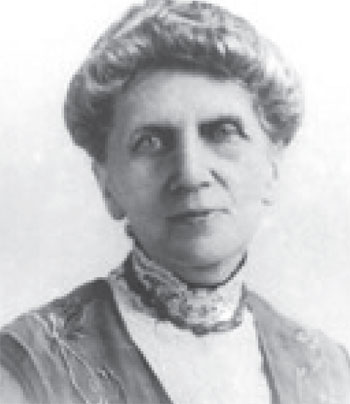
There were a few women during this era who stepped up and became activists to fight for women, better wages, the elimination of sweatshops and the formation of unions. One of those brave women was Rosa Perotta.

Rosa was born on Nov. 10, 1896, in the Russian Ukraine. When she was 17, she followed her older sister, Esther, to America to avoid an arranged marriage. Once in New York, she soon found work in a Manhattan shirtwaist factory and joined the International Ladies Garment Workers Union (ILGWU), Local 25. It was one of the most powerful unions of the era.

The union soon recognized Rose’s organizational abilities and enlisted her to organize the women garment workers. In 1915 she helped to set up an education department within the union and was soon elected to Local 25’s executive board. In 1933 she traveled to Los Angeles to organize for the union. Los Angeles was a traditionally anti-union city. She was persuasive, though, and met with great success, which ultimately resulted in her election as vice president of the ILGWU. This young anarchist was often sent to many fierce, antiunion factories and was the only paid woman organizer in the male-dominated union. She had to fight to get her voice heard within her union as well as outside. She was deeply committed to women in the workplace and that made her an outsider of sorts, which was something she had to deal with constantly during her career. Questioning male author ity within the union also eventuated in her being labeled as a “troublemaker.” It was completely socially unacceptable for women to be outspoken, leaders, or hold positions of leadership. Yet Rosa did all three.

She was the only “woman organizer” helping at the United Auto Workers strike in Flint, Mich., and at the Akron rubber workers strike in the late 1930s. It was her job to raise the morale of the strikers by working with the wives, daughters, and sisters. She often spoke at meetings of the strikers and led them in union songs. She also filmed the strikes with her movie camera, and the workers were eager to pose for her, thus increasing her familiarity with the strikers. Rosa played an important role in the Flint sit-down strike. She was involved in the negotiations and diligently supported the strikers. During this strike, thugs attacked and beat her, causing a lifelong hearing impairment. When the strike was finally settled, she was one of the CIO and UAW leaders who led the workers out.

In many cases women had subservient and powerless roles in the 1930s. Pesotta dared to step out of the role society gave her. She is one of the few women who made it past the bastions of male power in the 1930s and tried to instill her own brand of feminism into the labor movement. I think she met with some great successes. In 1944, she made the decision not to run for a fourth term as union vice president and returned to her old shop as a sewingmachine operator. She also wrote and published two memoirs, Bread Upon the Waters, and Days of Our Lives.

Margaret “Midge” Kirk is a slightly eccentric artist, writer, bibliophile, feminist scholar and hobby historian who lives in the SW corner of Colorado.

Published in Midge Kirk

Lavender fields forever

I for one am fascinated by the ever-evolving dynamics of gender identity. Being a human being is quite unlike being an NFL fan—it is possible for one person to encompass aspects of male and female and everything in between, whereas it is not feasible to like both the Broncos and the Raiders in the same lifetime.

Sure, I get confused by the proper grammar behind they/them/their as an individual’s pronouns. (Do they prefer a singular verb, for instance, or doesn’t they?) But I have also learned to explore the expression of my own inner being with curiosity and openness. I, like Whitman, contain multitudes. Perhaps I can also embrace the divine feminine and the divine genderless and the divine all-gender too, no matter where I grow hair on my body.

These were fun thought experiments. Then I went to a lavender farm and realized, nope, I’m just a guy.

Now I am not saying that flowers are inherently not-guy things. I’m just saying that lavender is inherently a not-guy thing.

Other flowers are more fluid. Take roses. A ticking time-bomb of a rose rests at the center of Beauty and the Beast, a princess movie targeted directly at the mothers who need Disney to watch their children for an hour and a half. But roses are also the emblem of the Rose Bowl, an annual sporting event participated in by dozens of 18- to 23-year-old males. And have you smelled the locker room at the Rose Bowl? I haven’t either, but it would likely benefit from some actual roses.

At least that’s what non-guys might advise. Guys have largely had their olfactory nerves singed to the nubs by their own bedrooms and other EPA-regulated environments. The only times we intentionally isolate and utilize our sniffers is to take a whiff of something certain to be foul, like an expired jug of milk or an unidentified substance that our dogs rolled in. We don’t sit around and have candle-smelling parties, and we don’t buy essential oils, and we are careful only to use the word “aromatherapy” sardonically.

Yet my sisters and I took my mother to a lavender farm for a landmark birthday celebration. I like the color purple. In my past explorations of self, I have even acquired a purple T-shirt. I’m also fond of violet. The lavender farm, however, carried the pale-purple motif to an extreme that would make Sesame Street muppets say, “You know what else starts with the letter P? Pump the brakes, please.”

But it’s not the color that’s so not-guy about the lavender farm. And it’s not the farm part, even though, in lieu of tractors, they had golf carts. I don’t know what it is. So I took it upon myself to study the people at this farm as an anthropologist. All the people who did not present themselves as guys floated through the ground in a gentle, euphoric high. And us guys—sons and husbands, all resigned to our tethered fates— resisted making eye contact or conversation with each other. In this way, it was a lot like standing at the public urinal, only with a pervasive smell we found mildly offensive.

We guys get accustomed to smells, like septic seepage and armpit odor, and we stop noticing them. But lavender’s scent is like a car alarm at 3 am. We can’t tune it out. It crests on us in waves. Even in the café, where we think we can finally get a bite to eat, every item is baked or steeped in lavender.

This was too much. The non-guys lingered over their lavender scones and their lavender teas and made no signs of ever going home again. And the guys? The guys all cracked.

I could see it. Two guys at a nearby table fidgeted with their cameras, clutching tenderly to some shred of technology made of metal and plastic, eager to go shoot some rocks or carcasses or anything but more lavender more lavender more lavender. And the man at the other table, buried under his impotence in this situation, burst out so loudly in the middle of his conversation that the entire patio heard him exclaim, “Cuban anal!” Then he quietly returned to his meaningless existence.

As far as I know, us guys all made it out alive. And no one has heard from the non-guys in weeks. They are probably still there, roaming the fields, clipping their own sprigs, dining on cake and testing every lotion sampler in a three-mile radius. And I am left to contemplate my multitudinous. Can I truly embrace the diversity of my existence if I cannot stand lavender? I don’t know, but it’s a good question for my aromatherapist.

Zach Hively writes from Durango, Colo. He can be read and reached through http://zachhively.com and on Twitter @zachhively.

Published in Zach Hively

Trees, water and fights

This Dolores River swimming hole shows the recreational use of water, when there is enough.

I think that I shall never see a poem lovely as a tree. This verse by Joyce Kilmer just brought some visual image into your mind, I bet! Now consider cooling water, you quench your thirst. Of all the drinks, I choose you first. Another image popped up, right? Now combine the two images and you have a babbling stream in a forest. These are two resources that are important to all of us. The different trees provide food and shelter for man and beast and the water is necessary to sustain the lives of the trees and man and beast. That all sounds like a symphony of life where all forms of life are in a symbiotic and peaceful existence. NOPE! Who would think those two would cause so many fights?

Nature is in a continuous struggle of life and death between plants and animals. They really don’t care about the other plants’ and animals’ needs, not even of their own kind. Nature is very selfish and cruel. Animals fight for their territory and food, birds do the same. Trees and flowering plants crowd out others. They all fight for water!

Where does man fit into this natural scheme of things? When man was created, he was made “above” the animals and birds and instructed to “tend” to the trees (that is an action word), not sit on his duff and wait to be fed while singing Kumbaya with the animals. Man was given the ability to reason and to manage his life while considering and using the animal and plant life. All went well for about a week or two and if you study any history, you know that man became more like the animals in seeking to dominate others and not interested in sharing in shelter, food or water, the basic necessities of life, or even the pleasures of life.

That brings us to today and the controversies over life and our environment. We are now at a photo point in time and seeing that we have flourished here in the Montezuma Valley, due to our ancestors’ hard work, sweat, and tears; developing the resources of lands, forests, minerals and waters to build a beautiful agricultural valley to feed themselves and others (that’s us) and enabled the wildlife to flourish beyond what existed before. Today we are seeing new “land and water wars” where recreationists want the water to boat on and the land to hike, bike or ride on. The recreationists don’t want to share the same land with other recreationists, and the environmentalists don’t want to share with anyone. The Front Range of Colorado wants the West Slope water. States of Arizona, California and Mexico want our water. Our agriculture needs water (lots of hemp and marijuana growing now), and some people still think they have to flush toilets and take showers. Who has first priority? Is there enough to go around?

I bring this all up after the past two interesting weather years. In water year 2018, I recorded 6.4 inches of total precipitation, a nasty drought! We all worried, but then this past water year, which started last Oct. 1, we had record snows and moisture of 16.5 inches by the end of May, only 8 months. Wow! We thought we were saved, we even had to release water out of McPhee for the boaters. Not so fast! The faucet got screwed down and we only had 0.76 inch in the next 4 months to end the water year on Sept. 30. Now we are starting off a new year with unusually dry soil in the forest and range lands.

This begins a new year of wonderment, will it be a dry or wet or snowy winter? We do not know and blaming California’s cars and Denver’s hot air does not solve anything. Our water supply will depend upon two principal things, the weather pattern and the vegetation on the ground. Trees are a big player in this, as too many trees prevent some snow and even rain from reaching the ground, and what does get down is immediately sucked up by the trees. Too few trees exposes the snow to high solar radiation and winds that evaporate the snow without even melting it into useable water. What you see is most likely not what you will get!

There have been many watershed research studies conducted here in the Southwest since the 1950s. We know that the forest watersheds need serious management of the trees and protection of the watersheds. We know how to do it, we just need to remove the blockades that have been put in place to prevent management over the past several decades. Is a New Mexico jumping mouse or a Mexican spotted owl or an environmental lawyer going to stop management works to enable Colorado to meet its commitment of water in the Colorado River Compact while still providing enough for agriculture and you to swim in and flush the toilet? I hope not! Work must be started now to develop more forest products industries to enable management and protection of the forests of the state to regain their health and produce the maximum quantity and quality of water possible. This all involves working the land and resources, just as our ancestors did before us in their quest to turn this dry dusty basin into the green valley we all love. All day I faced the barren waste without the taste of water, cool clear water…. And the song goes on, will we?

Dexter Gill is a retired forest manager who worked for private industry, three Western state forestry agencies, and the Navajo Nation forestry department. He writes from Lewis, Colo.

Published in Dexter Gill

This vote of mine

Well, it’s November. That means elections, football, and Thanksgiving. Off-year elections like this one tend to be tax-oriented. Of course the schools need more money. The schools always need more money. They ran out of the can-do spirit years ago, when the teachers’ union became powerful enough to lobby politicians into submission and they empowered themselves to control the purse strings. The truth, painful as it may be, is that public schools are a dying institution. The education industry is very selective when it comes to transparency over their financial matters. Artificial Intelligent robots are going to revolutionize the work force and teaching, as it currently exists, will be relegated to the dust bin of history.

Elections are where we decide who we give power to, who we trust enough to ensure our rights are protected. Most of us are familiar with Linda Ronstadt’s powerful vocal cords belting out her hit song, “Silver Threads and Golden Needles.” I have been humming that song, substituting the word vote for love in the refrain. You can’t buy my vote with money, ’cause I never was that kind. Silver threads and golden needles cannot bend this vote of mine. Who knows? Maybe it will catch on.

I have a bedrock Republican friend who is openly voicing the idea that she might vote for John Hickenlooper over Cory Gardner next year, as she felt Hick had done a decent job as governor. That should send chills down Gardner’s spine. My friend and I have been known to talk for hours when she calls, with the dominant factor revolving around politics. Both of us are disgusted with the national political parties and question the wisdom of constantly voting for the lesser of two evils. With that being said, I do not think Hickenlooper would be a game-changer. Should he prevail against Gardner, he too will toe his party’s line once he is elected. I recently read in the news where Hickenlooper was the beneficiary of a fundraiser hosted by an ex-Goldman Sachs executive in Aspen. The Denver Post ran a story that reported that Hickenlooper had eight billionaires backing his campaign. Hick might want to reprise that commercial he used in his campaign for governor, the one where he is taking a shower.

I can remember when Scott Tipton campaigned on not being a career politician and a fiscal conservative. On a personal level, I like Scott. He grew up here, so he does have a home-court advantage. He has been lucky in that the Democrats tend to nominate pathetic candidates, but luck can run out. Walker Stapleton, the Republican candidate for governor in 2018, serves as a clear example. Stapleton took it for granted that voters would turn out for him, plus he ran an abysmal campaign. Not very smart, and we wound up with Jared Polis as governor.

Governor Polis and his allies have been making comments about the failure of a recall against him. Seriously? The recall-Polis petition drive gathered just under 400,000 signatures in less than 60 days. Given the widely successful petition drive to place the issue of the Electoral College to the vote of the people. I would think a prudent person would be more circumspect. I know firsthand that all types of demographic groups signed both petitions. Republicans, Democrats, independents, young, old, black, Asian, Native American, and Hispanics signed those petitions. Not exactly the narrative that some media outlets portrayed. The people who signed those petitions may be a sign of hope that this country finds a way out of gridlock and our dysfunctional political parties.

This country has serious problems and the politicians are not the solution. They, along with their respective media corporations, are the problem. They have completely shirked their responsibilities to us. To steal a line from Bruce Springsteen’s song Youngstown, “we made them rich, rich enough to forget our names.”

Edward Snowden, in his recently released biography, Permanent Record, makes the case that the government is not the entity that is running the country. He writes, “sincerity of public service had given way to the greed of the private sector” and that government became the “client instead of the authority.” He goes on to say that surveillance capitalism has replaced the original intent of the Internet.

I, for one, believe this to be true.

All levels of government have formed public/private partnerships that have essentially created a subset of unelected, almost invisible networks that implement policies that tear at the heart of a Constitutional republic. Corporations, non-profits, and nongovernmental organizations are the de facto government, while the public is served up nominal choices of figureheads to choose from on election day.

Colorado author Tom DeWeese posted a speech he delivered to The American Constitutional Party’s annual dinner, titled “Growing Government Tyranny-Democrats Empower It. Republicans are Clueless.”

Zach Vorhies, Google whistleblower, has been instrumental in detailing the dangers that Google poses.

Peter Thiel in his Aug. 1, 2019, op-ed in the New York Times titled “Good for Google, Bad for America” provided another knowledgeable person weighing in on the dark side of omnipotent technology.

Individuals like Snowden, DeWeese, Vorhies, and Thiel are ringing the bell as loud as they can. Perhaps we should pay more attention.

Valerie Maez writes from Lewis, Colo.

Published in Valerie Maez

Getting better (can’t get no worse)

Where has Suzanne Strazza gone? She vanished. I need to be hearing about her f-ed up life so I can feel better about my own.

Well, glad you asked. Because I’ve been asking myself that very same question for nigh on two years now.

What. The F@#$. Happened?

Short version: my world imploded, I fell off the deep end, another shitstorm rolled through (like hurricane season in the Bahamas), I cried a lot, spent a ton of time wandering the canyons, and finally, finally, crawled my way back out of the abyss and here I am, so excited to share with you the gory details of yet another one of my epics.

That’s right, Suzy Epic is back.

So, to catch y’all up, and for your reading pleasure, I have comprised a list of a few things that have happened in the last two years:

One day, I got a horrendous concussion.

After spending most of the next day in the CT Scan, my partner of seven years decided to no longer be my partner.

He decided to be someone else’s partner… one of my close friends.

I got giardia. Between that and the divorce diet, I lost 17 pounds.

We had to find a new place to live. I told my three (almost adult) boys that if I got a place big enough for all of us, they had to stay with me. Or, they had to move out now. Empty nest.

Went from living with four almost adult boys (including the now ex partner) to living alone.

Gave up 14 chickens, 10 pigs, 2 horses, a dog.

Lost a bunch of friends.

Gained a bunch of friends.

Three weeks into the breakup, my son got shitfaced and ran his truck, wherein three of his friends were riding, into a cottonwood tree.

Turns out that cottonwood trees are immovable.

He faced 15 years in prison; the other kids faced permanent disabilities.

I learned more than I ever wanted to know about the court system.

And, just in case I missed something, their father tried to take me back to court (10th time) to get out of paying child support. I just let him have it. I couldn’t bear standing in front of my son’s judge airing our dirty laundry, possibly influencing the judge’s decisions in my son’s case.

In hindsight, the judge probably would have looked on my son with deep pity after seeing his parents in action.

“Poor kid – I’d drink, too.”

I found a house in Mancos. My boys found a house in Durango.

Moving day saw me lying in a sobbing heap on the kitchen floor while my friends stepped over me packing up my life.

Work at the time mostly saw me lying in a sobbing heap on that kitchen floor while my co-workers stepped over me doing my job.

Blind Mom got lung cancer, which landed her in the Florida hospital for 10 days, which, in turn, landed me in said hospital for 10 days sleeping in her bedside chair adjusting pillows at 3 a.m.

Then Dad got sick – heart and lung – and was in and out of the same Florida hospital for the next year and a half, landing me right back in the vinyl-pillow-fluffing chair. Spent enough time there that I developed a lasting friendship with the persnickety, gay, Cuban, male nurse who gave me skin care advice. I read self-help books.

I wrote affirmations on my mirror. : “You will get through this,” and “You are strong. You are beautiful,” and, “Don’t pick at that zit on your nose.”

I read Buddhist Books.

I bought Tibetan Prayer Beads.

Burned incense.

I picked the zit on my nose.

Since I was going to Florida every six weeks, I seriously considered escaping to Florida permanently, but not while my child was still in line for the State Pen.

I grew seven new gray hairs.

I then cut off my hair because my father, on his deathbed, begged me to.

I know, a little weird.

Who knows, maybe I’ll too be worried about my hair when I am on my deathbed.

Who am I kidding – I don’t even own a hairbrush.

I met a man.

I fell in love.

I had sex again. Finally.

I’d worn out my vibrator. It served me well.

My best cat ever died. I kept him in my freezer for a while undecided about what to do with his body.

I learned that a dead cat’s body floats.

I went on the river with my amazing new boyfriend, and put a hole in his boat mere hours before my wretched little dog bit his sweet little boy right in the ass.

We are still together.

Go figure.

The guy’s either a saint or a fool.

Then, one day, an internal body part showed up externally. My Ladybits were now coming unhinged.

Because me coming unhinged wasn’t enough.

I was told that I had to have major surgery.

Called my mom the next morning to tell her and caught her just as she was finding my father dead on the kitchen floor.

No, I am NOT exaggerating.

Can’t make this shit up.

Went to Florida and immediately broke out in a rash. Down there. After visiting my frozen father in the funeral home, I went over to Urgent Care to find out that not only was I having a reaction to my own Ladybits, I was also having a reaction to my father’s death and I had…

Wait for it…

Shingles.

“Maybe it’s stress-related.”

Ya think?

Went to the surgeon and heard words like, “WOW,” and “Severe,” and “No one should ever see their own cervix.”

No one should ever hear those words.

I gave up work to get off my feet. Got to call my freshly widowed mom to ask for money.

Reached an all-time low.

Then I gave up my brand new sex life.

Work I can live without. But this? This was just unfair. Plain and simple.

My other cat vanished. Not a trace. I haven’t gone looking for her because I’ve been afraid to actually find her sweet fat body.

I had surgery. It was f—ing rough. Recovery has been f—ing rough. I have now spent three months on the couch.

I lost all muscle but gained a pooch.

But, the good news is that I have recently been cleared: Cleared to go back to work. Cleared to start exercising. Cleared to have sex.

The same day I was cleared, my sons and I drove to Idaho for 36 hours to meet my family and scatter Dad’s ashes, putting closure on that chapter of our lives.

And with that, I am hoping that I have now put closure on the entire two-year debacle.

Track record doesn’t have Suzy Epic holding out much hope, but…

Fingers crossed.

Suzanne Strazza is an award-winning writer living in Mancos, Colo.

Published in Suzanne Strazza

Hypothetical inhabitants

A few weeks after the Mars InSight touched down on the red planet’s surface, I clicked an audio link that captured 2 minutes and 27 seconds of a Martian wind. The idea of opening an electronic window and listening as a breeze at least 33.9 million miles away nuzzled NASA’s robotic sensors initially appealed to me, but in less than a minute I started getting bored. The recording was not so different from what I hear any day when the wind is blowing outside my earthly window.

Will boredom be our species’s salvation? Charles Darwin wrote, “Building a better mousetrap merely results in smarter mice.” He might have been thinking about our destiny. He also observed, “The world will not be inherited by the strongest, it will be inherited by those most able to change.”

And we are changing, but for good or bad I’m not sure. A Microsoft Corporation study found that since the turn of the millennium our average attention span has reduced from 12 seconds to 8 seconds. I can corroborate this finding. My paragraphs keep getting shorter.

But the science of measuring attention spans has also been questioned, and with good reason. A headline like “You Now Have A Shorter Attention Span Than A Goldfish” generates shock value, but the data lacks credibility. Aside from floating belly-up, how many ways can a goldfish express its lack of interest?

Is the earth changing? Whether you believe polar ice is melting, or that earth’s ozone layer is receding faster than my hairline, is not the point. It’s more important to note that a growing number of human beings are getting bored with even hearing about climate news.

Once my father’s admonishment when I complained of boredom was, “There are no uninteresting things, only uninterested people.” A rather uncharacteristically thoughtful remark from my father. When I found out he stole that bit of wisdom from G. K. Chesterton I finally understood why he usually told me to go read a book.

But really, I did make an effort to listen to the entire wind recording. I even closed my eyes and tried teleporting to the planet, as if Martian ghosts gentled by immeasurable time might start whispering to me. Mind you, I’m not saying I discovered life on Mars. NASA isn’t saying it either. But that sound bite established some sort of bridge between our planets, reducing the imaginative distance that divides our worlds.

Ray Bradbury’s The Martian Chronicles evokes the tragedy of conquest, earthlings fleeing one doomed planet for the sake of infesting another. Throughout the novel remnants of Martian civilization speak to the colonists in haunting voices, reminding them in both touching and horrific ways of what’s been lost. Bradbury’s book is fiction, of course, but told in such a way as to jog our memories, which also appear to be getting shorter when it comes to avoiding the colossal mistakes we have historically made.

I can’t imagine anything more odious than volunteering to commute to a different planet for the sake of colonization. It would take at least half a year to reach Mars and a mountain of in-flight peanuts. Some people might say it makes more sense to take the same interest in our own planet’s welfare, to commit to the notion that the earth is a finite resource, that human beings themselves are increasingly becoming a disposable commodity. If we are merely bored with our globe, revitalizing and reinvesting in our human curiosity is a worthy goal. Certainly NASA research has benefitted humanity with products that don’t require us to occupy a space station or another planet to reap their benefits. But dismissing what science tells us about what’s happening to the earth is folly. All our nifty little gadgets, like the fidget spinner fad, only occupy our fingers. Have we forgotten how to actually see with our eyes?

Admittedly, we’ve been fascinated by space exploration for a long time, from Jules Verne’s vision of shooting a missile at the moon to the great space race between Russia and America that spawned Sputnik. Rockets ignited and tempers flared. Astronauts became heroes for putting their lives on the line and venturing into the unknown. But we need another kind of hero, one blessed with the insight to explain what Mars reveals about our role as caretakers of this planet.

Stepping out to the porch in the evening, I stare at the sparkling heavens and nothing thrills me more than noticing that my feet are both firmly planted on this bedrock, this hearth, this home.

David Feela, an award-winning poet, essayist, and author, writes from Montezuma County, Colo. See his works at http://feelasophy.weebly.com/

Published in David Feela

The true Trump

Regular readers of the Four Corners Free Press have probably wondered why they haven’t heard from me in a while.

Well, I was on special assignment to dig up dirt on former Vice President Joe Biden. I planned to give the dirt to President Donald Trump in return for a one-on- one interview.

But where to look for dirt on Biden? I checked his driveway, but it was paved. Not a speck of dirt to be found. Next I managed to watch his fingers during a Democratic debate. No dirt under his nails!

Finally I turned to my mysterious new Twitter friend, Pierre Delecto. I don’t know much about him, other than that he seems to really like Mitt Romney for some reason. But Pierre Delecto gave me a lead to follow up on.

I checked the tread on Biden’s tires and I found dirt. And you know who else has dirt?

UKRAINE!

Bingo, bango – proof of Biden’s Ukraine tango.

Next thing you know, ol’ Jed’s a millionaire … oh, wait, wrong story. Being a stable genius, Trump recognized the importance of my evidence and, in gratitude, sat down for an interview.

JCH: Nice to meet you, Mr. President— Prez: Quiet, I’m watching Hannity.

JCH: You’re the greatest president ever. Much better than that guy from Kenya.

Prez: (Turns off TV) Finally, someone that gets me!

JCH: What’s happening with this Ukraine probe?

Prez: It’s a witch hunt! This whole squid-pro- crows stuff is fake news! It doesn’t even make sense – why would a squid be in favor of crows?

JCH: Do you plan to pardon a turkey this Thanksgiving?

Prez: If I have to, but they don’t have anything on Rudy. Rudy is America’s mayor, he’s much more bigly respected than Shifty Schiff or Pocahontas.

JCH: Isn’t that racist?

Prez: I’m the least racist person you’ve ever met. My housekeeper, Margarita or Tequila, or whatever, she says, ‘Sir. thank you for hiring me’. She respects me so much, every time I walk past her she whispers ‘muy gordo’. Many people tell me that means I’m great.

JCH: Do you pay your housekeeper the minimum wage?

Prez: As minimum as I can. I give her $1.25—

JCH: An hour?

Prez: No, no. That’s her weekly take-home. I might raise her pay to $1.50 because she keeps my house so spic and Spanish.

JCH: But that salary is niggardly.

Prez: You said it, I didn’t. I don’t use that kind of language. Besides I would never pay a niggard that much.

JCH: Um, no. Niggardly means cheap.

Prez: Oh, niggardlies are cheap. They just want everything handed to them. But they’re not the worst. Try leaving a Chinese restaurant when you’re a penny short. Some karate kid will chase you with his numchucks!

JCH: Some people feel like you lack empathy, like the time you mocked a disabled person.

Prez: Well, only namby pambies think like that. Not real Americans. Besides, that wasn’t a person, it was a reporter – and they are the enemies of the people. When the Fake News writes something bad about your president that should be treated as treason. Fake News people should all be locked up and executed.

JCH: What about the First Amendment?

Prez: I believe in all the commandments.

JCH: But you’ve broken most of them.

Prez: The commandments are just suggestions, it’s not like they are written in stone.

JCH: Finally, Mr. President, what do you say to the people who claim that you tell too many falsehoods?

Prez: Go covfefe yourself.

John Christian Hopkins lives in Sanders, Ariz., with his wife, Sararesa. He is a veteran journalist – but never an enemy of the people – and a former nationally syndicated columnist for Gannett News Service. He is the author of many books, including “Carlomagno: Adventures of the Pirate Prince of the Wampanoag.” He is a member of the Narragansett Indian Tribe of Rhode Island.

Published in John Christian Hopkins

Responsible food-sharing

When my husband found mold growing on the top of my recently sealed jar of apricot jam, I had to implement a product recall. I can’t remember everyone I gifted with apricot preserves. You know who you are if you are reading this… toss it and send back empty jars. Common wisdom says the mold won’t kill you, just scrape it off and eat the rest. But in this age of food sensitivities, it is probably better not to test that theory.

In my quest to be a responsible local food custodian, I am constantly searching for ways to use and preserve this year’s bountiful harvest of fruit and veggies. Personally, I am buried in small but very tasty tomatoes. Many folks are afraid of water bath canning – even though they may have helped your father or grandmother with it. One of the current foodie trends is small-batch canning. You can buy a kit with everything you need and instructions for $49.99 from Amazon. It is much cheaper to raid the thrift stores for flawless jars and purchase new lids and rings at the supermarket. It is even possible to can in an insta-cooker.

While it is a simple step-by-step process, it is important to keep everything clean and sterile. Clean jars, new lids, clean rings. Keeping everything hot is easiest – though it makes canning warm work. Like baking, we must adjust for altitude and boil the jars for extra time. Also, as I found out, following every step of the directions helps, too.

I thought sugar was a preservative and I could forgo the water bath with apricot preserves. It’s in the name after all. After hanging out in front of Bessie White’s stand at Farmers Market on Saturday, I finally figured out what I did wrong. Bessie said it sounded like the jars didn’t seal, and a helpful shopper asked if I boiled the lids before putting them on the jars. I answered, “why, no, I used brand-new lids right out of the box.” She kindly pointed out that in addition to sterilizing the lids, the boiling process heats the lids so the soft (silicone?) part of the lid can easily mold to the jar top and seal. Eureka! I am a chemical engineer, not a biologist or mechanical engineer. It never occurred to me that heat would help with the sealing process.

For me, the key to responsible food sharing is labeling. Clearly (and legibly) labeling the food item makes it much easier for the recipient to use a food share. Some items to include on the label are:

  1. Name of food product (apricot preserves)
  2. Ingredients (apricots, sugar, pectin, lemon juice)
  3. How processed (hot pack)
  4. Date processed (nice to include a “use by date”)
  5. Name of kitchen (in case of product recall)

When receiving a gift of home-preserved goods – if not on label – ask the labeling questions. If sharer is reticent, feign interest. Try asking, “What’s in the secret recipe for rhubarb BBQ sauce?” It is also helpful to evaluate the potential cleanliness of kitchen. It is possible to base this on the state of the food sharer. My kitchen is very clean but I am a free-form and exuberant cook as reflected in my clean clothes but stray hairdo. When opening home-canned goods, you should hear a satisfying pop as you pry off the sealed lid. It is a release of a vacuum. If there is a fizz or blast outward or if the lid or storage container is bulging – toss it. Tomatoes are the toughest to preserve with the water bath. As a combination of sweet and acid, it can be difficult to determine the length of time needed to kill the nasties with a water bath. My advice on a gift of homemade salsa, is to use immediately or to keep jars in fridge (even before opening). However, if you have any question on salsa or tomato sauce – toss it. Applesauce, on the other hand, is hard to mess up and will probably keep for a lifetime Overall, homemade canned goods are best if eaten within the year though they can last much longer – do you feel lucky? I am sure our grandparents think we are all germ-o-phobes. But, there are some new nasty bugs that did not exist when they were canning regularly.

Freezer or dried foods are a little easier to evaluate because you can use your eyes and nose. When receiving a gift of meat such as frozen package of ground deer or a fresh trout, it is perfectly fine to ask questions. Hunters love to relate the story of the chase and you can learn some helpful information. When and where killed? How was it handled? Field-dressed? Who butchered it? Was the meat cold the whole time?

If an archery hunter tells you the story of how she got her elk on Labor Day weekend, you might remember that it was in the 90s outside and it was hard to keep the meat cold unless she took great care. Again, meat is easier to evaluate. It will look and smell unappetizing.

While it is best to eat venison steaks rare, I advise only doing this with meat and/or hunter you know well. Just cook the crap out of the ground meat. No worries, mate! After reviewing a bunch of YouTube videos on how to cook moose, I realized that there was a consistent theme among the men showing off their cooking prowess in front of the camera. Just add a can of beer and boil the crap out of it, no matter the cut or the type of meat. It certainly has safe results. Although the taste depends how much of the beer ends up in the pot.

Finally, you don’t have to get poisoned to appreciate the effort and love that went into a jar of apricot preserves. They make pretty kitchen décor until they start molding.

Carolyn Dunmire is an award-winning writer who gardens and cooks in Cahone, Colo.

Published in Carolyn Dunmire

Stumped

Allow me to start by saying that I am not afraid to get my hands dirty. I made mud pies once, same as any other kid. I took money — money that our family dog had eaten and fully digested before my mom washed it and put it in plastic baggies so I didn’t have to touch it — to the bank once, same as any other kid. I have even gone so far as to live with other males in a college dormitory.

Getting my hands literally dirty makes me feel manly and accomplished. Fearless and grounded. But getting my hands figuratively dirty? Let’s just point out that I was an English major for a reason, and that reason is power tools.

I never bothered to learn to operate power tools as a young adult. I saw no reason. I could fix any household problem by reading a book and traveling into other worlds and other lives until the problem resolved itself and/or we moved away. Ever since, that method has been my most reliable approach to both home maintenance and personal relationships.

But no more! I have decided that enough is enough, and I must learn things like how to replace a faucet with nothing more than my hands, my wits, a cordless 18-volt reticulating saw with LED light and lithium-ion battery pack, and a growing awareness of how expensive a house call from a plumber can get.

In case you have never replaced a faucet with nothing more than your hands, your wits, and a cordless 18-volt reticulating saw with LED light and lithium-ion battery pack, but you are considering doing so, then I also recommend wearing rubber gloves. These are especially necessary if the hair in the drain does not, and did not at any point in memory, belong to you. I have broken leases over lesser issues than drain hair. Stephen King wrote It, in fact, because hair clogs were too scary. This is more than getting your hands dirty; this is suffering contact with a visceral substance with the power to lock you in an eternal time loop where you never untangle yourself from the hair under your sink.

But untangle myself I did, and so emboldened was I from my triumph that I decided I could build my own house — one without drains at all, probably! Or at least I could retile the bathroom. But before taking such major steps, I deserved a break.

So I taught my dog how to swim.

We are all new to something at some time. Sure, I had to learn the difference between a blade for wood and a blade for metal for my cordless 18-volt reticulating saw with lithium- ion battery pack. But I loved that saw from the moment the man at the hardware store explained why I needed it for any and all of my home improvement projects.

Hawkeye too loved the water from the first time he set paw in it. I could not judge him for his process of learning to swim, no matter how much he swam like he was competing in a fifth-grade prep-school slap fight, and no matter how shockingly he resembled an oversized, underfed rat when he emerged from the deeps. Because he was happy, and hanging at the lake sure beat caulking the bathtub.

We returned to the lake again, and again, and Hawkeye’s best friend (non-human division) taught him how to swim with a bit more grace, and all was well with the world, and then Hawkeye ran into a driftwood tree stump.

My best friend (non-dog division) said — and I quote, omitting the words not permitted in AP style — “Oh.” Hawkeye’s back leg was not dangling loose like a half-eaten carnival turkey drumstick, which is what I imagined upon contact. But he did have a four-inch piece of driftwood tree stump in his side.

I, being unafraid to get my hands dirty, left the wooden stake in place to search for other injuries. My friend said, “Hold his mouth,” which I did, being now completely certain my dog was not a vampire. She yanked the mega-splinter from his side. I said — and I quote, omitting still more non-permitted words — “Holy.”

Somehow, Hawkeye did not bleed out everywhere. This was helpful, because I am an English major for one other reason, and that reason is blood. Nor did he use it as an excuse to go get ice cream. Instead, he soldiered through while wearing a protective t-shirt. The lake was forbidden for several weeks, so I returned to housework, and whilst I was shoveling gravel, Hawkeye tore out his own stitches.

Fortunately, he had healed well, so he simply spared himself a return visit to the vet. I suppose we both have more of a doit- yourself vibe than I ever suspected. But it’s good to be prepared, and if Hawkeye had injured himself further, I was ready. I always have a stack of good books waiting here, right next to the saw. Just in case.

Zach Hively writes from Abiquiu, N.M. He can be read and reached through http://zachhively.com and on Twitter @zachhively.

Published in Zach Hively

Saying goodbye to a good fed employee

MATT ZUMSTEIN … It was a fitting tribute to the sound management skills of U.S. Forest Service’s Matt Zumstein that one of his last actions as the Norwood District Ranger was a successful controlled burn treatment – planning, getting prepped and taking advantage of a short wind-less weather window to make the Uncompahgre National Forest safer from wildfires … Not to mention his defense of San Miguel County’s Via Ferrata. His good relations with the ski and tourism industry in Telluride. Or his exemplary treatment of the Rainbow Family members when they held a regional gathering up in the Beaver Creek area … He’s moving on to a bigger district in California, not far from where his extended family lives. We wish him well. At a time when many people are leaving federal public service, it’s nice for us out here at the grassroots to be able to let his DC superiors know – he did a good job.

STEWART S. WARREN … This wonderful Colorado poet performed all over the region, wrote poems, organized the Festival of the Imagination in Del Norte for several years, designed books for many a poet with his Mercury Heartlink Publishing house, and is now in hospice down in Silver City, New Mexico. Rosemerry Wahtola Trommer, Western Slope Poet Laureate emerita, wrote AN INNER ALCHEMY — the following elegy — “for Stewart Warren, now in hospice.”

AN INNER ALCHEMY … It was the early 2000s. I was in Del Norte as an emcee showing movies for Telluride Mountain Film on Tour. From the stage, I could see in the dark audience a man who was almost beaming. He had “that light” about him. Did I know him? I wanted to. After the show he came up to say hi … “Are you a poet?” I asked him. Why? Some hunch … He nodded and tilted his head to the side. “Yeah.” That’s a word that when Stewart said it had three syllables … Over a year later, Stewart Warren admitted to me that he hadn’t written many poems at that point. He was a drummer, but he had a poet heart. That was easy to see. At the time, I needed poets who were willing to travel and teach in the schools, and he was gloriously game. I invited him to Telluride, and he had the kids drum on the desks and write. He was equal parts goofy and glamorous, childlike and ageless, playful and profound … After that he came here many times to teach, to perform, and many times just to help me with programs. He’d dress up in a sport coat and jeans and he’d be my right hand man, helping with details, making everything easier, smoother, more fun. One tricky thing: I’m a tea drinker and he disliked tea, called it “pond water.” After many visits, he finally showed up with a new coffee maker, the one I still have. “I know that all the poets who visit here in the future will be grateful,” he said … And isn’t that Stewart—the one who jumps in with a devil-may-care grin and a plucky “yeah.” The one who, when given a big pair of shoes, finds a way to grow himself into them. The one who turned his own difficult story into a life of helping others share their stories. The one who relentlessly continued to learn, to push himself, to inspire. The one who thought of what others would need, and then gave it. The one who brings out the best in others because he dares to bring out the best in himself September cottonwood just before the barren time turning itself into gold Stewart, poet, drummer, partner, friend, web-master, tech-guide, word-sharer, heartopener, I am a much better me because of you. Thank you. Thank you.

WHAT’S MISSING? … In the history of colonial independence movements, the U.S. Constitution, along with its expanding Bill of Rights, is respected – even revered among many of us. Personally I consider it a great privilege to be counted among its citizens … But after having the opportunity to learn from indigenous wisdom sources and anthropological studies, I think we’re missing something: A Bill of Responsibilities … Checking my Medicare supplemental Part D Prescription Drug policy the other day, I open up Silver Script’s new 152+ page “Evidence of Coverage” manual (Jan. 1 – Dec. 31, 2020) and come upon Chapter 6: “Your rights and responsibilities.” This health-care provider understands that every freedom implies a tolerance to its exercise in others and the duty to live within society’s limits … When one gives assent to (or perhaps is luckily born into) American citizenship, we ought to be exposed at some point in our lives to a Bill of Responsibilities. Yes, taxes, jury duty, obedience to the law (with the right to dissent but the responsibility to endure whatever punishment the state hands down for your disobedience) … But also a raft of things, like a good neighbor ethic; a willingness to tolerate the exercise of legitimate rights; and if you’re able, to work for the good of the community you live in … I want to see someone run for President on a Bill of Responsibilities platform.

HEADWATERS 30 … At the table next over, they’re talking about Snowden’s interview on NPR for his new book. His willingness to make his case in a U.S. court, if they’ll let him defend his decision, unencumbered … Martin Pinnecoose’s Praying stands outside the museum at Western Colorado University. The sculpture’s dazzling in its delicacy … Dr. John’s personal practice – meditation and a haiku for the day … Alan Wartes outlines mindfulness for the students. In the Gourd Circle Sunday, more than half explain how important that concept was to them … Joel Clement joins the Gunny climate march before his talk – even as a whistleblower, fired for upholding science, he encourages kids to join the federal government and work within the system … Climate change is a word bomb. A grenade thrown into the public square. We can jump on it. Smother the blast with our bodies. Make Kevlar excuses, protecting others from the truth. Pretend we don’t see the meteor approaching. Or we can accept a course correction. Reimagine what it means to live — not just on the planet, but as an essential member of Gaia’s blue fabric.

Art Goodtimes writes from San Miguel County, Colo.


THE TALKING GOURD

River Bend
for Rosemerry & Eric

In driving
down to River Bend
all you can see
are the chamisa blooms
of rabbitbrush
(Ericameria nauseosa)
hedge-high
lining the driveway
Trumpeting their golden horns
ad nauseam

Published in Art Goodtimes

Why try?

It is all in the news! The forests are dying and burning, followed by snow avalanches and then flooding, then it’s droughts and no water. The screams go up: DO SOMETHING! So the Forest Service in Arizona and New Mexico started some forest thinning and watershed improvement projects to deal with the complaints and actually start to do some real conservation action. Well, let’s not let any good deed go unpunished! It was reported that on Sept. 19, 2019, a federal judge in Tucson, Ariz., put a stop to the forest conservation and fire prevention works on ALL National Forests in New Mexico, and one in Arizona. Why? Well a tax-exempt corporation in Santa Fe, N.M., called “Wild Earth Guardians” claimed that the Forest Service had not adequately provided recovery plans for the Mexican Spotted Owl, under the Endangered Species Act.

Here we go again! Tax-exempt corporations are being paid to stop management, protection and improvement of the public lands and resources, including water and local economies. This is all done under the bogus “Endangered Species Act” to gain control of the federal lands without any cost or responsibility for them. The costs and losses are all on the taxpayers and states. In this case, the Mexican Spotted Owl was the magic trick pulled out of the hat to stop conservation and protection. Like all other so-called “threatened or endangered species,” no one knows how many Mexican Spotted Owls there are, or if they are growing in numbers or decreasing, or really even where they are. Are they really endangered, or are they a climax species that just continues to exist in varying numbers as conditions around them change? They claim they must have “old-growth” ponderosa pine forest to exist. However they are found in total second-growth forests with no old growth present, hmm. I would allege that the species is actually an “invader” species from Mexico, expanding into the Southwest United States where better managed forests are available. Where is this going? Well, hang on!

Why are states east of the Continental Divide not plagued with the enviro corporations shutting down management, use and protection of the state and private forests due to some bird or bug that they know nothing about? Answer is, they are not “federal” and thus not controlled by the federal swamp and Congress. Did you ever wonder why there were 13 small colonies established, and not just one larger one? Did you know that it was a real struggle to get the 13 colonies to pull together to make the revolution happen? After the revolution, why were there 13 separate and totally sovereign STATES established and not just ONE state/country? Why did the new Constitution specifically limit the soon-to-become-established federal body to have limited, few and well-defined powers and authority? Well, short answer is, the Colonies were all of differing ethnics, faiths, values, etc. (birds of a feather flock together). The Constitution was designed to ensure their separate sovereignty would continue in perpetuity as individual states comparable to existing “states” in Europe but bonded together for protection and economic opportunity.

What has happened that the western states are now being controlled by tax-exempt non-governmental organizations? Simple answer is that after 1860 the power-limited federal entity usurped power and limited the power of any new states by not fully establishing them as sovereign states with control of all the lands and resources within their boundaries. The end result has been that we have a federal “state” within the Constitutional State. The federal “state” controlled lands contain 80 percent or more of our critical watersheds, minerals, forests, range and wildlife. Are you getting the picture? The federal Congress passes laws controlling the lands and environment on all the federally controlled lands, and private land if federal monies are involved. The proposed laws are written by the tax exempt non-governmental groups for their special interests, not the interest of the states or even the environment. Passage of the Federal Lands Policy & Management Act in 1976 and then the National Environmental Policy Act provided means for the taxexempt non-governmental organizations to sue the federal land agencies and stop any land and resource projects for any claimed non-compliance with an environmental law, regulation or procedure that the organization does not like. That is what is happening now in the court litigation mentioned above in New Mexico and Arizona. It happens regularly in Colorado and locally on the national forests. All because past and current Congresses have failed to comply with the Constitution they swore to uphold, beginning at statehood, and continuing.

Is there a solution? Actually there is, but like anything worthwhile, it will not be easy or quick. It involves the state complying with its own Constitution by recognizing that the county governments are the governing authority and arm of the state on all matters within the counties and to be supported by the state, not controlled by it. The state must petition for constitutional compliance with statehood compacts to complete the transfer of the unappropriated lands at statehood, to the states’ control. The naysayers will have apoplexy over this I know, because they prefer to be ruled over and taken care of by a federal government so they don’t have to be responsible for themselves. The other option is to do nothing and be content with being controlled by non-governmental entities and ruled by the federal government. All that is needed for evil to prevail is for good men to do nothing! Is it worth trying?

Dexter Gill is a retired forest manager who worked for private industry, three Western state forestry agencies, and the Navajo Nation forestry department. He writes from Lewis, Colo.

Published in Dexter Gill

A Colorado storm

Everybody wants to talk about the weather these days. Especially as it pertains to climate change. A more honest discourse would entail a serious discussion about the movement of Earth’s magnetic poles and the consequences of not mounting an allout effort to establish viable colonies off planet. I will save that for a future column. However, it does not mean the end of the world is near.

Tim Alberta, chief political correspondent for Politico, has recently released a book called American Carnage. If you take the time to read the entire book, you will discover that the title holds multiple meanings. The book is free to borrow from your local, amazing library. One of the basic points is the feeling that Donald Trump was elected by a large section of Americans who feel betrayed and disaffected by politicians.

It was in the mid-’50s and early ’60s that set into motion a series of events that to a large degree set the stage for today’s fractured society. Some analysts believe it started as early as Woodrow Wilson’s administration, but I think it was the advent of television that was the catalyst that catapulted our society on a collision course. In a previous column, I wrote about Marshall McLuhan’s predictions of the medium being the vessel, and how it could be manipulated for the benefit of society, or to its detriment. With the advent of today’s technology, television seems quaint in comparison, but it was television that first brought mass visual communication into a majority of American homes. With that, national campaign movements were born.

The threat of overpopulation of the Earth, given the fact that it is a finite space with finite resources, is hardly a new subject. It was in the mid 1950s and early 1960s that forward-thinking Americans began to address the issue in meaningful ways. Sen. Prescott Bush, who served as a United States Senator from Connecticut from to 1952 to 1963, was instrumental in focusing attention on America’s burgeoning population growth, and the establishment of Planned Parenthood. The conventional thinking was that if America was to leave a high quality of life for future generations, our resources needed to be conserved and all overall population growth goals should reflect that. The Rand Corporation published numerous influential white papers on the threat of overpopulation. It seemed logical.

In the ensuing years America would spend a fortune on foreign aid, education, and good will throughout the world. She sent her sons and daughters abroad through President Kennedy’s Peace Corps, followed by the Vista Program. America passed a wilderness bill to ensure good resource management for the future. To live up to our belief that all men are created equal, America passed civil rights legislation to address obvious inequalities. It seemed that as a nation, we could do no wrong. Fast forward to today, and in the words of one songwriter, “look what they’ve done to my song.” To think that the best intentions in the world have been turned upside down would not be wrong.

Cordelia Mellon Scaife May was one of the wealthiest people in America in her 20s, when Prescott Bush was at the apex of his career. She would use her vast wealth to be a force in both the population control movement and a nascent environmental movement. Wealthy East Coast elites have always had eyes on the United States’ open Western lands. The western United States isn’t a gentle environment and it has definitely become ground zero for cultural conflicts involving increasingly aggressive and authoritarian government managers and the people who inhabit the land.

Government policies of globalization, immigration, environmentalism, and national debt that is 105 percent of GDP, that politicians have recently championed seem to be diametrically opposite of what was originally proposed.

A local perspective of cultural conflict can be seen in the Rose Chilcoat/Zane Odell saga at the so-so corral in Southeastern Utah. Cliven Bundy went to jail for his principles in the conflict of livestock grazing on public lands versus over-reaching environmental activists. Eventually, Bundy prevailed, and is widely viewed as a man that was wronged by an aggressive environmental agenda. Zane Odell took the fifth when legally confronted by his actions, and has a history of cattle trespass. Rose Chilcoat’s action as an unelected and somewhat unaccountable activist also deserves scrutiny. The most interesting aspect of this conflict is whether Chilcoat’s attorney will be successful in stripping immunity from prosecution away from government entities that aided Odell’s cause.

Another local conflict would be the attempt by environmental activists to change the status of public land previously determined to be ineligible for wilderness classification in an effort to provide wildlife migration corridors from high elevation to lower canyon habitats.

At Congresswoman Dianna DeGette’s one-sided town hall meeting, a retired BLM employee, Chris Barns, advocated for the change in status by dismissing the previous vegetation study as “old” and that his study represented a more “thoughtful” approach. The Wilderness Act, that is the basis for criteria, is seven pages long. It clearly states that multiple uses specifically include grazing and mining interests. Another factor that determined the area in question as ineligible for wilderness inclusion was acreage size of the various parcels. Mr. Barnes is simply wrong, and it is worth noting that some of his previous work has been deemed legally inadmissible due to his methodology.

Movie director Sam Peckinpah saw the West as a violent, tragic landscape with misplaced innocents at the mercy of interlopers. A Kris Kristofferson song about Peckinpah captures that allegorically. An old gunfighter is ambushed by a younger man who shoots before calling him out. The old gunfighter congratulates him on being the new Mister Me, while offering the insight that he blew it.

Yet the citizens watch silently while chronicling the history of the West; clean up the carnage, and contemplate what to do about a generation of failed leadership.

Valerie Maez writes from Lewis, Colo.

Published in Valerie Maez

The first lady of libraries

CAROLYN MARIA HEWINS

Carolyn Maria Hewins

Caroline Maria Hewins was born in Roxbury, Mass., on Oct. 10, 1846. Her father was a wealthy Boston merchant who provided a comfortable home for his wife, children, and an extended family of aunts, uncles, and grandmothers. She was the oldest of nine children and was often called upon to care for her siblings. She was reading by the age of four and her love of reading only increased as she read folk and fairy tales, English classics and stories from Greek, Roman, and European literary collections to those siblings.

Her childhood education consisted of private schooling at home, before attending Eliot High School. After receiving her high school diploma, she attended the Girls’ High and Normal School in Boston, where she graduated, although at first she described having some difficulty adjusting to her new educational environment.

After graduation, she was hired to do Civil War research for the Boston Athenaeum. This is where she received her brief library training, learning sound bibliographic practice while working for one year under William Frederick Poole (American bibliographer and librarian). She states that during this time she learned about the innerworkings of the library and how it was managed and funded.

Caroline left the Boston Athenaeum to take a job as librarian at the Young Men’s Institute of Hartford, where she was employed from 1875 until her death in 1926. When she was hired at age 29, the Young Men’s Institute was a subscription library with 600 members, housed in the Wadsworth Atheneum. It was a private association dedicated to informal learning, lectures, and debates. Under her 50-year leadership, the library moved from private to public, and its children’s programming became a model for libraries around the country.

In Hartford, she was dismayed to discover a dearth of children’s materials in the library and spent considerable time and resources to develop a children’s collection. She partnered with local schools so that children would have better access to library materials. In 1882, she published Books for the Young, the first bibliography intended for children, and in 1888 she wrote a history of children’s literature for the Atlantic Monthly. Caroline made herself available to local parents and teachers, serving them tea once a week when they came to consult with her, and founded the Education Club, which later became the Parent- Teacher Association. She also devised nature outings and story times for children, causing them to flock to her library. In order to better serve the community, she even expanded the library’s hours to include Sunday afternoons so that working people could take advantage of the institution’s resources.

In 1891, she founded the Connecticut Public Library Committee and became its executive secretary. Over the next decade, Hartford’s “First Lady of the Library” traveled the state encouraging collaboration between libraries and schools. She set up traveling libraries and book depositories all around the state at settlement houses, schools, and factories. A nationally-respected expert on library management, Hewins oversaw the quickly growing Hartford Public Library system — a rarity for a woman at the time, as most libraries were headed by men.

She was one of the early members of the newly established American Library Association. In 1882, through the ALA, Hewins sent a questionnaire to 25 libraries around the country and asked: “What are you doing to encourage a love of reading in boys and girls?” Based on the discouraging answers, which revealed that little was being done to encourage early readership, she made an impassioned report to the ALA that galvanized their attention. Within a few years, the ALA had established a Children’s Section so that members could exchange ideas on how to best serve young readers and it was supporting professional training schools for children’s librarians.

Caroline was always thinking of ways to reach children and so when she traveled, particularly abroad, she wrote extensive letters to the library’s young patrons. These letters were gathered and published in 1923 as A Traveler’s Letters to Boys and Girls.

Aside from her contributions to children’s library services, Caroline also campaigned for the creation of public libraries and spoke of the importance of free libraries throughout Connecticut. Both an innovator and a reformer, Caroline Maria Hewins is credited with transforming the library into a major cultural and intellectual resource for the city of Hartford. In recognition of her contributions, in 1911, she became the first woman to receive a Master of Arts Honoris Causa from Trinity College. She is also remembered through the Hewins scholarship, available to assist women who want to become children’s librarians to attain their educational goals. In late 1925, shortly before her death, she started the scholarship and it continues today.

Posthumous honors to Hewins include induction into the American Library Association’s Library Hall of Fame and the Connecticut Women’s Hall of Fame.

American Libraries includes Caroline Hewins as one of the 100 Most Important Leaders we had in the 20th Century.

Margaret “Midge” Kirk is a slightly eccentric artist, writer, bibliophile, feminist scholar and hobby historian who lives in the SW corner of Colorado. She can be reached at eurydice4@yahoo.com or visit her website www.herstory-online.com.

Published in Midge Kirk

My two cents

Our South American neighbors who live within a 125-mile strip of exposure along the heartlands of Argentina and Chile had the chance this summer to witness a total solar eclipse. We North Americans had our viewing opportunity in 2017. Of course, we’ve all been warned not to stare directly into the sun without eye protection, but that didn’t stop our fearless leader, who stood on the White House balcony looking directly at the sun — twice — before giving in and donning a pair of solar glasses.

When I consider how a 4.5 billion-year-old ball of energy momentarily captured our national attention, I can’t shake that other image of our blue world wobbling on its political orbit. Nothing, not the moon or even any Hollywood death star sent to destroy our planet, is capable of out-sizing our planet’s ego. It’s bigger than the sun, and constantly erupting. It’s getting so I can’t glance at the television or internet anymore without approved safety glasses.

One thing that can be said for the sun and the moon together is that they momentarily unified our nation. People of divergent political views crowded together within “the zone” — a continuous strip of land from Washington State to Florida — to witness a solar event that hadn’t occurred with a such a direct exposure across the continental United States since June 8, 1918. In some of the more populated areas, when the sky turned dark in broad daylight, reportedly, everyone cheered.

In 2017 I’d driven to the summit of Lizard Head Pass and sat quietly on a plastic chair watching as our celestial orbs approached each other, knowing full well from my vantage they would never quite mesh. Rather than traveling north to the best viewing zone, I reasoned that my experience would feel more realistic, more aligned with the spirit of these times. World leaders and local despots trying to upstage each other from across the globe, from China to North Korea, Venezuela to Saudi Arabia, and Russia to Washington D.C., international intrigue connected like a series of circus lights for the sake of a political sideshow.

Across our heartland, Americans leaned anxiously toward the real show they might never see again. But what is totality, after all, other than a moment, maybe a minute or two, nothing more, corona oozing from behind the moon, a perfect ooh, ahh, fabulous memory to place on our continental shelves. Once encountered, we needn’t ever witness another total eclipse. It remains imprinted on our minds, and then we start to look for that kind of correctness in everything we do. I tried but couldn’t continue my non-stopstare at the sky, so I took breaks by glancing toward the horizon, then at the ground, tracing little arcs in the dirt with my bare feet, like doodling, marking time as the great transit prepared itself.

I doubt I missed anything of universal importance by turning an occasional blind eye to the sun. Sometimes perspective improves by taking a short rest. It even pro vides the brain with a break, permitting our lofty gray lobes to realign.

Then I almost missed the moment when a curiosity distracted me. My toes had inadvertently unearthed two lost copper pennies, one of them heads up, with Lincoln winking in the pale sunlight. As I leaned forward for a closer look, my folding chair folded, dumping me on the ground. I rolled onto my back just as those two astronomical discs in the sky came close to merging. I lay there, my safety glasses somewhere out of reach, made fully aware of how my life will never be perfect, and the presumption that any earthling knows what’s best for everyone else is just solar gas.

I was down there with the ants and these two tiny tokens of legal tender at an elevation of roughly 10,000 feet, about as close to the sun as I ever wanted to be. Avoiding clichés may be sound advice, but this time it can’t be helped. That’s my two cents.

David Feela, an award-winning poet, essayist, and author, writes from Cortez, Colo. See his works at http://feelasophy.weebly.com/

Published in David Feela

An adolescent species grows up — or not

It’s been a good ride, hasn’t it, the last hundred years of fossil fuel extraction? Good stuff everywhere. My grandmother’s farm in North Dakota had electricity when I was a young boy. There was a refrigerator, and a chest freezer in the basement. There was a telephone (a party line. Boy, I’m old!).

We had no thought that something bad was looming on the horizon. It wasn’t until the late 1950s that scientists began to document the consequences of our burn baby burn rampage. But, being the ostriches that we seem to be, we ducked into denial. Don’t rain on our parade. This is, and has been, adolescent behavior – a complete failure to assume responsibility for consequences. (Hey, the science was brand new, unproven, why worry?) So we didn’t, and I guess we still don’t.

Now here we are, 60 years later, with oxygen and water on our minds – all in the midst of a planetary arms race over pointless ideologies – magical thinking at its best. I guess that’s OK if you have Armageddon on your mind anyway, and even yearn for it. But a willingness to train-wreck the planet and possibly humans as well over some imaginary thinking is pathological escapism.

So what’s an adult to do? Facing reality as it is, free from wishful thinking, seems impossible. Yet we knows the children will need to breathe clean and appropriate air. They will need pure water to drink. They will need healthy food to eat, and shelter from the storm. We knows that sometimes impossible situations must be taken on, even if they seem hopeless. Adults are willing to do that. They have overcome difficult times before.

An adult understands that the groundbreaking American experiment in human freedom and empowerment demands conscientious attention, lest it fall into abject hedonism and materialism – a self-implosion. This is not freedom. True freedom is self transcending service to a community larger that oneself- including the planet. Maturity is always looking down the road past its own self-interest.

An adult can place herself back in time to when grandma got a fridge, and life was changed for the better on the farm. Should grandma have cared what was burned to generate those electrons? Would she have understood anyway? What was CO2 to my grandmother, or to any of us at that time, for that matter? The age of extraction has been the best of times, and the worst of times for modernity.

So we are stuck in our times and our contradiction, with no apparent way out. In our exuberance, we chose to ignore the looming tsunami of biospheric disaster. Manifest destiny was much more attractive. So, weird ideation drives us. Strange notions of permanence comfort us. We claim we’re immune from extinction because we’re too special. We think we’re the center of the universe. We will survive even if all other living things don’t. Who needs them anyway?

Does this sound childish? It should.

We make the assumption that our bright ideas are always good. There’s no longer Gail Binkly, David Long, Wendy Mimiaga, co-owners any need to spend 40 days in the wilder ness meditating on the consequences of our actions. Did Zuckerberg tuck himself away in the woods to consider the ramifications of his project? Of course not. He was in a hurry. Competitive wolves were at the door.

I had a teacher once who often asked us the question, “Are you a mere organism?” Modern thinking says yes to the question. Ancient thinking says obviously not, we’re much more than that. This is the dilemma of modernity. If the answer is yes, then Ayn Rand was right. There is no society, there is only a collection of individual organisms pursuing their self-interest. If the answer is no, then modernity is at a loss, with nothing to offer but archaic stories and whimsical justifications for our supposed greatness. Basically we don’t really know what we are, nor do we know why, which leaves us wandering forlornly in the desert of our minds – in the dust of our world- trying to grow up, yet not wanting to at all. Good luck with that.

Chip Schoefter writes from Montezuma County,

Published in Chip Schoefter

Thanks for giving us a little space

When we started this paper 16 years ago, we thought long and hard about a lot of things – layout, content, day of publication, and so on. But one thing we didn’t think much about until the last minute was where and how we were going to distribute it.

Turns out that’s one of the most important but also most problematic factors in producing a print newspaper. There are a lot of retail outlets and other venues that don’t want newspaper racks altering the looks of their business in any way, that don’t want to be bothered selling papers over the counter, or that just don’t like newspapers in general. We of course asked permission before we set up any racks anywhere, but even that didn’t always result in a permanent relationship, as some places that said yes in the beginning later changed it to no. (Denny’s in Cortez, for instance. We had a rack there for years and then suddenly they said they wanted it gone, no reason given. The Ute Mountain Casino did the same thing. But at least Denny’s and the casino were courteous and told us they wanted us gone. We also had a rack in front of Walmart a long time, but one day saw that it and all the other racks had mysteriously disappeared, no warning given. We found them behind the store wrapped in plastic and ready to be hauled somewhere; we had to use a knife to cut ours free!)

Anyway, we’d like to take a little space here to thank the business owners and other people who have given us space within or in front of their establishments, because we really do appreciate it. In Dolores, the Food Market, Ponderosa restaurant, and Dolores River Brewery. In Mancos, the Absolute Bakery, P & D Grocery, and Fahrenheit Coffee. There are a lot of places in Cortez: Spruce Tree, Silver Bean, the Farm Bistro, Once Upon a Sandwich, Books, El Grande, Moose & More, the Rec Center, the Welcome Center, the airport, Southwest Memorial Hospital, the Post Office, Shear Shack, the library, Burger Boy, IFA, Kokopelli Bike, Cortez Livestock Auction, the Johnson Buildilng, Fraley’s Conoco, the Wilson Building, Pippo’s, and Subway.

We also have a couple of outlets in Durango, Bread and Magpie. And a string of places across Southeast Utah and New Mexico: hospitals in Shiprock and Farmington, the Four Corners Inn and San Juan Pharmacy in Blanding, Blue Mountain Foods in Monticello, the K&C convenience store in Bluff and the San Juan Inn in Mexican Hat.

We really, truly are grateful for the space that people provide. Thanks to all you folks for helping to keep local news and opinions alive.

Published in Editorials

Move over for e-bikes: Interior secretary’s order allows the electric motors on non-motorized trails on BLM and other lands

Marcus Spiskie/Unsplash

The relentless march of technology is causing a new concern on public lands – the rise of e-bikes.

On Aug. 29, Interior Secretary David Bernhardt signed an order essentially opening many non-motorized trails on public lands to the motorized electronic bikes. The decision pleased some fans of e-bikes but infuriated a number of environmentalists, who say it was sudden and allowed for no public input.

“E-bikes shall be allowed where other types of bicycles are allowed,” the order states, but will not be allowed where other bikes are prohibited.

The order has also created a great deal of confusion about what precisely it means and when it takes effect.

On Sept. 25, members of the Southwest Resource Advisory Council, a citizens’ advisory group to the Bureau of Land Management in Southwest Colorado, listened to a presentation on e-bikes and wrestled with some of the issues that have arisen from Secretarial Order 3376. The order applies to lands under the jurisdiction of the BLM, National Park Service, U.S. Fish and Wildlife Service, and Bureau of Reclamation.

The order gives the agencies 30 days to come up with a public policy about how ebikes can be used on their lands.

Asked whether there would be a NEPA (National Environmental Policy Act) process followed, which is standard procedure, BLM Colorado Southwest District Manager Stephanie Connolly said the agency does not have guidance on that yet.

“There will probably have to be some type of rulemaking because the e-bike official definition is that it’s motorized,” she said. The order said agency officials are to develop guidance, she said, “but I think the assumption is they want the default to be that e-bikes are mountain bikes. I think there will be additional discussion [at the RAC’s meeting] in December.”

BLM recreation planner Jeff Christenson said under current federal regulations guiding the agency, an e-bike would be considered a motorized vehicle.

The U.S. Forest Service, which is under the Department of Agriculture and is not affected by the order, currently continues to say e-bikes are motorized vehicles.

The order provides that e-bikes will be defined as “low-speed electric bicycles” and those allowed on the lands governed by the agencies must fall within one of three classifications.

Class 1 e-bikes have a motor that provides assistance only when the rider is actually pedaling and will stop assisting if the bike is going 20 mph.

Class 2 bikes have a throttle and a motor that can propel the bike by itself, without pedaling, but that also stops assisting out at 20 mph. Class 3 bikes provide assistance only when the rider is pedaling and cuts out at 28 mph.

Order 3376 states that its purpose is “to increase recreational opportunities for all Americans, especially those with physical limitations. . .”

But the idea of classifying bikes with motors as non-motorized raises a slew of questions. Among them, Christenson said, are:

  • Will three-wheeled and four-wheeled bikes also be allowed on single-track trails?
  • Will paths need to be wider, to accommodate groups of riders who are now able to keep up with the fittest among them?
  • If a rider of a non-motorized bike is going uphill and someone comes up behind them going faster because they have a motor, is the non-motorized cyclist supposed to yield and get out of the way?
  • Will the speedier cycles cause conflicts with horseback riders, who already have some concerns about sharing the trails with cyclists?

Agency officials also say enforcement of any restrictions involving e-bikes is difficult. The motors are now so small that those bikes are difficult to distinguish from nonmotorized ones. And it’s also not easy to tell the three classes apart.

‘Huge crowds’

“We have been thinking about e-bikes for several years,” Christenson said. “Sales have been going through the roof in Europe.”

Members of the RAC took a ride on Class 1 e-bikes the day before the meeting, in order to familiarize themselves with the issue.

“Obviously I can go faster on that thing than on my regular old mountain bike,” commented John Justman, a Mesa County commissioners who is on the RAC. “I can see where it would be very attractive. But I’m not sure every place can handle the huge crowds we’re going to get.”

Renzo Del Piccolo of Colorado Parks and Wildlife, area wildlife manager in Montrose and another RAC member, agreed, saying he believes it is too late for the public- lands agencies to make changes to manage the situation.

“The horse, the cow, and the pig have left the barn. It’s a wave. I’m not sure we can pull it back,” DelPiccolo said.

He compared the rise in e-bikes to the way that archery equipment has become more and more technologically sophisticated. “We kept wanting to make archer hunting primitive. It just keeps ratcheting itself up,” he said.

“It’s a really slippery slope that we’re headed down. CPW has a lot of concern about it.”

There are areas such as Eagle, Vail and Carbondale that are seeing drastic decreases in deer and elk populations, DelPiccolo said, and increasing trail density and recreational uses are a factor, though there is not a clearcut cause and effect.

24/7 recreation

Outdoor recreation has been touted as a low-impact use of public lands, but it certainly is not without some impacts, particularly on wildlife.

An August article in The Guardian magazine says there used to be a herd of more than a thousand elk near Vail, but biologists saw only 53 in the same area in February of this year.

“The surprising culprit isn’t expanding fossil-fuel development, herd mismanagement by state agencies or predators, wildlife managers say,” the article states. “It’s increasing numbers of outdoor recreationists – everything from hikers, mountain bikers and backcountry skiers to Jeep, all-terrain vehicle and motorcycle riders.”

Trail use in the Vail area has more than doubled since 2009 and recreationists are on the trails nearly 24 hours a day, every day of the year, according to the article.

A retired wildlife professor from Colorado State University did an experiment on radio-collared elk and found that if elk mothers were disturbed seven times during calving, about 30 percent of the calves would die. If they were disturbed 10 times or more, ALL the calves would die. The theory is that the mothers run from people and their dogs and the young are weakened by the stress or by the mother, also stressed, producing less milk.

But RAC member Mark Austin, representing OHV users, pointed out that although e-bikes make a difference if a rider is going up a grade or hill, the cyclists still have to put in some effort.

“You still have to pedal,” he said. “But going uphill is less painful. But coming downhill those bikes stop you. You want to go faster and they stop you at 20 mph. We felt that [speed] governor kick in.” He said e-bikes will allow people who aren’t the fittest and people with disabilities to go further. “Those e-bikes have opened up possibilities.”

Many fans of e-bikes have said they allow people who aren’t as fit as other friends or family members to now enjoy biking with their loved ones.

Local discretion?

But concerns remain.

Del Piccolo said the governors on e-bikes that limit their speed could be subverted. “If speed is an issue, I am told the governors are easily manipulated.”

Christenson said he isn’t sure that’s true. “ I have been told that too, but also have been told they are not easily manipulated.”

DelPiccolo said some GOCO lands are limited to non-motorized users. “Some had stipulations and were contingent on that.”

BLM Tres Rios Field Office Manager Connie Clementson said that is also an issue on lands that have conservation easements specifying no motorized uses.

“That’s why I’m hoping I can maintain some local discretion,” said Connolly. She said the rulemaking process will be important.

RAC member Tif Rodriguez, who represents wild horses and burros, commented, “To me it is a motor. It is a motor vehicle. Avenues already there for the disabled to get out. It’s a motor. I don’t know how we can wipe that out.”

Supporting industry?

There are many who share that opinion. “A motor is a motor is a motor,” said Michael Carroll of The Wilderness Society during a phone interview with the Four Corners Free Press.

“If you look at the specs on any e-bike and it runs through the things that are included, there’s a line that says ‘motor’ and has a power ratio, so arguing that these are somewhat not motorized is an Orwelian exercise. Just because they’re peddle-assist doesn’t change the fact they’re motorized.”

Carroll, who is based in Durango, also spoke during the public-comment portion of the RAC meeting.

He told the Free Press that the secretary’s order isn’t solely focused on Category 1 bikes, but wants the agencies to allow for use by bikes in all three categories. “Category 3 goes up to 25 or 30 mph. On a trail that is easily the fastest thing on that trail. The impact on the experience for trail users is significant. It hasn’t been looked at. There was not a large public-comment period on this.”

While e-bikes are great for the community on paved trails, he said, the secretarial order creates a mess on backcountry trails.

He said the intent of the Trump administration is clearly to accommodate an industry that supports expanding motorized uses on public lands.

The administration, he said, “has prioritized industry over the local person’s view. There were conversations for a year solely with e-bike advocates while no one from the trail community was invited. That’s how they’re managing public lands, period.”

The industry association for e-bikes includes companies such as Harley Davidson and Yamaha, Carroll said. “Why are they advocating for them? Because it opens the door to motorization in the backcountry.

“We believe this is the end of non-motorization on backcountry trails except in wilderness.”

Other critics have raised the same issue, saying this decision could lead to allowing electronic motorcycles and snowmobiles on trails as well.

Trail user groups including Backcountry Horsemen, National Parks Conservation Association, and PEER (Public Employees for Environmental Responsibility) are in opposition to the new order, Carroll said.

A number of cycling organizations are also opposed, he said, “because the cycling community has worked for years to try to distinguish itself from the motorized community. This decision just lumps them all together again.”

He said the BLM has been “cautious and thoughtful” about adopting the change. Even their own staff has differences of opinion on what precisely the order means, he said.

Carroll said travel-management conflicts will increase because of the order. “If the intention was to alleviate management conflicts and clarify, it’s actually achieving the opposite and you don’t have to look further than Durango,” Carroll said. Trails in the Animas Mountain area near Durango have been proposed for opening to e-bikes. But most access to those trails is through county and city trails which do not allow e-bikes, he said.

The Wilderness Society and other groups will challenge the decision, he said.

“We believe the trail regulations prohibit this. BLM’s own regulations state clearly that e-bikes are motorized, so this ignores the law, and not doing a public process around that doubly ignores the law. This is a bad decision all the way around.”

The BLM Tres Rios Field Office is trying to incorporate the e-bike issue into its travel- planning process in order to take public comment.

“When the secretarial order came out, we felt that was an opportunity to get comments with the analysis,” Clementson said at the RAC meeting.

“We want to get the message out to the people to comment on it. There’s a lot of conflict between the purists and the folks who are excited about e-bikes.”


BLM seeks input on access plan for Montezuma, La Plata and Archuleta counties

The BLM Tres Rios Field Office has released an analysis of a proposed plan
to designate and manage roads and trails on approximately 100,000 acres of
BLM-managed public land in Archuleta, La Plata and Montezuma counties.
This plan will guide travel management for a network of roads and trails and
provide recreation opportunities for the public.

“Recreation and public land access are important to the community, whom
we want the community involved in the planning,” said Tres Rios Field Manager
Connie Clementson. “Public input is essential for designing a travel system
that provides appropriate access to and across public lands for recreation
and other uses.”

The release of the draft environmental assessment (EA) opened a 30-day
public comment period, which ends on Oct. 21. Comments must be submitted
through the BLM ePlanning site at https://go.usa.gov/xE6ZU or via mail to
the BLM Tres Rios Field Office, Attn. Keith Fox, 29211 Highway 184, Dolores,
CO, 81323. The draft EA and associated maps are available on the ePlanning
site and at the Tres Rios Field Office.

Before including your address, phone number, e-mail address, or any other
personal identifying information in your comments, please be aware that your
entire comment, including personal identifying information, may be made
publicly available at any time. While individuals may request BLM to withhold
personal identifying information from public view, the BLM cannot guarantee
it will be able to do so.

In 2017, recreation activities on BLM-managed lands generated $618 million
and supported 5,043 jobs in Colorado. Annually, the Tres Rios Field Office contributes
more than $94 million to the local economy with more than 3,000 jobs
tied to public land management in Southwest Colorado.

Published in October 2019 Tagged ,

What are teachers (and education) worth?: Voters in Cortez School District Re-1 will decide that this fall

Supporters of ballot question 4a in Montezuma-Cortez School District Re-1 are seeking a mill-levy increase to improve teacher salaries and school safety. Courtesy photo

Think about the role of teachers in your life. Was there someone who inspired you, challenged you, supported you, and helped you become the person you are now? Many of us do remember a teacher who became that special person for us.

Taxes are used to fund schools – including paying teachers, principals, bus drivers and coaches. What would life be without this important aspect of our community life? Educators, administrators and students in Cortez really don’t want to find this out, so they are organizing in support of a mill levy. Interested parties formed a committee called For Our Kids’ Future, which had a booth at the Sept. 21 Cortez Farmers Market.

This fall, voters in Cortez school district Re-1 will have a chance to support their schools and teachers by voting in favor of ballot measure 4a.

Times have been tough in the school district, with teacher salaries below those in neighboring districts, and turnover rates above state averages. Last year the district lost 29 teachers.

The Re-1 board has proposed another mill levy on property taxes, with the initiative generating a projected $2,882,787, to be used for teacher salaries and school safety.

“We are beyond dire straits,” said Sherri Wright, school board president. “If this does not pass it will hurt kids. If it passes, this will allow us to lift people up.”

The relationship between school funding, community development and ensuing prosperity has been part and parcel of the United States for several hundred years. Only recently have communities begun to balk at what have been perceived as higher costs with fewer results, resulting in tax measures for education being rejected by voters.

Amendment 73, a ballot initiative to the Colorado constitution which would have provided funding to schools, failed to pass in 2018. This means local communities have to foot the bill for their own schools, without additional state support.

Cortez voters rejected a mill levy for the Re-1 school district in 2017, which was slated to raise monies for transportation, an increase in salaries, and security. The vote was 54 percent (2435) against, and 46 percent (2072) for. Voter feedback on their refusal to approve a raise in property taxes centered on a lack of understanding of specifically what monies would be used for.

This year, however, the Re-1 school board has decided to return to the voters with another mill levy proposal, hoping to convince more voters that an increase in property taxes will be worth the educational benefits the money raised will pay for.

The tax increases, per $100,000 value, would be $3 a month for residential property and $12.08 for commercial.

Agricultural properties are taxed per acre, according to whether or not they are utilized for grazing, dry land, flood irrigated, or by sprinkler. Proposed mill levy costs range from an increase of 16 cents per acre a year for grazed land, to 88 cents per acre a year for flood-irrigated land.

The current school board responded to the failure of the mill levy in 2017 by reallocating the proposed funding request this time around. Superintendent Lori Haukeness said that after the last mill levy failed, the board met with community members to hear citizens’ concerns – primarily their uncertainty about what the monies would be used for.

She said this time “we have set up a special fund so that everything raised will go to staff salaries, custodial, paraprofessionals, maintenance, and SRO’s (security resource officers) – not the upper level. Our principals, superintendent and administration officers will not be getting raises.”

The board has also withdrawn the request for transportation funding – a controversial piece of the last mill levy – because the district was able to purchase new buses with other funds – although monies from the levy will be used to increase bus driver salaries.

Free public education for all was an innovative idea beginning before the founding of the United States, with the first public school established in Massachusetts in 1635. As the U.S. became larger and more organized, leaders committed to public education by establishing a system in which property taxes were used to fund public education.

Throughout the 1700s, public school attendance was limited to boys, but in the 1800s public schools opened to girls, along with compulsory attendance laws, which by 1918 were in effect in all 48 states.

In the rural West, the dedication to free public education was a key component of early settlement, with schools built and even sharing space with the first amenities in a community, such as post offices, grocery stores, roads and irrigation ditches.

The first school in Montezuma County was built in Mancos in 1877. Cortez built its first school on S. Linden St. in 1887, with Dolores’ school constructed in 1895. These early schools sprouted up quickly after the first settlers arrived, and consisted of one or two rooms, often with dirt floors, and one or two dedicated teachers. Elementary and high school facilities, classes and teachers were often combined. Students in these early schools ranged in age from 6 to 22, while one of the first teachers in Mancos was 16.

According to Ira Freeman, writing about Cortez’s school in 1890 in History of Montezuma County, “School facilities were simple and crude the first few years – there was little taxable property and only meager school funds.”

Times have changed in the 132 years since that first school was built in Cortez. The Re-1 district now serves more than 2,800 students in 10 schools, with one preschool, five elementary schools, one middle school and one high school.

Additionally, there are three charter schools: Battlerock Charter School, Children’s Kiva Montessori School, and the Southwest Open School. The student population consists of 22 percent Latino, 49 percent Caucasian and 29 percent Native American.

Salaries

Re-1 ranks at the bottom in terms of teacher pay, with the lowest entry salary of the 30 largest school districts in Colorado. Starting salaries for new teachers in the district begin at $31,557 for someone with a bachelor’s degree, and $35,781for someone with a master’s. These salaries are lower than those in Mancos, Dolores, and Shiprock and Aztec, N.M., and in Durango, where beginning salaries are $8500 a year higher.

“The problem that I have right now is that I have zero dollars in my bank account – zero dollars – and I’m getting paid by the school district at the entry pay!” said one Re-1 middle school teacher who asked to be unnamed.

Sherry Noyes, Re-1 board vice president, said that many new teachers realize it’s better off to leave quickly before they get too far in debt.

“There’s nothing to rent under $900 a month or something, and they can’t even afford to stay here for a whole year sometimes,” she said.

Matthew Johnson, a Cortez Middle School teacher, said, “I don’t want to go on government dollars to make it. I don’t want to go on public housing to be able to keep living here. I don’t want to be on food stamps. I WANT to be able to pay for everything out of my pocket and have an independent life – maybe someday have kids, have a family, own property – but you just can’t make these dreams come true on $30 thousand a year.”

Wright agreed. “We are committed to giving our teachers a raise, to give them a chance at a decent living.”

Summers off ?

A common misconception about teachers’ jobs is that they have three months off in the summer. “Well, they don’t. They have to continue their education, and then they’re paying money out to keep their licenses current,’ explained Wright, who is a retired teacher. “I spent my summers getting an M.A. and I spent my nights taking classes so that I could advance and be a better teacher.”

Noyes added, “A lot of teachers go get summer jobs, to supplement their incomes for the rest of the year.” Indeed, any graduate hours earned will increase a teacher’s pay. BA +15 entry level pay is $32,355, +30 is $33,157, and +45 is $33,972. Thus, summers may not necessarily be “off ” and instead can contribute to a teacher’s workload, in hopes of increasing pay or maintaining employment.

Double duty

The low salaries also contribute to higher teacher turnover, which in turn means more work for the teachers who stay.

“We have to work very hard,” said Laurie Austin, a sixth-grade middle school ESS (Exceptional Student Services) teacher who has been in the district for 17 years. “Right now, I’m covering two jobs, because no one is applying for teacher jobs here in Cortez.”

Wright agreed, saying, “Everyone is doing at least five jobs.”

At press time, the Re-1 district had 11 job openings.

All members of the school board confirmed that sometimes teachers leave in the middle of the term. Noyes said, “They think, ‘I’ve got to get out of here now, there’s a job opportunity and they’ll take me, OK, I’m going now – I’m done here’.”

Cody Childers is a seventh-grade language arts teacher who also is doing double duty as a computer sciences teacher for sixth, seventh and eight grades. “We have a revolving door at our schools,” he said.

He can handle the work because he is young and likes computers, but said that the only reason he hasn’t left (yet) after three years is because of the students. “They’re some of the most creative, passionate humans I’ve ever met in my life and they need someone who sticks around, who supports them.”

He mentioned the district lost a “passionate and engaged” teacher this year to Mancos, because Mancos paid better and had a four-day work week.“We lost her to a more competitive school district,” he said, “and my kids are the ones who lose in that situation. They’re the ones who are always going to lose when we cannot keep people around.”

Austin agreed. “We can’t keep the best,” she said.

Turnover impacts the students, she said, and also is a drain on resources and relationships, because every year they have to train new teachers.

“Getting new people on our team every year – new teachers every year – means we have to create relationships with these people,” Austin said, “and then it’s hard when we suddenly find out that they’re going.”

Wright continued, “we train them and then they leave, and then the next year we have to train new ones again.”

“We are just grateful for the ones that stay and keep plugging away day by day,” Noyes said.

The turnover rate, which has been consistently above 20 percent for years, is higher than state averages. “We lost 29 teachers between 2018 to 2019, around 24 percent,” said Lance McDaniel, board director for District A. “The state average hovers between 15 and 18 percent.”

According to Wright, another repercussion of the low salaries and high turnover rates is that they can keep people from moving to the area. She has heard of some people who have decided against moving to Cortez because they are concerned about the quality of education – even though the district’s test scores are up. Haukeness has heard of doctors who refused positions at the hospital in Cortez because of the situation in the schools.

Excellent school systems attract professionals, and higher salaries mean more money can be spent in local businesses. In a nutshell, the low salaries and high turnover don’t bode well for those looking to relocate to the area, or for locals who hope to promote community development and economic sustainability.

If the ballot measure passes, part of the mill-levy monies, up to $250,000, will be used for school safety. Haukeness said there is a good safety program being developed. The funds will be used to have law enforcement officers in place at high-school and middle-school after-hours events, both academic and athletic.

School resource officers will receive additional funding, and half-time school safety specialists will be hired to conduct drills, safety trainings, facilities inspections and communication systems to notify parents and community residents in case of emergencies.

Marijuana money

A question often asked by citizens is, what about the marijuana money?

“If we had a dollar for every time someone mentions the marijuana funds, we wouldn’t have to ask for the mill levy!” Noyes exclaimed.

Colorado’s retail marijuana excise tax taxes the first sale of marijuana at a rate of 15 percent, for all types of marijuana sold. “We do not get marijuana money!” Wright said. “We can write a grant and ask for a new roof or a new heater or something, but it’s not for salaries.”

An excise tax is a tax separate and in addition to a sales tax. Total monies raised by marijuana, through taxes, licenses and fee revenue in 2019 through August were $193,587,968. However, just over $6 million of that is from the excise tax.

In the fiscal year 2017-18, the first $40 million collected from the marijuana excise tax was distributed to the Public School Capital Construction Assistance Fund administered by the Colorado Department of Education’s Building Excellent Schools Today (BEST) program. This is only utilized for funding build-outs, such as the new Montezuma-Cortez High School, and in order to receive the monies, the communities must submit a proposal. Anything in excess of $40 million is transferred to the Public School Fund, with those monies being allocated by the Colorado Joint Budget Committee.

In 2017, some of the programs funded included the School Health Professionals Grant Program, the Early Literacy Competitive Grant Program, the School Bullying Prevention and Education Program, and the Office of Dropout Prevention and Student Re- Engagement. Only a small portion of the funds are allocated to local municipalities and counties to use as they see fit.

“That’s what people need to understand,” Wright said. “They see the new buildings and ask, ‘Why don’t they spend that money on salaries?’ But we can’t use the marijuana money for salaries.”

Noyes agreed that people aren’t clear on what the retail marijuana excise tax is really about. “They’ve been told over and over it’s for education, but it’s only for capital expenses.”

Marijuana tax monies, therefore, are helping education, but as can be seen, these monies are used for buildings or allocated to specific grant programs. Teachers, support staff, coaches, paraprofessionals and bus drivers are not benefitting from the Retail Marijuana Excise Tax.

‘Drastic cuts’

The Re-1 board is responsible for governance and policy-making for the district. The seven members are elected and serve four-year terms in their non-paid positions, working 3-6 hours a week. They are also responsible for adopting the budget for the schools. It was their decision to propose the current mill levy and they hope that this year, the community of Cortez will vote in favor of students and teachers.

What if the mill levy doesn’t pass?

“We don’t know, we’ve already made drastic cuts – even cutting counselors,” said Jack Schuenemeyer, director for District B. He said his grandchild cannot get in to see a school counselor because there are not enough to serve the student body.

“We don’t want to go there,” agreed Noyes, explaining that the board members are doing their best to stay positive and generate the interest and information necessary to pass the levy.

Wright worried that if it does not pass it will hurt kids. “We could go to larger classes, or lose the sports programs, or lose transportation – I don’t know. It has to pass,” she said.

Childers expressed his passion for teaching when he spoke about why he is going to vote yes on 4a: “I want to make sure that my students have good futures and good lives and successes and I want them to go into the fields that they feel their passion about and I want them to know about these fields, and I want to support them. I can’t do that if teachers are leaving every single year.”

For more information about For Our Kid’s Future contact cortezjack@q.com, or check out For Our Kids’ Future Facebook page: facebook.com/Fourourkidsfuturemc

Detailed information about the Montezuma Cortez Re-1 school district, including information on teacher salaries, board duties, and school budgets can be found at https://www.cortez.k12.co.us/


Published in October 2019 Tagged

The last good cop

In the interests of full disclosure, I first met Craig Johnson, author of the popular Sheriff Walt Longmire mysteries on which the equally-popular Netflix TV series is based, in 2008 when he was a lecturer and I was a student at the Tony Hillerman Writers Conference in Albuquerque. Anyone who’s ever met Craig knows what an engaging speaker he is, and so can imagine how effective he would be as a writing instructor (which is very.) He at the time had just published his fourth novel in the series – Another Man’s Moccasins, winner of a 2009 Spur Award from the Western Writers of America – and being impressed with his presentation, I proceeded to devour them all, losing myself in the fictitious latitudes of Absaroka County, Wyo., and its endearing cast of colorful characters.
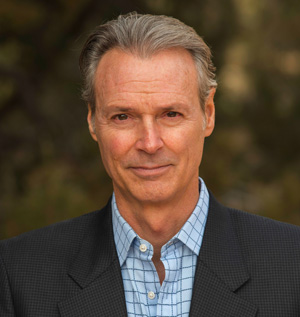

Fast-forward to 2010, when I’d finally finished my first novel, the legal mystery Hush Money, and had entered it in the annual Tony Hillerman Writing Contest, which sought to identify the best unpublished crime novel set in the American West. The winner would receive a publishing contract from contest sponsor St. Martin’s Press, and though I didn’t win that particular contest, St. Martins editor Peter Joseph later called to offer a multi-book publishing deal. Only months later did I learn that my contest entry had been judged by none other than Craig Johnson, who’d told Joseph, in effect, “if this guy doesn’t win, you should publish him anyway.”

Fast-forward to 2012, when Craig and I both were on national book tours (me for Hush Money, he for his eighth Longmire novel, As the Crow Flies) and our paths crossed at Vroman’s Bookstore in Pasadena, where we finally had a chance to compare notes. The following year, both those books were nominated for the coveted Lefty Award, given annually to the best mystery novel set west of the Rockies, and we found ourselves co-panelists on the subject of “Writing the West” at the annual Left Coast Crime writers’ convention. (Craig won. I clapped.)

Fast-forward to 2018, when Craig happened to read my second novel, Hard Twisted, first published in 2012, and was kind enough both to laud it on social media and to reach out to me and request a copy of my current novel, Church of the Graveyard Saints, then still in manuscript, which he then recommended to his publisher.

All of which is to say that I’m less than objective when it comes to Craig Johnson, one of the genuine good guys in the sometimes dog-eat-dog world of book publishing. Even so, I will also confess that the demands of writing my own novels, writing this column, reading for my book group, farming a vineyard, caring for horses, and generally living in the twenty-first century have left little time for pure pleasure reading, and for that reason I managed to lose touch with Walt, Vic, Cady, Sancho, Henry Standing Bear, and the other denizens of fictitious Durant, Wyoming, other than to follow them via their Netflix TV series (highly recommended.) So when the opportunity to combine business with pleasure arrived at my doorstep in the form of an advance reading copy of Craig’s latest creation, I leapt at the chance to get reacquainted.

Land of Wolves, Craig’s eighteenth Longmire novel, begins with a sheep found dead in the Bighorn Mountains, the apparent victim of a wolf attack. In searching the area, Sheriff Longmire discovers another, more troubling corpse – that of Miguel Hernandez, one of several itinerant shepherds working for Abarrane Exterpare, the patriarch of a Basque ranching family with a uniquely violent history. Walt’s efforts to find Miguel’s murderer are complicated by the appearance of Keasik Cheechoo, a relentlessly-intrusive wolf advocate, by the disappearance of Donnie Lott, Abarrane’s estranged son-in-law, and by the recurring attentions of 777W, a lone male wolf that might just be the reincarnation of Virgil White Buffalo, Walt’s late spiritual guide.

If the peregrinations that follow demonstrate anything, it’s that Johnson has lost neither his touch as a mystery novelist nor his affection for the characters he’s created. And now I’m compelled to go back and read the dozen novels I’ve missed which, needless to say, is far from the worst way to spend the coming winter. Boy howdy!

Chuck Greaves/C. Joseph Greaves is a member of the National Book Critics Circle whose sixth novel, Church of the Graveyard Saints, is the “Four Corners/One Book” selection for 2019-2020. You can visit his website at www.chuckgreaves.com.

Published in Prose and Cons

‘One Book, One City’: Area libraries launch an effort to create community around the written word with a joint reading program

CHUCK GREAVES

Chuck Greaves will give an introduction at the launch of the One Book/One City reading program in Cortez. His new novel, Church of the Graveyard Saints, is the first book to be read in the program. The launch will take place Friday, Sept. 27, at 5:30 p.m. at the Cortez Public Library.

Cortez Public Library’s Kathy Berg is no stranger to creating community around the written word. Heading up the adult programs at the library for many years, she previously did much the same at the Salida, Colo. Public Library.

Which is where she first heard about the concept of “One Book/One City.” Her good friend, author Kent Haruf, told her of his experience in Kansas City, where his award-winning book, Plainsong, was featured and consequently read all over the city — in its libraries, schools, homes, bedrooms, cafes, parks; in venues both large and small.

Here in Cortez, Berg has been kicking around the idea for years with her good friend, local author Chuck Greaves. Greaves, who’s been a big supporter of the library and has a long history with other public libraries, served on the selection committee when Pasadena, Calif., launched its One City/One Story program in 2002.

When Berg heard that Greaves’ latest novel would be out in September of 2019, and that it was set right here in the Four Corners, she rekindled the possibility. It was first imagined as “One Book, Three Towns in Montezuma County.” But now this has morphed to Four Corners/OneBook. And very soon the project will gain an official “Cortez Reads” day, so proclaimed by the Honorable Karen Sheek, mayor of Cortez.

The inaugural 2019-2020 “Four Corners/ One Book” community-wide reading program aims to connect residents of the greater Four Corners region through the shared experience of story. The participating libraries/communities include Moab, Utah, plus the Colorado towns of Montrose, Dolores, Cortez, Mancos and Ignacio.

Each library will plan its own events and promotions for its community, launching in September. The group will share a new Facebook page (find it at “FourCornersOneBook”) where all area events, and of course, comments, can be posted.

The concept, first developed in 1998 by the Washington Center for the Book, invites interested readers to experience the same book at the same time, then to gather together in their respective communities to discuss the book and the issues it raises with the visiting author. Other, related events may be developed to further the program’s goals of promoting literacy, encouraging dialogue and building a wider sense of shared community.

The Cortez Library launch begins on Friday, Sept. 27, at 5:30 p.m., outside under the Library Willow. Sheek will officiate, cutting the ribbon on the Four Corners/One Book program. Refreshments and prizes will help mark the event, as well as a short introduction by none other than the first book-selection author, C. Joseph Greaves!

Following the ribbon-cutting ceremony, Greaves will talk about his new book, Church of the Graveyard Saints, followed by a book-signing. Local bookseller and library sponsor BOOKS will be on hand for those who would like to purchase a copy. The library will have a number of copies available for patrons to check out.

Church of the Graveyard Saints is a departure from Greaves’ mysteries. Set in the Four Corners region, where we find familiar names and settings, this contemplative novel asks the question, “can one go home again?” It’s about place; it’s about family; it’s about love; it’s about saving the earth. It’s mostly about environmental issues – some that we have read about, thought about; lots we haven’t. Next January, Greaves will be returning to the library to facilitate discussion groups about the book.

Greaves has been a finalist for most of the major awards in crime fiction including the Shamus, Macavity, Lefty, and Audie, as well as the New Mexico- Arizona, Oklahoma, and Colorado Book Awards. He is the author of five previous novels, most recently Tom & Lucky (Bloomsbury), a Wall Street Journal “Best Books of 2015” selection and finalist for the 2016 Harper Lee Prize. He writes both mystery fiction (as Chuck Greaves) and literary fiction (as C. Joseph Greaves.)

Sponsors are The Farm Bistro, the Four Corners Free Press, KSJD Community Radio, BOOKS, and the Friends of the Cortez Public Library.

Kickoff events for the reading program will also take place at Maggie’s Books in Montrose on Sept. 23 at 7 p.m. and the Dolores Public Library on Oct. 4 at 6:30 p.m.

Published in September 2019

Local author unveils sensational World War II tale

SCHOLARS OF MAYHEM BY DANIEL C. GUIET AND TIMOTHY K. SMITHDurangoan Dan Guiet gave his father, Jean Claude Guiet, a computer as a birthday present 25 years ago and asked Jean Claude to record his life story on it. Jean Claude began to type, but only after giving explicit instructions that no one was to read his writings until after his death.

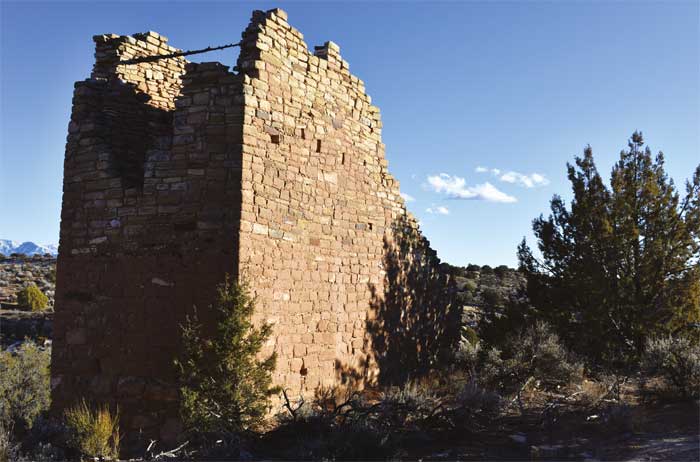
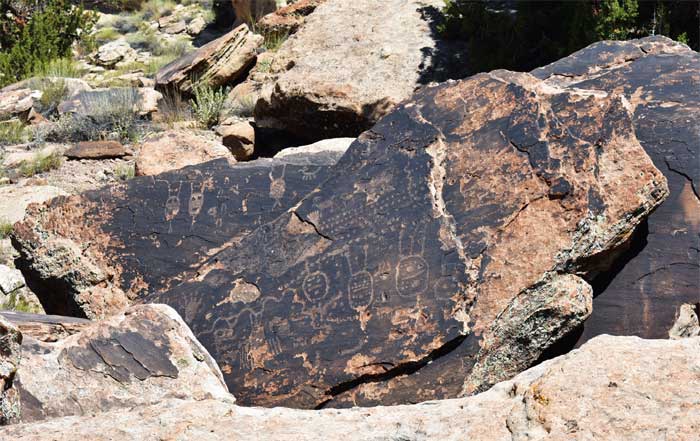
Jean Claude died in 2013 at age 89. Only then did Dan become privy to his father’s story, one of the most sensational true tales ever to come out of World War II.

Dan has teamed with journalist Timothy Smith to tell his father’s story in Scholars of Mayhem, released in June by Random House/Penguin. Dan will appear at Maria’s Bookshop in Durango on Sept. 26 at 6:30 p.m. to recount his story of researching and writing Scholars of Mayhem over the last six years, and share tidbits from his father’s death-defying exploits behind enemy lines.

As a 20-year-old special agent fluent in French and schooled in radio communications, Jean Claude parachuted into German-occupied central France at the outset of the Normandy invasion in June 1944 with three other agents. The four-person team was charged with organizing the French resistance to the German occupation and radioing back to England specifics of German troop movements in the region.

At the time, the Germans tracked clandestine radio transmissions in France, then shut down sections of the power grid one at a time until the radio transmissions ceased, pinpointing the locations of transmission posts like the one Jean Claude was tasked with operating. Jean Claude’s lifespan therefore was expected to be roughly three weeks from the date of his insertion into France. However, the bright, young French-American agent — who had left his freshman-year studies at Harvard to enlist in the war effort — fashioned his own electric generator from a water wheel in a defunct, stream-side grain mill in the French countryside, and thereby avoided detection by the German patrols for two harrowing months.

During those months, Jean Claude and his fellow agents organized, supplied, and commanded French resistance fighters in a series of brutal attacks against the German occupiers, and against a powerful Panzer armored division attempting to reach the Normandy front and train convoys transporting enemy reinforcements to the front. As the size and scope of the attacks mounted, Jean Claude used his secret radio to call in nighttime drops from across the English Channel of arms, ammunition, and plastic explosives to the French freedom fighters.

Jean Claude’s transmission post eventually was discovered and a German patrol roared up to the grain mill. Jean Claude fled through a back window and continued to fight with the French resistors until the liberation of Paris in September 1944, four months after he entered the country. He made his way back to America later that fall, and from there to China and Burma, where he fought until the end of the Pacific theater of World War II in September 1945. After the war, he joined the then-fledgling CIA. Living and traveling abroad with his family as cover — Dan included — Jean Claude mounted covert operations around the world on behalf of the U.S. government.

In the years ahead, Dan plans to write two more books on his father’s life, one covering SCHOLARS OF MAYHEM BY DANIEL C. GUIET AND TIMOTHY K. SMITHJean Claude’s exploits in China and Burma, the other his cloakand- dagger work for the CIA.

Scott Graham is the National Outdoor Book Award-winning author of the National Park Mystery Series for Torrey House Press. The fifth book in the series, Arches Enemy, was released in June, and is available at Maria’s Bookshop in Durango and other area bookstores, and for order at scottfranklingraham.com.

Published in Prose and Cons

Gallery window exhibit opens in Cortez

Gallery Windows exhibit space

The east storefront window of Gallery Windows exhibition space shows the work of Karen Kristin, Touria Berrada, Lara Branca, Ed Singer and Phil Conner. The signage in the window tells visitors to
contact the artists directly with the information posted in the signage. The gallery, located at 30 W. Main, Cortez, does not operate during normal business hours, but is marketing the artists on their Facebook page, Cortez Public Arts. Courtesy photo

Lights, cameras, action, and art filled two formerly empty storefront windows at 30 W. Main St. in downtown Cortez for the first time in late August. Gallery Windows, a pilot project of the Cortez Public Arts Advisory Committee (of which the author is a member), opened an exhibition space and welcomed local artists and patrons during a sidewalk gathering that introduced the visual arts in a dedicated professional arts presentation space.

The renovation of two empty storefront windows replicates a museum or gallery setting found in cities where arts are a visible factor in the local economy, and welcomed as a community asset.

Survey works

Dedicated exhibition gallery space and the lack of data that could support it was addressed by the Cortez Public Arts Advisory Committee when it launched a survey/registry for local artists in 2018. It was completed in summer 2019 and the results showed that the group was sitting on a piece of valuable information from respondents in various genres – a desire or demand by artists for dedicated gallery and exhibition space.

The 120 local artists completing the survey/registry represent the suppliers of artwork that cannot be shown to the public in Cortez because the venues available to them are limited to locations not focused on the arts but on restaurant business and home décor.

Nearly half of the respondents replied that a professional exhibition space was needed in Cortez. It could facilitate exhibitions of art work produced in the region and help create the traction the arts need to play an vital role in the local economy while adding to the quality of life for residents and visitors.

The survey showed that nearly 60 percent of local respondents are 55 or older and work as visual artists. Literature was the third most engaged arts profession, identifying poetry and non-fiction memoir as the top contenders for format and content.

But the survey also showed that affordable studio and workshop space was unavailable to Cortez artists. Consequently they show and sell their work elsewhere and often work in studio spaces away from home. Durango and Mancos garner most of the market sales for Cortez artists, followed by cities such as Albuquerque, Santa Fe, Taos, Denver and Flagstaff.

As the Arts Committee began to explore creating a sustainable arts economy in the artists’ home town, the empty Main Street storefront windows emerged as a possible factor to address the missing exhibition space, while introducing the public to the artists.

Arts committee member Brenda Van Keuren saw the opportunity to develop a pilot project that addressed two challenges to the public-facing personality of the city on Main Street — no visual arts venues in combination with empty storefront windows. Together they presented a potential opportunity.

As she began working on how to merge the empty storefronts with the need for exhibition space she found support, she says. “At least three others had a similar concept in mind,” she said.

But the committee had never attempted a project of this scale or complexity. Navigating the new schematic concept was challenging, she explains. It was helped by the scrutiny and advice of the city attorney, the manager, and the various city departments during the process. “I observed great thoughtfulness on everyone’s part in this venture as we developed the strong financial package and the articulate written proposal it needed in complement with in-kind support by community members and businesses.”

She admits that the group does not know a whole lot about strength of demand, due mostly to the present lack of arts economy in the city. A survey can quantify only part of the equation. Another method for gathering feasibility data is to test the market directly, explains Van Keuren. The Gallery Windows project is an approach that addresses what is possible on a smaller, limited-service scale.

Location, location

The location selected for the project is almost in the center of the busy block between The Farm Bistro and the High Desert Outdoor Gear retail business. Van Keuren worked with the building owner and the city to secure the windows for exhibition space. Montezuma Partners LLC agreed to contribute rent of the window spaces and utilities for three months.

Gallery Windows is not a typical retail business. It is not open for business during regular business hours. Instead, visitors are invited to view the work outside of the window space.

In place of an on-site sales person, the group has created a visual “key,” a flyer posted around the windows that identifies the art work, artist, price of the work and contact information.

There is also a large flyer titled, How to Buy Art. People are encouraged to text or call the artist if they want to purchase the work on exhibit.

A slew of support grew once the lease was arranged. Chris and Kim Lindell built the moveable exhibit walls after securing a contribution for the materials from Alpine Lumber in Durango. Maxx Solutions supported the project by supplying a crew who assisted in the buildout, as well. Vicinity Solutions installed the security camera system. Zumacom is supporting internet service during the Gallery Windows pilot project and Van Keuren and David Coit purchased the security camera system for use in the space. Visiting family members Chrystal Van Keuren and Terry Simms installed baseboards while Montee Van Keuren built the furnishings for the entrance area in the foyer.

“Connection with others is a blessing,” Van Keuren says. “I meet and interact with heroes and amazing people every day. But it is important to recognize, too, that the City of Cortez supported CPAAC as it fulfilled its mission in this project by enriching the cultural environment and experiences of the people of Cortez.”

Exhibiting artists

Most revealing about the lack of exhibition space is the recent emergence of fine arts bronze sculptor Samantha Combs. When she responded to the survey last year she was relatively unknown here. The link to her website on the survey showed an accomplished young Cortez artist creating a vigorous and mature body of work. Influenced by her lifelong passion working with horses and her undergraduate work in equine science, Combs immortalizes her animals in cast bronze. She is represented by Equis Art Gallery in New York and Gallery Equus in Minnesota. Her work has not been seen in a professional public exhibition space in Cortez until three of her latest bronze sculptures were placed on exhibit in Gallery Windows.

Phil Conner, one of the six artists in the current exhibit, told the Four Corners Free Press that this venue project is a major accomplishment. “It would be wonderful to imagine our town as a place of galleries where artists and tourists come not just to see the beauty of the surrounding landscape but also the beauty found in the creations of the local artists.”

Lara Branca, known for her dynamic, energetic brush marks and color, is showing two Montezuma County landscapes that have not been on view in Cortez before. Wildlife and animal muralist Touria Berrada has three pieces in the exhibit. One is her first oil portrait of a woman, Calla Gypsy. It hangs near Ed Singer’s figurative painting of a traditional Navajo woman in a folding chair with two rez dogs at her feet. He uses the leitmotif often to depict his experience of reservation life at Gray Mountain, Ariz., near the Grand Canyon.

Perhaps the most iconic local image in the exhibit is the painting done by Conner of the landmark grain elevator in Dove Creek. Susan Matteson and Silvia Pina joined the exhibiting group of artists agreeing to hang their work inside in the foyer until it can be rotated out into the windows space when sales are made.

Follow the interest

A 20 percent commission on sales is paid by the artist to the Cortez Public Arts Advisory Committee pilot project fund. The commission is about 30 percent lower than today’s average gallery commissions because the opportunity to exhibit is not supported by a full retail operation.

Gallery organizers hopes to attract viewers to the exhibit space through their Facebook page, Cortez Public Arts, direct email invitations, press releases, and word of mouth.

Pina’s gold leaf and acrylic painting, Yo Tambien, became the first sale during the soft opening. “This is a great, great project. I hope people will come downtown just to walk up to the paintings and admire them.”

The project does not model after any other exhibition venues. But Van Keuren says that while walking along 5th Avenue in New York a few years ago she saw some similar elements. “Gallery Windows has all the earmarks of strong retail exhibition space, except the experience is more like windows shopping.” The interior foyer space will be open to the public during CPAAC special artsrelated events.

Van Keuren is looking into tracking foot traffic to gauge interest. “We would like to know whether this project indicates feasibility for the longer term, or if the limited-service format is just right and works for our town. Much more information will be available at the end of the project in late October.”

Karen Kristin, internationally known for her enormous architectural-scale sky replications, has submitted two Pleine Aire oil paintings for the inaugural exhibit. After the lights turned on and people gathered in front of the windows to see the exhibit for the first time, her enthusiasm was palpable.

“Here comes a great big hand-clapping response for the success of this effort in getting an art gallery exhibit on Main Street in Cortez, the first in many, many years,” she said in an email. “I loved seeing the work of all the artists . . . and I feel proud to be among them. Gallery Windows is so appreciated by the artists, and I hope the public will respond with their support, as well.”

Published in September 2019

Not so fast: Colorado’s PUC seeks answers on Tri-State’s proposed shift

Tri-State Generation and Transmission Association has until Sept. 11 to answer “unsettled questions” from the Colorado Public Utility Commission regarding its application to move to federal oversight of wholesale electric rates.

What is even more unsettling is the negotiating position that Tri-State member cooperatives, including Empire Electric Association find themselves. EEA must either accept the rates set by the Federal Energy Regulatory Commission (FERC) or quickly move to negotiate cheaper power supply from a provider other than Tri-State and an exit fee to leave the Tri- State cooperative.

Either way, EEA faces substantial costs that were not considered when it entered into a wholesale electric service contract with Tri-State decades ago.

On Aug. 13, the PUC submitted a Notice of Intervention and Protest that asks FERC to dismiss Tri-State’s application. The PUC claims that Tri-State did not provide the details needed to set wholesale tariffs that are “just and reasonable.” One advantage that Tri-State claimed for its move to federal oversight is that FERC would use formulas to set rates that meet a federal standard for “just and reasonable.”

In its application, Tri-State included the rates in existing electric service contracts.

The PUC warns FERC in its intervention notice that it “should devote particular scrutiny to Tri-State’s WESCs [wholesale electric service contracts], and all other contracted rates Tri-State has submitted… [because] these WESCs all date back years, long before the possibility of FERC jurisdiction over Tri- State and its transactions arose. The [FERC] cannot assume that these contracts are just and reasonable when, at the time they were negotiated, the parties would not have expected the Federal Power Act to apply and the just and reasonable standard to govern.”

Furthermore, the PUC finds, “Recent litigation has revealed that member cooperatives face significant fees if they choose to leave Tri-State and procure their power elsewhere; those exit fees call into question the bargaining power the member cooperatives had available to them in negotiating the WESC. If member cooperatives’ bargaining power was constrained because they faced a choice between paying an unjust rate for wholesale electric services, and paying an uneconomic exit fee, they may have been unable to truly negotiate a just and reasonable rate.”

As pointed out by the PUC, EEA and other member associations have been put in an untenable negotiating position by Tri-State. Even if the FERC approves rates that are lower than those included in its existing service contract, EEA must carefully consider the impacts of FERC regulation on its own ability to meet future member/customer requirements for reliable, affordable power.

In the past, EEA voted on Tri-State’s wholesale rates as a member-owner of the Tri-State cooperative. That changed in May when the Tri-State board of directors voted to allow non-cooperative members to join Tri-State. This vote removed the final exemption keeping Tri- State from governmental oversight, and in July, Tri-State filed an application with the FERC for wholesale rate regulation.

In response, the PUC as well as many Tri-State members submitted a host of questions to Tri-State regarding the reasoning and timing for this move to federal regulation. For more details see “Sudden Power Shift,” Four Corners Free Press, August 2019.

The question troubling the PUC is the identity of the new member and whether the PUC will have jurisdiction over the non-cooperative utility.

Currently, the PUC does not have direct jurisdiction over Tri-State members because they are member-owned cooperatives. However, Tri-State members can file a complaint to the PUC to intervene when Tri-State and a Colorado-based member can’t reach an agreement, such as in the case of Delta-Montrose Electric Association negotiating an exit fee with Tri-State.

In its intervention notice, the PUC said, “As a historical matter, it is true that the CoPUC has not fully regulated Tri-State to the limits of the CoPUC’s broad statutory authority, out of respect for the cooperative model of governance. But now Tri-State seeks to change that model.”

The PUC further notes in its intervention notice that Tri-State says that it will admit a “New Member … that will not be an electric cooperative or a governmental entity and will not directly or indirectly be wholly-owned by an electric cooperative or a governmental entity.”

The PUC concludes that “By acknowledging that an unnamed nongovernmental, non-cooperative member will soon join Tri-State, but without providing any details as to how this new entrant or entrants will impact resource holdings, Tri-State effectively asks the [FERC] to approve a tariff that very well may be based on incomplete information and inaccurate analysis.”

Left unsaid by the PUC is the future organization and viability of Tri-State with members exiting and new non-cooperative members joining the association. It is not clear that when the Tri-State members voted to allow new members to join the association in May that they would be handing over their rate review power to the feds and placing themselves in a weaker position to negotiate future power purchase agreements.

Like other member cooperatives, EEA is facing decisions and uncertainties that it has rarely encountered in its 80-year history.

Published in September 2019 Tagged

Improving social services: Commissioners grant extended work week after critical report

Following a highly critical report by a state ombudsman’s office regarding Montezuma County’s Department of Social Services, the county commissioners granted permission for the department to increase its staff members’ work weeks from 35 hours to 40 – but only after a lengthy discussion.

The board ultimately voted 2-1 in favor of the increase, with Commissioner Keenan Ertel against it.

The vote took place at the commissioners’ Aug. 13 meeting, following discussions in both the morning and afternoon with Social Services Director Gina Montoya.

In the morning, she told the board that many members of her staff are putting in overtime and flex hours, and they need to be able to work 40 hours a week.

Ertel asked why the hours had originally been reduced, and attorney John Baxter said it was a cost-saving move by previous county administrators.

Ertel then asked Montoya why the staff wasn’t able to get their work done with the 35 hours. “My goal is not to grow social services,” he said. “You’re asking us to grow it by $63,000. My goal is not to grow social services.”

The $63,000 would be the county’s portion of the increase in FTE, Montoya told the Four Corners Free Press. Most of the social services budget is not paid by the county but by federal and state revenues.

Montoya said Ertel needed to consider the fact that the county’s population is steadily going up, which means an increase in the caseload for social services. “We have more people in this county that we have to serve,” she said, later adding that the staff is “working their butts off.”

Commissioner Larry Don Suckla said he had reached out to 20 other counties and all of their workers were allocated 40 hours a week. He said an article in the Denver Post about the ombudsman’s report had prompted numerous calls to him, beginning at 6 a.m. the previous Saturday. “I don’t want to have that happen again,” he said.

The 97-page report, based on a ninemonth investigation by an independent office of the state, concluded that Montezuma County broke numerous state regulations and did not respond promptly to complaints regarding child abuse or neglect.

The Four Corners Free Press reported in February that the Office of the Child Protection Ombudsman was investigating concerns about the county’s social- services department.

After being contacted by members of the community, the ombudsman’s office had begun conducting inquiries.

“These inquiries raised case-specific and systemic concerns about the county department’s practices,” the report states.

Commissioner Jim Candelaria said he had been a firefighter at one time and asked whether increasing the work week for the staff would help the situation. “Is this going to cure it?” he asked. “Reporting becomes longer and longer. Is that five hours – does it really fix our situation?”

“The hours are going to help folks get their job done and get it correctly,” Montoya responded.

Candelaria suggested hiring two data-entry persons instead of increasing social workers’ time would save money, but Montoya explained that that wouldn’t help the situation because the case workers have to enter their own notes and data- entry personnel wouldn’t be familiar with those notes. Later, Montoya pointed out that some other county departments have 40-hour weeks for their staff. That includes the landfill and the road department. “I don’t know what more you can ask of people to do and I think 40 hours would help,” Montoya said.

Candelaria said that, considering the ombudsman’s report, he had decided that putting $63,000 toward a 40-hour work week for staff could help improve the situation, and made a motion to that effect.

“Boy, was my world shaken up, getting all those phone calls about a news article in the Denver Post,” Suckla said as he seconded the motion. However, Ertel voted against it.

Montoya said the change would take effect Nov. 1. Suckla said if the longer week didn’t help straighten things out, the weeks could be shortened again.

During public comment at the end of the day, M.B. McAfee of Lewis criticized Ertel’s attitude toward the situation.

“It’s pretty narrow-minded to say you don’t want the social services department to grow when the population is growing,” she said. “The whole county is growing, including people who need social services.”

She pointed out that 80 percent of the social-service budget is pass-through funds from sources outside the county, while other county departments have budgets that are much more dependent on county monies.

She said the commissioners were inviting growth on the one hand, but apparently don’t want it “in a certain segment of the population, and that’s not being very realistic.”

Suckla said “the way that we will get this social services not to grow is you build a big packing plant in Mancos.” He was referring to plans by a local rancher to build a meat-processing plant near Mancos. Suckla said it would provide jobs.

However, McAfee said she had attended a recent discussion on the plant by the Planning and Zoning Commission and the business intends to start with just two to four full-time jobs.

Administrator Shak Powers said what Ertel had been saying was that he hopes the need for social services would diminish.

“We would like to see it shrink. We’d like to see it where no child needed it,” Powers said.

McAfee, a former candidate for a seat on the commission who lost a close race against Candelaria last fall, said that would be ideal, but added, “It’s kind of pie in the sky.”

Published in September 2019 Tagged

Energy concerns: BLM speeds oil and gas leasing despite worries

Ruin at Hovenweep National Monument

Planned oil and gas lease sales may affect the visitor experience at Hovenweep National Monument. Photo by Gail Binkly.

Oil and gas lease auctions on Bureau of Land Management lands in the vicinity of Hovenweep National Monument have drawn considerable concern.

But the BLM is moving full speed ahead with plans to make more acres available for energy development, despite opposition from some Native American tribes, conservation groups, and local interests.

The speed with which the BLM is leasing new areas of public land is dismaying some observers.

The agency plans an auction this month of 19 parcels totaling some 32,000 acres in San Juan County, Utah, near Hovenweep, despite calls for it to do a more thorough analysis of the impacts of exploration and drilling.

Most of the parcels lie north of the monument and some are less than 10 miles away, leading to concerns that they will affect the visitor experience at Hovenweep, which was created to preserve Ancestral Puebloan structures. In 2014 Hovenweep was given the designation of a Gold-Tier International Dark Sky Park, the designation for the darkest places.

In addition, the auctions are raising worries about how energy development might affect the landscape, which is rich in cultural sites and artifacts and is even the location of a paleontological dig. “2018 marked a rapid change in the way that BLM has been leasing land,” said Amanda Podmore, a southeast Utah conservation consultant for the National Parks Conservation Association, a nonprofit that supports national parks and monuments.

In 2018, a deputy under then-Interior Secretary Ryan Zinke told the BLM to get rid of “unnecessary impediments and burdens” in the process of issuing leases on public lands. As part of its pro-energy policy, the Trump administration has pushed hard for more and quicker oil and gas development. The BLM drastically reduced the chance for public comment on energy lease proposals and reduced the environmental analyses it would conduct.

ancient rock art

The area slated for oil and gas leasing is replete in cultural resources such as this ancient rock art. Photo by Gail Binkly.

There were two large lease proposals in the Four Corners area in 2018, including one proposal in March 2018 for 20 leases totaling about 29,000 acres in southeastern Utah in areas including Alkali Canyon, Squaw Canyon, and Tin Cup Mesa. Then in December 2018 there came a proposal for 15 leases totaling about 26,000 acres in the same area. That proposal drew formal protests from the All Pueblo Council of Governors and Pueblo of Acoma, who said the BLM was not considering impacts to cultural properties. The Hopi Tribe also asked the agency to drop the proposed leasing.

The National Park Service has weighed in with concerns as well. In an Oct. 23, 2017, memo regarding the proposal for March 2018, Kate Cannon, superintendent of the Southeast Utah Group of national parks and monuments, said the leases had “the potential to affect resources such as air quality, dark night sky, scenic value, soundscapes and groundwater quality” for Arches and Canyonlands national parks and Hovenweep and Natural Bridges national monuments. She wrote that concerns the Park Service had previously expressed about air quality, dust emissions, visibility, dark skies, noise, groundwater quantity and quality, and the potential for earthquakes from hydraulic fracturing had not been adequately addressed.

The NPS asked that 13 parcels proposed for lease that were less than 20 miles away from Hovenweep be deferred, but the BLM rejected the request.

The Navajo Utah Commission of the Navajo Nation Council unanimously passed a resolution in February 2019 requesting that the BLM “protect cultural and natural resources of the Navajo aboriginal lands in the McCracken Mesa area, including Alkali Canyon, Tin Cup Mesa, Monument Canyon, Squaw Canyon, Cross Canyon and Recapture Canyon and withdraw the lease parcels slated for auction in the March 2019 lease sale.”

People at paleontological dig at Gnatalie Dinosaur Quarry.

Other activities in the leasing area include paleontological digs such as this one at the Gnatalie Dinosaur Quarry. Photo by Gail Binkly.

The resolution states that “there are numerous undocumented cultural sites in the many canyons, along the canyon rims, and on the mesas near McCracken Mesa. . . including. . . very significant traditional and ancient cultural sites. . . at extreme risk of damage and vandalism due to existing and planned oil and gas exploration and development.”

The BLM moved forward with the sales, but in April 2019 the Southern Utah Wilderness Alliance, an environmental group, filed a suit in federal court in Utah against the BLM and Interior Department over the 35 leases offered in 2018. SUWA’s complaint states that the BLM did not do an adequate analysis of greenhouse-gas emissions that would result from oil and gas development, and that the proposal had other deficiencies.

Podmore said those proposed leases were suspended in August of this year because of the suit.

“This leasing is happening so quickly, they [BLM officials] keep tripping over themselves,” Podmore told the Four Corners Free Press. “The BLM is rushing so much, they’re not doing an adequate analysis.”

According to SUWA’s complaint, since the start of 2017 the number of leases the BLM has offered for auction in Utah is seven times as many as occurred in a similar amount of time under the Obama administration.

“Located on the doorstep to Bears Ears, Canyons of the Ancients, and Hovenweep National Monuments,” the complaint says, “these leases contain well-preserved evidence of past peoples and cultures including cliff dwellings, pueblos, kivas, petroglyph and pictograph panels, ancient roads, and Chacoera (circa 900-1150 A.D.) ‘great houses.’ Numerous Native American tribes consider these sites sacred.”

However, the BLM is proceeding with the current lease auction of 19 parcels, which are in the vicinity of the suspended leases. This batch of leases was originally offered in March of this year but was delayed because of protests by several tribes and conservation groups whose concerns include a belief that a more thorough cultural-resource inventory is needed.

“They have not done any more cultural- resource inventories since the sale was canceled in March,” Podmore said.

“Some of these parcels have only seen a survey of 4 percent [of their area], yet they might have 20 to 40 known cultural sites within their boundaries just from that survey,” Podmore said.

‘An economic driver’

In a July 1 letter, the Business Owners of Bluff, Utah, a town that lies about an hour away from Hovenweep, expressed opposition to the lease auction to the BLM.

“. . .Hovenweep National Monument is an International Dark Sky Park of the gold-tier and an economic driver for the Town of Bluff and San Juan County,” the letter states.

“. . .As a gateway community to both Hovenweep and Bears Ears National Monuments, we are concerned about the alarming rate at which BLM lands near those monuments are being leased for oil and gas development. The scale and rush nature of the leasing leaves us questioning the impacts to our local economy and the level of analysis undertaken by the BLM.”

The letter notes that the BLM’s draft environmental analysis for the September lease sale does not analyze the impact to dark skies.

“This latest lease sale could allow for leasing as close at 4 miles to Hovenweep, which would place oil and gas operations directly in the park’s viewshed,” the letter also states, commenting that industrial light pollution can be seen from as far away at 35 miles.

Likewise, the Bluff Town Council unanimously passed a resolution on June 11 “opposing and urging caution regarding oil and gas leasing on Bureau of Land Management administered lands near Hovenweep National Monument.”

The resolution states that “the cultural landscape of the area surrounding Hovenweep National Monument contributes to the beauty, economy, cultural heritage preservation, and recreation values of San Juan County” and that energy development “may lead to the degradation of visitor experience, cultural heritage preservation, dark skies, air quality, and water quality in that area.”

Podmore said she herself is concerned about three primary issues regarding the leasing.

  • Drilling near a national park or monument, “which could impact their dark skies”;
  • Interruption of a cultural-resources landscape and a lack of tribal input regarding that issue;
  • The speed of the process. “The entire leasing process is moving so quickly and not looking at where might be more appropriate places to drill,” she said

Rock art and fossils

The NPCA offered a tour of some of the lease sites in early August. One had a number of striking petroglyphs carved into rocks. Podmore said they were created by different peoples, including the Ute Tribe, stemming from the Archaic and Basketmaker time periods.

Another site contained a paleontological excavation swarming with people. The Gnatalie Dinosaur Quarry (named in recognition of the itch-producing gnats that plague the area) lies along the Hovenweep Road and is excavated just one month out of each year.

This dig was the 11th such one, according to Alyssa Bell of the Natural History Museum of Los Angeles, who was at the site. She said most of the people there were volunteers from the museum. The bones they excavated were being shipped to the museum.

The site contains numerous fossils buried in the Morrison foundation, a type of sedimentary rock that has been a bountiful source of dinosaur bones. Most found at this site are from sauropods, she said, a type of dinosaur with long necks and tails. That day, the focus was on bones from a diplodocus.

Bell said the idea of oil and gas exploration occurring in the area is worrisome because there might be little protection offered for fossils. “Our concern is with paleontology – there might not be a system,” she said. “If they have a monitor, that’s fine.”

Podmore said the BLM needs to consider the cumulative effects of such development rather than letting it happen piecemeal.

“A landscape-level solution – that’s what groups like NPCA want,” she said. “There needs to be more planning regarding oil and gas development in the area.”

Published in September 2019 Tagged ,

Fred Martinez’s killer is paroled: The brutal murder in 2001 drew national attention to Cortez

The man who murdered a transgendered Navajo teenager in Cortez in 2001 – a crime that drew national attention to the city – has been released from prison.

Shaun Murphy, now 36, was paroled to Colorado’s northeast region after serving 17 years of a 40-year sentence, according to online records.

FRED MARTINEZ JR

Fred Martinez, Jr.

Murphy admitted to the brutal murder of Fred Martinez, Jr., a 16-year-old Cortez resident who liked to dress in women’s clothing. The two reportedly did not know each other before the night of Martinez’s death.

“My heart goes out to Fred’s family,” said Lydia Nibley, the director of a documentary about Martinez’s life and death called Two Spirits. “Our hope was that they would not ever have to face Shaun Murphy on the street in their lifetimes,” she told the Four Corners Free Press in a phone interview.

Two Spirits became the highest-rated film of the PBS Independent Lens season, and has received multiple awards. It was honored by President Obama in a White House reception and shown to numerous officials in his administration. Martinez was reportedly a gentle soul who was bullied and teased because of his non-traditional behavior. He considered himself nadleeh, a Navajo word meaning someone who possesses both male and female traits, and liked to wear makeup and carry a purse. He lived with his mother, Pauline Mitchell, in a trailer house in Cortez.

Even at his young age, Murphy had a lengthy record with a number of assault charges.

On June 16, 2001, the two crossed paths at the Ute Mountain Rodeo, then later near a convenience store, with Murphy reportedly giving Martinez a ride in his car before dropping him off. Later that evening, Murphy, who had gone to an apartment to hang out with friends, reportedly went outside and tracked Martinez down in an area on the south side of Cortez known as “the pits.” He fatally whacked the boy in the head with a rock and later told friends he had “bug-smashed a hoto” – slang for a gay person.

Martinez did not die instantly, but suffered a lingering death, lying alone on the brushy slope in the dark. His body was not found for several days. When it was, the news rapidly attracted interest around the region and even the nation, as information about Martinez’s sexual orientation emerged and sparked discussion of whether the killing was a hate crime.

The city of Cortez was flooded with reporters from media nationwide. Meanwhile, local coverage of the brutal murder drew mixed responses from residents.

Aspen Emmett, then a reporter for the Cortez Journal, wrote extensively about the killing. She described the variety of community reactions in an article she wrote for the Four Corners Free Press on the 10th anniversary of the killing. “The weeks following Fred’s death saw a frenzied, ever-evolving community discussion about gender identity and the concept of ‘hate crimes’,” she wrote.

SHAUN MURPHY

Shaun Murphy

“One reader kept a running tally of how often I wrote the word ‘homosexual’ in each article, stating that it was offensive, and she was ‘sure there is a flaw in everyone. . . and no one wants to bring it out in the open’,” Emmett wrote. “Another letter, written by a local pastor, stated that ‘there is no such thing as gay’ and society should not be asked to accept or tolerate gender differences.”

Judy Shepard, the mother of Matthew Shepard, a gay college student who had suffered a horrible death at the hands of two homophobic men in Wyoming in 1998, came to Cortez that August to attend a vigil that was held for Martinez.

Murphy, who was then 18 and from Farmington, N.M., was arrested July 5, 2001, after tips came in to a Crimestoppers hotline. He was charged with first-degree murder, which could have brought him the death penalty. He eventually pleaded guilty to second-degree murder and was sentenced to 40 years in prison, but received parole after serving less than half his time.

No one from Martinez’s family could be reached for comment.

“I was just stunned (upon hearing of Murphy’s parole),” Cathy Renna, a long-time media activist for the LGBTQ community, told the Free Press by phone. Renna flew to Cortez from New York City after the murder.

“I remember going to the scene [of the killing],” she said. “I got off the plane, got in a truck with [then Cortez resident] John Peters-Campbell and drove out to the site. I will never forget what it looked like to see the outline of a body in the dirt. The ground was soaked in blood. That image will never leave my head.”

She said she, Nibley, and Russell Martin, who was involved in the production of Two Spirits, had been trying to reach Martinez’s family, who they believe may not even be aware of the parole.

According to the Colorado Department of Corrections, crime victims who want to be notified of parole hearings must actively enroll in the Victim Service Unit. It’s unknown whether Martinez’s family did so.

Renna said attitudes towards the LGBTQ community have improved since the time of Martinez’s murder, at least “in the sense that there is more and better understanding, particularly of transgender and gender issues, including the two-spirit community.”

However, she said in recent years there has been an increase in crimes against such people as well as members of other minority communities, including Jews, Muslims, and people of color. Transgendered women of color have been a particular target, she said.

According to the website for the Anti-Violence Project, the largest anti- LGBTQ-violence organization in the country, the National Coalition of Anti- Violence Programs recorded reports of 52 hate-related homicides of LGBTQ people in 2017, an increase by 86 percent over the year before and the highest single incident number ever recorded by NCAVP.

“We are in at least three continuous years of increase in bias-motivated crime,” Jason Marsden, executive director of the Matthew Shepard Foundation, told the Free Press by phone. “It has been particularly severe regarding transgender and gender-non-conforming victims.”

Marsden said there was a lot of frustration and concern about the handling of Martinez’s case because it resulted in a sentence for just second-degree murder. Now, he said, “that there would be an opportunity for parole so early in a 40- year sentence has raised a lot of alarm and anger in the LGBTQ community.”


Resources

Published in September 2019 Tagged , ,

Your land and my land

Westward Ho, the wagons! The pioneers moving westward was the third of many movements of peoples into the North American Continent and specifically here in the Southwest, over many centuries, especially following the last Ice age with the receding glaciers (had climate change back then too). All those people, including our pioneers, came from somewhere else, all looking for the same thing, “a place to live” and hopefully survive.

The world was very different early on, for example, the Cliff Palace at Mesa Verde was being built and used at about the same time as Notre Dame Cathedral in France was being built. Very different cultures but they all had one thing in common, they wanted LAND as a place to be and to survive and worship their god. So why did the Anasazi move on? Why did Spanish and Europeans move into where the Anasazi moved out of ? All peoples have always been on the move seeking better land, food, wealth, safety, escape from tyrannical governments and for some, seeking power and control over others.

So what is our fascination over land? Unless you are a fish, land is a necessity for life, as God “formed man from the dust of the earth.” Once formed, man then and now fully depends upon the earth or dry land to live. What are lands and resources for? What are the basics that mankind needs to survive, a place to be (everybody has to be somewhere), food, shelter, clothing and water. Anything above the basics are wants and luxuries, which are really nice to have, but basics come first for all in any given area. Now, can you name even one basic need or even luxury in life that does not come from the earth, directly or indirectly? Nope, can’t be done.

Now skipping forward to our lifestyles of today demands we have some form of wealth as a medium of exchange to trade with each other to obtain the basic needs and todays many wants. How do we generate this wealth? We grow food for sale or manufacture a tool or implement, or invent something like the Internet, oops too late, Al Gore already invented that. Anyway, there is no form of wealth and economy that can be manufactured or generated that does not come from the earth and its natural resources. That establishes the basis of all mankind’s quest to obtain and control land and resources throughout history, and is especially prevalent today throughout the world. One group of people wants what another group of people have.

As early as 1765 the Spanish came here to Southwest Colorado looking for gold and later in 1776 Spaniard Escalante was back again looking for land and wealth,(notice that they were here when the 13 English colonies were just fighting for independence). By 1790, Spain controlled western Colorado and most of the Southwest States. Then the Ute Indians controlled SW Colorado, followed by trappers in the 1830s looking for wealth from the resources. By 1850 it was Westward Ho, the wagons coming west from the Mississippi River, American settlers looking for wealth and land to live on in freedom. And everyone lived happily ever after. Well, not quite! Living requires food, clothing, water, shelter, fuel for heat and cooking the food and a place to be — LAND. It works best when a local community works together exchanging goods and services creating a local economy and sharing costs of law enforcement and roads. How were they to create wealth and economy?

All wealth comes from the land and its resources. Our area had good soil for farms, water, grazing lands, minerals, coal, oil & gas, timber. Farms and ranches were established to help feed the miners and timber industry. Reservoirs and irrigation systems were built to provide the needs for all parties. We have been blessed by having our American dream of having one’s own land and access to resources to develop and improve our economy and living.

Today our county is said to be one of the lowest economic areas in the state, why? There are peoples that have determined to take the lands and wealth of our county and state for themselves, preventing use of the natural resources to enhance the local economies. The public lands are the center focus of this conflict, where natural resource use has and is being severely limited and even eliminated from economic opportunity. Over 55 percent of the public forest lands have been locked up in wilderness and roadless areas, eliminating any opportunity to create jobs and economic products of value from minerals, wood products and watershed improvement. To create economic opportunity on the small areas left open are being politically challenged to try to prevent jobs and economy from happening there as well.

The new thinking is to increase economic well-being for the county residents by increasing property taxes while eliminating development of natural resource businesses and jobs to pay the taxes. Additionally, what little private land we do have that may be suitable for housing for population growth is being “sold out” to low-taxable land-conservancy groups locking out more landowners’ opportunity to be independent and provide for a larger tax base for the local needs as well as preventing locations for new businesses. Quite the conundrum, We want better economy and county government services, but we don’t want the economic business development and workers to provide the economy. We are like the stories of the destitute old person that died of starvation, only to discover he had a million dollars under the bed and a garage full of dusty Bentleys and Rolls Royces that could have been used. Our natural resource wealth is being wasted and burned. Whose land is this? Who will come after us?

Dexter Gill is a retired forest manager who worked for private industry, three Western state forestry agencies, and the Navajo Nation forestry department. He writes from Lewis, Colo.

Published in Dexter Gill

Men of good will …

President John Kennedy often interlaced the Catholic teaching, Men of Good Will, into his public statements. At the end of the Cuban missile crisis he reflected on how the conflict was not a win for either side, but rather that men of good will, on both sides, acted to stave off the unthinkable consequences of nuclear brinkmanship. I need to point out that the concept men of good will is not exclusively limited by gender, but rather it should be thought of as an all-encompassing character message for all humans.

This country, this world, desperately need men of good will as we stare into the abyss of artificial intelligence and the ramifications it holds for the future of our democracy. Miracles are at our doorstep, but so is the possibility of Armageddon.

No one ever questioned John Kennedy’s dedication to his country, or that he ever believed that capitalism was somehow evil. The concept men of good will speaks to those of us who choose not to allow blind ideology or petty motivations to infect what is known as the body politic. Webster’s defines that term as “a people as forming a political body under an organized government.” The great American humorist Will Rogers once quipped that he was not a member of an organized political party, as he was a Democrat. I sometimes contemplate the idea that if John Kennedy were alive today, would he be comfortable with his political party. He authored an essay, While England Slept. Today he could write, While America Bickered.

The last six months of watching the Democrat party govern Colorado has been an exercise in incredulity. What’s wrong with Denver? could become a campaign slogan for the rest of the state. If it was attention that Democrats were seeking, I think they succeeded. A case in point would be State Sen. Kerry Donavan. I do not know if she will face a recall effort or not, but I do think there are good civic reasons as to why she should be. To boldly lie in legislative testimony about how the county sheriff back home supported her Red Flag legislation, only to have him show up at her next Town Hall meeting to refute that, was entertaining but hardly conducive to good government. Neither is her heavy-handed approach to wolf re-introduction. I have to have faith that Colorado, as a whole, will correct the over-reach that was the past legislative session.

It is my understanding, as I write this column, that sufficient signatures were acquired by petition to place the Electoral College question on the 2020 ballot. This is an issue that should be decided by the citizens of Colorado, not a political party, engaging in hyper partisanship.

This November, Colorado voters will have the chance to turn back yet another challenge to TABOR, the Taxpayer’s Bill of Rights, passed in 1992. Proposition CC, as written, will give the Legislature the right to keep all future revenue. That is money that is collected that exceeds the $30 billion that Colorado currently spends. State tax refunds will be a thing of the past. Next year, over-collected revenue is projected to be $575 million. All those politicians and lobbyists up in Denver are salivating over what they can spend it on. They are quick to say that the money will be spent on education. That is what they said in 2005 and they didn’t do it. Once money is placed in the general fund, it is difficult if not impossible to track it. Any tax hike should be voted on by the citizens, otherwise our voices become meaningless.

As citizens of good will we understand and want a functional government. Our problem today is far too many in government and in the general population are not people of good will. Generally agreed-on standards for elected officials used to be guided by merit, by honesty and integrity, but the political climate of today allows politicians to double down and roll out social media to justify outrageous behavior. If you have a bigger mob, you can win.

How did we get here? More importantly, how do we turn it around? Representative government is in real danger when concerns of large segments of the electorate are easily and openly dismissed. The urban/rural divide, the haves/have nots, the informed/ the dazed all translate into a warning signal of immense proportions for our Republic.

I suggest we start by refusing to be manipulated and co-opted by echo chambers that soothe your ego and vanity. As voters we are constantly asked to settle for the lesser of two evils instead of following our principles. Who out there really believes the ability to register to vote on Election Day is good government? I want informed voters, not a last-ditch attempt to turn out the vote so we can win mentality, casting ballots. Spinquark.com is reporting that over a hundred individuals that previously were employed by powerful politicians in the Democrat Party have relocated into high-level positions at the largest social media and internet outlets. There is nothing illegal about that development, but it does raise concerns that personal political agendas will transfer to possible activism that unduly influences the 2020 election process. Americans need to have confidence in the legitimacy of our elections.

America needs and deserves men of good will now more than ever.

Valerie Maez writes from Lewis, Colo.

Published in Valerie Maez

Earth’s development in 24 hours

In last month’s celebration of Earth’s Pageant of Evolution I touched on the interplay of tectonics, geochemistry and archaic life. The intimate love-making of Earth’s geology and biology – to put it poetically rather than scientifically.

Getting back to the science, scientists have learned about the why and how of various ocean-bottom structures that provide the catalyst between geochemistry and biochemistry, by helping bind basic molecules into complex organic building blocks of life.

This month to convey the immensity of Deep Time, I’m scaling down Earth’s 4.6 billion years to 24 hours. A billion years take 5 hours plus change, 3.2 million years tick by every minute. Our human story fits into Earth’s past 4-5 seconds. Imagine that.

Earth was an infant (3-4 minutes) when Theia slammed into her, creating our Moon/Earth system. By 3 a.m., baby continents were plowing through the oceans and doing their mountain-building, erosion, grinding, pulverizing, redistribution, redigesting, creation drama.

Suggestively the earliest simple-celled organisms show up shortly after that. Toughing it out in a very hostile world of raw unfiltered sun rays and energetic particle bombardment along with toxic atmosphere and oceans.

To the rescue – plate tectonics started a cascade of processes – that by around 5 a.m. induced Earth’s iron core to turn into a dynamo that built a magnetic force field around Earth, thus deflecting those deadly particles. This allowed the slow seepage of geochemically produced oxygen to interact with the sun’s rays, which in turn allowed ozone to form and accumulate, absorbing ever more of those harmful rays.

As Earth’s shielding developed, life figured out how to utilize the tamed sunlight to split water’s H2O bond, using the hydrogen atoms to build sugars while discarding the oxygen. Thus photosynthesis, a potent source of oxygen, was born and Earth’s ozone shielding got reinforced. Still, the global ocean and atmosphere was a brew of toxins, though geology and biology was busy cleaning that up, albeit at a glacial pace.

Geology acts very slowly. How slow is slow, you ask? Consider taking a trip around the world, moving as fast as your fingernails grow. Worse, upon your arrival you collide and are sent reeling right back across the planet, again and again.

One result was that shallow seas and massive tidal pools existed for immense periods of time, coming and going. While continents were creeping along, archaic microorganisms within those oceans were reproducing every day, in hours and minutes.

By afternoon, some simple cells expanded, sequestering their command and control within a reinforced citadel (the nucleus), while creating new components, structures and pathways within the much larger fortified cell membrane. These cells even recruited outside microbes to help with the increasing work load and differentiating duties. Thus Earth’s first eukaryotes appeared.

In learning about this scientists made a fundamental realization: cell biology and organisms, their development and evolution, cannot be considered without also understanding the environment within which they exist, and to which they must constantly adjust in order to thrive.

So it was, by 3 p.m. eukaryotes were firmly established, pushing Life’s potential as far as the environment allowed. Then back to biding time, waiting for what came next as Earth continued going through its great geochemical and geophysical convulsions, including continent- grinding global ice ages.

By 7 p.m. ocean chemistry was moderating while free oxygen levels achieved concentrations that allowed those complex eukaryotes to evolve into coordinated communities and then into Earth’s first critters.

But it was a rough time. When communities of critters had a chance to develop and reproduce enough to make a difference, they made a difference, all right. They were too bountiful and sucked free oxygen right back out of their environments. Suffocating themselves into extinction, until stromatolites could pump out enough oxygen for another go. One day at a time.

Apparently, living in moderation never was part of Earth’s natural order. Of course, the consequence of this tendency towards excess has always been collapse.

So, around 9 p.m. and after some 17 hours’ worth of stage prep, developing various genetic widgets and gadgets like a Lego set, a few rehearsals, now the timing was right – Life took off like unchaperoned teenagers at a springtime full moon dance.

The Ediacaran “Explosion” lasting around 12 minutes before an extinction event handed Life’s baton over to about 7 minutes’ worth of the Cambrian “Explosion.” During this third of an hour most of Life’s basic animal body plans (Phylum) appeared, filling every available niche.

The apparent suddenness was even a dilemma for Charles Darwin, since this sudden fossil proliferation was already recognized back then. Today we understand it as an “eye of the beholder” problem. Looking through the wrong end of the telescope.

One hundred sixty years of collecting and processing evidence has resolved a time span of 70 million to 90 million years’ worth of biological adventurism. Geologically, it’s shockingly short. Biologically, not so much.

Why was the Cambrian radiation so exuberant? Short answer, Earth was ripe and Life was ready. There were no precedents. No competition. No rules. No constraints. Endless microbial mats on sea floors. Generations ticking away in geologic milliseconds.

As primal animals consumed all those microbial mats things started getting grim, competition was born along with its hunting and defense strategies. Next thing we see is an arms race and ecology developing as life settles in for the long haul.

Except for periodic massive catastrophic tectonic upheavals, or the occasional asteroid impact, knocking the pins out from under Earth’s biosphere.

When radical geophysical catastrophes have Life scrambling again, it returns to its ancient genetic toolkit. As the dust settles and survivors figure out what’s what, there are moments of sudden “explosive” (geologically speaking) animal radiation events.

Life would repurpose its genetic heritage, body plans adapted, animals radiated, and survivors learned to thrive in their brave new world. Some say since the Cambrian, Earth’s story has simply been variations on those themes as life dances to climate. But, all that must wait for another FCFP issue.

Peter Miesler writes from near Durango, Colo., and maintains a few “information kiosk” blogs, including ConfrontingScienceContrarians.blogspot.com and NO-VillageAtWolfCreek.blogspot.com

Published in Peter Miesler

UpstART of Ouray gives us Shakespeare

NO HOLDS BARD … The troupe’s tagline is “Theater That Moves.” And it’s true. Their production of A Midsummer Night’s Dream at the Wrights Opera House in Ouray last month was moving and amazing! … I attend Ashland’s Shakespeare productions every year now in Oregon. I’m addicted. They are quite professional, and usually very impressive. Especially for the Bard’s serious dramas … But when it comes to the comedies, give me UpstART anytime. They’re brash, irreverent, saucy and as fast-paced as they are improvisational. It’s been years since I remember laughing so much or so hard at a staged show. And that with no props. Sometimes with minimal or even no costumes … How does director John Kissingford maintain the conceit of Elizabethan performances for his audiences? By giving his amateur players license to ham it up, seize the moment with ready improv and have an obviously great time performing. This is Shakespeare as broad farce, not canonical theater. It’s comedy for the groundlings. Even if the Bard’s poetry is sometimes odd to our ears and hard to grok, the wild action carries it … Plus, Kissingford takes us back to the original performance tricks of Shakespeare’s day. Actors would get their roles sometimes the night before the play. In fact the word “role” comes from the stick and paper rolls the actors carried in the play, which had their cues and lines (reproducing the whole script was far too costly in the days before machines) … As it was, the only prop for this show was Kate Kissingford’s table, working as she was as her own comedic character – the visible prompter at the back of the stage, imperiously feeding lines to actors if they forgot or missed them. Instead of paralyzing the action with obvious unintentional missteps, the actors absorbed the prompts and sailed on, or made us all laugh with asides at their forgettings. Mistakes called no untoward attention to themselves – they became part of the hilarity … I could go on and on about UpstART, name all the wonderful actors, praise them up and down. But the sad news is you missed it. They only did one weekend of shows, and it’s over … So, next year, when you learn about UpstART and Wrights Opera doing Shakespeare, grab your tickets right away. This was the second Shakespeare production I’ve seen as interpreted by the Kissingfords and both have been equally amazing. I can’t wait for the next one.

TELLURIDE MUSHROOM FESTIVAL … The monsoons have started a week or two earlier this year, which is a great sign. For the last ten years we’ve moved the festival earlier a week in the summer to avoid conflicts with earlybird Burners (those attending Burning Man). And the monsoons and the mushrooms (the two go hand in hand) seem to be creeping up in time with the changing climate … Reports of choice edibles in Colorado started coming in in the middle of last month … But, I get it. You have no idea how to identify such changeable critters in the field. My advice? It’s all free: drive up from the south stopping to pick mushrooms in the forests on your way to Telluride Saturday the morning of Aug. 17th. Arrive in Telluride just after noon or so. Park at Carhenge for the day. Take the shuttle up to Elks Park on Main Street. Bring your field collection (but not in suffocating plastic bags) and get our festival Identification experts to tell you what you’ve found (some of which may be edible) … And then, if you have the time, and you brought the kids (or not), you can hang around in Elks Park for free sign-making and costume-assembling workshops in time for our 4 p.m. Mushroom Parade from Elks Park to Town Park and back, followed by a djembe jam and dance on the grass … Check on-line to learn about speakers, workshops, forays, etc. It’s our 39th year (I did miss one of them in 1983, but I’ve been there every year for 38 of the 39 years). That’s more consecutive attendance than anything else I’ve ever done in my life … We Love Mushrooms!

GRAND VALLEY LIT FEST … Hoping to get Denver Poet Laureate Emeritus Chris Ransick to join us from Oregon to receive the Karen Chamberlain award for long service to the poetry world of Colorado and for works of craft and wisdom. Aug. 8-9-10. Crested Butte one day, Gunnison the next. First year event. Logistics shaping up.

THE KEEPERS … If you haven’t seen the Netflix series about one story of child abuse, a nun’s murder and the conspiracy on the part of the Catholic hierarchy in the Diocese of Baltimore, Maryland, to intentionally hide the facts (in at least one alleged instance involving the outright lying by sitting Bishop Malooly of Wilmington, Delaware, when he was a monsignor under Cardinal Keeler). The film exposes what it is hard not to believe was an intentional cover-up perpetuated by local law enforcement, government officials and the Roman Catholic Church. As a former RC seminarian, I am ashamed and horrified by these kinds of terrible injustices perpetrated by the very clergy I believed at one time to all be holy men of God … And this is just one case. In Pennsylvania alone the abuse of over 1000 children by some 300 priests over the course of 70 years was uncovered by a grand jury last year and reported in the New York Times … Especially if you’re a Catholic, you need to watch this series.

ANCIENT CANNABIS … The first physical evidence of Cannabis use has turned up high in the mountains of Western China, according to recent news reports. Chemical analysis of wooden incense burners from a 2,500-yearold tomb in the Pamir Mountains – adjacent the Himalayas and known in Victorian times as the “Roof of the World” – turned up residues of tetrahydrocannabinol (THC). Study co-author Dr. Yimin Yang of the University of Chinese Academy of Sciences, suggests the burners were used in mortuary rituals in which participants would place heated stones in the wooden braziers and cover them with Cannabis leaves. The resultant smoke, he says, was likely used “to communicate with nature or spirits or deceased people, accompanied by music” … The residue tested for high levels of THC, suggesting the plants may have been cultivated, since wild strains tend to have lower levels.

Art Goodtimes writes from San Miguel County, Colo.

Published in Art Goodtimes