Fine lines: For the 2nd time, a federal judge rejects voting districts in San Juan County, Utah, as racially based

Once again, San Juan County, Utah, has been told to redraw its voting districts.

On July 14, U.S. District Court Judge Robert Shelby sent the county’s latest redistricting efforts back to the drawing board, dashing hopes that a resolution to the problem will be reached any time soon.

At issue in the current decision is whether the remedial plans submitted by the county redrawing the election-district boundaries for the county commission and the San Juan School Board have been racially gerrymandered.

The Navajo Nation filed suit in 2012, claiming the districts violated the Equal Protection Clause of the Fourteenth Amendment, the Fifteenth Amendment, and Section 2 of the Voting Rights Act.

In December 2015, Shelby found the school-board districts unconstitutional, and in February 2016, he ruled that the commission districts were as well.

He noted that although the county had adjusted the boundaries of its two white-majority districts, 1 and 2, in 2011, it did not change District 3, which is more than 90 percent Native American.

Shelby found both sets of districts unconstitutional under the Equal Protection Clause but did not address whether the districts violated Section 2 of the Voting Rights Act, saying at the time it was a moot point.

The court then outlined a process for adopting legally sound districts, directing the county and to submit remedial redistricting plans. If the county’s plans passed muster, the court would adopt them.

The Navajo Nation and the county each submitted competing plans for the school-board and county-commission districts, with supporting declarations by their respective experts. But Shelby now has rejected the county’s plans, saying the districts were unconstitutional.

“The court’s analysis here starts and ends with the Constitution,” Shelby wrote in the order. “The court concludes race was the predominant factor in the development of District 3 of the School Board plan and Districts 1 and 2 of the County Commission plan.”

A slim majority

The current election-district boundaries are the result of a 1983 Department of Justice consent decree prohibiting San Juan County from “any action or conduct which abridges or denies the right to vote of the Indian citizens of San Juan County” or “applying a voting standard, practice, or procedure which abridges the right of the Indian citizens of San Juan County to vote on the basis of race or color.”
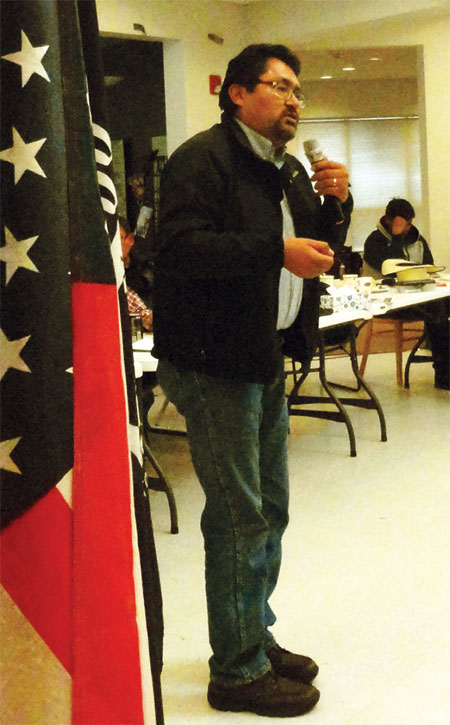
LEONARD GORMAN

Leonard Gorman, director of the Navajo Nation Human Rights Commission, addresses a gathering in Monument Valley in January 2016 where he described the constitutionality of the Voting Rights Act, encouraging the people of the Navajo Nation to get registered in order to exercise their right to be represented. Photo by Sonja Horoshko.

The voting districts at the time were judged to be denying American Indians equal opportunity in the political process because the commissioners were elected at-large, meaning everyone in the county could vote in every commission race. Under that system, however, no Native Americans were ever able to gain seats on the county commission, as they then constituted a minority of the population.

Part of the consent decree involved a change to single-member districts, so that voters would choose only the commissioner for the district they live in.

The change succeeded in producing Native representation on the county commission. In 1986, the first Navajo was elected to represent District 3, which at that time was approximately 89 percent Native American.

The commission districts remained unchanged after the 1990 and 2000 censuses, and even initially after the 2010 census. Commissioner Rebecca Benally, a member of the Navajo Nation and resident of Montezuma Creek in San Juan County, represents District 3 today.

The 2010 Census found Native Americans to have a slight majority in the county. But no more than one Native commissioner has ever been elected to the three-member commission, and only two Native members sit on the five-member school board.

Concern over the situation prompted the Navajo Nation’s 2012 lawsuit.

‘Fail strict scrutiny’

The county had argued that its new maps tried to create fair, racially proportionate districts that reflect the county’s geographic distribution. But Shelby disagreed.

In the ruling, he said he would appoint a “special master” to tackle the redistricting and would hold a status conference with the parties to get their input.

Working out district boundaries in the county’s nearly 8,000 square-mile rugged landscape is a challenge, Shelby acknowledged in the order.

“Proportional representation presented a challenge in San Juan County, which is roughly half Native American and half White but with an odd number of voting districts—five for the School Board and three for the County Commission,” he wrote.

The county’s expert, Kimball William Brace, tried to create two “safe” Native American school-board districts, two safe white school-board districts, and a district where the racial mix was about even.

Likewise, he tried to create one safe white commissioner district, one safe Native American district, and a third district that was roughly equally split.

But Shelby was critical of the results.

He noted that County Commission District 1 included both Spanish Valley, a burgeoning upscale suburb south of Moab, and Navajo Mountain, a part of the Navajo Nation 4 1/2 hours and 250 miles away by car. The two areas have little in common yet were lumped into the same district.

In the school-board district map proposed by the county, District 3 was bizarrely shaped, wrapped around District 4 almost in a horseshoe.

Such factors led Shelby to the conclusion that race was the main factor in the formation of School Board District 3 and districts 1 and 2 of the county commission districts.

“The court further concludes the County’s race-based districting decisions were not narrowly tailored to meet a compelling government interest, and thus fail strict scrutiny. Because these districts are racially gerrymandered in violation of the Equal Protection Clause, the court will not adopt the County’s proposed plans,” Shelby wrote.

The San Juan School District used the new boundaries in the 2016 election, but the county commission districts were not used in that election.

The Navajo plans

When Shelby requested that the county redraw the district boundaries he also requested a remedial plan from the Navajo Nation, saying if the county plan was unworkable he might adopt the Navajo plan.

“Clearly, as my office has demonstrated in other voter-rights complaints, the Navajo Nation, New Mexico and Arizona have significant experience in redistricting, unlike San Juan County,” said Leonard Gorman, director of the Navajo Nation Human Rights Commission.

He told the Free Press he was confident that the Navajo plans the nation submitted to Shelby comply with the U.S. Voting Rights Act.

But Shelby reconsidered the option to adopt the Navajo plans. Drawing new election districts is best done legislatively rather than by the courts, Shelby wrote. The Navajo Nation is not an elected legislative body in Utah, he noted.

“Given the County’s demographics; its residents’ legitimate, competing, and important interests implicated by redistricting; and its complicated voting rights history, adopting the Navajo Nation’s proposed redistricting plans—the product of an adversarial, litigation-driven process—could jeopardize, and possibly undermine confidence in, the legitimacy of the county’s new legislative districts,” Shelby concluded.

Gorman was taken aback. “I thought the judge would be more independent. The decision characterizes the situation that exists in San Juan County where the amount of disagreement and the working relationship with the county is not prone to bring people together. Models for voter-rights decisions have been reaffirmed many times regardless of the conditions on the ground.”

Up to the master

Gorman told the Free Press he was pleased Shelby found that plans for both districts (school board and commission) were unconstitutional, “but I wish the decision had been more expeditious. There’s always concern that the Navajo people have been placed in an inappropriate position using the districts that obviously do not comply with the Voting Rights Act, 1965, for their San Juan County elections, such as the upcoming 2018, and the recent 2016 primary and the general.

“I have a difficult time understanding how the system allows usage of district plans that are unconstitutional. The sitting commissioners and school-board members won those seats in inappropriate election districts.”

Gorman said the Navajo Nation has assured the county it will be participating in the coming efforts.

“I hope our work will be used by the special master, and that the Navajo Nation is viewed as invested in the remedial plan. It’s not appropriate to go back to 2011. The Navajo plan is the only plan that should be on the table.”

The San Juan County commissioners did not reply to emailed requests for comment from the Free Press, but the Salt Lake Tribune received an emailed statement from a representative of the commissioners who was not named in the story.

“Quality education for all of the children in San Juan is a top priority,” the Tribune quoted the statement. “We are looking forward to finally resolving this issue. The judge’s ruling on Friday was what we asked for two years ago, him to appoint a unbias [sic] master overseer of the boundary re-drawing. This will allow for all members of the county to have equal say in this important project.”

The 2010 census numbers used for the redistricting plans found the county population to be 52 percent Native Americans and 48 percent non-Hispanic whites.

The special master must use the 2010 numbers, Gorman said, “like everyone else in the country. I hope we adopt a plan by the end of this calendar year. In the next census the 2010 numbers become obsolete, but we use them to assess the 2020 numbers when we sit down again after that census.”

Gail Binkly contributed to this report.
Published in August 2017 Tagged

Transforming a river corridor: An ambitious partnership has battled invasive plants along 180 miles of the Dolores, providing job training for young people in the process

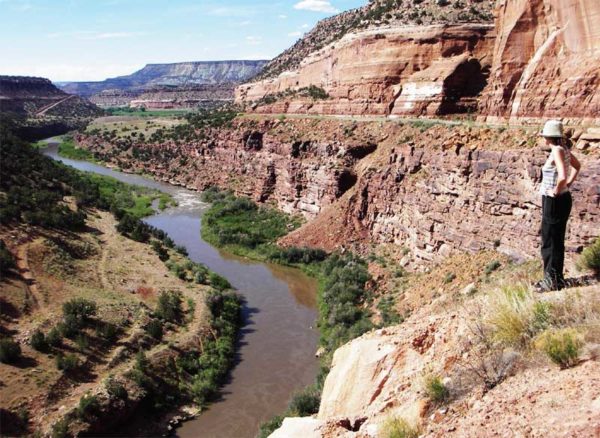
DOLORES RIVER BELOW MCPHEE RESERVOIR

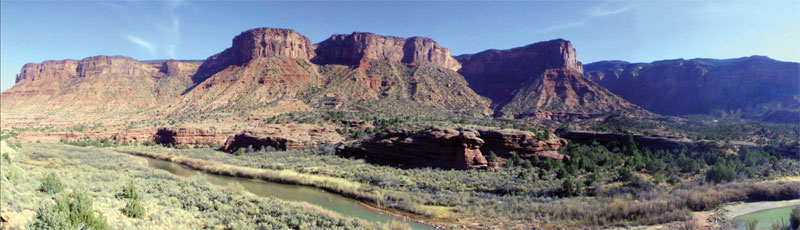
The Dolores River below McPhee Dam meanders through a rugged landscape. Over time, invasive plants such as tamarisk and Russian knapweed were choking out native species all along the corridor. Then the Dolores River Restoration Partnership, an alliance of numerous individuals and entities, stepped in. Photo courtesy of Dolores River Restoration Project.

What happens when you dam a river, use the resulting reservoir to irrigate 63,000 acres (sending the water to a different watershed), control downstream flows through human-dictated releases, and then have an extended drought?

The ecosystem changes.

This is what has been going on in the Dolores River corridor below McPhee Reservoir.

Ecosystem change is, of course, a constant and normal part of life on Planet Earth. Generally, earth’s various cycles and systems progress towards long-term stable ecological “climax communities.”

However, stable systems can be interrupted by sudden and drastic environmental changes – whether natural like avalanches, forest fires and droughts; or human-caused – such as clearcuts, dams, and pollution. In times of rapid change, some organisms are favored, while others become at-risk or extinct.

Enter the invasives

On the Lower Dolores River, the rapid changes wrought by the dam helped several non-native plants to push out native species, transforming the corridor. Tamarisk, also called salt cedar (Tamarix spp.), and Russian knapweed (Acriptilon repens), are the two primary invasive plants in the Dolores River riparian zones, but there are others. Those include the Russian olive (Elaeagnus angustifolia L.), Scotch thistle (Onopordum acanthium) and “white top,” or hoary cress (Cardaria draba).

How did tamarisk get into the Dolores River corridor? No one knows exactly, but humans are responsible.

One species of tamarisk, T. pentandra, was in cultivation in the United States in the early 1800s, but by 1880 had escaped into areas of Arizona and Texas. Currently in the U.S. there are several species of tamarisk, but they are rabidly hybridizing and becoming increasingly difficult to tell apart.

Tamarisk, originally from the deserts of Eurasia and Africa, has adapted readily to drier Western waterways. It thrives in salty alkaline soils, with seeds that need to be soaked in order to germinate – making it prolific all over the Southwest in drier riverways subject to seasonal runoff.

Tamarisk can establish monoculture “forests,” which not only crowd out native plants but also, due to their long taproots, suck up water reserves used by native plants. Dense forests block river access, offer generally poor wildlife habitat, tend to increase soil salinity, and present a wildfire hazard.

In 2006, Congress passed the Salt Cedar and Russian Olive Control Demonstration Act, which provides both federal and state support for removal of those two plants. Locally, the Dolores River has benefitted from this law.

Forming a resistance

In 2008, representatives of the Bureau of Land Management, Tamarisk Coalition, and The Nature Conservancy began talking about doing something to fight the transformation of the river corridor into a tangle of non-native species. In 2009, an ambitious private-public effort called the Dolores River Restoration Partnership was formed, with funding from the Walton Foundation and other sources. (Disclosure: Free Press editor Gail Binkly has taken minutes for meetings of DRRP.)

“The partnership wanted to address some of these ecological concerns,” said Rusty Lloyd of the Tamarisk Coalition.

Now, after eight years of work along 180 miles of river corridor in two states, the Dolores River Restoration Partnership, or DRRP, stands as a notable example of how organizations with different goals and different stakeholders can work together for the common good. Since DRRP was established, more than 30 agencies, dozens of private landowners, hundreds of volunteers, and hundreds more youths employed by various conservation corps have worked to not only rid the river corridor of invasive plants but to restore native species.

Young at heart

A critical element to the effort was deciding who would do the on-the-ground work involved in the massive effort of restoring native vegetation along the corridor, much of it remote and accessible only by boat.

DRRP’s leaders began thinking young. They turned to the Southwest Conservation Corps, which became a key partner.

“One of our really big goals was to utilize young people as a resource,” Lloyd said. “We bring youth out to work hard in the outdoors, where they gain skills.” Currently, DRRP has crews from the Southwest, Canyon Country, and Western Colorado Conservation Corps working in the river corridor.

Mike Wight, who was the river-restoration director for the last six years, coordinates the conservation-corps crews. Young adults range in age from 18 to 26. Many are local and may have had difficulty finding other employment opportunities in the area.

They receive training before they set out: Wildland Saw Training, on how to operate chainsaws in wilderness, maintain and repair them (the same training firefighters undergo); and herbicide-applicator training through the State of Colorado, to ensure that herbicides are applied correctly and safely.

Crew members may also learn Wilderness First Aid, since they camp out and work in remote areas. Others specialize in native-plant identification. All trainings add to the skills and experience they will take with them when applying for jobs later on.

Lloyd and Wight both are proud that the DRRP has trained over 350 youths since the partnership began. According to Lloyd, this the “shining spot” of their efforts: “We are using young people as a resource and engaging them so that they become the next generation of land stewards.”

Quite a few of the young adults who have worked with DRRP are just out of college or completing a college internship. They often go on to find permanent employment with the BLM or Forest Service, in land-management positions, forestry or firefighting; or they continue with the conservation corps and AmeriCorps in leadership positions. Some branch out to work in other notfor- profit organizations.

Most “alumni” note that they enjoy living and working outside and hope to find permanent jobs in the field – some return year after year because they enjoy it so much.

Many individuals involved in the projects maintain a lifelong connection and commitment to the river, the land, the region, or the work – which is exactly what DRRP means when they say they are grooming the next generation of land stewards.

At press time, Wight had crews gearing up for a two-month-long summer project beginning in June, in which two-person teams carry out rapid vegetation monitoring to assess the number of invasive vs. non-invasive plants, the canopy cover, and the status of tamarisk beetles at specific sites. In July and August, they form four-person teams that conduct secondary weed and tamarisk re-treatment and maintenance.

DOLORES RIVER RESTORATION PROJECT

The Dolores River Restoration Partnership is moving into a lower-key phase of monitoring,
after eight years of work on invasive-plant removal in the river corridor. Courtesy of DRRP.

In the fall the crews shift to three eight-person teams, one crew from each of the conservation-corps groups. These teams spend 10 to 12 weeks doing what Wight calls the “heavy lifting,” cutting down large tamarisk and making brush piles.

“Our project activities are directed by the BLM,” explained Wight, who said that each of the BLM field offices involved (Tres Rios, Grand Junction, Moab, and Uncompahgre) have ecologists who develop restoration plans according to local ecology and district policies. This means that in some locations brush piles may be burned, while in others they are left for wildlife habitat, or chipped for mulch.

The removal of the invasive plants and reintroduction of native species is a long-term project, including manual and mechanical (with chain saws and excavators) removal of the tamarisks, along with herbicide treatment of rootstocks and knapweed. When larger tamarisk trees are cut, they often regrow from the trunk. To prevent this from happening, crews treat the trunks with Garlon® 4 Ultra specialty herbicide in oil, applied to the base of the trunks in late fall and winter.

Meet the beetles!

Additionally, biological control using tamarisk beetles has been found useful. The tamarisk leaf beetle (Diorhabda spp.) was first released in the West in 2001 after being tested for over 10 years to make sure it would not devour native plants. The beetle and its larvae feed on the leaves of the tamarisk, drying them out and turning them brown or yellow. It can take 5-7 years of beetle infestation to kill a tamarisk tree, but infestation curtails reproductive viability, and can help native plants recover.

The beetles present in the Dolores River corridor were first detected in 2007. Lloyd said they suppress tamarisk seeding but there can be drawbacks. “Since the tamarisks rapidly defoliate [under the beetle attack], bird nests, such as those of the Southwestern willow flycatcher, which is an endangered species, can be exposed.” Some reptiles, including lizards and snakes, are also impacted by a rapid tamarisk die-off.

But Wight said the beetles are generally helpful, because if a tamarisk tree is already compromised due to beetle infestation, it will die when cut, thus eliminating the need to treat with herbicide. “The beetle can get the small seedlings,” he said.

Return of the natives

In addition to removing invasive plants, DRRP replants areas with native species and monitors the results.

“Once you remove the invasives, it opens it up for other invasives to move in, so we promote the growth and establishment of native plants,” Lloyd said.

In October 2016, students from Paradox High School met with Dan Oppenheimer, then the DRRP’s coordinator, at the Bedrock boat ramp, where they monitored over 2,000 native plants that had been planted in an area where tamarisk removal had been completed. The students planted the native grasses Alkali sacaton and sand drop seed, as well as the native shrub three-leaf sumac.

Since the DRRP began working in the Dolores River, crews have removed tamarisk from a 180-mile stretch of the river, beginning below McPhee Dam at Bradfield Bridge and working downriver to Moab, where their current operations are focused.

But even after removing the tamarisk and knapweed, thistle and whitetop, the work is not over. “We have to come back to maintain and monitor, which may take another three to four years,” said Lloyd.

Wight added that the monitoring work is essential – “it gives us a sense of where we’re at in the process.”

This year DRRP will continue their work out of the Moab district, work with private landowners in the watershed, and monitor and maintain what has already been accomplished. The group developed a “transition plan” in 2014, which details how the shift from removal of invasives to maintenance and restoration will take place.

Enter the water!

DRRP works with other organizations, including the grassroots Dolores River Dialogue and The Nature Conservancy, which did some pre- and post monitoring of a recent “flush” of the below-dam corridor. The flush was a 72-hour release of 4000 cubic feet per second from McPhee Reservoir on May 4-6, planned by the Dolores Water Conservancy District. The release was intended to help mimic the natural hydrological cycle of springtime runoff flooding, which is supportive of native plants, since some, like the Fremont cottonwood or coyote willow, need the overbank flooding to reproduce

Both Lloyd and Wight lauded the collaborative efforts involving the Dolores Water Conservancy District and Montezuma Valley Irrigation Company to communicate and control river flows below the dam to correspond to the timing and levels of natural flows, saying it has been a win/win situation this year.

Ecological, agricultural, and recreational needs were juggled, with flows monitored and releases planned to maintain reservoir levels yet allow ecological benefits and recreational access.

“This year we had [below-dam] flows in early April for the first time, which means we’re likely to see more natives come back” as a result of the increased water in the below dam corridor, Wight said.

This year’s bountiful snowpack meant more water could be released downriver, enabling crews from DRRP to get out on the river to monitor in May. One crew spent two weeks on the river from Slickrock to Bedrock, while another raft-supported crew spent four days in the field between Gateway and Dewey.

Although secondary treatment and maintenance activities are not as “sexy” as the initial attack, Wight said they are crucial, since they provide the data tracking results of DRRP’s efforts. There is broad consensus among DRRP’s many partners that, having spent more than $6.5 million on DRRP projects in the past six years, the partnership cannot afford to sit back now and let the corridor slide back to an undesirable state.

Wight believes the money has been well spent, since there is “big evidence” of change up and down the river.

Recognition

Others agree. The Dolores River Restoration Partnership has received numerous awards and recognition for its efforts. In 2011, the Public Lands Foundation gave DRRP a “Landscape Stewardship Certificate of Appreciation,” for advancing and sustaining communitybased stewardship on public lands administered by the BLM.

In 2014, the Colorado Nonprofit Association awarded DRRP the 2014 Colorado Collaboration Award, a statewide award for an organization that exemplifies collaboration between many different entities. DRRP used the $50,000 prize to support long-term stewardship of the Dolores River.

Most recently, in December 2017, The Nature Conservancy awarded the Southwest Conservation Corps, Western Colorado Conservation Corps, Canyon Country Youth Corps and director Mike Wight the Phil James Conservation Award. This is given to an individual or organization for extraordinary contributions or achievements that further the mission of The Nature Conservancy.

“The Dolores River Restoration Partnership is an example of what can happen when public and private individuals, governments and nonprofits groups come together and carefully craft a measurable vision, tear down boundaries of many kinds, and then put forth a lot of work, sweat, and grit to make it happen,” commented Marsha Porter- Norton, the partnership’s longtime facilitator.

“The results we are creating together are a restored river corridor, lasting positive relationships, and many young people gaining foundational skills that will help them the rest of their lives.”

Published in July 2017 Tagged

Filling in the gaps: A new book fleshes out the Bears Ears story with native testimony

Have you wondered if the people quoted in published news have more to say than the broadcast time or news space allows? If so, and you have been following the stories of Bears Ears National Monument, you are in luck.

Torrey House Press, a non-profit publishing company promoting conservation through literature, has just released Edge of Morning: Native Voices Speak for the Bears Ears. The book is a collection of personal essays, poems and interviews by native writers sharing candid feelings, familial ties and traditions, firsthand accounts of experiences with legal and governmental processes during the effort to protect the land.

The book follows on the success of Red Rock Testimony, a chapbook of non-native and native writing originally published at Torrey House in 2016 exploring the beauty and natural wonder of the area but also offering timelines of the efforts to re-designate public lands in Utah, a record of the public-lands designation process and the benefits of conserving the land for future generations to enjoy.

What the news left out

The recent movement to recognize Bears Ears as a place worthy of federal protection began six years ago with a handful of San Juan County, Utah, Navajo (Diné) residents, the founders of Utah Diné Bikéyah. The fledgling group understood the value of the region to native culture, and believed there was a need for federal protection that could preserve the cultural wealth of the ancestral record that links native tribes to the land for a millennium.

JACQUELINE KEELER

Portland journalist Jacqueline Keeler speaking during Women’s History Month at the Pearson Air Museum, in Oregon. She is the editor of Edge of Morning: Native Voices Speak, a Torrey House Press anthology of Native American writing about Bears Ears National Monument. Courtesy photo.

In 2015 the Diné group invited the Ute Mountain Ute and Uintah Ouray Ute tribes as well as the Zuni and Hopi pueblos to join them and create the Bears Ears Intertribal Coalition.

Few news stories covered the beginning steps of the Utah Diné effort to preserve the region. But over time the topic gained traction as the Utah congressional delegation, led by representatives Rob Bishop and Jason Chaffetz, cobbled together a seven-county public- lands use initiative they hoped to pass in Congress that would transfer management of federal public lands to state control and open large swaths of Utah to potential mining and the extraction industry.

Conflicts between Utah Diné Bikéyah and UPLI and the struggle to create a designation plan that satisfied the interests of all the stakeholders, including the native tribes, were widely reported. Soon Bears Ears – the moniker, issue and the place – was in the national spotlight. Regional, national and even global news began reporting the topic. Readers grew familiar with a cast of characters from all sides of the debate.

What is hard to report deeply during such vigorous public discourse is the humanity behind the scene. Who are these people with vested interests in this land and what do they say that didn’t make the paper?

Storytelling

Bears Ears is a multi-cultural, intergenerational economic and spiritual issue that has been covered in-depth by many news sources. It is complex.

But a new publishing platform is now introducing readers to at least one side of the story. Edge of Morning is not journalism, but an accounting of recorded history that will help readers learn more about the native point of view on a deep and personal level.

Some of the contributors are familiar to those following Bears Ears reporting – Willie Greyeyes, Regina Lopez Whiteskunk, Jonah Yellowman. The book is expansive, introducing a multitude of tribal points of view, some contributed by authors well-known in Native American literature such as Simon Ortiz and Luci Tapahonso.

But it is the addition of unpublished voices that layers the collection deeply with the meaning of “land,” its value and caretaking. It is a tender, rich collaboration of voice – youthful, elder, academic, traditional, contemporary, respectful and humble. The mixture enlightens the non-native reader on topics at the core of native belief, shedding clarity on convictions that news media can only touch briefly.

Red Rock Testimony

Kirsten Johanna Allen, director of Torrey House in Salt Lake City, Utah, began searching for a publishing model to present reflective individual testimony about the land around Bears Ears. At that point in 2015 a group of writers based in Salt Lake City were considering ways to address the issue. They collected submissions from 34 writers connected to Utah expressing their experience of wilderness, exploration and solitude in the state. Red Rock Testimony, a chapbook, was born four weeks later.

“When Bishop published a draft version of the Utah Public Lands Initiative,” says Allen, “we had to do something.”

The chapbook contained writing by non-native and native contributors. Whiteskunk told the Free Press the request came at a time when she was extremely busy. Her submission was written between flights in airports. But she welcomed the opportunity to explore her family’s deep history with the land.

“I learned so much during conversations with my grandparents – how the rocks take on a life of their own, and when and why we held family gatherings there. When Red Rock Testimony was printed I was so honored to be included among the well-known writers.”

By mid-June 2015, Allen and Stephen Trimble, editor of Red Rock Testimony, hand-delivered cartons of the chapbook to members of Congress, President Obama, and Department of the Interior directors and staff. They hoped it might influence members of Congress as they made decisions about the public lands in Utah.

It offered a “remarkable case for restraint and respect in the incomparable redrock landscape of southern Utah,” said Allen, who told the Free Press that the chapbook “became an exhibit about the effort driving the time-frame, painting a picture about cultural landscape protection.”

Call for native voices

But the chapbook was not enough, she explains. The voices of the intertribal leadership were growing more articulate.

“Their effort was an intensity sustained over a long, long period of time and their voices only grew more powerful.” She felt the native writers needed their own book. Edge of Morning began with that premise. “I saw the book as offering a stage for native voices, and we needed a native editor.”

She turned to Jacqueline Keeler, who had contributed to Red Rock Testimony. She’s a journalist/writer and a Navajo/ Yankton Dakota Sioux living in Portland, Ore., who has been published in Salon.com, Earth Island Journal, Indian Country Today and The Nation.

Keeler told the Free Press her tribal affiliation helped the Edge of Morning contributors go deeper into the subject.

“The size of the registered Navajo population is 350,000. Another 200,000 Navajo people qualify as members of the tribe but just haven’t signed up yet. That’s a half a million people. In the late 1860s our population was reduced to 5,000 after the Long Walk to Bosque Redondo and the incarceration there. We are not going away,” she said. “The Navajo population is equal to Iceland’s population today and the Navajo land base is the size of Ireland.”

A map of writing

An interview with Jonah Yellowman opens the book’s first chapter, “Origin Stories/Interviews with Bears Ears Inter-tribal Coalition Organizers.” Talking about the vitality of prayer, he says, “You learn from that, from a patient, every time you do a ceremony for somebody. It adds on to your belief, it adds on to a story, you might be praying about using a story, a trail to walk through.”

Keeler organizes a contextual path through the book that begins in the Bears Ears neighborhood and gradually moves readers into broader indigenous concepts of sovereignty and sacred cultural landscape.

In an interview in the first section, Greyeyes offers details of a back-and-forth during a public presentation on Bears Ears held in Salt Lake City, an example of recurring negative questions from audiences.

“The gentleman in the back did not catch me off guard when he said, ‘Why are you involved [with the Bears Ears National Monument proposal] when the Navajo Nation was paid for that land back in the 1980’s?’ 1984, in fact, I told him. I was on the Navajo Nation Council — the Budget and Finance Committee at that time when the federal government says okay, we will settle this land claim issue for $32 million. The thing that he was trying to do was to possibly corner me. And I said, that’s not the issue. The issue is that BLM land is public land. Anybody throughout the United States has a say about public land. If they have a better land-use plan they can propose it. And this is what it is, our proposal is a land use plan. So I offered him a pamphlet of what is allowable according to the national monument proposal.”

Academics and activists

In Part Two, Keeler collects writings from academics, well-known scholars and activists addressing the topic, “For This Land, For the Diné Bikéyah.”

Andrew Curley (Diné), is a postdoctoral fellow in the Department of Geography at the University of North Carolina at Chapel Hill. His work is focused on indigenous sovereignty, political ecology, coal and development.

In the book he explores the strategy of leveraging federal authority effectively, such as at Canyon de Chelly and Navajo National Monuments. “We allowed federal management over these archaeological sites in order to preserve them for future generations, [preventing] state claims and … exploitive practices of non-Native traders.” Although Bears Ears lies outside the boundaries of the Navajo Nation, he says, “we should promote federal management to prevent private or state-sanctioned development that is status quo.”

According to Hopi archeologist Lyle Balenquah, “experience [of] our ancestral landscapes aids in the understanding of what a cultural landscape really is. In an age when indigenous oral histories are continually challenged as viable sources of information … the need to defend our histories becomes paramount.”

Memory of place

The essays in the third section, “Our Usual and Accustomed Places,” address the fight for cultural preservation and access to public lands. It is here the reader finds essays on Standing Rock and Keystone XL pipeline struggles and how they reflect the effort to recognize tribal sovereign rights.

Yankton Dakota elder Faith Spotted Eagle proposes hope that native and non-native relationships will strengthen with the youth.

“I remember my father saying something in the 1970s. I think it was after I told him about Rachel Carson’s writing and he was telling me, he said, you know, when the Euro-American people came to the United States they didn’t have too much body memory of being on this continent,” Spotted Eagle recalls in an interview with Keeler. “He said, ‘as the years go by, and as they bury more relatives on this Turtle Island [the U.S. continent], their spirits are going to have a memory of this place, and they are going to become more and more what we call indigenous now.’ And I think that’s happening because they have relatives buried here. So, I think the younger generation that is coming up has an attachment to this land, finally.”

Whiteskunk says the experience of seeing her words in print was very moving. “I am certain we can bring healing through Bears Ears because in both Red Rock Testimonies and Edge of Morning there is a shared similarity to how all people view the landscape.”

Red Rock Testimony has evolved into a hardcover book titled Red Rock Stories. Information about it and Edge of Morning can be found online at Torrey House Press.

Published in July 2017 Tagged

Coal-fired furor: A power plant wins a lease extension amid a haze of controversy

After eight hours of debate, Navajo lawmakers approved a replacement lease permitting the controversial Navajo Generating Station near Page, Ariz., to continue operating until December 2019.

In February, the Salt River Project, which operates the coal-fired power plant, and the other owners – the U.S. Bureau of Reclamation, Arizona Public Service Co., Tucson Electric Power Co., and NV Energy – notified the Navajo government that they would close the plant in December of this year if a lease extension with the nation was not negotiated and reached by July 1.

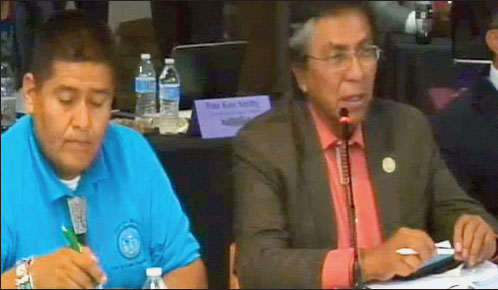
NAVAJO NATION COUNCIL DELEGATE LEONARD TSOSIE

Navajo Nation Council Delegate Leonard Tsosie, right, questions a provision in the replacement lease for the Navajo Generating Station during a heated special meeting on June 26. The council ultimately voted to approve the lease. (Screen shot.)

The 18-4 vote on June 26 extended the lease for two more years, along with employment for 800 people at the plant and the Kayenta Coal Mine on Black Mesa, owned by Peabody Western Coal. Employees at the plant and the mine are mostly Navajo and Hopi workers living in communities sprinkled throughout the high-desert northwestern corner of the Navajo Nation and on Black Mesa, where estimates of unemployment can vary between 50 and 70 percent.

The replacement lease sets guidelines for retirement procedures at NGS, scheduled to begin after 2019 unless a new owner/operator can be found to run the plant for the duration of the 35-year replacement lease and continue the revenue stream many families depend upon.

Salt River Project deputy general manager Mike Hummel said in a company statement that the agreement provides meaningful benefits for everyone involved while creating a path forward during the challenging transition period after December 2019.

“Importantly to us, the replacement lease paves the way for SRP employees at the plant to remain on the job for an additional two-plus years and allows us to fulfill our commitment to redeploying all regular NGS employees to other SRP facilities after 2019 should they so choose.”

NGS is the largest coal-fired plant in the western U.S. and the seventh-highest carbon-dioxide emitter. According to the U.S. Environmental Protection Agency, it also releases the second-highest amount of visual pollution in the country.

In 2012, the EPA gave NGS until 2030 to reduce the haze from nitrogen oxide emissions affecting visibility and health on many nearby public lands, which include Grand Canyon National Park, Grand Staircase-Escalante National Monument and the new Bears Ears National Monument.

Sovereignty vs. jobs

But the Navajo council debate over the NGS lease extension did not focus on the haze over public land, environmental or health issues during the special session held in St. Michaels, Ariz. Instead, the legislature scrutinized legal options and the question of jurisdiction, authority and sovereignty.

One question that arose was: If laws are broken by the company while operating the plant before it closes or during the various decommission and remediation stages, where would claims by the Navajo Nation be decided?

Council delegates grilled Navajo Attorney General Ethel Branch, who attended the meeting with a team of Navajo Department of Justice lawyers. They represented the Navajo Nation in negotiations with the SRP and the other participants in the NGS lease agreement.

Delegate Amber Kanazbah Crotty, representing six chapters south and west of Shiprock, N.M., introduced an amendment to the lease calling for Navajo law to be applied in conjunction with federal and state law. The amendment, which ultimately failed, unleashed a firestorm of discourse around waiving the right to apply Navajo law and court jurisdiction, and therefore the nation’s sovereignty, to business conducted by outside corporations on Navajo land.

Crotty asked the DOJ for clarification on the litigation process relating to any challenge or dispute brought by the nation “after the surrender [of sovereignty] in the lease, meaning for 35 additional years.” What body of environmental law will apply? she asked.

Branch explained that federal law applies under the Comprehensive Environmental Response, Compensation, and Liability Act (CERCLA), commonly known as the Superfund, and Surface Mining Control and Reclamation Act. Any claim alleging a breach of federal environmental law would be heard in federal court, according to language negotiated in the proposed lease extension under discussion.

If federal law is not applicable, then the case defaults to state law, and state court – in this case, Arizona’s, she said. “The lease includes a covenant not to regulate. The Navajo Nation cannot impose its own law, and federal and state [authorities] will not enforce Navajo law.”

Council Delegate Walter Phelps, representing six chapters in the western agency, asked the attorney general if the Treaty of 1868, especially where it references rights-of-way for infrastructure, would apply. Branch said the treaty reserves certain rights to the Navajo Nation on a case-by-case basis. As an example, the nation can reserve the right to settle provisions that apply to state law in order to do business.

Treaty rights are what the Navajo Nation has, said Branch. “It’s up to us to waive those rights on occasion and we waive rights when it’s necessary to make the other party comfortable in negotiations, in order to build a relationship.”

Branch explained that the Navajo EPA is working on Navajo environmental policy regulations, but does not have any at this time. “This is important to the cleanup at NGS. We pushed for Navajo law with respect to settlements. [The waiver of Navajo law] was not given away lightly in negotiations. In exchange we got a deal we hope council can live with.”

Branch explained that the corporations are submitting to a five-year re-opener clause, meaning every five years throughout the life of the lease it can be revisited and renegotiated. “It will strengthen our position,” she said. “There is a certain amount of distrust on both sides. We need to encourage comfort” in how the law is enforced.

But Delegate Leonard Tsosie, representing chapters in the eastern side of the reservation, said, “I am troubled by how we are being advised,” pointing out to the lawyers that the lease language says the Navajo Nation agrees to not regulate construction on the plant site, maintenance or decommissioning of the plant if and when it shuts down. “Navajo law does not apply?”

Tsosie said that the nation has been in a relationship with the corporations now for well over 50 years. “I never understand why they [the outside businesses] are afraid of us. In the original 1969 lease it says ‘NGS, you will restore!’,” referring to restoration of the site if the business closes. “Now what part of that don’t we understand? In this lease it doesn’t say that. . .We don’t need tons of new laws to interpret that the Navajo Nation was not part of this lease extension. We were bullied into it. The owners said, ‘Take it or leave it.’”

Later, Crotty explained on her Facebook page that after her amendment failed, another amendment passed waiving the right to sue for contamination involving materials such as ash and solid waste. She could not support it.

“The Navajo Nation should be able to retain all rights to sue under any environmental law for future, current or past violations.”

Coal vs. renewables

Peabody Western Coal, owner of the Kayenta Coal Mine on Black Mesa, supplies coal to NGS and employs just over 300 local native workers. The company has hired a research firm to find a buyer for the plant. They hope a new owner/ operator can keep the plant and mine operating and profitable for the full 35- year lease replacement approved by the council.

But the price of natural gas is driving coal out of the market today and many people say chances are slim that a buyer will be found.

When news of the impending shutdown reached Navajo Nation President Russell Begaye last February, he reached out to President Trump’s administration, asking for federal assistance.

U.S. Interior Secretary Ryan Zinke weighed in after the late-night vote, issuing a statement the following morning saying the lease is a top priority for Interior and a “first step” to work out a way for the mine and plant to continue operations after 2019.

But the pressure is on. SRP wants the nation to make a decision on the new plant owner by Oct. 1.

For now, the replacement lease assures the Navajo government $110 million in lease payments and $39 million in fuelpurchase revenues in 2018 and 2019. It provides for long-term monitoring after 2019 and allows ongoing operation of transmission lines from the NGS to sites off the reservation.

The lines are a valuable asset to renewable-energy groups hoping to adapt the plant to projects that shift Navajo economic dependency on fossil fuels to solar, wind and other renewableenergy production.

“The rest of the world is moving emphatically toward a clean-energy economy,” said Nadine Narindrankura of Tó Nizhóní Ání, a Navajo community organization located on Black Mesa.

“The utilities are running away from NGS and coal as fast as they can because coal can no longer compete economically against cleaner sources of energy. It’s ludicrous for our leaders to cling to coal. Tying our people to a sinking ship will only bankrupt us and put off the inevitable for two short years.”

The Navajo Nation has a vast potential for solar and wind power. Diné CARE, a grassroots Navajo environmental group, has joined Tó Nizhóní Ání in urging tribal leaders to work toward an economy that allows the Navajo Nation to provide for its people for generations to come, not just for a couple of years, their joint statement says.

“From here, the nation as a whole needs to make a commitment to transitioning our economy, energy production and leadership,” said Jessica Keetso of TNA. “With the 2018 elections coming up, we need to elect leaders who know what climate change means and the importance of developing sustainable businesses and infrastructure.

“The Navajo Nation needs to put solar and wind energy on or near the NGS site, so we can utilize the transmission lines and receive revenue back to our nation. It’s the only thing that makes sense and it will be one of the only good things to come from this senseless replacement lease.”

Despite disappointment over other areas of the lease agreement, both Tó Nizhóní Ání and Diné CARE are relieved that language from the original 1969 NGS lease that was relevant to water rights was included as an amendment, as they suggested to delegates during the council hearings.

The amended language on water is not a binding agreement, they say, but will build a solid foundation for the Navajo to regain full rights to the 50,000 acrefeet of Upper Colorado River Basin water that they believe rightfully needs to be returned to the Navajo Nation.

NGS owners also agreed that the Navajo Nation could retain additional NGSassociated assets, including commercial buildings, the 70-mile railroad from Black Mesa to the plant, and the lake pump system, explained Hummel.

The savings for not decommissioning these assets and the transmission lines has been shared with the nation and amounts to more than $18 million, he said.

Much remains to be decided by the Navajo legislative and executive branches. One of the passing amendments established five options for SRP payments to the nation. Although the total, $110 million, looks like a lot of money, the reality is that the money has a human face, argued councilman Seth Damon.

Six chapters, 800 jobs, and up to 10,000 people are directly impacted by the decision to keep the plant open for two more years and possibly longer. And the nation’s general budget (and therefore every chapter in the nation) is also dependent on royalties from the coal mine and lease payments from plant operations.

Damon asked who would make the decision about how that money is paid to the nation. “The money is specifically for the people who will not have jobs in 2019,” he said. “It’s to help the community members out there in the Western Navajo Agency.

“Who’s going to make that decision – up-front one-time payment, installments, or amortize? The council must decide by December. We don’t have the best possible lease but we do have the best possible way to support our people.”

Tsosie voted against the replacement lease, along with Crotty, Nelson S. Be- Gaye and Jonathon Perry.

“Why aren’t we negotiating from a position of strength?” Tsosie asked. “Instead, we have locked in our future leaders. Serious environmental damage could happen and we cannot sue. . . We take the oath of office to defend the laws of the Navajo Nation – how can we do away with them and suggest the federal courts be the arbiter?.”

He reminded the delegates that they warned in 2012 that NGS would not go on forever. “Even if you are a NGS employee, you have to think of your Navajo Nation, not just your paycheck. In the end, who’s going to stay and who’s going to leave in two years? Buying a little bit of time puts shackles on our nation for 35 years.”

Published in July 2017 Tagged ,

On the road again

GRADUATION … ‘Twas a gathering of the Friedberg / Goodtimes / Sante / Hollinbeck / Willow / Fan / Coyotl / Oshá / Thorneycroft / Rosenthal / Modena clan up in Walla Walla last month to see Sara Mae Friedberg graduate from Whitman College … What was it that most impressed Sara about this liberal arts college where she got a degree in geology? “The people and the teachers,” she said without hesitation. “I’ve met some of the most amazing folks attending school up here.”

ROAD TRIPPING … My oldest son and I drove up to Walla Walla from Norwood. We took three days, exploring blue highways instead of bombing up the Interstate. He just turned 30, is on the path of recovery from a lingering illness, and it was great having that much time together for an adventure.

WYOMING … We caught a spring storm on the way north via Mack. Plans to camp out in Flaming Gorge evaporated as snow flurries began dropping out of the clouds … Hungry, we stopped for a quick bite at Crazy Ate Café Steakhouse in Mountain View. Since I grew up in Mountain View, California, it was fun visiting Mountain View, Wyo. The restaurant name was a bit off-putting. Flip names rarely suggest choice cuisine. But my son is a modern young man. He doesn’t rely on intuition when eating out (like his Pops, which usually results in uneven results). He checks Yelp. Crazy Ate had good reviews, and it was true. A good meal. A lovely waitress who was genuinely friendly. Score one for technology, and rural Wyoming food … We kept hoping the storm would let up as we traveled northwest, but no luck. So we settled on a cheap hotel room in Evanston. Yelp saved us from a bad one, and we hit on the Vagabond Hotel. Inexpensive. Clean. Nothing fancy, but a lovely restful night. It saved us from waking to below-freezing weather … Serendipity led us to Serendipity – a downtown Evanston bookstore, antique shop and coffeehouse with great organic offerings, no tips (since a sign says they pay a living wage and tips aren’t necessary) and the tastiest breakfast sandwich I’d ever had.

FOSSIL BUTTE… National monuments are in the news. The current administration seems intent on preventing the preservation legacy of past presidents. Checking our maps, we got intrigued with the Fossil Butte National Monument in Wyoming. We’d never heard of it, so we detoured up to visit it. What a gem. We learned about the geology of the area, an ancient lake that preserved a treasure trove of fossils from prehistoric animals and plants. The visitor center was a crash course in paleontology. We could have spend a couple days there, but even a couple hours was a great learning. The ranger was incredibly helpful, and knowledgeable. And it was free. Definitely a site I want to revisit.

GEYSER … Another serendipity awaited us in Idaho, at the town of Soda Springs. We saw a sign that said “Geyser,” so we followed the arrow, and as we pulled up to a large travertine circle, a giant geyser shot up a hundred feet or so into the air. Turns out the Oregon Trail town had been the site of hundreds of springs. In the ’30s, they tried to drill into the formation to create a hot springs pool, and hit a geyser of water. The Interior Department eventually asked that they cap the geyser, because it seemed to be affecting the geysers in Yellowstone. So it became a “captive geyser,” allowed to spout off on the hour for a few minutes. We had hit it right on the button … Turns out the area had its own Steamboat Springs, just like Colorado. Local historian Tony Varilone said that pioneers heard the rumbling and roaring from the spring as soon as they entered Bear Lake Valley. And just like in Colorado, the springs were destroyed. In the Idaho case, they built Alexander Reservoir over the top of it. Although there is a video on-line of the old spring when the reservoir was at an historic low: https://www. youtube.com/watch?v=3A7cqxY4MQk

BASKETRY … Having had the good fortune to study with Pomo basketweaver Mabel McKay in California back in the day, I was delighted to give a first lesson in coil basketry to kids from the Telluride Mountain School on their class experiential trip to Mesa Verde National Park last month. It’s a simple technique. Basically just a wrap and tie, although – as in any craft – there are tricks … Traditional materials were soaked and woven while wet, which led to arthritis in the hands of many older practitioners. So I quickly switched to rope for the woven inner part and brightly colored yarns for the outer wrap … I call my pieces Wall Mandalas, since they are meant to be displays of color and design rather than to hold things in.

WEEKLY QUOTA … “No wonder psychedelics are threatening to an authoritarian religious hierarchy. You don’t need faith to benefit from a psychedelic experience, let alone a priest or even a shaman to interpret it. What you need is courage – courage to drink the brew, eat the mushrooms, or whatever it is, and then to pay attention, and make of it what you will. Suddenly, the tools for direct contact with the transcendent other (whether you call it God or something else) is taken from the hands of an anointed elite and given to the individual seeker.” (Dennis McKenna in The Brotherhood of the Screaming Abyss.) Dennis, who grew up in Paonia, will be a featured guest at this year’s Telluride Mushroom Festival, Aug. 17-20.

BOZYDAR MIKOSZ … That’s the name of a precocious 7-year-old poet from Palisade who’s published a lovely new chapbook of his own short poems and dazzling illustrations by regional artist Vinje. The book is called Dead Mouse On a Dog Walk (Scher & Bradley Publishing, 2016) … The title poem is our Talking Gourd selection this month.

Art Goodtimes writes from San Miguel County, Colo.


THE TALKING GOURD

Dead Mouse on a Dog Walk

I’m a dead mouse, dead mouse
there along your dog walk
laying in the grass
with my feet up
on my back.

I’m a dead mouse, dead mouse
there along your dog walk
see me everyday
watch my body
melt away.

Down, down my body goes
right into the ground
my fur and bones.

I’m a dead mouse, dead mouse
there along your dog walk
then will be a day
when I will go away.

— Bozydar Mikosz

Published in Art Goodtimes

What’s free?

Answer is – nothing! Shucks, even this Free Press isn’t free of charge, unless you took/stole a copy without paying for it, shame on you! Over the years I have frequently heard the phrase “get some free government money.” More recently, when the Forest Service began closing historic roads for access and use, many were upset that the “free” roads were being closed. Well, I hate to bust your dream bubble, but there is no such thing as “free government money” or roads, etc., built with government money. The government does not have any money, it simply takes it from you, me and entrepreneurs and doles it back out to others to do “government projects.” Biggest (and worst) wealth-redistribution system ever conceived.

Now to get to the issue at hand, we need to understand that the many roads, trails, ponds, even many reservoirs we use for recreation were mostly constructed by private individuals, loggers, miners, ranchers and homesteaders. The larger reservoirs used the taxpayers’ earnings. These are the same roads, trails, waters, etc., that we have become accustomed to using for personal recreation such as hiking, biking, camping, four-wheeling, boating, fishing, etc., all for “free.” We tend to forget, or probably never knew, that what we use for free recreation was paid for, and still is, by someone else. I’m not saying that is bad; however, we must recognize that we do not have a “right” to something that is not actually ours.

In the formation of this country, the Constitution was specifically designed to provide for private land ownership and very limited federal ownership only for forts, magazines, arsenals, and dock-yards and only with approval by the states. There was no provision for federal “public” ownership of lands and resources, only private and states. If all the public had rights to the lands, then the public would have the decision-making role, right? That would be in a democracy where everyone had a vote, with a simple majority deciding the vote (mob rule).

But we were established as a Constitutional Republic with a representative government. Can you name even one action on public lands where there was a full consensus by the public on an action? It hasn’t happened! Shucks, how many families can come to consensus on how to divide up grampa’s estate? Usually a big fight. And we expect a national consensus on what to do with Bears Ears and Canyons of the Ancients faux monuments and how much water can be diverted from McPhee reservoir to maintain some level of noxious plants and recreation downstream? Those decisions are being made by federal bureaucrats 2,000 miles away and influenced by tax-exempt environmental corporations, not the states and local counties that are most impacted by the decisions.

Since about 1976, this generation has been told that the public lands of the states were federal lands owned by the public, and that the public has a say in their management and use. The public has believed that since they don’t know their own history and Constitution. The federal agencies now ask how you want the lands and resources to be managed. Past responses by some have been for more recreation opportunities and less or no timber, drilling and grazing management and use, the very entities that created the early opportunities for recreation. Even the recreation proponents can’t agree on what kind of recreation should be permitted and where. Others were just the opposite, so guess what, no consensus. It is all a ruse! So who pays, now that timber, mining and grazing are all but eliminated? So who makes the decision and based upon what? The federal agencies make the decisions based upon the policies and guidelines that have been formulated and expanded under the 1996 “Sustainable America, A New Consensus” from the President’s Council on Sustainable Development. This was not a “consensus” and was and is contrary to the Constitution of the United States.

Locally we have a concern over water recreation with the potential infection of invasive mussels into our waters. Boating has been restricted and essentially eliminated in some waters. It costs to inspect boats. It is not free any longer (really never was) – we just thought it was! So do we wring our hands and wait for the federal government to take care of our problem or wake up and take care of ourselves like our ancestors did and the Constitution was designed to do? For the immediate need one possibility might be to solicit the “Great Outdoors Colorado” state program to fund the cost of providing boat inspections for each potential launching site of concern on each water source in the county. This GOCO program has spent $9.2 million over the past 21 years here in Montezuma County, averaging out to $440,000 per year for little or no value to public outdoor recreation and management . This need should certainly qualify as a value to maintaining outdoor recreation opportunity for the state and county. Additionally, it could fund the establishment of a county park at the Sage Hen site on McPhee, providing a control entity for boating inspections combined with the trailhead for equestrians, hikers, bikers and ATVs. A real multifunction recreation opportunity. Control of our resources, recreation and economic future depends totally upon regaining Constitutional control and use of the lands and resources of the state and administered through the local county. It is not going to be free, nothing is, but who will pay? When the federal government pays via the federal taxes from you, there are always strings attached for them to maintain their control over how they let you use your own money. Let’s work together and stop looking for the “free federal money” to take care of us.

Dexter Gill is a retired forest manager who worked for private industry, three Western state forestry agencies, and the Navajo Nation forestry department. He writes from Lewis, Colo.

Published in Dexter Gill

Airline antics

I’d been trying to make my way to London with a woman they’d seated ten rows ahead of me on the opposite side of the plane for our wedding anniversary.

That morning the airline informed us that our connection from Durango, which would have taken us to our Denver- Chicago-London link, had been cancelled. For no particular reason. At least none the agent would share with us.

Five lugubrious hours in the Durango airport waiting for a later flight gave us time to talk about the unexpected nature of travel. Steinbeck framed our dilemma this way: “People don’t take trips, trips take people.” So, yes, we’d been taken. Our itineraries and our expectations were like two zeppelins passing in the night.

The rebooking agent apologized, because our new seats kept us separated. If the plane went down, I joked with the agent, we’d have to consider it a permanent separation. No smiles.

On the second leg of the trip, routed through Phoenix to catch a flight that would take us to Chicago, we encountered more trouble. The plane had been delayed 30 minutes, giving us precious little time to make our London connection. An employee tried to allay our fears by explaining how riding an eastern tailwind would put our arrival in Chicago only five minutes behind. Airline math. A formula for crunching flighty figures.

But the plane out of Phoenix took off 45 minutes late when a passenger had a temper tantrum as we taxied for take-off and he had to be removed. We were forced to return to the terminal and sat on the tarmac, awaiting a new clearance.

I waved to the woman 10 rows away who stood and waved back at me. This affectionate exchange I hoped would eventually sponsor an international concourse.

Then our luck changed dramatically as we approached Chicago. My temporary seating partner checked her phone to see if my flight had already left, like most everyone else’s, including hers. She smiled. It hadn’t. Better yet, its departure gate was located in the same concourse. If I could deplane, juggle our luggage, and sprint the distance of eight gates I might make it. I thanked her and then violated an airline safety directive: I unbuckled my seatbelt before the plane came to a full stop.

Rushing past my wife’s seat, I shouted “Meet me at Gate 11B,” pointing with my nose in that general direction. Other passengers gathering their belongings gave me dirty looks.

One of them tried to trip me, but I leapt over his extended foot like an awkward high-school hurdler. I was on fire!

After passing three gates my lungs burned, my legs ached, and the duffles swinging from each arm dragged at me like anchors. The passengers on the moving sidewalks must have thought they were standing still, but of course, technically, they were.

On my left I spotted Gate 9. Sweat trickled into my eyes. Only two more. Only one more. I think I can. I hope I can. Gate 11A finally appeared. I slowed down.

Panting, I lowered my bags to the floor and wiped my forehead with my sleeve. Then I saw a long line of passengers snaking its way out of a nearby waiting area, a disgruntled and miserable set of travelers who’d been forced to wait in purgatory for a chance at being sorted to their destinations. I knew I belonged there. Those were my people. I grabbed my bags and cued up.

Eventually my out-of-breath companion joined me and we inched our way toward the boarding portal where we’d be sealed in together, lifted from the earth, and set back down in a different airport that offered the same brand of suffering, probably as penance for foolishly thinking the world might be a little more fascinating if viewed from a location we couldn’t call home.

David Feela, an award-winning poet, essayist, and author, writes from Cortez, Colo. See his works at hhttp://feelasophy.weebly.com/.

Published in David Feela

Post-It notes from the edge

Being a writer, I am always having writerly thoughts – brilliant blips that are sure to bring me fortune and fame if I can just put them on paper then get them out there into the world.

I carry pens and paper with me wherever I go: running, driving, grocery shopping, cooking in the kitchen, branding cattle, watching a movie at a friend’s.

I write everything down – everything. I scribble on my legs when I run, I jot on paper CD covers while I drive, I keep multiple journals, I cover blank pages in books with my words, I write on maps when I am exploring, I keep notes in my phone. Paper scraps inundate my world.

Then I save all of these little tidbits with the idea that I will return to them, elaborate, and publish.

I’ve done none of the above, so I recently decided to begin with revisiting. I scrounged up all of my bizarre little surfaces used for note taking and sifted through looking for some real gems – moments of brilliance.

I can say for sure that brilliant moments are few and far between, but I for sure was entertained by many of my blurbs and failed to understand 99 percent of them.

But I thought that they might provide some light entertainment for my readers. I’ve listed some of the more choice jottings below. If nothing else, you can gain some interesting insight into my weird brain. I will provide no explanation – I have none. On some of these, your guess is as good as mine.

  • Sometimes I forget that I’m not black
  • Things I know – it’s not fun until it’s over
  • Lived out of my car so often that it insidiously happens again, slowly, and I don’t even notice until I am at a crisis point and I don’t have any shoes or jackets in the house
  • Give her a chance to run into something with her head – pure bliss
  • “Save the baby humans, Jesus is still the Answer”
  • While she’s making my latte I discover that she’s the only other person in the world who has only recently discovered Downton Abbey
  • Cat food, loppers, flea medicine, toilet Paper
  • “Check Mate F—–r.”
  • Liz Gardiner’s lipstick
  • Siri: I don’t know how to respond to that” Me: “Siri you are f—-g fantastic!” Siri: I’d blush if I could”
  • Psalms
  • Everyone check your fit bits
  • “J is in guadalawhothehellcares”
  • Oh my God I have been alone in a house of boys for a very long time
  • I feel like I always smell a little bit
  • Exorcism
  • Pussy and Dick – I SWEAR those were the names of a Texan couple who lived next door to us in Lake City.
  • “Answering that feels like navigating a minefield”
  • Hairless armpits
  • Dead song Jerry hated
  • There’s a diller in my yard
  • Cat prints appear disappear noise – big – talked down to magpie – I’m going to die of fear not cat
  • Feel like I’m eating the most satisfying Meal
  • Church socials only
  • We were always the loud boat
  • Jobs: Bloomingdales – that green skirt; Morning Ray – rude meant more tips, waiting tables in long underwear; Edgartown Inn – polyester, prunes, ketchup, chambermaid, condoms; The Court Jester – Paul Newman, Carly Simon, Mike Wallace, Mr. Cronkite, down Vests
  • LDS smile
  • High school history teacher slept with students and got us into bars – name???
  • Bowen “I’d fight a pelican any day – all pelican’s just think they’re so badass”
  • B-team, tennis bloomers, Liz Gardiner’s hair, taking pride in being number 2
  • My nervous breakdown – Ryan Adams songs still scare the kids
  • Midsection roll – nope not kayaking – Demi Moore’s knee lift
  • Starting to wonder when my unhealthy habits will catch up to me
  • Column: bear badger cow now
  • I am the girl that makes faces when she’s dancing
  • Anything that tastes like baby aspirin is comfort food
  • I bought a truck so that I can take the scenic route • The moment when you realize that the cool guy is actually a kind of freak and not necessarily in a good way
  • Chickens only lay eggs in one place so they wait in line
  • Oh, I AM a runner – my toenails are beginning to fall off again – my normal
  • “I was celibate for my 25th year of life and ended up with an STD”
  • He was running up the hill, shirtless, midsection tight as a drum, rippling, glistening, face fierce
  • Come on, you’re a federal appeals attorney – she works at a summer camp – how can that possibly be threatening?
  • Columbine, paintbrush, phlox, larkspur, lupine, yellow peas, bluebells, other yellow ones, roses, black eyed susans, vetch, penstemon, cow parsnip, other white ones, primrose
  • Sky with a couple of clouds providing contrast to remind you of just how blue it is
  • Got to get Jodi B out here
  • “Wait, Wait, I’m from Canada”
  • I will not be censored, silent, disempowered, shamed, stifled
  • “Clit – he’s heard of it.”
  • Motel Hello
  • Google Maps doesn’t know right from left
  • A developed disdain for the popular Kids
  • Who actually likes coconut water
  • Coffee, havena chips – 2 handfuls, 3 oranges, homemade chips, 1 doughnut, cheese, burger, potatoes, mango pineapple, banana bread, macaroon
  • Track packages cat shitting
  • People who have to speak in a group just to be heard
  • Pineapple, mango, coffee
  • Today felt like Will Ferrell’s journey from the North Pole
  • Sam Elliot Facebook butchered rooster on Sunday
  • No, you may not go pee
  • You have no friends
  • No, your 13-year-old biceps do not turn me on
  • Weber Canyon 5:30 SUPER CREEPY
  • Raccoon fox fox
  • Eggs grey and lumpy, pants split, saran Wrap
  • “If you want to do your personal work, move to a small town.”
  • That moment when you find the ghost hair in your bra
  • Colin firth’s leg
  • Snoop is sexy
  • No underwear – can’t chase pigs, can’t climb greased poles, can’t dance in a twirly skirt
  • Do I look like a meth head?
  • Gator jerky
  • Elvis has complicated emotions
  • ”Son, don’t go near the Indians”
  • ”I’m my own grandpa”
  • “Bitches being raised by unhappy bitches.”
  • One armpit smells like curry
  • Why have I never been to the top of Sand Canyon before?
  • I have a great fear of falling, hitting my head, blacking out and coming back as my 15-year-old wimpy self
  • “Road less traveled on” you can’t end

a sentence, or a song title, in a preposition

  • I don’t wear Prana or zip off pants
  • Kids say I can’t like Darius Rucker because of his early association with the Blowfish
  • Elvis freaks out crossing cattle guards – IN THE CAR
  • Cottonwoods, grey sky, lime Chapstick
  • White sunlight filtered through grey clouds that makes you think that Jesus is on his way
  • So windy I peed on my foot

Suzanne Strazza writes from Mancos, Colo.

Published in Suzanne Strazza

A republic — can we keep it?

If this column were to go away, I don’t harbor the illusion that many people would mourn much. It’s just one voice. But if your access to information and your ability to compare claims with fact were to diminish or end, you’d better care. Because the democratic fabric that’s knit together our Republic will be in serious peril.

Things are already perilous enough. Just recently, we saw a woman convicted for laughing at the Attorney General — I’m sorry, for “disrupting” his meeting. We saw professional loudmouth Ann Coulter shut down at Berkeley, by rioters — odious as her (calculated) views are, this is supposed to be America, and if the threat of violence can silence her, it can silence anyone.

We have a president who lies — without embarrassment and, others have noted, with no strategy other than the ones friends and foes backward-project onto him, in a futile attempt to make sense of the man. But there is no method to Donald Trump. There appears to be only madness.

Fact-checking any public servant is vital to keeping that servant accountable. It is non-negotiable when it comes to the office of president: From everyone to whom much is given, much shall be required. Because fact-checking is conducted by other human beings, it is not perfect and it is not fail-safe; that doesn’t mean it’s sensible to junk the entire concept.

Presidents, because they are human beings too, often have an uneasy relationship with fact-checkers, aka, the functioning press. (Note I said “functioning.”) Presidents despise the press at times. When the sacred trust of journalism collides with a person for whom only unquestioning adulation will suffice, the peril should be obvious.

Trump has raved that the press is full of liars, and labeled any negative coverage as “fake.” He has called the press the enemy of the people — which in his world is true: He is the only “people” in that narrow, chaotic place, and the press takes note of his failings. It is a pity the press did not take more of a note while he was only candidate Trump, or we might not be in this mess.

But we are. And he continues painting fact-checkers as the enemy; behaving as though the problem is the reporting of facts, rather than the facts themselves.

Trump blusters about “opening up” libel laws to “go after” the authors of negative stories. In the wake of his highly suspect firing of FBI director James Comey, he has said it’s not possible for his surrogates to stand at the podium and speak with “perfect accuracy” because he’s just so dynamic. The most egregious attack (as of this writing, anyway): his petulant threat to stop holding press briefings and just hand out “fact” sheets.

The way this would endanger American values should be obvious even to potted cacti, but instead of pushback from anyone with the ability to rein in this Walking Id, we get Newt Gingrich yammering about how it’s all a swell idea.

“What they ought to do is get out of all this junk, they ought to focus on the big goals, they ought to report to the nation on the big goals, ignore all these reporters, close down the press room and send the reporters off …” Gingrich said on ardent Trump propagandist Sean Hannity’s show.

Look, Newt — I get it. The mean, nasty press exposed your shortcomings and hypocrisy when you had your moment of power. And if you’re worried about what the press will report, and so concerned about controlling the messenger, perhaps you should at least attempt to corral Trump’s Twitter tantrums, which are a gold mine yielding easy wealth for even the laziest reporters.

More seriously, if you actually believe it’s just fine for the president to formally dodge questions, you are a fool, not merely a craven opportunist.

Let me break it down for you and people who agree with you. Freedom of the press is intended to benefit the people — not “the press,” per se.

When Ben Franklin — owner of newspapers, by the way — reportedly announced the fledging United States’ system of governance as “a republic, if you can keep it,” I like to think it was because he understood “keeping it” entailed holding government accountable. The ill-conceived Sedition Act aside, the founders appeared to grasp the role a free press and free speech play in accountability. A leader who cannot allow scrutiny, let alone tolerate it, has no place in our sort of republic.

Not liking a report does not make that report “dishonest.” Being able to bring the power of the courts to bear against people for producing a story a leader finds “negative” is exceedingly dangerous and chilling — not the least because “negative” is a subjective standard. There are already legal remedies for knowingly spreading false information. Accountability applies to the media; it also applies to the president.

Trump certainly is entitled to take his message “directly to the people” and tweet until his fingers fall off, as he, too, has First Amendment rights. But advancing the notion that propaganda directly from the lips or keyboard of the president should somehow supplant and replace third-party reporting is to enable autocracy. The thing about enabling autocrats is that it tends to end well only for them.

Information actually is power: the power to discern when the government is lying to you or acting against your interests. What Trump and Gingrich suggest is nothing less than stripping the public of its ability to gather that information. And a disturbing number of voices from the public seem unconcerned with this, suggesting Trump is giving “the media” its comeuppance, rather than skirting accountability.

The need for the press remains as critical for democracy as it was in the days of Franklin. To bottom-line it: Donald Trump works for us. We for damn sure have the right to know what he is doing, and the institutions upon which we rely as watchdogs need to grow, not diminish.

Katharhynn Heidelberg is an award-winning journalist in Montrose, Colo.

Published in Katharhynn Heidelberg

Here comes the sun: Solar Barn Raising group helps homeowners install their own systems

Tapping usable energy directly from the sun has intrigued me ever since my student days, when I chose to build a solar-powered hot water system for my high-school science project.

My fascination endured, inspiring me as a bold new bride to ask for funds to install a solar electric system on our house as a wedding present.

So when I recently heard about a nonprofit called Solar Barn Raising – based on the time-honored tradition of neighbors helping neighbors erect actual barns — I had to learn more. And since my interest in solar power was based more on theory than practice, I also wanted to explore what it would take for a woman to participate in this do-it-yourself culture and install a system on her own roof. My husband had designed and installed our first solar-electric system with the guidance of a local contractor. And although I’d helped fund the project and participated in the joys of battery maintenance, panel clearing, and generator start-up when our stand-alone system ran low on sunshine, I had not spun any wrenches to make our system happen.

And when our stand-alone system took a lightning strike and was eventually replaced by a solar system tied in to the conventional power grid, I again stood on the sidelines and watched the installation, with feeding the crew lunch being my most essential task. Which at the time, seemed like the most appropriate way to participate.

A few words of explanation: A standalone solar system relies on a generator and storage batteries to supplement sun power when the panels alone are not producing enough electricity – i.e., at night and/or during a prolonged cloudy stretch. On the other hand, a solar system tied into the conventional power grid can draw supplemental power from the grid when needed, and can also feed excess power back into the grid when the panels produce a surplus, and the owners are paid for this returned energy by the electric utility.

So, when I talked to Lissa Ray about the “barn raisers,” I was encouraged to learn that it is a very welcoming group. According to her, “Everyone finds their niche – what they are good at. Women might feel intimidated being around a bunch of guys on a roof. But all they have to do is ask, and someone will show them what to do.”

Ray works with Solar Barn Raising to size and order the equipment packages for installations. As a woman with a technical bent and DIY attitude, she has participated in many of their solar installations. She noted that at the barn raisings, “Guys are generally impressed by what women can do.”

I was not convinced.

Like any other home-improvement project, the “normal” way to get a solar electric or photovoltaic power system installed on a home is to contact a solar contractor or an electrician and get an estimate. Still, the project has its own special requirements, such as coordination with the local electric provider, in this case Empire Electric Association. The contractor will generally take care of these details and may even help homeowners obtain partial funding for the project by informing them of renewable- energy investment tax credits. Yes, the federal government will reimburse homeowners for 30 percent of the cost of a solar-electric system through an income-tax credit. The total cost for a grid-tied system on a typical home in Montezuma County ranges from $7,500 to $15,000, depending on the size and orientation of the system.

According to the Barn Raisers, almost half of this total cost is labor, and this is where they come in.

According to their website (solarbarnraising. org), the Barn Raisers are a non-profit group that supports homeowners interested in a DIY approach to installing their own solar-electric system: “What you get from participating in the group is the opportunity to learn the technology and process of installing a solar power system, meeting like-minded people to promote renewable energy, and substantial savings from installing your own system.”

The Solar Barn Raising group has been installing systems for about five years. “The first system was installed by the group in Mancos,” Ray said, “but we have been working primarily on homes in La Plata County. Now, we want to expand back into Montezuma County, which is why we are promoting the upcoming project.”

A barn-raising was scheduled April 29 at Ted Ullman’s house in Mancos. Ullman is new to solar-power systems but jumped at the chance to participate. “I know how to do a lot of the installation jobs and as a climber, I’m comfortable working on my roof. I wanted to get my solar system installed this year to take advantage of the federal tax credits before they were taken away,” he said.

Ullman likes the DIY approach to solar installation and the barn-raising model. “I see this as a way to actively make a difference. . . to participate in the changeover to renewables.”

To take full advantage of his new solar- powered electric source, Ullman also changed his water heater from natural gas to electric. “This way I can use the free power to heat water as well as power my home.”

One of the first groups to implement the solar barn-raising model in Montezuma County included Lyn Patrick of Mancos. She and two of her neighbors worked together to design, order, and install their grid-tied systems in 2013. Patrick’s point of view as a woman participating in the DIY process was summed up by her succinct comment, “It is not baffling.”

“I was intimidated at first,” she conceded, “but I learned a lot and because I was involved from the start, I know my system and where key components are located. I know how to operate the main disconnect switch and how my meter works.” Patrick installed her system to achieve energy independence and is currently evaluating options for converting her grid-tied system to off-grid. Part of her motivation for moving to off-grid is her concern that the reimbursement terms in the contract with Empire Electric Association are not as favorable as they once were to solar-power providers.

“While I invested in solar electric for more reasons than simple payback, I believe that we are being discouraged from connecting our solar systems to the grid. And as a person who wants to see more solar installed in Montezuma County, this trend is concerning,” she explained.

Solar Barn Raising outlines 13 steps on its website for installing a DIY system. They concede it can be a lengthy process and “it’s definitely a learning experience.” The first step is the up-front considerations, which include:

  • Roof height, steepness, and condition – the group does not work on high or steep roofs for safety of volunteers. Does the roof need replacing? Groundmount systems may be an option for homes with steep roofs if there is a location with good solar exposure near the home.
  • Homeowners’ Association rules that may restrict solar-power system installations or configurations.
  • Upcoming Move? – The payback period on a system installed by Solar Barn Raisers is about five years – the homeowner may not see this payback if they move before then.

After working through the considerations, interested homeowners can contact Solar Barn Raisers and get assistance on the next steps. These include evaluating the roof or ground-mount location for solar exposure and sizing the system to meet their electric needs. After that there is a bit of paperwork in applying for an interconnection to the local utility system. Approval of an interconnection is not guaranteed and depends on the capacity of the utility connection and whether the area is already saturated with solar. A potentially costly service upgrade may be necessary to set up a grid-tied system that sells power back to the local utility.

Once the approvals for the system are in place, Solar Barn Raisers does a site visit to measure the roof or ground-mount location and design the system. The final steps are ordering equipment and starting the installation. To eliminate responsibility for any roof leaks, Solar Barn Raisers requires the homeowner and contractor to install mounting rails for the system on their roof.

The actual solar “barn-raising” occurs when members of the group join the homeowner in installing the solar panels. According to the website, “the host homeowner usually provides lunch for the group.” (As this is in bold typeface on the website, perhaps my sandwich-making skills would not be under-valued after all.)

While the challenges of DIY solar may be beyond an individual’s skills, the Solar Barn Raisers are offering an important community service, creating a hub for learning about this important power source and a core group of expertise held in our neighbors and friends. Even with my limited contribution to the raising of our solar system, I felt the same as Ray, Patrick, and Ullman about participating. As Ray said, “It is a cool feeling to be part of making it happen on your own house. You are benefitting your family – you did that.” There is a deep satisfaction in contributing, even in a small way, to the sustainability of your family, community, and planet.

For more information and how to participate in Solar Barn Raising is available at www.solarbarnraising.org.

Published in June 2017

Too close for comfort?: Proximity to the White Mesa uranium mill worries Ute Mountain tribe

WHITE MESA URANIUM MILL PROTEST

Protesters gather at the entrance to the White Mesa uranium mill on May 13 after walking four miles from the community of White Mesa on the Utah Mountain Ute Reservation between Bluff and Blanding, Utah. The mill’s license is up for renewal, and the march was organized to raise awareness of the tribe’s concerns about the facility, which sits just to the north of the reservation boundary. Photo by Gail Binkly.

On a warm, windy Saturday in May, some 80 people set forth from the community center in White Mesa, Utah, marching north on the side of Highway 191 in a long line. The people were a mixture of Native Americans and non-Natives, young and old, locals and visitors – even a film-maker from Australia. They were headed to the White Mesa uranium mill, the only conventional uranium mill still operating in the United States.

Many carried signs and banners with messages such as “Water Is Life,” “No Water for Nukes,” and “No Uranium – Protect Sacred Land.” Drivers slowed to stare, often honking or waving.

“Because of our ancestors. That’s why I’m here,” said Malcolm Lehi, Ute Mountain Ute tribal member and former councilman, who walked bearing a golden flag with the tribe’s seal. “They played a big role in this walk that’s happening, this movement.

“Water is life. The womb is water. That’s really important to me as a Ute person and as a former leader.”

The march was organized by White Mesa Concerned Citizens, a grassroots group. It was co-sponsored by other environmental groups including Canyon Country Rising Tide, the Grand Canyon Trust, Greenaction for Health and Environmental Justice, Haul No, Living Rivers, and Uranium Watch.

“I lived here in White Mesa,” said Lorraine Jones, now of Towaoc, who was marching with a group of her extended family. “My daughter and I came to support our home town.”

“People say we benefit from the mill, but how?” asked another Ute tribal member as he marched. “We don’t get royalties from it. No Utes work there that I know of.”

How much they leak

White Mesa is a small cluster of homes and commercial buildings, easy to miss as you drive along Highway 191 between Bluff and Blanding, but it’s home to about 300 members of the Ute Mountain Ute Tribe. (The larger part of their reservation is in Southwest Colorado, with Towaoc as its hub.)

The mill was built in 1979 on Ute ancestral lands a few miles outside the White Mesa reservation.

“There are sacred sites, burial sites, within the uranium mill,” said Lehi.

Although the facility is called the White Mesa Mill, it has nothing to do with the tribe, although there is a misperception that they are connected.

“The tribe has been accused of biting the hand that feeds it” for criticizing the mill, said Scott Clow, director of environmental programs for the Ute Mountain Utes. But the tribe doesn’t receive royalties or other funding from the operation. “There have been tribal members employed there on an individual basis, though I’m not sure there are any currently. Some county services like fire and police get tax revenues from it, so there is an indirect benefit, but the tribe as a whole doesn’t get any direct financial benefit from the mill.”

On the other hand, many Utes believe some potential harms could result from their close proximity to the facility.

One of their greatest concerns is the threat of groundwater contamination.

The mill is the only licensed and operational uranium mill in the country, meaning it can process uranium ore. It also handles some of what is called “alternate feed” (radioactive waste). Processing such material produces large quantities of waste, which is put into five open pits called impoundments. Three of those were built in the early 1980s (they’re sometimes called the “legacy cells”). Their liners consist of one thin, 30-mm layer of PVC, a type of plastic, that was said to have a functional life of about 20 years when the cells were built. (Two newer cells have double liners and a modern leak-detection system.)

The impoundments rest on a shallow “perched” aquifer called the Burro Canyon formation. (A perched aquifer is separated from an underlying aquifer, in this case the Navajo aquifer, by an unsaturated layer.) There are concerns that contaminants could seep into the Burro Canyon formation and return to the surface via springs and seeps.

Clow says one expert working with the tribe has said, “It’s not so much whether they’re leaking, it’s how much.”

“In his opinion,” Clow said, “you’re not going to be able to completely contain those [toxic] materials, especially with a 37-year-old PVC liner. He’s recommended, and we have asked the state to require, that they [the mill owners] test those liners to see what the integrity is. That hasn’t been successful.”

The three legacy cells do not have a leak-detection system.

Instead, Clow said, the mill installed groundwater wells between cells 1 and 2, between 2 and 3, and around the perimeter. “The water quality in those wells is the leak detection,” he said. “If the liquid becomes polluted, you have a leak.”

‘Alternate feed material’

The mill is owned by Energy Fuels Inc., a Canadian corporation with an office in Lakewood, Colo. It is seeking a renewal of its radioactive-material license from the state, as well as an amendment to the license that would allow it to process “alternate feed material” from a plant in Oklahoma owned by the Sequoyah Fuels Corp. The plant is being decommissioned and owners want to take the wastes – which contain uranium, thorium, and some non-radioactive metals – to the White Mesa Mill.

The mill also is seeking approval of a groundwater quality permit and reclamation plan.

The mill, then owned by Denison Mines, had applied for the license renewal in 2007, and the state took public comments in 2011. In 2012 Energy Fuels bought the mill. A new comment period is now open; recently the Utah Department of Environmental Quality’s Division of Waste Management and Radiation extended the comment period to end July 31.

Seeing degradation?

According to materials submitted by the mill as part of its 2007 renewal application, a small leak was discovered in one of the legacy cells in 2010. The liner had to be repaired twice and the mill was required to make changes to the way it monitored the cells.

The tribe remains understandably nervous about the possibility of more such leaks. Groundwater flows generally southward from the mill. The community of White Mesa lies to the southeast. Water in the monitoring well closest to the tribe, MW-22, is now showing degradation, according to Clow, with increasing acidity and the presence of certain metals.

“We’ve seen some trends we’re concerned about. The state says it’s a mile from the tailing cells so it’s a mystery [what is causing the degradation].

“We’re not going to buy that. We’re seeing things that don’t occur naturally, like high concentrations of manganese, higher than you would find naturally, beryllium, fluoride. Some of the alternative feeds they’re processing have high fluoride levels. That’s a concern for us.”

However, Clow said the state has not been diligent in making the mill owners address that concern.

“When you have a statistically significant trend [in water quality] and have exceeded compliance limits for consecutive quarters, they have to explain to the state how it’s happening. But they come up with all kinds of explanations.”

“To have a groundwater-well monitoring network and then to deny the groundwater is getting polluted is to say, ‘We’re ignoring our groundwater leakdetection system’,” Clow said.

In 2011, the tribe submitted extensive comments regarding the license renewal. In one submittal, the tribe called the results of tests at MW-22 “disturbing” because they “indicate that the groundwater aquifer is dangerously contaminated by the tailings impoundments.”

“The presence of tailings leachate in the groundwater at MW-22. . . is alarming due to the serious risk of pollutantmigration to springs around the mesa as well as to the deeper Navajo aquifer. . .,” the submittal states.

The Navajo aquifer is the main source of drinking water for much of southeast Utah and far northeast Arizona, including the towns of Bluff, Blanding, Kayenta, and Tuba City.

Unusual elements

Clow says the tribe is also troubled by elevated levels of chloride and fluoride at MW-22 and another monitoring well. Chloride is easily carried by water and is often considered a tracer of groundwater flow. He said the mill’s owners have said previously that the presence of those elements would indicate a leak in the tailings impoundments, but now that they have shown up, the state and the mill are balking at drawing that conclusion.

Another concern is an underground plume of nitrate. Under a stipulated consent agreement with the state of Utah, the mill is actively remediating the decade- old plume, pumping contaminated water into a tailings impoundment.

Clow said nitrate is a constituent in the tailing cells, so when it shows up in groundwater, that indicates a problem. “There’s a lot of ammonium in the cells, and when it oxidizes, it turns into nitrate.

“Chloride and nitrate have always been identified as elements that if there is leakage, those are what we will see in the monitoring-well network. So, lo and behold, we have a nitrate plume that has overlap with a chloride plume.”

He said the owners and state ultimately decided the nitrate plume was coming from a tank that had leaked; however, that didn’t explain the chlorides.

“We asked the state, ‘Where did the chloride come from?’ The state says chloride isn’t a regulated parameter in the Drinking Water Act.”

The mill maintains the facility could not be the source for the nitrate and chloride because it is more than a mile away.

Clow said the tribe wants more research done into these and other issues, and would like more monitoring wells installed southeast of the facility.

Drinking water at White Mesa comes from the Navajo aquifer through two groundwater wells, and it currently has no problems related to the mill, according to Clow. “It meets the requirements of the Safe Drinking Water Act,” he said.

The water does have a bad odor and flavor because of the presence of iron, manganese and sulfur, he said, but the tribe is installing a water-treatment system with a grant from the USDA Rural Development Program, and that should help.

“We don’t have any indication the Navajo aquifer is affected [by the mill], but we are concerned about the long term,” Clow said. “If there are conduits between the Burro Canyon formation and the Navajo aquifer, it could become polluted in the long run.”

Airborne contaminants

While the possibility of groundwater contamination is a primary concern, the tribe and others have additional worries. One is airborne contaminants.

Sarah Fields, program director for the nonprofit Uranium Watch, told the Free Press that the U.S. Environmental Protection Agency doesn’t require the mill to monitor the rate of airborne emissions from solid tailings in the new impoundments. She believes the state, however, can require that and should do so.

“If you don’t measure them, you don’t know what they are,” Fields said.

Clow said a study done for the tribe in 2008-10 by the U.S. Geological Survey, and others noted concerns about airborne deposition of uranium and vanadium downwind of the mill’s ore pad and stacks. “Downwind in the sediment and sagebrush, we identified a high concentration of uranium and vanadium and it was washing into a spring,” he said.

“A lot more research needs to be done,” Clow said, adding, “We are cognizant this isn’t cheap.”

In 2014, the Grand Canyon Trust sued the mill and Energy Fuels, saying its emissions of Radon-222 violate the Clean Air Act. Radon-222 is a cancer-causing gas emitted by radioactive wastes.

“Radon-222 atoms emitted from these tailings impoundments attach to airborne dust particles and can travel many miles in this form before decaying,” the complaint states. “EPA has found that ‘the relatively few people who live within a few kilometers of tailings piles may receive individual exposures as much as a hundred times the exposures to individuals at greater distances’.”

The mill disputes the claims in the lawsuit.

Transportation issues

Another major issue is transportation of materials to the mill. The Navajo Nation has voiced strong concern over the possibility that trucks may be hauling uranium ore across its lands to the mill from a mine near the Grand Canyon. (Free Press, January 2017, http://fourcornersfreepress. com/?p=3404).

In 2015 and 2016, there were two leaks from trucks carrying materials to the mill from a uranium mine owned by Cameco Resources Inc. in Wyoming.

On Jan. 12 of this year, the Utah Division of Waste Management and Radiation Control was notified of an incident that day in which a van arrived at the White Mesa Mill with three barrels of radioactive materials, some solid and some liquid.

According to a report, the barrels contained “KOH alternate feed materials from Honeywell International” in Illinois.

When employees unloaded the barrels they realized one or two had rusted bottoms and were leaking, and the plastic sheeting beneath them had a hole. A radiation safety officer was notified and came to the site, but employees had already cleaned the van.

“The RSO indicated he was able to see visible evidence that the material had been able to leak from the van,” the report states, “but the area had been cleaned and no valid measurements or samples of the materials leaked from the van were able to be taken.”

However, the report states, it was likely only a small quantity of liquid escaped and it was diluted by rain and snow.

Because of such issues, Fields would like to see the state deny the license renewal, but if not, she said it should require better licensing conditions and better oversight. “I think they should deny their request to process waste material from Sequoyah Fuels,” she added. “Uranium mills were designed and licensed to process conventional uranium ore, not any kind of waste.”

“Our health is more important to us than anything,” said Lehi of the Ute Mountain Ute Tribe.

“Health and life, and it all starts with water. And that’s what I’m fighting for – the drinking water for our community and surrounding communities like Bluff, Aneth, Mexican Hat. That’s the whole nature of this movement. It’s spiritual and sacred.”

Published in June 2017 Tagged ,

Worth the weight (Prose and Cons)

There are many authors whose virtuosity inspires me to be a better writer. There are but a few, however, whose talent is so prodigious, so dispiritingly outsized, as to make me want to throw up my hands and quit writing altogether.

Arundhati Roy is one of those few. Roy exploded onto the world literary scene with her debut novel The God of Small Things, a voluptuous coming-ofage saga that explores the legacies of colonialism, sexism, and governmental oppression in modern-day India. Small Things won the Booker Prize in 1997, has been translated into more than forty languages, and provided the platform from which Roy has since established herself as one of India’s most outspoken and controversial social critics – activities that had, alas, kept her from undertaking a second novel.

THE MINISTRY OF UTMOST HAPPINESS BY ARUNDHATI ROYUntil now.

Twenty years after the publication of Small Things, Roy has reemerged from her self-imposed literary exile with her second novel, The Ministry of Utmost Happiness. Like its predecessor, Utmost Happiness is awash in quirky characters, sly humor, cruel twists of fate, and an overarching sense of moral outrage. It is a Swiss watch of a novel whose intricate movements click and whirl, vibrate and chime, immersing the reader in the sights and sounds, the textures and smells of an India far removed from the saffron-suffused glam of Bollywood.

The novel centers on the lives of two very different women. Anjum Begum is a Hirja, a transsexual, living “with her patched together body and her partially realized dreams” in the walled city of Old Delhi. Then “on one of those windy afternoons when the prayer caps of the Faithful blew off their heads and the balloon-sellers’ balloons all slanted to one side,” Anjum finds an abandoned girl, weeping and terrified, on the steps of a local mosque. She adopts the girl, whom she names Zainab, and raises her in the sheltering nest of the Khwabgah, or communal home she shares with her fellow Hirjas.

Following the terrorist attack of 9/11, however, Anjum like all Muslims living in Hindu-dominated India finds her circumstances radically changed. While on a train trip to Gujarat she is caught up in a police sweep following a spasm of mob violence, and it’s not until months later that she is finally rescued, her head shaved, from the men’s section of a Muslim refugee camp. Traumatized by her ordeal, Anjum returns to Delhi but leaves the Khwabgah and takes up a squatter’s residence in an abandoned graveyard behind a hospital where she lives for the next 30 years.

While a student at Delhi University, S. Tilottama, aloof and beautiful, finds herself the object of three men’s affections. Musa, her soulmate, becomes a Kashmiri separatist leader after graduation. Naga, carefree and charismatic, becomes a noted Indian journalist. Biplab, a conservative Brahman, becomes Deputy Section Head of the National Intelligence Bureau. The four classmates’ lives reconnect many years later in the wartorn Kashmir Valley when Tilo, visiting the fugitive Musa, is arrested and taken to a dreaded interrogation center only to be rescued by Naga thanks to the intersession of Biplab.

Tilo’s and Anjum’s parallel stories eventually intersect, thanks to a quirk of fate best left to the reader’s discovery. By now Anjum has transformed her graveyard refuge into the Jannat Guest House, a ramshackle haven for misfits, Hijras, and Untouchables, and it is there that Anjum and Tilo finally make their peace with the world.

If the architecture of that fragmented narrative seems flimsy, that’s because it is. If you doubt its ability to hold both the reader’s fascination and the weight of Roy’s astonishing vision, then rest assured that you’re wrong. The Ministry of Utmost Happiness (Alfred A. Knopf) is a lush, nuanced, fantastic, and ultimately transformative reading experience that if not on par with its predecessor is nonetheless one of the best books you’ll read this year.

Chuck Greaves is a member of the National Book Critics Circle and the author of five novels, most recently Tom & Lucky (Bloomsbury). You can visit him at www.chuckgreaves.com.

Published in July 2017, Prose and Cons

What’s free?

Answer is – nothing! Shucks, even this Free Press isn’t free of charge, unless you took/stole a copy without paying for it, shame on you! Over the years I have frequently heard the phrase “get some free government money.” More recently, when the Forest Service began closing historic roads for access and use, many were upset that the “free” roads were being closed. Well, I hate to bust your dream bubble, but there is no such thing as “free government money” or roads, etc., built with government money. The government does not have any money, it simply takes it from you, me and entrepreneurs and doles it back out to others to do “government projects.” Biggest (and worst) wealth-redistribution system ever conceived.

Now to get to the issue at hand, we need to understand that the many roads, trails, ponds, even many reservoirs we use for recreation were mostly constructed by private individuals, loggers, miners, ranchers and homesteaders. The larger reservoirs used the taxpayers’ earnings. These are the same roads, trails, waters, etc., that we have become accustomed to using for personal recreation such as hiking, biking, camping, four-wheeling, boating, fishing, etc., all for “free.” We tend to forget, or probably never knew, that what we use for free recreation was paid for, and still is, by someone else. I’m not saying that is bad; however, we must recognize that we do not have a “right” to something that is not actually ours.

In the formation of this country, the Constitution was specifically designed to provide for private land ownership and very limited federal ownership only for forts, magazines, arsenals, and dock-yards and only with approval by the states. There was no provision for federal “public” ownership of lands and resources, only private and states. If all the public had rights to the lands, then the public would have the decision-making role, right? That would be in a democracy where everyone had a vote, with a simple majority deciding the vote (mob rule).

But we were established as a Constitutional Republic with a representative government. Can you name even one action on public lands where there was a full consensus by the public on an action? It hasn’t happened! Shucks, how many families can come to consensus on how to divide up grampa’s estate? Usually a big fight. And we expect a national consensus on what to do with Bears Ears and Canyons of the Ancients faux monuments and how much water can be diverted from McPhee reservoir to maintain some level of noxious plants and recreation downstream? Those decisions are being made by federal bureaucrats 2,000 miles away and influenced by tax-exempt environmental corporations, not the states and local counties that are most impacted by the decisions.

Since about 1976, this generation has been told that the public lands of the states were federal lands owned by the public, and that the public has a say in their management and use. The public has believed that since they don’t know their own history and Constitution. The federal agencies now ask how you want the lands and resources to be managed. Past responses by some have been for more recreation opportunities and less or no timber, drilling and grazing management and use, the very entities that created the early opportunities for recreation. Even the recreation proponents can’t agree on what kind of recreation should be permitted and where. Others were just the opposite, so guess what, no consensus. It is all a ruse! So who pays, now that timber, mining and grazing are all but eliminated? So who makes the decision and based upon what? The federal agencies make the decisions based upon the policies and guidelines that have been formulated and expanded under the 1996 “Sustainable America, A New Consensus” from the President’s Council on Sustainable Development. This was not a “consensus” and was and is contrary to the Constitution of the United States.

Locally we have a concern over water recreation with the potential infection of invasive mussels into our waters. Boating has been restricted and essentially eliminated in some waters. It costs to inspect boats. It is not free any longer (really never was) – we just thought it was! So do we wring our hands and wait for the federal government to take care of our problem or wake up and take care of ourselves like our ancestors did and the Constitution was designed to do? For the immediate need one possibility might be to solicit the “Great Outdoors Colorado” state program to fund the cost of providing boat inspections for each potential launching site of concern on each water source in the county. This GOCO program has spent $9.2 million over the past 21 years here in Montezuma County, averaging out to $440,000 per year for little or no value to public outdoor recreation and management . This need should certainly qualify as a value to maintaining outdoor recreation opportunity for the state and county. Additionally, it could fund the establishment of a county park at the Sage Hen site on McPhee, providing a control entity for boating inspections combined with the trailhead for equestrians, hikers, bikers and ATVs. A real multifunction recreation opportunity. Control of our resources, recreation and economic future depends totally upon regaining Constitutional control and use of the lands and resources of the state and administered through the local county. It is not going to be free, nothing is, but who will pay? When the federal government pays via the federal taxes from you, there are always strings attached for them to maintain their control over how they let you use your own money. Let’s work together and stop looking for the “free federal money” to take care of us.

Dexter Gill is a retired forest manager who worked for private industry, three Western state forestry agencies, and the Navajo Nation forestry department. He writes from Lewis, Colo.

Published in Dexter Gill

Evaporative loss and the Colorado River system

DOCTOR BOB … I still get the chills thinking about Norwoodian Robert Grossman’s review of the initial draft Colorado River plan that Gov. Hick released for public comment a few years back. It was one of those many statewide documents that county commissioners would like to read but cannot spare the time for. However, Boulder émigré and retired atmospheric scientist from CU Grossman was experienced reading weighty government reports. So I asked him if he was going to review the draft state water plan. … A few weeks later, over breakfast at the Happy Belly Deli in Norwood, he told me how flabbergasted he was to realize the word “evaporation” didn’t appear once in the entire first draft. He immediately wrote a ten-page comment to the authors, alerting them to the fact and posing solutions … That was the start of a campaign of sorts for Dr. Bob and a quick tag-along role on my part. Not long afterwards I attended a CU-sponsored international workshop <http://clouds.colorado.edu/ results.html> in Boulder, which Bob had inspired and catalyzed to examine evaporative loss. Scientists were alerted and responsive. The workshop particularly examined the science of reservoir measurements and models. It turned out that the way the U.S. Bureau of Reclamation has been estimating evaporation was surprisingly primitive … That is, put a small pan beside a large body of water, measure how much evaporation occurs over time over the pan, and extrapolate that ratio over the entire reservoir (maybe over the entire year). More-modern techniques have been around for 50 years, but they weren’t being used … Perhaps as a lay attendee, what fascinated me most was the fact that maximum evaporation losses do not appear in the summer (as the shallow pans showed), but fall/winter (when the pans are brought in because they freeze) … Bob found that Reclamation is still using an analysis of outdated pan observations reduced to a table to estimate evaporation from their Colorado River Basin reservoirs. They do not use current meteorological data for the estimate. And even with their marginal data, Reclamation documents show that their largest reservoirs, Mead and Powell, evaporate on the order of 1.5 million acre-feet of water a year. That’s about 20 percent of the Upper Basin allotment to the Lower Basin … What were they thinking, those entrepreneurial water buffaloes, government engineers and the politically short-sighted who built the Colorado River System that serves five states? Would Colorado citizens have signed a compact if they knew 20 percent of the water they were sending downstream was being lost to evaporation? It didn’t matter so much when there was lots of water. But now, with climate change, long-term drought, diminishing water supplies, the system is straining to keep the lower-basin reservoirs full. Without baseline measurements, it will be harder to really understand what’s changing … But clearly, something wrong has happened. And as everyone is coming to realize, water matters.

NEW WORLD CALENDAR … As one who’s revolted from the Christian/ Roman calendar and proposed a calendar based on the first humans to settle in the New World, I was delighted to learn about the latest discovery that pushes human habitation on this continent to perhaps 24,000 years ago. The re-examination of bones from Bluefish Caves in Canada’s Yukon border with Alaska found tool scratchings that have been carbon-dated 10,000 years earlier than previous estimates … Since I have been using a system that mirrors the Gregorian calendar’s end dates but uses 25,000 years ago as a starting point (my guess as to when the first humans came to the Americas), the news made me ecstatic. In my New World Calendar, this is year 25017. And from the looks of things my estimate may be right in line with the developing science.

DOLORES LACHAPELLE … Thanks to Dr. Richard Grossman of Durango, who writes the regular “Population Matters” column in the Durango Herald, for inviting me to Fort Lewis College’s “Life-long Learning Lecture Series.” As a failed academic (who dropped out of graduate school three times), I do love to lecture. And talking about this amazing Colorado-born philosopher of Deep Ecology was a great honor … I knew Dolores as teacher, mentor and eventually friend for the last 20 years of her life, before she passed away in 25007 (New World Calendar). And it was wonderful to have the opportunity to speak about what she called the Way of the Mountain … Her ideas have shaped my life. Led me into building social community through local politics and cultural community through regional arts. Her deep anthropological understanding of bardic poetry and of the Gourd (i.e., Sacred Land Sacred Sex Rapture of the Deep, pp. 96-101) has led to the creation of the Talking Gourds poetry project … It was quite fitting that Dr. Grossman hosted me, as Dolores believed population was the elephant in the room no one was willing to talk about. As she would point out, we are a population out of control. Rapidly exceeding our ecological niche. In fact, our vast footprint has overrun many niches. And we even seem to have our sights off-planet … As a former Earth First! Journal poetry editor, I was chagrined one day to read the handiwork of some twisted bumpersticker maestro: Earth First – we’ll mine the rest later … I keep pointing out to anyone who’ll listen (most people turn off when population control comes up), in my short lifetime of 70+ years, the world population has climbed from 3 billion fellow humans to the current estimate of 7.5 billion. That’s mind-boggling. We are crowding out other species. Some think that’s fine. Others, like Dolores and me, think it’s insanely unwise … In biological terms, we are a “crash population.” It’s hard to see how our species is not headed for catastrophe. Plagues. Wars. Mass die-offs. As the Hopi would say, our civilization is Koyaanisqatsi – unbalanced, out of our control … What I loved about Dolores is that although our future seems hopeless, as she would often say, she spent her entire life writing, teaching and living as a role model in the hopes of a return to the Way of the Mountain. No expectation, but hope always.

Art Goodtimes writes from San Miguel County, Colo.


The Talking Gourd

Mary Dolores Greenwell LaChapelle
(1926-2007)

She left us in winter. Snow on the caldera
And only her ashes jarred now in the cabin

window, looking out on Sultan & Grand Turk
Also her southern eye on an aspen transplant

that grew in her yard at Silverton, thanks
she said, to the secret life of rhizomes

She left us her love of earth wisdom. Drums
& bards. Hiroshige. Tremuloides. ukiyo-e

And her Way of the Mountain. Powder
skiing. Mountaineering. Tai chi. Gathering

gifts of information like some wise women
gather chanterelles. Hunting ideas

too big to fit inside her books & boxes
Yet offered freely back to the tribe

Sparrow in the bamboo
stained maple still
from fall’s raw sap,
sing up spring’s thaw

Published in Art Goodtimes

That’s for the birds!

Anyone who has read my past writings probably realizes I have a passion for seeing the state’s public lands and resources being well cared for and producing the natural resources therein. I really get upset at seeing waste of the resources taking place. Recently the local Forest Service office published that it was planning the “Taylor-Stoner Mesas Vegetation Management Project” to improve the health of a small portion of the forest due to insect damage in the spruce /fir stands and the aging/dying of the aspens. This is really good news to see an effort started once again to try to manage the forest for long-term benefits to the watershed, economy and wildlife. Can this really happen?

I have been challenged by some of the public on my stance on the need for real forest management to happen. Those public tell me, “We want to see the forest stay just as it is!” They are assuming the public forest lands are for them and their own wishes, which they are not. That aside, the forests will never be the same tomorrow as they are today, which is different than they were just yesterday. The only thing consistent is change. Trees are like people, some die every day. Here in the USA about 4.8 people die every minute. Aspen trees’ lifespan is similar to humans’. They even choke each other sometimes and infect each other with diseases, but have not yet been observed rioting while under the influence. Some live a little longer and some not as long. Since aspens grow in clones, they all get old at nearly the same time, so we need to get a new “clone family” regenerated and use the old ones for beneficial purposes before it is too late.

In reviewing the proposed EA for the management project, it became apparent that the management actions are structured more for attempting to keep the forest appearing untouched and pristine, as some think it should be, instead of a vibrant working and productive forest. The environmental regulations referenced are for manipulating individual items of special interest to some, rather than the health of the whole forest for all. For example, the plan specifies that not the entire aspen stands in need of regenerating can be treated, but that 7 to 10 dead trees per acre must be left as snags. That’s for the birds! That’s a lot of dead trees! Further, if there are not that many dead trees, then they must “recruit” more standing dead trees. That is environmental talk for deliberate killing of live trees and leaving them standing to be wasted. Last month we learned there are already 834 million standing dead trees in the forests. The private and national forests combined comprise over 24.4 million forest acres, so that would come to over 34 dead trees per acre, but in simply different locations. Since the goal is to make it look like a park, then compare it to Centennial Park in Cortez, which is about 15 acres in size, including the duck pond. If you want it to be a good bird environment, then you need to kill off 150 of those trees (10 per acre) to leave as snags for the birds. Oops, there aren’t 150 trees in the park. Is the park not being well managed environmentally?

The bird trees are but one of the issues. There are other restrictions against management such as not improving areas that are wet or even dampish, or near a waterway, or that might spoil someone’s view, or be near a goshawk nest if one should be found. Incidentally goshawks are in 44 states and Mexico and Canada, so what is the problem? Oh and heaven help us if we should see a lynx or find a rusty tin can, everything must stop for evaluation.

This much-needed project will take 2-3 years to initiate, while the forest continues to deteriorate, and cost nearly a half-million dollars to set up, and the timber industry will have to pay over the half-million to do the actual work of forest health restoration. I certainly hope this project goes through in spite of the faux environmental requirements and costs, as the forest health needs it desperately. It is very interesting to note that the forest and wildlife conditions that we see today, and are so proud of, are there because of past uses and activities such as logging, mining, ranching, road building, and fires, all done without today’s faux environmental restrictions. Now the environmental corporations want to restrict or eliminate them. They want to shoot the goose or geese that laid the golden egg.

By the way, this is not the fault of the local Forest Service; they simply have to comply with the federal directives that were drafted by the environmental corporations back in the ’70s and ’90s. If they don’t, the environmental corporations will sue the federal Forest Service which you and I have to pay for, being taxpayers, while the environmental corporations don’t, since they are tax-exempt. Being federally controlled, the states and counties have no control in local management for forest health, watersheds and economies. Prior to the late ’70s, this Forest Health project would have taken about six months or less to prepare for one-tenth the cost and realize a substantial revenue to the county while resulting in a healthier forest including wildlife, water, forage and recreation. If we want the public forests of the State to be healthy, managed and productive, then the current system of control by faux environmental corporations via Washington must be ended.

Dexter Gill is a retired forest manager who worked for private industry, three Western state forestry agencies, and the Navajo Nation forestry department. He writes from Lewis, Colo.

Published in Dexter Gill

The language of love

I like to watch the nightly news – yes, those half-hour broadcasts by the mainstream media. I find it interesting to compare how the anchors digest the day’s happenings, what they consider important and which “feel-good” features they close with to lighten the general feeling of gloom.

But lately something in the news has been disturbing me – I mean, beyond Trump, terrorism, health care and climate change.

It’s the word “beloved.”

You see, I am obsessed by words – what they mean, how you use them, how they’re spelled and how they’re pronounced. And lately I’ve noticed that a memo seems to have circulated in Nightly News Land. It apparently decrees, “The word beloved is to be spoken with only two syllables, as in, bee-LOV’D.

Horrible!

Sure, you could argue that we say loved as a single syllable, so shouldn’t it naturally follow that it would also be bee-lov’d? But that ignores a lot of precedent – as well as the innate quirkiness of our English language.

Beloved is a venerable word that conveys great tenderness and devotion – but only, I maintain, if pronounced in the old-fashioned way. Think of a traditional wedding ceremony. Would anyone begin it by intoning, “Dearly bee -LOV’D, we are gathered here. . .”? It clunks off the tongue. It has the wrong cadence. Instead of sounding solemn, it sounds silly. Naturally, once I began pondering the pronunciation of beloved, I was unable to stop thinking about other words in which the final “ed” is spoken as a separate syllable (denoted by what is called a grave accent: belovèd).

This language obsession is a trait I clearly inherited from my mother – gone now almost 10 years but on my mind so often, and particularly around Mother’s Day. A math and science teacher, she also relished grammar and word play. Beside her armchair sat a table perpetually covered with crossword puzzles, double-crostics and Jumbles. If we were driving and came to a STOP sign, her restless mind would immediately start thinking of all the words that could be assembled from those four letters: post, opts, pots, spot, and so on. We would call and ask each other things like, “Do you know the only four words in the English language that begin with dw?”

Were I able to call her today and tell her my musings on grave accents, she’d have been thinking of èd words day and night.

One of the great joys of my mother’s life was the Sunday New York Times crossword. She would pick at it throughout the week, using a sharpened pencil (never a pen). Sometimes we worked on one together, if I were in town, but I found the puzzles extremely challenging.

A year after she died, my husband had to undergo a massive back surgery. Faced with seven anxious hours in a waiting room, my sister and I hesitantly launched into the Sunday Times crossword. We doubted we could master it, but working together, we succeeded.

Now, we often do the weekly crossword by phone, each with our own copy of the puzzle. I just wish I’d thought to do this with my mother.

Wikipedia says the grave accent, “though rare in English words, sometimes appears in poetry and song lyrics to indicate that a usually-silent vowel is pronounced to fit the rhythm or meter. Most often, it is applied to a word that ends with -ed.”

Fortunately, my husband is an avid reader who also finds the peculiarities of English intriguing, so he endeavored to help me come up with words that fit this category. And there are others that commonly carry the grave accent for some usages, but not for others.

Try reading the following sentences aloud:

  • The reporter dogged the politician in a dogged pursuit of the truth.
  • The aged crone has not aged well.
  • It had been alleged that, in his haste to flee the scene, the alleged killer dropped the bloody knife.
  • A learned man once said, “I’ve learned to respect the unknown.”
  • It was a blessed relief when the heat broke and the clouds blessed us with rain.
  • The supposed leader was supposed to get the legislation passed.
  • He crooked his finger, beckoning her down the crooked path. • She legged it toward the finish line of the three-legged race.
  • His energy had peaked hours earlier and he was feeling wan and peaked. You get the idea.

There are other, similar words sometimes still spoken with an extra syllable: striped, cursed, curved, winged, marked. But why? I did a bit of research. Some sources said that in the case of beloved, it supposedly (ha, ha) derives from the Middle English past participle beloven (like proven or beholden), meaning loved, so it originally had three syllables before the final “n” was changed to a “d.”

Some websites said the grave-accented syllable is a holdover from the days when all -ed forms were pronounced as /Id/. Now, however, only words that end in -ted or -ded generally get the /Id/ pronunciation. But it sometimes hangs on in religious verses (“Blessèd are the poor”) and in poetry when needed to make the meter come out right, as in this rather strange example from William Blake:

My mother taught me underneath a tree
And sitting down before the heat of day,
She took me on her lap and kissèd me,
And pointing to the east began to say. . .

But that still doesn’t explain supposed, peaked, etc.

I guess the only conclusion to be drawn is that we can pronounce such words as we please. Our language – like life – is rich, diverse, and variable – sometimes elegant, sometimes clunky, sometimes hard to understand. One thing it is not is logical.

So this Mother’s Day, when I think of Donna Binkly in her armchair, pencil in hand, frowning over the Sunday puzzle, I will continue to say belovèd. Sometimes the old ways are best.

Gail Binkly is editor of the Free Press.

Published in Gail Binkly

Hidden costs

I shut the engine off at the gas pump, but before I could even open the truck door a man who looked like he’d been living close to the knuckle stepped up to my open window and rested his hands on the frame. Peering intently into my truck, and at me, he asked if I had any spare change.

“I am a veteran,” he added.

“Me too,” I replied.

The man’s eyes widened in disbelief, then his lips narrowed into a suspicious grin.

“What branch of the service?” “28 years in the trenches of public education.”

He started laughing, as if it had been a long time coming. Then he moved away from the window, bending at the waist, holding his stomach, laughing. I reached into my pocket, but he’d wandered away, wiping the corners of his eyes with his sleeve, dismissing any offer of money with a wave of his hand.

“Come back,” I shouted after him, but he’d set his sails for a convenience store across the street, and I watched him go.

Maybe it was ridiculous to compare what teachers do every day to the service of our military personnel. I know the business of putting one’s life on the line is a much taller order than trying to drill a platoon of hormones and teach them how the weight of their education might be carried like survival gear into adulthood, but still, I wondered. My visitor laughed like he was on fire. His laugh, so genuine and infectious, made me smile too.

School teachers, however, are not smiling enough these days, but it’s not because they’ve been having a bad week. It’s more like a bad century. Consider this early example of economic restructuring.

God seems to have made woman peculiarly suited to guide and develop the infant mind, and it seems…very poor policy to pay a man 20 or 22 dollars a month, for teaching children the ABCs, when a female could do the work more successfully at one third of the price. — Littleton School Committee, Littleton, Massachusetts, 1849

It’s hardly educational reform, this notion that it should never cost more money to deliver a quality education.

The greatest portion of our nation’s budget goes to the military. Certainly, a General commands from military experience. And one who sets policy and direction for America’s teachers is a civilian General, so to speak, in the war on ignorance.

Our politicians saw fit to approve the nomination of a woman who has absolutely no experience in public education to oversee our educational troops. She attended private schools, never studied pedagogy, and has not been employed by the public school system.

But she’s a billionaire. Working teachers must be climbing into their foxholes at night and dreaming she’ll put her bankroll to use by purchasing the classroom supplies they have been scrambling to find.

Even more depressing is the news that fewer college graduates are choosing to enter the teaching profession. Six consecutive years in Colorado where recruitment numbers have fallen, an overall 24 percent decline. If Denver schools are “feeling the pinch,” then rural schools are on the verge of hemorrhaging. New Mexico reported the second-highest rate of teacher turnover in 2013, topped only by Arizona. Two in five teachers leave the State of Utah within five years, but its legislature thinks the problem is solved: They passed a law that allows schools to hire people who have no teacher training. No combat duty whatsoever.

Someone needs to stand beside General Betsy DeVos’s car window and explain how public schools will not be served by sending taxpayers’ money to the private sector. That amounts to little more than passing the ammunition our soldiers need over to a band of unaffiliated mercenaries. Vouchers for parents to send their children to private schools that offer religious programs without any mandated curriculum, and where testing or accountability is always optional hardly seems like a good choice for our children.

In the Vietnam War, 47,434 soldiers died, and another 153,000 suffered injuries. A terrible cost. But in the war on ignorance, we’re only starting to count the casualties in the next generation.

David Feela, an award-winning poet, essayist, and author, writes from Montezuma County, Colo. See his works at http://feelasophy.weebly.com/

Published in David Feela

The Toastest with the Mostest

My eldest younger sister recently announced her engagement. She then quickly announced her wedding date, shortly followed by the wedding itself. The whole process didn’t leave a lot of room for your classic wedding traditions, like bridal showers or planning an actual ceremony.

This arrangement was perfectly fine by me. As a dude of the male gender, my philosophy regarding family weddings is to stay out of the way beforehand, show up looking mighty fine, and leave before it’s time to clean up the aftermath. Being the only son – and the oldest – in a gaggle of sisters, there was plenty of girl-enthusiasm to take up any slack.

But about six days before The Day, the bride tested my dedicated lack of involvement. That’s when my sister — let’s call her “Mrs. Payne,” because that is her new name — bestowed me with a Wedding Responsibility. She asked me to give a toast.

Now don’t get me wrong — of all the Responsibilities being doled out in Mrs. Payne’s waning days of spinsterhood, giving a toast was the one for me. I may not be the numero uno choice for finding a caterer, or booking a photographer, or bearing the rings, or planning a bachelor party, or keeping quiet during the rehearsal. But I sure know how to whip up a piece of writing on short notice.

Crafting the perfect toast would be a piece of wedding cake. All I really had to do was figure out what I wanted to say about my sister — something deeply meaningful and heartfelt, while at the same time sincerely mortifying. And what I wanted to say about her fiancé, Mr. Payne, whom I had met only once, and that while he had altitude sickness and too much green chile in his Tennessee belly. And about weddings and marriages in general, despite being myself neither wedded nor married. Oh yeah, and keep it quick and punchy, all while discovering a unifying theme to hold the whole thing together.

All those tasks are what I do best. So I did the other thing I do best: I opened myself to receive true inspiration whenever it struck. And I know better than to rush inspiration. So I did not even put pen to paper, lest I frighten off the skittish muses.

I stayed wide open during the drive to Albuquerque. I remained receptive while all my other sisters’ boyfriends worked to prepare the venue, leaving my dad and me free to take a long bike ride, far far away. I made myself an empty vessel for bright ideas while taking the soon-to-be brother-in-law, Mr. Payne, out for beers.

By bedtime the night before the wedding, I knew I was on the right track. I had a beginning. It went like this:

“I’d like to propose a toast.”

Classy. Solid. Nothing elaborate or intricate. My audience would know precisely the purpose of my oration, which is an outcome they probably teach you in public speaking classes. I brushed my teeth, mulling over second lines. I texted my next-oldest sister to see if maybe the muses had visited her instead. And then—like a burning bush plummeting out of heaven—inspiration struck for the next bit:

“To my little sister—”

Yes! I could address the toast directly to the bride and groom! Oh ho ho, I was made in the shade. The rest would flow like wine from a wine box.

To my memory, the rest of the night is a whirlwind of eraser dust and exhaustion. But before dawn, I had a toast:

“To my little sister — I always knew you could be a pain with a capital P. And now you’ve made it official. Congratulations.

“And to Mr. Payne — I always wanted a brother. But my parents, whom I love anyway, failed to give me one in four valiant attempts. I look forward to getting to know you better, and finding out what’s so great about fart wars, really.”

And then I said some stuff about love and support, and cultivating your own happiness, blah blah blah, it’s not important because I didn’t get all emotional while reading it and I totally didn’t even cry so what’s it to you.

Ultimately, my one Responsibility was a success, because no one even remembers what I said. After all, people only remember the things you muck up at a wedding. And it turned out that I was way ahead of the game with my midnight writing. Mrs. Payne wrote up her vows that morning, when she had nothing else to do besides hair and makeup and cry and redo makeup and keep her dress unwrinkled. Whereas I, unburdened, was free to think about maybe finally shopping for my wedding clothes.

Zach Hively writes from Durango, Colo. He can be read and reached through http://zachhively.com and on Twitter @zachhively.

Published in Zach Hively

Grann’s ‘Killers’ chronicles murders of the Osage Indians (Prose and Cons)

Residents of the Four Corners region generally understand the debt they owe the Utes, Navajos, Apaches and other Native Americans who inhabited the area before them.

David Grann’s latest nonfiction bestseller, Killers of the Flower Moon: The Osage Murders and the Birth of the FBI, provides Four Corners residents the opportunity to even better appreciate the magnitude of that debt.

KILLERS OF THE FLOWER MOON BY DAVID GRANNAlready a national bestseller in the few weeks since its release, Killers of the Flower Moon chronicles the all-but-forgotten period in the 1920s in Oklahoma known as the Osage Reign of Terror.
A century ago, oil was discovered beneath the lands of the Osage Indian nation in far northeast Oklahoma. Almost overnight, members of the Osage tribe became, by some measures, the richest people on Earth.

For a few years, tribal members enjoyed their unexpected, newfound wealth. They bought fancy cars, built fine homes, and hired maids, butlers, and chauffeurs. One Osage Indian even owned a Kentucky Derby-winning thoroughbred.

It didn’t take long, however, for the Osage to go from privileged to prey.

As the 1920s dawned, tribal members began to die in all manner of mysterious and not so mysterious ways. They succumbed to unexplained illnesses and suicides (later ascribed to various poisons). They plunged to their deaths in odd automobile accidents. Their homes were bombed. They were shot. Stabbed. Bludgeoned beyond physical recognition.

As the number of mysterious deaths and outright murders climbed, the deceased Osage Indians’ oil wealth accumulated increasingly in the hands of local non-Indians acting as court-appointed “guardians” of the Osage Indians’ financial affairs.

Honest white residents of the region and private detectives from outside the area began to investigate. But they, too, wound up dead.

It took the intervention of J. Edgar Hoover and the newly founded Federal Bureau of Investigation to bring about what was thought to be an end to the killings. In fact, however, as Grann discovered through years of intensive research, even then the reign of terror wasn’t over.

Grann’s riveting account of the atrocities visited upon the Osage Indians reads like a fictional whodunit. It is the brutal truth Grann lays out in his darkly compelling book, however, that makes Killers of the Flower Moon a must-read for all Four Corners residents who appreciate the former Native American lands they now call home.

Scott Graham is the National Outdoor Book Award-winning author of the National Park Mystery Series for Torrey House Press. The third book in the series, Yellowstone Standoff, was released last year. Visit Graham at scottfranklingraham.com.

Published in June 2017, Prose and Cons

A republic — can we keep it?

If this column were to go away, I don’t harbor the illusion that many people would mourn much. It’s just one voice. But if your access to information and your ability to compare claims with fact were to diminish or end, you’d better care. Because the democratic fabric that’s knit together our Republic will be in serious peril.

Things are already perilous enough. Just recently, we saw a woman convicted for laughing at the Attorney General — I’m sorry, for “disrupting” his meeting. We saw professional loudmouth Ann Coulter shut down at Berkeley, by rioters — odious as her (calculated) views are, this is supposed to be America, and if the threat of violence can silence her, it can silence anyone.

We have a president who lies — without embarrassment and, others have noted, with no strategy other than the ones friends and foes backward-project onto him, in a futile attempt to make sense of the man. But there is no method to Donald Trump. There appears to be only madness.

Fact-checking any public servant is vital to keeping that servant accountable. It is non-negotiable when it comes to the office of president: From everyone to whom much is given, much shall be required. Because fact-checking is conducted by other human beings, it is not perfect and it is not fail-safe; that doesn’t mean it’s sensible to junk the entire concept.

Presidents, because they are human beings too, often have an uneasy relationship with fact-checkers, aka, the functioning press. (Note I said “functioning.”) Presidents despise the press at times. When the sacred trust of journalism collides with a person for whom only unquestioning adulation will suffice, the peril should be obvious.

Trump has raved that the press is full of liars, and labeled any negative coverage as “fake.” He has called the press the enemy of the people — which in his world is true: He is the only “people” in that narrow, chaotic place, and the press takes note of his failings. It is a pity the press did not take more of a note while he was only candidate Trump, or we might not be in this mess.

But we are. And he continues painting fact-checkers as the enemy; behaving as though the problem is the reporting of facts, rather than the facts themselves.

Trump blusters about “opening up” libel laws to “go after” the authors of negative stories. In the wake of his highly suspect firing of FBI director James Comey, he has said it’s not possible for his surrogates to stand at the podium and speak with “perfect accuracy” because he’s just so dynamic. The most egregious attack (as of this writing, anyway): his petulant threat to stop holding press briefings and just hand out “fact” sheets.

The way this would endanger American values should be obvious even to potted cacti, but instead of pushback from anyone with the ability to rein in this Walking Id, we get Newt Gingrich yammering about how it’s all a swell idea.

“What they ought to do is get out of all this junk, they ought to focus on the big goals, they ought to report to the nation on the big goals, ignore all these reporters, close down the press room and send the reporters off …” Gingrich said on ardent Trump propagandist Sean Hannity’s show.

Look, Newt — I get it. The mean, nasty press exposed your shortcomings and hypocrisy when you had your moment of power. And if you’re worried about what the press will report, and so concerned about controlling the messenger, perhaps you should at least attempt to corral Trump’s Twitter tantrums, which are a gold mine yielding easy wealth for even the laziest reporters.

More seriously, if you actually believe it’s just fine for the president to formally dodge questions, you are a fool, not merely a craven opportunist.

Let me break it down for you and people who agree with you. Freedom of the press is intended to benefit the people — not “the press,” per se.

When Ben Franklin — owner of newspapers, by the way — reportedly announced the fledging United States’ system of governance as “a republic, if you can keep it,” I like to think it was because he understood “keeping it” entailed holding government accountable. The ill-conceived Sedition Act aside, the founders appeared to grasp the role a free press and free speech play in accountability. A leader who cannot allow scrutiny, let alone tolerate it, has no place in our sort of republic.

Not liking a report does not make that report “dishonest.” Being able to bring the power of the courts to bear against people for producing a story a leader finds “negative” is exceedingly dangerous and chilling — not the least because “negative” is a subjective standard. There are already legal remedies for knowingly spreading false information. Accountability applies to the media; it also applies to the president.

Trump certainly is entitled to take his message “directly to the people” and tweet until his fingers fall off, as he, too, has First Amendment rights. But advancing the notion that propaganda directly from the lips or keyboard of the president should somehow supplant and replace third-party reporting is to enable autocracy. The thing about enabling autocrats is that it tends to end well only for them.

Information actually is power: the power to discern when the government is lying to you or acting against your interests. What Trump and Gingrich suggest is nothing less than stripping the public of its ability to gather that information. And a disturbing number of voices from the public seem unconcerned with this, suggesting Trump is giving “the media” its comeuppance, rather than skirting accountability.

The need for the press remains as critical for democracy as it was in the days of Franklin. To bottom-line it: Donald Trump works for us. We for damn sure have the right to know what he is doing, and the institutions upon which we rely as watchdogs need to grow, not diminish.

Katharhynn Heidelberg is an award-winning journalist in Montrose, Colo.

Published in Katharhynn Heidelberg

My interaction with the wilderness

By Samuel Gordon

The Rocky Mountains hold dominant in this region. A bold and jagged spine of granite and sandstone that shifts the air currents enough to collect moisture in the otherwise parched west. The mountains stretch far into the cold north, into wolf country and past the Canadian border. In the east they roll into foothills, feeding the Padre rivers, North and South, with its tributaries, before stretching and flattening into the western reaches of the great plains.

In the west, and here, in the south, the mountains do not flatten. They shift ever so gradually. A transition occurs, jagged peaks rounding and cliffs stretching on horizontally. This is the land of prickly pear; of juniper mesas and grassland valleys, of desert canyons full of sagebrush, of slick-rock, of hoodoos, and of jackrabbits, rattlesnakes, and rock-sunning lizards. Locations counted amongst the hottest, driest land on earth, nevertheless still receiving freezing temperatures and possible winter snowfall. Deeper into the vast desert a person can travel, in two directions. I was told growing up that the desert went on and on until the sand met the ocean.

My entire life has revolved around my presence in the landscape around me. My connection to nature is intertwined with my wyrd, my destiny, who I am and where I am going. My life experiences could be compared to other cultures, but everyone is on their own path. No-one controls their birth.
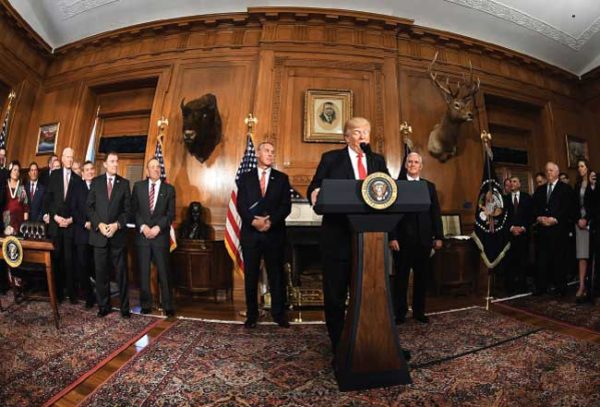
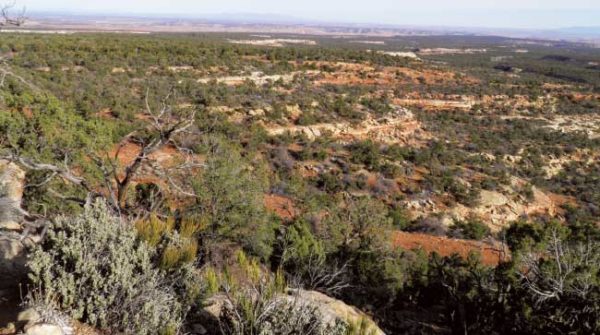
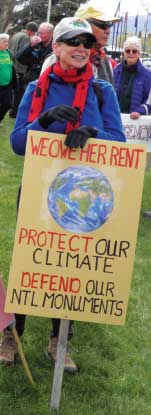
As far as births go, I can’t complain too much about mine. I was born smiling in Santa Fe, New Mexico. This ancient city is a desert maze of adobe. My first memories in childhood are of chasing lizards. Lizards sunning in the tan, brown, red hues of rock and dirt are plentiful in every pocket of land which is uninhabited by humans, and many which are. The adobe houses themselves provide suitable habitat for some, which have indubitably adapted to live alongside these pueblo-modeled homes scattered through the southwest.

I chased and caught lizards, among other small animals, careful not to harm them because I planned to bring them home. I had been taught since I was young that the lizards, the ladybugs, and the preying mantis are important. The lizards and other predators keep the bugs away. I caught lizards in the parks, in the empty lots, and in the alleyways. My favorite places to go though, were the dry arroujous. The twisting network of dry riverbeds, weaving under bridges and in between neigborhoods, are some of the most wild places left in Santa Fe. Few come here; only the lizards, the snakes, the foxes, and the pot-smoking youth of the city.

One day, a summer when I was in elementary school, I was visiting my dad. At the time he was living with a girlfriend on the edge of Santa Fe. She sells stone carvings in the style of the Zuni pueblo. He wanted to stay home that day, to read his book, but I craved an adventure. With much pleading I convinced them to catch lizards with me in one small canyon near the house.

My dad heard the noise first, and then I felt it. Only the two of us had gone down into the bottom of the arroyo. It was a growl. A small tremble that I could feel in the air as much as in the ground. I was struggling up the hill, my dad pulled himself to a ledge next to me and threw me the rest of the way up. He scrambled behind me. It was one of those slow motion adrenaline moments as I spun around. The first thing I saw was just a flying log; but the log wasn’t flying. It was pressed forward with a wall of brown water behind it, loose stones carried in the force and turbulence. Dirt was kicked up at our feet as the flash flood rushed past us, displacing the air like a stampede or a dust devil. The water ran hard for a few hours, full of debris, before slowing to a trickle, which ended and sank back into the dry soil before the end of the next day.

I remember standing in a canyon in Utah, cut through the grainy red sandstone by a similar force of powerful water, one that flows every day of the year. I didn’t yet know that one day I would paddle and steer my way across the the wave crests in this very river…

But a man can never visit the same river twice. He is never the same man, and it is never the same river. Change is the only thing in this world that can always be counted on to happen. The mountains we live in here in Durango were carved by changing forces of nature. Standing on the top of a peak, looking down at the eternally-forged veins of Mother Earth which stretch into the land where water and glacial activity has carved swathes and channels downward, it is easy to see. Standing on some peaks, I have looked down through the clouds at the frozen glaciers melting below me, still grinding their way across the land, toward the sea, as water always has.

The earth does more than destroy. So much is created; enough for all living things to sustain themselves. As I sit here, I drink osha root tea collected in these mountains. It is one of the few stored foods which I can still enjoy with my limited time and resources at the college. Osha will only grow in the mountains at a high elevation, and has adapted to survive hibernating through the long mountain winter. In the few short growing months, the edible greens of this osha I gathered had grown three feet tall in places, sometimes more. Digging through the earth with my hands, searching for the unique roots, I found a stone which assisted me while digging.

As plentiful as the osha may grow on this slope, I still felt bad for just how large my holes were. To gather the massive medicinal roots, I had to dig many holes which were two or three feet deep to find the bottom. Some of the biggest osha roots I have ever seen were gathered that day. Standing back as the sun set, my bag full thus my task finished, I observed my impact on the land. I cringed at the collection of holes, trying to push some of the soil back before leaving.

When I gather food and medicine from the land, I try to use the entire plant and not let any go to waste. But what is waste, really? In nature, waste does not exist. Energy does not appear from nowhere, and it cannot be destroyed. In the ecological recycling processes of decomposition, through fungus, insects, bacteria, and other microbes, all energy is recycled back into a system. Humans are the only animals which really create waste. We create products in the biome of Earth that will outlive our human bodies for millions of years. Toxins. Poisonous or radioactive particulate gases. Matter and concrete sprawl across the landscape, creating areas uninhabitable by all forms of life. Even extremophile bacteria which feed from radioactivity cannot survive on many “by products” of the typical American lifestyle.

My future is connected to the land as surely as I am. After seeing the beauty of the Earth and the parasitic tendencies of the human species, I cannot live without acting against what I know to be wrong. I have dedicated my future to the purpose. I am here going to school at Fort Lewis for environmental biology in pursuit of this aim; my lifestyle is already tied to the land, and my career will be to protect it.

You can acknowledge your heritage as an animal, a creature of this earth; or you can fear the wilds, and seek to conquer and to “civilize” the landscape. But we all live on earth, our island home. This is our air, our water, and our soil. This is the only home we have. What hurts the planet and the environment hurts all of mankind. We are the gatekeepers at a turning point in the biodiversity of life, because all life on earth is affected by the actions of our species. We are the history books of the future. Do something your grandchildren can look back on and be proud of.

Samuel Gordon of Cortez, Colo., was a 2014 SWOS graduate, and a student at Fort Lewis College in Durango at the time of his murder during a home invasion on May 24, 2016. He was studying environmental and organismic biology. He would have graduated on April 29 of this year on the Dean’s List, having done so in only three years. His mother, Jeanette Phillips, says his friends consider him a hero. “They think he saved their lives that night, as all the residents were held at gunpoint and told not to speak or move,” she said in an email. “It was Sam who retaliated and fought back.” She is working on having some of his writings, such as this essay, published.

Published in June 2017

San Juan County School District raises eyebrows with vote opposing Bears Ears

In a move that has sparked controversy, the board for the San Juan County School District in Southeast Utah passed a resolution in May opposing the new Bears Ears National Monument and urging President Trump to rescind the designation made during the last days of the Obama presidency in 2016.

School board vice president Merri Shumway told the Free Press that her decision to bring the issue to the board was motivated by responsibility for the financial future of the school district. “The school board sets the budget and the budget funds education,” she said. “Teachers, custodians, bus divers, cafeteria staff – all of our employees love their jobs and none work for free. Property taxes and income fund our schools.”

The final draft of the May 9 resolution states that the designation of 1.35 million acres as a national monument will forever remove the opportunity for mineral extraction on those lands and will adversely impact the tax base in the county.

San Juan County is in one of the most geographically remote places within the Colorado Plateau, sharing its southern border with Arizona. It is the largest county in Utah and the second-largest in the United States, with approximately 5.2 million acres, much of it configured with deep canyon landforms.

The school district celebrates the unique appeal of the location on their website, linking visitors to 11 state and federal public land destinations, including Monument Valley Tribal Park, Lake Powell, Four Corners Monument, Rainbow Bridge, and others, claiming, “Adventure Lives Here!”

Bears Ears National Monument is not listed among those.

Riches evaporate

In the 1950s and ’60s, Shumway explained, “we were the second-richest county in Utah and now, after all the federal designations, we are the poorest due to the heavy federal presence.”

The school district includes more than 3,000 students in 12 schools sprinkled throughout 8,000 square acres. The Navajo Nation reservation makes up 23 percent of the land base, while 69 percent of the land is controlled by the federal and state governments. Only 8 percent of the county is privately owned.

“That is the only land we can tax,” Shumway said. “If more is taken from us, as in the Bears Ears 1.35-million-acre monument designation, how can we fund our schools?”

But prior to the designation, the land within the Bears Ears monument was already owned and managed by the federal government, and held in trust for all Americans. The national-monument designation did nothing to change ownership and it continues to allow a broad range of historical activities and public access. It also allows access for current permitted livestock-grazing.

According to Kyle Hosler, the school district’s business administrator, tax revenues from oil and gas development, mining of uranium, vanadium, sand and gravel, and other natural resources combine with property taxes to fill the education coffers with 85 percent of the $41 million annual budget. The rest of the budget is funded through federal and state grants and programs.

Designations restricting use of federal lands could limit future extractive development and, thus, funds to the school district.

“We’re blessed. Our district does an excellent job with limited resources,” Hosler explained. “We try not to tax the locals. We don’t want to oppress our people in order to sustain and continue our education district.”

A multiple-use policy creates future development potential and employment possibilities close to home, said Shumway, who has served as a school-board member for 16 years. “It funds education and all the other services the county provides.”

Now in her mid-50s, she is looking forward to the fall term, when her first grandchild enrolls in the district that educated her children.

“I have lived all but seven years of my life here, and I am confident that the people of the county absolutely understand where they live.” She remembers her father bringing people in planes, cars, and boats to tour and hike and “see our amazing area.”

“Everyone I know wants to protect the land and the multiple-use aspect so that we are able to live here. We are the caretakers of the land.

“When I heard it was sacred to the Indians, I never heard that before [the push to make Bears Ears a monument]. I think it’s sacred to everyone. It was created for us to use. We can’t live without it. It doesn’t matter what others say. It’s my responsibility to look to the future.”

Outraged

But native people have lived in the region for millennia. The rich archaeological record in the Bears Ears monument is estimated to hold over 100,000 sites. Obama’s decision to recognize the area’s cultural resources also supported the effort to bring five tribes to the comanagement process with the federal

government. It was the first time in U.S. history when native people were recognized for their implicit understanding of the sacred land.

“Tell President Obama, ‘Thank you,’ please. He kept his word to us, “said Utah Diné Bikeyah Chairman Willie Grayeyes to the Free Press when he heard of the monument declaration in December 2016.

Grayeyes is outraged by the school district’s resolution. In an email, he said it is a scheme, that revenue streams to the school district are not affected by “federal matters related to the land designation. Period!”

An earlier resolution

Individual school-board members began cobbling together a resolution opposing Bears Ears late last summer, well before other members were aware of it. The action was unknown to board member Nelson Yellowman, a Navajo who represents Halchita, Oljeto and Navajo Mountain, one of two Navajo school districts in San Juan County.

Shumway introduced the resolution at the annual Utah School Board Association Delegate Assembly in August, requesting the state association officially oppose the Bears Ears monument months before it was even proclaimed. The resolution passed by the required two-thirds majority vote, with 47 of 51 delegates in favor, and only two dissenting districts, she said. The delegates also voted to forward the resolution to local, state and national officials.

Yellowman confronted Shumway on the issue in September at a regularly scheduled board meeting, saying it was inappropriate to bring the question to a state group when it hadn’t been discussed by the local school-district board.

According to the minutes, Debbie Christiansen, board president at that time, felt it was necessary the issue be put on the agenda at the September meeting because it was “a pressing topic throughout the county.” Her intention was to discuss and share information regarding the proposed monument. The minutes report that Christiansen’s main concern was the “property tax money the district stands to lose in the wake of the monument, which would drastically change the financial outlook for school funding.”

Shumway supported this opinion and the hope that constituents would see the potential financial ramifications of the monument designation.

“I told them during the [school board] work session,” says Yellowman, “that it is deeper than the [federal] land designations. This issue is about my heritage, my people, the past ancestral cultures and native people finally getting an opportunity to sit at the table in a co-management capacity.”

Yellowman, who lives in Monument Valley, expressed his frustration regarding the board participation in political issues. Minutes of the meeting state that he felt it was distracting and unnecessary.

Elsie Dee, who represents the other Navajo community, Montezuma Creek, on the board, voiced her support for Yellowman and the board remained divided on whether to participate or make a statement on the Bears Ears monument status. No official comment was made by the school board at that time other than acknowledging a neutral standing.

A sole dissenting vote

In May, President Trump issued an executive order calling for a review of certain monument designations done in the past two decades. Newly appointed Secretary of the Interior Ryan Zinke set the review process in motion early in May during a tour of Bears Ears in the company of the Utah congressional delegation.

The school-district resolution to oppose the monument and request that Trump rescind it appeared on the board agenda for the second time on May 9, during the time of Zinke’s tour.

“Even though agendas change before meetings and sometimes during meetings, it felt sudden,” said Yellowman. “I believe this was done because Secretary Zinke was visiting here with the Utah delegation. I felt there was not enough public notice to allow public comment on the resolution. It was in rough-draft form at first and I disagreed that minor changes to the language were being cleaned up in a board meeting. It should be presented in its final form.”

A final draft was presented at the meeting with minor changes in the language. It passed 4-1. Yellowman was the sole dissenting vote.

“It is a political tactic to say the land will provide property-tax revenue when in fact I’ve seen no development in 50 years there in the monument area and I grew up in Blanding, close to the region,” he said. “If those who oppose it think it will produce revenue, why didn’t they do something about it 50 years ago? It’s always been federal land.”

“This is sad news for Oljato and Utah Diné community,” said James Adakai, president of the Navajo Nation Oljeto Chapter in Monument Valley. “Today, San Juan County, Utah, remains in the dark ages of modern U.S. history. I thank and commend Nelson [Yellowman] for his leadership and commitment toward advancing the interests of the Diné community.”

Adakai was appointed by Navajo Nation President Russell Begaye to the Tribal Bears Ears Commission as the prime representative for the Navajo Nation. Since then he has been serving as the regional Navajo anchor at Bears Ears, he said.

“I talked to [now retired] Superintendent Ed Lyman about the issue. He attended two chapter meetings where I explained that he must not allow the school district to use our children for political reasons, or our school-district resources to advance the county’s far-right conservative policies and agenda. I am just asking the school district to do their job, to educate our children, provide quality education in tribal communities and increase achievement level or test scores of the students. Don’t spend school resources, public funds and grants to support political activity.”

Federal impact

The presence of Native American students living in the county who attend district schools increases federal funding opportunities, such as Federal Impact Aid.

The program is designed to offset the loss of property tax from federal reservation land or military bases. The amount varies slightly every year, but it is significant in San Juan County because the native students make up 53 percent of the student body, and most of them live in the large reservation area running east to west across the southern part of the county.

If military bases were located in the county, explained Yellowman, that would be another reason for the funding, but the only reason the extra revenue flows from the federal government to the school’s budget is that native students are enrolled in the schools.

According to Hosler, the Impact Aid revenue today accounts for nearly $5 million of the $41 million annual budget. In the past it has been as high as $8 million.

But Shumway doesn’t agree that federal programs always benefit the county. Because the reservation is federal land, she said, “not owned by the Indian people, we have become so poor that every student in kindergarten through high school is eligible for the federal lunch program. That means 10 of 21 weekly meals — breakfast and lunch — are served to the students at the school – funded by the federal government. Since the Bears Ears designation, it feels like the federal government is saying, ‘Don’t worry about working, because we will feed you.’ ”

Shumway linked the influence of the federal government to test scores in the district. She said the schools have used the same curriculum throughout the district for 20 years, so curriculum differences aren’t the reason for test-score differences. “The federal presence has created poverty in those [communities] closest to the federal presence and low test scores,” she said. “By their [federal government] control over the land, they control the opportunity.

“The lowest test scores are found where the federal government’s presence is the heaviest. The farther north you go in the county, the higher the test scores rise. All students in the county should have opportunity for employment and the opportunity to take care of themselves. Students in San Juan County shouldn’t be suppressed because we live in the most beautiful place in the country.”

‘Dirty politics’

Adakai of the Oljeto Chapter is an outspoken critic of the board’s actions. He reminded the school board in a statement posted on social media that the majority of Utah [Navajo] chapter communities support the Bears Ears National Monument.

“Leave the politics of Bears Ears to the parents and tribal governments,” he said. “Our children are innocent and their minds are fragile and the school should not inject dirty politics into their delicate minds. It is illegal for the school system to engage or instill politics into the young minds of our kids without parental permission. School grants and funding are in jeopardy because the funds should not be used for political activities in the school system.”

In an email to the Free Press, Adakai wrote, “The Blanding and Monticello Bilagaana [Anglo] anti-monument mobs are running the school district, the county, Utah Navajo Trust Fund, and the Utah Navajo Health System. To propagandize our little kids and use our resources against Bears Ears Monument is illegal.”

The Free Press asked the Utah Department of Education for information about the resolution’s legality. The office was unable to respond as of press time.

“This misuse of school governance is another example of conservative overreach, disrespecting the majority Native interests, values and beliefs in the county,” Adakai added. “We natives do not appreciate relentless, disrespectful, disengaging, political attacks such as this resolution.”

Published in June 2017

That’s for the birds!

Anyone who has read my past writings probably realizes I have a passion for seeing the state’s public lands and resources being well cared for and producing the natural resources therein. I really get upset at seeing waste of the resources taking place. Recently the local Forest Service office published that it was planning the “Taylor-Stoner Mesas Vegetation Management Project” to improve the health of a small portion of the forest due to insect damage in the spruce /fir stands and the aging/dying of the aspens. This is really good news to see an effort started once again to try to manage the forest for long-term benefits to the watershed, economy and wildlife. Can this really happen?

I have been challenged by some of the public on my stance on the need for real forest management to happen. Those public tell me, “We want to see the forest stay just as it is!” They are assuming the public forest lands are for them and their own wishes, which they are not. That aside, the forests will never be the same tomorrow as they are today, which is different than they were just yesterday. The only thing consistent is change. Trees are like people, some die every day. Here in the USA about 4.8 people die every minute. Aspen trees’ lifespan is similar to humans’. They even choke each other sometimes and infect each other with diseases, but have not yet been observed rioting while under the influence. Some live a little longer and some not as long. Since aspens grow in clones, they all get old at nearly the same time, so we need to get a new “clone family” regenerated and use the old ones for beneficial purposes before it is too late.

In reviewing the proposed EA for the management project, it became apparent that the management actions are structured more for attempting to keep the forest appearing untouched and pristine, as some think it should be, instead of a vibrant working and productive forest. The environmental regulations referenced are for manipulating individual items of special interest to some, rather than the health of the whole forest for all. For example, the plan specifies that not the entire aspen stands in need of regenerating can be treated, but that 7 to 10 dead trees per acre must be left as snags. That’s for the birds! That’s a lot of dead trees! Further, if there are not that many dead trees, then they must “recruit” more standing dead trees. That is environmental talk for deliberate killing of live trees and leaving them standing to be wasted. Last month we learned there are already 834 million standing dead trees in the forests. The private and national forests combined comprise over 24.4 million forest acres, so that would come to over 34 dead trees per acre, but in simply different locations. Since the goal is to make it look like a park, then compare it to Centennial Park in Cortez, which is about 15 acres in size, including the duck pond. If you want it to be a good bird environment, then you need to kill off 150 of those trees (10 per acre) to leave as snags for the birds. Oops, there aren’t 150 trees in the park. Is the park not being well managed environmentally?

The bird trees are but one of the issues. There are other restrictions against management such as not improving areas that are wet or even dampish, or near a waterway, or that might spoil someone’s view, or be near a goshawk nest if one should be found. Incidentally goshawks are in 44 states and Mexico and Canada, so what is the problem? Oh and heaven help us if we should see a lynx or find a rusty tin can, everything must stop for evaluation.

This much-needed project will take 2-3 years to initiate, while the forest continues to deteriorate, and cost nearly a half-million dollars to set up, and the timber industry will have to pay over the half-million to do the actual work of forest health restoration. I certainly hope this project goes through in spite of the faux environmental requirements and costs, as the forest health needs it desperately. It is very interesting to note that the forest and wildlife conditions that we see today, and are so proud of, are there because of past uses and activities such as logging, mining, ranching, road building, and fires, all done without today’s faux environmental restrictions. Now the environmental corporations want to restrict or eliminate them. They want to shoot the goose or geese that laid the golden egg.

By the way, this is not the fault of the local Forest Service; they simply have to comply with the federal directives that were drafted by the environmental corporations back in the ’70s and ’90s. If they don’t, the environmental corporations will sue the federal Forest Service which you and I have to pay for, being taxpayers, while the environmental corporations don’t, since they are tax-exempt. Being federally controlled, the states and counties have no control in local management for forest health, watersheds and economies. Prior to the late ’70s, this Forest Health project would have taken about six months or less to prepare for one-tenth the cost and realize a substantial revenue to the county while resulting in a healthier forest including wildlife, water, forage and recreation. If we want the public forests of the State to be healthy, managed and productive, then the current system of control by faux environmental corporations via Washington must be ended.

Dexter Gill is a retired forest manager who worked for private industry, three Western state forestry agencies, and the Navajo Nation forestry department. He writes from Lewis, Colo.

Published in Dexter Gill

Guest accommodations

I love people. Wonderful people do wonderful things all the time in this wonderful world of ours. Take Louis Pasteur. The work of that brilliant man means I can consume foods without dying from dysentery. In a world without people, I would stare into the refrigerator at night, wondering what liquid to risk putting on my raisin bran, and also wondering how I got a fridge in a world without people.

Which is to say, I am thankful for people. Each one has a part to play in this grand experiment we call Civilization. And they should stay there instead of coming to visit me in my own home.

Now, I’ve had numerous people sleep on my couch, and I don’t wish to single any one of them out. That’s why I’ll call them all “Tom,” the name of the friend who crashed at my place this past weekend and got me counting the ways that houseguests dismantle my life.

For starters: I am obligated, as the host, to have food on hand. But I never know what Tom will want to eat. So I buy out the store’s supply of bananas, so that I have some green, some yellow-green, some just past ripe, and some brown and slimy. A banana for every taste.

Also, having an impending houseguest requires me to do all my cleaning — of the entire house, mind you — in the same day. Even if it is not dirty by my standards, as the one who lives here and has to evade the mold in the dark. And even when Tom is a dude.

Why? Why do we force ourselves to tidy house for transient visitors more thoroughly than we ever will for ourselves? I suspect it has to do with our deep-seated need for acceptance. Either that, or we enjoy the righteous indignation when Tom drops his travel-worn possessions on our hastily wiped dining-room table. It is a far superior feeling to the unjustified indignation we’d have were Tom’s bags to improve the cleanliness of the table in its normal state.

So I’ve done all this cleaning in the hour after Tom texts to say he’s gassing up in Aztec. And he doesn’t acknowledge any of my efforts. Heck, he doesn’t even seem to notice. I’ve even dusted the entire kitchen area in hopes that the dog hair will stay on the floor, and the first thing Tom wants to do is go out to eat.

“Where’s a good place to eat?” the Toms of the world like to ask, as if I know anyplace at all that isn’t the rotisserie chicken by the grocery store checkout.

I take my sweet time rattling off the names of two restaurants I can remember, which are also the two restaurants in town where one can eat for under $20 a head. Eating out is a real treat for me, so I try my darndest to enjoy every bite and absorb the atmosphere.

But that’s really difficult when, the whole time, my mind is riddling out a puzzle unsolved since Egyptian times: Who is going to pick up the tab?

Normally when two guys dine out together, the bill is split. Separate checks. But the rules change when one is an out-of-town visitor. I feel I ought to pick up the tab. After all, Tom drove all that way, and he is on vacation. Then again, Tom ought to pick up the tab, since I bought all those bananas.

What results is like an old dusty-street shootout. Two scruffy guys, staring each other down. Hands quivering over pockets. Waiting to see who draws first. Only here, he who draws first, loses. And then the shootout turns into a wimpy slap fight of “Oh, you sure?” “Yeah, I got it.” “I should treat you.” “Nah, I got this one.” “Really?” “Really.”

Day Two: rinse and repeat.

And the last thing about houseguests — and this might be the worst of all — is that, in the end, they always leave, and no fanfare feels appropriate to send them off. I offer Tom the bananas I bought as snacks for the road, and then he drives off, and then I realize how quiet the place is. How much I will miss my friend. And just when I feel my heart about to grow three sizes, I look around at the disheveled evidence of the whirlwind visit.

I could clean it up. Or, it’ll keep until he visits again.

Zach Hively writes from Durango, Colo. He can be read and reached through http://zachhively.com and on Twitter @zachhively.

Published in Zach Hively

Repeal, reduce or retain?: Bears Ears, Canyons of Ancients to be scrutinized

PRESIDENT DONALD TRUMP FLANKED BY SECRETARY OF THE INTERIOR RYAN ZINKE AND VICE PRESIDENT MIKE PENCE WHILE SIGNING THE ANTIQUITIES ACT EXECUTIVE ORDER ON APRIL 26. pHOTO BY

President Donald Trump, flanked by Secretary of the Interior Ryan Zinke and Vice President Mike Pence, signed the Antiquities Act Executive Order on April 26. The order directs Zinke to consult local governments
and tribes in order to review national monuments created by the Antiquities Act since Jan. 1, 1996, that are greater than 100,000 acres in footprint, and report back to the president on suggested legislative or executive action within 120 days. Photo by Tami A. Heilemann/Creative Commons

For years after Canyons of the Ancients National Monument was designated in 2000, signs stubbornly declaring “No National Monument” were scattered around Montezuma County, to the puzzlement of area tourists.

Over time, they deteriorated and were taken down, but opposition to the monument lingers in some quarters among people who believe its proclamation resulted in restrictions to grazing, road access, and oil and gas development on the 170,000-acre landscape west of Cortez.

Now, suddenly, it looks as though monument opponents have a chance to see their dream realized – a reversal of the designation.

On April 26, President Trump signed an executive order calling for a review of all national monuments larger than 100,000 acres that were created over the past 21 years. The White House later released a list of 24 national monuments across the nation – from 1996’s Grand Staircase-Escalante in southern Utah to 2016’s Bears Ears in far southeastern Utah – that are to be scrutinized by the Interior Department to ascertain whether their size and scope are in line with the “intention” of the 1906 Antiquities Act.

Canyons of the Ancients is on the list.

AERIAL VIEW OF BEARS EARS NATIONAL MONUMENT WHICH ENCOMPASSES 1.35 MILLION ACRES

The new Bears Ears National Monument encompasses 1.35 million acres of rugged canyon country. Photo by Gail Binkly.

The executive order also provides that sites smaller than 100,000 acres “where the Secretary determines that the designation or expansion was made without adequate public outreach and coordination with relevant stakeholders” could be reviewed.

Ever since President Obama’s declaration of the 1.35-million-acre Bears Ears monument late in his final term, the vast majority of Utah’s elected leaders have been beating the drums for Trump to overturn that designation – and to whittle down the size of the 1.9-million-acre Grand Staircase monument as well.

But Canyons of the Ancients – which is now a fixture of the local landscape and famed for its world-class singletrack bike trails in Sand and East Rock canyons – seems an unlikely target for a rollback.

Still, conservation groups say it could be in the crosshairs, along with any of the rest of the two dozen monuments affected by the executive order.

“This is a full attack on all of them, because if you start to pull the thread on any of these monuments, the same underpinning statutes protect them all,” said Christy Goldfuss, vice president for energy and environment policy with the Center for American Progress Action Fund, in a media conference call on April 25.

“None of the monuments from that time forward [1996] should feel they are not being reviewed or considered.”

Sen. Martin Heimrich, D-N.M., agreed. “I worry that this is a very broad-brush attempt and any monument that’s on this list, people should be duly concerned about,” he said in the same phone call.

Behind closed doors

The Colorado Tourism Office voiced guarded concern about the review, saying in a release that the state’s 12 national parks and monuments, including Canyons of the Ancients, “are treasures and major tourism draws.”

“Canyons of the Ancients attracts 30,000 visitors per year to a rural area of Colorado,” the release said.

But it also said that, after a meeting with Interior Secretary Ryan Zinke, Colorado Gov. John Hickenlooper was “confident that the federal administration will work with the State of Colorado and our federal delegation to ensure our national monuments remain protected.”

The tourism office then said it is “optimistic. . .that it is unlikely Colorado’s monuments will be reviewed.”

Whatever the fate of Canyons of the Ancients, it’s clear that the two Utah monuments on the list will be seriously considered for possible changes.

Certain other aspects of the executive order, however, are not at all clear, including who exactly will be conducting it. There is no provision for a public process, Goldfuss said.

“The behind-closed-door review will not include the public and will let the industry pick and choose the areas on land and water that they want most,” she said. “It is not possible to change one monument through this closed-door process without undermining all of them.”

Another thing that is hazy is whether the president, acting alone, can “undeclare” a monument.

Mark Squillace, director of the Natural Resource Law Center at the University of Colorado Law School, says the answer “is quite clearly no.”

Speaking during the April 25 conference call, he said the Property Clause of the Constitution sets out the authority of Congress to manage public lands. Congress can delegate that power to the executive branch and did so with the 1906 Antiquities Act, which gives the president the authority to create national monuments.

However, Squillace said, the delegation of authority “is essentially limited to the terms of the statute that authorizes the president’s action.” And the Antiquities Act “does not include any authority to rescind or modify a monument created by a predecessor.”

This view was supported by a legal opinion written in 1938 by the attorney general for Franklin Roosevelt, who unequivocally stated that the act did not grant the president such ability, Squillace said.

Any doubt about that, he continued, was removed with the passage of the 1976 Federal Land Policy and Management Act, which contains language essentially clarifying that Congress alone has the authority to modify or revoke national monuments.

Squillace said although a few presidents (none since Dwight Eisenhower) have unilaterally changed the boundaries of monuments, their actions were never challenged, so there are no court decisions regarding the legality of those actions.

Congress clearly can alter or undo national monuments. But whether even the Republican-controlled House and Senate would pass legislation rescinding monuments – which are popular not only with conservationists, but recreationists, sportsmen, and the outdoor industry – is uncertain.

‘Troubling’

Opposition to national monuments generally stems from three causes:

  • General concern about federal-government overreach.
  • Concern that the designations will mean restrictions on traditional uses such as mining, oil and gas extraction, and grazing.
  • Worry that the designations will trigger a flood of visitors without providing adequate protections for the landscape.
CLIMATE MARCH PROTEST SIGN REFERENCES NATIONAL MONUMENTS

Protecting national monuments was a theme on many signs carried during the Climate March in Cortez on April 29. Photo by Gail Binkly.

In Utah’s San Juan County, home to the new Bears Ears monument, opposition to the designation is based on all three of those factors.

Utah’s citizenry is deeply Republican and conservative, except in and around Salt Lake City and on American Indian reservations. Utahans in general loathed both Bill Clinton, creator of Grand Staircase, and Barack Obama, who designated Bears Ears, and they remain incensed about both monuments.

Utah Congressmen Rob Bishop and Jason Chaffetz had worked frantically for the creation and passage of a sweeping bill called the Public Lands Initiative that could provide a compromise alternative to stave off the Bears Ears declaration. But in the end, the PLI bill was judged too friendly to industry and too dismissive of the role and concerns of Native Americans regarding the Bears Ears landscape, to which a number of tribes have long-standing ties.

The Bears Ears Intertribal Coalition – which includes the Navajo, Hopi, Ute Mountain Ute, Zuni, and Ute Indian tribes – supported the monument designation, which calls for strong tribal involvement in managing the area.

After Trump’s executive order, both the Navajo Nation Council and the Office of the President and Vice President issued statements opposing any rollback of Bears Ears.

“This has been a collective effort for tribal nations which has gone back into many presidential administrations,” said President Russell Begaye in the statement. “It was only after heavy consultation from tribal nations that the Obama Administration moved on the designation. . . .This designation supports tribal sovereignty. We are asking President Trump and Secretary Zinke, in their review of the designations, to uphold tribal sovereignty as mandated through our treaties with the federal government.”

In the April 25 conference call, Shaun Chapoose, chairman of the Ute Indian Tribe Business Committee, called Trump’s order “an attack once again on Indian Country.”

“We constantly hear this barrage of how the states feel they weren’t consulted, they were slighted, but in all of this the state never took the time to talk to the tribes themselves,” he said. If they had offered more consideration to tribal input, the PLI legislation might have had a different outcome, Chapoose said.

“So here we go again, the same situation. We’re going to send a task force out to start having discussion of what and how best to preserve something that actually involves me, a Native American with an ancestral tie, a historical tie, to this land, and the other four tribes, and yet we’re still left out of the conversation. It’s troubling.”

‘Industrial Tourism’

During the heated discussions over whether to create a national monument in the Bears Ears area, proponents argued that it is threatened by widespread looting of archaeological resources as well as potential uranium-mining and oil and gas development.

Opponents said those extraction prospects are unlikely but warned that monument status could imperil traditional uses such as wood-cutting and herb-gathering, though those are protected in the proclamation language. Both sides accused the other of fearmongering.

Supporters of traditional extractive industries remain upset about the creation of Grand Staircase because it locked up sizable coal reserves.

On the other hand, Kristina Waggoner, vice president of the Boulder-Escalante Chamber of Commerce, believes Grand Staircase has been an economic boon. Her family owns a small business in Escalante, gateway to the monument, she said during the April 25 call.

“My business has seen growth every year since we bought it 10 years ago,” she said. Revenue increased steadily over the last 10 years, and the business now has 25 employees, up from the original six.

The tiny town has gained a new medical clinic, two new hotels, a hardware store, and other businesses. “I directly relate this growth to the Grand Staircase-Escalante National Monument,” Waggoner said, her voice choked with emotion, “and that’s why I’m here today to support the monument, and for my 3-year-old son. I want him to have these experiences I’ve had. Once our land is gone, it’s gone forever.” But some observers worry that monument designations ultimately prove detrimental to remote areas because they attract so many new visitors without adding much on-the-ground protection.

Recreation is touted as a “green” economic- development alternative to mining and fossil-fuel extraction, but it can also take a heavy toll on the land, they point out.

“The Unspoken Threat to the [Bears Ears] area has always been Industrial Tourism,” wrote Jim Stiles of Monticello, Utah, co-publisher of the online Canyon Country Zephyr, in a recent issue: “For months prior to the December 28 announcement, monument proponents were silent on the issue and the impacts they might create. For groups like SUWA and the Grand Canyon Trust, this comes as no surprise – they haven’t acknowledged the impacts from an Industrial Recreation economy in almost two decades.

“And yet it was the Grand Canyon Trust’s Bill Hedden who warned in 1998 that, ‘Everywhere we looked, natural resource professionals agreed that industrial- strength recreation holds more potential to disrupt natural processes on a broad scale than just about anything else’.”

Wendy Black of Blanding, Utah, a staunch opponent of the Bears Ears designation, says visitation to the rugged area has already soared and there is no additional protection yet.

“It’s going to take a long time to put the infrastructure in place,” she told the Free Press.

Black and her husband own a few vacation rentals. “I can attest that tourism is up by tenfold,” she said. “It’s crazy.”

On a recent day, Black, an avid hiker, found two people lost in the sprawling landscape and had to show them the way out. “A lot of people don’t respect the land, they don’t understand it. They’re treating it like a playground,” she said.

She said she recently came across people with metates and manos, ancient cultural artifacts, they’d picked up. “A lot of people aren’t coming here because they love the area and want to protect it,” she said. “They want to find a little treasure. It’s human nature. If you find an arrowhead on the ground, very few people are going to walk over it.”

Although national-monument designation is supposed to bring additional resources such as more staff and educational signs, it won’t be enough, Black believes. She said Grand Staircase-Escalante National Monument has never been fully staffed. And monitoring people’s behavior across a landscape with more than 1 million acres is impossible.

“Fifty rangers couldn’t patrol this adequately,” Black said.

At one point she thought it would have been acceptable if Obama had designated a much-smaller monument in the ruins-rich area of Cedar Mesa, a portion of Bears Ears. But now she hopes Trump, or Congress, will rescind the entire monument designation.

“It would still be public land,” she said. “People could still come here, but it wouldn’t be so publicized.”

She worries the coming boom in tourism will change the easygoing, small-town feel of Blanding, even though she knows she stands to benefit from it economically.

“Money isn’t everything,” she said. “I hope in five years this monument is a forgotten place.”


Also on the list

Besides two national monuments in Utah and one in Colorado, the following monuments in the Four Corners states of Arizona and New Mexico are on the list for review:

• Grand Canyon-Parashant (Arizona, 1 million acres, designated in 2000)
• Sonoran Desert (Arizona, 486,000 acres, 2001)
• Vermilion Cliffs (Arizona, 280,000 acres, 2000)
• Ironwood Forest (Arizona, 129,000 acres, 2000)
• Organ Mountains-Desert Peaks (New Mexico, 496,000 acres, 2014)
• Rio Grande del Norte (New Mexico, 243,000 acres, 2013)

Published in May 2017

An automatic reflex

I admit the factual error may have been influenced by a personal bias I have against both types of weapons, since in my mind the distinction is pretty trivial – either is highly effective when it comes to killing people. But it was just a careless mistake, nothing more.

The swift response from a few readers was to eagerly point out the mistake and wonder how they could ever trust any of the paper’s reporting after such an egregious miscue.

One observed that the robber would be in much more serious trouble had he actually wielded a fully automatic rifle, since they are illegal to own. (I don’t think so. Committing an armed robbery and threatening the lives of others – regardless of the weapon used – is about as serious as it gets without actually shooting someone, but never mind.)

Anyway, the tenor of the posts made me wonder what sort of person reads an account of such a crime and takes away from it in large measure this one, to me, minor point. An obvious conclusion is that they must be folks very passionate about protecting their right to bear arms and very concerned about having this Second Amendment right eroded.

(And, just maybe, a few think the Free Press is a small part of some insidious mainstream-media conspiracy to rip all guns out of good Americans’ hands and ultimately enslave them in gray pajamas manufactured in China.)

So I just want to have my say about guns and the common-sense control of them in a country that seems to grow evermore crowded and violence-prone.

I don’t believe guns are intrinsically good or evil. They are tools that, like a drill or a hammer or a saw, have useful and handy functions, like putting food on the table and safeguarding one’s family. And, of course, they are essential for military defense and law enforcement.

Beyond that, they are a source of good, clean fun for a lot of folks who just like to sharpen their shooting skills on ranges and out on our ample public lands.

I first shot a gun when I was about eight years old – my father’s prized muzzleloader, which required a ram rod, powder horn, lead ball, cloth patches and a cap to load. It was so heavy I could barely hold it steady while pulling the main trigger, then gently touching the hair trigger and waiting a second for the delayed discharge and considerable recoil. It was a blast for a scrawny kid to make a tin can leap into the air amidst the smoke and noise and flying dirt.

A year or so later I was allowed to have a Daisy Red Ryder BB gun – only after memorizing and reciting the Ten Commandments of BB Gun Safety to my father. (I will not shoot birds . . . and so on)

I got my first real gun – a single-shot .22-caliber rifle – when I was about 10 and used it to hunt small game in the woods and fields near our rural home. A couple of years later I was allowed to own a 20-gauge full-choke shotgun, which I found much more efficient in slaying the dodgy critters.

My brother would occasionally let me shoot his semi-automatic .22 rifle for target practice (illegal for hunting, of course), and borrow his .32-caliber Winchester Special carbine for deer-hunting.

However, as a teenager I lost interest in hunting and guns, perhaps not coincidentally as my interest in the opposite sex increased. (Although we did covertly make a couple of zip guns in high-school shop just to be rebellious, like James Dean or something.)

Over the years I’ve owned a few other firearms, including a .38-caliber Smith and Wesson semi-automatic handgun. (Other than taking it out in the woods and firing off a few rounds to get the feel of it, I never had any occasion to use it.)

So with the above as a preamble to demonstrate that I’m not a stranger to firearms or opposed to gun ownership, I will finally get to my point:

I believe our country needs more effective gun-control measures to prevent the mass killings we’ve all become far too familiar with. The distinction of whether guns fire “automatically” or “semi-automatically” pales when it’s you or a loved one staring down the barrel of a maniac’s weapon, be it in a schoolroom, a theater or a shopping mall.

The easy availability of such weapons, along with large-capacity magazines, makes us all prey for any sicko who decides he’s been ignored long enough and wants to make his “statement” before he goes.

As those careful readers must know, there are limited uses for such guns, with killing other human beings real fast and dead being the one that leaps to mind most quickly. (And I’d bet they already have their legal weapons at the ready, and, moreover, they are not the criminals or crazies who wouldn’t be able to buy more, even with a more thorough vetting process.)

To go to the extreme, one interpretation of the Second Amendment would mean we should all be allowed to own fully automatic guns, bunker-buster bombs and nuclear arsenals.

This country has about 10,000 gun-related deaths annually, most of them crimes of passion committed with an ordinary pistol or long gun by someone whose hate for his ex and her new boyfriend finally reaches the boiling point or who just can’t stand the neighbor’s barking dog any longer. (Yeah, most of us are responsible gun owners until suddenly we’re not. )

But let’s get real. We’re supposedly working toward being a more civilized society where differences are not settled by brute force, but through reason and concern for our fellow travelers.

Life is compromise, and no “inherent” right is absolute. And, remember, one meaning of “automatic” is “without thought.”

David Long writes from Cortez, Colo.

Print this article

Published in David Long, May 2017

Start spreading the News (Prose and Cons)

The year is 1870, and across the State of Texas, Capt. Jefferson Kyle Kidd travels from town to town performing live readings from newspapers to paying audiences eager to learn the news of the world. Seventy-two and widowed, a veteran of two brutal wars, the learned Captain has “a clean-shaven face with runic angles, his hair was perfectly white, and he was still six feet tall . . . He carried a short-barreled Slocum revolver in his waistband at the back. It was a five-shot, .32 caliber and he had never liked it all that much but then he had rarely used it.”

NEWS OF THE WORLD BY PAULETTE JILESThat is about to change. One night in Wichita Falls the Captain is asked to perform a final act of public service when Indian agents, having redeemed a young captive from the Kiowa, seek a man they can trust to deliver the girl safely to her surviving relatives near San Antonio, some 400 rugged miles due south through a frontier plagued by rogue soldiers and highwaymen and hostile Comanche.
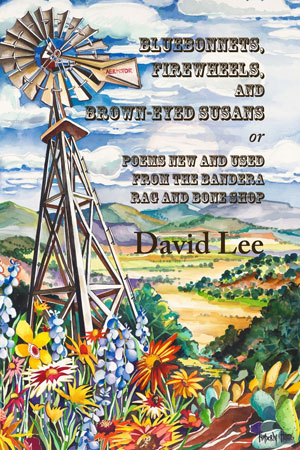
The orphaned girl, four years a captive, is Kiowa in language and in custom and in all respects but parentage. “She seemed to be about ten years old, dressed in the horse Indians’ manner in a deerskin shift with four rows of elk teeth sewn across the front . . . Her hair was the color of maple sugar and in it she wore two down puffs bound onto a lock of her hair by their minute spines and also bound with a thin thread was a wing-feather from a golden eagle slanting between them. She sat perfectly composed, wearing the feather and a necklace of glass beads as if they were costly adornments. Her eyes were blue and her skin was that odd bright color that occurs when fair skin has been burned and weathered by the sun. She had no more expression than an egg.”

Reluctantly accepting the commission, the Captain and the girl he names Johanna begin an odyssey of adventure and mutual self-discovery beautifully chronicled by Paulette Jiles in her fifth novel News of the World. Meticulously researched and flawlessly executed, it is a jewel-box of a story that might remind readers of Charles Portis’ True Grit in its concise storytelling and engaging dialogue, except that Jiles also brings to the project a poet’s eye for detail and a memoirist’s insight into the cultural gulf her protagonists must bridge in order to arrive at the trust and understanding on which their survival will depend.

“Maybe life is just carrying news,” the Captain muses after a particularly harrowing escape. “Surviving to carry the news. Maybe we have just one message, and it is delivered to us when we are born and we are never sure what it says; it may have nothing to do with us personally but it must be carried by hand through a life, all the way, and at the end handed over, sealed.”

At the end of this particular journey, the Captain faces a dilemma: Whether to honor his pledge to deliver the girl or whether to act in a way he deems in her best interest. That dilemma, its resolution, and the moral complexities that underpin both are what make News of the World ($22.99, from William Morrow) more than just an adventure novel, or a buddy story, or a scrupulously-researched work of historical fiction (although it is all of those), and help account for its deserving nomination as a 2016 National Book Award finalist.

Chuck Greaves is a member of the National Book Critics Circle and the author of five novels, most recently Tom & Lucky (Bloomsbury.) You can visit him at www.chuckgreaves.com.

Published in May 2017, Prose and Cons

Failing home ec

When my mother-in-law, Bernice Austin-Begay, went to high school, one of the classes she took was “Bachelor Survival,” which taught the boys useful home-ec-type skills they would need after graduation.

She recalled how some of the boys wanted to learn how to make garments – and one little boy who drilled holes in shells to make his own buttons.

More schools should teach subjects like this, things that would be useful in real life.

Too often schools “teach” a subject without actually imparting basic knowledge.

I mean, I had a double major in college and one of them was journalism. For four years I learned all about journalism. Except for basic things I would need to know on the job.

In between breaking Watergate-type scandals I quickly found I needed to know how to check police reports and property records.

My first day on my first job, I was sent to town hall to check out the deeds. That had never been mentioned in any of my classes and I didn’t know what to do, or what I should even be looking for.

Luckily there was a very helpful town clerk in Old Lyme, Conn., and I soon became a deed-looker-over extraordinaire.

I was less successful away from the workplace, however.

I had a winter coat I really liked, but the buttons had fallen off. Surely someone who could figure out how to report on property transactions would have little difficulty in sewing a few buttons.

I bought some needles and thread – I wish someone had mentioned thimbles back then! – and I set out to become a tailor. I pricked my fingers a few times, but that’s part of the learning curve, I guess. Besides, as George Carlin once said, it’s okay to prick your finger in public. Just don’t finger your … well, whatever.

When my flashing needle of fine garments came to its end, I was pleased with myself. I lifted the coat to admire my handiwork – and all the buttons slid off.

That’s when I decided I like sweaters better.

Now, another area where a bachelor-survival class might have proven useful was when it came to the culinary arts.

With a plethora of McBurger joints and pizza lifelines available, I didn’t starve, but I could have.

I remember when I bought my first microwave oven and decided to make myself some spaghetti. I watched in wonderment as my new microwave sizzled and hissed.

Finally, some inner voice told me something wasn’t right, so I called my sister, Hilary.

“Hey, Hil, when you make something in the microwave are sparks supposed to shoot out of it?”

How quickly I went from Chef Boyardee to Chef Boy, You’re Dumb.

Turns out you’re not supposed to put the metal can in the microwave.

That’s something I might have learned in a bachelor-survival class.

Now, as delightful as Twinkies and O Henry bars are, you can only eat so many thousands before you start to crave a home-cooked meal. I decided I wanted a baked ham.

After the whole microwave incident I decided it would be wiser to seek out advice before attempting any more kitchen derring-do. So I asked some of the ladies at work how to bake a ham.

“Does your stove have a roaster?” Judy asked me.

“What’s that?” I asked.

One of my friends drew a picture of a stove and showed me where a roaster would be located. Turned out I did have one! Now the general consensus was something like, cook it at 350 for an hour.

But Mr. Stomach argued that if I cooked it at 700 for half-an-hour I’d be eating ham that much faster. In times like that, Mr. Stomach often gets the better of Mr. Brain.

I ended up with a smoky kitchen and a lump of meat-like substance that was rubbery and much too difficult to chew.

For the most part I was done with

cooking, though once in a while I faltered in my resolve, and the results were Jonnycakes that were burnt black on the outside but gooey on the inside or cornbread muffins that could be used as doorstops.

Then there was the whole hassle about laundry. I’m not sure about this separating- the-clothes thing. Coloreds go in one machine and whites in another? Well, I’m against segregation so I would just put everything in together.

Kumbaya! We shall overcome!

But I couldn’t overcome the shame of wearing pink underwear when my whites somehow turned into varying shades of red.

Of course the advantage of being a bachelor came in handy in those days. Instead of doing laundry I had the money to just buy new clothes every week.

Over the years I’ve become older and wiser – and married. Now I have learned how to do household chores by doing everything Sara says, just the way she says to do it.

It not only prevents arguments that way, but I no longer have to wear pink underwear.

John Christian Hopkins, an award-winning novelist and humor columnist, is a member of the Narragansett Indian Tribe. See his writings at http://authorjohnchopkins.blogspot.com.

Published in John Christian Hopkins

A bouquet of perennial poems

Combine the sensibilities of a religious fundamentalist with a free-thinker and what you’ll likely get is an oxymoron, but burnish that hybrid with a poet and you get David Lee, a writer who has been publishing memorable volumes since his 1974 classic, The Porcine Legacy.

In his most recent release, Bluebonnets, Firewheels, and Brown-Eyed Susans (Wings Press, 2017), readers are handed a bouquet of freshly picked and perennial poems rooted in the soil of Lee’s childhood remembrances, though simple nostalgia is not the tenor of these hard-hitting portrayals of rural Texas life. You will laugh out loud and then, perhaps, lower your eyes, having glimpsed not what is right but what is true about human nature.

BLUEBONNETS, FIREWHEELS, AND BROWN-EYED SUSANS BY DAVID LEEDavid Lee is both poet and storyteller. His new book reads like an anthology of the craziest incidents ever compiled, inspired tales of “women from small town West Texas, 1948-1962.” It’s a tribute to those strong women who shaped Lee’s adolescent brain into a genuine and brilliant custodian of the word.
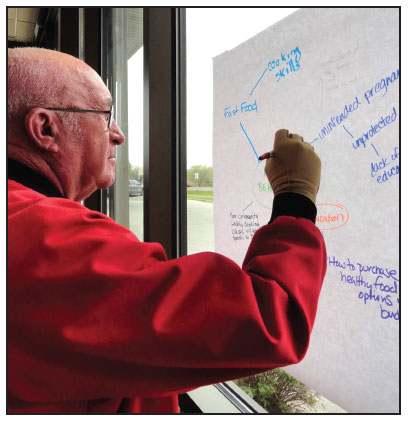
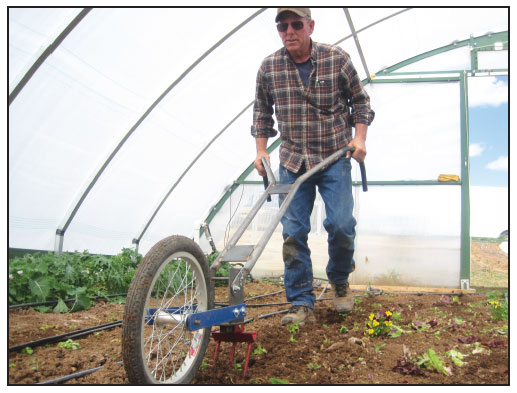

Much of the pleasure in reading Lee’s poetry comes from his scrupulous attention to crafting each page for the ear, saturating his characters in broad washes of rural dialect and dialogue, which he electrifies with humorous pronunciations and innuendo. Witness, for instance, the dilemma of a terrified deputy and his “cuddin” Leroy trying to decide how to get a six-foot snake down from the top on “Mizrez” Birchwood’s drapes:

Could be a giant coppermouf
I dunno
it’s one damn big snaik…
mebbe one them amaconda
crawl up through the sewerpipe
bite wormens on the butt

It’s impossible not to snicker at the two men, the deputy with his pistol drawn shaking in his boots, ready to shoot the “snick” while Susan Butterfield calmly but clearly repeats, “Don’t you shoot that gun in here” at least seven times throughout the 12-page poem, her edict the most lethal force in the room.

The hypocrisy embedded in social norms and religious conventions becomes a lightning rod for Lee, and he strikes with subtle but deadly force. The characters populating these pages are all from the same small town, the preachers, the police, farmers and housewives, children and grandparents. They’re family, all of them. They embody what we’ve seen in the world too, as Lee magnifies their antics and illuminates (like a child with a hand lens) their souls.

Biblical allusions and illusions: the fulcrum upon which Lee’s paradise is supported and his poetic license is regained. A product of his upbringing, experience as a seminary student, or lucky leftover from his pursuit of a Ph.D with a John Milton emphasis – who cares? – the stories delivered from this pulpy mount continually surprise us with little literary miracles.

Threaded through the entire collection are shorter poems “from the sidebar minutes of the monthly Town Board Meetings” that resemble, very loosely, haiku. But in Lee’s hands we might as well refer to them as Hicku – glimpses of the collective unsophisticated rural wisdom, as in this sidebar titled, “Another Reason Why You Didn’t Want Kristine Thornton To Talk During Town Board Meetings”:

I saw that girl of yours
wearing short shorts downtown yesterday
Deacon Hill
she’s so skinny I told my husband
I couldn’t tell if them were her legs
or if she was riding a chicken

Humor, satire, and awkward social proclivities aside, the book also contains deeper pools, quiet places like verbal ponds that reflect perfect imagery, as in this description of a woman, slowly dying:

…above where she lay in the body length embrace
of death, wash hung stretched out and starched
on the clothesline like a flock of angels
nesting in rows under a fading daylight moon
the cheatgrass whitewashed with hard rime

David Lee knows how to pick ‘em — the words, I mean. Bluebonnets, Firewheels, and Brown-Eyed Susans is a paper posy waiting to be passed on to you.

Published in May 2017

Guest accommodations

I love people. Wonderful people do wonderful things all the time in this wonderful world of ours. Take Louis Pasteur. The work of that brilliant man means I can consume foods without dying from dysentery. In a world without people, I would stare into the refrigerator at night, wondering what liquid to risk putting on my raisin bran, and also wondering how I got a fridge in a world without people.

Which is to say, I am thankful for people. Each one has a part to play in this grand experiment we call Civilization. And they should stay there instead of coming to visit me in my own home.

Now, I’ve had numerous people sleep on my couch, and I don’t wish to single any one of them out. That’s why I’ll call them all “Tom,” the name of the friend who crashed at my place this past weekend and got me counting the ways that houseguests dismantle my life.

For starters: I am obligated, as the host, to have food on hand. But I never know what Tom will want to eat. So I buy out the store’s supply of bananas, so that I have some green, some yellow-green, some just past ripe, and some brown and slimy. A banana for every taste.

Also, having an impending houseguest requires me to do all my cleaning — of the entire house, mind you — in the same day. Even if it is not dirty by my standards, as the one who lives here and has to evade the mold in the dark. And even when Tom is a dude.

Why? Why do we force ourselves to tidy house for transient visitors more thoroughly than we ever will for ourselves? I suspect it has to do with our deep-seated need for acceptance. Either that, or we enjoy the righteous indignation when Tom drops his travel-worn possessions on our hastily wiped dining-room table. It is a far superior feeling to the unjustified indignation we’d have were Tom’s bags to improve the cleanliness of the table in its normal state.

So I’ve done all this cleaning in the hour after Tom texts to say he’s gassing up in Aztec. And he doesn’t acknowledge any of my efforts. Heck, he doesn’t even seem to notice. I’ve even dusted the entire kitchen area in hopes that the dog hair will stay on the floor, and the first thing Tom wants to do is go out to eat.

“Where’s a good place to eat?” the Toms of the world like to ask, as if I know anyplace at all that isn’t the rotisserie chicken by the grocery store checkout.

I take my sweet time rattling off the names of two restaurants I can remember, which are also the two restaurants in town where one can eat for under $20 a head. Eating out is a real treat for me, so I try my darndest to enjoy every bite and absorb the atmosphere.

But that’s really difficult when, the whole time, my mind is riddling out a puzzle unsolved since Egyptian times: Who is going to pick up the tab?

Normally when two guys dine out together, the bill is split. Separate checks. But the rules change when one is an out-of-town visitor. I feel I ought to pick up the tab. After all, Tom drove all that way, and he is on vacation. Then again, Tom ought to pick up the tab, since I bought all those bananas.

What results is like an old dusty-street shootout. Two scruffy guys, staring each other down. Hands quivering over pockets. Waiting to see who draws first. Only here, he who draws first, loses. And then the shootout turns into a wimpy slap fight of “Oh, you sure?” “Yeah, I got it.” “I should treat you.” “Nah, I got this one.” “Really?” “Really.”

Day Two: rinse and repeat.

And the last thing about houseguests — and this might be the worst of all — is that, in the end, they always leave, and no fanfare feels appropriate to send them off. I offer Tom the bananas I bought as snacks for the road, and then he drives off, and then I realize how quiet the place is. How much I will miss my friend. And just when I feel my heart about to grow three sizes, I look around at the disheveled evidence of the whirlwind visit.

I could clean it up. Or, it’ll keep until he visits again.

Zach Hively writes from Durango, Colo. He can be read and reached through http://zachhively.com and on Twitter @zachhively.

Published in Zach Hively

Failing home ec

When my mother-in-law, Bernice Austin-Begay, went to high school, one of the classes she took was “Bachelor Survival,” which taught the boys useful home-ec-type skills they would need after graduation.

She recalled how some of the boys wanted to learn how to make garments – and one little boy who drilled holes in shells to make his own buttons.

More schools should teach subjects like this, things that would be useful in real life.

Too often schools “teach” a subject without actually imparting basic knowledge.

I mean, I had a double major in college and one of them was journalism. For four years I learned all about journalism. Except for basic things I would need to know on the job.

In between breaking Watergate-type scandals I quickly found I needed to know how to check police reports and property records.

My first day on my first job, I was sent to town hall to check out the deeds. That had never been mentioned in any of my classes and I didn’t know what to do, or what I should even be looking for.

Luckily there was a very helpful town clerk in Old Lyme, Conn., and I soon became a deed-looker-over extraordinaire.

I was less successful away from the workplace, however.

I had a winter coat I really liked, but the buttons had fallen off. Surely someone who could figure out how to report on property transactions would have little difficulty in sewing a few buttons.

I bought some needles and thread – I wish someone had mentioned thimbles back then! – and I set out to become a tailor. I pricked my fingers a few times, but that’s part of the learning curve, I guess. Besides, as George Carlin once said, it’s okay to prick your finger in public. Just don’t finger your … well, whatever.

When my flashing needle of fine garments came to its end, I was pleased with myself. I lifted the coat to admire my handiwork – and all the buttons slid off.

That’s when I decided I like sweaters better.

Now, another area where a bachelor-survival class might have proven useful was when it came to the culinary arts.

With a plethora of McBurger joints and pizza lifelines available, I didn’t starve, but I could have.

I remember when I bought my first microwave oven and decided to make myself some spaghetti. I watched in wonderment as my new microwave sizzled and hissed.

Finally, some inner voice told me something wasn’t right, so I called my sister, Hilary.

“Hey, Hil, when you make something in the microwave are sparks supposed to shoot out of it?”

How quickly I went from Chef Boyardee to Chef Boy, You’re Dumb.

Turns out you’re not supposed to put the metal can in the microwave.

That’s something I might have learned in a bachelor-survival class.

Now, as delightful as Twinkies and O Henry bars are, you can only eat so many thousands before you start to crave a home-cooked meal. I decided I wanted a baked ham.

After the whole microwave incident I decided it would be wiser to seek out advice before attempting any more kitchen derring-do. So I asked some of the ladies at work how to bake a ham.

“Does your stove have a roaster?” Judy asked me.

“What’s that?” I asked.

One of my friends drew a picture of a stove and showed me where a roaster would be located. Turned out I did have one! Now the general consensus was something like, cook it at 350 for an hour.

But Mr. Stomach argued that if I cooked it at 700 for half-an-hour I’d be eating ham that much faster. In times like that, Mr. Stomach often gets the better of Mr. Brain.

I ended up with a smoky kitchen and a lump of meat-like substance that was rubbery and much too difficult to chew.

For the most part I was done with

cooking, though once in a while I faltered in my resolve, and the results were Jonnycakes that were burnt black on the outside but gooey on the inside or cornbread muffins that could be used as doorstops.

Then there was the whole hassle about laundry. I’m not sure about this separating- the-clothes thing. Coloreds go in one machine and whites in another? Well, I’m against segregation so I would just put everything in together.

Kumbaya! We shall overcome!

But I couldn’t overcome the shame of wearing pink underwear when my whites somehow turned into varying shades of red.

Of course the advantage of being a bachelor came in handy in those days. Instead of doing laundry I had the money to just buy new clothes every week.

Over the years I’ve become older and wiser – and married. Now I have learned how to do household chores by doing everything Sara says, just the way she says to do it.

It not only prevents arguments that way, but I no longer have to wear pink underwear.

John Christian Hopkins, an award-winning novelist and humor columnist, is a member of the Narragansett Indian Tribe. See his writings at http://authorjohnchopkins.blogspot.com.

Published in John Christian Hopkins

Assessment effort seeks to improve public health at the local level

COMMISSION LAMBERT PARTICIPATES IN COMMUNITY HEALTH ASSESSMENT

Montezuma County Commissioner James Lambert adds his comments to a visual map on health behaviors at a community-health assessment meeting with county stakeholders. Photo by Sonja Horoshko

Communities across Colorado have been engaged in assessing the health of local populations since the Colorado Public Health Act took effect in 2008. It called for major reforms to government public-health systems to ensure that every person, regardless of where they live, will have access to a consistent standard of health care.

The Colorado Department of Public Health and Environment provides funds to accomplish that mission through the Colorado Health Assessment and Planning System, CHAPS, a five-year program designed to help fulfill the mission on the local level.

CHAPS is an eight-step process intended to provide a detailed picture of citizen health, vulnerable populations, and symptoms and causes of poor and/ or good health.

Ultimately, the CHAPS project will develop individualized county public-health improvement plans.

The Montezuma County Health Department received its first funding for the five-year program in October 2016. Since then, the CHAPS management team has been laying the groundwork for the assessment stage, planning an inclusive approach to gathering data essential to understanding the issue from diverse points of view.

The first stakeholder meeting, held in late April, introduced the project to people in county services, institutions and community interest groups.

“How do we create a healthy community?” asked Rebecca Larson, Regional OMNI Institute Consultant and facilitator with the CHAPS project. “What can we as a local society do collectively to assure that people can be healthy?

“We are asking you to contribute to our assessment,” she said, “while we make important decisions for the people of the county.”

Assessment is both a science and an art, Larson explained.

It is essential that current, local data drives the prioritization process, and this begins with the assessment stage.

“If we don’t have that level of data, it can be challenging to know what is actually happening in our community beyond our own perceptions of what we experience.”

Through CHAPS, she explained, community stakeholders have the opportunity to customize the process and analyze the data to fit the culture.

“Montezuma County is more than just tables and charts in a PowerPoint presentation,” Larson told the Free Press in a subsequent interview. “We are unique and diverse perspectives, strengths, and stories that are working and living and recreating together.”

The big picture

The CHAPS team has identified 170 organizations that directly work to affect the well-being of people in Montezuma County. They include educators, city and county elected officials, health providers, social services, business groups such as the Board of Realtors and Chamber of Commerce, advocacy groups, and individuals in the community who have expressed interest in public-health issues.

Three hundred people received invitations to the meeting, and about 10 percent responded, including representatives of some organizations that might easily have been passed over in a less-inclusive process, such as the Cortez Sanitation District and the Montezuma County Landfill.

Larson shared the current baseline county data collected by the Colorado Department of Public Health showing Montezuma County in relation to the state. The charts included statistics as diverse as the percentages of various faith-based congregations, percentage of neighborhoods with sufficient sidewalks or shoulders, and violent crime rates. The data was gathered by means other than the direct survey of the county population.

But with the help of the stakeholders at the meeting, the CHAPS project hopes to develop and distribute a survey that will bring such pertinent issues and questions directly to the people of the county to flesh out the state data with accurate, in-depth local input.

The survey results and analysis will lead to more-inclusive health-care strategies to address local issues while also improving decisions made on the state level for people in Montezuma County. The local survey information will then be used to develop the county health-improvement plan.

Dores Jay-Pang, Tobacco Prevention Program health educator at the county health department and a member of the CHAPS management team, told the Free Press her department sees the face of public health in a larger context than organizations with more targeted missions.

“People sometimes think we have county jobs where we just go to the office everyday and do only the work description of that office, but instead we focus on the health of the whole community.

“That’s why we developed a participation list for the CHAPS meeting with such diversity. We see the big picture of health in the county department,” including faith-based, safety, environmental, and homeless advocacy groups together at the table with health providers and food programs.

Stakeholder input

The input group was asked to define health issues by creating maps linking one issue to another, such as homelessness with the cost of housing; or mental health with environmental issues, quality of life, and public transportation; or oral health with state Medicaid expansion.

The maps were surprisingly informative, showing the health of the community to be intricately linked and complex, with each concern a contributing factor to many others – a vivid demonstration of how the bigger picture of health is dependent on all the parts.

Disparities in access to and cost of health care; education and ethnicity; social and economic factors; recreation costs; nutritional food resources; transportation factors – all these showed up as links in a range of adjunct patterns.

But other factors were missing.

For instance, climate change affects all aspects of health. It can affect the choice to be outside on a hike, or contribute to missing days of work, yet the topic did not appear in any of the links. Laurel Schafer, grant manager at the county health department, told the Free Press that a follow-up meeting will address how to include such missing issues. “This project is using a deep, local model of collaboration to gather survey information. That process will lead to broader issues as well as specific needs,” Shafer explained, such as how to plan a community-wide “environment of help” that takes the extra step to help solve client issues when they need it most.

“At the health department we try to find the answer for the client – an appointment for dental care, or finding guidance for insurance, or child care. But there isn’t one place in the county that provides all the answers. Most organizations address specialized needs.”

Leila Hanson, a broker at Century 21 West Slope Realty, hopes the group will look more closely at the cost of technology services such as MRIs and CT scans at Southwest Memorial Hospital.

Although the technology for providing these services exists in the county, the interpretive professionalism is only found in Durango, she said.

“How do we try to solve the finances around that issue? Where do we as a county population want to spend our money?

“It especially affects elder care, and the cost to elders to be transported out of here for better diagnosis,” she said. “The last three years of a person’s life are the most medically expensive.”

Social determinants such as transportation and the local economy are connected to almost all issues. Sarada Leavenworth, director of strategy and development at Cortez Integrated Health Care, told the Free Press their service helps clients access all the components needed for good health. That may include help finding affordable insurance, connecting patients to support groups for transitional housing, or even caretaking relief.

“People sometimes don’t come to the provider because they’re worried about not having insurance, or the cost of prescriptions. They think they can’t afford to come.

“But people don’t need to solve the problems before they come to the doctor. We can help with support for those issues, offer more than primary care, mental-health counseling, and substance- abuse treatment.”

If information about this type of service is not well known in the county, the survey should prove the point.

It’s easy to overlook the obvious, explained Jay-Pang. “As the management team identified the organizations we wanted to invite to our meeting, I studied the list and realized we had left out the nutritional-food component. It’s a crucial part of our health in the community. ‘Where’s the food?’ I asked, and then we added the food organizations to the invitation list.”

Even design considerations such as traffic control and public infrastructure can boost people’s health. In Montezuma County, the parks are a shining example. The numerous large parks contribute to the rich quality of life in the region, not just the city. This builds positive feelings among all people.

The Centers for Disease Control Healthy Community Design Initiative works to improve public health by linking it to community-design decisions. The idea is that improving community design can lead to partnerships with decisionmakers that will improve community health overall and lower costs of care.

Individual impact

“I’d call myself an engaged member of the community interested in public health,” said Read Brugger, a participant in the CHAPS stakeholder meeting. “I found the meeting valuable simply because it happened.

“I hope it helped the process,” he told the Free Press. “People took the time to learn about our current understanding of health issues in Montezuma County. “Many will be part of a team – including me – that will design and conduct a new health assessment for the county that will better tailor our available resources to the found needs.”

The CHAPS team asked the stakeholders to suggest ways to get the survey out throughout the county. If they are successful, what they learn will help assure that key components of a healthy community are available to the people.

Jay-Pang said the information acquired could have real benefits.

Domestic violence is an example, she said. What makes it increase or decrease? It’s possible to compare factors (poverty, mental health, familiar dysfunction, alcoholism) when violence occurs.

“If we can gather enough information to define the types of violence and who is involved, maybe we can determine the exact causes of violence in Montezuma County households.

“Hopefully the CHAPS assessment will make people think of results not just as data but a real indication about community health.”

Published in May 2017 Tagged

Boxes full of nature’s bounty: The Southwest Farm Fresh Co-op launches a CSA program

TOM GENTRY OF EAGLE TREE FARM

Tom Gentry from Eagle Tree Farm near Dolores cultivates inside a “high tunnel” greenhouse using his home-made wheel hoe.

For 16 weeks this summer 100 Southwest Farm Fresh Co-op Community Supported Agriculture shareholders in Cortez and Mancos will get fresh, local produce grown, harvested and delivered in a box loaded with mouthfuls of nutrition.

The CSA offering is an opportunity to generate a “good health culture” while developing a food hub around farmers and consumers – the critical middle where local producers and consumers meet and the economics balance out.

“Grow what you can sell and sell what you can grow,” says Laurie Hall president of SWFF Co-op. The philosophy sounds smooth and logical, something manageable.

But like all good things, it is the result of a complex process of investigation and input that untangled the needs and economic reality of local farmers. This direct-sales approach to sustainable farming had to be nurtured into reality.

SWFF is a farmer-owned cooperative. It began in 2014 when family farm businesses gathered for roundtable talks seeking answers to concerns, and ideas that would lead to prosperity. Once the group identified wholesale marketing and distribution as the key goal, the effort to become economically viable resulted in a steering committee charged with making the farmers’ vision a reality. The concepts would eventually change the economics of local family farms for the better while increasing the availability of locally grown produce in Montezuma County.

Today products from more than 20 area farms and ranches are marketed and distributed, Hall explained. Much of the credit goes to Live Well Montezuma, she said. JoDee Powers and Kim Lindgren provided tremendous support at the beginning.

“Live Well Montezuma helped us bring diverse interests and divergent people into one room to discuss what would help local growers as a group to become commercially viable individual farm businesses.”

The next step

At times there were 50-60 people in the meetings, all bringing suggestions about how to increase sales of their crops.

How does a small family business become profitable when estimates of investment, sales and profit are so dependent on predictable sales at once-a-week farmers markets?

The solution was found in wholesaling their high-quality produce to regular commercial clients, such as restaurants, some in Montezuma County, but especially those in Telluride and Durango. For that market the co-op needed refrigerated transportation and time away from the farm for deliveries.

“Typically, none of us can take a half day off of the farmwork to deliver produce in Telluride, and we don’t have individual refrigerated delivery trucks, nor the funds to buy the software that can accurately track and fulfill produce orders,” explained Hall. The co-op found Ole Bye, marketing and public relations professional, who wrote successful grants that supported the effort to reach the new restaurant market as well as the refrigerated delivery vehicle and the software that no farmer could afford individually.

With a great effort, the business model gained economic stability through the increasing numbers of wholesale contracts. Its success, though marginal, took the family farm to a fresh level of sustainability.

“In fact, it’s a reflection of the spirit of the co-op working together,” Hall said. “We talk together as we make plans and help each other find solutions to challenges.”

Ups and downs

Most of the growers began marketing by selling produce at the local farmers market. Although everyone agrees it’s a great place to begin, it has an unpredictable downside.

A farmer may begin to feel confident about the number of customers they expect in a market day, but then three new growers may show up. While everyone wants to welcome more growers to the market, Hall said, but what happens to the farmer’s predictable sales when new growers arrive on a Saturday morning?

According to Hall, wholesale marketing and refrigerated delivery opened the door for the co-op farmers to work with colleagues for mutual benefit, not against each other.

Last year the co-op wholesale restaurant operations gained economic traction. But when the co-op had an opportunity to buy out a CSA in La Plata County, it took a chance on the structured direct sales to households it presented. It was successful and this year the SWFFC is expanding again, now offering the CSA program to Montezuma County residents.

Through the CSA, individual consumers can buy a share of seasonal local produce up front in the spring and be assured they will have fresh produce for 16 weeks. The arrangement allows the farmer to accurately estimate the amount of seed investment, watering and irrigation, harvesting labor and equipment repair needed to fulfill the responsibility to its part of the 100 shareholders in the CSA. The consumers know they will receive the highest-quality produce in the local market. It is a system that thrives on predictability.

“We sell the shares before we plant and therefore we know how many carrots, for instance, we’ll need. By the way,” Hall added, “It’s a lot. Carrots are the favorite and we’ll have them every week. This year, the CSA program and the wholesale program will need a combined 200 pounds a week. That keeps a lot of small farmers in business.”

To understand the benefit to the farmer and the consumer, consider catering a special-event dinner versus walk-in dining. Hall is co-owner, with her husband Rusty, of the Farm Bistro in Cortez, a farm-to-table restaurant. Catering offers predictability.

“The catering client wants us to know up front how many people we’ll be feeding,” she said. “Therefore, we know what the client wants and expects in every detail and we are able to order exactly what we need. We don’t waste food, time or money. We can also predict how and who will prepare the food for the number of people we’ll be feeding.

“In contrast we can’t precisely predict how many people will walk into the restaurant every day. Therefore we prepare for the maximum number of clients.” It’s a more difficult estimate and, of course, depends on the season, the weather, and many other variables.

Farmers don’t dedicate all their crops to the co-op CSA. They usually offer between 20 and 60 percent of a specific crop if they know what the demand will be. The collective harvest fulfils the demand. That’s how the CSA works.


CSA details

The CSA runs for 16 weeks with pick-up locations on Thursdays from June 29 through Oct. 12 in Durango, Mancos, and Cortez, exact locations to be announced. This year the price is $585 plus tax. Adding a weekly wedge of James Ranch cheese makes it $735 plus tax. More information is available on the registration form at the top of the SWFF coop homepage: www.SouthwestFarmFresh.com.

Once you’re a CSA member, the coop sends you a weekly newsletter in advance of pickup, telling you what’s in the box, what the local farmers are up to, and some recipe ideas. Then all you do is show up on Thursday at the pickup site, collect your share, and hide some carrots before your kids eat them all, Halls said.

Full payment with your registration is appreciated, but they are also offering a new, three-payment installment plan to help household cash flow.

Later in the season CSA customers will have the opportunity to buy wholesale-size cases at near-wholesale prices, which could be an attraction for anyone interested in preserving food, canning, or just eating lots of something.

For more information email csa@southwestfarmfresh.com or call CSA Coordinator Rachel Bennett at 970-238-0273.

Published in May 2017

Free Press takes seven awards in Top of the Rockies contest

The Free Press garnered seven awards in the Society of Professional Journalists’ 2017 Top of the Rockies competition, for work done in 2016.

David Long and Gail Binkly took first in news reporting-single story for “Bad blood: Montezuma County clashes with the mosquito-control district.” The judges commented, “This story unearthed a little-watched group, highlighted troubles with its no-bid process and made the drama behind the fight over the mosquito control board potentially getting kicked out of its headquarters unexpectedly interesting.”

Sonja Horoshko took two first-place honors. She was recognized in the general reporting (health) category for “Dealing with the dark side,” about the problem of suicide on the Navajo Nation.

She also took first in general reporting (politics) for “San Juan County, Utah, told to redraw districts,” about the county’s being court-ordered to reconfigure its county-commission districts because of an alleged racial imbalance.

Zach Hively took first place in personal/ humor columns for a collection of three pieces.

Other awards went to:

  • Horoshko, third place, arts and entertainment (single story), for “Singular focus.”
  • Long and Binkly, third in business enterprise reporting, for “Courthouse project sparks hiring discussion.”
  • Long, Binkly, and Rhonda Binkly, third place in headline writing.

The Top of the Rockies competition includes newspapers from four states: Colorado, Utah, New Mexico, and Wyoming. The Free Press competes in the category for newspapers under 10,000 in circulation. Others competing in this category included the Durango Herald, Colorado Springs Business Journal, Albuquerque Business First, Longmont Times- Call, Buffalo Bulletin, Southern Ute Drum, the Glenwood Springs Post Independent, and more.

Published in May 2017

Coal loses out because of crippling regulations

It is misleading to say that “coal is rapidly losing out to cheaper energy sources like natural gas and renewables, leading to a historic downturn in mining.” (The Coal Conundrum: The Navajo Nation weighs the cost of saving power-plant, mining jobs, April 2017)

Were coal not crippled by over-regulation, it is probable that coal, not natural gas, would be the least expensive option. If you tied his legs together and his hands behind his back, basketball star Lebron James would lose in a one on one against even me. Similarly, coal is not allowed to compete in a fair and open marketplace with other energy sources; so naturally it will often lose out.

Natural gas should be saved for applications it does especially well, such as: heating, cooking, transportation, fertilizers and in the manufacture of fabrics, glass, steel, plastics, paint, and other products. Using it for base-load power generation is a waste when the U.S. has so much high-quality coal there for the taking. Using gas for base-load power generation is like a reverse Midas touch, turning gold into lead.

Sincerely,

Tom Harris, B. Eng., M. Eng.
(Mech.)
Executive director
International Climate Science Coalition
Ontario, Canada

Published in Letters

Quirky flicks and moving manifestos: Shonto Prep’s young artists love creating multimedia works of art

When driving the Arizona stretch of U.S. Highway 160, you can’t help but marvel at the scenery. To the south, you see the rising expanse of the Carrizos and to the northwest the looming mass of Navajo Mountain. You pass the russet hoodoos of Baby Rocks and the crags of Church Rock and, just to the north, Agathla Peak, a dark spike, rises into the sky.

Landmarks and topographical wonders abound –– including those curious “elephant feet” near Red Lake –– and, whether you’re headed to Lake Powell, the Grand Canyon, or a more distant destination, the drive is a visual feast.

Still, some of the treasures of that region don’t get the same notice, at least not by the casual traveler. These are the multimedia projects of students at Shonto Preparatory School, where young artists channel their creativity into community entertainment and award-winning films.

Located just northeast of Arizona Highway 98, Shonto Prep rests unassumingly alongside Shonto Canyon –– students at the school affectionately call this “the crack” –– where the old Shonto Trading Post is nestled back against the cliff.

Shonto Prep, in its earliest Bureau of Indian Affairs form, was founded in 1933, and over the decades it has undergone an evolution from a strict government boarding school to a progressive, K-12 Bureau of Indian Education grant-funded/Arizona charter school.

Currently, the school serves more than 600 students from the greater Shonto area, including Kayenta, Inscription House, Black Mesa, Pinon, and Tonalea; some students even come from Utah.

Shonto Prep has a legacy of offering a high-quality, culturally-relevant education to children of the region. A slogan on the wall of one classroom at Shonto Prep reads, “Don’t teach me my culture. Use my culture to teach me.”

Orleta Slick, a former Shonto Prep student and now a faculty member, is doing just that: helping students to blend culture and heritage with their own creativity and personal interests and to produce entertaining and illuminating multimedia projects. Slick started work at Shonto Prep nine years ago as head of the school’s Gifted and Talented program. These days she coordinates an after-school program called the 21st-Century Community Learning Center.

Together with Daniel Tate, the program’s video/media instructor –– he said of himself, “I’m a film freak; I just love the process of making movies” –– Slick acts as mentor for students as they engage in a variety of projects. Sometimes the projects are subject- specific, as when Slick leads Saturday science field trips, for example to Northern Arizona University.

Just as often, though, students spearhead the explorations, affording themselves a rare opportunity in modern public education: the chance to pursue precisely what appeals to them. As Slick and Tate both said, “The 21st-Century Community Learning Center opens doors for students.”

Such autonomy is nearly unheard of in an era when state budgets are being pared back, if not slashed drastically. How, then, does a program like Shonto’s 21st-CCLC even exist?

The funding comes from a highly competitive BIE grant. The grant lasts five years, and Slick herself rewrites it when the time comes to reapply. Of course, where money is concerned, there is always accountability, and the BIE hires consultants to visit Shonto Prep annually, observe students, and evaluate the program itself.

Some of the program’s projects are serious and documentary in nature, such as “What We Know Now,” a 10-minute exploration of the aftermath of uranium-mining on the Navajo reservation that Slick, together with one of her standout students, researched, directed, and produced in 2009 and 2010. The film won Best Documentary Short at the Red Nation Film Festival in Los Angeles.

Another serious project is “My Left Side,” an original three-minute film portrayal of bullying and escape via artistic creativity. “My Left Side” was created by current members of the 21st-CCLC, including seventh-grader Kiamana Lameman, who said of the program, “It’s fun for me – it keeps me busy. Plus, I like making people think, and some day I would like to work with CGI [computer-generated imagery] so this is good experience.”

Lameman also noted, along with Slick and Tate, that the program’s male students are more drawn than the female students to the post-filming editing, which almost always involves hours of meticulous, repetitive work in the 21st-CCLC’s small computer lab. (Female 21st-CCLC students tend to prefer being in front of the camera.) Tate expanded on the creative, collaborative nature of filmmaking, saying, “We’re using modern technology here –– the cameras, special effects, iMovie, Final Cut Pro –– but really this process and experience are in keeping with the Native storytelling tradition. It’s just a contemporary version.”

Shonto’s young filmmakers also enjoy producing work that is primarily for entertainment. One such project, which like “My Left Side” was a nominee at Future Voices of New Mexico, is senior Braunwyn Walsh’s quirky “Girl Friends,” a three-minute film in which an unnamed girl, played by Walsh, speaks directly to the audience and expounds on her bond with “Suzanne,” a rather abstract goat sculpture “made out of cold, hard metal.” The girl and Suzanne confide in one another, and even play soccer and basketball, albeit with ambiguous results.

Other entertaining productions include the “Three Guys” series, based on both mid-20th-Century French comedy and on the Three Stooges. These films unfold in grainy black-and-white and feature an oldtime big-band score. Students did the filming, with the program’s little hand-held Sony –– Slick said students feel more natural with the Sony than the program’s larger, more advanced Canon XL2.

The first film in the series is “The Three Guys and the Adventures of Canned Food,” which features three guys, played by students, waddling and encountering Spam, beans, and other canned delicacies, which they promptly react to in goofy pantomime.

As farcical as their original creations can be, students don’t apologize for their creativity or how they employ their artistic license. Nor do they pander to their audience; though school policy prohibits them from showing blood or explicit violence, student work has been known to upset some members of their viewing audience.

One example is “The Child in the Room,” a psychological thriller featuring a demented doll. Some viewers were so unsettled by the film that they walked out of the screening.

Walsh –– whose family is from Shonto but who spent her first three years of high school in Flagstaff and in San Jose, Calif., before returning to graduate with her Shonto friends –– said, “I think the program promotes both confidence and creativity in students, even if audiences don’t love all of the work that’s created.”

Many 21st-CCLC alumni have gone on to college, including Diné College in Tsaile and Albuquerque’s Southwestern Indian Polytechnic Institute. Walsh, who wants to be a veterinarian, will be attending Arizona State University.

Slick encourages students to be neutral and informative in their documentary work, avoiding anger, bitterness, or laying blame and, instead, letting content speak for itself.

Slick, Tate, and their students, working and learning amidst the natural wonders of northeast Arizona, seem to be on a productive and successful course. The diversity of the 21st-Century Community Learning Center –– filming pageants in the Shonto Prep gymnasium, showing student work at film festivals, participating in the annual “Tour de Rez=” cycling and hiking trek across the reservation –– is undeniable and the program’s past and present students are evidence of just how welcome an addition the program is to early 21st-Century education.


Published in July 2011

Anne Hillerman sings in ‘Song of the Lion’ (Prose and Cons)

By rights, it shouldn’t work. But it does.

Beloved mystery author Tony Hillerman’s bestselling series, which featured Navajo Nation cops Joe Leaphorn and Jim Chee, ended with Hillerman’s death in 2008.

SONG OF THE LION BY ANNE HILLERMANOr so his devoted readers thought. There were plenty of groans from Hillerman fans when word came in 2013 that Tony’s daughter Anne, a first-time novelist, was resurrecting her father’s series. But there were plenty of cheers, too. Turns out the cheering fans were right.
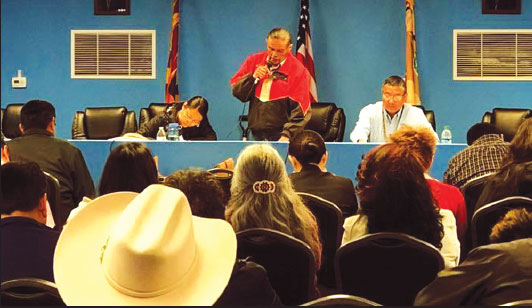
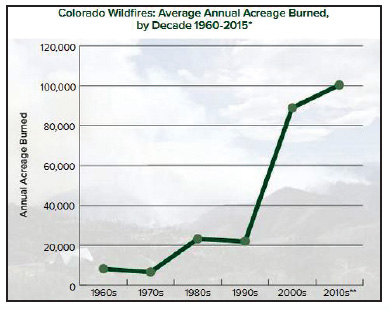

The first two installments in Anne Hillerman’s resumption of the series, 2013’s Spider Woman’s Daughter and 2015’s Rock with Wings, deftly picked up where the Leaphorn-Chee series left off. Anne’s third installment, the justreleased Song of the Lion, is her best yet.

Anne has made the Leaphorn-Chee series her own by giving a star turn to detective Bernadette Manuelito, Chee’s wife and a minor character in Tony’s mysteries. In addition (spoiler alert if you haven’t read Spider Woman’s Daughter), Anne has sent the legendary Leaphorn, Tony’s alter ego, into retirement. In Anne’s mysteries, Leaphorn plays an emeritus role as he continues his recovery from a devastating gunshot wound suffered in Daughter. He fits well in the role of senior advisor in Song of the Lion, while Manuelito and Chee get all the action.

Like a number of Tony’s plots, Anne’s story line is based on a real-life event roiling the Navajo Reservation. The proposed Grand Canyon Escalade would carry up to 10,000 tourists a day, by tram, from a canyonrim hotel on Navajo land just outside Grand Canyon National Park to the confluence of the Colorado and Little Colorado rivers, a place considered sacred to Navajo, Hopi, and Zuni tribespeople.

Song of the Lion begins with a literal bang — a car bomb explodes, with deadly results, in the Shiprock (N.M.) High School parking lot. It appears the bomb’s intended victim was Aza Palmer, a professional mediator in the dispute over the proposed, Escalade-like development at the center of the plot.

The story moves into Arizona, where Manuelito and Chee learn Palmer’s personal background may have had as much to do with the car-bombing as his role in the development dispute. With the help of Chee, assigned the unenviable task of guarding Palmer, and Leaphorn, whose memories of a long-ago case prove integral to solving the present-day bombing, Manuelito must call upon all her skills — intellectual, physical, and psychological — to stop a heartless killer intent on killing again.

Like her father before her, Anne Hillerman transports readers to beautiful, remote parts of the reservation, offering glimpses inside Navajo homes and insight into tribal mainstays like sheepherding and rug weaving. In

Song of the Lion, she mixes tribal lore and spirituality into a thick stew of a story that is sure to please old Leaphorn-Chee readers and newcomers to the Leaphorn- Chee-Manuelito series alike.

Scott Graham is the National Outdoor Book Award-winning author of the National Park Mystery Series for Torrey House Press. The third book in the series, Yellowstone Standoff, was released in June. Visit Graham at scottfranklingraham.com.

Published in April 2017, Prose and Cons

The coal conundrum: The Navajo Nation weighs the cost of saving power-plant, mining jobs

Owners of the Navajo Generating Station announced in February that they intend to shutter the coal-fired energy plant in Page, Ariz., by December 2019, when their lease agreement with the Navajo Nation expires.

The decision is purely economic, they explained. Coal, the fuel used to power the three 750-megawatt units at the plant, is nearly twice as expensive as natural gas in today’s market.

The closure date is contingent on amending or changing the current lease agreement with the Navajo Nation to allow additional time after 2019 for the Salt River Project and the plant’s four other owners, including the Bureau of Reclamation, to complete clean-up efforts at the site. If a new lease arrangement with the Navajo government is not finalized by May, they will be forced to close the plant, located about a mile from Lake Powell, in July of this year.

SRP serves electric customers in Arizona and Nevada. The station also supplies more than 90 percent of the power needed to pump water through the Central Arizona Project. CAP is both the single largest end user of power as well as the largest single source of renewable water supplies in Arizona.

The Kayenta Mine, on Black Mesa, Ariz., in the Navajo Nation, is the only source of coal for the plant and feeds all of its coal production to the plant. At full capacity in 2016, NGS used 240 train cars of crushed coal ore per day shipped over 80 miles of track from Black Mesa. If NGS closes, Peabody Coal, the owner of the mine, will have to find another coal buyer or shut the mine.

Without an extension, about 500 employees of the plant, 90 percent of them Navajo, and 390 Navajo and Hopi coal miners could lose their jobs.

Hopi Chairman Herman Honanie recently told the U.S. Department of Interior that the Hopi tribe will lose significant revenue if Kayenta Mine and NGS close, adding that it would also increase the unemployment rate, currently approximately 60 percent, according to the Washington, D.C., Bureau of Native News. Honanie said approximately 80 percent of their budget is derived from royalties from the Kayenta Mine.

‘A critical point’

WESTERN NAVAJO AGENCY OFFICIALS GATHER IN CAMERON, AZ.

Officials from 18 Western Navajo Agency chapters gather March 25 in Cameron, Ariz., to consider a resolution to request a federal coal subsidy.It passed. From left are chapter Secretary-Treasurer Sara Slim, President Henry Stevens, and Vice President Jerry Williams. Courtesy photo.

Estimates of unemployment on the Navajo reservation vary between 40 and 50 percent. The loss of many of the best jobs in the nation would be a blow to more than three dozen Navajo chapter communities in the northwestern reservation and the nearby border towns of Page and Flagstaff.

At a recent meeting with Kayenta coal miners, Navajo Council Speaker LoRenzo Bates explained that there is enough coal to mine until 2047 if a company could be found to run the coal plant. “It’s important not only to Peabody and the nation but also to everybody up here – the extended families. It’s more than a paycheck, it’s a way of life,” he said, according to the Navajo Times.

Kayenta general manager Audry Rappleyea told the miners that Peabody paid the nation $26 million in 2015 royalties for the 6 million tons of coal bought by NGS, their only client. That number represents a steady decline, Rappleyea said. In 2014 the mine sold NGS 8.2 million tons. Last year it was 5.7 nmillion.

But in March, Navajo President Russell Begaye told a gathering of indigenous financial leaders at the 2017 National Reservation Economic Summit, “The nation is at a critical point where it must diversify its revenue sources away from the coal and oil industry,” pointing out that the Navajo Nation’s revenue from coal and oil has fallen from 77 percent of the total to 66 percent. Leaders foresee this dropping 20 percent more if the NGS shuts down in 2019.

Later that month, Begaye reassured NGS employees at a meeting in Lechee Chapter that the Navajo government is working on keeping the plant open through 2030. The Navajo Nation has met with the Department of Interior and the owners and operators of the NGS and continues to lobby the Trump administration, Begaye said, to support the use of coal in the United States.

Rolling back

On March 28, President Trump signed an executive order to roll back Obama administration protections for clean air, clean water and the global climate.

Trump’s executive order rescinds a moratorium on federal coal-leasing implemented under Obama and directs Interior Secretary Ryan Zinke to “amend or withdraw” the order that initiated a comprehensive review of the federal coal program. The next day, Zinke formally did so and ended review of the program.

Coal is rapidly losing out to cheaper energy sources like natural gas and renewables, leading to a historic downturn in mining.

Robert Murray, head of the largest private U.S. coal firm, Murray Coal, told The Guardian recently that Trump should “temper his expectations” on reviving coal industry jobs, adding, “He can’t bring them back.”

Other options

Regardless of the effort the Navajo government is making to find a company to save the NGS plant, other solutions are being proposed by Navajo organizers like Nicole Horseherder.

The Navajo Nation should be thinking about renewable-energy production and transmission, not coal or natural gas, Horseherder told the Free Press. She is a Black Mesa resident and organizer from the Big Mountain community. The proposal she developed with Tó Nizhoni Ani, a water-justice organization on Black Mesa, is based on lengthy discussions with allies.

Her group joined a coalition of Navajo and Hopi organizations to express concern about the stakeholder input around the future uses of the plant. In a letter to Acting Interior Secretary James Cason, the indigenous community leaders urged the Bureau of Reclamation not to repeat the mistakes of the past in shutting out Navajo and Hopi voices from the stakeholder process addressing the future of NGS and the Kayenta mine.

“Our future depends on a transition that addresses cleanup, securing rights to Navajo water, job and economic development assistance, and mapping out a future built on clean energy,” the letter said.

The only way that will happen is if Navajo officials are given a seat at the table where decisions are being made, said Percy Deal, who signed the letter on behalf of Diné CARE and whose family has lived in the shadow of the coal mine for generations.

Horseherder said the Tó Nizhoni Ani proposal requests that the Navajo Nation advocate for a renewable-energy retrofit at the plant. She admits power generation wouldn’t be as large as the 2,250 megawatts coal produces today, but said retrofitting for renewable energy is a step in the right direction.

“We cannot adapt the plant for coal, or even natural gas. Extraction technologies, like fracking for gas and oil, will only increase the risk to the environment in the future,” she said. “A much greater decision is at issue; we need a long-lasting solution. It’s not enough to just keep [NGS] open for jobs. We don’t have to go back to something that wrecks water or the air.”

A coal-cost subsidy?

Jerry Williams, president of Lechee Chapter, the nearest Navajo community to the plant, has worked 36 years for NGS. When news of the possible closure came, he and another employee, Erwin Marks, developed a plan to save the coal mine and create a cost-effective solution that could keep coal energy fueling the plant for years to come.

They are suggesting a federal subsidy to offset the price of coal. Although the subsidy would change as the difference in cost between coal and natural gas fluctuates, the money would save the plant, the mine and the jobs at both.

The Williams-Marks plan was submitted as a resolution to the Western Navajo Agency Council at the quarterly meeting in Cameron Chapter on March 25. Officials representing 18 chapters in the affected region passed the resolution. Williams and Marks assert that the Northern Agency Council of 20 chapters also passed it.

President Begaye is supportive of the subsidy idea as well as other emerging plans to keep the facilities open. “We support the Western Agency Council’s resolution and we will continue to work diligently to make sure the power plants and mines continue operation until 2029,” Begaye told the Arizona Republic. “This will afford the nation the time needed to transition into solar and other renewable-energy operations.”

But the Black Mesa Water Coalition, an environmental-justice group working to break dependency on the fossilfuel industry, responded to the Western Agency vote of support for the subsidy in a statement sent to their 10,000 followers. “Bailing out NGS is not a solution,” they said. “It will not create new jobs and will not reduce our current unemployment rate. It will only keep us stuck in the same place and leave us with even more polluted lands and health impacts. If we ask the feds for money, shouldn’t it be to help us transition away from the dying coal economy? A just transition can help to retrain workers, establish new sectors of the economy, and solidify water rights.”

Horseherder agrees. “The money that the nation is asking to subsidize the cost of coal can be used instead to retrofit the plant and retrain employees in renewable energy. I know it’s hard on people, yet so many of us have had to change careers many times and we know it can be done, so we could do this again.” She feels confident that money is available to invest in a sustainable transition to renewable energy. “SRP, Central Arizona Project and independent commercial solar developers, plenty of companies, are willing to talk with us and work something out instead of subsidizing a coal plant at the end of its life.” “My heart goes out to the people who may lose their jobs,” said Arizona State Rep. Eric Descheenie in a telephone interview with the Free Press, “but as a leader for our people I have to ask where are we going to be in 10 years?” He said NGS, the Kayenta mine, loss of jobs and revenue to the communities and the nation is a very complex issue. He is cautious about the role the Navajo government should play in rescuing the coal plant.

In 2012, Arizona Public Service created an opportunity for the Navajo Nation to acquire the BHP Billiton Coal Mine near Shiprock, N.M. So naturally, Descheenie explained, the Navajo Nation saved it in the end by buying the coal mine to continue providing cheap energy to Arizona Public Service. “The quality of the coal and the fact that natural gas is a price competitor now, due to evolving technologies like fracking, makes you wonder in the long run if was such a wise decision,” he said.

He represents approximately 85,000 residents, mostly Navajo. Prior to his election he served as co-chair of the Bears Ears Inter-tribal Coalition as the group negotiated the Bears Ears monument proposal in Washington D.C.

“Are we utilizing our higher consciousness as we make these decisions?” Descheenie asked. “Are we being responsible about our ability to care for this land so we can stay in this place? For me it simply comes down to making decisions that assure indigenous people – not just my own tribe – can stay where we belong. Navajo people assert through our creation story that Dinétah is our place on the planet. Yet, even our homeland is affected by climate change.”

Descheenie points to the Alaskan tribes that are being displaced due to climate change. In that instance, the melting polar ice cap is causing rising waters on coastline homelands to crumble foundations and infrastructure and flood tribal cemeteries. Displacement is on their doorstep, he said.

Any decision involving industries and energy generation in the Colorado Plateau, and Dinétah needs to consider climate change and the land “before it’s a crisis and the house is on fire, when the water cannot sustain us and the next generations,” he said.

The coal-subsidy proposal is gaining strength in chapter resolutions on the reservation while President Begaye and Speaker Bates are simultaneously working toward settling a lease extension agreement with SRP by May 1.

Descheenie said he is not opposed to the mining industry and agrees that the economic benefit to 800 employees is a good thing, “but what will the effect be on the other 300,000 of us? We are all affected by the decisions. This is what I feel we are not asking at this point.

“When we look at the price of natural gas, a subsidy from the federal government may be a good short-term solution, but in the end the Navajo Nation could be left holding a hot potato.”

Published in April 2017 Tagged

Stewardship

Now, that is an interesting word! What does it mean to you? It can cover a lot of territory, such as the boss leaving the business under your care while he is gone on a business trip. As a steward, you are to care for, protect and hopefully make a business profit for the boss, exhibiting good qualities of “stewardship” by caring very well for another’s property, the boss’s.

Another area where “stewardship” is important is the Public Lands of the State. Merriam Webster defines it pretty well: “the conducting, supervising, or managing of something; especially: the careful and responsible management of something entrusted to one’s care stewardship of natural resources.” That sounds simple enough, right? Well, we need to start off with the question of who is the “steward,” caring and managing for what owner? The Enabling Act of 1875 declared the lands to be the State of Colorado.

COLORADO WILDFIRES: AVERAGE ANNUAL ACREATE BURNED, BY DECADE 1960-2015

From the 2016 Report on the Health of Colorado
Forests, by the Colorado State Forest Service

In the State of Colorado, 35 percent of the state’s public lands are still under the control of the federal government, involving three agencies. Here in Montezuma County, 73 percent of the lands are under the control of federal agencies, which also includes Indian Trust Lands. With that much land and resources under the control of the federal government, it raises the question of the stewardship of the state’s resources.

Beginning with statehood in 1876, the federal government acted as the steward for the unappropriated lands of the state, now referred to as “public lands,” while working to dispose of them for the state over the next 100 years. In 1976 the federal government decided to no longer be the steward for the state, but to keep the balance of the unappropriated lands of the state for itself (in violation of the Constitution, by the way). While acting in the stewardship role for the state, the forest and range resources were used to enhance the local economy and improve the watersheds, forage, and forest product conditions. In 1976 the passage of the Federal Lands Planning and Management Act (FLPMA) and the National Forest Management Act (NFMA) eliminated the stewardship role on behalf of the state on the now “public” lands of the state.

The reduction in forest stewardship management and use began the deterioration of the overall forest health resulting in overly dense forest growth, disease, insects and fuel buildups, which was reported in the recent 2016 Report on the Health of Colorado’s Forests by the Colorado State Forest Service. The full report can be viewed at The Colorado State Foresters website.

The report showed that as of 2015 there were 834 million standing dead trees, and they are being added to daily. That is in addition to the masses of older dead jack straw tree fuels on the ground. The lack of use and management has been reflected in the change in acreages burned from wildfires. The wildfire acreages burned when management and use of the forest was still happening in the 1960s and 1970s averaged 6,000 to 9,000 acres per year. After the 1976 changes in control and management of public lands, wildfire acreage burned shot up in the 1980s to 20,000, then up to 90,000 acres in the 2000s, and up to 100,000 acres in the 2010s, a tenfold increase. This graph shows how the changing impact of good vs. notso- good stewardship of the natural resources has a profound effect on overall forest health. Wildlife numbers are now suffering, with mule deer down nearly 50 percent, according to Colorado Parks and Wildlife.

The idea of setting aside large areas to not use stewardship management began in 1964 with the Wilderness Act. Colorado has 14.5 million acres of federal public forest lands, of which 8 million acres (over half) have been designated for no management or use, as designated wilderness or roadless areas, both of which harbor much if not most of the unhealthy forest stands that are critical to the watersheds throughout the state. Houston, we have a problem! Our stabilizer has burned out and we are pummeling through space with no controls or direction and no one seems to care. Over 80 percent of this state’s water originates on those forest lands, where over half have no stewardship activities being conducted. Do we not need and like to drink water and recreate on it and fish in it? Do we not like to hunt game in the forests and range lands? Do we not like to eat a good beef steak or lamb chop and wear leather and wool clothing? Do we not like to go to the lumberyard to buy some 2×4’s for the new deck? Do we not like to hike or ride in a beautiful forest environment? Well, you can have it all if you can have good stewardship planning and management action with local control.

There has been lots of fearful rhetoric over federal land transfers recently. Prior to 1976 that issue had never really surfaced much. While the federal control of land was and is, in violation of the Constitution, no one really cared then since the lands were being managed with good stewardship for benefit of the local county and state. So the real issue was not so much “ownership” but “stewardship.” Today, the question is, can good stewardship take place when there is no local control? Probably not, since too many people want the authority to control you, what you can do and your local resources, but want no responsibility for the outcome, or for you and your life. The times they are a-changing, it is a whole new world! So buckle up, Buttercup!

Dexter Gill is a retired forest manager who worked for private industry, three Western state forestry agencies, and the Navajo Nation forestry department. He writes from Lewis, Colo.

Published in Dexter Gill

Balking the walk

As a people, we’ve recently gone through one of the darkest periods in American history. Our national nightmare began on an otherwise perfectly typical evening in early November 2016, when the impossible happened. Ever since, the darkness has had its unabated way with us through the coldest, shortest days of winter. But now, finally and inevitably, baseball is back.

Granted, baseball will never be the same again, since the lovable cuddlable Cubbies won actual games to become the next Evil Empire, squatting in the Yankees’ pinstriped throne. But that little detail cannot change the euphoria that accompanies baseball in the air. Fresh clay, manicured grass, oiled mitts, hot dogs wrapped in hamburgers wrapped in bacon: these are the scents of spring.

In Colorado, of course, we have to imagine these smells, because spring does not happen here until autumn. But they exist somewhere, because spring-training baseball is happening, and that means I can soon fulfill a long-neglected promise.

You see, there’s this friend of mine — let’s call her a “business associate” because true friends possess an appropriately unquestioning love of baseball — who claims she wants to learn to understand the game. Or maybe she said she would never understand the game. Or maybe she said that baseball was boring. Or maybe it was golf.

Whatever she said, the mere possibility of a willing convert has me digging into the batter’s box. And hey, if her claim is actually just a ruse to drink alcoholic beverages in front of an ESPN broadcast, then I still have the hope of a free beer in exchange for explaining ground-rule doubles and intentional walks.

You may think this is a fool’s errand — after all, not even umpires understand what a balk is — but I’m a persistent evangelist. The Mormons win you over with cheerfulness; I will win her over with endurance. There’s 162 games a year, per team. That’s 2,430 games, plus playoffs. Something exciting is bound to happen at least once! And even when it doesn’t, every play offers a thrilling vocabulary lesson.

Take the intentional walk. It’s the most so-called “boring” execution of strategy in the sport. When the fielding team (comprised of “fielders”) decides it would rather put the batter (called “hey batter batter batter”) on first base than give him the chance to hit the ball (called “the ball”), the pitcher throws four unhittable pitches (also called “balls”) to the catcher, who stands far enough away to order a beverage from the vendor (called “Hey, Beer Man!”).

Nothing exciting ever happens during an intentional walk — except when it does. It turns out that professional athletes, who make hundreds of teachers’ salaries by throwing and catching baseballs at high velocity, struggle mightily to throw and catch baseballs at normal human velocities.

This strange reality results in humorous bloopers, which people enjoy watching even more than Olympic-caliber excellence. And it adds tension to the simple act of playing catch, which is perhaps the most mundane recreation involving more than one person.

I mean, seriously. I spent half an hour just last night playing catch with my dog. And my dog didn’t even know how to play catch. I taught him in no time, because catch is easy, yet mesmerizingly engrossing. I could charge people to watch my dog and me play catch, and they would pay. I could sell sponsorships. I could be a YouTube superstar. People say they watch baseball for the thrill of the home run, but let’s be honest, they watch to see men in pajamas play catch.

So imagine my disgust when I discovered that the commissioner of Major League Baseball had deconstructed the essence of America’s favorite pastime. No, he didn’t do away with the 40-hour workweek. Worse: he decreed that, starting this year, the intentional walk would require zero thrown pitches. The pitcher (who, nominally, is not a belly itcher) just says, “Yo, take your base,” and that’s that.

You can protest your congressional representatives and your fake news. Me, I’m taking a stand against the pitchless walk. If football still has to do kickoffs, and gymnasts still have to do floor routines, then you cannot tell me that the intentional walk is pointless. It has a point. Namely, the point is that baseball is full of ridiculously specific customs.

In a sport with so much nuance, how am I ever supposed to explain the pitchless walk to my business associate? It’s cheap and flimsy. The one facet of the game where no one has to do anything requiring any kernel of physical or strategic competence. Chewing Dubble Bubble and sunflower seeds at the same time requires more ability.

I’ll never change my stance on this corruption of the sacred rules. But I will keep on talking about it, if it gets me out of explaining the infield fly rule.

Zach Hively writes from Durango, Colo. He can be read at http://zachhively.com.

Published in Zach Hively