Waste not, want not


Oh, no, we just hit that elk that jumped out in front of us! This is going to be an expensive fix on the truck. We better call the CP&W for a salvage permit so at least the elk meat won’t be wasted.

What are those elk doing here by the highway, anyway? Well, the best forage is in the open right-of-way and the ranchers’ pasture, since the forest trees are so thick. Anyway, let’s not waste the resources our Creator provided for us!

I find it interesting that there is such a push to not waste wildlife, food, water and to recycle almost everything — paper, plastic, oil, clothes, glass, metals. However, some say we should not recycle or even use trees, which are naturally renewable.

On the one hand they demand we end the use of so-called non-renewables like coal, oil, and gas that may produce some pollutants, while demanding the renewable trees be left to rot and burn, producing way more pollutants than the non-renewables. The burnt wood renewables are then left to be wasted while you and I pay to import needed wood products from Canada, Chile, or Germany.

What is wrong with this picture? Why do some people not want the forests to be managed, used and improved, benefitting the local environment, community, economy and recreational opportunity?

The recent concerns over the massive acres of dying spruce trees in northern Colorado have now spread here to Southwest Colorado, and brought up the question of what to do. Do we harvest the dead spruce and pine trees, benefitting the forest environment and local economies and protecting the watershed? Or do we waste them by letting them rot and burn over a period of time, as the faux environmental activists want?

Wouldn’t recycling be the best option? After all, the recycling would pay for itself while improving the future forest, making use of the wood resources, providing jobs and building the economy. Unfortunately that makes too much sense for some; besides, there is a problem, we no longer have sufficient industry to make timely use of the huge volumes in need of treatment.

This problem was created by unrealistic and bad federal policies initiated by the faux environmental activists that wanted to prevent use and access, thereby allowing waste to take place, and bankrupting much of the industry.

Unfortunately, this problem cannot be corrected in the short term for three reasons. First, the federal policy process is controlled by the faux environmental groups. Second, wood-products markets have largely been filled by our importing the products from other countries more cheaply than we can produce them here under the federal policies and regulations.

Third, much of the damage is occurring in areas that have foolishly been removed from conservation management, such as so-called wilderness, roadless, sensitive areas, viewscapes and even slope-limited areas. Houston, we have a problem! New policy: We Can’t!

How in the world did this culture of wasting the forests develop? It all started with Congress refusing to follow the Supreme Law of the Land, resulting in 640 million acres (nearly one-third of the entire U.S.) of misconceived public lands, which are not really publicly owned at all.

The faux environmental movement got a kick-start with the international population-control organizations. One of the faux groups came up with the brilliant idea of using the public lands in the West to “rewild America.” The plan was and is to remove man and man’s influence from the public lands, leaving them to the whims of nature.

Numerous nonprofit activist groups have jumped on the money train, receiving millions of dollars of our tax money from federal grants, and Equal Access to Justice Act funds, and foundation grants to sue the Forest Service, BLM and Fish and Wildlife Service, to stop conservation management from taking place and to restrict and close public access and use of public lands and resources.

That is their big business operation of stopping economic use and access of public lands.

One such group has over 100 employees, with more than one-third of them with legal training to file lawsuits. This group has been working on the rampant human population problem, which they claim is causing wildlife to become extinct. They are proud of their “Endangered Species Condoms” project. I was pretty excited about that one until I found that their special condoms were for you and me, not the endangered species. I really wanted to see how they got a condom on a spotted owl. Oh, well.

These groups identify recreation uses such as mountain bikes, jet skis, motorbikes, ATVs, Jeeps and All livestock and of course all mining and timber use as needing to be restricted and eliminated to save the public lands and resources to be rewilded.

It is interesting how we have been duped into believing that the wealth of our natural resources and society are going to deteriorate and the environment will collapse unless man is stopped from producing food, shelter, using and improving the public lands and the resources thereon. Wasting the resources our Creator provided for us will leave us and our fellow man wanting! Waste not, want not!

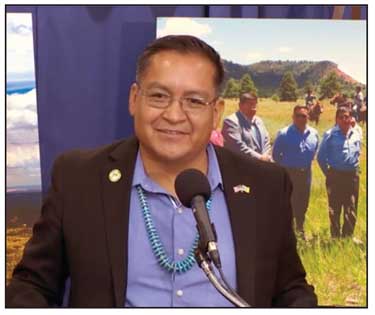
Dexter Gill is a retired forest manager who worked for private industry, three Western state forestry agencies, and the Navajo Nation forestry department. He writes from Lewis, Colo.

Published in Dexter Gill

The Trump next time

“The GOP is destined to lose the White House and the Senate if Donald Trump secures the nomination.” — Karl Rove, paraphrased.

If Donald Trump is the nominee, the “prospects for a safe and prosperous future are greatly diminished … Donald Trump lacks the temperament to be president. … Dishonesty is DonaldTrump’s hallmark.” — Mitt Romney, excerpted.

“Ouch!” — Me

When a party that (at a national level at least) is infamous for obstructionism, love of warfare, greed, anti-intellectualism, misogyny, and bigotry says a candidate is too extreme, chances are that candidate is too extreme. When the candidate’s response is to call Rove a “dope” and question whether Romney is really a Mormon, it reveals a shallow thinker who cannot tolerate criticism, and who resorts to personal attacks. (And bizarre ones; had Trump asked, “Are we sure Mitt Romney is not really a panda bear eating blue cheese at a square dance?” it would have made as much sense.) He indeed lacks the temperament to be president.

Trump is a walking series of boastful, incoherent promises. He has no intention of keeping the promises that do not benefit Donald Trump. His totalitarian bent, megalomania and demagoguery are obvious, yet because he reflects his supporters’ biases and stokes their fears, they are blind to what everyone else can see.

“And I’m frightened by those who don’t see it.” — The Avett Brothers, Head Full of Doubt

Republicans who support Trump frighten me. Democrats who support Trump frighten me. Unaffiliated voters who support Trump frighten me; so do the educated supporters and the uneducated ones. They don’t all fit a single mold; it’s just that Trump plays them, and they themselves are weak enough in some critical area — even one chink in a suit of armor is an opening — that it’s easy for him. Mostly, I fear that there are others biding their time, whose thirst for power matches Trump’s, but whose quiet calculation outstrips his bluster.

History will look back and wonder how America was ever able to support someone so abysmally, obviously unqualified. We need to address it first, though, so that future historians are not scratching their heads in horrified amazement about something much worse than our obsession with a bloated-ego reality television star: The rise of future “Trumps.”

How did we reach the point where Trump was able to gain any traction as a presidential candidate? There are a host of answers, none perfect. While it is ordinarily lazy thinking to “blame the media,” the way coverage tends toward “Look what Donald said!” is a factor. Whether it is a factor because some media outlets are obsessed with ratings, or merely because such coverage is what attracts the most viewers, is anybody’s guess. That is, does the critical lack of substantive coverage arise from the way the national media have approached Trump, or does it arise from the way the masses ignore substance in favor of outrage?

While there certainly have been substantive pieces analyzing Trump, these have been too little and increasingly, too late. From the outset, “outrageous things Donald said!” dominated the coverage of his candidacy.

His pandering, dog-whistle declaration that he would build a wall between us and Mexico could have been met uniformly with actual analyses as to whether that would be feasible or moral, or do any good. (Hint: The answer to all of the above is “no.”) Who knows? Someone might also have pointed out that walls can keep people in as well as out.

Sometimes, the story became the television personality questioning Trump, rather than the issue. Fox’s Megyn Kelly is Exhibit A. The issue she raised at one of the first debates was how Donald Trump views women. And Trump — who seems to think his mere existence can bring ISIS to heel — quailed, then tried to present Kelly as the unreasonable one. The resulting headlines mostly boiled down to some version of: “Fight! Trump v. Kelly! Woo!” The stories should have focused on Trump’s contempt for women.

This isn’t to say there was no analysis of the ideas Trump was flinging to his lapdogs like so much raw meat, only that the analysis did not dominate the coverage and things might be different if it had.

Yes, some voters would still have flocked to his banner, but, deprived of the uncritical attention he craves, Trump might have grown bored and sought a starring role elsewhere. He would still be a bully and an insecure control freak, but he would not be in a position in which these character defects stand a good chance of sparking a global war.

There is a growing tendency to liken a public figure we despise to Hitler. It’s been suggested that this is the political discourse of children. Fair enough. Trump has not actually caused a world war or systematically murdered millions in the pursuit of non-existent racial purity.

There are, however, striking parallels between his rise in politics, and Hitler’s.

Trump makes astonishing promises and exploits people’s fears of “the other.” Notable example: He took the scapegoating of all Muslims for the actions of a few to a new level, by promising to ban Muslims from the U.S. Whatever one thinks of Islam, it should be obvious that Trump’s proposal is immoral and disturbingly reminiscent of Hitler. My hope is it’s just another empty statement he blurted out to appeal to voters who haven’t learned from history. My fear is he means it.

It is truly terrifying that, fewer than 100 years after the world said, “never again,” people are willing to hand over the reins to the likes of Trump. Even after history’s most egregious example of what happens when fear and bigotry are exploited and the exploiter is made leader, some stand ready to do it again. Maybe there are enough sane people, this time, to temper the results and the worst we end up with is four years of a bloviating child. (There is also that slender chance that Trump, having secured his spot, will finally act presidential.)

But in incubating a candidacy like Trump’s, we have exposed the nation to a future of candidates who might be much worse — cunning and practical enough to be subtle in their quest. (At least we can see Trump for what he is — um, yay?) We must change the climate that allows Trumps to flourish. Part of that involves addressing the frustrations that left so many people open to his siren song.

There is a sort of person who would do anything for personal gain. They only exercise restraint when an action will not provide them with something they want. The difference between them and Hitler is merely one of degrees of ambition and opportunity. We must starve the ambitious among them of that opportunity.

If America is at risk of slipping into fascism, Trump is not the sum of the threat. His supporters, too, are only part of the problem. The existence of people as described above is the other component. A national stage on which they can thrive already exists. A history replete with conmen in politics helped set that stage. Trump is the extreme result.

If Trump is elected and we do not act to meaningfully change this climate, the 2020 election could bring more of the same — or worse. This is a risk even if Trump loses. He could try again, refining his technique — or another, slicker version could rise in his place.

What are we going to do about the Trump next time?

Katharhynn Heidelberg writes in Montrose, Colo.

Published in Katharhynn Heidelberg

Cortez becoming a mecca for recreation

The subtle but potent magnetism of Cortez is becoming one of Colorado’s worst-kept secrets.

This low-key, blue-collar town of fewer than 9,000 residents is becoming known nationally and internationally as a jumping-off point for an abundance of open-space and outdoor pursuits throughout Montezuma County and the Four Corners area.

For starters, try hiking, biking, camping, backpacking, archaeological exploring, cross-country skiing, boating, fishing and hunting.

“We’re really on the edge of absolute greatness here,” City Manager Shane Hale said recently while touting his town’s appeal.

“People are surprised at how much is happening in this small area,” said Noel Cooley, manager of the Cortez Welcome Center, a first stop for many visitors. “We want to increase tourism and the visibility of our community so people don’t assume we’re [just another] small town. We’re a little city with a very unique culture as a border town.”

More than 20 percent of Montezuma County’s residents are employed by tourism- related industries, while another 30 percent work for various levels of government, including the Park Service, the Forest Service and the Bureau of Land Management as well as local entities, all of whom support tourism and recreation.

And visitation to Cortez is up, according to a study recently released by the Welcome Center, which also reveals that the city is above the national growth average. In 2014, nearly 50,000 visitors passed through the center, according to the study, and last year saw an increase to more than 60,000.

Cortez has made large strides in analyzing tourism trends over the years, Hale said, including the ability to determine where visitors originate in order to market itself more effectively to those demographics.

For instance, the Welcome Center’s statistics show nearly a fourth of foreign visitors are from Canada, with France’s share only slightly behind at 20 percent and Germany’s at 19 percent.

“We’re kind of seen as the Wild West for foreign visitors – they get so excited and are thrilled to be here,” Cooley said. “Often, they didn’t quite realize that there’s so much undeveloped area to roam in and explore. In many countries around the world, there’s no open space.”

Tourism numbers are expected to rise this summer, in part because of the 100th anniversary of the Park Service. Mesa Verde National Park, which sits between Mancos and Cortez, remains a powerful draw, seeing around a half-million visitors annually.

Although there is concern about the current closure of Spruce Tree House, the park’s most-visited site, which is undergoing major stabilization work, the undergoing major stabilization work, the rest of the park remains open, with many other attractions available.

“We have so many different opportunities,” said Ami McAlpin, marketing director for the City of Cortez. “The experience at Mesa Verde is still monumental. It’s the only national park in the U.S. that is dedicated to humankind — this is phenomenal.”

The visitor to Cortez is often seeking a deeper connection with the area and its past. The heritage of Southwestern and Native American culture is a big draw, particularly for international tourists.

“The person who comes to Mesa Verde is really looking for more of an experience imagining these past cultures, thinking about history, humanity and cultures — a lot more of a mental visit,” Hale said.

“If you have an opportunity to show your family these national treasures, like Mesa Verde, take it,” Cooley said. “We never know how long they’re going to last. If the best you’ll ever see is a picture, that’s too bad, especially if you have a chance to truly experience it.”

But the adventure traveler is another target demographic when planning for tourism in the area, Hale added.

McAlpin concurred.

“We see lots of families and adventure travelers,” she said. “There really isn’t an end to the travel season — we’re not dependent on skiing, which is the case for a lot of other Colorado locations.” The area has an abundance of public land, which serves as a great backdrop for many of the adventurers and weekend warrior-types who choose Cortez as their destination.

“The assets we have here are more engaging and allow the freedom to plan your vacation around what you like to do with open exploration,” McAlpin said. “We’re pretty diversified and the saying, ‘There’s more to explore, one day isn’t enough’ is the reality.”

McAlpin said during the busy summer months, some residents of Durango and Telluride will seek out Cortez for its relative peace and quiet.

“It’s fun to watch so many people come in from Telluride,” she said. “During the busy days of summer and music festivals, they’d rather rent out their houses and camp here.”

Cooley remembers spending summer months in Cortez during her own youth in San Francisco, and said she understands the peace people can experience here that allows them a taste of freedom that big cities don’t always offer.

“There’s not one night where the sunset is ever the same,” she said.

But there are limiting factors for tourism in Cortez — particularly transportation options.

The Cortez Municipal Airport, operated by the city and serviced by Great Lakes Airlines, is one concern. Direct air service has been reduced over the past few years, according to airport manager Russ Machen, because of a shortage of qualified pilots.

Although flights increase during summer months, a regulation passed in 2014 that hiked the minimum required flight hours from 500 to 1,500 for pilots resulted in a shortage because not enough pilots had achieved that time.

“We used to have 22 flights per week, then the effective occurrence of flights decreased to seven because there simply weren’t enough eligible pilots to fly,” explained Machen.

As a result, in 2013 there were 8,837 passengers who came through the Cortez airport, but in 2014 that fell to 2,482. In March of this year, a third flight was added in the middle of the day, a hopeful sign. However, Machen said the traveling public’s confidence in the airport will need to be rebuilt to regain ridership.

“When this thing hit us in 2014 [passengers] didn’t have time to cancel flights and people got burned and went elsewhere,” he said.

In an effort to deal with the shortage of available pilots, a 19-seat aircraft was converted to offer seating for just nine, meaning it required only one pilot and a co-pilot who could increase hours.

“It’s hard getting tickets for the whole family,” Cooley said. “Most people will fly into Vegas or Albuquerque and rent a car.” Cheap gas prices are a factor in the decision to drive rather than fly to Cortez, he noted.

As the Montezuma County commissioners seek to keep the local economy viable even as oil and gas prices drop and carbon-dioxide giant Kinder Morgan cuts production, they are promoting tourism and recreation as alternative drivers.

They hope to draw recreational users of all types, from cyclists to motorcyclists and ATV riders to horseback riders. Their push meshes with the growing interest in Cortez as a recreational hub.

City officials say it’s important for the different entities to be aware of what they all are doing in order to coordinate efforts. “Who cares which ad someone read or what initially inspired them to come here?” Hale asked. “We’re all in this together. It’s become much more collaborative with a lot more communication.”

Cooley agreed that there must be a strong coordinated effort among marketing and development efforts.

“The better we make the city, the more people will want to come here and the more money that will be brought in and stay here,” she said.

“We need to support each other in this because if people aren’t willing to work together, nothing will get done and people will always find disagreement.”

As awareness grows of all the area has to offer, it’s inevitable it will grow, and leaders have to decide how they want that growth to occur.

“Growth does not necessarily equate to success,” Hale said. “Although it would create more job opportunities and bring continued amenity development, there are a lot of special things about Cortez because we are who we are.

“I would rather have growth be more controlled for another 40 or 50 years, but there has to be some growth because without it, you’re going backwards.”

Cooley agreed. “If you cap growth too much, the economy doesn’t help people get jobs, but do we really want a Starbucks on every corner?” she asked. “City planners are working on drawing that line and understanding the points where there’s too much growth or too little.

“We need to work that out without losing the charm of the area and the reason why people choose to live here.”

Published in April 2016 Tagged

Re-1, Utes work toward understanding

In an ongoing effort to strengthen relationships and communication between the Montezuma-Cortez school district and the Ute Mountain Ute Tribe, district principals met with members of the tribe’s education departments Feb. 19 to discuss the transition to kindergarten.

UTE MOUNTAIN UTE TRIBE HEAD START BUILDING

Officials with the Ute Mountain Ute Tribe and Montezuma-Cortez School District Re-1 are working on improving the transition between the tribe’s Head Start, housed in this building, and kindergarten. Photo by Adrianne Chalepah

In the past, Towaoc schools were allotted 10 slots each for students moving on from Head Start to kindergarten in Cortez, according to Kassy Gnas, director of the Ute Mountain Ute Child Development Center (UMUCDC).

This specific allotment was to ensure the equal distribution of Towaoc students throughout the school district, and because of their geographical distance from the district, they are allowed an open enrollment status, said Gnas.

But this protocol meant some families were not admitted to the school of their choice.

“Once they [the schools] fill up, the families are referred to another school,” Gnas explained.

But an improvement in the kindergarten transition process is being implemented for the 2015-16 school year.

During parent-teacher conferences in March, Head Start parents will preregister their students with the schools of their choice. Each principal will then contact the UMUCDC to schedule a tour of the new school, where families will meet one-on-one with their new school’s faculty, said Gnas.

Gnas plans to invite the Re-1 kindergarten teachers to the UMUCDC to “drink coffee and just chat” with the teachers, creating a dialogue around the students and their needs.

During the first week of school in August, UMUCDC Head Start teachers will visit their former students at the Re-1 schools. The goal is for the new kindergarten students to see a familiar face in their new building, said Gnas.

For Tanya Amrine, education division director for the tribe, “A step in the right direction has been the consistency in the curriculum.”

For instance, a student attending Kemper who transfers to Manaugh will get the same curriculum. That is important because many Towaoc families are mobile, she said.

Another recent topic of concern for the school district and tribe is the dropout rate of Native American students, which is the highest in the district, according to Colorado Department of Education statistics.

A “lack of systemic process and systems that support at-risk students so they will successfully graduate” is listed as the root cause of high dropout rates, according to the 2014-2015 Montezuma- Cortez Unified High School District Improvement Plan.

“Overall, the teachers are really interested in the success of the Ute Mountain Ute students,” said Amrine.

Many teachers work hard to understand the diverse, multicultural environment at Re-1, she said.

However, “even the teachers with the best intentions don’t realize that some of the comments they make can alienate the tribal kids,” said Danny Porter, director of multicultural education at Re-1 and principal at Lewis-Arriola Elementary.

A lot of times, students encounter issues before they even get to school, starting on the bus ride or at home, explained Porter.

“We need to be more aware of what they’re going through before we judge them.”

Towaoc students experience a long day with an extended bus ride to and from school.

“They have to be up and ready [for the bus] at 6:30 [a.m.],” said Gnas.

For kindergarten students, the day can be exhausting and families have issues sending their five-year-olds to town.

“It’s scary for them,” said Gnas. “They don’t know what to expect. Even if they have older siblings, the staff have changed.”

Some Towaoc students form bonds with their teachers, which appears to foster a better academic experience.

“I know my kids both have teachers they really like. One teacher allows my son to listen to music when he works because she says she notices that he performs better,” said Troy Lynn Parker, mother of two students attending Re-1 and a Towaoc resident.

Parker said she hasn’t had any negative experiences with the school district, yet has heard stories of other Towaoc parents who have.

“It varies from case to case,” said Amrine. “Each child is different.”

Sometimes parents have the misconception that the Ute Mountain Ute Tribe’s education division knows what every child is experiencing at school, said Amrine.

But the UMUT policy is to obtain a privacy waiver from parents and/or guardians before the education division can get involved, stated Amrine.

According to Porter, who attended school in Re-1 with many tribal members, and has been a principal 21 years, much of that in Re-1, some families have a hard time approaching staff about problems.

“When you had a bad experience in that system, it makes it hard to [go back],” said Porter.

Still, Porter advocates for open communication.

His advice for parents who have an issue with faculty is to first “try to converse with that staff [member]. Get both sides of the story.”

If that doesn’t work, he said, the next step is to go to the building administrator. After that, speak with the superintendent.

“I’m hoping that principals can facilitate [between the families and staff].”

There are also support systems within the tribe, such as the tribal council, as well as liaisons such as Amrine; Eric Whyte, vice president of the Re-1 Board of Education; and himself, said Porter.

Many believe relations are improving between the school district and the tribe.

“I’m hoping that by making people aware of certain things – cultural blindness, limits – a lot of people want to do the right thing,” said Porter, who talked about an upcoming cultural-sensitivity training that will be offered to Re-1 staff on a voluntary basis.

For some, however, the idea of Towaoc having its own schools might be preferable. In 2013, a couple of kindergarten classes were opened at the UMUCDC as a trial effort. After one year of operation, the classes were closed.

Lack of funding and qualified teachers were obstacles to overcome. Towaoc has not had its own schools since the government-run boarding schools were operated during the “assimilation” period on U.S. Indian reservations.

Yet, with both a new Head Start director and policy council, the conversation has come up again between parents and staff.

“The teachers there [in Towaoc] might be able to work more one-on-one with the students,” said Parker.

“I think it should start with early childhood, K through second grade,” said Gnas, who would also like to see the students maintain their participation in sports and extracurricular activities with the school district.

But in the meantime, the district and tribe are working to improve relations and smooth out any difficulties.

“Being able to talk to each other and know that we have each other’s best interests in mind,” is key, said Porter.

Published in March 2016 Tagged ,

Oooh, that smell!: A proposed livestock ordinance prompts lively debate in Mancos

It began with a rooster, two roosters to be exact, in two different neighborhoods within the small metropolis of downtown Mancos. Neighbors complained, owners refused to get rid of their birds, and the discord eventually ended up at Town Hall.

Several years later, the problem now includes multiple roosters, large flocks of free-range chickens, three cows, countless flies and piles of manure. Now, a draft ordinance addressing the concerns is awaiting consideration by the Town Board.

After several meetings open to public comment, P&Z held a special meeting on Feb. 23 to finalize a livestock ordinance to present to the Town Board at its next meeting.

In attendance were chairperson Cindy Simpson, committee members Regina Roberts, Jennifer Guy, and John Bolton, Town Manager Andrea Philips, Town Clerk Georgette Welage, and eight members of the community.

As this was a special meeting, it was open to only limited public comment. When the draft ordinance goes before the town board, that meeting will be open to more input from the community.

The debate involved whether town residents should be allowed to keep livestock on their property. Livestock, by definition, includes rabbits, hens, roosters, ducks, geese, turkeys, goats, sheep, cows, horses, pigs, bees, water buffalo, and fish (not goldfish, but fish in ponds).

Many people in Mancos believe, because this is a rural community, that livestock is a part of who they are; and also that people in the West shouldn’t be told what they can and cannot do.

And therein lies the rub: Should the town make and enforce regulations about, say, a cow?

At the epicenter of the debate is Will Stone, long-time resident, town-board member and current mayoral candidate.

When the rooster wars began, Stone brought a cow to live on his rental property on Main Street. That single cow has led to two more, as well as 55 chickens.

Many of his neighbors, including officials with the next-door Catholic Church, have complained about the mess, the smell, the “droppings,” and stray chickens wandering into their own yards up to four blocks away. Stone’s yard is also criticized as unsightly, and some view it as so small for the number of animals he has that it borders on cruelty.

But while Stone has the greatest number of livestock, he is not the only person in town facing changes if the ordinance goes through. Many residences are home to chickens, rabbits, and roosters.

During public comment at the Feb. 23 meeting, Carrie Baikie of Colorado Ranch and Home Realty conveyed some of what she hears from folks looking to buy or sell their homes in Mancos.

She began by addressing the most practical issue: “Not everyone likes to walk on sidewalks with poop. It can’t be on the sidewalks. We’re a country town, it needs to be in the streets.”

However, she continued, “This is not about a horse, it’s about what is our vision for Mancos. Where the West still lives. Yes, livestock in town can cause problems, but to say only cats and dogs and no chickens…people come here because it is a rural town and people don’t want to be told what they can’t do.”

James Looman, who lives one block behind Stone’s home, had concerns about odor. “I just filed another complaint today,” he said. “With the melting snow and warm weather, the smell makes it impossible to sit outside. And we can’t get the chickens out of our garage.”

A reminder that Colorado is a “fenceout” state was given.

His wife, Helen, commented, “I grew up in a rural community, Fraser. If I wanted to remain on a ranch, I would have. Yes, we are a rural community, but we are a town first.”

The last speaker was Barbara Zeutzius, who keeps rabbits at her home on the north side of the highway. “You want us to have a huge piece of property for something as small as rabbits? I’ve always had rabbits, for more than 30 years, and now I won’t be able to have them.”

This led into the first item on the ordinance agenda – what animals are and are not allowed within town limits. In previous discussions, the committee had agreed upon hens and rabbits only. No roosters, cows, horses, sheep and other large livestock, or fish. (The fish decision was based not upon smell, but upon water usage.) It has also been decided that existing animals that are not in compliance with the new ordinances will not be grandfathered in. There will be a 90-day sunset clause allowing owners time to relocate their creatures.

At first, the committee considered the provision that if a resident wanted to have animals on their property, all neighbors within 200 yards had to give approval.

Stone, in a later conversation, said, “Who’s going to talk to all of their neighbors, if they can even find them?”

This provision was dismissed.

P&Z also considered setbacks for containment structures: barns, coops, hutches. Originally the suggestion had been that they be at least 30 feet from a property line, but the allowance of only hens and rabbits, which need much smaller housing, combined with the narrowness of many town lots, led the committee to settle on 10-foot setbacks instead.

This seemed agreeable to those in attendance.

The committee swiftly came to consensus on fencing regulations. Roberts pointed out, “Most fences are on property lines and if dogs are allowed to roam up to those lines, then chickens should also be allowed to.”

But a fence must comply with existing town requirements for all fences and be able to contain the animals in question.

There are three large lots north of the highway, behind the Valley Inn, that are zoned Agricultural Residential (AR). What the ordinances should say about these specific lots prompted lengthy discussion. Eventually it was determined that the owners of those specific lots would be allowed to have a variety of livestock without applying for a permit, but that their structure setbacks would be 30 feet from the property line, since the lots are bigger, as would be a barn for a horse.

The real meat of the meeting came with deciding upon limits to numbers of hens and rabbits.

Roberts pointed out that children wishing to participate in 4-H were required to have one buck and three does. “Setting limits on that will restrict children in town from participating in 4-H. And they are the least nuisance of all of the animals that we are talking about.”

Simpson responded, “I’m not hung up on the 4-H thing – I’m hung up on the impacts to neighbors. If a kid wants to have a hundred rabbits for 4-H, then they can find another place to do it. Or the kid can get a kennel license.”

The number of rabbits settled upon was four, thus allowing young town residents to enter rabbits in 4-H.

How many chickens will be allowed? Twelve was the consensus – bad news for Stone’s other 43.

Next up…commercial enterprises. Having more than three dogs in town requires a permit to run a kennel. So what about chickens being raised to sell their eggs?

Roberts declared, “I run a business out of my home [making handcrafted wooden bows and arrows]. If I sell even one bow a year, I have to pay $25 for a business license. What if I sell a dozen eggs. . . every other week?”

Roberts then wanted to talk about comments that she had received via social media when she posted a notice about the meeting on her Facebook page.

Simpson said no, adding, “If those people were interested in being heard, they should have come to this meeting tonight.”

Roberts pushed back. “I am actually going to insist on sharing these comments. We allow people to call in to the town so they should also be allowed to comment on Facebook.”

But Simpson said, “I am the chair and I will not allow it. We will get a sanction by the town as to how to handle this situation before the next board meeting.”

Roberts said, “The next time I am in a board meeting and I hear someone say, ‘I’ve heard around town,’ I am going to fight for that to not be allowed.”

Bolton diplomatically pointed out, “Gina, your vote in the matters at hand will represent the comments that we are discussing.”

Eventually the committee was able to move on.

One last issue — whether residents should be allowed to butcher and process large animals on their property — got a unanimous yes vote.

A decision was also made that boa constrictors, zebras, and other exotics will not be permitted within the town limits.

The draft ordinance resulting from the meeting still needs to be presented to the town board. There will be another meeting that will be open to public comment, though the date had not been set as of press time.

Stone later told the Free Press, “These regulations are messing with people’s rights to be self-sustaining. I get gallons of milk and up to 27 eggs a day from my livestock. I have been tracking my chickens, and they stay on my lot. For the most part.”

He continued, “My grandmother raised everything. We as a society have gotten so far from that. We have the opportunity to create a state-of-the-art ordinance that other towns will want to copy.”

Stone added, “I hope that I get elected — I will turn this on its ass.”

Published in March 2016 Tagged

Courthouse project sparks hiring discussion

Montezuma County has raised a few eyebrows with its choice of an owner’s representative to manage and oversee the construction of a $7.5 million courthouse.

But the commissioners have stoutly stood by Monty Guiles of Mancos and say they are confident he will do a good job in safeguarding the county’s interest in all phases of design and construction.

The 33,000-square-foot courthouse is to be built on seven acres of county-owned land next to the county detention center in Cortez.

On Jan. 11, the commissioners voted unanimously to appoint Guiles, cofounder of Circle Zebra Fabricators, which specializes in heavy construction, pipelines and oilfield services, as the owner’s rep. Circle Zebra recently installed the breakwater for McPhee Reservoir, which, after delays attributed to the California design firm, was successfully completed last year. It was a joint project of the county and the Forest Service.

Guiles has been in the construction business some 25 years, with the vast majority of his experience in metal-based projects such as pipelines. That caused some critics to privately question the selection process.

Reflecting those concerns, Chris Eastin, a former vice president of business development for the construction company Nielsons Skanska, spoke during the public-comment portion of the commissioners’ meeting Jan. 25 and suggested a new selection process be undertaken.

In prepared remarks, Eastin – who had reviewed the applications for the job – charged that Circle Zebra’s proposal was “non-responsive to the RFP [the request for proposals advertised by the county].”

“The Guiles/Circle Zebra’s proposal did not demonstrate any experience as Owner’s Representative or Project Manager for a major building project,” Eastin continued. “This is the main requirement of the county’s RFP.”

Eastin provided a chart listing ways in which he believed Guiles’s proposal did not meet the county’s advertised requirements.

“This project will be a big undertaking for the county with many technical issues to manage. Hiring a firm who has proven professional experience with project management will enable [the] county to hold the line on costs,” Eastin said.

“Without this expertise the project may face schedule delays, contract claims and disputes, poor-quality work, and local coordination problems. County taxpayers could end up paying for resulting cost overruns or withheld grant reimbursements.”

But Commissioner Keenan Ertel was dismissive of Eastin’s concerns in a recent interview with the Free Press, saying all the candidates were thoroughly vetted, although not through a weighted points system.

“We had a number of questions we asked the companies who gave us their RFQs and RFPs and they were all very qualified. We went through the same list of questions with all the candidates.

“We also looked at their bid proposals – what they were going to give us in return for what they asked us to pay them – and we made our judgment based off those questions and that financial information.”

Price was a major factor in the commissioners’ choice, according to Ertel. KPMC’s bid and that of Triad were both just short of $200,000, nearly half again as much as Guiles’s bid of $135,000.

“When I’m spending taxpayers’ money, price is always a consideration,” Ertel said, adding that Guiles was both “qualified and willing.”

Montezuma is the only county in Colorado that houses its district and county courts in separate buildings. In recent years the state judiciary has been applying increasing pressure on the county to replace the cramped, aging and relatively insecure district and county courts. The district courtrooms are currently located in the 83-year-old courthouse in downtown Cortez and county courts are in the Justice Building near Centennial Park, built in the early ’80s.

The new combined courthouse will be a pre-engineered metal building rather than a traditional “stick-built” structure. An architectural firm has been hired to draw up plans and the county is working on hiring a general contractor.

Once groundbreaking occurs, probably this summer, the courthouse is expected to be completed in 18 months.

The project is being funded through a patchwork of revenue sources, including $2.6 million in state grants and $5 million from the county’s capital reserves.

To some extent, the disagreement between the county and critics over Guiles’s hiring reflects the difference between more-formal hiring procedures broadly used by public entities, and the commissioners’ traditionally less rigid methods.

Eastin, who started with Nielsons Inc. in Cortez in 1978 and retired in 2013, said he was not criticizing Guiles as an individual.

“I’m not saying he isn’t a good guy,” Eastin said, adding that he was concerned instead about the process utilized to select him.

“I had suggested to them [the commissioners] they build a weighted scoring system so they could show the impact if one guy was cheaper, but brought to the table some things that gave him a good weighted score, but they just sort of winged it.

“My real problem is that they said, ‘This is what you’ve got to furnish us’ – and they just didn’t do it. That’s very irregular in this type of process.’

For example, he said, applicants were asked to supply references regarding similar projects, but Guiles did not.

“They bypassed the safeguards that were put in that RFP and just made a gut selection,” Eastin said.

Ertel did not see the value in a mathematical construct. “I don’t know where Mr. Eastin got his ideas about matrices and all this high-fallutin’ measuring and statistics he had in his [statement],”Ertel told the Free Press, “but we didn’t use that.”

Guiles was one of four applicants to respond to the county’s RFP and RFQ (request for qualifications). The Free Press reviewed the applications, which were made available by the county upon request.

  • One was from a local individual who submitted a two-page letter/résumé and a one-page fee proposal.
  • Another was from Triad Western Constructors of Cortez. The company said it would assign Jason Umberger, the company’s project manager/estimator, to be the owner’s rep.

According to the file, Umberger, who has a B.A. from Fort Lewis College in engineering management, worked on Phase 1 and 2 of Three Springs Village One near Durango, a $13 million residential/ commercial development.

  • The other proposal was from KPMC of Durango, owned by Jim Ketter and Peter Robinson.

Ketter has an extensive background as an engineering manager and project manager, according to the application. He served as the owner’s rep for the new $33 million Montezuma-Cortez High School, the Dolores K-12 renovation and expansion, and renovation and additions to the Ignacio Elementary School. KPMC also did pro bono work as owner’s rep for the Cornerstone Building project in downtown Cortez.

Robinson likewise served as an owner’s rep for MCHS as well as several new buildings at Fort Lewis College.

In his résumé, Guiles cited his 25 years’ experience in “providing end-to-end project management delivery in the petrochemical, marine, and civil construction sectors.”

As representative projects with Circle Zebra, which Guiles co-founded in 2006 in Robstown, Texas, he listed four pipelines in different states and installation of equipment and piping for a recycle compressor in Utah.

Prior to forming Circle Zebra, he was an owner-developer with TWI Galvanizing of Robstown, Texas, which provided hot-dip galvanizing of metal components. Before that, Guiles said, he had supervisory positions with two other companies in Texas on projects such as a dam, lights on a Coast Guard platform, a bulkhead, a pump station for a port, a bridge and a fishing pier.

The RFP called for the owner’s rep to be a licensed general contractor or have a minimum of 15 years’ experience as a general contractor. It also called for the person to “be able to provide references on projects of similar scale.”

LEED accreditation from the Green Building Council was also required. Guiles did not have it at the time, but has since obtained it.

Ertel said Guiles is “very experienced in many different facets of construction, a good part of it oilfield-related stuff, but he’s been in all types of construction and knows the construction business very well.

“I don’t know that any of the applicants had specific qualifications with building a courthouse.

“What impressed me about Mr. Guiles was his sincerity in wanting us to get the very, very best building for the dollars we’re going to spend,” Ertel said.

He added that Guiles, a member of the Mancos School Board, “lives in our community and is invested in our community.”

Most construction involves the same principles anyway, Ertel said.

Guiles told the Free Press the same thing.

“At the end of the day, construction is construction – it’s concrete and steel and roofs and CMU units,” he said.

“I have never built a courthouse; however, in the mechanical world and the oil-and-gas world there are always buildings and facilities being built,” though they are ancillary to such projects, he said.

“I’ve built any number of facilities with large operation rooms and control rooms.

“So, no courthouses; however, lots and lots and lots of buildings as parts of larger projects.”

Guiles said he offers a business owner’s perspective as well as the fact that he has been manager or superintendent on a number of projects.

“I’ve employed literally hundreds and hundreds of men and built millions and millions of dollars of projects in that time.

“I now consult for different projects throughout the country – I did one last year in Kansas.”

One way Guiles’ proposal appears to save money is that, unlike the two more expensive bidders, it does not have any provision for support staff.

Guiles said since he will be devoting himself fulltime to the project he doesn’t anticipate needing help to handle paperwork and such, but that his staff at Circle Zebra would be available if necessary.

“I want us to have a good project that is well received by the community. I want it to come in within budget and on schedule. I want the contractor to be successful and profitable.

“I want us to have a long-term facility that we are all happy to utilize and see.”

Guiles declined to respond specifically to Eastin’s statement about his qualifications.

“Mr. Eastin doesn’t know me from Adam, doesn’t know what I’m capable of,” he said.

“It’s hard to see how he came to those conclusions he came to.”

Eastin said the fact that the new courthouse will be pre-fabricated doesn’t mean it will be simple.

“It is going to be a custom site building based on architect’s plans that will be relatively detailed. It has a lot of uses that will have to be addressed in terms of jury rooms , the judges’ chambers and that sort of thing. It also would have, I think, quite a bit more in the way of mechanical systems – heat, ventilation and air-conditioning – and security requirements in terms of housing prisoners and protecting the facility.”

As “major accomplishments” with TWI Galvanizing, Guiles’s application cited orchestrating an Economic Development Administration grant with the city of Robstown to do infrastructure improvements required to build a $1.5 million facility; and “Achieved City approval of loan guarantee in the form of a Surety Bond, securing the remainder of the $4.6 million dollars required to complete construction of the facility.”

However, once completed, the business defaulted on the $4.6 million loan after a year of operation, leading to a protracted lawsuit that was ultimately settled out of court.

The RFP asked applicants to, “Provide description of any lawsuits or claims including status and resolutions (if any).”

Ertel said he did not recall discussing Guiles’s past business difficulties with him, but, “If it was reconciled, taken care of and done away with, so be it. I do not necessarily choose to hold a person’s past over his head.”

Guiles stressed that he has nothing to hide about the Tex-Wave project. “Businesses start and businesses fail, and that one failed,” he said.

“There was a lawsuit that went on for quite some time, but at the end of the day there was no at-fault on either side, no judgment against me – it was just business stuff (with) bankers.

“There was a successful part of that and that’s why it was on my résumé. It was a 30,000-square-foot facility that we built from the ground up and was a beautiful facility.

“It was just that the business side of it failed. There’s absolutely no scandal there.”

Published in March 2016

San Juan County, Utah, told to redraw districts: Order could mean changes for the county commission

By Sonja Horoshko
San Juan County, Utah, must redraw the boundaries for its county-commission districts, according to a ruling issued Feb. 19 in Salt Lake City by U.S. District Court Judge Robert Shelby that the county’s 2011 redistricting decisions violated the Equal Protection Clause of the U.S. Constitution.

LEONARD GORMAN, PHIL LYMAN AND BRUCE ADAMS IN FEBRUARY 2012 PHOTO

Leonard Gorman, far left, executive director of the Navajo Nation Human Rights Commission, addresses San Juan County commissioners Phil Lyman, left, and Bruce Adams on Feb. 21, 2012. By Sonja Horoshko.

The decision creates the potential for the three-member county commission, which since 1987 has always two Anglo commissioners and one Native American, to have two Natives. That could mean the commission might adopt different positions on any number of issues, including public lands.

Some citizens have written letters to the editor in the local paper expressing concern that if there were two Native (probably Navajo) commissioners, it would mean the majority of the board was deciding questions about spending county tax revenues while not paying any property taxes themselves.

Commission Chair Phil Lyman strongly took issue with the order from Shelby – who was the judge who oversaw Lyman’s trial on charges related to an ATV ride in Recapture Canyon in 2014. Shelby recused himself from Lyman’s sentencing after Lyman’s attorneys accused the judge of bias.

“I don’t have a problem with redistricting, but the Navajo [Human Rights Commission] is using the federal law, even Judge Shelby, to get two Navajo commissioners,” he told the Free Press.

“They’re taking a non-problem and making it problematic.

“A group of Navajos have decided to use redistricting to be vexatious. Their motivation is spite and malice, and it will continue. I say that we do our best at the commission and be prepared for lawsuits.”

At issue is the voting strength of the county’s Native American population. Although the county is Utah’s largest in size, it is sparsely populated, with 14,476 people in the 2010 census. But the population is growing. Estimates by the U.S. Census Bureau put the number near 15,000 today.

Different parts of the lawsuit involved the county’s three county-commission districts and five school-board districts, but in both regards the Navajo Nation argued that plans for new districts adopted by the county commission in 2011 represent intentional discrimination.

Fixed in place

For most of its history, San Juan County elected its county commissioners at-large, meaning everyone in the county could vote in each commission race. Under that system, however, no Native Americans were ever able to gain seats on the county commission.

In 1983, the Department of Justice sued the county in federal court, arguing that the existing at-large voting system denied the substantial American Indian population “an equal opportunity to participate in the county political process and to elect candidates of their choice to the San Juan County Board of Commissioners.”

The result of the lawsuit was a 1983 consent decree that permanently prohibited the county from “any action or conduct which abridges or denies the right to vote of the Indian citizens of San Juan County” or “applying a voting standard, practice, or procedure which abridges the right of the Indian citizens of San Juan County to vote on the basis of race or color.”

The decree included a provision to establish three single-member (rather than at-large) districts, “precisely to afford electoral minorities a chance to affect the political process.” In November 1984, the com missioners approved a plan to set lines for the districts. The districts were to be “compact, contiguous, as equal in population as possible and shall not split or fragment geographic concentration of minorities.”

At that time, District 3 was approximately 89 percent Native American. In 1986, the first Navajo was elected to the county commission.

For 25 years, the commission districts remained fixed in place. And although there is an expectation of redistricting after every decennial census, the exact commission district lines drawn and adopted in 1986 were unchanged after the 1990 and 2000 censuses, and even initially after the 2010 census.

Drawn in perpetuity?

Shelby wrote that although it is unclear why the county did not redistrict in 2011, one former county official has testified that commission members believed they were required to leave the 1986 boundaries in place in perpetuity.

But in October 2011, according to the order, a Navajo Nation representative urged the county to explore redistricting based on demographic shifts there.

Leonard Gorman, executive director of the Navajo Nation Human Rights Commission, told the Free Press, “We tried to work with the county commission [on the districting issues] in 2011,” but to no avail.

Ultimately, county officials came to believe that districts 1 and 2 had grown malapportioned in population and tweaked their boundaries. But they did not entertain any suggestion of adjusting the lines of District 3.

In November 2011, San Juan County altered its districts for the first time since 1986. The plan moved two voting precincts from District 1 to District 2, but otherwise left the boundaries of those districts undisturbed. The county made no changes to District 3.

According to Shelby’s order, when redistricting was discussed, Commissioner and then-Chairman Bruce Adams stated with regard to District 3 “that the County is bound by a 1983 Consent Decree from the United States District Court for Utah and that the County would not change the basic Commission District configuration without the Judge’s agreement.”

In later testimony, Adams said that he thought the consent decree “guaranteed that there would be one Native American that would absolutely be elected,” with another seat safe for a white candidate.

According to the court document, former County Clerk and Auditor Norman Johnson testified that in redistricting efforts, one focus was to ensure relatively equal population and contiguity. And another focus was “ ‘protecting that third commission district, because [he] knew it had to stay involved in the reservation’,” based on his understanding that the [1983] Settlement and Order required that District 3 ‘be a Native American population district’.”

Confusion

The county officials responsible for the 2011 redistricting, however, were apparently not aware of the details of the 1980s litigation. Adams testified that he “assumed the decree itself set up the districts.” Lyman expressed a similar lack of familiarity with the consent decree, noting that he did not “know what the consent decree was addressing.”

Johnson likewise said that he did not remember the consent decree.

“The County submitted no evidence that County officials charged with 2011 redistricting decisions made any effort to locate, review, or familiarize themselves with the content of the consent decree or the court’s Settlement and Order,” Shelby’s order states. There is also no evidence that the county communicated with the Department of Justice concerning any limitations the 1980s litigation imposed in connection with the 2011 redistricting.

The two commissioners elected from Districts 1 and 2 supported the redistricting plan, while the District 3 commissioner, Kenneth Maryboy, voted against it.

How many Indians?

Six years later, the county and the Navajo Nation still disagree about how to determine which county residents should be considered Native American, and therefore don’t agree on the exact county or district demographics. Shelby found the dispute insignificant, saying that roughly half of the county population is Native American.

District 1 and 2 both have an approximately 30 percent Native population, while District 3 is 92.8 percent Native American, containing roughly 60 percent of Native Americans in the county. Districts 1 and 2 hold approximately 95 percent of the non-Native American population.

“It is difficult to explain with reference to any other consideration other than race,” Shelby wrote. “Crucially, Districts 1 and 2 do not bear the same characteristics; neither has a concentration of Native American or white voters approaching such a proportion.”

He said the county did not prove that it had a compelling government interest in the 2011 district boundaries.

“Under these circumstances, racially gerrymandering a single district is equivalent to racially gerrymandering the scheme as a whole. District 3 cannot be redrawn without necessarily impacting at least one, and more likely both,” of the other two, Shelby wrote. “Therefore, […] the predominant consideration of race in drawing the boundaries of District 3 requires a remedy directed to the entire districting scheme.

“[…] the districts in the county must be redrawn.”

The county’s defense offered the “binding nature” of the 1983 consent decree. But Shelby wrote, “No language in the Consent decree establishes district lines, or dictates that the boundaries remain in place in perpetuity.”

The county, he wrote, “failed to attend to minimal redistricting obligations for over twenty-five years, and then incorrectly treated the racially-based District 3 as a permanent fixture of politics … offending basic democratic principles.”

But Lyman disagreed.

“The way they’re going about it, alleging that the county commissioners did racially motivated re-districting is, I’d say, spurious,” he told the Free Press. “We can’t change the original consent decree. In fact, we changed the districts every time the county clerk thought we should.”

A separate issue

The order regarding the county commission districts follows an order by Shelby in December 2015 that the county must redraw its five schoolboard- district boundaries because they are so unequal in population that they are unconstitutional.

That order came in response to a separate part of the lawsuit.

The school board serves 12 schools with about 3,000 students. The five districts – also chosen through single-member voting – were established by the San Juan County commission in 1992, and since then the county had made no effort to redraw those districts.

In 2012 the Navajo Nation added the school-board districts to the commission redistricting suit.

According to Gorman, the Navajo Utah Commission, a sub-unit of the Navajo government located in Montezuma Creek, Utah, joined in the suit against the county in January 2016, and also put its support behind a school-board redistricting plan developed by the Human Rights Commission.

Shelby’s December order set Feb. 28, 2016, as the final date for a new school board redistricting plan. Both parties have submitted proposed plans to the court and, at press time were awaiting a decision by the court as to which plan satisfies the law.

Published in March 2016 Tagged , ,

‘News of the World’ offers rare beauty (Prose and Cons)

When an accomplished poet turns pen to prose, readers ofttimes are rewarded with work of startling beauty.

Such is the case with poet-turned-novelist Paulette Jiles’ latest book, “News of the World,” an exquisitely told tale set in north Texas shortly after the end of the Civil War.

NEWS OF THE WORLD BY PAULETTE JILES“News” centers on an unlikely duo. Itinerant, aging Captain Jefferson Kyle Kidd makes his living by reading the latest world and national news to paying audiences across lightly populated north Texas. Ten-year-old Johanna, kidnapped during an Indian raid in which her parents were killed, recently has been freed by the U.S. Army from four years of Kiowa captivity. The Captain agrees to return the orphaned Johanna to her nearest kin, an aunt and uncle far to the south, and the odd pair embark on an epic trek across unforgiving, rain-soaked Texas that forms the backbone of the book.

While reminiscing about his long and troubled life, Captain Kidd, the grizzled, widowed veteran of three American wars, faces difficulties and danger during the 400-mile journey with Johanna that include rising floodwaters, marauders bent on capturing the orphan and selling her into prostitution, and, most notably, Johanna herself. No longer capable of speaking English, Johanna is committed to escaping back to Indian country, even if it means killing the Captain to do so. As the miles pass, however, “the two lonely survivors tentatively begin to trust each other,” Jiles writes of her story, “forming a bond that marks the difference between life and death in this treacherous land.”

The owner of a small Texas ranch, Jiles knows firsthand the terrain and travails faced by the Captain and Johanna. Using spare yet evocative language, she tells the story with intimate detail and heartbreaking realism.

When, finally, the two reach their journey’s end, the Captain faces a wrenching decision. Should he leave Johanna with her aunt and uncle, who see their niece as nothing more than a slave, or should he become, in the eyes of the law, a kidnapper himself ?

Readers who prefer to learn Southwest history through nonfiction may turn to such books as Hampton Sides’ bestselling “Blood and Thunder” and S.C. Gwynne’s Pulitzer Prize-finalist “Empire of the Summer Moon.” Those, however, who would prefer to explore the same territory in the thrall of a fine work of historical fiction need look no further than Jiles’ captivating “News of the World.”

Scott Graham is the National Outdoor Book Award-winning author of seven books. “Yellowstone Standoff ” (Torrey House Press), the third book in the National Park Mystery Series, will be out in June. See scottfranklingraham.com.

Published in April 2016, Prose and Cons

Exposed

A few weeks ago a jury awarded ESPN sportscaster Erin Andrews $55 million in a case involving her being secretly filmed nude in her hotel room.

And now Hulkamania is running wild!

On March 18, a jury awarded former wrestling superstar Hulk Hogan $115 million in a leaked sex tape. Then, on March 21, that same jury added another $25 million for punitive damages. That’s a total of $140 million for Hogan – whose real name is Terry Bollea.

Hulk smash the courtroom!

This has gotten me to thinking. For one thing, it shows how sexist this country is. I mean, in what world is a naked, balding Hulk Hogan worth nearly three times as much as a cute, blond Erin Andrews in the buff ?

Sure, The Hulkster was one of my favorite wrestlers, but I never once thought about wanting to see him doing the wild thing. Now, maybe, I’d watch The Rock laying the smack down …

If courts are going to start awarding money for every titillating image, then we need to come up reasonable guidelines to prevent such disparity in deciding damages. Here are some handy guidelines for the damage awards in sex scandal suits:

“You’ve got to be Kidding Me!” This category would be reserved for people like Mitch McConnell or Ruth Bader Ginsburg. Instead of paying penalties, anyone caught peeking at nude images of people in this category should have to use their money for therapy.

“Go ahead, Make my Day.” This is where you’d put someone like Erin Andrews. As an avid ESPN watcher, I had no idea who she was before this sex scandal. Now, of course, she’s a major part of broadcasts and has been featured in magazines, etc. Sure, her rights were violated but it’s a stretch to say it hurt her career. Think of Paris Hilton. She turned her “accidental” sex tape into a multi-million-dollar career move.

People at this level should be able to sue for no more than $5 million.

“I clicked on it by accident!” This might include images of Pee Wee Herman in a Florida adult theater, for example. Of course, the damage could be real, but defendants in this category came to it by accident – for example, you might have visited an X-rated website and meant to search for “Catholic cool girls…” Hey, it could happen. People in this tier should be able to sue for up to $10 million.

“The Honus Wagner.” This group is named in honor of turn-of-the-century baseball legend Honus Wagner. Nearly forgotten today, Honus was one of the first five men elected to the Hall of Fame and for a century was considered the greatest shortstop of all time.

But what makes this category so rare is the 1909 Honus Wagner baseball card. It’s the most valuable baseball card there is, with only a handful known to exist.

People entitled to sue in this category would include someone like Zsa Zsa Gabor, a forgotten Hollywood legend. This level would pay out up to $50 million, mostly for old times’ sake.

“Zoinks!” This tier would cover those situations that are just so wacky that the average person couldn’t resist looking. It could cover everything from Luke Skywalker hooking up with a Wookie to Scooby Doo doing Tony the Tiger. You may be ashamed later, but you know you would look.Winning lawsuits at this level would be entitled to up to $75 million.

“YOWZA!” This is the top tier, reserved for the elite of perverted viewing – like a Brad and Angelina romp. They would be entitled to the maximum $100 million penalty – and a hearty thank you from the viewing public!

Oh and what about Kim Kardashian? Get real! Naked pictures of Kim are a dime a dozen.

Anybody got a dime?

John Christian Hopkins, an award-winning novelist and humor columnist, is a member of the Narragansett Indian Tribe. See his writings at http://authorjohnchopkins.blogspot.com.

Published in John Christian Hopkins

A need for better records

I would like to see the minutes of the Montezuma County commissioners’ meetings be kept in greater detail. As things exist, it is hard to research the past actions of the commissioners or the questions asked by constituents.

I realize the minutes have been written in bare-bones style over the years, regardless of who the commissioners, the county clerk, or even the county attorney were. From their point of view, it is safer to say very little – you are less likely to get in trouble. Just state what the vote was and don’t include any of the discussion.

But in my mind, the minutes are somewhat like Grandma’s receipt for her cake – when a certain pinch of salt is left out, it changes the flavor. Keeping the minutes to a minimum does not give a very complete picture of the course set by present or past commissioners as to where the county is heading.

I was in an industry where complete and detailed information was of the highest priority, all kept in triplicate or more. One for the office, one for the inspector, one for the engineer and one for myself to cover my ass.

I would think the commissioners should treat the building of a county much the same way as a large and expensive construction project, where each participant (constituent) in its construction, if they care to, should be able to find a complete chronology of its vision and the steps taken toward that. One does not have to know the finer points about the changing of a tire – that’s self-evident. But when repairs are to the motor, they should be explained.

Good leadership and management require complete notes on yesterday’s actions and a clear vision for tomorrow. When I was in the service, the bird colonel in charge of the hospital always ate with the patients and enlisted personnel. When I asked him why, he said he met with the commissioned officers, but what he really wanted to know was what the patients and enlisted personnel needed. That’s leadership.

Not everyone can take the time to go to the commission meetings, nor does everyone have the kind of high-speed Internet it takes to watch them live. All the more reason to have a thorough and detailed record of what is said.

I have seen the minutes of the Cortez City Council meetings and they are much more complete. I would like to see the county move in that direction.

Galen Larson writes from Montezuma County, Colo.

Published in Galen Larson

Moving forward with clean-up: Silverton, San Juan County seek Superfund status in wake of spill

Six months after the release of 3 million gallons of wastewater from the Gold King Mine into a tributary of the Animas River, vested interest groups are working to determine the best plan for moving forward.

“It’s been six months since the spill and it’s important to pause and take a snapshot of what’s been done,” said Jimbo Buickerood, manager of the lands and forest protection program with the San Juan Citizens Alliance. “There have been a lot of different efforts going on and we really need to look at them to figure out where we go next.”

In early February, the San Juan Citizens Alliance, an environmental nonprofit based in Durango, joined by Earthworks, hosted about 100 people with various backgrounds in an open discussion regarding the response to the spill and what could be expected on the long road ahead.

“I’m really glad that they pulled this meeting together with the community,” said Gwen Lachelt, La Plata County commissioner. “I’m happy to see progress moving toward Superfund status. It’s going to be a slow process and the community should definitely see the cleanup efforts that have already happened as big progress.”

Dan Olson, executive director of SJCA and host of the event, said that Silverton and San Juan County are in the process of requesting Superfund designation, while the City of Durango has put in its request for the status and La Plata County is in the process.

“This is the start of a lengthy process,” he said.

Recently, the Silverton Board of Trustees and the San Juan County Commission voted unanimously to support Superfund status for the mining network north of town.

The proposed Superfund, or the Comprehensive Environmental Response, Compensation, and Liability Act of 1980 (CERCLA) is a United States federal government program designed to fund the cleanup of sites contaminated with hazardous substances and pollutants. The Superfund authorizes federal natural resource agencies, including the Environmental Protection Agency (EPA) to recover the natural resource damages.

According to the EPAs website, the Superfund is designed “to protect public health and the environment [and] focuses on making a visible and lasting difference in communities, ensuring that people can live and work in healthy, vibrant places.

Bill Simon, coordinator of the Animas River Stakeholders Group, said he is confident Superfund designation will be achieved, but the definition of “community” involved in the process needs to be clarified and expanded to encompass both upstream and downstream communities.

“We will reach an agreement to have an active Superfund in the area,” he said. “This really needs to be more clearly defined, but while there are a number of things still up in the air, I have full confidence that it will be obtained. Downstream users need to be aware of it as well as San Juan County residents.”

Simon said this will not be a fast and easy process once the designation is obtained.

“This will go on for 20, 30, 40, 50 years and will cost around $150 million,” he said. “It took 125 years to get to where we are today— it’s going to take a few more to get to where we’re trying to go.”

Commissioner Lachelt said she sees the Superfund being the best, if only, viable option for a long-term solution.

“The Animas River Stakeholders Group has been doing a lot of great work and there’s been a lot of successful mine cleanup projects there, but we need to start addressing more of the mines in a bigger way and the only way we’ll do that is by achieving Superfund status,” she said.

Collaboration with different voices in the involved communities will continue to be an important part of reaching a solution, many at the meeting agreed.

“There’s been a lot of really good news surrounding the cleanup effort and the community has been working together on reaching a solution,” said Buickerood. “The alliance’s position is that you don’t really get effective and long-term solutions if you don’t have everyone at the table. That doesn’t always work and there’s a lot of give-and take-with people who don’t always agree, but it’s the only way to reach a solution.”

Buickerood also said that different voices are needed because many people are involved with the watershed for different reasons.

“The watershed has so many uses and we need everyone there,” he said. “We’re all in the same watershed and there are so many different needs and challenges. We have to have everyone at the table.”

Olson also said that collaboration is key to remediation.

“We want to give all watershed residents a political voice in the cleanup discussions and educate, organize and amplify those voices,” Olson said. “As an organization, we can notify people when they can get involved and show the support process and application so we can help jumpstart this process.”

One of the partners in remediation of the Gold King Mine is Earthworks, a nonprofit focused on protecting communities and the environment from the adverse impacts of mineral and energy development. Their representatives helped lead the discussion on legislative and regulatory reform, including reform of the 1872 Mining Law.

The infamous law, which has not been changed since it was passed under President Ulysses S. Grant’s administration, governs the mining of hard-rock minerals on federal land.

“The law was passed and designed to encourage settlers to come out and strike it rich, mine gold and bring men,” said Lauren Pagel, Earthworks policy director. “It was pick-and-shovel mining then. Right now, pick-and-shovel mining is not what we see; we have large-scale mining and this law doesn’t work any more. It’s old and outdated”

Other issues with the law, environmentalists contend, include its lack of environmental standards for reclamation; lack of a reclamation fee for abandoned mines (there are more than 500,000 abandoned mines in the United States); no requirement for royalties to be charged on taxpayer-owned resources; privatization of public lands; and an absence of consistent national standards.

“Mining-reform legislation must abolish patenting, charge a royalty, expand public-land protections, balance mining with other land uses, and create an abandoned- mine cleanup program funded by a reclamation fee,” said Aaron Mintzes, Earthworks policy advocate.

Pagel said legislation to that effect is being reviewed by the 114th Congress in the form of HR 963, the Hardrock Mining Reform and Reclamation Act of 2015. The latest action was taken last March, when it was referred to the Subcommittee on Energy and Mineral Resources, according to the congress.gov website.

The proposed reforms include, but are not limited to, a royalty of 8 percent of gross income on locatable minerals; and a requirement that each operator of a hard-rock mining operation provide a deposit of 7 cents per ton of displaced material as a reclamation fee. Pagel and Mintzes said the Gold King Mine spill has shed a spotlight on acid-mine drainage, which will be helpful in creating change because more people are paying attention to the problem.

“The Gold King Mine spill really changed the discussion in mining reform in Washington, D.C., and the media took an issue that not many folks understood and made acid-mine drainage a household term,” Pagel said. “Seeing the river a few days after the spill and the fact that the law governing it is 100 years old has created interest we haven’t seen in a long time.”

“We’re hoping the next administration will make the changes that we can’t make through legislation,” Pagel said. “We want to make sure water is protected, that there is a requirement of using the best available control technology, that there’s an increase in public participation so the public can be aware of all parts of the issues, that a system of fees will exist to cover the costs of inspections, and that there will be detailed performance standards.”

Pagel and Mintzes also discussed the proposed “Good Samaritan Policy,” legislation that seeks to amend the Clean Water Act to allow environmental groups and local governments more involvement in clean-up efforts without risk of liability.

“We hope to take the tragedy of the Gold King Mine and ensure there are not future incidents,” Mintzes said. “It shouldn’t be about mining and making a profit — it should be about the cleanup. What happens if things go wrong? We want to make sure that the right plans are in place and if something goes wrong, someone is held accountable. How do we mobilize all of these communities and all of these concerns? For a long time, a lot of discussion was focused only on the headwaters. The Gold King spill made everyone realize that we’re all at risk so we should all have a say.”

Meanwhile, communities in the Animas and San Juan watersheds are getting ready for the re-disturbance of toxic heavy metals in their primary water sources as warming triggers snowmelt in the Colorado mountains.

The estimated 440 tons of metals released last summer during the spill first raced through the Animas River in Colorado where the river had faster flows, then moved more slowly into New Mexico, the Navajo Nation, Utah, and finally into Lake Powell.

The depositing of metals in the riverbed is greater in the slower-flowing portion of the river, according to a release from the New Mexico Environment Department.

New Mexico and Utah, the Navajo Nation, and La Plata County, Colo., are working on synchronized monitoring and response protocols for the rivers while the large El Niño snowpack melts.

Published in March 2016 Tagged ,

Recreation or industry?

I am having a hard time adjusting to how time has changed our way of life and what we find important. Growing up so long ago, I never thought about or even heard about such things as vacations or recreation out in the public lands and forests. The forests and ranges were “working” lands, where timber, livestock, mines all provided jobs and products to enable the businesses to grow the local economy. People worked to put food on the table, clothes on their backs and a roof over their heads. Once a year we did make use of the roads developed by those industries, to access the forests to go hunting or hunt for arrowheads and neat rocks. We didn’t realize that we were “recreating.”

Today those “working” lands are being set aside as lands for leisure recreation, no longer contributing much to building industry and wealth in the economy. Yep, I’m having a hard time understanding all this leisure recreation when we have so many that don’t have jobs to enable them to gain enough wealth to afford to recreate these days.

It is interesting how so many different groups have decided that the purpose of the public lands is for “their” type of recreational use, only theirs. They forget, or likely don’t know, that the public lands, pending disposal, were designated for production of timber, forage and water for the welfare and development of wealth for the people of the state. Non-productive recreational use of the public lands was not even a remote consideration, as everybody was expected to work to produce wealth for their own survival and build the economy of the state as a whole.

Recreation got a big stimulus starting in the late ’50s when buying on credit became a more commonly accepted practice. We could then spend more time and “money” that we didn’t have, playing and having fun, and where better than on the public lands? Today, people pay more for recreational toys than I paid for my first house.

As recreation on public lands increased, the demand came to halt beneficial economic management and use of the lands, as those uses conflicted with the desires of the new recreational and environmental pleasure-seekers. Stop grazing, timbering, mining, and any other economic use, they demanded. Interestingly, the various recreational users are now wishing to restrict or eliminate each other. The hikers, bikers, motorbikers, ATVers, Jeepers and equestrians all seem to have issues with some or all of the others as not being compatible with using the same trails and roads or noise levels. The not-so-amusing part is that very few of them seem to realize that the industries of agriculture, mining, timbering and livestock are what built the roads, trails, ponds, lakes, other access and facilities that enable them to enjoy and recreate on the public lands.

I hear it said that recreation and tourism is the growing industry to sustain Colorado, and the public lands are the key to facilitating that economic growth. To muddy the waters, I would allege that recreation is not an industry, but is in fact a means of “wealth redistribution” and unsustainable as industry wanes, which is now happening across the nation.

Industry is definitive of work, employment, productive enterprises. Recreation is definitive of refreshing the body and mind after work by playing and relaxation. So here we have people that work at a job to produce sufficient wealth enabling them to use some to redistribute to others to help them relax from their work of gaining wealth.

It is pretty clear that recreational businesses are entirely dependent upon productive industry to generate the one new dollar for redistribution. The one new dollar of wealth is now more difficult to create, with 75 percent of the public lands here in Colorado having been set aside from productive economic use, and the remaining 25 percent highly restricted. So, the public lands have a high cost of oversight (there is no management) and attempted protection, which has not been working, and no economic return from the lands to defray those costs.

Before you try to shoot the message-bearer, I do agree that we need to work to maintain and even expand recreational opportunity throughout the area along with the associated businesses. How do we make this happen? Certainly not by restricting and eliminating access and use of any one potential recreational user in preference to another. Nor should we eliminate existing road and trail access that has been used and may be needed for future management, protection, recreation and safety purposes. Start by recognizing that the public lands must be managed for the best overall health and economic production of the land, vegetation and water, for the local area, not the desires of the fickle public. Recreational opportunity is a side benefit derived from good productive management and use of the resources on the public lands, not the primary purpose. The wealth derived from the industry use provides for expansion of the recreation opportunities and businesses.

So, do we want to develop and improve recreation and tourism business opportunity locally? Then develop sound productive industry uses of the forest and range resources that can support the leisure recreation and build its supporting businesses, while recreation is still viable. We can have it all!

Dexter Gill is a retired forest manager who worked for private industry, three Western state forestry agencies, and the Navajo Nation forestry department. He writes from Lewis, Colo.

Published in Dexter Gill

Dipping below the horizon: Nesbo’s latest thriller is worthwhile, but not one of his best offerings (Prose and Cons)

It’s been said that there are only two plots in all of fiction. In the first, a man goes on a journey. In the second, a stranger comes to town. “Midnight Sun,” by Norwegian crime master Jo Nesbo, is a worthwhile, if mildly disappointing, iteration of the latter.

MIDNIGHT SUN BY JO NESBOThe stranger in this case is Jon Hansen, an Oslo contract killer on the run, and the town is Kåsund, a remote seaside village he hopes will serve as his hideout from the sinister Fisherman, an all-powerful crime boss Jon has just double-crossed. Jon arrives in Kåsund by bus in the dead of night which, this being northern Norway in summertime, is bathed in eerie sunlight. With only the clothes on his back, a gun in his pocket, and a bulging wad of the Fisherman’s money, our exhausted hero, now calling himself Ulf, takes refuge in the local church where, having dozed on the sacristy floor, he is awakened by Lea Sara, a beautiful Sámi (Laplander) widow who is also the daughter of the pastor whose pious religious sect, the Læstadians, inhabit the village.

If this set-up seems vaguely familiar, perhaps you’re thinking of Harrison Ford in “Witness,” or of any number of Clint Eastwood films. So it’s no great spoiler to tell you that the bad guys are coming for Jon/Ulf, or that forbidden love will bloom on the windswept tundra, or that the insular little town will have to decide whether to give up or protect its mysterious stranger.

“Midnight Sun” ($23.95, from Alfred A. Knopf) is a sequel of sorts to Nesbo’s 2015 thriller “Blood on Snow,” in which a different Oslo hit man, Olav Johansen, runs afoul of the selfsame Fisherman, with fatally tragic consequences. But the velocity and poetry that made “Blood on Snow” an international bestseller are largely absent from the sequel, which proceeds at a more languid pace in service of less grandiose aspirations. What the two novels share, however, are compelling protagonists torn by the conflicting imperatives of their chosen professions and their inherent good natures.

Jon, you see, is not your typical hit man. For one thing, he’s incapable of committing murder, and his recruitment by the Fisherman was, we learn, the result of a misunderstanding. Jon also had a young daughter in hospital whose life he’d been desperate to save, which made it essential he continue accepting the Fisherman’s commissions. But when he faked the death of a rival drug dealer who later turned up alive, Jon had no choice but to cut and run.

If you’ve never read Nesbo before, I’d recommend that you stash both these books in your TBR pile and instead start with “The Bat,” the first installment in his acclaimed ten-volume Inspector Harry Hole series of Oslo police procedurals. These wonderful novels will remind crime aficionados of the very best of Michael Connelly’s Harry Bosch mysteries. “Midnight Sun,” in contrast, reads more like Nesbo’s attempt to mimic Lee Child’s lonewolf Jack Reacher franchise.

Not that a Nordic Noir version of Lee Child is such a bad thing, but it’s a little like listening to Rod Stewart sing the Great American Songbook – the voice is still great, but it seems oddly misapplied. This might be attributable to Nesbo’s switch from the third-person narration he employs so easily in his Harry Hole novels to the first-person voice of both “Blood on Snow” and “Midnight Sun.” Or it might be a function of his change in translators, from Don Bartlett to Neil Smith. The result, in any event, while still a first-rate thriller, is not the transcendent stuff we’ve come to expect from one of the masters of the genre.

Chuck Greaves is the award-winning author of five novels, most recently Tom & Lucky (Bloomsbury), a Wall Street Journal “Best Books of 2015” selection. You can visit him at www.chuckgreaves.com.

Published in March 2016, Prose and Cons

Wild horses, feckless bureaucrats, and Civics 101

Like most hot-button issues, this one began with a tragedy. In the summer of 2014, six horses died of dehydration at Mesa Verde National Park after the park superintendent, citing “standard protocol for wildlife management on public lands,” blocked their access to available water. The resulting outrage and protests prompted park officials to seek public comment on how best to round up and remove the horses, which they labeled “trespass livestock.” Some 9,000 respondents urged the park to retain and humanely manage the horses, but park officials contend that “the park’s only legal authority is to remove trespass livestock.”

The battle lines have been drawn. Park officials insist that their hands are tied. Horse advocates respond that the wild horses on Mesa Verde predate the park’s formation in 1906, and that government bureaucrats simply don’t wish to be saddled with the burden of actively managing a unique and historical park resource.

So which side is right? Because the question has both legal and moral dimensions, a review of the applicable law and regulations makes for a good starting point, beginning with a quick refresher in Civics 101.

Federal statutes are bills that have been passed by both houses of Congress and signed into law by the president. The only federal statute that addresses the question of horses in Mesa Verde National Park is found at 16 U.S.C. 117c and requires that the Secretary of the Interior “make and publish such general rules and regulations as he may deem necessary and proper for the management and care of the park . . . and for protection of the animals and birds in the park from capture or destruction, and to prevent their being frightened or driven from the park.” Because horses – whether you choose to label them wild, feral, or something else – are indisputably “animals,” this statute, on its face, protects the horses of Mesa Verde to the extent they were present within the park when the statute was enacted in 1928.

Undaunted, park officials cite a federal regulation, 36 CFR 2.60, as the basis for their position that horses must be removed from the park. That regulation, however, simply prohibits the “running at- large, herding, driving across, allowing on, pasturing or grazing of livestock of any kind in a park area . . . except as specifically authorized by Federal statutory law,” and establishes procedures for the impoundment of trespassing livestock. But if the horses were indeed present on Mesa Verde when the park was established in 1906 – a fact that nobody disputes – then they cannot by any contortion of language or logic be deemed to have “trespassed” into the park and do not, therefore, fall within the regulation’s purview.

Regulations, moreover, are subordinate to statutes, and the Supreme Court has long held that when a federal regulation conflicts with or contravenes its enabling statute, it is to that extent void. Chevron USA, Inc. v. NRDC, 467 U.S. 837, 842-4 (1984). Here, the applicable federal statute mandates that park officials manage and protect all animals that were living within the park as of 1928. To the extent park officials try to strain the cited regulation into requiring the expulsion of such animals, then the regulation contravenes its enabling statute, and is void.

Nor are the park’s positions even coherent. They invoke “standard protocol for wildlife management on public lands” as justification for denying the horses water, while at the same time disputing their status as “wildlife.” If the horses are, as park officials contend, “trespass livestock,” then the superintendent would be obligated under the very regulation he cites to dispose of the horses “in accordance with applicable Federal and State law.” The applicable state law – Colorado’s 35-46-106 – makes it the duty of “any person who takes any animal into custody [as trespass livestock] to feed and care for such animals in a reasonable, careful, and prudent manner and keep the same in as good order and condition as when taken into custody by such party.” As six dead horses attest, the park has done neither.

Which brings us, finally, to small-c civics – the Aristotelian duties of ethical citizenship – and specifically to the proposition that a governmental agency and its officials who blithely allow animals in their care to horribly suffer and die for the sake of operational expedience deserve neither our trust nor our deference.

I say let’s keep the wild horses on Mesa Verde, as the law requires, and let’s instead remove those feckless bureaucrats who would do violence to either.

Chuck Greaves lives and writes in McElmo Canyon. Visit him at www.chuckgreaves.com.

Published in June 2015

Under pressure: Emails released by the Forest Service in response to a FOIA action show how Village at Wolf Creek developers prodded the agency

Thousands of documents obtained from the U.S. Forest Service by a coalition of environmental groups opposed to building a luxury resort near the summit of Wolf Creek Pass are adding yet another controversial chapter to a complex legal battle that spans three decades.

And more may be on the way.

On Jan. 29, U.S. District Court Judge William Martinez ordered the Forest Service to conduct a more thorough search for relevant material in response to the coalition’s FOIA (Freedom of Information Act) request after ruling the agency’s previous effort had been inadequate – although not necessarily evasive.

“This ruling is significant, vindicating plaintiff ’s’ claims that the Forest Service has continued to improperly avoid public transparency laws,” said Dan Olson, executive director of the nonprofit San Juan Citizens Alliance, a member of the coalition, in a press release.

“Significantly, the ruling expands the search to all ‘records’ as opposed to emails and forces the Forest Service to search for records from 15 individuals previously not included.”

In a related lawsuit, the coalition, Friends of Wolf Creek, is challenging a land-swap decision made last May that would enable a two-lane access road to be built connecting the site of the long-planned development with a public highway, U.S. 160. It maintains an environmental- impact study performed for the Forest Service prior to the approval may have been improperly influenced by political pressure from billionaire developer J. B. “Red” McCombs. Documents produced by the new court-ordered search could show this, it believes.

“We’re trying to get searches conducted of the (Forest Service) Chief ’s office, the Undersecretary (of Agriculture)’s office – places higher up where we feel some of these conversations may have taken place,” Matt Sandler, a coalition attorney, told the Free Press recently.

Judge Martinez has now agreed, specifying the Forest Service must take a broader look at all “third-party and intra-agency communications and any other responsive records, whether embodied in a communication or not.”

That order includes “the records of the Undersecretary, the Chief and ‘decision- maker Dan Dallas’,” he ruled, and must be completed by March 31.

Dallas is the supervisor of the Rio Grande National Forest who approved the land exchange, which is essential to the construction of a sprawling complex of high-end houses, condos, restaurants and hotels that would accommodate up to 8,000 residents and tourists. The swap would provide access that is now lacking between McCombs’ 420-acre inholding and U.S. Highway 160.

Plans for the so-called Village at Wolf Creek were first announced by Mc- Combs in 1986, but opposition to developing the relatively pristine area was immediate and has remained stout ever since. (A day-use ski area adjacent to the proposed resort is the only other human intrusion for many miles.)

The coalition has accused the Forest Service of possibly colluding with the developer and his minions and then trying to cover it up, alleging documents it has obtained so far indicate that other records more clearly demonstrating this may have been either withheld or destroyed.

“It’s disappointing,” Sandler said. “The Forest Service is supposed to be working in the public interest, and some of this shows the lack of transparency that should be involved in a process like this.”

Among the documents already released by the agency are emails that plainly reflect Forest Service personnel coming under intense political pressure from McCombs, who was repeatedly described as “frustrated,” to grant approval of the crucial land swap.

In other emails supplied to the Free Press by the San Juan Citizens Alliance, Forest Service personnel offered assurances that the agency was devoted to eliminating any legal obstacles that might interfere with McCombs’ longheld vision of creating his exclusive hamlet.

“I expressed (to his lawyers) that we were working very diligently on making sure we had a solid and defensible package in light of the controversy and potential litigation of this case,” wrote Jim Bedwell, director of recreation, lands and minerals for the Rocky Mountain Region, in an email sent to Dallas and other key employees Oct. 22, 2014.

Even so, Bedwell noted, McCombs’ Washington, D.C., attorneys had warned him “that ‘Red will do what Red will do’ in terms of political contacts.” This was one of several implied threats contained in various communications circulated among staff members.

“They have questions about ‘Why is it taking so long,’ (McCombs is rattling cages) and who would be in opposition, congressional interest, etc.,” Bedwell also remarked in an earlier email, explaining he’d composed a “Q&A” (not included in the document release) ex plaining some of these delays.

And another lengthy email by deputy forester Maribeth Gustafson that outlines the convoluted history of the saga noted, “It is commonly understood that Mr. McCombs brought political pressure to bear to realize his dream. . . .”

Dallas’s approval of the land swap is being challenged by the coalition and is set for a hearing in federal court this spring.

Among other issues, it maintains the environmental impact study done before the land-exchange approval was influenced by McComb’s pressure, and that a new analysis needs to be conducted. Considerations include the impact on the lynx, a threatened species that was re-introduced in the Wolf Creek area in 1999, and the effects of a recent devastating wildfire.

Now 88 years old, McCombs had also attempted to circumvent these regulations in 2001 with a failed effort to have former Texas Congressman Tom De- Lay sponsor legislation that would have transferred the land without an EIS.

Yet other emails expressed concern that their communications might be disclosed under a FOIA request, and discussed ways of avoiding this.

For instance, a Jan. 9, 2013, missive from Randy Ghormley, a wildlife program manager, states that he’d had the “rationale” supporting the land exchange sent to him in a “hardcopy . . .so it would not be subject to FOIA (is this correct?)”

A Forest Service lawyer responded that such “gyrations” are unnecessary, since “we’d deny any request for it under the deliberative process privilege until (the decision) is issued.

“Then it would most likely be released.”

In an Aug. 24, 2012, email from Divide District Ranger Tom Malacek to Harold Dyer, a planner with the Forest Service, Malacek wrote, “Talked to both Dan and Steve, we are on track…..Dan’s main concern wasn’t the letter, but the emails around the letter that might be a little damaging in the event they are not all deleted in case we get a foia…. remember we are swimming with sharks and need to keep emails from even the remote appearance of whatever, so make sure you burn this once read!”

The degree to which the Village developers expected agency officials to respond to their requests was indicated in an Oct. 22, 2014, email from the agency’s Jon Sams to Dallas, in which Sams repeatedly expressed the developers’ expectations: “Just received a call from Harry Adams of Red McCombs Enterprises regarding Wolf Creek.

“Harry is insisting that a conference call take place this Friday afternoon with him, Red McCombs, Clint Jones and you and Dan Jiron. . . .

“Although this is the first I’ve heard of this request, Harry is expecting a call to take place this Friday, Oct 24. . . How would you like to handle this request? Harry is expecting a return call this afternoon….”

Contacted by the Durango Herald and other news agencies, Forest Service officials and McCombs’ representatives have emphatically denied any impropriety preceded the approval of the land swap, stating the emails had been interpreted out of context by foes of the development.

“I think it would be fair to say you can see some influence,” Jimbo Buickerood of the San Juan Citizens Alliance told the Free Press. “For example, it appears that the Rio Grande National Forest office was actually looking at a supplemental EIS that would examine an over-the-snow access alternative or possibility, and that seems to have been quashed.

“There’s not exactly a smoking gun, but it sure seems like the Forest Service was considering an alternative or looking at a supplemental EIS that would look at an over-the-snow access as being reasonable enjoyment.”

Under federal law, access must be provided to owners of inholdings to the extent they can have “reasonable enjoyment” of their land, but the law does not specify exactly what type of access is required.

He added, “If everything has been aboveboard and there has not been undue influence, then the Forest Service should be able to release documents to the public that tell that story and they’re making a conscious decision not to do that.

“They have been asked to bring forth these documents and tell the public the rest of the story, and if everything was transparent, with due process, all the protocols followed, that would be great — but show us the documents that tell that story. Especially when you see indications of Mr. Combs’ interest in influencing the process, there’s an inference there that something was pushed in appropriately or unethically.”

Published in February 2016 Tagged

A path to prosperity? Locals hope a Cortez-Mancos trail will boost recreation

Hop on your bike, saddle up your horse, or step into your hiking shoes and journey along a recreational trail from Cortez all the way to Mesa Verde and even on to Mancos.

That’s a vision that many local leaders – particularly with the city of Cortez and the town of Mancos – have had for years. Now, it may be a bit closer to becoming reality.

On Jan. 20, Colorado Gov. John Hickenlooper named the proposed 17-mile “Paths to Mesa Verde” as one of the highest-priority trail projects in the state, part of Colorado the Beautiful’s “16 in 2016” initiative.

The announcement was greeted with exuberance from many locals.

But the trail is far from a done deal. Numerous issues have to be resolved – not the least of which are what exact route it might follow and how it will be funded.

“There are definitely some big questions,” said James Dietrich, communityservices coordinator for Montezuma County.

Finding funding

Worried about plummeting revenues from Kinder Morgan carbon-dioxide extraction, the Montezuma County commissioners have been considering alternatives to keep the county’s economy chugging along. Recreation is one answer, and the trail would be a boon to that effort.

According to information on the Colorado the Beautiful web site, the “Paths to Mesa Verde project” would provide “multi-modal linkages between the Town of Mancos, Mesa Verde National Park, Cortez High School, Southwest Colorado Community College, the Phil’s World Mountain Bike Trails System, and the Montezuma County Fairgrounds.”

However, envisioning a grand path connecting local sites of interest is a far cry from implementing it.

Despite the fanfare of Hickenlooper’s announcement, the state’s “top-priority” designation doesn’t bring with it any specific funding. But Great Outdoors Colorado (GOCO) is set to spend $10 million in 2016 and $30 million on trails over the next four years as part of an initiative to improve walkable and bikeable routes across the state. Being named one of the priority projects puts “Paths to Mesa Verde” in a good position to nab some portion of the $30 million.

Even so, more money will need to be found. At a work session of the county Planning and Zoning Commission on Jan. 28, Dietrich told the board that a very rough estimate of the cost to construct the full trail is $25 million – and that doesn’t include the planning.

Competitive grants are available, of course, from sources such as Colorado Parks and Wildlife, the Department of Local Affairs and the Colorado Department of Transportation, but they can’t be counted on.

Sales tax

The members of P&Z were supportive of the trail concept, but seemed somewhat daunted by the cost.

“What do we expect to get back from this?” asked Chairman Kelly Belt, and another member, Bob Clayton, noted, “It will be some time before we get $25 million back.”

Mike Gaddy asked whether there was any assurance that, once the trail is started, there would be funding to complete it. “We don’t need a trail to nowhere,” he said.

Dietrich said there is no such guarantee, but that although the trail has to be planned in its entirety, it will be built in phases.

“You have to look at it as one complete trail project, not in segments,” he said. “You have to plan the whole thing, but then you can phase it.”

Dietrich said there are examples of locations that have benefited mightily from recreation, such as Moab, Utah, a mountain-biking mecca, and Mesa County, Colo., but there is one big difference between them and Montezuma County: They have a sales tax.

Montezuma County does not. Its municipalities do – Cortez, for instance, has a 4.05-cent tax and the state’s rate is 2.9 percent. But the county itself gets nothing in the form of direct sales-tax revenues.

The P&Z members said, for the county to reap the benefits of increased tourism and recreation, it would need to adopt a sales tax, even a modest one – an idea they intended to suggest to the county commissioners. Such a tax, of course, would have to be approved by voters.

There is a lodgers’ tax on hotel and motel rooms, but it doesn’t produce huge revenues.

Dietrich said the question of maintaining the trail also needs to be decided. Snow removal, trash collection, weed management and upkeep all will be expensive. He said he hopes Mesa Verde will agree to maintain the portion that crosses the national park’s boundaries, but much of the burden will fall to the county and possibly the municipalities.

Gaddy mused, “Where is the profit margin? How many motel rooms do you have to rent to pay for this?”

Dietrich said the county will be working with consultants on maintenance strategies and discussing ways to pool with the park and the towns.

Two paths?

The trail project has already received $400,000 from the federal Transportation Alternatives Program, and Cortez, Mancos, and the county provided another $100,000 as a match. Public meetings were held to gather feedback about the trail. Dietrich said two points upon which there was widespread agreement were that the trail should not run right along the highway – cyclists can already ride the highway if they wish, people said – and that it should have a soft surface.

The latter, however, may not be possible, Dietrich said. In all likelihood, the 8-to-10-foot-wide trail will have to be paved in concrete to meet Americans with Disabilities Act requirements.

“It’s essentially like building a one-lane highway,” Dietrich said.

P&Z suggested having a paved trail alongside a soft-surface path, but Dietrich told the Free Press that could raise other issues.

“It’s a bigger easement that is required and depending on what kind of a soft surface you have beside it, there could be maintenance issues,” he said. “We could be setting ourselves up for some kind of erosion problems.”

But, he said, it might be possible. “We need to develop design specifications for that. It’s not unheard-of.”

P&Z asked whether the right-of-way might be fenced, and Dietrich said it may have to be, to keep travelers from interacting with cattle on any private lands.

Keeping the route away from the highway should be relatively easy, he said. “I’ve been studying that landscape. You could almost route that trail so you hardly see the highway if you go through low spots, floodplains, and so on.”

Possible starting points in Cortez include Denny Lake or the Conquistador golf course.

Next steps

Dietrich said the next step toward building the project will be to put out an RFQ (request for qualifications) and to select the most qualified planning firm. “Then our intention is to have them provide four alternative routes that look viable, and we will further explore the viability of those routes” with an eye toward which ones would be most expedient and cost-effective, he told the Free Press.

The cost of the planning is unknown. Dietrich said he isn’t sure if the $500,000 will be sufficient, but certainly it would pay for a big chunk of it.

The Colorado Department of Transportation will be involved in deciding the design specifications and in the process of deciding and obtaining a right-of- way along the route.

Because federal lands and federal funding are involved, federal rules and regulations will have to be followed, and there will be a NEPA (National Environmental Policy Act) process that will involve reviewing possible impacts to endangered species, archaeological sites, and other concerns.

Private landowners along the corridor are understandably interested and even worried about how the trail might affect them. Dietrich said some have wondered why they haven’t been contacted yet by the trail planners, but until one or more desired routes are selected, planners don’t know which landowners they will need to work with.

Dietrich said there will be plenty of time for the public to weigh in on the project before final decisions are made. “This will include a robust public engagement process,” Dietrich told the

Free Press. That is a requirement of the federal process, he said, but also “we want to do what the community wants as much as we can.”

A recreation master plan

The push for the trail is part of a broader, renewed interest in tourism and recreation on the part of the county.

At the Jan. 28 meeting, P&Z brainstormed a host of other ideas for increasing visitation in the area, including advertising “motorcycle routes” on scenic county roads, creating more trails for other users such as ATVs and equestrians, and aggressively marketing McPhee Reservoir to surrounding areas as far away as Phoenix, Ariz., and Grand Junction, Colo.

The Montezuma County commissioners have long expressed an interest in taking over management of two recreation sites at McPhee – House Creek and Sage Hen – from the Forest Service. A transfer of ownership would require federal legislation

Dietrich said questions remain about how the county will operate and maintain those sites.

“There’s a lot of potential there and McPhee is probably an under-utilized resource, but how do we get a strategic plan in place. . . and make that economically viable for the county to maintain and run?” he asked.

He noted that it costs the Forest Service a considerable amount to keep recreational sites open and maintained at McPhee marina.

The county commissioners believe they can do it more efficiently.

Clayton suggested hauling in sand to create beaches at the Sage Hen area to make it more attractive for swimming and picnicking.

Dietrich said Colorado Parks and Wildlife is opening for recreation some ponds on the Dolores River that were formerly gravel pits, and has asked if the county is interested in taking over management of those.

At some point, the county might need to create a parks and recreation department, Dietrich said.

He and planning director LeeAnn Milligan said they would like to see the county develop a recreation master plan and a feasibility study on how the county could approach recreation management. Milligan said the county’s comprehensive plan could also stand a revision.

Members of P&Z seemed eager to help in tackling such challenges, and Dietrich promised that they would be involved whenever possible in the trail planning and other processes.

Published in February 2016

Funny business

I was excited when Cortez librarian Kathy Berg asked if I would consider taking part in February’s Amazing Authors Tour. My partner-in-crime on the three-city tour was none other than David Feela, one of my favorite Four Corners Free Press columnists.

I only knew David from his work, which I am a fan of. Getting to know him in real-life was incredible as he is a funny, warm-hearted former English teacher. We hit it off.

Kathy said there was only one rule for the tour: Be funny.

Now that’s not as easy as it sounds. As a reformed class clown, I can tell you that there is a thin line between what people find funny and stupid.

Johnny Cash may have walked the line, but I’ve stumbled back and forth over it more times than I can recall.

I saw this tour as a chance to do something I’ve always dreamed of – performing stand-up in front of an audience. Now stand-up isn’t easy, especially with erectile dysfunction.

But I was game.

“You have plenty of time to work up a routine,” my wife, Sara, said in August. And again in September, October and November.

I will, I assured her. The first show wasn’t until February 9 in Bayfield.

I began to prepare in December. My modus operandi was to watch some of my favorite comedians do standup.

I always loved the clean comics, such as Bob Hope, Jonathan Winters, Rodney Dangerfield and Rich Little. They were zany and made you think.

Of course those who worked “blue” – Richard Pryor, Chris Rock and Andrew Dice Clay – could also make me laugh.

I spent hours on Youtube watching everything from Billy Crystal at the Oscars to Amy Schumer, Moms Mabley and Tim Conway. Then I’d usually find myself watching an old Charlie Chaplin film.

Now, there was a genius.

Of course you can’t spend time on the Internet without coming into contact with a Kardashian or 20. That got me thinking and I came up with my first joke.

I’d tell the crowd I was new at standup and was a little disappointed that Kim Kardashian wasn’t here:

“That way, even if I bomb, I wouldn’t be the biggest ass in the room!”

Now there are different types of comedians, and I considered all kinds. I like Steve Martin, but I’m not really a wild and crazy guy, so I started thinking about Gallagher. I don’t find him funny, but I figured I could smash watermelons all over the crowd.

Next I found myself watching Sarah Silverman. I thought I might imitate her schtick. I could tell jokes about my va-jay- jay. Only the more research I did, the less sure I was that I even had a va-jay-jay. “Are you working on your routine?” Sara asked.

“I’ve got time,” I replied. It was February 8.

That’s when I began to fell the stress. But it wasn’t because of the tour starting the next day.

I was watching ESPN – I mean working on my act – when a brown bird flew through my open door. In my culture – Narragansett Indian Tribe – this is an extremely bad sign. It happened twice to me before, two days before my mother died and the day one of my aunts died.

I was immediately concerned that some ill wind was blowing my way.

It got worse the very next morning. Sara and I are beginning our journey to Colorado when a coyote ran across the road in front of me. This is a bad omen to Navajos, Sara’s tribe. Two really bad omens in two days were working on my mind. It’s hard to be funny when you are wondering if Death is waiting for you.

As we neared Bayfield, three deer ran across the road right in front of us. Luckily Sara was driving – because I only saw one deer and likely would have swerved straight into the other two! Then as we approached Telluride I came around a bend and there was a boulder in the our lane. I didn’t realize it, but Sara warned me in time.

To protect us Sara did an emergency Navajo blessing. She splashed a watery mix on me that included herbs and twigs. After we checked into the Telluride hotel I started to brush my hair and noticed small sticks and twigs falling out. I looked in the mirror and my head was covered in them!

I began laughing. Telluride is kind of an upscale, snooty place and I wondered what the clerks were thinking when a guy with twigs all over his head signed in.

Well, despite having half my mind pre-occupied, the tour went well. The best turnout was in Cortez, a place Sara and I really love.

On the way home we stopped off for a couple of days in Cortez. We were having a coffee when I met a fan – one of Cortez’s leading citizens, Helen Rohrbaugh. She said she loved my column in the Free Press.

That capped off a great author tour.

So, if Kathy Berg ever wants us to come back on tour, I’m game. But maybe I’d better get paid up front from Telluride. While the other venues paid me the night of the show, I’m still waiting for my payment from Telluride.

The average house in Telluride is $1 million, but I guess scraping up a few hundred for a poor author is too much to ask for!

John Christian Hopkins, an award-winning novelist and humor columnist, is a member of the Narragansett Indian Tribe. See his writings at http://authorjohnchopkins.blogspot.com.

Published in John Christian Hopkins

Concerning our failure to appreciate the weather


Mike Keefe’s cartoon is reprinted with permission of the cartoonist.

Twenty years ago I came across a cartoon by Mike Keefe in the Denver Post that captured an attitude I had found all too pervasive among my fellow Americans: the attitude of entitlement and detached disregard for understanding how our global climate system operates.

It inspired me to write an essay describing my understanding of our planet’s climate system, and it was published in the November/December 1995 issue of the Humanist magazine. Rereading it recently, I noticed some minor errors but the basic story remains as accurate today as it was then. Since anniversaries are a good time to reflect on history and how far we’ve come (or not), I wrote a 20-year reflection which the Humanist printed in a recent issue. This is a slightly altered version.

It’s worth recalling where our understanding of climate change was 20 years ago. Though there were fewer media outlets then, they were more objective and for the most part offered straightforward climate-science information. After all, it’s not a tough story to summarize, even if the details get devilishly difficult.

By ’95 we’d learned weather is the product of climate conditions and that Earth’s climate conditions fluctuated. We knew CO2 and other greenhouse gases were a major regulator of such fluctuations.

At the same time we were also being forced to confront the reality that it was our burning of fossil fuels and the machines behind our modern marvels and lavish lifestyles that were belching “gaseous insulation” into our atmosphere.

Back then we were thinking about the Keeling Curve, the mother of all hockey- stick graphs. Consider for a moment that before the industrial revolution our global climate system had its CO2 regulator slowly fluctuating between about 180 ppm (parts per million) and 280 ppm. And I mean slowly, taking around 5,000 years to go from trough to peak (±100 ppm), with profound changes from ice ages to temperate periods.

Around 1850 this gaseous regulator was near the prehistoric peak at ±280 ppm, but by 1995, this greenhouse gas regulator increased 80 clicks, up to 360 ppm. It has taken only 20 years to ratchet up another 40 clicks and bust through 400 ppm, which is setting up the Earth for a very hot future.

This added atmospheric insulation warms our climate system. Simple undeniable physics! This warming then forces the troposphere to hold more moisture.

I believe Keefe’s storm clouds were a reminder of the increasing tempo of “rogue” weather events we had been witnessing. For instance, in the United States we had the great 1980 drought and heat wave that killed thousands; the wild 1982-83 season, with its El Niñodriven storms and floods; an ugly drought in Australia; and some crazy cyclone behavior in the Pacific. 1988 brought another massive and costly drought and heat wave, 1991 saw the Oakland Hills firestorm, and in 1992 Category 5 Hurricane Andrew hit the Atlantic, Category 4 Iniki struck Hawaii, and the Pacific Ocean had its most powerful cyclone season in recorded history. The year ended with the colossal Nor’easter of ’92, a reminder that global weather systems interact with each other and their cumulative energy is capable of extraordinary outbursts.

For the next three years an amazing four extreme weather calamities hit the United States annually.

I like to think Keefe was mocking the studied avoidance in growing numbers of citizens. The science was becoming clearer about our impact on climate, with headlines including phrases such as “wake-up call.” Indeed, we were waking up to the fact that our escalating consumption was the cancer that would continue raising our planet’s temperature. However, this dawning realization created a profound cognitive dissonance.

The stark choice was this: Power down or radically alter our planet’s climate system and the biosphere upon which we all depend. That meant consuming less and in smarter ways. It also meant burning less fossil fuel and making fewer babies.

Republican and libertarian players took advantage of the power of cognitive dissonance and created a network of rightwing think tanks and PR fronts. With hindsight it’s easy to see their long-term, two-pronged approach. First, there was the enlisting and cultivating of certain profit-focused evangelical interests to foster faith-based communities that were hostile towards evidence-based learning and rational constructive discourse. The other depended on orchestrating dirty tricks, creating scandals, and lying about the scientific evidence, along with personal attacks against scientists themselves.

Instead of promoting curiosity and learning, they created an alternate universe of faux science that conformed to their ideology and their political and business objectives. To hell with understanding our one and only Earth. The “merchants of doubt,” to borrow a phrase from Naomi Oreskes, became masters of deception and spin.

For instance, after a record-smashing hot 1998, global surface temperatures plateaued and didn’t rise as fast as some expected. By 2006 the spin-masters started crying “no global warming!” with such insistence that they even got the scientific community all atwitter about an imaginary “global warming hiatus.”

It seemed everyone forgot the basics: It’s our planet’s atmospheric insulation doing the heavy lifting on this global warming thing.

The troposphere (Earth’s lowest layer of atmosphere) is huge and complex; heat is absorbed and moved around in myriad ways, so it’s no surprise that scientists don’t have a perfect inventory of where every joule of heat is going. What matters is how atmospheric greenhouse gases are retaining heat, and that process scientists do understand — thoroughly. It doesn’t turn on and off; the “global-warming hiatus” was an illusion from day one.

The question everyone should have been asking was: “Where did the surface heat go?” The answer turns out to be a combination of oceans and difficulties in deducing the “average” global surface temperature in the first place.

Another PR ringer is the soothing mantra that held some rational justification in the 1960s and ’70s, but has become increasingly disconnected from reality: “No single storm is proof of global warming.” The success of this bit of tactical misdirection has been astonishing. Even serious scientists glommed onto it. But it ignores the reality that weather is the tool of our climate and climate is dependent on the composition of the atmosphere.

Climate is a heat and moisture distribution engine. Weather is the physical tool that distributes the sun’s heat and hot moisture-laden air masses that our equatorial belt is constantly churning out. It follows that no weather event is independent of that overarching warming of our weather-making engine.

In 2015 Earth experienced its warmest year in recorded history. Extreme and destructive weather events continue breaking records, yet we have business leaders, their politicians, PR masters along with their faithful whose self-interest demands that they ignore everything scientists and observations have to teach us.

Humanity faces a make-or-break challenge: Will we get serious about our impacts upon this finite home of ours? The beat goes on and the runway behind us gets longer. We can continue kidding ourselves but we’ll can’t fool nature.

Peter Miesler writes from Durango, Colo.

Published in Peter Miesler

Going hunting?

My friend has wanted to bag an elk. It doesn’t have to be a monster, just a nice one that will put some meat in the freezer. He calls on the phone and says, “Hey, I hear Colorado is the place to get an elk. I hear they have gobs of them in the mountains there, so how about helping me bag one?” Wanting to help a friend, I say sure, I see them frequently while driving around so it should be an easy pick with thousands of acres of National Forest in our area.

That was five years ago and we have yet to even see one in the public forest, much less fill his tag and freezer. I began wondering how it is that my neighbors have problems with large herds getting into their hay stacks in the winter, and one friend had them eating hay out of the back of his pickup in the carport at night. A big cow elk wanted me to yield the county road to her just the other day. Why are they such a costly nuisance to the farmers and ranchers on the private lands, but are so difficult to find on the public National Forest?

By the way, did you know they love the commercial sunflowers, and winter wheat fields? I found that deer hang around my house and hay field year round, fawning behind my shop, but finding one on the public lands is really difficult. P.S. they really like rose buds by the house.

I started to do a little researching and found that statewide there are about 280,000 elk and 425,000 deer, pretty impressive, right? Well, looking at the past 10 years, the elk statewide has actually increased about 10 percent and the deer declined about 30 percent. All these numbers are rounded off and the latest numbers are not yet available, but I’ve been told there does not appear to be much change. Looking closer to home, the four hunt units of 70, 71, 711, 72, 73, which cover three counties, actually are supposed to have over 19,000 elk, a 24 percent increase over the past 10 years.

However, the seven hunt units in La Plata and Archuleta counties, incorporating most of two large wildernesses, are supposed to have only about 22,000 elk and the two units west of Durango 74 & 741 with 4,500 elk count, have declined by 9 percent and 24 percent respectively in elk population estimates. The deer have been declining by 55 percent in the 70, 71 and 711 units about 22 percent in the units in La Plata County.

So how come you have to dodge deer wandering the streets of Durango and eating my wife’s roses and getting into mating actions right in my yard, oh my! Just this week I had to stop traffic on North Broadway in Cortez by Choice Lumber to keep from hitting two deer headed for One Stop Music store. The elk are eating the commercial sunflower fields and “plowing up” the winter wheat fields and destroying hay stacks. Something about this picture doesn’t seem right.

Here is a question. What is the preferred habitat for elk or deer? Answer: where there is the most accessible and available food. Food is followed by water and some occasional cover, although they are found bedding down in my totally open grass hay field and the county road. Food, they want food! An elk eats around 15 pounds of grass and forbs a day, the deer browse on shrubs, forbs and a little grass. They really like the dandelions and bindweed in my yard, but prefer the roses. In the winter they eat whatever they can get.

So why does there seem to be more deer and elk on private lands than up in the forest? Food! Elk and deer forage is declining in the forest. This is likely behind some of the marked decrease of elk in the wilderness units. Left to nature, the forest grows denser with larger trees and older large brush which shades out the grasses, forbs and lower succulent shrubs, resulting in little to no forage. Ten elk will clean up 150 pounds of forage every day, where are they going to get it?

Some people think the elk and deer prefer and need the so-called wilderness areas. If that were true, how come the populations are declining in the wilderness areas, but increasing near the farming and ranching areas? Food, wonderful food! Contrary to what some say, the animals prefer any place there is food, such as roadsides, agriculture fields, lawns, recent logging areas, range improvement projects, even city parks. The easier to get, they better they like it. Private land management has created a more consistent, better diversified and apparently preferred habitat for many elk and deer, as well as other wildlife.

We are now seeing the results of no longer managing, using and improving the forests and range conditions on public lands. The best food conditions for elk and deer are the same as those for cattle and sheep — when the trees and shrubs are not too thick, which allows for a good balance of sunlight and water to maintain a good tree, grass and forb cover for the soil. Public lands are simply not providing the food necessary to sustain the higher populations of wildlife that many want to be there. We have provided that in the past and it can be started and accomplished again with good active management.

Dexter Gill is a retired forest manager who worked for private industry, three Western state forestry agencies, and the Navajo Nation forestry department. He writes from Lewis, Colo.

Published in Dexter Gill

‘Patriot’ games in Oregon

I came of age in a household in which “militia” was not a scary word. In my world at the time, it just meant people suspicious of government and committed to the Second Amendment.

But it’s more than that. In today’s “militia” movement can be seen a wholesale rejection of both reality and its consequences; scenes of grownups playing games with guns, making boastful statements about proud last stands, whipping up like-minded others into a frothing mass, “taking” a wildlife refuge that belongs to all Americans, issuing demands, playing the aggrieved party and, finally, when one member dies in the snow after running a roadblock, finally, indication that maybe “fighting the feds” through legal means isn’t such a bad option after all.

Ammon and Ryan Bundy’s “seizure” of the Malheur wildlife refuge in Oregon first led people to scratch their heads, then to mock the group as “Vanilla ISIS” waging “Yeehawd” and pester them with shipments of sex toys. Repeatedly (and to the point of triteness), people noted that had these armed “protestors” not been white, the feds would have taken them out; then came frustration that the group was allowed to come and go as it pleased.

Now the leaders and six others have been arrested and one more, Robert “La- Voy” Finicum, is dead. If the situation could ever be described as funny, it isn’t anymore.

Federal agents shot Finicum in late January. A video shows a vehicle whipping by a roadblock, nearly striking an individual, then a man, said to be Finicum, getting out and running. Finicum stops, has his arms wide, but then appears to reach into his coat while facing an agent, and another agent shoots him from behind. Obviously, audio, plus footage of what happened before Finicum’s vehicle comes hurtling toward the roadblock, will be helpful in determining whether the shooting was justified.

I will say only that when you make a threatening move toward an officer, the officer is permitted to use deadly force, as are others, in order to protect him or her from imminent bodily harm.

The entire Malheur mess could have been avoided had the Bundy Bunch chosen to operate within legal parameters to begin with. And, no, badgering officials in Harney County, Ore., for two months prior to an epic, armed tantrum, does not count. According to Bundy’s federal arrest warrant, he claimed to have petitioned state and county reps to “stand up for the (jailed ranchers Steven and Dwight) Hammonds against the socalled ‘unconstitutional actions’” and that he felt “we have exhausted all prudent measures and have been ignored.”

Mr. Bundy: Not having your ridiculous demands met is not the same thing as oppression. Revolting over federal sentencing laws and the reality of federal lands is not comparable to the American Revolution, and Finicum is hardly Crispus Attucks.

No, this was not our forefathers’ revolution. The Bundys aren’t brave. Finicum is no martyr. The morning-after talk that would lay his death at the feet of “federal overreach” and supposed high-handedness of public lands agencies is as outrageous as it is ridiculous.

That’s not to say that some of what drove the Bundy protest isn’t (to a point) understandable.

Ammon Bundy, the son of scofflaw rancher Cliven Bundy, seized upon an October Appeals Court order that said two other ranchers, Dwight and Steven Hammond, must be returned to federal custody because the sentences imposed for their 2012 arson convictions were below the mandatory minimum.

The Hammonds were accused of setting fire to federal lands to cover up illegal hunting activities, but they said the fire, which in 2001 burned 139 acres of public lands, blew up accidentally after they began burning weeds on their own property. Both were found guilty of arson in 2012, according to the U.S. Department of Justice, and Steven was also found guilty of setting a fire in 2006.

The Hammonds argued at sentencing that the five-year mandatory-minimum sentencing provisions were unconstitutional, and the trial court agreed, sentencing them to far less time. The U.S. Attorney’s Office appealed, and was ultimately successful. The Hammonds were last October ordered into custody to meet the minimum requirements.

This seems unfair. But the problem, as Conor Freidersdorf noted in The Atlantic, arises from the federal minimumsentencing laws that leave judges little choice. Freidersdorf suggested the Left and Right could work together to address the mandatory-minimum laws. He’s right: Ammon Bundy might have done that.

But it would have required work and compromise. Showing up with guns and hooting about how you’ll use force if necessary (necessity being determined by your mood at the time?) gets you on the nightly news, and as a bonus, gives liberals like me a giant pain when the flames of your stupidity start burning us.

The Bundy Bunch instead took up arms, and did so despite the Hammonds declining to be the poster children du jour.

The Bundys strike me as being among the Americans who actually don’t want a reasonable solution to their issues. They want to have their way. All the time. They don’t fear persecution. They crave it. They crave it so much that they see it everywhere. Attempts to reason with them, to acquaint them with facts, are futile: they simply see such efforts as further “proof ” of whatever conspiracy to which they’ve devoted themselves.

There are pockets of such people throughout the West, and while none I’ve encountered have been violent, I’ve pretty much had enough of the mindset that denies reality and then acts put-upon when the inevitable result occurs.

This is not the Wild West. It certainly isn’t Revolutionary War-era America, where the fight was for broad-scale (though not universal) liberties, rather than a senseless urination match at the behest of a pitiful special-interest group.

The domestic terrorism at the Malheur Wildlife refuge was wholly unjustified. It was not a noble stand, just a stupid one. It cannot even be accurately compared to Black Lives Matter — whatever one thinks of those protests, most of the protesters did not show up armed, or issue calls for arms, and the vast majority did not loot or commit other crimes. Additionally — critically, even — these protests were met immediately with a law-enforcement response.

Bottom line for the Bundys and likeminded people: Cut-and-paste your own reality does not work well. On an individual, extreme level, it’s called schizophrenia and is seen as a serious medical condition. On a societal, extreme level, it is the recipe for anarchy and lawlessness, not “freedom.” It is not an effective way to address perceived grievances.

What happened to LaVoy Finicum as the result of his choices and his singularly ill-informed beliefs should prove that.

Katharhynn Heidelberg is an award-winning journalist in Montrose, Colo.

Published in Katharhynn Heidelberg

Crunch time for a public-lands bill: Will Utah’s ‘Grand Bargain’ succeed, or be quashed by opponents?

Can clashing interests in eastern Utah agree to a compromise for public-lands management?

The coming months should see an answer to that question.

After nearly six years of meetings, discussions, and give-and-take, Utah Congressmen Rob Bishop and Jason Chaffetz have gone public with a working draft of a lands designation bill that will define future management of federal public lands in seven eastern Utah counties.

The often contentious process to solicit proposals from county officials and stakeholders has come to a brief hiatus as vested parties in the Utah Public Lands Initiative (PLI) take a time-out to study the discussion draft of the bill released by the congressional delegation on Jan. 20.

The PLI’s attempt to create a comprehensive compromise represents a “grand bargain” in which the proposed management for every acre is supported by a stakeholder or local county government proposal. The PLI bill is intended to bring resolution to some of the most challenging land disputes in Utah, perhaps even in the western United States.

The congressmen contend that conservation and economic development can coexist.

To critics who balk at the 2.2 million acres of wilderness and the 1.9 million acres of new national conservation areas the bill would establish, the draft states that without some conservation provisions and wilderness designations, the PLI Act could not become law – and that might open the door for national monument designations.

“Without a law, uncertainty and fighting would continue, perpetuating a status quo that has been broken for decades,” it states, warning, “Lack of movement will also invite unilateral presidential monument designations. Conservation provisions outnumber opportunity provisions by a 4-to-1 margin in the PLI … conserving 4,335,377 acres of federal land and 301 miles of rivers as wild, scenic and recreation – the distance between Salt Lake City and St. George.

“Compromise is key to legislation.”

Offering certainty

The draft assigns designations to one third of the 18 million federally owned acres managed by the Bureau of Land Management and the U.S. Forest Service in the area under consideration. It focuses management into two overarching sections – conservation and development. The final tally of the draft assigns 4.1 million acres to conservation while 1.2 million acres are set aside for economic development and new recreation.

As proposed, the legislation would also designate 406 miles of wild and scenic rivers, including 22 miles of the Dolores River in Utah. Other river segments protected uner the Wild and Scenic Rivers Act would include portions of the Colorado, Green, San Juan and Dark Canyon rivers.

Input was submitted from local residents and special interests including ranching, agriculture, recreation, energy extraction and production, native tribes, and conservation.

Efforts to elicit proposals for the sweeping concept developed a final momentum in the last three years after many unrealistic deadlines passed with no results. After more than a thousand meetings with 120 stakeholder groups, Bishop described the work as an “amazing three years,” while admitting he expected it to be a lot easier.

“We gave more deference to Utahans than to outside groups,” said the congressman in an interview on Trib Talk, the Salt Lake Tribune’s broadcast news program. “We are doing the right thing and it’s unprecedented. We’re breaking the boundaries of what has been done [before]. We wanted a piece of legislation that was logical, rational. . . a fair piece of legislation.”

According to information on the PLI website, the congressional delegation aims to improve the management of public lands, not to privatize them. Lands under the PLI Act will be “managed by the federal government,” it says, “or a state/local government – not private interests.” Lee Lonsberry, Bishop’s communication director, said the team feels they have achieved the hoped-for land use certainty that has eluded stakeholders in the past.

“I want people to know the discussion draft represents the goal set by Bishop for economic opportunity and conservation – to provide certainty for folks who have been without it, certainty for everyone involved including recreation, grazing, industry,” Lonsberry said. “A stable ground.”

SITLA swaps

One sizable chunk of public land considered in the draft bill is that managed by Utah’s School and Institutional Trust Lands Administration, SITLA. The state manages remote parcels of state land for the benefit of the its education trust fund. Revenues also benefit the state prison system.

According to Fred Ferguson, Chaffetz’s chief of staff, the bill proposes consolidating 330,000 acres of SITLA land to take it out of conservation management and put it into energy-potential classifications.

Many of the SITLA sections are “intermixed like a checkerboard,” said Casey Snider, legislative director for Bishop. “They are not aggregated enough to benefit economic development. We are proposing to consolidate them enough to create some economic benefit.”

One example in Grand County is already a sticking point in the PLI. SITLA is set to swap mineral-rich lands in the Book Cliffs Roadless Area for more accessible mineral-containing lands in the Uintah Basin. The draft claims that this swap will support SITLA, while also providing for the 35,891-acre Book Cliffs Roadless Area to be protected and managed by the state of Utah for its scenic and wildlife values.

Energy zones

Ferguson explained that the PLI wants to offer certainty for possible energy development on BLM land identified as open for oil and gas development. They want to streamline the process involved in getting permission to drill.

“Certainty means it would not be bogged down in red tape.”

One of the areas of high interest is Cedar Mesa in San Juan County. Late last year the Bears Ears Inter-tribal Coalition, composed of Hopi, Navajo, Zuni, Ute Mountain Ute and Ute Tribe representatives, organized to propose 1.9 million acres including Cedar Mesa be declared the Bears Ears National Monument. They also proposed a co-management structure that included the five coalition tribes and three federal agencies – which would be a first for the federal government.

The draft bill proposes instead a 1.1-million-acre Bears Ears National Conservation Area, a less-protective designation.

No energy-development zones are proposed within Bears Ears, Ferguson said. “No land there meets the criteria. Instead, the energy zone in San Juan County, for instance, is all east of Highway 191 where there is little conflict. We do not intend to do any energy development on Bears Ears.”

Ferguson said none of the SITLA consolidations would occur on the Bears Ears National Conservation Area. Although, he added, Friends of Cedar Mesa, a nonprofit based in Bluff, Utah, flagged one of the SITLA sites in the discussion map as one with archaeological artifacts, “so we’re working with them now to address this issue.”

The draft provides for long-term energy-development designations for certain federal lands categorized as conducive to energy development.

With few stipulations, those lands do not merit protective status, it says; rather, the highest and best use of this land is energy development. “PLI ensures that lands identified by experts as being suitable for development are leased and developed in a streamlined, timely manner yet subject to environmental reviews required by law.”

“There are other land disposals to be sold. They are also identified under BLM authority,” explained Snider. “The proceeds go to the federal treasury. I’d be surprised if it was over 1,000 acres in the draft. BLM identified those very small parcels, 50 acres here and there intermingled with private property.”

A broad spectrum of users benefit from multiple uses, such as energy and mineral production, and potential recreation revenue. Future generations will benefit, the PLI draft states, by having policies that utilize the land in the most responsible and reasonable ways that make sense now and into the future.

But in a rejoinder posted on its website, the Southern Wilderness Utah Alliance calls the draft PLI is “a carbon bomb,” continuing, “It might more appropriately be described as a fossil fuel development bill. While our nation is starting to get more serious about tackling the serious threats of climate change, the draft PLI works in the opposite direction. It dedicates millions of acres of public lands to fossil fuel development and opens up lands currently off limits to energy production.”

SUWA also says the bill “is lipstick on a pig and a Trojan Horse that will take conservation backwards.”

Left out?

The PLI bill creates 14 national conservation areas covering 1,835,085 acres of federal land. Like wilderness, NCAs offer protection to worthy landscapes found on federal land. But NCAs offer greater flexibility for multiple uses and are generally a less-protective status than either wilderness areas or national monuments.

The Bears Ears Intertribal Coalition is disappointed and angry that the draft bill proposes an NCA rather than a national monument for the Bears Ears area. The group claims that local San Juan County Navajo and Utes, and their respective sovereign governments’ efforts for inclusion in the San Juan County land designation proposal were largely ignored by the local county commissioners and the San Juan County Lands Council assigned the task of finalizing the local stakeholders’ proposal. The coalition finally explored the possibility of working with the congressional delegation directly in order to be included in the bill.

“[We] attempted to work with the delegation to try to reach an agreement and inclusion in the PLI,” said Eric Descheenie, co-chair of the coalition, “and hoped to be successful using the legislative route instead of pressing for a unilateral declaration from President Obama declaring the sacred lands a national monument co-managed by the native tribes. We left ourselves open and very vulnerable to the folks in the PLI leadership. The fact that we were not in the draft legislation was not surprising.”

Instead, the PLI designated the area of their interest an NCA.

Snider told the Free Press the bill attempts a compromise between the differing interests. He said San Juan County proposed a 600,000-acre NCA. “We attempted to split the difference between 1.9 million and the 600,000 acres the county proposed. The number in the PLI is now at 1.1 million. Management would consist of two local tribal members, one from San Juan County, and one from the state, all serving in an advisory capacity. In the eyes of our attorney, the federal government can’t have tribal or county management of federal land.”

Descheenie’s take on the move shows how far apart the groups are. “We’ve learned there’s clearly an ideological difference between the coalition and the delegation,” added Descheenie. “It doesn’t matter how intelligible a document our proposal is, until we get past these differences it won’t happen.”

Wilderness in name only?

Wilderness is another area of sharp dispute in the draft bill. Wilderness Study Areas are lands set aside by the federal government as potential wilderness; they are managed as wilderness until Congress decides either to designate them or take them off the list.

However, the PLI found that many WSAs in the affected areas didn’t fit the criteria for wilderness, even though they have been in limbo as WSAs for years.

“BLM identified 80,797 acres of WSAs that should either be designated as wilderness or be returned to multiple use,” explained Snider. “That description can include anything from recreation to energy development. The release to multiple uses would take away the very high-level wilderness restrictions. Any release would be managed consistent with BLM management [policies].”

The bill would designate 2.2 million acres as wilderness, but conservation groups are not impressed.

In a statement, the nonprofit Center for Western Priorities said the bill would create “wilderness in name only.”

“For example, the bill legislates that new wilderness areas— even those in national parks—cannot be designated as a ‘Class I airshed’ to protect visibility and air quality,” the center says. This means drilling and industrial development could happen right up to the newly ‘protected’ areas.

“Another major concern is that the bill takes science-based management out of land management decisions. The proposal, for example, mandates that grazing continue at current levels within protected areas in perpetuity, regardless of drought or condition of the range. And lands that are currently set aside as Wilderness Study Areas would be given up forever and ‘released’ for industrial uses.

“What Congressman Bishop’s bill calls “Wilderness” is not wilderness as it’s been understood since the passage of the Wilderness Act over 50 years ago.”

Tribal opposition

The Uintah and Ouray Indian Reservation is located in the Uinta Basin, in northeast Utah. It stretches over five counties: Uintah, Duchesne, Wasatch, Grand and Carbon. The basin covers approximately 11,500 square miles, and Ute Indian Tribe jurisdiction comprises just over 4 million acres of this area, reaching from the Utah-Colorado border west to the Wasatch Mountain range.

The Uintah and Ouray Indian Reservation is a checkerboard ownership reservation containing Ute Indian Tribe, Ute Indian Allotted, and Ute Distribution Corporation Jointly Managed Indian Trust minerals, along with privately owned fee land and federal minerals.

In a statement published on the day the PLI was released, the Ute Indian Tribe wrote, “[We] strongly oppose provisions in the draft UPI bill that would give away the Tribe’s land and minerals. The Tribe is continuing to assess the draft bill … but strongly opposes a land exchange between the BLM and Utah’s SITLA land within the tribe’s reservation.

‘We contacted the Congressmen and SITLA more than a year ago to talk about any proposals for lands within our Reservation,’ said Chairman Shaun Chapoose, ‘but, discussions were kept secret and now the bill proposes to give away our most valuable resources.’

“…The Tribe actively manages its oil, gas and natural resources to fund its government and provide for its members. Without a word of tribal consultation, the bill proposes to consolidate SITLA land holdings in areas within the Tribe’s Reservation that are rich with mineral resources.”

COMPARATIVE MAPS OF BEARS EARS NATIONAL MONUMENT PROPOSALS

A comparison of proposals for conservation in the Bears Ears area (not to the same scale). Left is the Public Lands Initiative’s proposed 1.1-millionacre national conservation area. Above, the proposal by the Bears Ears Inter-tribal Coalition for a 1.9-million-acre national monument.

Shuffling land

The draft bill also would expand Arches National Park by 19,255 acres to protect a view, and proposes to turn an 867-acre area in the Cleveland-Lloyd Dinosaur Quarry in Emery County, home to the densest concentration of Jurassic-era dinosaur fossils in the world, into Jurassic National Monument. More than 15,000 bones have been excavated from the Jurassic predator trap that was designated a National Natural Landmark in October 1965. With seasonal closures and limited resources at the current BLM site, local stakeholders felt the site warranted monument status.

Additional designations would include Utah’s first state forest, Price Canyon State Forest, gained from 13,000 acres of reconsolidated state lands in Carbon County.

Ashley Creek Recreational and Special Management Area will facilitate all-season outdoor recreation and will also allow forest product development in 110,839-acres of Uintah County area, zoned as RFM-Recreation, Forestry and Mining. However, if the PLI bill is successful in Congress, mineral development and extraction will be prohibited there in order to promote and protect the outdoor recreation experience.

Other land exchanges would include 40,449 acres in 23 separate federal land conveyances to state and local authorities for expansion of the Canyonlands Field Airport, transfer of the historic Hole-in-the-Rock Trail, and creation of the Fantasy Canyon State Park. Some public recreation areas in the draft bill include Goblin State Park, expanded by 9,994 acres creating a 156,540 acre co-management area that protects resources and the recreation.

Next steps

The Ute Tribe is unhappy with the bill, saying in a statement that it largely ignores Utah’s Indian tribes. The Ute Tribal Business Committee, the governing body of the tribe, added that, “if Congressmen Bishop and Chaffetz did not want to fix land management problems on Indian lands they should have left our lands out of their bill. Instead, the bill proposes to take Indian lands and resources, to fix Utah’s problems.”

The mixed reviews were not unexpected by the PLI.

“It was a challenge with 65 proposals from lots of stakeholders to merge them all into a single cohesive document,” Ferguson said.

“The discussion draft is very much a first step. I was a little surprised about the environmental community negativity,” said Snider. “We have the counties at the table, but the environmental group pushback is very strong.”

Ferguson admits there will be policy questions. “It depends on your point of view – if you look from the far right it seems too big. If you look from the far left it seems smaller than their preferences.”

PLI began meeting with the nonprofits within days of the draft release, he said. “We’ve set some reasonable dates for feedback and expect we’ll have the bulk of our comments by Valentine’s Day. After that we’ll work to weigh all the different variables to get the final bill together.”

The congressional delegation hopes to be able to put the bill before Congress in March.

Published in February 2016 Tagged

Dealing with the dark side: The Navajo Nation seeks to address the chronic problem of suicide

Navajo Nation Vice President Jonathan Nez learns about services available to community members at the Navajo Department of Behavioral Health Services.

Navajo Nation Vice President Jonathan Nez learns about services available to community members at the Navajo Department of Behavioral Health Services. Nez and a team of professional counselors spoke to Shiprock High School students about suicide, reported to be at epidemic levels throughout the reservation. Photo by Sonja Horoshko

The sprawling 25,000-square-mile Navajo reservation has been jolted by a continuing series of suicides beginning in 2009, when nine teens in Ft. Wingate, Ariz., took their own lives. Those deaths preceded 15 teen suicides in Thoreau, another reservation town only 60 miles away. Although news of the Thoreau suicides triggered a state of emergency and drew media attention to the crisis, reservation communities continue to endure the loss of more people, especially youths, through suicide.

Most recently, Aneth/Montezuma Creek in San Juan County, Utah, lost nine people to suicide during a period from early spring to late fall 2015. One was a counselor and respected member of the community. All the rest were 14 to 28 years old.

The Centers for Disease Control says suicide rates increase when links to family, peer, and community relationships are weak or non-existent. The risk also increases when there is a predisposition to suicide in the family or peer community, or when a person faces unexpected and seemingly insoluble problems.

The reservation is beautiful and resource- rich, but poverty is extreme and employment near home almost nonexistent. Economic despair depletes self-esteem, while impacts of colonization linger on the Navajo Nation today from as far back as the 1862 U.S. government scorch-and-burn campaign that led to the incarceration of the Diné at Bosque Redondo in New Mexico.

Since that time, the list of programs that Navajo people refer to as “relocation, removal and extinction campaigns” has grown. It includes obligatory boarding school, natural-resource conflicts, broken treaty obligations, water-treaty disputes, the Bennet Freeze on economic development, and contamination from the uranium and nuclear industry.

In addition, life on the rez is changing as electricity becomes available to more homes. Teens are connected to the world beyond the borders through television and social media. The outside world is accessible, but without an income, self-respect and a strong family identity, it is not a reality. For some youths, the mix creates an unsolvable conundrum of plummeting self-esteem, identity crises and entrapment, more than they can manage on their own.

Many losses

Communities on the reservation are small and none is untouched by the phenomenon. “There is a huge suicide epidemic across all Indian Country,” said Amber Kanazbah Crotty, Navajo Nation council delegate for Toadlena/Two Grey Hills, Red Valley Tse’alnaozt’i’i’, Sheepsprings, Beclabito and Gadiiahi/To’Koi, all communities near Shiprock, N.M., and the Four Corners Monument.

“It is a health emergency layered with historical trauma, identity crisis and violence. All of it compounding a person’s decisions to make that choice,” Crotty said. “I lost a professional colleague in Montezuma Creek to suicide earlier this year. I felt this personally and the loss really wakened us up, really changed how we approach it, it broke out who we target. It broke the stereotype of who completes suicide. It needs to be discussed in the community.”

By Sept. 2, Navajo Nation council delegate Nathaniel Brown, who represents Chilchinbeto, Dennehotso and Kayenta in Arizona, presented a report from the Utah Navajo Health Care System regarding recent suicides in Montezuma Creek and an attempted suicide in Monument Valley.

According to Brown, the suicides sparked efforts to promote awareness. They occurred in close-knit communities and have deeply impacted youths and families in the area, a press release from Speaker Lorenzo Bates explained.

“They’re all related, they are all working together – they are all hurting,” said Brown. “We are in the process of developing a suicide intervention team that would aid community members and young people who may be having difficult issues at home or in school. The program will provide counseling, and prevention resources for support.

Council Delegate Tom Chee (Shiprock) said he was very saddened to hear of the recent suicides, and said in his experience as an educator he found that some Navajo students felt disconnected from their cultural identity.

“We stress K’é [Navajo tradition] to our children, but do they really know what it means if we are not teaching them about it?” asked Chee. “Many of the issues that our people face are the loss of language, loss of traditions, and loss of culture – resulting in feeling the lack of belonging.”

At the conclusion of the report, Brown said it is important for other youths to speak with their troubled peers and create a more comfortable atmosphere to share one’s thoughts and feelings.

He added that the council must play a major role in aiding suicide prevention, such as drafting legislation to strengthen current programs and to provide additional funding to promote suicide awareness throughout the Navajo Nation.

Toxic effect?

The Aug. 5, 2015, Gold King Mine spill near Silverton, Colo., discharged more than 3 million gallons of contaminated wastes into Cement Creek and the Animas River that eventually made their way into the San Juan River in New Mexico and Utah.

As the Diné learned about the toxic plume travelling toward their farmlands, Navajo Nation President Russell Begaye shut the waterways. No water flowed to the farms and ranches, the people’s livelihood. The Diné voiced worries about how long the water would be tainted, how it would affect their livestock, and whether anyone would want to buy crops irrigated from the river.

Although the U.S. Environmental Protection Agency admitted liability, began the clean-up and transported water by truck to the farmlands, Begaye pushed for a financial settlement with the EPA that would reflect the impact on an already beleaguered community. In November he testified before Congress that the toxic waste spill had burdened Na vajo communities with additional stress. He said eight people killed themselves in communities impacted by the spill.

The river runs through the larger Shiprock farming community, including Upper Fruitland and Gadii’ahi/ Tokoi, and eventually crosses the Four Corners into Aneth and Montezuma Creek. But the majority of the suicides in Montezuma Creek and the region did not occur after the spill.

Crotty, who represents the Navajo Northern Agency on the Health, Education and Human Services committee, told the Free Press there were reports of increases in family stress, and children’s accounts of severe concern about their parents. She considers the event another layer of tension adding to the larger historical trauma.

“My people have been directly impacted by that and in fact it hurts at the core. The spill carried a mental-health aspect that can contribute to these epidemic suicidal thoughts, reservation-wide distress.”

Vice President Jonathan Nez said he couldn’t say it was the specific cause of the suicides, but, “There was so much trauma associated with the spill. The effect of the spill is still there.”

A proclamation and a tour

The Office of the President and Vice President issued a proclamation on Dec. 4 declaring the third week in December as Suicide Prevention Week, to promote dialogue and awareness between departments and in communities about suicide prevention and available resources.

“It is our goal to empower individuals, families and communities to make positive choices while restoring hope, self-sufficiency and determination,” said President Russell Begaye. “The loss of one life is one too many.”

Begaye and Nez launched a week-long tour Dec. 14-19 called “Building Communities of Hope.” It addressed suicide prevention and awareness at 12 Navajo high schools, a youth center and individual chapters in the evenings.

In addition, the two leaders signed an executive order on Nov. 30 instructing all tribal departments to coordinate resources to address suicide prevention, response, and post-suicide counseling.

The reservation-wide tour stopped in communities in all agencies. At Winslow High School, Begaye asked the students to repeat positive statements about themselves.

“I am special. I am beautiful. I am valuable,” they repeated.

“Hope has so much value because it means that you’re looking beyond your current situation,” Begaye said. “Hang on to hope and you will cherish your life.”

The need for dialogue about suicide prevention was reinforced by Bryce Anderson. At Kayenta, Ariz., the superintendent of the Unified School District told the students the community had suffered the tragedy of a murder-suicide only two days before the tour’s stop in the town.

“This is an epidemic that is not often spoken about and we need to tear down these walls and communicate about it,” Anderson said. “It’s going to be critical to build on these resources from here.”

Delegate Crotty helped organize the tour’s strategy for outreach. “A lot of the kids we saw on the tour were breaking down in front of us, tears from them. The tour is helping open the door to parents who are saying that they don’t know how to converse with their youth, and the tour is opening the door to a safe place to ask for help, removing the stigma of ‘we are not a good parent.’ I think this effort is unpacking generations of guilt because we are talking about it with everyone, finally, and offering community hope and human interconnectedness. It’s so preventable.”

Direct talk

When the tour came to Phil Hall in Shiprock, hundreds of high-school teens flowed through the doors on the cold December afternoon. Nez watched from the bench in the lobby. The team of behavioral health professionals who put this tour together with the president and vice-president are focusing on tradition, the family and communication between generations, he explained to the Free Press.

“We must address suicide directly and find a way around the taboo of talking about death,” Nez said. “The language and culture has to return back to the household. We have to open up the taboo and talk to each other about suicide. Our households have to include conversations with the parents and grandparents. In fact, we are challenging the students we meet on this tour. We are challenging our people to return to being together at one meal a day, asking them to turn off the cell phone. Turn off the television. Talk with each other. Ask about each other. Ask about how the day went for other family members. Communicate.”

One life taken through suicide is one too many, he added. “We must develop hope.”

During his opening remarks to the subdued student audience, Nez was forthright. “Suicide is happening in every part of the [Navajo] Nation. Two days ago I lost a friend. He was 40, the same age as me, and my community is grieving now with his family and friends.

“I am here to tell you that we love you. You are important, you are part of creating a better, stronger and healthier nation. We want to give you the tools, the information and have this discussion about suicide and how to help each other out. Suicide can be prevented by being a family again.”

Nez’s style was that of an uncle, a family member, a clan brother, a grandfather. He spoke with a warmth politicians rarely display, breaking through to the silent audience as he used an example of historical trauma turned into strength. Nez asked, “How many of you know about The Long Walk [the incarceration at Bosque Redondo]?”

Many hands shot up. The tension in the auditorium at the beginning of the program was dissipating.

“Now imagine what we [the Diné] went through on the Long Walk,” he said. “Our elders had a vision for each and every one of you. They didn’t give up. They didn’t quit and now we are a large tribe again. We persevered. We are 100 years down the road and strong.

“That same blood that went through your ancestors is the same blood that runs through you. There should be absolutely no reason to take your life.”

Local counselors from the Navajo Department of Behavioral Health Service explained that when dealing with a troubled individual, it’s best to ask direct questions, be understanding, and listen. The team emphasized not being judgmental or blaming.

At every stop on the tour, a local professional, counselor or doctor presented tools and strategies to facilitate discussion and offer local resources, counseling services and contact lists.

A follow-up report from the president and vice president’s office included a lesson from Navajo comedian and motivational speaker Pax Harvey, who joined the presentation at Kayenta, where he spoke seriously about dealing with grief and depression after recently losing his brother to suicide.

“You don’t know what grief or sorrow is until you’ve lost a loved one,” he said.

When grief struck hardest, Harvey said the teachings of his grandmother helped carry him through. His grandmother instilled in him the virtues of getting up and running to the east before the sun rose. She told him this discipline would prepare him for difficult times.

Beyond traditional teachings, Harvey also encouraged seeking help in combating depression.

“Depression can sneak up on you. We’re taught that you’re not supposed to cry or be emotional. That’s how some of us were raised,” he said. “Don’t be ashamed to ask for help. The only way to get through pain is to hit it dead on. You have to go through it and deal with it.”

Executive staff assistant and organizer of the tour Yvonne Kee Billison said addressing suicide at the community level is tough, yet the impacts it has on communities can be devastating.

“We need to bring the numbers down because right now the numbers are high. To do this we are going to need everyone’s help,” she said. “We have choices and we can make everything better for ourselves. Each of us needs to know our lives are worth living.”

Navajo people in need of help for another person should call the dispatch numbers for Navajo police. Help is also available on the Facebook page Navajo Nation Project K’e Youth Suicide Prevention, and from the National Suicide Prevention Lifeline, 1-800-273-TALK (8255).


Published in January 2016

Ten days in jail for Phil Lyman: The sentencing ends the saga of the Recapture ride — unless he appeals

PHIL LYMAN

Phil Lyman

The long and tortuous saga of Phil Lyman and the Recapture Road came to an end in December – or maybe not.

On Dec. 18 in Salt Lake City, Lyman, a San Juan County, Utah, commissioner, and Monte Wells of Monticello were sentenced for their parts in a motorized protest ride through Recapture Canyon near Blanding in 2014.

Lyman received a jail term of 10 days, Wells five days. Both were also sentenced to three years of probation.

Both had been convicted by a jury in May 2015 of two misdemeanor violations of federal law – riding on a closed road, and conspiracy to do so. Lyman had helped to organize and lead the ride, and Wells had promoted it on his news blog.

It’s difficult to say when the saga actually began. It may have been with a town hall meeting in Blanding on Feb.27, 2014, when the idea of the ride was raised. But many people would argue it really started in June 2009, when federal agents swooped down on Blanding and arrested 16 of its citizens for violations related to illegal trafficking in ancient artifacts. The agency’s alleged heavy-handedness contributed to deep and lingering resentment that helped spawn the ride.

Or it could be said the saga began Sept. 13, 2007, when the BLM closed a portion of the Recapture road to motorized use after finding looting near an Ancestral Puebloan site located just off the road, which has long been popular with motorized- recreation enthusiasts because of its proximity to Blanding. ATV tracks were reportedly found all over the area. The emergency closure was designed to protect the numerous cultural sites within the canyon, which include cliff dwellings, potsherds, fire hearths, midden piles, burial cysts, and rock walls. But, more than eight years later, the BLM has yet to decide whether to leave the road closed or reopen it, and the long delay in a decision has contributed to resentment.

Of course, antipathy toward the federal government existed in San Juan County and much of rural Utah long before any of those dates.

At any rate, on the morning of May 10, 2014, a number of riders convened near Recapture Dam at the northern end of the controversial road, on a part that remains open to motorized use. Earlier that morning they had been pumped up by speeches from people including Lyman and Jay Redd, son of James Redd, a prominent local physician who took his own life two days after being arrested in the 2009 artifacts bust.

The ride was given extra energy by the fact that a month prior, Nevada rancher Cliven Bundy had managed to stave off a BLM roundup of cattle he was grazing on public lands without paying fees. Angry ranchers, militiamen, and government- haters, many of them armed, descended on Bundy’s ranch, and the BLM backed down.

Some of the same crowd was present at the Recapture ride, which Lyman has repeatedly said was intended to protest not just that specific road closure, but BLM actions in general.

Lyman urged the crowd not to travel beyond the middle section of the roughly seven-mile route. The first section is open to motorized travel, while a second section is open to the San Juan Water Conservancy District, which has a right-of-way to maintain an irrigation pipeline. Lyman had obtained permission from the water district to ride on that portion that morning, but at his trial, prosecutors said the water district didn’t have the ability to let people use their easement for recreational purposes.

Lyman and many of his fellow riders did turn back at the end of the water-ditch easement. However, others rode onto the third part of the trail, which is narrow and overgrown, allegedly causing damage and threatening artifacts.

Personnel with the San Juan County Sheriff ’s Office watched the protesters, as did BLM officers and others. There had been fears that environmental groups such as Great Old Broads for Wilderness might also appear, potentially leading to violence, but the Broads backed off from their initial plans to walk the trail that day, saying they had received death threats.

No one was arrested the day of the protest, but on Sept. 17, 2014, Lyman, Wells, and three other men were charged with two misdemeanors each. Charges against one man were dropped, but the other four proceeded to trial.

The story of the legal proceedings was marked by numerous twists and minicontroversies. One was over the fact that Lyman, a certified public accountant who also draws a salary as a county commissioner, was initially given the services of a public defender. After complaints, those services were withdrawn and Lyman had to hire his own counsel. He said he had never asked for a public defender but had merely been given one along with the other three men.

There were allegations that Lyman had been “set up” by the BLM, as Juan Palma, the former state director for the agency, had told Lyman in a phone conversation on May 1, 2014 (apparently recorded by Lyman), “Nobody is going to get arrested and nobody is going to do all that kind of stuff.” Defense attorneys argued that could be construed as giving permission for the ride. But at the trial, prosecutors pointed out that no one was arrested on May10 in Recapture Canyon.

They also noted that the BLM had warned Lyman several times in letters and emails not to go forward with the ride. Lance Porter, then BLM district manager for Utah’s Canyon Country District, wrote him, “I strongly urge you to cancel the proposed ride,” adding, “BLM will seek all appropriate civil and criminal penalties.”

Lyman told the Free Press shortly after his conviction that, once it was organized, the ride got out of hand and he felt powerless to rein it in. He said there were instigators in the crowd who pushed others to engage in unlawful activity and he suspected some of them carried intentionally misspelled signs, to make the protesters look bad.

A jury ultimately acquitted two of the accused, Trent Holliday and Shane Marian, but found Lyman and Wells guilty on both charges.

Another controversy occurred last fall when the Utah Association of Counties, made up of county officials, voted Lyman the state’s County Commissioner of the Year. Lyman is very popular among many rural Utahns, but in urban areas such as Salt Lake City he has many critics. Some of the urban counties threatened to withdraw from the association and Lyman then gave back his award to end the controversy.

After his conviction, Lyman, who had obtained new legal counsel, filed a complaint alleging that U.S. District Judge Robert Shelby, who had presided at trial, was too biased to sentence the men – based on Shelby’s comments in an unrelated legal case that he and his wife are close friends with the legal director of the Southern Utah Wilderness Alliance, an environmental group. SUWA was not directly involved in the Recapture case.

Shelby then voluntarily recused himself from the sentencing and there followed a scramble in which one judge after another also withdrew, saying he or she might have potential conflicts. Finally U.S. District Judge David Nuffer, the fifth, took the case.

On Oct. 28, Lyman and Wells were sentenced to $96,000 in restitution. The sum was for the cost of a BLM assessment of damage done to the third part of the road and for emergency stabilization of slopes rutted by ATV wheels. “The person who lights a fire is responsible for the consequences of the fire,” Nuffer reportedly said.

On Dec. 18, the men received their jail terms. They could have gotten as much as one year in prison and fines of $100,000. Instead, they will be allowed to serve time in jail. Lyman is reportedly allowed to wait until after tax season ends before turning himself in to serve his time in St. George. The Salt Lake Tribune reported that, during their probation, they are not to “make any statement or engage in behavior that advocates or encourages others to violate federal land-use laws.”

The Tribune in an editorial said the sentence was appropriate, but noted the disparity with the sentence handed down to another protester against the BLM, Tim DeChristopher, who was sent to federal prison for two years in 2011 for fouling up an auction of oil leases by bidding on them when he had no money to do so. “The injustice is apparent,” wrote the Tribune.

“DeChristopher sought to save fragile lands that belong, by right and by law, to the American people, now and forever. …

“Lyman was agitating for the right of a few people who care about neither land nor law to play with their noisy toys on someone else’s property.”

However, the newspaper noted, De- Christopher’s crime was a felony, while Lyman’s was only a misdemeanor.

At press time, Lyman was reportedly considering an appeal of his conviction. He has received thousands of dollars in donations from numerous supporters, including $10,000 from Utah Gov. Gary Herbert.

But shortly after his conviction, he told the Free Press that it would be difficult juggling his duties as a commissioner with worries about actions such as the protest. “Ethically I have a dilemma,” he said. “I guess my dilemma is, to be a commissioner right now the prudent thing is to do less and stay out of issues to do with jurisdictional conflicts. Yet I feel like that is the job of a commissioner.

“If I put something on my commissioner [Facebook] page and someone shares it or likes it, they’re charged with conspiracy. I can’t really function in that environment.”

Published in January 2016 Tagged ,

County seeks to add chapter to land-use code: Public has scant time to see ‘1041’ rules before hearing

After summarily rejecting the rough draft of a lengthy proposed addition to its land-use code – one that appeared to assert the county’s ultimate authority over public lands – the Montezuma County Commission is preparing to chew on a much smaller bite of local control.

“We read the draft from P&Z [Planning and Zoning] and it was (too) far-reaching,” Commissioner Larry Don Suckla said in a Dec. 31 interview with the Free Press. “We feel like if we’re going to get approval it needed to be more narrow in scope – if you take too big a bite, there’s a better chance of getting it turned down.”

A public hearing has been set for Jan. 11 at 1:30 p.m. on a proposal – yet to be revealed as of press time – that would impose what are known as 1041 regulations on Phil’s World, a 3100-acre bike trail system east of Cortez.

HB 1041 regulations, named after the Colorado law that created them, give local governments a voice in areas or activities of “statewide interest.” The 1974 state law encourages counties to designate such areas and hold hearings to determine if proposed activities should be permitted or if any mitigation is needed.

However, whether the law was intended to provide local entities with such sweeping powers as apparently assumed by some Montezuma officials is subject to debate, and would likely be tested in court.

According to Suckla, the immediate concern is protecting Phil’s World from potential oil and gas development. The trail system, seen as a growing economic boon to the county, has become popular among mountain-bikers internationally. The Southwest Colorado Cycling Association, which leases the land from the state and the Bureau of Land Management, has proposed expanding the routes to nearly twice their present length. That proposal is awaiting approval of the BLM.

“What we’re very concerned about is the drilling itself on Phil’s World, or roads that would go through Phil’s World to get to drilling sites,” Suckla explained. In the past, several exploratory wells drilled on the outskirts of the trail system have come up dry, but he has previously voiced concerns that new technologies might spark renewed interest in extracting whatever oil or gas may be there.

However, Boulder attorney Barbara Green, an expert on 1041 issues, told the Free Press last fall that the Colorado Oil and Gas Conservation Commission would most likely take a bleak view of any local attempt to regulate exploration or extraction of those minerals, since that has historically been its purview. She said the COGCC has sued over similar issues in the past.

Green also asserted that the state legislature had intended 1041 regulations only to provide another means of mitigating impacts of development rather than giving local governments a veto power on the use of public lands.

Bowing to time constraints imposed by the county commissioners, the Planning and Zoning Commission in December had forwarded a 50-plus-page proposal hurriedly cobbled together from various other counties’ 1041 regulations. The document appeared to essentially claim local control over most public and private lands in the entire county, and discussion among P&Z board members had also indicated this was the intent.

The commissioners therefore instructed county attorney John Baxter to draft more modest regulations that would apply only to the public lands encompassed by Phil’s World, which Baxter said probably could be done with a one-page document. He is supposed to present that proposal to the commission on Jan. 4, just a week before the public hearing is scheduled. (A notice of the hearing published Dec. 4 in the Cortez Journal said the proposed regulations would be available for review, but so far all that’s been available for public perusal has been the P&Z draft that was subsequently scotched, and that was not on the county website.)

If approved, whatever Baxter produces would become part of the land-use code – possibly a separate chapter, Suckla said. And this requires a public hearing during which citizens’ concerns may be aired, according to code regulations.

“Hopefully he’s supposed to have something for us at the meeting on Monday [Jan. 4]” that would designate only the state and federal lands on which Phil’s World is located as an area of state interest, Suckla said.

Although Suckla conceded that this would leave a short window of opportunity for citizens to examine the new proposal, he acknowledged soliciting public input is important.

“If he has it ready, the commissioners can review it that evening and then on Tuesday or Wednesday, we can put it on the website – that way anybody can look at it.

“You never know what will come out of the woodwork when you do something like this, so it’s best to get it out there and people can make comments on it,” he added. “If in the end there’s an overwhelming majority against it – I just can’t see that – then we’ll have to go in a different direction.”

However, concerns have already been expressed that there has been too little time allotted for the public to examine or explore its implications.

At its Dec. 17 meeting, the P&Z commission enthusiastically supported the concept of 1041 regulations, although the five-member group seemed to have a very different idea than the county commission of what they would entail.

1041 regulations are generally much more complex than one page of regulations. Chaffee County’s, for instance, which deal with municipal and industrial water and sewage projects, geothermal projects, development of new communities, development in areas containing natural resources of statewide interest, are some 140 pages long. On the other hand, Rio Blanco’s are just one page, but don’t mention any specific areas.

The statutes allow counties to regulate a wide range of projects, including citing of new highways and airports, development of water and wastewater treatment systems, and new communities. The regulations are in addition to any zoning or subdivision regulations which may apply to a project.

Chairman Dennis Atwater, in his final meeting after 10 years of service on P&Z, discussed the lengthy draft that had been prepared by planning staff and said the county would need to have such regulations in place whenever it decided to designate an area of state interest.

That draft suggested four areas of state interest be named in Montezuma County: the Dolores River Valley, road rights-of-way and rights of use, Phil’s World, and solar/alternative energy.

Board member Kelly Belt asked whether the 1041 regulations would be “applicable to where they (the Forest Service and BLM) are shutting down roads” on public lands, and Atwater said yes. He said if the county designated “oil and gas” as an area or activity of state interest, the area involved would probably have to be the entire county. “It would be too burdensome to take every known and possible site, so you could just say the boundaries of the county” were the area of interest, Atwater suggested.

Atwater added it would likely be a separate chapter of the land-use code, since P&Z had looked at 1041 regulations in five other counties and they all had them as a freestanding chapter.

Audience member M.B. McAfee said that while she liked the idea of using 1041 to protect Phil’s World, the process seemed like “a rush job” since the implications of the regulations would be so far-reaching.

“It’s a big deal to add a chapter to the land-use code,” she said.

“It could have impacts to a lot of different things. There may be a lot of folks who rebel about putting a new chapter” in the code, she added, and said the public should be given more time to become educated. She pointed out that the topic had not even been listed on P&Z’s agenda that night but had been raised after other business was finished.

“This is awfully fast and there could be bad repercussions,” she said. “Given the holiday season, I think this is a rush job and I don’t think that is very fair.”

“What could be negative about local control on our own land?” Belt asked. McAfee said she had talked with several attorneys about 1041 and had tried to study it over the past six months, but found it complicated.

“I’m for local control, but there may be people who’d like time to just look at the pages you all are looking at,” she said. “This is like the TDRs – it’s hard to understand.” TDRs, transferable development rights, were a system designed to control density in Dolores River Valley until repealed by the county commissioners in 2013.

Belt said the only negative opinions about 1041 would be from “people concerned about losing federal control” and said he favored the rules “if this can help keep some of those roads open.” Atwater said the commissioners had assigned P&Z the task of studying the regulations and were setting the schedule, adding, “There’s no time like the present.”

A section of the law regarding 1041 stipulates that the local government considering designating an area or activity of state interest must hold a public hearing and give notice of the hearing “and the place at which materials relating to the matter to be designated and guidelines may be examined” at least 30 days but not more than 60 days before the hearing. The Journal notice was published within that time frame, but the materials themselves were not expected to be available until less than a week before the hearing.

McAfee told Atwater the concept of 1041 was not easy to understand and added that the legislation “hardly mentions the things you want to protect” but instead talks about utilities and water developments.

“It’s innovative to try to apply it to us, it’s visionary, but this is our road map for the future and to help the public understand all that” there would need to be more time, she said.

Another audience member, Ellen Foster, agreed. She said by the time the county came out with its final draft there would be almost no time for any interested person to examine the proposed rules.

But Belt downplayed the public’s interest in such matters.

“The majority of people in our county are not going to know anything about this because they choose not to,” Belt said. “How many people want to go out and educate themselves about the things in our county? Not a lot.” He noted that McAfee, Foster, and another woman, Gala Pock, are often the only people in attendance at P&Z.

Atwater finally proposed that P&Z recommend to the commissioners that they pass a short resolution establishing 1041 regulations in the county and recommend Phil’s World be designated as an “activity of state interest” under that heading. After that, he said, the county can “grow it a piece at a time.”

The board made a motion to that effect and it passed 5-0.

Published in January 2016 Tagged

Killing it: Fans of mysteries and canines will enjoy this Colorado-based crime tale (Prose and Cons)

KILLING TRAIL BY MARGARET MIZUSHIMAFour Corners-area mystery lovers who love dogs — or dog lovers who also love mysteries set close to home — have reason to cheer.
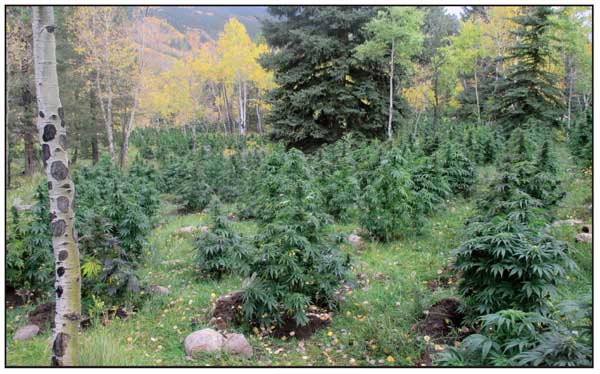

With “Killing Trail,” Margaret Mizushima has launched a fine, southern Colorado-based mystery series featuring kind-hearted small-town cop Mattie Lu Cobb and her K-9 partner Robo.

Canine aficionados will be happy to hear Mizushima devotes plenty of ink to the dog star of her series.

In her Timber Creek K-9 Series debut, Mizushima calls on Robo to play critical roles in every step of the investigation into the murder of a teenager high in the Rockies. Robo locates the buried body of the victim, sniffs out drugs, comforts frightened children, protects Cobb from harm, tracks suspects as directed by Cobb, and points out others of his own volition with growls and bared teeth.

Robo even plays the part of potential murder victim — a role generally reserved for whodunnit sleuths at the point in mysteries when sleuths get too close to their prime suspects. In the case of “Killing Trail,” when the unknown murderer grows frustrated by Robo’s uncanny tracking abilities and throws tainted meat over the fence into Cobb’s back yard, Robo wisely turns up his finely tuned nose at it.

Mizushima, the wife of a veterinarian and an obvious animal lover, describes in absorbing detail the involved process by which Cobb trains, readies and works with Robo. The author makes clear, for example, the differences between K-9 searches aimed at finding hidden contraband and those tracking humans.

“Killing Trail” is set in the fictional mountain town of Timber Creek. Mizushima , who lives near Denver, was raised in the small, San Luis Valley town of Saguache. She says Timber Creek takes aspects from a number of San Luis Valley communities but is most like South Fork, just over Wolf Creek Pass from the Four Corners.

Though the book is her first, Mizushima understands the expectations of her mystery-reader audience. While Robo is an example of canine, and K-9, perfection, Mizushima’s human protagonist, Cobb, is flawed in all the right ways. As the insecure young adult of a fosterhome upbringing, Cobb in Mizushima’s assured hands is tentative professionally and uncertain in the ways of love, endearing herself to readers from page one.

As “Killing Trail” progresses, readers easily find themselves rooting for Cobb and Robo as they work their way through numerous suspects — in Cobb’s case, with street smarts, logic, and not a small amount of compassion for the shortcomings of her fellow Burnt Timber citizens, and in Robo’s case, with a nose that knows no bounds.

Mizushima reports she has finished the second installme nt in her series, which will be released later this year. Assuming Cobb and Robo remain at the top of their respective games, look for Mizushima’s sophomore effort to be another winner.

Scott Graham is the National Outdoor Book Award-winning author of seven books, most recently “Mountain Rampage” (Torrey House Press), the second installment in the National Park Mystery Series. Visit him at scottfranklingraham.com.

Published in February 2016, Prose and Cons

2015 in the rear-view-mirror

All in all, I think I had a pretty successful year in 2015.

I mean, first off, I wasn’t killed by the police. It seems like there are too many minorities that can’t say that.

And, secondly, I wasn’t sexually assaulted by Bill Cosby.

That Cosby thing shocked me, but funny men can go bad. Just like Krusty the Clown. The odd thing with The Cos was that he seemed to delight in pointing out the flaws of other blacks in his lectures on morality.

And then he gets caught with his hand – or some other appendage – in the cookie jar.

Maybe Donald Trump should build a wall around Cosby?

Oh, Trump! I was really too young to fully appreciate the demagoguery of George Wallace, so Trump has been educational for me. I mean he has insulted women, Hispanics, prisoners of war and just about every other voter group there is. And his lead in the Republican primary just keeps growing.

I had no idea the racist voice in the GOP was so strong.

Oh, Trump has a compelling Horatio Alger story to be sure. He pulled himself up from his bootstraps to become a multi-billionaire. And it must have been hard to reach his bootstraps because they were covered by the $200 million he inherited from his father.

Why, he must have been severely handicapped with money coming out of his eyes, his mouth, his whatever 

Of course, being so handicapped, you’d think that he might have more empathy for the physically challenged. But you’d be wrong.

Nor was Trump the only craziness in 2015.

On Christmas Day Phoenix struggled to reach 40 degrees – while in my hometown of Westerly, R.I. it was 69 degrees! I moved to Arizona to escape winter! Man, what the heck is happening?

Not to worry, though. If a global warming disaster befalls the world, we still have all that grain that Joseph stored in the pyramids. We might have forgotten all about that if Ben Carson hadn’t reminded us.

It was a crazy, sexy year. But enough about me!

The year kicked off with the New England Patriots winning Super Bowl 49. Yet hardly anyone was talking about the game; everyone was titillated by deflated balls.

I didn’t even know you could talk about deflated balls on TV; wasn’t that on George Carlin’s list?

People seemed to be madder over the Patriots’ cheating than Volkswagen’s! Sheesh. One might have affected one football game, the other could impact life on the planet.

We need to get our priorities straight.

I mean there just wasn’t enough coverage of Kim Kardashian this year. Every “Kim” story was about some town clerk who appointed herself Guardian of the Galaxy.

Well, 2015 is in the rear-view mirror and I, for one, am ready for 2016.

This is the year I finally write my bestselling novel!

Oh, I know what you’re thinking: “You’ve said that before!”

But the 40th time’s the charm!

John Christian Hopkins, an award-winning novelist and humor columnist, is a member of the Narragansett Indian Tribe. See his writings at http://authorjohnchopkins.blogspot.com.

Published in John Christian Hopkins

Top-heavy government

Our economic-minded county commissioners are concerned about spending monies to keep us informed via legal notices in the Journal newspaper. Dictatorships do not like informed constituents. But there is a great need to make it as easy as possible for people who care to know what is going on.

A recent study published in, yes, a newspaper (USA Today) said that 84 percent of U.S. households own a computer, and 73 percent have a computer with a broadband connection to the Internet. The article said this varies greatly across the United States. In college towns and big urban areas, more people have Internet access. But that means 16 percent of households do not own a computer, and I’ll bet that percentage is much higher in this area. So if the commissioners want to stop publishing notices in the paper and expect our citizens to stay informed by looking things up online, that means many of them (including myself) will be left out.

I actually wish there were more, not fewer, things published in our legal notices. For instance, I saw no notice published regarding the $1,000 in tax monies so generously given by our county last year to the Ken Ivory Welfare Club, aka the American Lands Council.

The commissioners and other county officials are trying to argue that the Journal is not a local paper even though it provides 12 local jobs – not even counting the people that deliver it to our doorsteps. This borders on ignorance or outright deception.

Now, if the commissioners are really concerned about over-spending, may I make a suggestion? Why could not two of them resign from their $50,000-ayear positions? By my math, that would save us $100,000 a year. We would lose nothing by this measure, as they think and vote alike anyway the vast majority of the time. $100,000 is a large sum in anyone’s mind (except maybe Donald Trump’s) and we would certainly have enough to pay for legal notices in the newspaper.

My suggestion about having just one commissioner is, of course, tongue-in- cheek. I realize state law says that a county of our size and population must have three commissioners. But, as was stated by a school-board member in a recent election, we are a very poor county and cannot take on more burdensome expenses. Using that philosophy, maybe we could sneak by with one commissioner if the county administrator and the county clerk/ recorder joined in the voting. That would still give us a group of three to make important decisions. I just hope that this new group would not adopt our informal county motto, “It cannot be done.” One thing about that motto – you’re never wrong.

There is a great divide between ignorance and a closed mind. Ignorance can be overcome through education, but a closed mind, never.

Galen Larson writes from Montezuma County, Colo.


Published in Galen Larson

Wrapture at Bloomingdale’s

Christmastime never fails to evoke memories. While some vary from year to year, one is the constant; this little bit of nostalgia is at the forefront the minute I sit down to begin wrapping presents…

Working at Bloomingdale’s. For those of you who aren’t aware of that which is called Bloomingdale’s, here is Wikipedia’s definition:

“ Bloomingdale’s is an American chain of luxury department stores. Founded in 1861, its primary competitors are Saks Fifth Avenue, Lord & Taylor, Nordstrom, and Neiman Marcus. It’s best known for its large selection of designer brands and pricey merchandise.”

I’m sorry, but calling it a “chain” does it no justice. In fact Wikipedia falls short completely in defining the glories of one of the original American department stores.

We’re not talking Dillard’s or Penney’s or Beall’s (which, for some really odd reason, is pronounced “Bell’s. Hello? What about the A? Another topic, another time.)

As a matter of fact, Bloomingdale’s age-old slogan is “Like no other store in the world.”

Absolute accuracy.

Entering Bloomingdale’s is entering a discrete universe that shuts out the real world, allowing one to escape her (or his) humdrum, stressful, boring life.

There are escalators, each leading to a different planet.

Not a great metaphor but I’m trying to run with the Universe thing.

One walks through the revolving doors on the main floor: cosmetics, scarves, ties, perfumes, women’s and men’s clothing – of the everyday sort.

Downstairs is where the Housewares live. NOT housewares like Bed, Bath, and Beyond. We’re talking 8,000-threadcount bedding, Limoges china for your bridal registry, state-of-the-art spatulas.

Also downstairs is the gift-wrapping department – yes, an entire half a floor devoted to making presents look gorgeous.

Up the escalator from scarves and the elegant, 10-foot tall runway model who is offering a squirt of Calvin Klein Obsession, is children’s clothing and nooks containing sportswear and designer-specific attire for both men and women, e.g., tennis whites, golf pants, shoes, and of course, the then-famous walls, literally four walls of color-separated, impeccably folded Ralph Lauren polo shirts.

This was before the days when every thing, and every person had a frigging pony on their pec. Polo Ponies were sold exclusively at Bloomingdale’s.

Up one more flight lies the lap of luxury: lingerie, tuxedos, ball gowns. Sale racks hold frocks sporting $700 price tags.

Top floor? The elegant tearoom where men wearing white gloves serve crepes on fine china.

Total luxury. Total indulgence. Total bliss.

Now, you are probably wondering why I am blathering on and on about this hoity- toity, large-scale boutique that evokes intense Christmas nostalgia.

Because I worked there. In Men’s Ties. At Christmas Time.

Being a Sales Assistant at Bloomingdale’s was my afterschool job. No waiting tables at Friendly’s or cashiering at Walmart for this gal.

Walmart didn’t even exist.

Oh, for the Good Ol’ Days.

I was a Second and First Floor Sales Assistant; this meant that I wasn’t experienced enough to work in Housewares (thank God) and not sophisticated enough for Black Tie galas. I floated primarily between Ralph Lauren, Tennis, and Young Ladies (not “Girls”.)

I LOVED my job.

There’s a certain element of peace in Bloomingdale’s; it comes with the good manners, which are essentially (and unspokenly) required to enter the building. Even during the Holiday Season, people are soft-spoken, well-behaved and use their pleases and thank-you’s.

When Christmas came I was told that due to my beauty, charm, and calm-in-the- storm attitude, I was being promoted to Men’s Ties…the busiest department in the store.

It may have also been because they were short-handed.

But whatever the reason, Men’s Ties was a dream. Yes, incredibly busy, but who doesn’t want to assist in making a well-dressed man more well-dressed?

Everything about Bloomingdale’s ties screamed sexy in a James Bond kind of way. Sophisticated. Manly.

Bow ties, neckties, ascots. We carried them all. And it was my job to assist the discerning buyer in deciding between the navy with green and yellow pinstripes and the navy with yellow and green pinstripes.

There is a difference, you know.

To help a women (because most of the time the shopper buying a tie for a loved one was female) pick just the right bow tie for that gray flannel sport coat was extremely gratifying; “I have just the right thing over here – the azure polka dots really bring out the subtle (almost invisible until paired with the tie) thread running through the fabric.”

Or “Dinner at 21? I have the most luxurious ascot over here that will perfectly complement your wife’s Chanel.”

Then, the act that distinguished Bloomingdale’s from Penney’s…

The gift-wrap.

Yes, as mentioned, the Wrapping Department lived one escalator ride down; all presents were tenderly cared for there.

Except for Men’s Ties.

We were a world unto ourselves. We gave our clientele the pleasure of choosing just the right paper, ribbon, accoutrements.

Picture Rufus, the jewelry salesman from “Love Actually.”

All of the Sales Assistants in Men’s Ties had passed a course in decorative wrap. We were considered experts in the end-fold-and-tape world. We kicked ASS at curling ribbons.

And it brought so much joy to produce perfection in paper. The delight on a woman’s face as she viewed the finished product belied the sexy seductive thoughts in her head of when her man tore off that holly sprig.

Holy shit – sounds so pretentious, doesn’t it?

Remember, I wasn’t shopping there, I was the help. But how I loved to help. I, of course, had visions of a distinguished, sophisticated, oh-so-handsome, single gentleman walking through the doors and in true Hollywood fashion, falling in love with the Salesgirl who sold him the tie that he wore when he was honored at the Smithsonian.

Obviously it didn’t happen.

But a girl can dream, can’t she?

So now, as I sit on my bedroom floor in my own universe in downtown Mancos, Colo., hastily enveloping my boyfriend’s Christmas gift in leftover baby shower tissue paper, I am reminded of the glory days of Professional Gift Wrapture.

Suzanne Strazza is an award-winning writer in Mancos, Colo.

Published in Suzanne Strazza

What’s all the fuss about?

News Flash! On August 1, 1876, a new state was officially formed out of parts of the western territories. The boundaries were defined and it was declared that all the lands therein, were to be the State of Colorado. The people in the territory had been petitioning Congress to form the state since early 1860s, but the political climate in and after the Civil War was not good timing. The eastern Congress wanted to maintain political control in Congress.

Finally on March 3, 1875 (Stat. 474) An Act to Enable the People of Colorado to Form a Constitution and State Government, and for the Admission of the said State into the Union on an Equal footing with the Original States in all respects whatsoever. Sect. 2 on Boundaries stated the said state of Colorado shall consist of all the territory included within the following boundaries. It then defined what the boundaries are today, making up the entire state. At statehood, the total population of Colorado was about 150,000. Obviously much of the lands of the new state had not been settled or claimed other than some agricultural, ranches, mine claims and small towns. The war was over and the government needed money. The Congress added a provision in the enabling act to provide that the federal government would be the agent to help dispose of and sell the unappropriated (unsettled and unclaimed) lands on behalf of the new state, with 95 percent of the sale revenues going to the federal government. Of course to do that the feds would need control of those unappropriated lands.

This was the beginning of today’s conflict. Why? Well, since our governmental system that was agreed to operates under the Rule of Law, and the Constitution was agreed to be the Supreme Law of the Land. The founders were very intent on establishing private property and greatly limiting governmental property. The new country was to be made up of a union of states (the federal government didn’t even exist at that point). To that end, right at the beginning the authorization for the new federal government to own land was specifically identified in Art. I, Sect. 8, clause 17… “all Places purchased by the Consent of the Legislature of the State in which the Same shall be, for the Erection of Forts, Magazines, Arsenals, dock-Yards, and other needful Buildings;” This is still the law regulating federal land ownership within boundaries of any state. Well, what was states formed from? The new federal government was to be authorized to obtain new territory to form new states out of. This authorization was established in subsequent Art. IV Sect. 3, and is frequently misquoted as the “property clause” authorizing the federal government to own and control lands within States in violation of Art. I, Sect. 8 of the Constitution.

So, at statehood, the federal government had no Constitutional authority to hold on to the unappropriated lands as they were now lands of the new state, not territorial land. The motive might have been good, but it was in violation of the Supreme Law of the Land. An effort was made to dispose of the lands, as per the compact, through the Homestead Act, which worked for many, including my own family. However, there were still lots of lands unsold.

The federal government stopped trying to sell, and rather than hand the lands of the states back over to the states, established federal agencies to oversee and manage the lands until they ultimately sold, supposedly for the states’ benefit. The long sordid story is the federal agencies began to grow and the eastern-controlled Congress decided to violate statehood compacts of the western states and keep the unappropriated lands, commonly called public lands, in control of the federal government, a violation of the Supreme Law. Up till then nobody really was bothered by the law being ignored and broken, as the land was being managed for benefit of the resources and local economies and recreational uses.

Then came establishment of national parks, wilderness areas, roadless areas, all controlled by federal agencies, again all in violation of the Supreme Law. With the federal government in control of 36 percent of the State of Colorado, the private lands and communities are like in-holdings in federal land blocks. The now massive federal agencies began to end resource management and use, greatly affecting local economies and future of the resources. Wood-products use, water production, recreation opportunity, forage production, wildlife habitat all began to go down while waste from non-use, disease and wildfire increased. Access to enjoy, use, and recreate began to be shut out for most of the public. The land was no longer generating any economic benefit, but was spending taxes to close down access and use. The light began to dawn on many of the public, questioning, “what has happened?”

By ignoring the Supreme Law and enacting unconstitutional laws, a federal land base larger than the entire country of Hungary, Portugal, or Austria has been created in the heart of Colorado. The federal land cancer operates under its own rules and laws. The American dream of liberty to live and build your own life has been snuffed by the cancer. So what is the fuss all about? There are people that still care about the future of our county, state and country and are willing to sacrifice their own time and money to control the cancer and restore and heal the land and resources for the future. The fight is against those that do not believe in the tenets of the Constitution and God-given individual liberty for all. That is what the Fuss Is All About!

Dexter Gill is a retired forest manager who worked for private industry, three Western state forestry agencies, and the Navajo Nation forestry department. He writes from Lewis, Colo.

Published in Dexter Gill

No place like home for the holidays

I bought an old pickup truck last month. And just in time, too! Because with a truck, I was sure to have somewhere to sleep for the holiday season.

Okay, I’m making it sound worse than it was. After all, the pickup has a shell in back to keep the snow off my air mattress. Besides, I was set to join a fine tradition of Christmas orphans. George Bailey’s dad bit it til he was dead. And does Charlie Brown even have parents? The fact that both my mom and my dad are alive and well only made me the luckiest orphan in the history of Christmas, even if I had no home to call my own.

About that no-home thing, let me explain. My landlords are selling the house I rent with my dog. Now, I understand my landlords (who ought to feel ashamed of themselves) having no qualms about evicting me. I mean, I’m a writer; it’s a wonder I ever make the rent. But the dog? He doesn’t chew the carpet. He doesn’t scratch new entrances through the doors. He makes grown men go “awwwaddapreddiepuppeeeee.” Yet my landlords (shame!) can sleep at night knowing he could become a street hound on 30 days’ notice.

(He also comes with impeccable references… you know, if you happen to have a modest in-town home with fenced yard and washer/dryer in need of a respectable tenant, or barring that, a local writer who totally does not deal drugs on the side.)

In complete fairness, I must mention that this house has technically not sold yet. Which technically means I can stay here, at least until the mistletoe comes down. But let’s not allow facts to get in the way of a really good narrative. I’m kinda digging the idea of living life on the road, just me and my dog and a well-loved Chevy old enough to be my girlfriend. Think of the freedom of that life. Think of the spontaneity. The ruggedness. The resourcefulness. The royalties from the inevitable country-music hits.

And this whole truck setup will offer me the perfect camouflage for Trump’s America. Whatever your political persuasion, you cannot argue that things are about to change. And in this new world, we pasties in pickups will get the run of the place. I’ll be a covert redneck, learning the forgotten ways of my hill-folk forebears. Then, come the apocalypse, I will finally have something beneficial to contribute to the remnants of society besides mean copyediting skills: I don’t know what that something will be, exactly, but the odds are that I will perform it better with a warm generic beer in my hand.

That is, if I can keep my truck running in the meantime. It turns out that 26-year-old vehicles require a certain amount of mechanical aptitude. Don’t get me wrong, I know things about cars. This one time, I even held a flashlight for the guy replacing my clutch.

But I admit I don’t know everything about cars. It’s theoretically possible that I could be out raising hell with the guys when my truck stops working, and I don’t even have a flashlight to shine around the engine compartment.

Normally, in such a situation I would say, “I have to get home and feed my dog. I’ll come back for the truck later,” and then I would leave the keys on the seat and hold out for the insurance money. But in this narrative, my co-hellraisers would say, “Bruh, you live in your truck, remember? And your dog is right here. And heezzuchaguhboiyesseeizz!” And I would be stuck admitting I don’t know how to fix my truck.

But that’s okay! Because in this narrative it turns out that these macho white guys, even the ones with Confederate flag underwear, are actually decent people. They’ll circle their trucks and offer me their tools. They’ll say things like “Here, let me show you how to purge the intake on your ignition manifold,” and they will teach me all about the inner workings of my pickup truck, and we’ll drink warm generic beer. And in exchange I’ll teach them how to match their pronouns to their antecedents. And then we’ll light a fire and cook the weakest among us, because you must remember this is a post-apocalypse scenario and food is scarce.

Now, this narrative may sound like the dire imaginings of a crazy person. Especially considering that the house didn’t sell before Christmas, and I had a real home with running water for the holidays. But going forward, I’ll take my chances living out of my truck. You’ve got to admit, it sounds a whole lot better than spending the snow season moving furniture.

Zach Hively writes from Durango, Colo. He can be read and reached through http://zachhively.com and on Twitter @zachhively.

Published in Zach Hively

Wanted: Mary Poppins: Child care can prove difficult to obtain in Southwest Colorado, but there are options if you persist

Is there a shortage of child-care options in Colorado? It may be difficult to prove it statistically, but Liz Mora doesn’t have any doubt about the answer to the question.

“Get on the waiting list as soon as you know you’re pregnant,” said Mora, executive director of the Durango Women’s Resource Center. “Begin with Head Start, but get on every possible list.”

The need for more child care may not be a new issue, but it is garnering attention as different entities pool resources to increase available slots and maximize their community’s licensing capacity.

Mora was able to secure an immediate position for her first child but had to wait months before she found childcare placement for her second. She said the lack of availability can lead to many problems for parents, including not being able to hold a full-time job.

“Finding day care can become a huge barrier for women who need full-time employment,” Mora said. “If you don’t have a safe place for your kids, you can’t work.”

Affordability is not always the problem.

“For dual-income families, which represent over 60 percent of children, child care is still unavailable,” said Luke Prince, marketing director for Pea Pods Family Childcare Homes, based in Durango. “It’s not that money is the problem. If parents have it, they’ll most likely still be put on the waiting list.”

The availability of child-care resources is dependent, of course, on the availability of staff.

The Treehouse Early Learning Center of Montezuma County provides child care for children from 8 weeks to 12 years in age.

Brandi Henderson, director of the center, said it’s difficult to maintain staff.

“The biggest challenge is getting providers and finding qualified, quality staff,” she said. “Being such a small area, the availability of qualified staff is definitely lacking.”

“I’ve definitely learned a lot and seen a lot of great things happen, but there’s a lot of room for improvement,” she said. “For our area, the things we do are great, but of course I’d like to see an increased availability of care.”

Tamara Volz, director of the Early Childhood Council (ECC) of La Plata County, partly attributes the shortage of providers across the state to new state quality standards.

“There are a lot of new, rigorous standards to measure child care and that’s why it’s been so hard to find providers and teachers,” she said. “We’re trying to get folks up to speed on the next quality ratings system, but it’s a huge effort with different levels of quality tied into it.”

Colorado Shines, a program under the umbrella of the Colorado Department of Human Services, provides the new state Quality Rating and Improvement System (QRIS). Through this program, the state offers additional professional development opportunities for child-care staff.

“There’s a wonderful Early Childhood Council here that is really involved in influencing and making an impact on needed changes,” she said. “There was no such thing in California.”

Henderson said the ECC, a coalition of community members and agencies who work together to create a quality and comprehensive early-childhood system, is making a big difference in providing more providers.

The La Plata County ECC, a collaborative with five other counties, recently increased the number of infant and toddler care spots in child-care facilities as well as homes in Southwest Colorado by 51 – 33 in La Plata County, 14 in Montezuma County, and four in Archuleta.

Henderson said the childcare shortage is not unique to Montezuma and La Plata counties.

“It’s a statewide problem,” she said. “There’s a lack of qualified, quality teachers all the way through elementary and middle-school levels. It’s been an ongoing problem for years among most centers and we really need to focus on getting the word out there and brainstorm new ideas to bring in more providers.”

Volz said despite some improvement in the availability of care for toddlers and infants, the crisis is expanding. The next problem, she predicted, will be a shortage of teachers, largely because of poor pay.

“It will really be a perfect storm because the next big crisis will be in finding teachers,” Volz said. “We’re already seeing this in our workforce. There are simply not enough qualified teachers for spots that need to be filled.”

Lindsey Dorneman, communications and projects manager for the Colorado Office of Early Childhood (COEC), said state leaders understand an issue exists but it is hard to discern exactly what it looks like. “The state recognizes that access to quality child care is likely a statewide issue, but we are only able to estimate the need based on the total number of licensed child-care slots versus the total number of children under the age of five years in the state,” Dorneman said.

One of the primary figures looked at to determine child-care need is license capacity – the maximum number of children who may be cared for in a center at any one time and the number of children in that region who may be in need of care.

Comparing Colorado to the rest of the nation poses some challenges.

“Meaningful comparisons across states are difficult to make as each state has its own licensing rules, and, as a result, the amount of available licensed care represents different things,” Dorneman said.

She also said that relative availability is not the same as the ability to meet demand and that stay-at-home moms and Family Friend and Neighborhood child care affects this number.

“This has an impact on demand in an area and it’s difficult to tease out whether additional child-care slots would change demand in every area,” she said.

However, the state is working on addressing the issue.

“The state’s goal is to ensure that there is equal access to licensed quality care for children whose parents choose to place their kids in child care and early education programs,” Dorneman said.

Pea Pods, a grassroots program providing child-care management, is trying to improve the situation by connecting providers and parents in Southwest Colorado, monitoring and streamlining homes to meet quality standards and helping parents find these homes for their children.

Prince said one of the obstacles to increasing the number of child-care providers is the licensing process, which takes an average of six months to complete and can be expensive.

Pea Pods offers no-interest loans for the certification process for providers who need financial support. The loans are provided by the El Pomar Foundation, which gives grants to Colorado nonprofits.

“If someone wants to do this, we will find a way,” Prince said. “It can actually be a very lucrative business opportunity for parents that they don’t know about. The money is in the homes, we just need to get people involved.” The State of Colorado is also in the process of making micro-grants and micro-loans available to child-care providers interested in getting licensed.

These funds are expected to be available in early 2016.

Henderson agreed with Prince that the option of becoming a child-care provider is viable, but many people don’t know it is a possibility.

“It’s not the same recognition as K-through-12 teachers would get and since it’s not on the same standard, pay is often much, much less,” Henderson said. “It’s definitely not a high-paying position for the responsibility. You have to have a passion for children. You don’t do it to become rich; you do it to watch children grow and explore.”

Prince agreed that it is a fulfilling job prospect.

“To have a job is one thing, but to have a job with purpose and meaning is so much bigger than that,” Prince said. “It’s not just babysitting, it’s early education.”

Henderson said she would like to see the pay increase. “Since I’ve been here, I’ve been trying to do something better with the pay scale,” she said, but added that because of the lack of resources in the area and its being a smaller community, the interest may not be there.

Southwest Community College and Fort Lewis College both offer courses in early childhood care.

Prince said that personalized home care is definitely preferable for a child’s development.

“Moms are the best child-care providers, especially in the early years,” he said. “Children do better in a home environment rather than [big] child-care centers with fluorescent lights.”

Laurel Foster, a stay-at-home mother of two in Durango, agreed.

“The difference between at-home care and care at a larger center is the number of children,” she said. “If that ratio goes above a certain number, the quality goes way down and it starts affecting cognitive skills, social skills, behavior, really everything. Children really need one-on-one attention.”

But she said among the mothers she knows, she is the only one who is a stay-at-home mom.

“All my ‘mommy’ friends have jobs outside of the home and they struggle with finding care,” Foster said.

For many, the quality of care is as important as just finding it.

Megan Ruvalcaba of Cortez, 26, has one son and is a stay-at-home mom.

“I’ve always been really careful about who watches him,” she said. “You can’t be too careful of who you trust.”


Published in December 2015

Caucuses: A great way to have sway

Although Colorado is considered a key swing state in the 2016 presidential race by candidates of both major parties, Colorado Republicans are taking some wind out of the state’s sails by not showing their hand until late in the campaign game next spring.

Reacting to a 2014 Republican National Committee change in bylaws, the executive committee of the Colorado Republican Party has cancelled the presidential straw polls at the 2016 caucuses.

Previously, the Colorado Republicans held an election-year precinct caucus in which registered party members held a presidential straw poll – a show of hands – to decide which of the candidates campaigning for the presidential nomination within their own party was preferred by party members.

Delegates representing the precinct were also selected at that time. The delegates were expected to support the candidate that won the presidential preference poll when they attended party assemblies at the county, district and state levels and ultimately the national party convention where a candidate was selected to run for president. The process did not “bind” the delegate to support the candidate selected at the precinct level, or any step along the way.

It was the same approach in both parties.

But then the Republican National Committee changed its bylaws saying that the delegates are now “bound” to their preferred candidate beginning with the presidential preference poll taken at the precinct caucuses.

As a result, no vote for Republican presidential nominations will be taken at the precinct caucus.

According to Ryan Lynch, chairman of the Colorado Republican party, “the National Republican Committee essentially decided that today there is no such thing as an informal presidential straw poll. If your precinct caucus takes a presidential poll and elects national delegates, then those delegates are bound to the candidates that won in the poll.”

The Colorado Republican executive committee felt that the delegates elected in the March caucuses and the candidate they would be bound to – especially with such a large field of candidates – might not be relevant in July at the national convention.

“Of course, some say that a candidate could release the delegates if he/she dropped out, but what if they don’t?” Ryan explained in a telephone interview with the Free Press.

“So the Colorado party decided to do away with precinct presidential preference polls entirely this year because there are so many different candidates and what is applicable in March may not be so in July.”

Although the campaigns will not be spending money on the same advertising campaign strategy they would prior to this decision, the unbound Colorado delegates themselves become a hot commodity at the national convention in July.

The Republican precinct caucuses will be held on March 1, 2016, as scheduled, “but it will look more like the 2014 caucus than the 2012,” explained Lynch. “We’ll begin electing precinct captains and committee people and delegates that will then move on to the county assemblies a few weeks later and from there through the district to the state and the national convention. We hope people will register to participate in the caucus if they haven’t already done so.”

Not so for the Montezuma County Democrats. They have been busily engaged since early last summer urging voters to register with a party, while explaining the advantages of participating in a caucus process, hopefully theirs, which will be held Tuesday, March 1, 2016.

MONTEZUMA COUNTY DEMOCRATIC PARTY CO-CHAIR RIC PLESE

Ric Pleše, co-chair of the Montezuma County Democratic Party, urges citizens to take time during the holiday season to register their party affiliation with the county clerk’s office, or online at the Colorado Secretary of State website. Registration is required before Dec. 31 in order to participate in the Colorado presidential precinct caucuses, scheduled for March 1, 2016. Photo by Sonja Horoshko

Ric Pleše, Montezuma County Democratic co-chair, told the Free Press that the local interest in the Democratic precinct caucus is “pretty energized. I suspect it will be a big turnout because it’s a major contest again.”

Fun times?

Montezuma County is divided into 11 precincts for the Democrats. Eight will be convening in the County Annex building, while the other three will meet in Dolores, Mancos and Towaoc.

People can check with the Montezuma County Clerk, or local party headquarters to find their precinct caucus and location.

“At our larger caucus in the annex building the cluster of eight precincts will meet in separate areas,” Pleše said. “I’ll take an initial straw poll from each precinct – a show of hands — and then people can speak on behalf of a candidate, usually to persuade people to change their vote. At the end of the speeches I call for another vote and then a final vote of all the precincts.”

People should commit to staying for the whole caucus, he said. “It can be lengthy, an hour and half to two hours or more, but it can also be fun.”

A lot of work

Only 15 states still use the many-level caucus system, one of the older forms of polling voter preferences. Participating in precinct caucuses is the first and most powerful step individual Montezuma County voters can take to influence the nominations.

It’s where initial presidential polls are taken, preferences are selected and delegates are selected to go to the county assembly or convention.

Pleše describes the process in increasing increments of population and land base. “The date for the county (get together) is not set yet, but will follow the precinct caucus no later than 25 days after,” he says, “and we’ll post it on our website.” The Congressional Districts Assembly/Convention then meets between April 1 and 15 and the State Assembly/ Convention convenes Saturday, April 16.

The 47th Democratic National Convention is scheduled July 25-28. The 41st Republican National Convention will be held July 18-21.

“It is a lot of work to organize the caucuses. This year the precinct committee people are really motivating people to get there. It’s been a big contribution to voter turn-out.”

Ann Brown has worked in local politics for over 35 years. “There was a time, even not too long ago, when Montezuma County was a Democratic stronghold,” she said. “My granddad, a Democrat, was Montezuma County treasurer and I’ve been past committee person and worked door to door campaigns as far back as 1959 for JFK.”

Pleše said Brown’s knowledge of political operations and strategy is formidable. “She’s a great resource for understanding why the caucus is such an integral part of the democratic process.”

The precinct caucus is the first step in a multi-step system, explained Brown. “We sometimes met in people’s homes like a neighborhood get-together. We always had a lot to talk about.”

It’s a very powerful step to take, she said. “Imagine if we held primaries, which essentially tally up the votes at the end of election day, instead of a caucus which commits delegates to candidates at a grassroots level. How many urban voters would turn out vs. rural voters? Urban interests will dominate by sheer numbers. In some states the result is winner-takes-all [delegates] as in California. Smaller states and rural areas have little influence on the party nominations if the primary system is used. There’s simply more people in an urban area.”

Different systems

Elsewhere in the Four Corners region, the first step in the presidential nominating process varies by state and sometimes by parties within the state. Utah voters hold their precinct caucuses on Tuesday, March 22. The Utah Dems title theirs a “Neighborhood Open Caucus” where any voter, regardless of party affiliation, may vote in the Democratic Party primary, but not both. As an example, a Republican may choose to pass up his party primary to vote in the Democratic primary. Independents may vote in the Democratic party primary, too, and both the Republican and Independent may vote in the Democratic primary without affecting their registered affiliation.

Utah Republicans use a “Modified Caucus,” meaning persons registered with one of the major parties may only vote in that party’s primary. However, Independents are allowed to vote in the Republican party primary/caucus, but then, by Republican provision, are automatically registered into the Republican party at the time of the primary. This tends to reduce the number of voters who take advantage of the privilege.

Arizona and New Mexico use a closed primary system, meaning citizens wishing to vote in a presidential primary may only cast their ballot in the primary of their registered party. The Arizona Republican and Democratic primary is also scheduled for Tuesday, March 22. In New Mexico both parties will hold the presidential and state/local primary on Tuesday, June 7.

A failed primary

Colorado Democratic and Republican legislators failed in their attempt earlier this year to draft a measure that would create a primary system in Colorado. It would have put Colorado in the limelight during the presidential campaigns, they claimed, by allowing the states’ nearly 40 percent unaffiliated voters to vote in either a Democratic or Republican primary to chose the candidates nominated by those parties without changing their party registration.

The argument that some people made to change the Colorado election process from a caucus system to a primary focused on increasing voter participation, predicting that the numbers of voters would swell while the reorganization offered Colorado a chance to move the calendar dates for state presidential nominations forward in the year, closer to the Iowa precinct caucuses and New Hampshire primaries.

But according to a recent Denver Post blog, when the efforts to change to the primary system were emerging in 2013, then state Sen. Ted Harvey, R-Highlands Ranch, said letting voters who aren’t Republicans determine the outcome of a GOP primary is like letting a ‘non-Catholic pick the pope.’”

If you are already a registered with a party and have lived in a Montezuma County precinct for more than 30 days you are good to go. But if you are unaffiliated and want to register to participate in a caucus, it must be done at least two months before the caucus. That deadline will fall on the New Year holiday.

Molly Cooper, a Democratic precinct captain in Dolores, and House District coordinator, said she is stressing that registration must be done before Dec. 31. “You can go to the Colorado Secretary of State on-line registration or govotecolorado.com. It’s very easy, but it takes the system a little time to get the paperwork back to the county clerk here and then send you a notification, about 20 days. We are urging people to do it now.”

When the completed on-line registration is submitted to the Montezuma County Clerk and Recorder it is processed and entered into the books and an official information card is sent to the registrant.

“This is my first time getting involved on a caucus level,” said Cooper, who is campaigning for Bernie Sanders. “This is the place that your vote is most powerful. As an example, if your precinct has 300 registered Democrats and only thirty of you show up at the caucus, your vote is amplified by ten. That’s why we hope people show up, why we are urging people to register before Dec. 31.”

The other deadline both she and Pleše stress is start-time. “Our precinct caucuses start at 7 p.m. If you aren’t in the room with your ID in hand – Colorado driver’s license or identification card – and checked in by that time you cannot participate. That’s the regulation and we stick to it,” he explains. “Show up well before 7.”

Paperwork issues and registration details cause delays at the door. “Sometimes we can’t find a person’s name, or they didn’t register in time and they’re not on the list. We are exacting with everyone and that can back up the process. We also want to direct people to the correct precinct locations if they have come to the wrong one.”

What’s really cool about working on a campaign at this level, adds Cooper, is that it teaches you about hands-on democracy. “You really build passion about the election and the candidates when you invest in this kind of local grassroots effort. You get to see it, live it.”

Published in December 2015

Pot: A growing menace on public lands

ILLEGAL CANNABIS GROW SITE ALONG THE DOLORES RIVER

Cannabis thrives in this illegal grow site along the Dolores River. Despite the fact that pot is legal to grow and use in Colorado, the state is seeing more black-market marijuana operations. Courtesy of the U.S. Department of Justice and Bureau of Land Management

At first blush it may seem paradoxical. But despite pot being legal to grow, sell and consume in Colorado, the state is also becoming an increasingly popular home for major black-market cannabis operations.

“We have seen a notable increase this year in illegal marijuana grows in western Colorado,” U.S. Attorney John Walsh said recently in a statement announcing the indictment of two men for conspiring to produce and distribute wholesale quantities of the drug. “As we work with the DEA, BLM and local law-enforcement partners, we are seizing large amounts of marijuana.

“In addition, we have charged a total of 12 individuals, many here illegally from Mexico, for tending to these marijuana grows,” Walsh said in the press release.

Luis Garcia, 33, and Luis Rios-Cortes, 23, were arrested last month following a raid on a property nominally owned by Garcia’s sister near Cedaredge during which nearly a ton of dried marijuana was seized and drying sheds and equipment “consistent with items used in a large-scale operation” were found, according to the accompanying affidavit of Jason Greenfield, an agent with the Drug Enforcement Administration.

CANNABIS PLANTS CULTIVATED ILLEGALLY ALONG THE DOLORES RIVER

These cannabis plants being cultivated illegally along the Dolores River were found during raids conducted in September. Courtesy of the U.S. Department of Justice and Bureau of Land Management

Those indictments closely followed September busts at two sophisticated pot farms along the Dolores River between Gateway and Naturita on public land overseen by the Bureau of Land Management.

Garcia continues to be investigated for his role in those operations, which resulted in the arrest of 10 other suspects who allegedly were tending the blossoming crops just as they were ready for harvest.

The protracted drought in California, where federal lands have been used for many years to cultivate illicit commercial crops of marijuana, is believed to be one big reason clandestine farmers have been drawn to this area, explained Jeff Dorschner, a spokesperson for the U.S Attorney’s Office.

“Generally California is known for their large number of public-lands marijuana grows, but they’ve had a horrible drought and bad fire seasons [recently],” Dorschner said in an interview with the Free Press. “On the other hand, “Colorado has had a better-than-normal growing season.”

“Also (because of) the more liberal posture on marijuana, people wrongly speculated that this would be a better place to grow marijuana this year.”

“Legal pot carries a regulatory system with it – what are important but burdensome requirements – and illegal growers don’t have to follow those burdensome regulations

“And they don’t have to pay taxes, so illegal marijuana can be cheaper.

“We believe the market is mostly out-of-state,” he added, having been shipped to Florida in two instances.

In mid-September, BLM rangers and other law-enforcement nabbed four Mexican nationals at one grow site along Highway 141 across the Dolores that was hidden by dense foliage. More than 1,200 thriving mature plants were confiscated.

Those suspects also were charged with conspiring to grow and distribute pot as well as degradation of public lands.

DEBRIS FOUND AT TWO ILLEGAL CANNABIS GROW SITES ON THE DOLORES RIVER

Debris strewn about two illegal cannabis grow sites found recently on the Dolores River included water bottles and food containers for workers, as well as containers of fertilizers and pesticides, some of which are banned in the United States. Courtesy of the U.S. Department of Justice and Bureau of Land Management

Camouflaged tents, camping supplies, generators and hand-held radios were found at the site. An irrigation system that apparently sucked water from the river into a cistern was being employed.

Then on Sept. 30, rangers and other agents raided a markedly similar operation just four miles away – with the same sort of irrigation, radios and gear.

According to Greenfield’s affidavit, Garcia had been under surveillance since April, when the supervisor of a BLM crew working along the Dolores River to eradicate invasive species (other than pot plants) had first noticed two pickups regularly coming and going from the otherwise remote stretch of the river, sometimes loaded with passengers and equipment, other times empty except for the driver, and often parked along the river for extended periods with no one around. Both those vehicles were regularly driven by Garcia and registered to his sister, Esther Garcia, and her husband Fredy, residents of nearby Parachute. Esther Garcia was also the listed owner of a property near Cedaredge in the gated community of San Juan Vista.

After months of tracing Luis Garcia’s movements, agents had gathered sufficient evidence to obtain search warrants for both properties that were executed Nov. 13.

In Parachute, Esther and her husband were told they could leave the residence, according to the affidavit, but agreed to be interviewed.

Esther Garcia allegedly told Greenfield that her brother regularly gave her money for her family’s living expenses and that she had agreed to put the truck in her name along with the property near Cedaredge, for which he had given her a $20,000 cashier’s check for the down payment.

An undisclosed “large amount of U.S. currency” was found in the bedroom of Esther Garcia and her husband during the search.

Also discovered were numerous documents related to the purchase of the San Juan Vista property, and other papers with the names of suspects who had been arrested during the sweeps along the Dolores.

Simultaneously, agents executed a search warrant at the San Juan Vista location, nabbing Rios-Cortes and seizing close to a ton of pot, while another unidentified suspect fled into the woods and escaped.

Dressed in camouflage clothing like many of the other suspects, and armed with a semi-automatic handgun, Rios- Cortez surrendered to agents after briefly considering flight, the affidavit noted, but making no attempt to use the holstered sidearm.

Agents then filled a U-Haul trailer with close to a ton of dried and drying cannabis bud, according to Greenfield’s affidavit, 36 sealed and initialed plastic lawn bags containing about 40 pounds each and six large tarps with about 70 pounds apiece. The bud had been discovered in tents and a large processing shed that had been spotted during a flyover of the property.

Garcia, who was being tailed while heading toward the San Juan Vista location, was stopped and taken into custody by Delta County sheriff ’s officers and held on traffic charges until the raid was completed.

Interviewed at the Mesa County jail, Garcia – while readily acknowledging that the plethora of pot found on his sister’s property belonged to him – then spun a fantastic yarn akin to the fairy tale of Jack and the Beanstalk. The suspect maintained it had all been produced from just a half-dozen plants, the maximum number allowed under Colorado law for personal use.

“Luis Garcia informed agents that this was his first attempt at growing and that the six plants of marijuana got away from him and that was why he had so much,” Greenfield recounted.

“A short time later, the agents terminated the interview.”

In addition to the criminal aspects of using public lands for pot farming, the impacts on the land itself as well as on legitimate users are a mounting concern.

Pesticides and fertilizers that are not legal in the U.S. have been found at some grow sites, Dorschner said.

“Grows on public lands are hurting the environment, the ecosystem where they’re growing it.

“The land takes quite a beating,” he said. “The public-lands agencies, whether it’s the BLM or the Forest Service – has to try to restore that land to its original condition, which is expensive and difficult.”

And those charged with protecting the nation’s treasured public lands couldn’t agree more.

Chris Joyner, BLM public affairs specialist with the western Colorado BLM office, told the Free Press such illicit farming inevitably scars the land, leaving behind mountains of trash, excrement and other blight that legitimate users should not have to confront.

“When you start to have semi-permanent dwellings, it has impacts on the different types of plant species and there’s quite a bit of hazardous waste on site –different types of material associated with the grows,” Joyner said.

Additionally, long-term occupancy in areas like those of the recent busts along the Dolores creates trails through delicate cryptobiotic soils that can take decades or longer to recover, he said. And, of course, there are concerns about what might happen if unwitting hikers or rafters stumble across growers at an illegal site. The sites along the Dolores were reportedly quite close to the river and to a highway. Growers may be armed and very protective of their plots.

“Just the criminal nature of what they were doing has a nexus that certainly isn’t safe for the public to enjoy their lands,” Joyner added.

“It is a huge concern for us any time people are misusing their public lands,” he said.

“We try to manage for the benefit of current and future generations, and one person’s negligent use of public land with a grow operation can affect a lot of people.”

Published in December 2015

Tribal coalition pulls out of Utah legislative process

BEARS EARS INTER-TRIBAL COALITION CO-CHAIR ALFRED LOMAHQUAHU

Bears Ears Inter-Tribal Coalition Co-Chair Alfred Lomahquahu speaks at an Oct. 15 press conference at the National Press Club in Washington, D.C. A delegation from the Inter-Tribal Coalition met with Utah congressional representatives and the Obama administration
to present the Bears Ears National Monument proposal.

In a surprise development, the Bears Ears Inter-Tribal Coalition says it is pulling out of negotiations with the Utah congressional delegation charged with developing recommendations for a massive public-lands bill.

In a Dec. 31 letter to Utah congressmen Rob Bishop and Jason Chaffetz, the Inter-Tribal Coalition alleges their proposal regarding lands management has been ignored by the county commissioners of San Juan County. They also charge that their ideas were met with a long and callous pattern of disregard from the congressional delegation after it was agreed that the coalition could submit the proposal directly to the Public Lands Initiative, by-passing the San Juan County Commissioners.

At issue is a proposal for a Bears Ears National Monument on 1.9 million acres of land in southern San Juan County.

“In numerous meetings, the tribes put forward compelling, specific reasons for protecting Bears Ears,” says the letter signed by the two co-chairs of the coalition. “But the Coalition never received any responses to the proposal, positive or negative, just continuing delay. This has been a problem with the PLI, which has been consistently plagued by missed deadlines. PLI representatives promised a draft proposal by November 30th, and then guaranteed delivery of a report by December 30th, but the draft report has never been delivered.”

The coalition still has not received any idea of what the PLI intends to do, the letter alleges.

The Public Lands Initiative, begun in 2013 by Bishop, a Republican, has been an ongoing and much-delayed effort to reach a grassroots consensus among a host of differing interest groups about public-lands management in eastern Utah. The impetus for the effort is the pending end of President Obama’s time in office, as it is widely expected he will designate new national monuments under the Antiquities Act. The PLI is designed to avoid unilateral designations in Utah through a “ground-up” legislative approach that has for years been gathering input from local residents and special interests in eastern Utah counties, which contain large swaths of federal public lands.

It was hoped there would be a bill introduced in Congress by last March, according to prior deadlines set by the organizers, but no legislation has been developed yet.

After the many delays, they have had enough, the coalition said in the letter. “Time is of the essence.”

In an email, Fred Ferguson, an aide to Chaffetz, wrote the Free Press, “The letter we received was unfortunate and unexpected. We met with the Bears Ears Coalition on November 30 and created a working timeline that went well into the new year. It was puzzling to see them walk away from the table before we even made it to 2016. As we told the Bears Ears Coalition when we met on November 30, the bill remains in the drafting phase and that the text would be shared before the next meeting. Unfortunately, a meeting did not occur on December 30, so text was not shared. Despite the conflicts on 12/30, we were working with the Coalition to find a new meeting time in January, consistent with the timeline discussed in our 11/30 meeting. Regardless of the Coalition walking away, we remain committed to working with Native Americans that have an interest in land designations and management in San Juan County, just as we always have.”

Pulling out of the legislative process opens the door for the coalition to work directly with the Obama administration, government to government, as the sovereign native tribes seek to protect the Bears Ears region they contend is sacred land.

Tribal interests in the PLI have been represented from the beginning, especially in San Juan County, Utah, where the Native American population hovers slightly over 50 percent and is a key player in discussions concerning the land known by the prominent landmarks resembling its moniker, Bears Ears. Although the initial proposal was developed by the Navajo grassroots organization Utah Diné Bikéyah, the group gained a broad base of support from tribes with historical, cultural and archaeological records of their cultural presence at Bears Ears.

The tribes formally united in July 2015 as the Bears Ears Inter-Tribal Coalition, which now represents the Bears Ears National Monument proposal. The tribes include the Hopi, Navajo, Ute Indian, Ute Mountain Ute, and Zuni tribes, unified by a mission to protect and preserve the region. The proposal is formally supported by an additional 19 tribes as well as the National Congress of American Indians.

It includes a co-management component giving the tribes authority over the administration and supervision of the 1.9 million acres. The 66-page proposal can be found at http://www. bearsearscoalition.org/ where the document clearly details responsibilities, plans for education programs, guidelines for visitors, fuel wood and herb gathering, road and trail access and the role of collaborating federal entities, such as the Bureau of Land Management, and the National Park Service.

The Bears Ears National Monument proposal was submitted by every deadline set by the congressional staff and the San Juan County commissioners over the six-year project. The group maintains that they attended every meeting called by the San Juan County Lands Council to assemble the differing proposals in San Juan County.

Alfred Lomahquahu (Hopi) and Eric Descheenie (Diné), coalition co-chairmen, said they were promised a look at Bishop’s draft bill as early as November so they could compare the two proposals and determine the next steps forward. At a Nov. 30 meeting of the coalition and the PLI, it was clear that the deadline would be missed. The coalition was promised a draft of the legislation at the latest by Dec. 30.

In their letter, the tribes allege they faced outright discrimination from the San Juan County Commission. The commission promised to include the tribal proposal in an non-scientific citizen survey of differing proposals, but then reneged, the letter says.

A write-in campaign ensued and the tribal proposal received an overwhelming 64 percent of the votes. However, the commission then chose to recommend an industry-supported proposal that had received less than 1 percent of the votes, according to the letter.

The coalition’s letter described this as “extraordinary unfairness” and “the kind of raw, heavy-handed political overreaching rarely seen in America today.”

In mid-October, the Inter-tribal Coalition brought its proposal directly to the Obama administration. That move and the simultaneous press conference in Washington, D.C., garnered national attention and support for the monument designation. The coalition is hopeful that the president will grant Bears Ears monument status, but decided to first try the congressional route of the PLI to satisfy recommendations of the Utah delegation.

“Our proposal confirms tribal cooperation and support and is at its core a process of healing, not only for our people, but our land,” stated Zuni Councilman Carleton Bowekaty in a statement.

The letter describes in detail the promises made by PLI staff, the delays and the non-replies to the proposal during November and December, as well as the prior project history with the San Juan County commissioners. All the meetings between the coalition and the PLI congressional delegation included setting timelines for the work needed to complete the final draft bill.

The meetings and deadlines set for the work were numerous and strenuous, including eight in Washington D.C., and, according to the coalition, were conducted in a polite and cordial atmosphere by all in attendance.

“Hopi has been instructed to speak and act with the full authority as a sovereign tribe in order to protect all Tuwakatsi, which includes Bears Ears,” stated Lomahquahu.

In a Dec. 30 meeting the Inter-tribal Coalition discussed the state of the proposal and concluded that the coalition had “no choice” but to discontinue PLI negotiations. Now the tribes will turn to the Obama administration for monument designation.

Published in January 2016 Tagged

A novel for masochists: Elizabeth Strout’s latest features grim ruminations on family, forgiveness (Prose and Cons)

To paraphrase Gore Vidal on the subject of Joyce Carol Oates, the two saddest words in the English language are Elizabeth Strout.

Strout, who won the Pulitzer Prize for Fiction with her 2008 novel “Olive Kitteridge,” generally traffics in mother-daughter dysfunction (“Amy & Isabelle”), grief (“Abide With Me”), gnawing discontentment (“Olive Kitteridge”), and existential angst (“The Burgess Boys”). Masochists among us will be pleased to learn that all of these and more are on display in her latest novel, “My Name is Lucy Barton.”

MY NAME IS LUCY BARTON BY ELIZABETH STROUTTold in the first person, and from a remove of many years, the novel begins with the eponymous Lucy in a Manhattan hospital, recuperating from an obscure post-surgical complication. One day her mother, from whom Lucy has been estranged for most of her life, appears at Lucy’s bedside, where she remains for several days. Let’s listen in as the two reunite:

“’Hi, Lucy,’ she said. Her voice sounded shy but urgent. She leaned forward and squeezed my foot through the sheet. ‘Hi, Wizzle,’ she said. I had not seen my mother for years, and I kept staring at her; I could not figure out why she looked so different.

‘Mom, how did you get here?’ I asked.

‘Oh, I got on an airplane.’ She wiggled her fingers, and I knew there was too much emotion for us. So I waved back, and lay flat. ‘I think you’ll be all right,’ she added, in the same shy-sounding but urgent voice.”

An awkward rapprochement ensues, during which we are offered glimpses into Lucy’s past. Her family was dirt poor, we learn, and emotionally distant. Her childhood was one of material privation and social humiliation. When juxtaposed with the snippets we are afforded of Lucy’s adult life – the husband who never visits, and the young daughters about whose well-being she seems oddly ambivalent – we see that the wounds of her youth have scarred her, and that mother and daughter, despite their vast differences in schooling and worldliness, are not so dissimilar after all.

Another vein that marbles the text is post-convalescent Lucy’s own marriage, divorce, and remarriage. This older Lucy is a successful novelist, and her new husband an accomplished classical musician. But despite the objective security of her circumstances, Lucy remains haunted by her old demons, and fleeting references to psychiatry and cosmetic surgery hint at the irremediable nature of childhood traumas that, like Marley’s ghost, still jangle their chains in the warm Manhattan night.

The book is short – practically a novella – and reads at times like pages torn from the author’s personal journal. The writing is spare, and is almost child-like throughout. For example:

“’Mommy,’ I said, bolting upright. ‘Mommy, please don’t go!’

‘I’m not going anywhere, Wizzle,’ she said. ‘I’m right here. You’re going to be all right. You’ll have a lot of stuff to face in your life, but people do. I’ve seen some of it in your case, I mean I’ve had some visions, but with you –’

I squeezed my eyes shut – Don’t you fucking cry you little idiot – and I squeezed my leg so hard I almost could not believe how much it hurt. Then it was over. I turned onto my side. ‘With me what?’ I said. I could say it calmly now.”

If you might have expected more from a Pulitzer Prize winner, you’re not alone. If, on the other hand, you enjoy grimly pensive introspection served with a side of disjointed abstractions on the nature of family, happiness, denial, and forgiveness, then “My Name is Lucy Barton” ($26, from Random House) is just your ticket.

Chuck Greaves is the award-winning author of five novels, most recently Tom & Lucky (Bloomsbury), a Wall Street Journal “Best Books of 2015” selection. You can visit him at www.chuckgreaves.com.

Published in January 2016, Prose and Cons

Why we need agriculture

Beauty is in the eye of the beholder, and one man’s garbage is another man’s treasure. Some years back, there was a push to clean up the entrances to Cortez. It was defeated by those who deem garbage to be treasure. We have a number of people here who appreciate the natural beauty of our area and want to enhance it for the betterment of the community, but they can’t, due to opposition from those who would rather see billboards for beer and fast food, along with discarded soft-drink and coffee containers, tires and broken wheels. My neighbors and I pick them up along the county road to my home.

It’s unfortunate, because this area is wonderfully scenic, and we could use that scenery to attract business and recreation. But when it comes to economic development, what this county really needs is more attention to agriculture.

The much-touted Black Friday was a bust, as it turned out gray. What happened? cry the corporations, we had sales and discounts, bait-and-switch, cash back on auto sales. They forget that it is hard for many to purchase anything of quality if one is earning minimum wage. It is hard to feel pride when the kids are empty inside.

But, using agriculture as a base industry, we can have good paying jobs and growth. Having all one’s eggs in the basket of energy is not conducive to a stable economy; it is and always will be a feast-or-famine enterprise, driven by the bottom line of huge corporations.

Agriculture, on the other hand, is a renewable resource, stable and easily expanded through merchandising. One can take no pride in being second or third from the bottom in education or industry. A statement made in the past by a school-board member grates on me like fingernails on a blackboard: “We are in a depressed economy and the community cannot handle any more taxes.” That philosophy does nothing to improve our situation. Without good roads, schools, hospitals, and amenities, you cannot attract solid businesses or the citizens we need to keep our society going.

Education is the greatest investment we can make in our community. First class costs a little more, but I see no reason not to aspire to a higher plain; everyone gains.

Fortunately, there has been good news recently. The people of the county gave us a new high school as well as the funds to expand our hospital.

And the Cortez Journal reported that the GOCO board awarded $125,000 to the Montezuma Land Conservancy to preserve 50 acres near the Carpenter Natural Area and $25,000 for job training. I applaud all these measures. But I wonder what jobs the training is intended to ready people for. There seem to be none here – so many of our young adults take their expertise to enhance other areas. And that leads me back to agriculture. It can and should be our basis for job creation, and there are many different avenues we can pursue if the parties are gung-ho, not “ho, ho, ho.”

There is talk of expanding recreation, improving Internet service, even creating a solar farm. All are great ideas. But we should never forget that people need to eat. That doesn’t change. Agriculture was our mainstay in the pioneer days and it needs our support into the future. We can modernize it, repackage it, try new products and market them better. But we should never ignore it.

Galen Larson lives in Montezuma County, Colo.

Published in Galen Larson

Thanks for the memories

In a bizarre, this-could-only-happen-in-a-small-town, alignment-of-the-stars circumstance, I had Thanksgiving Dinner in my old home.

The heart-pulls that began upon walking in the door have grown from stirrings, to fluttering, to poundings. So many sentiments bubbled their way to the surface – a mixed batch of them ranging from sad to tender to angry to relief.

I was actually caught a bit off guard. When N bought the house from us and I visited her, it was fun that it had been my house, but it was hers. Not enough time had gone by for me to develop any honest nostalgia.

But now I have.

We lived there for 10 years.

It was our first home together.

Our children were born there.

We gutted the house and completely rebuilt it.

We lived in a coal-coated construction zone for a year.

I let go of my career in that home to become a mother.

My best friend spent more hours than could ever be counted there.

She lived across the street.

We shuffled our children back and forth at least 10 times a day for almost 10 years.

My children were potty-trained in that back yard.

They learned the word, “Cat Hole.”

I grew my first vegetables ever in the back yard.

Not near the cat holes.

My precious dog Molly is buried there. Bruce the Wonder Cat sat on Molly’s grave and howled for days.

Reggie the sweet but not-so-intelligent cat is also buried there.

In a cat hole.

Charles Lindbergh sat in the living room.

Before we ever did.

It’s where I met Don – his house, his home; we’re still friends.

My final memories of Emily Sue before she couldn’t handle life any more happened there.

Bowen used to bang his forehead on the floor in the hallway when he was angry.

I’d gleefully forgotten that.

Snowball, the pig we found in the snow, lived for 24 hours in the bathroom, bit me, and then peed so much that it poured over the threshold into the living room. He quickly became bacon.

I brought Sally Sue the Rez Dog home to that house and she loved us for many years.

That home is where 3-year-old Everett discovered the genius of Johnny Cash’s Ring of Fire.

The cracks in the bathroom sink started appearing at the same time as the cracks in my marriage.

The cubbies in the boys’ closet where E used to hide all of the items he pilfered from Kate. The very same items that, once discovered, convinced me that my child was a sociopath.

And the closet; I painted a huge mural on their closet: an under-the-ocean scene complete with seaweed, angelfish, crabs, and a spectacular octopus.

And that’s what hit me behind the knees last night; I walked past the bedroom and saw the relief of an angel fish peeking through the blue paint that had been used, rather unsuccessfully, to cover said mural.

My breath caught in my chest and my eyes filled with tears.

I thought, “I had so much hope in my life, I had the energy and enough belief in happily ever after that every brush stroke filled me with joy – an unrealistic joy that never could have lasted.”

But what a sweet feeling that was then.

Natalie repainted a lot of the house, and her colors remain, so I had a moment of feeling like I was in her living room – which I would love to be.

But the pantry is still the same red that I painted it in a moment of inspiration once when my ex-husband was traveling.

And for the next 7 years, every argument we had (which was many) always got to the point of, “And then, there’s the orange wall…”

Actually it’s cayenne.

Plane Crash Tim sat in the kitchen while we cried over his broken body and broken heart.

Plane Crash Tim carried Everett around the house and yard in a 5-gallon bucket.

One day I said, “I am no longer going to say that I want to be a writer, I am going to be a writer.”

Next door lived Laura and her oxygen tank, who, bless her heart, was convinced that my boys were girls until the day they lifted up their dresses to show her what was really underneath. Then they ran over her O2 tubes with their bikes because she loved the rush.

I scanned the room for some of the little details I didn’t remember: the metal front window that we always said we’d replace, the windows in the boys’ room that were painted shut, the beautiful kitchen shelves made with such care, the turquoise counter tops that match the ones in the Bakery (we had leftovers), the light fixtures over which I agonized because I grew up in a house of lamps, not sconces.

There is still a door to nowhere in the Master Bedroom, although someone did add a door to the minuscule Master Bath.

Oh, that bathroom – my great escape. The hours that I spent sitting on the closed toilet seat just to get some space are innumerable.

It was in that refuge that I realized I was suicidal and needed help.

It was also in that refuge that I decided I liked my children but not my husband.

It was from that house that we watched the blossoming romance between Penny and Timothy next door at the upholstery shop.

That house saw a lot of parties during those 10 years, none of which we attended.

Love house-sitters.

And then there was Mike. The other man in my life – my second husband.

Mike lived with us; he built us a deck, insulated our home, took care of pregnant me, watched movies, went shopping and encouraged me to write.

We shopped at Hogan’s in Durango because they wrapped Carhartts in brown butcher paper with a string.

He quelled my new-mother insecurities, sitting up late on the kitchen floor devising witty comebacks to the snarky criticisms I received from less-humble mommies.

We left that house, followed Mike to his new life in Alaska, he died, we came back to embrace Mancos as home and recommitted to our marriage.

Standing on Mike’s Deck last night made me think for a moment that he was right inside.

Oh, nostalgia.

There was such sweetness in that home. And so much sadness too. I’ve been so absorbed in loving my children as almost-adults that I lost touch with them as small children – children who I adored. It was love filled with little arms around my neck.

As I left, I realized that I lived there before I was bitter, jaded, and cynical. Before my world collapsed. Before I rose from the depths to become the happy, grateful person I am now.

And as I walked away from the house, possibly for the last time ever, I thought, “Why the hell hasn’t anyone ever put a front door on that place?”

Suzanne Strazza writes from Mancos, Colo.

Published in Suzanne Strazza

A turn for the better?: A proposed revamp of U.S. 160 through Cortez is designed to improve safety

HIGHWAY 160 IMPROVEMENTS PROPOSED

A traffic signal would be installed at the intersection of Main and Hawkins streets in Cortez under a
plan proposed by the Colorado Department of Transportation. Photo by Gail Binkly

Slower, safer, smoother.

That’s the vision for traffic along U.S. Highway 160 through Cortez.

On Nov. 24, Mike McVaugh, a traffic and safety engineer with the Colorado Department of Transportation, unveiled ideas for achieving some of those goals. McVaugh gave a PowerPoint presentation to the city council that suggests a number of ways vehicles could be slowed down, safety improved, and movement facilitated.

The catch is, of course, all those proposed modifications would cost money – in some cases, a lot of it.

Still, the council is planning to think them over.

More comfortable

Safety on Cortez’s Main Street, which is also U.S. Highway 160, has been a concern for almost as long as the city has existed. The perils facing pedestrians were the focus of a cover story in the Free Press clear back in November 2004, about a month after then-city manager Hal Shepherd had been struck by a truck while crossing the street near City Hall. He survived with a fractured wrist, bruised ribs, and a concussion. (The article is online at fourcornersfreepress.com. Search under “Pedestrian Safety.”)

Yet Mark Twain’s adage about the weather – everyone talks about it, but no one does anything – could have been applied to the safety issue. While it wasn’t precisely true that nothing was done to protect motorists, cyclists, and pedestrians, improvements seemed few and far between.

But for the past nine months, CDOT and an engineering firm, Fehr & Peers of Denver, have been working with the city to try to make U.S. 160 through Cortez more comfortable for the traveling public, with a particular focus on improving the downtown corridor.

The impetus for the effort came from the city, according to McVaugh. “The city asked us a couple of years ago if we could work together to do this,” he told the Free Press in a phone interview.

After holding three public meetings as well as meetings with individual business owners, the agency and the engineering firm came up with the “U.S. 160 Access Control Plan and Roadway Reconfiguration” presented to the council Nov. 24. The plan takes into account citizen comments, which addressed a host of issues – everything from the need for more pedestrian crossings and traffic lights to the bizarrely high curbs in front of the Wilson Building at 10 W. Main downtown.

“This process went pretty fast,” McVaugh said. “It was a good one, with good interaction. Sometimes there are a lot of differing opinions to work through, but not in this case.”

Go slow

For planning purposes, the highway corridor was divided into three segments that have different characteristics:

  • Maple Street to Harrison Street (the downtown area);
  • Harrison to Sligo streets (the City Park section)
  • Sligo to Patton streets (the eastern gateway)

In the downtown segment, citizen concerns generally boiled down to the need for safer pedestrian crossings, beautification and “better branding,” and wider parking.

In response, the team came up with suggestions to narrow traffic lanes and add landscaped medians. The narrower lanes would leave space for a buffer between traffic and parallel parking along the street, so people have more room to open car doors.

However, McVaugh said there simply wasn’t room to accommodate a designated bike lane. What is proposed instead are “sharrows” – clearly marked shared lanes for bikes and motor vehicles.

The proposed medians would be installed in portions of the turn lane now running down the center of Main. They would certainly mean restricting access to some properties, McVaugh said. While motorists are presently able to turn left into and out of almost all businesses, some of the accesses would become “right in, right out” (in front of Wendy’s restaurant, for example) and a few would be “right out only” or would have other restrictions.

McVaugh said he recommends the medians be 20 inches in height. “That allows you to do more significant improvements” on the medians, such as landscaping and sculptures, he told the council. The medians would be “crashworthy” of vehicles moving at speeds up to 45 mph

In addition to providing beautification opportunities, the medians have the benefit of slowing drivers. Narrower lanes also tend to help reduce speeds far more effectively than speed-limit signs.

McVaugh told the Free Press such medians do influence drivers to be more cautious because they don’t want to run into something that high.

“Look at how fast people drive south of town on Broadway, even though there’s a [lower] median,” he said. “They don’t feel it’s a hazard that they need to be aware of. This 20-inch median definitely changes your perception and also provides more protection for a pedestrian than a regular curb does.”

Medians would be installed most of the way through the city, with some exceptions. For instance, McVaugh said the owners of Burger Boy at 400 E. Main asked that there not be a median in front of their eatery. “We have it planned as a striped median instead of a full one,” McVaugh said. This means left turns will continue to be allowed there.

People who came to the public meetings were polled electronically about their feelings regarding different proposals. The polling found strong support for all the key elements of the downtown plan: landscaped medians, gateway signs, bike markings, and a buffer between parking and travel lanes.

Safer crossings

In the City Park section from Harrison to Sligo, which is wider than the downtown stretch, planners propose reducing lane width and adding a buffered bike lane, as well as parallel parking in front of City Park.

“You could have on-street parking in front of City Park, from Park Street to Mildred Avenue, on one side,” McVaugh said.

Again in this stretch, a number of accesses would become “right in, right out” for better safety. One such area would be in front of City Market, where multiple accesses would be consolidated.

“A left turn onto the highway is the most dangerous movement you can make,” McVaugh noted.

Pedestrians would get a huge boon in the form of a mid-block crosswalk in front of City Park, with a rapid rectangular flashing beacon. When walkers push a button, lights will flash to warn motorists of their presence. The median gives pedestrians a “refuge” in the middle of the street, McVaugh said.

Such crosswalks, he said, earn 70 percent compliance from drivers vs. a paltry 30 percent compliance for a traditional crosswalk (something many local pedestrians can attest to).

Raised medians would be added, and a new traffic signal could be installed at Edith Street (near McDonald’s). The idea of a light at Edith polled well, he said – as did parking in front of City Park, buffered bike lanes, and the landscaped medians.

There is a proposed crosswalk at Edith, but it’s “good but not great,” McVaugh said. In the proposal, pedestrians have no median for refuge in the middle of the crossing, and are walking into a left-turn lane. If the crosswalk were relocated away from the intersection to one of the raised medians and a flashing beacon were installed, the crossing would be safer. It would be even better if a new traffic signal were put in, he said.

Because there would be a bike lane in this section, green pavement markings would be added where right-turn lanes cross the bike paths.

Another pedestrian crossing with a flashing beacon would be installed in the block in front of Sunshine Motors on the north, allowing folks on foot to cross to Dairy Queen, Pizza Hut, and other businesses on the opposite side.

In the “eastern gateway” section, which is broader and has a higher speed limit, people’s concerns included limited visibility at certain access points, the need for more pedestrian crossings, and the difficulty of turning onto Main from some side streets.

Because the highway is wide and relatively straight, it encourages drivers to go faster, McVaugh said. “Right now once you leave Mildred there are no signals until Sligo, and people speed up,” he said.

One suggested measure was to reduce the highway width from 67 to 63 feet and add two feet to the sidewalk on each side.

In this stretch, there would again be buffered bike lanes, but no on-street parking. Medians would probably be 8 feet wide.

A traffic signal would be installed at Hawkins Street to provide safer access to the three hotels there — the Baymont, Comfort Inn, and Holiday Inn Express.

At Colorado Highway 145 near Lakeside Lanes, McVaugh said, there is concern that the merge lane heading east is overly long, allowing people to speed up too much before they try to blend in with other traffic. “We want to make them merge when they’re going slower,” he said. Shortening this two-lane section would provide more area for a “gateway treatment,” he said, including a median that could be 20 to 24 feet wide.

At the council meeting, Councilman Orly Lucero commented that 24 feet of median would be a lot of landscaping to maintain, but McVaugh said it wouldn’t have to be all greenery – it could have xeriscaping and/or sculptures.

McVaugh said when asked to prioritize the proposed improvements, the people polled picked improvements to the downtown segment first, followed by pedestrian crossings and safety measures.

The question of cost

The big question, of course, is how much any of these changes would cost and whether funding could be made available.

Funding is key to how quickly any of the improvements could be implemented. And Cortez, which is in the process of buying the former Cortez Journal building and remodeling it to be the new City Hall, is not flush with extra funds.

McVaugh said he would like to see the city enter into an intergovernmental agreement with CDOT. An IGA involves no financial commitment, he said, but it would establish the proposed traffic plan as the set of guidelines to follow for future development.

“Right now, if someone wants to develop a property on the highway, they have to go through the state access code,” he said. An IGA, on the other hand, would establish the proposed design and improvements as the standard in Cortez. “The IGA will override the highway access code,” McVaugh said.

“With an IGA you’re looking at the corridor and the future of Cortez as a whole.”

He emphasized that the IGA would be a “living document” and could be amended as needed.

With or without an IGA, the price tag for the entire package of improvements would be steep. McVaugh declined to give even a ballpark figure, but he said not everything has to be done at once. “With the limited funding we all have, this is not something that is going to happen in two or three years,” he told the Free Press. “It might take 10 or 15.”

However, “There are things that can be done fast” and relatively inexpensively, such as the improved medians, he said. “Things can be done in incremental steps.”

City Manager Shane Hale asked how quickly improvements could be made downtown. McVaugh said in conjunction with re-striping that section of Main Street, CDOT would also like to do “microsurfacing” of the entire stretch, grinding it down and connecting the underlying concrete panels to eliminate some of the “thumping” that occurs when motorists drive along it. “This is probably two to three years out,” he said, and would cost about $3 million.

Hale asked whether the street could be repainted immediately. McVaugh said it was possible but, “I’m not committing to it.”

“Some immediate relief in the downtown corridor would be great,” Hale replied.

A restripe alone would not be expensive. McVaugh said one recently done in Salida on a stretch similar in size to the one in Cortez (but asphalt rather than concrete) cost $200,000. “But if we could smooth up the road and make the ride a little more comfortable, I’d rather spend the $3 million,” he said.

Hale said he is frequently approached by members of the hotel community voicing concern about their clients having to cross the highway on foot without a crosswalk. It’s a big issue, he said, and pedestrians have been hit.

“We’re probably not ever going to have enough money to do everything in this plan,” Hale said, “but we may be able to address big public-safety measures and downtown issues.”

Installing a crossing at Hawkins in front of the three hotels might be relatively inexpensive, he said, and would be a good step, as well as measures to improve “walkability” downtown.

Mayor Karen Sheek said a combination of improvements should be implemented. “We have a tendency in this community to talk a lot about what we’re going to do,” she said. “And then nothing happens. If we can take care of low-hanging fruit so people can say, ‘This is a result of that study I participated in’,” it would be good, Sheek said.

The council will consider the proposals during upcoming public-works budget talks.

Published in December 2015

The cost of wilderness

There is a lot of push to “conserve and protect” the public lands and environment these days. It is being said that we need to make more wilderness areas, national monuments, national parks, national conservation areas to protect and conserve the lands. Nice thought, but this is really playing on the ignorance and gullibility of the public to achieve the desires of a few. Words can be a powerful manipulator of the minds of the public. One word carries different perceived meanings to different people. What does “conservation” mean to you? Webster declares it to be the action of “protection from loss or waste”. So how do we conserve and protect the public lands? There are two schools of thought, one is the “old school” that believes we manage and use the lands and resources for an improved and sustained output of water, timber, forage, wildlife and other beneficial uses such as recreation. The new school is to set the lands aside and protect them from man’s intervention, access, and to not utilize or manage the resources, but let nature do its own thing. Which “system” is defined by conservation? If you are having trouble figuring this out, here are a couple of local examples. First one is the Boggy Draw area that had “old school” management done for years. The second one is the west side of Wolf Creek Pass where the natural fire went through demonstrating the new school of thought, which utilized “wilderness and roadless” rules for protection from man’s access and use. OK, which one fits the definition of “conservation” for protection from loss and waste?

Don’t get me wrong, I am all for preserving the beauty of the forests, canyons, peaks and really neat spots, as best as we can, knowing that we are not in control of nature, God is! The issue is howdo we do our part? I experienced the effects of nature on Mt. St. Helens in Washington. All of man’s efforts to preserve Spirit Lake and the mountain and ecosystem went poof! It was not caused by global warming or fracking either. By the way, many think Yellowstone will be a bigger and better bang than Mt. St. Helens some day.

What do we know about wildernesses on public lands? We have just learned that the wilderness system as set up is the “non-conservation” of the public lands, or better described as the “Planned Natural Deterioration” (PND) of the lands and resources. The wilderness philosophy includes the new “roadless areas,” national monuments, national park and national conservation areas. Did you know there are 44 states and Puerto Rico with wilderness areas totaling nearly 110 million acres? Here in Colorado we have 42 wildernesses totaling nearly 4 million acres; 8 National Monuments for 430,000 acres; 4 National Parks for 434,000 acres; Colorado Roadless Areas (these are de-facto wildernesses) totaling 4.4 million acres; 2 National Recreation Areas for 74,000 acres; 2 National Conservation areas for186,000 acres; 8 National Wildlife Refuges for 163,000 acres; all totaling to 9.7 million acres. There are 24.1 million acres of Colorado’s lands under federal management, or rather lack thereof. The above 9.7 million acres of non-producing lands comprises 40 percent of all lands under federal management in the state. How big is that? It is about 15 thousand square miles, which is larger than any of nine entire Eastern states. The Wilderness and Roadless non-conservation lands (PND) in Colorado, comprise 57 percent of all the National Forest administered lands. If outdoor recreation is the concern, did you know there are also 42 state parks? With all these millions of acres set aside, prohibiting access and use by the vast majority of the public, why are some groups pushing for 53 more wildernesses, 6 right here in Montezuma and Dolores counties for another 59,872 acres of no use (PND)? How much is enough, or too much?

How are we to administer and protect all these non-producing lands? Well I hear you say that the forests, wilderness, roadless and BLM lands are YOUR public lands, so then YOU should be responsible to protect and care for them, right? There is about 5 million people or 1.4 million families of 3.5 persons in Colorado. That means every Colorado family will have 16 acres of National Forest and BLM land to be responsible for the fire protection, insect and disease control, storm damage repairs, noxious weed control, erosion control, wildlife, water production for streams and local economic enhancement and taxes. This is your personal expense and effort since you want your lands set aside as nonproducing “natural wilderness.” There can be no oil and gas drilling to provide revenues, no logging, no grazing, no recreation use fees (public land is free use, right?), no hunting or hiking access fees. So which 16 acres is your responsibility to manage, pay taxes and protect with no income from the land? Where are you going to get the money from?

Incidentally, an economic study by the Utah State University found that counties with wilderness in the county had notably less average household income, total payroll, and county tax receipts, than counties with no wilderness. Interesting don’t you think? I forgot, you don’t want any responsibility, that is for others to provide for you at their cost. OR, maybe the land and resources could actually be managed to improve them and provide jobs and revenues to do conservation works and recreation opportunity for the improvement and protection of all the resources? What a concept! It has worked here in the past and it can work again!

Dexter Gill is a retired forest manager who worked for private industry, three Western state forestry agencies, and the Navajo Nation forestry department. He writes from Lewis, Colo.

Published in Dexter Gill

On the trail of buffaloes and history (Prose and Cons)

Jeff Guinn is a noted Western historian who also happens to know how to write gripping, plot-driven tales of aggression and survival.

That combination serves historical fiction devotees well in Guinn’s latest book, “Buffalo Trail,” the second, stirring installment of the New York Times bestselling author’s Southwestern frontier trilogy.

BUFFALO TRAIL BY JEFF GUINNReleased by Putnam last month, “Buffalo Trail” tracks the travails of Cash McLendon, the same fictional, Zeliglike character featured in the trilogy’s first installment, 2014’s Glorious. After surviving a series of misadventures in the Arizona gold fields in Glorious, the endearingly flawed McLendon this time provides readers a window into the Second Battle of Adobe Walls. That history- shaping battle took place in 1874, when a combined force of Comanche, Cheyenne and Kiowa warriors attacked an encampment of buffalo hunters and storekeepers in the Texas panhandle.



Included in the band of buffalo hunters is sharpshooter Billy Dixon, who faces off with wily Chief Quanah Parker, son of a Comanche chief and a white woman captured by the tribe as a child. In addition to Dixon and Parker, several other Western figures make cameo appearances in the book, including Doc Holliday, Bat Masterson, famed Kiowa warrior Satanta and Cheyenne woman warrior Mochi.

In Guinn’s telling, Mochi plays a significant part in the battle.

“Most of her story is exactly as related in ‘Buffalo Trail’,” he says.

In 1864, Mochi witnessed the slaughter of her family by state militiamen during the Sand Creek Massacre in eastern Colorado. She escaped the massacre and for the next decade participated in raiding parties and warfare, including the Adobe Walls battle.

Guinn tells the story of the battle in alternating chapters, from the point of view of Dixon and the buffalo hunters, and that of Parker and the warriors. The dual perspectives enable Guinn to portray both sides of the conflict, which proved the last major attack by free-ranging Indians against white settlers on the Great Plains.

One of the many fascinations of “Buffalo Trail” lies in Guinn’s blunt descriptions of the barbarities plains Indians and white frontiersmen practiced on one another. The Texas author depicts the atrocities by both sides with frank candor that serves to render the casual brutality endemic to the Old West at least comprehensible, if not easily digestible.

Guinn also makes clear in Buffalo Trail the base monetary interests that drove the white hunters and storekeepers south into Indian territory from Dodge City, Kan., in the summer of 1874. Having slaughtered the last of the immense northern Great Plains buffalo herds the preceding two years for tremendous profit, the hunters and storekeepers headed south—illegally and at known risk to their lives—on the trail of a final herd of buffalo in an attempt to reap more fast cash by hunting down and slaughtering the last of the surviving creatures.

Guinn already has completed “Silver City,” the third installment in his planned trilogy. Upon its release, “Silver City” will complete the three-book story arc involving McLendon and his love interest, Gabrielle Tirrito. However, Guinn reports, he has developed a frontier timeline that includes 16 additional events around the Old West at which McLendon could pop up, like a Winchester-toting Forrest Gump, should Putnam decide to continue the series.

“There are still a lot of great stories to be told,” he says.

Scott Graham is the National Outdoor Book Award-winning author of seven books, most recently “Mountain Rampage” (Torrey House Press), the second installment in the National Park Mystery Series. Visit him at scottfranklingraham.com.

Published in December 2015, Prose and Cons